Pug Years to Human Years: Accurate Age Chart & Calculator
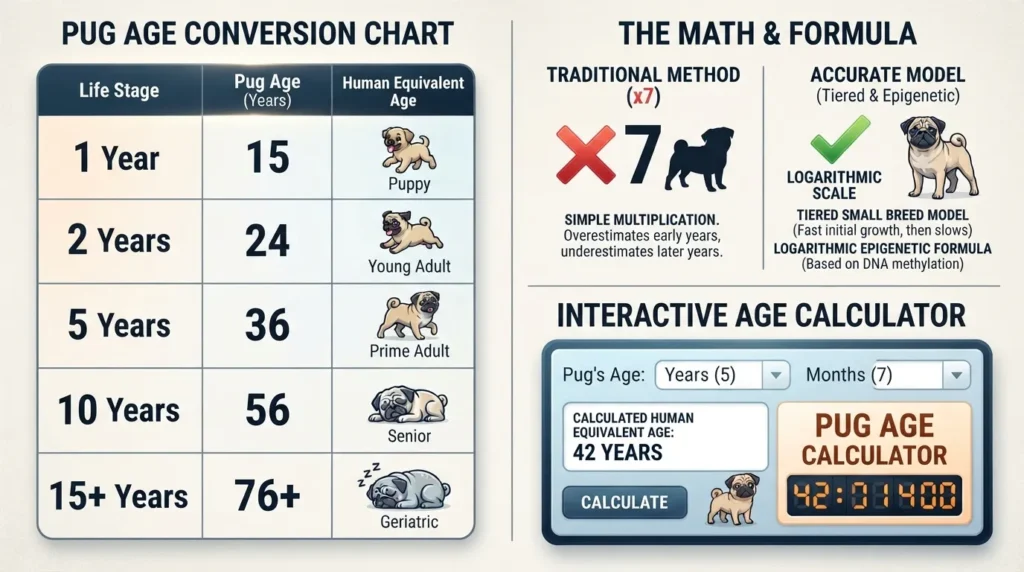
A 1-year-old Pug is about 15 human years, a 2-year-old Pug is about 24 human years, and after that, add roughly 4–5 human years per Pug year. Because dogs experience rapid physical development early on, the traditional “multiply by 7” rule vastly oversimplifies canine aging—especially for toy breeds like Pugs. While they mature quickly as puppies, Pugs actually age slower than large dogs in their senior years.
To convert pug years to human years instantly, use our vet-reviewed calculator below to get an accurate conversion based on your dog’s exact age.
Calculate Your Pug's Exact Age in Human Years
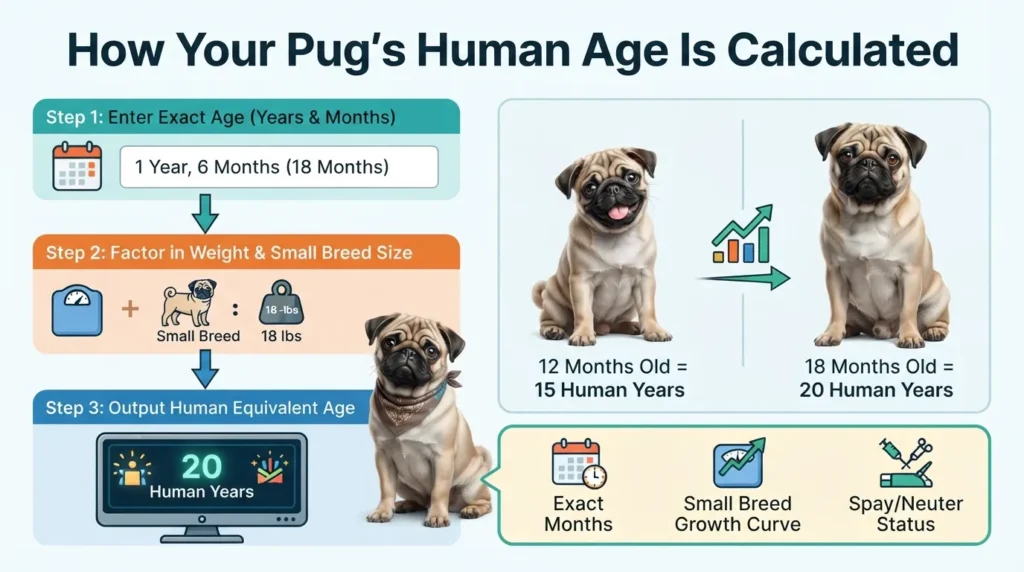
While generalized age charts offer a great starting point, every dog ages at a slightly different rate based on their unique biological profile. To get the most precise calculation for your dog, use our Dog Age Calculator.
To give you the most accurate conversion possible beyond a simple rule-of-thumb, our tool factors in key biological details:
Exact Age (in years and months): Canine development moves rapidly in the first two years, so a 14-month-old dog has a noticeably different developmental stage than a full 2-year-old.
Weight and Size Category: Small dogs (under 20 lbs) age significantly slower in their senior years than giant breeds (over 90 lbs), directly impacting their human-year equivalent.
Spay/Neuter Status: Sterilization timing plays a subtle role in hormonal development, metabolic trends, and overall longevity metrics.
Entering these quick details tailors the scientific aging curve to your specific pet, giving you a precise breakdown of your dog’s age in human years.
Pug Age Chart – Quick Reference
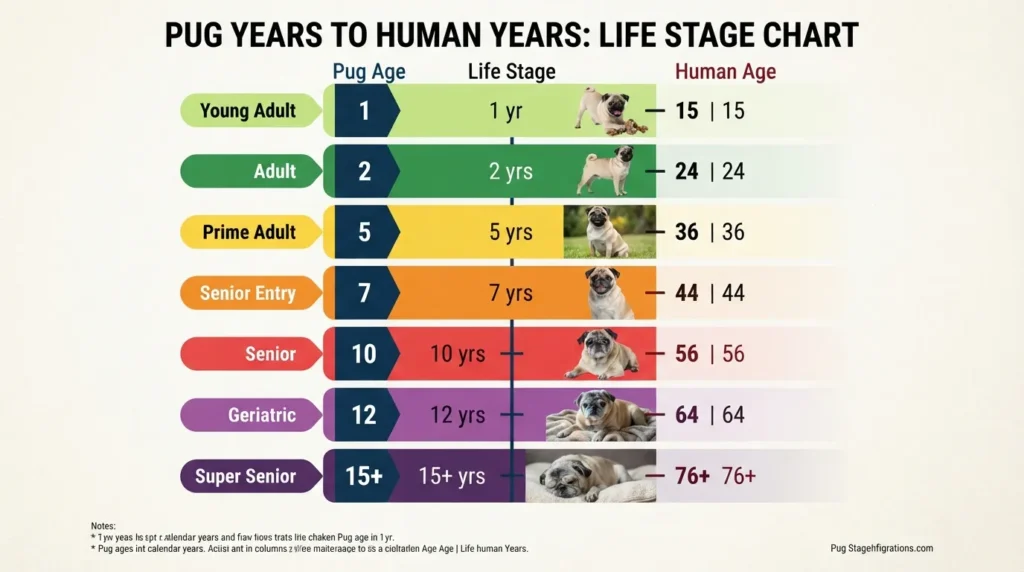
If you need a fast glance at how your dog is aging, here is how key Pug milestones translate to human years:
| Pug Age (Years) | Equivalent Human Age | Life Stage |
|---|---|---|
| 1 | 15 | Young Adult |
| 2 | 24 | Adult |
| 5 | 36 | Prime Adult |
| 7 | 44 | Senior Entry |
| 10 | 56 | Senior |
| 12 | 64 | Geriatric (Average Lifespan) |
| 15+ | 76+ | Super Senior |
Values are estimates — see the Accuracy section below for why numbers vary slightly across sources.
Why "1 Dog Year = 7 Human Years" Doesn't Work for Pugs
Lorem ipsum dolor sit amet, a
Where the 7-Year Myth Came From
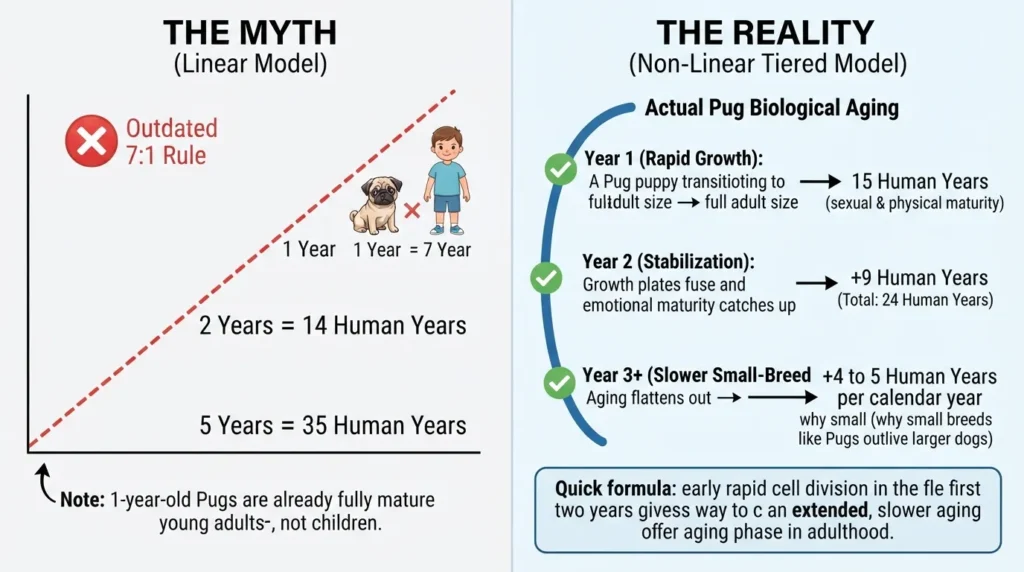
The classic “multiply by 7” rule originated back in the mid-20th century as a simple marketing heuristic rather than a biological fact. Veterinarians needed a quick way to help pet owners understand that dogs age significantly faster than humans, so dividing average human life expectancy by average canine longevity yielded roughly seven.
While it works as a crude napkin calculation, it completely ignores the non-linear nature of canine development. Dogs undergo massive physiological changes in their first two years of life, after which their aging curve flattens out. Applying a static 7:1 multiplier tells you a 1-year-old dog is equivalent to a 7-year-old child—a metric that falls completely flat when you consider that a 1-year-old Pug is already sexually mature and fully grown.
How Pugs Actually Age (Tiered Model)
Canine longevity experts and the American Animal Hospital Association (AAHA) utilize a tiered aging model that accounts for rapid early development followed by steady adult aging. Because Pugs belong to the small-breed category, their aging progression follows three distinct phases:
Year 1 = ~15 human years: Your Pug transitions from a helpless puppy into a young adult in just 12 months, developing bone density, permanent teeth, and adult hormones.
Year 2 = +9 human years (total ~24 human years): Physical growth stabilizes, joint plates finish fusing, and emotional maturity catches up with physical development.
Year 3 onward = +4 to 5 human years per Pug year: Aging settles into a predictable, slow rate typical of small breeds, which is why Pugs routinely outlive large or giant breeds.
Using this tiered approach gives you an accurate reflection of your pug’s age in human years instead of relying on outdated arithmetic.
The Scientific Formula (UC San Diego Epigenetic Study)
To get even closer to cellular aging, researchers led by Wang et al. at UC San Diego published a landmark 2020 study in Cell Systems tracking DNA methylation—chemical markers on the genome that change predictably as mammals age. This epigenetic clock revealed that mammalian aging follows a logarithmic curve rather than a linear line.
The peer-reviewed scientific formula for converting dog age to human equivalent is:
Human Age = 16 x ln(Dog Age) + 31
(where ln represents the natural logarithm)
Let’s look at a worked example for a 5-year-old Pug using this biological clock:
Find the natural logarithm of the Pug’s age: ln(5) is approximately 1.609
Multiply by 16: 16 x 1.609 = 25.74
Add 31: 25.74 + 31 = 56.74
According to biological DNA markers, a 5-year-old Pug has a cellular age equivalent to a 57-year-old human. The epigenetic model highlights just how rapidly canine cells age during early development before leveling off later in life.
consectetur adipiscing elit. Ut elit tellus, luctus nec ullamcorper mattis, pulvinar dapibus leo.
How Pug Aging Differs From Other Dog Breeds
Why Small Breeds Age Slower Than Large Breeds
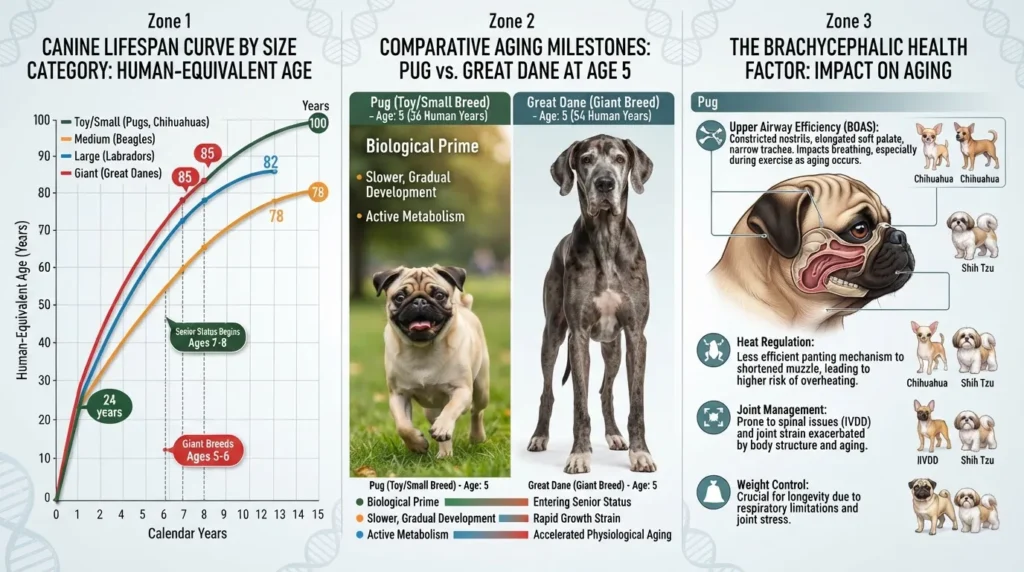
While it seems counterintuitive across the animal kingdom, small dogs live significantly longer than large ones. A Great Dane enters their senior years by age 5, whereas a Pug at age 5 is still in their physical prime.
Evolutionary biologists attribute this disparity to growth rates and cellular strain. Large breeds grow at an astonishing speed during puppyhood, which requires rapid cell division that drives up oxidative stress and accelerates cellular aging. Small breeds like Pugs grow much more gradually, placing far less strain on their metabolic and physiological systems over time.
The Brachycephalic Factor — How a Pug’s Flat Face Affects Aging
While small size grants Pugs a longevity advantage, their flat-faced (brachycephalic) anatomy introduces unique health hurdles that alter how they experience senior years. As Pugs age, tissue elasticity decreases, which can aggravate existing upper airway restrictions.
Declining Breathing Efficiency: Narrowed nostrils (stenotic nares) and an elongated soft palate force older Pugs to work harder with every breath. Over time, this extra respiratory effort places added strain on the heart and lungs.
Reduced Heat Tolerance: Dogs rely on panting to cool themselves, but a shortened airway makes thermoregulation inefficient. Senior Pugs overheat far more quickly, requiring strict temperature control during summer months.
Increased Sleep Apnea Risk: Soft tissue sagging in the throat can lead to airway collapse during sleep. Older Pugs frequently wake up startled or experience fragmented rest, which can exacerbate daytime fatigue and cognitive decline.
Pug vs Other Small Breeds — Comparison Table
Not all small breeds age under the exact same biological conditions. Comparing a Pug’s profile to other popular toy breeds highlights how anatomy and genetics shape senior care requirements.
| Breed | Average Lifespan | Senior Entry Age | Primary Senior Health Focus |
|---|---|---|---|
| Pug | 12–15 Years | 7–8 Years | Respiratory stress, obesity, joint strain |
| Chihuahua | 14–18 Years | 10–11 Years | Dental disease, heart valve degeneration |
| French Bulldog | 10–12 Years | 6–7 Years | Spinal issues, severe airway obstruction |
| Shih Tzu | 10–16 Years | 8–9 Years | Eye conditions, chronic kidney disease |
Pug Age in Months For Puppies Under 1 Year
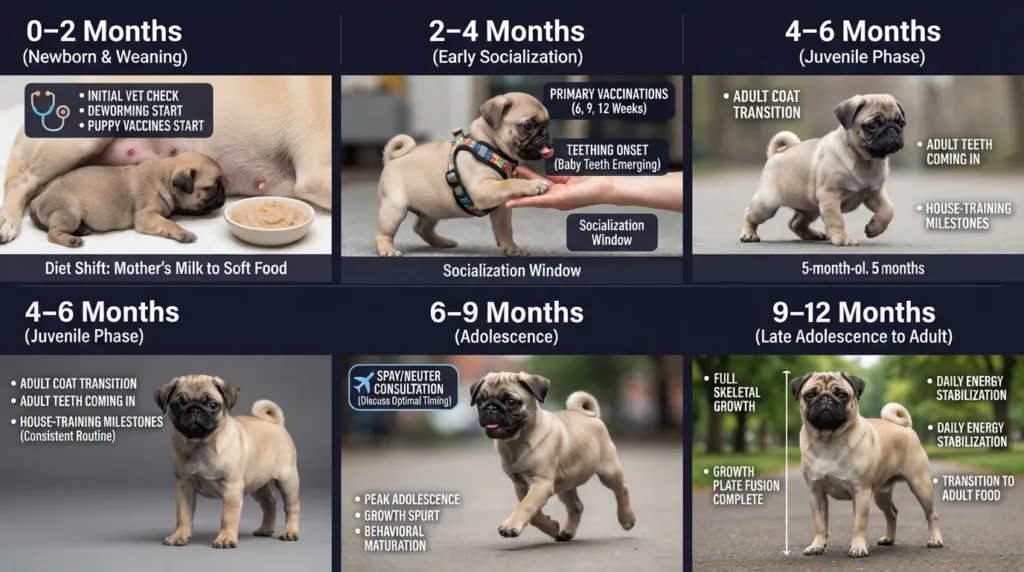
During their first year, Pugs develop at an incredible speed. Tracking their age in months rather than years helps you match their nutrition, social training, and vet care to their exact developmental phase.
| Age in Months | Development Stage | What to Expect |
|---|---|---|
| 0–2 Months | Newborn to Weaning | Nursing, learning basic bite inhibition from littermates, initial vet checks, and starting soft food around 4–5 weeks. |
| 2–4 Months | Early Socialization | Rapid learning window, primary vaccine series, teething begins, and high curiosity paired with short attention spans. |
| 4–6 Months | Juvenile Phase | Adult teeth come in, physical boundaries are tested, adult coat starts replacing puppy fluff, and house-training solidifies. |
| 6–9 Months | Adolescence | Sexual maturity approaches (consult your vet regarding spay/neuter timing), energy spikes, and stubborn behavior can briefly surface. |
| 9–12 Months | Late Adolescence | Skeletal growth slows significantly, muscle tone fills out, and daily energy levels begin to stabilize into adult patterns. |
When Is a Pug Considered Fully Grown?
Most Pugs reach their full skeletal height and length by 10 to 12 months of age. At this point, their growth plates have fused, and they stand at their adult height of roughly 10 to 13 inches at the shoulder.
However, “full height” isn’t the same as fully mature. Pugs typically continue to fill out in chest width and muscle tone until they are 18 to 24 months old. Because their metabolic needs shift once growth stops, monitoring their weight between 12 and 18 months is crucial to keep them lean and protect their joints.
Pug Life Stages Explained Puppy to Senior
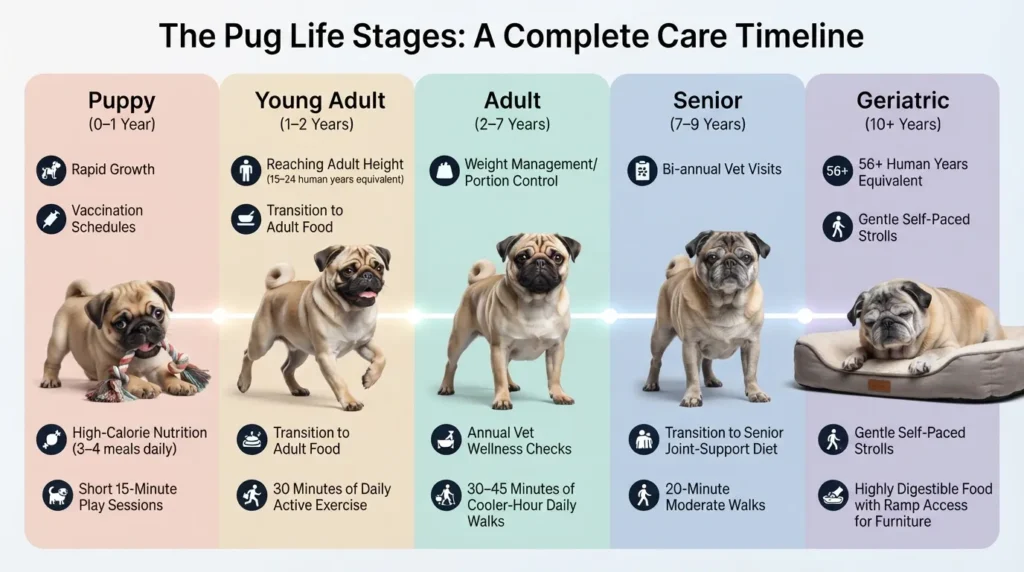
Understanding your Pug’s current life stage helps you adapt their care, diet, and exercise routine as they mature. Because small breeds reach physical milestones quickly before settling into a slower aging pattern, watching for specific behavioral and physical shifts ensures you stay ahead of their changing medical needs.
Puppy (0–1 Year)
During their first year, Pugs undergo rapid physical growth, teething, and social development. They are energetic, curious, and require close monitoring to prevent accidents during play.
Behavioral & Physical Signs: High energy, teething, rapid weight gain, open soft spots on the skull closing up, and intense play-rest cycles.
Care Focus: Feed a high-quality puppy formula 3–4 times daily, maintain a schedule of core vaccinations every 3–4 weeks until 16 weeks, and keep exercise limited to short 15-minute play sessions to protect developing joints.
Young Adult (1–2 Years)
By age one, a Pug has reached their full adult height and is roughly equivalent to a 15-to-24-year-old human. Their energy levels remain high, but their skeleton and muscle structure have fully matured.
Behavioral & Physical Signs: Sexual maturity, maximum athletic stamina, fully established adult coat, and testing boundaries during training.
Care Focus: Transition to an adult maintenance diet at 12 months, schedule an annual wellness exam, and maintain 30 minutes of moderate daily exercise with plenty of mental enrichment.
Adult (2–7 Years)
This is your Pug’s prime physical period. Their personality has fully settled, and maintaining an ideal body condition score becomes the top priority to protect their joints and breathing.
Behavioral & Physical Signs: Calm baseline demeanor, stable weight, routine sleeping patterns, and predictable social behavior.
Care Focus: Strict portion control to prevent obesity, annual veterinary checkups with routine bloodwork, daily dental care, and 30–45 minutes of daily walking broken into cooler morning or evening hours.
Senior (7–9 Years)
A Pug is officially considered a senior around 7 to 8 years of age, which translates to approximately 44–48 human years. At this stage, subtle biological shifts begin, including a slowing metabolism and early joint stiffness.
Behavioral & Physical Signs: Clouding of the eyes (nuclear sclerosis), slight graying around the muzzle, sleeping more deeply, and reluctance to jump onto furniture.
Care Focus: Switch to biannual (twice-yearly) veterinary visits, move to a senior diet with joint-support supplements (like omega-3s and glucosamine), and shift to lower-impact, 20-minute daily walks.
Geriatric (10+ Years)
Pugs aged 10 and older are in their twilight years, equivalent to 56+ human years. At this stage, proactive comfort management, weight tracking, and environmental modifications are essential for preserving quality of life.
Behavioral & Physical Signs: Significant muzzle graying, noticeable muscle loss, decreased hearing or vision, and slower mobility getting up from rest.
Care Focus: Bi-annual wellness exams with comprehensive blood panels, senior-friendly or highly digestible food, orthopedic bedding, ramp access for furniture, and gentle, self-paced strolls.
Pug Life Stage Care Summary
| Life Stage | Age (Pug Years) | Human Equivalent | Vet Visit Frequency | Exercise Focus | Feeding Strategy |
|---|---|---|---|---|---|
| Puppy | 0–1 Year | 0–15 Years | Every 3–4 weeks (until vaccinated) | Short 15-min sessions | High-calorie puppy formula (3–4x daily) |
| Young Adult | 1–2 Years | 15–24 Years | Annual | 30 mins active play & walks | Adult maintenance food (2x daily) |
| Adult | 2–7 Years | 24–44 Years | Annual | 30–45 mins low-impact exercise | Strict portion control adult food |
| Senior | 7–9 Years | 44–52 Years | Bi-annual (every 6 months) | 20 mins moderate walks | Senior formula + joint supplements |
| Geriatric | 10+ Years | 56+ Years | Bi-annual + routine monitoring | Gentle, self-paced strolls | Highly digestible senior food / modified bowls |
How Long Do Pugs Live? Lifespan & What Affects Aging Speed
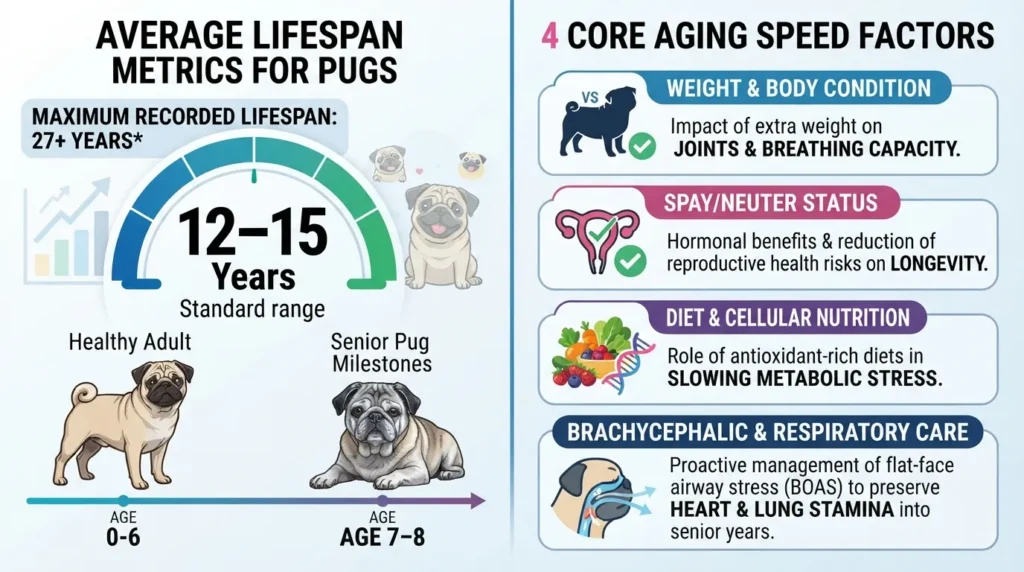
Average Pug Lifespan (12–15 Years)
The average Pug lifespan ranges between 12 and 15 years, which is noticeably longer than the average lifespan of medium and large dog breeds. According to veterinary studies and life-stage data from the American Animal Hospital Association (AAHA), toy breeds generally enjoy greater longevity because their slower adult cellular growth rate puts less metabolic strain on their organs over time. With proper preventative care and weight management, it is not uncommon for a healthy Pug to reach 16 years or beyond.
Oldest Recorded Pug
While 12 to 15 years is the typical expectation, some Pugs far exceed average longevity. The oldest known recorded Pug was a dog named Snookie from South Africa, who lived to be 27 years and 239 days old before passing away in 2018. Snookie’s extraordinary lifespan translates to well over 120 human equivalent years, demonstrating the incredible biological potential of the breed under ideal health conditions.
What Affects How Fast a Pug Ages
While genetics provide the baseline, several environmental and daily lifestyle factors dictate whether your Pug ages at a normal pace or experiences premature decline:
Weight & Obesity: Excess weight is the single biggest threat to a Pug’s lifespan. Carrying even two extra pounds puts severe strain on a small dog’s joints and exacerbates breathing difficulties, directly shortening their senior years.
Spay/Neuter Status: Longitudinal canine studies show that altered dogs tend to live slightly longer than intact dogs. Timely spaying or neutering reduces the risk of reproductive cancers and infections, such as pyometra in females.
Diet & Exercise: High-quality, portion-controlled nutrition rich in antioxidants helps fight oxidative stress at the cellular level. Low-impact daily exercise keeps joint fluid circulating without overheating their sensitive airways.
Genetics & Common Health Conditions: Pugs are prone to Brachycephalic Obstructive Airway Syndrome (BOAS), hemivertebrae, and Pug Dog Encephalitis (PDE). Proactively managing airway restrictions and joint distress early in life preserves energy levels and drastically slows physiological aging.
Signs of Healthy vs. Concerning Aging in Pugs
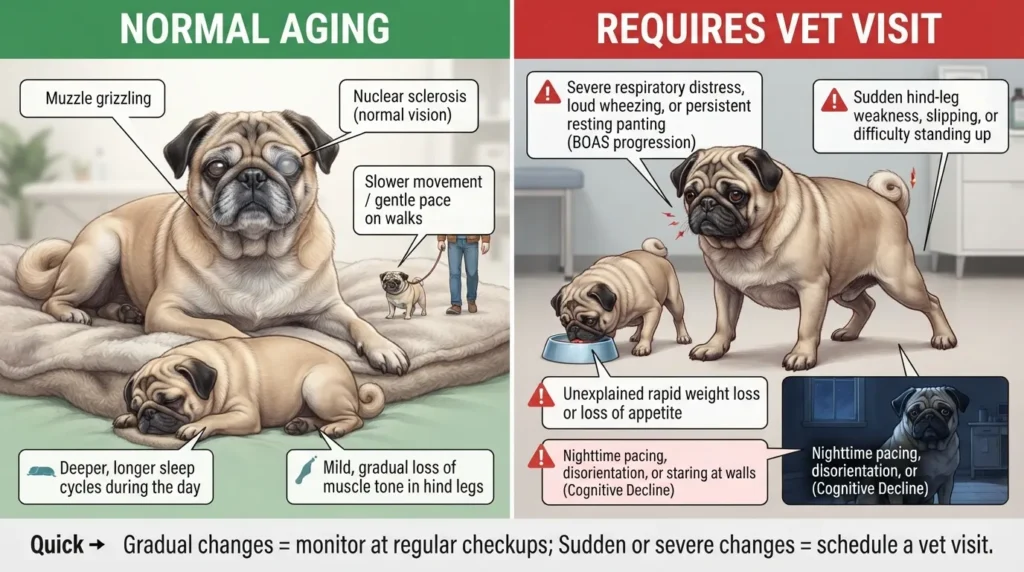
As Pugs step across the senior threshold into their golden years, bodily changes are completely natural. However, because Pugs are a brachycephalic (flat-faced) breed with compact frames, distinguishing between typical age-related slowdowns and underlying medical issues requires a watchful eye.
Normal Aging Signs
Gradual shifts in your dog’s daily routines and appearance often reflect normal biological aging. You can expect to notice these manageable changes as your pug’s age in human years advances:
Slowing down on walks: Taking longer to get moving in the morning or preferring shorter, gentler evening strolls.
Grizzling around the muzzle: Graying hair around the snout, chin, and eyebrows, often starting around 6 to 7 years of age.
Slight cloudiness in the eyes: A bluish-gray haze in the lenses (nuclear sclerosis), which is a normal aging process that differs from cataracts and rarely impairs vision significantly.
Slightly deeper sleep: Sleeping more soundly throughout the day and taking longer to wake up when resting.
Mild loss of muscle mass: Subtle thinning along the back and hind legs while maintaining a stable overall body weight.
Signs That Need a Vet Visit
Some symptoms are easily mistaken for “just getting old,” but actually signal treatable pain, respiratory stress, or systemic illness. Schedule a veterinary checkup if you observe any of the following:
Increased respiratory distress or loud wheezing: Any sudden worsening of snoring, heavy panting while resting, or coughing—which could indicate brachycephalic obstructive airway syndrome (BOAS) progression or cardiac trouble.
Difficulty standing up or slipping on floors: Struggling to rise from a lying position, stiffness that doesn’t ease after moving, or weakness in the hind legs (a common sign of Pug myelopathy or osteoarthritis).
Changes in water intake or urination: Excessive drinking and frequent urination, which often point to early kidney dysfunction, Cushing’s disease, or diabetes.
Unexplained weight loss or appetite changes: Dropping weight quickly despite eating normally, or losing interest in food altogether.
Behavioral changes or pacing at night: Confusion, staring at walls, or restlessness during the night, which may indicate Canine Cognitive Dysfunction (dementia).
How Accurate Is This Pug Age Chart?
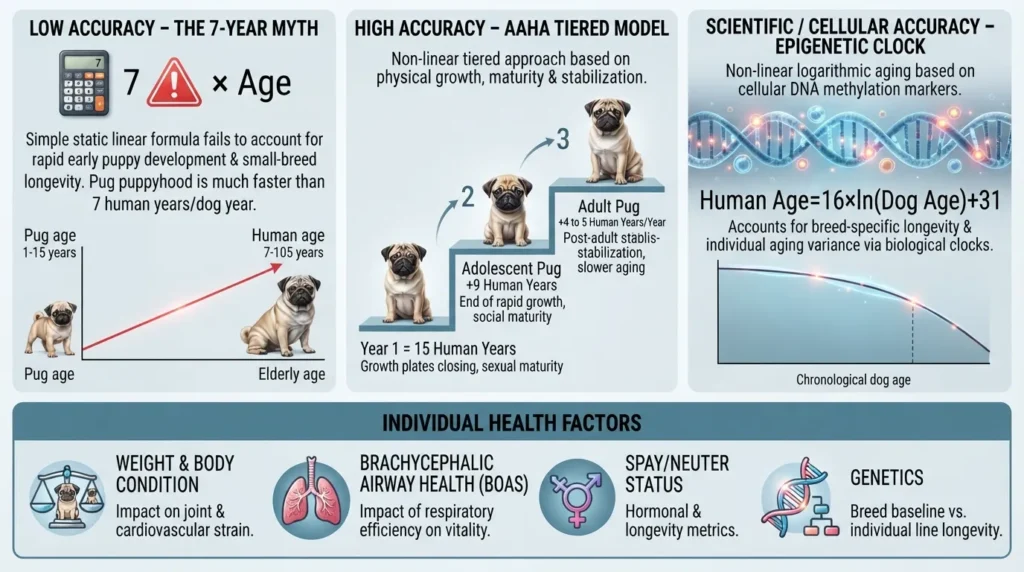
While calculating pug years to human years using established small-breed metrics provides an accurate benchmark, these numbers represent a biological average rather than a precise medical diagnosis. Every Pug possesses unique genetics, daily activity levels, and metabolic factors that influence how quickly their cells age over time.
If you notice slightly different age equivalents across various pet care websites, it comes down to which formula or model that platform uses. Some online tools still rely on linear tier approximations, others use basic linear multipliers, and newer platforms incorporate logarithmic DNA methylation models like the 2020 UC San Diego study.
Our methodology combines small-breed life-stage guidelines from the American Animal Hospital Association (AAHA) with peer-reviewed epigenetic research to reflect both physical maturity and cellular aging. This dual-model approach gives you a realistic, vet-reviewed perspective on your pug’s age in human years without oversimplifying their unique biology.
Frequently Asked Questions
A 1-year-old Pug is approximately 15 human years old. During their first 12 months, Pugs experience rapid growth and reach young adult developmental milestones equivalent to a human teenager.
A 2-year-old Pug is roughly 24 human years old. The second year adds about 9 human years as your dog reaches full physical maturity and emotional adulthood.
A 5-year-old Pug is approximately 36 human years old. After their second birthday, Pugs age at a steady rate of about 4 human years for every calendar year, putting a 5-year-old in their prime adult years.
A 7-year-old Pug is about 44 human years old. According to the American Animal Hospital Association (AAHA) guidelines, 7 years is the benchmark where small breeds transition into their mature or early senior phase.
A 10-year-old Pug is approximately 56 human years old. At this stage, your Pug is firmly in their senior years and benefits from targeted senior care, joint support, and regular vet checkups.
A 15-year-old Pug is equal to about 76 human years. Reaching 15 is a wonderful milestone for a Pug, placing them in the super-senior or geriatric stage of canine life.
A Pug is typically considered a senior between 7 and 8 years of age. Veterinary guidelines classify small dogs as seniors around this time because internal metabolic and cellular processes begin to slow down naturally.
Pugs age at a very similar rate to other small dog breeds on a cellular level, gaining about 4 human years per calendar year in adulthood. However, because they are brachycephalic (flat-faced), heat sensitivity and respiratory stress can impact their health profile earlier than non-brachycephalic small breeds.
Yes, studies show that spayed and neutered dogs generally live slightly longer than intact dogs. Sterilization removes the risk of reproductive cancers and infections, though keeping your Pug at a healthy body weight remains the single biggest factor for longevity.
Veterinarians estimate an unknown Pug's age primarily by examining dental wear and tartar buildup. They also look at cloudiness in the eyes (lenticular sclerosis), muscle tone, coat graying around the muzzle, and joint mobility.
Yes, Puggles (Pug and Beagle mixes) and other Pug crossbreeds follow the same small-to-medium breed aging timeline. Mixed breeds often benefit from hybrid vigor, which can slightly increase overall lifespan and reduce certain inherited health risks.
🐾 Other Age Guides

I built Dogagescalculator.com to give dog owners honest, science-backed answers instead of the outdated "×7" myth. Every figure here is checked against AKC, AVMA, and published veterinary research.
More about the author & this site →
Comments