
Ideal Age to r a Male Dog: A Complete Breed-by-Breed
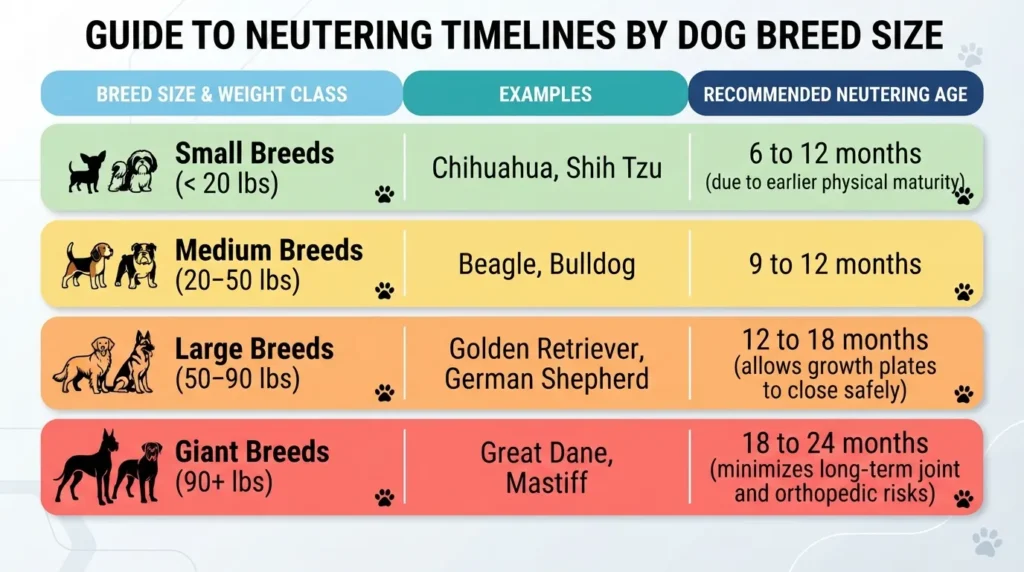
The ideal age to neuter a male dog ranges from 6 months for small breeds up to 12 to 18+ months for large and giant breeds. According to updated American Animal Hospital Association (AAHA) canine life stage guidelines, waiting until growth plates close in larger dogs significantly reduces long-term risks of joint disorders and certain cancers, while small dogs can safely undergo the procedure earlier without compromising physical development.
Because optimal timing depends on your dog’s specific adult size, breed genetics, and individual health, there is no one-size-fits-all answer. Use this complete breed-by-breed guide to find the safest timetable for your dog.
Quick Answer: Ideal Neutering Age by Dog Size
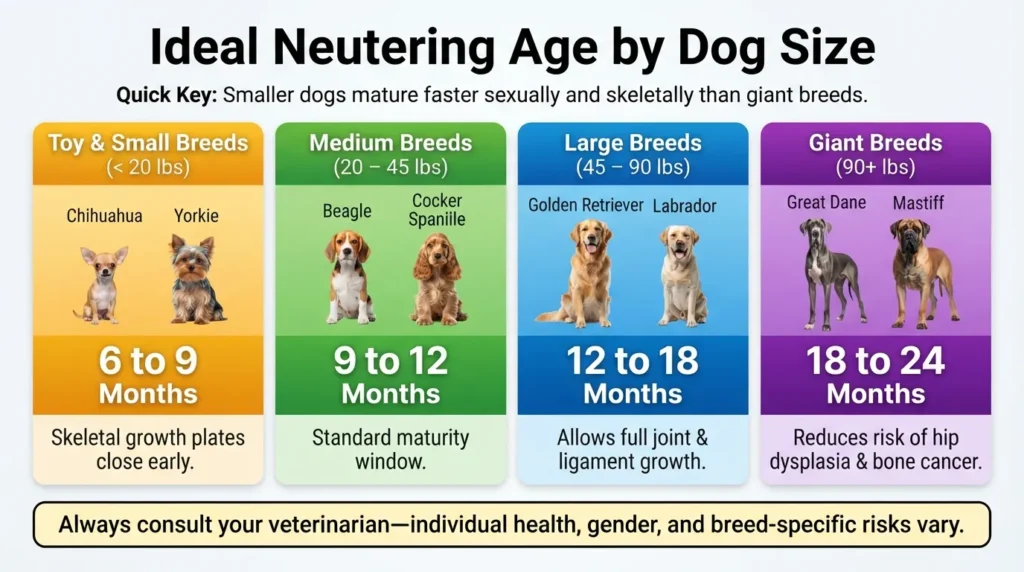
Timing matters when scheduling your dog’s procedure because physical development varies drastically across different sizes. Larger dogs take significantly longer for their skeletal system and growth plates to mature compared to toy and small breeds.
Recommended Timelines by Weight Class
Small Breeds (under 10 kg / 22 lbs): 6 to 9 months. Small dogs finish growing much earlier, making an earlier procedure safe for their joint development.
Medium Breeds (10–22 kg / 22–50 lbs): 9 to 12 months. Medium dogs hit physical maturity around their first birthday, striking a natural balance between skeletal growth and behavioral management.
Large Breeds (22–40 kg / 50–90 lbs): 12 to 15 months. Waiting ensures growth plates fully close, protecting against long-term orthopedic complications like hip dysplasia.
Giant Breeds (40+ kg / 90+ lbs): 15 to 18+ months. Breeds like Great Danes or Mastiffs continue growing well past a year; delaying neutering gives their massive frames adequate time to mature safely.
Please keep in mind that these are general ranges only — the exact age depends on individual growth plate closure, breed-specific health risks, and a personalized veterinary assessment.
To see where your dog currently sits in their life stage development, you can check our Dog Age Calculator tool.
What Is Neutering, and Why Does Age Matter So Much?
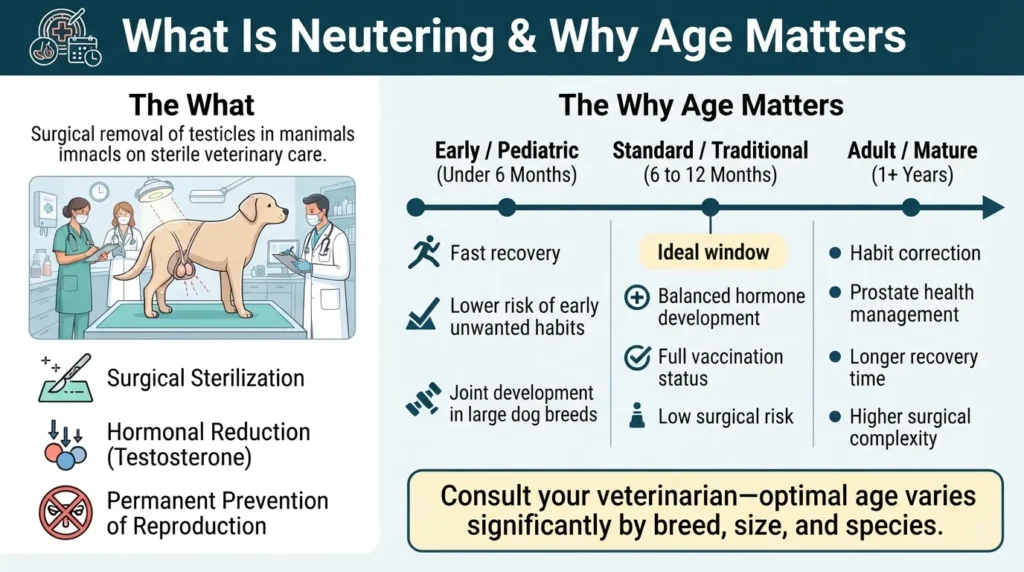
Neutering is a routine procedure, but timing it correctly impacts your dog’s development for the rest of his life. Removing sex hormones too early or too late directly alters how a dog’s body matures.
What Neutering Involves
Surgical process: The procedure (orchiectomy) involves the surgical removal of both testicles while your dog is under general anesthesia.
Outpatient recovery: In almost all standard cases, it is a quick, same-day surgical procedure, meaning your dog comes home with you that evening.
The Hormone/Growth Plate Connection
Testosterone regulates growth: Testosterone signals long bones in a dog’s legs to stop growing at the right time by closing the epiphyseal plates (growth plates).
Altered bone development: Removing testosterone prematurely causes growth plates to stay open longer, leading to longer limbs and altered joint mechanics that increase stress on ligaments.
Why “One Age Fits All” Advice Is Outdated
Shift from blanket rules: The traditional recommendation to automatically neuter every puppy at 6 months is no longer standard veterinary practice.
Modern guidelines: Current AVMA and AAHA guidelines advocate for an individualized approach, factoring in adult size, breed genetics, and lifestyle before choosing an age.
Breed-Specific Neutering Age Chart Based on UC Davis Research
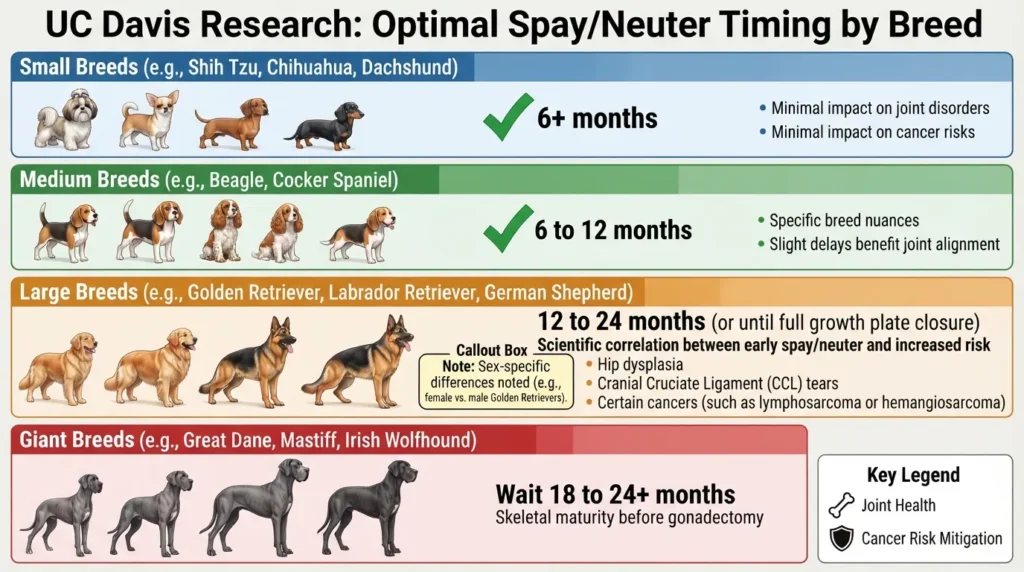
How This Research Was Conducted
Comprehensive Study: Led by Dr. Benjamin Hart and his team at UC Davis, this seminal 2020 study published in Frontiers in Veterinary Science analyzed over 15 years of veterinary hospital clinical records.
35 Breeds Evaluated: Researchers tracked 35 distinct dog breeds alongside mixed-breed categories to measure how the age of neutering or spaying directly impacted the long-term risk of joint disorders (such as hip dysplasia and cranial cruciate ligament tears) and cancers (including lymphosarcoma, hemangiosarcoma, and mast cell tumors).
Key Finding: The data revealed that vulnerability to early neutering is highly breed-dependent. While removing sex hormones early severely increases orthopedic risks in certain large breeds, it has virtually no adverse physical effects on others.
| Breed | Recommended Neutering Age | Key Health Rationale (UC Davis Findings) |
|---|---|---|
| Golden Retriever | Wait until 24 months | Early neutering significantly increases the risk of joint disorders and certain cancers (particularly lymphosarcoma and hemangiosarcoma) in males. |
| Labrador Retriever | Wait until 12–24 months | Delaying until at least 12 months (or up to 24) reduces the occurrence of joint disorders and ligament tears. |
| German Shepherd | Wait until 24 months | Males neutered before one year showed a triple-fold increase in one or more joint disorders. |
| Chihuahua | 6 months acceptable | No increased risk of joint disorders or cancers was found with neutering at 6 months or older. |
| Poodle (Toy & Miniature) | 6 months acceptable | Showed no elevated risk of joint conditions or cancers related to neutering age. |
| Beagle | 6 months acceptable | Data indicates no significant increase in cancer or orthopedic problems when neutered early. |
| Mixed Breed (<10 kg / 22 lbs) | 6 months | Follows small breed guidelines; growth plates close early with negligible risk of orthopedic damage. |
| Mixed Breed (10–22 kg / 22–50 lbs) | 9–12 months | Balances growth plate development with behavioral management. |
| Mixed Breed (22–40 kg / 50–90 lbs) | 12–15 months | Protects developing joints from early hormone deficit complications. |
| Mixed Breed (40+ kg / 90+ lbs) | 15–18+ months | Extended growth periods require sex hormones for proper bone density and articular structure formation. |
Early vs. Late Neutering — Risks, Benefits & What If You Already Decided
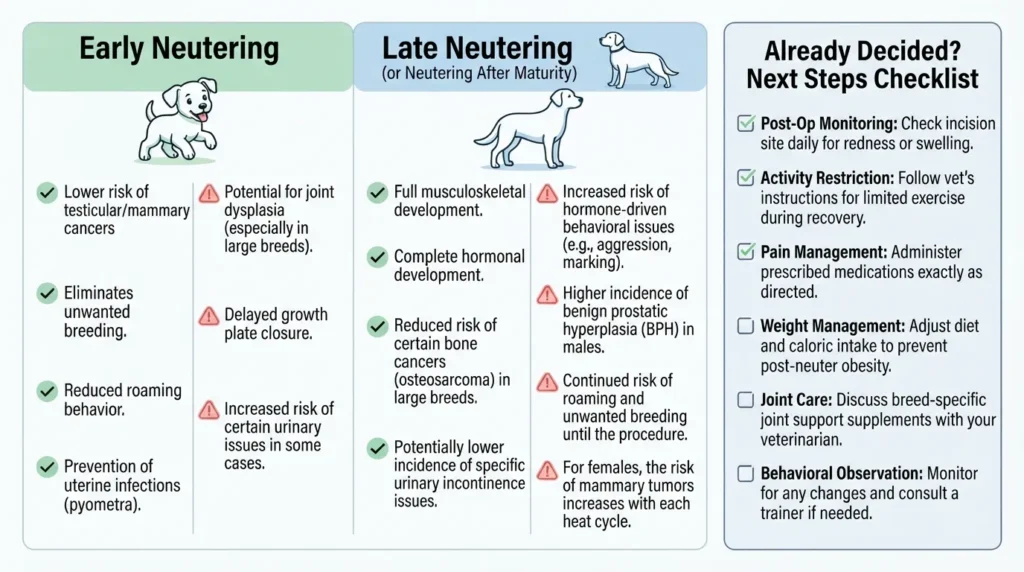
Choosing when to neuter comes down to balancing long-term physical health against behavioral management. Hormones like testosterone play a major role in guiding physical growth and bone development, which means removing them early changes how a dog matures compared to delaying the procedure.
Risks of Neutering Too Early
Joint disorders (hip/elbow dysplasia, CCL tears): In large and giant breeds, early neutering removes sex hormones before the growth plates in their long bones close. This can lead to uneven bone growth and weaker joint alignment, significantly increasing the risk of cranial cruciate ligament (CCL) tears and hip dysplasia according to long-term veterinary health studies.
Elevated cancer risk: Research tracking specific breeds (such as Golden Retrievers, Labradors, and German Shepherds) shows a correlation between early neutering and an increased incidence of certain cancers, including lymphoma, mast cell tumors, hemangiosarcoma, and osteosarcoma.
Risks of Waiting Too Long
Behavioral reinforcement: Hormone-driven behaviors like urine marking indoors, roaming to find females, and intense mounting become habitual over time. Once these behaviors become deeply ingrained habits, neutering later in life may not fully eliminate them. Male-to-male aggression risks also increase as social maturity sets in around 1 to 2 years of age.
Medical and reproductive risks: Leaving a male intact keeps the risk of benign prostatic hyperplasia (BPH) and testicular cancer present throughout his adult life, though neutering resolves both issues immediately. Unneutered males also carry a constant risk of contributing to unwanted litters if they slip out or encounter an intact female.
Side-by-Side Comparison Table
| Factor | Early Neutering (Before Growth Plate Closure) | Late Neutering (After Physical Maturity) |
|---|---|---|
| Joint Disorder Risk | Higher risk in large/giant breeds due to delayed growth plate closure. | Lower risk; skeletal framework fully develops naturally. |
| Cancer Risk | Elevated risk for specific cancers (e.g., hemangiosarcoma, lymphoma) in prone breeds. | Lower risk for breed-specific systemic cancers; eliminates testicular cancer risk later. |
| Behavior Timeline | Prevents hormone-driven behaviors like marking and roaming before they start. | Behaviors may become learned habits that persist even after surgery. |
| Pregnancy Risk | Zero risk of accidental mating from an early age. | Requires strict supervision around intact females until the procedure is complete. |
| Recovery Ease | Quicker bounce-back; younger tissues heal rapidly with minimal surgical complications. | Slightly longer recovery window, though generally straightforward for healthy adult dogs. |
Already Neutered Early? What to Do Now
Focus on weight management: You cannot reverse a past surgery, but keeping your dog at a lean, healthy body condition score is the single most effective way to reduce stress on their joints.
Incorporate joint support: Ask your vet about starting proactive joint supplements like omega-3 fatty acids, glucosamine, or chondroitin early, especially if you have a large breed.
Schedule regular wellness checkups: Keep up with annual or bi-annual vet exams to monitor mobility, screen for breed-specific concerns, and keep your dog thriving at every life stage.
How to Decide the Right Age for Your Dog

Determining when to neuter your dog isn’t a simple calendar calculation. It requires looking at your dog’s unique physiology, environment, and long-term health trajectory rather than following a rigid rulebook.
Factors Your Vet Will Weigh
Breed and adult size: Skeletal development rates vary dramatically between a 10-pound Chihuahua and a 100-pound Mastiff, making expected adult weight the primary baseline for timing.
Growth plate status: Radiographs or breed-standard growth curves help confirm whether long bones have finished maturing, protecting joint alignment in larger dogs.
Behavioral concerns: Persistent mounting, urine marking, or hormone-driven anxiety can sometimes push the timeline sooner if it severely impacts home life or safety.
Household situation: Living with unspayed females or in environments with high escape risks often necessitates earlier action to prevent accidental litters.
Overall health: Pre-existing conditions, cardiac evaluations, or bloodwork results ensure your dog is physically ready for anesthesia and surgery.
Special Case — Retained Testicle (Cryptorchidism)
elevated cancer risk: When one or both testicles fail to descend into the scrotum and remain inside the abdomen or groin, the higher internal body temperature drastically increases the risk of testicular cancer. Vets almost universally recommend neutering cryptorchid dogs earlier—often around 6 to 12 months—regardless of breed size to eliminate this specific malignancy risk before it develops.
What Vets and Experts Recommend
AVMA Position: The American Veterinary Medical Association emphasizes that neutering decisions should be made on a case-by-case basis, balancing individual health factors, lifestyle, and breed characteristics rather than applying a universal age threshold.
AKC Guidance: According to recommendations supported by the American Kennel Club’s veterinary experts, small breeds generally benefit from neutering between 6 to 9 months, while large and giant breeds should ideally wait until 12 to 18+ months to allow full growth plate closure.
[ ] “Has my dog’s growth plate closure been evaluated based on his breed and current size?”
[ ] “Are there any specific joint or cancer risks for his breed that we should factor into this timing?”
[ ] “Do his current behaviors stem from hormones, and will neutering at this stage help address them?”
[ ] “What pre-anesthetic screening do you recommend before we schedule the procedure?”
What to Expect: Surgery, Recovery, Cost & Alternatives
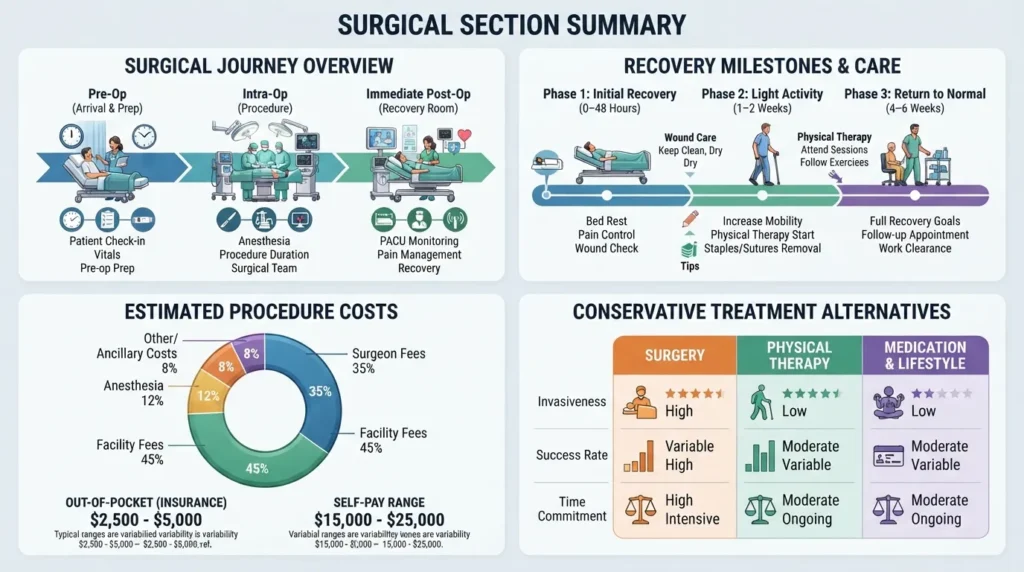
Navigating the logistics of a neuter procedure feels much easier when you know what lies ahead. From pre-op preparation to post-op care, the entire process is routine, safe, and usually completed in a single day.
Before Surgery
Pre-anesthetic bloodwork: Vets run a quick blood panel to check liver and kidney function, ensuring your dog can process anesthesia safely.
Fasting protocol: Food is typically withheld starting at midnight before surgery to prevent nausea under anesthesia, though water is usually allowed until morning.
Vaccination check: Ensure core vaccinations are current, as clinics require them to protect all pets in the surgical recovery area.
The Procedure & Recovery
Short surgery time: The procedure itself takes just 20 to 30 minutes, and most dogs go home the very same afternoon.
Restricted activity (10–14 days): Keep walks short and on-leash, with strictly no running, jumping, or rough play while the incision heals.
E-collar requirement: A protective cone or inflatable collar prevents licking and chewing at sutures, which is the leading cause of post-op skin infections.
Follow-up exam: A quick vet check at 10 to 14 days confirms proper skin healing and allows for suture removal if non-dissolvable stitches were used.
Average Cost Range
The average cost of neutering ranges from $150 to $500 at standard private veterinary clinics. High-volume, low-cost spay/neuter clinics or non-profit shelters often offer the service for $50 to $150, whereas larger emergency hospitals or specialized surgery centers may charge $600 or more. Final pricing usually depends on your location, your dog’s weight, and whether bloodwork or take-home pain medications are bundled into the initial estimate.
Non-Surgical Alternatives
Chemical castration: Synthetic hormone implants (like deslorelin) temporarily suppress testosterone production for 6 to 12 months, offering a reversible way to test behavioral changes before committing to surgery.
Vasectomy: This surgical option severing the vas deferens leaves the testicles intact, preventing reproduction while allowing your dog to retain his natural hormone levels for ongoing skeletal and muscular health.
Common Myths and What Actually Happens to Behavior
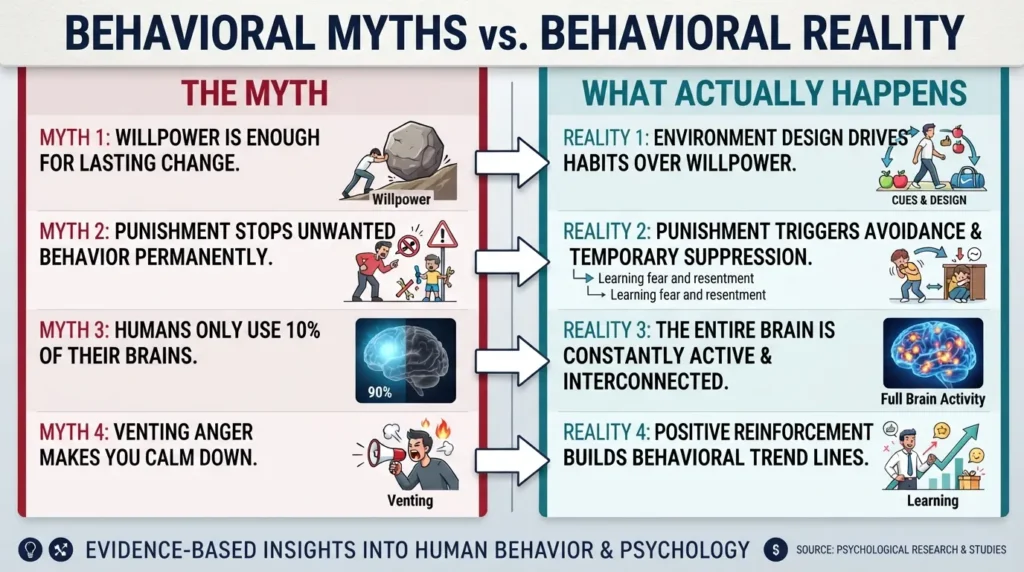
Misconceptions about neutering often leave owners worrying that their dog will transform into an entirely different pet overnight. Understanding what changes—and what stays the same—helps set realistic expectations for your dog’s recovery and long-term development.
Myth: Neutering Makes Dogs Lazy or Fat
Reality: Surgery itself doesn’t cause weight gain, but the loss of testosterone lowers a dog’s baseline metabolic rate by roughly 20% to 30%. Without testosterone driving high energy expenditure, dogs burn fewer calories at rest. If you continue feeding the exact same portions post-surgery, your dog will gain weight—leading to the misconception that neutering caused the sluggishness. Adjusting food intake downward slightly and maintaining regular daily exercise completely prevents post-neuter weight gain.
Myth: Neutering Changes a Dog’s Core Personality
Reality: Neutering does not erase your dog’s playful spirit, intelligence, affection, or underlying temperament. What actually shifts are strictly hormone-driven urges, such as the impulse to roam after females in heat, urine-mark territory, or display male-to-male sexual aggression. Your dog’s core personality stays intact—they simply feel far less instinctual stress driving those specific behaviors.
How Long Until You’ll Actually See Behavior Change
Hormones clear over weeks, not days: It takes roughly 4 to 8 weeks for testosterone levels to fully drop after surgery. You won’t see an instant shift the moment you bring your dog home.
Learned habits require training: Behaviors like marking furniture or mounting that started before surgery may persist simply because they became ingrained habits. Surgery removes the hormonal drive, but gentle, consistent training is still required to unlearn the routine.
Frequently Asked Questions About Ideal Age to Neuter a Dog
🐾 Other Age Guides

I built Dogagescalculator.com to give dog owners honest, science-backed answers instead of the outdated "×7" myth. Every figure here is checked against AKC, AVMA, and published veterinary research.
More about the author & this site →
Comments