
how much does a german shorthaired pointer weigh
How Much Does a German Shorthaired Pointer Weigh? Complete Weight Guide + Chart
Lorem ipsum dolor sit amet, consectetur adipiscing elit. Ut elit tellus, luctus nec ullamcorper mattis, pulvinar dapibus leo.
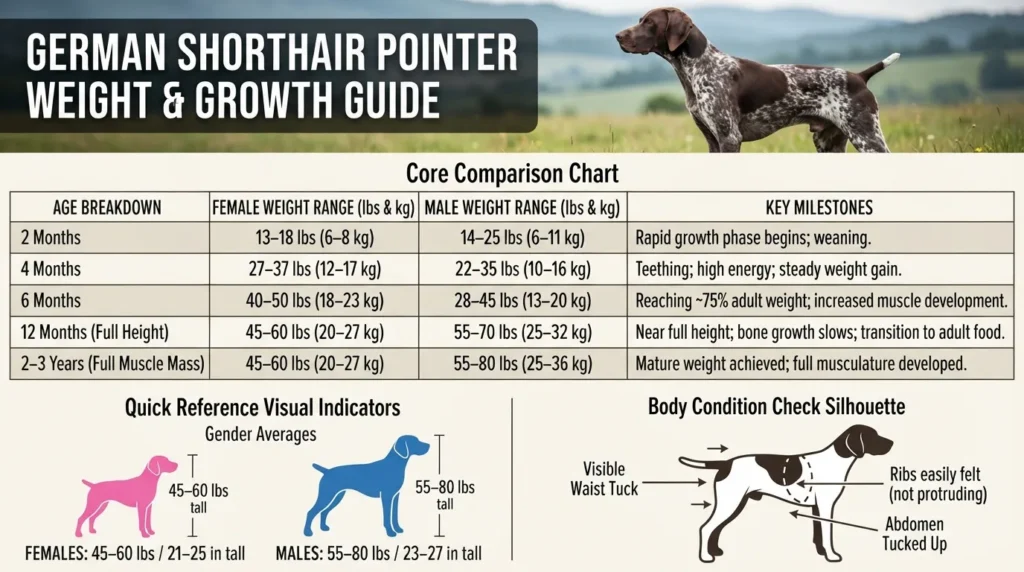
An adult male German Shorthaired Pointer typically weighs 55–70 lbs (25–32 kg), while an adult female weighs 45–60 lbs (20–27 kg). Standing between 21 and 25 inches tall at the shoulder, this athletic, deep-chested sporting breed carries a lean, muscular build designed for endurance in the field.
This guide breaks down everything you need to track your dog’s growth, including month-by-month weight charts, realistic real-world weight variances, feeding guidelines, and simple body condition checks to keep your GSP at peak performance.
German Shorthaired Pointer Average Weight Quick Answer Box
An adult German Shorthaired Pointer weighs 45 to 70 lbs (20 to 32 kg) on average, depending on gender and genetics.
Male Adult Weight: 55–70 lbs (25–32 kg)
Female Adult Weight: 45–60 lbs (20–27 kg)
Male Height: 23–25 inches (58–64 cm) at the shoulder
Female Height: 21–23 inches (53–58 cm) at the shoulder
Is a GSP a Medium or Large Breed?
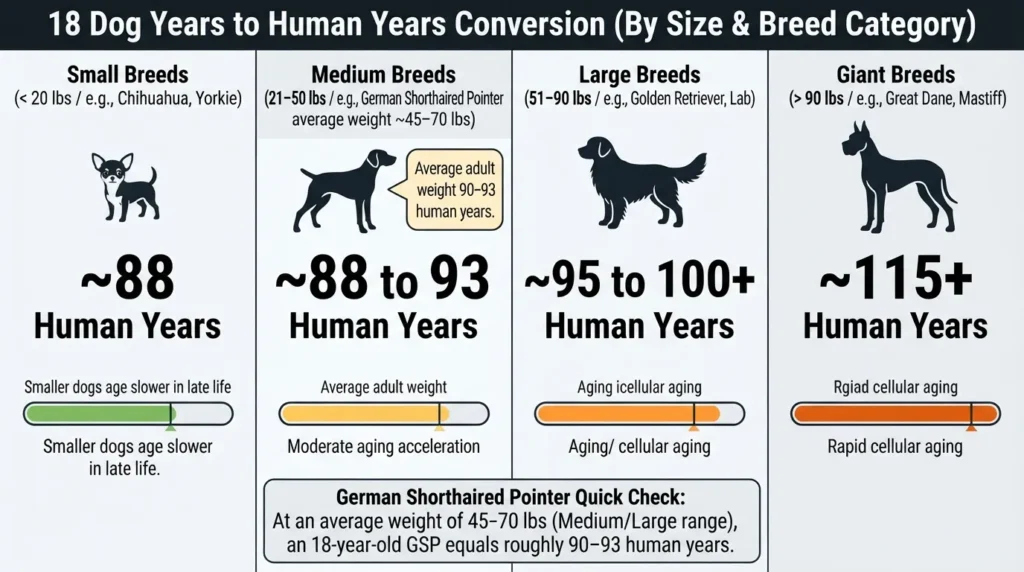
The German Shorthaired Pointer is classified as a large breed. While their lean, athletic frame can make them look slightly slighter than heavier hunting dogs, their height, bone structure, and adult weight put them firmly in the large-breed category for feeding formulas, growth rates, and vet care.
GSP Weight Chart by Age Newborn to Adult, Male & Female
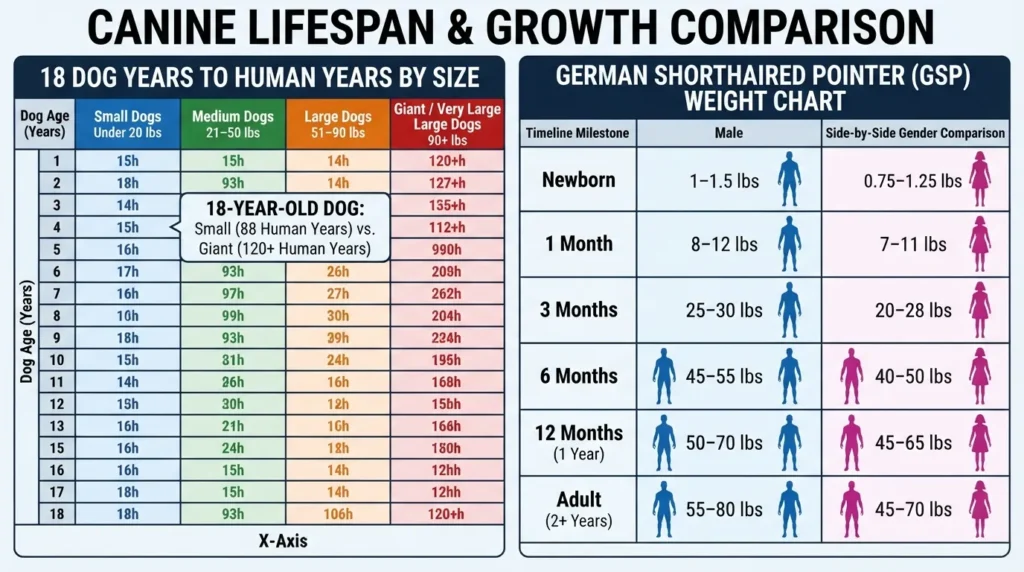
German Shorthaired Pointers grow rapidly during their first six months, then gradually fill out in muscle mass until they reach full maturity between 18 and 24 months. Tracking your pup against these age-based targets helps ensure they stay on a healthy growth trajectory without putting unnecessary stress on developing joints.
Newborn to 8-Week Weight
During their first two months, GSP puppies gain weight quickly while nursing and transitioning to solid food. Puppies typically weigh under a pound at birth and steady out to double-digit weights by the time they are ready for their new homes.
| Age | Average Male Weight | Average Female Weight |
|---|---|---|
| Birth | 0.8–1.2 lbs (0.3–0.5 kg) | 0.7–1.0 lbs (0.3–0.4 kg) |
| 2 Weeks | 2.0–3.0 lbs (0.9–1.4 kg) | 1.8–2.5 lbs (0.8–1.1 kg) |
| 4 Weeks | 4.0–5.5 lbs (1.8–2.5 kg) | 3.5–4.8 lbs (1.6–2.2 kg) |
| 6 Weeks | 7.0–9.5 lbs (3.2–4.3 kg) | 6.0–8.0 lbs (2.7–3.6 kg) |
| 8 Weeks | 10.0–15.0 lbs (4.5–6.8 kg) | 8.0–12.0 lbs (3.6–5.4 kg) |
Male GSP Growth & Weight Chart
Male GSPs undergo an intense growth spurt between 3 and 6 months, gaining anywhere from 2 to 3 pounds per week. Height growth tapers off around 12 months, but males will continue adding muscle through their second year.
| Age | Weight Range (lbs) | Weight Range (kg) | Growth Milestone |
|---|---|---|---|
| 8 Weeks | 10–15 lbs | 4.5–6.8 kg | Ideal age to bring puppy home |
| 3 Months | 20–28 lbs | 9.1–12.7 kg | High-energy phase, rapid bone growth |
| 4 Months | 28–38 lbs | 12.7–17.2 kg | Adult teeth start erupting |
| 5 Months | 35–48 lbs | 15.9–21.8 kg | Gangly "all legs" appearance |
| 6 Months | 40–55 lbs | 18.1–24.9 kg | ~75% of adult weight reached |
| 9 Months | 48–62 lbs | 21.8–28.1 kg | Height plateaus, frame widens |
| 12 Months | 52–66 lbs | 23.6–29.9 kg | Reaches full adult height |
| 18–24 Months | 55–70 lbs | 24.9–31.8 kg | Full muscular and skeletal maturity |
Female GSP Growth & Weight Chart
Female German Shorthaired Pointers tend to grow at a slightly more controlled pace than males, staying noticeably leaner and more compact throughout development.
| Age | Weight Range (lbs) | Weight Range (kg) | Growth Milestone |
|---|---|---|---|
| 8 Weeks | 8–12 lbs | 3.6–5.4 kg | Ready for adoption |
| 3 Months | 15–22 lbs | 6.8–10.0 kg | Core puppy growth phase |
| 4 Months | 22–30 lbs | 10.0–13.6 kg | Coordinates momentum and movement |
| 5 Months | 28–38 lbs | 12.7–17.2 kg | Lean build becomes prominent |
| 6 Months | 32–44 lbs | 14.5–20.0 kg | ~80% of adult weight reached |
| 9 Months | 38–50 lbs | 17.2–22.7 kg | First heat cycle may occur |
| 12 Months | 42–56 lbs | 19.1–25.4 kg | Final adult height reached |
| 18–24 Months | 45–60 lbs | 20.4–27.2 kg | Chest deepens to adult standard |
Normal Variation Note: Every GSP grows at its own unique pace. A puppy falling slightly outside these exact numbers is usually nothing to worry about as long as they are active, showing clean physical condition, and maintaining a steady upward weight curve on their growth chart.
Why Real-World Weight Differs from the AKC Breed Standard
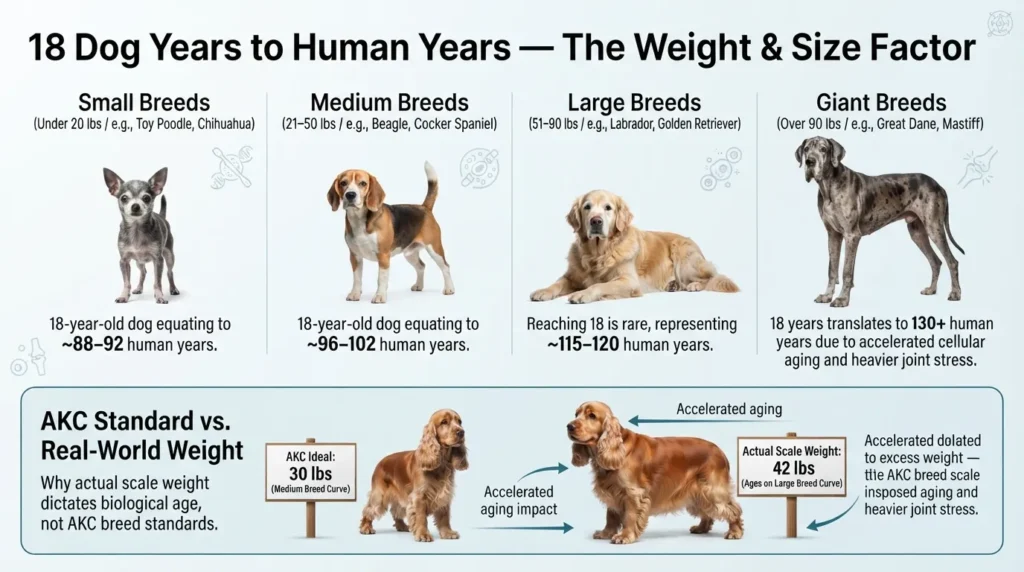
According to the official AKC German Shorthaired Pointer Breed Standard, ideal show weights range from 55 to 70 lbs for adult males and 45 to 60 lbs for females. However, if you visit a vet clinic or a local dog park, you’ll quickly notice that many healthy, non-obese pet GSPs sit outside these strict guidelines—sometimes reaching 75 lbs or more.
This gap exists because breed standards evaluate dogs specifically for the conformation show ring, whereas real-world family companions experience different lifestyles, breeding goals, and biological milestones.
Key Factors Driving Weight Variances
Dietary Energy & Daily Calories: Working gun dogs burn thousands of calories daily in the field, maintaining a lean, high-rib-definition race weight. Pet GSPs fed high-protein commercial kibble without an equivalent working schedule often carry additional muscle and body fat, pushing them 5–10 lbs above standard averages.
Exercise & Activity Level: A active family pet getting 60 minutes of daily leash walks operates on a vastly different metabolic output than a hunting dog running 10+ miles across rough terrain several days a week. Less intense daily cardio naturally shifts a dog’s base weight upward.
Spay/Neuter Timing: Pediatric spaying or neutering (performed before 12 months) alters hormonal balances, causing growth plates to close later than usual. This delayed closure often results in taller, longer-limbed dogs with larger frames than their intact counterparts.
Genetics & Lineage (Field vs. Show Lines): Field-trial bloodlines in North America are often bred for power, speed, and larger frames, leading to taller, heavier-boned dogs. Conversely, European dual-purpose lines or traditional show lines tend to strictly enforce compact, standard-compliant dimensions.
When Does a GSP Stop Growing?
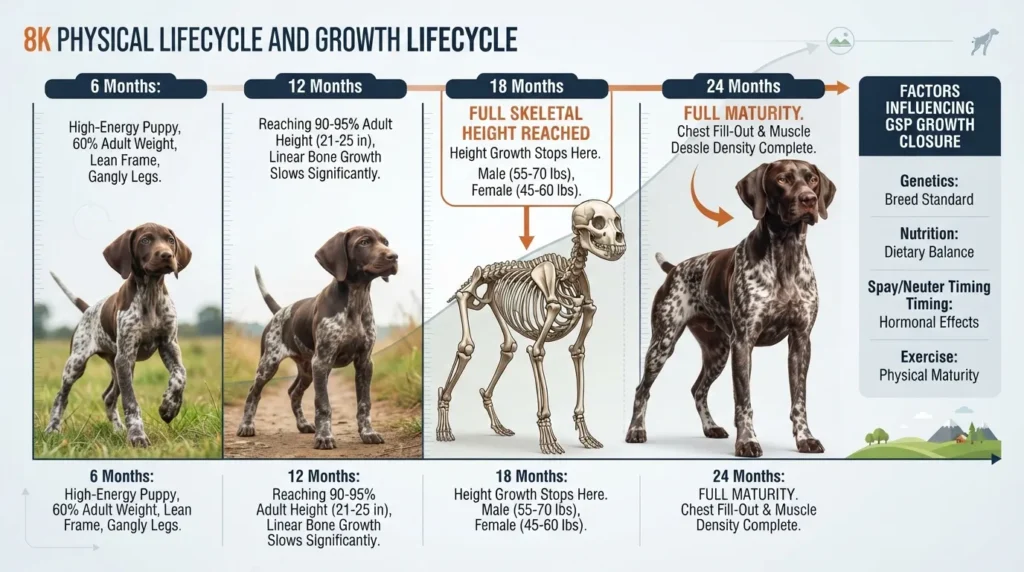
German Shorthaired Pointers experience a two-phase growth journey: they grow “up” first before they grow “out.” While your puppy may look like an adult by their first birthday, their skeleton, muscle tissue, and chest structure take significantly longer to reach full physical maturity.
Height Maturity Age (12–15 Months)
A GSP reaches their maximum height at the shoulder between 12 and 15 months of age. By this point, the growth plates at the ends of their long leg bones fuse, locking in their final vertical stature (23–25 inches for males, 21–23 inches for females). After 15 months, your dog will not gain any additional height.
Muscle and Weight Fill-Out Age (Up to 2–3 Years)
Once vertical growth stops, the “filling out” phase begins. Between 18 and 36 months, a GSP broadens across the ribcage, thickens in the neck and shoulders, and develops dense, hard muscle across their hindquarters. It is completely normal for a 14-month-old GSP to look slightly gangly or “all legs” before this final mass phase completes.
Male vs. Female Growth Timeline Differences
Female GSPs: Females mature faster both sexually and physically. Most females finish their vertical growth around 12 months and complete their muscle fill-out between 18 and 24 months.
Male GSPs: Males take longer to develop due to their larger skeletal frames and higher hormonal mass demands. While they hit adult height between 12 and 15 months, they often continue adding shoulder width and chest depth until 2.5 to 3 years of age.
German Shorthaired Pointer Weight in Kilograms
For international owners, field trainers, and metric users, tracking a GSP’s weight in kilograms provides precision when managing health and nutrition. European and international breed standards (such as the FCI standard) define the breed within these metric ranges:
Male Adult Weight Range: 25 to 32 kg
Female Adult Weight Range: 20 to 27 kg
Quick Lbs-to-Kg Reference Table
Use this quick converter table to check standard weight milestones without needing to calculate conversions manually:
| Weight (lbs) | Weight (kg) | Category / Stage |
|---|---|---|
| 10 lbs | 4.5 kg | Average 8-week puppy weight |
| 25 lbs | 11.3 kg | Average 3–4 month puppy milestone |
| 45 lbs | 20.4 kg | Low end of adult female weight range |
| 55 lbs | 24.9 kg | Low end of male / High end of female adult range |
| 60 lbs | 27.2 kg | High end of standard adult female weight |
| 70 lbs | 31.8 kg | High end of standard adult male weight |
| 75 lbs | 34.0 kg | Over-standard / Large-framed field line male |
What Is a Healthy Weight for Your GSP? (Body Condition Score)
Because German Shorthaired Pointers vary in frame size, the scale doesn’t tell the whole story. Veterinarians use a 9-point Body Condition Score (BCS) to determine whether a dog carries a healthy amount of body fat, aiming for an ideal score of 4 or 5 out of 9.
You can easily evaluate your GSP at home using the rib-check and waist-tuck method:
The Rib Check: Run your hands gently along your dog’s ribcage. You should easily feel individual ribs covered by a thin layer of fat, similar to feeling the knuckles on the back of a flat hand. If you have to press hard to feel bones, your dog carries too much fat; if ribs are sharply protruding, they are underweight.
The Overhead Waist: Stand above your dog and look down. You should see a clear “hourglass” figure, with a distinct tuck behind the ribcage before the hips.
The Side Tuck: View your GSP from the side. Their abdomen should sweep upward from the chest toward the hind legs (an abdominal tuck), rather than running straight across or sagging down.
Signs Your GSP Is Underweight
Because GSPs are naturally lean, dynamic working dogs, owners often mistake ideal conditioning for being underweight. However, a dog that is truly underweight will exhibit:
Prominent, visible hip bones, vertebrae, and ribs even when standing still.
A severe abdominal tuck and loss of muscle mass over the thighs, shoulders, and lower back.
A dull coat, low daily energy, and visible lethargy during exercise.
Signs Your GSP Is Overweight
Carrying extra weight puts immense strain on a athletic dog’s joints and heart. According to the AVMA Guidance on Pet Obesity, carrying excess weight can shorten a dog’s life expectancy by up to two years and significantly increase the risk of cruciate ligament tears, arthritis, and diabetes.
Signs your GSP is overweight include:
Ribs that cannot be easily felt under a thick layer of fat.
A loss of the defined waistline when viewed from above (a rectangular or barrel shape).
No upward tuck at the flank when viewed from the side.
Lethargy, heavy breathing after mild exercise, or reluctance to run and jump.
What to Do If Your GSP Is Overweight or Underweight
If your GSP falls outside a healthy 4/5 BCS rating, adjust their routine gradually:
For Overweight GSPs: Cut daily kibble rations by 10–15%, eliminate high-calorie table treats, and replace them with low-calorie alternatives like fresh carrots or green beans. Increase daily cardiovascular exercise through structured retrieval drills or longer off-leash runs.
For Underweight GSPs: First, consult your vet to rule out internal parasites, pancreatic insufficiency, or thyroid issues. If cleared, increase daily meal volume by 10–20%, transition to a higher-fat/higher-protein performance formula (e.g., 30/20 active food), or split meals into three daily feedings to improve calorie absorption.
How Much Should You Feed a GSP Based on Its Weight?
How much a German Shorthaired Pointer needs to eat depends heavily on their current weight, life stage, and daily activity level. Because GSPs have exceptionally high metabolic rates, their daily caloric needs often surpass those of other breeds in the same weight class.
Always use a high-quality, large-breed dog food and measure meals with a standard 8-ounce measuring cup.
Puppy Feeding-by-Weight Guidance
GSP puppies grow rapidly and burn huge amounts of energy, requiring nutrient-dense puppy kibble formulated for large breeds to support healthy joint development.
10–20 lbs (2–3 Months): Feed 1.5 to 2.5 cups per day, split into 3 equal meals.
20–35 lbs (3–5 Months): Feed 2.5 to 3.5 cups per day, split into 3 equal meals.
35–50 lbs (6–12 Months): Feed 3.5 to 4.5 cups per day, split into 2 equal meals.
Puppy Tip: Avoid overfeeding to accelerate growth. Keeping GSP puppies lean prevents excessive stress on their developing growth plates and joints.
Adult Feeding-by-Weight Guidance
Once a GSP reaches adult weight (around 12 to 18 months), transition them to a high-protein adult maintenance or performance formula. Divide their daily allowance into 2 meals (morning and evening) to support healthy digestion and help prevent bloat (Gastric Dilation-Volvulus).
| Adult Weight | Daily Feeding Amount (Moderate Activity) | Daily Feeding Amount (High Activity / Working) |
|---|---|---|
| 45–50 lbs (Female) | 2.5–3 cups per day | 3.5–4 cups per day |
| 50–60 lbs (Female / Small Male) | 3–3.5 cups per day | 4–4.5 cups per day |
| 60–70 lbs (Large Male) | 3.5–4 cups per day | 4.5–5.5 cups per day |
| 70+ lbs (Large-Framed Male) | 4–4.5 cups per day | 5.5+ cups per day |
Adjusting for Activity: A household companion GSP running 30–60 minutes a day needs the lower end of the feeding range. A field trial or active hunting GSP covering miles off-leash daily will need significantly higher calories to maintain a healthy weight.
Senior GSP Weight Changes 7+ Year
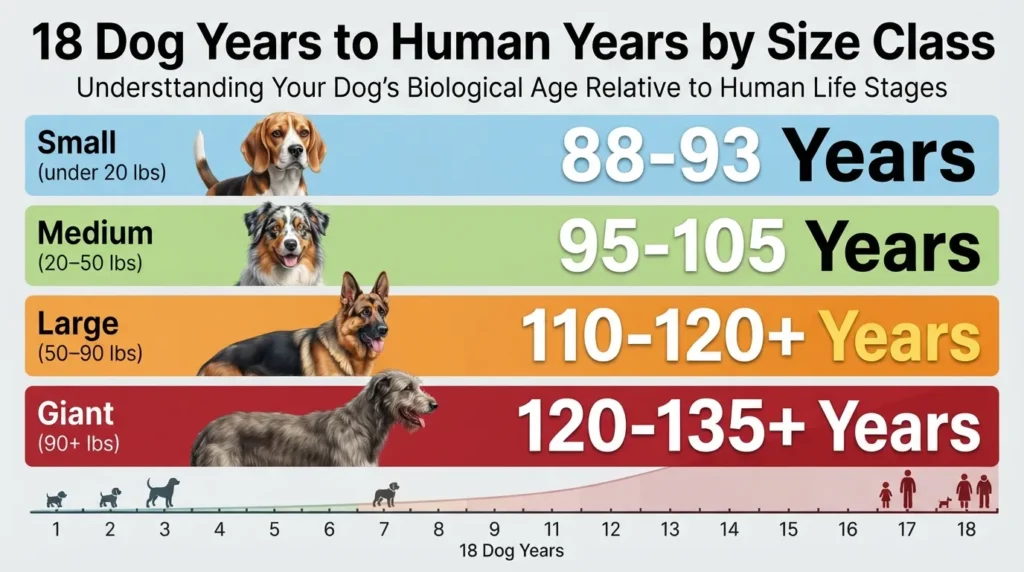
As German Shorthaired Pointers cross into their senior years—typically starting around 7 or 8 years old—their body composition and energy requirements undergo noticeable shifts. While a young GSP seems to burn calories effortlessly, an aging Pointer faces two primary weight challenges: metabolic slowdown leading to weight gain, or age-related muscle loss (sarcopenia) leading to weight loss.
Monitoring your senior dog’s weight monthly allows you to catch subtle physical changes early and adapt their lifestyle accordingly.
Muscle Loss vs. Metabolism Slowdown
Senior GSPs typically drift toward one of two weight trends as they age:
Involuntary Weight Gain: Decreased stamina and joint stiffness from arthritis naturally lower a senior GSP’s daily step count. If their caloric intake remains identical to their high-energy adult years, surplus calories convert directly to fat, placing extra burden on aging joints.
Muscle Wasting (Sarcopenia): Conversely, some aging GSPs experience a loss of lean muscle mass along the spine, hips, and shoulders, even if their appetite remains normal. Their scale weight might drop below 45–50 lbs, making them appear bonier and less sturdy.
Diet Adjustments for Senior GSPs
Keeping a senior GSP at an ideal weight requires tailoring their nutrition to support joints, preserve lean muscle, and accommodate a slower digestion rate:
Adjust Caloric Density: For seniors packing on extra pounds, transition to a senior-specific or weight-management formula that contains lower calories per cup alongside higher fiber content to keep them feeling full.
Maintain High-Quality Protein: Do not cut back on protein unless advised by a vet for kidney conditions. Senior dogs actually need protein-dense food (26–30% quality protein) to combat natural muscle wasting and maintain lean muscle tone.
Incorporate Joint & Digestive Support: Look for senior foods enriched with glucosamine, chondroitin, and omega-3 fatty acids (EPA/DHA) to reduce joint inflammation and support comfortable movement during daily walks.
Transition to Softer or Warm Meals: If a senior dog loses interest in kibble due to dental wear or diminished sense of smell, adding warm bone broth or canned wet food can safely stimulate their appetite and encourage hydration.
Watch: GSP Growth Stages Explained
Numbers on a chart only tell half the story. Watching a GSP actually grow — from a wobbly-legged pup to a lean, muscled adult — makes those weight ranges click in a way a table never will.
If your puppy's growth doesn't match up exactly with what you see here, don't panic — every GSP fills out at its own pace. Use the chart above as your baseline, and check in with your vet if your dog is way outside the range at any stage.
How to Track Your GSP's Growth Accurately
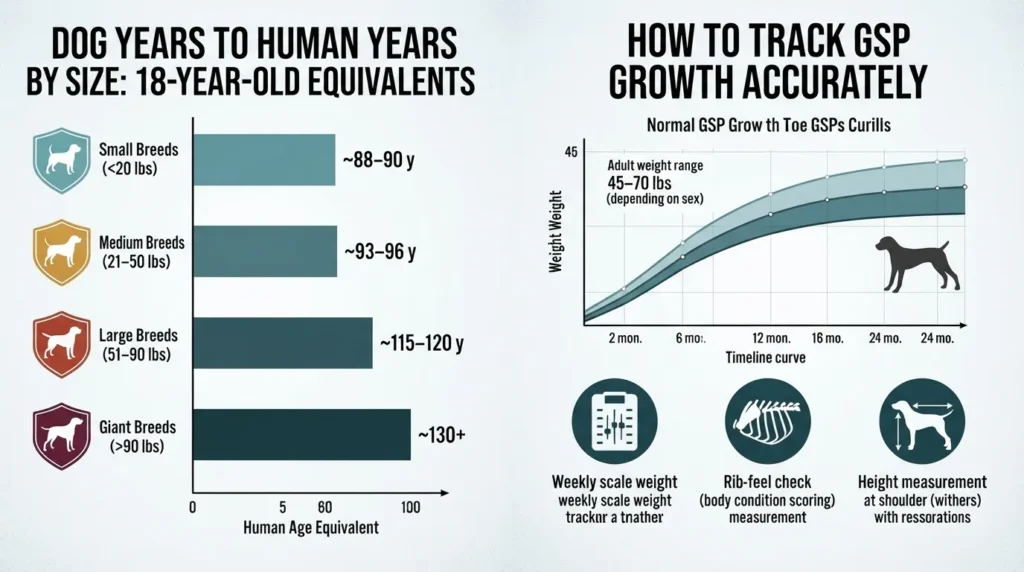
Keeping tabs on your German Shorthaired Pointer’s weight ensures they grow at a healthy pace without putting undue strain on developing joints. While vet visits offer precise readings, tracking progress at home between check-ups keeps you ahead of sudden weight fluctuations.
Home Weighing Method (The Bathroom Scale Trick)
Weighing a wriggling GSP puppy or an energetic adult on a standard scale is easy when you use the pickup method:
Step onto a digital bathroom scale by yourself and write down your weight.
Pick up your GSP, step back onto the scale, and note the total combined weight.
Subtract your initial weight from the combined total—the difference is your dog’s current weight.
Example: If you weigh 165 lbs alone and 215 lbs while holding your GSP, your dog weighs 50 lbs.
Pro Tip: Once a male GSP passes 55–60 lbs, holding them on a scale can be tough on your back. Most vet clinics allow owners to stop in anytime to use their digital floor scale in the waiting room for free.
Vet Check-Up Frequency
A dog’s growth trajectory should be evaluated regularly alongside professional veterinary care:
Puppies (8 Weeks to 6 Months): Log your puppy’s weight every 2 weeks at home. Your vet will record official weights during 8-, 12-, and 16-week vaccination visits to ensure correct heartworm and flea preventative dosages.
Adolescents (6 to 18 Months): Track weight once a month. This helps monitor the transition from rapid vertical growth to muscle mass build-up.
Adults (18+ Months): Weigh your adult GSP every 3 to 6 months at home, along with their routine annual wellness exam.
Seniors (7+ Years): Check weight every 1 to 2 months to spot age-related muscle wasting or weight gain early.
Frequently Asked Questions
How much does a full grown German Shorthaired Pointer weigh?
A full-grown adult male German Shorthaired Pointer weighs 55 to 70 lbs (25 to 32 kg), while a adult female weighs 45 to 60 lbs (20 to 27 kg). Non-working or large-framed field-line GSPs can naturally reach 75+ lbs without being clinically overweight.
Is a GSP a medium or large dog?
The German Shorthaired Pointer is classified as a large dog breed. Standing between 21 and 25 inches at the shoulder with an adult weight reaching up to 70 pounds, their height, deep-chested structure, and metabolic needs put them firmly in the large-breed category.
What is the IQ of a GSP?
German Shorthaired Pointers rank as the 19th smartest dog breed out of 138 evaluated breeds in Stanley Coren’s landmark working intelligence study. Classified in the top tier of bright working dogs, a GSP typically understands a new command in fewer than 15 repetitions and obeys a first command 85% of the time or better.
How big are GSP dogs in kg?
In kilograms, an adult male GSP weighs 25 to 32 kg and stands 58 to 64 cm tall. An adult female GSP weighs 20 to 27 kg and stands 53 to 58 cm tall at the shoulder.
Why are GSPs so clingy?
GSPs are often referred to as “velcro dogs” because they were specifically bred to work in close partnership with human hunters in the field. This deeply ingrained genetic drive creates an intense bond with their family, meaning they thrive on human companionship and can easily develop separation anxiety if left alone for long periods without exercise or mental engagement.
What is the rarest GSP color?
Solid black is the rarest official breed-standard color for a German Shorthaired Pointer. While liver and liver-roan variations are most common, black coats require specific dominant gene combinations that make up a smaller percentage of purebred litters. Unofficial non-standard mutations, such as lemon or yellow, occur as rare genetic throwbacks but are disqualified under AKC breed standards.
Final Thoughts
Raising a structurally sound German Shorthaired Pointer comes down to balancing their high-energy lifestyle with targeted nutrition. While the standard 55–70 lbs for males and 45–60 lbs for females gives you a reliable baseline, remember that every dog carries their weight differently. A lean, heavily muscled field-line GSP might tip the scale slightly higher than a compact show-line pet.
Always prioritize a healthy Body Condition Score—being able to feel those ribs without pressing through thick fat—over a strict number on the scale.
If your Pointer drops weight unexpectedly or starts losing their defined waistline, book a quick physical with your vet to adjust their diet or rule out underlying health issues. Want to track your dog’s developmental milestones and see exactly how their current life stage maps to human years? Run their numbers through our Dog Age Calculator to ensure they stay on the right track for a long, active life.
🐾 Other Age Guides

I built Dogagescalculator.com to give dog owners honest, science-backed answers instead of the outdated "×7" myth. Every figure here is checked against AKC, AVMA, and published veterinary research.
More about the author & this site →
Comments