
How Long Do Shih Tzus Live in Human Years? Complete Lifespan & Age Chart
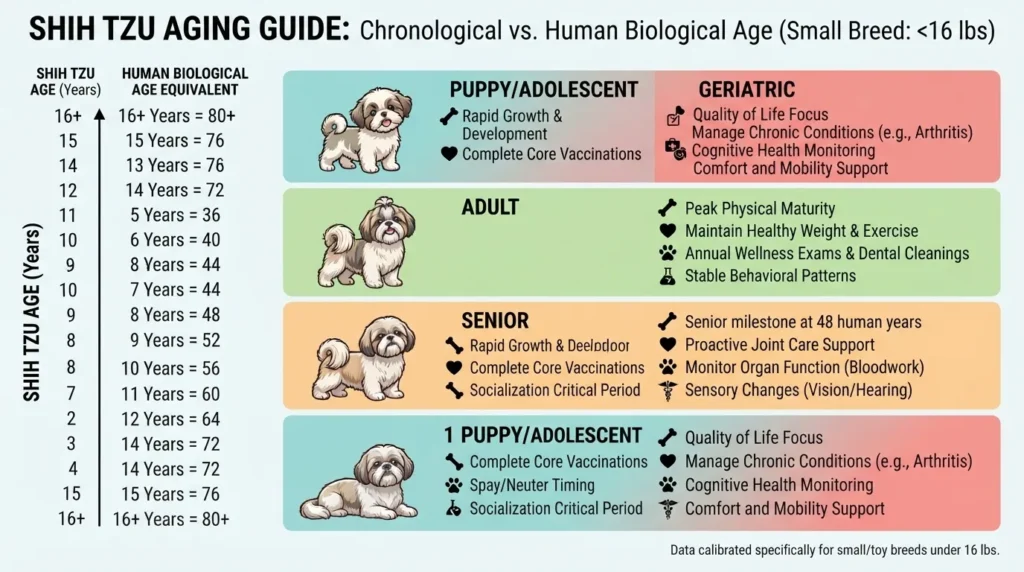
A Shih Tzu typically lives about 10 to 16 years, with many healthy dogs reaching around 13 to 14 years. If you’re wondering how long a Shih Tzu lives in human years, their age doesn’t convert using the old “multiply by 7” rule.
Because Shih Tzus are a small breed, they generally age more slowly during their senior years than larger dogs. For example, a 1-year-old Shih Tzu is roughly equivalent to a 15-year-old human, while a 5-year-old may be around 36 human years and a 10-year-old about 56 human years.
This guide explains the Shih Tzu lifespan, how their age compares with human years, and what you can do to support a longer, healthier life.
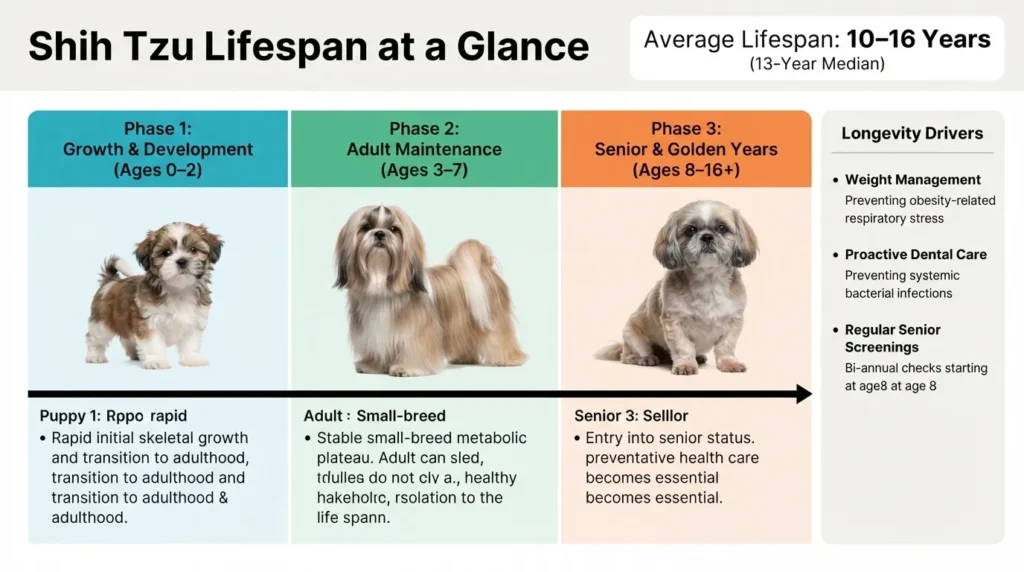
How long do Shih Tzus live? Most Shih Tzus live approximately 10–16 years, with 13–14 years being a common average range.
How long does a Shih Tzu live in human years? The human-age equivalent depends on the dog’s chronological age, with young dogs aging much faster than they do later in life.
How Long Do Shih Tzus Live? Average Lifespan Explained
Understanding the lifespan of a Shih Tzu requires looking at both general canine biology and the unique advantages of smaller breeds. While no two dogs are exactly alike, historical breed data and veterinary studies give us a very clear picture of what to expect from this resilient, ancient breed.
Average Shih Tzu Lifespan
The typical lifespan of a Shih Tzu ranges from 10 to 16 years, with the vast majority of healthy dogs reaching an average age of 13 to 14 years. This baseline is widely supported across major veterinary authorities, including the American Kennel Club (AKC) and extensive companion animal health studies.
Because 10 to 16 years is a wide window, it helps to view it as a spectrum. A Shih Tzu’s longevity depends heavily on genetics, daily lifestyle, preventive veterinary care, and luck. While some dogs begin showing signs of old age around year 10 or 11, it is incredibly common to see well-cared-for Shih Tzus thriving deep into their teens.
How This Compares to Dogs Overall
When you look at the broader canine world, the Shih Tzu is a definitive outlier in all the right ways. According to data from the American Veterinary Medical Association (AVMA) and various companion animal registries, only about 8% of all dogs live past the age of 15.
Shih Tzus routinely beat these overall canine averages. While a large breed like a Golden Retriever or a German Shepherd is considered a senior by age 7 or 8, a Shih Tzu is often still in its physical prime at that point. If your Shih Tzu has reached their double-digit years, they have already bypassed the average life expectancy of the general dog population.
Why Small Breeds Like Shih Tzus Live Longer Than Large Dogs
It seems counterintuitive that a smaller animal would live longer, especially since large mammals like elephants easily outlive mice. In the canine world, however, the opposite is true: small dogs consistently outlive large ones.
The primary reason comes down to the rate of growth and cellular aging. Large dogs grow from tiny puppies into massive adults in a matter of months, requiring rapid cell division. This accelerated growth rate causes their bodies to age at an advanced pace, making them susceptible to age-related diseases much earlier in life.
Shih Tzus grow slowly and steadily, putting far less strain on their physiological systems over time. Additionally, because they carry less weight, they experience significantly less wear and tear on their joints, hearts, and vital organs as the years progress.
Oldest Shih Tzu on Record — Smokey, 23 years
While the average lifespan sits in the mid-teens, exceptional individuals can push the boundaries of canine longevity. The oldest verified Shih Tzu on record was a dog named Smokey, who reached the astonishing age of 23 years.
It is important to keep Smokey’s record separate from the title of the “world’s oldest dog ever,” which belongs to different breeds entirely (such as Bobi, a Rafeiro do Alentejo, or Bluey, an Australian Cattle Dog). Still, Smokey’s 23-year milestone serves as a remarkable testament to the genetic potential of the Shih Tzu breed when paired with excellent lifelong care.
Does This Chart Apply to Shih Tzu Mixes? (Shorkie, Shichi, Malt-Tzu, Shoodle)
If you own a Shih Tzu crossbreed, you might wonder if these lifespan estimates still apply to your dog. The short answer is yes—most Shih Tzu mixes share a very similar life expectancy of 12 to 16 years, largely because they are crossed with other long-lived, toy-sized breeds.
The table below breaks down the typical lifespan ranges for the most common Shih Tzu mixed breeds:
Mixed Breed
Cross Composition
Average Lifespan Range
Shorkie
Shih Tzu x Yorkshire Terrier
11 – 16 Years
Shichi
Shih Tzu x Chihuahua
12 – 18 Years
Malt-Tzu
Shih Tzu x Maltese
12 – 15 Years
Shoodle
Shih Tzu x Toy Poodle
12 – 15 Years
Mixed breeds often benefit from a phenomenon known as hybrid vigor, which can reduce the likelihood of inheriting breed-specific genetic diseases. If your mix is crossed with an exceptionally long-lived breed like a Chihuahua, their lifespan potential might even skew toward the higher end of the spectrum.
Shih Tzu Age in Human Years — Full Conversion Chart
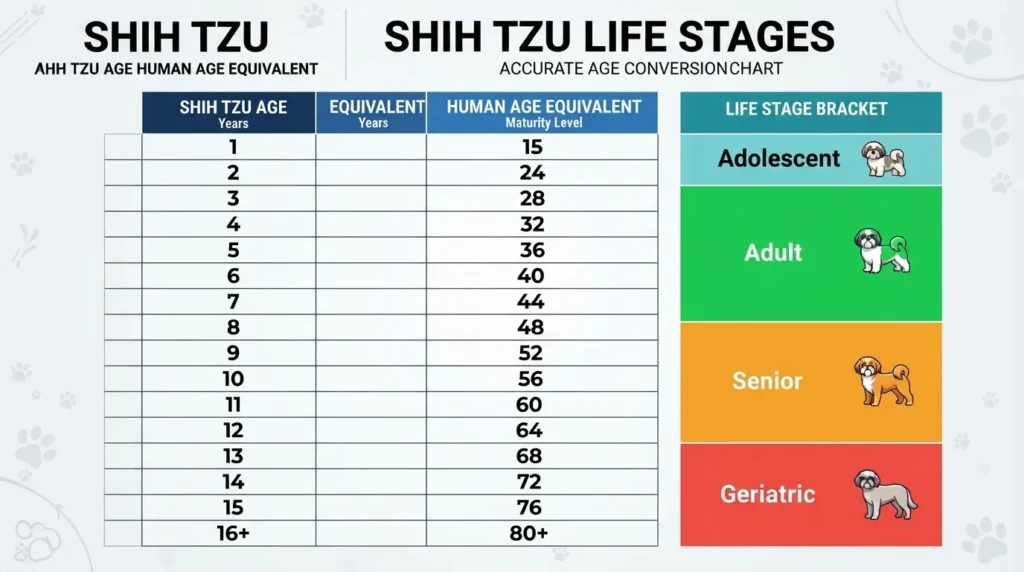
Shih Tzus follow a specific small-breed aging timeline—maturing rapidly at first, then slowing down significantly compared to larger dogs.
Shih Tzu Dog-Years-to-Human-Years Table (Year 1–16)
| Shih Tzu Age | Human Age Equivalent | Life Stage |
| 1–2 Years | 15–24 Years | Adolescent / Adult |
| 3–7 Years | 28–44 Years | Mature Adult |
| 8–16+ Years | 48–80+ Years | Senior / Geriatric |
How to Read and Use This Chart
Instead of looking at individual years, use these core brackets to identify your dog’s current biological milestone. For a quick calculation after age 2, simply count the first two years as 24 human years, and add 4 human years for every calendar year thereafter.
Why Shih Tzu Numbers Differ From the Generic AVMA Chart (small-breed vs. medium-breed aging curve)
Standard AVMA charts are built around medium-sized dogs. Because Shih Tzus are a toy breed (under 16 lbs), their biological clock ticks much slower over time. While a large dog hits senior status by age 6, a Shih Tzu doesn’t reach that same biological baseline until 8 dog years (48 human years).
Why "1 Dog Year = 7 Human Years" Is Wrong for Shih Tzus
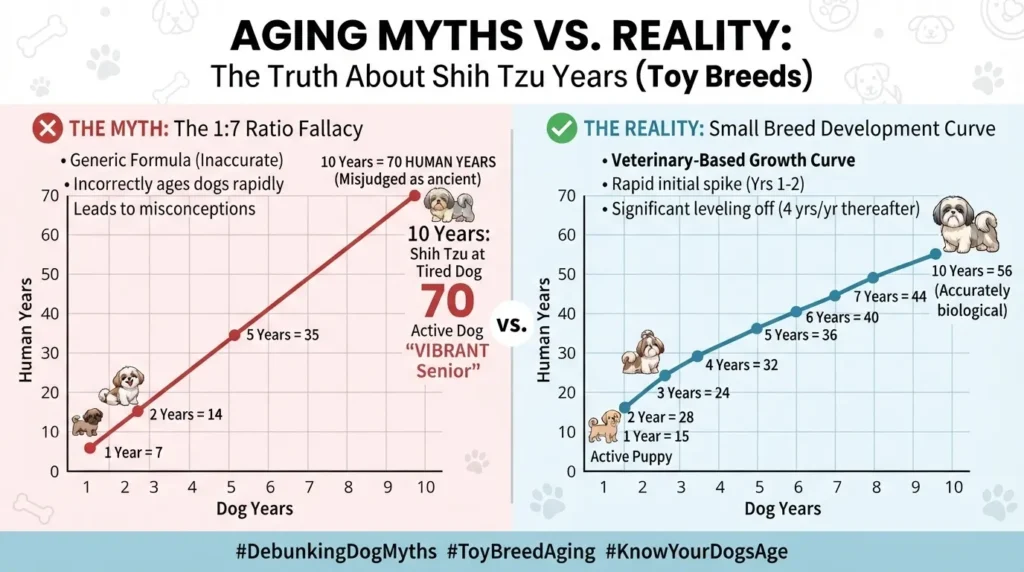
The old rule of multiplying your dog’s age by seven is a myth that oversimplifies canine biology. While it is an easy math trick, applying it to a Shih Tzu gives you an inaccurate picture of their true biological age, especially during their fastest developmental stages and their later senior years.
The Real Science of Dog Aging (2019 UCSD epigenetic clock study)
Modern veterinary medicine relies on much more than guesswork to determine a dog’s age. A groundbreaking 2019 study by researchers at the University of California, San Diego (UCSD) changed how we look at canine aging by studying “epigenetic clocks.” The team tracked DNA methylation—chemical markers that change on DNA over time—to compare how human genomes and canine genomes age side-by-side.
The data revealed that dogs do not age at a flat, linear rate. Instead, their biological clock ticks incredibly fast during infancy and adolescence, which is why a one-year-old dog has already undergone massive physiological developments. After this initial spike, the aging curve flattens out dramatically. Using a simple 7-to-1 formula fails because it completely misses this non-linear curve, overestimating a mature dog’s human equivalent and underestimating a puppy’s maturity.
How Small Breeds Age Differently Than Large Breeds
To make calculations even more complex, a dog’s breed size fundamentally alters their specific aging timeline. The American Animal Hospital Association (AAHA) life stage guidelines emphasize that weight groups play a massive role in how fast a dog reaches senior status.
The Toy Breed Advantage: Small toy breeds like the Shih Tzu (typically weighing under 16 pounds) have a long, slow biological plateau. After their fast development up to age two, their bodies experience less oxidative stress and cellular wear than larger dogs, adding fewer human years annually.
The Large Breed Contrast: Conversely, a large or giant breed dog like a Great Dane or a Golden Retriever ages at a accelerated rate in mid-to-late life. Their bodies work much harder to maintain mass, causing them to enter senior life stages years before a small breed does.
Because of this small-breed aging curve, your Shih Tzu maintains cellular youth much longer than a bigger dog, making generic formulas utterly useless for tracking their true lifespan.
Shih Tzu Life Stages Explained
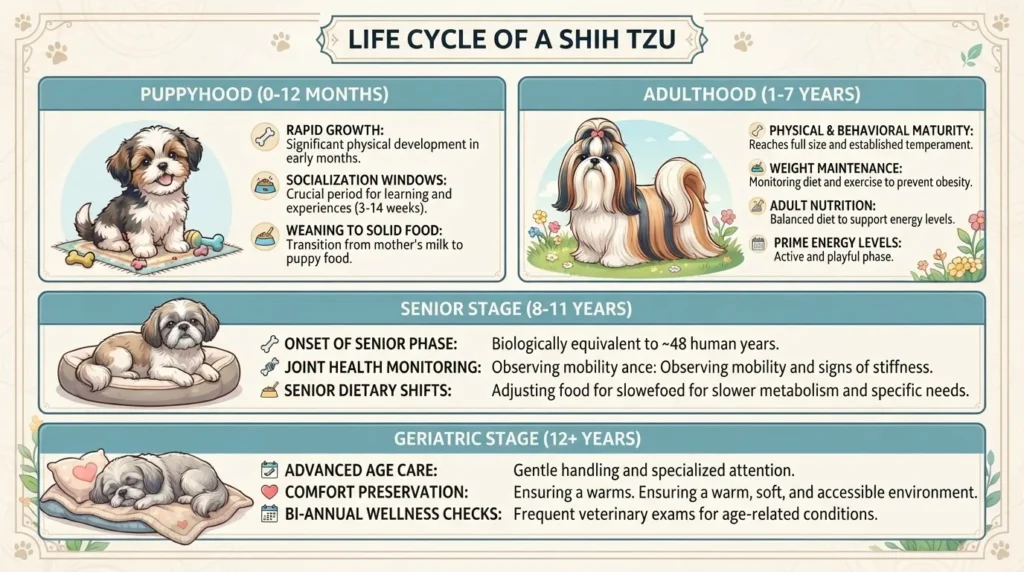
A Shih Tzu changes dramatically from a tiny, energetic puppy into a graceful, slow-moving senior. Understanding these distinct life stages helps you adjust their care, nutrition, and veterinary focus at exactly the right biological moments.
Puppy Stage (0–1 Year) — growth, training, socialization
The first year of a Shih Tzu’s life is a whirlwind of rapid physical and mental development. During this brief phase, they complete nearly 100% of their skeletal growth, transitioning from a fragile newborn into a fully formed adolescent.
Critical Window: The first 3 to 4 months are essential for socialization. Gently exposing your puppy to unique sounds, different environments, and new people helps prevent anxiety and resource guarding later in life.
Training and Structure: Shih Tzus are notoriously strong-willed when it comes to housebreaking. Consistent, positive-reinforcement crate training and a predictable potty schedule are vital during this stage.
Nutritional Demands: Because they pack 15 human years of growth into just 12 months, puppy-formulated kibble rich in DHA is necessary to support brain development and high energy demands.
Adult Stage (1–7/9 Years) — stable energy, weight control
By age two, your Shih Tzu enters a long, stable plateau of adulthood. Their personality is fully formed, their energy levels become predictable, and their daily routine shifts from constant training to steady maintenance.
Activity Levels: While adults still love a good game of fetch, they are perfectly content lounging on the couch for hours. They require moderate daily walks to keep their minds active and muscles toned.
The Weight Struggle: Because their energy levels drop after puppyhood, adult Shih Tzus are highly prone to obesity. Even a single extra pound puts immense pressure on their compact joints and can exacerbate respiratory issues common to flat-faced breeds.
Preventative Care: This stage is all about dental health and weight control. Daily teeth brushing and carefully measured portions keep them biologically young and vibrant.
Senior Stage (7–10+ Years, varies by source) — slower movement, more frequent vet checks
According to the American Animal Hospital Association (AAHA) life stage guidelines, small dogs are typically classified as seniors when they reach the last 25% of their expected lifespan. For a Shih Tzu, this transition usually begins between 7 and 9 years old.
Physical Changes: You will likely notice your dog taking longer to wake up from naps, hesitating before jumping onto the couch, or showing a graying muzzle. Their metabolism slows down, and their immune system requires extra support.
Proactive Screenings: This is the time to transition to bi-annual veterinary exams. Regular blood panels, urinalysis, and blood pressure checks allow your vet to catch age-related issues like kidney changes or heart murmurs before symptoms appear.
Comfort Adjustments: Providing orthopedic beds, minor dietary shifts to joint-supporting nutrients, and ramps for high furniture can significantly improve their quality of life as they age.
Factors That Affect How Long a Shih Tzu Lives
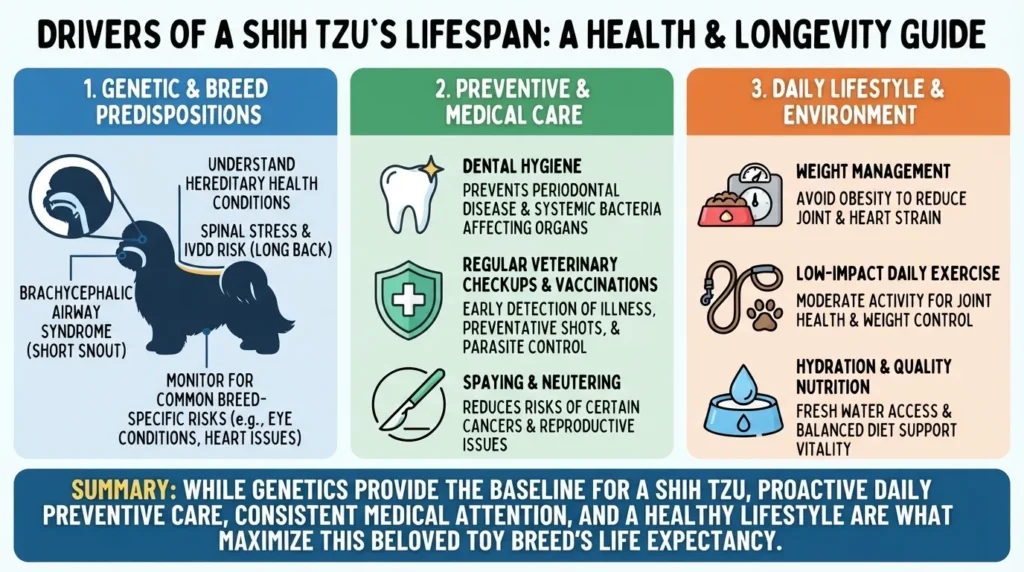
While the small-breed aging curve gives these toy dogs a natural advantage, a Shih Tzu’s actual lifespan is shaped by a mix of genetics and daily care. Understanding these variables allows you to actively influence how gracefully your dog ages.
Genetics & Breeding Line
A Shih Tzu’s lifespan potential is heavily anchored in their DNA. Ethical breeders screen their parent dogs for heritable conditions, drastically reducing the risk of passing down early-onset congenital diseases. Buying from reputable lines or knowing a rescue dog’s history helps identify what health hurdles you might face down the road.
Diet & Weight Management
What goes into your dog’s bowl directly impacts their longevity. Shih Tzus require nutrient-dense, small-breed formulas packed with antioxidants and high-quality proteins to sustain their metabolism. Keeping them lean prevents undue stress on their internal organs and skeletal framework.
Exercise & Mental Stimulation
They might look like ultimate lap dogs, but physical activity keeps their cardiovascular system strong. Daily short walks paired with mental enrichment—like puzzle toys and basic training—prevent behavioral decline and keep their cognitive function sharp as they cross into senior status.
Dental Care
Due to their compact, flat-faced anatomy, Shih Tzus are notoriously prone to rapid plaque buildup. Untreated periodontal disease does more than cause bad breath; bacteria from the mouth can enter the bloodstream, damaging the heart, kidneys, and liver over time. Daily brushing and routine veterinary cleanings add real, healthy years to their lives.
Spaying/Neutering — Impact on Lifespan
According to long-term veterinary longevity studies, spayed and neutered dogs generally live longer than their intact counterparts. Altering your Shih Tzu eliminates the risk of reproductive cancers, such as uterine or testicular tumors, and drastically lowers the chances of life-threatening uterine infections like pyometra.
Common Health Issues That Can Shorten Lifespan
While naturally resilient, the breed’s unique physical structure makes them vulnerable to specific conditions. Managing these proactively prevents chronic stress on their bodies:
Brachycephalic Airway Syndrome: Their short, flat faces mean narrower airways, making them susceptible to heatstroke and breathing difficulties.
Patellar Luxation: Floating kneecaps can lead to early-onset arthritis, slowing down their mobility as they age.
Intervertebral Disc Disease (IVDD): Their elongated backs are prone to slipped or ruptured spinal discs, which can cause severe pain or paralysis if they jump from high furniture.
Eye Conditions: Conditions like cataracts, dry eye, and distichiasis (extra eyelashes rubbing the cornea) can cause painful infections and vision loss if left untreated.
Portosystemic Liver Shunt: An abnormal blood vessel that bypasses the liver, preventing toxins from being filtered out of the body properly.
Dental Crowding: A small jaw forces teeth too close together, trapping food particles and accelerating severe gum disease.
Ear Infections: Heavy, floppy, hair-lined ears trap moisture easily, creating a breeding ground for chronic yeast and bacterial issues.
Obesity: Carrying even two extra pounds puts dangerous strain on a Shih Tzu’s heart, respiratory system, and joints, accelerating the aging process.
How to Help Your Shih Tzu Live Longer Practical Tips
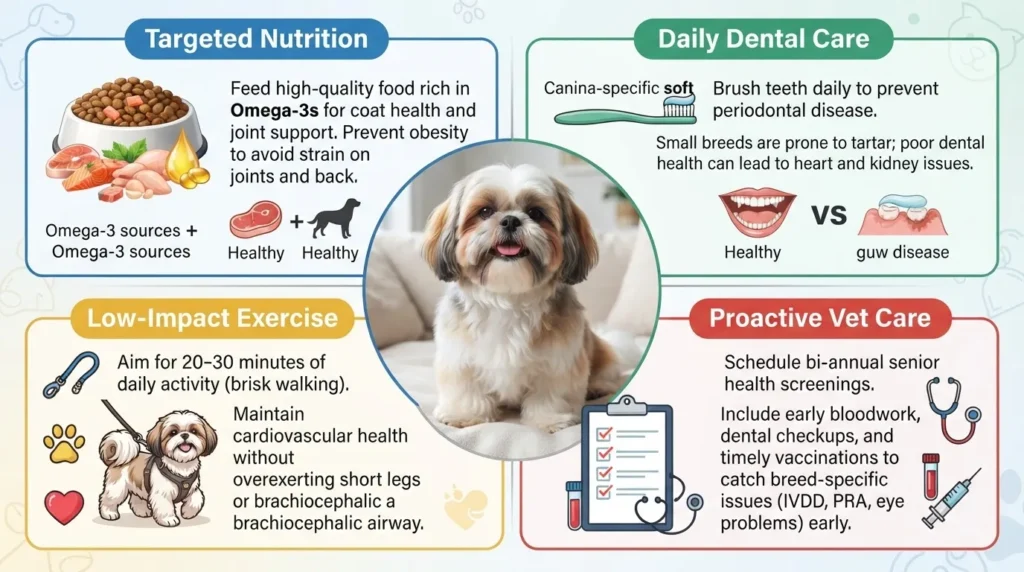
While genetics lay the baseline for your dog’s lifespan, your daily care routines directly influence how gracefully they navigate their senior and geriatric years. Because toy breeds are prone to specific health hurdles, small adjustments to their environment and lifestyle can add quality years to their life.
Prioritize Strict Portion Control: Giving your dog a balanced, high-quality diet is only half the battle. Because of their tiny frames, even a single extra pound puts massive strain on a Shih Tzu’s joints and cardiovascular system. Use a digital kitchen scale to weigh their food precisely, rather than guessing with a measuring cup.
Commit to Daily Dental Hygiene: Periodontal disease does more than cause bad breath. Bacteria from infected gums can enter your dog’s bloodstream, potentially damaging their heart, kidneys, and liver over time. Brush their teeth daily with dog-safe toothpaste and schedule professional veterinary cleanings when tartar builds up.
Schedule Proactive Vet Visits: Once your dog enters their senior years around age 8, transition from annual exams to bi-annual wellness checks. Routine senior blood panels and urinalysis can catch underlying metabolic shifts or early-stage kidney issues long before your dog shows external symptoms.
Keep Them Lean to Protect Aging Joints: Track your dog’s physical condition closely. You should easily feel their ribs beneath their coat and see a visible waistline when looking from above. Keeping them lean helps prevent arthritis complications and reduces the metabolic stress linked to canine diabetes.
Provide Brachycephalic-Safe Exercises: As a flat-faced breed, Shih Tzus struggle to cool down efficiently. Walk them during the cooler early morning or late evening hours, and never use a neck collar, which can collapse their fragile trachea. Switch to a secure, supportive body harness to keep airway pressure at zero.
Adapt Their Environment for Safety: Protect your senior dog’s joints and vision by making the home easier to navigate. Use sturdy pet ramps next to sofas or beds to eliminate high-impact jumping, and lay down non-slip rugs over slick hardwood floors to prevent painful slips or muscle pulls.
Keep Their Minds Sharp: Cognitive decline affects aging pets just like humans. Keep your dog mentally engaged by introducing interactive puzzle toys, hiding low-calorie treats around the living room, and practicing gentle, low-impact training games to keep their brain active.
Frequently Asked Questions
The standard small-breed age chart works exceptionally well for these mixes, provided both parent breeds are similar in size. Because Yorkies, Chihuahuas, and Maltese are all Toy breeds under 15 pounds, a Shorkie or Malt-Tzu will follow the exact same aging curve. Their timeline for understanding how long do shih tzu live in human years remains highly accurate.
Veterinary data suggests that altered dogs tend to live slightly longer than intact dogs. Spaying females before their first heat cycle drastically reduces the risk of mammary tumors and completely eliminates pyometra (a life-threatening uterine infection). Neutering males removes the risk of testicular cancer and reduces roaming behaviors that lead to accidents.
While it is less common, it is entirely possible for a Shih Tzu to live to 18 or 20 years. Reaching these upper limits depends heavily on genetics, high-quality nutrition, regular dental care to prevent systemic infections, and luck. Meeting these exceptional ages means a 20-year-old dog has survived to the human equivalent of 96 years old.
Yes, Shih Tzus generally enjoy a longer lifespan than medium, large, and giant dog breeds. Cellular aging science indicates that large dogs grow rapidly and experience higher oxidative stress, causing their bodies to wear out faster. A Toy breed like the Shih Tzu benefits from a slower metabolic aging plateau after age two, allowing them to outlive large breeds by several years.
According to the American Animal Hospital Association (AAHA) life stage guidelines, small dogs officially become seniors when they reach the last 25% of their expected lifespan. For a Shih Tzu, this transition happens right around 8 dog years, which is the biological equivalent of a 48-year-old human. This is the point where proactive veterinary screenings for joints, heart health, and vision become crucial.
Using the specific small-breed aging curve, here is the direct conversion for these major milestones:
5-year-old Shih Tzu: 36 human years (Prime adulthood)
7-year-old Shih Tzu: 44 human years (Mature adult)
10-year-old Shih Tzu: 56 human years (Senior)
12-year-old Shih Tzu: 64 human years (Geriatric)
15-year-old Shih Tzu: 76 human years (Advanced geriatric)
While the typical lifespan for the breed ranges between 10 and 16 years, some extraordinary individuals far outlive the average. The oldest reliably recorded Shih Tzu was a dog named Smokey from Florida, who reached an incredible 23 years of age.
A Shih Tzu ages rapidly in their first two years, reaching adulthood quickly before their aging process slows down. By the end of their first year, a Shih Tzu is biologically equivalent to a 15-year-old human teenager, and by age two, they are equal to a 24-year-old adult. After that milestone, you can calculate how long do shih tzu live in human years by adding roughly 4 human years for every calendar year.
🐾 Other Age Guides

Gulfam Haider Mehdi
Founder & Developer
I built Dogagescalculator.com to give dog owners honest, science-backed answers instead of the outdated "×7" myth. Every figure here is checked against AKC, AVMA, and published veterinary research.
More about the author & this site →📌 Featured Guides
Siberian Husky vs Alaskan Husky
→
How Does Dog Age Work
→
dog years by breed
→
Life Expectancy Of a West Highland White Terrier
→
how to tell if your dog is a pitbull
→
What Is the Lifespan of a Cocker Spaniel
→
golden retriever puppy feeding guide
→
pitbull dog years to human years
→
Australian Cattle Dog Blue Heeler Labrador Retriever mix
→
dog breed chinese shar-pei
→
Comments