
What Is the Lifespan of a Yorkie Dog?
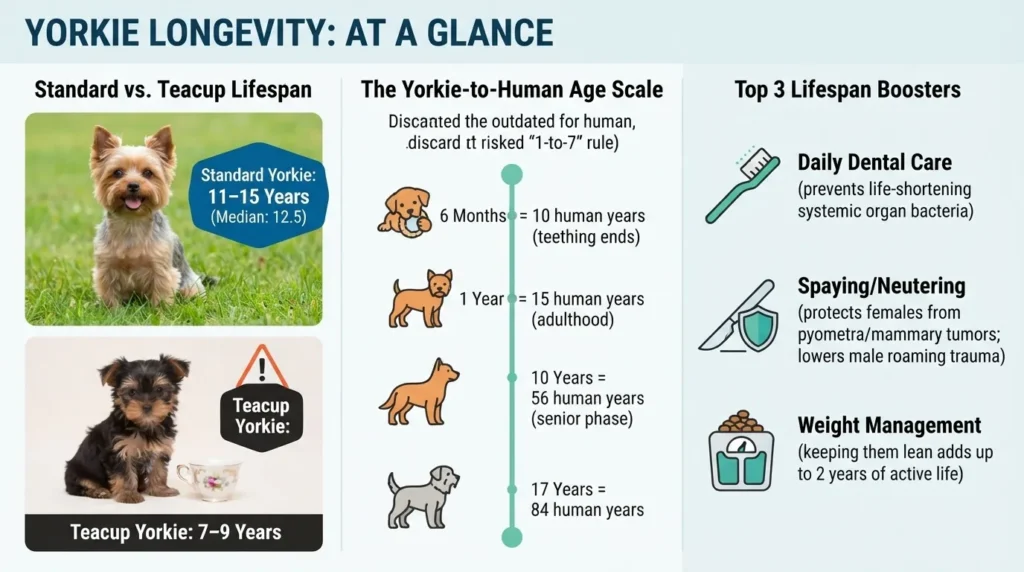
The average lifespan of Yorkie dogs is around 11 to 15 years, with many healthy Yorkshire Terriers living well into their mid-to-late teens. Their small size is one reason Yorkies generally have a longer life expectancy than many larger dog breeds.
If you’re wondering about the lifespan of Yorkshire Terriers, including teacup Yorkies, individual longevity can vary based on genetics, overall health, nutrition, weight, and veterinary care. A well-cared-for Yorkie may live beyond the average range, although exceptionally small dogs can also face additional health concerns.
In this guide, we’ll cover the Yorkie lifespan, average age, senior milestones, common health factors, and practical ways to help your Yorkshire Terrier enjoy more healthy years.
Average Lifespan of a Yorkshire Terrier
Yorkshire Terriers are famous for their spunky personalities, but they are also known for their impressive longevity. As a toy breed, they generally live significantly longer than their larger canine cousins, giving you plenty of years to share with your companion.
Standard Yorkie Lifespan
A standard, healthy Yorkshire Terrier typically enjoys a long and vibrant life. While individual health always plays a massive role, breed-specific data helps us understand what to expect on average.
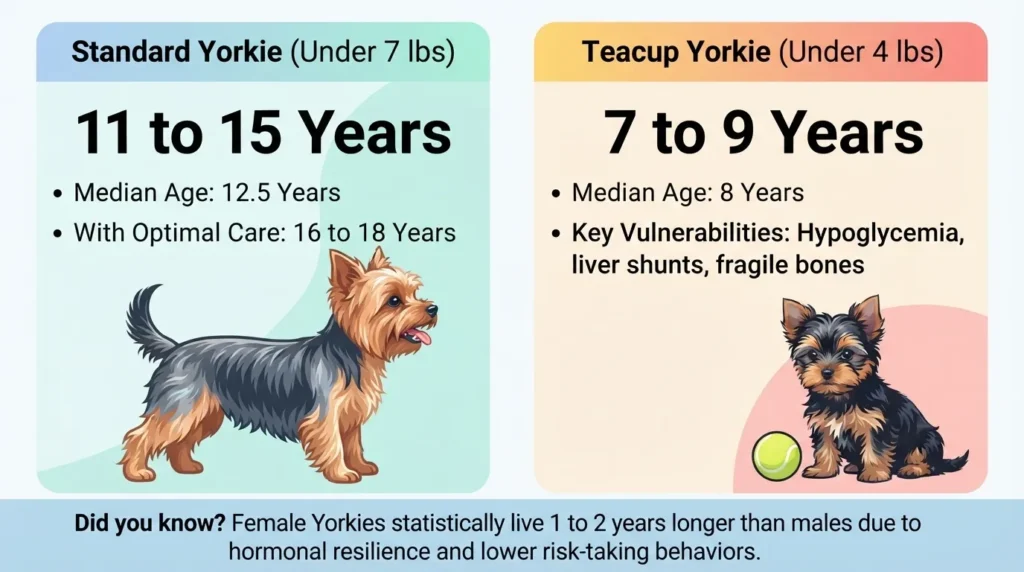
Average Range: A standard Yorkie usually lives between 11 to 15 years.
Median Age: Most veterinary health data points to a median life expectancy of around 12.5 years.
Longest-Living Data Point: It is not uncommon for well-bred Yorkies to push past the average, with some reaching 16 to 18 years. The oldest verified Yorkies in recorded breed history have even reached an incredible 20 to 22 years under optimal care.
Teacup/Toy Yorkie Lifespan
While the American Kennel Club (AKC) only recognizes one official weight standard for the breed (under 7 pounds), many breeders market exceptionally small dogs as “Teacup” or “Micro” Yorkies. These dogs typically weigh less than 4 pounds, and this extreme miniaturization dramatically impacts their life expectancy.
Average Range: Teacup Yorkies have a significantly shorter lifespan, typically ranging from 7 to 9 years.
Median Age: The median age sits right around 8 years, as their fragile bodies are highly susceptible to life-threatening complications.
Longest-Living Data Point: Exceptional cases exist where a toy Yorkie reaches 10 to 12 years, but this requires meticulous, round-the-clock medical management.
Because of their tiny skeletal structures and internal organs, these ultra-small dogs frequently battle severe health issues. They are highly prone to hypoglycemia (sudden blood sugar drops), dental collapse, bone fractures from minor jumps, and genetic defects like portosystemic shunts (liver shunts). If you are looking for a companion that will be by your side for a decade or more, sticking to a standard-sized Yorkie from a reputable breeder is always the safest path.
Do Female Yorkies Live Longer Than Males?
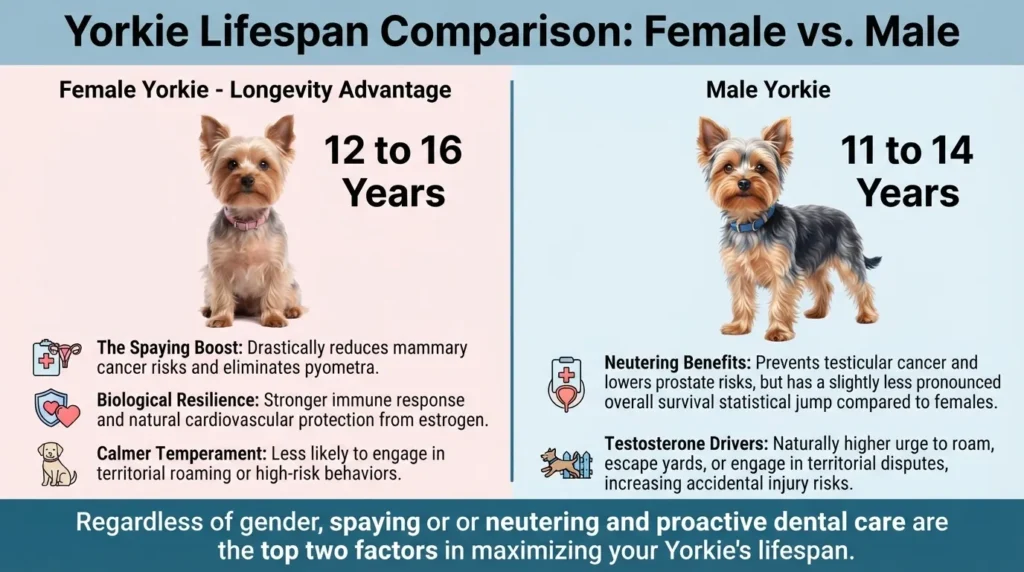
Yes, female Yorkies generally enjoy a slightly longer lifespan than their male counterparts. While the difference isn’t massive—usually averaging about an extra year or two—it is a consistent trend observed in canine longevity research.
According to veterinary database studies analyzing small breed mortality, this gender-based gap in Yorkshire Terrier life expectancy boils down to a mix of biology, hormones, and behavior.
Here is why female Yorkies tend to hold the advantage:
The Spaying Health Boost: Spayed female Yorkies are completely protected from pyometra (a fatal uterine infection common in older intact dogs) and have a drastically reduced risk of mammary tumors. While neutering males also extends their lives, the statistical survival benefit is slightly more pronounced in females.
Lower Risk-Taking Behavior: Intact male Yorkies are driven by testosterone, making them more prone to territorial roaming, escaping the yard, or picking fights with much larger dogs. These behavioral risks naturally increase the chance of accidental, life-shortening injuries.
Biological Resilience: Just like in humans and many other mammals, females tend to have slightly stronger immune systems and cellular resilience. Estrogen also provides a level of natural cardiovascular protection that males simply lack.
Yorkie Life Stages & Human Age Equivalent
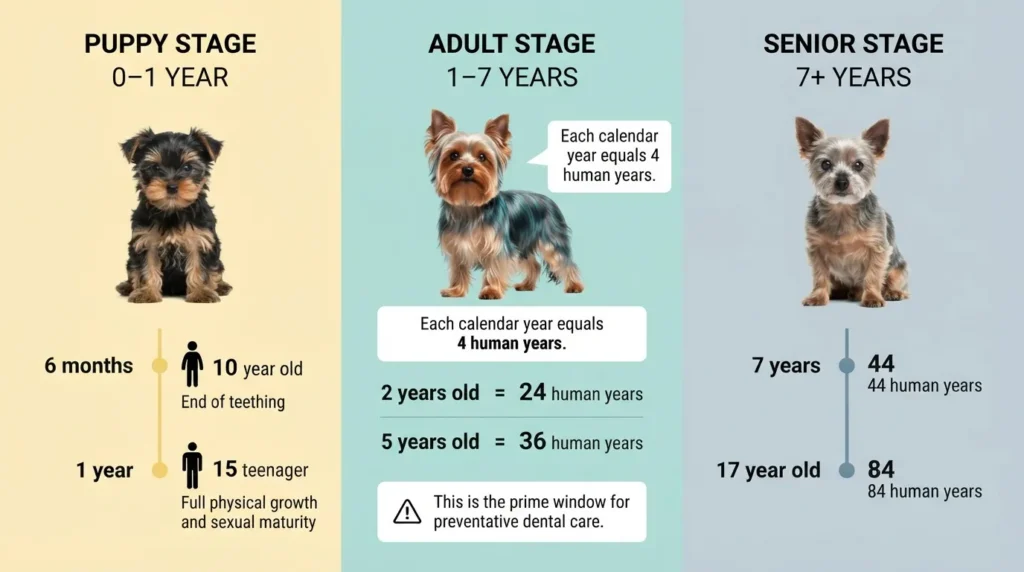
Understanding how your Yorkshire Terrier ages requires throwing out the old “one dog year equals seven human years” rule. Because Yorkies are a toy breed, they develop rapidly during their first year of life but age much more slowly than larger dogs afterward.
According to the American Animal Hospital Association (AAHA) canine life stage guidelines, small dogs enjoy a longer adult phase and a delayed senior transition compared to giant breeds. Here is how your Yorkie’s developmental milestones translate to human years.
Puppy Stage (0–1 year)
The first year of a Yorkie’s life is a whirlwind of rapid physical and mental development. During this brief window, your puppy transitions from a fragile, blind newborn into a fully grown, sexually mature adolescent.
0 to 3 Months: Your puppy is learning social cues, transitioning to solid food, and experiencing rapid bone growth.
6 Months: Equivalent to a 10-year-old child. This is typically when teething ends and permanent adult teeth are set.
1 Year: By their first birthday, your Yorkie has officially reached the human equivalent of 15 years old.
Adult Stage (1–7 years)
Once your Yorkie crosses the one-year mark, their internal biological clock slows down significantly. This is their prime adult phase—characterized by peak energy, a strong immune system, and high mental alertness.
During these years, your Yorkie only ages about four human years for every one calendar year. Maintaining a consistent dental cleaning routine during this stage is highly critical, as veterinary studies show small breeds are exceptionally prone to early-onset periodontal disease, which can impact their systemic health later in life.
Senior Stage (7+ years)
AAHA guidelines define a dog as a “senior” when they enter the final 25% of their breed’s estimated lifespan. For a Yorkshire Terrier, this transition typically begins around age 7 or 8.
While they may start showing subtle signs of slowing down, their small size keeps them remarkably resilient. It is not uncommon for healthy Yorkies to thrive well past their early senior years, with many reaching 17 dog years—an incredible milestone that translates to roughly 84 human years.
(Note: Since the home page already features the complete, detailed conversion chart, you can refer to that main calculator to instantly check any specific age beyond these core milestones.)
Factors That Affect a Yorkie's Lifespan
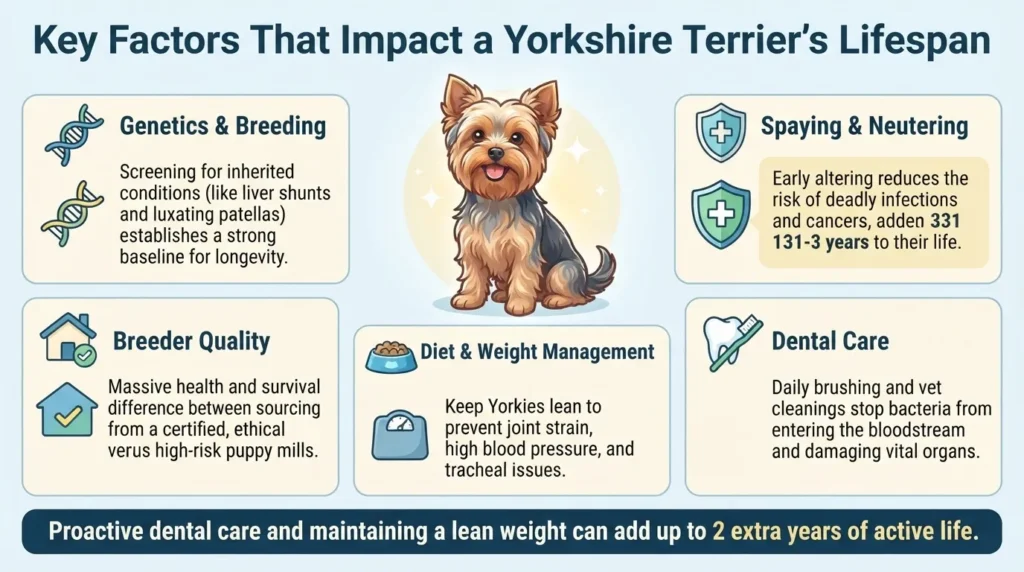
While the average Yorkshire Terrier life expectancy sits between 11 and 15 years, a dog’s lifespan isn’t set in stone. Several critical factors—some decided before they are even born, and others managed in your daily routine—dictate whether a Yorkie will live to see their mid-teens or beyond.
Genetics & Breeding
A Yorkie’s genetic foundation sets the baseline for their potential lifespan. Inherited health conditions, such as luxating patellas, progressive retinal atrophy (PRA), and portosystemic shunts (a liver defect), can significantly impact their long-term health.
According to veterinary genetic research, choosing a dog from parents screened for these specific congenital issues decreases the likelihood of early-onset chronic illnesses. A strong genetic starting point makes it much easier to keep your Yorkie healthy into their senior years.
Spaying/Neutering
Choosing if and when to spay or neuter your Yorkie has a direct statistical link to how long they live. Retrospective veterinary studies show that altered dogs live significantly longer than their intact counterparts.
For females: Spaying before her first heat cycle virtually eliminates the risk of pyometra (a life-threatening uterine infection) and drastically reduces the chances of mammary cancer.
For males: Neutering prevents testicular cancer and lowers the risk of prostate issues, alongside reducing the urge to roam, which lowers the risk of accidental trauma.
Responsible Breeder vs Puppy Mill Sourcing
Where your Yorkie comes from directly influences their health trajectory. Responsible breeders prioritize the health of the breed over profit, utilizing DNA testing and orthopedic evaluations to ensure only healthy lines reproduce.
Conversely, puppy mills and backyard breeders bypass these vital screenings to maximize litter numbers. Yorkies from these high-stress environments often suffer from weakened immune systems, severe parasite loads, and undetected congenital defects that can permanently shorten their lifespan.
Diet & Nutrition
As a toy breed with a fast metabolism, Yorkies have unique nutritional requirements. Obesity is a silent threat that puts unnecessary strain on their tiny joints, raises blood pressure, and exacerbates collapsing trachea issues—a common airway problem in small dogs.
Feeding high-quality, nutrient-dense kibble formulated specifically for small breeds helps support their joints and vital organs. Keeping your Yorkie at a lean, healthy weight can add up to two extra years of active, happy life.
Dental Health
Dental care is often overlooked, but it is one of the most critical factors in extending a Yorkie’s life. Because of their tiny mouths, Yorkshire Terriers frequently suffer from overcrowded teeth, which trap food and rapidly lead to periodontal disease.
If left untreated, bacteria from infected gums enters the bloodstream, where it slowly damages the kidneys, liver, and heart muscle. Regular daily brushing combined with professional veterinary dental cleanings can prevent these systemic complications and keep your senior Yorkie thriving.
Common Causes of Death in Yorkshire Terriers
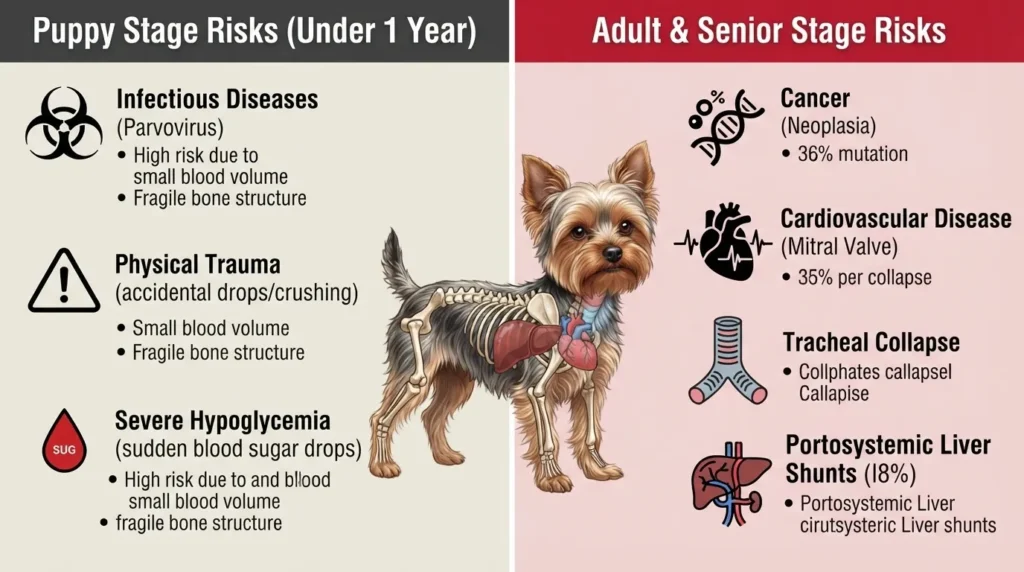
Understanding the primary health risks for Yorkshire Terriers is key to helping them reach their full lifespan. Because of their tiny size and unique genetics, their health vulnerabilities shift dramatically as they grow from fragile puppies into mature adults.
A landmark study conducted by the University of Georgia, which analyzed veterinary data from over 74,000 dogs over a twenty-year period, revealed exactly what most commonly threatens a Yorkie’s life at different developmental stages.
Leading Causes in Puppies
For Yorkie puppies under one year of age, the margin for error is incredibly small. Their tiny bodies leave them highly vulnerable to sudden, severe health crises that rarely threaten larger breeds.
Infectious Diseases: The University of Georgia study confirmed that infectious diseases, particularly canine parvovirus and distemper, are the single leading cause of death in Yorkie puppies. Because of their small blood volume, dehydration from these infections becomes fatal very quickly.
Physical Trauma: Due to their diminutive size, Yorkie puppies frequently succumb to accidental trauma. This includes fatal injuries from being stepped on, dropped, or attacked by larger animals.
Severe Hypoglycemia: While not always classified as a standalone disease, sudden drops in blood sugar are a major emergency for toy puppies. Without immediate glucose intervention, a puppy can experience fatal seizures within hours.
Leading Causes in Adults
Once a Yorkie reaches adulthood, the threats transition from acute environmental hazards and infections to chronic, progressive diseases.
Cancer (Neoplasia): Just like in humans, cancer is a primary cause of death in mature and senior Yorkies. The study noted that while toy breeds suffer from cancer at slightly lower rates than some giant breeds, it remains a dominant threat as they pass their eighth year.
Cardiovascular Disease: Mitral valve disease and congestive heart failure are incredibly common in aging toy breeds. Over time, the heart valves weaken, leading to fluid retention and eventual heart failure.
Respiratory Issues (Tracheal Collapse): Yorkies are genetically predisposed to weak tracheal rings. Chronic tracheal collapse can eventually lead to severe respiratory distress, secondary lung infections, and fatal airway obstruction.
Liver Shunts (Portosystemic Shunts): This congenital condition, highly prevalent in the breed’s gene pool, bypasses normal blood flow to the liver. Over time, toxins build up in the bloodstream, leading to progressive organ failure in early to mid-adulthood.
How Yorkie Lifespan Compares to Other Small Breeds
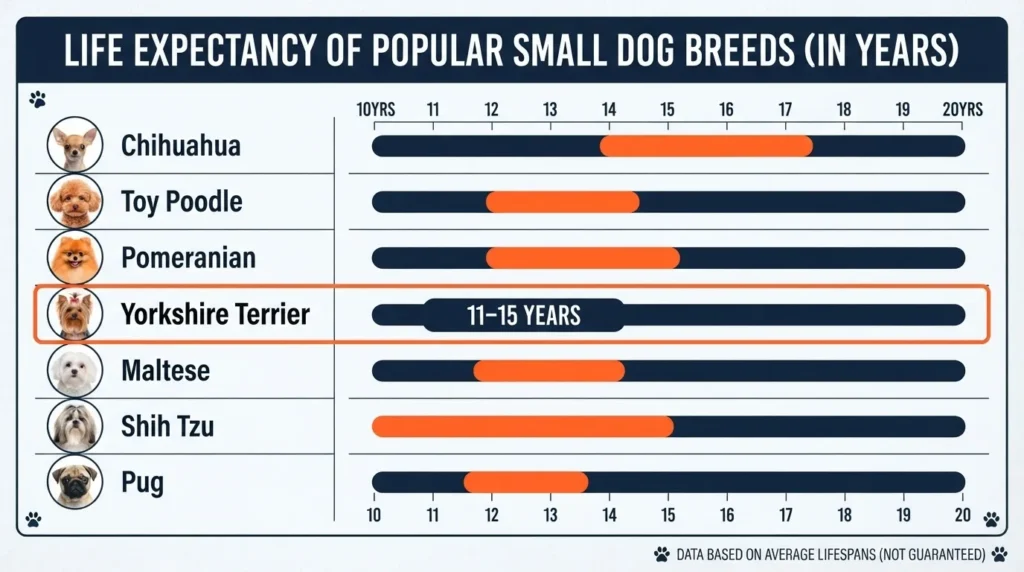
Small dog breeds are famous for their longevity, regularly outliving their larger canine cousins. When looking at the Yorkshire Terrier, they sit comfortably near the top of the lifespan spectrum, even among other toy and miniature breeds.
According to veterinary registration data and breed health statistics, small breeds benefit from slower aging processes post-adolescence. While a Yorkie can easily live well into their teens, slight genetic differences, breed-specific health predispositions, and historical breeding purposes create minor variations in life expectancy across similar-sized dogs.
| Breed | Average Lifespan (Years) |
| Chihuahua | 15 – 20 |
| Yorkshire Terrier (Yorkie) | 11 – 15 |
| Toy Poodle | 10 – 18 |
| Shih Tzu | 10 – 16 |
| Pomeranian | 12 – 16 |
| Maltese | 12 – 15 |
| Pug | 11 – 15 |
While Chihuahuas hold the crown for the longest average lifespan among toy breeds, Yorkies are not far behind. A major factor that influences these averages is dental health. Because toy dogs have tiny mouths with crowded teeth, preventive dental care is one of the most critical, actionable steps you can take to help your Yorkie hit the higher end of that 11 to 15-year average
Frequently Asked Questions
Yes, spaying or neutering has a statistically positive impact on the lifespan of a Yorkie dog. Breed health data compiled by veterinary scientists indicates that sterilized dogs live up to 20% longer than intact dogs. This simple procedure completely eliminates the risk of uterine infections (pyometra) and testicular cancer while drastically reducing the incidence of mammary tumors.
Many Yorkie mixes like Morkies (Maltese-Yorkie) or Yorkiepoos (Poodle-Yorkie) do enjoy slightly longer lifespans, often reaching 13 to 16 years. This is largely due to a genetic phenomenon known as hybrid vigor, which reduces the likelihood of inheriting breed-specific genetic disorders. However, their longevity still heavily depends on the health of the parent dogs and the care they receive.
At 9 to 10 years old, a Yorkie is officially considered a senior dog, but they are not yet "old" or geriatric. In human terms, a 10-year-old Yorkie is roughly equivalent to a 56-year-old person. They may start slowing down slightly, but with proactive joint supplements and regular vet checkups, they still have plenty of active, high-quality years ahead of them.
According to a comprehensive veterinary study by the University of Georgia tracking canine mortality over two decades, the leading cause of death in Yorkie puppies is infectious disease, while the top cause of death in adult and senior Yorkies is cardiovascular (heart) disease. Specifically, myxomatous mitral valve disease (MMVD)—which causes leaky heart valves—is highly prevalent in older Yorkshire Terriers.
Unfortunately, teacup Yorkies generally have a significantly shorter lifespan, often only living 7 to 9 years. Because they are bred down to weigh under 4 pounds, these micro-sized dogs are highly vulnerable to life-threatening issues like hypoglycemia (dangerously low blood sugar), liver shunts, and fragile bones. Most reputable breeders and veterinary researchers advise against targeting these extreme sizes due to these severe health compromises.
Yes, a Yorkie can live to 20 years or even older, though it is quite rare. While the average lifespan of a Yorkie dog sits between 11 and 15 years, exceptional care, genetics, and luck allow some to reach their late teens and early twenties. In fact, one of the oldest recorded Yorkies in history, Jack, lived to be 26 years old.
🐾 Other Age Guides

Gulfam Haider Mehdi
Founder & Developer
I built Dogagescalculator.com to give dog owners honest, science-backed answers instead of the outdated "×7" myth. Every figure here is checked against AKC, AVMA, and published veterinary research.
More about the author & this site →📌 Featured Guides
What Is the Lifespan of a Labrador Retriever
→
Siberian Husky vs Alaskan Husky
→
Dog Breed Lifespan Chart
→
chihuahua dog years to human years
→
what is the lifespan of an english bulldog
→
Blog
→
golden retriever puppy feeding guide
→
What Is the Average Age for a Dog
→
yorkie mix breeds
→
yorkie dog years to human years
→
Comments