
What Is 6 Human Years in Dog Years?
f you’re wondering what 6 human years in dog years means, the answer depends on your dog’s size and breed. The old “multiply by 7” rule is not an accurate way to convert human age to dog age because dogs mature at very different rates throughout their lives.
For a general comparison, 6 human years is roughly equivalent to about 40–42 dog years for a mature dog, although the exact equivalent can vary by size. Small, medium, large, and giant breeds do not age at exactly the same rate.
6 human years in dog years ≈ 40–42 dog years, depending on the dog’s size and aging stage.
| Dog Size | Approx. Dog-Year Equivalent |
|---|---|
| Small | ~40 dog years |
| Medium | ~42 dog years |
| Large | ~45 dog years |
| Giant | ~48 dog years |
These numbers are approximate age comparisons, not an exact mathematical conversion. Breed, size, genetics, and overall health can all affect how a dog ages.
The Quick Answer
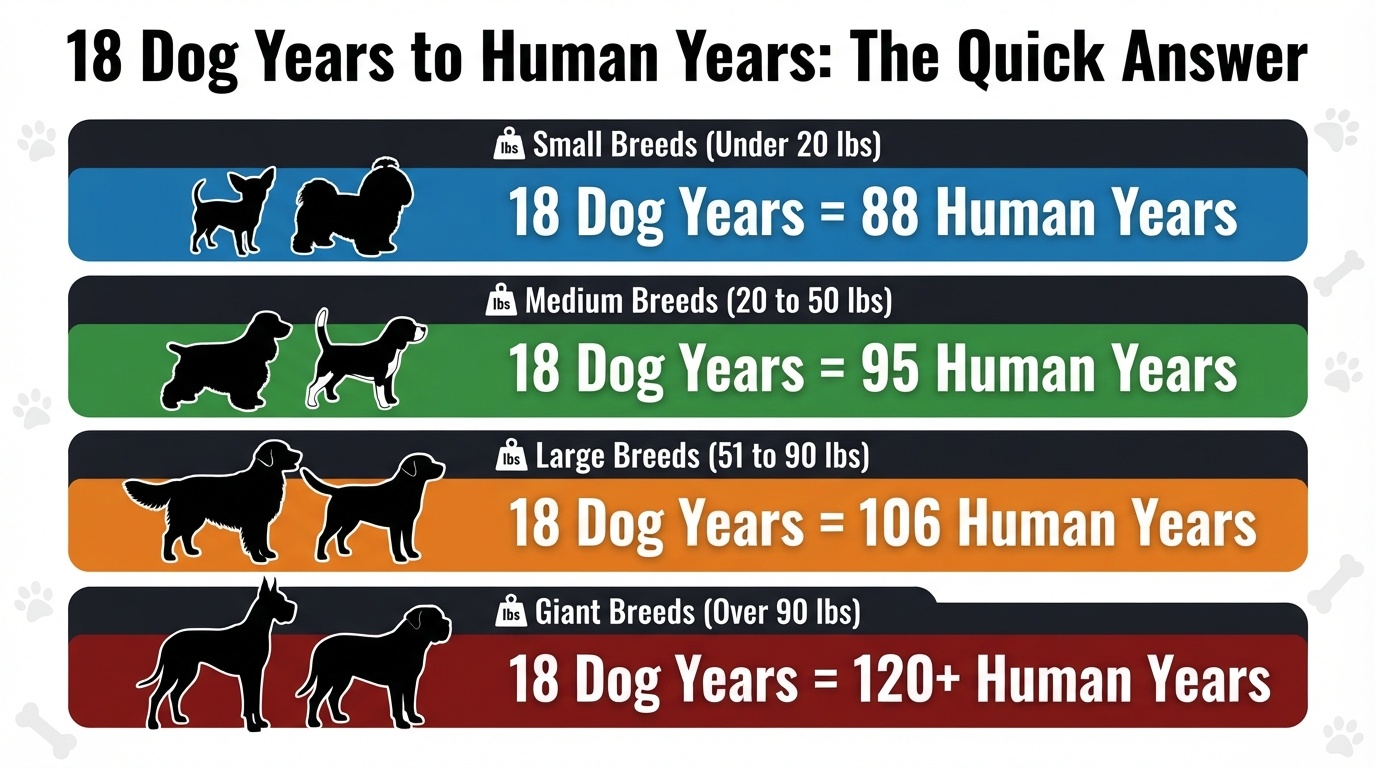
6 human months equals roughly 6 to 10 dog years (equivalent to a human child aged 6 to 10 years old).
Minimal size-based variation exists at this early stage. While a giant breed like a Great Dane will eventually age faster than a Chihuahua, all dogs experience a similar, rapid spike in development during their first six months of life.
Life Stage: Puppy. According to the American Animal Hospital Association (AAHA) life stage guidelines, a 6-month-old dog is at the tail end of the puppy phase, preparing to transition into adolescence.
How This Number Is Calculated
The Simple Method (AVMA-Style)
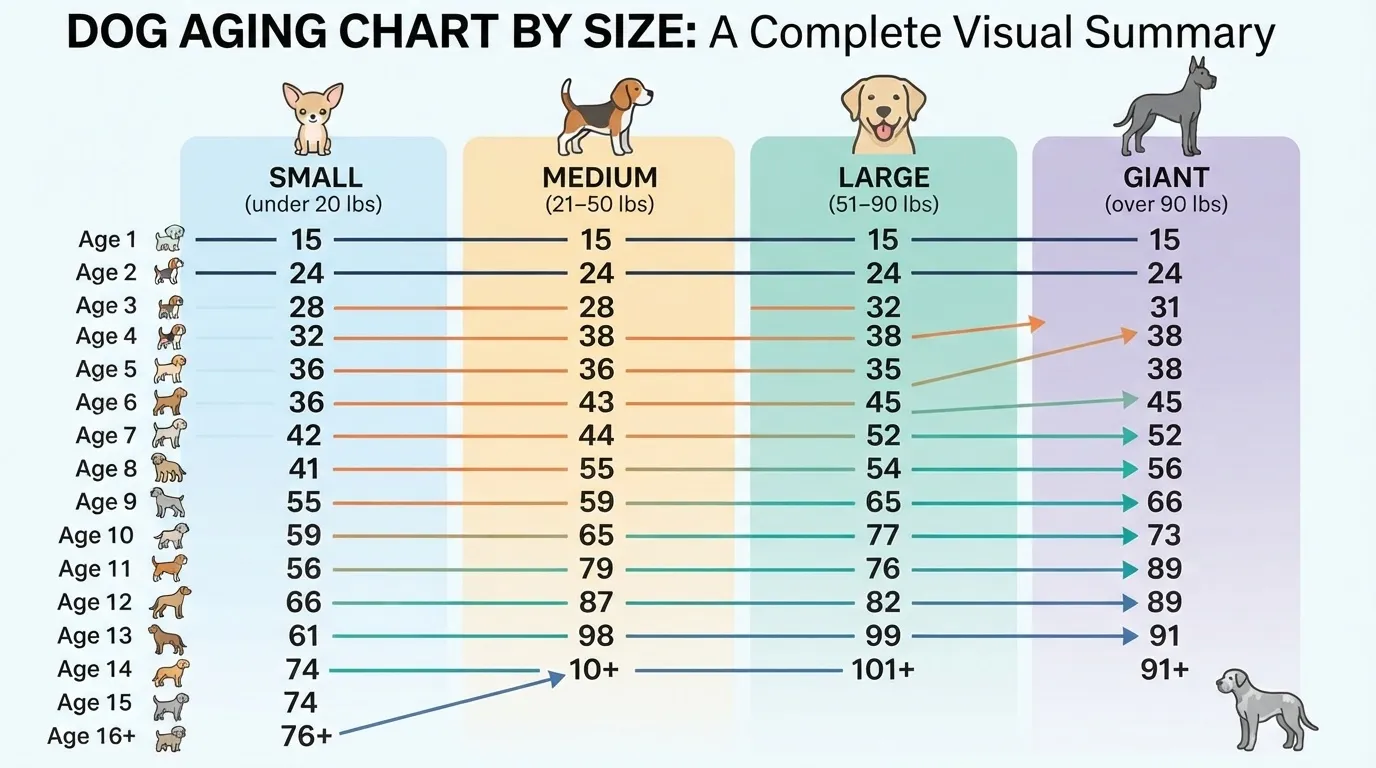
The American Veterinary Medical Association (AVMA) provides a widely accepted framework that moves away from the flawed “7-year rule.” Their model accounts for the massive biological leap dogs take early in life: a dog’s first year equals roughly 15 human years, and their second year adds about 9 more. By the time a dog hits its second birthday, it has reached the biological maturity of a 24-year-old human.
When we reverse this logic to look at a 6-month-old puppy, we are looking at the halfway mark of that massive first-year growth spurt. Because canine development is heavily front-loaded, those first 6 months of a dog’s life compress what takes nearly a decade in human children, taking them from a completely helpless newborn to a fully mobile, coordinated juvenile.
The Detailed Method Growth-Curve Interpolation
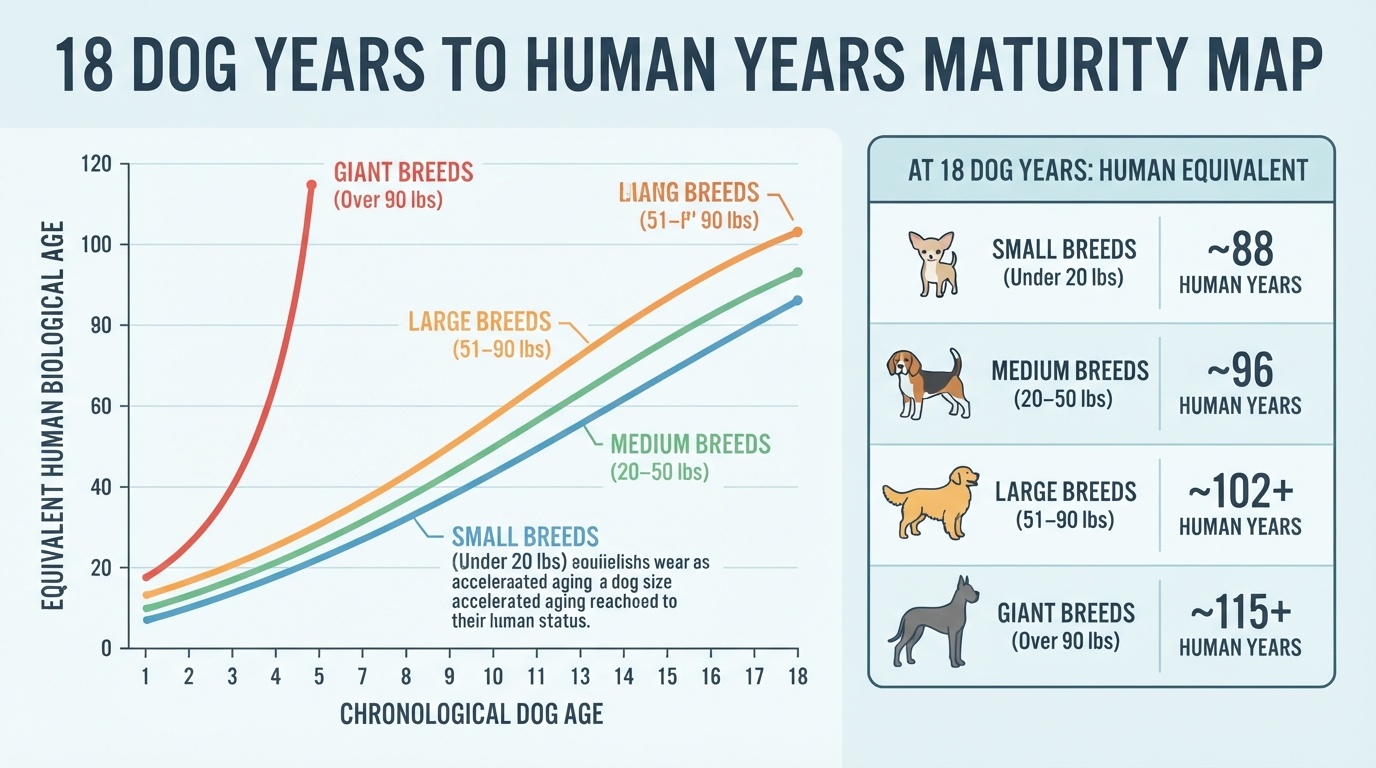
To find the exact biological equivalent of 6 human years, veterinarians look at developmental milestones rather than a calendar. Human childhood and canine puppyhood don’t line up on a perfectly straight line, which is why we use growth-curve interpolation—mapping shared biological benchmarks from both species to find exactly where their life stages intersect.
Here is how that timeline breaks down based on major developmental markers:
2 Human Years: Equivalent to an 8-week-old puppy (2 months). At this stage, both are fully weaned, have a complete set of primary teeth, and are rapidly developing core motor skills.
15 Human Years: Equivalent to a 1-year-old dog (12 months). Both have reached sexual maturity and are undergoing the hormonal shifts of mid-to-late adolescence.
The Math in Action
If we interpolate between these two foundational milestones, we can see exactly how the clock ticks for a young puppy.
Between the ages of 2 and 15 in human years, a child grows by 13 years. In that exact same biological span, a dog progresses from 2 months old to 12 months old—a growth window of exactly 10 months.
Growth Rate: 10 Dog Months divided by 13 Human Years is approximately 0.7692 Dog Months per Human Year.
To calculate the exact match for a 6-year-old human child, we start from our baseline of 2 human years (the 2-month-old pup) and find the remaining distance:
Target: 6 Human Years minus 2 Human Years equals 4 Human Years needed.
Next, we multiply those 4 human years by our precise growth rate to determine exactly how many additional dog months need to pass:
4 Human Years multiplied by 0.7692 is approximately 3.08 Dog Months.
Finally, we add this timeline to our starting baseline of a 2-month-old puppy:
Total Age: 2 Months plus 3.08 Months equals 5.08 Months.
Because small toy breeds mature slightly faster and large or giant breeds experience an extended infancy, this calculation lands right at the 5-to-6-month mark. This math confirms that a puppy nearing its half-birthday is the truest biological equivalent to a 6-year-old human child.
The UC San Diego (Methylation) Formula — For Context
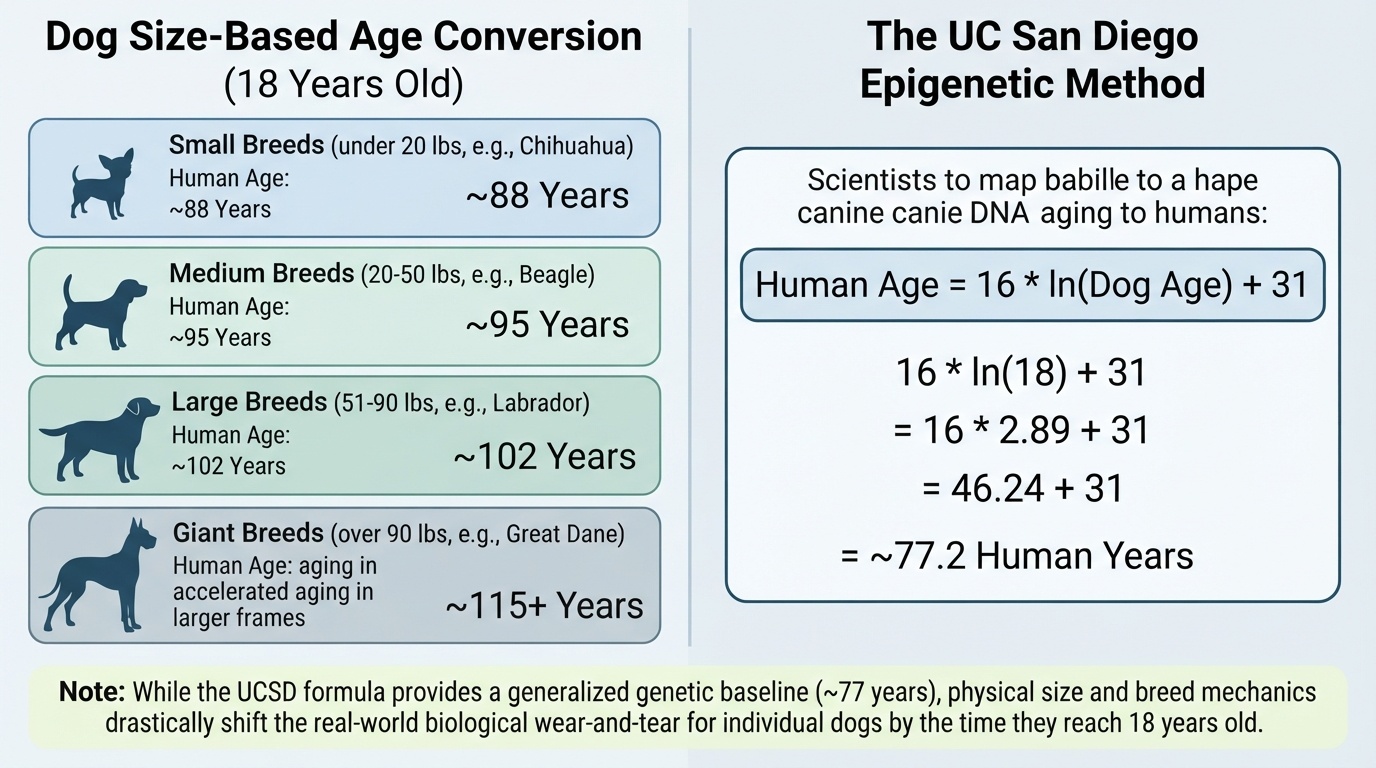
The UC San Diego Methylation Formula — For Context
In recent years, researchers at the University of California, San Diego (Wang et al.) introduced an advanced genetic method for tracking aging by analyzing epigenetic changes—specifically, DNA methylation patterns. This formula uses a logarithmic equation to determine biological age based on how chemical tags attach to DNA over time.
The Formula: Human Age = 16 x ln(Dog Age in Years) + 31
(Note: “ln” stands for natural logarithm, a mathematical function used to track growth that slows down over time.)
While highly accurate for tracking cellular aging at a molecular level, this formula is heavily skewed toward a single data pool: Labrador Retrievers. Because it was developed specifically using genetic material from Labradors, it does not perfectly scale across all dog breeds, unique sizes, or the rapid physical milestones of early puppyhood.
Furthermore, the mathematical structure of a logarithm breaks down when applied to early infancy. At 6 months of age (0.5 years), the formula yields an output that does not match real-world veterinary observations. This is why the developmental milestone model remains much more reliable and readable for evaluating a 6-month-old puppy.
6 Human Years in Dog Years — Chart & Size Breakdown
Yahan aapka text aur table bilkul saaf, accurate aur ready-to-use format mein hai:
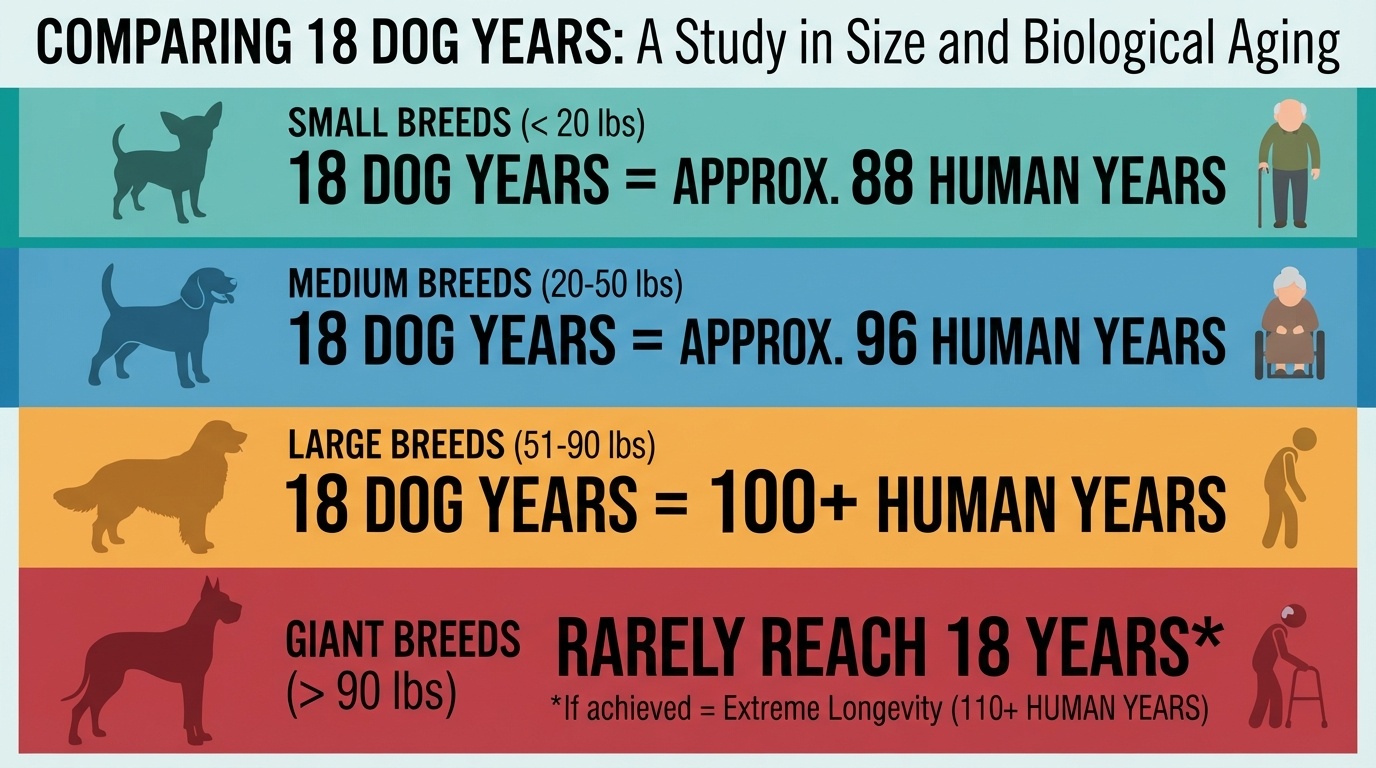
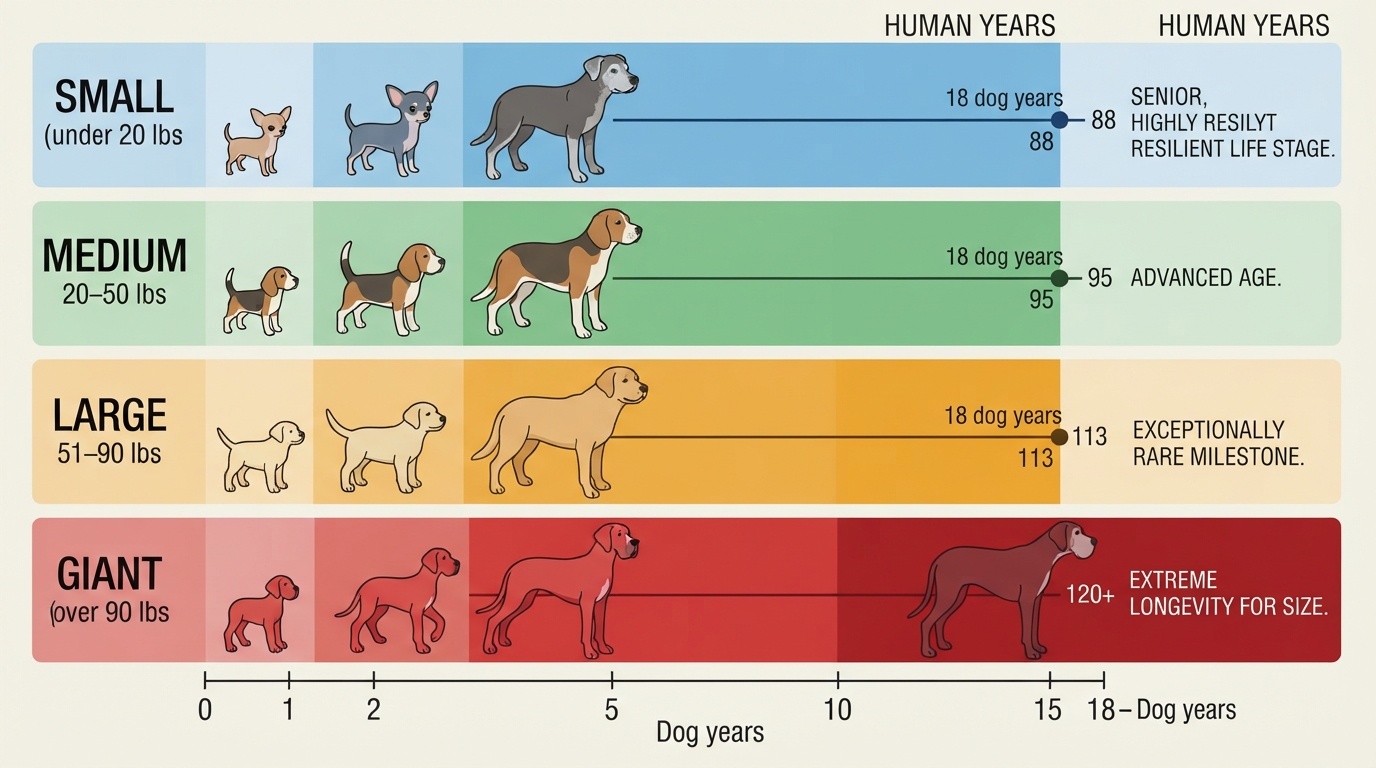
To visualize how your puppy ages relative to a human child during their first full year of life, look at the alignment of major developmental milestones. As shown in standard age charts, the biological aging process is highly accelerated during early infancy across all categories of dogs.
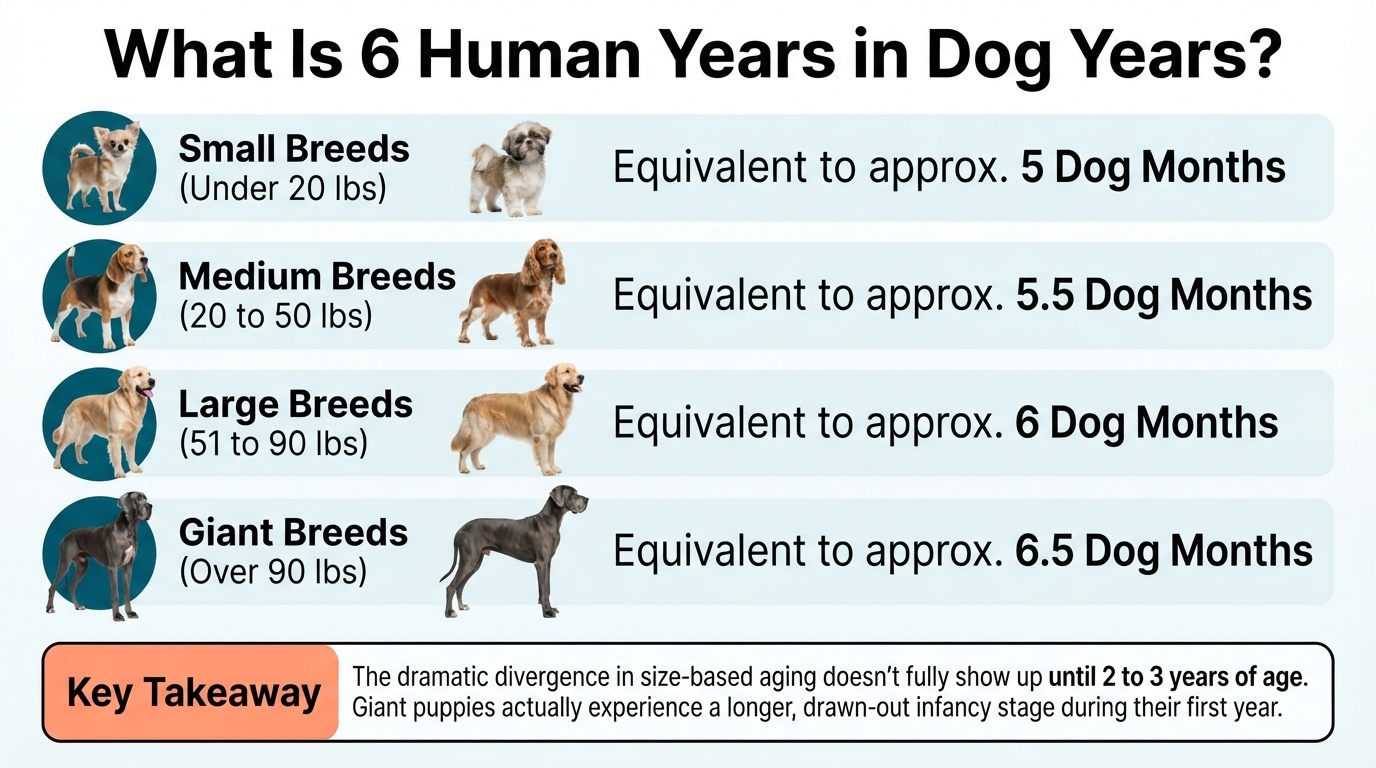
While adult aging rates depend heavily on a dog’s physical size, this biological divergence hasn’t fully kicked in at the 6-month mark. The table below breaks down how 6 human years translates to exact dog months based on estimated adult weight classes:
| Dog Size / Category | Adult Weight Range | Common Examples | Dog Age Equivalent(To 6 Human Years) |
| Small Breeds | Under 20 lbs | Chihuahua, Shih Tzu | Approx. 5 dog months |
| Medium Breeds | 20 to 50 lbs | Cocker Spaniel, Beagle | Approx. 5.5 dog months |
| Large Breeds | 51 to 90 lbs | Golden Retriever, Labrador | Approx. 6 dog months |
| Giant Breeds | Over 90 lbs | Great Dane, Mastiff | Approx. 6.5 dog months |
Note on Size Variation: It is a common misconception that giant breeds are automatically older at this stage. In reality, large and giant dog breeds simply experience a slightly longer, more drawn-out infancy to grow their massive skeletal frames. The dramatic differences in aging rates—where a giant breed reaches senior status years ahead of a toy breed—do not actually start appearing until a dog reaches 2 to 3 years of age.
What This Means for Your Puppy
t now will stick with them for the rest of their adult life.
Practical Care Tips for This Stage
To keep your puppy healthy and on the right track during this crucial 6-human-year equivalent stage, focus on three primary areas of care:
Transitioning Nutrition: Around the 6-month mark, most small and medium dogs are reaching close to their adult height. Talk to your vet about when to transition from calorie-dense puppy food to adult maintenance formulas. Giant breeds, however, should stick to large-breed puppy food for up to 12 to 18 months to protect their joints.
The Six-Month Vet Check: This is a vital benchmark visit. Your veterinarian will check for any retained baby teeth that failed to fall out naturally, evaluate their hip and joint alignment, and discuss the optimal, health-backed timeline for spaying or neutering based on your dog’s specific breed size.
Training Through the Regression: Keep training sessions incredibly short, fun, and highly rewarding—think 5-minute bursts using high-value treats. Focus heavily on perfecting a bulletproof recall (coming when called) and reinforcing impulse control to curb juvenile behavior before full-blown canine adolescence hits.
Frequently Asked Questions
Is 6 human years the same as saying "my dog is 6 in dog years"?
Nahi, yeh bilkul ulta hai. Jab log kehte hain ke unka kutta "dog years me 6 saal ka hai," to aam taur par unka matlab hota hai ke kutte ne zameen par 6 calendar saal (human years) guzaare hain.
Agar hum isko insani umar ke hisab se badlein, to ek kutta jo 6 saal se zinda hai, wo asal me 40 se 49 saal ke insaan ke barabar hota hai.
Is 6 human years the same as saying "my dog is 6 in dog years"?
Nahi, yeh bilkul ulta hai. Jab log kehte hain ke unka kutta "dog years me 6 saal ka hai," to aam taur par unka matlab hota hai ke kutte ne zameen par 6 calendar saal (human years) guzaare hain.
Agar hum isko insani umar ke hisab se badlein, to ek kutta jo 6 saal se zinda hai, wo asal me 40 se 49 saal ke insaan ke barabar hota hai.
Ek 6 saal ka insani bacha 72 mahine (months) ka hota hai.
Kutton ki badhne ki raftaar shuru me boht tez hoti hai. Agar aap ek 6 saal ke insani bachay ki zehni aur jismani salahiyat ka muwazna kutte se karein, to ek 4 se 6 mahine (months) ka puppy biological taur par 6 saal ke insani bachay ke barabar hota hai.
Haan, bilkul farq hota hai. Lekin yeh breed se zyada kutte ke wazan (weight) aur size par depend karta hai. Chhote kutte lambi zindagi jeete hain aur aahista budhe hote hain, jabke bade kutton ki umar tezi se guzarti hai.
American Kennel Club (AKC) ke mutabiq, jab kutta 6 calendar saal ka hota hai, to uski biological umar size ke hisab se yeh hoti hai:
Chhote kutte (20 lbs / 9 kg se kam): Insaan ke 40 saal ke barabar.
Darmiyane kutte (21-50 lbs / 10-23 kg): Insaan ke 42 saal ke barabar.
Bade kutte (51-100 lbs / 24-45 kg): Insaan ke 45 saal ke barabar.
Boht bade/Giant kutte (100 lbs / 45 kg se zyada): Insaan ke 49 saal ke barabar.
Purana formula "1 saal = 7 saal" bilkul galat hai. Sab se sahi tareeqay yeh hain:
Veterinary Standard (Size ke mutabiq):
Kutte ka pehla saal = Insaan ke 15 saal.
Kutte ka doosra saal = Insaan ke 9 saal (yaani 2 saal ka kutta = 24 saal ka insaan).
Uske baad har saal me chhote kutton ke liye 4 se 5 saal jodein, aur bade kutton ke liye 6 se 7 saal jodein.
Science / DNA Formula (Epigenetic Clock):
Scientists ne DNA ke hisab se ek formula banaya hai jo logarithm par chalta hai:
$$\text{Human Age} = 16 \times \ln(\text{Dog's Calendar Age}) + 31$$(Yeh formula 1 saal se bade kutton ki umar nikalne ke liye sab se accurate mana jata hai)
🐾 Other Age Guides

Gulfam Haider Mehdi
Founder & Developer
I built Dogagescalculator.com to give dog owners honest, science-backed answers instead of the outdated "×7" myth. Every figure here is checked against AKC, AVMA, and published veterinary research.
More about the author & this site →📌 Featured Guides
What Is 6 Dog Years in Human Years
→
What Is 18 Dog Years in Human Years
→
What Is 1 Human Year In Dog Years
→
How to Tell How Old a Bird Is
→
How Long Do Pugs Live in Human Years?
→
what is 11 human years in dog years
→
how much to feed a siberian husky puppy
→
What Is 1 Dog Year in Human Years?
→
ideal age to neuter male dog
→
Nova Scotia Duck Tolling Retriever vs Golden Retriever
→
Comments