
What Is 13 Human Years in Dog Years? Complete Guide
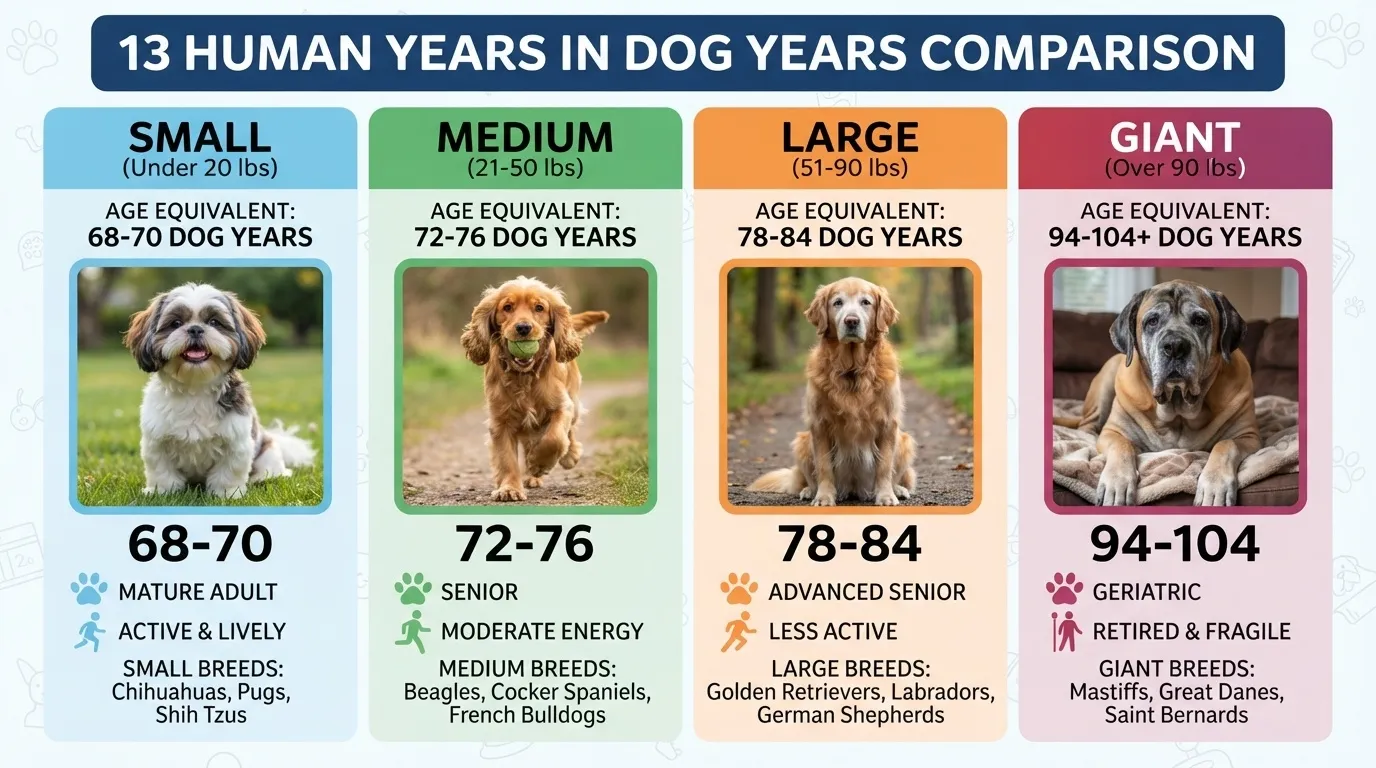
What is 13 human years in dog years? If you’re trying to convert your human age into dog years, there isn’t a simple 7-to-1 formula. Dogs mature much faster during their early years, and their aging pattern changes depending on life stage, breed, and adult size.
At 13 human years, the equivalent is roughly around a 1-year-old dog in terms of major biological and developmental maturity. However, this is an approximate comparison rather than an exact mathematical conversion.
It is also important not to confuse 13 human years in dog years with a 13-year-old dog in human years. The reverse calculation produces a much older human-age equivalent and varies considerably by dog size.
H2: What Is 13 Human Years in Dog Years?
The first year of a dog’s life represents a dramatic period of growth. By around one year, most dogs have reached a maturity level broadly comparable to a human teenager.
| Human Age | Approx. Dog Age | Life Stage |
|---|---|---|
| 1–5 years | Puppy | Early development |
| 10 years | ~10–12 months | Adolescent |
| 13 years | ~1 year | Young adult |
| 18 years | ~1–1.5 years | Young adult |
| 24 years | ~2 years | Adult |
Note: Human-to-dog age comparisons are approximate. They are useful for understanding life stages, not for measuring exact biological age.
Quick Answer: 13 Human Years = ? Dog Years
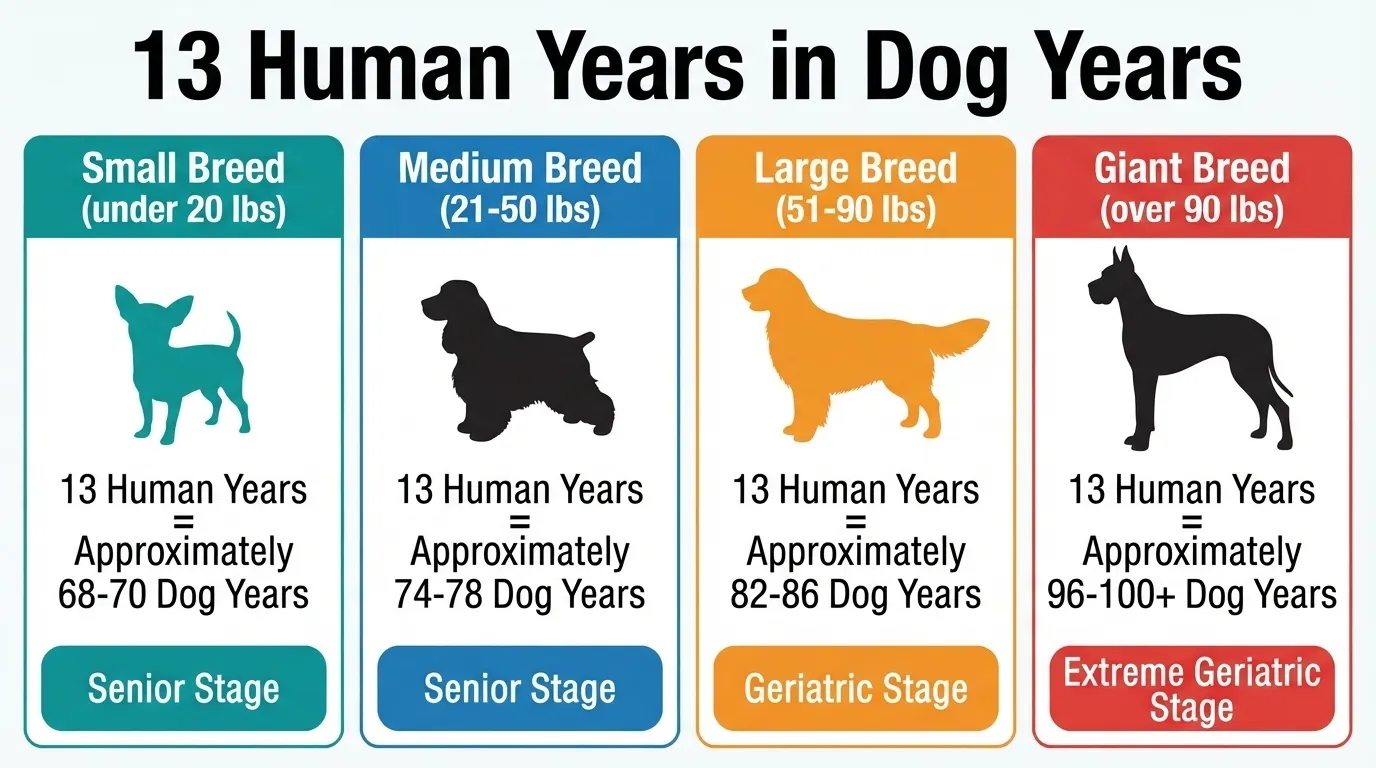
13 Human Years is approximately equal to 1.5 to 2 Dog Years.
Note: A dog’s true developmental stage varies significantly by breed size, as larger breeds mature much faster than smaller ones during their first few years. Check our breed-specific breakdown below to find your pup’s exact age.
Share Your Dog’s Age:
Human Age: 13 Years
Dog Age Equivalent: ~1.5 to 2 Dog Years (depending on breed size)
According to AVMA maturity guidelines, a dog’s first year equals roughly 15 human years, meaning a 13-year-old human is still just a young puppy in the canine world!
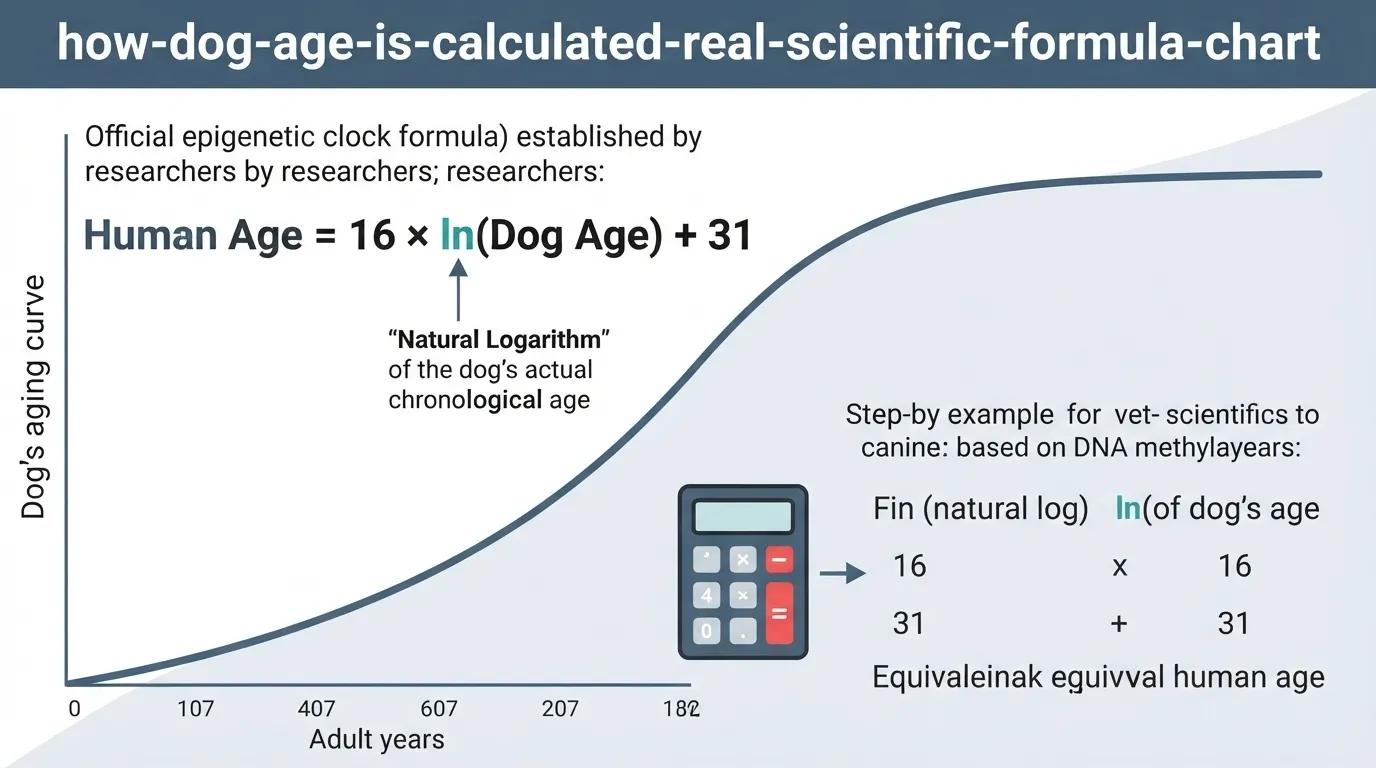
How Is This Calculated? The Real Formula
Why the Old “1 Human Year = 7 Dog Years” Rule Doesn’t Work
For decades, we simply multiplied a dog’s age by seven to find their “human age,” or divided a human’s age by seven to do the reverse. While that math is incredibly easy, it completely misrepresents how dogs actually mature.
Canine aging is non-linear, meaning puppies grow at an astronomical rate compared to human children, but that rapid pace slows down significantly later in life.
According to veterinary guidelines from the American Animal Hospital Association (AAHA), a dog’s very first year of life isn’t equal to seven human years; it is actually equivalent to roughly 15 human years. By the end of year two, most dogs have reached the emotional and physical maturity of a 24-year-old human.
Once a dog passes that initial two-year growth spurt, their aging rate slows down dramatically. Depending on the size and breed of the dog, each subsequent calendar year only adds about four to five “dog years” to their age, making the old rule of seven completely obsolete for accurate calculations.
The Actual Reverse Calculation (Step-by-Step)
To figure out what is 13 human years in dog years, we have to look at the developmental milestones established by modern veterinary science and reverse-engineer the timeline.
Step 1: Deduct the early development years. Since the first 24 human years of a dog’s lifecycle happen in just two calendar years, we must first look at where a human teenager fits on this timeline.
Step 2: Compare human milestones to canine milestones. A 13-year-old human child is just entering puberty and transitioning into adolescence. In the canine world, this exact stage of physical and social development occurs right in the middle of their first year of life.
Step 3: Calculate the monthly breakdown. Because a one-year-old dog behaves similarly to a 15-year-old human teenager, we calculate the remaining months by dividing the human age by the rapid development rate of a puppy’s first 12 months.
13 Human Years in Dog Years — By Breed Size
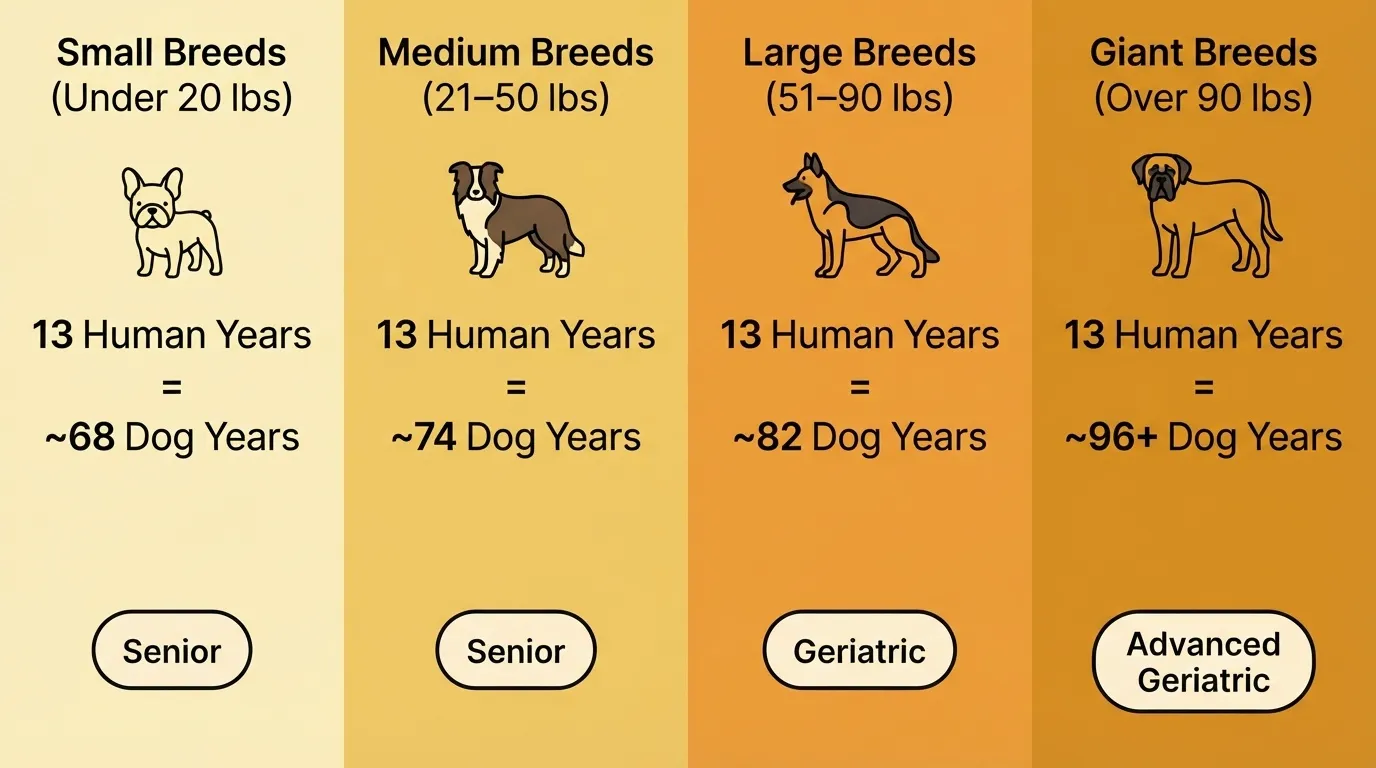
| Human Age | Small Dogs (Under 20 lbs) | Medium Dogs (21-50 lbs) | Large Dogs (51-90 lbs) | Giant Dogs (90+ lbs) |
|---|---|---|---|---|
| 5 | 36 dog years | 36 dog years | 40 dog years | 45 dog years |
| 10 | 56 dog years | 60 dog years | 66 dog years | 78 dog years |
| 13 | 68 dog years | 74 dog years | 82 dog years | 96 dog years |
| 15 | 76 dog years | 83 dog years | 93 dog years | 108 dog years |
| 18 | 88 dog years | 96 dog years | 109 dog years | 126 dog years |
| 21 | 100 dog years | 110 dog years | 125 dog years | 144 dog years |
| 25 | 116 dog years | 128 dog years | 146 dog years | 168 dog years |
Human Age: 5
Small (<20 lbs): 36 dog years
Medium (21-50 lbs): 36 dog years
Large (51-90 lbs): 40 dog years
Giant (90+ lbs): 45 dog years
Human Age: 10
Small (<20 lbs): 56 dog years
Medium (21-50 lbs): 60 dog years
Large (51-90 lbs): 66 dog years
Giant (90+ lbs): 78 dog years
Human Age: 13
Small (<20 lbs): 68 dog years
Medium (21-50 lbs): 74 dog years
Large (51-90 lbs): 82 dog years
Giant (90+ lbs): 96 dog years
Human Age: 15
Small (<20 lbs): 76 dog years
Medium (21-50 lbs): 83 dog years
Large (51-90 lbs): 93 dog years
Giant (90+ lbs): 108 dog years
Human Age: 18
Small (<20 lbs): 88 dog years
Medium (21-50 lbs): 96 dog years
Large (51-90 lbs): 109 dog years
Giant (90+ lbs): 126 dog years
Human Age: 21
Small (<20 lbs): 100 dog years
Medium (21-50 lbs): 110 dog years
Large (51-90 lbs): 125 dog years
Giant (90+ lbs): 144 dog years
Human Age: 25
Small (<20 lbs): 116 dog years
Medium (21-50 lbs): 128 dog years
Large (51-90 lbs): 146 dog years
Giant (90+ lbs): 168 dog years
Veterinary data from the American Animal Hospital Association (AAHA) shows that a canine’s biological clock ticks at drastically different speeds depending on their physical framework. While a 13-year-old human is just entering their teenage years, a dog of the exact same chronological age has already crossed well into their senior or geriatric stage.
Smaller breeds like Chihuahuas experience a slower metabolic aging process after their initial growth spurt, meaning they hit their late 60s in dog terms by age 13. On the flip side, giant breeds like Great Danes expend massive amounts of metabolic energy to grow so quickly, which wears down their cellular health much faster. This accelerated aging puts a giant 13-year-old dog deep into their 90s, making them an extreme outlier in canine longevity.
What Life Stage Does This Represent?
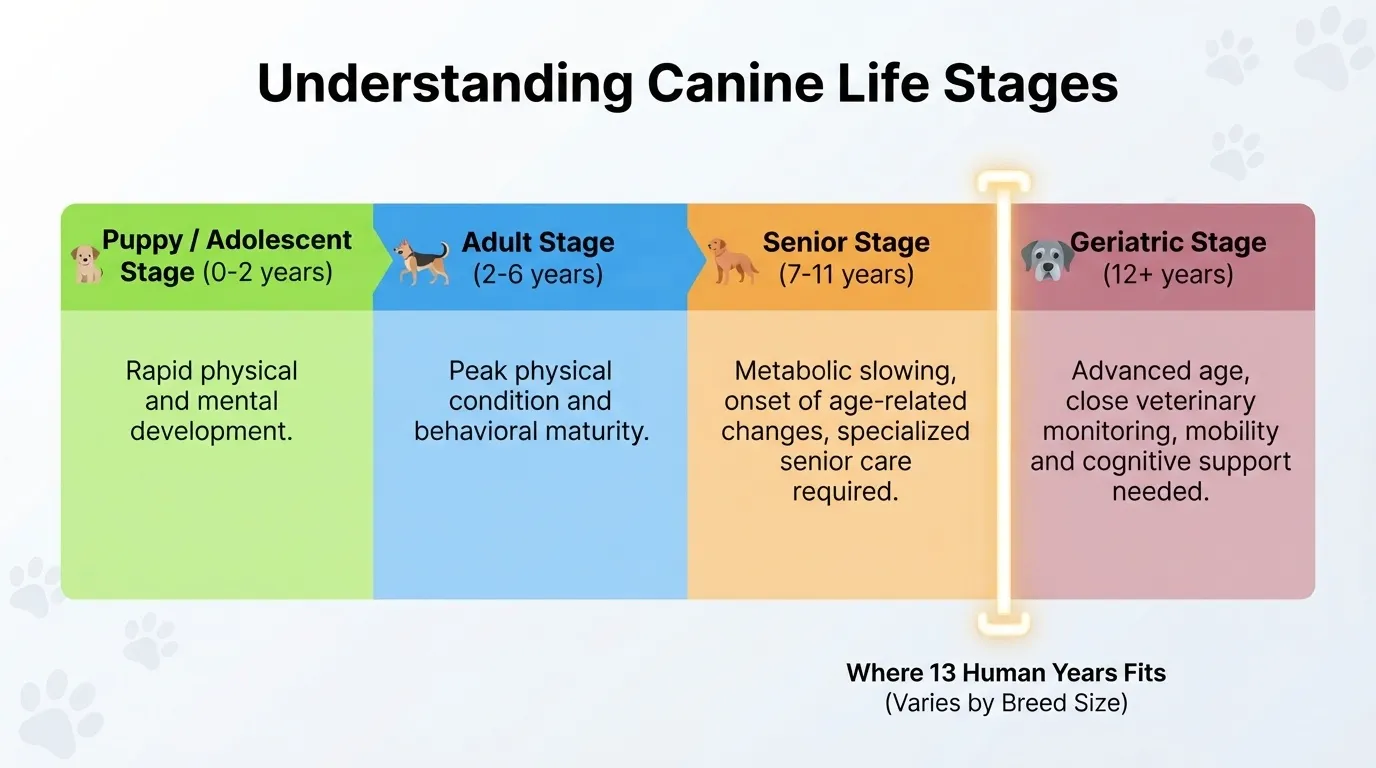
A 13-year-old teenager is just stepping into the world of high school, navigating the awkward transition from childhood to adolescence. But if you flip that timeline and look at a dog with the developmental maturity of a 13-year-old human, you are looking at a puppy transitioning into adolescence.
Depending on the breed’s size, a dog reaches this specific “13 human years” developmental milestone when they are roughly 7 to 12 months old.
According to the American Animal Hospital Association (AAHA) life stage guidelines, here is exactly where different dogs sit when they hit this developmental marker:
Small & Medium Breeds (e.g., Chihuahuas, French Bulldogs): At around 8 to 9 months old, these dogs hit their early teenage phase. They are physically near their full size but still mentally immature.
Large Breeds (e.g., Golden Retrievers, German Shepherds): Because they mature more slowly, large dogs hit this 13-human-year maturity mark closer to 10 or 12 months of age.
Giant Breeds (e.g., Great Danes, Mastiffs): These massive pups might be well over 100 pounds, but at one year old, their emotional development is still equivalent to a 13-year-old human.
What to Expect During This Stage
Life with a dog at this developmental stage can be a bit chaotic. Just like human young teens, adolescent dogs experience a massive surge of hormones.
You might notice sudden boundaries testing or “selective hearing” where they suddenly ignore cues they used to know perfectly. This is completely normal behavior as their brains undergo major rewiring.
Quick Health and Care Focus
Because your dog’s physical body is growing rapidly while their brain is trying to catch up, focus on high-quality, growth-formulated nutrition appropriate for their specific size. Keep exercise structured but avoid high-impact jumping to protect their developing growth plates. Most importantly, double down on positive reinforcement training to guide them safely through this rebellious, teenage phase.
Try Our Free Dog Age Calculator
Converting human years to dog years isn’t a one-size-fits-all calculation. While we know a 13-year-old human equates to a senior dog across most breeds, tracking precise canine aging requires factoring in your dog’s specific birth date and weight category.
Calculate Your Pet’s Exact Age: Use our interactive tool below to instantly convert ages between humans and dogs based on the latest veterinary aging charts.
Access the Free Dog Age Calculator Here
Why Precise Inputs Matter
Standard charts usually group dogs into broad yearly categories, but canine development shifts rapidly month by month. To get the most accurate physiological match, our tool utilizes a dual-input system:
Years and Months: Inputting the exact months ensures the calculation accounts for subtle growth plate closures and senior metabolic shifts.
Weight Class: Choose from Small (under 20 lbs), Medium (20-50 lbs), Large (51-90 lbs), or Giant (over 90 lbs) to align with American Animal Hospital Association (AAHA) life stage guidelines.
Frequently Asked Questions
While the math we use for quick calculations is a helpful approximation, real veterinary science goes much deeper than basic multiplication. In 2020, researchers at the University of California San Diego studied canine DNA methylation changes to map how dogs actually age at a cellular level. Their findings showed that dogs mature incredibly fast in their first few years, which means a simple linear formula doesn't capture the true biological aging process that veterinarians look at today.
Technically no — most dogs are considered adolescents or young adults at 1 year. They have adult teeth and full height, but their behavior and brain development are still maturing.
Absolutely. As shown in the comparison chart above, weight and breed size are the biggest deciding factors in how canine senior years map out. While a small breed dog might still be in their prime adult years at this stage, a giant breed dog enters their senior phase much earlier, altering the exact life-stage equivalent completely.
🐾 Other Age Guides

Gulfam Haider Mehdi
Founder & Developer
I built Dogagescalculator.com to give dog owners honest, science-backed answers instead of the outdated "×7" myth. Every figure here is checked against AKC, AVMA, and published veterinary research.
More about the author & this site →📌 Featured Guides
ideal age to neuter male dog
→
What Is the Lifespan of a Cocker Spaniel
→
what is 5 human years in dog years
→
19 years in dog years
→
golden retriever puppy feeding guide
→
Bernese Mountain Dog Newfoundland mix
→
What Is 13 Dog Years in Human Years
→
Life Expectancy Of a West Highland White Terrier
→
How much food should I feed my Chihuahua
→
What is 16 Dog Years in Human Years
→
Comments