
How much food should I feed my Chihuahua

A Miniature Schnauzer typically gives birth to a litter of 3 to 5 puppies, with 4 being the most common average. While 4 is the sweet spot in breeding pens, litters can range anywhere from a single “singleton” pup to rare cases of 8 to 10 puppies.
Smaller than their Standard and Giant cousins, these compact dams naturally carry smaller litters, but several key variables dictate the exact count on whelping day. In this guide, we break down what influences Miniature Schnauzer litter size, how dam age and genetics play a role, and what you need to prepare for a safe whelping and nursing environment.dog age and size calculator
Average Litter Size of a Miniature Schnauzer

The average Miniature Schnauzer litter consists of 3 to 5 puppies, with 4 being the most consistent baseline in veterinary breeding records. Because Miniature Schnauzers are a small breed weighing between 11 and 20 pounds, their pelvic anatomy and uterine capacity naturally limit litter size compared to larger breeds.
Typical range (3–5, occasionally 3–6): Most healthy, prime-age dams will deliver right in this window. Kennel club registration data and reproductive studies show that 4-puppy litters represent the statistical mode for the breed, though a healthy 6-pup litter is not uncommon for a mature, well-nourished bitch on her second or third pregnancy.
Extreme range recorded (1 to 9–10): A female might occasionally produce a single pup—known as a “singleton”—which carries higher risks during delivery because a solitary puppy often grows oversized in the womb and fails to stimulate strong labor contractions. On the opposite end, large litters of 8 to 10 puppies do occur, though they put significant metabolic stress on a small dam and frequently require supplemental hand-feeding from the breeder.
What Does Research Say?

A landmark 2011 study by the Norwegian School of Veterinary Science examined 205 Miniature Schnauzer litters and confirmed an average litter size of 4.2 puppies. Researchers tracked 10,810 total litters across 224 purebred dog breeds using national kennel club registration data.
The data revealed that while the breed centers firmly on 4 pups, individual litter counts ranged from a single pup to a maximum recorded 10. This study established that breed size is the primary driver of canine litter size, placing Miniature Schnauzers right in the expected window for 10-to-20-pound breeds. The findings also highlighted that a dam’s age impacts her yield, with litter counts peaking between 2 and 4 years before gradually tapering off in older females.
Miniature vs Standard vs Giant Schnauzer — Litter Size Comparison

Across the three distinct Schnauzer breeds, litter size scales directly with the dam’s physical frame and uterine space. Miniature Schnauzers produce significantly smaller litters than their medium and large relatives due to their compact size.Standard and Giant Schnauzers have larger uterine horns that easily accommodate 6 to 10 fetus placements. Expecting a Miniature female to carry more than 5 or 6 pups is rare and raises the likelihood of whelping complications or low birth weights.
| Schnauzer Variety | Average Litter Size | Typical Weight Range |
|---|---|---|
| Miniature Schnauzer | 3–5 puppies | 11–20 lbs |
| Standard Schnauzer | 6–8 puppies | 30–50 lbs |
| Giant Schnauzer | 7–10 puppies | 55–85 lbs |
What Factors Affect Litter Size?
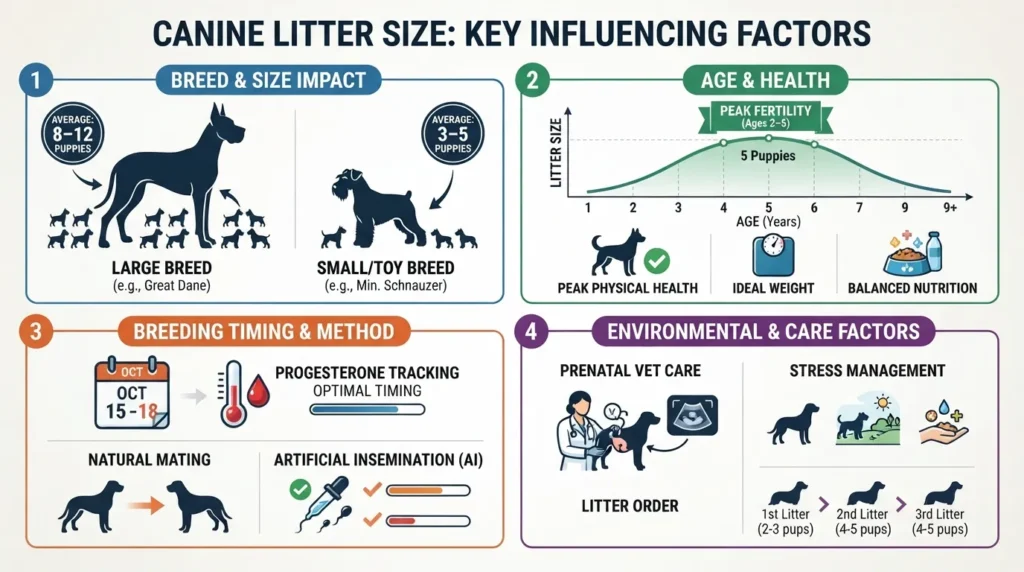
A Miniature Schnauzer’s litter size is primarily determined by the dam’s age, her body size, and the timing of breeding, though bloodline genetics and body condition play strong supporting roles. While 4 puppies remains the baseline, these five core factors dictate whether your bitch yields a single pup or a full basket of six.
Age of the dam: Peak litter sizes occur during a female’s second and third heats, typically between 2 and 4 years old. Breeding a bitch on her first heat often results in fewer ova being released, while dams over 5 years old experience a natural decline in ovulation rates and uterine wall vascularity.
Genetics and bloodlines: Ovulation rates are inherited; females born to mothers who consistently produced robust litters of 4 to 6 puppies tend to carry that high fertility trait. Male fertility matters too—a stud with high sperm motility and count fertilizes a higher percentage of available eggs.
Number of previous litters: First-time mothers (“maiden dams”) statistically deliver smaller litters—often just 2 or 3 puppies—because their reproductive tracts are maturing. Second and third litters typically produce the largest counts before the numbers begin to taper down.
Toy and “Teacup” sizing: Unofficial undersized variations weighing under 10 pounds have significantly smaller pelvic openings and limited abdominal capacity, usually yielding only 1 to 3 pups. They also carry a drastically higher rate of dystocia (difficult labor) and emergency C-sections because even average-sized puppies struggle to pass naturally.
Nutrition and body condition: A female’s body must be primed before ovulation occurs; underfed or obese dams suffer from poor egg quality and higher embryological absorption rates during early gestation. Feeding a high-protein, omega-3 rich diet prior to breeding maximizes viable ovulation and supports early uterine implantation.
How Long Is a Miniature Schnauzer Pregnant? Gestation Period
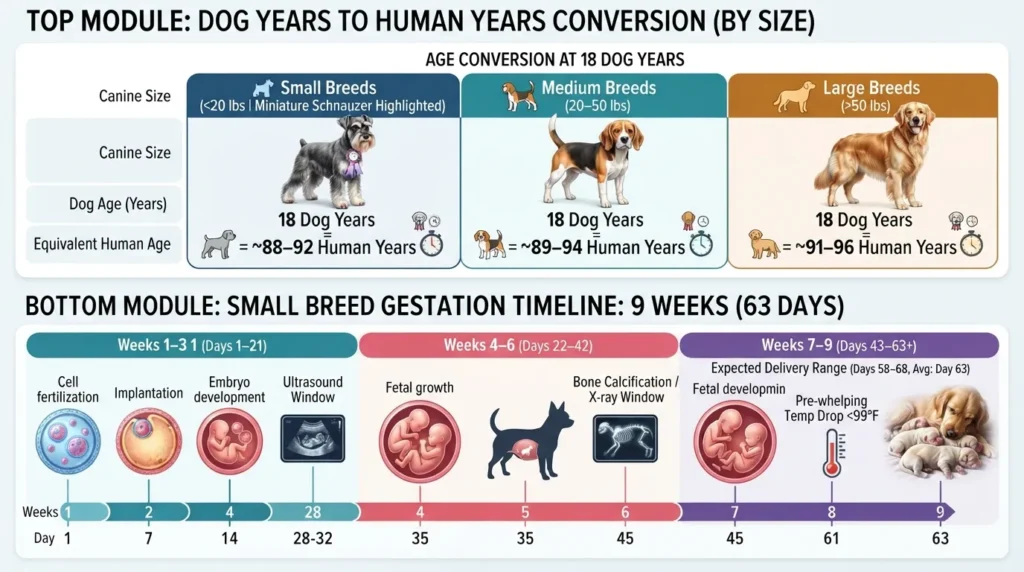
A Miniature Schnauzer is pregnant for an average of 63 days (about 9 weeks), with a normal physiological window ranging from 58 to 68 days from ovulation. The exact due date hinges on the precise ovulation date rather than the mating date, as canine sperm can survive in the female reproductive tract for several days prior to fertilization.
Because Miniature Schnauzers carry smaller abdomens, physical changes become noticeable earlier than in giant breeds, particularly when carrying litters of 5 or more puppies. Tracking gestation timeline closely is critical; delivering before day 58 often results in underdeveloped lungs and poor puppy survival rates, while going past day 65 without labor signs mandates an immediate veterinary check for fetal distress.
Week-by-Week Pregnancy Signs
Weeks 1–3 (Days 1–21): Outward changes are virtually non-existent. Microscopic implantation occurs around day 16–18, though some dams display slight morning sickness, mild apathy, or temporary appetite dips during week 3.
Weeks 4–5 (Days 22–35): Clear physical signals emerge. A clear vulvar discharge appears, clear ultrasound confirmation becomes accurate by day 28, nipples enlarge and turn dark pink, and gentle abdominal swelling begins around her flank.
Weeks 6–7 (Days 36–49): The abdomen enlarges substantially, appetite surges, and mammary glands expand rapidly. An X-ray performed around day 45–50 reveals calcified puppy skeletons, allowing your vet to count skulls and plan for potential whelping complications.
Weeks 8–9 (Days 50–63+): Puppies can be seen and felt moving beneath her abdominal wall. The dam starts nesting, her body temperature drops below 99°F (37.2°C) roughly 12 to 24 hours before active labor begins, and milk colostrum fills the teats.
Signs of Labor & the Whelping Process
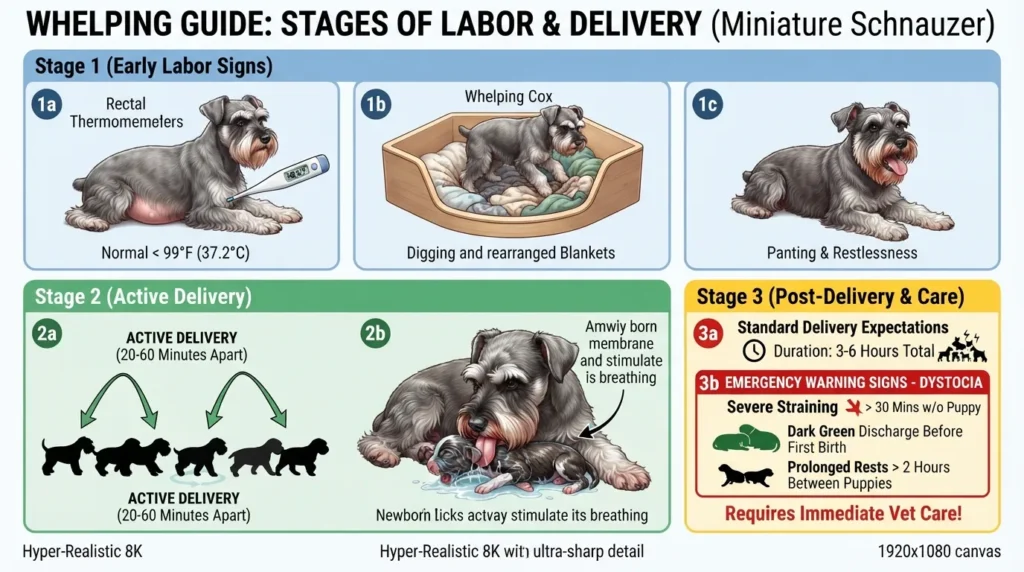
Recognizing early stage-one labor is crucial, as a Miniature Schnauzer’s body usually signals active whelping 12 to 24 hours before the first puppy arrives. Knowing these key behavioral and physiological shifts ensures you can prepare the whelping box and notify your vet well before active contractions begin.
Rectal temperature drop: A dam’s normal baseline temperature ranges between 101°F and 102.5°F (38.3°C–39.2°C). When progesterone drops sharply prior to labor, her rectal temperature plunges below 99°F (37.2°C), indicating that stage-one labor has officially begun and delivery will follow within 24 hours.
Persistent nesting behavior: The female will obsessively dig at blankets, shred newspaper, and seek out dark, quiet corners in an effort to construct a secure den for her litter.
Extreme restlessness and pacing: Unable to get comfortable due to uterine cramping, she will alternate between lying down and pacing, often following her owner closely for reassurance.
Heavy panting and shivering: Intermittent shivering, heavy panting, and refusal of food or water are classic signs that cervical dilation and early uterine contractions are underway.
What to Expect During Delivery
A standard delivery for a Miniature Schnauzer typically spans 3 to 6 hours, with puppies born 20 to 60 minutes apart. Stage-two labor brings hard abdominal straining, followed by the emergence of a amniotic sac containing the puppy. The dam will normally break the membrane, chew through the umbilical cord, and lick the pup vigorously to stimulate breathing.
Surgical intervention depends heavily on the dam’s size and structure:
Standard-sized Miniature Schnauzers (11–20 lbs): C-section rates are relatively low, sitting at roughly 10% to 15%. Most healthy females deliver naturally without assistance, provided the litter size is normal and puppies are positioned correctly (either head-first or tail-first breech).
Undersized and “Teacup” females (under 10 lbs): C-section rates jump dramatically to over 50% due to severe pelvic disproportion (dystocia). In single-puppy litters or undersized dams, puppies often grow too large to fit through the birth canal, making an emergency surgical delivery necessary to save both dam and offspring.
Litter Frequency & Lifetime Limits
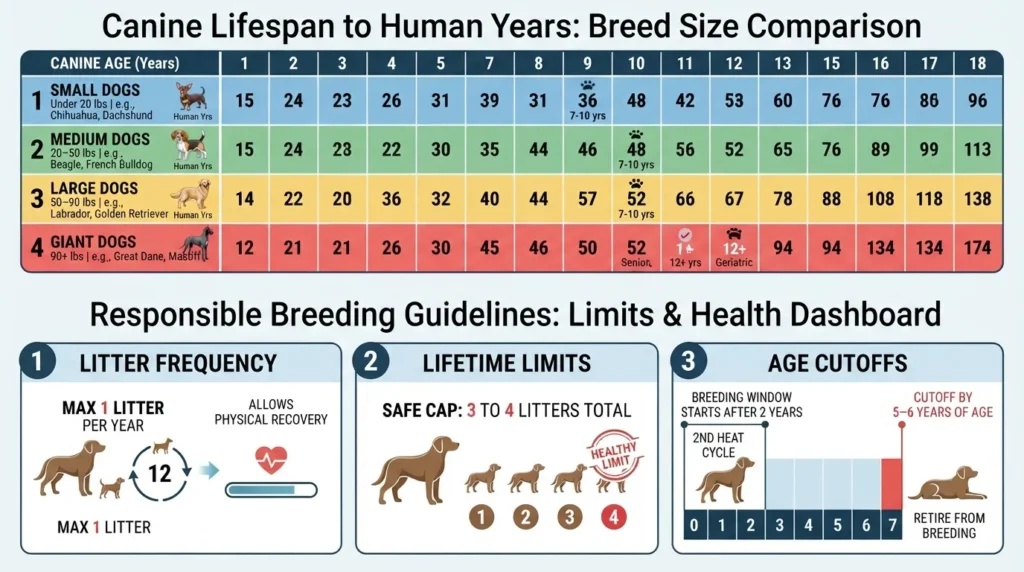
A Miniature Schnauzer dam should have a maximum of 3 to 4 litters in her entire lifetime, spaced out to allow full physical recovery. While a bitch is biologically capable of producing litters throughout her fertile years, overbreeding leads to uterine wear, calcium depletion, and declining puppy health.
Heat cycle interval: Miniature Schnauzers generally come into heat every 6 months (roughly twice a year), though some individual bitches run on an 8-month cycle. While back-to-back breeding on consecutive heats is sometimes debated among reproductive specialists, it should only ever be considered if the dam maintained exceptional body condition and had a small, effortless previous whelp.
Ethical recommendation (1 litter per year max): Limiting a female to one litter per calendar year guarantees she has ample time to rebuild her nutritional reserves, regain core muscle tone, and recover from the intense metabolic demands of lactation. Skipping at least one heat cycle between litters allows the uterine lining to completely rest and regenerate.
Lifetime capacity (3–5 healthy litters): A well-bred bitch should begin her breeding career no earlier than her second or third heat (around 18 to 24 months old) and be retired by 5 or 6 years of age. Retiring her after 3 to 4 litters—or immediately following a second required C-section—ensures she transitions into a long, healthy life as a beloved pet.
Legal breeding limits: Regulations vary significantly by region. For instance, the UK’s Lucy’s Law and Animal Welfare Regulations limit a dam to a maximum of 4 litters in her lifetime, while statutory limits in countries like Sweden prohibit breeding a bitch more than 5 times. In the US, kennel clubs like the AKC register litters from dams up to 12 years old, but reputable breeders adhere strictly to self-imposed welfare caps of 3 to 4 litters regardless of local legal minimums.
At What Age Can a Miniature Schnauzer Start Having Puppies?
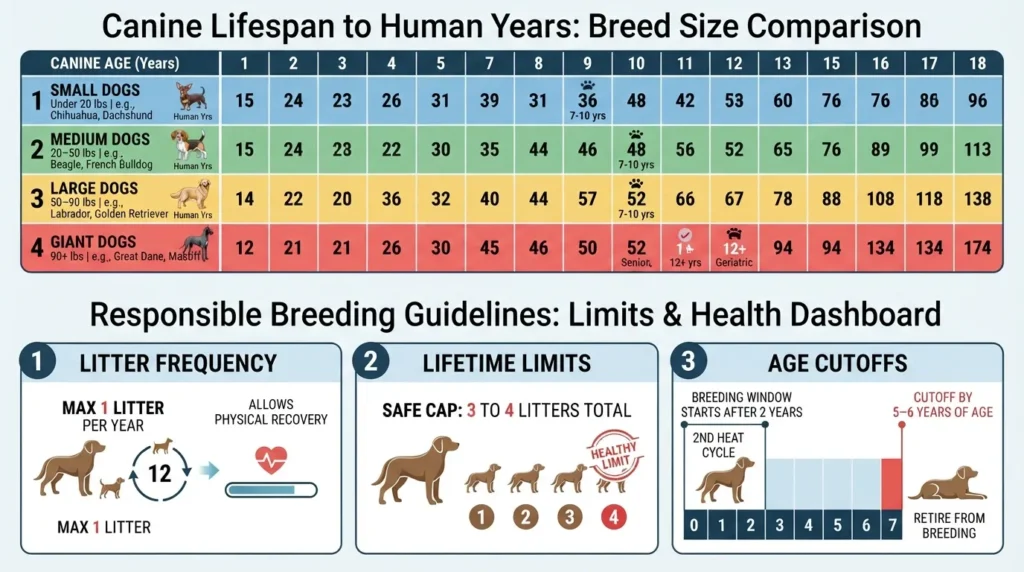
A female Miniature Schnauzer reaches biological sexual maturity between 6 and 9 months of age, but responsible breeders wait until she is at least 18 to 24 months old before her first mating. Breeding a female on her initial heat cycle is dangerous because her body is still growing, her hips have not cleared screening, and she lacks the emotional maturity needed to raise a litter.
Reproductive maturity (6–9 months): A bitch will experience her first heat cycle (estrus) during this initial window, marking the onset of her physiological ability to conceive. However, a 7-month-old pup is the canine equivalent of a young teenager—her growth plates remain open, her reproductive tract is undersized, and her instincts are completely undeveloped. Accidental early matings often result in emergency C-sections, poor maternal instincts, and stunted growth for the young dam.
Responsible breeding age (18–24+ months): Delaying breeding until her second or third heat cycle ensures her skeleton is fully developed and her adult temperament is locked in. More importantly, critical genetic screening required for the breed—such as OFA patella clearances and annual BVA/OFA eye examinations for hereditary cataracts and PRA—cannot be officially certified until she reaches 12 to 24 months of age.
Caring for a Pregnant Miniature Schnauzer

Supporting a pregnant Miniature Schnauzer requires a structured management plan that shifts dynamically across her 9-week gestation. Because Miniature Schnauzers are prone to acute pancreatitis, hyperlipidemia, and rapid weight gain, her dietary increases, physical activity, and veterinary visits must be carefully calibrated to avoid metabolic stress.
Nutrition Requirements
Crucial Breed Warning: Miniature Schnauzers possess a genetic predisposition to hyperlipidemia and pancreatitis. Never feed excessive fat (e.g., raw fat scraps, high-fat puppy formulas, or unmetered oil supplements) to drive caloric intake during pregnancy.
| Gestation Stage | Caloric Intake | Recommended Food Type | Feeding Strategy |
|---|---|---|---|
| Weeks 1–5 | 100% of maintenance | High-quality adult maintenance formula | Standard twice-daily feeding. |
| Week 6 | ~110% of maintenance | Transition gradually to a moderate-fat growth/puppy kibble | Introduce 3 meals per day as uterine volume expands. |
| Weeks 7–8 | 125%–135% of maintenance | Moderate-fat puppy formula (Protein ~28–30%, Fat ~14–16%) | Divide daily intake into 3–4 small meals to prevent gastric compression. |
| Week 9 | ~150% of maintenance | Nutrient-dense growth formula + warm water soaking | Offer 4–5 micro-meals daily; appetite often dips 24–48 hours before labor. |
Potential Complications During Whelping

While standard Miniature Schnauzers generally whelp naturally, complications can arise quickly during delivery. Being able to identify clinical signs of labor dystocia, uterine inertia, or placental retention allows for immediate veterinary intervention before a crisis becomes fatal for the dam or puppies.
Dystocia (Obstructed or Difficult Labor)
Dystocia refers to abnormal or stalled labor caused by maternal factors (such as a narrow birth canal) or fetal factors (such as an oversized puppy or malpresentation).
Causes in Miniature Schnauzers: While standard-sized Miniature Schnauzers experience relatively low baseline C-section rates (~10%–15%), severe pelvic disproportion is extremely common in undersized or “teacup” females. Additionally, single-puppy litters often grow excessively large in the uterus, leading to mechanical blockage.
Warning Signs:
Strong, visible abdominal contractions for more than 30 minutes without producing a puppy.
Weak, intermittent contractions for more than 2 hours without delivery.
More than 2 hours resting delay between puppies when you know more remain inside.
Presence of dark green or black discharge (uteroverdin) before the first puppy is born (indicating placental separation and fetal distress).
A puppy visible in the vulva or birth canal that is not expelled within 10 to 15 minutes.
Uterine Inertia
Uterine inertia occurs when the uterine muscles fail to contract effectively to expel the puppies, leading to prolonged labor and fetal hypoxia.
Primary Uterine Inertia: The uterus fails to initiate active contractions entirely. The dam may display stage-one labor signs (nesting, temperature drop, restlessness) that fail to progress to stage-two straining. This is often linked to hormone imbalances, oversized litters stretching the uterine wall beyond capacity, or single-puppy litters failing to trigger labor onset.
Secondary Uterine Inertia (Uterine Fatigue): The uterine muscles become exhausted after delivering several puppies or attempting to push past a minor obstruction. Contractions weaken and eventually stop before the entire litter has been delivered.
Treatment: Medical management often involves administering oxytocin and calcium gluconate under strict veterinary supervision, though an emergency surgical delivery is required if oxytocin fails to stimulate effective contractions.
Retained Placenta
A placenta should be expelled shortly after each puppy is delivered. Retention occurs when one or more placental membranes remain trapped inside the uterus.
Clinical Symptoms: Persistent green, brown, or foul-smelling vaginal discharge lasting longer than 24 to 48 hours post-whelping, accompanied by maternal fever (>103°F / 39.4°C), severe lethargy, and neglect of the puppies.
Complications: Retained fetal membranes rapidly decay, leading to acute metritis (uterine infection) or systemic sepsis. This can compromise maternal milk production, toxicifying the milk supply and threatening the entire litter.
Veterinary Action: Diagnosed via abdominal palpation or ultrasound, a retained placenta typically requires oxytocin or prostaglandin therapy to encourage uterine expulsion, alongside broad-spectrum antibiotics.
Caring for Newborn Miniature Schnauzer Puppies

The first few weeks of a Miniature Schnauzer puppy’s life are defined by rapid physiological changes and total reliance on the dam. Newborns are born blind, deaf, and unable to regulate their own body temperature or eliminate waste independently, making dedicated maternal care and environmental monitoring vital during this fragile window.
First Few Weeks of Development
The early developmental phase is divided into two distinct biological periods: the Neonatal Stage (Days 1–13) and the Transitional Stage (Days 14–21).
Week 1: The Neonatal Phase
Thermoregulation & Warmth: Newborn puppies cannot shiver or retain body heat. The whelping box temperature must be maintained at 85°F to 90°F (29.4°C–32.2°C) using a heating pad or heat lamp set to one side of the box, allowing the puppies to crawl away if they get too warm.
Nursing & Colostrum: Puppies must nurse within the first 12 to 24 hours to absorb colostrum, the dam’s first milk rich in maternal antibodies. Because Miniature Schnauzer litters average 4 to 6 puppies, ensure smaller runts get equal access to the teats.
Stimulation: The dam licks each puppy’s anogenital region after feeding to stimulate urination and defecation. If the dam is inexperienced or neglecting this duty, wipe the area gently with a warm, damp cotton ball after every meal.
Weight Monitoring: Healthy newborns should gain 10% of their birth weight daily, doubling their initial birth weight by day 10. Weigh each puppy twice daily using a digital gram scale.
Week 2 to Week 3: The Transitional Phase
Motor Control & Hearing: Puppies transition from crawling to unsteady walking. Ear canals open between days 14 and 17, triggering responses to environmental sounds.
Early Neurological Stimulation (ENS): Performing gentle ENS exercises (e.g., mild tactile stimulation, head-held-up positional holds) for 3–5 seconds daily from Days 3 to 16 aids long-term stress resilience and cardiovascular performance.
Early Socialization: Toward the end of week 3, puppies begin interacting with their littermates, initiating play bites and learning bite inhibition from their dam.
When Do Puppies Open Their Eyes (10–14 Days)
Miniature Schnauzer puppies typically open their eyes between 10 and 14 days of age. This process occurs gradually over 2 to 3 days, with the eyelids slowly unsealing from the inner corner outward.
Related Questions
Do Schnauzers pick one person? While affectionate with the whole family, Miniature Schnauzers often bond most strongly with the primary caregiver who handles their daily feeding, training, and routine.
Do Mini Schnauzers bark a lot? Yes, as vocal watchdogs by nature, they tend to bark at unfamiliar noises, visitors, or out of boredom, but early training can easily keep it under control.
What are the disadvantages of a Schnauzer? Their main drawbacks include high grooming needs (frequent clipping or hand-stripping), vocal alert-barking, stubbornness, and a genetic risk for health issues like hyperlipidemia and pancreatitis.
At what age do Mini Schnauzers calm down? Most Miniature Schnauzers begin to settle down around 1.5 to 2 years of age as they reach sexual and emotional maturity, provided they receive consistent exercise and training.
FAQs
Is it safe to spay a Miniature Schnauzer after she’s had a litter?
Yes, but you should wait 2 to 3 months post-whelping (after puppies are fully weaned and her milk has completely dried up) to allow her uterus and blood vessels to return to their normal size, reducing surgical risks.
What are common health issues in Miniature Schnauzer puppies?
Young puppies are particularly susceptible to hypoglycemia (low blood sugar), juvenile cataracts or Progressive Retinal Atrophy (PRA), congenital portosystemic shunts (liver shunts), and early-onset high blood lipids (hyperlipidemia).
How much do Miniature Schnauzer puppies weigh at birth?
A healthy Miniature Schnauzer puppy typically weighs between 3.5 to 7 ounces (100 to 200 grams) at birth, depending on the dam’s size and overall litter size.
🐾 Other Age Guides

I built Dogagescalculator.com to give dog owners honest, science-backed answers instead of the outdated "×7" myth. Every figure here is checked against AKC, AVMA, and published veterinary research.
More about the author & this site →
Comments