Bernese Mountain Dog Newfoundland Mix Berniefie: Complete Guide, Lifespan & Age Chart
If you have ever envisioned a giant, fluff-covered canine that acts more like a soft living room rug than a wild beast, the Bernese Mountain Dog Newfoundland Mix is as close to perfection as it gets. Affectionately dubbed the “Berniefie,” this hybrid pairs two of the most respected gentle giants in the working dog world: the stately Bernese Mountain Dog and the legendary water-loving Newfoundland.
Combining the rich coat patterns of the Swiss Alps with the colossal frame and gentle temperament of Canada’s favorite swimmer, the Berniefie is built for families who have plenty of space in their heart—and home. These dogs carry a quiet dignity, an unwavering loyalty to their human packs, and an uncanny ability to turn complete strangers into instant admirers during neighborhood walks.
While they are undeniably calm and deeply affectionate, caring for a dog that easily tops 100 pounds requires genuine preparation. From managing high-volume shedding to understanding their unique growth curves and health considerations, raising a Berniefie is a long-term commitment. This complete guide breaks down everything you need to know about their coat traits, exercise needs, realistic lifespan, and age conversion metrics.
Other Names for This Mix

When searching for this gentle giant, you might come across a few different terms. Breeders, shelters, and pet owners often use several names interchangeably to describe a cross between a Bernese Mountain Dog and a Newfoundland:
Berniefie (The most popular and widely recognized name for this hybrid)
Bernefie (A common alternate spelling that you will frequently see online)
Newfie-Bernese (A direct name that explicitly highlights both parent breeds)
Clarification Note: Despite the variation in spelling and structure, all these names refer to the exact same hybrid dog. Seeing “Berniefie” on one breeder’s site and “Newfie-Bernese” on another does not mean you are looking at different bloodlines or distinct breeds—they are simply different nicknames for the same Bernese Mountain Dog and Newfoundland mix.
What Is a Berniefie?
The Berniefie (also known as the Bernewfie) is a striking giant-breed cross resulting from the pairing of two of the world’s most iconic working dogs: the Bernese Mountain Dog and the Newfoundland. By combining the Swiss Alpine drafting background of the Bernese with the Canadian maritime water-rescue heritage of the Newfoundland, this mix produces a massive, heavy-boned dog renowned for its serene temperament and thick double coat.
While purposefully bred crossbreeds have gained immense popularity over the last few decades, the Berniefie developed as part of the modern “designer dog” movement aiming to combine the sweet, gentle nature of both parent giant breeds while expanding their gene pool. Originating primarily in North America during the early 2000s, this intentional mix was created specifically for families seeking an ultimate, calm companion with unmatched loyalty and physical strength.
Is It a Recognized Breed?
No, the Berniefie is not recognized as a purebred breed by major kennel organizations such as the American Kennel Club (AKC), the Kennel Club (UK), or the Fédération Cynologique Internationale (FCI). Because it is a first-generation (F1) hybrid cross, offspring can vary significantly in appearance, coat type, and traits, preventing it from meeting strict purebred standardization requirements.
However, as a recognized designer mix, the Berniefie can often be registered with hybrid and designer registries, including the American Canine Hybrid Club (ACHC), the Designer Breed Registry (DBR), and the International Designer Canine Registry (IDCR).
Real Berniefie Dogs — Photos & Videos
Berniefie ka real size, coat texture, aur temperament samajhne ka best tareeqa hai unhein real-life action me dekhna — sirf static photos se unke massive build aur dense double coat ka sahi andaza lagana mushkil hota hai. Real owner videos aur community visual updates se aapko yeh samajhne me madad milti hai ke yeh gentle giant ghar ke environment me kaise behave karta hai.
1. Real Bernewfie Puppy Growth & Daily Life
Source: Watch on YouTube
Is video me real-life owner experience dikhaya gaya hai ke kaise ek Bernewfie puppy rapidly grow karta hai, uski heavy weight development, cat-friendly interactions, aur daily playful habits kaisa hota hai.
2. Newfoundland vs. Bernese Mountain Dog Traits
Source: Watch on YouTube
Berniefie ke dono parent breeds (Newfoundland aur Bernese Mountain Dog) ka visual breakdown. Isse aapko coat, size, height, aur physical differences ka clear comparison milta hai.
Real Owner Community Visual Insights (Reddit & Facebook)
Pet forums aur social communities (jaise Reddit `r/DogBreeds` aur Bernewfie Facebook Groups) par owners dwara share kiye gaye photos aur videos se kuch ahem points saamne aate hain:
- Water Swimming Clips (Facebook): Facebook owner groups me share hone wali videos me aksar Berniefies ko lake ya swimming pool me naturally swim karte dekha ja sakta hai — yeh trait inhein inke Newfoundland lineage se milta hai.
- Size Realization (Reddit Photos): Reddit par owners dwara post ki gayi comparative photos me dikhta hai ke 1 year ki age me hi yeh dog sofa ya large dog bed ko poori tarah cover kar leta hai.
- Coat Variations in Action: Kuch Berniefies pure black/brown fuzzy coats ke saath Newfie jaise lagte hain, jabke doosre tricolor Bernese markings aur wavy fur show karte hain.
Key Visual Takeaways for Potential Owners:
- Massive Bone Structure: Visuals me inka heavy head, broad chest, aur sturdy legs saaf dikhte hain.
- Grooming Requirement: Heavy double coat ko grooming salon ya daily brushing ki zaroorat hoti hai.
- Gentle Temperament: Action clips me inka calm posture aur kids/cats ke sath gentle behavior easily observable hai.
Berniefie Appearance & Physical Traits
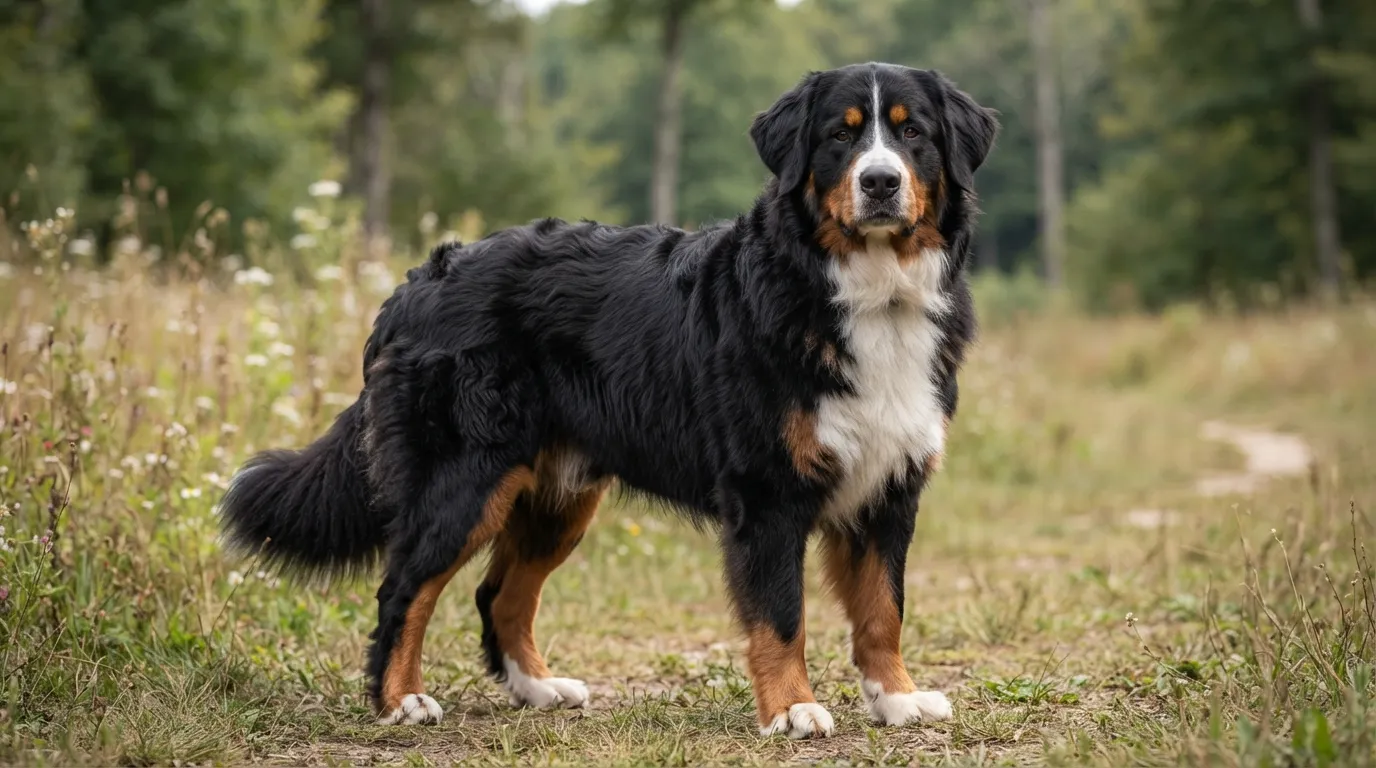
Combining the sturdy frame of a Swiss draft dog with the powerful build of a Canadian water rescuer, the Berniefie is a majestic giant breed. Their physical appearance relies heavily on which parent breed’s genetics dominate, but they almost always inherit a broad, imposing frame wrapped in a soft, heavy double coat.
Coat Type & Colors
The Berniefie possesses a dense, weather-resistant double coat designed to protect them from harsh winter elements. The outer coat is typically long, thick, and either straight or slightly wavy, while the undercoat is dense and soft to provide thermal insulation.
Tricolor (Classic Bernese): A striking combination of a jet-black base with crisp white markings on the chest, face, and paws, complemented by warm rust/tan points above the eyes and on the legs.
Solid Black: Inherited directly from the Newfoundland side, offering a deep, lustrous all-black coat that sometimes features a small white patch on the chest.
Brown / Chocolate: A rich, solid brown or reddish-chocolate coat shade common in Newfoundland lineage.
Black & White (Landseer Style): A white base with large black patches spread across the body and head, giving the dog a distinguished two-tone look.
Distinctive Features
Facial Structure: A broad, massive head with a strong, square muzzle. The expression is warm, soulful, and deeply gentle, usually featuring dark brown, almond-shaped eyes and wide, soft lips that often contribute to moderate drooling.
Ears & Neck: Medium-sized, floppy ears that hang close to the head, framing a thick, muscular neck built for heavy pulling and swimming.
Body Build: Deep-chested with a strong, straight back and heavy boning throughout the limbs. Their large paws often feature webbed toes inherited from the Newfoundland side.
Relatable Size Comparison: Standing 24 to 29 inches tall at the shoulder and weighing between 90 and 150+ pounds, a fully grown Berniefie weighs as much as an average adult human (around 130–150 lbs) and, when standing on its hind legs, easily towers over a 5’6″ person.
Berniefie Lifespan & Aging
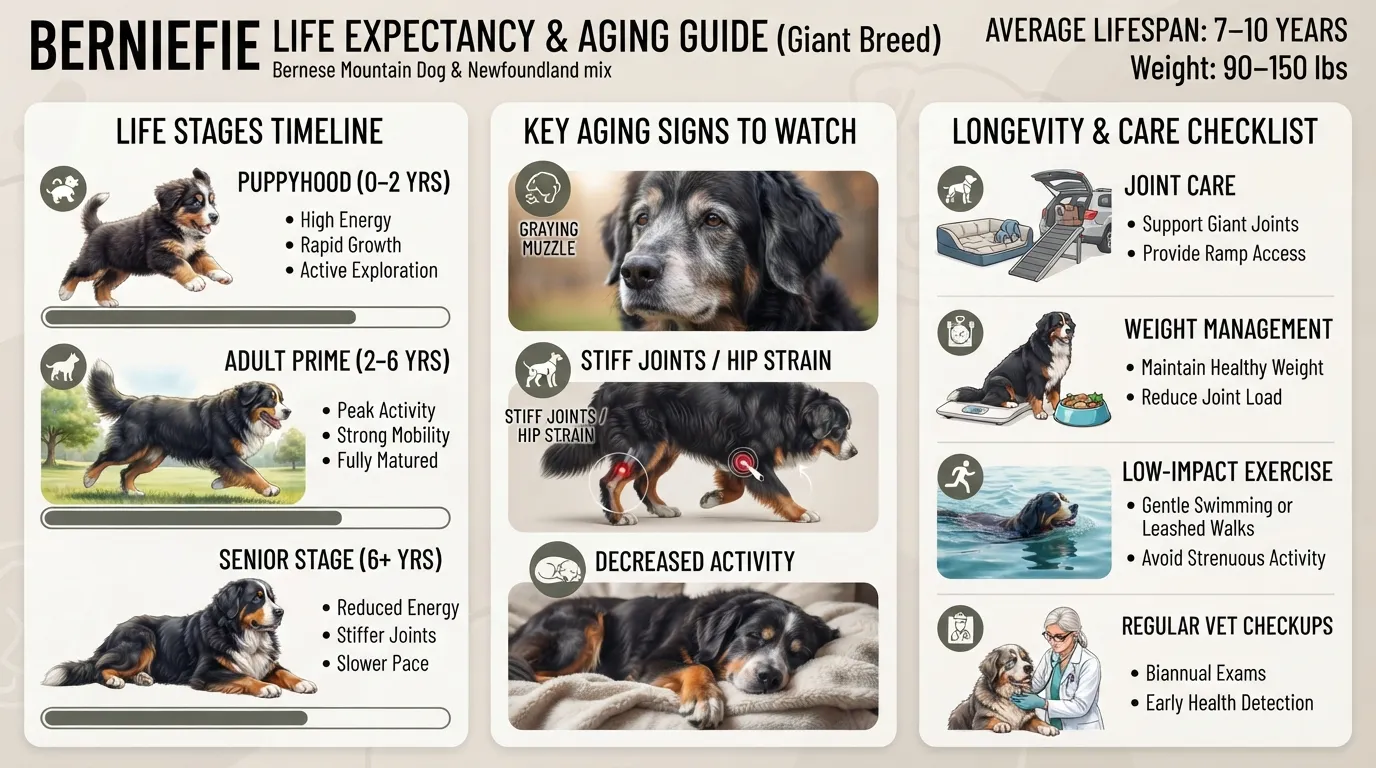
Understanding the lifespan and aging process of the Berniefie is essential for setting realistic expectations and delivering proper care throughout their life stages. Like most giant dog breeds, these gentle giants age more rapidly than smaller breeds, making proactive health management a top priority for owners.
Average Lifespan
The average lifespan of a Berniefie ranges from 7 to 10 years.
Because both the Bernese Mountain Dog (average lifespan 6–8 years) and the Newfoundland (average lifespan 8–10 years) are prone to giant-breed health challenges, their crossbreed offspring naturally share a similar longevity window. While proper care and strong genetics can occasionally push a healthy Berniefie past the 10-year mark, their massive size puts inherently high strain on their heart, joints, and internal organs over time.
Berniefie Age in Human Years (Age Conversion Chart)
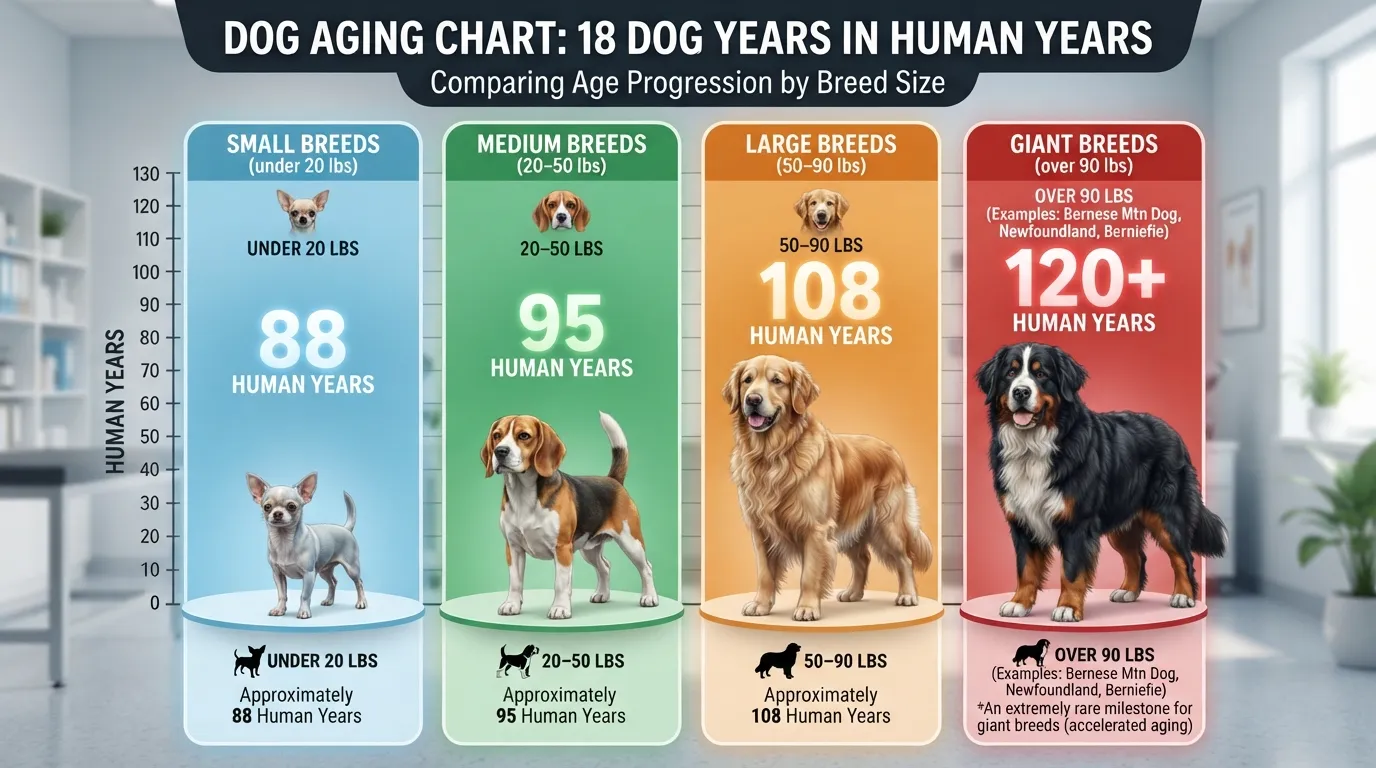
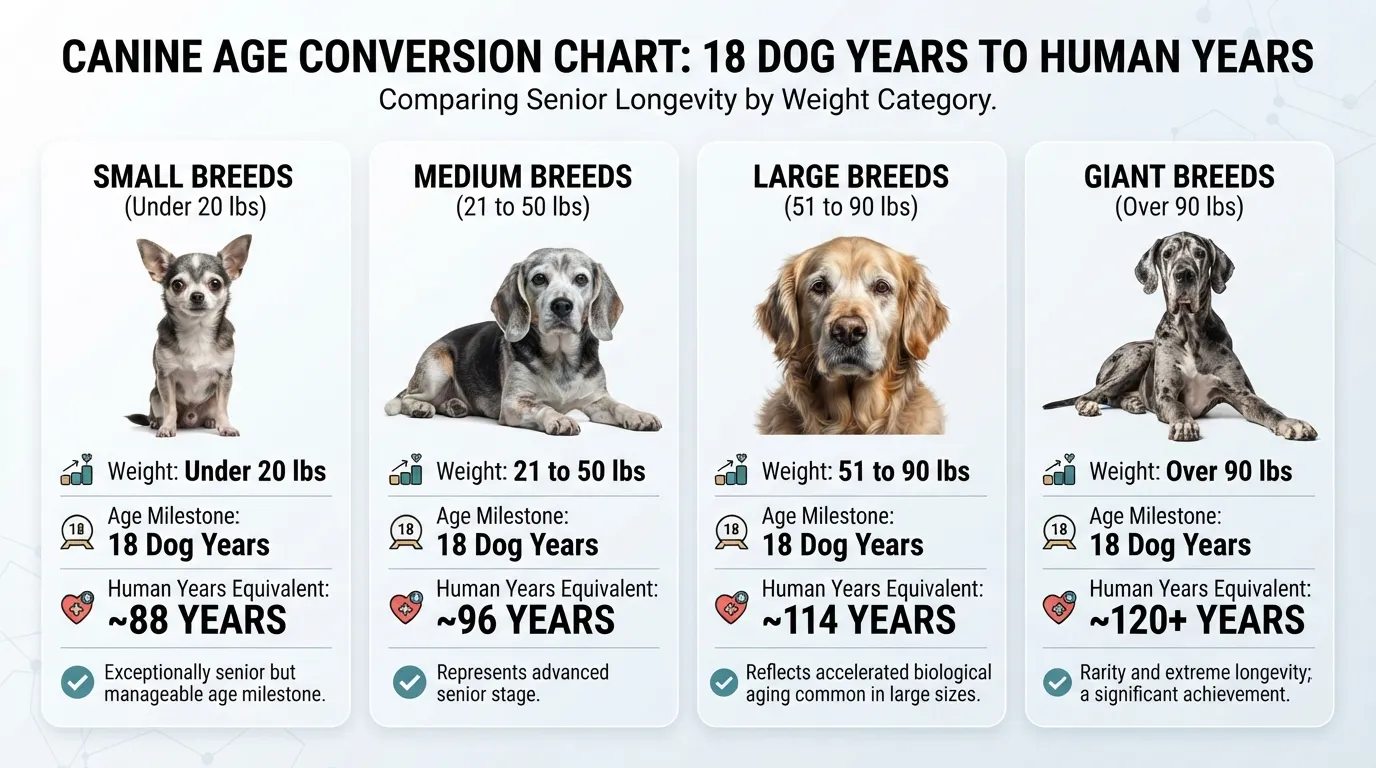
Giant breeds mature differently than small or medium dogs. During their first two years, Berniefies grow at a rapid rate, reaching physical maturity around 24 to 30 months. After age three, each calendar year equates to roughly 7 to 8 human years in terms of cellular aging and joint wear.
Miniature Poodle Average Lifespan at a Glance

Understanding how a giant breed ages allows you to provide the right care at every stage of their life. Because the Berniefie brings together two massive breeds, their overall lifespan and aging process follow the typical pattern of giant dogs, where body size directly influences longevity.
Average Lifespan
The average lifespan of a Berniefie is 7 to 10 years. While crossbreeding can sometimes reduce the risk of certain inherited conditions—a phenomenon known as hybrid vigor—they remain a giant crossbreed. The substantial physical toll of supporting a massive frame over time means they mature faster and reach their senior years earlier than medium or small dogs.
Berniefie Age in Human Years (Age Conversion Chart)
Giant breeds do not age at a flat rate of “7 human years for every 1 dog year.” During their first two years, Berniefies grow rapidly in body size, after which their physiological aging accelerates significantly compared to smaller breeds.
| Berniefie Age (Years) | Equivalent Human Age | Life Stage |
|---|---|---|
| 1 Year | 12 Years | Fast-Growing Puppy / Adolescent |
| 2 Years | 22 Years | Young Adult |
| 3 Years | 31 Years | Prime Adult |
| 5 Years | 49 Years | Mature Adult |
| 7 Years | 64 Years | Entering Senior Stage |
| 9 Years | 78 Years | Geriatric / Senior |
| 10+ Years | 85+ Years | Advanced Senior |
Calculate Your Dog’s Exact Age: Standard charts only give a rough estimate. For a precise calculation tailored specifically to your dog’s exact weight, breed traits, and birth date, use our interactive Dog Age Calculator Tool to see where your Berniefie stands in human years today.
Factors That Affect Lifespan
While genetics set the baseline for your dog’s life expectancy, several everyday factors play a critical role in determining whether a Berniefie reaches the upper end of their lifespan:
Genetics & Health Screening: Sourcing a puppy from breeders who perform orthopedic (OFA/PennHIP) and cardiac screenings on both the Bernese Mountain Dog and Newfoundland parents significantly reduces the risk of early-onset joint deformities and fatal heart conditions.
Weight Management: Carrying extra weight places severe strain on a giant dog’s joints, heart, and internal organs. Keeping your Berniefie lean throughout their life is one of the most effective ways to add functional months or years to their life.
Nutritional Quality: Feeding a high-quality, large-breed formula that controls growth rates during puppyhood prevents metabolic bone diseases. As adults, balanced joint-support nutrients (like glucosamine and omega-3 fatty acids) help protect cartilage.
Routine Veterinary Care: Regular wellness checks, early bloodwork monitoring, joint evaluations, and timely vaccinations help catch progressive age-related issues before they turn into life-threatening conditions.
Signs of Aging to Watch For
Berniefies are generally considered “seniors” around 6 to 7 years of age. Catching subtle age-related changes early allows you to adjust their environment and care routine promptly:
Mobility Changes: Stiffness when rising from a resting position, reluctance to climb stairs, or slipping on smooth hardwood floors often signal the onset of canine arthritis or hip dysplasia.
Cloudy Eyes & Hearing Loss: A grayish haze in the lenses (nuclear sclerosis) or a slower response to vocal cues are natural signs of sensory decline.
Weight Fluctuations: A slowing metabolism can lead to sudden weight gain, while muscle mass deterioration (sarcopenia) might cause an aging Berniefie to lose muscle over their hindquarters.
Changes in Sleep Patterns & Behavior: Senior Berniefies may sleep significantly longer during the day or show signs of restlessness at night due to joint discomfort or cognitive changes.
Senior Care Adjustments: When these signs appear, simple modifications make a world of difference. Switch to orthopedic memory-foam beds, place non-slip rugs on slick flooring, transition to a senior-specific diet with controlled calories, and adjust exercise to gentle, low-impact daily walks rather than strenuous activities.
Temperament & Personality
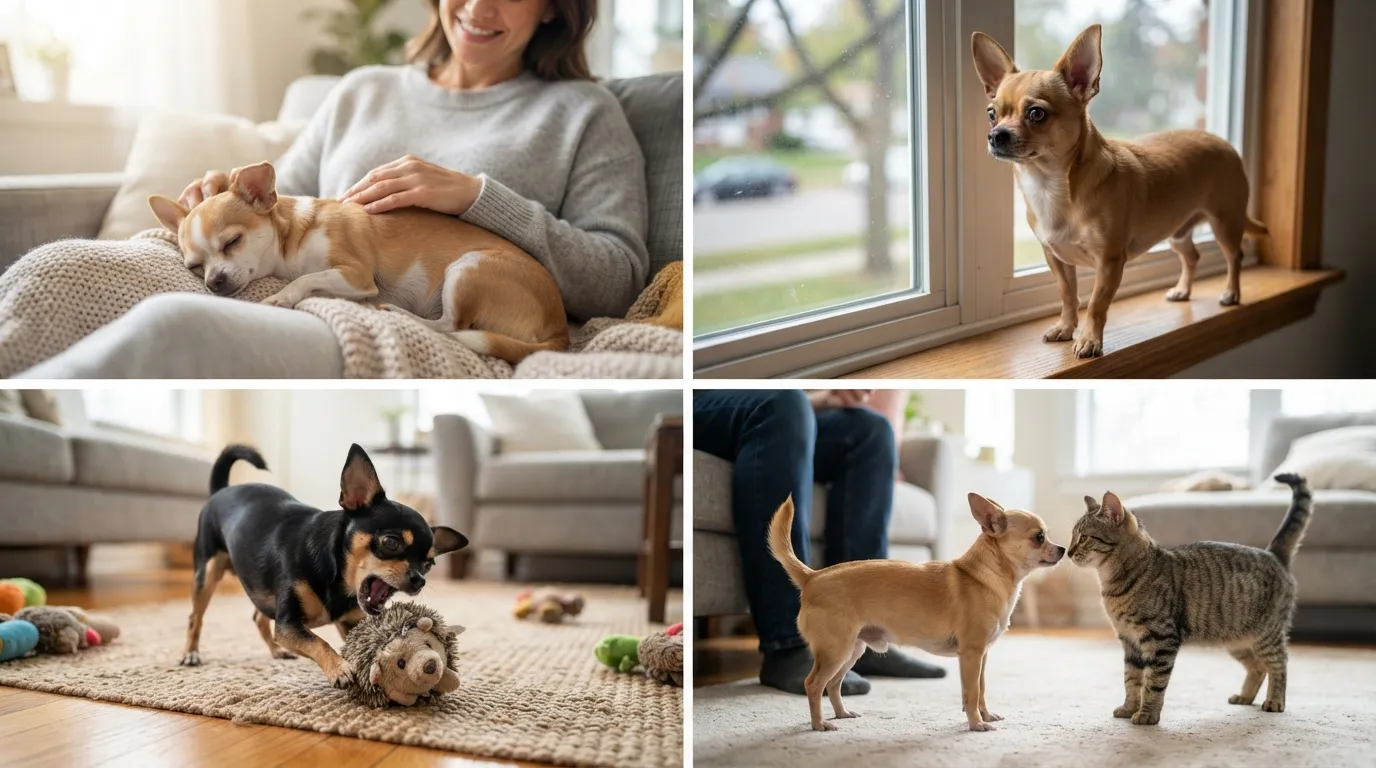
Combining two of the most famously gentle giants in the canine world, the Berniefie is renowned for its calm, sweet, and affectionate nature. They inherit a deeply loyal disposition from both parent breeds, creating a dog that thrives on human companionship and quiet family presence. Despite their impressive physical size, their overall energy is mellow and easygoing, making them loving indoor companions rather than high-strung working dogs.
Are Berniefies Good with Families & Kids?
Berniefies make exceptional family dogs and naturally embody the legendary “nanny dog” reputation of both the Newfoundland and the Bernese Mountain Dog. They are remarkably patient, forgiving, and tolerant around children of all ages.
Because of their immense size, early socialization and boundary training are essential so they learn not to lean heavily or accidentally bump into small toddlers. However, their instinct is naturally protective and protective in a gentle, non-aggressive way—they prefer to act as a quiet guardian and loyal shadow to the children in their home.
Do They Get Along with Other Pets?
In most cases, Berniefies get along wonderfully with other animals, including other dogs and cats. Neither parent breed possesses a high prey drive, which means a well-socialized Berniefie will rarely view smaller household pets as prey.
With Cats: Their relaxed demeanor allows them to co-exist peacefully with felines, often ignoring them or engaging in calm curiosity.
With Other Dogs: They generally display non-dominant behavior around other dogs, making them great additions to multi-dog households or peaceful visitors at dog parks.
Do Berniefies Like Water & Swimming?
Thanks to the heavy influence of their Newfoundland lineage, most Berniefies have a natural affinity for water. Newfoundlands are famous for their webbed feet, water-resistant coats, and innate water-rescue instincts—traits that frequently pass down to this mix.
Many Berniefies actively seek out lakes, rivers, or backyards with pools to splash around in. Even those that prefer to keep all four paws on solid ground usually enjoy playing with garden hoses or stepping into shallow streams during summer walks.
Intelligence & Trainability
Berniefies are intelligent, observant, and eager to please their owners, which makes basic obedience training relatively straightforward. However, their learning style requires a patient hand:
Sensitive Nature: Both parent breeds are sensitive to harsh tones. Positive reinforcement techniques—using high-value treats, praise, and gentle guidance—yield the best results.
Maturity Rate: Like many giant breeds, they mature slowly both physically and mentally, often retaining puppy-like clumsiness and a short attention span until about 2 to 3 years of age.
Consistency is Key: Establishing clear rules early regarding leash manners and jumping is critical before they reach their full 100+ pound adult size.
Getting a Berniefie: Cost, Breeders & Adoption

Bringing a giant breed like a Berniefie into your home is a major commitment that requires careful financial planning and thoughtful research. From initial puppy costs to choosing between ethical breeders and rescue organizations, understanding what to expect ensures you are fully prepared for the journey ahead.
Puppy Price Range
On average, a Berniefie puppy costs between $1,000 and $2,500. Prices vary depending on several factors, including the breeder’s location, the health testing performed on the parent dogs, lineage, and coat colors or markings (such as classic Bernese tricolor patterns).
In addition to the initial purchase price, potential owners must factor in the elevated setup costs associated with giant breeds:
Initial Setup Costs: $500 – $1,000+ for extra-large crates, heavy-duty harnesses, orthopedic dog beds, and high-volume food dishes.
Annual Healthcare & Essentials: Expect to spend around $1,500 – $2,500 per year on large-breed kibble, higher-dosage flea/tick preventatives, routine veterinary care, and grooming supplies.
Growth & Development Timeline
Because giant crossbreeds grow rapidly over an extended period, their development timeline differs significantly from medium or small dogs. A Berniefie takes roughly 24 to 36 months to reach full physical and mental maturity.
8 Weeks to 6 Months (Rapid Skeletal Growth): During this phase, puppies gain weight rapidly—often 2 to 4 pounds per week. Controlled exercise is critical during this period to prevent unnecessary stress on developing growth plates.
6 Months to 12 Months (Adolescence): The dog reaches most of its adult height but appears long and lanky. Puppy energy remains high, though training becomes more structured.
12 Months to 24 Months (Filling Out): The dog’s frame broadens significantly. Muscles, chest depth, and head size expand, bringing them closer to their final adult weight (90 to 150+ lbs).
24 Months to 36 Months (Full Maturity): Physical growth plate closure is complete, and mental maturity settles in, transitioning the dog into a calm, balanced adult giant.
Reputable Breeders vs Rescue Options
Deciding whether to buy from a breeder or adopt from a rescue depends on your preferences, but avoiding unethical sources is paramount for giant crossbreeds.
Finding a Reputable Breeder
Because the Berniefie is a designer mix, it is critical to avoid backyard breeders and puppy mills that capitalize on trendy names without performing basic health screenings. A responsible breeder will always:
Provide health clearances for both parents, including OFA or PennHIP hip and elbow evaluations, cardiac exams, and eye certifications.
Allow you to meet the parent dogs and view the clean, well-socialized environment where puppies are raised.
Offer a clear health guarantee and show genuine interest in the lifelong welfare of the puppy.
Adoption & Rescue Options
If you prefer to adopt, finding a specific “Berniefie Rescue” can be rare. However, you can frequently find this mix or similar giant breed crosses through:
Breed-Specific Rescues: Organizations dedicated to Bernese Mountain Dogs or Newfoundlands often take in mixed breeds.
Giant Breed Rescues: Regional shelters specializing in giant working dogs frequently foster Berniefies.
Local Shelters & Online Platforms: Checking adoption platforms like Petfinder or local humane societies can yield wonderful adult Berniefies looking for a second home, often for an adoption fee of $200 to $500 (which usually covers spay/neuter, vaccinations, and microchipping).
Caring for a Berniefie
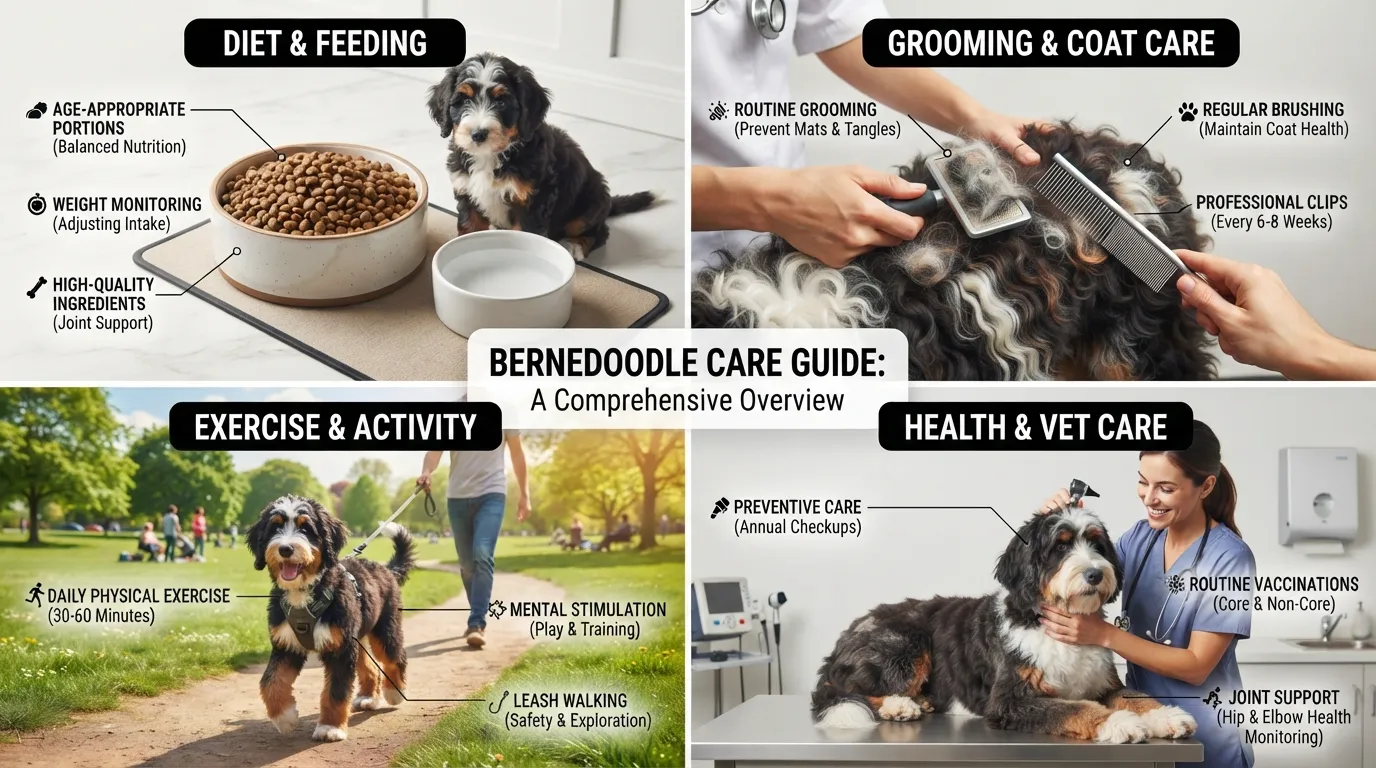
Taking care of a giant, thick-coated dog like a Berniefie requires a proactive approach centered around proper nutrition, joint protection, and coat maintenance. While their easygoing nature makes them pleasant housemates, meeting their daily physical and environmental needs is essential for keeping them healthy and comfortable throughout their lives.
Food & Diet Requirements
A dog of this size needs a carefully regulated diet designed specifically for giant breeds. Proper nutrition prevents excessively fast growth during puppyhood and helps maintain a lean body condition as an adult.
Large/Giant Breed Formula: Feed a high-quality kibble formulated for giant breeds. These formulas contain balanced ratios of calcium and phosphorus to support steady bone development and feature glucosamine and chondroitin for joint support.
Caloric Control: An adult Berniefie typically requires between 2,500 and 3,500 calories per day, depending on their weight, age, and activity level. Avoid free-feeding, as excess weight drastically increases the risk of early-onset joint issues.
Bloat Prevention: Because of their deep-chested structure, Berniefies are at risk for Gastric Dilation-Volvulus (GDV or bloat). Divide their daily food into two distinct meals, use a slow-feeder bowl, and restrict vigorous exercise for at least 60 to 90 minutes after eating.
Exercise Needs
Despite their massive size, Berniefies are moderate-energy dogs. They do not require hours of intense running, but they do need structured daily exercise to maintain muscle tone and mental well-being.
Daily Routine: Aim for 30 to 60 minutes of low-to-moderate exercise each day. A pair of leisurely walks combined with some sniffing time in a fenced yard is usually ideal.
Low-Impact Activities: Swimming is one of the best exercises for a Berniefie, as it provides a full-body workout without putting stress on their heavy joints.
Protect Growing Joints: Avoid high-impact activities like agility jumping, jogging on hard pavement, or repeated stairs until your dog reaches physical maturity (around 2 years old), as their growth plates take much longer to close.
Hot Weather & Climate Considerations
With dense coats built for Swiss mountain winters and cold Canadian waters, Berniefies thrive in cool climates but struggle in heat and humidity. Heatstroke is a severe risk for this mix during summer months.
Summer Safety: Limit outdoor activities to early mornings or late evenings when temperatures are cooler. Keep walks short on hot pavement.
Indoor Comfort: Provide access to air-conditioned rooms, cooling mats, and elevated mesh beds that allow air to circulate beneath them. Always ensure fresh, cold water is readily available.
Never Shave Their Coat: Shaving a double coat disrupts their natural thermoregulation system and exposes their pale skin to severe sunburns and pest bites. The inner coat acts as insulation against heat just as it does against cold.
Training Tips
Starting obedience training and social boundaries on day one is crucial when raising a dog that will easily top 100 pounds.
Early Leash Manners: Teach loose-leash walking immediately while your puppy is still small. A fully grown, 130-pound dog pulling on a leash is dangerous and nearly impossible to control purely by physical strength.
Positive Reinforcement Only: Berniefies are soft-tempered and eager to please. Use positive, reward-based methods with treats, verbal praise, and consistency. Harsh corrections will cause them to shut down or become stubborn.
Prevent “Leaning” and Jumping: Nip habits like jumping on visitors, pawing for attention, or leaning their full weight against people early, as these behaviors can easily knock over children or elderly family members later in life.
Grooming & Shedding
Maintaining a Berniefie’s long, heavy coat takes dedication, routine effort, and the right tools.
Brushing Frequency: Brush their coat 2 to 3 times a week using a pin brush and an undercoat rake to remove dead hair and prevent mats—especially in friction-heavy areas like behind the ears, under the armpits, and around the thighs.
Shedding Seasons: Expect heavy blowing of the coat twice a year (spring and fall). During these periods, daily brushing is necessary to keep loose fur from taking over your living spaces.
Bathing & Drying: Bathe them every 6 to 8 weeks or when dirty. Because their thick double coat repels water and holds moisture deep near the skin, thoroughly drying them with a high-velocity dog dryer is necessary to prevent hotspot skin infections.
Drool Management: Keep dedicated towels near entryways and water bowls. Wiping their muzzle after meals or drink breaks helps keep your floors and walls clean.
Health & Common Conditions

Because the Berniefie is a giant crossbreed, understanding their health profile requires looking closely at both parent breeds. While combining the Bernese Mountain Dog and the Newfoundland can offer some degree of hybrid vigor, this mix remains susceptible to several structural, genetic, and age-related health conditions common to giant dogs. Proactive care and early detection are essential to ensuring they live a comfortable life.
Minor Health Issues
While not immediately life-threatening, minor health issues can significantly impact a Berniefie’s daily comfort and long-term vitality if left unmanaged:
Skin & Environmental Allergies: Thanks to their heavy, moisture-trapping double coat, Berniefies are prone to seasonal allergies, contact dermatitis, and hot spots. Damp fur left untreated around the neck or ears after swimming often triggers localized bacterial skin infections.
Obesity: Giant breeds have a lower metabolic rate relative to their body weight. Carrying even 5 to 10 extra pounds puts immense stress on their joints, accelerates arthritic breakdown, and increases the risk of cardiovascular strain.
Dental Disease: Plaque and tartar build up quickly without regular oral hygiene. Left unchecked, periodontal disease allows bacteria to enter the bloodstream, potentially causing secondary damage to the heart, kidneys, and liver.
Serious & Genetic Conditions
Potential owners must be aware of several severe, high-risk health conditions inherited from the Bernese Mountain Dog and Newfoundland lineages:
Hip & Elbow Dysplasia: A severe genetic condition where the ball-and-socket joints do not fit together smoothly, causing painful friction, progressive joint degradation, and mobility loss early in life.
Gastric Dilation-Volvulus (GDV / Bloat): A life-threatening emergency common in deep-chested breeds. The stomach fills with gas and twists on itself, cutting off blood supply. Immediate surgical intervention is required to save the dog’s life.
Canine Cancers: The Bernese Mountain Dog side brings a heightened genetic risk for aggressive cancers, particularly Histiocytic Sarcoma (a cancer of the immune cells) and Osteosarcoma (bone cancer). Regular veterinary screenings are vital for catching early tumors.
Dilated Cardiomyopathy (DCM): A heart muscle disease that causes the heart walls to thin and stretch, reducing its pumping efficiency. Both parent breeds carry elevated risks for cardiac issues, making regular heart checks essential.
Preventive Care Tips
Screening & Breeder Verification: Only work with breeders who provide verified OFA or PennHIP clearances for joint health, as well as clear cardiac and eye evaluations for both parents.
Preventive Gastropexy: Discuss a prophylactic gastropexy (“stomach tacking”) with your veterinarian during your dog’s spay/neuter surgery. This procedure secures the stomach wall in place, preventing the fatal twisting associated with bloat.
Weight Control & Joint Supplements: Keep your Berniefie lean throughout every stage of life. Start high-quality joint supplements containing glucosamine, chondroitin, and omega-3 fatty acids early to cushion cartilage.
Routine Senior Screenings: Schedule bi-annual veterinary wellness exams once your Berniefie reaches 5 to 6 years old. Regular blood panels, chest X-rays, and physical joint assessments help detect internal changes before obvious clinical symptoms appear.
Male vs Female Berniefie
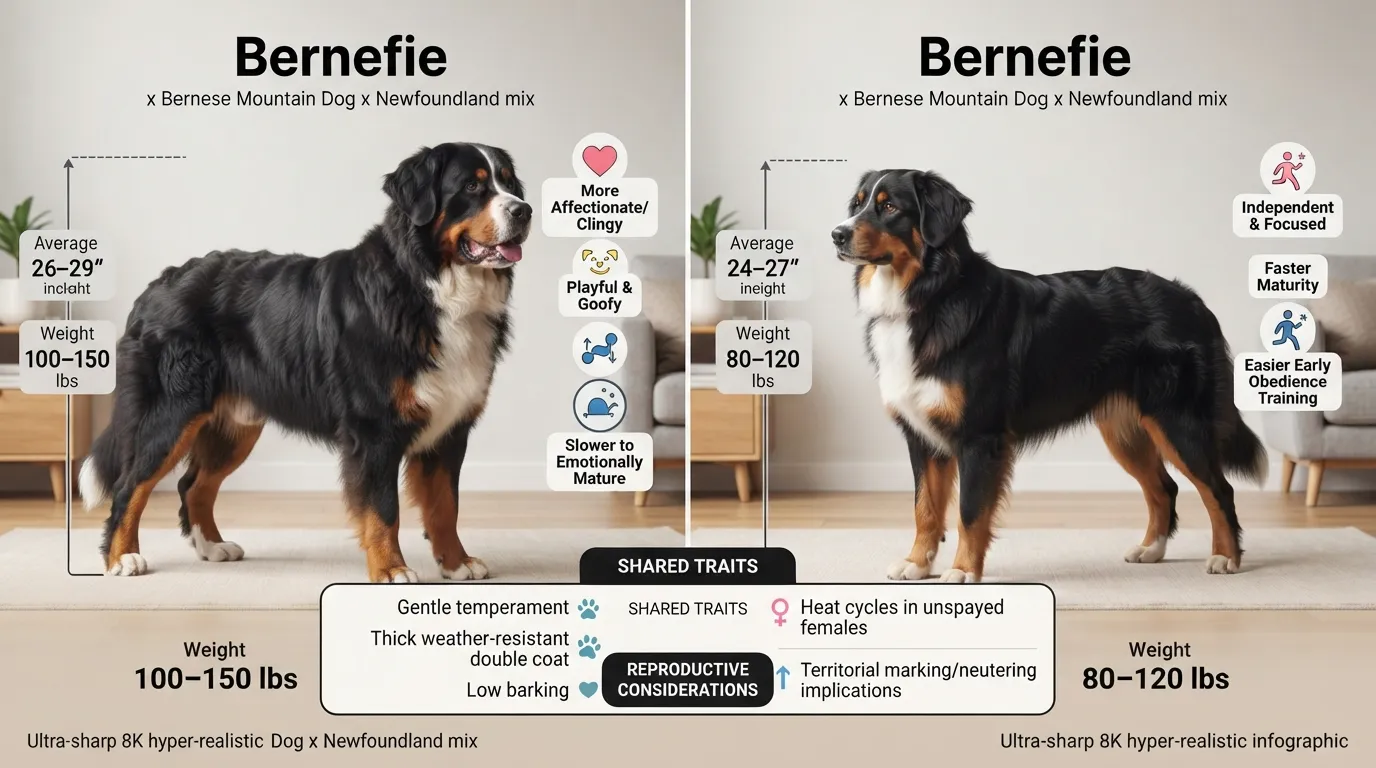
When choosing between a male and a female Berniefie, physical size and minor behavioral tendencies are the primary factors to consider. While both genders inherit the breed’s trademark gentle and affectionate nature, subtle differences can help you determine which best fits your home environment:
Size and Weight: Males are noticeably larger, heavier, and more broad-chested than females. A full-grown male Berniefie typically weighs between 110 and 150+ pounds and stands 26 to 29 inches at the shoulder, whereas a female usually weighs 90 to 120 pounds and stands 24 to 27 inches tall.
Temperament and Affection: Males tend to be more playful, easygoing, and eager to cling to their human companions (“velcro” behavior). Females often show a bit more independence and maturity at an earlier age, though they remain deeply affectionate on their own terms.
Protectiveness and Awareness: Females are frequently more observant and territorial over the household, taking their role as a quiet family guardian quite seriously. Males are generally more social and open toward friendly strangers, though their sheer physical presence provides a natural deterrent.
Drooling Tendencies: Due to having larger heads and looser jowls, male Berniefies generally produce noticeably more drool than their female counterparts, especially after drinking water or during warm weather.
Maturation Rate: Males take slightly longer to mentally mature out of their clumsy puppy phase, often retaining goofy adolescent habits until around 3 years of age. Females typically settle into their calm adult demeanor closer to 2 years of age.
Berniefie vs Bernese vs Newfoundland Comparison Table
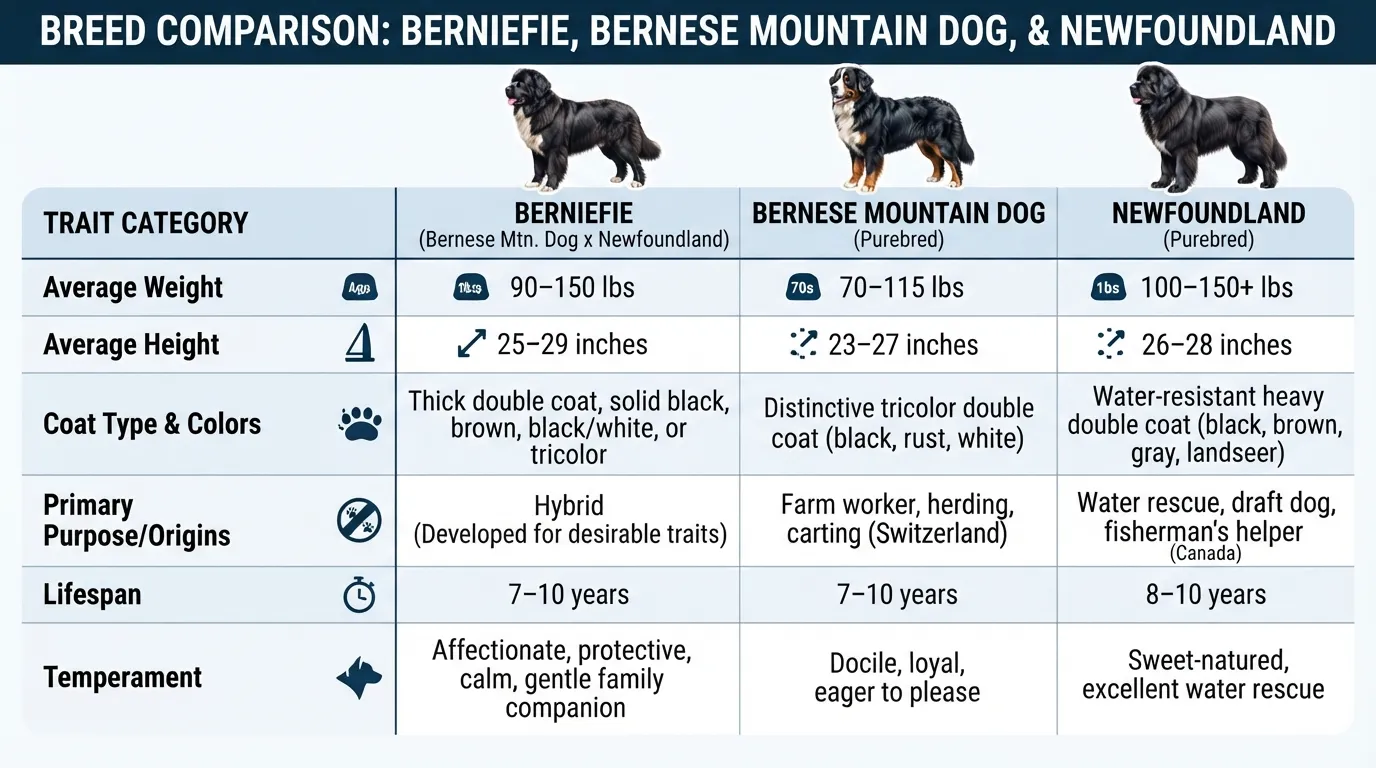
Comparing the Berniefie directly alongside its purebred parent breeds highlights how traits blend across size, lifespan, shedding, and overall energy:
| Attribute | Berniefie (Bernese x Newfoundland) | Bernese Mountain Dog | Newfoundland |
|---|---|---|---|
| Size & Weight | Giant: 90–140 lbs (41–64 kg) Height: 24–28 inches | Large to Giant: 70–115 lbs (32–52 kg) Height: 23–27 inches | Giant: 100–150+ lbs (45–68+ kg) Height: 26–28 inches |
| Lifespan | 8–10 years (Hybrid vigor potential) | 7–10 years | 8–10 years |
| Shedding & Grooming | High shedding year-round; dense double coat requiring brushing 3–4x weekly and heavy drool potential. | High shedding year-round (seasonal blow-outs); double coat requiring 2–3x weekly brushing. | Heavy shedding year-round; thick water-resistant double coat, frequent brushing, and high drool. |
| Energy Level | Moderate: Enjoys daily outdoor walks and backyard play, then settles down inside. | Moderate to High: Working breed origin; needs steady daily exercise, hiking, or drafting tasks. | Low to Moderate: Calm "couch potato" nature indoors, though loves swimming and cool weather strolls. |
| Temperament | Gentle giant, loyal, affectionate: Combines the playful loyalty of the Bernese with the sweet, patient nature of the Newfoundland. | Affectionate, eager to please, alert: Devoted family companion, slightly more energetic and playful. | Exceptionally gentle, calm, "nanny dog": Patient with children, easygoing, and deeply tranquil. |
Berniefie
(Bernese x Newfoundland)| Size & Weight | Giant: 90–140 lbs (41–64 kg) Height: 24–28 inches |
|---|---|
| Lifespan | 8–10 years (Hybrid vigor potential) |
| Shedding & Grooming | High shedding year-round; dense double coat requiring brushing 3–4x weekly and heavy drool potential. |
| Energy Level | Moderate: Enjoys daily outdoor walks and backyard play, then settles down inside. |
| Temperament | Gentle giant, loyal, affectionate: Combines the playful loyalty of the Bernese with the sweet, patient nature of the Newfoundland. |
Bernese Mountain Dog
| Size & Weight | Large to Giant: 70–115 lbs (32–52 kg) Height: 23–27 inches |
|---|---|
| Lifespan | 7–10 years |
| Shedding & Grooming | High shedding year-round (seasonal blow-outs); double coat requiring 2–3x weekly brushing. |
| Energy Level | Moderate to High: Working breed origin; needs steady daily exercise, hiking, or drafting tasks. |
| Temperament | Affectionate, eager to please, alert: Devoted family companion, slightly more energetic and playful. |
Newfoundland
| Size & Weight | Giant: 100–150+ lbs (45–68+ kg) Height: 26–28 inches |
|---|---|
| Lifespan | 8–10 years |
| Shedding & Grooming | Heavy shedding year-round; thick water-resistant double coat, frequent brushing, and high drool. |
| Energy Level | Low to Moderate: Calm "couch potato" nature indoors, though loves swimming and cool weather strolls. |
| Temperament | Exceptionally gentle, calm, "nanny dog": Patient with children, easygoing, and deeply tranquil. |
Key Takeaways
Space & Handling: All three are giant breeds that need heavy-duty grooming routines, cold-weather affinity, and space to move, though the Newfoundland and Berniefie lean heavier in body frame and potential drool.
Activity Fit: If you want a slightly more active hiking companion, the Bernese Mountain Dog tends to have a bit more drive. If you prefer a calm, lower-energy giant who loves lounging (and water), the Newfoundland or Berniefie fits best.
Is a Berniefie Right for You? Pros, Cons & Best Fit
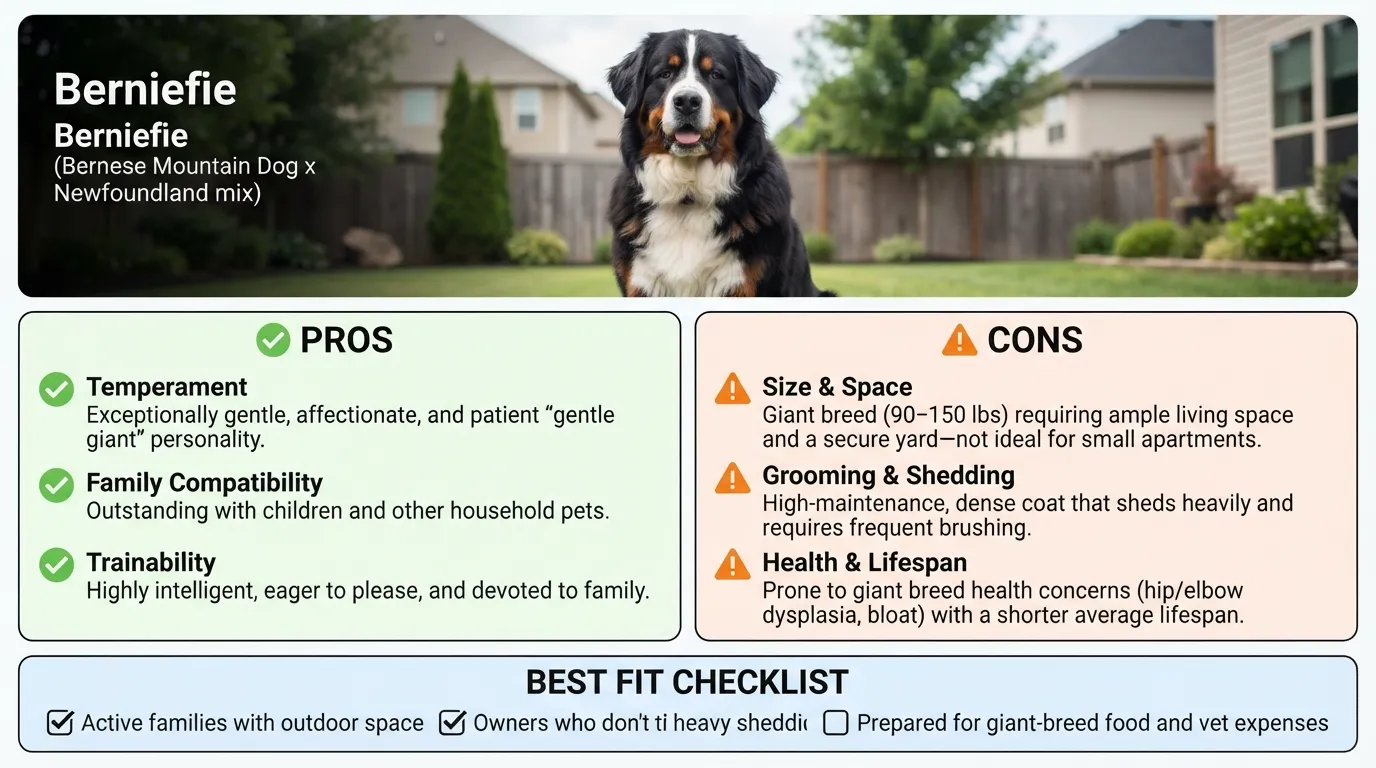
Bringing a Berniefie—a hybrid cross between a Bernese Mountain Dog and a Newfoundland—into your home means welcoming a loving, massive companion. Before deciding, here is a breakdown of their traits, challenges, and ideal living situations.
Pros
Deeply Affectionate & Loyal: Known for their sweet, “gentle giant” disposition, Berniefies form tight bonds with their human families and thrive on close companionship.
Wonderful with Children: Both parent breeds are famous for their patience and gentle nature around kids, making the Berniefie an exceptional family pet.
Calm & Adaptable Temperament: While they enjoy outdoor activity, they generally have a relaxed indoor energy and love lounging around the house.
Intelligent & Eager to Please: They respond well to positive reinforcement training and love having a job to do or participating in family activities.
Cons
Heavy Shedding & High Grooming: Their dense double coat sheds year-round and blows out seasonally, requiring frequent brushing and regular maintenance to prevent matting.
Drool & Mess Potential: Thanks to their Newfoundland genetics, many Berniefies produce significant drool—especially after drinking, eating, or exercising.
Shorter Lifespan & Giant Breed Health Risks: Like all giant breeds, they are prone to hip and elbow dysplasia, bloat (GDV), and heart conditions, with an average lifespan of 8–10 years.
Higher Cost of Ownership: Food, large-breed gear, medication, and veterinary care cost significantly more than for average-sized dogs.
Best Suited For
Families & Homes with Kids: Excellent fit for households looking for a gentle, patient, and protective family dog.
Homes with Ample Space: Best suited for homes with extra room to accommodate a 100+ lb dog and ideally a securely fenced yard to roam safely.
Moderate Activity Levels: Ideal for owners who enjoy steady daily walks, low-impact hikes, or backyard play, but don’t need a high-intensity running partner.
Experienced Owners (or Dedicated Beginners): While their sweet nature makes them friendly, their massive size requires consistent early socialisation and leash training. First-time owners must be confident handling a giant, powerful dog.
Fun Facts About the Berniefie
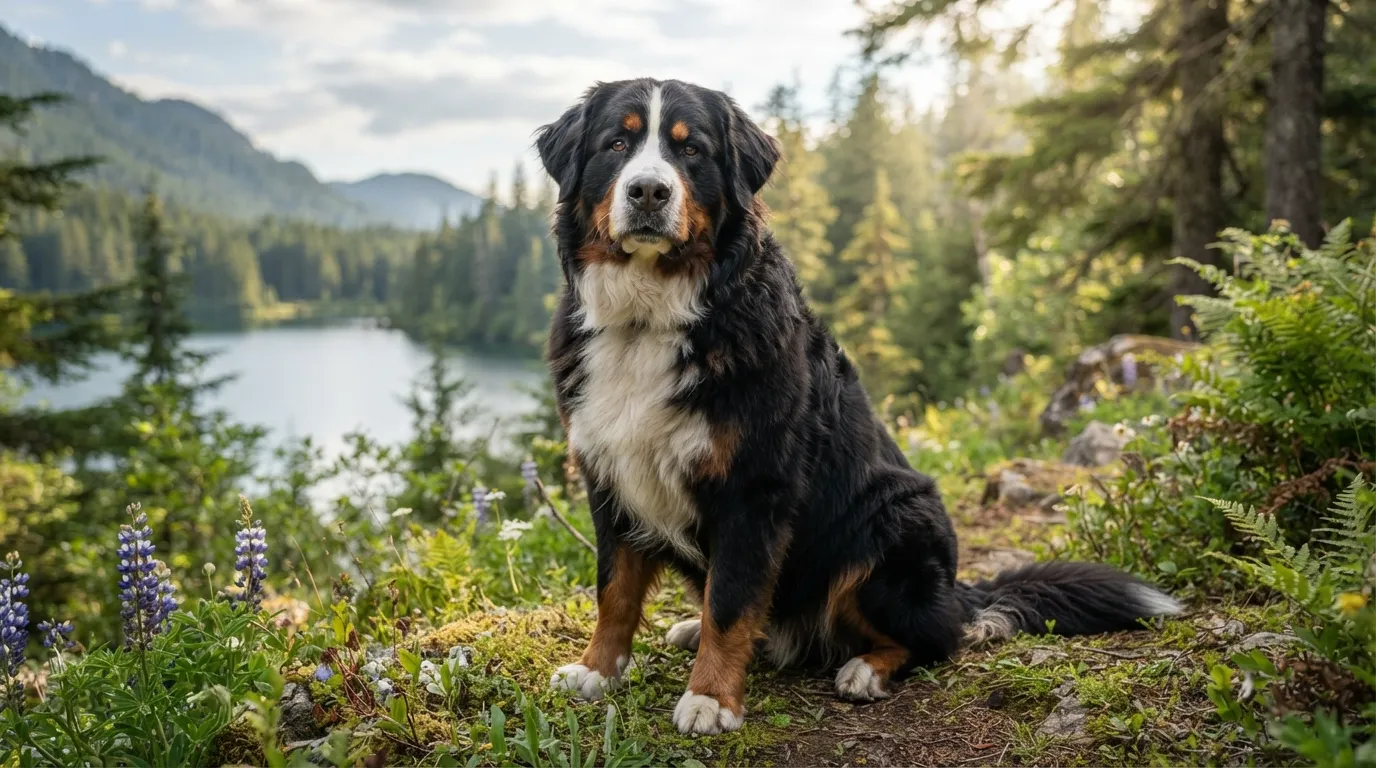
Combining two iconic working giant breeds gives the Berniefie a rich history and a unique set of physical traits. Here are four facts that highlight their background and quirks:
Built-in Water Rescue Heritage: Thanks to their Newfoundland parentage, many Berniefies inherit webbed feet and a water-repellent double coat. Newfoundlands were specifically bred to rescue drowning sailors from freezing waters off the coast of Canada, giving many Berniefies a natural love for swimming.
Rescued from Near Extinction: By the late 19th century, industrialization almost wiped out the Bernese Mountain Dog in its native Switzerland as motorized transport replaced dog-drawn carts. Dedicated Swiss breeders saved the breed in the early 1900s—without their efforts, the Berniefie hybrid wouldn’t exist today!
The “Slobber Factor” is Genetic: Berniefies often inherit loose, pendulous lips (called flews) from their Newfoundland side. These heavy jowls collect saliva, leading to the infamous “drool fling” whenever they shake their heads—especially after taking a drink.
Born Heavyweights with “Drafting” Power: Both parent breeds were heavy-duty working dogs: Bernese pulled cheese carts through the Alps, while Newfoundlands hauled heavy fishing nets. A full-grown Berniefie easily inherits enough muscular strength to pull light carts or sleds with ease.
Frequently Asked Questions
| Question | Answer / Information |
|---|---|
| Berniefie ki lifespan kitni hoti hai? | Inki average lifespan 8 se 12 saal hoti hai, jo ki inke parents (Bernese Mountain Dog aur Newfoundland) ke health traits par depend karti hai. |
| Full grown weight kitna hota hai? | Fully grown Berniefie ka weight 80 se 150 lbs (36 se 68 kg) tak ho sakta hai. Male dogs usually female dogs se ziada heavy hote hain. |
| Kya ye family-friendly dog hai? | Haan, ye bohot gentle, affectionate aur protective hote hain. Inka calm nature inhein bachon aur baaqi pets ke saath family setup ke liye best banata hai. |
| Puppy ka cost kitna aata hai? | Iske puppy ki average price $1,000 se $2,500 ke darmiyan hoti hai, jo breeder ki reputation aur lineage par depend karti hai. |
| Berniefie vs pure Bernese/Newfoundland — farq kya hai? | Berniefie ek hybrid (crossbreed) hai. Ye Bernese ki striking tricolor coat aur Newfoundland ki swimming ability aur calm temperament ka mix hota hai, jisse health issues bhi comparatively kam hote hain. |
🐾 Other Age Guides

I built Dogagescalculator.com to give dog owners honest, science-backed answers instead of the outdated "×7" myth. Every figure here is checked against AKC, AVMA, and published veterinary research.
More about the author & this site →
Comments