
How Many Puppies Can an Australian Shepherd Have? Complete Litter Size Guide
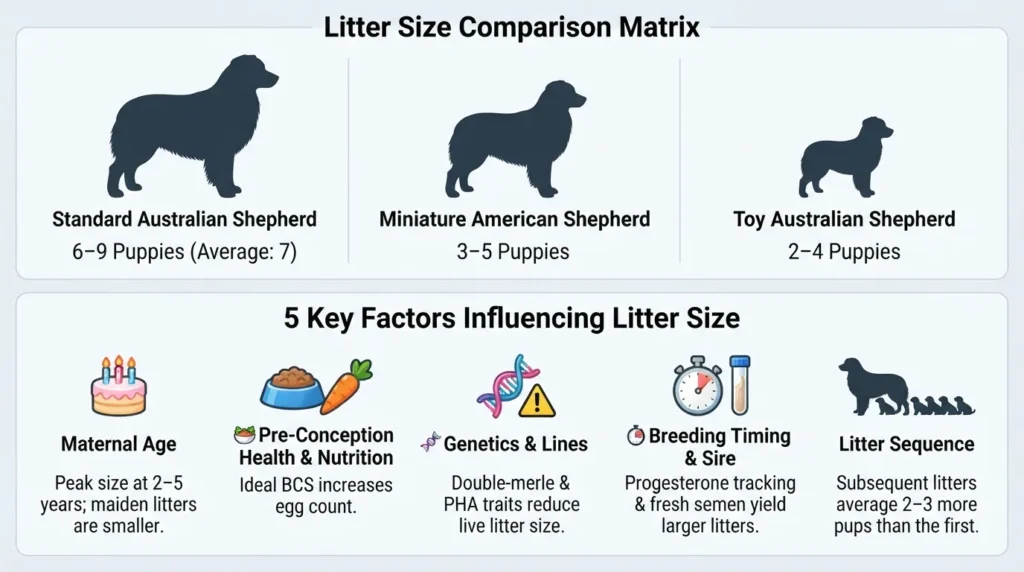
An Australian Shepherd typically gives birth to 6 to 9 puppies per litter, with 7 puppies being the average for healthy, adult females. Depending on the dam’s age, health, and genetics, a full-sized standard Aussie litter can range anywhere from 4 to 10 puppies.
First-time mothers (primiparous females) and older dogs often deliver smaller litters of 4 to 6 pups, whereas a mature female in her prime (between 2 and 5 years old) is far more likely to produce a larger litter of 8 or more.
Australian Shepherd Litter Size Quick Reference
| Dog Size / Type | Average Litter Size | Typical Range | Gestation Period |
|---|---|---|---|
| Standard Australian Shepherd | 6–7 puppies | 4–10 puppies | 63 days (approx. 9 weeks) |
| Miniature American Shepherd (Mini Aussie) | 3–5 puppies | 2–6 puppies | 63 days |
| Toy Australian Shepherd | 2–4 puppies | 1–5 puppies | 63 days |
5 Key Factors That Influence Aussie Litter Size
While the breed average is 6 to 9 puppies, several biological and environmental factors determine how many puppies a specific dam will carry:
1. Age of the Dam
A female Australian Shepherd reaches her peak reproductive fertility between her second and fourth years (typically her 2nd through 4th heat cycles). Litters produced during her first heat or after age 5 tend to be smaller, as ovulation rates decrease with age.
2. Overall Health and Nutrition
Canine reproductive success relies heavily on body condition score (BCS) and pre-breeding nutrition. A female maintained at an ideal weight and receiving optimal dietary micronutrients (such as folic acid and balanced omega fatty acids) releases more viable eggs during ovulation.
3. Sire Fertility and Mating Method
The health and age of the male (sire) play an equally important role. Natural matings and fresh-chilled artificial insemination generally result in higher conception rates and larger litter sizes than frozen semen, which typically has reduced sperm viability upon thawing.
4. Genetic Lineage
Litter size has a hereditary component. Female Aussies born from larger litters often carry a genetic predisposition toward higher ovulation rates themselves.
5. Sequence of the Litter
A dog’s first litter is almost always smaller than subsequent litters. A dam that delivers 4 puppies in her maiden litter will frequently carry 6 to 8 puppies in her second or third whelping.
What to Expect During Gestation and Whelping
An Australian Shepherd’s pregnancy lasts approximately 63 days (measured from the day of ovulation).
Day 28–32: A veterinarian can confirm pregnancy via abdominal palpation or ultrasound and give an initial estimate of litter size.
Day 45+: Fetal skeletons calcify, making an abdominal X-ray (radiograph) the most reliable method for getting an accurate puppy count before whelping day.
Whelping Day: Standard Aussies usually deliver puppies every 30 to 60 minutes. A full whelping process for 7 or 8 puppies generally takes between 6 and 12 hours.
Quick Answer — Average Litter Size & Gestation Period
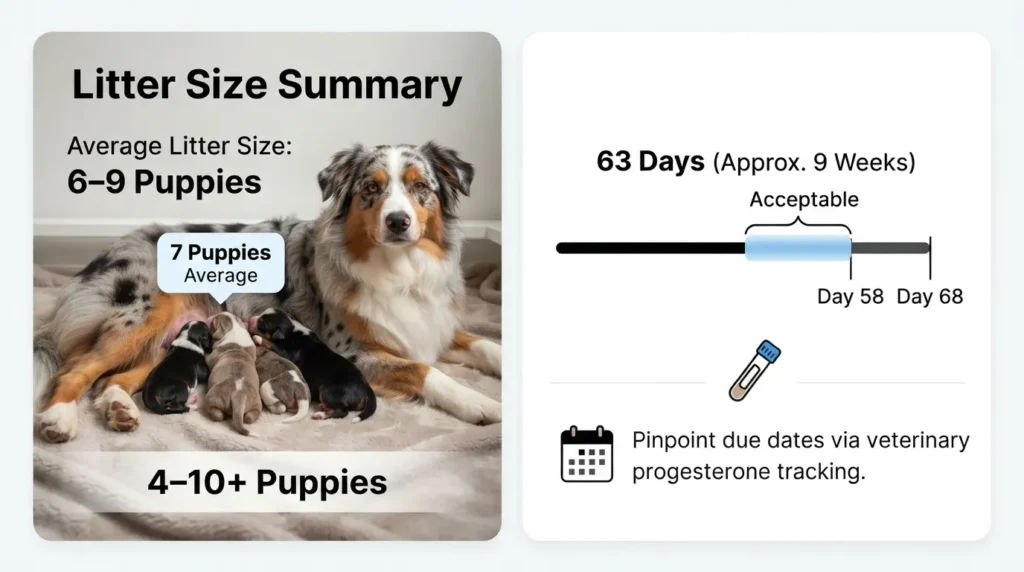
An Australian Shepherd typically gives birth to 6 to 9 puppies per litter, with 7 puppies being the overall breed average. First-time mothers (maiden bitches) or smaller working-line females may deliver slightly smaller litters of 4 to 5, while mature, experienced females in peak health occasionally whelp up to 10 or more.
The average Australian Shepherd gestation period is 63 days (roughly 9 weeks) from ovulation, though healthy deliveries safely occur anywhere between day 58 and day 68. Because canine ovulation dates can differ from the actual mating date, having your veterinarian track progesterone levels remains the most precise way to pinpoint your bitch’s exact due date.
Australian Shepherd Breeding Essentials
Average Litter Size: 6–9 puppies (breed average is 7)
Litter Range: 4–10+ puppies
Gestation Length: 63 days (range: 58–68 days)
Optimal Breeding Age: 2 to 5 years old (after completing full OFA/genetic health testing)
Litter Size Range & What Affects It
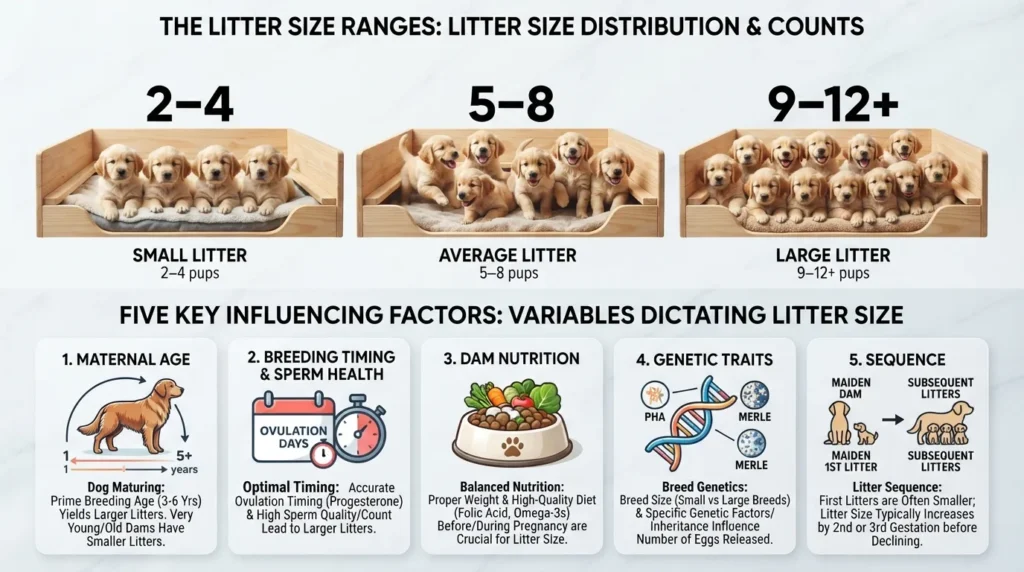
While Australian Shepherds are medium-sized working dogs known for high fertility, their litter sizes range anywhere from 2 to over 12 puppies. On average, a healthy Australian Shepherd dam delivers 6 to 7 puppies, but individual litter size depends heavily on genetics, breeding timing, maternal age, and overall health.
Small Litters (2–4 Puppies) — Causes
Small litters of 2 to 4 puppies usually point to underlying biological or timing issues during breeding rather than the dam’s natural capacity.
Reproductive issues in sire or dam: Low sperm motility or density in the male, as well as subclinical uterine infections, thyroid imbalance, or low egg release in the female, significantly reduce successful fertilizations.
Breeding timing: Inaccurate progesterone testing is the most common culprit behind surprisingly small litters. Mating too early or too late in the female’s estrus cycle means fewer eggs are viable when sperm reaches them.
Pelger-Huet Anomaly (PHA): This hereditary blood trait affects white blood cell development in Australian Shepherds. While heterozygous dogs (carrying one copy) live normal lives, homozygous embryos (inheriting two copies) are lethal in utero and resorb early in pregnancy, noticeably shrinking the litter size.
Average Litters (5–8 Puppies)
The sweet spot for a standard Australian Shepherd is 5 to 8 puppies per litter. This is the most typical range for healthy females in their reproductive prime (between 2 and 5 years old) mated at peak fertile days.
In this range, dams can easily carry and nurse the pups without excessive physical strain, and puppies generally achieve consistent, healthy birth weights.
Large Litters (9–12+ Puppies)
Litters of 9 to 12 or more puppies occur most frequently in mature, experienced females receiving optimal pre-conception nutrition and pinpoint ovulation timing. While large litters are a testament to high fertility, they require hands-on management from the breeder to ensure smaller pups receive adequate milk and supplemental feeding.
Did You Know? While standard litters top out around 8 to 10 pups, extreme cases occur in medium-sized breeds. Record litters for Australian Shepherds have reached up to 16 puppies in a single whelping, requiring around-the-clock round-robin nursing schedules to keep every newborn healthy.
Age of the Female Dog
A dam’s age directly influences both egg production and uterine receptivity. Young females bred on their first or second heat cycle typically produce smaller litters because their hormonal systems are still maturing.
Litter size generally peaks between a dam’s second and fourth litters (around ages 2.5 to 5). After age 6, litter sizes steadily decline as uterine tissue ages and natural ovulation counts drop.
First Litter vs Later Litters
First-time mothers (maiden dams) almost always deliver smaller litters than experienced females. Their bodies release fewer eggs during their initial breeding cycles, and the uterine lining is less experienced at supporting large numbers of implantations.
By her second or third litter, a dam’s reproductive tract operates at maximum efficiency. Breeders routinely see second litters increase by 2 to 3 puppies compared to a female’s maiden litter.
Standard Aussie vs Mini American Shepherd
Body size dictates physical capacity, making breed size a major factor in expected puppy counts.
| Breed Variant | Average Weight | Typical Litter Size |
|---|---|---|
| Standard Australian Shepherd | 40–65 lbs | 5–8 puppies |
| Miniature American Shepherd (Mini Aussie) | 20–40 lbs | 3–5 puppies |
Because Miniature American Shepherds have significantly smaller abdominal cavities, carrying more than 5 or 6 pups can create severe uterine crowding and increases the likelihood of requiring a C-section.
Nutrition Before & During Pregnancy
A dam’s diet directly impacts ovulation rates and embryo survival. Breeders often practice “flushing”—increasing nutrient-dense intake 2 to 3 weeks prior to breeding—to encourage the ovaries to release more viable eggs.
During pregnancy, switching to a high-protein, energy-dense food formulated for growth or lactation ensures embryos don’t resorb due to nutritional stress. Proper dietary balance prevents low birth weights and guarantees the dam produces adequate colostrum at whelping.
Merle Coat Genetics & Double Merle Risk
Breeding two merle Australian Shepherds together (Merle x Merle) carries severe genetic risks that directly alter litter viability. Each puppy in a merle-to-merle breeding has a 25% chance of inheriting two copies of the merle gene, becoming a “double merle” (homozygous merle).
Double merle embryos frequently suffer from fatal developmental defects in utero, leading to early resorption or stillbirths that reduce total live litter size. Surviving double merle puppies are often born deaf, microphthalmic (with abnormally small or missing eyes), or completely blind. Responsible breeders never perform merle-to-merle matings.
Polydactyly — A Unique Genetic Trait
Polydactyly—the presence of extra toes, usually on the hind feet—is an ancient trait preserved in certain foundation Australian Shepherd working lines.
While polydactyly is purely a structural variance and does not affect the actual number of puppies born, finding a polydactyl puppy in a litter is a clear genetic marker of specific historical herding lineages.
How Many Times Can an Australian Shepherd Have Puppies?
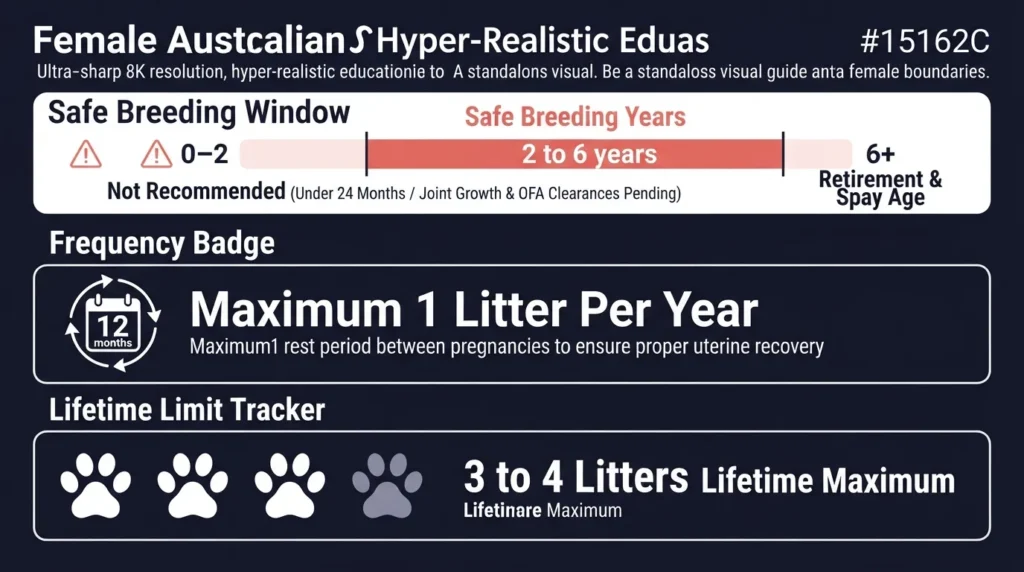
An Australian Shepherd female can safely have 3 to 4 litters in her lifetime, provided she is given proper rest and veterinary clearance between pregnancies. While a dog is physically capable of coming into heat and producing puppies twice a year until old age, ethical breeding practices strictly limit both the frequency and total number of litters to protect the dam’s long-term health.
Breeding an Aussie requires balancing her reproductive window with physical maturity. Pushing a female past these biological boundaries increases the risk of severe delivery complications, maternal exhaustion, and reduced puppy health.
Safe Breeding Age Range
The recommended breeding window for a female Australian Shepherd is between 2 and 6 years of age.
A female Aussie should never be bred before 2 years (24 months) old. Even though she may experience her first heat cycle as early as 6 to 9 months, her body is still growing, and her growth plates have not fully closed. Crucially, major canine health organizations like the Orthopedic Foundation for Animals (OFA) cannot issue official hip and elbow dysplasia clearances until a dog reaches two full years of age. Breeding earlier risks passing on hidden genetic joint defects or causing severe physical strain on a still-developing female.
The upper age limit for breeding a female Aussie is typically 5 to 6 years old. As dogs enter their senior years, risks during pregnancy escalate dramatically. Older dams face higher rates of uterine infections (pyometra), weak uterine contractions during labor (dystocia), smaller litter sizes, and poor milk production. Retiring a female by age 6 ensures she transitions into her senior years with her energy and health intact.
To track where your dog stands in her life stage and physical maturity, you can check her equivalent human age using our dog age calculator.
Lifetime Litter Limit
An ethical breeder limits an Australian Shepherd to a maximum of 1 litter per year, with a lifetime total of no more than 3 or 4 litters.
Carrying and nursing a litter takes a heavy toll on a female’s body, draining her calcium, muscle mass, and energy reserves. While some veterinarians occasionally support back-to-back breeding if the dam is in peak health, resting her for at least one full heat cycle between litters allows her uterus to fully heal and her body to rebuild nutrient stores.
Once a dam reaches her lifetime limit of 3 or 4 litters, she should be retired from breeding and spayed. Spaying at this stage eliminates the risk of life-threatening uterine infections and significantly reduces the chance of mammary tumors, allowing her to live out the rest of her life as a healthy, active companion.
How Many Litters Can an Australian Shepherd Have in Her Lifetime?
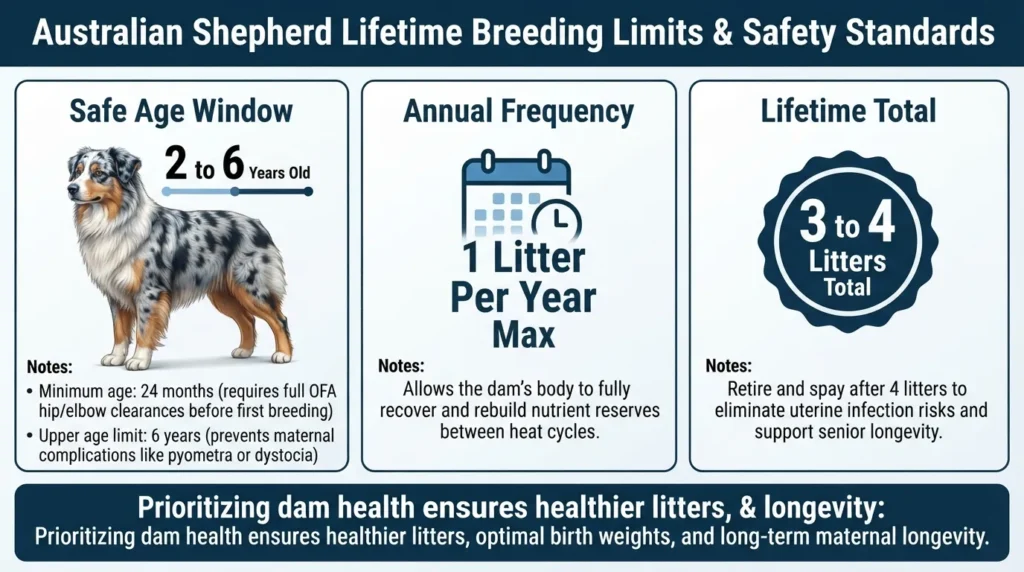
An Australian Shepherd female can safely have 3 to 4 litters in her lifetime, provided she is given proper rest and veterinary clearance between pregnancies. While a dog is physically capable of coming into heat and producing puppies twice a year until old age, ethical breeding practices strictly limit both the frequency and total number of litters to protect the dam’s long-term health.
Breeding an Aussie requires balancing her reproductive window with physical maturity. Pushing a female past these biological boundaries increases the risk of severe delivery complications, maternal exhaustion, and reduced puppy health.
Safe Breeding Age Range
The recommended breeding window for a female Australian Shepherd is between 2 and 6 years of age.
A female Aussie should never be bred before 2 years (24 months) old. Even though she may experience her first heat cycle as early as 6 to 9 months, her body is still growing, and her growth plates have not fully closed. Crucially, major canine health organizations like the Orthopedic Foundation for Animals (OFA) cannot issue official hip and elbow dysplasia clearances until a dog reaches two full years of age. Breeding earlier risks passing on hidden genetic joint defects or causing severe physical strain on a still-developing female.
The upper age limit for breeding a female Aussie is typically 5 to 6 years old. As dogs enter their senior years, risks during pregnancy escalate dramatically. Older dams face higher rates of uterine infections (pyometra), weak uterine contractions during labor (dystocia), smaller litter sizes, and poor milk production. Retiring a female by age 6 ensures she transitions into her senior years with her energy and health intact.
To track where your dog stands in her life stage and physical maturity, you can check her equivalent human age using our dog age calculator.
Lifetime Litter Limit
An ethical breeder limits an Australian Shepherd to a maximum of 1 litter per year, with a lifetime total of no more than 3 or 4 litters.
Carrying and nursing a litter takes a heavy toll on a female’s body, draining her calcium, muscle mass, and energy reserves. While some veterinarians occasionally support back-to-back breeding if the dam is in peak health, resting her for at least one full heat cycle between litters allows her uterus to fully heal and her body to rebuild nutrient stores.
Once a dam reaches her lifetime limit of 3 or 4 litters, she should be retired from breeding and spayed. Spaying at this stage eliminates the risk of life-threatening uterine infections and significantly reduces the chance of mammary tumors, allowing her to live out the rest of her life as a healthy, active companion.
Caring for the Litter After Birth
Puppy Mortality Rate & Risk Reduction
According to general veterinary consensus, neonatal puppy mortality typically ranges between 10% and 20% within the first few weeks of life, with the highest risk occurring during the first 48 hours after delivery. Most losses stem from hypothermia, hypoxia during labor, or failure to nurse adequate colostrum.
You can significantly lower these risks with proactive management:
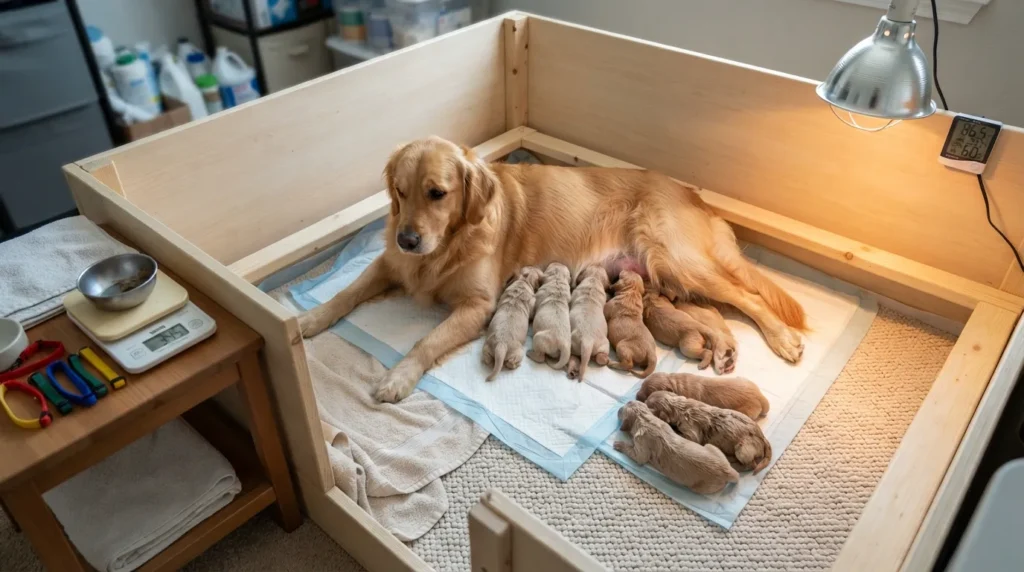
Maintain Nest Temperature: Newborn puppies cannot regulate their own body temperature. Keep the whelping box between 85°F and 90°F (29°C to 32°C) during the first week using a thermostatically controlled heat pad, providing room for the dam to move away from the heat source.
Ensure Colostrum Intake: Confirm every puppy nurses within 12 hours of birth to absorb crucial maternal antibodies.
Prevent Overlaid Puppies: Install pig rails (safety rails) around the inside perimeter of the whelping box to keep the mother from accidentally trapping a puppy against the wall.
Monitor Weight Daily: Weigh puppies every 12 to 24 hours on a digital scale. A puppy that fails to gain weight or loses weight over a 24-hour period requires immediate intervention.
Feeding a Large Litter
When a female gives birth to a large litter (typically 8 or more puppies), maternal resources are pushed to their limit. The dam may not produce enough milk or have enough teats to feed all offspring simultaneously.
To ensure equal nourishment across a large litter, implement a rotation feeding system. Divide the puppies into two balanced groups based on weight and vigor, letting the smaller or weaker group nurse first for uninterrupted access to the highest-yielding teats. Supplementation with a commercial canine milk replacer is often necessary. Rotate formula feedings alongside the dam’s milk to prevent maternal exhaustion and maintain steady growth rates across the entire litter.
Extra Care for Small/Singleton Litters
Single-puppy litters or very small litters present a unique set of challenges that differ sharply from large broods. Without competition for milk, singletons can easily overeat, becoming overly heavy and sluggish, which can delay physical development like crawling and walking.
Smaller litters require focused developmental support:
Simulate Littermates: Place soft, rolled towels or warm water bottles wrapped in blankets in the nesting box to give a single puppy physical contact and warmth usually provided by siblings.
Monitor Milk Intake: Single puppies can over-nurse, leading to milk bloat or diarrhea. Watch for overly tight bellies and regulate nursing sessions if necessary.
Enhance Early Neurological Stimulation: Lacking interaction with littermates, singletons miss critical early social feedback. Handle the puppy daily using gentle touch protocols to promote healthy behavioral and emotional development.
First 2 Weeks — Quick Milestones
Early Development Snapshot
Week 1: Puppies are born completely blind and deaf, relying entirely on smell and touch to locate the dam. They spend up to 90% of their time sleeping and should double their birth weight by day 7 to 10.
Week 2: Eyes begin to open (typically between days 10 and 14), though vision remains blurry. Ear canals start to channel sound, and puppies begin tentative crawling movements as muscle strength improves.
Frequently Asked Questions
An Australian Shepherd usually gives birth to an average of 6 to 9 puppies per litter. However, healthy litters can naturally range anywhere from 4 to 10 puppies depending on the mother's health and age.
In her first litter, an Australian Shepherd typically has around 4 to 6 puppies. First-time mothers often produce slightly smaller litters than experienced dams.
While standard Australian Shepherd litter sizes max out around 9 or 10, exceptional cases of up to 12 to 14 puppies in a single litter have been documented.
Miniature Australian Shepherds (Miniature American Shepherds) have smaller litters due to their physical size, generally averaging between 3 and 5 puppies per litter.
To protect maternal health, an Australian Shepherd should only have 1 litter per year. Resting for a full heat cycle allows her body to recover and rebuild essential nutrient reserves.
Yes. While 2 to 3 puppies is smaller than the breed average (6–9), it is completely normal—especially for very young females or senior dams nearing retirement age.
Coat color alone does not affect litter size. However, breeding two merle dogs together (double merle) carries severe genetic risks and often increases early embryonic loss.
🐾 Other Age Guides

I built Dogagescalculator.com to give dog owners honest, science-backed answers instead of the outdated "×7" myth. Every figure here is checked against AKC, AVMA, and published veterinary research.
More about the author & this site →
Comments