Shih Tzu Poodle Mix Shih-Poo: The Complete Breed Guide
If you are looking for a compact companion that pairs the sweet, affectionate nature of a lap dog with the intelligence of a Poodle, the shih tzu poodle mix—affectionately known as the Shih-Poo—might be your ideal match. Crossing a purebred Shih Tzu with a Toy or Miniature Poodle yields a friendly, adaptable hybrid that thrives in cozy city apartments and spacious suburban homes alike. While crossbreeding means every puppy inherits a unique blend of traits from both parents, most Shih-Poos are cherished for their cheerful disposition and low-shedding coats.
Shih-Poo Quick-Stats Overview
| Trait | Specification |
|---|---|
| Average Weight | 8 to 18 pounds (depends on Toy or Miniature Poodle parent) |
| Average Height | 8 to 13 inches at the shoulder |
| Lifespan | 12 to 15+ years |
| Coat Type | Soft, wavy to curly; low-shedding |
| Hypoallergenic? | Highly allergy-friendly (though no dog is 100% hypoallergenic) |
| Energy Level | Moderate (playful bursts followed by heavy lap-snuggling) |
What Is a Shih Tzu Poodle Mix?
A Shih Tzu Poodle mix is a popular designer hybrid created by crossing a purebred Shih Tzu with a Toy or Miniature Poodle. Often called a “Shih-Poo,” this compact, affectionate dog inherits a blend of the Poodle’s sharp intelligence and low-shedding coat alongside the gentle, companion-focused nature of the Shih Tzu. Because they are a crossbreed rather than a standardized breed, individual dogs can lean more toward one parent’s traits or display an even split of both.
Other Names Shih-Poo, Shihpoo, Shoodle
Depending on who you talk to, you’ll hear this hybrid called several different names. The most common spelling is Shih-Poo (or Shihpoo), but in Australia and parts of the UK, they are frequently referred to as a Shoodle. A few breeders also call them Pooshis, though Shih-Poo remains the industry standard name across North America.
Is It a Recognized Breed?
No, the Shih Tzu Poodle mix is not a recognized purebred dog and cannot be registered with major kennel clubs like the AKC (American Kennel Club) or UKC (United Kennel Club). First intentionally bred in the United States during the late 1990s as part of the initial designer dog movement, they are instead registered with hybrid registries such as the American Canine Hybrid Club (ACHC) or the Designer Breed Registry (DBR).
Shih-Poo Generations Explained F1, F1B, and F2
When researching a Shih Tzu Poodle mix, you’ll quickly run into letter-and-number codes like F1, F1B, and F2. These codes represent the dog’s generation—essentially, how many steps away they are from the original purebred parents.
Understanding generations isn’t just genetic trivia; it dictates what kind of coat your puppy will inherit, how much they’ll shed, and how likely they are to trigger pet allergies.
F1 Shih-Poo First Generation
An F1 Shih-Poo is a direct 50/50 cross between a purebred Shih Tzu and a purebred Poodle (usually Toy or Miniature).
Coat Type: Unpredictable. Puppies in the same litter can range from loose waves to soft curls or even a straighter, silkier coat.
Genetics: 50% Shih Tzu and 50% Poodle.
Shedding: Low to moderate. Most F1s inherit enough Poodle traits to be low-shedding, but they can still lose small amounts of hair.
Because this is a first-generation cross, F1s benefit most from “hybrid vigor”—a genetic term meaning they tend to inherit fewer breed-specific hereditary health issues than their purebred parents.
F1B Shih-Poo First Generation Backcross
An F1B Shih-Poo is produced by breeding an F1 Shih-Poo back to a purebred Poodle.
Coat Type: Consistently curly or tight, wooly waves.
Genetics: 75% Poodle and 25% Shih Tzu.
Shedding: Virtually non-shedding.
This generation leans heavily toward Poodle physical traits. F1B coats require regular professional grooming to prevent matting, but they offer the most predictable look and texture.
F2 Shih-Poo Second Generation
An F2 Shih-Poo is created by breeding two F1 Shih-Poos together.
Coat Type: Highly variable. You might get a wide mix of coat types even within a single litter.
Genetics: 50% Shih Tzu and 50% Poodle (on average), but the genetic split varies widely per puppy.
Shedding: Moderate to low.
F2 generations are the wild card of the Shih-Poo world. Because recessive genes from both original breeds can pair up, F2 puppies are much harder to predict in terms of coat texture, adult size, and shedding levels.
Which Generation Sheds Least and Is Most Hypoallergenic?
If someone in your home has dog allergies, the F1B Shih-Poo is hands-down the best choice.
Because the F1B generation carries 75% Poodle DNA, these dogs inherit the Poodle’s single-layer, low-dander coat. Instead of falling onto your furniture, loose hairs get trapped inside the curly coat until you brush them out, drastically reducing environmental allergens.
Here is how the three main generations compare for shedding and allergy friendliness:
| Generation | Genetic Split | Coat Predictability | Shedding Level | Allergy Friendliness |
|---|---|---|---|---|
| F1 | 50% Shih Tzu / 50% Poodle | Moderate | Low to Mild | Good for mild allergies |
| F1B | 75% Poodle / 25% Shih Tzu | High | Virtually None | Best for moderate to severe allergies |
| F2 | ~50% Shih Tzu / ~50% Poodle | Low | Mild to Moderate | Unpredictable |
No dog is 100% hypoallergenic, as allergies are triggered by dander and saliva rather than hair alone. However, an F1B Shih-Poo gets as close to dander-free as this hybrid breed allows. If you prefer a slightly softer, wavy coat and only suffer from mild seasonal dog allergies, a standard F1 Shih-Poo will usually work well for your household.
Appearance & Physical Traits
Because the Shih Tzu Poodle mix is a crossbreed, there is no single breed standard. A single litter can produce puppies with entirely different looks. You might get a dog with the squished face of a Shih Tzu and the tight curls of a Poodle, or one with a longer Poodle snout and straight Shih Tzu hair. Their appearance is a genetic lottery, which is part of their charm.
Size & Weight
Most Shih-Poos are bred using a Toy Poodle, keeping them firmly in the small dog category. They typically weigh between 8 and 18 pounds and stand 8 to 15 inches tall at the shoulder. However, their exact adult size depends heavily on which parent they take after more.
| Breed | Weight Range | Height Range |
|---|---|---|
| Shih Tzu | 9–16 lbs | 9–10.5 inches |
| Toy Poodle | 4–6 lbs | Up to 10 inches |
| Shih-Poo | 8–18 lbs | 8–15 inches |
Toy vs Miniature vs Teacup Shih-Poo
You will usually see Shih-Poos categorized by the size of their Poodle parent. A Toy Shih-Poo is the most common, resulting from a Toy Poodle and Shih Tzu pairing. If a breeder uses a Miniature Poodle instead, you will get a Miniature Shih-Poo, which can push the scale up to 20 pounds.
You might also see advertisements for Teacup Shih-Poos. These are bred from the absolute smallest runts of litters to stay under 7 pounds. As a former vet-tech, I highly recommend avoiding teacup varieties. They are prone to severe health issues, including fragile bones, life-threatening hypoglycemia, and significantly shortened lifespans.
Coat Types & Colors
A Shih Tzu Poodle mix can inherit the long, silky, straight double coat of the Shih Tzu, the tightly curled single coat of the Poodle, or a wavy fleece coat somewhere in the middle. The wavy, scruffy coat is the most common outcome for first-generation (F1) mixes.
Their color palette is massive. Because both parent breeds come in almost every dog color imaginable, Shih-Poos can be solid black, white, apricot, red, or chocolate. You will also frequently see parti-colors (two or more colors) and phantom patterns (a solid base color with specific lighter markings on the face, chest, and legs).
Is a Shih-Poo Hypoallergenic?
No dog is 100% hypoallergenic, as allergies are triggered by dander and saliva, not just hair. However, the Shih-Poo is widely considered a hypoallergenic dog. Both parent breeds produce significantly less dander than the average pup. If you have mild to moderate pet allergies, a Shih-Poo with a curlier, Poodle-like coat is usually a safe bet, as the tight curls trap dander before it can float around your home.
Shedding, Barking & Drooling Levels
Shedding: Very low. Instead of shedding their fur all over your couch, Shih-Poos hold onto their hair. This means less vacuuming for you, but it shifts the responsibility to daily brushing to prevent painful mats.
Barking: Moderate. Shih Tzus are relatively quiet, but Poodles are alert and vocal. A Shih-Poo will likely bark to let you know someone is at the door, but they aren’t usually nuisance barkers unless they are bored or suffering from separation anxiety.
Drooling: Extremely low. Unless they are actively eating, drinking, or experiencing a dental issue, you won’t have to worry about carrying a slobber rag around for this breed.
Personality & Temperament
General Temperament
When you cross the affectionate nature of a Shih Tzu with the sharp intelligence of a Poodle, you get a companion built almost entirely for friendship. The Shih Tzu Poodle mix (commonly called a Shih-Poo or Shoodle) is playful, deeply loyal, and incredibly adaptable to both tiny apartments and spacious suburban homes.
They inherit a fascinating mix of traits from their parent breeds. The Poodle side brings a keen mind and an eager desire to interact, while the Shih Tzu side adds a calm, sturdy, and occasionally stubborn charm. They aren’t hyperactive dogs, but they aren’t couch potatoes either—they thrive on a balance of short play sessions and long naps right beside you.
Affectionate shadow: They bond closely with their humans and love following family members from room to room.
Moderate energy level: A 20–30 minute daily walk plus a quick game of indoor fetch satisfies their daily exercise needs.
Alert & vocal: They inherit a slight watchdog instinct, meaning they will readily bark to announce visitors or unexpected noises outside.
Smart with a stubborn streak: Highly intelligent and quick to pick up tricks, though they sometimes display a “what’s in it for me?” attitude if training gets repetitive.
Male vs. Female Differences
Temperament differences between male and female Shih-Poos are subtle compared to the impact of genetics, training, and early socialization. However, experienced breeders and owners often notice a few consistent tendencies.
Male Shih-Poos are often slightly more outwardly affectionate, persistent in seeking attention, and eager to please. They tend to stay in a playful, “puppy-like” mindset longer into adulthood. If left unneutered, males can be more prone to marking territory, though neutering before full maturity generally prevents this habit.
Female Shih-Poos tend to be slightly more independent and sweet on their own terms. They often mature faster intellectually, which can give them a slight edge during early housebreaking and basic obedience. A female Shih-Poo will gladly snuggle, but she is also more content stepping away to nap peacefully in her bed when she wants downtime.
Good With Kids & Other Pets?
Shih-Poos make wonderful family pets, but their smaller size means introductions and play rules need to be managed carefully.
With Children: Their gentle, forgiving nature makes them great companions for kids. However, because Shih-Poos are compact (often weighing under 15 pounds), they have delicate bones and joints. Toddlers can easily hurt a small pup by dropping them or squeezing too hard. They do best with older children who understand how to handle small dogs gently, or with younger kids under active adult supervision.
With Other Pets: Thanks to their social disposition, Shih-Poos generally get along well with other household animals. Neither Shih Tzus nor Poodles have a high prey drive, so Shih-Poos typically coexist peacefully with cats after a slow, neutral introduction. They also enjoy the company of other dogs, though early socialization—like puppy playdates—helps them stay confident around larger breeds without getting intimidated.
Training & Trainability
Training a Shih Tzu Poodle Mix (often called a Shih-Poo) is a journey in balancing two very different genetic handshakes. On the Poodle side, you get sharp intelligence, quick problem-solving skills, and an eager-to-please attitude. On the Shih Tzu side, you get an independent, occasionally stubborn companion who frequently asks, “What’s in it for me?”
Because of this dual heritage, most Shih-Poos learn commands quickly, but they require a steady hand, consistency, and plenty of positive reinforcement to keep their focus sharp.
Training Tips
Start Early with Micro-Sessions: Keep training sessions around 3–5 minutes, two to three times a day. Young Shih-Poos have short attention spans, and ending on a successful, high-value treat win builds enthusiasm for the next session.
Rely Purely on Positive Reinforcement: Harsh corrections backfire with this mix. If a Shih-Poo feels intimidated, their instinct is to tune out or dig in their heels. Use small, low-calorie treats (like tiny pieces of boiled chicken) paired with enthusiastic verbal praise.
Establish a Bulletproof Crate Routine: Crate training is invaluable for housebreaking and preventing separation anxiety. Make the crate a safe haven by offering a stuffed KONG toy or a familiar blanket only when they are inside.
Patience with Housebreaking: Shih Tzus are notoriously slow to housebreak due to small bladders and an independent streak. Take your Shih-Poo puppy outside every 2 hours, right after naps, and 15 minutes after meals, rewarding them immediately after they go outside.
Early Socialization: Introduce your puppy to at least 10–15 different safe dogs, people, sounds, and floor surfaces before they reach 16 weeks old. This prevents the fearful or snappy behavior that small dogs sometimes develop when overwhelmed.
Common Behavior Challenges
Housebreaking Delays: Due to their small bladder size, full housebreaking can take anywhere from 6 to 9 months. Consistency, keeping a strict schedule, and avoiding indoor puppy pads (which can confuse training goals) are critical.
Excessive Barking: Poodles are naturally alert barks, and Shih Tzus can be vocal about their opinions. Without early boundary-setting, your Shih-Poo may bark at passing cars, doorbells, or when seeking attention. Teach the “Quiet” command early to keep noise levels manageable.
Separation Anxiety: Because both parent breeds are bred primarily for companionship, Shih-Poos form deep bonds with their families and hate being left alone for long periods. Leaving them with puzzle toys and practicing short 5-to-10-minute departures early on will teach them to stay calm while you are away.
“Small Dog Syndrome”: When owners treat a small mix like a fragile toy—allowing jumping, nip-responses, or guard-barking—the dog takes charge. Treat your Shih-Poo like a large dog in a small body: enforce gentle rules, reward good manners, and don’t excuse bad behavior just because they’re adorable.
Exercise & Activity Needs
Despite their energetic personalities, Shih-Poos are comfortably low-to-moderate energy dogs. They don’t need hours of intense running to thrive, making them fantastic companions for apartment dwellers, busy families, and seniors alike.
Most adult Shih-Poos need roughly 30 to 45 minutes of exercise per day, ideally split into two shorter sessions. Because of their shorter snouts (inherited from the Shih Tzu side), they can tire out quickly in hot weather, so pacing their activity is key.
Here are the best ways to keep a Shih Tzu Poodle mix healthy, active, and mentally sharp:
Brisk Neighborhood Walks: Two 15-to-20-minute daily walks provide physical exercise and essential sniffing time, which acts as a great mental outlet.
Indoor Fetch: Their small size means a hallway or living room is plenty of space for a round of fetch with a soft plush toy or tennis ball.
Interactive Puzzle Toys: Shih-Poos inherit strong intelligence from their Poodle parents. Treat-dispensing puzzles, snuffle mats, and licking pads keep their brain working and prevent boredom-based chewing.
Hide-and-Seek Games: Hide small treats or favorite toys around the room—or hide behind a door yourself—to tap into their natural curiosity and scenting instincts.
Short Backyard Play Sessions: Unstructured backyard time is great for quick bursts of “zoomies,” but always keep outdoor sessions brief during high heat or freezing cold.
Watch for signs of overexertion like excessive panting or slowing down, especially in warmer months. A balance of light physical movement and brain games will keep your Shih-Poo happy without wearing them out.
Grooming Requirements
Maintaining a Shih Tzu Poodle mix requires consistent effort, but keeping up with routine care keeps their wavy or curly coat looking plush rather than matted. Because both parent breeds carry non-shedding, fast-growing hair, grooming isn’t optional—it’s a core part of owning a Shih-Poo.
Brushing & Bathing Schedule
A Shih-Poo’s coat type depends heavily on whether they inherit more of the Shih Tzu’s long, straight hair or the Poodle’s tight curls. Most end up with a soft, wavy coat that traps loose hair, making them prone to painful matting if ignored.
Brushing: Aim to brush 4 to 5 times a week using a slicker brush, following up with a metal comb to check for hidden tangles near the skin. If your Shih-Poo has tighter Poodle curls, daily brushing is best.
Bathing: Wash your dog every 3 to 4 weeks using a soap-free, tearless puppy shampoo. Bathing them too frequently strips natural skin oils, leading to dry, itchy skin.
Professional Grooming: Schedule a full trim every 6 to 8 weeks to keep their coat manageable and properly shaped.
Pro Tip: Never brush a bone-dry Shih-Poo coat. Lightly mist the hair with a leave-in conditioner or water before combing to prevent hair breakage and skin irritation.
Popular Haircut Styles
Because their hair grows continuously, you can style a Shih-Poo in several ways depending on your lifestyle and how much daily brushing you want to do.
| Cut Style | Key Features | Maintenance Level | Best For |
|---|---|---|---|
| Teddy Bear Cut | Fur is trimmed evenly to 1–2 inches all over; face is rounded out. | Medium | Owners who want the classic "stuffed animal" look. |
| Puppy Cut | Hair is clipped short to a uniform length (about 1/2 to 1 inch). | Low | Busy families wanting a quick, easy-to-brush coat. |
| Summer Cut | Coat is shaved very short on the body, leaving hair slightly longer on ears/tail. | Very Low | Hot climates and dogs that spend a lot of time outdoors. |
Eye, Ear & Dental Care
Beyond the coat, small mix breeds require focused daily and weekly maintenance on their facial features and teeth.
Eye Cleaning: Shih-Poos frequently develop tear stains due to shallow eye sockets inherited from the Shih Tzu side. Wipe beneath their eyes daily with a damp, warm cloth or specialized eye wipe to remove crust and prevent reddish-brown staining. Keep hair around the eyes trimmed short to prevent irritation.
Ear Care: Floppy, hairy ears block airflow, trapping moisture and bacteria. Check ears weekly for redness or bad odors, and use a vet-approved ear cleaner to wipe out buildup. Have your groomer keep inner-ear hair neat to encourage ventilation.
Dental Health: Small dogs are notoriously susceptible to early periodontal disease due to overcrowded teeth. Brush their teeth at least 3 to 4 times a week using dog-safe toothpaste. Starting this routine during puppyhood saves you from costly dental cleanings—and tooth loss—later in life.
If you are tracking how these grooming routines change across your dog’s lifetime, calculating their exact life stage with a Dog Age Calculator helps you adjust care routines as they shift from puppyhood to their senior years.
Feeding & Nutrition
Fueling a Shih Tzu Poodle mix requires a careful balance. Because these small hybrids typically weigh between 8 and 18 pounds, their stomachs are tiny, but their fast metabolisms burn calories quickly. Overfeeding even a couple of extra kibble pieces a day can lead to rapid weight gain, putting unnecessary stress on their delicate joints.
How Much & How Often to Feed
Most adult Shih-Poos need between ¼ cup to 1 cup of high-quality dry food per day, split into two separate meals. The exact amount depends heavily on your dog’s weight, age, and activity level:
Puppies (8 weeks to 6 months): Feed 3 to 4 small meals daily. Young Shih Tzu Poodle mixes are vulnerable to hypoglycemia (a sudden drop in blood sugar), so frequent feedings help keep their energy levels stable.
Adults (6 months to 8 years): Feed 2 meals daily (morning and evening). Dividing their daily portion prevents bloat and keeps their digestion running smoothly.
Seniors (8+ years): Stick to 2 meals daily, but adjust calorie intake downward by 10% to 15% if their energy levels begin to slow down.
Always measure meals with an actual measuring cup rather than eyeballing it. A Shih-Poo eating just 30 calories over their daily requirement can easily become overweight within a few months.
Best Food Type for Small Breeds
Not all dog foods suit small mouths. The physical size of the kibble matters just as much as what goes into it.
Small-Bite Dry Kibble: Shih-Poos inherit compact jaws from their Shih Tzu parentage. Small-breed kibble recipes use tiny pieces that are easy to chew, and the mechanical scraping action of dry food helps clean plaque off their teeth—a vital benefit since small breeds are notoriously prone to dental disease.
High Protein & Healthy Fats: Look for foods where real meat (like chicken, lamb, or salmon) is listed as the first ingredient, with crude protein levels around 22% to 26%. Omega-3 and omega-6 fatty acids are also essential to keep their low-shedding coat soft and skin hydrated.
Wet or Fresh Food Mix-Ins: If your Shih Tzu Poodle mix is a picky eater, mixing a spoon of high-grade canned food or fresh topper into dry kibble improves palatability without sacrificing the dental benefits of crunching on dry kibble.
Avoid formulas packed with cheap fillers like corn, wheat gluten, or artificial dyes, as small breeds often have sensitive digestions that react poorly to low-quality ingredients.
Health Issues & Lifespan
Average Lifespan
A healthy Shih Tzu Poodle mix typically lives between 12 and 15 years, though many reach 16 or 17 with exceptional care. Because both parent breeds—the Shih Tzu and Toy or Miniature Poodle—are long-lived small dogs, the Shih-Poo inherits a sturdy overall genetic blueprint.
Your dog’s lifespan depends heavily on generation, parent genetics, diet, and weight management. First-generation (F1) crosses often benefit from “hybrid vigor,” which can slightly lower the risk of inheriting breed-specific genetic disorders, but regular vet checkups remain essential.
Common Health Problems
While generally robust, the Shih-Poo can inherit specific health conditions common to its parent breeds. Knowing what to watch for helps you catch potential problems early:
Patellar Luxation: Extremely common in small breeds, this occurs when the knee cap slips out of its normal groove. You might notice your dog skipping or kicking their leg out to the side while running.
Dental Disease: Because of their small jaws—and the Shih Tzu’s slightly pushed-in face—Shih-Poos are prone to severe overcrowding, plaque buildup, and early tooth loss. Daily brushing and annual professional cleanings are non-negotiable.
Eye Issues: Inherited conditions like cataracts, Progressive Retinal Atrophy (PRA), and dry eye (KCS) are frequent risks. Keep an eye out for cloudiness, excessive tearing, or redness around the eye area.
Hip Dysplasia: While more common in larger breeds, miniature and toy mixes can still suffer from poor hip joint alignment, leading to early arthritis and stiffness in the hind legs.
Brachycephalic Airway Syndrome: If your Shih-Poo inherits the flatter muzzle of the Shih Tzu parent, they may struggle with extreme heat or overexertion. Always use a harness instead of a collar to avoid placing pressure on their windpipe.
Calculate Your Shih-Poo’s Age in Human Years
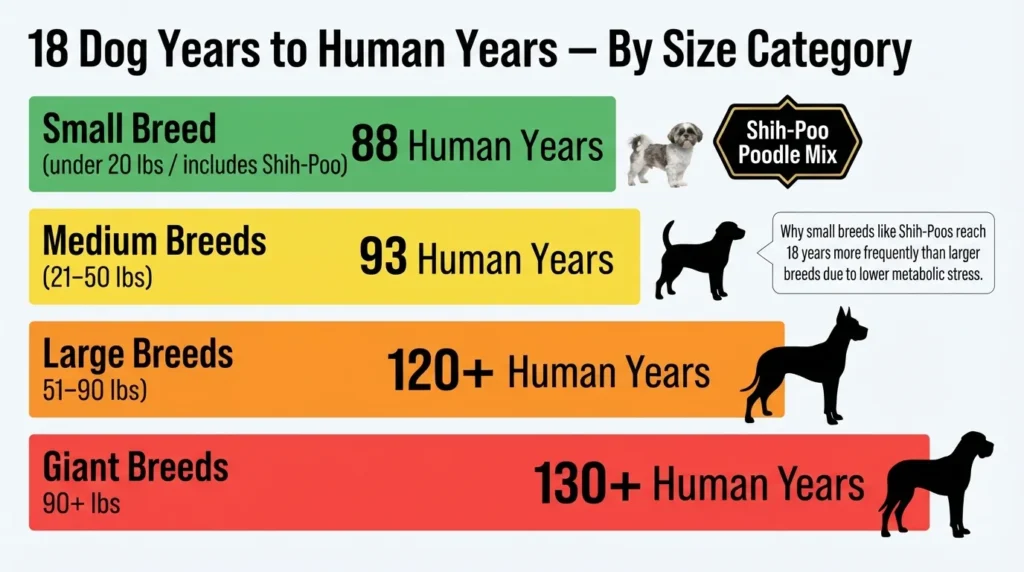
Small breeds mature faster in their first two years than large dogs do, but their aging process slows down significantly after that. Understanding where your dog sits in their life cycle helps you tailor their exercise routines, nutrition, and joint support as they grow. To see how your dog’s physical age translates to human development stages, use our customized Dog Age Calculator to get an precise estimate based on their specific breed mix and weight class.
Shih-Poo Puppy Growth & Weight Chart by Age
Tracking your Shih-Poo’s growth helps ensure they are developing at a healthy, steady rate. Because a shih tzu poodle mix crosses two small breeds, adult sizes can vary slightly depending on whether the Poodle parent was a Toy or Miniature.
Most adult Shih-Poos weigh between 8 to 18 pounds and stand around 8 to 13 inches tall at the shoulder. Expect rapid growth during the first six months, after which their weight gain begins to plateau.
Weight-by-Month Chart Birth–12 Months
The chart below outlines expected weight ranges for both Toy-sized and Miniature-sized Shih-Poo crosses at each major milestone:
| Age | Toy Shih-Poo Weight Range | Miniature Shih-Poo Weight Range |
|---|---|---|
| Birth | 4 – 6 oz | 6 – 8 oz |
| 1 Month (4 weeks) | 1 – 1.5 lbs | 1.5 – 2.5 lbs |
| 2 Months (8 weeks) | 2 – 3.5 lbs | 3.5 – 5 lbs |
| 3 Months | 3.5 – 5.5 lbs | 5.5 – 8 lbs |
| 4 Months | 4.5 – 7 lbs | 7 – 10.5 lbs |
| 6 Months | 6 – 10 lbs | 10 – 14 lbs |
| 9 Months | 7.5 – 12 lbs | 12 – 16.5 lbs |
| 12 Months (1 year) | 8 – 13 lbs | 13 – 18+ lbs |
Pro Tip: A reliable rule of thumb to estimate your pup’s adult weight is to double their weight at 16 weeks (4 months) old.
When Do Shih-Poos Stop Growing?
Most Shih-Poos reach their full height and frame size between 9 to 12 months of age. Smaller Toy mixes often stop growing in height around 8 or 9 months, while slightly larger Miniature mixes may continue filling out until they hit their first birthday.
Between 12 to 18 months, your Shih-Poo might gain a bit more muscle mass or chest depth, but their overall structure won’t change dramatically past 12 months. Keep a close eye on their body condition score during this stage—because of their small frames, even a single extra pound of fat can place unnecessary stress on their joints.
How Much Does a Shih-Poo Cost?
Bringing a Shih-Poo into your home comes with upfront expenses that go beyond their initial price tag. Understanding these costs beforehand helps you plan your budget without unexpected financial surprises.
Buying vs. Adopting Price Ranges
The initial cost of a Shih-Poo depends heavily on whether you buy from a breeder or choose to adopt through a rescue organization:
Ethical Breeder: $800 to $2,500. Prices vary based on breeder reputation, geographic location, coat color, and generation (F1 vs. F1b). Reputable breeders invest in genetic health testing for parent dogs, which justifies the higher upfront price tag.
Adoption or Rescue: $150 to $450. Adopting a Shih-Poo from a shelter or breed-specific rescue is significantly cheaper. This fee usually covers essential preliminary care like initial vaccinations, microchipping, and spay/neuter surgery.
Be cautious of breeders offering puppies well below market price—typically under $500—as this often signals backyard breeding or puppy mills where parental health testing is ignored.
First-Year Total Cost Estimate
Your initial year with a Shih-Poo will be your most expensive. Outside of recurring monthly expenses like food and professional grooming, you need to budget for essential startup gear, medical setup, and local registrations.
Here is a breakdown of typical first-year setup costs:
Initial Vet Visit & Vaccines: $150 – $300
Spay/Neuter Surgery: $200 – $500 (often included in rescue fees)
Microchip Installation: $45 – $70
Essential Gear (Crate, bed, leash, harness, bowls): $150 – $300
Initial Toys, Treats & Training Aids: $75 – $150
Local Dog Licensing: $15 – $50
| Expense Category | Estimated First-Year Range |
|---|---|
| Purchase or Adoption Fee | $150 – $2,500 |
| Initial Gear & Medical Setup | $635 – $1,370 |
| Estimated Total First-Year Setup | $785 – $3,870 |
Planning for these baseline expenses ensures your Shih-Poo gets off to a healthy, comfortable start in their new home.
Shih-Poo vs Other Popular Designer Mixes
Choosing between toy designer breeds often comes down to small nuances in personality, coat type, and everyday energy levels. While the Shih Tzu Poodle mix brings a calm, affectionate demeanor to the table, comparing them directly against similar Poodle hybrids can help pinpoint the exact fit for your lifestyle.
Shih-Poo vs Maltipoo
The Maltipoo (Maltese crossed with a Poodle) shares the Shih-Poo’s compact frame and low-shedding appeal, but the two breeds deliver noticeably different home dynamic vibes.
Maltipoos tend to inherit a higher, more sensitive energy level from their Maltese parentage. They thrive on constant interaction, can be prone to vocalizing when excited or lonely, and often require slightly more patience during early housebreaking.
In contrast, the Shih-Poo generally leans into the grounded, laid-back personality of the Shih Tzu. They usually exhibit a lower drive for relentless play, making them better suited for quieter homes, seniors, or owners who prefer a steady, easygoing companion over an endlessly bouncy puppy.
Shih-Poo vs Yorkiepoo
Crossing a Yorkshire Terrier with a Poodle creates the Yorkiepoo, a feisty, highly observant small dog packed into a lightweight frame.
Yorkiepoos carry a distinct terrier tenacity. They are usually bolder, quicker to bark at unfamiliar noises, and possess a higher prey drive than Shih-Poos. This energetic spark makes them great fun for active owners, but their watchdog instincts mean they require early boundary setting to keep barking under control.
The Shih Tzu Poodle mix offers a gentler, more forgiving temperament. Thanks to the placid influence of the Shih Tzu, Shih-Poos are less prone to edge-of-your-seat alertness and typically adapt more comfortably to laid-back indoor environments or households with young children.
Quick Comparison: Shih-Poo vs Maltipoo vs Yorkiepoo
| Trait | Shih-Poo (Shih Tzu + Poodle) | Maltipoo (Maltese + Poodle) | Yorkiepoo (Yorkie + Poodle) |
|---|---|---|---|
| Average Weight | 8–18 lbs | 5–15 lbs | 4–14 lbs |
| Shedding Level | Very Low to Non-Shedding | Very Low | Very Low |
| Energy Level | Moderate / Laid-back | Moderate-High / Playful | High / Alert & Feisty |
| Trainability | Moderate (Slight stubborn streak) | High (Eager to please) | High (Smart, but bold) |
| Barking Tendency | Low to Moderate | Moderate to High | High |
| Good for Novice Owners? | Excellent | Excellent | Good (Needs consistent boundaries) |
Where to Find a Shih-Poo
Finding a healthy Shih Tzu Poodle mix requires patience and a bit of detective work. Because designer crossbreeds aren’t registered by traditional kennel clubs like the AKC, you need to know how to navigate the market to ensure you bring home a happy, well-adjusted pup.
Reputable Breeders — Red Flags to Avoid
Ethical Shih-Poo breeders prioritize health, temperament, and parental care over quick profits. A good breeder screens both the Shih Tzu and Poodle parents for genetic conditions like patellar luxation, progressive retinal atrophy (PRA), and hip dysplasia before breeding.
When searching for a puppy, watch out for these red flags:
No health testing documentation: Legitimate breeders readily share health clearances and genetic testing for both parent dogs.
Refusing home visits or live video tours: Never buy a puppy if you can’t see where it was raised or observe the mother interacting with her litter.
Rehoming puppies under 8 weeks old: Puppies need those first eight weeks with their mother and littermates for vital behavioral development and physical health.
Selling multiple trendy designer mixes: Breeders producing Shih-Poos, Goldendoodles, and Cavapoos all at once are often running high-volume commercial puppy mills.
No application process for buyers: Responsible breeders interview you to make sure the puppy goes to a safe, capable home.
Adoption/Rescue Options
Adopting a Shih-Poo is a fantastic alternative that gives a deserving dog a second chance. While finding a Shih-Poo in a general shelter takes patience, breed-specific rescues focused on Shih Tzus or Poodles frequently foster mixed breeds as well.
Adoption fees typically range from $150 to $400, which almost always covers spay/neuter surgery, initial vaccinations, and microchipping. Search databases like Petfinder and Adopt-a-Pet, or get in touch with local small-dog rescues to get put on their waiting list.
Puppy Checklist — What to Buy Before Bringing Home
Before your Shih-Poo arrives, set up your space with gear designed for small, coat-heavy breeds:
Crate with Divider: A 24-inch wire crate allows you to expand the space as your puppy grows, making housebreaking much smoother.
Chest Harness & Leash: Small breeds are prone to tracheal collapse, so always clip your leash to a padded chest harness rather than a neck collar.
Grooming Tools: Pick up a slicker brush, a metal greyhound comb, and ear-cleaning wipes to manage wavy coat texture and prevent ear infections.
Small-Breed Kibble: Formulated with small bite-sized pieces that fit comfortably in smaller jaws.
Chew Toys: Soft rubber teething toys and plush squeakers sized appropriately for small mouths.
How to Confirm It’s a Genuine Shih-Poo DNA test/traits
Because crossbreeds lack official pedigree paperwork, physical appearance alone can occasionally be misleading. First-generation (F1) Shih-Poos typically showcase a soft, wavy coat, a slightly longer snout than a flat-faced Shih Tzu, and an adult weight between 8 and 18 pounds.
If you adopt a rescue or want absolute certainty about your pup’s heritage, a canine DNA test is the only 100% reliable method. Mail-in kits from reputable services like Embark or Wisdom Panel analyze thousands of genetic markers to confirm exact breed percentages, identify generational traits, and check for inherited health conditions.
Pros, Cons & Is a Shih-Poo Right for You?
Choosing a dog isn’t just about picking the cutest face on the block—it’s about finding a personality and care routine that seamlessly fits your day-to-day life. The Shih Tzu Poodle mix brings a wonderful blend of affection and intelligence to the table, but they aren’t a one-size-fits-all breed.
Pros
Low-Shedding Coat: Thanks to their Poodle heritage, most Shih-Poos shed minimally, making them a top choice for owners tired of vacuuming dog hair daily.
Highly Adaptable: Whether you live in a compact city apartment or a sprawling suburban house with a yard, these small dogs adjust easily as long as they get regular attention.
Affectionate Companion: Shih-Poos are natural lap dogs. They thrive on human connection, often bonding closely with every member of the household.
Great for Seniors and First-Time Owners: Their moderate exercise needs and forgiving temperament make them a manageable option for beginner dog parents or retirees.
Alert and Watchful: While rarely aggressive, their Poodle intelligence makes them observant companions who will quickly let you know when someone is at the door.
Cons
High-Maintenance Grooming: Minimal shedding comes at a cost. You will need to brush their coat 4–5 times a week and pay for professional grooming every 6–8 weeks to prevent painful mats.
Prone to Separation Anxiety: Because they bond so deeply, Shih-Poos do not like being left alone for extended periods and can develop barky or destructive habits out of stress.
Stubborn Streak: While smart, the Shih Tzu parentage can introduce a independent side that makes housebreaking and basic obedience require extra patience and positive reinforcement.
Potential Health Quirks: Depending on which parent breed they take after, they can be prone to dental crowding, tear staining, and back issues like Intervertebral Disc Disease (IVDD).
Quick Lifestyle Checklist
Your schedule: Someone is home for most of the day, or you can drop them off at doggy daycare.
Your budget: You have room in your monthly budget for regular professional grooming visits ($60–$100 per session).
Your activity level: You prefer brisk 20-to-30-minute daily walks and light playtime over high-intensity running or long hikes.
Your home environment: You want a gentle, small-footprint companion and are willing to invest time in early house-training and socialization.
Frequently Asked Questions
(Short 1-line answers only — full detail lives in the sections above)
| Question | Answer |
|---|---|
| Do Shih-Poos shed or bark a lot? | They are low-shedding dogs, but they can bark moderately if not properly trained early on. |
| Are Shih-Poos hypoallergenic? | Yes, they are generally considered hypoallergenic due to their low-dander coat inherited from the Poodle. |
| How long do Shih-Poos live? | A healthy Shih-Poo typically has an average lifespan of 12 to 15 years. |
| Shih-Poo vs Maltipoo — what's the difference? | Shih-Poos are a Shih Tzu & Poodle mix, while Maltipoos are a Maltese & Poodle mix with slightly different traits. |
| At what age is a Shih-Poo fully grown? | Most Shih-Poos reach their full adult size between 10 to 12 months of age. |
| Is a Shih-Poo a good first dog? | Yes, their affectionate nature and adaptable size make them excellent companions for first-time owners. |
🐾 Other Age Guides

I built Dogagescalculator.com to give dog owners honest, science-backed answers instead of the outdated "×7" myth. Every figure here is checked against AKC, AVMA, and published veterinary research.
More about the author & this site →
Comments