
Springer Spaniel vs Cocker Spaniel: What's the Real Difference? Complete Guide
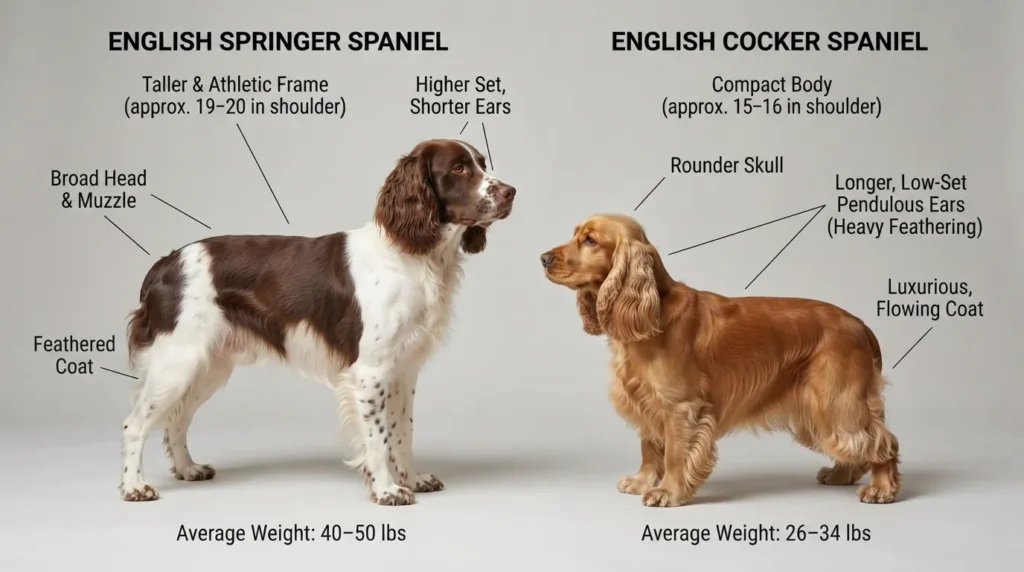
Soft floppy ears and expressive eyes make English Springer Spaniels and Cocker Spaniels easy to confuse at a glance. However, putting them side-by-side reveals clear differences in size, stamina, and daily temperament.
The main difference comes down to build and drive. Springers stand roughly 19–20 inches tall with an athletic, high-energy working engine. Cockers are more compact, topping out around 14–15 inches with a slightly lower energy level.
In this guide, we break down their exact physical measurements, field instincts, grooming demands, and household behavior so you can decide which spaniel fits your lifestyle.
Springer Spaniel vs Cocker Spaniel at a Glance
Comparing physical specs and daily requirements side by side makes it easy to spot where these two gundogs diverge. Here is how the English Springer Spaniel and English Cocker Spaniel stack up:
| Feature | English Springer Spaniel | English Cocker Spaniel |
|---|---|---|
| Height | 19–20 inches (Males) / 18–19 inches (Females) | 15–17 inches (Males) / 14–16 inches (Females) |
| Weight | 40–50 lbs | 26–34 lbs |
| Coat Type | Medium-length, double coat (flat or wavy with feathering) | Silky, medium-to-long coat (heavy feathering on ears, chest, legs) |
| Energy Level | High to Very High (Needs 90+ minutes of vigorous daily exercise) | Moderate to High (Needs 60+ minutes of active exercise daily) |
| Grooming Needs | Moderate (Brushing 2–3x weekly; professional clip every 8–12 weeks) | High (Brushing 3–4x weekly; high matting risk around ears and legs) |
| Lifespan | 12–14 years | 12–15 years |
| Best For | Active outdoor families, hikers, hunters, large yards | Suburban homes, active families, smaller yards, indoor companions |
| Trainability | Exceptional (Eager to please, requires structured direction) | Very High (Intelligent, sensitive to tone, responds best to gentle rewards) |
History and Origin of Both Breeds

Where Springer and Cocker Spaniels Came From
Both breeds share deeply intertwined roots in the United Kingdom, where land spaniels were selectively bred over centuries for flushing and retrieving game birds. Their names directly reflect their historical roles in the field:
English Springer Spaniels: Named for their hunting style—they literally “sprang” pheasants, ducks, and hares out of dense brush into the open for hunters or falcons.
Cocker Spaniels: Named specifically for their expertise in hunting the Eurasian woodcock, a small, elusive game bird that required a compact dog capable of navigating low, tangled undergrowth.
Why They Were Once Considered the Same Breed
Until the late 19th century, “Springer” and “Cocker” were not distinct breeds—they were simply size-based classifications within the exact same litter.
Size-Based Sorting: Puppies from a single litter were sorted after birth. The larger, heavier pups (usually over 28 pounds) were designated as Springers or “Field Spaniels,” while the smaller, lighter pups were categorized as Cockers.
Functional Differentiation: A hunter would use the larger sibling to flush heavy game across open fields and streams, while using the smaller sibling to creep under dense briars to locate woodcock.
Because they shared identical bloodlines, coat types, and natural hunting instincts, breeders regularly interbred them without regarding them as separate entity lines.
How the AKC/Kennel Club Split Them Into Separate Breeds
The shift from functional sorting to formal recognition began in the United Kingdom and quickly spread to North America as dog shows gained popularity.
| Milestone Year | Governing Body | Historical Event |
|---|---|---|
| 1892 | The Kennel Club (UK) | Officially recognized the Cocker Spaniel and English Springer Spaniel as distinct, separate breeds. |
| 1902 | The Kennel Club (UK) | Established the first official breed standards, prohibiting cross-breeding between the two lines. |
| 1910 | American Kennel Club (AKC) | Officially recognized the English Springer Spaniel, establishing clear height, weight, and pedigree requirements. |
Physical Appearance: How to Tell Them Apart
Size and Weight Difference
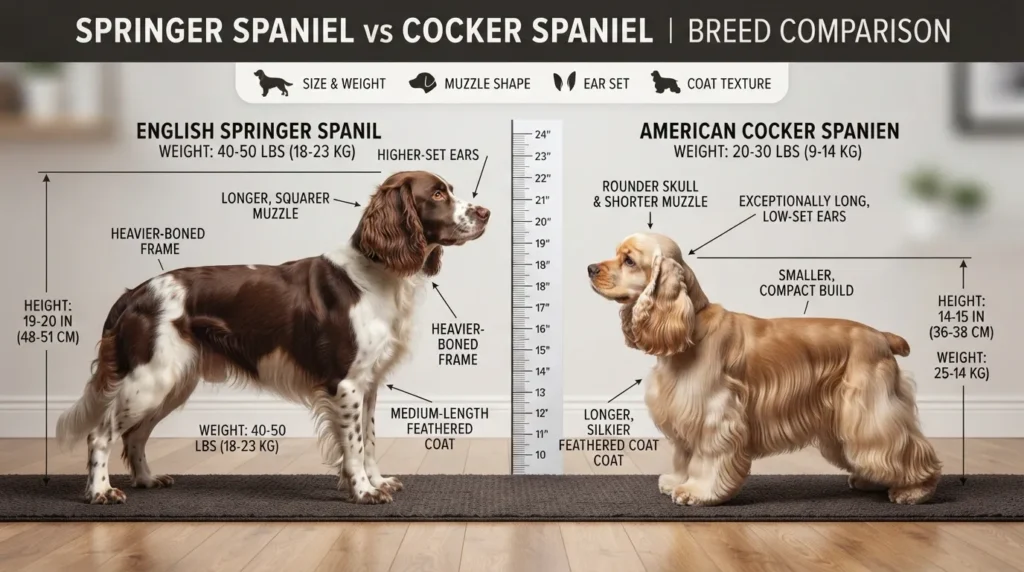
If you stand a Springer and a Cocker side by side, their height difference is immediately noticeable. Springers are built with longer legs and an athletic, square frame designed for distance, whereas Cockers are stocky, compact, and distinctly closer to the ground.
English Springer Spaniel: Adults stand 19 to 20 inches tall at the shoulder and typically weigh 40 to 50 pounds. Their larger frame gives them the leverage needed to burst through heavy cover and fetch heavier game.
Cocker Spaniel: English Cockers stand 15 to 17 inches tall (26 to 34 pounds), while American Cockers are slightly smaller, standing 13.5 to 15.5 inches tall (20 to 30 pounds).
If a dog passes the 35-pound mark, you are almost certainly looking at a Springer rather than a Cocker.
Coat and Color Differences
While both breeds feature silky double coats with feathering along the chest, legs, and belly, their coat density, texture, and color patterns diverge significantly.
Coat Type: Springers sport a medium-length, weather-resistant coat designed to repel water and briars. Cockers—especially American Cockers—have a much longer, denser, and more profuse coat that requires substantially more grooming to prevent severe matting.
Color Patterns:
Springers: Predominantly bi-color or tri-color, usually liver and white or black and white, often with distinctive ticking (small dark spots) across the white areas of the muzzle and legs.
Cockers: Offer far more solid coat variations, including buff, black, red, and silver, along with parti-color (white with dark markings) and roan patterns (a fine mix of colored and white hairs).
Temperament, Personality, and Trainability

Which Breed Is Calmer?
While individual genetics and upbringing play a massive role, Cocker Spaniels are generally calmer indoors than Springer Spaniels.
A well-exercised Cocker is content cuddling on the couch for hours, making them better suited for relaxed households or apartment living. Springers, on the other hand, maintain a high-gear “on switch.” Even after a long walk, a Springer will often pace, search for something to retrieve, or follow you from room to room, waiting for their next job.
Energy Levels — Cocker vs Springer
Both are sporting dogs, but their athletic stamina operates on different tiers:
Springer Spaniels: Require at least 90 to 120 minutes of vigorous physical activity every single day. They excel at high-impact activities like agility courses, dock diving, and long off-leash field runs.
Cocker Spaniels: Need about 45 to 60 minutes of moderate daily exercise. A brisk neighborhood walk paired with some backyard fetch usually satisfies their daily drive.
Separation Anxiety and Being Left Alone
Because both breeds were developed to work closely alongside human handlers, neither breed handles long periods of isolation well.
Cockers tend to voice their distress through persistent whining, barking, and shadow-following behavior. Springers often turn their anxiety outward—chewing door frames, digging up garden beds, or shredding furniture if left alone for more than 4 hours regularly. If your household is empty for 8 to 10 hours a day, neither breed will thrive without a dog walker or daycare plan.
Springer Spaniel Rage Syndrome — Fact or Myth?
It is a real neurological condition, but it is extremely rare.
Often misdiagnosed, “Rage Syndrome” (scientifically recognized as idiopathic aggression or a form of temporal lobe seizure activity) causes a dog to launch into sudden, violent aggression without any clear trigger or warning sign. During an episode, the dog’s eyes may glaze over, and they often appear confused or disoriented immediately afterward.
Important: Most aggressive behavior in spaniels is not Rage Syndrome. It is almost always standard resource guarding, fear-based reactivity, or lack of early socialization—all of which can be managed with professional behavioral training. Responsible breeding practices over the last few decades have largely eliminated true genetic Rage Syndrome from reputably bred bloodlines.
Trainability — Which Breed Is Easier to Train?
Both breeds rank exceptionally high in canine intelligence, but their training dynamics differ based on what motivates them:
Springer Spaniels (Easiest for Complex Tasks): Highly driven by task completion and handler partnership. They learn multi-step commands quickly and thrive on precision work, but their high drive means they will outsmart an inexperienced owner if boundaries aren’t firm.
Cocker Spaniels (Easiest for Casual Owners): Highly food-motivated and eager to please, making basic obedience straightforward. However, Cockers are far more emotionally sensitive; harsh corrections will cause them to shut down or exhibit submissive urination. Positive reinforcement works best.
Grooming and Maintenance Needs
Cocker Spaniel Grooming Routine
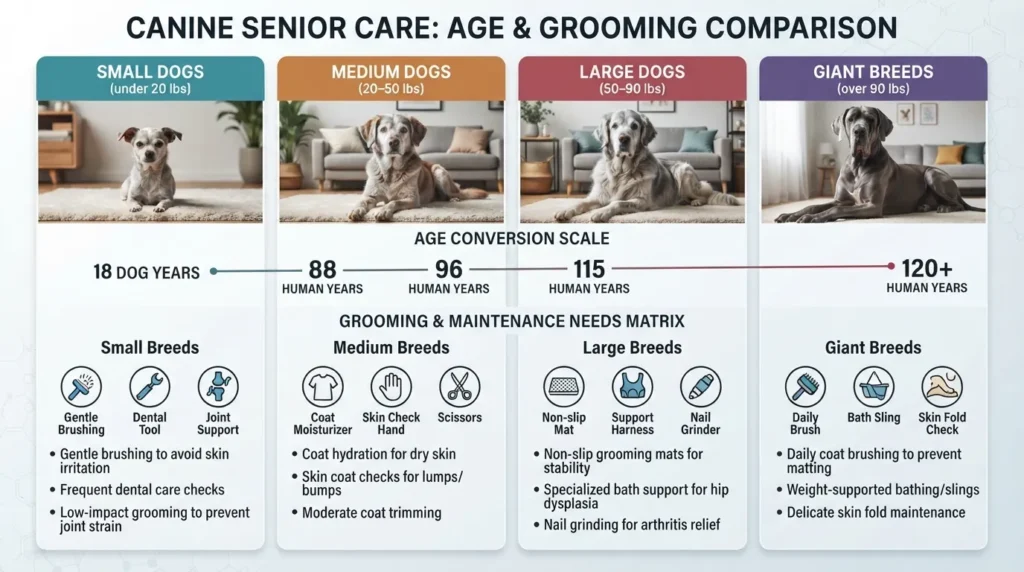
Cocker Spaniels carry a silky, dense coat with heavy feathering along their legs, chest, and belly. That glamour comes with high maintenance—expect to brush them 3 to 4 times a week using a slicker brush and metal comb to prevent painful mats in the underarm and groin areas.
Their long, drop ears block airflow and trap moisture easily. Inspect and clean their ears weekly with a vet-approved cleanser to lower the risk of yeast infections. Plan on professional grooming every 6 to 8 weeks for a full coat trim, sanitary cut, and paw pad cleanup. If your Cocker regularly runs through tall grass or brush, daily checks for burrs and seeds are a necessity.
Springer Spaniel Grooming Routine
English Springer Spaniels have a double coat built for outdoor work—a dense, weather-resistant undercoat covered by a flat or wavy outer coat. While their feathering is lighter than a Cocker’s, it still collects twigs and tangles after outdoor runs. Thoroughly brush them 2 to 3 times a week with a pin brush, paying close attention to the chest and thigh fringe.
Springers generally need a bath and haircut every 8 to 10 weeks. Their ears sit slightly higher on the head than a Cocker’s, but they still demand weekly ear checks, particularly after swimming. Keep the hair between their toe pads trimmed short to prevent mud and debris from caking between their toes.
Which Breed Sheds More?
Both breeds shed moderately year-round, but the Springer Spaniel sheds noticeably more volume. Because Springers carry a much denser undercoat, they experience heavier seasonal “coat blowouts” every spring and autumn, leaving visible fur on furniture and carpets.
Here is how the key differences in their coat care stack up side-by-side:
| Maintenance Factor | Cocker Spaniel | Springer Spaniel |
|---|---|---|
| Shedding Level | Moderate (consistent year-round) | Moderate to High (heavy seasonal shedding) |
| Brushing Frequency | 3–4 times per week | 2–3 times per week |
| Matting Risk | High (fine hair mats quickly around legs and ears) | Moderate (mats form mainly in thick fringe hair) |
| Pro Grooming Interval | Every 6–8 weeks | Every 8–10 weeks |
Health and Lifespan

Common Health Issues in Cocker Spaniels
Cocker Spaniels are generally sturdy dogs, but their distinct physical traits make them vulnerable to specific inherited and lifestyle-related health conditions. Their lush, heavy drop ears trap heat and moisture, making chronic ear infections (otitis externa) the single most frequent issue owners face.
Their prominent, expressive eyes are also prone to hereditary eye disorders, including Progressive Retinal Atrophy (PRA), cataracts, and Glaucoma. Additionally, Cockers have a higher-than-average risk for autoimmune hemolytic anemia (AIHA), where the immune system attacks its own red blood cells, as well as hip dysplasia and allergies that cause secondary skin infections.
Routine blood tests and eye screenings by a certified veterinary ophthalmologist can catch these inherited conditions before major damage occurs.
Common Health Issues in Springer Spaniels
Because English Springer Spaniels are larger and built for rugged field activity, their health profile shifts slightly toward joint issues and genetic metabolic disorders. Hip and elbow dysplasia are major concerns, often leading to early-onset arthritis if exercise levels and weight aren’t carefully managed.
Springers can also inherit a rare metabolic condition called Phosphofructokinase (PFK) deficiency, which causes severe muscle weakness and dark urine after intense exertion. Like Cockers, Springers suffer from PRA (eye disease) and ear infections, though their ear canals typically get better airflow due to lighter ear feathering.
A small percentage of Springers are diagnosed with idiopathic epilepsy (unexplained seizures), which usually manifests between 1 and 5 years of age but responds well to daily medication.
Average Lifespan Comparison
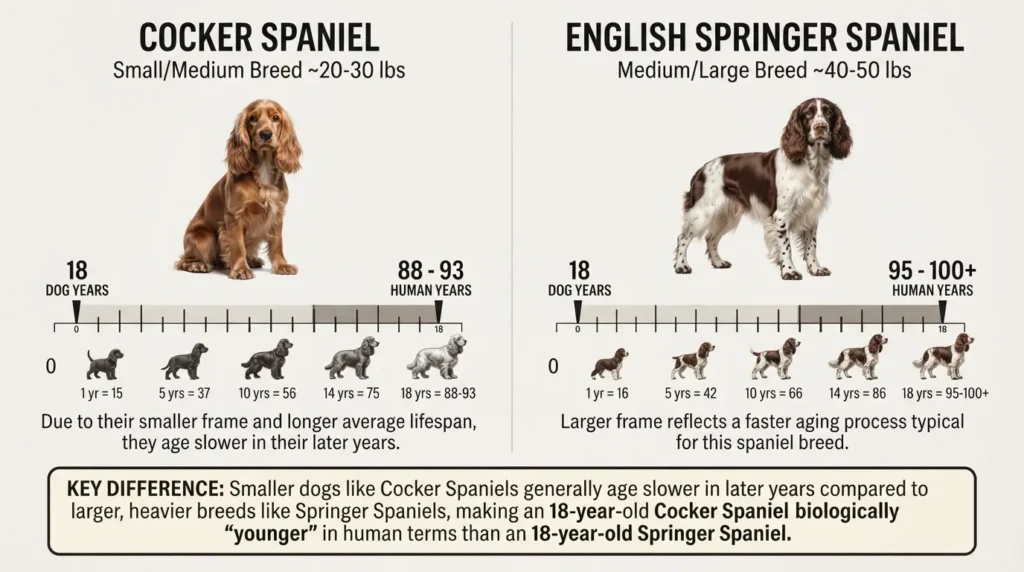
Both spaniels enjoy strong longevity compared to many purebreds, but the Cocker Spaniel holds a slight edge in average lifespan, largely due to its smaller overall frame.
Cocker Spaniel: 10 to 14 years (with many well-cared-for individuals reaching 15)
Springer Spaniel: 12 to 14 years
The primary factor dictating lifespan for both breeds isn’t genetic destiny—it’s weight management. Because both breeds love food and display convincing “pity eyes,” obesity is a rampant issue. Keeping your spaniel at a lean body condition score can add up to 1.5 to 2 additional years to their life while protecting their joints from early wear and tear.
Working Line vs Show Line
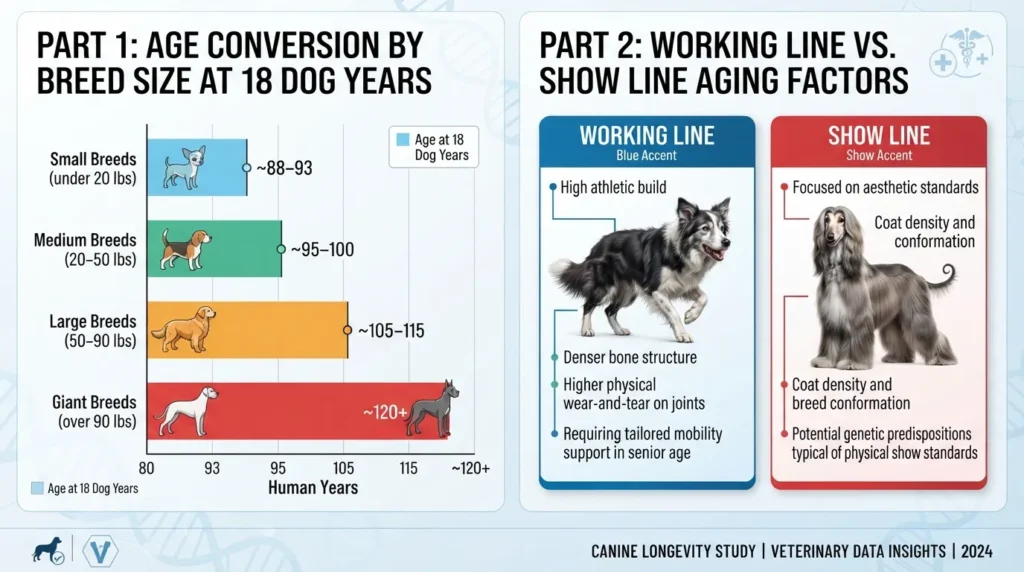
Although major kennel clubs register them under the same official breed standards, decades of selective breeding have split both Cocker Spaniels and Springer Spaniels into two distinct strains: Working (Field) lines and Show (Bench) lines.
Mixing up these two strains is one of the most common mistakes new spaniel owners make. A dog’s line dictates its energy levels, maintenance demands, and overall lifestyle fit far more than its breed label alone.
Working Cocker vs Show Cocker
Working Cockers are purpose-built for field endurance, while Show Cockers are bred to match exact physical aesthetics.
Physical Structure: Working Cockers have a athletic build, flatter skulls, and shorter, higher-set ears that stay out of heavy brush. Show Cockers sport a chunkier frame, rounded domed skulls, and long, low-slung, heavily feathered ears.
Coat & Grooming: Working lines carry a short, practical single or light double coat with minimal leg feathering. Show lines feature a profuse, silky coat with heavy fringe along the belly, legs, and chest that mats rapidly without frequent brushing.
Temperament & Drive: Working Cockers possess an intense prey drive and near-bottomless stamina—they need 90 to 120 minutes of active exercise alongside daily mental jobs (like scent work or agility). Show Cockers are notably calmer, more adaptable to average family routines, and satisfied with 45 to 60 minutes of casual daily walks.
Real-World Scenario: If you live in a suburban apartment and want a relaxed dog that settles on the couch after a short daily walk, a Working Cocker will quickly become bored and destructive. A Show Cocker fits that lifestyle far better.
Working Springer vs Show Springer
The physical and behavioral gap in English Springer Spaniels is even more pronounced than in Cockers.
Physical Structure: Working (Field-bred) Springers are lighter, finer-boned, and often carry higher proportions of white in their coat pattern for visibility in dense cover. Show (Bench-bred) Springers are taller, heavier-boned, and display a deeper, square chest with a classic liver-and-white or black-and-white block pattern.
Coat Differences: Field Springers have short, coarse, weather-resistant coats designed to shed burrs and mud naturally. Bench Springers grow lush, flowing coats requiring routine professional clipping and shaping.
Energy & Mindset: Working Springers are relentless athletes built for long days in tough terrain. They retain an extreme focus on retrieving and hunting, requiring at least 2 hours of rigorous daily exercise. Show Springers possess a steady, mellow disposition that makes them easier companion pets for active households.
| Feature | Working Line (Cocker & Springer) | Show Line (Cocker & Springer) |
|---|---|---|
| Best For | Hunters, trail runners, agility competitors | Families, first-time owners, casual hikers |
| Daily Exercise | 90–120+ minutes (high intensity) | 45–60 minutes (moderate intensity) |
| Grooming Need | Low to Moderate (wash-and-wear) | High (frequent brushing & trimming) |
| Prey / Scent Drive | Very High (requires strong recall training) | Moderate (easily managed with basic obedience) |
English vs American Cocker, English vs Welsh Springer
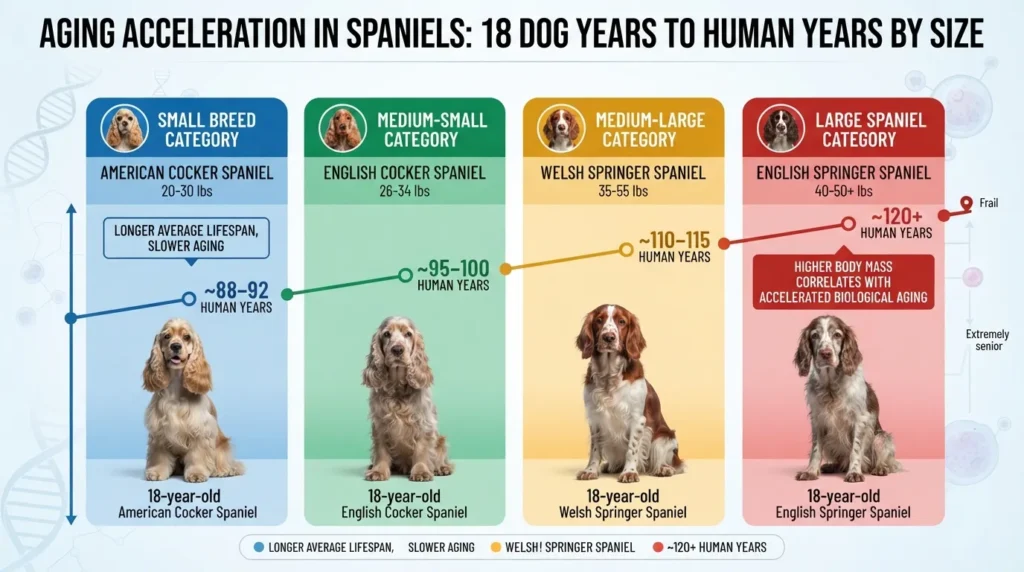
When comparing spaniels, confusion often arises because geographically split strains split into completely distinct, independently recognized breeds.
The American Kennel Club (AKC) and UK Kennel Club register the English Cocker Spaniel, American Cocker Spaniel, English Springer Spaniel, and Welsh Springer Spaniel as four separate breeds, each boasting its own distinct build, coat pattern, and working drive.
English Cocker Spaniel vs American Cocker Spaniel
While both descended from the same 19th-century British hunting stock, American breeders selected for a smaller body, shorter head, and showier coat, creating a clear split officialized in 1946.
Head Structure & Muzzle: The English Cocker features an athletic, square muzzle with a flatter, longer skull. In contrast, the American Cocker sports a distinctly domed skull, pronounced eyebrows, and a much shorter, delicate muzzle.
Body Size & Frame: English Cockers are taller and built like active field dogs, standing 15 to 17 inches at the shoulder and weighing 26 to 34 pounds. American Cockers are noticeably smaller and more compact, standing 13.5 to 15.5 inches and weighing 24 to 30 pounds.
Coat & Temperament: American Cockers carry a far denser, silkier coat with extensive belly and leg feathering that requires intense grooming to prevent matting. English Cockers retain a higher hunting drive and need roughly 60 minutes of active exercise daily, whereas American Cockers have a gentler, lower-drive energy profile well-suited for suburban homes or apartment living.
English Springer Spaniel vs Welsh Springer Spaniel
Unlike the Cocker split, the Welsh Springer Spaniel is not simply a color variation of the English Springer—it is an ancient, independent Welsh gundog breed with centuries of distinct history.
Coat Color & Pattern: The English Springer Spaniel comes in liver-and-white or black-and-white (often with roan ticking). The Welsh Springer Spaniel comes in one color combination only: a rich, striking red-and-white coat with no black present whatsoever.
Size & Physical Outline: English Springers are taller and heavier-boned, standing 19 to 22 inches and weighing 40 to 55 pounds. Welsh Springers are slightly lower to the ground and more rectangular, standing 17 to 19 inches and weighing 35 to 45 pounds.
Ears & Head Shape: English Springers have long, broad, low-set ears with a visible brow ridge. Welsh Springers feature smaller, lightly feathered, vine-leaf-shaped ears set higher on a smoother, narrower head.
Personality Dynamics: While English Springers are famously outgoing and eagerly approach strangers, Welsh Springers tend to be more reserved with outsiders. They form exceptionally intense bonds with their immediate owners—earning them a reputation as devoted “Velcro dogs”.
| Breed | Height Range | Weight Range | Signature Coat Color | Key Temperament Trait |
|---|---|---|---|---|
| English Cocker | 15–17 in | 26–34 lbs | Solid, Parti, or Roan | Energetic & curious |
| American Cocker | 13.5–15.5 in | 24–30 lbs | Buff, Black, or Parti | Gentle & companion-focused |
| English Springer | 19–22 in | 40–55 lbs | Liver/White or Black/White | Outgoing & eager-to-please |
| Welsh Springer | 17–19 in | 35–45 lbs | Red & White only | Loyal, Velcro, somewhat reserved |
Are They Good Hunting/Working Dogs?

Yes, both breeds are exceptional gundogs with centuries of working heritage behind them. However, they approach fieldwork with distinct physical capabilities, terrain advantages, and hunting styles.
While field-line Springers are built for high-speed coverage over large properties, working Cockers act like compact powerhouses designed to dive into dense brambles where larger dogs physically cannot go.
Springer Spaniel as a Gun Dog
English Springer Spaniels are the ultimate all-rounder gundog in the field. Built with longer legs and immense physical stamina, a Springer’s primary job is to “quarter” the ground—zigzagging within 30 to 40 yards of the hunter to scent, track, and forcefully flush game birds into the air.
Primary Hunting Specialty: Upland game birds—especially pheasants, grouse, and partridge. They excel at driving running pheasants out of thick cover.
Retrieving Capability: Excellent. Thanks to their larger frame and strong jaw structure, Springers easily retrieve heavy, fully grown pheasants and ducks across land or cold water.
Hunting Style: Bold, fast, and hard-driving. They quarter aggressively and cover massive acreage quickly without slowing down.
Field Tip: Because Springers hunt with intense drive and wide-ranging speed, early “whistle recall” and “stop to flush” training are non-negotiable. Without tight control, a wild Springer will flush birds well out of shotgun range.
Cocker Spaniel as a Gun Dog
Historically bred to hunt the elusive Eurasian Woodcock (hence the name “Cocker”), working Cockers are tight-cover specialists. Where a Springer powers over or through thick brush, a Cocker weaves underneath it.
Primary Hunting Specialty: Woodcock, quail, snipe, and rabbiting in tight hedgerows, gorse, and dense brambles.
Retrieving Capability: Very capable, though naturally constrained by size. They retrieve smaller game birds with a remarkably gentle “soft mouth,” but retrieving large mallards or heavy geese out of deep water can test their physical limits.
Hunting Style: Methodical, close-working, and highly responsive to handler cues. They tend to stick closer to the gun than Springers, making them easier to manage for foot hunters.
| Working Attribute | Springer Spaniel (Field Line) | Cocker Spaniel (Working Line) |
|---|---|---|
| Ideal Terrain | Open fields, tall grass, marshes, wide rivers | Thick brush, dense briars, tight hedgerows, woodlands |
| Hunting Radius | Medium to Wide (requires strong whistle control) | Tight / Close-working (naturally stays near hunter) |
| Flush Style | Explosive, hard-driving flush | Quick, persistent, nose-down flush |
| Water Retrieval | High drive; handles cold water & heavy currents easily | Willing swimmer; best suited for shallow water/calm ponds |
Barking and Vocalization

Neither the Cocker Spaniel nor the Springer Spaniel is considered a naturally aggressive or nuisance-barking guard dog breed. However, both are vocal spaniels that use their voices to communicate excitement, frustration, or alert their family to changes in their environment.
Because both breeds possess strong working gundog instincts, their barking habits are closely tied to daily exercise levels, mental engagement, and how long they are left alone.
Do Cocker Spaniels Bark a Lot?
Cocker Spaniels fall into the moderate to high vocalization category, primarily driven by emotional sensitivity and demand behaviors. They form exceptionally close bonds with their humans, making them far more prone to separation anxiety than Springers.
When left isolated for extended periods, Cockers frequently turn to high-pitched, repetitive barking or whining as a stress coping mechanism.
Common Bark Triggers: Doorbell chimes, approaching strangers near the window, frustration when denied attention, or excitement right before meals and walks.
Vocalization Style: High-pitched, persistent barks, accompanied by expressive whines or low “talkative” rumbles when asking for affection.
Management Tip: To curb nuisance demand barking in Cockers, reward quiet behavior consistently and avoid giving in to their whining or barking for food or playtime. Teaching a reliable “settle” cue early on prevents chronic attention-seeking habits.
Do Springer Spaniels Bark a Lot?
Springer Spaniels generally fall into the low to moderate vocalization range. They rarely bark out of fear or anxiety unless severely neglected, but their working drive makes them vocal when understimulated or eager to hunt and play.
A Springer’s bark is usually functional: they will let out a deep, booming alert bark when someone approaches the house, but they typically quiet down once the newcomer is greeted.
Common Bark Triggers: Unexpressed physical energy, seeing wildlife (squirrels or birds) through a fence, alert barking at intruders, or intense excitement during games of fetch.
Vocalization Style: Deeper, sharper, and more authoritative barks than a Cocker, usually delivered in short bursts rather than continuous whining.
Management Tip: A noisy Springer is almost always a bored Springer. Providing 60 to 90 minutes of daily physical exercise paired with puzzle toys or scent-work games eliminates up to 80% of unwanted excitement barking in field lines.
| Behavioral Aspect | Cocker Spaniel | Springer Spaniel |
|---|---|---|
| Overall Barking Tendency | Moderate to High | Low to Moderate |
| Primary Root Cause | Separation anxiety, demand for attention | Boredom, unspent energy, wildlife alerts |
| Watchdog Alert Instinct | Moderate (barks, then wants friends) | High (loud alert bark, then eager to greet) |
| Likelihood of Whining | High (uses vocal cues to communicate emotion) | Low to Moderate (mainly during games/retrieves) |
Why Does My Cocker Spaniel Look Like a Springer Spaniel?
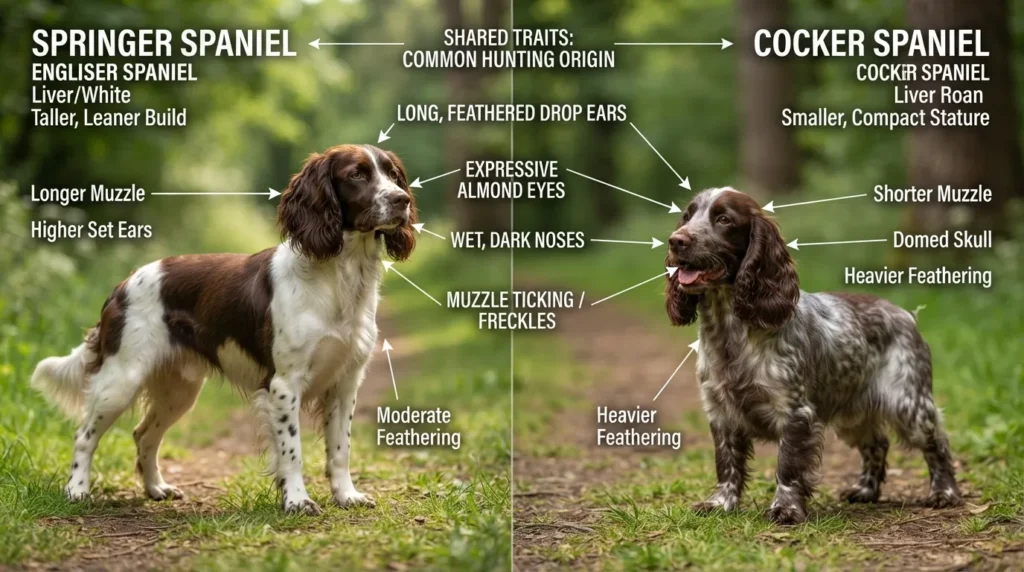
If your purebred or rescue Cocker Spaniel constantly gets mistaken for a small Springer Spaniel, you are not alone. Prior to the late 19th century, Cockers and Springers were born in the exact same litters—separated into “Cocker” or “Springer” categories solely by their adult weight and hunting purpose.
Today, two primary reasons explain why your Cocker shares striking physical traits with its larger cousin: hidden crossbreeding or field-line genetics.
What Is a Sprocker Spaniel? (Cocker x Springer Cross)
A “Sprocker Spaniel” is a deliberate cross between an English Springer Spaniel and an English Cocker Spaniel. Popularized by gamekeepers and working gundog enthusiasts in the UK, this hybrid combines the hard-driving power of a Springer with the compact agility of a Cocker.
Because they are a crossbreed, Sprockers are not recognized as a purebred breed by major kennel clubs like the AKC or UK Kennel Club. However, many owners who think they adopted a “tall Cocker” or a “runt Springer” actually own an intentional or accidental Sprocker cross.
Physical Markers: They fall right between both breeds, weighing 30 to 42 pounds and standing 16 to 19 inches at the shoulder.
Coat & Ears: Their coats feature moderate feathering without the heavy maintenance of a Show Cocker, paired with ears that sit higher and shorter on the skull than a traditional Cocker’s.
Energy Level: Extremely high. Sprockers inherit an intense working drive from both parents, requiring at least 90 minutes of daily physical exercise and structured mental jobs.
Working-Line Size Variation
If a DNA test confirms your dog is 100% Cocker Spaniel, the confusion usually boils down to the massive physical split between Working (Field) lines and Show (Bench) lines.
Most public perception of the Cocker Spaniel is shaped by Show lines—featuring heavy coats, short muzzles, round skulls, and low-slung, sweeping ears.
However, Working Cockers are bred strictly for field performance rather than cosmetic breed standards:
Shorter Coats: They carry flat, practical working coats with minimal feathering, mimicking the sleek texture of a field Springer.
Flatter Heads & Higher Ears: Their skulls are athletic and streamlined, with shorter ears set higher on the head to avoid snagging on thick briars.
Leggy Build: Many working Cockers grow noticeably taller and rangier than standard show guidelines, easily reaching 32 to 36 pounds.
The Takeaway: If your Cocker Spaniel has a leaner frame, shorter ear leather, an athletic topcoat, and endless stamina, you likely own a field-bred Working Cocker—a dog built for stamina in the brush, making it look strikingly similar to a mini Springer.
Short Video Code Introduction / Table Section
Watch a real-life visual difference and temperament comparison of both breeds here.
Physical Appearance Video Code Appearance Section
See a real-life visual difference and temperament comparison of both breeds here.
Cost Comparison: Puppy Price and Lifetime Cost

While initial purchase prices for these two working breeds often look similar on paper, their true long-term costs diverge significantly. Factors like coat maintenance, food requirements, and breed-specific medical liabilities change the financial picture over a 12 to 14-year lifespan.
Average Puppy Price (Cocker vs Springer)
Buying a purebred puppy from an AKC-registered or reputable health-tested breeder usually lands in a comparable upfront range for both breeds:
Cocker Spaniel: $1,000 – $2,200 (American Cockers lean slightly cheaper on average, while show-line English Cockers and field-line puppies with clear genetic screening hit $2,500+).
English Springer Spaniel: $1,200 – $2,000 (Field-bred Working Springers with proven hunting pedigree often command $1,800 to $2,500).
Buyer Warning: Price isn’t just about pedigree—it’s health insurance. Cheaper puppies ($400–$600) from unverified sources frequently lack screening for hip dysplasia, PRA (Progressive Retinal Atrophy), or familial nephropathy, leading to thousands in veterinary bills later.
| Financial Category | Cocker Spaniel | English Springer Spaniel |
|---|---|---|
| Professional Grooming | $60 – $90 per session (Every 4–6 weeks) | $50 – $70 per session (Every 8–10 weeks) |
| Annual Food Expense | $500 – $700 (~20–30 lbs adult) | $700 – $950 (~40–50 lbs adult) |
| Routine Vet Care (Annual) | $300 – $600 (Exams, vaccines, meds) | $300 – $600 (Exams, vaccines, meds) |
| Common Health Risks | Ear infections ($200–$400/ep), cataracts, lip fold dermatitis, patellar luxation | Ear infections, hip/elbow dysplasia ($1,500–$4,000 surgery), PFK deficiency |
| Est. Lifetime Ownership Cost | $18,000 – $28,000+ | $16,500 – $25,000+ |
Identification Guide Video Code How to Tell Them Apart Section
See which breed is better suited for your lifestyle with trained gundogs..
Which One Should You Choose? (Decision Guide)

Choosing between a Cocker Spaniel and an English Springer Spaniel comes down to your daily energy output, living space, and how much time you can dedicate to handling high-drive traits. While both share the signature spaniel intelligence and biddability, their physical capacities and temperamental nuances suit distinct home environments.
Best for First-Time Owners
Winner: Cocker Spaniel (Show/Bench lines)
Why it works: Cocker Spaniels are softer in temperament, smaller (20–30 lbs), and generally more forgiving of novice handler mistakes. Their lower physical drive compared to Springers makes establishing a stable routine significantly easier for first-time dog owners.
Practical Catch: You must commit to coat maintenance early. A first-time owner who neglects daily brushing will end up with severe matting within 3 to 4 weeks.
Trainer’s Insight: Avoid working/field-line Cockers if you are a beginner. Working Cockers carry intense hunting drives similar to Springers, whereas Show Cockers offer the ideal balanced energy for novice households.
Best for Families With Kids
Winner: Tie (Age-dependent)
For Toddlers & Young Children (Under 6 years): Cocker Spaniel. Their compact size reduces the risk of accidentally knocking down small children during indoor play. However, kids must be taught gentle handling, as Cockers can be sensitive to rough ear-pulling.
For Older, Active Kids (7+ years): English Springer Spaniel. Springers (40–50 lbs) are robust, sturdy, and virtually tireless. They excel as interactive playmates for kids who love running in the yard, playing endless fetch, or participating in youth agility sports.
Best for Active/Outdoor Lifestyle
Winner: English Springer Spaniel
Why it works: If your weekends involve 10-mile trail hikes, camping, or cold-water swimming, the English Springer Spaniel is built for you. Bred to flush game through heavy brush all day, a Springer requires 90 to 120+ minutes of vigorous daily exercise to remain calm indoors.
Real-World Scenario: A quick 30-minute block walk will leave a Springer restless, often resulting in destructive chewing or nuisance barking. They thrive when given structured jobs, such as retrieving dummies or field trials.
Best for Apartment Living
Winner: Cocker Spaniel
Why it works: Their compact footprint (13–15 inches tall) and lower indoor energy threshold make Cockers far better suited for smaller square footage. As long as they receive two focused 30-minute walks daily plus mental stimulation, a Cocker will happily settle on the couch.
Key Considerations for Apartment Dwellers:
Barking: Both breeds are alert, but unexercised Springers are louder and prone to pacing in confined spaces.
Separation Anxiety: Both breeds form tight bonds, but Springers develop severe separation distress more rapidly when left alone in close quarters for extended work shifts.
| Choose a Cocker Spaniel If... | Choose a Springer Spaniel If... |
|---|---|
Choose a Cocker Spaniel If...
| Choose a Springer Spaniel If...
|
Frequently Asked Questions
What is the calmest breed of spaniel?
The Cavalier King Charles Spaniel is widely considered the calmest spaniel breed, as it was bred primarily for companionship rather than active field hunting. Among working gun dogs, the Clumber Spaniel is known for its low-key, laid-back nature. When comparing cockers and springers specifically, a bench/show-bred Cocker Spaniel generally exhibits a calmer household demeanor than a Springer.
How to tell a Cocker from a Springer at a glance?
Size and Height: Springers stand significantly taller at 19–20 inches at the shoulder, whereas Cockers sit lower to the ground at 13.5–15.5 inches.
Muzzle & Skull: Springers have longer, broader muzzles designed to carry large gamebirds. Cockers have shorter, slightly rounder skulls with a more pronounced stop (the step between forehead and muzzle).
Ears: Cocker ears attach low on the skull (level with or below the eye line) and carry heavier, longer feathering. Springer ears attach higher up on the head (level with the eyes).
Are Cockers or Springers more energetic?
English Springer Spaniels are generally more energetic and possess higher physical stamina. Built for all-day field flushing, a Springer requires 90 to 120+ minutes of vigorous daily exercise alongside structured mental jobs. Working-line Cockers are exceptionally athletic, but show-line Cockers typically settle with 45 to 60 minutes of daily activity.
Why does my Cocker Spaniel look like a Springer Spaniel?
Your dog is likely either a Working/Field-bred Cocker Spaniel or an English Cocker Spaniel. Field Cockers are bred entirely for hunting performance rather than kennel club aesthetic standards—they carry shorter coats, longer legs, less ear feathering, and lighter bone structures that closely resemble a compact Springer. Alternatively, your dog may be a “Sprocker” (a Springer-Cocker cross).
Which is better, a Cocker or a Springer Spaniel?
Neither breed is objectively superior; the right choice depends on your personal lifestyle:
Choose a Cocker Spaniel if you live in an apartment, have young children, want a smaller lap companion, or prefer a moderate daily exercise routine.
Choose a Springer Spaniel if you are an active outdoor enthusiast, want an all-weather trail/hiking buddy, have a spacious fenced yard, and can commit to 1.5–2 hours of daily physical training.
What is Springer Spaniel syndrome?
“Springer Spaniel Syndrome” (scientifically termed Rage Syndrome or Idiopathic Aggression) is a rare neurological seizure disorder characterized by sudden, unprovoked, and extreme aggression. During an episode, the dog’s eyes dilate, and they appear completely unaware of their surroundings. This condition is genetic, exceptionally rare in modern, ethically screened lines, and should not be confused with standard resource guarding or poor behavioral training.
Can Cocker and Springer Spaniels be mixed together?
Yes. A cross between a Cocker Spaniel and an English Springer Spaniel is popularly known as a Sprocker Spaniel. Highly favoured by gamekeepers and field sports enthusiasts in the UK, Sprockers combine the Springer’s endurance and drive with the Cocker’s agile size and keen hunting scent.
Final Verdict — Springer Spaniel vs Cocker Spaniel
Both the English Springer Spaniel and the Cocker Spaniel represent the gold standard of affectionate, highly trainable gun dogs, but they serve two distinct household dynamic needs.
If your ideal dog is a compact, adaptable companion who thrives on daily neighborhood walks, cozy indoor downtime, and manageable physical exercise, the Cocker Spaniel is your best match—provided you are ready for a consistent grooming schedule. Conversely, if you lead an active outdoor lifestyle, want an tireless hiking or field partner, and have the physical yard space to handle a larger, higher-drive dog, the English Springer Spaniel will happily keep up with every adventure.
Evaluating how much time you can realistically commit to exercise versus coat maintenance each week will make your choice clear.
Ready to find your companion? Read our comprehensive guide on How to Find Reputable Spaniel Breeders Near You to learn which essential genetic health screenings to verify before bringing a puppy home.
🐾 Other Age Guides

I built Dogagescalculator.com to give dog owners honest, science-backed answers instead of the outdated "×7" myth. Every figure here is checked against AKC, AVMA, and published veterinary research.
More about the author & this site →
Comments