German Shepherd Age in Human Years Calculator
Reviewed by Veterinary Health Team | Last Updated: July 2026
Aapne bhi shayad yeh purani kahani suni hogi ke kutto ka ek saal insano ke 7 saal ke barabar hota hai. Lekin real science aur modern veterinary medicine (jaise UC San Diego ki DNA methylation study) is 1-to-7 ratio ko poori tarah reject karti hai. German Shepherds ek large breed hain, aur unka aging pattern chote kutto se bilkul alag hota hai. Humne yeh tool aur guide isiliye banaya hai taake aap apne German Shepherd ki exact human-equivalent age, unka current life stage (puppy, adult, ya senior), aur stage-wise health needs ko accurate data ke saath samajh sakein.
Calculate Your German Shepherd’s Real Human Age
Apne German Shepherd ki umar darj karein taake aapko unki sahi human-age equivalent aur current life stage ka pata chal sake.German Shepherd Age Calculator
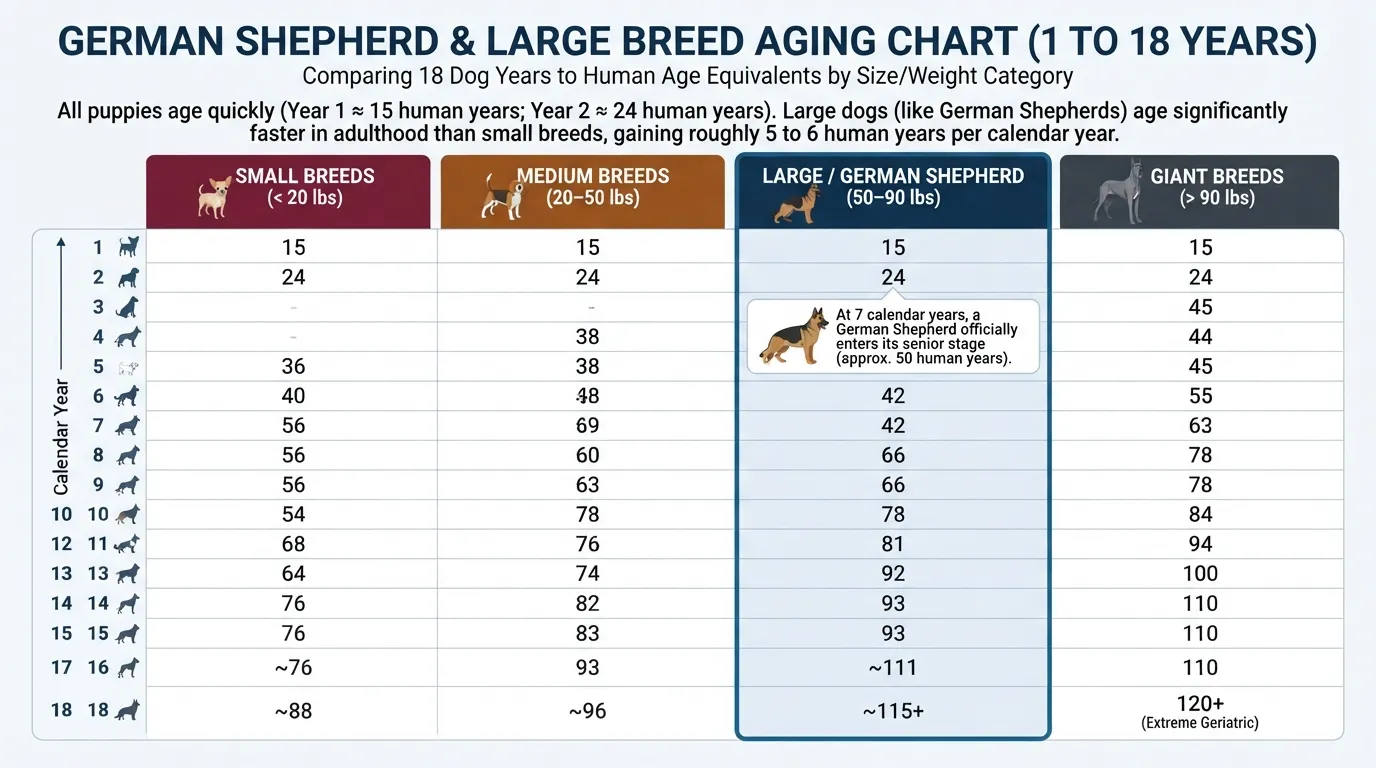
German Shepherd Age Chart Dog Years to Human Years
Aapka German Shepherd kis umar mein insani hisab se kahan khada hai, ise samajhne ke liye humne American Veterinary Medical Association (AVMA) aur AKC ke large-breed development standards ke mutabiq yeh comprehensive reference table taiyar kiya hai.
German Shepherd Age Chart
| German Shepherd Age (Dog Years) | Human Age Equivalent | Life Stage Category |
|---|---|---|
| 1 Year | 15 Years | Puppy / Adolescent |
| 2 Years | 24 Years | Young Adult |
| 3 Years | 29 Years | Prime Adult |
| 4 Years | 34 Years | Mature Adult |
| 5 Years | 39 Years | Mature Adult |
| 6 Years | 45 Years | Pre-Senior / Late Adult |
| 7 Years | 50 Years | Senior |
| 8 Years | 56 Years | Senior |
| 9 Years | 61 Years | Senior |
| 10 Years | 67 Years | Super Senior |
| 11 Years | 72 Years | Super Senior |
| 12 Years | 78 Years | Geriatric |
| 13 Years | 84 Years | Geriatric |
| 14 Years | 90 Years | Geriatric |
| 15 Years | 96 Years | Geriatric |
| 16 Years | 102 Years | Advanced Geriatric |
| 17 Years | 108 Years | Advanced Geriatric |
| 18 Years | 114 Years | Advanced Geriatric |
| 19 Years | 120 Years | Advanced Geriatric |
| 20 Years | 126 Years | Advanced Geriatric |
How to Read This Chart
Yeh age chart purane 7-year rule ki bajaye real canine biological growth curve par mabni hai. German Shepherd jaise large breeds early life mein tezi se mature hote hain aur baad mein aging process steady ho jata hai:
Pehla Saal (1st Year = ~15 Human Years): Pehle 12 mahino mein aapka German Shepherd ek infant se seedha teenager ban jata hai. Is ਦੌਰਾਨ unki skeletally aur hormonally major growth hoti hai.
Doosra Saal (2nd Year = +9 Human Years, Total ~24): Doosre saal ke khatam hone tak unki physical growth mukammal ho jati hai. 2 saal ka German Shepherd insani hisab se ~24 saal ke young adult jitna mentally aur physically mature hota hai.
Teesra Saal Aur Uske Baad (+4–6 Human Years Per Year): 2 saal ke baad, large breeds ke cell degradation rate ke mutabiq har saal lagbhag 5 se 6 human years ke barabar count hota hai. Yahi waja hai ke 6–7 saal ki umar mein GSD senior stage mein dakhil hone lagta hai.
How Old Is a 6 Year Old German Shepherd in Human Years?
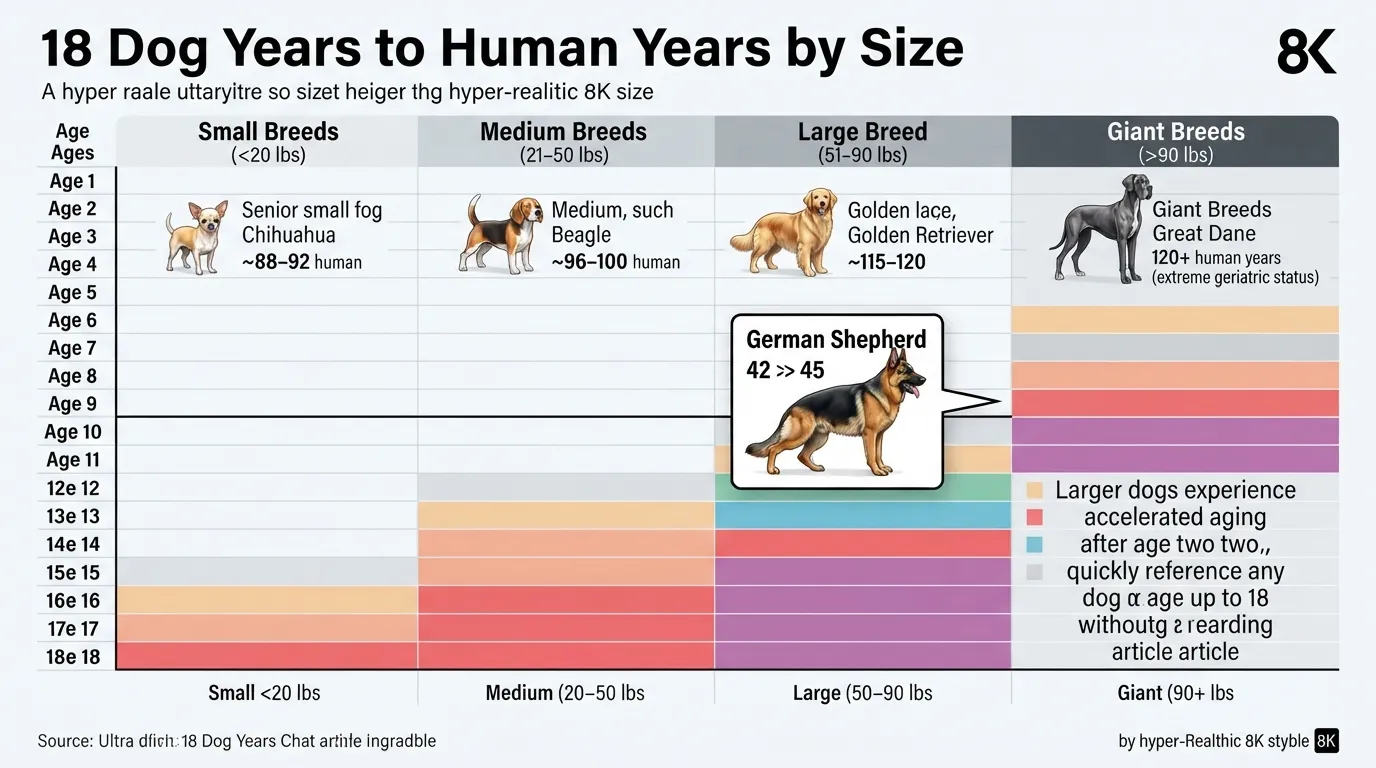
A 6-year-old German Shepherd is approximately 42 to 45 human years old. Because German Shepherds are a large breed (typically weighing between 50 to 90 pounds), they age slightly faster after maturity than smaller dogs, placing a 6-year-old GSD solidly in human middle age.
What This Age Means for Your Dog
At 6 years old, your German Shepherd transitions from their physical peak into their mature, senior-adjacent stage. Here is what you can expect during this milestone:
Energy Levels: You will notice a shift from explosive, puppy-like hyperactivity to focused, purposeful stamina. They still have plenty of drive for long walks and play, but they now have a noticeable “off-switch” at home.
Physical & Behavioral Changes: Subtle graying around the muzzle and chin often begins around this age. Joint stiffness—especially after intense exercise or upon waking up in the morning—might start showing up due to the breed’s susceptibility to hip and elbow dysplasia. Behavioral traits become deeply anchored, making them calmer, more protective, and highly tuned to your daily routines.
Life Stage Classification: According to the American Animal Hospital Association (AAHA) canine life stage guidelines, a 6-year-old German Shepherd has officially entered the Mature/Mature-Adult stage. They are not quite “geriatric” yet, but their body is entering its senior prep years, making preventative vet care and joint support essential.
How to Calculate German Shepherd Age in Human Years
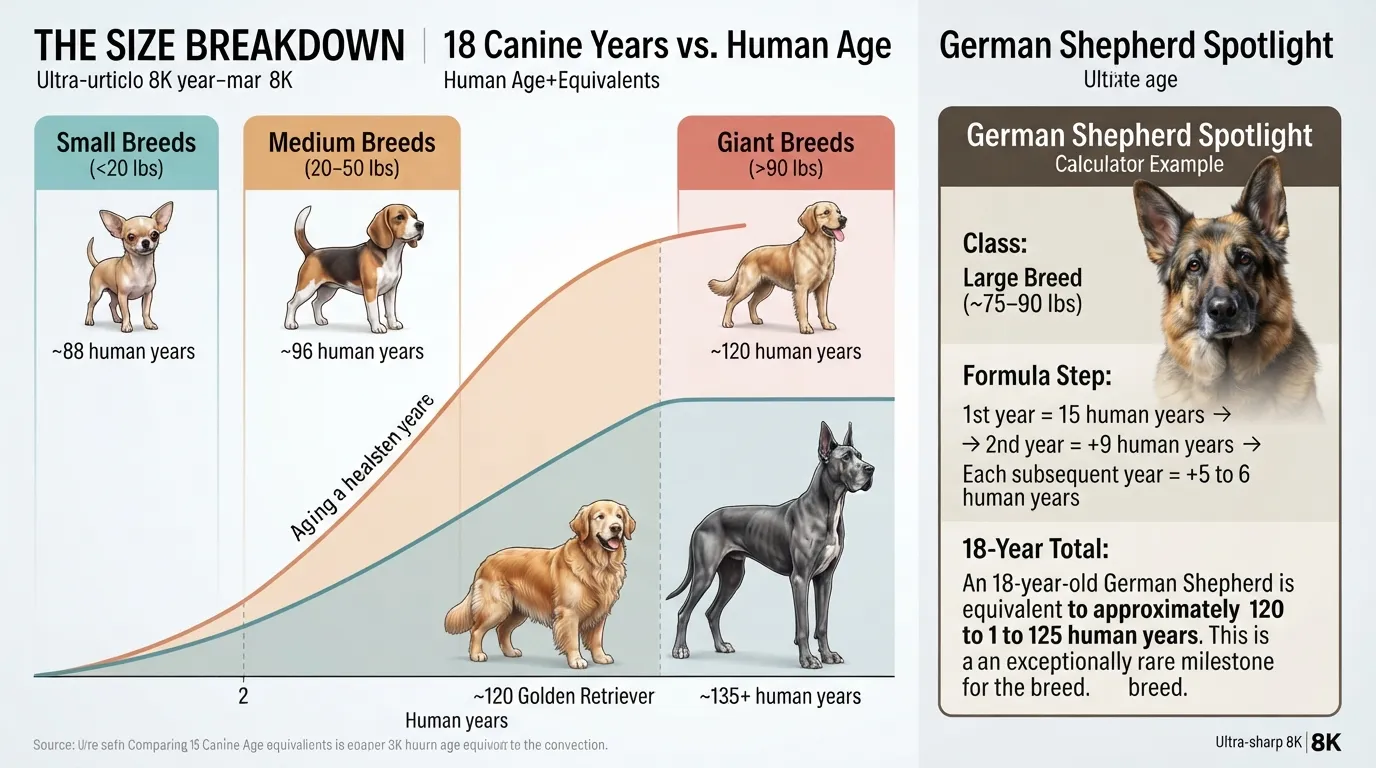
Calculating your German Shepherd’s age isn’t as simple as multiplying by 7. Modern veterinary research from the American Veterinary Medical Association (AVMA) and epigenetic studies (like UC San Diego’s DNA methylation research) show that dogs age rapidly in their first two years, after which large breeds age faster than smaller dogs.
To get an accurate number for a large breed like a GSD (typically 50–90 lbs), you need a weight-adjusted calculation formula rather than a generic rule.
Step-by-Step Formula
Here is the exact step-by-step calculation used by modern veterinarians to map a German Shepherd’s age to human years:
Year 1 = 15 Human Years: A puppy’s first year represents rapid physical and cellular development. By age 1, your GSD has reached physical independence, equivalent to a 15-year-old human teenager.
Year 2 = +9 Human Years (Total: 24): During their second year, growth slows down as their skeletal frame settles. Adding 9 years brings a 2-year-old German Shepherd to roughly 24 human years—a young adult.
Year 3 onwards = +4 to +6 Human Years per year: From age 3, aging stabilizes, but breed size dictates the pace. Because German Shepherds are large dogs, their cellular aging rate adds about 5 to 6 human years for every calendar year.
Formula Summary:
Base Age (First 2 Years): 24 Human Years
Each Additional Year (After Year 2): Add 5.5 Human Years
Puppy Age in Months
During the first 12 months, aging happens week by week rather than year by year. Here is how your German Shepherd puppy’s early milestones translate to human development:
3-Month-Old GSD (~3 to 5 Human Years): At 12 weeks, your puppy is comparable to a human toddler. They are active, exploring their environment through mouth and paws, learning basic bite inhibition, and starting early socialization.
6-Month-Old GSD (~9 to 10 Human Years): At 6 months, your GSD reaches pre-adolescence. They are going through teething, testing boundaries, and experiencing rapid bone growth. Their physical coordination is improving, but mentally they still require consistent guidance and structure.
Is 7 Dog Years Really 1 Human Year? The Myth Explained
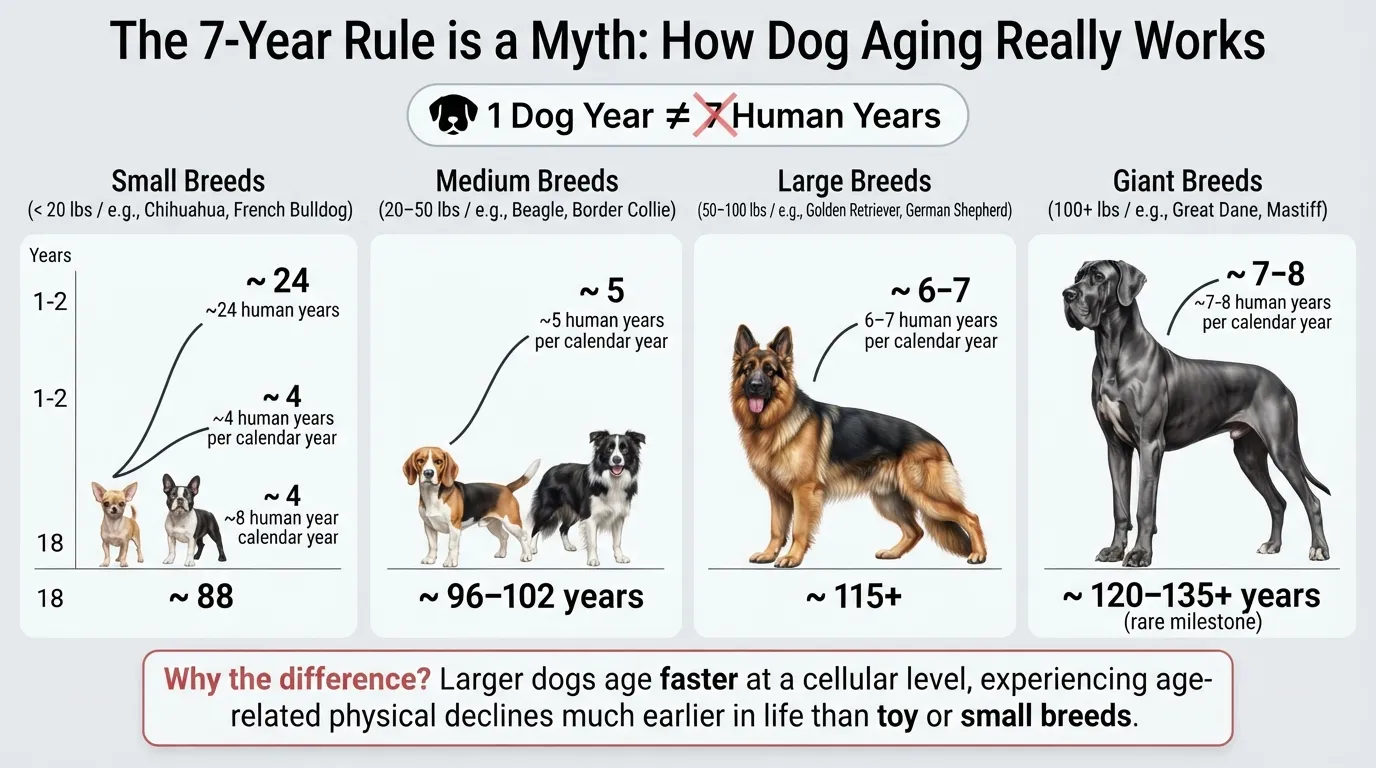
No, the “1 dog year = 7 human years” rule is an oversimplified myth that does not reflect actual canine biology.
Where the Myth Came From
The 7-year rule originated in the mid-20th century as a simple marketing and public health tool. Veterinarians noticed that average human life expectancy was around 70 years, while average dog longevity was roughly 10 years. Dividing 70 by 10 yielded a neat, easy-to-remember ratio of 7:1 designed to encourage dog owners to bring their pets in for annual checkups.
Why It’s Scientifically Wrong
Modern veterinary medicine and genetic science have debunked this linear model entirely:
Non-Linear Early Aging: Dogs do not age at a constant rate throughout life. A dog reaches young adulthood (roughly 15 human years) in its very first calendar year, far faster than a 7:1 ratio suggests.
DNA Methylation Insights: A landmark 2020 epigenetic study led by researchers at UC San Diego analysed chemical marks on dog DNA (epigenetic clocks) published in Cell Systems. The researchers proved that canine DNA ages rapidly during infancy and early youth, then slows down noticeably as the dog matures.
Weight and Breed Variation: The 7-year rule ignores size completely. As confirmed by the American Veterinary Medical Association (AVMA), small breeds age slower post-maturity, while large breeds like German Shepherds experience faster cellular degradation in their middle and senior years.
Quick Before/After Comparison
Old 7-Year Rule: A 1-year-old German Shepherd = 7 human years (Treats your fully-grown adolescent like a young child).
Modern Epigenetic Science: A 1-year-old German Shepherd = ~15 human years (Accurately reflects their physical maturity and teenage behavioral shift).
Is a 6 Year Old German Shepherd Old?
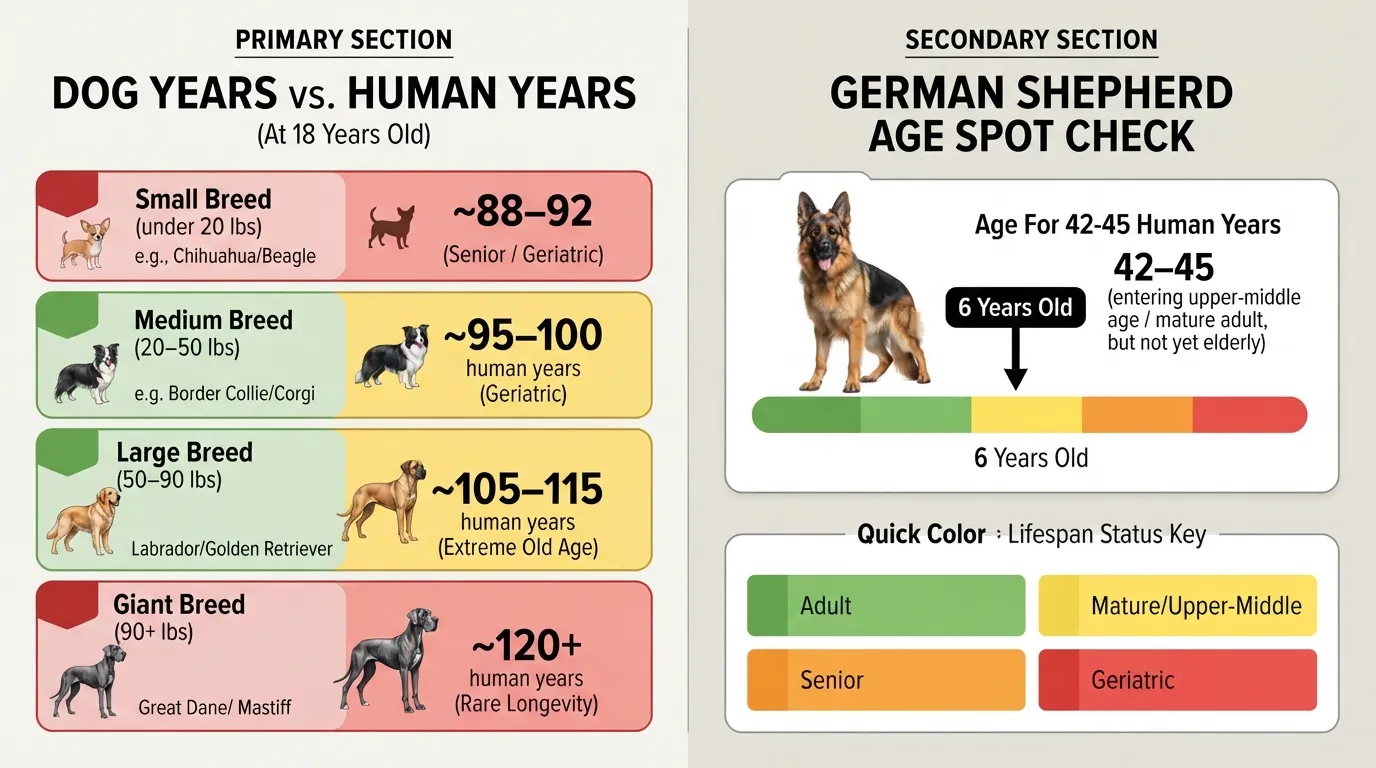
No, a 6-year-old German Shepherd is not considered “old” or senior yet, but they have officially graduated from their young adult years. At 6 years old (equivalent to roughly 42–45 human years), your dog is in their mature adult phase—think of them as being in their late 30s or mid-40s in human terms. They still have plenty of vitality, but their body is quietly laying the groundwork for senior care.
German Shepherd Life Stages
Because German Shepherds are a large breed with an average lifespan of 10 to 12 years, their developmental arc moves through four distinct biological phases:
Puppy (0–2 Years): A period of explosive growth and high physical demand. German Shepherds grow rapidly in height and weight during their first year, but their skeletal plates and mental maturity don’t fully close and settle until around 24 months.
Adult (2–5 Years): The prime of your dog’s life. During these years, physical strength, stamina, immune defense, and cognitive sharpness are at their absolute peak.
Mature (6–8 Years): The middle-age bridge stage. Your 6-year-old GSD sits right at the start of this tier. Their energy becomes more regulated, metabolism begins to slow slightly, and early signs of wear on joints may surface. This is the critical window to introduce preventative care before senior issues take hold.
Senior (8+ Years): The final developmental stage, recognized by organizations like the American Kennel Club (AKC) and AAHA. At 8 years and beyond (~55–60+ human years), graying increases, activity levels naturally decline, and health routines shift toward senior wellness exams, mobility management, and specialized nutrition.
German Shepherd Lifespan — How Long Do They Live?
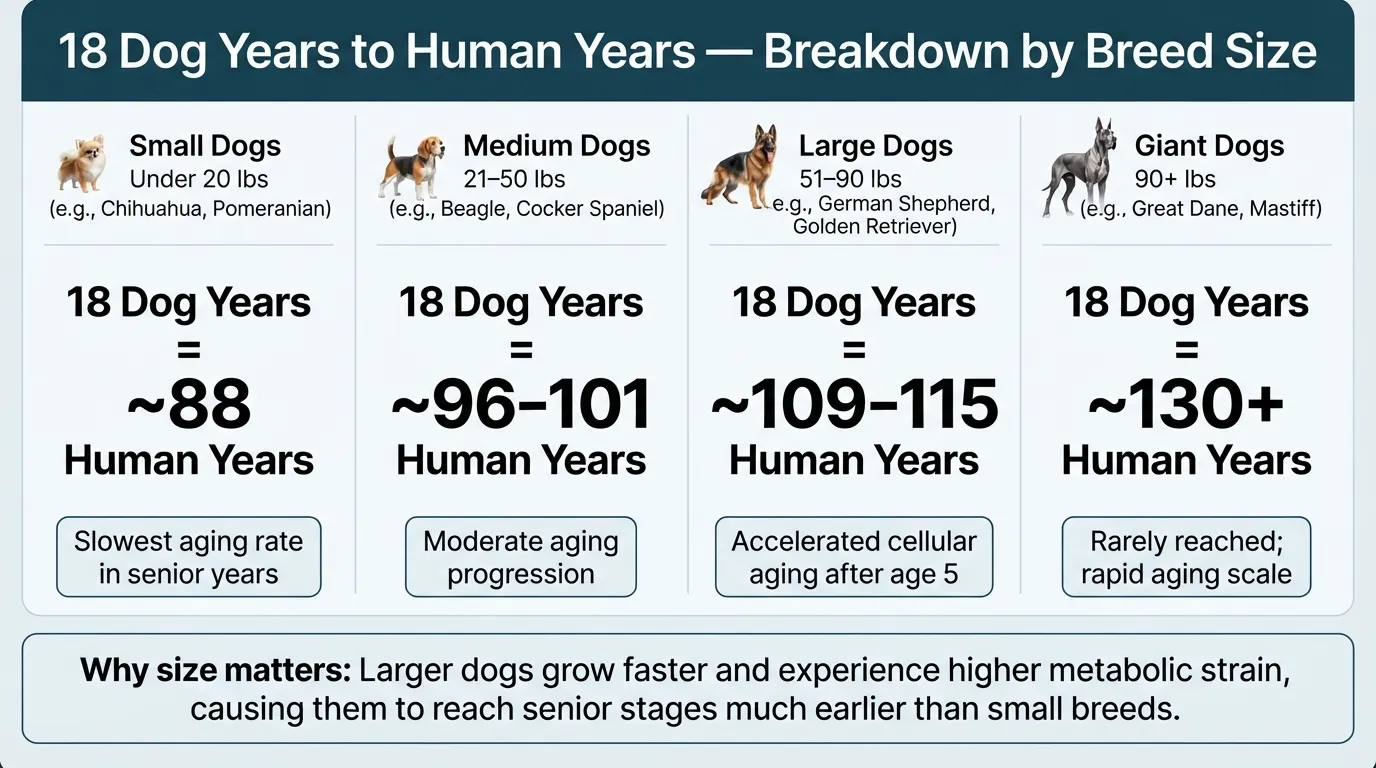
The average German Shepherd lifespan is 7 to 10 years according to official American Kennel Club (AKC) breed data. However, with exceptional genetic screening, lean weight management, and proactive veterinary care, many GSDs comfortably reach 10 to 13 years. As a large, working-group breed carrying 50 to 90 pounds of lean muscle, their cellular aging rate post-maturity is naturally faster than that of toy or small breeds.
Factors That Affect Lifespan
While genetics set your dog’s biological ceiling, lifestyle and daily management determine whether they reach it:
Diet & Weight Management: Carrying excess weight is the fastest way to shorten a German Shepherd’s life. Clinical studies show that dogs maintained at an ideal, lean body condition live up to 15% longer (roughly 1.5 to 2 additional years) compared to overweight dogs. Extra pounds put severe mechanical stress on a spine and joints already prone to dysplasia.
Genetics & Ethical Breeding: Responsible breeders screen parent dogs for inherited conditions like Hip/Elbow Dysplasia and Degenerative Myelopathy (DM)—a progressive neurological disorder affecting hind-limb mobility. Buying from non-screened backyard lines significantly increases the risk of early-onset orthopedic or spinal failure.
Exercise & Muscle Tone: As high-drive working dogs, GSDs require structured physical and mental stimulation daily. Maintaining strong core and hind-quarter muscle mass protects aging joints, preserves cardiovascular health, and keeps their metabolic rate steady.
Preventative Veterinary Care: Catching health issues early through bi-annual blood panels, routine dental cleanings (which prevent systemic organ damage), and immediate treatment of bloat (GDV—a life-threatening stomach twisting common in deep-chested breeds) directly extends quality years.
Male vs. Female Lifespan Difference
Statistically, female German Shepherds live roughly 6 to 12 months longer than males.
Physical Size: Males are larger (65–90 lbs) than females (50–70 lbs). In canine biology, larger body mass accelerates growth rates and cellular aging, placing slightly higher strain on heart and joint systems over a lifetime.
Spay/Neuter Status: Veterinary population studies show that spay/neuter timing has a stronger influence on longevity than sex alone. Neutered females generally record the highest longevity rates, though delaying sterilization until joint plates close (around 18–24 months) is crucial for large-breed structural health.
What Should a German Shepherd Eat at This Age?
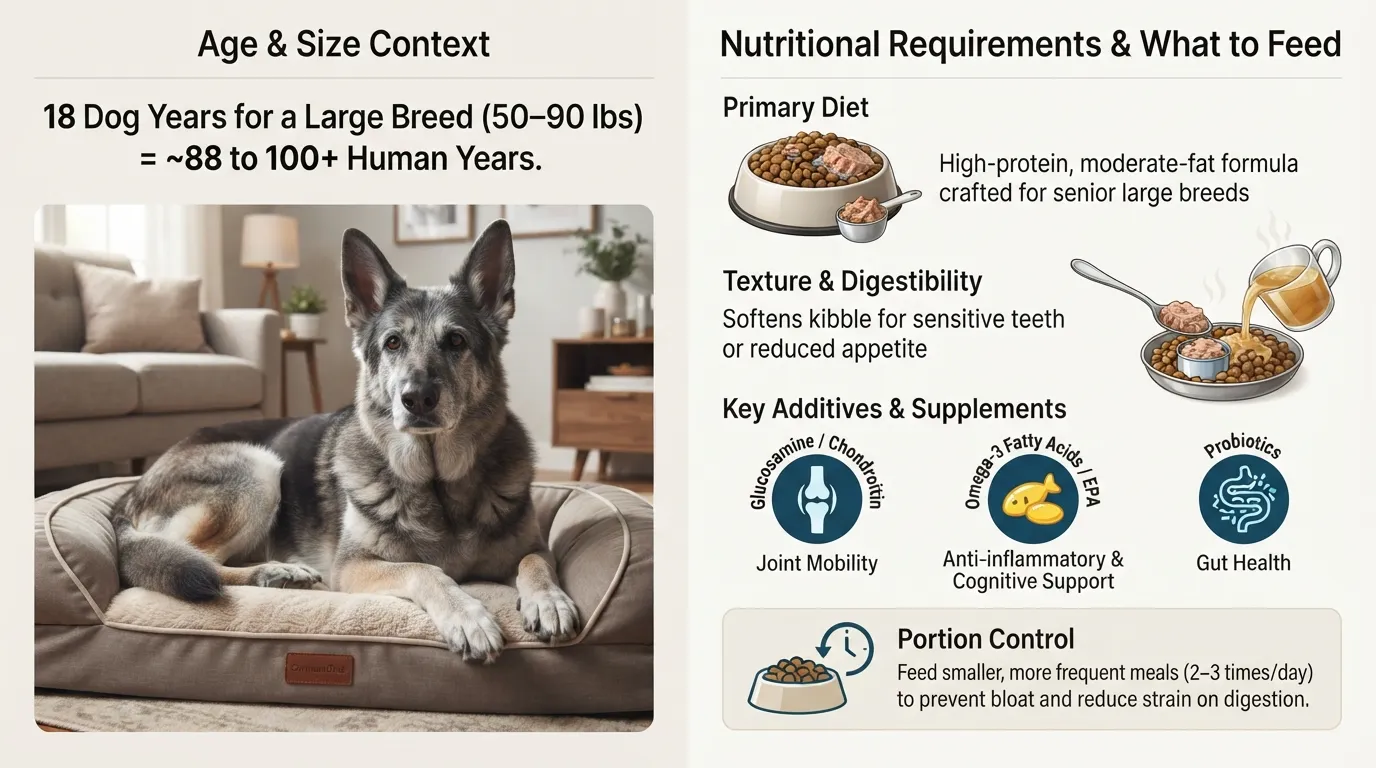
A German Shepherd’s dietary needs change drastically as their metabolism and activity levels shift across life stages. Because they are a deep-chested, large breed prone to joint issues and bloat (GDV), their diet must balance optimal calories, high-quality animal protein, and essential joint-supporting nutrients like glucosamine and omega-3 fatty acids.
Feeding Guide by Life Stage
Puppy Feeding (0–12 Months): Puppies need a specialized large-breed puppy formula containing 22%–26% protein and balanced calcium-to-phosphorus ratios. Controlled growth is vital; overfeeding causes rapid skeletal growth, which severely increases the risk of hip dysplasia. Feed 3–4 meals daily until 6 months, then transition to 2 meals.
Adult Feeding (1–6 Years): Adult GSDs thrive on 20%–25% protein and 12%–15% healthy fats. Feed twice daily to avoid overfilling the stomach (a major cause of bloat). Keep calories aligned with activity level—working dogs require significantly higher energy density than house dogs.
Senior & Mature Feeding (6+ Years): As your dog enters middle age (around 6 years), metabolism drops by roughly 10%–15%. Transition to a formula higher in lean protein to preserve muscle mass, lower in calories to prevent weight gain, and rich in EPA/DHA fatty acids for joint mobility.
How Much Should a 40kg German Shepherd Eat?
A 40 kg (88 lbs) German Shepherd is a substantial, large-framed dog. Their exact daily intake depends on their activity level, neuter status, and age:
Daily Caloric Intake:
Inactive / Mature / Neutered: ~1,500 to 1,750 kcal/day
Active Adult: ~1,800 to 2,100 kcal/day
Working / Highly Active K9: ~2,200 to 2,600+ kcal/day
Portion Size in Cups: Assuming a standard high-quality kibble (averaging 380–400 kcal per cup), a 40 kg German Shepherd typically eats 3.5 to 4.5 cups per day, strictly split into two equal meals (e.g., 2 cups in the morning, 2 cups in the evening).
Veterinary Nutrition Tip: Always calculate portions by kilocalories rather than cup measurements alone, as calorie density varies widely across brands. You can verify your dog’s exact Resting Energy Requirement (RER) using official guidelines from the World Small Animal Veterinary Association (WSAVA) or PetMD.
Health & Aging Signs by Life Stage
Health & Aging Signs by Life Stage
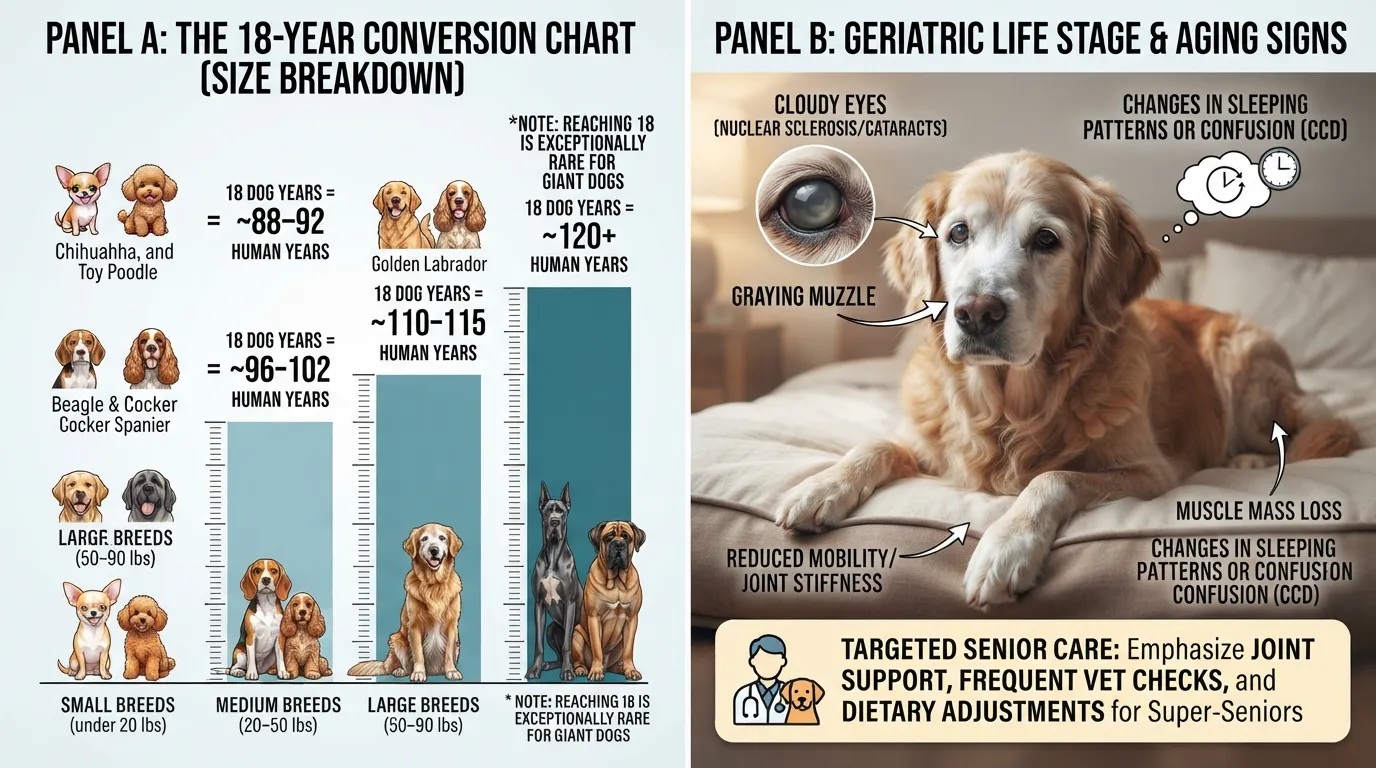
As your German Shepherd progresses through life, subtle changes in their movement, energy, and physical appearance signal shifts in their internal health. Understanding these biological markers allows you to take proactive steps—adjusting diet, introducing orthopedic support, and tailoring veterinary care before minor wear becomes a debilitating condition.
Common Health Issues by Age
Because German Shepherds are large, deep-chested working dogs, their structural frame and nervous system face specific genetic vulnerabilities as they mature:
Hip and Elbow Dysplasia: This genetic malformation of the ball-and-socket joints often develops in youth but manifests as painful osteoarthritis as the dog ages. In a mature GSD, the protective cartilage wears down, leading to bone-on-bone friction, inflammation, and reduced rear-leg strength.
Degenerative Myelopathy (DM): A progressive, non-painful disease of the spinal cord unique to certain breeds, particularly German Shepherds. Typically surfacing around age 8 or older, DM attacks the myelin sheath surrounding the spinal cord, leading to loss of coordination in the hind legs, knuckling under of the paws, and eventual paralysis.
Osteoarthritis: According to veterinary mobility data, arthritis affects a vast majority of large dogs in their senior years. In GSDs, it commonly strikes the lower spine (lumbosacral disease), hips, and elbows, causing chronic low-grade pain that often goes unnoticed until movement becomes severely restricted.
pawportal.com
Signs of Aging to Watch For
Aging in dogs is rarely sudden; it arrives in small, daily physical and behavioral shifts.
Graying Muzzle: Melanin production in hair follicles slows down as dogs mature. Silver or white fur usually begins spreading around the chin, muzzle, and eyebrow ridges around 5 to 6 years of age.
Slower Movement & Stiffness: You may notice your dog taking longer to push themselves up from a lying position, hesitating before jumping into the car, or adopting a rigid, “stiff-legged” walk during early morning outings.
Behavioral Shifts: Aging dogs often experience subtle cognitive and sensory changes. You might observe increased anxiety during routine disruptions, deeper or longer sleep cycles, slight confusion, or a decreased tolerance for turbulent environments (like noisy household gatherings or rough puppy play).
When to See a Vet Urgently: Do not dismiss severe symptoms as “just old age.” Consult your veterinarian immediately if you observe:
Sudden weakness, dragging, or knuckling of the hind paws
Unproductive retching, pacing, or a distended, hard abdomen (signs of Bloat/GDV, a medical emergency)
Unexplained, rapid weight loss or sudden loss of muscle mass over the spine and hips
Disorientation, standing in corners, or failure to recognize familiar people
Recommended Vet Checkup Schedule
Preventative screening is the single most effective tool for extending a German Shepherd’s lifespan. Catching organ dysfunction or joint breakdown early changes the outcome entirely.
Young & Adult Dogs (Ages 1 to 5): Annual exams are sufficient. These visits focus on booster vaccinations, parasite prevention, dental checks, and establishing normal baseline health metrics.
Mature & Senior Dogs (Ages 6+): Shift to twice-yearly (bi-annual) wellness exams. As highlighted by the American Veterinary Medical Association (AVMA) and the American Animal Hospital Association (AAHA), six months in a large dog’s life equals roughly 3 to 4 human years. Bi-annual visits should include comprehensive blood panels (checking liver and kidney values), urinalysis, blood pressure checks, and targeted orthopedic evaluations.
Harmony Animal Hospital+ 1
Frequently Asked Questions
How old is a 6 year old German Shepherd in human years?
A 6-year-old German Shepherd is approximately 42 to 45 human years old. Because German Shepherds are a large breed, they mature faster after their second year than smaller dogs, placing a 6-year-old GSD in human middle age.
How to calculate German Shepherd dog age?
To calculate your German Shepherd’s age accurately, use a weight-adjusted formula rather than multiplying by 7:
Year 1: Counts as 15 human years.
Year 2: Adds 9 human years (totaling 24).
Year 3 onwards: Add 5 to 6 human years per calendar year to account for large-breed cellular aging.
Is 7 dog years 1 human year?
No, the 7-year rule is an outdated myth. Dogs age rapidly in their first two years, reaching young adulthood by age 2 (~24 human years). Modern genetic studies show that large breeds like German Shepherds age faster post-maturity, making a linear 7:1 ratio inaccurate.
How much should a 40 kg German Shepherd eat?
A 40 kg (88 lbs) adult German Shepherd requires roughly 1,500 to 2,100 kcal per day, depending on their activity level. This translates to approximately 3.5 to 4.5 cups of high-quality large-breed kibble daily, split strictly into two separate meals to prevent bloat (GDV).
What’s the oldest recorded German Shepherd?
The oldest reliably recorded German Shepherd was Bluey, who lived to be 29 years and 5 months old in Australia (1910–1939). While Bluey holds the general record, most exceptionally long-lived German Shepherds reach around 14 to 15 years.
Do German Shepherds age faster than other breeds?
Yes, German Shepherds age faster than small and medium dog breeds, but at a similar rate to other large working breeds (such as Labradors or Golden Retrievers). Larger body mass accelerates biological aging post-maturity, leading to an average lifespan of 7 to 10 years compared to 14–16 years for toy breeds.
🐾 Other Age Guides

I built Dogagescalculator.com to give dog owners honest, science-backed answers instead of the outdated "×7" myth. Every figure here is checked against AKC, AVMA, and published veterinary research.
More about the author & this site →
Comments