What Is a Border Collie Australian Shepherd Mix Called
A Border Collie Australian Shepherd mix, commonly called a Border Aussie, is a cross between two highly intelligent herding breeds. This energetic hybrid combines the Border Collie’s intelligence, focus, and herding instincts with the Australian Shepherd’s loyal, hardworking, and adaptable nature.
Also known as an Australian Shepherd Border Collie mix, Aussie Border Collie mix, or Aussie Collie, this dog is generally medium-sized and athletic. Adult size can vary depending on genetics and which parent a puppy most closely resembles, but many Border Aussies have a strong, agile build and a thick coat that may come in a variety of colors and patterns.
Because both parent breeds were developed for active work and herding, a Border Aussie typically needs plenty of daily exercise, mental stimulation, training, and interaction. Their intelligence can make them highly trainable, but they may become bored or develop unwanted behaviors when they do not receive enough physical and mental activity.
In this guide, you’ll learn what a Border Aussie is, how large the Australian Shepherd and Border Collie mix can get, what to expect from its appearance and temperament, and how its exercise, training, grooming, health, and lifespan needs compare with those of its parent breeds.
Other Names for This Mix
While Border Aussie is the most widely recognized name for this hybrid, you’ll frequently see breeders, shelters, and registries use a few different titles for the exact same cross.
Border Aussie: The primary designer dog name recognized by the American Canine Hybrid Club (ACHC) and the Designer Dogs Kennel Club (DDKC).
Aussie Collie: A common, informal variation used interchangeably by shelters and rescue groups across North America.
Australian Collie: The official term used by the Dog Registry of America (DRA) and the International Designer Canine Registry (IDCR).
Regardless of which label appears on shelter paperwork or breeder listings, all three terms refer to a first-generation (F1) or multi-generational cross between a purebred Border Collie and a purebred Australian Shepherd.
Border Aussie at a Glance
| Trait | Details |
|---|---|
| Height | 18–23 inches at the shoulder |
| Weight | 30–65 lbs (males are typically 45–65 lbs; females run 30–50 lbs) |
| Lifespan | 12–15 years |
| Coat Type & Shedding | Medium-to-long double coat; heavy seasonal shedding (moderate year-round) |
| Energy Level | Extremely high — requires 90–120+ minutes of vigorous daily exercise |
| Trainability | Exceptional (ranks among the top 1% for working intelligence) |
| Good with Kids? | Great with active kids, though herding instincts (nipping at heels) need early training |
| Good with Pets? | Good with other dogs; requires early socialization around cats and small pets |
| Height |
|---|
| 18–23 inches at the shoulder |
| Weight |
|---|
| 30–65 lbs (males are typically 45–65 lbs; females run 30–50 lbs) |
| Lifespan |
|---|
| 12–15 years |
| Coat Type & Shedding |
|---|
| Medium-to-long double coat; heavy seasonal shedding (moderate year-round) |
| Energy Level |
|---|
| Extremely high — requires 90–120+ minutes of vigorous daily exercise |
| Trainability |
|---|
| Exceptional (ranks among the top 1% for working intelligence) |
| Good with Kids? |
|---|
| Great with active kids, though herding instincts (nipping at heels) need early training |
| Good with Pets? |
|---|
| Good with other dogs; requires early socialization around cats and small pets |
Border Collie vs Australian Shepherd vs Border Aussie
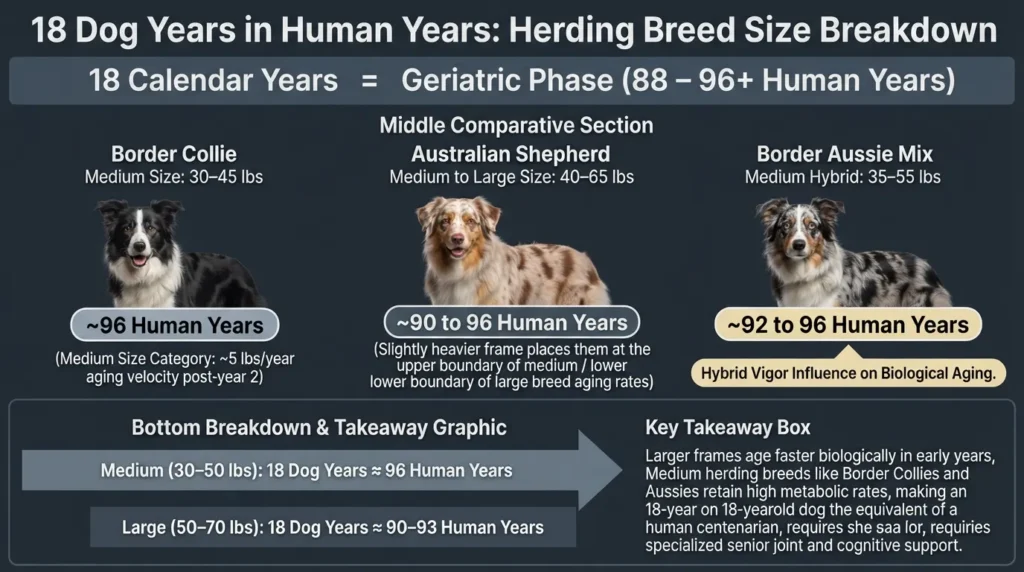
Because the Border Aussie inherits a random blend of traits from two distinct herding legends, comparing them directly against their parent breeds gives you a clear picture of what to expect. While both parent breeds share an incredible work ethic, subtle differences in temper, coat, and build shine through in the mix.
| Trait | Border Collie | Australian Shepherd | Border Aussie (The Mix) |
|---|---|---|---|
| Intelligence | Ranked #1 worldwide (Stanley Coren study); hyper-focused problem solver | Highly intelligent, quick thinker, slightly more independent | Exceptional; blends intense problem-solving with fast learning |
| Energy Level | Relentless stamina; thrives on continuous work and intense focus | High stamina; energetic burst work with strong herding/guarding drives | Extremely high; requires 90–120+ minutes of vigorous daily exercise |
| Size | 30–55 lbs | 18–22 inches | 40–65 lbs | 18–23 inches | 30–65 lbs | 18–23 inches |
| Coat & Colors | Medium double coat; common in black & white, red, or tricolor | Dense double coat; famous for merle patterns and bobbed tails | Medium-to-long double coat; wide mix of merle, tricolor, or bi-color |
| Trainability | Extremely eager to please; responds instantly to handler direction | Very trainability; responds best to positive, clear boundaries | Highly trainable; eager, responsive, and thrives on complex tricks |
| Border Collie | Ranked #1 worldwide (Stanley Coren study); hyper-focused problem solver |
| Aussie | Highly intelligent, quick thinker, slightly more independent |
| Border Aussie | Exceptional; blends intense problem-solving with fast learning |
| Border Collie | Relentless stamina; thrives on continuous work and intense focus |
| Aussie | High stamina; energetic burst work with strong herding/guarding drives |
| Border Aussie | Extremely high; requires 90–120+ minutes of vigorous daily exercise |
| Border Collie | 30–55 lbs | 18–22 inches |
| Aussie | 40–65 lbs | 18–23 inches |
| Border Aussie | 30–65 lbs | 18–23 inches |
| Border Collie | Medium double coat; common in black & white, red, or tricolor |
| Aussie | Dense double coat; famous for merle patterns and bobbed tails |
| Border Aussie | Medium-to-long double coat; wide mix of merle, tricolor, or bi-color |
| Border Collie | Extremely eager to please; responds instantly to handler direction |
| Aussie | Very trainability; responds best to positive, clear boundaries |
| Border Aussie | Highly trainable; eager, responsive, and thrives on complex tricks |
Appearance & Physical Traits
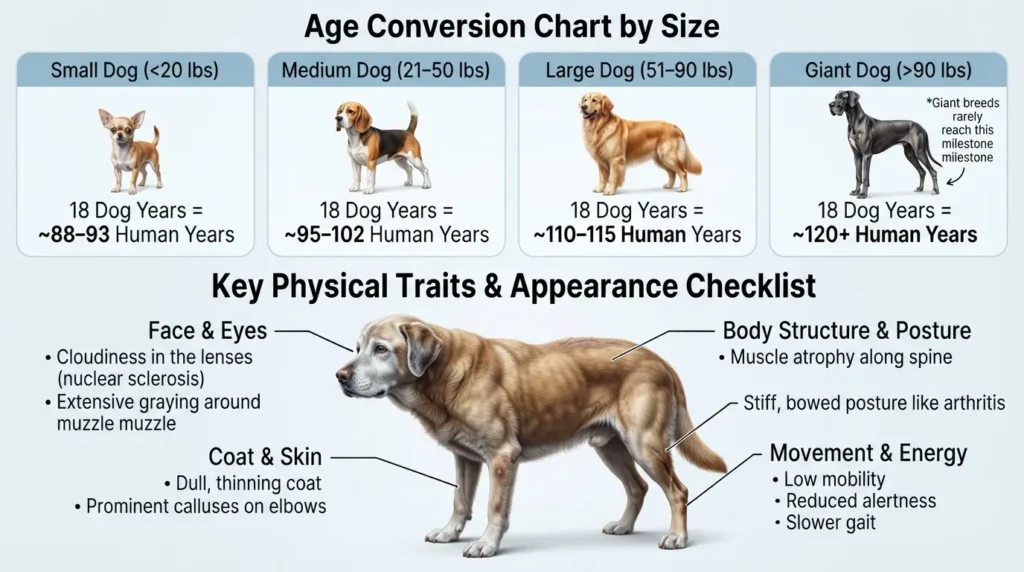
Because the Border Aussie is a cross between two separate herding breeds, their physical appearance can lean more toward the streamlined build of a Border Collie or the heavier, stockier frame of an Australian Shepherd. Overall, they are medium-sized, athletic, and lithe, built for quick turns and long days on their feet.
Size & Weight
A fully grown Border Aussie typically stands 18 to 23 inches tall at the shoulder and weighs anywhere from 30 to 65 pounds. Males are noticeably larger and broader than females:
Male Border Aussies: 19–23 inches tall | 45–65 lbs
Female Border Aussies: 18–21 inches tall | 30–50 lbs
They usually reach their full adult height by 12 months, though their chest and muscle structure continue filling out until around 18 to 24 months of age.
Coat Colors (incl. rarest Aussie color)
The Border Aussie sports a weather-resistant double coat—a dense, soft undercoat for insulation and a coarser, medium-length outer coat. They can inherit a striking variety of coat patterns from both parent lineages:
Blue Merle: A silvery-gray base splashed with black patches; one of the most popular patterns inherited from the Aussie parent.
Red Merle: A creamy or reddish-white base with copper, liver, or deep red mottling.
Classic Black & White: Traditional Border Collie markings featuring a dark body with a white chest, collar, and blaze up the muzzle.
Tricolor: Black, red, or blue merle bodies highlighted with distinct copper/tan points on the cheeks, legs, and chest.
What is the rarest color? The rarest color pattern seen in this mix is Red Bi (a solid red/liver coat with white markings, completely lacking tan points) or Dilute/Slate (a recessive genetic coat that turns black pigment into a smoky blue-gray).
Eyes (heterochromia)
One of the most captivating physical features of the Border Aussie is their eyes. Their eyes can be oval-shaped and range in color from deep brown and amber to striking ice blue.
Thanks to the merle gene commonly carried by Australian Shepherds, many Border Aussies express heterochromia—a condition where a dog has two completely different colored eyes (e.g., one piercing blue eye and one brown eye). They can also exhibit split or segmental heterochromia, where a single iris contains two distinct colors within the same eye.
Temperament & Personality
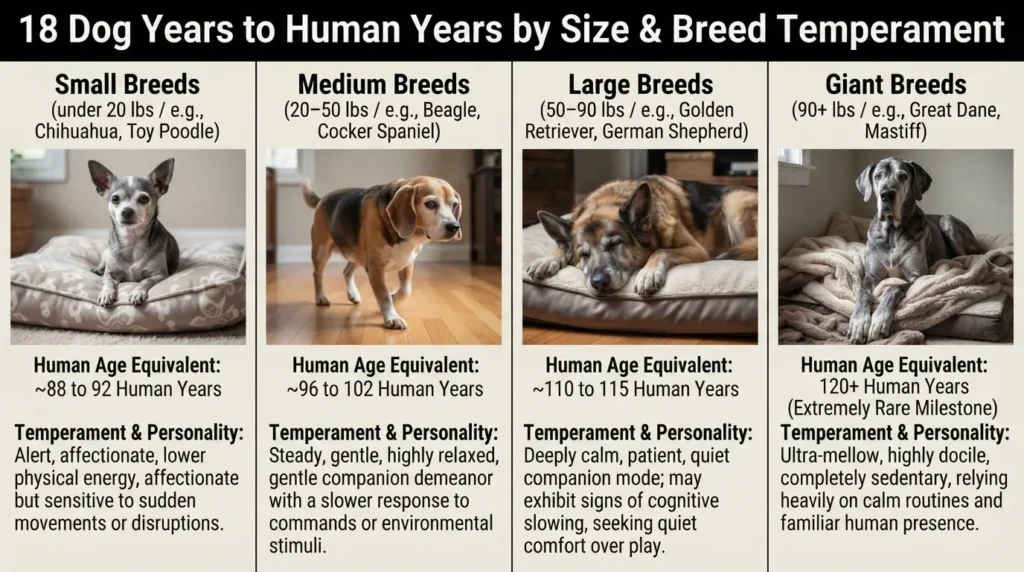
The Border Aussie is a high-drive, fiercely loyal worker disguised as a family pet. Crossing two of the sharpest working breeds results in an energetic, alert, and deeply attentive dog. They don’t just sit in the same room as you—they monitor your movements, read your body language, and constantly wait for their next assignment.
Their personality is a blend of the Border Collie’s intense focus and the Australian Shepherd’s playful, slightly more protective nature. They form deep bonds with their human handlers, often acting like a “velcro” dog that follows you from room to room.
Is It a Good Family Dog?
Yes, but only for the right kind of family. A Border Aussie thrives in an active household where weekends mean hiking, running, camping, or playing fetch for hours.
Best fit: Families with older kids, outdoor enthusiasts, or rural homeowners with plenty of yard space.
Challenging fit: Busy families with no time for 90+ minutes of daily exercise, or apartment dwellers who are away at work for 8–10 hours a day.
When their physical and mental needs are met, they are affectionate, deeply devoted, and protective companions. However, an under-stimulated Border Aussie will quickly turn their sharp mind toward destructive behaviors like chronic barking, digging, or chewing furniture.
Herding Instinct & Behavior Around Kids/Pets
Herding is wired into a Border Aussie’s DNA—it isn’t a behavior you can completely train out of them, but rather something you must direct constructive channels toward.
Around Kids: Border Aussies generally love kids and make playful, energetic companions. However, their natural instinct when children run around screaming is to circle them and nip lightly at their heels or shoes to “herd” them into a group. Early impulse-control training is crucial, and interactions with toddlers should always be supervised.
Around Cats and Small Pets: Their high prey drive and herding instinct mean they will naturally chase cats, rabbits, or smaller pocket pets if left unchecked. With early socialization from puppyhood, many Border Aussies learn to respect household cats, though outdoor stray animals will almost always spark a chase.
Around Other Dogs: They generally get along fantastic with other active dogs, especially other herding or sporting breeds that can match their play style and high energy levels.
Exercise & Training Needs
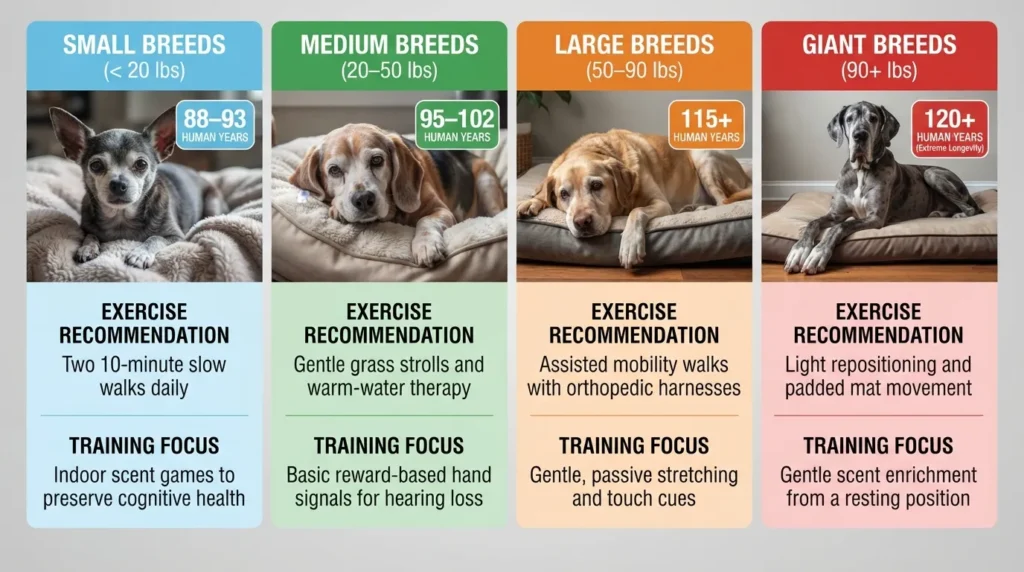
If you bring a Border Aussie into your home, you are essentially taking on a part-time job as a canine athletic director. Because both parent breeds were bred to run 10 to 15 miles a day maneuvering livestock, this mix demands an exceptional amount of both physical exertion and mental stimulation.
Daily Exercise Requirement
A casual 15-minute stroll around the neighborhood won’t even warm up a Border Aussie. This hybrid requires a strict minimum of 90 to 120 minutes of vigorous, heart-pumping exercise every single day.
To keep them settled and prevent destructive behaviors, it is best to split their activity into a structured daily routine:
Morning: A 30- to 45-minute brisk jog, trail run, or off-leash hike.
Afternoon: 20 to 30 minutes of intense fetch, frisbee, or flirt pole chasing to satisfy their high prey drive.
Evening: 20 minutes of advanced obedience training, trick learning, or interactive puzzle toys. (Remember: mental fatigue tires out a herding dog just as much as physical running).
Training Tips
Training a Border Collie Australian Shepherd mix is a double-edged sword. They possess elite canine intelligence, meaning they often master new commands in just three to five repetitions. The catch? They learn bad habits just as quickly if you aren’t consistent.
Keep your training sessions short—around 10 to 15 minutes each—to prevent boredom, but make the tasks increasingly complex. They respond best to positive reinforcement using high-value rewards like freeze-dried liver or a favorite tug toy. Avoid harsh vocal corrections. Herding breeds are incredibly sensitive to human body language and tone; yelling or heavy-handed methods will quickly break their trust and cause them to shut down.
Because a Border Aussie will outgrow basic obedience classes fast, you need to give them a real “job.” The best activities to channel their genetics include:
Agility: Navigating weave poles, tunnels, and A-frames perfectly mimics the quick directional changes of herding, building immense handler teamwork.
Herding & Treibball: If you don’t live on a farm with livestock, Treibball (an urban herding sport where dogs drive large inflatable exercise balls into a net) is a phenomenal outlet for their natural gathering instincts.
Flyball: A fast-paced relay race that leverages their explosive acceleration, sharp focus, and love for retrieving.
(Tip: If you’re looking to get involved in structured activities, look for local training clubs affiliated with the American Kennel Club (AKC) or the North American Flyball Association to find safe, vet-approved equipment and experienced instructors.)
Grooming & Shedding
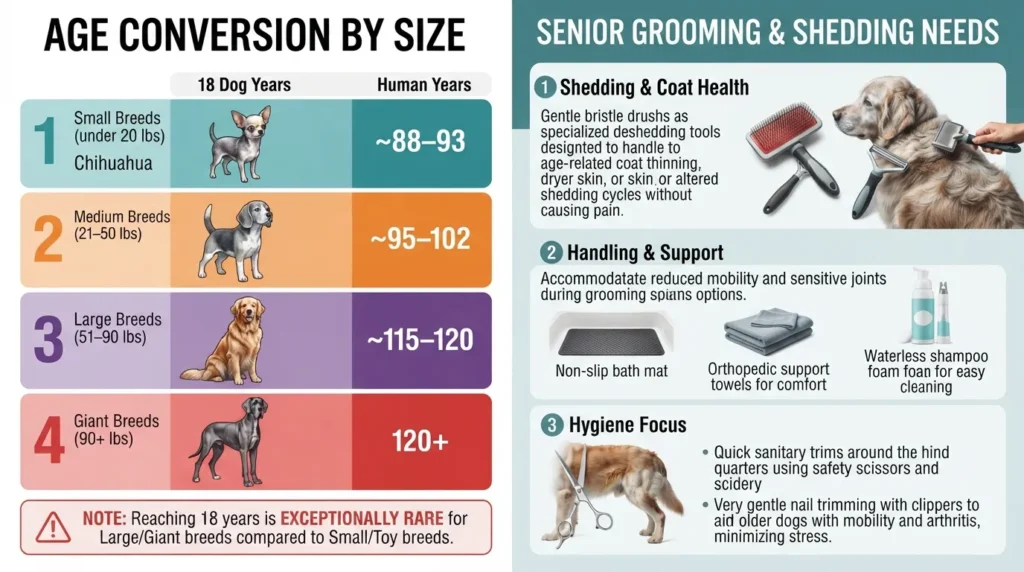
Maintaining a Border Aussie’s coat isn’t overly complicated, but it does require consistency. Thanks to their double coat—consisting of a soft, insulating undercoat and a longer, weather-resistant outer coat—they shed continuously throughout the year and experience heavy seasonal coat blowouts in the spring and fall.
Brushing Frequency
To keep their fur free of mats and control the amount of loose hair on your furniture, establish a regular brushing schedule based on the season:
Routine Maintenance (2–3 times a week): Use a slicker brush to remove loose hair and dirt, followed by a wide-toothed metal comb to gently work through finer hair behind the ears, on the feathering of the legs, and around the tail where mats form easily.
Shedding Season / “Coat Blow” (Daily): During spring and autumn transitions, switch to an undercoat rake or a de-shedding tool (like a Furminator) to pull out the dense, dead undercoat before it turns into tumbling hairballs across your floors.
Grooming Tip: Never shave a Border Aussie’s double coat. Their coat acts as natural insulation against both cold winter winds and intense summer heat. Shaving can permanently ruin the coat’s texture and leave their delicate skin vulnerable to sunburn and heatstroke.
Bathing, Ear & Eye Care
Because their coat naturally repels mud and water once dry, Border Aussies don’t need frequent baths unless they’ve rolled in something particularly unpleasant.
Bathing: Wash them every 6 to 8 weeks using a soap-free, moisturizing dog shampoo. Over-bathing strips away the essential natural oils that keep their double coat water-resistant and can cause dry, itchy skin.
Ear Care: Their semi-erect or folded ear tips can trap moisture, especially if your dog loves swimming. Check their ears weekly for redness, debris, or a foul odor. Clean the outer ear canal using a cotton ball moistened with a vet-approved ear-cleaning solution (never insert cotton swabs directly into the ear canal).
Eye Care: Because many Border Aussies carry lighter pigmentation or heterochromia, wipe away tear stains or corner eye-gunk daily using a soft, damp cloth to prevent buildup and irritation.
Nail & Dental Care: Trim their nails every 3 to 4 weeks using a heavy-duty nail clipper or grinder—if you hear their claws clicking on hardwood floors, they’re too long. Brush their teeth 2 to 3 times weekly with a dog-safe enzymatic toothpaste to prevent tartar build-up.
Feeding & Diet Guide
A Border Aussie burns through calories much faster than an average family pet. Because of their athletic frame, high metabolism, and non-stop energy, they need a high-protein, nutritionally dense diet that supports active muscle recovery and keeps their joint cartilage healthy.
Look for high-quality commercial dog foods where real animal protein (such as chicken, beef, or lamb) is listed as the very first ingredient. Active herding breeds benefit from a recipe that contains roughly 25% to 30% crude protein and 15% to 20% healthy fats (including Omega-3 and Omega-6 fatty acids to keep their double coat shiny and reduce dry skin).
Puppy Feeding Schedule
Border Aussie puppies grow rapidly between 2 and 8 months of age. To prevent structural joint issues like hip dysplasia later in life, feed them a dedicated medium-to-large breed puppy formula. These formulas maintain a precise calcium-to-phosphorus ratio to ensure slow, steady bone development rather than sudden growth spurts.
8 to 12 Weeks Old: 3 to 4 meals per day (1.5 to 2 total cups of kibble split evenly).
3 to 6 Months Old: 3 meals per day (2 to 2.5 total cups of kibble split evenly).
6 to 12 Months Old: 2 meals per day (2.5 to 3 total cups of kibble split evenly).
Always divide their daily food allowance into structured meal times rather than free-feeding (leaving food out all day). This establishes a routine, aids in house-training, and prevents overeating.
Adult Feeding Portions
Once your Border Aussie reaches 12 to 14 months of age, transition them to a high-protein adult formula over a 7- to 10-day period to avoid upsetting their stomach.
An adult Border Aussie typically requires 2 to 3.5 cups of quality kibble per day, divided into two equal meals (morning and evening). However, precise portion sizes depend heavily on their size, weight, and daily activity level:
| Dog Size & Activity Level | Average Weight | Daily Kibble Allowance | Estimated Daily Calories |
|---|---|---|---|
| Active / Family Companion | 30–45 lbs | 2 to 2.5 cups | 1,000 – 1,300 kcal |
| High-Drive / Working Dog / Agility | 45–65 lbs | 3 to 3.5 cups | 1,400 – 1,800 kcal |
| Average Weight | 30–45 lbs |
| Daily Kibble Allowance | 2 to 2.5 cups |
| Estimated Daily Calories | 1,000 – 1,300 kcal |
| Average Weight | 45–65 lbs |
| Daily Kibble Allowance | 3 to 3.5 cups |
| Estimated Daily Calories | 1,400 – 1,800 kcal |
Health Issues & Lifespan
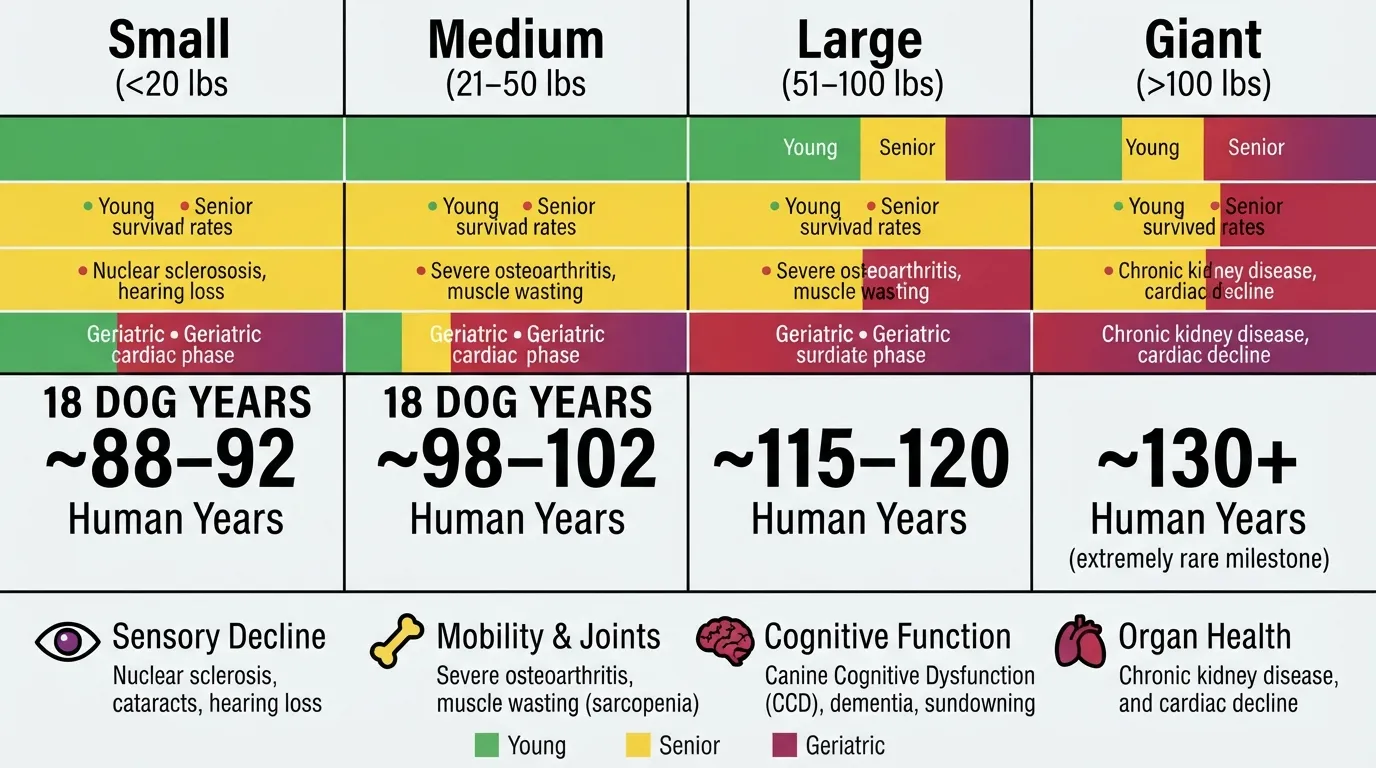
Border Aussies are generally robust, hearty dogs thanks to “hybrid vigor”—a genetic benefit where crossing two distinct gene pools often reduces the likelihood of inheriting species-specific recessives. They boast an average lifespan of 12 to 15 years when given proper exercise, joint care, and nutrition.
However, because both Border Collies and Australian Shepherds are susceptible to several overlapping genetic conditions, a Border Aussie can still inherit structural, neurological, or ocular issues from either side.
Hip Dysplasia
Hip dysplasia is a skeletal condition where the ball-and-socket joint of the hip forms improperly, causing painful friction, lameness, and early-onset arthritis. While partially hereditary, rapid growth spurts during puppyhood and excessive high-impact jumping on hard surfaces can worsen the condition.
Prevention: Responsible breeders screen parent stock using Hip Evaluation standards from the Orthopedic Foundation for Animals (OFA) or PennHIP.
Care: Keep your dog at a lean weight to minimize joint stress, and supplement their diet with Omega-3 fatty acids, glucosamine, and chondroitin starting around middle age.
Progressive Retinal Atrophy (PRA)
Progressive Retinal Atrophy refers to a group of genetic diseases that cause the slow, painless degradation of the retina. It typically begins as night blindness in young dogs and slowly progresses to complete loss of vision over several years.
There is currently no cure for PRA, but dogs adapt remarkably well to vision loss using their keen senses of smell and hearing. Parent dogs should undergo annual eye exams by a board-certified veterinary ophthalmologist (certified through the Canine Eye Registration Foundation / OFA) before breeding.
Deafness
Congenital deafness in this mix is strongly linked to genetics—specifically the merle gene and high amounts of white pigmentation around the head and ears.
When two dogs carrying the merle gene are bred together (“double merle”), the offspring have a high probability of severe hearing loss and eye deformities. Border Aussies with solid coats or standard single-merle patterns carry a significantly lower risk. Puppies can be screened early for hearing deficits using a BAER (Brainstem Auditory Evoked Response) test.
Epilepsy
Idiopathic epilepsy—unexplained, recurrent seizures—is known to affect both Border Collies and Australian Shepherds. Seizures typically manifest between 1 and 5 years of age.
While watching a dog experience a seizure can be distressing, canine epilepsy is generally manageable with daily long-term anti-seizure medications prescribed by your veterinarian (such as potassium bromide or levetiracetam), allowing affected dogs to live full, comfortable lives.
MDR1 Gene Sensitivity
One of the most critical genetic risks for any herding mix is a mutation in the MDR1 (Multidrug Resistance 1) gene, also known as the ABCB1 gene. This mutation compromises the blood-brain barrier, making the dog hypersensitive to several common veterinary medications that would otherwise be safe.
If an MDR1-mutant dog receives standard doses of certain drugs, it can lead to severe neurological toxicity, blindness, tremors, or fatal reactions.
High-Risk Medications to Avoid or Modify:
Ivermectin: High doses used for mange treatment (note: low-dose monthly heartworm preventives are generally safe, but higher doses are toxic).
Loperamide (Imodium): Over-the-counter anti-diarrheal medication (must be strictly avoided).
Certain Sedatives & Chemo Agents: Medications like Acepromazine, Butorphanol, and Vincristine require strict dose reductions.
Border Aussie Puppies
Bringing home a Border Aussie puppy is an exhilarating experience, but it requires preparation. During their first year, these intelligent working pups develop at a rapid pace—both physically and mentally.
First-Year Growth & Behavior
A Border Aussie puppy grows quickly, going through distinct stages of development that shape their adult temperament and body structure.
8 to 16 Weeks (The Curiosity & Teething Stage): Puppies weigh around 8 to 15 pounds during this phase. They are intensely curious, eager to explore their environment, and start teething. Because herding instincts kick in early, they will test boundaries by chasing moving objects and nipping at heels, shoelaces, or fingers during play.
4 to 8 Months (The Teenage Phase): Weight increases to 20 to 40 pounds. This is often the most challenging behavioral phase. Adolescents test authority, push independence, and undergo brief “fear periods.” Consistent boundaries, daily routine, and structured training are vital here to prevent stubborn habits from forming.
8 to 12 Months (Physical Maturation): They approach their adult height of 18 to 23 inches and weigh 30 to 55+ pounds. While they look like adult dogs, their mental focus and impulse control are still developing, and their chest will continue to broaden until around 18 to 24 months.
Early Socialization Tips
Because both parent breeds are naturally suspicious of strangers and protective of their territory, early socialization during the critical window between 8 and 16 weeks is essential to prevent fear-based aggression or reactivity.
Paws on Diverse Surfaces: Safely expose your puppy to different textures like concrete, gravel, grass, shiny wood floors, and wet grass.
Controlled Sight & Sound Exposures: Introduce them to household sounds (vacuums, blender, lawnmowers) and external sights (bicycles, skateboards, cars) at a safe distance, rewarding them with high-value treats for remaining calm.
Positive People Interactions: Have people of various ages, sizes, and clothing styles (hats, sunglasses, coats) interact with your puppy gently.
Redirect Herding Drives Immediately: If your puppy nips at ankles or running children, do not yell or run—this turns it into a game. Instantly freeze, say a calm “No,” and redirect their focus onto an approved rubber toy, herding ball, or tug rope.
Cost of a Border Aussie
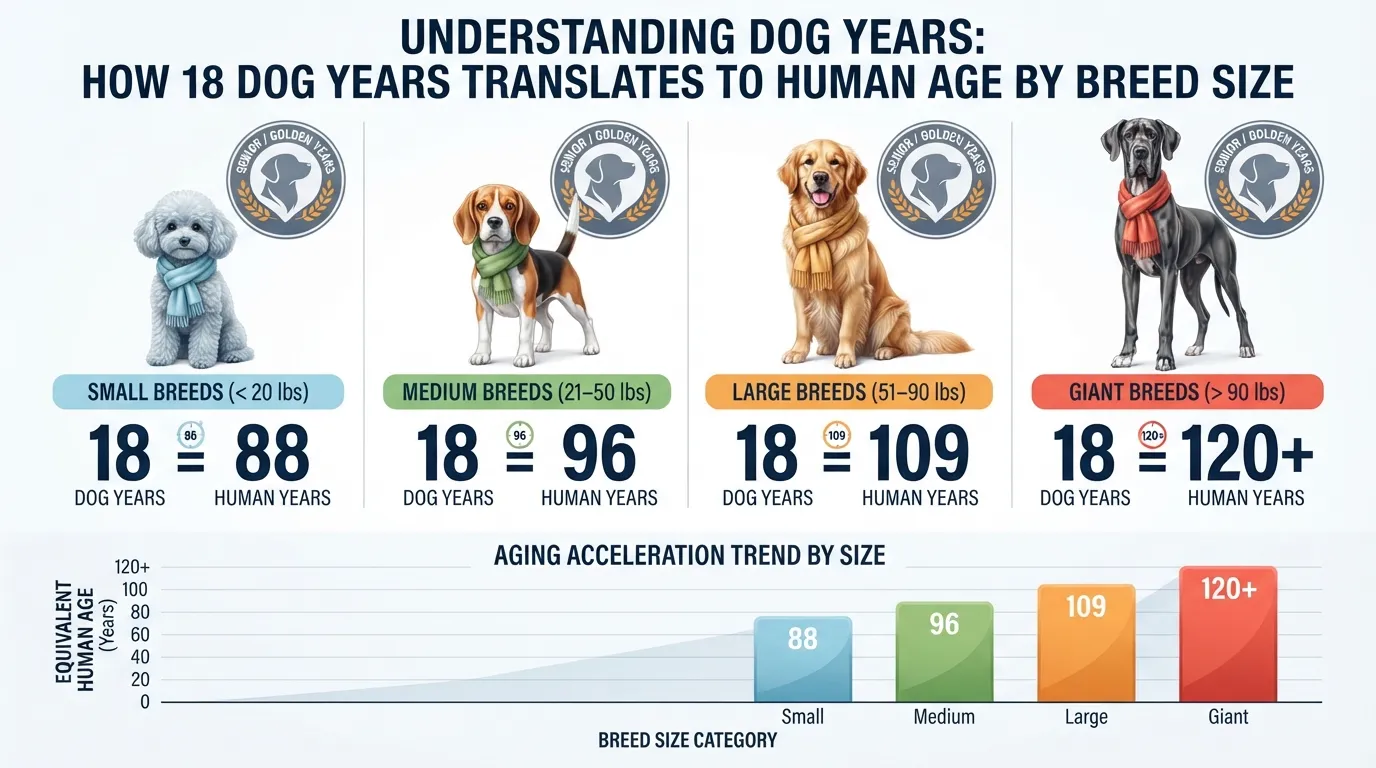
The initial price of a Border Aussie varies depending on whether you purchase a puppy through a specialized designer breeder or adopt through a breed rescue. Beyond the initial purchase, you should also factor in essential upfront setup costs—such as vaccinations, spay/neuter surgery, microchipping, and high-drive crate/leash gear—which typically add an extra $300 to $600 in first-year expenses.
Breeder Price Range
If purchasing from a private breeder, a Border Aussie puppy generally costs between $800 and $1,500.
Prices fluctuate based on several specific factors:
Merle Coats & Blue Eyes: Puppies displaying striking blue merle coat patterns or heterochromia (mismatched eyes) often command higher price tags ($1,200–$1,800+) due to high market demand.
Health Testing Documentation: Reputable breeders who perform genetic screening for the MDR1 gene mutation, PRA eye exams, and OFA hip evaluations charge more to cover these veterinary costs.
Working Line Lineage: Litters bred from proven stock-dog or agility-champion parents naturally sit at the higher end of the price spectrum.
Caution: Avoid “backyard breeders” selling unverified merle-to-merle litters at steep discounts. Breeding two merle dogs together carries a 25% chance of producing “double merle” puppies with severe congenital blindness and deafness.
Adoption / Rescue Cost
Adopting a Border Aussie through a shelter or breed-specific rescue typically costs between $150 and $500.
Because both Border Collies and Australian Shepherds are high-energy breeds that unprepared owners frequently surrender, first-generation mixes and adult Border Aussies appear relatively often in rescue networks.
General Shelters / Humane Societies: Adoption fees average $150 to $300, which almost always covers core vaccinations, spay/neuter surgery, deworming, and microchipping.
Breed-Specific Rescues: Working with dedicated organizations like All Border Collie Rescue, Australian Shepherd Rescue Network, or local herding dog rescues usually costs $300 to $500. These dogs are typically fostered in home environments where their temperament, cat-reactivity, and house-training are already evaluated before adoption.
What Is a Border Collie Australian Shepherd Mix Called? Complete Border Aussie Guide
Appearance & Physical Traits
Because the Border Aussie is a cross between two separate herding breeds, their physical appearance can lean more toward the streamlined build of a Border Collie or the heavier, stockier frame of an Australian Shepherd. Overall, they are medium-sized, athletic, and lithe, built for quick turns and long days on their feet.
Size & Weight
A fully grown Border Aussie typically stands 18 to 23 inches tall at the shoulder and weighs anywhere from 30 to 65 pounds. Males are noticeably larger and broader than females:
- Male Border Aussies: 19–23 inches tall | 45–65 lbs
- Female Border Aussies: 18–21 inches tall | 30–50 lbs
They usually reach their full adult height by 12 months, though their chest and muscle structure continue filling out until around 18 to 24 months of age.
Coat Colors (incl. rarest Aussie color)
The Border Aussie sports a weather-resistant double coat—a dense, soft undercoat for insulation and a coarser, medium-length outer coat. They can inherit a striking variety of coat patterns from both parent lineages:
- Blue Merle: A silvery-gray base splashed with black patches; one of the most popular patterns inherited from the Aussie parent.
- Red Merle: A creamy or reddish-white base with copper, liver, or deep red markings.
- Classic Black & White: Traditional Border Collie markings featuring a dark body with a white chest, collar, and blaze up the muzzle.
- Tricolor: Black, red, or blue merle bodies highlighted with distinct copper/tan points on the cheeks, legs, and chest.
What is the rarest color? The rarest color pattern seen in this mix is Red Bi (a solid red/liver coat with white markings, completely lacking tan points) or Dilute/Slate (a recessive genetic coat that turns black pigment into a smoky blue-gray).
Eyes (heterochromia)
One of the most captivating physical features of the Border Aussie is their eyes. Their eyes can be oval-shaped and range in color from deep brown and amber to striking ice blue.
Thanks to the merle gene commonly carried by Australian Shepherds, many Border Aussies express heterochromia—a condition where a dog has two completely different colored eyes (e.g., one piercing blue eye and one brown eye). They can also exhibit split or segmental heterochromia, where a single iris contains two distinct colors within the same eye.
Watch a Border Aussie in Action
Yahan video mein dekhein ke real-life Border Collie aur Australian Shepherd breeds ke physical features, coat styles, aur behavior mein kya clear difference hota hai jisse inka mix tayar hota hai:
Where to Find a Border Aussie
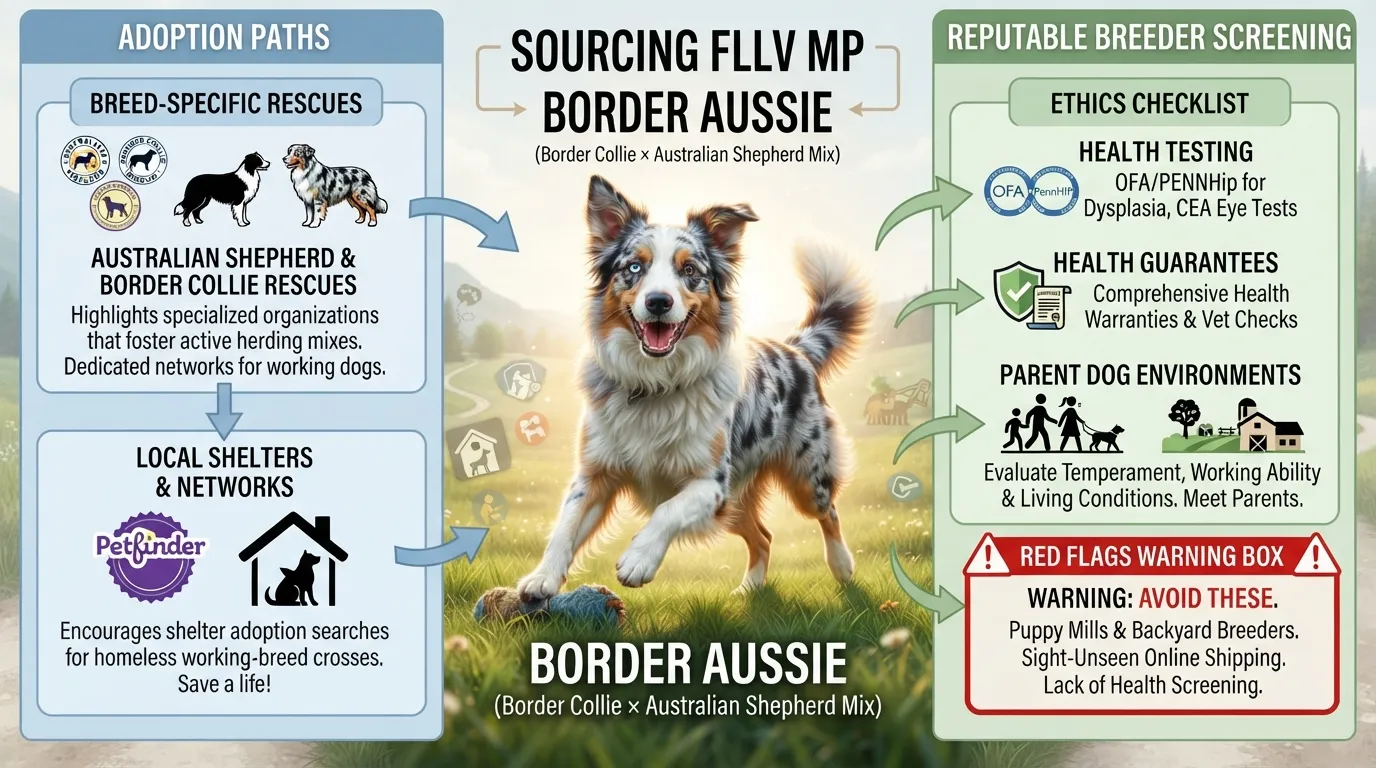
Finding a healthy, well-socialized Border Aussie requires patience and careful vetting. Because this hybrid isn’t recognized by traditional purebred registries like the AKC, you won’t find an “official” list of certified breeders, making it even more important to know what to look for.
Reputable Breeders
If you choose to purchase a puppy through a private breeder, expect to spend time evaluating their health protocols and breeding environment. A trustworthy breeder prioritizes the physical and mental health of their litters over profit.
Verifiable Genetic Screening: Demand official health clearance documentation for both parent dogs. This must include OFA or PennHIP scores for hip health, recent eye certifications through the Canine Eye Registration Foundation (CERF/OFA), and genetic testing for the MDR1 gene mutation and Progressive Retinal Atrophy (PRA).
On-Site Parent Interaction: Always ask to meet the mother (and father if available) at the breeder’s facility or home. Pay close attention to their temperament—parent dogs should be confident, alert, and responsive, not overly fearful, timid, or aggressive.
Clear Health Guarantees: Responsible breeders provide a written contract guaranteeing against congenital health defects for at least 1 to 2 years and state they will take the dog back at any point in its life if you can no longer care for it.
Red Flags to Avoid: Walk away if a breeder offers to ship puppies without an interview, sells “double merle” litters (breeding two merles together), refuses to let you see where the puppies are raised, or sells puppies younger than 8 weeks old.
Rescue Organizations
Adopting a Border Aussie through a rescue is often the best route for families seeking an adult dog whose energy level and personality are already established. Because these dogs are high-energy workers, unmanaged puppies are frequently surrendered to rescues when owners realize they can’t meet their exercise needs.
Breed-Specific Herding Rescues: Search for established non-profits that focus on the parent breeds, such as All Border Collie Rescue, Central Valley Aussie Rescue, or regional organizations affiliated with the Australian Shepherd Club of America (ASCA) rescue network. These rescues frequently accept first-generation mixes.
The Foster Advantage: Many breed rescues place dogs in active foster homes rather than kennel runs. Foster parents evaluate whether the dog is house-trained, how they react to household cats or children, and their exact daily activity requirements.
Shelter Databases: Utilize platforms like Petfinder or Adopt-a-Pet using search alerts for both “Border Collie Mix” and “Australian Shepherd Mix.”
Pros and Cons of a Border Aussie
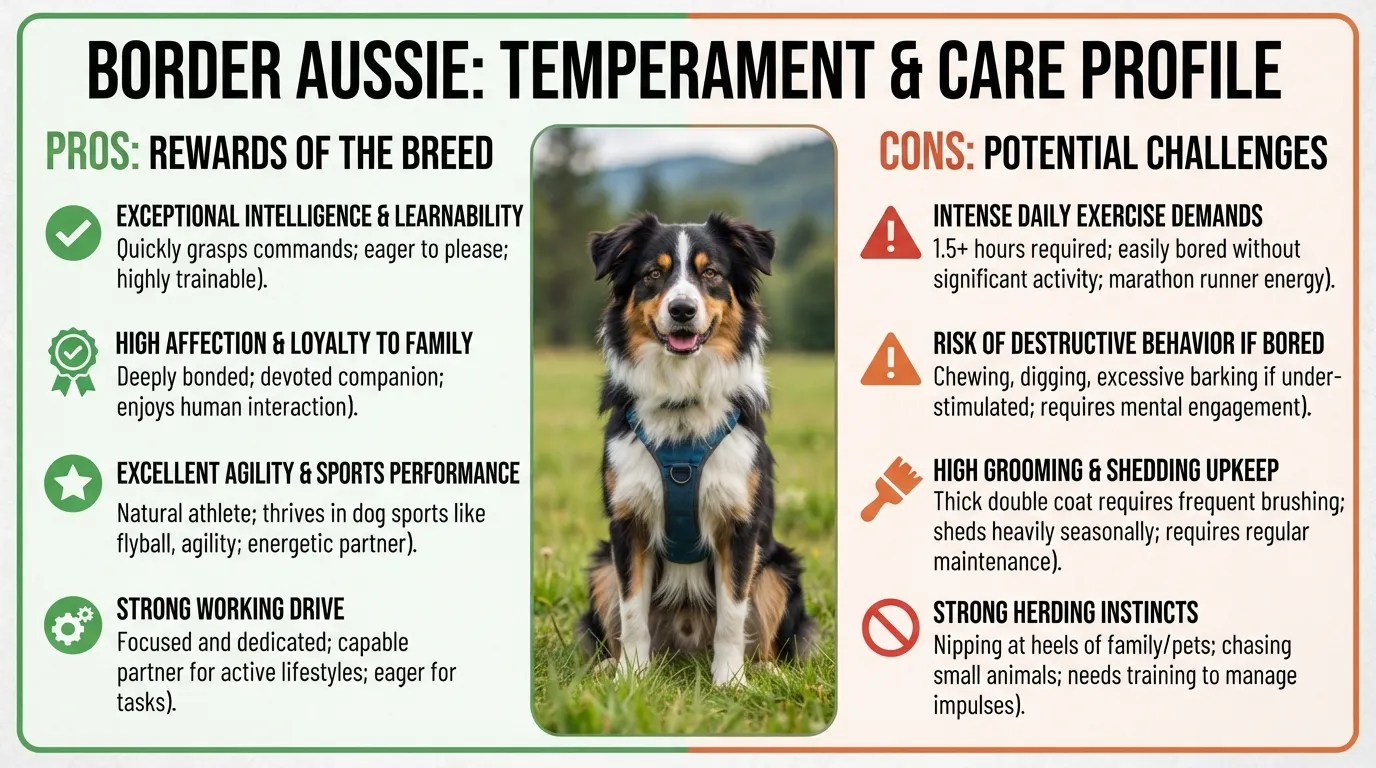
Before adding a Border Aussie to your life, weighing their incredible strengths against their demanding daily requirements is essential. This quick comparison will help you decide if this high-drive hybrid fits your routine.
Pros
World-Class Intelligence: Learns new commands in just 3 to 5 repetitions and thrives on advanced trick training and problem-solving.
Unmatched Athletic Partner: An ideal companion for long-distance runners, hikers, campers, and high-level dog sports like agility, flyball, and frisbee.
Deeply Loyal & Affectionate: Forms intense, unbreakable bonds with their family, earning a reputation as a devoted “velcro” companion.
Striking Physical Traits: Frequently inherits eye-catching coat patterns, merle coloration, and multi-colored eyes (heterochromia).
Naturally Alert & Protective: Vigilant by nature, making them quick to warn you of approaching strangers or unusual activity around your home.
Cons
Extreme Energy Demands: Requires a non-negotiable 90 to 120+ minutes of strenuous daily exercise to prevent destructive anxiety and restlessness.
Strong Herding Instincts: High drive to chase and lightly nip at the heels of running children, cats, and small household pets.
Heavy Shedding: Double coat sheds continuously year-round, with massive coat blowouts during spring and autumn transitions.
Prone to Separation Anxiety: Can become distressed and vocal if left home alone for long working hours without stimulation.
Not Beginner-Friendly: Easily outsmarts inexperienced owners, demanding firm, consistent leadership and early impulse-control training.
Is a Border Aussie Right for You?
Deciding to bring a Border Aussie into your home comes down to one fundamental question: Does your daily routine have room for a full-time canine athlete?
This hybrid is not a casual companion content with a 15-minute neighborhood walk and an afternoon on the couch. They are high-octane working dogs built for endurance, complex problem-solving, and constant companionship. When placed in an active home that channels their drive, they are one of the most rewarding, loyal, and capable breeds on the planet.
The Decision Checklist
Review these real-world scenarios to see if your lifestyle matches what a Border Aussie needs to thrive:
You’re an active outdoor enthusiast: You spend weekends hiking, running, or camping, and you want a partner who can keep pace with 5-to-10-mile outings without breaking a sweat.
You have 90+ minutes every single day for exercise: Rain, snow, or shine, you can commit to a strict routine of running, fetch, and structured training.
You’re interested in dog sports or advanced training: You want to dive into agility, flyball, Treibball, or high-level trick training to challenge a canine genius.
Someone is home for most of the day: You work remotely, work from home, or have a active family schedule that prevents a dog from sitting alone in a crate for 8 to 10 hours.
You can handle heavy shedding and regular grooming: You don’t mind dog hair on your clothes or furniture, and you’re ready to brush a thick double coat several times a week.
You have experience training working or herding breeds: You know how to set clear boundaries, establish impulse control, and redirect natural instincts like heel-nipping and chasing.
The Bottom Line
If you checked off most of these boxes, a Border Aussie will likely be the most attentive, talented, and affectionate dog you will ever own. However, if your daily schedule is packed, your yard space is limited, or you prefer a low-maintenance pet, you may want to consider a lower-energy breed.
Matching your daily energy level to theirs is the absolute key to a happy life together. When a Border Aussie’s mind and body are kept busy, there is simply no finer companion.
FAQs
Is a Border Collie Australian Shepherd a good mix?
Yes, it is an exceptional mix for highly active individuals and experienced dog owners. They combine the elite intelligence of the Border Collie with the loyal, protective nature of the Australian Shepherd, creating an incredibly smart, agile, and devoted companion.
What is the name of a Border Collie Australian Shepherd mix?
The most common and widely recognized name for this hybrid is the Border Aussie. They are also frequently referred to as an Australian Collie or a Border Collie Aussie Mix.
What is an Australian Collie mixed breed?
An Australian Collie is simply another name for the Border Aussie—a designer hybrid resulting from crossing a purebred Border Collie with a purebred Australian Shepherd.
How big do Border Collie Aussie mixes get?
A fully grown adult stands 18 to 23 inches tall at the shoulder and weighs between 30 and 65 pounds. Males are typically larger and heavier (45–65 lbs) than females (30–50 lbs).
Which is more intelligent, a Border Collie or an Australian Shepherd?
The Border Collie is widely ranked as the #1 smartest dog breed in the world due to its unmatched problem-solving skills and rapid learning pace. However, the Australian Shepherd ranks high as well (#16), making both breeds exceptionally trainable and sharp.
What is the rarest Aussie color?
The rarest color pattern seen in Australian Shepherds (and inherited by their mixes) is Red Bi (a solid red/liver coat with white markings and no copper/tan points) or Dilute/Slate (a recessive gene that dilutes black pigment into a smoky blue-gray hue).
🐾 Other Age Guides

I built Dogagescalculator.com to give dog owners honest, science-backed answers instead of the outdated "×7" myth. Every figure here is checked against AKC, AVMA, and published veterinary research.
More about the author & this site →
Comments