
How Long Does a Miniature Australian Shepherd Live?
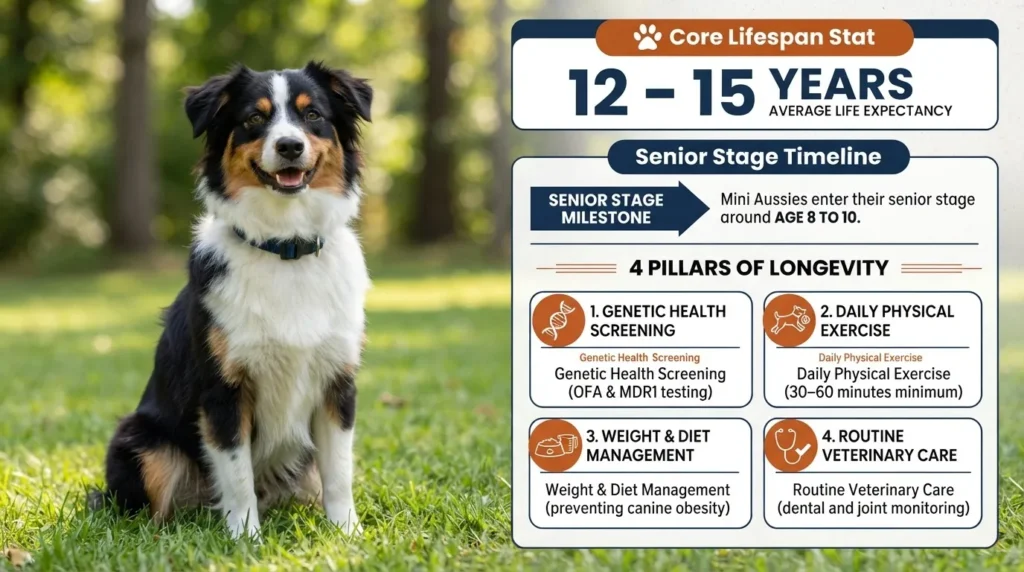
If you’re wondering how long Miniature Australian Shepherds live, you’re not alone. Miniature Australian Shepherds, often called Mini Aussies, are energetic, intelligent, and athletic dogs known for their loyalty and active nature.
The average Miniature Australian Shepherd lifespan is about 12 to 15 years, although some healthy Mini Aussies may live to 16 years or longer with good genetics, proper nutrition, regular exercise, healthy weight management, preventive veterinary care, and attention to common health problems.
So, how long can a Miniature Australian Shepherd live? Most Mini Aussies can enjoy well over a decade of life, but individual life expectancy can vary. Genetics, inherited conditions, dental health, weight, diet, activity level, and quality of veterinary care can all influence how long a Mini Aussie remains healthy and active.
Miniature Australian Shepherd Lifespan at a Glance
| Lifespan Factor | What to Know |
|---|---|
| Average Lifespan | 12–15 years |
| Possible Longevity | Some may reach 16+ years |
| Breed | Miniature Australian Shepherd (Mini Aussie) |
| Size | Small-to-medium |
| Senior Years | Health monitoring becomes increasingly important with age |
| Main Lifespan Factors | Genetics, nutrition, weight, exercise, dental care, and preventive veterinary care |
In this guide, you’ll learn the Miniature Australian Shepherd life expectancy, when Mini Aussies are considered seniors, common health conditions that may affect longevity, and practical ways to help your Mini Aussie live a longer, healthier life.
Miniature Australian Shepherd vs Standard vs Toy — Lifespan Comparison
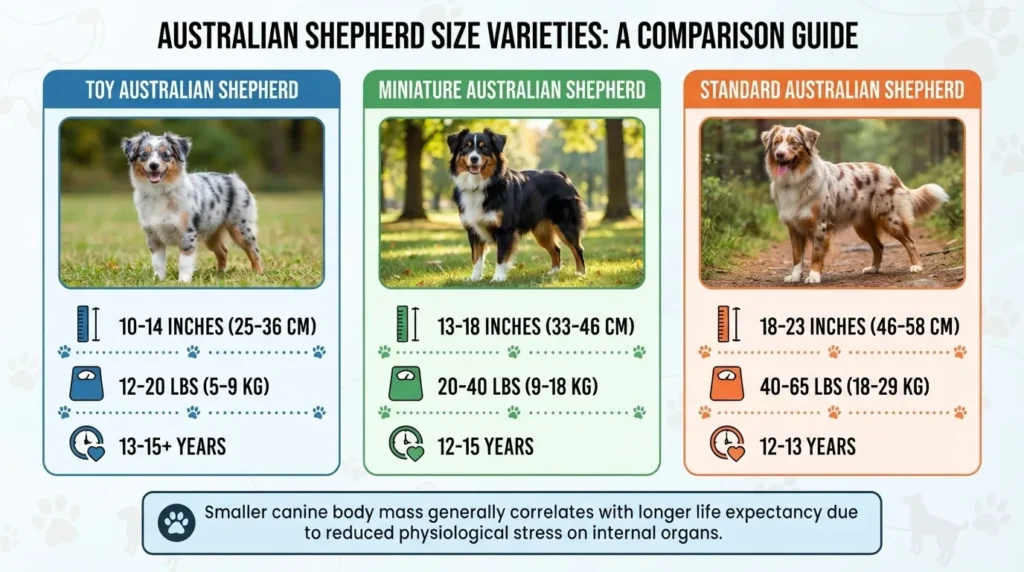
Size plays one of the biggest roles in how long an Australian Shepherd will live. While all three varieties share the same high-energy working heritage, smaller dogs generally experience slower cellular aging than larger ones, giving Mini and Toy Aussies a slight longevity advantage over the Standard Australian Shepherd.
According to veterinary longevity research, smaller breeds put less mechanical stress on their cardiovascular and skeletal systems over time. This structural difference directly impacts life expectancy, which is why a Toy or Miniature Australian Shepherd often outlives a Standard by one to three years when given proper care and genetic health testing.
| Breed Variety | Average Height | Average Weight | Expected Lifespan |
|---|---|---|---|
| Toy Australian Shepherd | 10 to 14 inches | 12 to 17 lbs | 13 to 15+ years |
| Miniature American / Australian Shepherd | 13 to 18 inches | 20 to 40 lbs | 12 to 15 years |
| Standard Australian Shepherd | 18 to 23 inches | 40 to 65 lbs | 11 to 13 years |
While Toy and Miniature Aussies tend to reach the higher end of the age spectrum, genetic health testing remains the true equalizer across all three sizes. A Standard Aussie from a responsible breeder who tests for hip dysplasia and hereditary eye conditions can easily outlive a Toy or Mini Aussie plagued by unmanaged genetic issues like MDR1 drug sensitivity or Progressive Retinal Atrophy (PRA).
Mini Aussie Life Stages Explained (Year-by-Year)
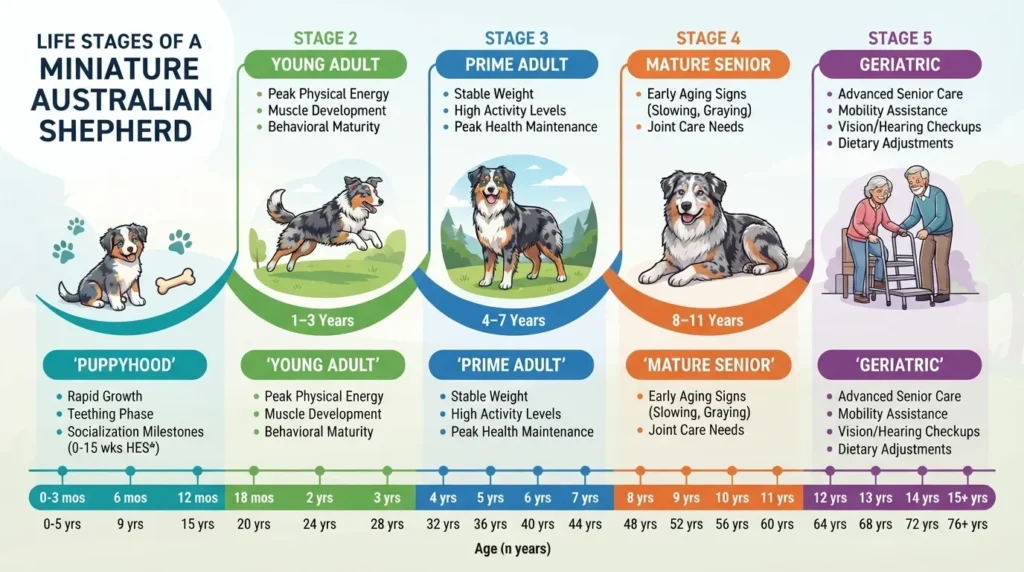
Miniature Australian Shepherds move through life stages at a different pace than larger breeds, holding onto their youth a bit longer and maintaining an active senior phase. Understanding where your dog falls on this timeline helps you match
Puppy Stage (0–1 year)
The puppy stage for a Mini Aussie is marked by rapid physical development and high cognitive growth. During these first twelve months, puppies go through intense teething, basic social development, and early behavioral shaping.
Physical Development: Mini Aussies typically gain most of their full adult height within the first 8 to 10 months, though their chest and muscle structure continue to fill out up to 12 months.
Nutritional Focus: High-protein, high-calorie puppy formulas are essential to support rapid bone and joint growth.
Exercise & Care: Stick to low-impact exercise. Because their growth plates haven’t fully fused, avoid repetitive high-impact jumps or long distance runs on hard surfaces.
Adult Stage (1–7/8 years)
Once a Mini Aussie crosses the one-year mark, they enter their prime adult years. This is the longest phase of their life, defined by high energy levels, strong working instincts, and peak physical condition.
Physical Development: Full physical maturity is achieved around 18 months. Adults generally maintain a steady weight between 20 to 40 pounds depending on sex and frame size.
Nutritional Focus: Transition to a balanced adult maintenance diet to support an active lifestyle without promoting weight gain.
Exercise & Care: Mini Aussies require at least 60 minutes of daily physical and mental stimulation. Agility training, puzzle toys, and active fetch sessions help channel their natural herding instincts.
Senior Stage (8+ years)
According to American Animal Hospital Association (AAHA) canine life stage guidelines, small-to-medium breeds are considered seniors around age 8. While your Mini Aussie may still act like a puppy at heart, their body begins slowing down internally.
Physical Changes: You may notice early signs of joint stiffness, slight cloudy appearance in the lenses of the eyes (lenticular sclerosis), and reduced stamina during long walks.
Nutritional Focus: Senior diets with lower calorie density help prevent obesity, while joint supplements containing glucosamine, chondroitin, and omega-3 fatty acids protect cartilage health.
Exercise & Care: Shift from intense, high-impact activities to lower-impact daily walks and moderate scent work. Twice-yearly veterinary checkups become crucial in this stage for early detection of age-related issues like kidney changes or arthritis.
their nutrition, exercise, and preventative health care to their exact developmental needs.
What Affects a Mini Australian Shepherd's Lifespan
While genetics lay the foundation for a Miniature Australian Shepherd’s life expectancy, daily environment, care habits, and medical choices directly dictate whether a dog reaches the upper end of that 12–15 year range.
Understanding these key lifestyle and biological factors allows you to make proactive decisions that support your dog’s long-term health and vitality.
Choosing a Reputable, Health-Tested Breeder
Long-term health begins long before a puppy ever comes home. Responsible breeders actively work to eliminate hereditary conditions that can severely shorten a Mini Aussie’s lifespan or drastically reduce their quality of life in senior years.
When evaluating a breeder, ensure they perform comprehensive health screening and publish results through recognized registry databases. Key health clearances to verify include:
OFA Hip and Elbow Certification: Evaluates joint structure to prevent painful, early-onset hip dysplasia and osteoarthritis through official Orthopedic Foundation for Animals (OFA) or PennHIP screenings.
CERF/CAER Eye Clearances: Annual examinations performed by a board-certified veterinary ophthalmologist to screen for progressive retinal atrophy (PRA), juvenile cataracts, and iris colobomas.
MDR1 Genetic Testing: Identifies the Multi-Drug Resistance 1 gene mutation, a common defect in herding breeds that causes life-threatening toxicity from standard medications, including certain heartworm preventatives and anesthetics.
Avoid breeders who offer “rare” double merle puppies (breeding merle to merle), as this genetic combination carries an exceptionally high risk of severe congenital deafness and microphthalmia (blindness/abnormal eyes).
Nutrition & Weight Management
Obesity is the single most preventable factor that shortens a dog’s life. According to veterinary studies on canine longevity, maintaining a lean body mass can extend a dog’s life expectancy by up to two years while delaying the onset of chronic disease.
Miniature Aussies are high-energy herding dogs built for work, but their dense coats can easily hide gradual weight gain. Feed a high-quality, complete, and balanced diet appropriate for their current life stage (puppy, adult, or senior), carefully measuring daily caloric intake rather than free-feeding.
Keep a close eye on their Body Condition Score (BCS). You should always be able to easily feel your dog’s ribs without pressing hard and see an obvious waistline tucked behind the ribcage when looking down from above.
Exercise & Mental Stimulation
A sedentary Mini Aussie is a stressed Mini Aussie. As a working breed descended from livestock herders, they possess an intense drive, physical stamina, and high intelligence that must be channeled daily.
Lack of proper exercise leads to chronic stress, anxiety, and destructive behaviors. Chronic stress raises cortisol levels, which impairs immune function and increases overall vulnerability to illness over time.
Plan for at least 60 to 90 minutes of daily physical and mental exercise:
Physical Activity: Brisk walks, running, hiking, or games of fetch that allow them to stretch their legs.
Mental Engagement: Puzzle toys, obedience work, scent games, or dog sports like agility, flyball, and herding trials.
Engaging their mind keeps senior dogs sharp, helps prevent canine cognitive dysfunction (dementia), and preserves their physical strength well into their old age.
Spay/Neuter Timing
Deciding when to spay or neuter your Miniature Australian Shepherd plays a significant role in their long-term orthopedic and endocrine health.
While surgical sterilization eliminates the risk of reproductive cancers (such as testicular or ovarian cancer) and prevents life-threatening uterine infections (pyometra) in females, pediatric or early spay/neuter—typically performed before physical maturity—can alter normal growth plate closure.
Veterinary guidelines increasingly recommend waiting until physical growth plates close—usually between 9 to 12 months of age for Mini Aussies—before altering. Allowing hormones to guide full bone and joint development reduces the lifetime risk of joint disorders like cranial cruciate ligament (CCL) tears and hip dysplasia.
Work directly with your veterinarian to assess your dog’s growth, lifestyle, and environment to determine the safest surgical timeline for their long-term development.
Veterinary & Dental Care Schedule
Routine Checkups by Life Stage
Your dog’s healthcare needs change dramatically as they move through life. Following an age-appropriate veterinary schedule ensures potential health issues are caught early, when they are most treatable.
Puppies (0–1 year): Every 3–4 weeks until roughly 16 weeks of age for core vaccination series, parasite screening, and growth monitoring, followed by a spay/neuter consultation around 6–12 months depending on breed size.
Adult Dogs (1–7 years): Once a year for a comprehensive physical exam, core vaccine boosters, heartworm testing, and baseline blood work.
Senior Dogs (7+ years): Every 6 months. According to American Animal Hospital Association (AAHA) guidelines, bi-annual exams are critical for senior pets because canine aging accelerates rapidly in their later years—a single year for a senior dog equals roughly 4 to 7 human years.
Bi-annual senior visits typically include complete blood counts, chemistry panels, urinalysis, and thyroid testing to catch silent conditions like kidney disease or arthritis early.
Dental Cleaning & Longevity
Periodontal disease affects over 80% of dogs by age three, making dental care one of the most overlooked aspects of canine longevity. Bacteria from infected gums enter the bloodstream, directly damaging vital organs including the heart, liver, and kidneys over time.
Regular professional dental cleanings under anesthesia remove subgingival plaque and calculus that home brushing cannot reach. Studies in veterinary epidemiology show that consistent preventive oral care and routine dental cleanings can extend a dog’s life expectancy by 1 to 2 years, drastically improving their quality of life in their senior years.
Common Health Issues That Can Shorten Lifespan
While Miniature Australian Shepherds are generally robust dogs, genetic health conditions can quietly cut their lifespan short if left unmanaged. Working with a responsible breeder who performs genetic screening and keeping up with routine veterinary checkups are your best defenses.
Understanding these specific breed risks helps you catch early warning signs before a manageable issue becomes a life-threatening problem.
Hip & Elbow Dysplasia
Hip and elbow dysplasia occur when the joints form improperly, causing painful friction, cartilage deterioration, and early-onset arthritis. While not directly fatal, severe joint disease limits mobility, leads to muscle wasting, and can drastically reduce a dog’s overall quality of life as they age.
According to the Orthopedic Foundation for Animals (OFA), screening parent dogs before breeding significantly reduces dysplasia rates in Mini Aussies. Keeping your dog at a lean weight and adding vet-approved joint supplements like omega-3 fatty acids early on helps preserve joint function and keeps them active well into their senior years.
Progressive Retinal Atrophy (PRA) & Cataracts
Miniature Australian Shepherds are genetically prone to Progressive Retinal Atrophy (PRA), an inherited degenerative eye disease that gradually destroys the retina, eventually leading to complete blindness. Cataracts are also common, causing a cloudy film over the lens that impairs vision and can cause painful intraocular inflammation.
Early signs: Bumping into furniture at night, reluctance to go into dark rooms, or a noticeable cloudy appearance in the pupil.
Management: While PRA is untreatable, genetic testing (prcd-PRA) helps reputable breeders eliminate it from bloodlines. Cataracts can often be surgically removed by a veterinary ophthalmologist to restore functional sight.
MDR1 Gene Mutation (Drug Sensitivity — Ivermectin)
Roughly half of all Australian Shepherds and Mini Aussies carry the MDR1 (Multi-Drug Resistance 1) gene mutation. This genetic defect impairs the blood-brain barrier, allowing common veterinary medications to enter the brain and cause toxicity, neurological damage, or fatal seizures.
Critical Safety Note: Dogs with the MDR1 mutation can suffer severe, life-threatening reactions to standard doses of parasite preventatives containing Ivermectin, as well as common anti-diarrheal medications like Loperamide (Imodium) and certain sedatives.
A simple cheek-swab DNA test can determine if your Mini Aussie carries the mutation. Always verify your dog’s MDR1 status with your veterinarian before administering any new medication or flea/tick treatment.
Double Merle Syndrome (Deafness & Blindness)
When two merle-patterned Mini Aussies are bred together, each puppy has a 25% chance of inheriting two copies of the merle gene. These puppies, known as “double merles,” are predominantly white and face severe genetic defects affecting their sight and hearing.
Double merles frequently suffer from microphthalmia (abnormally small or underdeveloped eyes), misshapen pupils, partial or total blindness, and congenital deafness due to a lack of pigment in the inner ear. Ethical breeders never pair two merle dogs together to prevent this entirely avoidable condition.
Other Breed-Related Concerns (Autoimmune Issues, Epilepsy)
Mini Aussies are also susceptible to idiopathic epilepsy, which causes unexplained seizures that typically manifest between one and five years of age. While frightening, canine epilepsy can usually be successfully controlled with long-term anti-seizure medications managed by your vet.
Autoimmune disorders, such as autoimmune thyroiditis and allergies, are another area of concern. Hypothyroidism can cause weight gain, lethargy, and skin infections, but it is easily managed with daily hormone replacement therapy, restoring your dog’s normal energy and lifespan potential.
Signs of Aging in Senior Mini Australian Shepherds
Watching a Mini Aussie slow down can be tough. These dogs build their whole lives around physical energy, quick reactions, and constant mental stimulation. When age starts catching up, the changes usually show up in four key areas:
Graying muzzle: You will notice silver or white fur creeping around their snout, chin, and eyebrow spots first. While cosmetic graying can start around age six, deep whitening usually signals their transition into true senior status (around 10 to 12 years).
Reduced energy: An aging Mini Aussie will still have their signature herding drive, but their battery drains much faster. You might notice them choosing a long nap over an extra game of fetch, or taking longer to bounce back after a day at the park.
Joint stiffness: Years of sharp turns, jumping, and sprinting take a toll on their hips and knees. According to the American Animal Hospital Association (AAHA) senior care guidelines, early signs of arthritis often look like hesitation before jumping into the car, difficulty standing up on slippery floors, or a slightly stiff gait in the morning.
Vision and hearing changes: Nuclear sclerosis—a normal bluish haze in the lens of the eye—frequently develops in older Mini Aussies and affects their depth perception. Cloudiness can also point to progressive retinal atrophy (PRA) or cataracts. You might also notice your dog ignoring verbal commands or getting easily startled when approached from behind due to age-related hearing loss.
Knowing what normal aging looks like helps you catch subtle health shifts early so you can adjust their exercise routine, diet, and home environment for maximum comfort.
Frequently Asked Questions
Yes, the Miniature Australian Shepherd is considered a robust and healthy working breed. Because they were bred from active, functional stock, they lack the extreme physical exaggerations (like flat faces or excessively short legs) that cause chronic health issues in other breeds. When sourced from a responsible breeder who performs full genetic screening, a Mini Aussie is built for a long, vibrant life.
The primary life-shortening conditions in this breed are Progressive Retinal Atrophy (PRA), severe Hip Dysplasia, and MDR1 drug sensitivity (which causes fatal reactions to common medications if unmanaged). Additionally, dogs born from two merle parents (double merles) face severe vision and hearing impairments that can impact their quality of life. Preventative genetic testing through OFA or Paw Print Genetics helps mitigate many of these risks early.
There is no statistically significant difference in life expectancy between male and female Mini Aussies. Overall health, genetic screening, spay/neuter status, and diet play a far greater role in determining longevity than gender. However, spayed females and neutered males generally live slightly longer because sterilization eliminates the risk of testicular, ovarian, and uterine cancers.
The old "multiply by 7" rule is inaccurate because dogs mature rapidly during their first two years. According to American Animal Hospital Association (AAHA) guidelines, a Mini Aussie’s first year equals about 15 human years, their second year adds about 9 human years (making them 24), and each year after adds roughly 4 to 5 human years. You can quickly check your dog's exact age equivalent using our free [dog age calculator].
Yes, Miniature Australian Shepherds typically outlive Standard Aussies by 1 to 3 years. Smaller dogs experience less physiological stress on their organs and cellular structure as they age. While a Standard Aussie averages 12 to 15 years, a Mini Aussie regularly hits the upper end of that 12 to 15-year scale and often pushes past it.
While verified records specifically separating Mini Aussies from Standard Australian Shepherds are rare, documented cases exist of Mini Aussies living 17 to 18 years. Some individual owners report their dogs reaching 19 with exceptional genetics, proactive veterinary care, and ideal weight management.
🐾 Other Age Guides

Gulfam Haider Mehdi
Founder & Developer
I built Dogagescalculator.com to give dog owners honest, science-backed answers instead of the outdated "×7" myth. Every figure here is checked against AKC, AVMA, and published veterinary research.
More about the author & this site →📌 Featured Guides
dog breed chinese shar-pei
→
Home
→
shih tzu age in human years
→
How much food should I feed my German Shepherd
→
Nova Scotia Duck Tolling Retriever vs Golden Retriever
→
3/4 great pyrenees 1/4 anatolian shepherd
→
chihuahua corgi mix dog
→
difference between a springer spaniel and a cocker spaniel
→
golden retriever dog years
→
What Is the Lifespan of a Miniature Pinscher?
→
Comments