
How Old Should a Puppy Be to Take Home

Quick Answer: The absolute minimum age to bring a puppy home is 8 weeks old. However, the ideal sweet spot for most breeds is between 8 and 12 weeks. Taking a puppy home before 8 weeks deprives them of vital behavioral development from their mother and littermates, while waiting past 12 weeks requires extra intentional effort to socialize them in a new environment.Dog Age Calculator
Why the Right Age Matters and Risks of Taking a Puppy Too Early
Those extra few weeks with the mother and littermates aren’t just extra bonding time—they are a crucial developmental boot camp. Bringing a puppy home too early disrupts foundational biological and social milestones that set the stage for their entire life.
Weaning & Nutrition Development
Around four weeks of age, a mother dog naturally begins weaning her pups, transitioning them from milk to solid food. But weaning isn’t just about switching calories.
It’s a gradual physical process that allows a puppy’s digestive tract and immune system to mature. Pups separated before this transition finishes often suffer from severe GI distress, nutritional deficits, and sudden blood sugar drops.
Socialization with Mother & Littermates
Weeks 6 through 8 are when puppies learn how to “speak dog.” Through constant play wrestling, chasing, and napping together, littermates teach each other vital social cues that human owners simply can’t replicate.
Their mother also steps in with gentle corrections when play gets too rowdy. According to canine behavior specialists at the puppies removed before learning these canine boundary rules frequently struggle to communicate safely with other dogs as adults.
Bite Inhibition & Behavior Learning
Ever wonder how a puppy learns that their needle-sharp teeth actually hurt? They learn it from their siblings.
When a pup bites a littermate too hard during play, the injured puppy lets out a high-pitched yelp and stops playing. This immediate feedback teaches the biter bite inhibition—the ability to control the pressure of their jaw. Without this phase, puppies often turn into relentless, hard-biting land sharks that are much harder to train at home.
Risks: Behavioral Issues, Weak Immunity, Anxiety
When a puppy is pulled from its litter before the 8-week mark, the consequences usually follow them well into adulthood.
Extreme Separation Anxiety: Early separation breaks emotional bonds abruptly, leading to severe panic, destructive chewing, and vocalization when left alone.
Fear-Based Aggression: Lacking early canine socialization, these pups often react to unfamiliar people, dogs, or noises with fear, which can manifest as reactivity or biting.
Compromised Immunity: Maternally derived antibodies begin fading around 6 to 8 weeks. Removing a pup early creates immense stress, spiking cortisol levels and leaving their immune system vulnerable to dangerous pathogens like parvovirus.
Difficulty Training: Puppies taken too early often lack frustration tolerance and self-control, making basic house-training and crate-training significantly harder for new owners.
Ideal Age to Bring a Puppy Home 8–12 Weeks Explained
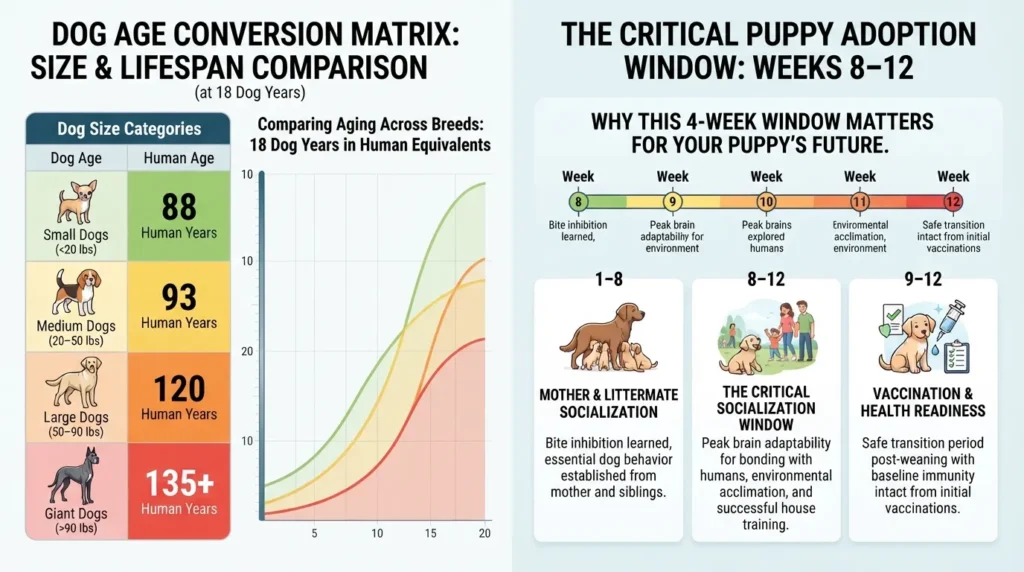
The window between 8 and 12 weeks is widely considered the golden period for adoption. During these critical four weeks, a puppy transitions from relying entirely on their birth pack to becoming capable of bonding deeply with a human family.
Why 8 Weeks Is the Recommended Minimum
By 8 weeks, a puppy’s digestive system has fully adapted to solid food, and their maternal antibody protection is tapering off as their own immune system kicks into gear. They have also soaked up those essential early lessons in bite inhibition and dog-to-dog body language from their mother and littermates.
Equally important, around week eight, a puppy’s brain reaches a level of neurological maturity where they can begin processing basic house-training, crate associations, and gentle household rules without becoming overwhelmed.
Why Many Vets Suggest Waiting Until 12 Weeks
While 8 weeks is the legal minimum in most states, many veterinary behaviorists—including experts at the —and reputable breeders suggest holding out until 10 to 12 weeks, especially for certain toy breeds.
Between 8 and 11 weeks, puppies enter a sharp developmental stage known as the “fear impact period.” A traumatic event during this window, like a scary car ride or a chaotic move, can leave a lasting psychological imprint. Staying in a familiar environment until 12 weeks gives them a bit more emotional resilience to handle major life transitions.
Small and toy breeds (like Chihuahuas or Maltese) also benefit from those extra weeks because their tiny bodies struggle with blood sugar regulation, making them far less vulnerable to dangerous hypoglycemic crashes when kept near their mother a little longer.
Special/Edge Cases (Orphan or Bottle-Fed Puppies)
In ideal circumstances, no puppy leaves early. But real life happens—mothers can suffer medical emergencies, reject litters, or pass away, leaving puppies orphaned or bottle-fed.
When a puppy loses its mother prematurely, keeping the littermates together until at least 8 weeks is paramount so they can still learn basic social boundaries from one another. If a puppy is completely alone, human caretakers need to step in with intentional body contact, precise warmth regulation, and early contact with a gentle, fully vaccinated adult dog who can act as a surrogate teacher once the vet clears them.
Puppy Age Chart by Breed Size Comparison Table
Not all puppies mature at the exact same pace. While 8 weeks is a solid baseline for most, a tiny 1.5-pound Yorkie and an 18-pound Mastiff pup have vastly different physical and metabolic needs during early development.
| Breed Size | Recommended Age | Reason |
|---|---|---|
|
Toy / Small Breeds (e.g., Chihuahua, Yorkie, Maltese) | 10–12 Weeks | High risk of hypoglycemia (low blood sugar), tiny bones, and fragile bodies benefit from extra physical growth and nursing time. |
|
Medium Breeds (e.g., Beagle, Australian Shepherd, English Springer Spaniel) | 8–10 Weeks | Excellent balance of social development, immune maturity, and eagerness to bond with a new family. |
|
Large / Giant Breeds (e.g., German Shepherd, Great Dane, Mastiff) | 8–9 Weeks | Fast physical growth rate; early handling and house-training are crucial before their sheer size makes management more challenging. |
What Is the 10-10-10 Rule for Puppies?
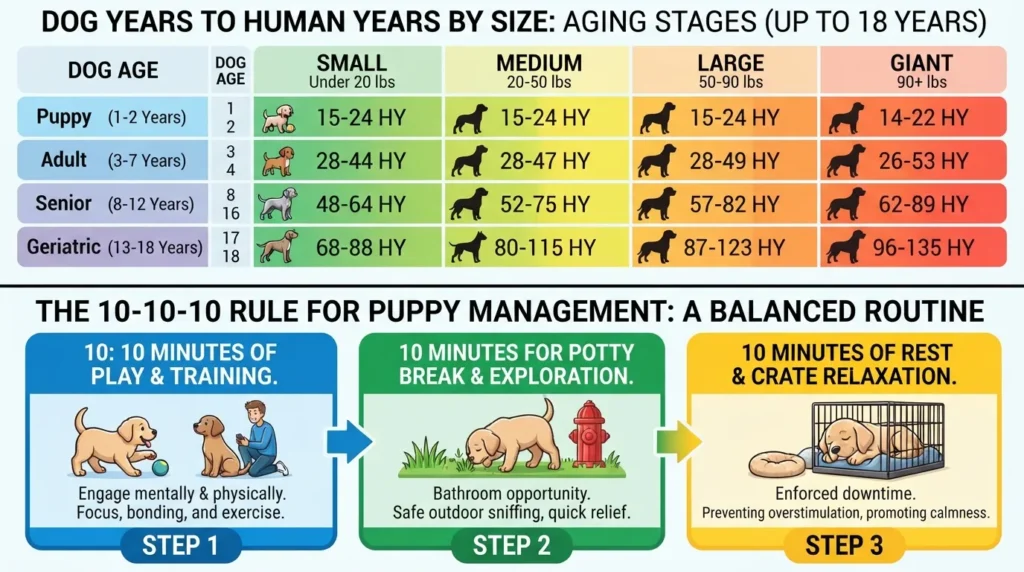
If you’ve been researching puppy training, you’ve likely stumbled across the “10-10-10 Rule.” It’s a simple, easy-to-remember framework used by trainers and breeders to help new owners manage a puppy’s strict physical limits and high socialization needs during those first few months home.
Here is how the rule breaks down:
10 Minutes of Exercise Per Month of Age: A great guideline to protect developing joints and growth plates. A 2-month-old (8-week-old) puppy only needs about 10 minutes of structured walking or active play at a time, up to twice a day. Over-exercising a young pup can cause long-term joint damage.
10 Exposure Experiences Before 16 Weeks: Aim to introduce your puppy to at least 10 brand-new sights, sounds, textures, or safe environments every week before their critical socialization window closes around 16 weeks. Think bubble wrap popping, umbrellas opening, tile floors, or lawnmower sounds from a distance.
10-Second Handling Rules: Practice touching your puppy’s paws, ears, tail, and mouth for 10 seconds at a time while offering gentle praise and high-value treats. Building a positive association with handling early on makes future vet visits, nail trims, and grooming completely stress-free.
Is 12 Weeks Too Old to Bring a Puppy Home?

Not at all. In fact, many experienced dog owners and trainers actively prefer waiting until a puppy reaches 12 weeks.
There’s a common myth floating around pet forums that if you don’t bring a puppy home at exactly 8 weeks, you’ve missed the boat on bonding or training. In reality, a 12-week-old puppy is still very much a baby—just one with a few major upgrades that make the transition into your home significantly smoother.
Here’s why bringing home a slightly older puppy can actually work in your favor:
Longer Bladder Control: At 8 weeks, a puppy’s bladder capacity is minuscule. By 12 weeks, their sphincter muscles are stronger, meaning they can hold it longer, sleep through more of the night, and grasp potty training much faster.
Fewer “Land Shark” Bites: Those extra four weeks with their mother and siblings mean they’ve already received dozens of gentle corrections for biting too hard. You’ll deal with far less painful nipping during play.
More Resilient & Confident: Having navigated the early “fear impact period” alongside their birth pack, 12-week-old puppies tend to be less panicked by strange noises, new objects, and unfamiliar environments.
Head Start on Vaccinations: By 12 weeks, the puppy will have already received their second round of core core boosters, giving them a much stronger immune safety net as you start exploring the outside world together.
As long as the breeder or shelter has provided basic human handling and gentle exposure during those first three months, a 12-week-old puppy will bond with you just as deeply as an 8-week-old—and with a fraction of the sleep deprivation.
Are You and Your Home Ready for a Puppy

Bringing home a new puppy is an incredible experience, but it’s also a sudden, high-energy shift in your daily routine. Before you pick up your pup—whether they are 8 weeks or 12 weeks old—taking an honest look at your home, schedule, and resources ensures everyone starts off on the right paw.
Signs of Owner Readiness
You know you are truly ready for a puppy when your decision is backed by preparation rather than impulse. A ready owner understands that the first few weeks aren’t just about cuddles and cute photos; they involve broken sleep, potty accidents on the rug, and consistent, patient training.
Readiness means having your home environment fully prepped before arrival. That includes securing cords, removing toxic houseplants, setting up a dedicated crate or playpen zone, and having a vet already picked out for that initial checkup.
Time, Budget & Lifestyle Check
Raising a confident, well-adjusted dog requires significant daily energy and a financial cushion. Before taking the leap, make sure your lifestyle checks these boxes:
Time Commitment: Young puppies need freedom breaks every 2 to 3 hours, plus multiple short training sessions throughout the day. If everyone in your household works away from home for 8–10 hours a day, you’ll need a concrete plan—like a dog sitter or midday drop-in service—to support them.
Upfront & Ongoing Costs: Beyond the initial adoption or breeder fee, the first year is the most expensive. You will need to budget for core vaccine series, microchipping, spay/neuter surgery, high-quality puppy food, crate supplies, leash gear, and pet insurance or an emergency vet fund.
Activity & Routine Shift: Puppies thrive on predictable schedules for eating, pottying, and sleeping. Consider whether your current weekend plans, travel schedule, or daily downtime can comfortably flex to accommodate a needy baby animal for the next 6 to 12 months.
Bringing Home an Older or Rescue Puppy

Adopting an older puppy—typically anywhere from 4 months up to a year old—is a wonderfully rewarding path, but it comes with a slightly different set of expectations than bringing home an 8-week-old baby.
How the Process Differs from a Young Puppy
When you bring home an 8-week-old, you’re essentially working with a blank slate. With an older rescue puppy, that slate already has a few chapters written.
Depending on their history, an older puppy may already have learned behaviors—both good and bad—from a previous home, a foster environment, or a shelter. The focus shifts from basic neonatal care to guiding their transition and undoing any unwanted habits.
Here is what changes when you welcome an older puppy into your home:
Navigating the “3-3-3 Rule”: Rescue dogs need time to decompress. Expect them to need about 3 days to get over initial overwhelm, 3 weeks to learn your daily routine, and 3 months to feel fully secure and let their true personality shine.
Potty Training Nuances: An older puppy has better physical bladder control than an 8-week-old, but they might not automatically understand that your house is off-limits for pottying. Re-establishing clear, positive potty habits is usually quick, but requires initial consistency.
Uncovering Hidden Fears: Older puppies may bring subtle emotional baggage or fear triggers from past experiences, like a fear of men, loud noises, or being left alone. Patience and gentle, positive reinforcement will be key as you learn their unique boundaries.
Faster Progress with Training: Because an older puppy’s brain is more developed, they can hold their focus longer during training sessions. You can jump straight into foundational obedience, leash manners, and structured household rules without waiting for their attention span to catch up.
Preparing Your Home Before Puppy Arrives
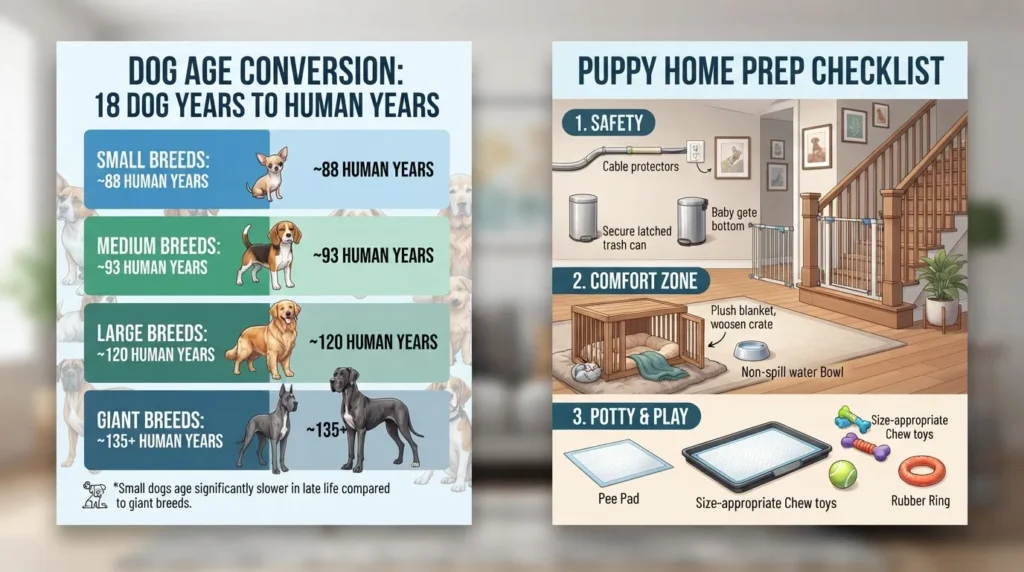
Before you bring your new companion through the front door, you’ll want to get your living space completely secure. Taking time to puppy-proof your home prevents household accidents, protects your belongings, and keeps your stress levels low during those chaotic first few days.
Puppy-Proofing Checklist
Tuck Away Loose Cables: Fasten phone chargers, lamp cords, and TV wiring securely out of reach or run them through cord protectors to stop chewing.
Relocate Toxic Plants & Chemicals: Move household plants like sago palms, lilies, and pothos to high surfaces. Keep cleaning supplies, meds, and trash cans behind locked or latched cabinets.
Clear Low Surfaces: Gather shoes, kids’ toys, socks, and rug tassels off the floor. Anything small enough to fit in a puppy’s mouth is a potential intestinal blockage hazard.
Set Up Safe Boundaries: Use baby gates or a sturdy playpen to block off staircases, carpeted rooms, and secondary exit doors while house-training.
Essential Supplies Checklist
Appropriately Sized Crate: Choose a crate with an adjustable divider panel so it can expand as your puppy grows without leaving enough room for potty accidents.
Enzymatic Cleaning Spray: Standard household cleaners won’t destroy urine scents completely. An enzymatic cleaner breaks down organic compounds so your pup isn’t tempted to re-mark the same spot.
Age-Appropriate Food & Dishes: Stick with the exact food brand your breeder or shelter was using for the first week, and opt for non-skid stainless steel water and food bowls.
Safe Chew Toys & Gear: Stock up on durable rubber chew toys (like classic Kongs), a flat nylon collar or Y-harness, a standard 6-foot leash (no retractables), and soft training treats.
At What Age Should You Bring Your Puppy Home?
Is It Okay to Leave a New Puppy Alone? By Age
Leaving a brand-new puppy completely alone is one of the biggest anxiety triggers for both the pup and the owner. Puppies are hardwired pack animals, and sudden isolation can feel like a direct threat to their survival.
How long you can safely leave a puppy alone depends entirely on their physical bladder control and emotional maturity. As a general rule of thumb, a puppy can hold their bladder for about one hour for every month of age, plus one hour—though when they are awake and active, that window shrinks fast.
Leaving a 9-Week-Old Puppy Alone
At 9 weeks old, a puppy should not be left alone for more than 1 to 2 hours at a time during the day.
Their bladder capacity is tiny, and their emotional distress tolerance is virtually zero. If you need to step out, lock them safely inside their crate or a secure playpen after they’ve had a solid play session and a potty break. Leaving a 9-week-old unattended for long stretches almost guarantees potty accidents and can trigger early separation panic.
Leaving a 12-Week-Old Puppy for 3 Hours
By 12 weeks, most puppies can handle being left alone for 3 to 4 hours, provided their physical and mental needs are met beforehand.
Their sphincter control is stronger, and they are generally more comfortable with their home environment. To make a 3-hour stretch successful, tire them out with 10–15 minutes of play, give them a fresh potty break, and leave them with a high-value distracter like a stuffed, frozen Kong toy inside their crate or playpen.
What Is the Hardest Month for a Puppy?
Ask ten experienced dog owners to name the hardest age, and nearly all of them will point to the same timeframe: month 4 to month 5 (around 16 to 22 weeks).
While those initial 8-to-12-week newborn days are exhausting due to sleep deprivation, months 4 and 5 bring a perfect storm of physical and behavioral changes:
The Teething Nightmare: Around 4 months, adult teeth start pushing out baby teeth. Their gums ache constantly, driving an intense urge to chew on anything—including your baseboards, shoes, and hands.
The “Adolescent Rebellion” Phase: As testosterone and estrogen levels rise, puppies experience a surge in independence. Commands they learned effortlessly at 10 weeks are suddenly ignored as they test boundaries.
Peak Energy Meets Incomplete Immunity: At 4 months, they have boundless stamina, but if their vaccine series isn’t fully completed yet, managing their daily energy without full access to public parks becomes a mental exercise in patience.
Real Owner Experiences: What New Puppy Parents Wish They Knew
While expert advice covers the logistics, real puppy owners on community forums like Reddit (r/puppy101) share the raw, unvarnished realities of those first few weeks. Here is what new puppy parents wish someone had warned them about before bringing their pup home:
“Puppy Blues” Are Surprisingly Common: Feeling overwhelmed, anxious, or even regretful during the first two weeks is completely normal. Hundreds of owners report experiencing sudden spikes in stress as their daily routine completely dissolves overnight.
Enforced Naps Save Your Sanity: Young puppies don’t know how to turn themselves off when they are overtired. Instead of falling asleep, they turn into hyperactive, nipping “land sharks.” Experienced owners swear by the 1-hour awake, 2-hours asleep crate schedule.
They Don’t Love You on Day One: Deep emotional bonding takes time. Real owners stress that for the first week or two, your puppy views you as a provider of security and food—the deep, reciprocal affection develops gradually as trust builds over months.
Your House Will Never Be 100% Ready: No matter how much you puppy-proof, they will find the one loose rug thread, hidden cable, or stray sock you missed. Flexibility and a humor-first mindset matter far more than perfection.
Frequently Asked Questions
Can I take a puppy home at 6 weeks?
No, 6 weeks is far too early to bring a puppy home. At 6 weeks, puppies are still learning crucial behavioral lessons from their mother and littermates, such as bite inhibition and basic dog communication. Separating them this early significantly increases the risk of severe bite-inhibition issues, lifelong anxiety, and fear-based aggression toward other dogs.
Is 7 weeks old too early to take a puppy home?
Yes, 7 weeks is still too young. While a 7-week-old puppy may be physically weaned onto solid food, they are right in the middle of a vital canine socialization window with their littermates. In fact, taking a puppy home before 8 weeks is illegal in most U.S. states and violates reputable breeding standards.
What is the legal age to buy or sell a puppy?
In the vast majority of U.S. states and international jurisdictions, it is illegal to buy, sell, or adopt out a puppy before they reach 8 weeks of age (56 days). Breeders or sellers attempting to release puppies before 8 weeks are often running unethical operations or backyard breeding setups.
How long does it take for a puppy to adjust to a new home?
Most puppies take about 1 to 3 weeks to adjust to their new family, environment, and daily routine. However, fully settling in and building deep confidence can take up to 3 months—a timeframe commonly known as the 3-3-3 rule for dog adjustment.
Will an 8-week-old puppy miss its mother?
Yes, it is completely natural for an 8-week-old puppy to miss their mother and littermates during the first few days and nights. They are adjusting to sudden isolation from their pack. Using comfort tools like a heartbeat plush toy, keeping their crate near your bed, and maintaining a calm routine will help them feel safe quickly.
Conclusion Actionable Recap Checklist
Bringing home a puppy is a life-changing milestone, but getting the timing right sets you up for years of smooth sailing. Here is a quick recap of everything you need to remember:
Stick to the 8-to-12 Week Window: Never bring a puppy home before 8 weeks. It deprives them of essential social skills, bite inhibition, and immune development.
Adjust for Breed Size: Small and toy breeds benefit from staying with their litter until 10–12 weeks to prevent hypoglycemia and injury, while larger breeds do well transitioning around 8–9 weeks.
Prep Before Day One: Stock up on enzymatic cleaners, an adjustable crate, and safe chew toys, and complete your basic puppy-proofing before your pup steps through the front door.
Practice the 10-10-10 Rule: Protect developing joints with 10 minutes of exercise per month of age, introduce 10 safe exposure experiences a week, and practice 10-second handling handling routines.
Set Up Immediate Medical Care: Schedule an initial vet visit within 24–48 hours of bringing your puppy home to establish baseline health and start their vaccination series.
Embrace Enforced Naps: When your puppy gets cranky or nippy, remember the 1-hour awake, 2-hours asleep rule. Overstimulation is usually the culprit behind chaotic puppy behavior.
🐾 Other Age Guides

I built Dogagescalculator.com to give dog owners honest, science-backed answers instead of the outdated "×7" myth. Every figure here is checked against AKC, AVMA, and published veterinary research.
More about the author & this site →
Comments