Greater Swiss Mountain Dog and Bernese Mountain Dog Mix: Complete Guide
When you cross a Greater Swiss Mountain Dog with a Bernese Mountain Dog, the result is a large working-dog mix often called a Swiss Bernese Mountain Dog mix, Greater Swiss Bernese mix, or GSMD Bernese mix. Both parent breeds come from the Swiss Mountain Dog family and were developed as versatile farm and working dogs, so this cross can inherit a combination of strength, loyalty, athletic ability, and a calm family-oriented nature.
A Greater Swiss Mountain Dog vs. Bernese Mountain Dog comparison also helps explain why this mix can vary so much. Greater Swiss Mountain Dogs typically have a shorter, dense coat and a sturdy, athletic build, while Bernese Mountain Dogs are known for their long, silky coat and generally gentle, affectionate temperament. A mixed-breed puppy can inherit traits from either parent, so adult size, coat length, energy level, and personality are not guaranteed.
Most Swiss Bernese mixes grow into large, powerful dogs and need enough space, structured exercise, training, and socialization to thrive. Their size makes early leash training and good manners especially important. They may be affectionate family companions, but their working-dog heritage means they still need regular physical activity and mental stimulation.
In this guide, you’ll learn how the Greater Swiss Mountain Dog and Bernese Mountain Dog compare, how large their mix can become, what to expect from its growth and appearance, and how temperament, grooming, exercise, lifespan, and health can vary. If you’re considering a Greater Swiss Bernese mix, understanding both parent breeds is the best way to know what this impressive cross may be like as an adult.
What Is a Greater Swiss Mountain Dog and Bernese Mountain Dog Mix?
A Greater Swiss Mountain Dog and Bernese Mountain Dog mix—often referred to as a Swiss Bernese mix or Swissy Berner—is a designer hybrid created by crossing two of Switzerland’s four native Sennenhund breeds.
Because both parent breeds share striking tri-color markings and similar working backgrounds, this mix produces a massive, gentle, and muscular dog. The goal of crossing them is often to combine the calm, affectionate family nature of the Bernese with the sturdier, short-coated athletic build and slightly longer life expectancy of the Greater Swiss.
History of the Parent Breeds
To understand this GSMD Bernese mix, you have to look at the Alpine farms where both breeds earned their keep. Both descend from ancient Roman mastiffs crossed with local Swiss working dogs over two thousand years ago.
The Bernese Mountain Dog originated in the agricultural region of Bern, serving as an all-around farm dog, draft animal, and flock guardian. Their thick, long coat protected them against harsh Alpine winters while hauling heavy milk carts to local cheese factories.
The Greater Swiss Mountain Dog (GSMD) developed in the lower valleys as the largest and heaviest of the Swiss breeds. Known as the “poor man’s horse,” the Swissy was built for heavy drafting, hauling immense loads, and herding livestock. By the late 19th century, industrialization almost wiped them out, but dedicated breeders revived the stock in the early 1900s.
Is This a Recognized Breed or a Designer Mix?
The Bernese Swiss mountain dog mix is a designer hybrid, not a purebred dog. It is not recognized by major kennel clubs like the American Kennel Club (AKC) or the United Kennel Club (UKC), which only register established purebred lines.
Because it is a first-generation (F1) cross, individual puppies in a litter can vary significantly. One pup might inherit the long, heavy-shedding coat of the Bernese, while a littermate gets the short, dense double coat of the Greater Swiss.
Quick Facts Snapshot
Weight: 85 to 135 pounds (Males typically range from 105–135 lbs; females range from 85–110 lbs)
Height: 23 to 28 inches at the shoulder
Lifespan: 8 to 11 years (Often slightly longer than the purebred Bernese average)
Breed Group: Hybrid / Designer Working Dog
Size Category: Giant Breed
Greater Swiss Mountain Dog vs Bernese Mountain Dog — Parent Breed Comparison
Understanding the Greater Swiss Mountain Dog and Bernese Mountain Dog mix starts with looking closely at the two parents. While both belong to the Sennenhund family from the Swiss Alps, they bring distinct physical traits, coat maintenance needs, and personality nuances to this hybrid.
Size & Weight Differences
Both parents are heavy-boned working dogs, but the Greater Swiss Mountain Dog is visibly larger, muscular, and more imposing. Male Swissies routinely top 115 to 140 pounds, standing 28.5 to 30 inches tall at the shoulder, while females weigh between 85 and 110 pounds. Bernese Mountain Dogs are slightly smaller and more compact, with males averaging 80 to 115 pounds and females typically running 70 to 95 pounds.
A GSMD Bernese mix lands right in the middle of this spectrum. Expect a full-grown mix to weigh anywhere from 85 to 130 pounds, with males frequently leaning toward the heavier end if they inherit the raw frame of the Swissie parent. Because both parents are slow-maturing giant breeds, your mix won’t hit their full frame and chest depth until around two to three years of age.
Coat Length & Color Differences
Both breeds share the classic, striking tricolor pattern: a deep black body with rich rust markings on the cheeks, legs, and chest, accented by clear white markings on the muzzle, chest, and tail tip. However, the structure of their coats could not be more different.
The Greater Swiss sports a short, dense double coat built for endurance that dries quickly and requires minimal brushing beyond shedding season. The Bernese, on the other hand, boasts a thick, wavy, long double coat that traps dirt, matts easily around the ears and hocks, and drops heavy fur year-round. A Swiss Bernese mix usually inherits a “medium” plush coat — longer and thicker than a pure Swissie, but smoother and far easier to brush than a full Bernese.
Temperament Differences
While both breeds are deeply loyal family guardians, their daily demeanor differs in subtle ways that impact home life.
Greater Swiss Mountain Dog: High energy, confident, and vocal. Swissies were bred to haul heavy carts and guard farm perimeters, meaning they carry a stronger watchdog instinct, a louder alert bark, and a headstrong streak that demands confident handler leadership.
Bernese Mountain Dog: Gentle, mellow, and sensitive. Bernese are famous “velcro” dogs that thrive on constant physical closeness and soft-spoken encouragement, generally showing a quieter, more forgiving nature with strangers and small kids.
A Bernese Swiss mountain dog mix typically balances these two personalities nicely. You will likely get a dog that is slightly more easygoing and affectionate than a pure Swissie, yet more athletic and vigilant than a typical Bernese.
| Feature | Greater Swiss Mountain Dog | Bernese Mountain Dog | GSMD & Bernese Mix |
|---|---|---|---|
| Average Weight | 85 – 140 lbs | 70 – 115 lbs | 85 – 130 lbs |
| Height at Shoulder | 23.5 – 30 inches | 23 – 27.5 inches | 24 – 29 inches |
| Coat Style | Short, dense, stiff double coat | Long, thick, wavy double coat | Medium-length plush double coat |
| Grooming Need | Low (weekly brushing) | High (3–4 times weekly) | Moderate (2 times weekly) |
| Energy Level | Moderate to High | Moderate to Calm | Moderate |
| Shedding Level | Heavy seasonal blowouts | Continuous heavy shedding | Heavy year-round shedder |
| Lifespan | 8 – 11 years | 6 – 8 years | 7 – 10 years |
Greater Swiss Mountain Dog
| Average Weight | 85 – 140 lbs |
|---|---|
| Height at Shoulder | 23.5 – 30 inches |
| Coat Style | Short, dense, stiff double coat |
| Grooming Need | Low (weekly brushing) |
| Energy Level | Moderate to High |
| Shedding Level | Heavy seasonal blowouts |
| Lifespan | 8 – 11 years |
Bernese Mountain Dog
| Average Weight | 70 – 115 lbs |
|---|---|
| Height at Shoulder | 23 – 27.5 inches |
| Coat Style | Long, thick, wavy double coat |
| Grooming Need | High (3–4 times weekly) |
| Energy Level | Moderate to Calm |
| Shedding Level | Continuous heavy shedding |
| Lifespan | 6 – 8 years |
GSMD & Bernese Mix
| Average Weight | 85 – 130 lbs |
|---|---|
| Height at Shoulder | 24 – 29 inches |
| Coat Style | Medium-length plush double coat |
| Grooming Need | Moderate (2 times weekly) |
| Energy Level | Moderate |
| Shedding Level | Heavy year-round shedder |
| Lifespan | 7 – 10 years |
Appearance — What Does the Mix Look Like?
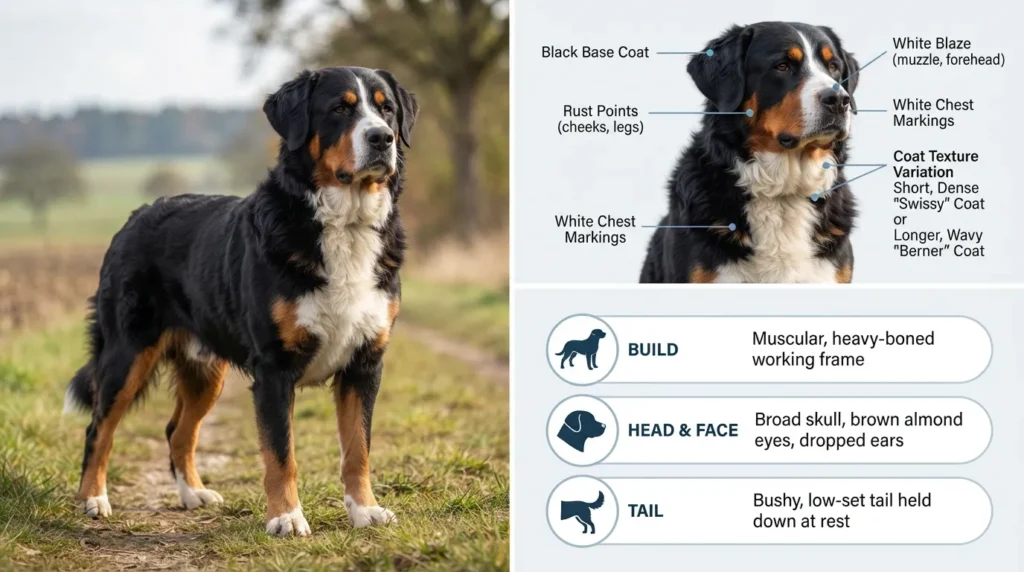
Crossing a Greater Swiss Mountain Dog with a Bernese Mountain Dog brings together two Swiss Sennenhund breeds that share identical rust-and-white tricolor markings, but differ significantly in coat length and frame density. The resulting Swiss Bernese mix inherits a blend of the Swissy’s heavy-boned, athletic structure and the Berner’s stocky build.
Coat Type
Coat texture in a Greater Swiss Mountain Dog and Bernese Mountain Dog mix depends almost entirely on which parent’s genetics take the lead. Swissies possess a dense, double coat with a short, thick outer layer, while Bernese Mountain Dogs are famous for their long, wavy fur.
Most GSMD Bernese mix puppies land somewhere in the middle, developing a medium-length double coat that is noticeably thicker and fluffier than a purebred Swissy’s, but shorter and less high-maintenance than a Berner’s full coat. Expect a plush undercoat that blows twice a year during seasonal transitions, requiring dedicated deshedding sessions to manage the loose fur.
Coat Colors & Markings
Color is the easiest part to predict with this cross because both parent breeds share the exact same classic Swiss tricolor pattern. Your mix will sport a jet-black base coat accented by rich rust-to-mahogany markings and crisp white flashes.
Black Base: Covers the back, sides, head, and outer legs.
Rust/Tan Markings: Located in distinct points over each eye, on the cheeks, across the chest, and on all four legs where the black transitions to white.
White Flash: A symmetrical blaze running up the muzzle between the eyes, a full chest shield (often called a “Swiss cross”), white paws, and a white tip on the tail.
Male vs Female Size Differences
This hybrid falls squarely into the giant breed category, but physical dimorphism is noticeable once full maturity is reached around two to three years of age.
Males: Stand 25 to 28 inches tall at the shoulder and typically weigh between 115 and 140 pounds. They carry a broader skull, thicker neck, and heavier muscle mass throughout the chest and shoulders.
Females: Stand 23 to 26 inches tall and weigh between 85 and 110 pounds. They display a slightly lighter build, though they are still far sturdier than average large breeds.
Growth Chart (6 / 12 / 18 Months)
Because giant breeds develop slowly, their skeletal structure takes much longer to close its growth plates compared to standard-sized dogs.
| Age | Male Weight Range | Female Weight Range | Physical Milestone |
|---|---|---|---|
| 6 Months | 65 – 80 lbs | 50 – 65 lbs | High growth rate; leggy appearance as long bones lengthen fast. |
| 12 Months | 95 – 115 lbs | 75 – 90 lbs | Reaches near-full height; skeletal frame begins to set. |
| 18 Months | 110 – 130 lbs | 85 – 105 lbs | Height locks in; chest begins deep physical filling and muscling out. |
Age Stage: 6 Months
| Male Weight | 65 – 80 lbs |
|---|---|
| Female Weight | 50 – 65 lbs |
| Physical Milestone | High growth rate; leggy appearance as long bones lengthen fast. |
Age Stage: 12 Months
| Male Weight | 95 – 115 lbs |
|---|---|
| Female Weight | 75 – 90 lbs |
| Physical Milestone | Reaches near-full height; skeletal frame begins to set. |
Age Stage: 18 Months
| Male Weight | 110 – 130 lbs |
|---|---|
| Female Weight | 85 – 105 lbs |
| Physical Milestone | Height locks in; chest begins deep physical filling and muscling out. |
How to Tell This Mix Apart from a Purebred
Telling a Bernese Swiss mountain dog mix apart from its purebred parents requires looking closely at coat length, tail shape, and overall proportions.
A purebred Bernese has a distinctively long, silky, and often wavy coat with heavy feathering on the ears, legs, and tail. In contrast, the mix features noticeably shorter leg feathering and a tighter, denser coat around the body.
Compared to a purebred Greater Swiss, which has a short, sleek coat tight to the body, the mix looks significantly “fuzzier,” particularly around the neck, tail, and hindquarters. Additionally, while the purebred Swissy often shows a slightly leaner, longer torso built for draft pulling, the mix usually retains a blockier skull and broader chest inherited from the Bernese side.
Exercise, Activity & Climate
Daily Exercise Needs
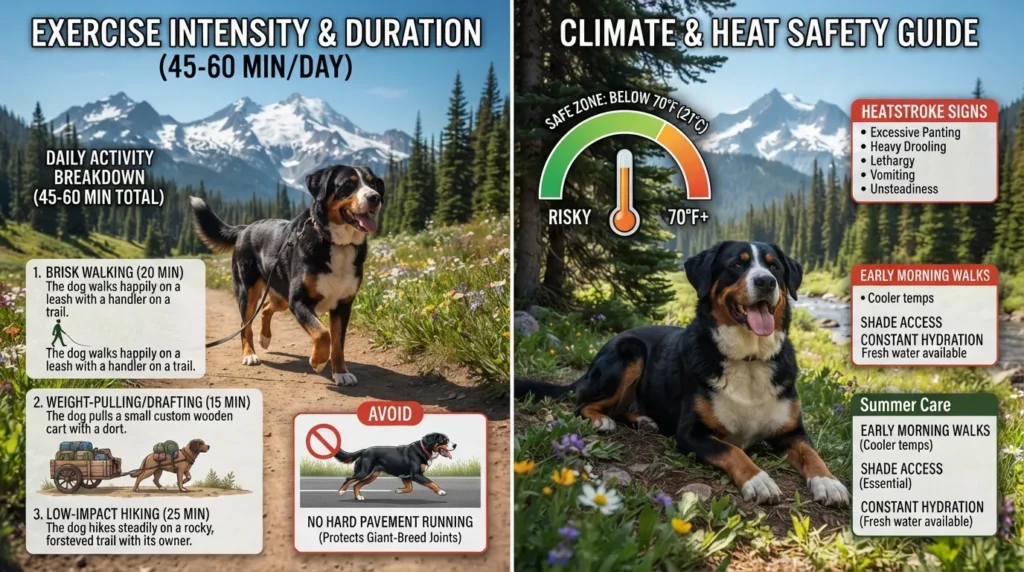
A Greater Swiss Mountain Dog and Bernese Mountain Dog mix needs moderate, daily exercise—typically around 45 to 60 minutes spread across two walks. Despite their massive size, they aren’t high-octane endurance athletes like Huskies or Border Collies. Instead, they operate best on a steady, calm rhythm of working walkies, scent work, and mental stimulation.
During their extended puppyhood (giant breeds grow until roughly two to three years old), go easy on high-impact cardio. Their growth plates take a long time to close, and forced running or jumping on hard pavement can lead to permanent joint damage, elbow dysplasia, or early-onset arthritis. A good rule of thumb is letting the pup set the pace in a fenced yard, adding structured lead walks gradually as they mature.
Mental burnout happens faster than physical exhaustion with this hybrid. Because both parent breeds carry working farm genetics, a 20-minute slow “sniffari” where they check every scent marker in the park will tire them out more effectively than an hour of mindless heel walking.
Puppies under 12 months: Multiple short 10-to-15-minute gentle walks plus free playtime.
Adults 1 to 6 years: 45–60 minutes total daily movement, broken into morning and evening outings.
Seniors 7+ years: 30 minutes of low-impact strolling to keep stiff joints mobile without straining them.
Best Activities Hiking, Carting, Swimming
This Swiss Bernese mix excels at traditional draught work and low-impact outdoor adventures. Draft work (carting) is hardwired into their DNA; both parent breeds were originally bred to haul heavy milk carts through alpine villages. Outfitting an adult mix with a proper pulling harness and a lightweight cart or sled gives them a intense sense of purpose and drains their working energy safely.
Hiking on natural, soft trails is another natural fit. They carry backpacks effortlessly once fully grown, making them sturdy trail companions for cool-weather day trips. Keep the pace steady and pack plenty of extra water—their thick bodies generate massive internal heat when climbing slopes.
When it comes to water, expect mixed reactions. If your GSMD Bernese mix inherits the heavy dense coat of the Berner, they might paddle to cool off, but they aren’t water retrievers by nature. Swimming is fantastic, low-impact joint therapy, but always introduce water gently at shallow shorelines rather than tossing them off a dock.
Drafting/Carting: Ideal for pulling kids in wagons or hauling firewood; wait until 24 months old for heavy loads.
Backpacking: Can comfortably carry 10–15% of their body weight after full skeletal maturity.
Lure Coursing & Agility: Skip the high-jump obstacles, but low-impact tunnel and weave-pole courses provide great mental enrichment.
Climate & Weather Tolerance
Cold weather is where a Greater Swiss Mountain Dog and Bernese Mountain Dog mix truly shines. Give them a freezing morning or a fresh snowstorm, and they will stubbornly refuse to come inside, happily sprawling out on frozen ground. Their thick coat insulates them down to sub-zero temperatures with ease.
Heat and humidity, however, are dangerous for this crossbreed. The combination of heavy body mass, deep chest depth, and dense fur makes them exceptionally vulnerable to heatstroke. Summer temperatures above 70°F (21°C) require immediate modifications to their routine.
If you live in a warmer region, limit outdoor activities to early mornings before sunrise or late evenings after the pavement cools down. Always provide access to air conditioning, cooling mats, and fresh, cold water. Watch for heavy panting, dark red gums, or a thick, sticky tongue—these are early warning signs that your dog needs to get indoors immediately.
Grooming & Shedding
Brushing Frequency
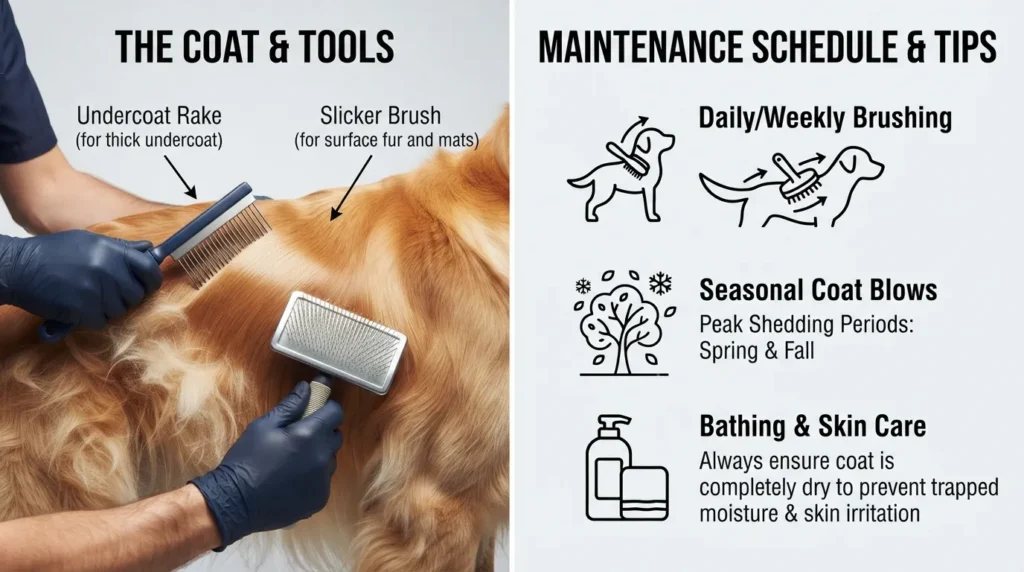
Coat management for a Greater Swiss Mountain Dog and Bernese Mountain Dog mix depends heavily on which parent coat type your puppy inherits. A puppy leaning toward the Bernese side will develop a long, wavy double coat, while one favoring the Swissy will have a dense, short double coat.
Bernese-leaning coat: Brush 3 to 4 times a week using a long-pinned slicker brush and an undercoat rake to pull out loose fur before it mats around the ears, chest, and hind legs.
Swiss-leaning coat: Brush 1 to 2 times a week with a firm bristle brush or a rubber curry comb to sweep away dead hair and distribute natural skin oils.
Mixed texture coat: Brush 2 to 3 times a week, focusing undercoat rake work on the thicker ruff and thigh feathers.
Staying consistent prevents tight tangles and keeps loose hair off your furniture, regardless of the exact coat texture your dog gets.
Shedding Season / Blowing Coat
Expect year-round moderate shedding with this mix, punctuated by two major “coat-blowing” events in the spring and autumn. During these seasonal shifts, the dense undercoat releases in massive clumps over a three-to-four-week window.
During peak shedding season, daily brushing becomes non-negotiable. Using a dedicated undercoat rake alongside a high-velocity dog blow dryer after baths will force out dense, trapped hair before it spreads across your house. First-time giant breed owners are often shocked by the sheer volume of fur that comes off a double-coated dog during spring—filling an entire grocery bag in a single grooming session is completely normal.
Bathing, Nail & Ear Care
Keep baths to a minimum—roughly once every 8 to 12 weeks—unless your dog gets visibly muddy. Bathing this mix too frequently strips the natural protective oils from their skin, leading to dryness and irritation. Always use a heavy-duty, soap-free canine shampoo that rinses cleanly out of thick double coats.
Nails need trimming or grinding every 3 to 4 weeks. Because these dogs carry 80 to 120+ pounds on their paws, long nails quickly force their toes to splay, altering their gait and putting unnecessary stress on their joints.
Check their ears weekly, particularly if they inherit the long, drop-ear style of the Bernese parent. Moisture and heavy fur can trap dirt inside the canal, so wipe the outer ear flap with an alcohol-free canine ear cleaner whenever you notice slight buildup or a mild odor.
Training Tips
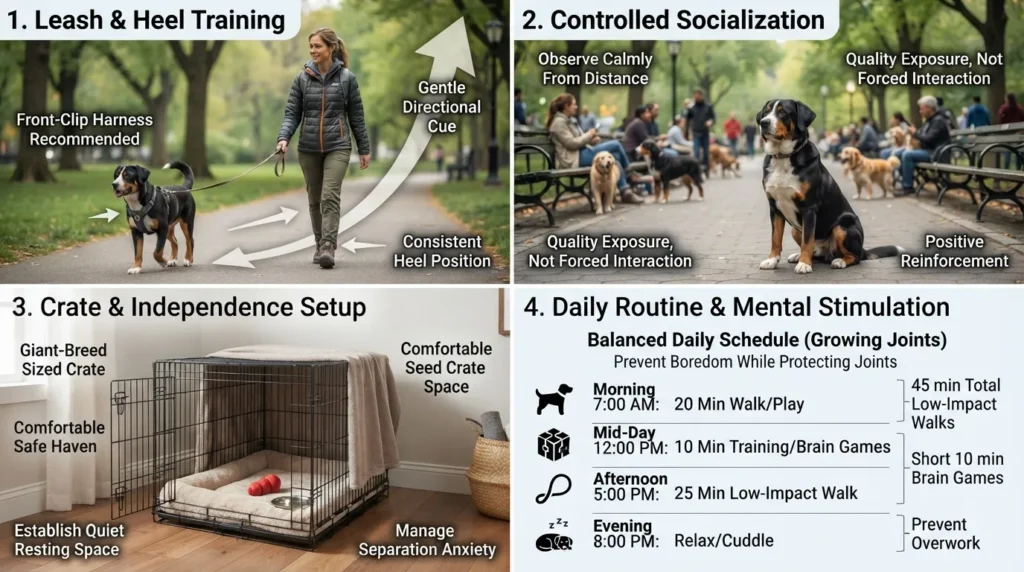
Training a Greater Swiss Mountain Dog and Bernese Mountain Dog mix requires patience, consistency, and an understanding of giant working breeds. Both parents were bred for draft work and farm duties in the Swiss Alps, giving this hybrid a strong-willed, powerful, but eager-to-please foundation. Start training on day one—a 15-pound puppy is much easier to guide than a 110-pound adult with a mind of its own.
Socialization
Proper socialization for a Swiss Bernese mix isn’t just about meeting other dogs at the park. It’s about building neutrality around loud sounds, strange surfaces, children, and unfamiliar environments. Because both parent breeds carry protective instincts, exposing your puppy to a wide variety of calm, positive experiences between 8 and 16 weeks prevents adult fearfulness or over-reactivity.
Focus quality over quantity during socialization sessions. Let your puppy observe traffic, livestock, and busy suburban streets from a comfortable distance while rewarding calm behavior. If your GSMD Bernese mix inherits the Greater Swiss’s higher prey drive or watchful nature, early socialization ensures those instincts stay manageable around small pets and visitors.
Leash & Loose-Lead Training
Teaching a Bernese Swiss mountain dog mix to walk gently on a leash is a safety requirement, not an optional trick. Adult males routinely cross 110 to 130 pounds, meaning an untrained dog can easily pull an adult off their feet. Draft dogs were literally bred to pull heavy carts, so harness-pulling can actually activate their natural opposition reflex.
Start in low-distraction areas: Practice indoors or in a fenced yard using a flat collar or a front-clip harness before moving to the neighborhood.
Use the “tree” method: The moment the leash goes taut, stop moving immediately. Resume walking only when your dog turns back and slackens the lead.
Reward positioning, not just eye contact: Treat your dog right at your hip so they learn that standing beside you is the most rewarding spot to be.
Consistency is critical during the growth phase. If you allow a 40-pound teenager to pull on leash, you will struggle to correct that habit when they double in weight a few months later.
Common Training Challenges
The most frequent obstacle owners encounter with this mix is slow physical and mental maturation. Swiss Working breeds mature much slower than smaller dogs, often acting like oversized, mouthy puppies until they reach 2.5 to 3 years of age. Expecting adult obedience from an 18-month-old giant puppy leads to unnecessary frustration.
Stubbornness—often referred to as “Swissie stubbornness”—is another common challenge. When a Greater Swiss Mountain Dog and Bernese Mountain Dog mix refuses a command, it rarely comes from malice; they are simply assessing whether the action is worth their effort. Keep training sessions short (5 to 10 minutes), use high-value rewards like real meat or cheese, and end every session on a successful note.
Feeding & Diet Requirements
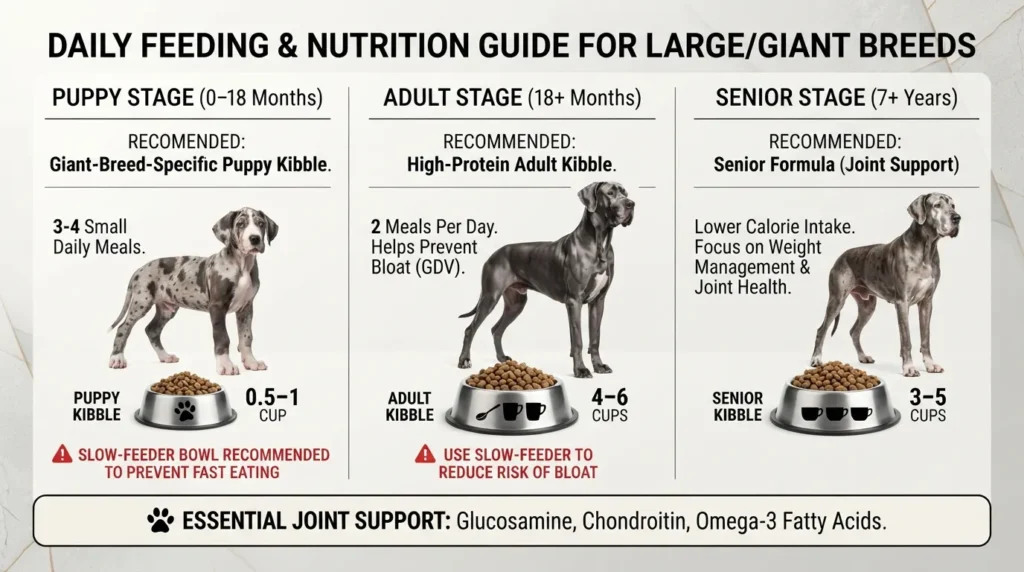
Feeding a Greater Swiss Mountain Dog and Bernese Mountain Dog mix requires a strict focus on balanced growth and weight management. Because both parent breeds carry massive frames—often weighing between 80 and 140 pounds at full maturity—this hybrid needs high-density, large-breed nutrition that powers their heavy musculature without overloading their developing frames.
Daily Food Amount
An adult Swiss Bernese mix typically consumes between 4 to 6 cups of high-quality dry kibble per day, divided into two separate meals. Rapidly growing puppies often require up to 6 or 7 cups during peak growth stages between 6 and 12 months, spread across three daily feedings.
| Life Stage | Weight Range | Daily Amount (Cups) | Daily Calorie Target |
|---|---|---|---|
| Puppy (3–6 months) | 35 – 65 lbs | 3.5 – 5 cups | 1,400 – 1,800 kcal |
| Puppy (6–12 months) | 60 – 100 lbs | 5 – 7 cups | 2,000 – 2,600 kcal |
| Adult (1–6 years) | 85 – 135+ lbs | 4.5 – 6 cups | 2,200 – 2,800 kcal |
| Senior (7+ years) | 80 – 125 lbs | 3.5 – 4.5 cups | 1,700 – 2,100 kcal |
Puppy (3–6 months)
| Weight Range | 35 – 65 lbs |
|---|---|
| Daily Amount | 3.5 – 5 cups |
| Daily Calorie Target | 1,400 – 1,800 kcal |
Puppy (6–12 months)
| Weight Range | 60 – 100 lbs |
|---|---|
| Daily Amount | 5 – 7 cups |
| Daily Calorie Target | 2,000 – 2,600 kcal |
Adult (1–6 years)
| Weight Range | 85 – 135+ lbs |
|---|---|
| Daily Amount | 4.5 – 6 cups |
| Daily Calorie Target | 2,200 – 2,800 kcal |
Senior (7+ years)
| Weight Range | 80 – 125 lbs |
|---|---|
| Daily Amount | 3.5 – 4.5 cups |
| Daily Calorie Target | 1,700 – 2,100 kcal |
Because both Greater Swiss Mountain Dogs and Bernese Mountain Dogs are prone to Gastric Dilation-Volvulus (bloat), never feed this mix a full daily portion in a single sitting. Splitting food into morning and evening portions, paired with a slow-feeder bowl, significantly reduces air ingestion and keeps digestive movement steady.
Special Dietary Needs Large-Breed Joint Support
The primary nutritional goal for a GSMD Bernese mix is controlling growth speed and protecting joint cartilage. Feeding standard puppy food containing excess calcium and phosphorus can trigger rapid bone growth before the skeletal matrix matures, dramatically increasing the risk of hip and elbow dysplasia.
Controlled Calcium-to-Phosphorus Ratio: Stick exclusively to large-breed puppy formulas with a calcium content capped around 1.2% to 1.5%.
Early Joint Supplementation: Choose a adult formula fortified with at least 500 mg/kg of glucosamine and chondroitin, or add a raw omega-3 fish oil supplement to reduce systemic joint inflammation.
Lean Body Mass Management: Excess body weight is the single biggest contributor to early arthritis in giant breeds. Keep your Bernese Swiss mountain dog mix lean enough that you can easily feel their ribs without pressing hard.
Puppy Price & Where to Find One
Average Puppy Cost
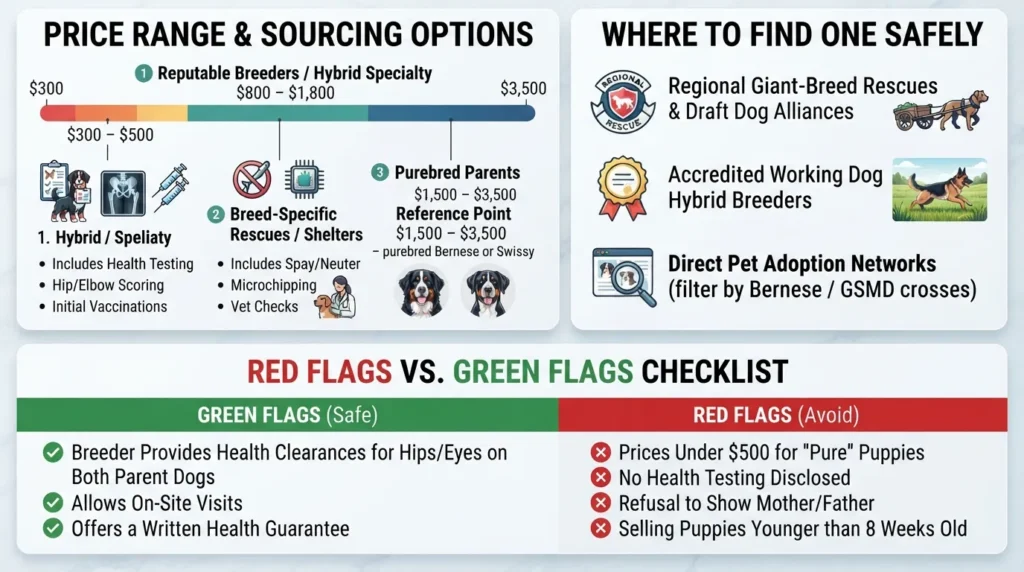
Expect to pay between $1,000 and $2,200 for a Greater Swiss Mountain Dog and Bernese Mountain Dog mix puppy. Prices swing based on breeder experience, geographic location, and whether the parents have verified health clearances.
Because this is an intentional hybrid rather than a purebred dog, you won’t be paying AKC paper prices, which can push purebred Berner or Swissy puppies well over $3,000. However, anything listed below $800 should raise immediate red flags regarding puppy mill conditions or skipped health screenings.
How Rare Is This Mix?
Finding a GSMD Bernese mix takes patience because it is a relatively rare designer hybrid. Breeders typically focus on purebred Bernese Mountain Dogs or Greater Swiss Mountain Dogs to maintain established show and working lines.
Most Swiss Bernese mix litters happen through specialized crossbreeding programs aiming to combine the Swissy’s short coat and sturdier build with the softer, companion-focused nature of the Berner. You will rarely find them sitting in local pet stores, so expect to join a waiting list once you locate a legitimate breeder.
Finding a Responsible Breeder
Because giant breeds are prone to severe hereditary issues, picking the right breeder is crucial. A responsible breeder will willingly show you health clearances for both parents, focusing on hip and elbow scores, cardiac evaluations, and eye clearances.
Request OFA or PennHIP results: Both parent breeds carry high rates of hip and elbow dysplasia. Don’t accept a simple “vet checked” verbal statement.
Ask about lifespan in their lines: Ask directly about the age and cause of death of the grandparents, as Bernese lines carry heavy cancer risks (histiocytic sarcoma).
Visit the facility or do a live video tour: Ensure the mother and puppies are kept in a clean, enriched home environment, not isolated in outdoor kennels.
Look for a return contract: Ethical breeders will always take a dog back at any point in its life if you can no longer care for it.
Adoption / Rescue Options
Adopting a Bernese Swiss mountain dog mix is possible, though you’ll need to look beyond general city shelters. Your best path is applying through breed-specific rescues dedicated to Swiss Sennenhund breeds.
Regional Bernese Mountain Dog Rescues: These organizations frequently take in mixes, including Swissy-Berner crosses surrendered due to size or energy levels.
Greater Swiss Mountain Dog Rescue Networks: Search national and regional GSMD rescue groups; they regularly handle giant Sennenhund crosses.
General Giant Breed Rescues: Organizations tailored to working and giant breeds often receive adolescent mixes around 10 to 18 months old when owners realize how big they actually get.
Total Ownership Cost Insurance, Vet, Grooming
The initial puppy price is just a fraction of what you’ll spend. Owning a 110-plus-pound giant breed requires a significant monthly budget, particularly in the first two years of rapid growth.
| Expense Category | Estimated Monthly / Yearly Cost | Real-World Context |
|---|---|---|
| Pet Insurance | $80 – $150 / month | Giant breeds carry high premiums due to bloat, joint, and cancer risks. |
| Food & Chews | $120 – $180 / month | A 120-lb dog eats 4 to 6 cups of high-quality large-breed kibble daily. |
| Routine Vet Care | $300 – $600 / year | Includes annual checkups, heartworm prevention, and weight-scaled flea control. |
| Grooming Supplies | $100 – $300 / year | DIY brushes and high-velocity dryers; professional deshedding runs $100+ per visit. |
| Emergency Vet Fund | $1,500+ (One-time safety net) | Cruciate ligament surgery or bloat (GDV) treatment can exceed $5,000–$8,000. |
Pet Insurance
| Estimated Cost | $80 – $150 / month |
|---|---|
| Real-World Context | Giant breeds carry high premiums due to bloat, joint, and cancer risks. |
Food & Chews
| Estimated Cost | $120 – $180 / month |
|---|---|
| Real-World Context | A 120-lb dog eats 4 to 6 cups of high-quality large-breed kibble daily. |
Routine Vet Care
| Estimated Cost | $300 – $600 / year |
|---|---|
| Real-World Context | Includes annual checkups, heartworm prevention, and weight-scaled flea control. |
Grooming Supplies
| Estimated Cost | $100 – $300 / year |
|---|---|
| Real-World Context | DIY brushes and high-velocity dryers; professional deshedding runs $100+ per visit. |
Emergency Vet Fund
| Estimated Cost | $1,500+ (One-time safety net) |
|---|---|
| Real-World Context | Cruciate ligament surgery or bloat (GDV) treatment can exceed $5,000–$8,000. |
Real Owner Experiences
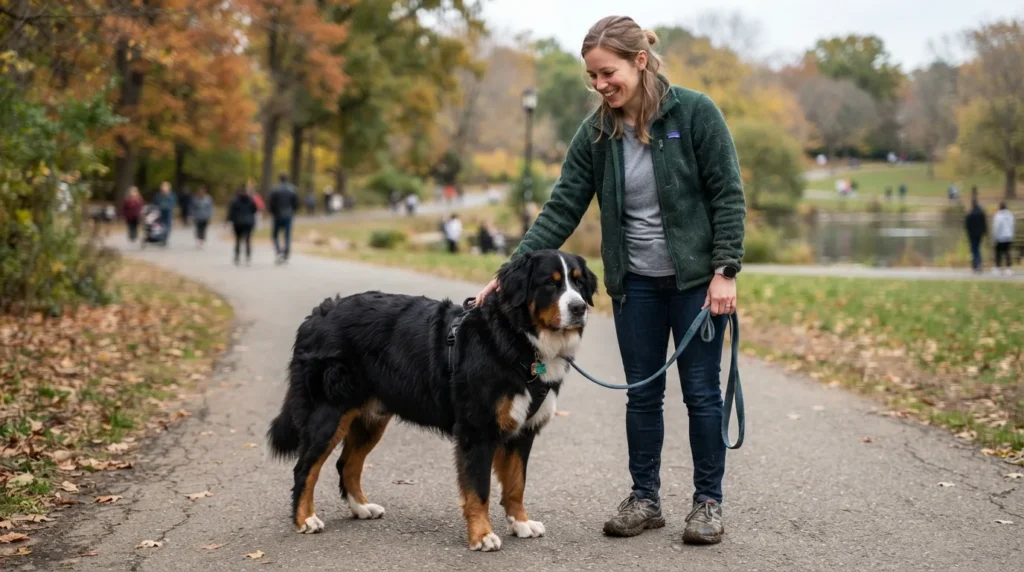
People who bring a Greater Swiss Mountain Dog and Bernese Mountain Dog mix into their lives usually expect a massive, handsome dog. What catches most first-time owners off guard is the sheer physical presence and daily logistics of managing a 110-to-140-pound crossbreed.
Living with this hybrid brings a distinct mix of rewarding companionship and practical daily challenges:
The “Velcro” Giant Reality: Owners consistently mention that despite their intimidating size, these dogs insist on sitting on feet, leaning heavily against legs, or squeezing into small spots near their humans. Separation anxiety can creep in if they aren’t socialized early to enjoy brief solo time.
Shedding and Coat Care: Depending on which parent’s coat dominates, maintenance varies. Owners report that pups leaning toward the Bernese side release endless tumbleweeds of fur year-round, requiring daily vacuuming. Those inheriting the Swissie’s short double coat shed heavily twice a year during coat blows, but their day-to-day coat upkeep is noticeably lower.
Temperament and Energy Spurt: While generally calm indoors, young Swiss Bernese mixes undergo a long “puppy phase” that lasts until they are nearly three years old. Owners note that sudden outbursts of giant-breed zoomies require sturdy furniture, secure fencing, and immediate leash training to prevent accidental pulls.
Drool and Mess: Expect a wet chin after drink breaks. While the GSMD Bernese mix typically drools far less than a St. Bernard or Mastiff, owners keep hand towels near water bowls to wipe loose jowls after drinking or vigorous exercise.
Heat Sensitivity: Real-world feedback highlights a strict intolerance for summer heat. Owners in warm regions adapt by scheduling long walks for early mornings or late evenings, keeping summer activity brief, and relying on air conditioning to prevent heat distress.
Is This Mix Right for You?
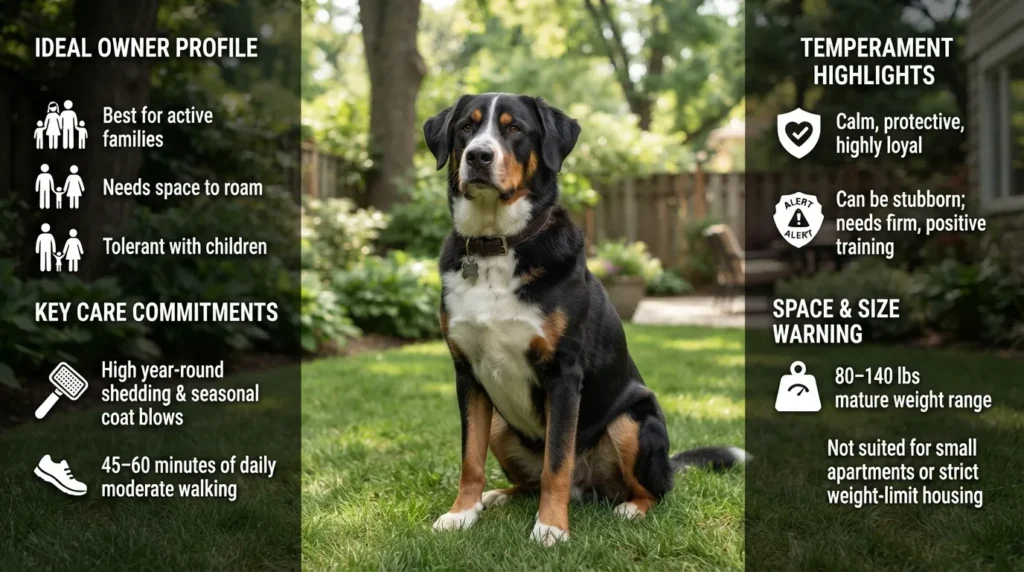
Bringing home a giant working dog is a decade-long commitment that changes your daily routine, budget, and living space. Combining two distinct Swiss heritage breeds creates a loyal, massive companion, but they require the right environment and an owner who understands giant breed dynamics.
Pros of This Mix
Gentle, Devoted Temperament: They inherit a sweet, family-oriented nature from both parents, forming intense bonds with their human pack and showing remarkable patience around kids.
Fewer Coat Demands Than a Purebred Berner: If the puppy inherits the shorter, double coat of the Greater Swiss, grooming time drops significantly compared to a full-blown Bernese coat.
Natural Watchdog Instincts: Their sheer size and deep, resonant bark serve as an immediate physical deterrent to intruders, keeping your home secure without inherent aggression.
Moderate Energy Levels: Unlike working breeds that demand hours of running daily, a couple of solid walks and brief play sessions are usually enough to keep them settled.
Versatile Working Drive: They excel at pulling carts, drafting, and winter hiking, making them great outdoor companions in colder climates.
Cons of This Mix
Heavy Shedding and Mess: You will deal with constant hair, seasonal coat blows, and a noticeable amount of drool—especially after drinking or during warmer weather.
Extreme Size and Pulling Power: Weighing anywhere from 80 to 140 pounds, an untrained Swiss Bernese mix can easily pull a grown adult off their feet during a walk.
High Medical and Lifetime Costs: Food, high-dose prescriptions, giant-sized gear, and specialized veterinary care cost substantially more than they do for average-sized dogs.
Slow Physical and Mental Maturation: Giant breeds remain puppies in mind and body until roughly two to three years old, requiring long-term patience with training.
Heat Sensitivity: Their thick double coats and heavy frames make hot, humid summer days dangerous without constant access to air conditioning and shade.
Best Suited Owner Type
The ideal owner for a GSMD Bernese mix is someone who respects the physical power of a draft breed and takes early, consistent training seriously. You need to be comfortable establishing yourself as a confident handler through positive reinforcement, preventing bad habits like leash-pulling or jumping before the dog reaches 100 pounds.
This hybrid thrives in households where people are home often. They do not do well isolation-bound in a backyard or left alone for 10-hour workdays, as separation anxiety can lead to destructive chewing. Active families, rural homeowners, or dedicated owners who enjoy cold-weather activities will find this mix to be an incredible, steady partner.
Housing, Apartment Suitability & Insurance Considerations
Apartment living is rarely suitable for this mix. Beyond their sheer physical size taking over small spaces, they need room to move, and navigating stairs regularly can put unnecessary wear on their developing joints. A single-family home with a securely fenced yard is the best setup, giving them space to stretch their legs safely.
Insurance is another critical factor to plan for early. Many home insurance policies have breed-exclusion lists or liability restrictions for large working dogs, so verifying coverage with your provider beforehand is essential. Additionally, pet health insurance is strongly recommended from puppyhood; treating joint issues, bloat, or cruciate tears in a giant breed can quickly run into thousands of dollars.
Similar Mixed Breeds to Consider
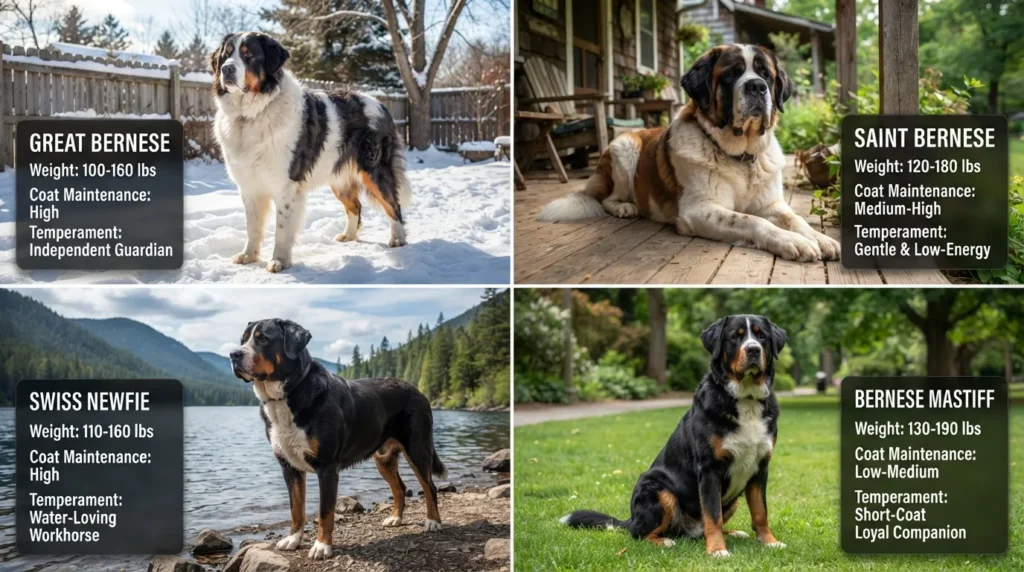
If you love the working heritage and calm temperaments of the Greater Swiss Mountain Dog and Bernese Mountain Dog mix, a few other giant-breed hybrids offer a similar blend of strength, devotion, and family-friendly nature.
Great Bernese Great Pyrenees x Bernese Mountain Dog: This cross combines the plush coat and striking markings of a Berner with the steady guardian instincts of a Pyrenees. They are slightly more independent and inclined to patrol the yard at night compared to a Swiss Bernese mix, but they bring that same gentle, watchful energy into the house.
Saint Bernese Saint Bernard x Bernese Mountain Dog: Pairing two classic Alpine giants creates an extraordinarily sweet, patient companion. Expect a heavier bone structure and significantly more drool than a GSMD Bernese mix, though their lower energy drive makes them easygoing housemates for large spaces.
Swiss Newfie Greater Swiss Mountain Dog x Newfoundland: Crossing a Swissy with a Newfoundland yields a broad-chested powerhouse with a dense, water-repellent coat. They trade some of the vocal farm-guarding traits typical of Sennenhund breeds for a placid, water-loving disposition.
Bernese Mastiff Bernese Mountain Dog x English Mastiff: For owners who want giant size with a slightly shorter, lower-maintenance coat, this blend offers deep loyalty and massive mass. They share the velcro-dog tendencies of a Swiss Bernese mix, though their massive frames require extra vigilance with joint care during growth spikes.
Frequently Asked Questions
No, the Greater Swiss Mountain Dog and Bernese Mountain Dog mix is not hypoallergenic. Both parent breeds carry heavy double coats that produce high amounts of dander and loose fur year-round. If anyone in your house suffers from moderate to severe dog allergies, this hybrid will likely trigger them.
A fully grown GSMD Bernese mix typically stands between 23 and 28 inches tall at the shoulder and weighs anywhere from 80 to 140 pounds. Males consistently lean toward the higher end of that scale, often topping 110 pounds with broad chests and heavy boning. Because both parents are giant draft dogs, these puppies grow rapidly and take up to three full years to reach complete physical and structural maturity.
Expect significant shedding year-round, punctuated by two massive seasonal coat blows every spring and fall. Whether your pup inherits the shorter, dense double coat of the Swissy or the longer, wavy coat of the Berner, loose undercoat hairs will coat furniture and drift across hardwood floors. Daily brushing with an undercoat rake during peak shedding weeks is mandatory to keep the loose fur manageable.
This mix is exceptionally patient, affectionate, and protective with children of all ages, earning them a well-deserved reputation as gentle giants. Their steady temperaments make them tolerant family companions, though their massive size poses an accidental tipping hazard for toddlers. Early leash training and basic obedience are critical so they learn not to lean their full weight or jump up on small family members.
The typical lifespan for a Swiss Bernese mix ranges between 8 and 11 years. They tend to live slightly longer than purebred Bernese Mountain Dogs (7–9 years) due to a slight bump in genetic diversity, but still face the shortened longevity typical of giant breeds. Keeping your dog at a lean body weight and using joint supplements early can help maximize their active, comfortable years.
Purebred Greater Swiss Mountain Dog puppies are generally more expensive to buy from a reputable breeder, often ranging from $2,500 to $4,000 due to smaller litter sizes and breeder rarity. Bernese Mountain Dogs typically cost between $1,500 and $3,000, but they often incur significantly higher long-term veterinary expenses due to elevated rates of cancer, bloat, and joint dysplasia.
While their calm indoor demeanor makes them surprisingly adaptable inside, housing an 80-to-140-pound dog in an apartment is difficult and usually impractical. Most apartment complexes enforce strict weight limits that exclude giant mixes, and navigating stairs or elevators multiple times a day with a heavy dog can get tough as they age. A home with a securely fenced yard provides the room they need to stretch out comfortably.
A healthy adult GSMD Bernese mix needs about 45 to 60 minutes of moderate daily exercise to stay mentally and physically balanced. They excel at low-impact activities like brisk neighborhood walks, easy trail hikes, or weight-pulling activities like pulling a child's wagon. Avoid intense, high-impact running or heavy exercise during hot weather, as their thick coats make them prone to overheating quickly.
🐾 Other Age Guides

Gulfam Haider Mehdi
Founder & Developer
I built Dogagescalculator.com to give dog owners honest, science-backed answers instead of the outdated "×7" myth. Every figure here is checked against AKC, AVMA, and published veterinary research.
More about the author & this site →📌 Featured Guides
Cavalier King Charles Spaniel and Bichon Frise Mix
→
what is the life expectancy of a jack russell terrier
→
cavapoo cuts
→
how to find out what your dog is mixed with
→
golden retriever dog years
→
How to Tell How Old a Bird Is
→
what is the lifespan of a dachshund dog
→
how old are the puppies
→
how long does it take a chihuahua to give birth
→
chihuahua corgi mix dog
→
Comments