
How old should a german shepherd be to breed
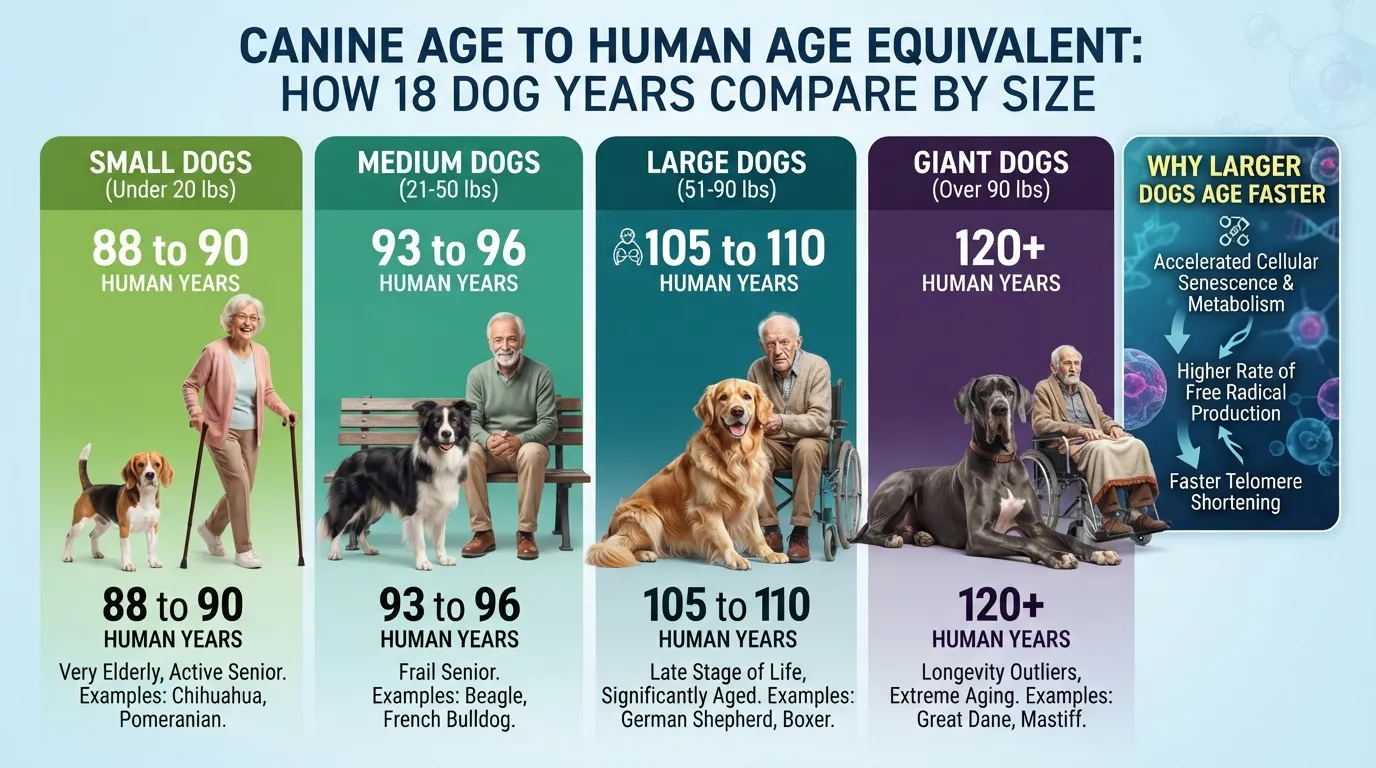
Quick Answer: Ideal Breeding Age at a Glance
If you need a bottom-line answer right away: a female German Shepherd should be bred between 2 and 5 years old, while a male is best bred between 2 and 8 years old.
Although female German Shepherds reach sexual maturity early—often entering their first heat cycle between 6 and 12 months—breeding on these initial cycles is dangerous. A young bitch is still growing rapidly. Her long bones and pelvic growth plates do not fully fuse until she reaches roughly 18 to 24 months of age.
In my experience with breeding pairs and whelping litters, pairing a bitch before her second birthday significantly increases the risk of labor complications, poor maternal instincts, and long-term joint damage under the strain of supporting a heavy litter.
For males, sperm production begins around 6 to 9 months, but sexual and behavioral maturity takes much longer. A stud dog requires about two full years to mature physically and mentally. Crucially, leading orthopedic registries like the Orthopedic Foundation for Animals (OFA) will not issue official, permanent hip and elbow certifications until a dog reaches 24 months of age.
German Shepherd Breeding Age Guidelines
| Category | Minimum Age | Ideal Breeding Window | Maximum Age | Key Health Checks Required |
|---|---|---|---|---|
| Female (Bitch) | 24 Months (2 Years) | 2 to 5 Years | 6 Years | OFA/PennHIP Hips & Elbows, Degenerative Myelopathy (DM), Brucellosis, Cardiac Clearances |
| Male (Stud) | 24 Months (2 Years) | 2 to 8 Years | 8 to 9 Years | OFA/PennHIP Hips & Elbows, Degenerative Myelopathy (DM), Brucellosis, Semen Evaluation |
Breeder's Note: Major breed organizations—including the German Shepherd Dog Club of America (GSDCA) and Germany's Verein für Deutsche Schäferhunde (SV)—strictly require dogs to be at least 20 to 24 months old alongside passing official health screenings before any litter can be registered.
At What Age Is a Female German Shepherd Ready to Breed?
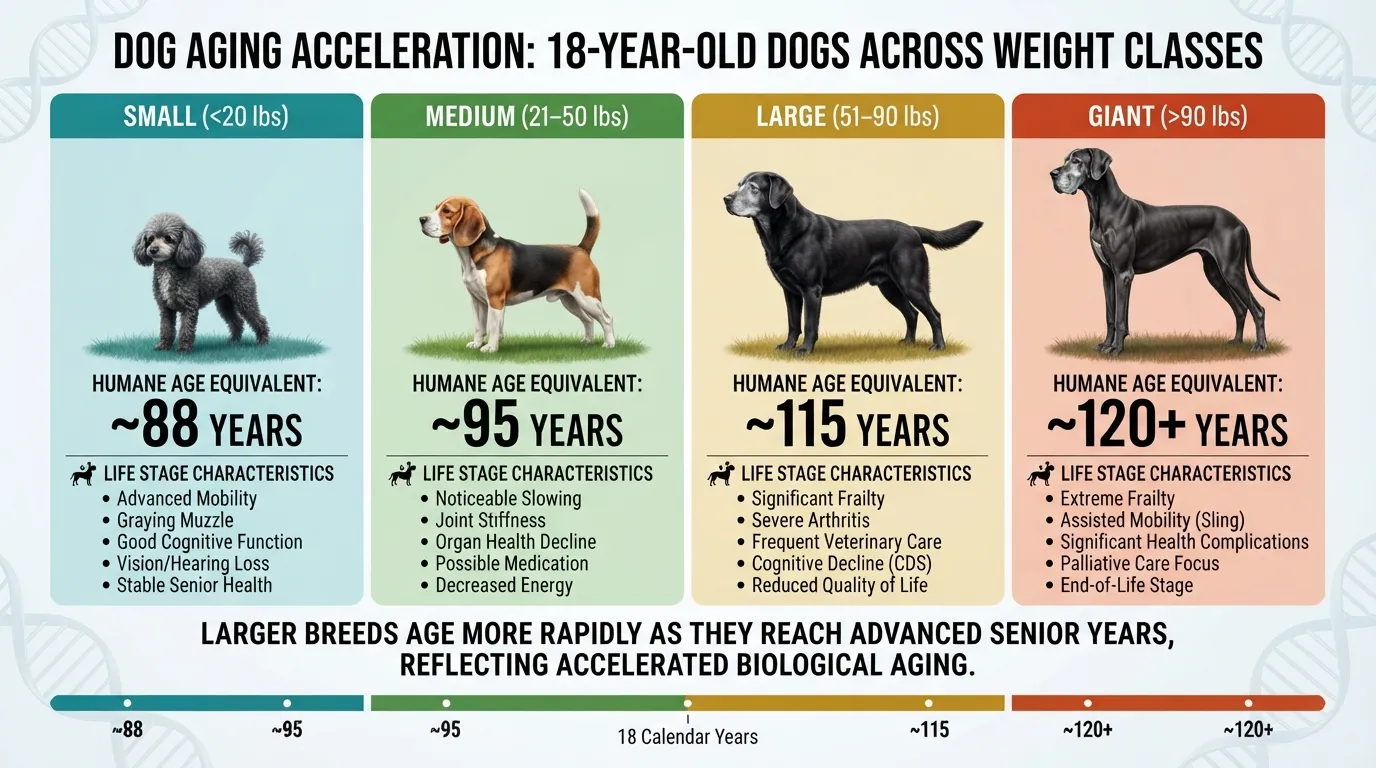
At What Age Is a Male German Shepherd Ready to Stud?
Physical Signs of Readiness (Testicle Descent & Libido)
Male German Shepherds begin displaying physical markers of sexual maturity quite early—often between 6 and 10 months of age. The most critical anatomical milestone is the complete descent of both testicles into the scrotum, which usually occurs by 2 to 4 months. If a male has not fully descended both testicles by 6 to 12 months, he is considered cryptorchid, a hereditary condition that immediately disqualifies him from a breeding program.
Along with testicle descent, a young male’s libido will surge as his testosterone levels spike. He may begin marking territory, showing intense interest in females in heat, mounting, or displaying heightened drive. However, an early sexual drive is strictly an instinctual response—it does not mean his body or mind is ready to act as an effective stud dog.
Recommended Age to Start (2 Years) — Temperament & Structural Confirmation
While a young male can physically father a litter around 10 to 12 months, no male German Shepherd should be used at stud until he is at least 24 months old.
Waiting until two full years allows for two essential evaluations:
- Structural & Orthopedic Clearances: German Shepherds are susceptible to hip and elbow dysplasia. The Orthopedic Foundation for Animals (OFA) will not issue official, permanent hip and elbow certifications until a dog reaches 24 months of age. Breeding a stud before securing these clearances risks passing severe genetic joint defects down to dozens of puppies.
- Mental Stability & Temperament: A true German Shepherd stud must possess stable nerves, confident drive, and clear-headed discernment. Temperament is highly heritable, and a dog's true personality—including potential sharp-shyness, dog aggression, or handler sensitivity—is not fully formed until he passes through adolescent development at roughly 18 to 24 months.
In my experience running working lines, putting a young male to stud too early can also ruin his working focus or make him overly reactive around other intact animals. Patience ensures you are breeding a mature, proven adult rather than an untested juvenile.
How Long Can a Male Breed? (Up to 8–10 Years & Sperm Quality Checks)
Unlike females, whose breeding windows close much earlier to protect maternal health, a healthy male German Shepherd can often remain active at stud until 8 to 10 years of age.
However, fertility naturally shifts as a stud ages:
- Sperm Concentration & Motility: After age 7 or 8, sperm count, progressive motility, and normal morphology begin to decline. Older studs may yield smaller litters or higher rates of open (unbred) females.
- Routine Semen Evaluations: For senior studs (ages 7+), reputable breeders perform regular full semen evaluations (collecting and analyzing sperm under a microscope) before committing to a breeding tie.
- Prostate & Health Monitoring: Older studs require routine screening for benign prostatic hyperplasia (BPH) and regular Brucellosis blood testing before every unassisted mating to safeguard both dogs.
How Do You Know Your Female Is in Heat & Ready to Mate?
How Do You Know Your Female Is in Heat & Ready to Mate?
Physical Signs: Vulva Swelling & Discharge Progression
Recognizing the start of a heat cycle requires daily observation, especially in young or clean-grooming German Shepherd bitches that clean themselves frequently. The initial phase (proestrus) typically lasts between 7 and 10 days and is marked by distinct physical transformations:
- Distinct Vulva Swelling: The vulva will become noticeably enlarged, firm, and turgid—often double or triple its normal non-heat size.
- Bloody Discharge: In the first 7 to 9 days, you will observe a dark red or bright crimson bloody discharge.
- Color Transition (Straw-Colored Fluid): As the female transitions into estrus (the fertile phase), the discharge lightens from dark red to a pinkish, straw-colored, or watery yellowish fluid. This change signals that ovulation is approaching or actively occurring.
Behavioral Signs: Tail Flagging & Receptivity
Along with physical shifts, a female German Shepherd's behavior undergoes a dramatic change as she enters her fertile window:
- Tail Flagging: When stroked near the rump or approached by a male, the bitch will lift her tail up and hold it firmly to one side ("flagging"), presenting her vulva to allow access.
- Increased Affection & Restlessness: Females often become hyper-affectionate with their handlers, clingy, or unusually restless. They may pace, whine, or seek extra physical attention.
- Attracting & Soliciting Males: While she will aggressively reject males during early proestrus (snapping or sitting down), a receptive bitch in estrus will actively solicit intact males, leaning into them, bowing, and standing rigid.
The Optimal Mating Window (Days 10–14)
While every bitch's internal hormonal clock varies slightly, the standard fertile window generally falls between days 10 and 14 of the heat cycle (measured from the very first day bloody discharge is spotted).
However, relying solely on calendar counting can lead to missed or failed ties. For precise breeding timing, experienced breeders rely on objective diagnostic tools alongside physical observation:
- Vaginal Cytology: A vet swabs vaginal cells to evaluate epithelial changes under a microscope, tracking the transition toward full cornification.
- Progesterone Testing (Blood Draw): Serum progesterone levels are measured in ng/mL. Levels typically surge to around 2.0 ng/mL prior to the LH (luteinizing hormone) peak, spike to roughly 5.0 ng/mL at ovulation, and reach optimal breeding levels (10 to 20+ ng/mL) 48 to 72 hours later, when eggs have fully matured for fertilization.
Health Risks of Breeding Too Early or Too Late
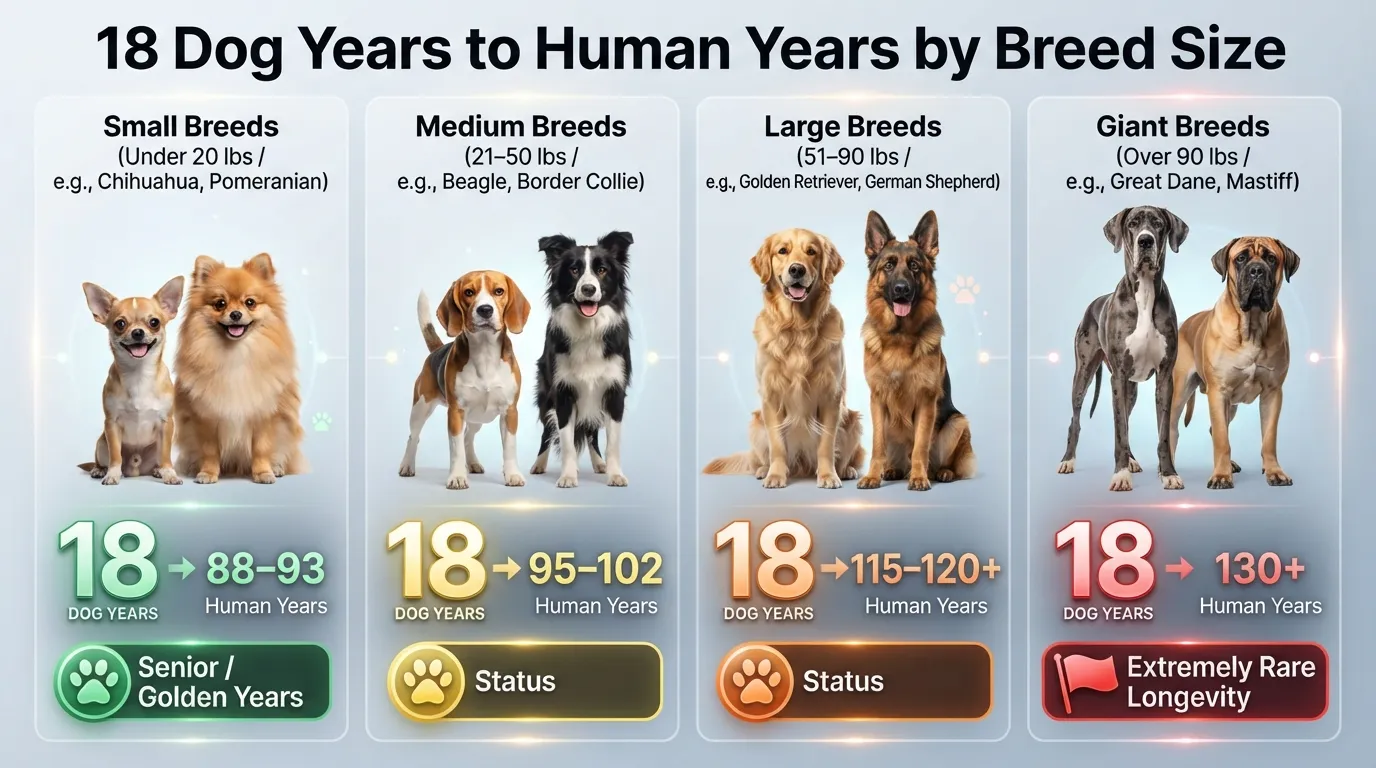
Risks of Early Breeding (Stunted Growth & Weak Litters)
Breeding a German Shepherd before she reaches complete skeletal and hormonal maturity (under 18 to 24 months) inflicts severe physical stress on her developing body. During gestation, a pregnant bitch must direct massive amounts of calcium, phosphorus, and metabolic energy toward the rapid bone and tissue development of her fetus.
When a young bitch is bred while her own long bone growth plates are still open, her body redirects vital nutrients away from her own skeleton to support the litter. This often results in:
Stunted Skeletal Growth: The mother fails to reach her full genetic height, bone density, and structural frame.
Early-Onset Joint Degeneration: Under-developed joints carrying 10+ extra pounds of pregnancy weight suffer premature wear, triggering early-stage osteoarthritis or exacerbating underlying hip dysplasia.
Weak & High-Mortality Litters: Immature bitches often yield smaller, underdeveloped pups with low birth weights and compromised immune systems.
Behaviorally, an under-aged female lacks the maternal maturity required to raise a litter. In my experience, immature mothers are significantly more prone to panicking during contractions, stepping on or crushing newborn pups, or outright rejecting the litter due to sheer exhaustion and distress.
Whelping & Dystocia Risk in German Shepherds
Dystocia—difficult or obstructed labor—is a life-threatening veterinary emergency that occurs at elevated rates when females are bred either too young or past their prime (ages 6+).
German Shepherds have large, blocky heads and deep chests, making smooth passage through the pelvic canal vital. In females bred under 24 months, the pelvic canal has not yet expanded to its full adult diameter. If a large puppy enters an underdeveloped birth canal, fetal blockage occurs almost instantly.
In older bitches (bred past 5 or 6 years), dystocia is usually caused by uterine inertia—a condition where the uterine muscles lose tone and fail to contract with enough force to expel puppies. Key indicators of dystocia that require immediate emergency veterinary intervention include:
More than 30 to 45 minutes of strong, purposeful contractions without producing a puppy.
More than 2 to 3 hours of weak, intermittent straining between puppies.
Visible dark green or bloody discharge from the vulva before the first puppy is delivered (signaling placental separation and fetal distress).
Extreme lethargy, tremors, or collapse in the mother during labor.
Registry & Ethical Breeding Standards
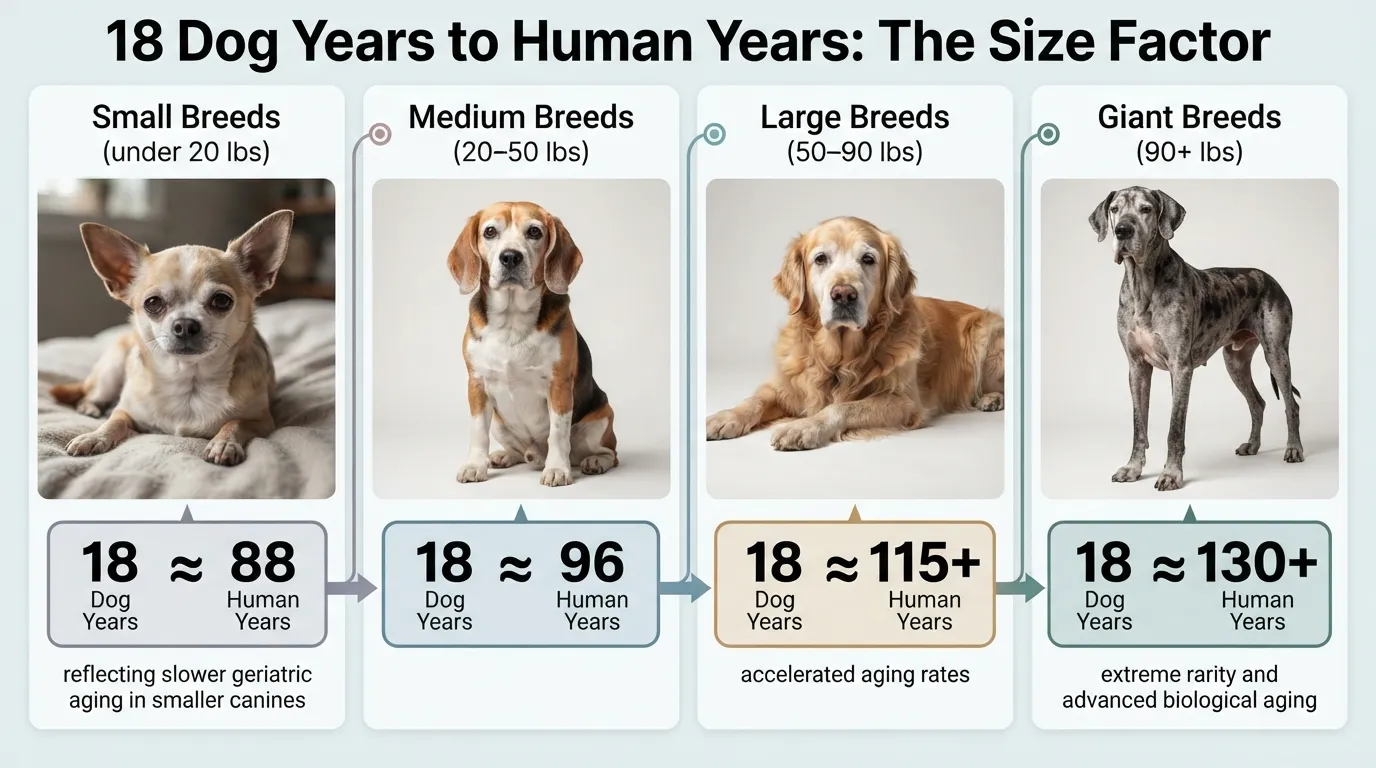
Kennel Club Age Requirements & Registration Rules
Major kennel clubs and international registries enforce strict age limits to uphold breed health and prevent the exploitation of dogs. Registries such as the American Kennel Club (AKC), the Kennel Club (UK), and the Fédération Cynologique Internationale (FCI)—along with breed-specific bodies like the German Shepherd Dog Club of America (GSDCA) and the Verein für Deutsche Schäferhunde (SV) in Germany—have clear rules regarding parentage registration:
Minimum Age Limits: The AKC strictly refuses litter registration if the sire (male) is under 7 months or the dam (female) is under 8 months at the time of mating. However, reputable breed-specific organizations enforce much higher standards—the SV and GSDCA require both male and female German Shepherds to be at least 20 to 24 months old before a litter can be officially registered.
Breed Surveys & Performance Titles: In working and show lines (particularly under SV rules), dogs must pass a formal Breed Survey (Körung). This requires the dog to be at least 2 years old, possess passing hip and elbow certifications, achieve a working title (such as IGP/Schutzhund), and pass an endurance test before receiving breeding approval.
Maximum Age Limits & Litter Caps: Organizations like the UK Kennel Club will not register litters out of a dam that is 8 years of age or older at the time of whelping, nor will they register more than 4 to 6 litters from a single female in her lifetime.
Mandatory Health Clearances & Senior Dog Waivers
Ethical breeding standards dictate that health testing is non-negotiable. Before any German Shepherd is bred, official health certifications for hip dysplasia, elbow dysplasia, and Degenerative Myelopathy (DM) must be submitted to registries like the Orthopedic Foundation for Animals (OFA) or PennHIP.
For older dogs, registries and ethical standards enforce additional veterinary safeguards:
Veterinary Health Waivers for Senior Bitches: If a breeder intends to pair a female aged 6 or 7, most reputable registries require a comprehensive veterinary health assessment prior to mating. The vet must certify that the female’s uterine health, cardiovascular system, and physical condition can safely sustain a pregnancy and whelping.
Brucellosis Testing: Regardless of age, both the male and female must test negative for Brucella canis—a contagious, incurable bacterial infection that causes abortion, sterility, and semen abnormalities—via a blood test performed within 30 days prior to every planned breeding.
Semen Quality Verification for Senior Studs: When using an older male (8+ years), breeders typically require a veterinary sperm evaluation certificate verifying motility, morphology, and sperm count to ensure the mating will result in a viable, healthy litter.
How Often Can a German Shepherd Be Bred? (Heat Cycles & Litter Limits)
Heat Frequency: Twice a Year
Unlike many smaller breeds that may cycle every 4 months, a female German Shepherd typically goes into heat twice a year—roughly every 6 months. However, this window can range anywhere from 5 to 8 months depending on the individual bitch's hormonal genetics, stress levels, and overall physical condition.
While she will naturally come into estrus twice annually, coming into heat does not mean her body has recovered sufficiently from a previous pregnancy to support another litter immediately.
Recommended Spacing Between Litters (Rest Cycles)
Responsible breeding requires balancing maternal recovery with uterine health. There are two primary approaches to litter spacing, both of which require careful management:
- Back-to-Back Breeding followed by Extended Rest: Some modern reproductive veterinarians recommend breeding a healthy, young bitch on consecutive heat cycles (e.g., spring and fall) only if she is in prime physical condition, recovered weight easily, and had an uncomplicated whelping. The biological reasoning is that a female's uterus is healthiest during consecutive pregnancies early in life, reducing exposure to prolonged progesterone spikes that increase pyometra risks. Following two consecutive litters, she must be given a full 12 to 18 months of complete rest.
- The Alternate-Cycle Method (Traditional): The most common ethical practice is breeding a bitch on one heat cycle and resting her completely through the next (breeding once every 12 to 18 months). This allows her abdominal muscle tone, calcium reserves, uterine lining, and mental energy to fully recover.
In my experience, never skip resting a female who had a large litter (10+ pups), required a C-section, lost significant weight during lactation, or showed signs of maternal fatigue.
Lifetime Litter Limit for Responsible Breeding
To safeguard the long-term health of a female German Shepherd, an ethical breeder limits her lifetime reproduction:
- Maximum Lifetime Litters: A female should never produce more than 3 to 4 litters in her entire lifetime.
- Mandatory Retirement Age: A bitch should be retired from breeding by 5 to 6 years of age, regardless of how many litters she has produced.
After her final litter, she should be spayed to eliminate the risk of pyometra, ovarian cysts, and uterine infections, allowing her to live out her senior years comfortably as a cherished family companion.
Step-by-Step Checklist: Is Your German Shepherd Ready to Breed?
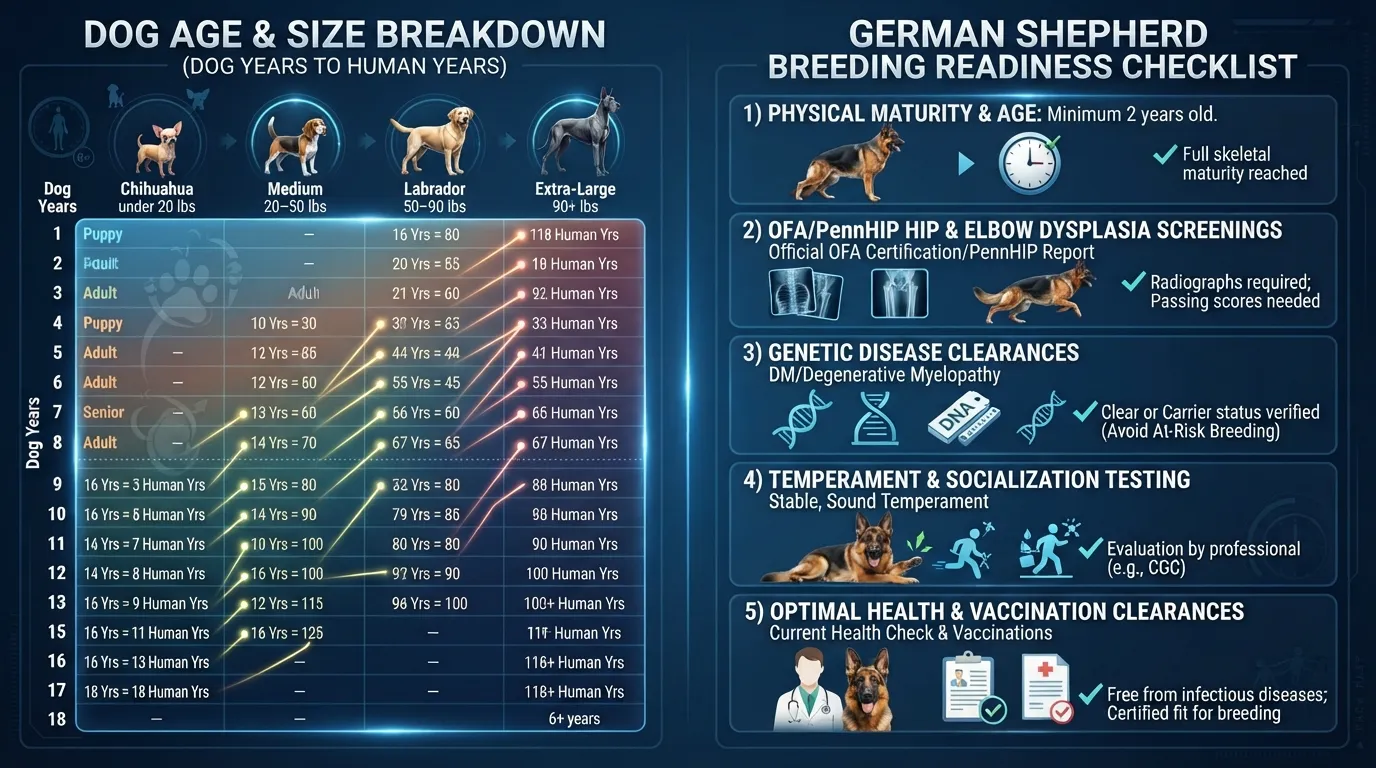
Before pairing any male or female German Shepherd, work through this definitive readiness checklist. Every single requirement must be checked off—skipping even one step compromises the health of the parents, the quality of the litter, and your standing as a responsible breeder.
[ ] 1. Age Verified: The bitch is at least 24 months old (past her second or third heat cycle), or the stud is between 24 months and 8 years old.
[ ] 2. Official Orthopedic Screenings Passed: Permanent hip and elbow certifications are recorded with the OFA (rated Fair, Good, or Excellent; Normal elbows) or PennHIP (distraction index within acceptable breed ranges) after 24 months of age.
[ ] 3. Genetic Health Testing Completed: Tested clear (or verified non-carrier pairing) for Degenerative Myelopathy (DM), Cardiac health (OFA heart clearance), and von Willebrand’s Disease (vWD).
[ ] 4. Infectious Disease Clearance: Negative Brucellosis (Brucella canis) blood test result obtained within 30 days prior to the planned breeding tie.
[ ] 5. Full Veterinary Physical Exam: Female is at a healthy body condition score (BCS 4-5/9), fully vaccinated, wormed, and cleared by a vet for pregnancy; stud has verified normal semen motility and count.
[ ] 6. Temperament Evaluation: Both dogs display stable nerves, confident drives, zero unprovoked aggression, and clear-headed discernment under stress or in novel environments.
[ ] 7. Registry & Pedigree Approved: Both dogs possess full registration (e.g., AKC, SV, GSDCA) with no breeding restrictions, and a 5-generation pedigree analysis shows a safe, acceptable inbreeding coefficient (COI).
[ ] 8. Whelping & Puppy Placement Plan: Whelping supplies are prepared, emergency veterinary care (including C-section funds) is secured, and a screening process for prospective puppy buyers is active.
Calculate Your German Shepherd's Age & Breeding Stage
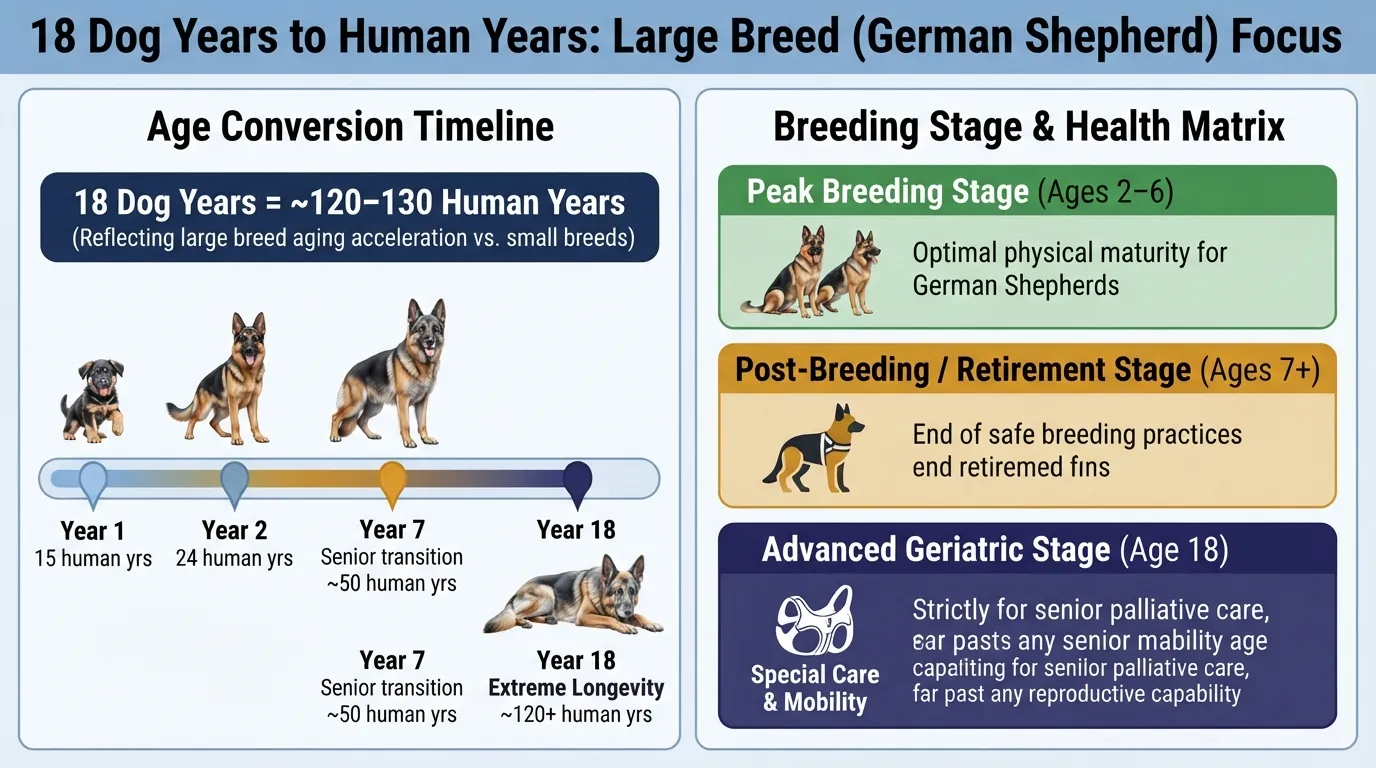
Determining whether your German Shepherd is biologically and structurally ready to breed goes beyond counting simple calendar years. Because large breeds mature differently than smaller dogs, tracking their exact age in human-equivalent years and physical milestones is essential for making safe, ethical breeding decisions.
If you are unsure where your dog currently falls on the developmental timeline—whether they are still in their crucial skeletal growth phase or entering their prime breeding window—our custom tool can give you an instant, accurate breakdown.
Frequently Asked Questions
At what age can a female German Shepherd get pregnant?
A female German Shepherd can get pregnant as early as her first heat cycle, which typically occurs between 6 and 12 months of age. However, sexual maturity does not equal breeding readiness. She should never be bred at this age because her skeleton, pelvic canal, and mind are still developing. Responsible breeders wait until she is at least 24 months (2 years) old before mating.
Can a 7-year-old male dog mate?
Yes, a healthy 7-year-old male German Shepherd can mate and father puppies. Male dogs remain fertile well into their senior years. However, around age 7 or 8, sperm count, motility, and quality begin to decline. It is recommended to have a veterinarian perform a full semen evaluation and prostate check before putting a senior stud to work.
Can a 10-year-old female dog still get pregnant?
While a 10-year-old female dog may still occasionally go into heat and biologically conceive, breeding a female at 10 years old is extremely dangerous and unethical. Senior pregnancies carry a massive risk of maternal mortality, uterine infection (pyometra), stillbirths, and severe labor complications (dystocia). Females should be retired from breeding by 5 to 6 years of age.
How do I know when my German Shepherd is ready to mate?
Your female is in her fertile window when her swollen vulva softens and her bloody discharge turns into a pinkish, straw-colored fluid (usually around days 10 to 14 of her heat cycle). Behaviorally, she will “flag” her tail (lift and hold it to the side) when touched near the rump and actively seek out intact males. Exact timing should always be confirmed using veterinary progesterone blood tests.
Do dogs feel pain when mating?
Mating can cause mild discomfort, particularly for an inexperienced female or during the “copulatory tie.” During the tie, the male’s bulbus glandis swells and locks inside the female’s vagina for 15 to 30 minutes. If the dogs are calm, it is generally painless. However, if either dog panics, tries to pull away forcefully, or if the female is not fully receptive or swollen enough, it can cause pain, distress, or physical tissue tearing.
How many times a year does a German Shepherd go into heat?
A female German Shepherd typically goes into heat twice a year, roughly every 6 months. Some females may have slightly longer intervals of 7 to 8 months between cycles. Despite cycling twice annually, a female should never be bred on every heat without giving her body proper recovery rest between litters.
Final Verdict: Best Age to Breed a German Shepherd
Final Verdict: Best Age to Breed a German Shepherd
When balancing physical health, orthopedic integrity, and psychological readiness, the absolute gold standard age to breed a female German Shepherd is between 2 and 5 years old, while a male stud is best bred between 2 and 8 years old.
Breeding before the 24-month mark is a gamble with your dog's long-term health. Premature breeding risks stunted skeletal growth, uncertified hip or elbow dysplasia, and preventable whelping complications. By delaying breeding until two full years of age, you allow growth plates to fuse, temperament to stabilize, and official OFA/PennHIP clearances to verify that your German Shepherd is truly genetic material worthy of passing down.
Always prioritize health over convenience: complete full genetic and orthopedic screenings, verify age requirements with your kennel club, and consult an experienced reproductive veterinarian before planning any litter.
First Heat Cycle vs. Actual Breeding Readiness (6–12 months ≠ ready)
A female German Shepherd will usually experience her first heat cycle (estrus) between 6 and 12 months of age, though some large-boned lines may delay until 14 months. It is a common misconception among novice owners that the arrival of this first cycle signals readiness to reproduce.
In reality, a 6-to-12-month-old bitch is the canine equivalent of a young human teenager. While her reproductive system is technically capable of conception, her body is nowhere near ready to handle the immense physical demands of carrying, whelping, and nursing a litter of eight to twelve puppies. Breeding on her first or second heat cycle frequently leads to behavioral instability, maternal rejection, and severe physical exhaustion.
Why 2 Years Is the Minimum (Growth Plate & Pelvic Development)
Waiting until a female is at least 24 months old is not arbitrary—it is a critical physiological milestone. German Shepherds are a large, deep-chested breed whose skeletal system matures slowly. The long bone growth plates and pelvic bones do not fully fuse and calcify until roughly 18 to 24 months.
If a bitch is bred before her growth plates close, the heavy hormonal shifts and intense nutritional strain of pregnancy take calcium and structural resources away from her own skeleton. This can result in stunted growth, early-onset arthritis, and pelvic deformities.
Furthermore, mandatory orthopedic screenings—such as hip and elbow evaluations from the Orthopedic Foundation for Animals (OFA) or PennHIP—cannot receive official passing scores until the dog reaches 2 full years of age. Breeding without these verified clearances risks passing down hip dysplasia, a prevalent issue in the breed.
Ideal Breeding Window (2–5 Years)
The prime breeding window for a female German Shepherd falls strictly between 2 and 5 years of age. During this three-year period, she is at her absolute peak in terms of physical stamina, uterine health, and hormone regulation.
Ages 2 to 3: Her body is fully developed, bone density is at its peak, and her immune system easily copes with the stress of pregnancy.
Ages 3 to 5: She possesses the emotional stability and maternal instinct necessary to nurse, discipline, and raise a confident litter without becoming overwhelmed.
Litter Size & Health: Uterine tone is optimal during these years, leading to consistent litter sizes, smoother contractions during labor, and higher puppy survival rates.
Maximum Safe Age for Females (5–7 Years) — Egg Quality & Health Risks
While some general dog breeds can be bred later, the maximum safe age to breed a female German Shepherd is 6 to 7 years old, with most ethical breeders retiring their females by age 5 or 6. Pushing a bitch past 7 years opens the door to serious medical complications.
As a female ages past 6 years, her egg quality degrades significantly, leading to higher rates of absorbed fetuses, stillbirths, and congenital defects. Older females are also far more prone to uterine inertia (where the uterus lacks the strength to expel puppies during labor) and pyometra—a life-threatening bacterial infection of the uterus that frequently requires emergency surgery.
🐾 Other Age Guides

I built Dogagescalculator.com to give dog owners honest, science-backed answers instead of the outdated "×7" myth. Every figure here is checked against AKC, AVMA, and published veterinary research.
More about the author & this site →
Comments