How Long Do Cavalier King Charles Spaniels Live? Complete Lifespan Guide
The Cavalier King Charles Spaniel lifespan is typically around 9 to 14 years, although individual dogs can live longer depending on genetics, health, nutrition, and quality of care. This affectionate small breed is known for its gentle personality, but certain inherited health conditions can significantly affect life expectancy.
Large-scale veterinary data has found a median lifespan of about 10 years for Cavaliers, while many dogs with responsible breeding, regular health screening, and proactive veterinary care reach 12, 13, or even 14 years.
If you’re wondering how long Cavalier King Charles Spaniels live, this guide explains their average life expectancy, the major health factors that influence longevity, when a Cavalier becomes a senior, and practical ways to help your dog enjoy a longer and healthier life.
Quick Answer — Cavalier King Charles Spaniel Lifespan
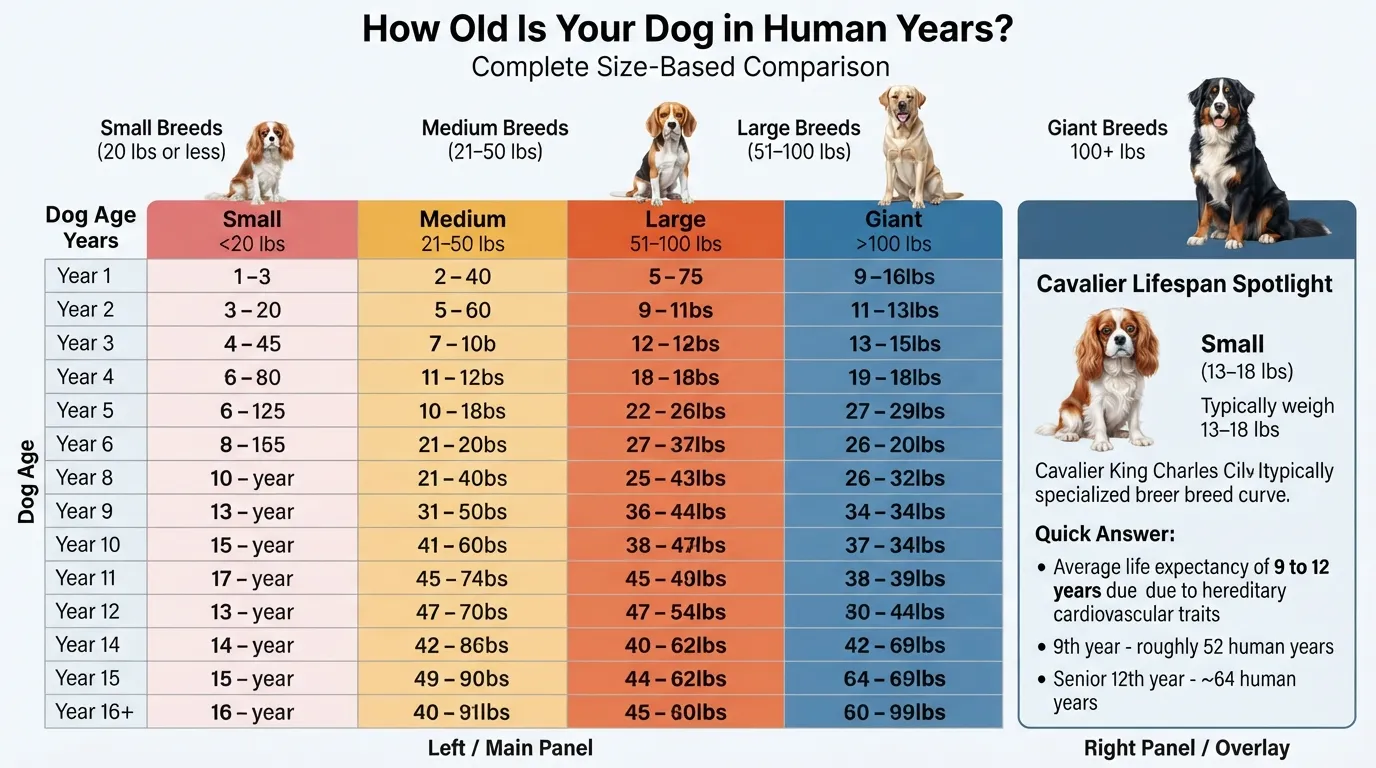
If you are looking for a quick baseline, the average Cavalier King Charles Spaniel lifespan is 9 to 14 years, with a significant portion of the breed most commonly reaching 11 to 12 years of age. Because they are a small breed, they generally enjoy a longer life than larger dogs, though their longevity is frequently impacted by breed-specific genetic health conditions.
To give you a clearer picture of what the data shows, major veterinary cohort studies—including a comprehensive paper from the Royal Veterinary College’s VetCompass program—break down the lifespan expectations for the breed:
Cavalier Lifespan Expectations
| Metric | Lifespan Detail | Source / Study Basis |
|---|---|---|
| Minimum Expected | 7 to 9 Years | Often associated with early-onset severe Mitral Valve Disease (MVD). |
| Average Lifespan | 10.5 to 12 Years | Median survival age found across large-scale UK and US veterinary database studies. |
| Maximum Potential | 14 to 16 Years | Achievable for Cavaliers with exceptional genetics and proactive senior care. |
Find out your Cavalier’s exact human age → Dog Age Calculator
Because these spaniels mature much faster than humans in their first two years before settling into a steady aging rhythm, tracking their precise developmental stage helps you tailor their diet and joint care accurately.
Cavalier Lifespan — The Real Data Myth vs Fact
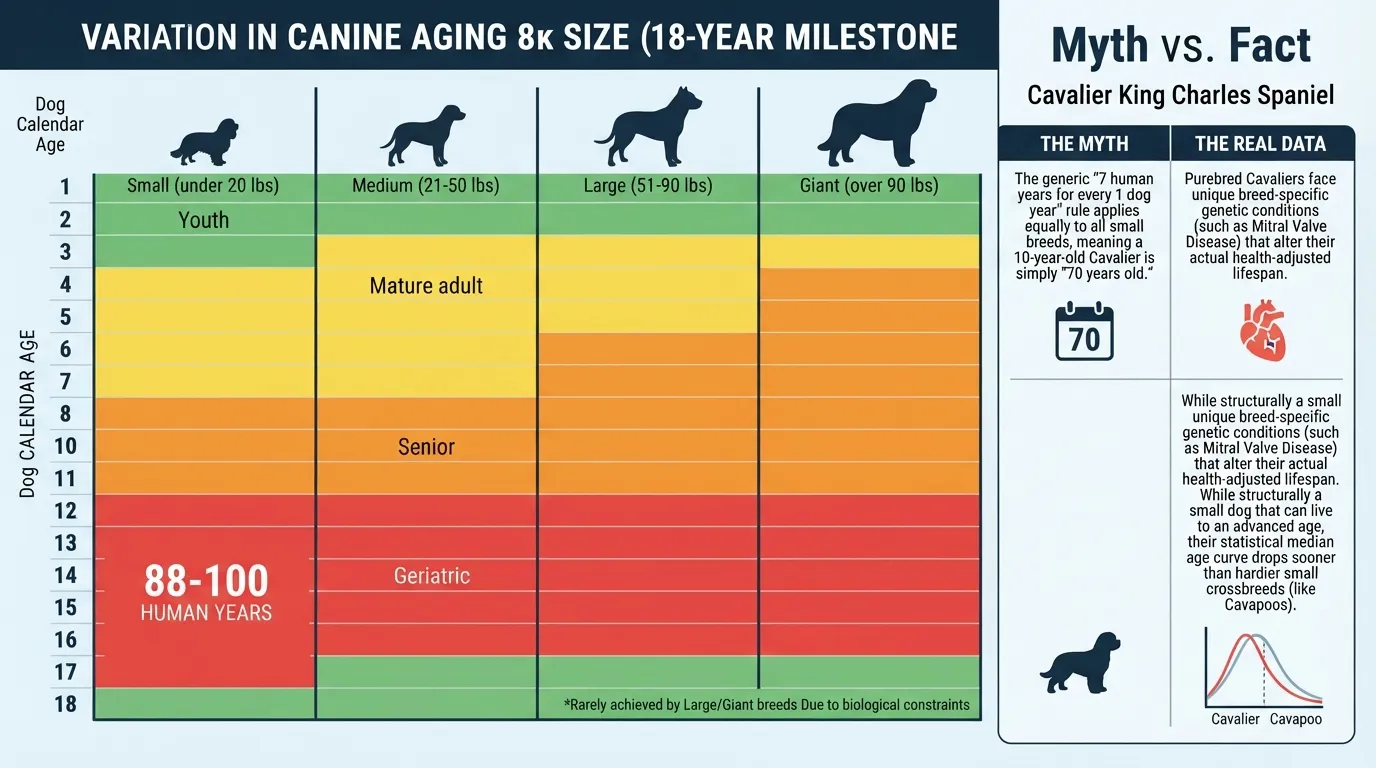
If you spend any time in online breed forums, you will likely see a lot of anxiety surrounding the life expectancy of these sweet dogs. Some corners of the internet make it sound like a ticking clock, leaving owners terrified that their beloved pet won’t make it past early old age. But what does the actual scientific data say when we separate internet rumors from clinical reality?
What Major Studies Say RVC VetCompass, DogsTrust, UK Kennel Club
When we look closely at large-scale veterinary data, a clearer and more nuanced picture emerges. Major peer-reviewed research helps establish a realistic baseline for how long do cavalier king charles spaniels live:
The RVC VetCompass Study: A landmark study conducted by the Royal Veterinary College’s VetCompass programme analyzed tens of thousands of companion animals and found the median life expectancy for Cavalier King Charles Spaniels to be 10.45 years.
UK Kennel Club Survey: The Kennel Club’s Pedigree Breed Health Survey reported a similar finding, establishing a median longevity of 10 years for the breed.
DogsTrust & Recent Longevity Compilations: While large population studies pinpoint the average right around a decade, authoritative veterinary sources like PetMD note that individual healthy dogs from well-screened lines routinely live between 12 and 15 years.
The reason for this wide window is heavily tied to genetic health, particularly early-onset heart conditions. While the baseline averages sit at a decade, proactive care, regular veterinary screenings, and healthy lifestyle choices allow many individual Cavaliers to thrive deep into their teens. If you are curious about where your companion sits in their life journey right now, you can use our built-in dog age calculator to easily see their exact human-age equivalent.
Is It True Cavaliers Don’t Live Long? Myth-busting vs. other small breeds
The short answer is no, it isn’t true that Cavaliers have a uniquely short life, but they do face a distinct mathematical disadvantage compared to some of their toy-breed cousins. As a general rule in the canine world, smaller dogs live significantly longer than large ones. However, because the Cavalier population has a high hereditary predisposition to Mitral Valve Disease (MVD), their overall breed average is pulled down below what we typically expect from a dog of their size.
To put this into perspective, let’s look at how the median lifespan of a Cavalier compares directly to the broader canine population:
Cavalier King Charles Spaniel Median Age: 10.45 years
Overall Dog Breed Median Age: 11.2 years (according to RVC VetCompass population averages)
While ultra-hardy small breeds like the Jack Russell Terrier boast averages closer to 12.7 years, a Cavalier’s average is only slightly under the general average for all domestic dogs combined. The “myth” that they cannot live a long life ignores the thousands of well-bred, carefully monitored Cavaliers who happily reach 13, 14, or 15 years old. The averages look a bit lower on paper simply because genetic conditions drag down the statistical curve, making ethical breeding and proactive heart monitoring the ultimate priorities for maximizing their time with us.
Why Do Cavaliers Get Health Issues That Shorten Their Life?
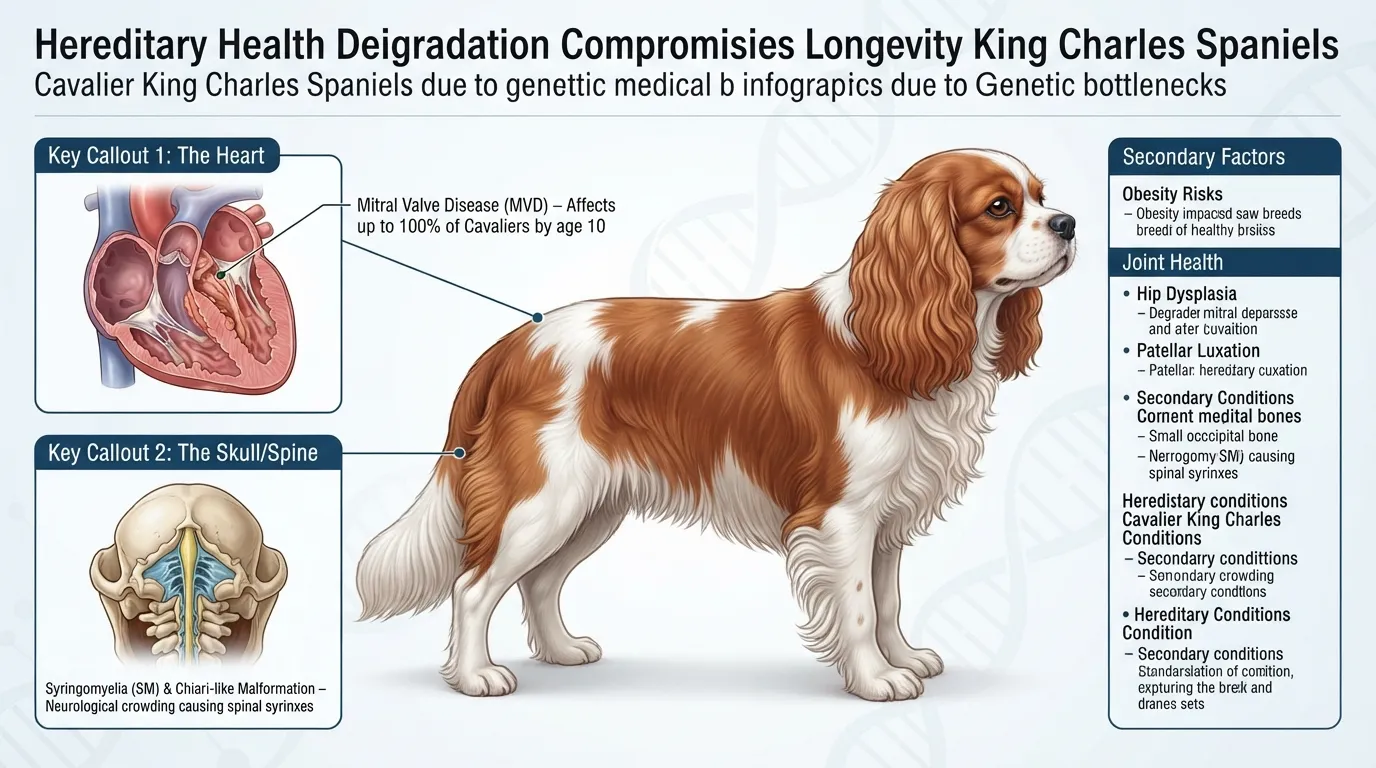
It’s heartbreaking to think about, but the very things that make Cavaliers so incredibly endearing—their sweet, expressive faces and small, comforting size—are tied to a genetic history that leaves them vulnerable to several serious health conditions. Because the original breeding pool for the modern Cavalier King Charles Spaniel was relatively small, certain genetic mutations became deeply embedded in the breed.
Understanding these risks isn’t about panicking; it’s about preparation. By knowing exactly what challenges these little dogs face, you can spot the earliest warning signs and take action before a condition compromises their quality of life.
Mitral Valve Disease MVD — #1 Cause of Death
Mitral Valve Disease is, unfortunately, the most significant health hurdle for this breed. According to extensive data from CavalierHealth.org, nearly all Cavaliers will develop some degree of MVD if they live long enough—often by age 10.
The mitral valve sits between the chambers on the left side of the heart, acting as a one-way door to keep blood flowing forward. In Cavaliers, this valve deteriorates and becomes “leaky” over time, allowing blood to flow backward. This forces the heart to work much harder, eventually leading to congestive heart failure. While it sounds terrifying, catching a heart murmur early during routine vet visits means you can start medications that significantly slow down the disease, helping your dog enjoy several more comfortable years with you.
Syringomyelia SM & Chiari-like Malformation
Often described by veterinary neurologists as one of the most complex pain syndromes in dogs, Syringomyelia (SM) stems from a structural issue called a Chiari-like malformation. Essentially, the back of the Cavalier’s skull is too small for its brain. This crowds the cerebellum and blocks the normal flow of cerebrospinal fluid, forcing the fluid into the spinal cord and creating fluid-filled cavities called syrinxes.
A landmark study by the Royal Veterinary College’s VetCompass programme highlighted the prevalence of neurological issues in the breed. SM can cause intense, neuropathic pain. If you notice your Cavalier frequently scratching at their neck or shoulder area without actually touching the skin—a behavior known as “phantom scratching”—or crying out when touched or excited, it warrants a neurological evaluation.
Hip Dysplasia & Patellar Luxation
Cavaliers love a good lap cuddle, but they are also surprisingly sporty little dogs. Unfortunately, their joints don’t always cooperate. Hip dysplasia occurs when the hip ball and socket joint don’t fit together perfectly, leading to painful friction, inflammation, and early-onset arthritis.
Alongside hip issues, patellar luxation (where the kneecap slips out of its normal groove) is incredibly common in small spaniels. You might see your Cavalier take a few running steps, do a strange little “skip” or hop on a hind leg, and then keep walking normally once the kneecap pops back into place. Keeping your dog at a lean, healthy weight is the absolute best way to minimize the stress on these vulnerable joints.
Eye Conditions Cataracts, Dry Eye, Cherry Eye
Those large, melting dark eyes are a hallmark of the breed, but they require close monitoring. Cavaliers are genetically prone to several ocular issues:
Cataracts: A clouding of the lens that blocks light from reaching the retina, which can gradually lead to blindness if left untreated.
Dry Eye Keratoconjunctivitis Sicca: An autoimmune condition where the tear glands don’t produce enough moisture, leading to painful, chronic irritation and thick discharge.
Cherry Eye: The prolapse of the gland in the third eyelid, showing up as a red, fleshy mass in the corner of the eye.
Regularly clearing away debris and using vet-prescribed drops can keep their vision sharp and comfortable well into their senior years.
Ear Infections
With those beautiful, heavy, feathered drop ears comes a major downside: zero airflow. The long ear flaps trap moisture, dirt, and warmth inside the ear canal, creating an absolute paradise for yeast and bacteria.
If your Cavalier is shaking their head constantly, rubbing their ears against the carpet, or if you notice a funky, sweet, or musty odor when you lift the ear flap, an infection is likely brewing. Weekly cleanings with a vet-approved, drying ear cleanser are a non-negotiable part of Cavalier grooming to prevent chronic inflammation from damaging their hearing.
Leading Causes of Death — Statistics Breakdown
When we look at what ultimately cuts a Cavalier’s life short, the data points clearly to cardiovascular failure. A comprehensive study by the Orthopedic Foundation for Animals (OFA) and collaborative veterinary university databases breaks down the primary mortality causes for the breed:
Cause of Death & Mortality Percentages
| Cause of Death | Percentage of Breed Mortality | Typical Age of Onset/Impact |
|---|---|---|
| Mitral Valve Disease / Heart Failure | ~42.8% | Senior years (often accelerating after age 7 or 8) |
| Cancer (Various Types) | ~25.2% | Tends to hit in mid-to-late life |
| Neurological Diseases (including SM) | ~11.5% | Can show symptoms as early as 2 to 3 years old |
| Old Age / Natural Decline | ~8.1% | Usually seen in dogs reaching 12+ years |
Because their biological clock ticks a bit differently due to these health pressures, keeping tabs on their true age milestones is vital. If you’re curious about how your dog’s age compares to human years given these breed-specific factors, you can use our dog age calculator to get an accurate, tailored picture of their current life stage.
Teacup Cavalier Warning Health & Lifespan Risk
You might see breeders advertising “Teacup,” “Micro,” or “Toy” Cavaliers, promising a dog that stays puppy-sized forever. Please be incredibly cautious. The American Kennel Club (AKC) breed standard recognizes only one size for the Cavalier: 13 to 18 pounds.
There is no such thing as a legitimate “Teacup” Cavalier. These unnaturally small dogs are usually the result of breeding the runts of multiple litters, or worse, introducing genetic dwarfism mutations. Shrinking a dog that already struggles with a skull too small for its brain and a highly vulnerable heart is a recipe for disaster. “Teacup” variants face drastically higher rates of severe hydrocephalus (fluid on the brain), fragile bones, severe blood sugar crashes, and worsened heart defects, often shortening their lifespan to just a fraction of the breed’s normal 10 to 12 years.
Early Warning Signs Owners Should Watch For
Early intervention is everything when it comes to extending your Cavalier’s life. Keep a close eye out for these subtle shifts in behavior or physical condition:
A soft, persistent cough, especially at night or right after waking up (often the very first sign of fluid building up due to MVD).
Unusual exercise intolerance, like sitting down halfway through a short walk they used to love or panting heavily after minor exertion.
“Phantom scratching” at the air near the neck or ears without making skin contact, or sudden sensitivity to being touched around the head.
A subtle “skipping” or hitching gait in the hind legs while trotting.
Frequent head shaking, ear scratching, or a strong, unusual odor coming from the ear canals.
Cloudiness inside the eye or a thick, yellowish mucus collecting in the corners.
Factors That Affect Lifespan — And How to Improve Them
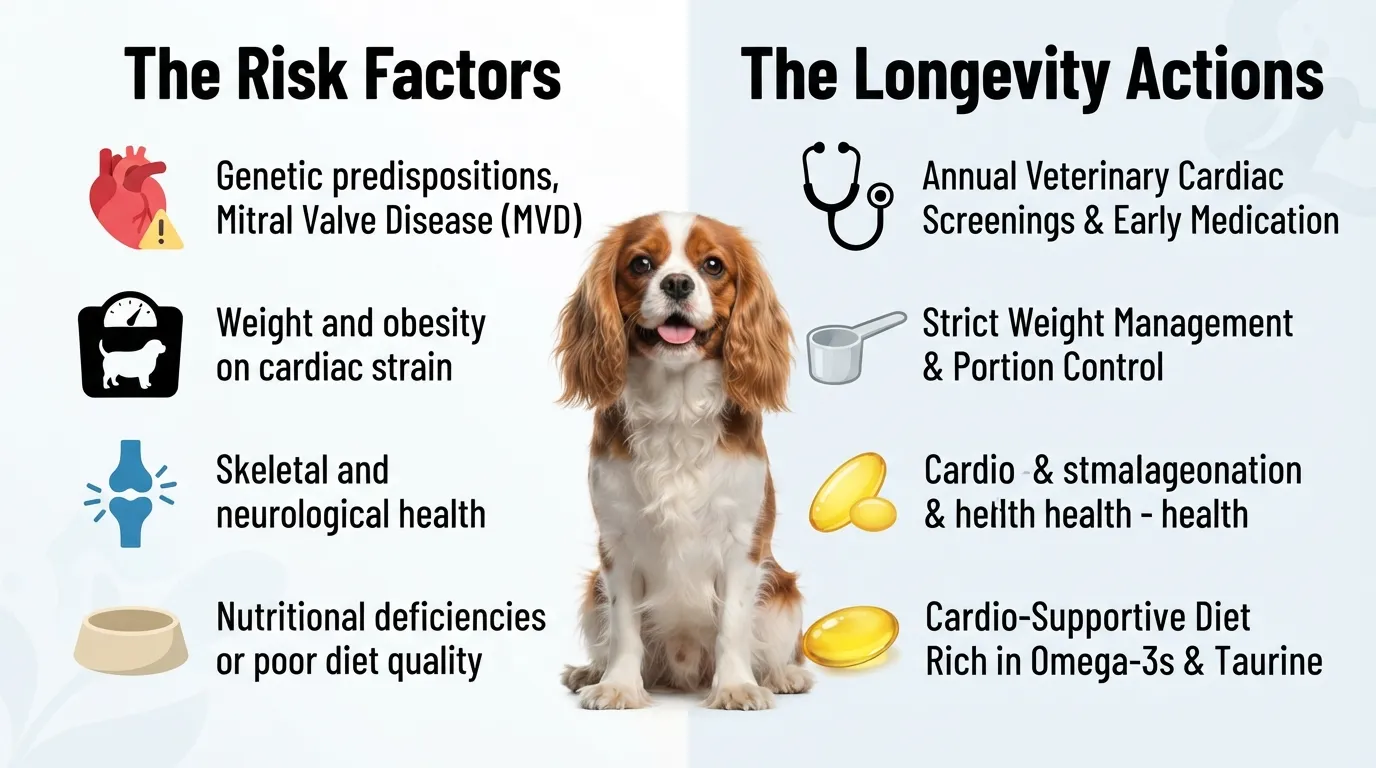
While genetics lay the foundation, a Cavalier’s daily life plays a massive role in how many birthdays they celebrate. Think of their lifespan as a puzzle where you control several of the pieces. By managing these everyday factors, you can help your pup live a longer, more vibrant life.
Genetics & Ethical Breeding
The single biggest factor in a Cavalier’s longevity happens before they are even born. Because the breed is highly prone to hereditary health issues—most notably Mitral Valve Disease (MVD) and Syringomyelia (SM)—ethical breeding isn’t just about pedigree; it’s a matter of life and death. Responsible breeders actively work to eliminate these conditions by following strict screening protocols, such as the MVD Breeding Protocol, which dictates that dogs should not be bred unless they are heart-healthy past a certain age.
If you are looking for a puppy, you have to be a bit of a detective. Don’t be shy about asking a breeder tough questions. A reputable breeder will proudly show you paperwork; a backyard breeder or puppy mill will offer excuses.
When interviewing breeders, always ask:
Can you provide official OFA (Orthopedic Foundation for Animals) or veterinary cardiologist clearances for both parents’ hearts going back at least two generations?
Are the parents screened for eye health (CERF/CAER) and patellar luxation?
Do you screen your breeding dogs for Syringomyelia using MRI scans?
What is the history of longevity in your specific breeding lines?
Diet & Weight Management
It is incredibly easy to overfeed a Cavalier. Those massive, melting brown eyes are highly effective at begging, but giving in can shave years off their life. The Association for Pet Obesity Prevention notes that even being moderately overweight can shorten a dog’s life expectancy by up to 2.5 years and significantly accelerates the onset of arthritis and heart strain.
For a breed already prone to heart murmurs, keeping your Cavalier lean is non-negotiable.
Feed high-quality protein: Look for foods with whole meats as the first ingredient and controlled fat levels.
Ditch the table scraps: High-sodium or fatty human foods put unnecessary stress on their kidneys and cardiovascular system.
Use the rib test: You should easily feel your Cavalier’s ribs without pressing hard, and they should have a visible waistline when viewed from above.
Exercise & Mental Stimulation
Cavaliers are adaptable little dogs. They will happily binge-watch a television series with you, but they are spaniels at heart and thrive with regular activity. Daily exercise keeps their cardiac muscles strong, supports joint health, and wards off the dreaded weight gain.
Physical Exercise: Aim for 30 to 45 minutes of moderate daily exercise, broken into two brisk walks. Avoid strenuous running, especially in hot or humid weather, as their slightly brachycephalic (shortened) muzzles make them prone to overheating.
Mental Stimulation: A bored Cavalier can become anxious or destructive. Use puzzle feeders, snuffle mats, and basic obedience training to keep their minds sharp. Keeping their brains active lowers stress levels, which indirectly benefits their overall immune system.
Dental Care & Hygiene
It surprises many owners to learn that dental disease is a silent killer. Periodontal disease affects a staggering 80% of dogs by age three, according to the American Veterinary Medical Association (AVMA). In Cavaliers, the danger is doubled: the bacteria that builds up in plaque can enter the bloodstream through inflamed gums, directly targeting and damaging their already vulnerable heart valves.
To protect their heart, you must protect their teeth:
Daily Brushing: Use a dog-safe enzymatic toothpaste and a soft brush. Even three times a week makes a massive difference.
Professional Cleanings: Schedule regular veterinary dental scalings under anesthesia when your vet recommends it.
Dental Chews: Use VOHC-approved (Veterinary Oral Health Council) chews to naturally scrape away plaque between brushings.
Annual Vet Checkups & Heart Screening
Because Cavaliers age faster than we do—a transformation you can track precisely using our dog age calculator to see exactly where they stand in human years—annual vet visits are critical. Once your Cavalier reaches age five, these visits should ideally happen twice a year.
Regular checkups allow your vet to listen closely for early-stage heart murmurs. Early detection of MVD means you can start cardiac medications right when they are most effective, often delaying heart failure for years. Because specialist care from a veterinary cardiologist and ongoing cardiac medications can become incredibly expensive, it is highly recommended to secure comprehensive pet insurance early in your puppy’s life, well before any pre-existing heart conditions are documented.
Male vs Female — Which Lives Longer?
If you are trying to decide between a boy or a girl based purely on expected lifespan, the data shows there is no need to sweat the decision. Large-scale epidemiological studies on canine longevity generally show no statistically significant difference between the lifespans of male and female Cavalier King Charles Spaniels.
Instead, the data heavily favors another factor: spay/neuter status. Fixed Cavaliers, regardless of gender, tend to live notably longer than intact dogs. Neutering males eliminates the risk of testicular cancer and reduces prostate issues, while spaying females protects them from life-threatening uterine infections (pyometra) and drastically reduces the risk of mammary tumors. Ultimately, your dog’s genetics, weight, and cardiac care will dictate their lifespan far more than whether they are a boy or a girl.
Cavalier Age in Human Years + Life Stages
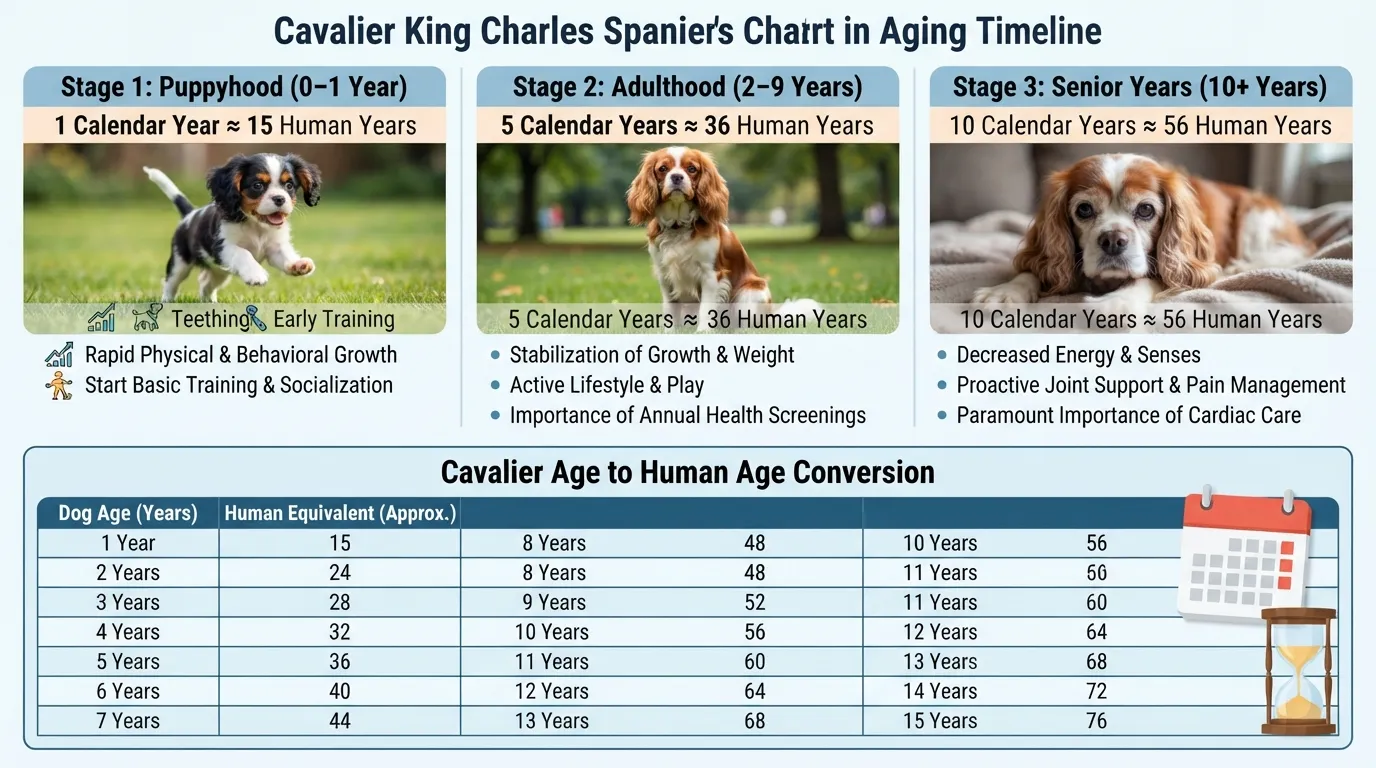
We have all heard the old rule of thumb that one dog year equals seven human years. While that is a handy piece of mental math, it is a massive oversimplification—especially for a toy breed like the Cavalier King Charles Spaniel.
Small dogs tend to mature incredibly fast in their first year of life, but their aging process slows down significantly compared to larger breeds as they grow older. This slower biological clock after infancy is exactly why small dogs generally enjoy a longer lifespan than giant breeds like Great Danes or Mastiffs. Understanding your Cavalier’s specific life stages helps you tailor their nutrition, exercise, and veterinary care to what their body actually needs at that exact moment.
Puppy / Adult / Senior — Age Chart
A Cavalier moves through its life stages at a different pace than we do. To give you a clear, realistic picture of your dog’s journey, we can break their lifespan down into three core chapters:
The Puppy Stage (0 to 12 Months): This is a period of rapid development. By the time your Cavalier reaches their first birthday, they have already achieved their full skeletal height and are biologically equivalent to a human teenager.
The Adult Stage (1 to 9 Years): This is the longest and most vibrant phase of their life. Your Cavalier is in their prime, full of energy and affectionate charm. However, because this breed is genetically predisposed to certain heart conditions, maintaining annual veterinary wellness checks during these adult years is vital.
The Senior Stage (10+ Years): According to a comprehensive 2024 Dogs Trust study that analyzed nearly 7,000 Cavaliers, the median lifespan for the breed hovers around 10.4 years. Once your pup crosses into double digits, they are officially a senior. They will require gentler exercise, extra joint support, and more frequent vet visits to monitor their heart and eyes.
The chart below maps out how a small-breed dog like the Cavalier ages year by year, utilizing modern veterinary aging models to show the true human equivalent.
Cavalier Age to Human Age Conversion Chart
| Cavalier Age (Years) | Human Age Equivalent (Years) | Life Stage |
|---|---|---|
| 1 | 15 | Puppy / Adolescent |
| 2 | 24 | Young Adult |
| 3 | 28 | Adult |
| 4 | 32 | Adult |
| 5 | 36 | Adult |
| 6 | 40 | Adult |
| 7 | 44 | Mature Adult |
| 8 | 48 | Mature Adult |
| 9 | 52 | Mature Adult |
| 10 | 56 | Senior |
| 11 | 60 | Senior |
| 12 | 64 | Senior |
| 13 | 68 | Super-Senior |
| 14 | 72 | Super-Senior |
| 15 | 76 | Super-Senior |
1 Dog Year = How Many Human Years? Small-Breed Formula
If you look closely at the data, you will notice that the “one year equals seven years” math falls completely flat.
The real small-breed formula is dynamic. The American Veterinary Medical Association (AVMA) breaks it down by looking at a small dog’s actual physical maturity. The first year of a Cavalier’s life accounts for a massive leap of roughly 15 human years. Year two tacks on about 9 more human years, bringing a two-year-old Cavalier to a human equivalent of 24.
Once they hit that two-year milestone, their aging process stabilizes into a steady, predictable cruise control. From age three onward, each single dog year adds roughly 4 human years.
The Cavalier Aging Rule: First year = 15 human years. Second year = 9 human years. Every year after = 4 human years.
This specific, slower rate of aging in their adult years is the primary reason why well-cared-for small dogs can comfortably live into their early teens.
See Your Cavalier’s Exact Human Age
Because every dog develops at a slightly individual pace based on their weight and health history, a standard chart only tells part of the story. If you want to skip the manual math and see exactly where your furry best friend stands today, you can use our interactive tool.
Our customized algorithm calculates your dog’s age down to the exact human milestone, giving you tailored insights into their current life stage.
Signs of Aging & Senior Health Monitoring
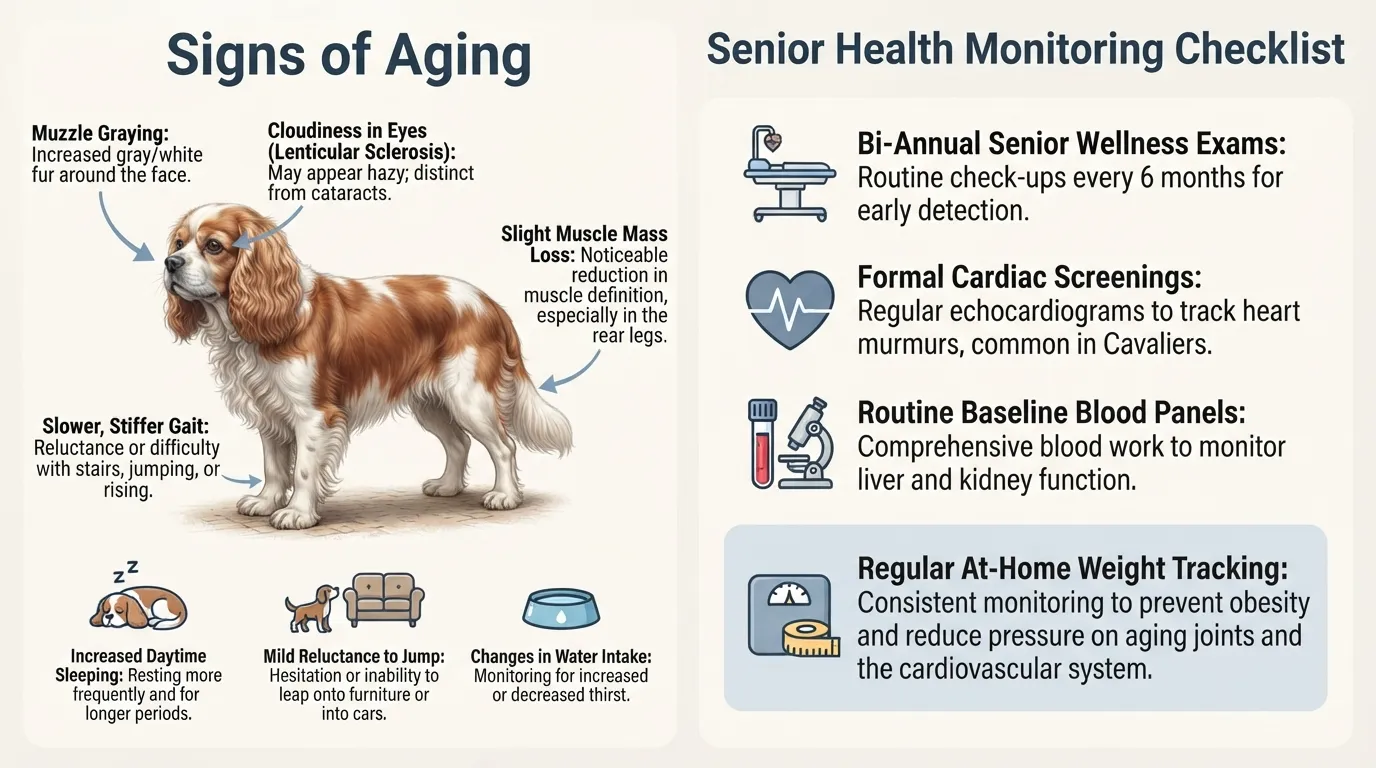
As our Cavaliers grow older, those soulful, melting eyes stay exactly the same, but their bodies begin to slow down. Because this breed is so eager to please, they often hide discomfort until a condition is well advanced. Recognizing the subtle shift from a spunky adult to a gentle senior allows you to adjust their care in real time—ensuring their golden years are as comfortable as possible.
Physical Signs of Aging
The most obvious change you’ll notice is a frosting of silver or white hair around their muzzle, eyebrows, and chest. For Blenheim or Ruby Cavaliers, this graying can start as early as 6 or 7 years old, though it doesn’t necessarily mean they are “old” just yet.
Beyond the changing coat color, watch for these physical indicators:
Cloudy Eyes: You might notice a bluish, hazy sheen in their pupils. This is often lenticular sclerosis, a normal aging change that doesn’t cause blindness, but it’s vital to have a vet check it to rule out cataracts.
Loss of Muscle Mass: Senior Cavaliers often lose muscle tone, particularly along their hindquarters and spine. Their hips might look a bit more prominent, and they may seem slightly more fragile when you lift them.
Brittle Nails and Calluses: Older dogs tend to develop thicker, more brittle nails that grow faster because they aren’t wearing them down on walks. You may also notice tougher skin or calluses on their elbows.
Because the aging process happens relatively fast in dog years, it can be helpful to track where they stand. You can easily check your dog’s exact human-age equivalent using our dog age calculator on this site to better understand their current life stage.
Behavioral Changes in Senior Cavaliers
Changes in how your Cavalier acts are often direct responses to how they physically feel. A dog who suddenly stops jumping onto the couch isn’t just “getting stubborn”—they are likely dealing with joint stiffness.
Keep a close eye out for these behavioral shifts:
Altered Sleep Patterns: Your senior will likely sleep more deeply during the day but might become restless or pace at night. This nighttime waking can sometimes be an early sign of canine cognitive dysfunction (similar to dementia) or a sign that they need a midnight bathroom break.
Increased Dependency or Anxiety: Cavaliers are natural shadows, but seniors can become exceptionally clingy. If their hearing or vision is fading, they rely on your presence more than ever to feel safe and can develop new separation anxieties.
Reluctance to Exercise: If your dog starts lagging behind on walks, sitting down mid-route, or hesitating at the bottom of the stairs, their body is asking for a slower pace.
When to Switch to Senior Dog Food
Most veterinarians recommend transitioning a Cavalier to a senior diet around 7 to 8 years of age. However, this shouldn’t be a hard-and-fast rule based solely on the calendar; it depends entirely on their body condition and energy levels.
You should consider making the switch if they start gaining weight due to a slower metabolism, as excess weight puts dangerous strain on a Cavalier’s heart and joints. Conversely, some very old Cavaliers actually lose weight and require highly digestible, nutrient-dense senior formulas to maintain their condition. Look for senior foods rich in Omega-3 fatty acids (like EPA and DHA) to support brain and joint health, and ensure the kibble size is easy for older teeth to manage. Always transition to a new food gradually over 7 to 10 days to avoid upsetting their sensitive stomachs.
Senior Health Watch Checklist
To stay ahead of age-related issues, use this quick checklist during your weekly grooming and cuddle sessions. Catching these signs early makes a massive difference in managing breed-specific conditions.
Heart Health: Listen closely to their breathing. If you notice a persistent cough (especially at night or after waking up), heavy breathing while resting, or sudden exercise intolerance, schedule a vet visit immediately. These are classic early warning signs of Mitral Valve Disease (MVD).
Joint & Mobility Health: Watch how they stand up from a nap. Limping, stiffness that eases up after a few minutes of moving, or a “bunny-hopping” gait in the rear legs point toward arthritis or hip issues.
Eye & Ear Health: Test their senses naturally. Drop a quiet object like a cotton ball to see if they track it, or notice if they startle when you approach them from behind. Bumping into furniture or failing to respond to standard vocal cues means their sight or hearing is degrading.
Dental & Lump Check: Run your hands across their entire body to feel for new lumps, bumps, or swollen lymph nodes. Gently lift their lips too; bad breath, red gums, or yellow tartar buildup can introduce harmful bacteria straight into an elderly dog’s bloodstream.
Cavalier vs. Other Breeds & Crossbreeds Lifespan Comparison
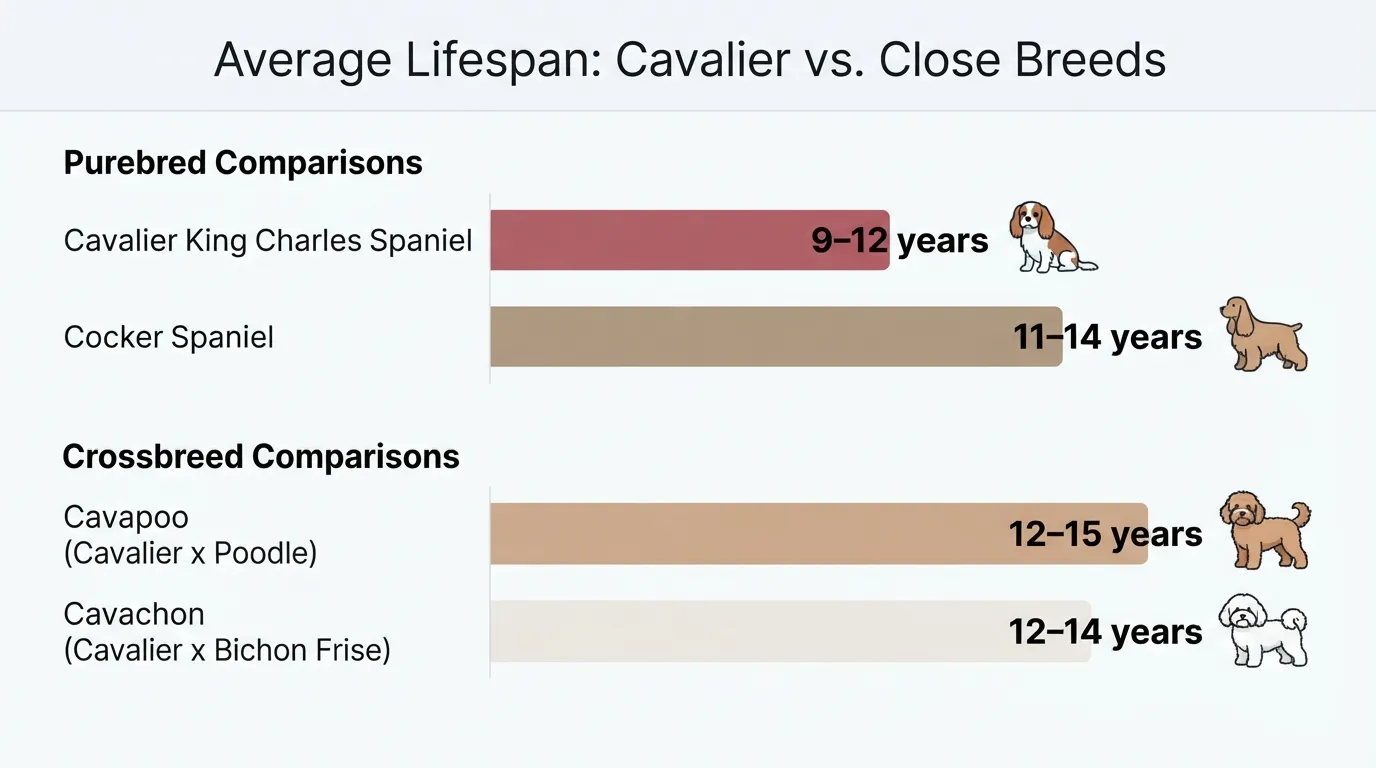
When considering bringing a dog into your life, understanding how their life expectancy aligns with similar breeds is incredibly helpful. Cavaliers are famously affectionate, but their genetics do give them a different longevity profile compared to their spaniel cousins and modern designer crossbreeds.
Cavalier vs. Cocker Spaniel
If you are torn between a Cavalier and a Cocker Spaniel, the timeline of your years together is a major factor to weigh. A comprehensive study by the Royal Veterinary College’s VetCompass program tracked the longevity of various popular breeds and highlighted a distinct gap between the two.
Cavalier King Charles Spaniel: Typically lives between 9 to 12 years. Their lifespan is unfortunately compressed due to highly prevalent breed-specific genetic conditions, particularly Mitral Valve Disease (MVD).
Cocker Spaniel: Enjoys a notably longer average lifespan of 11 to 14 years.
While Cockers are slightly larger and more energetic, they generally benefit from a more robust genetic baseline than purebred Cavaliers. If you are curious about how these lifespans translate into human terms at different stages of their lives, you can easily check your dog’s milestones using our dog age calculator.
Cavalier vs. Cavapoo / Cavachon Crossbreed Longevity
The rise of “designer” crossbreeds like the Cavapoo (Cavalier crossed with a Poodle) and the Cavachon (Cavalier crossed with a Bichon Frise) isn’t just about getting a low-shedding coat. It is also heavily driven by the concept of hybrid vigor—the biological theory that mixing two distinct genetic pools can reduce the expression of recessive health issues.
Data published in Scientific Reports supports the idea that crossbred dogs frequently outlive their purebred counterparts. Here is how they stack up:
Cavapoo: Commonly reaches 12 to 15 years. By introducing the Poodle lineage, Cavapoos often bypass the early-onset heart issues that plague purebred Cavaliers, while inheriting the Poodle’s notable longevity.
Cavachon: Typically lives between 12 to 14 years. The Bichon Frise is a naturally long-lived breed, and this cross tends to result in a hardier companion.
A Note on Hybrid Vigor: Crossbreeding is not a magical shield against poor health. A Cavapoo or Cavachon will only benefit from hybrid vigor if the parent dogs are rigorously health-tested. A puppy born to an un-screened Cavalier parent can still inherit early-onset heart murmurs. Always ask breeders for proof of clear cardiology checks.
Frequently Asked Questions
Not all, but a staggering majority do if they live long enough. According to specialized health registries like CavalierHealth.org, approximately 50% of Cavaliers show signs of Mitral Valve Disease (MVD) by age 5, and nearly 100% will develop it if they reach 10 years of age. MVD is a progressive genetic condition where the heart's mitral valve degrades over time. While it sounds terrifying, a heart murmur doesn't mean an immediate death sentence. Many Cavaliers live comfortable lives for years after a diagnosis with the help of early veterinary screening and modern cardiac medications.
Because of early-onset genetic conditions like severe MVD or Syringomyelia (a neurological condition involving fluid pockets in the spinal cord), some severely affected purebreds have tragically short lifespans, sometimes passing away at just 5 to 7 years old.
On the bright side, well-bred Cavaliers regularly defeat the statistical averages. The oldest recorded Cavalier King Charles Spaniel on record was a UK dog named Tuppence, who lived to an incredible 19 years and 4 months. Records from long-lived breeding lines also show multiple instances of individuals living vibrant lives well into their late teens (16 to 18 years).
Yes, dramatically. Because of their structural genetic predisposition to heart failure, weight management is the single most controllable factor in a Cavalier's life expectancy. Carrying even 2 to 3 pounds of extra weight puts massive, unnecessary stress on an already struggling cardiovascular system.
An overweight Cavalier will progress into advanced stages of heart failure much faster than a lean one. Feeding a high-quality, calorie-controlled diet rich in Omega-3 fatty acids (EPA/DHA), taurine, and L-carnitine supports cardiac muscle health and helps keep them active for longer.
On the bright side, well-bred Cavaliers regularly defeat the statistical averages. The oldest recorded Cavalier King Charles Spaniel on record was a UK dog named Tuppence, who lived to an incredible 19 years and 4 months. Records from long-lived breeding lines also show multiple instances of individuals living vibrant lives well into their late teens (16 to 18 years).
There is no statistically significant difference in lifespan based strictly on gender. Broad population studies from the Royal Veterinary College's VetCompass project show that while female dogs across all breeds live about 4 months longer on average, this gap shrinks dramatically when looking at breed-specific genetic limits.
Instead, neutering status has a far bigger impact. Spayed females and neutered males live longer, healthier lives on average than intact dogs because alteration eliminates the risks of pyometra (a life-threatening uterine infection) and reproductive cancers.
An overweight Cavalier will progress into advanced stages of heart failure much faster than a lean one. Feeding a high-quality, calorie-controlled diet rich in Omega-3 fatty acids (EPA/DHA), taurine, and L-carnitine supports cardiac muscle health and helps keep them active for longer.
On the bright side, well-bred Cavaliers regularly defeat the statistical averages. The oldest recorded Cavalier King Charles Spaniel on record was a UK dog named Tuppence, who lived to an incredible 19 years and 4 months. Records from long-lived breeding lines also show multiple instances of individuals living vibrant lives well into their late teens (16 to 18 years).
If you are buying from a reputable, ethical breeder who performs mandatory health screenings, expect to pay between $2,500 and $4,500. While you can find puppies listed online for much less, these cheaper options are often from backyard breeders or puppy mills who skip expensive cardiac and neurological testing.
The True Cost: Buying a cheaper puppy almost always means paying triple the price later in veterinary bills. When shopping, always ask to see official OFA (Orthopedic Foundation for Animals) clearance certificates for both parent dogs' hearts and eyes.
Absolutely. From a behavioral standpoint, they are arguably the perfect dog for beginners. They were bred specifically to be companion lapdogs, meaning they completely lack the intense instinctual drives that trip up first-time owners—they don't have the high prey drive of a terrier, the obsessive guarding instincts of a working breed, or the destructive energy of a bored herding dog.
They are incredibly forgiving, highly eager to please, and naturally gentle. The only steep learning curve for a beginner is medical awareness; a first-time owner must be proactive about routine vet checks, echocardiograms, and weight tracking to ensure their sweet companion gets as many happy years as possible.
The True Cost: Buying a cheaper puppy almost always means paying triple the price later in veterinary bills. When shopping, always ask to see official OFA (Orthopedic Foundation for Animals) clearance certificates for both parent dogs' hearts and eyes.
🐾 Other Age Guides

Gulfam Haider Mehdi
Founder & Developer
I built Dogagescalculator.com to give dog owners honest, science-backed answers instead of the outdated "×7" myth. Every figure here is checked against AKC, AVMA, and published veterinary research.
More about the author & this site →📌 Featured Guides
can you change a dog’s name after 2 years
→
pitbull dog years to human years
→
what is the life span of a blue heeler
→
when do dogs start going grey
→
How much food should I feed my German Shepherd
→
how much does a mini australian shepherd weigh
→
Bernese Mountain Dog Newfoundland mix
→
yorkie mix breeds
→
Nova Scotia Duck Tolling Retriever vs Golden Retriever
→
How Long Do Boston Terriers Live
→
Comments