3/4 Great Pyrenees 1/4 Anatolian Shepherd Mix: Complete Breed Guide
If you are looking for a giant Livestock Guardian Dog (LGD) that balances the calm, loving nature of a Great Pyrenees with the sharp protective instincts of an Anatolian Shepherd, a 3/4 Great Pyrenees 1/4 Anatolian Shepherd mix is an ideal crossbreed.
With 75% Great Pyrenees genetics, this mix typically features a thick double coat and a deep family bond. The 25% Anatolian Shepherd bloodline adds a slightly leaner frame, higher athleticism, and stronger territorial instincts. This guide covers physical traits, size growth, temperament, and care needs to help you determine if this guardian mix fits your property.
Quick Genetic & Physical Overview
| Trait | Details |
| Genetic Breakdown | 75% Great Pyrenees / 25% Anatolian Shepherd |
| Average Weight | Males: 90–140+ lbs |
| Average Height | 27–32 inches at the shoulder |
| Coat Type | Dense, weather-resistant double coat |
| Lifespan | 10–13 years |
| Primary Role | Livestock guardian, farm protector, family guardian |
What Is a 3/4 Great Pyrenees 1/4 Anatolian Shepherd Mix?
Understanding the Genetic Ratio & Why Breeders Choose It
A 3/4 Great Pyrenees 1/4 Anatolian Shepherd mix is a specialized backcross Livestock Guardian Dog (LGD). To achieve this precise ratio, a full-blooded Great Pyrenees is typically bred with a first-generation (F1) Great Pyrenees / Anatolian Shepherd cross. The resulting puppies inherit roughly 75% of their genetic makeup from the Great Pyrenees and 25% from the Anatolian Shepherd.
Working ranchers and LGD enthusiasts deliberately choose this 75/25 ratio to refine specific guardian traits:
Softened Anatolian Intensity: Pure Anatolian Shepherds are exceptionally high-drive, fiercely territorial, and can be overly sharp with human visitors. Pulling 75% Great Pyrenees genetics heavily cushions that aggressive edge while preserving strong working instincts.
Enhanced Coat Weather Resistance: Pure Pyrenees possess thick, double coats suited for freezing winters, but they mat easily and hold debris. The 25% Anatolian influence tightens the undercoat, reducing matting without sacrificing cold-weather insulation.
Improved Heat Tolerance: Great Pyrenees often struggle in summer heat. Anatolian genetics contribute higher heat resilience, leaner muscle distribution, and slightly tighter jowls for better cooling.
Nurturing Stock Instincts: Pyrenees are world-renowned for their gentle “mothering” nature over small livestock (like goats, lambs, and poultry). This ratio maintains that passive patience while adding the faster, athletic response time of the Anatolian against apex predators like coyotes or wolves.
How to Confirm Your Dog’s Exact Ratio DNA Testing
If you adopted your dog from a shelter, rescue, or farm without certified parental papers, visually guessing an LGD’s genetic breakdown is notoriously unreliable. Many 50/50 mixes, pure Pyrenees, or triple-mix guardians look virtually identical to a 3/4 Pyrenees cross during puppyhood.
To scientifically verify if your dog carries this exact 75/25 ratio, use a reliable direct-to-consumer canine DNA test.
Choose the Right Panel: Opt for high-resolution genetic tests like Embark or Wisdom Panel, which maintain extensive database references for both American Kennel Club (AKC) Great Pyrenees and working Anatolian lines.
Analyze the Chromosome Map: Look beyond the top-line percentage readout. A true 3/4 to 1/4 backcross will show one full parent side composed entirely of Great Pyrenees DNA markers, while the second parent side split evenly between Pyrenees and Anatolian segments.
Check Health & Traits Markers: These test panels also identify key inherited health conditions—such as Hip Dysplasia markers or Degenerative Myelopathy—and predict adult coat length, shedding tendencies, and estimated mature weight.
Tip: If you are managing a growing LGD puppy and want to track their age against physical development milestones, you can check their equivalent human stage using our Dog Age Calculator.
Appearance — What Does This Mix Look Like?
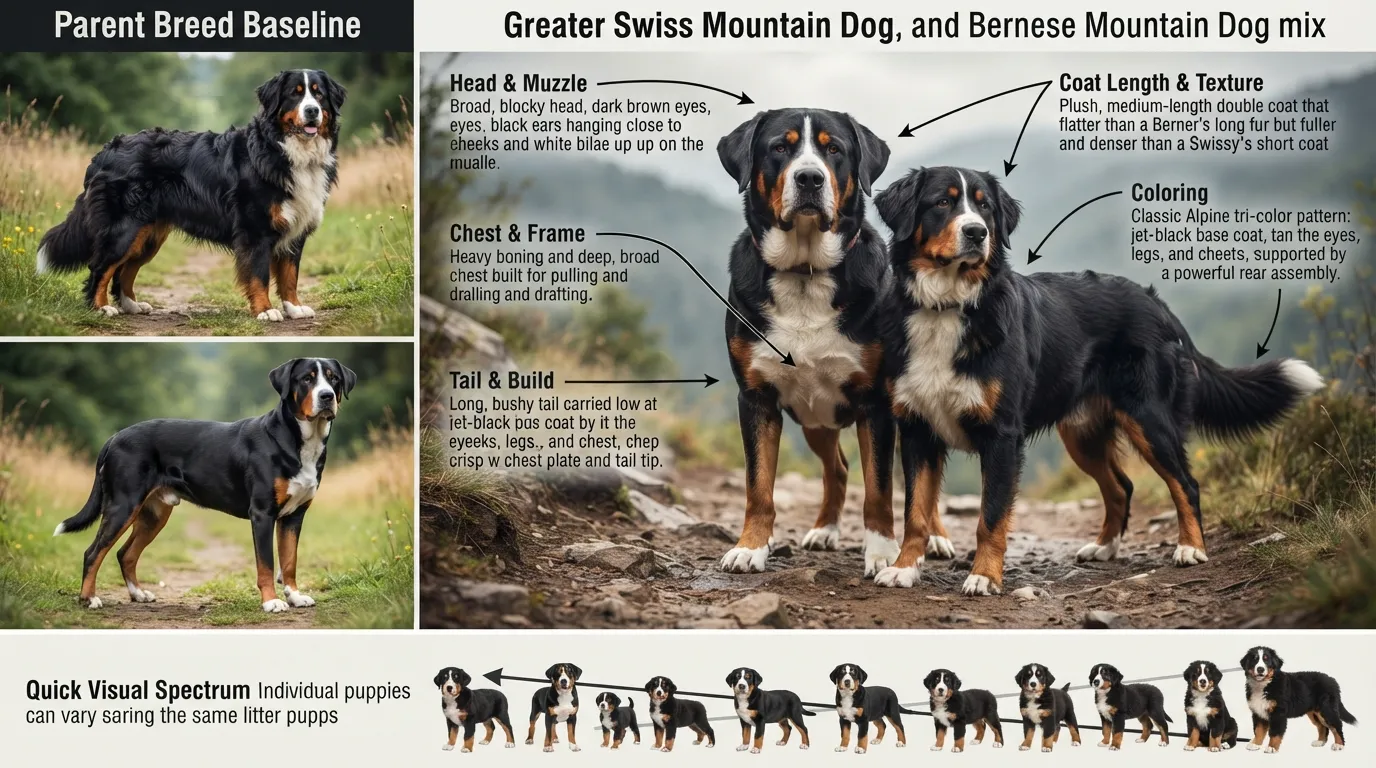
Jab aap 3/4 Great Pyrenees aur 1/4 Anatolian Shepherd mix ko dekhte hain, to pehli nazar me ye ek massive, majestic Great Pyrenees jaisa hi dikhta hai. Le kin pass jaane par Anatolian ke genes subtle physical cues ki shakal me nazar aate hain. Genetics ka simple rule hai: 75% Pyrenees heritage hone ki wajah ke unka overall framework Pyrenees jaisa heavyset hota hai, jabke 1/4 Anatolian background facial features aur coat management ko slightly modify kar deta hai.
Coat, Color & Build
Is specific ratio mix ki physical appearance dominant Pyrenees traits aur refined Anatolian features ka ek unique balance hoti hai:
Build & Bone Structure: Is mix ka frame heavy, solid, aur rectangular hota hai. Chests deep aur broad hotay hain, jo inko strong working-dog presence dete hain. Male dogs ka weight 115 se 145 lbs aur height 28 se 31 inches tak hoti hai. Females thodi lighter hoti hain, jinka weight 90 se 120 lbs aur height 26 se 29 inches rehti hai. Pure Anatolian ke muqable me inki bone density zyada heavy hoti hai.
Head & Facial Features: Head broad aur slightly rounded hota hai. pure Pyrenees ke muqable me muzzle thoda square aur tight lips wala ho sakta hai (kam drool). Unka signature black mask feature—jo Anatolian Shepherd ki pehchan hai—faint ya partial shadow ki shakal me muzzle ya ears par dikh sakta hai.
Coat Type & Shedding: Is cross ko humesha Pyrenees ka thick, weather-resistant double coat milta hai, lekin 25% Anatolian input ki wajah se coat ki length pure Pyrenees se thodi choti aur coarse ho sakti hai. Iska faida ye hai ke coat me matting aur tangles kam hote hain, lekin saal me do baar heavy seasonal shedding (blow-coat) zaroor hoti hai.
Color Variations: Overwhelmingly white, cream, ya off-white base color hota hai. Muzzle, ears, aur back par badger markings (gray, tan, ya reddish brown patches) bohot common hain jo maturity ke saath slightly fade ho sakti hain.
Rear Dewclaws: Great Pyrenees standard ke mutabiq in dogs me rear double dewclaws milna bohot common hai. Ye fully functional bone structure hote hain, isliye inko remove na karwane ki recommendation di jati hai jab tak koi medical necessity na ho.
Puppy Growth Chart — Weight by Month
Giant breeds ki growth pace baki dogs se bilkul alag hoti hai. Ye puppies 18 se 24 months tak grow karte hain. Is mix ki month-by-month weight tracking niche di gayi hai:
| Age (Months) | Male Weight Range | Female Weight Range | Growth Milestone & Notes |
|---|---|---|---|
| 2 Months | 20 – 28 lbs | 18 – 24 lbs | Rapid initial bone growth; weaning complete. |
| 4 Months | 45 – 58 lbs | 40 – 50 lbs | Tall and lanky phase; joint safety is critical here. |
| 6 Months | 70 – 85 lbs | 60 – 72 lbs | Reaches ~60% of adult height; appetite peaks. |
| 9 Months | 90 – 110 lbs | 75 – 90 lbs | Frame height slows; chest starts widening. |
| 12 Months | 105 – 125 lbs | 85 – 100 lbs | Sexual maturity reached; structural growth continues. |
| 18 Months | 115 – 140 lbs | 90 – 115 lbs | Muscle mass filling out; coat reaches full density. |
| 24 Months | 120 – 150 lbs | 95 – 120 lbs | Full physical and mental maturity. |
Pro Tip: Giant breed puppies ko overdose nutrition se bachana chahiye. Fast growth rate joints aur hips par extra strain daalta hai. Agar aap apne 3/4 Great Pyrenees 1/4 Anatolian mix puppy ki biological age ko human years me compare karna chahte hain, to exact giant-breed calculations ke liye humara Dog Age Calculator try karein.
Temperament & Personality
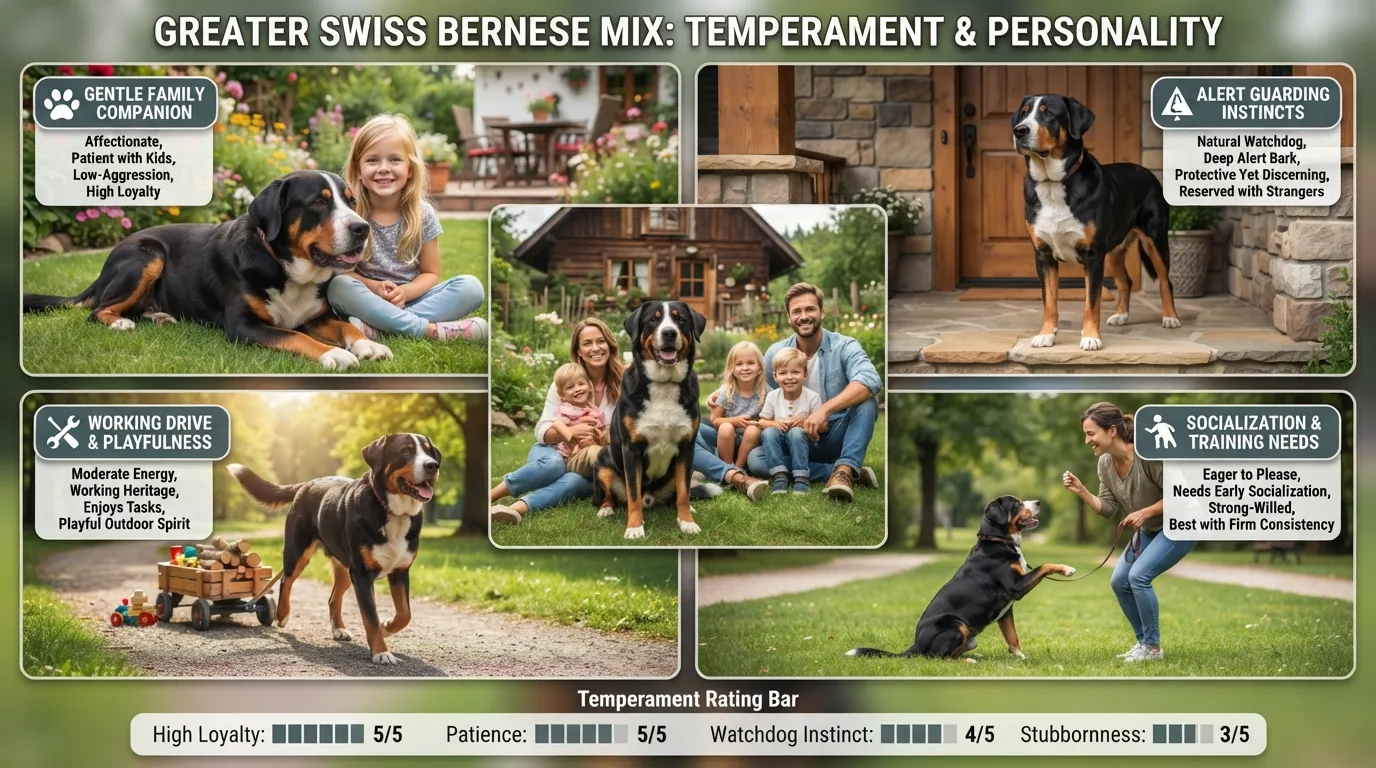
When you mix 3/4 Great Pyrenees with 1/4 Anatolian Shepherd, you get a massive, loyal guardian whose personality is heavily tilted toward the Pyrenees—soft with family, intensely vigilant, and naturally territorial. The 25% Anatolian DNA adds a sharper edge, making this hybrid slightly more intense and assertive than a purebred Pyrenees.
Behavior with Family & Children
With their immediate human family, the 3/4 Great Pyrenees 1/4 Anatolian Shepherd mix acts like a oversized, affectionate teddy bear. They form deep emotional bonds and instinctual protective attachments to everyone in the household, especially kids.
Gentle Giants: Despite weighing anywhere from 90 to 140 pounds, they show remarkable spatial awareness around toddlers and elderly family members.
Patient, Not Playful: They tolerate light roughhousing and clumsy affection from children, but they prefer calm companionship over high-energy games like fetch.
Suspicious of Strangers: While loving toward “their” humans, they do not automatically accept guests. They will study a new visitor closely until you explicitly signal that the person is safe.
Behavior with Other Pets Dogs, Cats
This mix treats other household animals through the lens of livestock protection—if an animal is part of their “pack,” they will guard it with their life; if it is an unknown intruder, they will react aggressively.
Household Cats & Small Dogs: If raised alongside them from puppyhood, they are exceptionally gentle and protective.
Same-Sex Dog Aggression: The 25% Anatolian influence increases the risk of same-sex aggression, particularly between two unneutered males or assertive females.
Strange Animals: Stray dogs, unfamiliar neighborhood cats, or wild raccoons entering the yard will be treated as threats and chased off without hesitation.
Behavior with Livestock Livestock Guardian Dog Suitability
Thanks to the strong working genetics of both parent breeds, the 3/4 Pyrenees Anatolian mix is an elite Livestock Guardian Dog (LGD). The heavy Pyrenees heritage gives them a strong bonding instinct with farm animals like sheep, goats, and chickens.
Natural Instinct: Puppies often display innate guardian habits—sleeping near the herd and placing themselves between stock and fence lines—by 5 to 6 months of age.
Predator Deterrent: The Anatolian quarter boosts their physical agility and willingness to confront apex predators like coyotes, wolves, or stray dogs directly.
Bonding Phase: To build a reliable LGD, keep the puppy penned adjacent to livestock from 8 to 16 weeks so they view the herd as their primary family rather than lawn pets.
Independence, Intelligence & Escape Tendencies
This is a working breed combination engineered over centuries to make split-second survival decisions in the mountains without human direction. Do not expect golden retriever-style obedience.
Selective Hearing: They are highly intelligent but stubborn. They understand your commands perfectly well; they simply choose whether executing them makes sense in the moment.
Boundary Testers: The Pyrenees urge to roam wide territories coupled with the Anatolian’s problem-solving skills makes them notorious escape artists.
Fencing Requirements: Standard 4-foot chain-link fences will not hold them. They require securely anchored, dig-proof fencing at least 5 to 6 feet high.
Barking & Night Alert Behavior
Nighttime barking is the most challenging behavioral trait of this mix. Both parent breeds were bred to patrol pastures in the dark, using deep, booming barks to warn off predators before a fight becomes necessary.
Vocal Patrols: Expect your 3/4 Pyrenees Anatolian mix to patrol your yard at dusk and bark at distant noises—wind rustling leaves, car doors slamming down the street, or passing wildlife.
Deep Resonance: Their bark carries for miles. In suburban or close-quarters neighborhoods, this trait frequently leads to noise complaints from neighbors.
Management Strategy: Bringing the dog inside at night significantly dampens their impulse to alert-bark, allowing them to shift their focus from patrolling to resting beside your bed.
Ideal Living Environment
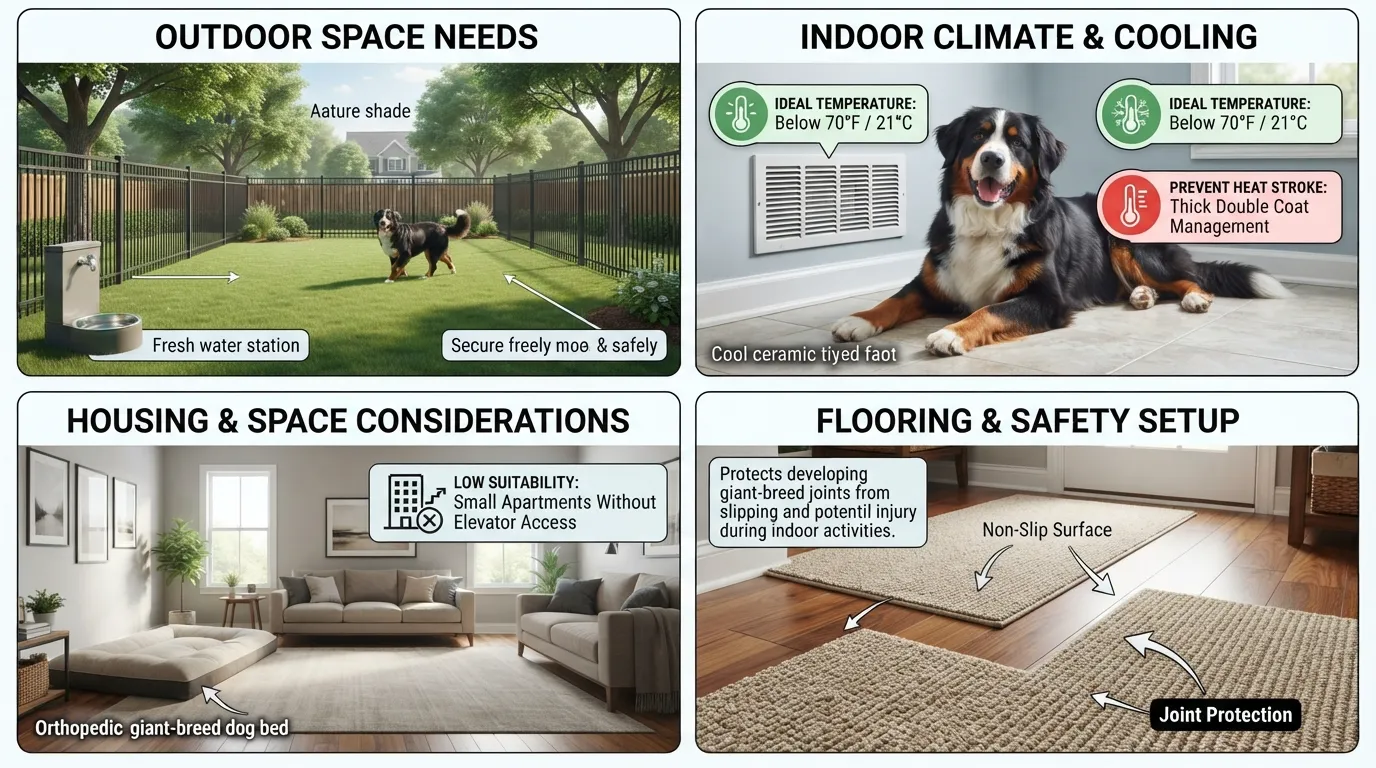
Iss 3/4 Great Pyrenees 1/4 Anatolian Shepherd mix ko ghar lane se pehle aapko unki physical aur mental space ki zarooriyat ko samajhna hoga. Kyunki iss dog ke genetics mein 75% Great Pyrenees aur 25% Anatolian Shepherd ka bloodline hai, inka working livestock guardian (LGS) instinct bohot strong hota hai. Inhe aisi jagah chahiye jahan ye apni territory ko secure feel kar sakein aur regularly patrolling kar sakein.
Farm vs Apartment vs Suburban Home — Is It Right for You?
Is exact ratio (3/4 Pyrenees mix) wale dog ke liye sabse behtar environment aur sabse mushkil setups neeche diye gaye hain:
Farm ya Large Homestead Best Match : Ye setup iss mix ke liye perfect hai. Pyrenees genetics ki waja se ye raat ke waqt ziyada alert rehte hain aur perimeter check karte hain. Inhe 2 se 5 acre ka fenced area chahiye hota hai jahan ye bina bored hue ghoom sakein. Livestock (bhed, bakriyan, ya poultry) ko guard karne ka kaam inki mental health ko fit rakhta hai.
Suburban Home Possible with Strict Conditions : Agar aap sub-urbs mein rehte hain, toh kam se kam 5-6 foot uonchi solid physical fence bohot zaroori hai. Pyrenees bloodline mein “roaming urge” (bina waja door nikal jaane ki aadat) bohot zyada hoti hai. Underground ya electronic fences inpar kaam nahi karti kyunki inka thick coat impulse stimulation ko block kar deta hai aur instinct ke aage wo pain ignore kar dete hain.
Apartment Living Strict NO: Apartment mein iss mix ko rakhna ek badi galti hogi. Pehli baat, inka weight 100 se 140+ lbs tak jata hai, jisse cramped spaces mein inko claustrophobia jaisa stress hota hai. Dusri aur sabse badi waja hai inka nocturnal barking (raat ko bhonkna). Ye door kisi gadi ki awaaz ya hawa ki sarsarahat par bhi raat 2 baje continuous deep bark shuru kar sakte hain, jo apartment neighbors ke sath severe issues create karega.
Climate & Heat Tolerance Thick Double Coat
Is 75/25 mix mein Great Pyrenees ka influence dominant hone ki waja se inke paas ek extremely dense, weather-resistant double coat hota hai. Anatolian Shepherd ka 25% short/medium coat iski thickness ko minor reduce karta hai, lekin ye ab bhi ek heavy-coated cold-weather breed hi rehti hai.
Cold Weather Performance: Ye dogs -10°C se -15°C tak ke temperature mein bhi comfortable rehte hain. Snow aur chilled windows inke liye playful environment banate hain.
Summer & Heat Management: Extreme heat (32°C / 90°F se oopar) inke liye severe heat stroke ka risk paida karti hai. Garmiyon mein inke liye shade, fresh cold water, aur air-conditioned indoor rest area hona lazmi hai.
Grooming Warning Never Shave: Kabhi bhi inka double coat shave mat karein. Ye coat inhein garmi se bhi insulate karta hai aur sun burns se bachata hai. Shaving se inka coat permanently damage ho sakta hai aur thermoregulation ka natural process tabah ho jata hai.
Agar aapka living environment inki space, fencing, aur temperature requirements ko poora kar sakta hai, toh ye mix aapki property aur family ke liye ek unmatchable, loyal protector sabit hoga.
Pros & Cons of Owning a 3/4 Great Pyrenees 1/4 Anatolian Shepherd Mix
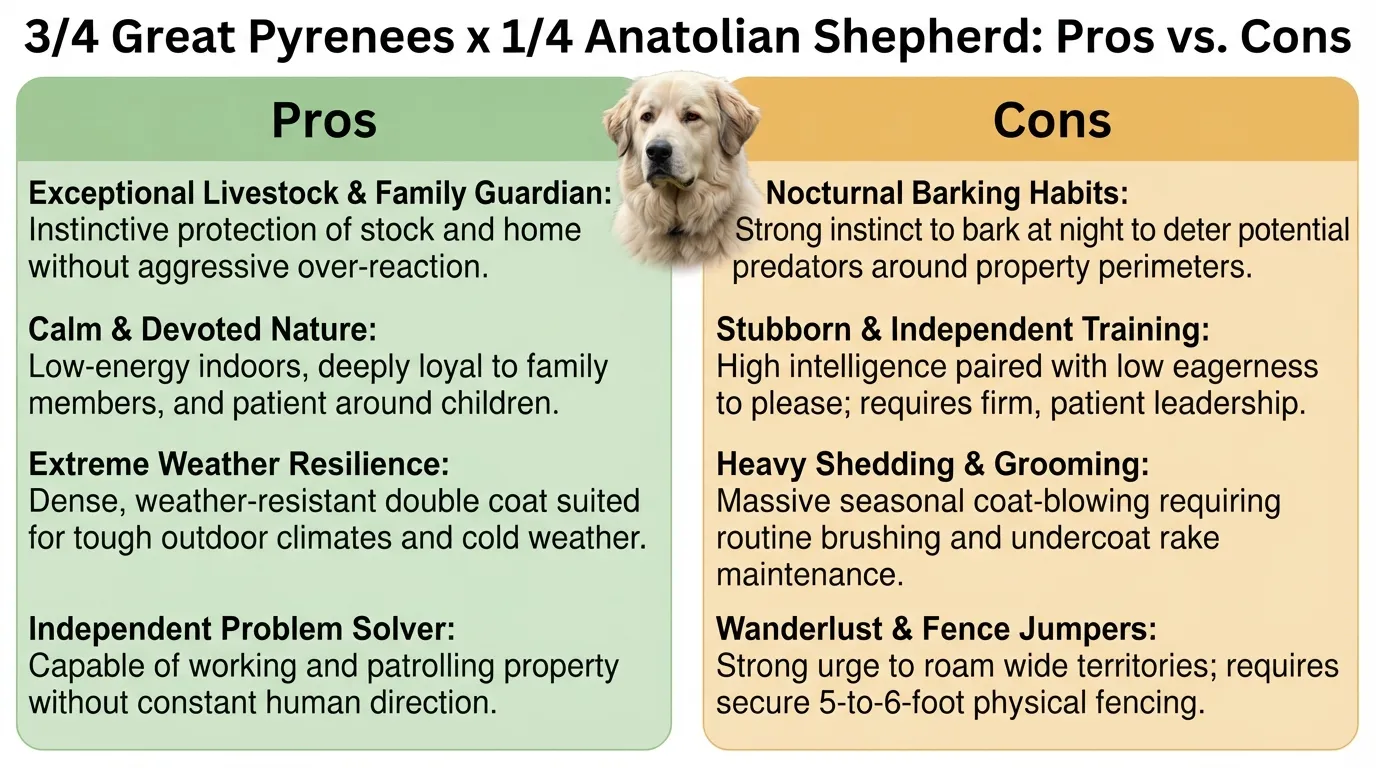
Bringing a 3/4 Great Pyrenees 1/4 Anatolian Shepherd mix into your life means welcoming a massive, deeply devoted livestock guardian breed (LGB) with heavy Pyrenees genetics. Before committing to a dog that can easily clear 100+ pounds, it helps to weigh the real-world advantages against the daily management challenges.
Here is an honest, quick-scan breakdown of what it is actually like to raise and live with this specific ratio:
The Pros Why People Love This Mix
Elite Flock & Family Protection: Thanks to 75% Pyrenees and 25% Anatolian instincts, this mix possesses world-class, passive guarding drives. They assess threats naturally without needing aggressive training.
Calm, Patient Temperament: Unlike high-energy working breeds (like German Shepherds or Huskies), these dogs spend most of their day resting or quietly observing their perimeter. They are steady, gentle, and forgiving around livestock and respectful family members.
Weather Hardiness: The heavy Pyrenees coat combination gives them exceptional cold-weather tolerance, allowing them to comfortably work outdoors in freezing temperatures.
Slightly Less Grooming Than a Pure Pyrenees: The 25% Anatolian short-coat genes can help tighten the fur, resulting in slightly less matted fur behind the ears compared to a full-blooded Great Pyrenees.
Independent Problem Solvers: You get a canine partner that does not need constant hand-holding. They are capable of monitoring property line security on their own judgment.
The Cons The Daily Challenges
Heavy Nocturnal Barking: Livestock guardians are hardwired to bark at night to deter predators (coyotes, raccoons, strangers). If left in a suburban backyard overnight, they will keep your entire neighborhood awake.
Independent to a Fault Not an Obedience Dog : They ignore commands if they do not see a logical reason to obey. Off-leash recall is notoriously unreliable; if a gate is left open, they will roam for miles to expand their territory boundary.
Extreme Shedding & Blowout Seasons: Expect massive fur blowing twice a year (“Pyrenees snowstorm”). Professional vacuuming and weekly deshedding sessions are non-negotiable.
Fencing Is Mandatory (Secure 5–6 Feet Minimum): Standard 4-foot fences will not hold them. They are skilled at leaning, climbing, or digging under low barriers.
Heavy Socialization Required Early: Without early exposure to strangers, vet visits, and other dogs before 16 weeks of age, their natural suspicion can turn into defensive territorial aggression.
Pro Tip for Owners: Because giant working breeds grow at a distinct rate compared to smaller breeds, tracking their developmental milestones is crucial. Using a dedicated canine age calculator helps accurately map your puppy’s age into human years so you can adjust their nutritional and joint-care routines accordingly.
Training & Socialization Needs
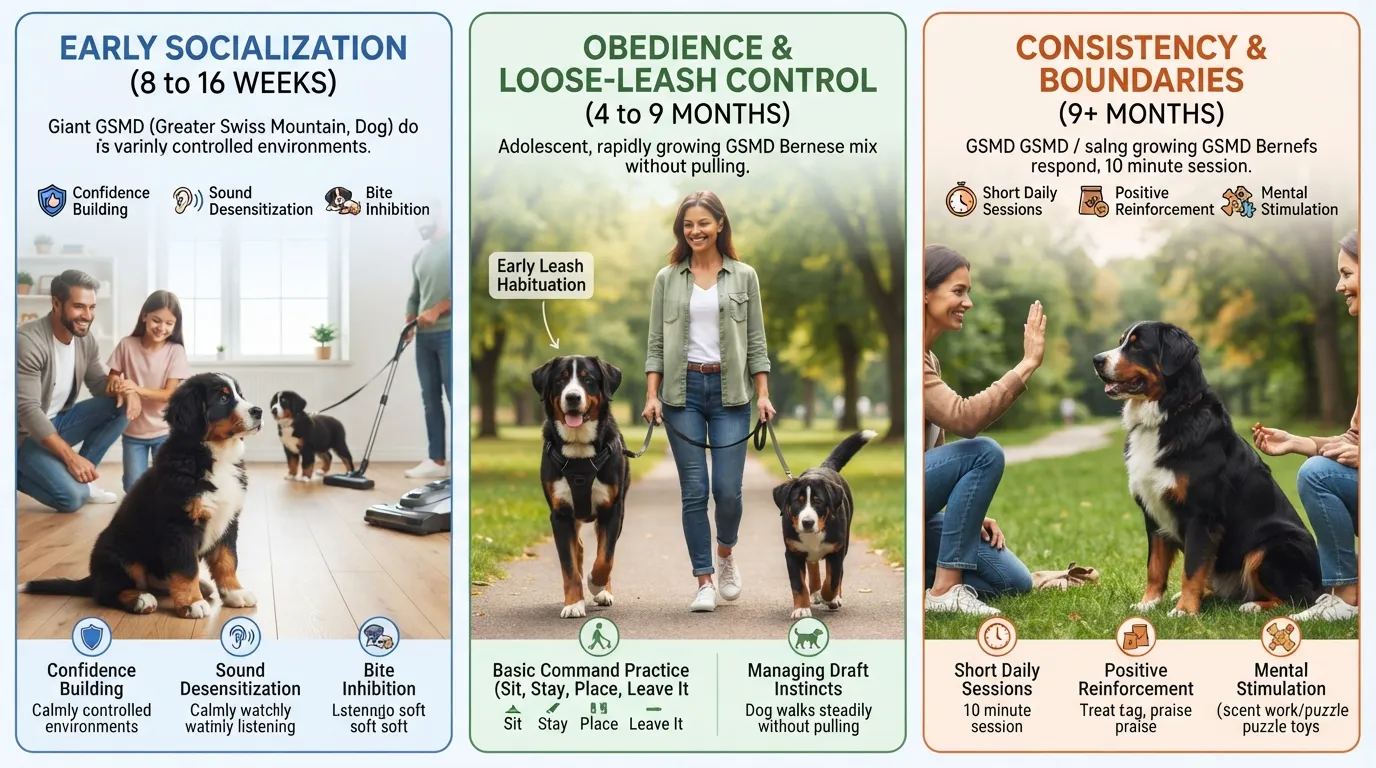
Training a 3/4 Great Pyrenees 1/4 Anatolian Shepherd mix requires a complete mindset shift from standard dog training. With 75% Pyrenees and 25% Anatolian Shepherd lineage, you are working with centuries of genetic hardwiring designed to make independent decisions in the field without human supervision. They do not work to please you; they work to protect their territory based on their own judgment.
Without structured early socialization, their protective instincts will default to seeing every stranger, delivery driver, or visiting dog as a threat.
Handling Independent/Stubborn Behavior
The stubbornness in this mix is not stupidity or spite—it is independent problem-solving. An Anatolian-Pyrenees mix will evaluate your command, assess whether it makes logical sense in the moment, and simply ignore you if they deem it unnecessary.
Establish “Value-Based” Leadership: Traditional dominance tactics, yelling, or harsh physical corrections will backfire completely, causing this giant mix to shut down or become defensively aggressive. Instead, use positive reinforcement with high-value rewards (like real meat or freeze-dried liver) to make compliance worth their time.
Keep Training Sessions Micro-Short: Their focus for repetitive obedience commands (like sit, down, stay) lasts about 3 to 5 minutes maximum before boredom sets in. Practice basic manners during daily routines—such as requiring a “sit” before food bowls are set down or gates are opened.
Neutrality-Focused Socialization (Before 16 Weeks): Do not focus on making your puppy love everyone. Focus on indifference. Expose your pup to heavy traffic, loud farm equipment, novel sights, and unfamiliar people from a safe distance, rewarding them for remaining calm and neutral.
LSD (Long-Slow-Distance) Exposure Walks: Walk your young mix in diverse environments without rushing. Let them sniff and process their surroundings at their own pace—this mental processing helps calm their natural hyper-vigilance.
Containment & Escape-Prevention Training
If there is one universal truth about the 3/4 Pyrenees 1/4 Anatolian mix, it is that they are master roamers. Their inherent drive impels them to expand their territorial boundary as far as possible, and standard backyard fencing is rarely enough to hold them.
Set Up Proper Physical Barriers: A standard 4-foot fence is useless; these dogs can easily vault or climb it. You need a secure, physical fence that is at least 5 to 6 feet tall. Chain-link can act as a ladder for them, so smooth wooden privacy fencing or heavy-duty cattle panels are ideal choices.
Prevent Digging Out: Because Anatolian and Pyrenees breeds love to dig cool dens in the summer, they will routinely excavate under fence lines. Dig a 12-to-18-inch trench along the perimeter and bury hardware cloth or heavy wire mesh flared inward (“L-footer” style) to block underground escape routes.
Address Gate-Bolting Immediately: Never leave entryway gates unsecured. Train a strict “Wait” command at every doorway and gate latch. Practice opening gates while the dog stays seated until released with a specific cue word.
Do Not Rely on Invisible/Electric Fences: Underground electric fences almost always fail with this mix. A high-drive 120-pound livestock guardian will gladly take a split-second shock to chase off a predator or intruder, but the shock will then deter them from returning home.
Never Trust Off-Leash Recall: No matter how reliable their recall seems in an enclosed yard, never trust this mix off-leash in an unfenced area. If they catch a scent or spot a potential threat a mile away, their guarding instincts will completely override your voice commands.
Health, Lifespan & Aging
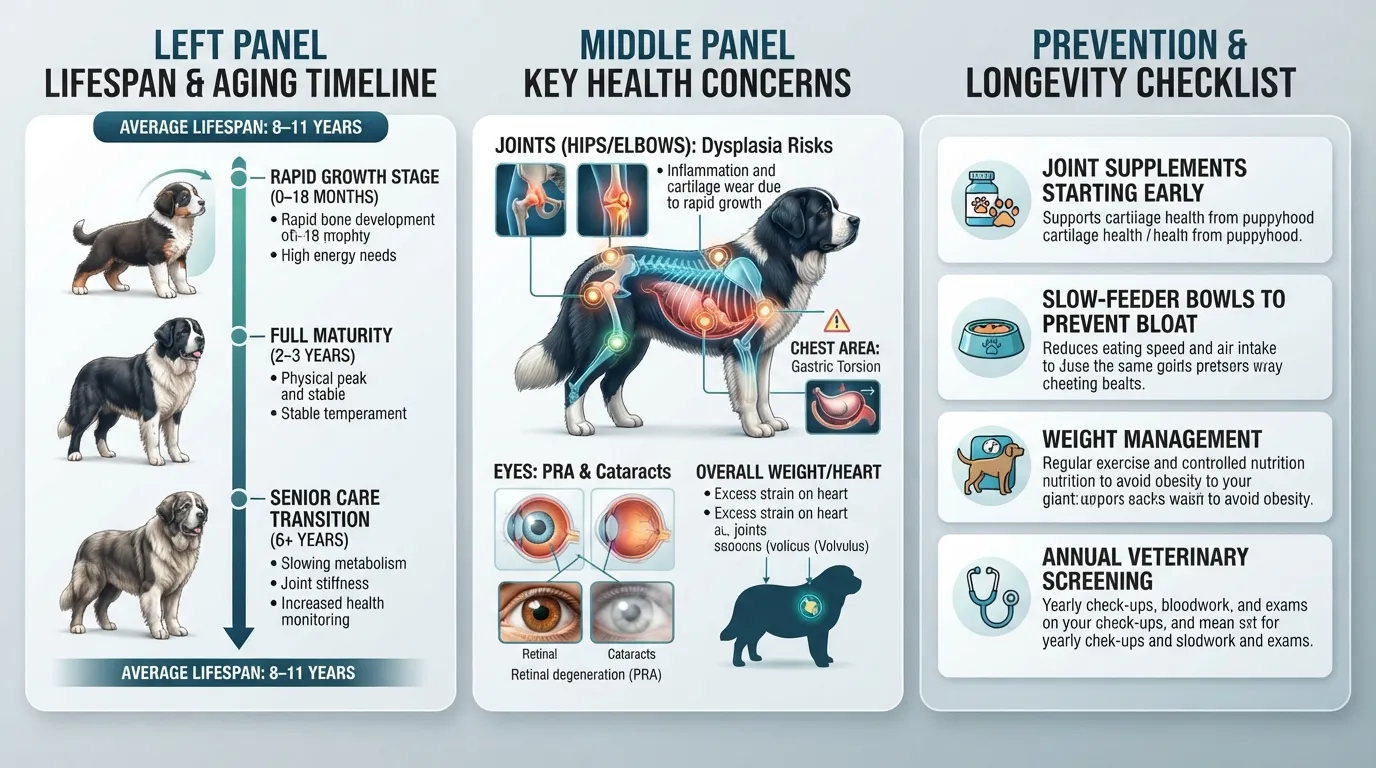
Understanding the health trajectory of a 3/4 Great Pyrenees 1/4 Anatolian Shepherd mix helps you stay proactive about preventative care, joint health, and dietary management throughout their life. Combined genetics from these two ancient working giant breeds generally produce a hardy, resilient dog. However, their immense bone structure and deep-chested build make them vulnerable to specific inherited and structural conditions.
Average Lifespan
Despite their giant stature, this mix boasts an above-average life expectancy compared to other giant breeds. You can expect a healthy 3/4 Pyrenees 1/4 Anatolian mix to live between 11 to 13 years.
Anatolian Shepherds are exceptionally long-lived for large dogs (often reaching 12 to 14 years), which slightly boosts the typical 10-to-12-year Great Pyrenees baseline when raised on proper nutrition, weight management, and routine joint care.
Common Health Issues
While crossbreeding introduces heterosis (hybrid vigor), genetic overlap between the Great Pyrenees and Anatolian Shepherd means certain conditions require careful screening and early veterinary intervention.
Hip & Elbow Dysplasia: Abnormal joint formation causes severe grinding, lameness, and early-onset arthritis. Maintain a lean body weight during growth periods and ensure parents have official OFA or PennHIP clearances.
Gastric Dilatation-Volvulus (GDV / Bloat): A life-threatening emergency common in deep-chested breeds where the stomach fills with gas and twists. Prevent GDV by feeding 2 to 3 smaller meals daily rather than one large portion, using slow-feeder bowls, and preventing heavy exercise for 60 minutes after eating. Many owners opt for a preventative gastropexy during spay/neuter surgery.
Entropion (Eyelid Roll): An inherited condition where the eyelid rolls inward, causing lashes to rub painfully against the cornea. This usually presents before 12 months of age and requires minor corrective surgery.
Bone Cancer (Osteosarcoma): Giant breeds with long limb bones face higher risks of osteosarcoma in their senior years. Watch for sudden limping, leg swelling, or unexplained joint stiffness.
Hypothyroidism: Sluggish thyroid function leads to weight gain, lethargy, poor coat quality, and dry skin. It is easily managed with daily hormone replacement medication once diagnosed via standard blood work.
🐾 Find Your Dog’s Human Age — Free Calculator
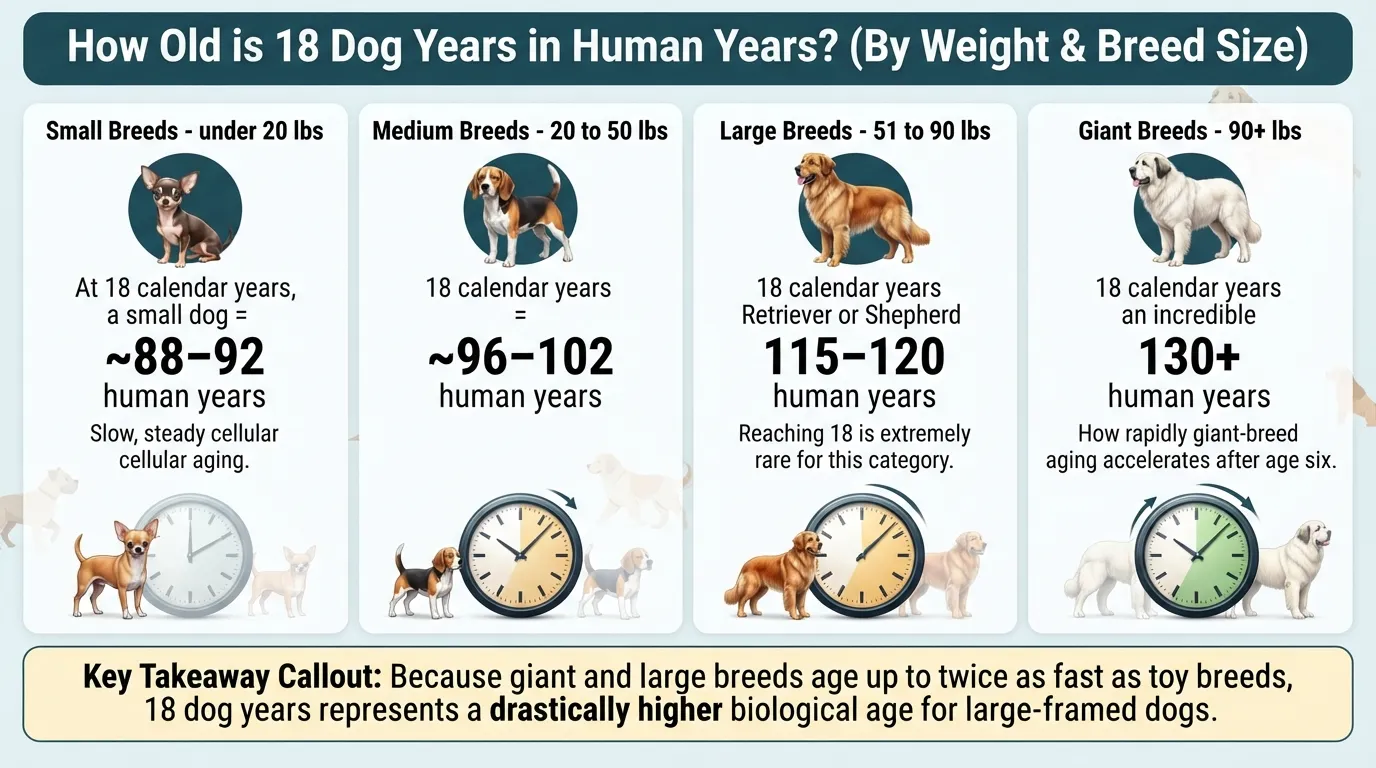
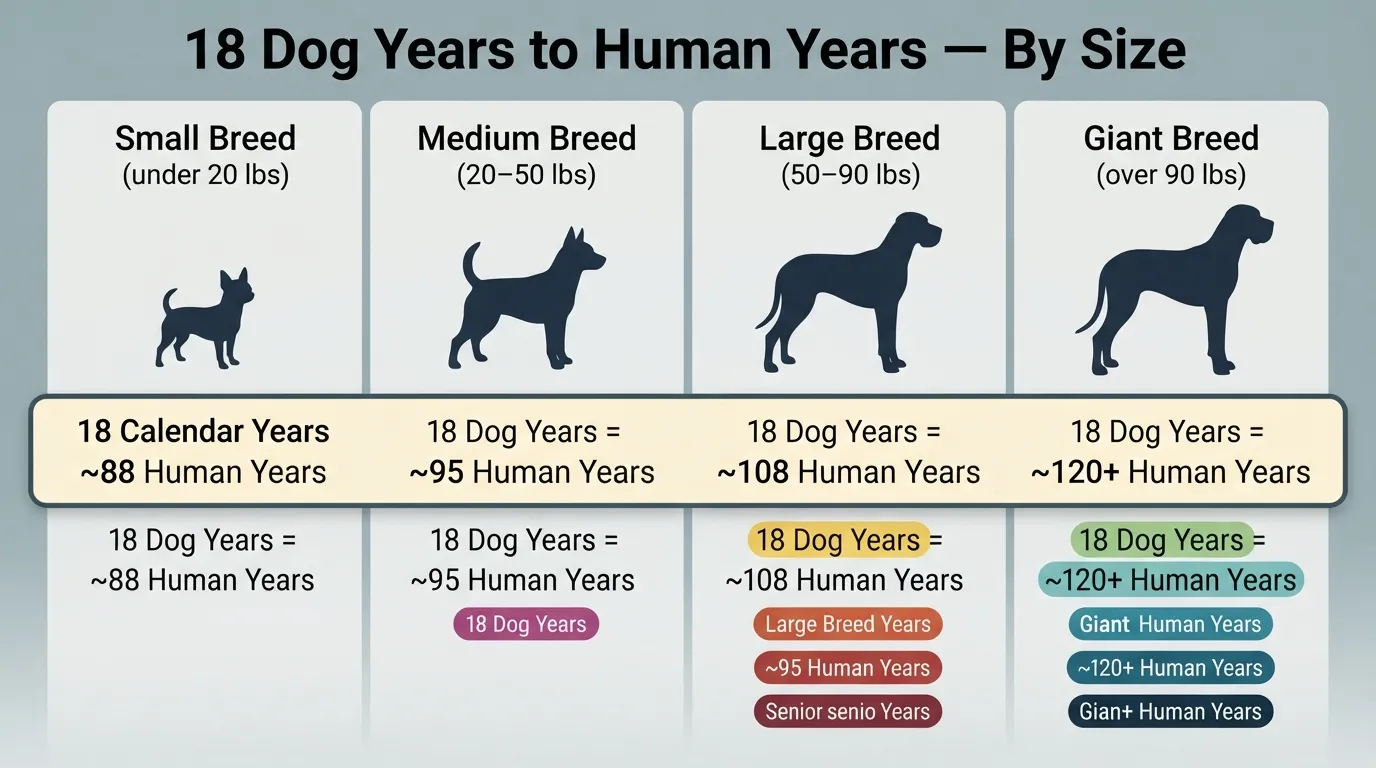
Giant livestock guardians age at a drastically different rate than small or medium-sized dogs. While a small breed pup might hit middle age at 7 or 8 years, a 120-pound Pyrenees mix experiences accelerated cellular aging during their adult years, demanding specialized joint supplements, altered caloric intake, and adjusted veterinary screening schedules much sooner.
To help you track your dog’s physical developmental stages, check out our interactive tool:
By calculating your mix’s exact age in human years based on their heavy weight category, you can make informed decisions about transitioning from puppy to adult food, or adjusting senior joint-care routines right on schedule.
When Does This Mix Become a “Senior”?
Because giant breeds age faster structurally, a 3/4 Great Pyrenees 1/4 Anatolian Shepherd mix officially enters their senior phase around 6 to 7 years old.
As your dog crosses this threshold, you will notice subtle changes in their behavior and daily energy:
Slower Perimeter Patrols: Senior mixes spend significantly more time sleeping during the day and may take longer to stand up after resting on hard floors.
Increased Joint Stiffness: Cold weather often exacerbates mobility issues in older Pyrenees mixes. Transitioning them to orthopedic memory foam beds and adding vet-approved glucosamine, chondroitin, and Omega-3 fatty acid supplements supports cartilage health.
Shift in Veterinary Care: Senior giant dogs require semi-annual vet checkups (every 6 months) to monitor blood pressure, kidney and liver function, and mobility. Early detection of organ changes or joint deterioration ensures a comfortable, pain-free golden period.
Cost — Adoption vs Breeder Pricing
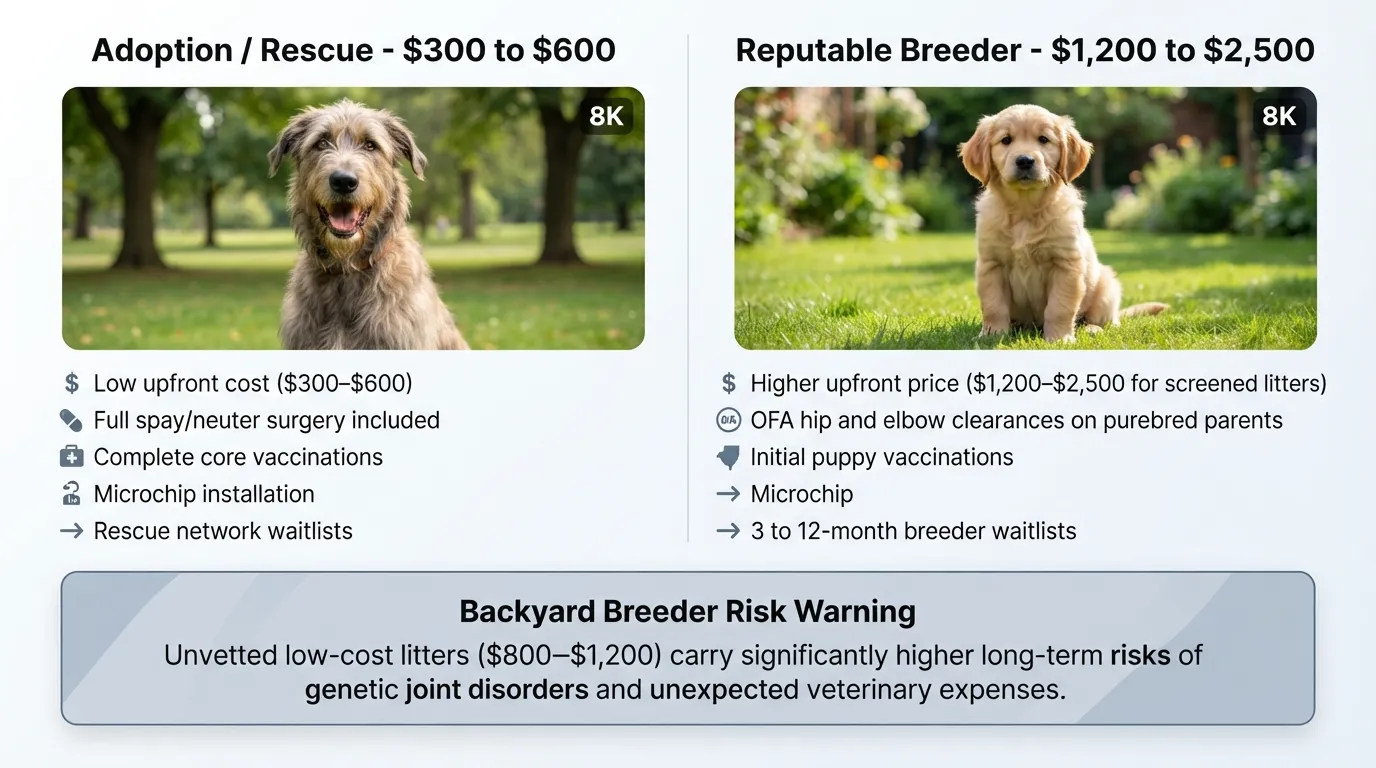
Buying or adopting a Greater Swiss Mountain Dog and Bernese Mountain Dog mix involves distinct upfront financial realities depending on where you look.
Breeder Pricing ($1,200 – $2,500)
Because this hybrid is a designer cross rather than a purebred Kennel Club breed, pricing depends on breeder practices and parent background.
Reputable Hybrid Breeders ($1,800 – $2,500): Breeders who perform health clearances (OFA hip, elbow, eye, and cardiac evaluations) on both purebred parent dogs price puppies in this upper range. This cost covers initial vaccinations, microchipping, and early socialization.
Backyard Breeders / Casual Litters ($800 – $1,200): Lower-priced litters carry a much higher long-term risk of unvetted genetic joint issues or early-onset health problems.
Adoption & Rescue Costs ($300 – $600)
Adopting a Swiss Bernese mix through a shelter or breed-specific rescue is the most affordable route.
Adoption Fee: Generally covers spay/neuter surgery, core vaccinations, microchipping, and initial health checks.
Finding One: Purebred mixes rarely appear in municipal shelters, so reaching out to dedicated Sennenhund or giant-breed rescue networks offers the best path to adoption.
| Cost Factor | Adoption / Rescue | Reputable Breeder |
|---|---|---|
| Upfront Price | $300 – $600 | $1,200 – $2,500 |
| Medical Included | Spay/Neuter, Shots, Microchip | First Shots, Microchip, Parent Health Clears |
| Wait Time | Variable (Requires monitoring rescues) | 3 – 12 months (Litter waitlists) |
| Health Predictability | Depends on age and background | High (Based on parent screening) |
| Adoption / Rescue | $300 – $600 |
|---|---|
| Reputable Breeder | $1,200 – $2,500 |
| Adoption / Rescue | Spay/Neuter, Shots, Microchip |
|---|---|
| Reputable Breeder | First Shots, Microchip, Parent Health Clears |
| Adoption / Rescue | Variable (Requires monitoring rescues) |
|---|---|
| Reputable Breeder | 3 – 12 months (Litter waitlists) |
| Adoption / Rescue | Depends on age and background |
|---|---|
| Reputable Breeder | High (Based on parent screening) |
Rescue vs. Working Breeder: Choosing the Right Path
Adopting from a Rescue: Working breed rescues frequently take in Pyrenees and Anatolian mixes when suburban owners underestimate their space or barking needs. Adopting an adult dog lets you immediately evaluate their livestock tolerance and protective temperament, though their past socialization history may be unknown.
Buying from a Farm Breeder: If you need an active guardian for cattle, goats, or poultry, getting a puppy born and raised inside the barn is a massive advantage. Puppies imprint on farm animals between 8 and 16 weeks, learning livestock boundaries directly from their working parents.
First-Year Reality Check: The purchase price is only a fraction of the cost. A giant-breed puppy consumes roughly 40 to 50 lbs of high-quality large-breed food monthly, needs heavy-duty extra-large crates ($120+), and requires weight-based prescription flea and heartworm preventatives ($30–$50/month). Plan for $1,800 to $2,500 in essential care during their first year.
Real Owner Stories & Experiences
To understand what living with a 75/25 Pyrenees-Anatolian mix feels like day-to-day, we gathered experiences from real property owners and homesteaders who handle this specific genetic balance.
Mini Case Studies: Real-World Experiences
1. The Small-Scale Goat Farmer Montana
“We brought in a 3/4 Pyrenees 1/4 Anatolian male to protect our herd of 30 goats from coyotes. Unlike high-energy herding dogs that constantly run, he spends his day lying on a high ridge, quietly surveying our boundary lines. The 25% Anatolian mix keeps his coat slightly tighter—which means fewer burs—while his Pyrenees heritage makes him surprisingly gentle withnewborn
kids during spring kidding season.” — Dave M., Homestead Owner
2. The Rural Acreage Owner Ohio
“We adopted our mix as a family protector for our 5-acre property. He is deeply affectionate with our children, but managing his nighttime territorial barking took real effort. He wanted to patrol the yard at 2:00 AM every time a raccoon passed by. Moving him indoors at night and establishing a firm evening routine fixed the problem, making him an irreplaceable family guardian.” — Sarah T., Rural Resident
3. Poultry Protection & Perimeter Control Texas
“Our 125-pound mix takes his perimeter duties seriously. The biggest training adjustment wasn’t teaching him to guard—it was accepting his independent mindset. He doesn’t respond to rapid-fire obedience commands like a Labrador. Once we started working with his natural instincts rather than against them, he became an exceptional guardian who keeps hawks away from our free-range chickens without bothering the birds.” — Marcus K., Poultry Keeper
Watch: Livestock Guardian Dogs on the Homestead
Seeing how an Anatolian Shepherd and Great Pyrenees mix operates on active land helps visualize their calm surveillance habits, spatial awareness, and handling dynamics.
Video showing real-world behavior, fence patrol instincts, and home dynamics of a working Anatolian and Pyrenees mix.
3/4 Pyrenees Mix vs Other Ratios & Pure Breeds
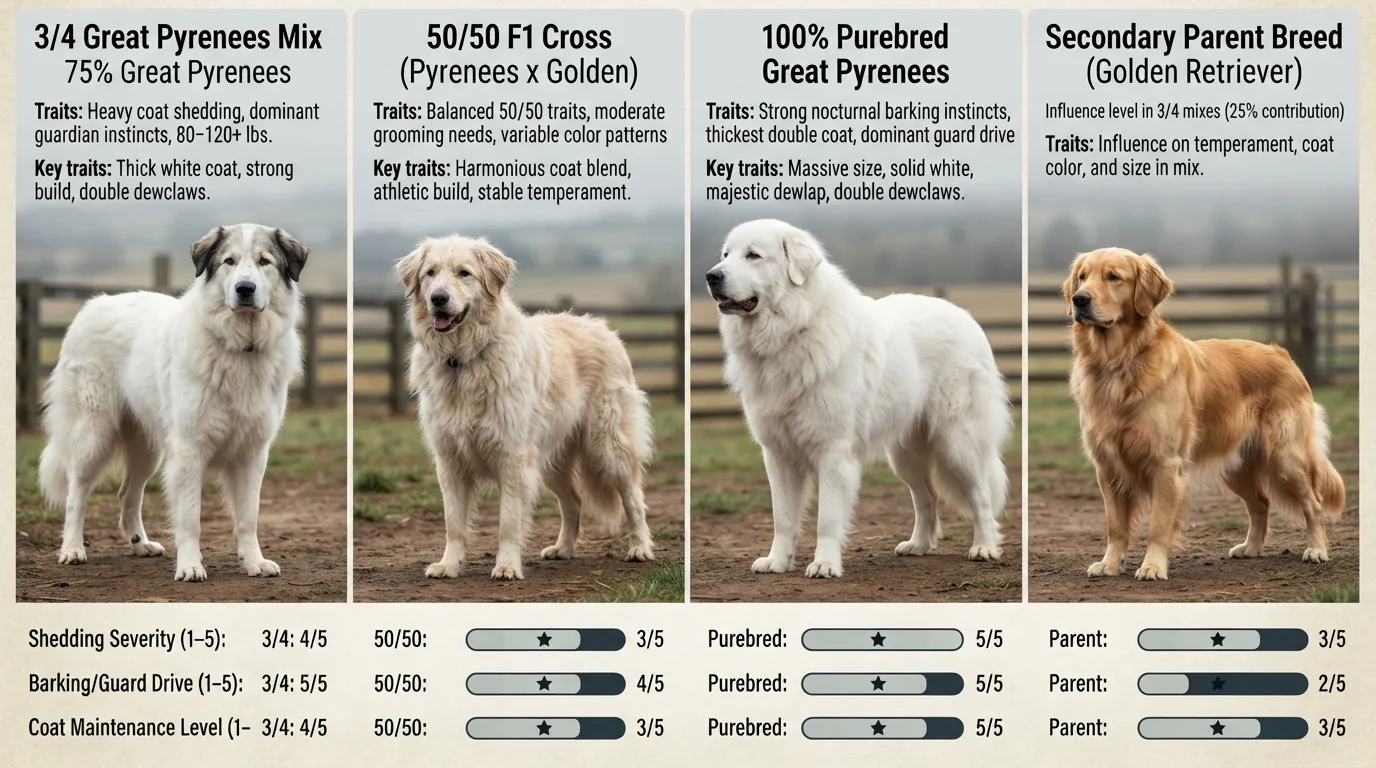
Choosing between a 3/4 Great Pyrenees 1/4 Anatolian Shepherd mix, a 50/50 cross, or a purebred livestock guardian breed comes down to understanding how subtle shifts in genetic ratios alter coat density, energy levels, and territorial aggression.
Here is how this specific 75/25 ratio compares to its closest counterparts:
vs 50/50 Mix Anatolian Pyrenees
Coat & Shedding: A equal 50/50 mix often inherits the medium-length, sleek coat of the Anatolian Shepherd, resulting in less daily brushing. The 3/4 Pyrenees mix leans heavily into the thick double coat of the Pyrenees, requiring more frequent grooming and causing heavier seasonal blowout shedding.
Temperament: The 50/50 cross carries stronger Anatolian drives—making them sharper, more serious, and more intensely suspicious of strangers. By pushing the ratio to 75% Great Pyrenees, the dog gains a softer, more tolerant temperament, making them slightly more patient around family members, children, and visitors while retaining strong perimeter awareness.
Physical Build: 50/50 mixes tend to be taller, leggier, and leaner. The 3/4 Pyrenees blend brings a heavier bone structure, broader head, and thicker chest cavity.
vs Purebred Anatolian Shepherd
Guard Drive & Reactivity: Purebred Anatolian Shepherds are fast-reacting, highly assertive guardians bred to deter major predators (like wolves or cheetahs). They do not tolerate strangers easily and require experienced handling. The 3/4 Pyrenees mix softens this intense edge; they still guard, but they assess situations with more patience before taking action.
Energy & Physicality: Purebred Anatolian Shepherds are surprisingly fast, athletic, and agile sprint-runners. A 3/4 Pyrenees mix has lower athletic energy and prefers slow, methodical perimeter patrols over intense running.
Coat Type: Purebred Anatolians have short-to-medium double coats with dense undercoats that shed minimally outside of blowout season. The 3/4 Pyrenees mix has significantly longer, fluffier fur with heavy mane-feathering around the neck and legs.
vs Purebred Great Pyrenees
Coat Tightness & Maintenance: Purebred Great Pyrenees are famous for heavy matting around the ears and pants, requiring almost daily grooming. Introducing 25% Anatolian genetics tightens the coat slightly, reduces skin fold humidity, and shortens facial and leg fur for somewhat easier maintenance.
Heat Tolerance: Purebred Pyrenees struggle in hot climates due to their dense arctic coat origins. The Anatolian bloodline adds greater heat and drought tolerance, helping a 3/4 Pyrenees mix handle warm southern summers better than a pure Pyrenees.
Roaming Instincts: While both purebred Pyrenees and 3/4 mixes love to wander, purebred Pyrenees are notoriously famous for escaping fences to expand their patrol territory for miles Disappyr . The Anatolian influence adds a slight tendency to stay closer to a defined central hub or homestead boundary.
Frequently Asked Questions
Is this mix good with kids?
How big does it get?
Do they bark a lot?
Are they escape artists?
Are they good for apartments?
Are they good with cats?
Is this mix best for first-time owners?
How long do they live?
🐾 Other Age Guides

I built Dogagescalculator.com to give dog owners honest, science-backed answers instead of the outdated "×7" myth. Every figure here is checked against AKC, AVMA, and published veterinary research.
More about the author & this site →
Comments