
What Is the Lifespan of a Labrador Retriever? Full Guide + Life Stages
The average Labrador Retriever lifespan is about 12 years, although individual Labradors can live longer or shorter depending on genetics, body condition, health, lifestyle, and veterinary care. A large UK VetCompass study of more than 33,000 Labradors found a median longevity of 12.0 years, with the middle 50% of dogs living approximately 9.9 to 13.8 years.
So, how long do Labradors live? Most owners can reasonably expect their Labrador to live around 10 to 14 years, with some healthy dogs reaching their mid-teens. Longevity is not determined by age alone: maintaining a healthy body weight, providing appropriate exercise and nutrition, and keeping up with regular veterinary care can all support a longer, healthier life.
Labrador Lifespan at a Glance
| Labrador Lifespan | Typical Age |
|---|---|
| Median lifespan | 12 years |
| Common lifespan range | 10–14 years |
| Long-lived Labradors | 15+ years |
| Exceptional longevity | 16+ years |
Male vs Female Labrador Lifespan
Research does not show a meaningful overall longevity difference between male and female Labradors. In the VetCompass study, females had a median longevity of 12.1 years, compared with 12.0 years for males, and the difference was not statistically significant.
Therefore, it is better not to claim that female Labradors automatically live longer than males. Individual health, genetics, body condition, and care can have a much greater influence.
Chocolate Labrador Lifespan
Coat color is one area where the research has found an interesting difference. In the large VetCompass study, chocolate Labradors had a median lifespan of 10.7 years, compared with 12.1 years for non-chocolate Labradors. The same study also found higher rates of some ear and skin disorders among chocolate Labradors.
This does not mean that every chocolate Labrador will have a shorter life. It is a population-level finding, and individual dogs can live well beyond the reported median.
Common Health Factors That Can Affect Labrador Lifespan
Labradors are generally healthy, but some conditions can affect their quality of life and longevity. The VetCompass research identified overweight/obesity, ear disease, and degenerative joint disease among the commonly recorded health problems in the breed.
Keeping your Labrador at a healthy body condition is particularly important because excess weight can put additional stress on the joints and make mobility problems more difficult as the dog ages.
Want to check your Labrador’s age in human years? Use our free Dog Age Calculator to estimate your dog’s human-age equivalent.
Labrador Retriever Average Lifespan Overview
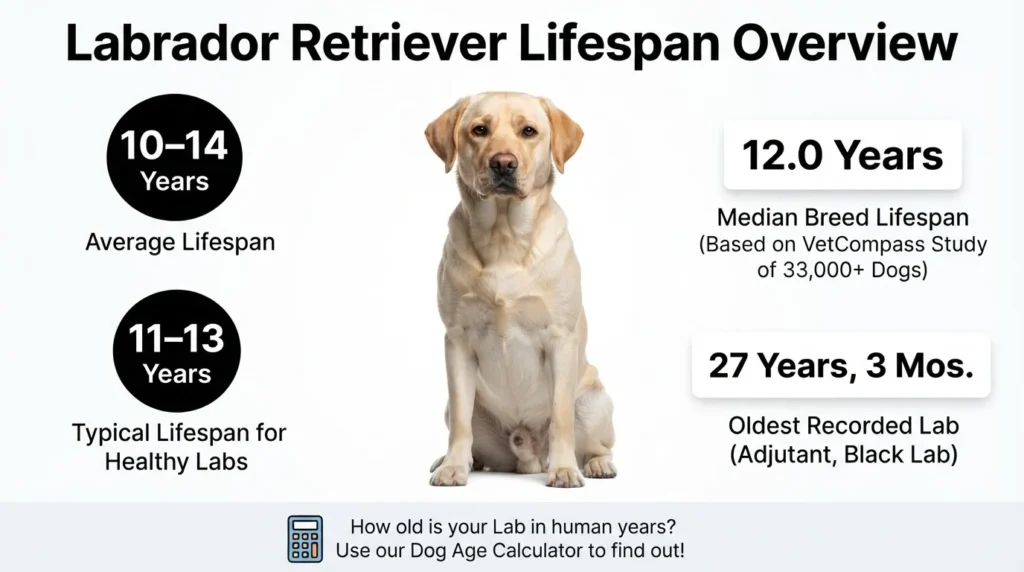
The average lifespan of a Labrador Retriever falls between 10 to 14 years, with the vast majority of healthy individuals living 11 to 13 years. Because they are a large breed, they age more rapidly than smaller dogs, making consistent wellness care and regular veterinary checkups highly important to their longevity.
The most robust breed-specific longevity data we have comes from the Royal Veterinary College’s VetCompass programme. This landmark study analyzed electronic veterinary records of over 33,000 Labrador Retrievers and concluded that the overall median lifespan for the breed is 12.0 years.
While a 12-year lifespan is the standard baseline, some exceptional individuals manage to double that figure. The oldest recorded Labrador in history was a black Lab named Adjutant, who lived to an extraordinary 27 years and 3 months (1936–1963). While reaching his late twenties is an incredibly rare genetic anomaly, it shows just how resilient this beloved breed can be when given a lifetime of proper care.
Does Labrador Color Affect Lifespan?
One of the most fascinating findings in canine science is that a Labrador’s coat color can actually play a role in their life expectancy. While you might expect coat color to be purely cosmetic, genetic selection has tied pigmentation directly to certain health outcomes.
Chocolate Labrador Lifespan
Chocolate Labradors have a statistically shorter lifespan than black and yellow Labradors. A massive VetCompass study conducted by the Royal Veterinary College, which analyzed primary veterinary care records of over 33,000 Labradors, found that chocolate Labradors have a median lifespan of 10.7 years. This is about 10% (or roughly 1.4 years) shorter than their peers.
This difference is not due to the color itself, but rather the genetic breeding process. Because the chocolate coat is a recessive trait, breeders must cross two chocolate-carrying parents to produce a chocolate litter. This selective breeding has historically narrowed the gene pool, inadvertently concentrating genes associated with chronic conditions. As a result, chocolate Labs experience significantly higher rates of ear infections (otitis externa) and painful skin disorders (like “hot spots” or wet eczema), which can take a cumulative toll on their overall health span over time.
Black & Yellow Labrador Lifespan
Black and yellow Labradors enjoy a longer median lifespan, averaging 12.1 years. Because the genetic pool for black and yellow coats is much larger, these dogs benefit from greater genetic diversity. This diversity acts as a natural buffer, making them less prone to the chronic, lifespan-shortening skin and ear ailments that frequently plague chocolate Labs.
Male vs Female Labrador Lifespan
When it comes to biological sex, there is no statistically significant difference in the natural lifespan of male versus female Labradors. Both genders average roughly 12 years of life.
However, external health choices—specifically spaying and neutering—can sway these numbers:
Intact females are at a higher risk for uterine infections (pyometra) and mammary tumors as they age. Spaying them at a veterinarian-recommended age drastically reduces these risks.
Intact males have a higher tendency to roam, which increases their risk of accidental injuries. They are also prone to prostate issues later in life.
Ultimately, proactive veterinary care, weight management, and lifestyle choices will influence your Lab’s longevity far more than whether they are male or female.
Working Line vs Show Line — Does It Affect Lifespan?
Labrador Retrievers generally fall into two distinct sub-types: working lines (often called American Labradors, bred for hunting and field trials) and show lines (often called English Labradors, bred for conformation and appearance). While there is no definitive study showing a genetic difference in maximum lifespan between the two, their structural differences and lifestyles do affect how they age:
Line Type
Physical Traits
Aging & Lifespan Factors
Working Line (American)
Leaner, lighter bones, athletic, highly energetic.
Their naturally lighter build puts less mechanical strain on their joints, potentially delaying the onset of severe arthritis. However, their high-drive lifestyle exposes them to a higher risk of field-related injuries.
Show Line (English)
Stockier, heavier bones, barrel-chested, calmer temperament.
Due to their chunkier build, show lines must be managed carefully regarding their weight. Excess weight on a naturally heavy-boned frame accelerates joint degeneration, which can severely impact their quality of life in their senior years.
Factors That Affect a Labrador's Lifespan — and How to Extend It

While genetics lay the baseline for your dog’s life expectancy, the choices you make as an owner play a massive role in how many healthy years you get together. By managing their daily care, you can actively protect your Labrador from common breed-specific health hurdles.
Diet & Weight
Keeping your Labrador lean is the single most powerful tool you have to extend their life. Labradors are genetically predisposed to overeating due to a common gene deletion (the POMC gene) that essentially turns off their “I’m full” switch.
A landmark, 14-year lifetime diet restriction study on Labradors proved that dogs kept in a lean body condition lived 1.8 years longer (a 15% increase in median lifespan) compared to their overweight littermates. Furthermore, keeping your Lab lean drastically delays the onset of painful joint diseases like hip osteoarthritis. Use a measuring cup for every meal, limit high-calorie treats, and aim for a visible waistline when viewing your dog from above.
Exercise
Labradors are high-energy working dogs that require 60 to 90 minutes of daily physical activity to maintain muscle tone, support cardiovascular health, and keep their joints fluid.
Vary the impact: Mix low-impact swimming (excellent for senior joints) with controlled walks and fetching.
Avoid overexertion: If your Lab carries the gene mutation for Exercise-Induced Collapse (EIC), keep play sessions fun but moderate to prevent sudden muscle weakness.
Genetics & Breeding
A Labrador’s health span often starts before they are even born. Reputable breeders perform rigorous DNA and orthopedic screenings on parent dogs to ensure they do not pass down hereditary conditions like hip dysplasia, elbow dysplasia, heart conditions, or EIC. If you are getting a puppy, always ask to see the parents’ hip scores (from OFA or PennHIP) and genetic clearance certificates.
Spay/Neuter
When you choose to spay or neuter your Labrador can impact their structural development and overall longevity.
For females: Spaying eliminates the risk of pyometra (a life-threatening uterine infection) and greatly reduces the risk of mammary cancers when done before their first or second heat cycle.
For males: Neutering prevents testicular cancer and can reduce roaming behaviors that lead to accidents.
Timing matters: Because Labradors are a large breed, waiting until physical maturity (usually between 12 to 18 months of age) before altering them allows their growth plates to close properly, which can protect them from cruciate ligament tears and joint issues later in life. Consult your vet to build a personalized timeline.
Veterinary Care
Routine preventative veterinary care is your safety net. Annual exams for adult Labradors—and bi-annual checkups for seniors aged 8 and older—allow your vet to catch progressive conditions like kidney disease, heart issues, or cancer early. Standard blood panels, urine tests, and routine lump checks should be a standard part of their senior care routine.
Dental Care
Periodontal disease is more than just bad breath; it is a direct threat to your dog’s lifespan. Bacteria from chronic gum infections can enter your Lab’s bloodstream, slowly damaging vital organs like the heart, kidneys, and liver over time. Brushing your dog’s teeth a few times a week and scheduling professional veterinary dental cleanings when plaque builds up can add quality years to their life.
Mental Enrichment
A healthy mind supports a healthy body. Labradors are highly intelligent, people-pleasing dogs that can easily become stressed, anxious, or depressed without proper mental stimulation. Chronic stress releases cortisol, which can compromise their immune system over time. Keep their minds sharp and anxiety low by using puzzle feeders, teaching new tricks, and giving them “jobs” to do, like carrying a toy or tracking scents.
Common Health Issues That Shorten a Labrador's Life
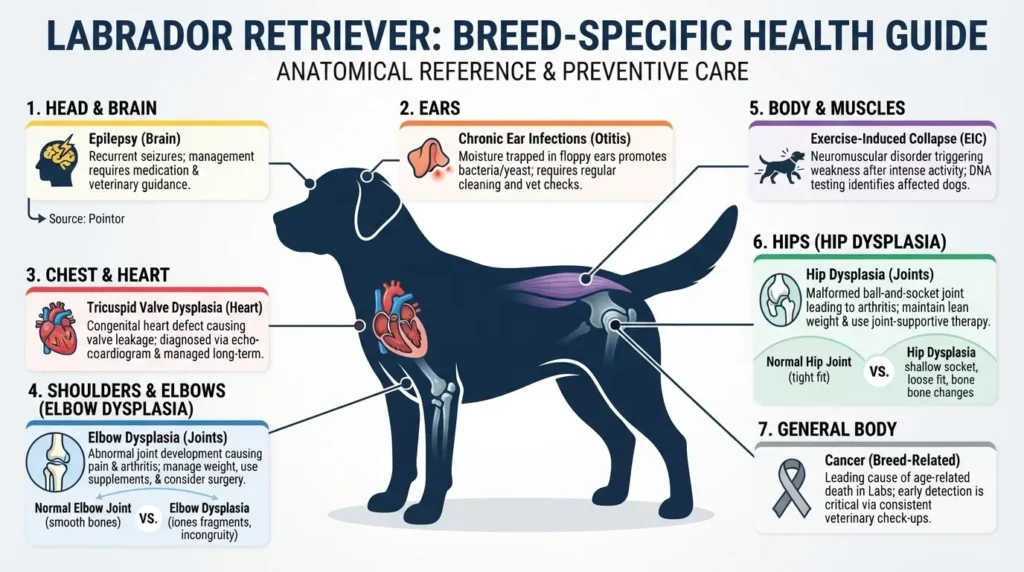
While Labrador Retrievers are generally robust and active dogs, they are genetically predisposed to several health conditions. Left unchecked, some of these issues can impact their quality of life or even shave years off their natural lifespan.
Keeping a close eye on these common conditions—and tracking your dog’s milestones with our online Dog Age Calculator—helps you catch subtle signs of aging early.
Cancer (The Leading Cause of Death): Sadly, cancer is the primary cause of mortality in senior Labradors. They are particularly prone to lymphoma, osteosarcoma (bone cancer), and mast cell tumors. Routine veterinary checkups and keeping an eye out for unusual lumps are vital defense mechanisms.
Hip & Elbow Dysplasia: These genetic skeletal conditions occur when the joints fail to fit together smoothly. Over time, this causes painful arthritis and limits mobility. Maintaining a lean weight is the best way to spare their joints from extra wear and tear. [link: VCA Animal Hospitals / AKC Health Page]
Heart Conditions: Tricuspid Valve Dysplasia (TVD) is a congenital heart defect where the valve on the right side of the heart does not function properly. It can lead to congestive heart failure. Regular cardiac screenings by a vet are highly recommended for the breed.
Ear Infections (Otitis Externa): Because of their floppy ears and love of swimming, moisture gets trapped in a Lab’s ear canals, making them prone to chronic yeast and bacterial infections. Regular cleaning after water play is key to preventing deep infections that can eventually cause hearing loss.
Exercise-Induced Collapse (EIC): This genetic syndrome causes fit Labradors to experience sudden muscle weakness and collapse after periods of intense exercise. DNA testing can identify if your dog carries the gene mutation responsible for EIC.
Epilepsy: Labradors have a higher incidence of idiopathic epilepsy, which causes unexplained seizures. While scary to witness, most cases can be successfully managed with lifelong anti-seizure medication prescribed by your vet.
Pro Tip: Regular screening and genetic testing can help catch many of these hereditary conditions before they affect your dog’s daily life. For a complete breakdown of breed-specific health risks, consult the official guidelines from veterinary experts.
Labrador Life Stages Explained
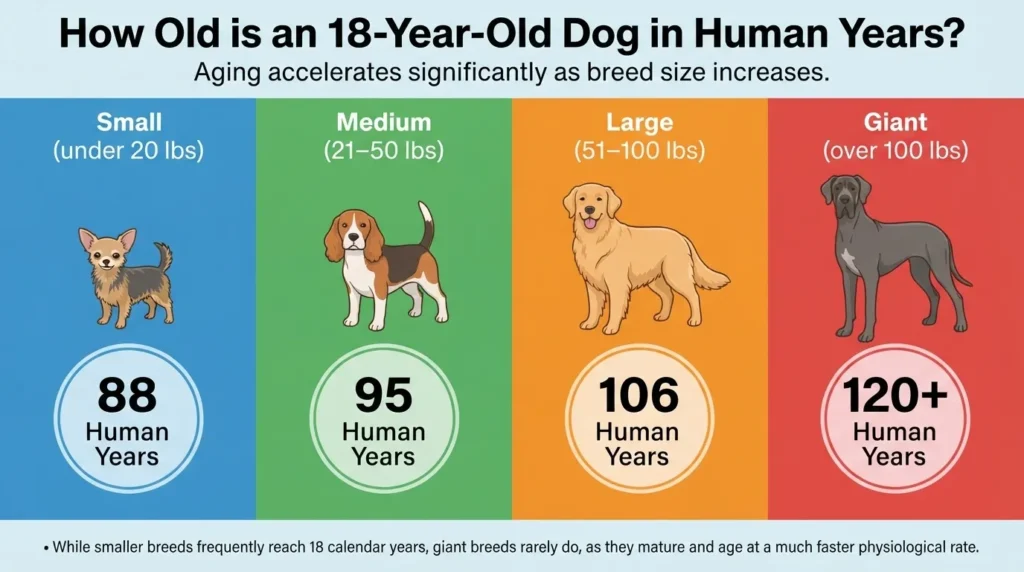
A Labrador’s journey from a tumbling, energetic puppy to a distinguished senior happens in the blink of an eye. Because dogs age much faster than humans, understanding their current developmental stage is crucial for tailoring their daily diet, exercise routine, and preventative healthcare.
Puppy (0–1 Year)
The first year of a Labrador’s life is defined by rapid, astonishing growth. Within just twelve months, a tiny, one-pound newborn will balloon to nearly 80% of their eventual adult weight.
Physical Milestones: At around 8 weeks, puppies are ready to transition to their new homes. By 6 months of age, they will have lost their needle-sharp puppy teeth and replaced them with adult teeth.
Care & Nutrition: Because their bones, joints, and growth plates are growing so rapidly, they require a specialized large-breed puppy formula. It is highly recommended to avoid high-impact, strenuous activities (like jumping from high surfaces or running on pavement) during this stage to prevent permanent damage to their developing skeletal system.
Adult (1–7 Years)
Once they cross their first birthday, Labradors enter young adulthood. While they may look fully grown by age one, they will continue to “fill out” and build dense muscle mass until they are about two years old.
The “Adolescent” Sweet Spot: Mentally, Labradors retain their goofy, high-energy puppy antics until they reach full emotional maturity at around two to three years of age. Consistent obedience training and socialization during these years are essential to channel their natural exuberance into good manners.
Daily Maintenance: This is the prime of your dog’s life. To keep them physically fit and prevent destructive behavior born from boredom, they need 60 to 90 minutes of daily exercise paired with a strictly portioned, high-quality adult diet.
Senior (7+ Years)
In veterinary medicine, large breeds like Labrador Retrievers are officially classified as seniors around their seventh birthday. At this stage, their metabolism naturally begins to decline, and their physical needs shift toward comfort and preservation.
Common Changes: You may notice silver or gray fur starting to pepper their muzzle and around their eyes. Their joints may stiffen—especially on cold mornings—and they will likely begin to value long, cozy naps over high-energy fetch sessions.
Senior Care Strategy: Transitioning to a senior-specific diet that contains joint-supporting nutrients like glucosamine and chondroitin can work wonders for their mobility. Increasing veterinary exams to twice a year helps catch age-related ailments like arthritis, kidney disease, or cardiac issues before they affect your dog’s daily comfort.
Don't Know Your Labrador's Exact Age? Here's How to Estimate It
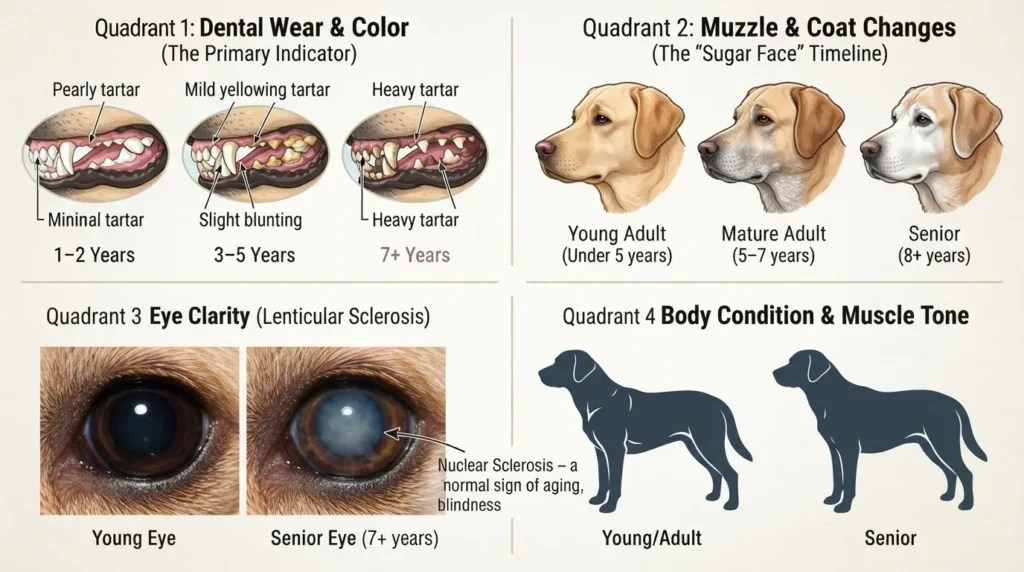
Whether you have recently rescued a Labrador or adopted a stray, not knowing their exact date of birth is a common hurdle for many dog owners. Fortunately, veterinarians use specific physical clues to estimate a dog’s age. By examining these signs, you can get a very accurate picture of where your Lab is on their life journey.
Teeth Wear and Color: Your dog’s mouth is the most reliable timeline of their age. By one year, a Lab’s teeth are bright white and clean. By two to three years, subtle yellowing (tartar build-up) begins on the back molars. Between three and five years, you will notice mild wear on the incisors and more prominent tartar. Beyond six years, expect significant wear, possible missing teeth, and heavy buildup.
Coat and Face Condition: Just like humans, Labradors show their age in their hair. Around five to six years of age, many Labs start developing a dusting of silver or gray fur around their muzzle, chin, and eyes. By age eight or nine, this “sugar face” often spreads across their entire face.
Cloudiness in the Eyes: If you notice a bluish, hazy tint deep inside your Lab’s pupils, they are likely entering their senior years. This cloudiness, known as nuclear sclerosis, is a normal aging change in the lenses that typically appears around seven to nine years of age and does not severely impact their vision.
Muscle Tone and Body Shape: Young adult Labradors (ages one to five) are typically muscular, tight-bodied, and defined. As they age, they naturally lose muscle mass along their back and thighs. Senior Labs may develop a saggy midsection or a more prominent spine, even if they are at a healthy weight.
Activity Level and Gait: A young Lab will jump, turn, and bounce with ease. If your Labrador hesitates before jumping into the car, struggles to stand up on slick floors, or walks with a slightly stiff back leg, they are likely at least seven to eight years old and experiencing early joint stiffness.
Once you and your veterinarian have narrowed down a realistic estimate of your dog’s age, you can easily project how they are maturing. Plug their estimated age into our Dog Age Calculator to convert their age to human years instantly and customize their diet, exercise, and health plan.
Frequently Asked Questions
The oldest verified Labrador Retriever in recorded history was a black Lab named Adjutant. Born in 1936, Adjutant lived an astonishing 27 years and 211 days in Lincolnshire, England. While his case is an incredibly rare, record-breaking exception, the typical lifespan for most healthy Labradors is 10 to 14 years.
Yes, scientific evidence supports this. A major VetCompass study analyzed veterinary records of over 33,000 UK-based Labradors and found that chocolate Labradors live about 10% shorter lives than black or yellow Labradors. The study revealed a median lifespan of 10.7 years for chocolate Labs, compared to 12.1 years for non-chocolate colors. This difference is believed to stem from selective breeding for the recessive chocolate coat gene, which inadvertently narrowed the gene pool and increased susceptibility to chronic skin and ear infections.
Yes, reaching 10 years of age marks a Labrador's official transition into their senior years. While many Labs remain energetic and playful at this stage, their metabolic rate slows down, joints begin to stiffen, and they become more vulnerable to age-related illnesses. Want to see how your senior buddy's age translates into human equivalence? Punch their age into our online Dog Age Calculator to see where they stand in their current life stage.
You will begin to notice gradual physical and behavioral changes as your Lab enters seniorhood. The most common indicators include:
Graying Fur: Muzzle and facial fur turning gray or white.
Slowing Down: Stiff joints, difficulty rising, or reluctance to jump into the car or climb stairs.
Sleep Pattern Changes: Sleeping more during the day or showing signs of restlessness at night.
Cloudy Eyes: Nuclear sclerosis, a common and benign cloudiness in the lenses of aging dogs.
Weight Fluctuations: Loss of muscle tone or a tendency to gain weight easily due to decreased activity.
There is no significant biological difference in lifespan between male and female Labradors. Studies indicate that both genders reach an average median age of about 12 years. However, spaying or neutering can play a role. Spayed females, in particular, tend to have a lower risk of developing uterine infections and mammary tumors, which can indirectly extend their lives when performed at a vet-recommended age.
Graying Fur: Muzzle and facial fur turning gray or white.
Slowing Down: Stiff joints, difficulty rising, or reluctance to jump into the car or climb stairs.
Sleep Pattern Changes: Sleeping more during the day or showing signs of restlessness at night.
Cloudy Eyes: Nuclear sclerosis, a common and benign cloudiness in the lenses of aging dogs.
Weight Fluctuations: Loss of muscle tone or a tendency to gain weight easily due to decreased activity.
Cancer is the leading cause of death in Labrador Retrievers, accounting for a high percentage of mortalities in senior dogs. Other top causes of mortality include progressive musculoskeletal disorders (like severe arthritis that leads to a decline in quality of life) and cardiac disease.
Graying Fur: Muzzle and facial fur turning gray or white.
Slowing Down: Stiff joints, difficulty rising, or reluctance to jump into the car or climb stairs.
Sleep Pattern Changes: Sleeping more during the day or showing signs of restlessness at night.
Cloudy Eyes: Nuclear sclerosis, a common and benign cloudiness in the lenses of aging dogs.
Weight Fluctuations: Loss of muscle tone or a tendency to gain weight easily due to decreased activity.
🐾 Other Age Guides

Gulfam Haider Mehdi
Founder & Developer
I built Dogagescalculator.com to give dog owners honest, science-backed answers instead of the outdated "×7" myth. Every figure here is checked against AKC, AVMA, and published veterinary research.
More about the author & this site →📌 Featured Guides
how much to feed a french bulldog puppy
→
springer spaniel and labrador mix
→
What Is the Lifespan of a Great Dane
→
can you change a dog’s name after 2 years
→
How often should I feed my French Bulldog
→
Difference Between a Lhasa Apso and a Shih Tzu
→
how much does a german shorthaired pointer weigh
→
pug years to human years
→
Basset Hound New England
→
what is the life expectancy of a jack russell terrier
→
Comments