
What Is a Chihuahua Corgi Mix?
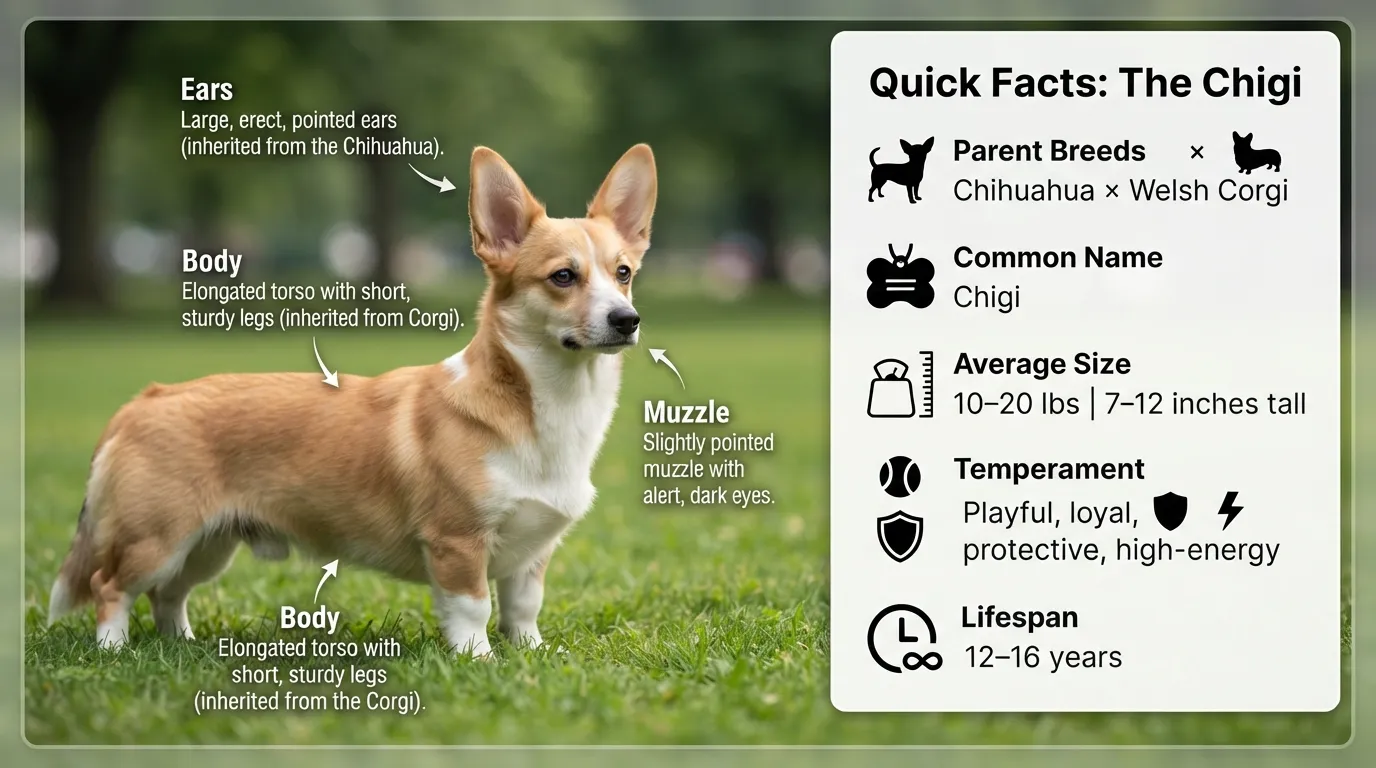
A Chihuahua Corgi mix—frequently called a Chigi—is a cross between a purebred Chihuahua and a Pembroke Welsh or Cardigan Welsh Corgi. Bringing together the tiny stature and big attitude of the Chihuahua with the low-slung, sturdy build of the Corgi, this hybrid creates a spirited, intensely loyal companion.
Because it’s a first-generation cross or designer mix, physical traits can swing toward either parent. However, most Chigis inherit the classic Corgi “foxy” head, bat-like ears, and an elongated body perched on short, stout legs. They offer the playful energy and watchdog instincts of a Corgi packed into a much more compact, manageable size.dog age calculator
| Trait | Details |
|---|---|
| Average Size | Small (7 to 12 inches tall at the shoulder) |
| Average Weight | 10 to 20 pounds |
| Lifespan | 12 to 16 years |
| Coat Type | Short-to-medium length; single or double coat depending on Corgi lineage |
| Breed Group | Hybrid / Designer Dog (Not Recognized by AKC) |
Also Known As
You will see this cross sold or advertised under a few different nicknames across breeders and shelters:
Chigi (the most popular and widely used name)
Corgi Chi
Corgihuahua
Chihuahua Corgi Mix
Regardless of the label on the adoption papers, all four terms refer to the same genetic cross.
Is It an Officially Recognized Breed?
No, the Chihuahua Corgi mix is classified as a designer or mixed breed, meaning it is not recognized by primary pedigree registries like the American Kennel Club [Link: AKC Breed Registries] or the Kennel Club in the UK. Major kennel clubs only register purebred dogs with established, predictable pedigrees tracked over generations.
That said, designer dog registries—including the American Canine Hybrid Club (ACHC), the Designer Breed Registry (DBR), and the Dog Registry of America (DRA)—do recognize the Chigi. While this lack of major club recognition means there is no uniform physical standard for show rings, it doesn’t diminish their appeal as exceptional, affectionate house pets.
Parent Breeds & Comparison Table
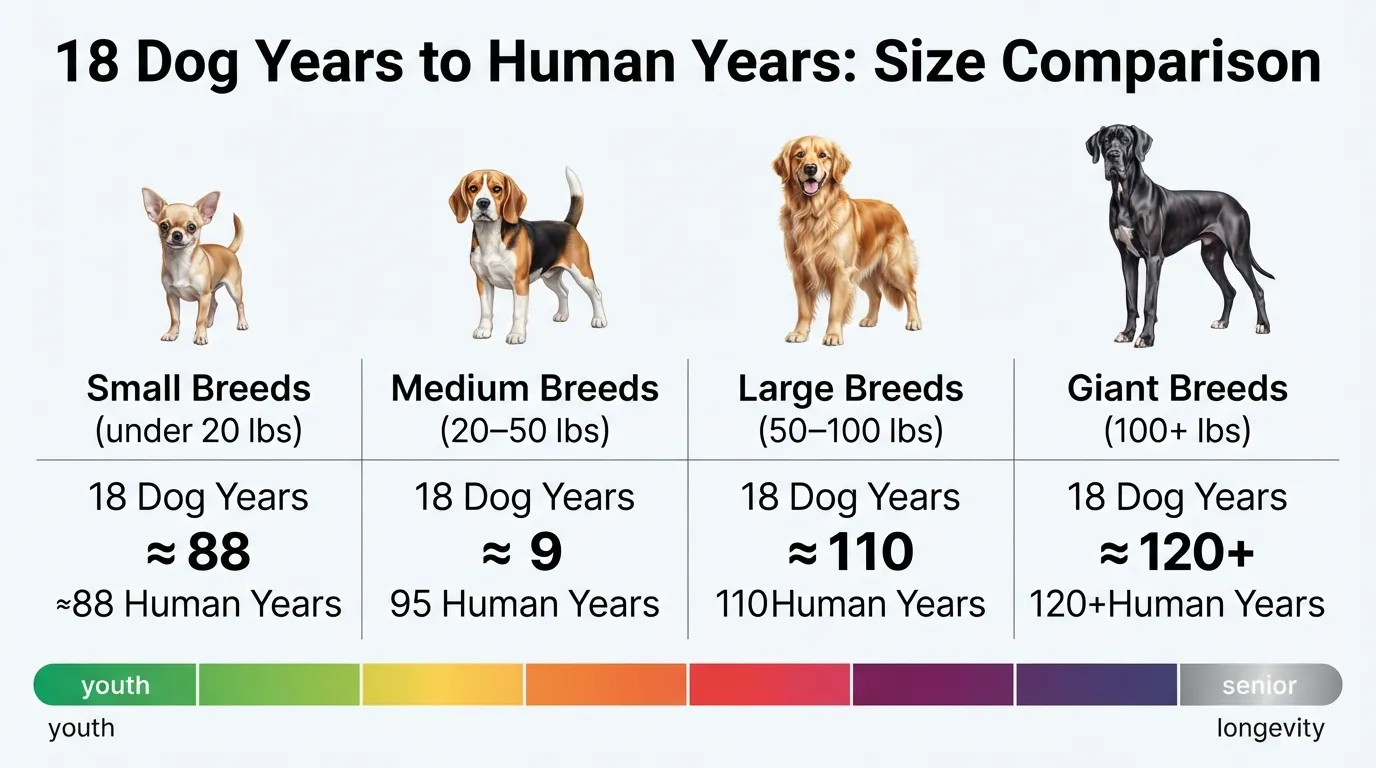
To truly understand what makes a Chihuahua Corgi mix tick, you have to look closely at the two distinct powerhouses in its pedigree. The Chigi isn’t just a random blend; it inherits a very specific tug-of-war between the feisty, self-reliant nature of the Chihuahua and the hardworking, livestock-herding drive of the Corgi.
Chihuahua Traits
Size: Standing just 6 to 9 inches tall and weighing under 6 pounds, the Chihuahua holds the crown as the world’s smallest dog breed.
Temperament: Bold, protective, and intensely attached to their favorite person. Chihuahuas have a famous “big dog in a small body” attitude. They can be vocal watchdogs, suspicious of strangers, and deeply cuddly once they trust you.
Energy Level: Moderate. They enjoy quick bursts of playtime and daily walks, but their tiny legs mean they get plenty of exercise simply following you around the house.
Corgi Traits
Size: Substantially heavier and lower to the ground, Corgis (both Pembroke and Cardigan) stand 10 to 12 inches tall and weigh anywhere from 25 to 38 pounds.
Herding Instinct & Loyalty: Originally bred to drive cattle across Welsh hillsides, Corgis possess a strong herding instinct—which often manifests as nipping at heels, chasing small animals, or bossing around family members. They are fiercely loyal, highly intelligent, and love having a job to do.
Energy Level: High. Despite their short legs, Corgis are athletic working dogs that require regular mental and physical stimulation to keep from getting bored or destructive.
Chihuahua vs Corgi vs Chigi — Comparison Table
When you combine a 5-pound Chihuahua with a 30-pound Corgi, the resulting offspring land squarely in the middle, creating a balanced dog that fits easily into apartment living while keeping up on family hikes.
| Trait | Chihuahua | Corgi (Pembroke/Cardigan) | Chigi (Mix) |
|---|---|---|---|
| Height | 6 – 9 inches | 10 – 12 inches | 7 – 12 inches |
| Weight | 2 – 6 pounds | 25 – 38 pounds | 10 – 20 pounds |
| Temperament | Alert, feisty, devoted, vocal | Intelligent, bold, affectionate, bossy | Loyal, energetic, alert, affectionate |
| Energy Level | Moderate | High | Moderate-to-High |
| Grooming Needs | Low (Short coat) to Moderate (Long coat) | High (Heavy shedder, dense double coat) | Moderate (Expect year-round shedding) |
| Trainability | Moderate (Stubborn, needs consistent positive reinforcement) | High (Eager to please, very smart) | Moderate-to-High (Smart, but can inherit a stubborn streak) |
Chihuahua Corgi Mix Appearance

Because the Chigi is a crossbreed, there isn’t a single “cookie-cutter” look for this mix. One puppy in a litter might lean heavily toward a Corgi’s sturdy frame, while a littermate looks like a scaled-up Chihuahua on slightly elongated legs. However, most Chigis inherit a charming blend of both parents that creates an instantly recognizable appearance.
Size, Weight & Coat Variation
Adult Size & Weight: An adult Chihuahua Corgi mix typically stands 7 to 12 inches tall at the shoulder and weighs between 10 and 20 pounds. They are significantly stockier and heavier than a purebred Chihuahua, but much lighter and more manageable to carry than a purebred Corgi.
Coat Types: Their coat texture depends on which parent’s genes dominate and whether the Chihuahua parent was a short-hair or long-hair. Most Chigis feature a short-to-medium length coat. If the Corgi parent passes down their dense double coat, your Chigi will have a thick undercoat that sheds moderately year-round and heavily during seasonal shifts.
Coat Colors & Patterns: Color combinations are virtually endless. Common coat colors include fawn, tan, sable, red, black, and cream. You will often see classic Corgi white markings across the chest, neck, and muzzle, as well as sable shading or Chihuahua-style black masks and spotted patterns.
Body Shape & Ears
Body Structure: The typical Chigi sports the elongated “bread loaf” torso of a Corgi, supported by short, thick-boned legs. They inherit a deeper chest and wider stance than a Chihuahua, giving them a lower center of gravity and a surprisingly robust build for a dog under 20 pounds.
Ears & Facial Features: Ears are one of the Chigi’s most endearing traits. Both parent breeds pass down large, erect ears, so almost all Chigis feature prominent, bat-like ears that sit high on the skull. Their facial structure generally lands in the middle: a slightly tapered Chihuahua muzzle paired with the dark, expressive, “foxy” eyes characteristic of the Corgi.
Chihuahua Corgi Mix Temperament & Personality
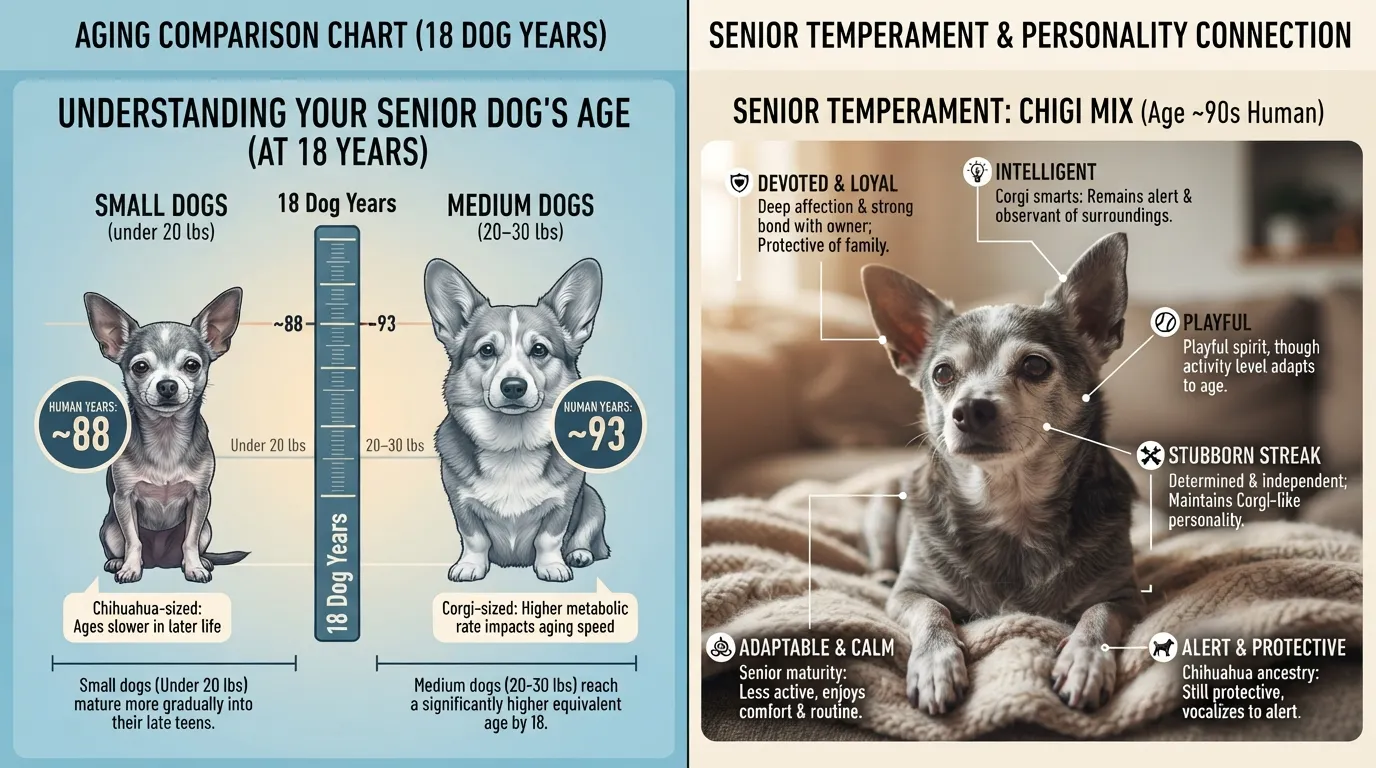
Combining the intensely devoted, feisty nature of a Chihuahua with the clever, outgoing personality of a Corgi produces a dog with huge charisma. Chigis are affectionate, alert, and constantly dialed into what their human family is doing. They love being right in the middle of household action—whether that means sitting on your lap during a movie or patrolling the hallway to make sure everything is in order.
Are Chigis Good Family Dogs?
Yes, Chigis make wonderful family dogs for active households that can provide consistent routine and attention. They bond deeply with their owners and often form strong, individual relationships with each person in the home.
Their compact size makes them adaptable to both spacious suburban houses and tight city apartments. However, they thrive best with families who have time to engage their sharp minds. A bored Chigi will quickly find ways to entertain itself—usually by digging, chewing, or making their voice heard.
Behavior With Kids & Other Pets
With Children: Chigis generally do great with older kids who understand how to respect a smaller dog’s boundaries. Because Corgis are natural herders, a Chigi may inherit the impulse to chase and lightly nip at the heels of running, screaming toddlers. Early socialization and teaching children how to handle small dogs gently prevents tension.
With Other Dogs: Most Chigis get along well with other dogs, especially if raised together from puppyhood. They tend to carry a confident “big dog” mindset, so early exposure to larger dogs helps ensure they don’t try to boss around pets four times their size.
With Cats & Small Animals: Their prey and herding drives mean they might chase cats or small pocket pets. A slow, controlled introduction is essential, though many Chigis happily co-exist with household cats once ground rules are set.
Barking Tendency & Separation Anxiety
Barking Level: Expect an alert watchdog. Both Chihuahuas and Corgis are vocal breeds by nature—Chihuahuas bark to alert and guard, while Corgis bark to drive livestock. A Chigi will almost certainly let you know when the mail carrier arrives or when a neighbor walks past the window. Training a reliable “quiet” command early on is a must.
Separation Anxiety: Because they thrive on human companionship, Chigis are prone to separation anxiety if left alone for long stretches. They do best in homes where someone is around for part of the day, or where they have crate training and interactive puzzle toys to keep their minds busy while you’re out.
Trainability & Stubbornness
Chigis inherit high intelligence from the Corgi side, which means they pick up basic commands and house rules very quickly. However, they also inherit a healthy dose of Chihuahua independence and Corgi willful stubbornness.
Traditional harsh correction won’t work with this mix; it will only make them dig in their heels or become defensive. Positive reinforcement—using high-value treats, praise, and short, fast-paced training sessions—is the secret to unlocking their potential. Keep training fun, and a Chigi will eagerly show off their tricks.
Chihuahua Corgi Mix Size Chart Puppy to Adult
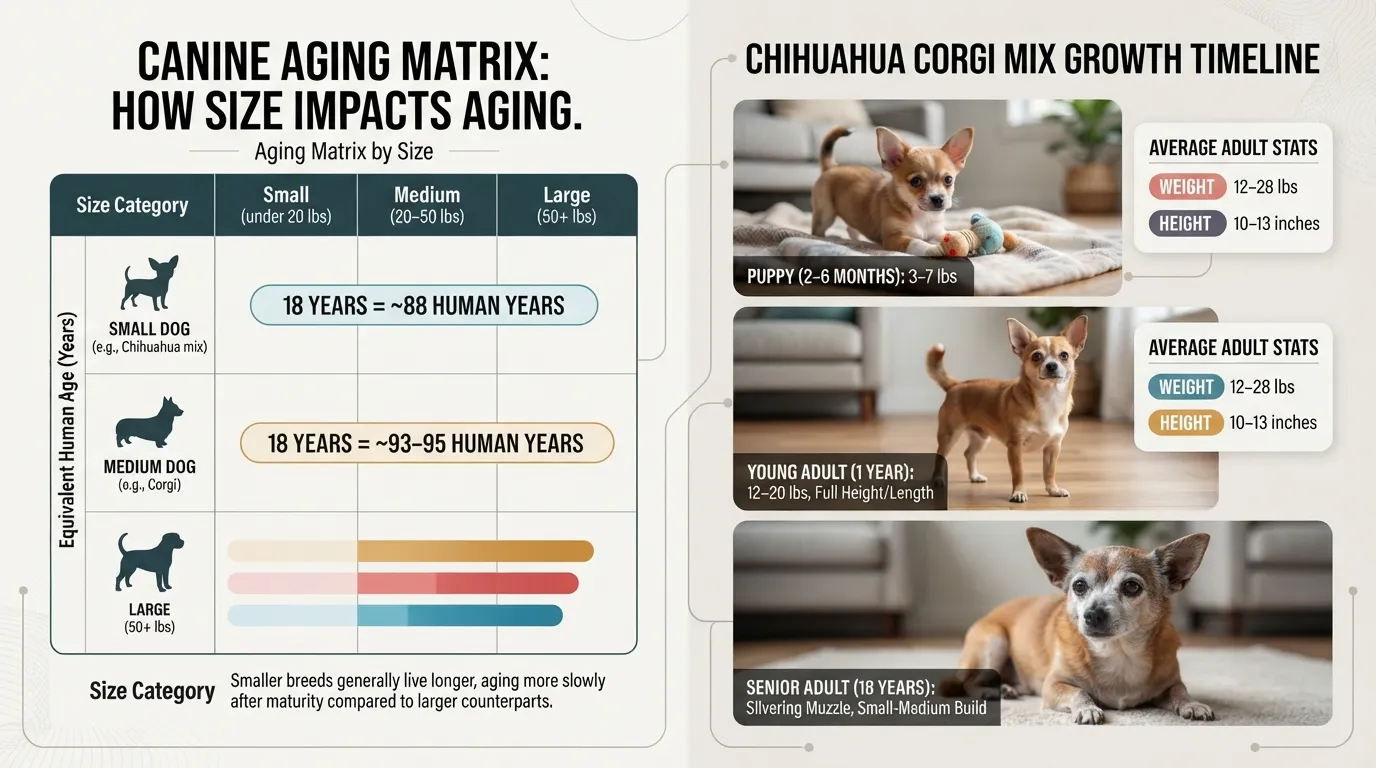
Predicting the growth velocity of a mixed breed always comes with a bit of variance, but because both parent breeds are relatively short, Chigis follow a very steady development curve. While a purebred Chihuahua finishes growing around 9 months and a purebred Corgi can take up to 12 to 18 months to fully fill out, the Chigi lands right in the middle.
Growth spurts happen rapidly between 2 and 6 months of age, after which their frame sets and they begin to broaden across the chest.
Size at 3 months: At 12 weeks old, a Chigi puppy is typically in the middle of their first major growth spurt. Expect them to weigh between 4 and 8 pounds and stand about 5 to 7 inches tall. At this stage, they still look mostly like a slightly elongated, fuzzy puppy with disproportionately large ears.
Size at 6 months: By half a year, your Chigi has reached about 70% to 80% of their ultimate adult height and roughly two-thirds of their adult weight. Most 6-month-old Chigis weigh between 8 and 14 pounds and stand 7 to 10 inches tall. You will notice their legs reaching their final length, though their body will still look relatively lean.
Size at 12 months: At 1 year of age, a Chigi has reached their full height, standing 7 to 12 inches at the shoulder. Their weight generally stabilizes between 10 and 18 pounds. At this milestone, the bone growth plates have closed, though they may continue to add a bit of muscle mass over the next few months.
Full-grown adult size: A fully matured adult Chigi (around 14 to 18 months old) typically tops out at 10 to 20 pounds and stands 7 to 12 inches tall. Smaller Chigis with a toy Chihuahua parent lean toward the 10-to-12-pound mark, while those with stronger Cardigan Welsh Corgi genetics can comfortably reach 18 to 20 pounds without being overweight.
How Long Do Chihuahua Corgi Mixes Live?
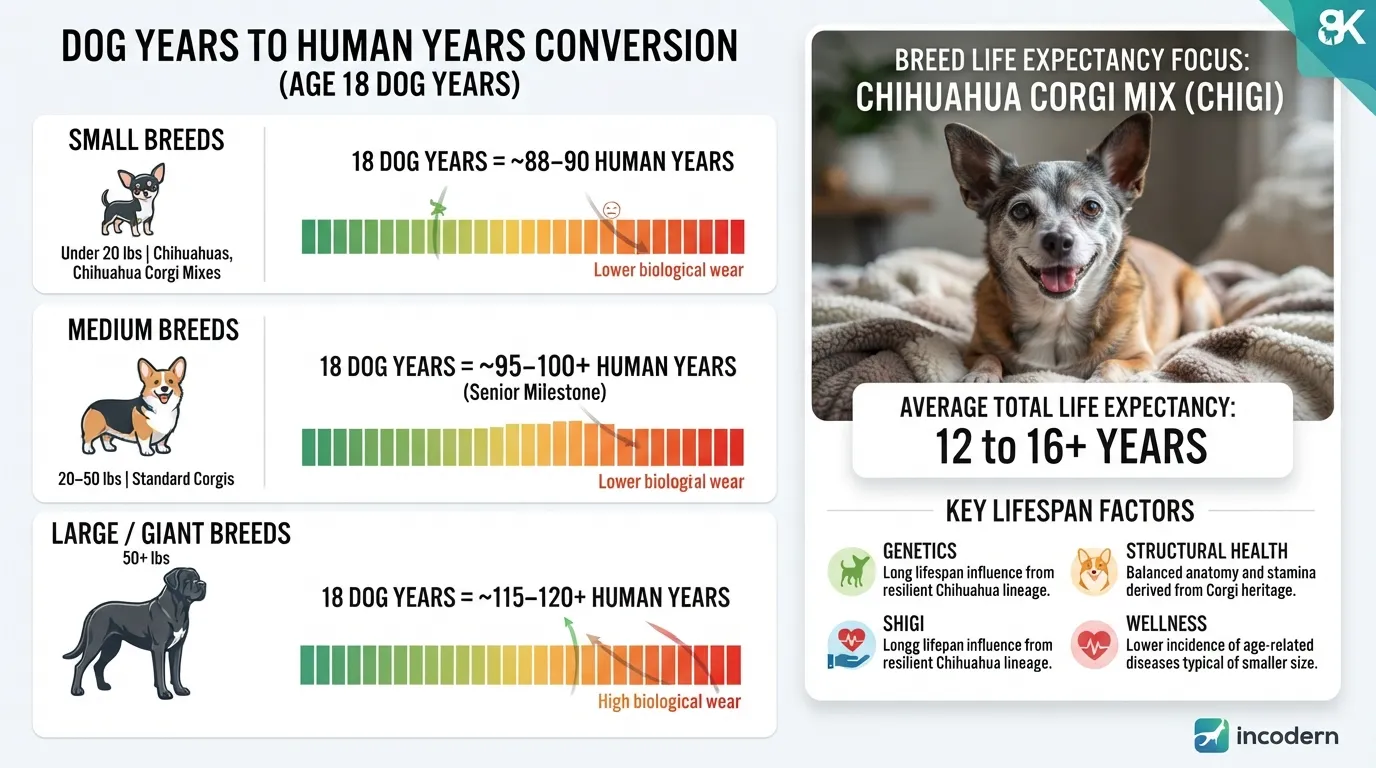
If you are looking for a long-term companion, the Chigi is one of the better bets in the dog world. On average, a Chihuahua Corgi mix lives between 12 and 16 years.
This impressive lifespan comes directly from its lineage. Chihuahuas are famous for being one of the longest-living dog breeds on the planet (often reaching 15 to 20 years), while Corgis boast a solid average lifespan of 12 to 15 years. Crossing the two breeds often grants the hybrid vigor benefit, reducing the likelihood of inheriting recessive genetic disorders unique to a single purebred line.
That said, getting your Chigi into its mid-teens depends heavily on how well you manage a few key day-to-day factors:
Genetics & Parent Health Screening: A Chigi’s baseline longevity starts with its parents. Reputable breeders screen their Corgis and Chihuahuas for hereditary issues like Intervertebral Disc Disease (IVDD), patellar luxation, and progressive retinal atrophy (PRA). Adopting from parents with clear health clearances gives your puppy the best head start.
Diet & Weight Management: This is the single most critical factor under your direct control. Because Chigis inherit the long spine of a Corgi, carrying even two extra pounds puts tremendous strain on their vertebrae and joint cartilage. Maintaining a lean body condition through measured, high-quality nutrition protects their back and prevents metabolic complications like diabetes.
Preventative Medical & Dental Care: Chihuahuas are notoriously prone to severe periodontal disease, which can lead to systemic heart and kidney problems later in life. Daily tooth brushing, professional dental cleanings when recommended by your vet, and staying current on routine wellness exams [Link: AVMA Pet Care Guidelines] dramatically increase your dog’s chances of reaching a healthy senior age.
Chihuahua Corgi Mix Health Issues
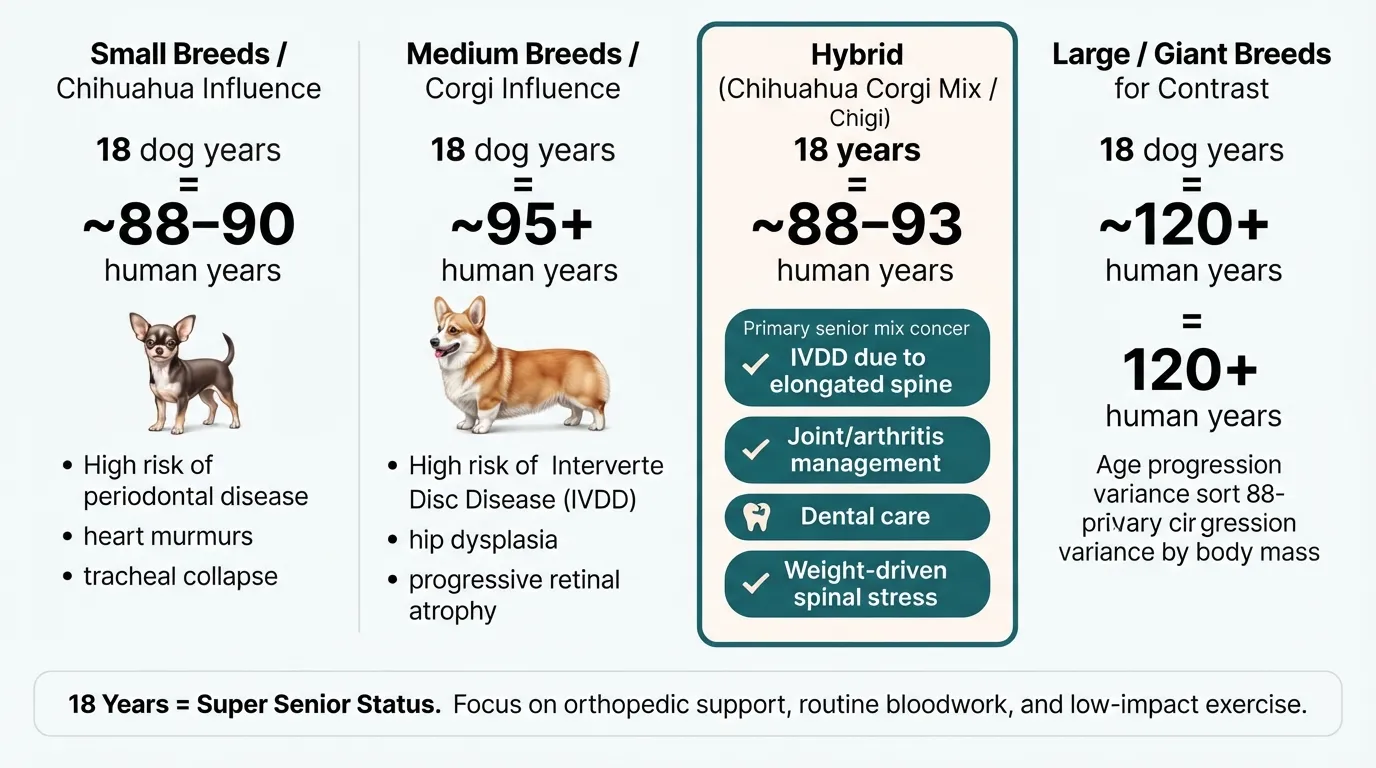
While crossbreeding a Chihuahua and a Corgi often introduces hybrid vigor—reducing the frequency of certain purebred genetic conditions—a Chigi can still inherit health vulnerabilities from either side of its family tree. Understanding these potential risks ahead of time allows you to take proactive steps to protect your dog’s long-term well-being.
Intervertebral Disc Disease (IVDD): If your Chigi inherits the classic long spine and short legs of the Corgi parent, they are at an increased risk for IVDD. This spinal condition occurs when the shock-absorbing cushions between the vertebrae bulge or rupture, causing severe pain, nerve damage, or even paralysis.
Adopt a PetPatellar Luxation: Common in toy breeds like Chihuahuas, patellar luxation happens when the kneecap temporarily slips out of its anatomical groove. You might notice your Chigi taking a sudden “skipping” step or holding a hind leg up for a few strides before the knee pops back into place.
Adopt a Pet+ 1Severe Periodontal Disease: Chihuahuas pass down tiny, crowded jaws that easily trap food particles and bacteria. Without regular cleaning, severe plaque buildup quickly leads to gum inflammation, tooth loss, and systemic infections that can impact the heart and kidneys.
Plantation Midtown Animal HospitalProgressive Retinal Atrophy (PRA) & Cataracts: Both parent breeds carry genetic predispositions to eye issues. PRA is a degenerative condition that gradually degrades the retina, leading to night blindness and eventually full vision loss.
Adopt a PetObesity & Joint Strain: Corgis are notoriously food-motivated and prone to rapid weight gain. Excess body fat places heavy, unnecessary stress on a Chigi’s long back and delicate knee joints, compounding the risks for both IVDD and patellar luxation.
Prevention & Practical Care Tips
Use Ramps and Avoid High Jumps: Protect your Chigi’s spine by placing doggy ramps next to sofas and beds. Discourage them from leaping off elevated furniture or running up and down steep staircases.
Switch to a Chest Harness: Chihuahuas are susceptible to tracheal collapse. Always attach your leash to a well-fitted, Y-shaped chest harness rather than a standard neck collar to eliminate pressure on their windpipe.
Chi PetsCommit to Daily Dental Hygiene: Brush your Chigi’s teeth at least 4 to 5 times a week using dog-safe enzymatic toothpaste. Supplement this with vet-approved dental chews and schedule professional cleanings as recommended by your veterinarian.
Maintain Strict Portion Control: Measure daily meals using an accurate food scale or measuring cup rather than free-feeding. Keep treats to less than 10% of their daily caloric intake to preserve a lean waistline.
Choose Health-Screened Parents: If buying from a breeder, insist on seeing health clearances for the parents—specifically OFA or PennHIP evaluations for hips/knees and CERF or CAER clearances for eye health.
Chihuahua Corgi Mix (Chigi) Videos
1. Corgi x Chihuahua Mix: Guide to This Adorable Hybrid!
2. Corgi Chihuahua Mix: Adorable & Lively Designer Dog Breed
3. All About The Corgi Chihuahua Mix (Chigi): Ultimate Guide
Caring for a Chihuahua Corgi Mix
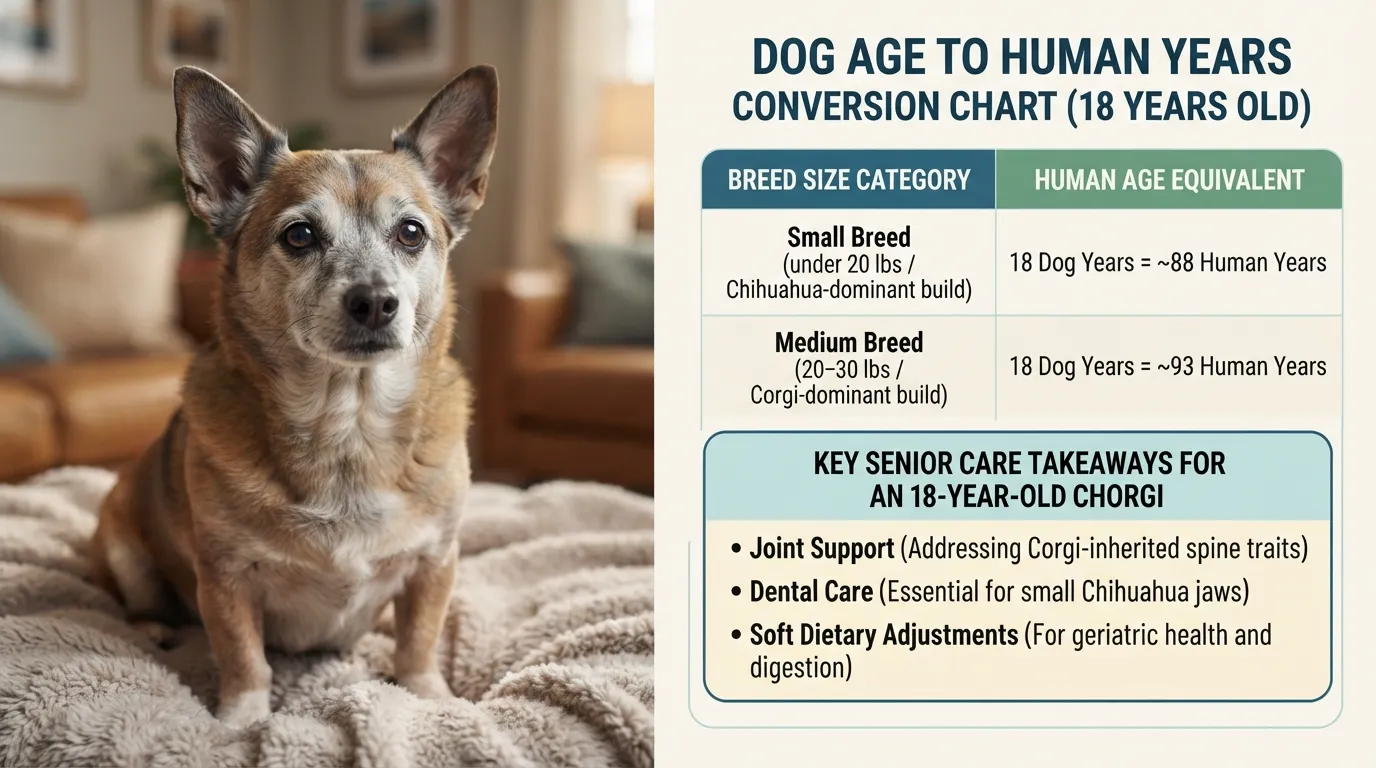
Taking care of a Chigi isn’t overly complicated, but it does require a consistent routine tailored to their specific body shape and energy levels. Because they fall right between a toy breed and a working herder, their everyday care needs to balance physical exertion with joint and spine protection.
Diet & Nutrition
Daily Caloric Needs: An adult Chigi weighing between 10 and 20 pounds typically requires 350 to 600 calories per day, depending on their exact weight and activity level. Always measure out meals with a standard measuring cup or food scale rather than free-feeding, as this mix will happily overeat if given the chance.
Choosing the Right Kibble: Opt for a high-quality, small-breed adult dog food rich in animal proteins (like chicken, turkey, or salmon) and healthy fats. Small-breed kibble features smaller, manageable piece sizes tailored to a Chigi’s compact jaw and helps scrape away plaque as they chew.
Weight Control is Back Protection: Because Chigis carry the elongated spine of the Corgi, carrying extra weight puts direct, damaging stress on their spinal discs. Keep treats under 10% of their daily intake, and monitor their silhouette—you should easily feel their ribs without pressing hard and see a visible waistline from above.
Exercise Needs
Daily Physical Activity: Despite their short legs, Chigis are active, spunky dogs. Plan for 45 to 60 minutes of daily exercise, broken into two brisk 20-to-30-minute walks alongside a couple of brief play sessions in the yard or living room.
Mental Stimulation: Inheriting the working-dog brain of a Corgi means physical exercise alone won’t tire out a Chigi. Incorporate puzzle feeders, snuffle mats, and hide-and-seek games with treats to keep their sharp minds engaged and prevent boredom-induced barking or chewing.
Protecting Their Joints: Avoid high-impact activities like agility jumping, intense frisbee games, or running down long flights of stairs. Their long back and short legs make them vulnerable to spinal strain and kneecap issues, so stick to flat, varied walking routes.
Grooming & Shedding
Brushing Frequency: Expect a moderate-to-heavy shedder depending on whether your Chigi inherits the Corgi’s dense double coat or the Chihuahua’s lighter single coat. Brushing 2 to 3 times a week with a slicker brush and a rubber curry comb keeps loose hair under control. During spring and fall shedding seasons, daily brushing will be necessary.
Bathing Schedule: Bathing every 4 to 6 weeks using a mild, oatmeal-based dog shampoo is plenty. Over-bathing strips away natural skin oils, leaving their coat dry and itchy.
Ears, Nails & Dental Maintenance: Check their large, erect ears weekly for dirt or redness and wipe them down with a vet-approved ear cleaner. Trim their nails every 3 to 4 weeks—if you hear them clicking on hardwood floors, they are too long. Lastly, brush their teeth daily to combat the rapid plaque buildup common to Chihuahua mixes [Link: AVMA Pet Care Guidelines].
Training Tips
Early Socialization: Expose your Chigi puppy to a wide variety of people, sights, sounds, and other dogs starting from week 8. Proper early exposure counteracts the Chihuahua’s natural tendency to be wary of strangers and reduces the Corgi’s urge to herd children or other pets.
Positive Reinforcement: Chigis respond best to reward-based training using high-value treats, praise, and play. Harsh corrections will backfire, causing this sensitive yet headstrong crossbreed to shut down or stubbornly dig in their heels.
Nip Herding and Barking Early: Address herding behaviors (like nipping at heels or ankles) immediately by redirecting their focus to a toy. To curb excessive watch-dog barking, teach a clear “quiet” command using treat-rewards the moment they stop barking after an initial alert.
Chihuahua Corgi Mix Price

When budgeting for a Chigi puppy, costs vary depending on whether you adopt through a shelter or purchase through a private breeder. Beyond the initial adoption or purchase fee, factor in essential first-year supplies, health screenings, vaccinations, and spay/neuter surgery.
Average Breeder Price Range: Expect to pay between $500 and $1,500 for a Chihuahua Corgi mix puppy from a private breeder. Prices lean toward the higher end ($1,000–$1,500) if the parents have documented lineage, health clearances, or desirable coat colors and patterns.
Adoption Cost: Adopting a Chigi from a local animal shelter or breed-specific rescue typically ranges from $150 to $450. Rescue fees generally cover essential veterinary services, including initial vaccinations, microchipping, heartworm testing, and spay/neuter procedures, making adoption an economical and rewarding route.
Factors Affecting Price: Several variables influence initial cost, including geographical location, breeder reputation, local demand, and coat variations. Puppies exhibiting rare colors or the distinct short-legged, bat-eared appearance often command higher prices, while age also plays a role—older dogs and young adults are priced lower than 8-week-old puppies.
Litter Size
Because the Chihuahua and Corgi differ significantly in physical stature, the litter size depends heavily on which parent breed serves as the mother (dam). For safety reasons, the Corgi should always be the mother to prevent life-threatening whelping complications caused by carrying larger puppies.
Average Litter Size: A typical Chigi litter yields 3 to 6 puppies.
Factors Influencing Litter Size: If the mother is a Corgi, litters lean toward 4 to 6 puppies due to her larger frame. In rare cases where a larger female Chihuahua carries the litter, output is smaller, typically yielding 2 to 4 puppies.
Where to Find a Chihuahua Corgi Mix For Sale / Adoption

Finding a healthy, well-adjusted Chigi takes patience and careful vetting. Because designer crossbreeds don’t have standard parent club referral networks, you will need to do a bit of homework to ensure you are supporting ethical breeding practices or connecting with a reputable rescue organization.
Reputable Breeders — What to Look For
If you choose to buy a puppy, finding an ethical breeder is critical—especially with a mix prone to spinal and joint issues. A responsible breeder prioritizes the health and temperament of their dogs over quick profits.
Look for a breeder who raises puppies inside their home as part of the family, not in outdoor kennels, sheds, or commercial breeding facilities. They should be knowledgeable about both parent breeds and candid about the mix’s health risks, including IVDD and patellar luxation.
Crucially, the Corgi should always be the mother (dam) when crossing these two breeds to avoid life-threatening whelping complications. A good breeder will freely invite you to meet the mother, view the living conditions, and provide official health clearances from organizations like the Orthopedic Foundation for Animals (OFA) or PennHIP.
Questions to Ask a Breeder
When speaking with a potential breeder, use this checklist to gauge their standard of care before placing a deposit:
Parent Health Clearances: “Can you provide documented OFA/PennHIP joint evaluations and CERF eye exam results for both parents?”
Whelping Safety: “Is the mother a purebred Corgi, and was the litter delivered naturally or via C-section?”
Socialization Routine: “What early socialization protocols (e.g., exposure to household noises, handling, different surfaces) have the puppies received?”
Medical History: “Which vaccinations, deworming treatments, and vet checks have been completed, and will I receive those records?”
Health Guarantee & Contract: “Do you offer a written health guarantee covering congenital issues, and will you take the dog back if I can no longer care for it?”
Adoption/Rescue Option
Adopting a Chihuahua Corgi mix is a fantastic, cost-effective way to give a deserving dog a second chance. While finding a specific cross at a local municipal shelter can take time, checking adoption platforms regularly often yields great results.
Look into breed-specific rescues for both parent breeds—many Corgi rescue groups and Chihuahua rescues frequently take in Chigis and other mixes. Organizations like Corgi Aid, Chihuahua Rescue & Transport, or regional shelter networks often have young adult or senior Chigis looking for loving homes.
Adopting an adult Chigi also takes the guessing game out of their appearance and personality: their full size, coat type, spine length, and temperament will already be fully established.
What Real Chigi Owners Say

Talk to anyone who lives with a Chigi, and they will tell you the same thing: this mix packs a massive personality into a delightfully small package. Owner discussions across breed communities, forums, and rescue networks highlight a distinct blend of fierce devotion, sharp intelligence, and a hilarious touch of drama.
Here is what real Chihuahua Corgi mix owners frequently report about daily life with these unique hybrids:
The “Velcro” Shadow Factor: Owners overwhelmingly describe their Chigis as “velcro dogs.” Inheriting the intense attachment of the Chihuahua and the watchful nature of the Corgi, a Chigi will follow you from room to room, sit on your feet while you work, and request constant lap time the moment you sit down.
Master Negotiators and Food Enthusiasts: Corgis are notoriously food-driven, and that trait usually carries straight over to the Chigi. Owners often joke that their dogs are master negotiators who learn tricks in minutes if treats are involved—but will also use their Corgi-inherited “puppy eyes” and drama to beg for scraps at dinner.
The “Big Dog” Watchdog Complex: Almost every owner notes that their Chigi doesn’t realize how small they are. They take their job as house guardian very seriously. While this makes them excellent alert dogs who notice every delivery driver, owners consistently emphasize the need to manage their vocal tendencies early on.
Unmatched Expressiveness: Between the oversized, radar-dish ears and the deep, expressive eyes, Chigi owners report that these dogs communicate their feelings without making a sound. From perking their ears up at the word “walk” to giving side-eye when bedtime is delayed, their facial expressions are a constant source of entertainment.
Is a Chigi Right for You? Pros, Cons & Lifestyle Fit

Bringing a Chigi into your life means welcoming a loyal, spunky companion who will keep you entertained for years. However, their unique combination of parent traits means they aren’t the perfect match for every household. Weighing their standout qualities against their care demands will help you decide if this mix fits your daily routine.
Pros
Deeply Loyal & Affectionate: Chigis form exceptionally tight bonds with their owners, providing constant companionship and endless lap-snuggles.
Compact, Manageable Size: Weighing 10 to 20 pounds, they are easy to travel with and fit comfortably into smaller living spaces without overwhelming the home.
Exceptional Watchdogs: With their keen alertness and big-dog confidence, they will immediately let you know whenever someone approaches your front door.
High Intelligence: Thanks to their Corgi heritage, Chigis pick up new commands, tricks, and house rules very quickly when motivated by treats.
Impressive Lifespan: With an average lifespan of 12 to 16 years, a Chigi offers a long-term partnership with fewer genetic health risks than many purebred alternatives.
Cons
Prone to Vocalizing: Both parent breeds love to use their voices, making excessive barking a real possibility if not addressed with early training.
Vulnerable Backs & Joints: Their long spine and short legs put them at high risk for IVDD and joint strain, requiring precautions like furniture ramps and weight control.
Stubborn Independent Streak: They can inherit a willful attitude that tests your patience during training sessions if you don’t keep things fun and rewarding.
Year-Round Shedding: Depending on coat type, expect a steady stream of loose hair that requires regular brushing and routine vacuuming.
Herding Impulse: Their natural Corgi drive to chase and nip at moving feet can be challenging around fast-moving toddlers or small household pets.
Quick Fit Note
Apartment Dwellers: Excellent fit due to their small size, provided you give them adequate daily exercise and work on controlling alert barking so neighbors aren’t disturbed.
First-Time Dog Owners: Moderate fit. Their intelligence makes them straightforward to train, but first-time owners must be prepared to manage their stubbornness and watchdog tendencies with consistency.
Seniors & Retirees: Great match for active seniors who want a devoted, manageable companion for daily walks and cozy couch time, provided no heavy lifting is required.
Families with Kids: Best suited for families with older children who understand gentle handling. Homes with toddlers require vigilant supervision to prevent heel-nipping and rough play.
Homes with Other Pets: Good with other dogs when socialized early. Coexisting with cats is manageable with patient introductions, though their prey and herding drives may occasionally kick in.
Frequently Asked Questions FAQ Schema
Are corgi chihuahua mix good dogs?
Yes, Chihuahua Corgi mixes (Chigis) make fantastic dogs for the right owners. They are deeply loyal, affectionate, highly intelligent, and bring a fun, spirited personality to any home. They do best with owners who can provide consistent training, moderate daily exercise, and plenty of companionship.
How big will a chihuahua corgi mix get?
An adult Chigi typically stands between 7 and 12 inches tall at the shoulder and weighs between 10 and 20 pounds. Their exact size depends on which parent’s genetics dominate, with Corgi-leaning pups sitting on the heavier side of the spectrum.
How long do chihuahua corgi mix live?
The average lifespan of a Chihuahua Corgi mix is 12 to 16 years. With a nutritious diet, proper weight management to protect their spine, and regular preventative vet care, many Chigis comfortably reach their mid-teens.
What is the best Corgi mix breed?
While the “best” mix depends on your personal lifestyle, the Chigi (Corgi Chihuahua mix) is widely considered one of the top choices for apartment dwellers or people wanting Corgi traits in a smaller, lighter package. Other popular Corgi mixes include the Corgipoo (Corgi x Poodle) for lower shedding and the Auggie (Corgi x Australian Shepherd) for high-energy active households.
Which gender of Corgi is better?
Neither gender is objectively better; it comes down to personality preferences. Male Corgis tend to be more affectionate, food-motivated, and eager to please, though they can be slightly more stubborn if unneutered. Females are often more independent, focused, and bossy, taking charge of the household early on.
What is the most expensive Corgi breed?
The American Corgi (a intentional cross between the Pembroke Welsh Corgi and Cardigan Welsh Corgi to introduce rare coat patterns like merle) and purebred Cardigan Welsh Corgis with rare coat colorations tend to be the most expensive, often selling for $2,000 to $4,000+. Standard purebred Pembrokes usually range from $1,000 to $2,500.
Do Chigis bark a lot?
Chigis tend to have a moderate-to-high barking inclination because both Chihuahuas and Corgis are naturally vocal watchdogs. They will eagerly alert you to unfamiliar sounds, visitors, or passing animals outside. Early training with a reliable “quiet” command is key to keeping their vocal habits under control.
Is a Chigi hypoallergenic?
No, the Chihuahua Corgi mix is not hypoallergenic. Both parent breeds shed, and if your Chigi inherits the double coat of the Corgi parent, they will shed moderately year-round and blow their coat seasonally. They are not recommended for people with severe pet dander allergies.
Is a Chigi an AKC recognized breed?
No, the Chigi is a hybrid designer dog and is not recognized by the American Kennel Club (AKC) or other major pedigree registries. However, they can be registered with designer breed organizations like the American Canine Hybrid Club (ACHC) and the Designer Breed Registry (DBR).
🐾 Other Age Guides

I built Dogagescalculator.com to give dog owners honest, science-backed answers instead of the outdated "×7" myth. Every figure here is checked against AKC, AVMA, and published veterinary research.
More about the author & this site →
Comments