Golden Mini Dachshund: The Complete Guide Color, Price, Care & More
If you’re searching for a golden mini dachshund, you’re usually looking for one of two very different dogs: a purebred miniature dachshund with a rich golden-red or English Cream coat, or a hybrid cross between a dachshund and a Golden Retriever (often called a Golden Dox). Before bringing one home, it’s essential to know exactly which dog you’re getting, as their size, temperament, and care needs vary significantly.
This guide covers everything you need to know about the purebred miniature golden dachshund—including color genetics, realistic pricing, health risks, and daily care—so you can make an informed decision for your home.
What Is a Golden Mini Dachshund?
A golden mini dachshund usually refers to a purebred Miniature Dachshund with a striking golden or cream-colored coat, often called an English Cream. However, the term can also describe a “Golden Dox”—a rare hybrid cross between a Golden Retriever and a Miniature Dachshund.
Meaning #1 – A Color Variety of Purebred Miniature Dachshund English Cream
When most people talk about a golden mini dachshund, they are referring to a purebred Miniature Dachshund with a specific coat shade. In the dachshund community, these dogs are commonly labeled as English Creams, creams, goldens, or even blonde dachshunds.
It is important to understand that this is not a separate breed. A golden mini dachshund is 100% purebred Miniature Dachshund—the only difference is the genetic expression of their coat color. They possess the exact same elongated body, short legs, and bold personality standard to the breed, wrapped in a rich blonde or pale golden coat.
Meaning #2 – A Golden Retriever x Mini Dachshund Mix Golden Dox
Less commonly, someone using the term might be referring to a designer crossbreed: a mix between a Golden Retriever and a Miniature Dachshund. Often called a Golden Dox, Golden Doxie, or Golden Wiener, this hybrid combines two wildly different parent breeds.
Because of the massive size gap between a standard Golden Retriever and a mini dachshund, these pairings are rare and almost always require artificial insemination. The resulting puppies can be unpredictable in size, physical structure, and coat texture, inheriting any mix of traits from either parent.
Quick Comparison Snapshot
To clear up any confusion right away, here is how the purebred coat variety compares to the hybrid mix:
| Feature | Purebred Golden (English Cream) Mini Dachshund | Golden Dox (Golden Retriever x Mini Dox Mix) |
|---|---|---|
| Breed Type | Purebred Miniature Dachshund | Designer Hybrid (Crossbreed) |
| Typical Size | 8–11 inches tall; under 11 lbs | 10–15 inches tall; 20–40 lbs (varies widely) |
| Coat & Color | Short or long hair; uniform pale cream to rich shade | Medium-to-long hair; golden, red, or shaded brown |
| Average Price | $2,000 – $4,000+ | $500 – $1,500 |
| Temperament | Loyal, stubborn, vocal, highly affectionate | Gentle, playful, eager to please, moderate energy |
| Breed Type | Purebred Miniature Dachshund |
|---|---|
| Typical Size | 8–11 inches tall; under 11 lbs |
| Coat & Color | Short or long hair; uniform pale cream to rich shade |
| Average Price | $2,000 – $4,000+ |
| Temperament | Loyal, stubborn, vocal, highly affectionate |
| Breed Type | Designer Hybrid (Crossbreed) |
|---|---|
| Typical Size | 10–15 inches tall; 20–40 lbs (varies widely) |
| Coat & Color | Medium-to-long hair; golden, red, or shaded brown |
| Average Price | $500 – $1,500 |
| Temperament | Gentle, playful, eager to please, moderate energy |
Knowing which type of golden miniature dachshund you are looking for makes all the difference when researching breeders, health expectations, and long-term care needs.
Origin & History

The golden mini dachshund isn’t an ancient breed that stumbled out of the Bavarian Alps wearing a yellow coat. While the miniature dachshund itself carries centuries of German hunting history, the popular “golden” look is actually the result of two very different paths: careful selective breeding of purebred English Creams, and modern designer crossbreeding.
Where the Miniature Dachshund Comes From
Dachshunds were originally developed in Germany as relentless, stubborn subterranean hunters. The name literally translates to “badger dog” (Dachs meaning badger, Hund meaning dog). Standard dachshunds were bred to go down into dark burrows and flush out aggressive badgers, which explains why even a tiny modern dachshund still acts like it owns the neighborhood.
As hunting needs evolved, German breeders systematically bred smaller dachshunds to track underground game in narrower spaces, such as rabbits and foxes. By the late 19th century, the miniature dachshund was officially recognized, retaining every bit of the standard size’s fierce independence, deep bark, and high prey drive—just scaled down into an 11-pound package.
How the Golden/English Cream Color Line Developed
If you see a purebred golden mini dachshund, you are almost certainly looking at an English Cream. These dogs trace back to specific British breeding lines—most notably the famous Shadagrad kennel in the UK—where breeders spent decades isolating a specific recessive gene.
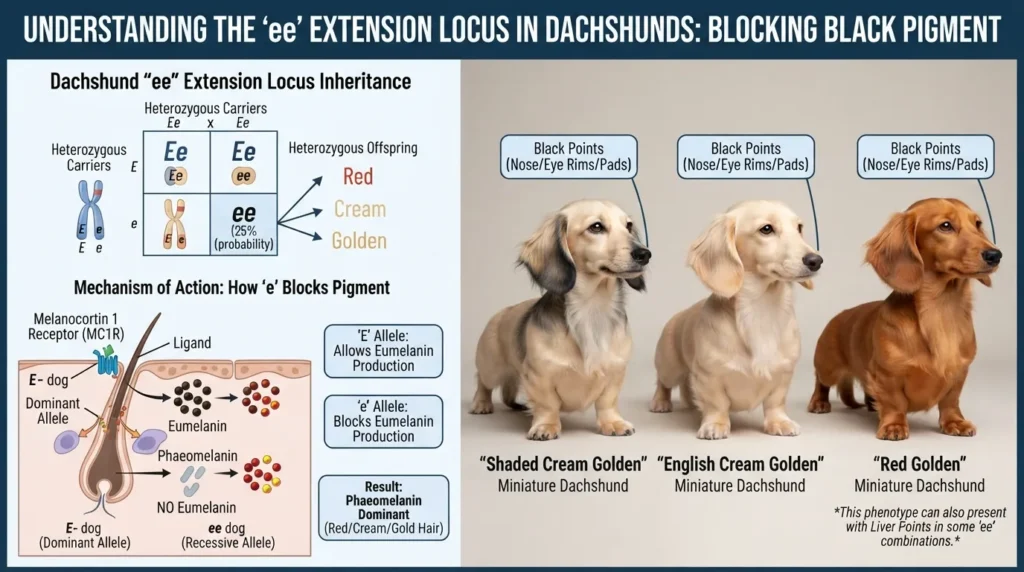
Genetically, true golden or cream dachshunds carry the recessive ee gene, which blocks dark black or brown pigment from appearing in the coat shaft. There are two main variations:
Clear English Creams: Born pale golden or off-white and stay that way their entire lives, with black noses and dark eyes.
Shaded English Creams: Born looking almost dark gray or black, shedding their dark overlay over their first year to reveal a rich golden undertone with subtle black tipping on their ears and back.
Over the last twenty years, American breeders began importing these British lines, giving rise to the huge demand for mini dachshunds with that silky, retriever-like golden coat.
How the Golden Dox Mix Came About
Not every “golden mini dachshund” is a purebred dachshund, however. The phrase is also commonly used to describe the Golden Dox—a intentional hybrid cross between a Golden Retriever and a Miniature Dachshund.
This designer cross emerged during the hybrid dog boom of the late 1990s and early 2000s. The goal was straightforward: combine the friendly, eager-to-please temperament and iconic coat of the Golden Retriever with the compact size and playful personality of the Dachshund. Because of the massive size difference between the two parent breeds, this mix is almost always produced using a female Golden Retriever and a male Miniature Dachshund via artificial insemination for safety. The result is a medium-to-small dog that often looks like a miniature Golden Retriever on shorter legs.
Golden Mini Dachshund Color Genetics Explained
A golden or cream mini dachshund gets its striking, pale coat through a specific combination of recessive coat-color genes passed down from both parents. While many people mistake them for a Golden Retriever mix, true golden mini dachshunds are purebred dogs whose unique look comes entirely from precise genetics.
Understanding these genetics helps you spot the difference between a naturally bred golden coat and risky breeding practices designed to chase rare colors.
The “ee” Gene Recessive Cream Gene
The coat color of a golden mini dachshund relies on the recessive “ee” gene, often called the red-factored or recessive red gene. This gene works by completely suppressing the dog’s ability to produce dark pigment (eumelanin) in its coat hair.
For a puppy to display this pure golden or cream color, it must inherit one copy of the “ee” gene from both parents.
If both parents carry the gene: They can pass it on, even if the parents themselves display darker coats like black and tan.
If only one parent carries the gene: The puppies will carry the recessive gene, but their coats will reflect the dominant parent color instead of turning golden.
Because this gene is entirely recessive, breeders must carefully track generations of pedigree lineage rather than relying on luck.
Golden/Cream Color Variations
Not every golden mini dachshund looks identical. Depending on how other genetic traits interact with the “ee” gene, these coats range from virtually white to richly accented patterns.
Platinum blonde / clear cream: Often called “English Cream,” these dogs are born almost stark white and maintain an exceptionally light, pure golden-cream color with zero dark hairs as they mature.
Shaded cream: Puppies are born looking almost black or charcoal. As they grow, the coat lightens into a warm golden tone, leaving dark black shading along the ears, back, and tail tips.
Cream piebald: A striking pattern where large, symmetrical patches of solid golden-cream sit on a stark white base body coat.
Cream dapple: The dachshund equivalent of a merle pattern, featuring swirling, mottled patches of lighter and darker cream shades across the body.
Black and cream: Rather than a solid golden body, these dogs feature a rich black coat marked by pale cream highlights on the eyebrows, chest, paws, and muzzle instead of the traditional tan points.
The American Kennel Club recognizes many of these shade variations under standard dachshund registration, though specific coat patterns like piebald or dapple carry distinct registry designations.
Appearance & Physical Characteristics
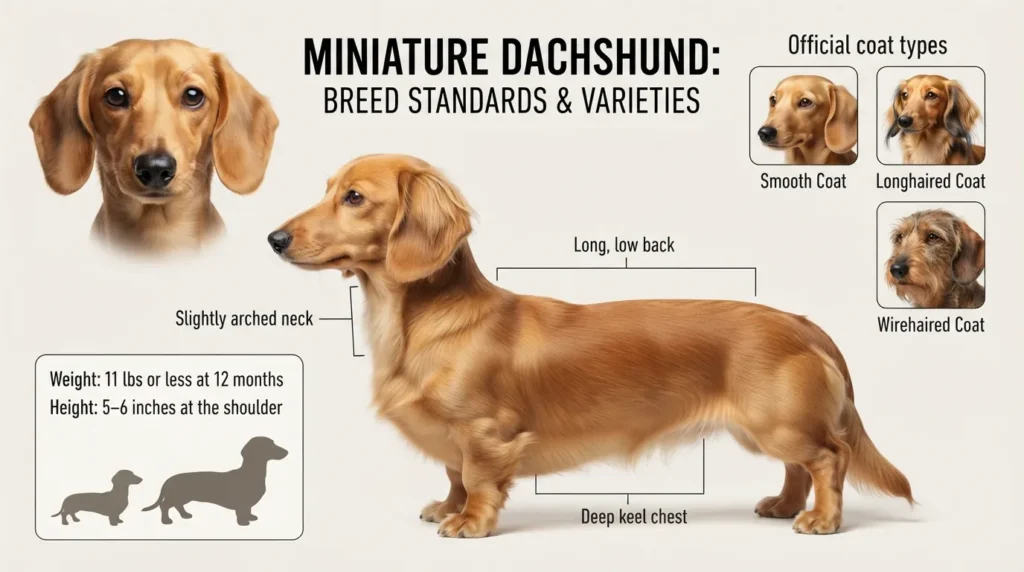
A golden mini dachshund carries the iconic, instantly recognizable “hot dog” silhouette—long body, short legs, and deep chest—packaged into a compact frame. While their rich, honey-toned coat often tricks people into thinking they are a mixed breed like a Golden Retriever mix, they are actually purebred Miniature Dachshunds displaying a specific recessive coat color.
Size, Height & Weight ~11 lbs and under, ~5–6 inches tall
In the United States, official breed standards set by the classify a Dachshund as a miniature based strictly on weight rather than a separate breed distinction.
A fully grown golden mini dachshund typically weighs 11 pounds or under at 12 months of age. Standard dachshunds, by comparison, usually weigh between 16 and 32 pounds. At the shoulder, these little dogs stand just 5 to 6 inches tall. Their elongated torsos make them feel surprisingly sturdy when picked up, but they remain small enough to fit comfortably in a cozy lap or a portable travel carrier.
Coat Types — Smooth / Long-haired / Wire-haired
The golden (often genetically referred to as English Cream or clear red) shade can appear across all three official dachshund coat varieties, though the visual effect varies dramatically depending on the texture:
Long-haired: This is by far the most popular and sought-after coat for golden mini dachshunds. The hair is soft, flowing, and slightly wavy, featuring elegant feathering on the ears, chest, underside, and tail. In a golden shade, they closely resemble a pocket-sized Golden Retriever.
Smooth (Short-haired): A smooth-coated golden mini dachshund has a short, dense, and shiny coat that lies flat against the body. It highlights their muscular, sleek build without requiring much daily brushing.
Wire-haired: The rare wire-haired golden features a harsh, thick outer coat paired with a softer undercoat. They showcase a distinct beard, bushy eyebrows, and a jaunty, rustic look that sets them apart from the sleeker varieties.
Eyes, Ears & Distinctive Features
Beyond their signature color and low-slung frame, several facial features give the golden mini dachshund its signature soft, soulful expression.
Their ears are set near the top of the head, framing the face and drooping gracefully down the cheeks without folding forward. Their eyes are medium-sized, almond-shaped, and usually a deep, warm brown or dark hazel, brimming with alertness and humor. Topping off their tapered snout is a solid black or dark brown nose, which creates a striking, beautiful contrast against their warm, golden fur.
Personality & Temperament
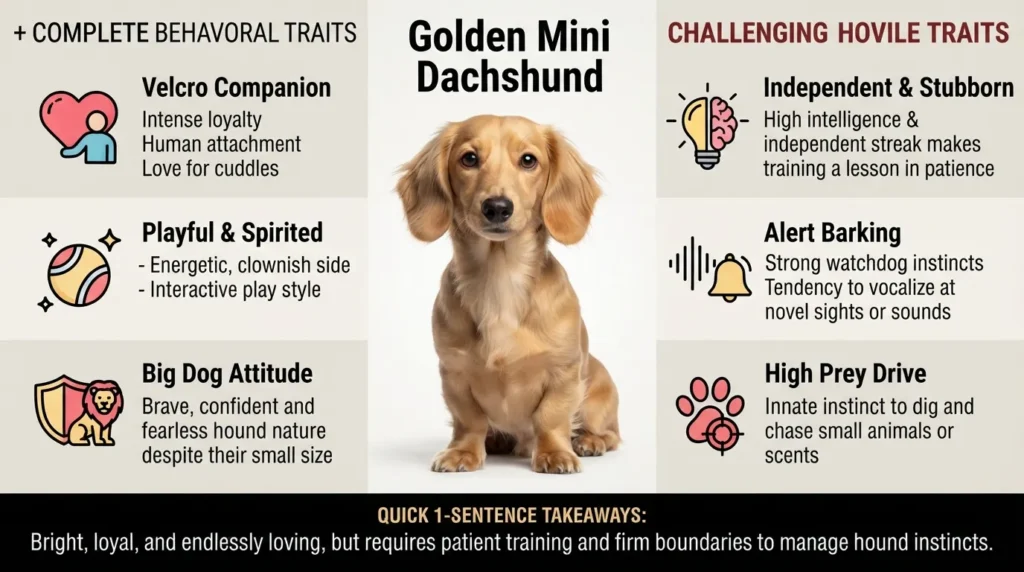
A golden mini dachshund packs an enormous personality into a tiny, ten-pound frame. They are intensely affectionate, fiercely loyal, and usually convince themselves that they are the absolute center of your universe within about five minutes of arriving home.
That bond runs deep, but living with one means embracing the full spectrum of hound behavior—the good, the funny, and the occasionally exasperating.
Affectionate & loyal: They are built for cuddling. Whether they are burrowing under your heavy winter blankets or insisting on sleeping wedged against your hip, these dogs want physical contact constantly.
Playful and curious: Don’t let their size fool you. Their hound lineage means they possess a sharp mind and a constant drive to explore, investigate smells, and play intense games of fetch.
A stubborn, independent streak: Dachshunds were bred to go underground and make their own decisions when fighting badgers. That independent streak remains intact today. If your golden dachshund doesn’t see the point of a command, they will simply look at you and decide to ignore it.
Vocal tendencies: They have a shockingly deep bark for a small dog, and they love using it. Mail carriers, wind blowing through the trees, or a squirrel three yards away will all elicit an immediate alarm bark.
Strong prey drive: Anything small that darts across the yard—chipmunks, rabbits, or backyard birds—will trigger their natural hunting instincts instantly. Off-leash walks in un-fenced areas are rarely a good idea.
The “Velcro” effect: If your dog happens to be a Golden Dox mix (a Golden Retriever crossed with a Miniature Dachshund), that affection often dials up to extreme levels. They hate being left out of the action, and separation anxiety can become an issue if they aren’t taught independent play early on.
They make wonderful family companions, but there is an important physical caveat. Because of their long spine and delicate back, they are not a good fit for homes with rough-housing toddlers who might try to carry them improperly or step on them. Older children who understand how to hold a dog with proper support under their chest and hindquarters will find a devoted friend for life.
Golden Mini Dachshund with Other Pets
When it comes to sharing a home with other animals, personality and proper introductions make all the difference.
If raised together from puppyhood, a golden miniature dachshund generally does great with other dogs, often enjoying having a playmate of similar size. They will occasionally try to boss around dogs five times their size, entirely unaware of their own minor dimensions.
Cats are a bit more of a mixed bag. A dachshund’s high prey drive means a cat that runs will almost certainly be chased. However, with calm, controlled introductions and consistent training, many coexist peacefully with feline housemates—provided the cat stands its ground. Small pocket pets like hamsters, guinea pigs, or free-roaming rabbits, on the other hand, should always be kept safely separated due to the dachshund’s deeply rooted instincts as a earthdog hunter.
How Much Does a Golden Mini Dachshund Cost?
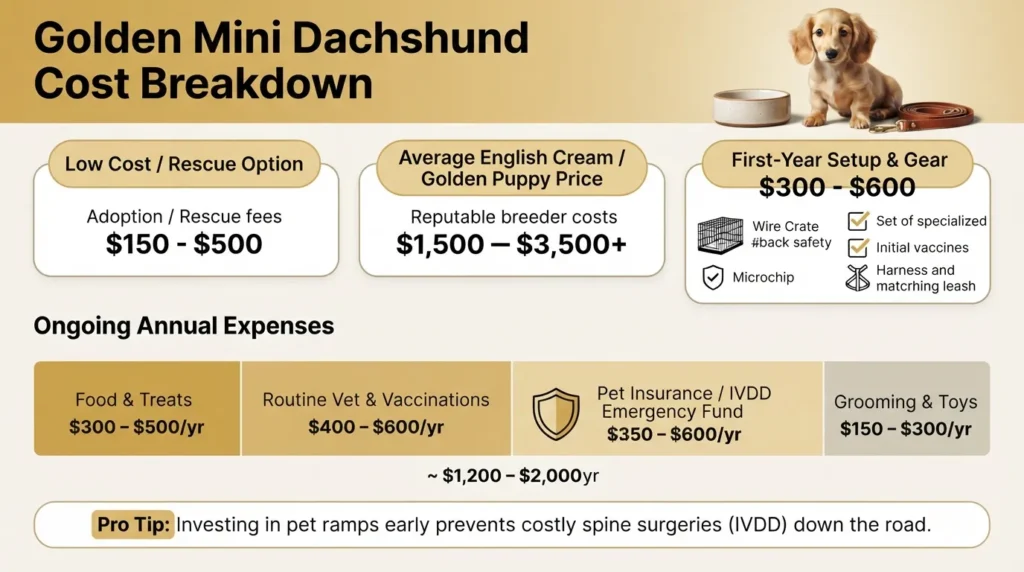
Expect to pay between $1,500 and $3,500 for a healthy, purebred golden mini dachshund from an ethical breeder. Prices can fluctuate based on pedigree, coat type, and genetic health testing. While you might spot listings for lower or higher amounts, this range reflects the current market for well-bred puppies raised with proper care.
Average Price Range purebred vs mix
Purebred golden mini dachshunds generally cost between $1,500 and $3,500. True “golden” coloring in dachshunds—often genetically referred to as English cream or red with heavy dilution—is highly sought after, which keeps the price point at the higher end of the standard dachshund spectrum.
Mixed breeds, such as a Golden Retriever combined with a Miniature Dachshund (sometimes marketed as a “Golden Doxie”), usually cost less, ranging from $500 to $1,200. However, mixed breeds do not carry the predictable size, coat characteristics, or genetic traits of a purebred miniature dachshund.
What Affects the Price
Several key factors drive the final price of a puppy:
Coat Type: Longhaired golden mini dachshunds often command a premium over smooth or wirehaired coats because the sweeping, silky golden coat is in high demand.
Genetics and Color Rarity: True shaded English creams or clear recessive goldens require careful genetic planning to breed safely, driving up costs for responsible breeders.
Health Testing: Reputable breeders invest heavily in DNA screening and OFA clearances for parent dogs to screen for Progressive Retinal Atrophy (PRA) and back health risks.
Pedigree and AKC Registration: Puppies from championship bloodlines or those sold with full American Kennel Club registration rights cost significantly more than pet-only puppies sold on limited registration.
Location and Demand: Breeders located near major metropolitan areas or in regions with limited golden breeders often charge higher prices to match local demand.
Pricing Breakdown — Budget vs Reputable Breeder
Price is usually a direct reflection of the care, health screening, and early socialization put into the puppy before it comes home with you.
| Breeder Category | Typical Price Range | What You Are Paying For |
|---|---|---|
| Reputable Breeder | $1,500 – $3,500+ | Full genetic health testing of parents, initial vaccinations, vet checks, early socialization, and breeder support. |
| Backyard Breeder | $800 – $1,400 | Minimal to no health testing, basic vaccinations, often focused on quick sales rather than breed health. |
| Puppy Mill / Commercial | $300 – $800 | Mass production with poor living conditions, high risk of severe inherited health issues, zero genetic testing. |
Steer clear of bargain prices under $1,000 for a purebred golden mini dachshund. Extremely cheap listings are the single biggest red flag for puppy mills or backyard breeders who skip critical health screenings.
Unscrupulous sellers often market dilute colors or rare coats at cheap prices to turn a quick profit, leaving unsuspecting buyers with thousands of dollars in vet bills later down the road. Always ask to see parent health testing, health guarantees, and the environment where the puppies are raised before sending a deposit.
How to Find a Reputable Golden Mini Dachshund Breeder
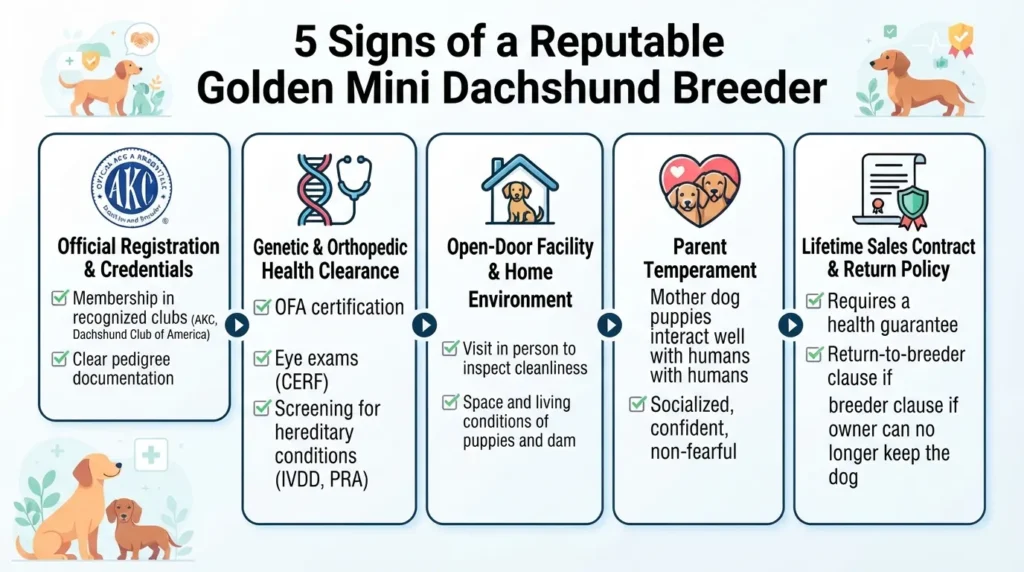
Finding a healthy, well-adjusted Golden Mini Dachshund starts with finding a breeder who genuinely prioritizes the health and temperament of their dogs over quick profits. Because the cream and golden coat colors have skyrocketed in popularity, the market is flooded with high-volume breeders and back-yard operations looking to capitalize on the trend. Taking the time to properly vet a breeder is the single best thing you can do to avoid severe heartbreak and costly veterinary bills down the road.
Red Flags to Avoid
When searching for a puppy, knowing what not to look for is just as critical as finding a good breeder. Ethical breeders operate with complete transparency, while low-quality operations often rely on slick marketing and pressure tactics.
Watch out for these warning signs during your search:
Selling puppies under 8 weeks old: Puppies need those critical first two months with their mother and littermates to develop proper social skills and bite inhibition.
“Rare color” price gouging: While English Creams and golden shades command high prices, breeders who market them as ultra-rare mythical creatures to justify absurd $5,000+ price tags often care more about coat color genetics than structural health.
No health testing documentation: Dachshunds are prone to hereditary conditions like Intervertebral Disc Disease (IVDD) and progressive retinal atrophy. If a breeder cannot show proof of official health clearances for the parents, walk away.
Refusal to let you see the parents or environment: You should always be allowed to see where the puppies are raised—either in person or via live video call—and interact with at least the mother.
Always having available puppies: Reputable miniature dachshund breeders usually have waiting lists. If a seller always has multiple litters ready to ship immediately, you are likely dealing with a puppy mill or commercial breeding facility.
No return clause: A responsible breeder will state in their contract that if you can no longer keep the dog at any point in its life, the dog must return to them.
Questions to Ask a Breeder
When you contact a golden miniature dachshund breeder, treat the conversation as an interview. Ethical breeders welcome thoughtful questions—in fact, they will likely interview you right back to ensure their puppy is going to a great home.
Here are essential questions you should ask before placing a deposit:
Can I see the health test results for both parents? Ask specifically about DNA screening for PRA (Progressive Retinal Atrophy) and veterinary evaluations for OFA hips, knees (patellas), and heart.
How do you socialize the puppies before they go home? Look for breeders who use established puppy curriculum (like Early Neurological Stimulation or Puppy Culture) to expose them to household sounds, handling, and different surfaces.
What age do you send puppies to their new homes? The answer should always be 8 weeks or older.
Do you offer a health guarantee, and what does it cover? A good contract typically provides a 1- to 2-year guarantee against genetic diseases and outlines clear terms.
What is the coat type genetics of the parents? Because golden shades can range from clear red to true recessive cream, a knowledgeable breeder will easily explain the genetic background of their breeding dogs.
Adoption/Rescue Alternative
If purchasing from a breeder isn’t the right fit for you, adoption is a wonderful way to bring a golden dachshund into your home. While finding a young miniature puppy in this specific color at a shelter takes patience, golden and cream dachshunds of all ages frequently enter breed-specific rescue networks.
Look for dedicated regional or national Dachshund rescue groups rather than general shelters, as they regularly foster dogs in private homes. This gives you a clear picture of the dog’s true personality, house-training status, and behavior around children or other pets before you officially adopt.
Health Issues & Lifespan
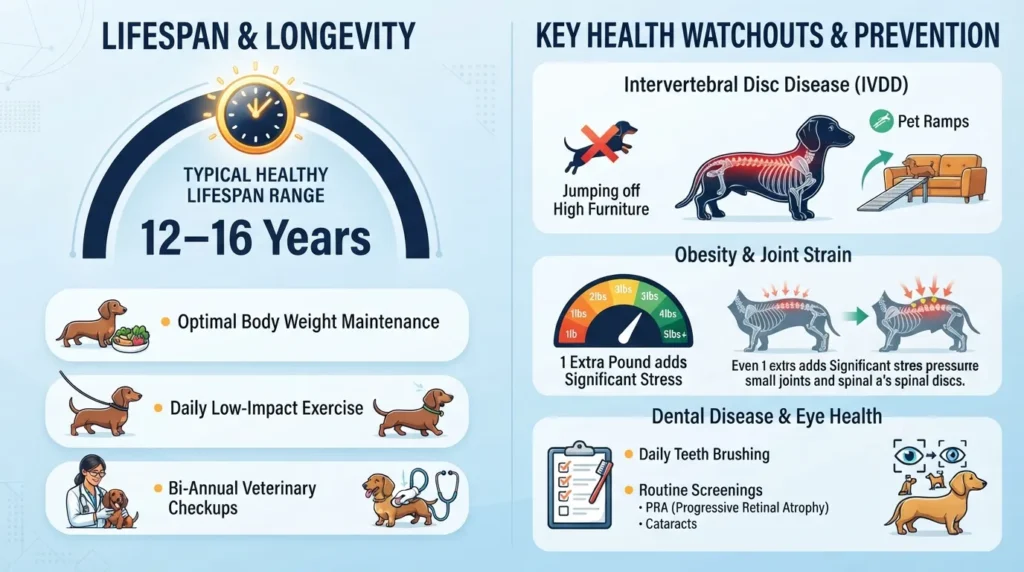
Golden mini dachshunds are generally robust little dogs that often outlive larger breeds, but their unique long-and-low anatomy comes with distinct medical vulnerabilities. On average, a healthy golden miniature dachshund lives between 12 and 16 years, provided they receive proper care, weight management, and preventative health screenings throughout their lives.
With good genetics and a bit of extra attention to their spines, it is not at all uncommon for these bright little dogs to reach 15 or 16 years old while maintaining a great quality of life.
Average Lifespan 12–16 years
The impressive longevity of the golden mini dachshund is one of the breed’s biggest draws. However, reaching the upper end of that 12-to-16-year lifespan depends heavily on day-to-day management.
Obesity is the single fastest way to shorten a miniature dachshund’s life. Carrying even one extra pound puts immense strain on their tiny joints and backbones, drastically increasing the risk of early mobility issues. Regular, low-impact exercise and strict portion control are non-negotiable if you want your golden dachshund to age gracefully into their teens.
Intervertebral Disc Disease IVDD — #1 risk
The defined spinal structure that gives dachshunds their famous “wiener dog” silhouette also makes them genetically prone to Intervertebral Disc Disease (IVDD). Roughly 1 in 4 dachshunds will experience an IVDD episode in their lifetime. This condition occurs when the cushioning discs between the vertebrae bulge or rupture, pressing directly on the spinal cord.
IVDD can range from mild back pain to sudden, complete paralysis of the hind legs. Prevention is critical from day one:
Ramps over stairs: Use foam or wooden dog ramps to keep your mini dachshund from jumping on and off furniture or navigating steep staircases.
Proper handling: Always support their chest and hindquarters simultaneously when picking them up—never let their lower body dangle.
Harness over collar: Walk your dog on a well-fitted chest harness rather than a neck collar to avoid pulling strain on the neck and spine.
If you ever notice your golden mini dachshund dragging their back paws, arching their back in pain, or shivering uncontrollably, treat it as a medical emergency and get them to a veterinarian immediately.
Other Common Health Concerns
Beyond spinal health, golden miniature dachshunds are prone to a few other genetic and lifestyle-related health conditions that owners should watch for:
Progressive Retinal Atrophy (PRA): A genetic eye disorder that causes gradual deterioration of the retina, eventually leading to blindness. Reputable breeders screen their breeding stock for the PRA gene mutation to ensure puppies inherit healthy eyes.
Severe Dental Disease: Because miniature dachshunds have very small jaws packed with 42 teeth, overcrowding is common. Trapped food leads to rapid tartar buildup, gum disease, and early tooth loss unless you brush their teeth regularly and schedule professional dental cleanings.
Patellar Luxation: A condition where the kneecap slips out of its normal groove, causing a temporary limp or a subtle “skipping” gait while running.
Hypothyroidism: An underactive thyroid gland that can lead to unexplained weight gain, lethargy, and dry, thinning fur—which is especially noticeable on a long-haired or smooth golden coat.
For detailed guidelines on genetic testing standards and spinal health research, you can reference the official health resources provided by theRegular veterinary checkups, combined with early detection, remain your best defense against every item on this list.
Grooming & Care Needs

Keeping a golden mini dachshund looking its best depends entirely on the variety you bring home, as their grooming demands vary significantly across coat types. While they are generally manageable house pets, their low-to-the-ground bodies act like natural dust mops, meaning regular maintenance is non-negotiable to keep their golden coats healthy and clean.
Grooming by Coat Type
The golden mini dachshund comes in three distinct coat varieties—smooth, longhaired, and wirehaired—and each requires a tailored brushing routine:
Smooth Coat: The lowest-maintenance option. A quick weekly brush with a soft bristle brush or a rubber grooming mitt removes loose fur and keeps their sleek, golden coat shiny.
Longhaired Coat: Requires the most attention. Brush them 3 to 4 times a week using a slicker brush and a metal comb to prevent painful mats, especially in high-friction areas like behind the ears, under the armpits, and along the skirt.
Wirehaired Coat: Features a dense undercoat and a harsh topcoat. They need weekly brushing with a pin brush and require “hand-stripping” (plucking dead outer hairs) two to three times a year to maintain their coarse texture and rich color.
Bathing & Nail Care
Bathe your golden miniature dachshund every 4 to 6 weeks using a mild, moisturizing dog shampoo. Because their long ears block airflow, always dry their ears thoroughly after a bath to prevent trap-moisture yeast infections.
Nail care is critical for this breed. Dachshunds have strong, fast-growing nails that must be trimmed every 2 to 3 weeks. If you hear their nails clicking on hard floors, they are too long; overgrown nails alter how their paws hit the ground, putting unnatural strain on their joints and sensitive backs.
Is a Golden Mini Dachshund Hypoallergenic? (No)
No, the golden mini dachshund is not a hypoallergenic dog. All three coat varieties shed moderate amounts of fur and continuously release dander—the airborne dead skin proteins that trigger most pet allergies.
If you have mild dog allergies, a smooth or wirehaired golden dachshund may be easier to manage than a longhaired variety simply because they trap fewer outdoor allergens in their fur, but they will still produce dander. According to the no dog breed is 100% hypoallergenic, so allergy sufferers should spend time around the breed before bringing a puppy home.
Ideal Portion Sizes & Daily Caloric Needs
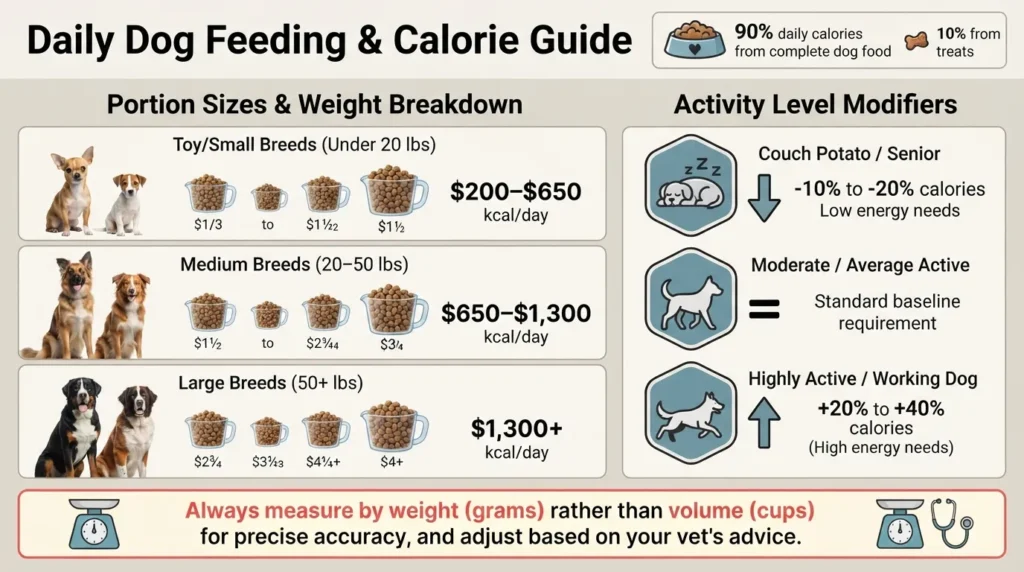
Miniature dachshunds generally weigh under 11 pounds at adult size, meaning their daily caloric requirements are surprisingly precise. Most healthy adult golden mini dachshunds need between 200 and 400 calories per day, depending on their activity level, age, and spay/neuter status.
Instead of relying solely on the feeding guidelines printed on kibble bags—which often overestimate portions—calculate their intake based on target body weight. A good baseline is about 35 to 40 calories per pound of body weight for moderately active adults.
For precise measuring:
Use a standard measuring cup or kitchen scale to portion every meal. Estimating by eye almost always leads to overfeeding.
Account for treats: Treats should never exceed 10% of their total daily caloric intake. If you train heavily with treats, reduce their main meal portions accordingly.
Recommended Feeding Schedule by Age
A mini dachshund’s metabolism changes dramatically as they grow from a rapidly developing puppy into a senior.
Puppies (8 to 16 weeks): 4 meals per day. Young puppies have tiny stomachs and can quickly experience drops in blood sugar (hypoglycemia) if left too long between feedings.
Adolescents (4 to 6 months): 3 meals per day. As their stomach capacity grows, you can consolidate their total daily food into three evenly spaced feedings.
Adults (12 months and older): 2 meals per day. Morning and evening meals keep their energy steady and help prevent stomach upset or bile reflux from an empty stomach.
Seniors (7+ years): 2 meals per day, using a lower-calorie, high-fiber formula if their activity level slows down.
Choosing the Right Food & Ingredients to Avoid
Look for a high-quality commercial dog food formulated specifically for small or toy breeds. Small-breed kibble features smaller piece sizes tailored to their small jaws and teeth, preventing choking and encouraging proper chewing. The formula should feature a named animal protein (like chicken, lamb, or salmon) as the first ingredient.
To keep your dachshund healthy, avoid foods containing:
Toxic human foods: Chocolate, grapes, raisins, onions, garlic, macadamia nuts, and anything containing the artificial sweetener xylitol (birch sugar).
Low-quality fillers: Excessive corn, wheat, soy, or unnamed meat by-products that add empty calories without functional nutrition.
Artificial preservatives & dyes: Ingredients like BHA, BHT, ethoxyquin, or artificial colorings that provide no nutritional benefit.
Cooked bones and high-fat table scraps: Cooked bones can splinter and perforate the digestive tract, while fatty scraps easily trigger acute pancreatitis—a common risk in small breeds.
Always ensure fresh, clean water is available alongside their scheduled meals. If you ever need to transition your golden miniature dachshund to a new diet, introduce the new food gradually over 7 to 10 days to prevent digestive upset.
Exercise & Training Requirements
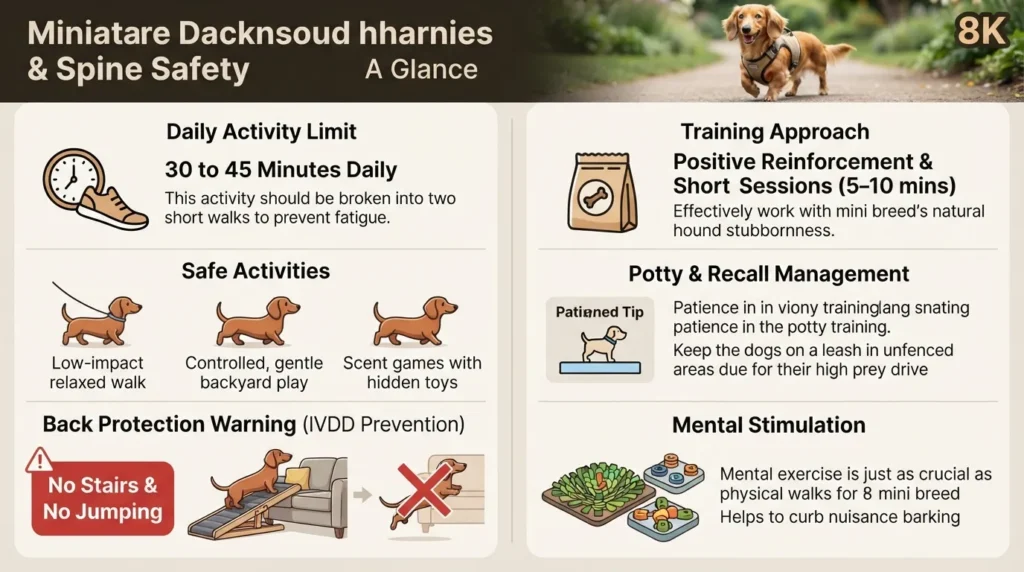
A golden mini dachshund needs about 30 to 45 minutes of moderate exercise every day, paired with consistent, patience-first training. Despite their tiny size and gorgeous golden coats, these dogs carry the full heart—and stubborn streak—of a working scent hound.
Keeping them physically fit and mentally stimulated isn’t just about burning off energy. It is essential for protecting their long, delicate spines from injury.
Daily Exercise Needs
Exercise for a golden mini dachshund should always prioritize low-impact activities over high-intensity jumping. Their exaggerated back-to-leg ratio makes their intervertebral discs particularly vulnerable to strain.
Two 15-to-20-minute walks a day on a secure harness—never a collar, which pulls on their fragile necks—is usually the sweet spot for a adult miniature dachshund.
Focus on scent work: Let them sniff. Dachshunds experience the world through their nose, and 10 minutes of active sniffing on a walk burns more mental energy than a straight mile of hurried pacing.
Avoid jumping at all costs: Use dog ramps for furniture and carry them up and down long staircases to protect their backs.
Indoor play counts: Fetch with a soft, small toy down a carpeted hallway works wonders on rainy days.
If your golden mini starts zooming around the living room or digging frantically at your couch cushions, they are telling you their physical or mental tank hasn’t been drained yet.
Training Tips
Training a golden miniature dachshund requires understanding what makes their minds tick. Bred to independent-mindedly pursue badgers underground, they do not naturally care about pleasing you the way a Golden Retriever might—they want to know what’s in it for them.
Use high-value rewards: Small pieces of freeze-dried liver or plain boiled chicken will get their attention much faster than standard kibble.
Keep sessions short: Limit formal training to 5-minute bursts, 2 to 3 times a day. If they lose interest, end on a positive note and try again later.
Be patient with housebreaking: Small bladders combined with a stubborn attitude make house-training notoriously slow. Stick to a strict schedule, reward immediate outdoor success, and use enzyme cleaners for indoor accidents without scolding.
Curb demand barking early: Dachshunds love the sound of their own voice. Reward quiet behavior and avoid acknowledging them when they bark for attention or food.
Consistency is everything. Set clear rules from day one, stay calm when their inner hound shines through, and celebrate the small wins together.
Golden Mini Dachshund Life Stages — Track Their Age in Human Years
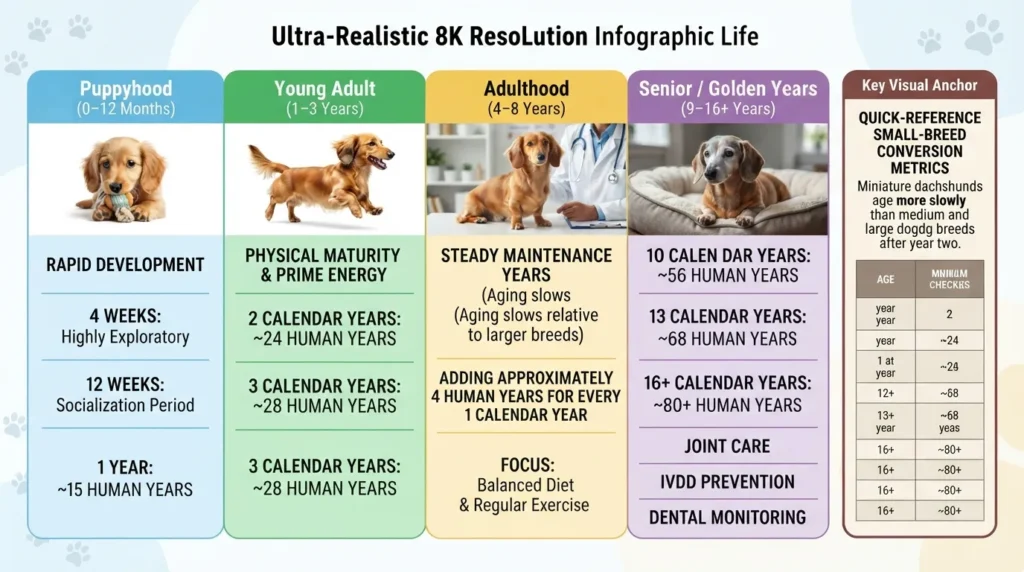
A golden mini dachshund grows up fast in their first two years, but they also enjoy one of the longest lifespans in the dog world. Understanding where your dog is in their life journey helps you adjust their diet, play, and preventive healthcare right when they need it most.
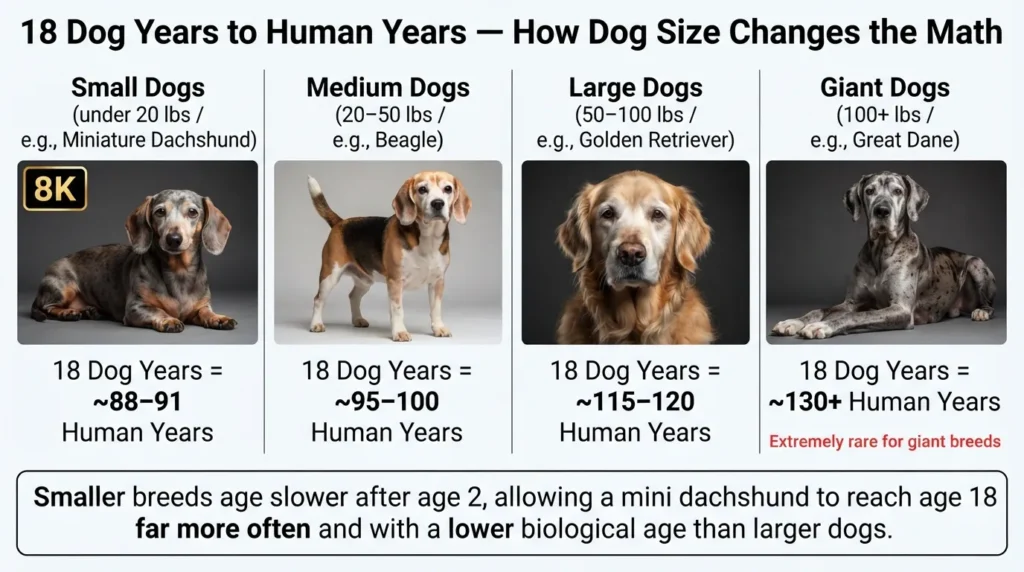
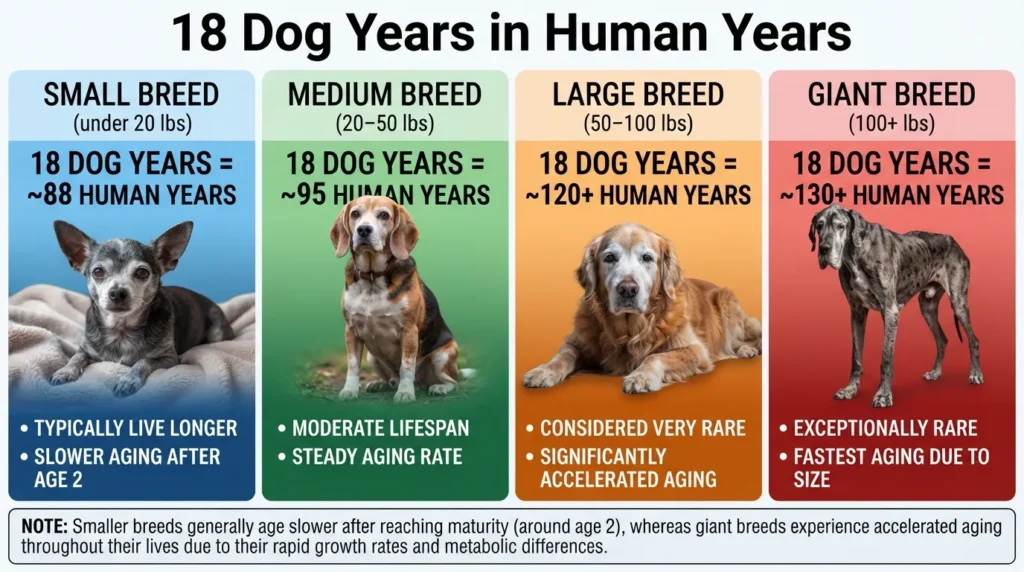
While the old “multiply by seven” rule is a popular shorthand, it does not accurately reflect how a miniature breed ages. Small dogs mature much quicker sexually and mentally in their first 18 months than large dogs do, but their physical aging slows down significantly once they reach adulthood.
To get an accurate picture of your dog’s true maturity level, you can use our free Dog Age Calculator tool to instantly convert your puppy’s, adult’s, or senior’s exact age into human years.
Key Life Stages of a Golden Mini Dachshund
Puppyhood (0 to 12 months): Rapid growth, teething, and critical socialization happen here. Your golden mini will gain most of their physical adult weight by around 8 to 10 months.
Young Adult (1 to 3 years): High energy and full physical maturity. Their coat reaches its full length and rich golden sheen around 18 to 24 months.
Mature Adult (4 to 7 years): Prime adult years with stable energy levels. Maintaining a lean weight during this stage is vital to protect their long back from spinal strain.
Senior (8+ years): Play slows down, and graying may start around their muzzle. Regular vet check-ups become essential for screening joint health, vision, and dental care.
Pros and Cons of Owning a Golden Mini Dachshund

Choosing a golden mini dachshund means bringing home a strikingly beautiful, affectionate companion, but their hound heritage brings specific quirks that do not suit every lifestyle. Before falling in love with that soft, wheat-colored coat, you need an honest look at both the highlights and the everyday challenges of living with one.
Pros
Unmatched aesthetic appeal: Their warm, reddish-gold or creamy shade gives them an elegant, fox-like look that consistently turns heads on walks.
Deeply affectionate and loyal: Dachshunds are famous for forming intense, devoted bonds with their humans. They thrive on lap time and will happily follow you from room to room.
Ideal size for small-space living: Weighing 11 pounds or less at adulthood, a golden miniature dachshund adapts effortlessly to apartments or houses without large yards, as long as they get daily exercise.
Big dog confidence in a small frame: They carry themselves with fearless curiosity. You get the brave, engaging personality of a much larger hound packed into a portable, manageable size.
Long lifespan: With proper care, weight management, and preventative health practices, these dogs routinely live 12 to 16 years, giving you a long-term companion.
Cons Challenges
Vulnerability to back issues: Like all long-backed breeds, they face a high lifetime risk of Intervertebral Disc Disease (IVDD). You must invest in dog ramps for furniture and strictly enforce a no-jumping rule to protect their spine.
Infamous hound stubbornness: Bred to hunt badgers independently underground, they carry a strong willful streak. Potty training often takes longer than expected, and obedience requires consistent, positive reinforcement rather than strict firmness.
High tendency to bark: They have a surprisingly loud, deep bark for their size and will use it liberally to announce visitors, strange noises, or mild boredom.
Strong prey drive: Small animals like squirrels, rabbits, or even neighborhood cats trigger their hunting instincts instantly, meaning off-leash reliable recall is rarely guaranteed.
Grooming depends on coat type: While a short-haired smooth golden dachshund needs minimal brushing, long-haired variants require frequent grooming to prevent painful mats around their ears, chest, and legs.
Frequently Asked Questions
| Question | Answer |
|---|---|
| Is a golden mini dachshund a real, AKC-recognized breed? | No, "golden mini dachshund" is not an official AKC breed name. It usually refers to a Miniature Dachshund with a shaded cream, clear cream, or red coat that resembles a Golden Retriever's color. |
| How big does a golden mini dachshund get? | As a miniature dachshund, they typically weigh 11 pounds or less at adulthood and stand around 5 to 6 inches tall at the shoulder. |
| Are golden mini dachshunds hypoallergenic? | No, Dachshunds are not hypoallergenic. They shed moderately and produce dander, though long-haired varieties may require regular brushing to manage shedding. |
| How much does a golden mini dachshund puppy cost? | Prices generally range from $1,500 to $3,500+, depending on the breeder, coat type (e.g., long-haired cream variants), lineage, and location. |
| What's the difference between a golden dachshund and an English cream dachshund? | English Cream Dachshunds have a specific genetic lineage originating from the UK with a pale, cool-toned coat, whereas "golden" is an informal term used for warm red or golden-cream Dachshunds. |
| Do golden mini dachshunds bark a lot? | Yes, like all Dachshunds, they were bred as hunting dogs and tend to be vocal. Early training and social interaction can help manage excessive barking. |
| How long do golden mini dachshunds live? | Miniature Dachshunds have a long lifespan, typically living between 12 to 16 years with proper diet, exercise, and veterinary care. |
🐾 Other Age Guides

I built Dogagescalculator.com to give dog owners honest, science-backed answers instead of the outdated "×7" myth. Every figure here is checked against AKC, AVMA, and published veterinary research.
More about the author & this site →
Comments