
What Is the Lifespan of a Dachshund Dog?
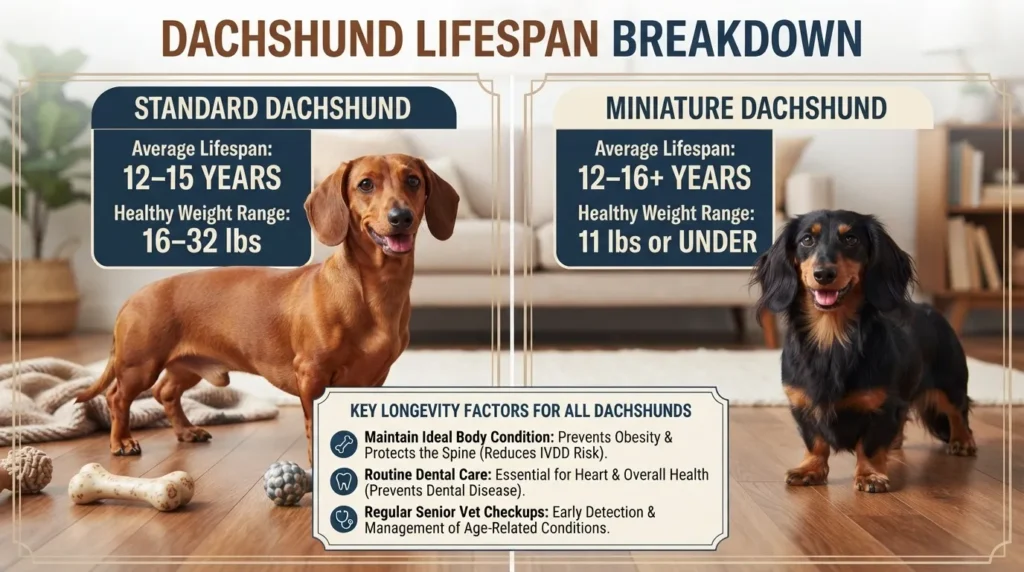
The average Dachshund lifespan is 12 to 16 years, making this small, long-bodied breed one of the longer-lived dogs. With good genetics, a healthy weight, regular veterinary care, and proper daily exercise, some Dachshunds can live beyond 16 years.
Lifespan can vary between Standard and Miniature Dachshunds, and individual longevity is also influenced by genetics, diet, weight, activity level, and overall health. Their distinctive long back also makes spinal health especially important throughout life.
In this guide, you’ll learn how long Dachshunds typically live, their life expectancy by type, common health factors that affect longevity, and what you can do to support a longer, healthier life. You can also use our Dog Age Calculator to understand your Dachshund’s current age in human years.
Average Dachshund Lifespan at a Glance
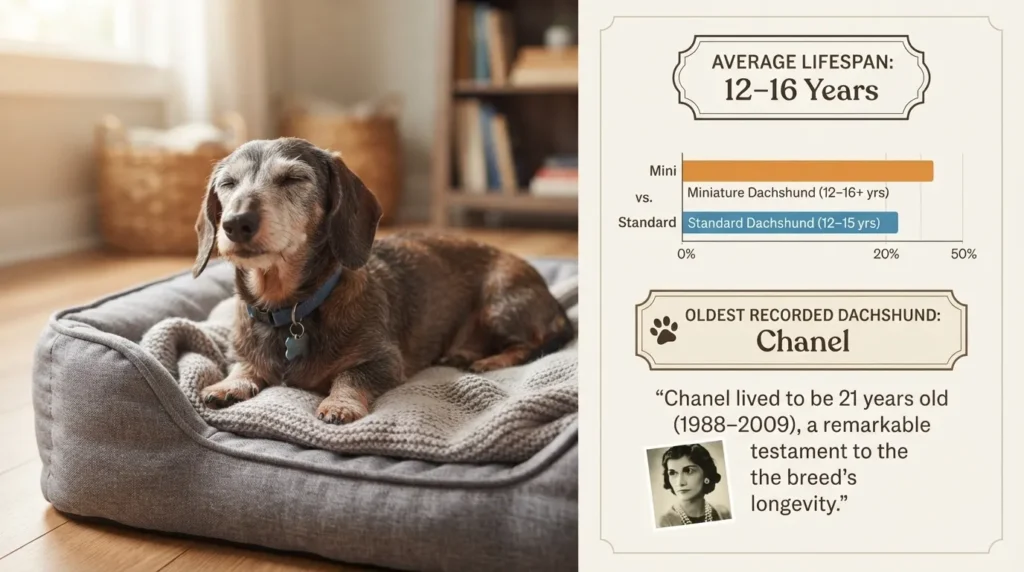
Average Lifespan: 12 to 16 years. According to breed longevity reports from the American Kennel Club (AKC) and clinical reference data from the American Animal Hospital Association (AAHA), Dachshunds consistently rank among the longest-living dog breeds. Their small physical footprint gives them a distinct biological edge over larger dogs, as smaller breeds experience slower cellular aging and lower cumulative physical stress on their vital organ systems over time.
Oldest Recorded Dachshund: Chanel (21 years, 114 days). A wire-haired Dachshund named Chanel was officially certified by Guinness World Records as the world’s oldest living dog in 2009 after reaching 21 years of age. Other notable documented cases include a Dachshund-terrier mix named Otto who lived to 20 years, 334 days, and unverified owner-reported cases like Rocky, a Dachshund who reportedly reached 25 years.
Quick Facts: Dachshund Lifespan & Size Comparison
| Size Variant | Average Lifespan | Typical Weight | Primary Longevity Factors & Notes |
|---|---|---|---|
| Standard Dachshund | 12 – 15 years | 16 – 32 lbs | Strong overall longevity, but higher mass increases strain on spinal discs. Strict weight management is critical. |
| Miniature Dachshund | 12 – 16+ years | 11 lbs or under | Slightly longer life expectancy on average due to smaller mass, though highly prone to early dental disease. |
| "Teacup" / Toy (Non-Standard) | 8 – 12 years | Under 8 lbs | Unofficial size category often produced through intentional runting; frequently suffers from congenital cardiac, spinal, and hypoglycemic issues. |
Dachshund Lifespan by Size (Standard vs Miniature vs Toy)
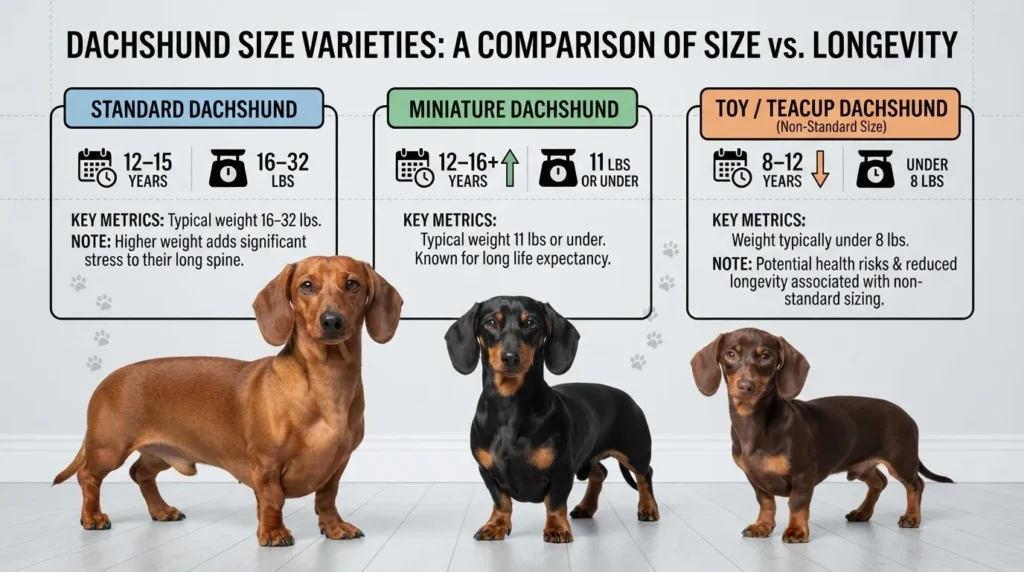
While all Dachshunds share the same elongated silhouette and brave temperament, their physical size plays a major role in determining how long they stay by your side. Size directly influences metabolic rates, organ strain, and baseline susceptibility to age-related health issues.
Standard Dachshund Lifespan
Standard Dachshunds typically weigh between 16 and 32 pounds and live 12 to 15 years. Because they carry more body weight than their smaller counterparts, their musculoskeletal system endures higher daily impact.
This extra mass puts elevated stress on their elongated spines, making strict weight control essential for protecting their spinal discs and maximizing their senior years.
Miniature Dachshund Lifespan
Miniature Dachshunds weigh 11 pounds or under at maturity and boast an average lifespan of 12 to 16+ years. It is surprisingly common for a well-cared-for Mini Dachshund to reach 17 or 18 years of age.
Their smaller frame means less mechanical stress on their joints over a lifetime, though their compact jaws make them notably more susceptible to severe periodontal disease, which requires early preventive dental care.
Do Smaller Dachshunds Live Longer?
Yes, smaller Dachshunds generally outlive standard-sized ones, following a well-documented biological pattern across the canine world. According to evolutionary biology studies on canine aging, large breed dogs age at an accelerated physiological pace, while smaller dogs experience a slower rate of cellular damage over time.
However, this rule breaks down when breeding is pushed to extreme limits. So-called “teacup” or toy Dachshunds—which fall below the official American Kennel Club (AKC) breed standard—often face compromised lifespans of 8 to 12 years. These undersized dogs frequently suffer from congenital heart defects, fragile bone structures, and severe hypoglycemic episodes stemming from unsafe breeding practices.
Dachshund Life Stages Explained
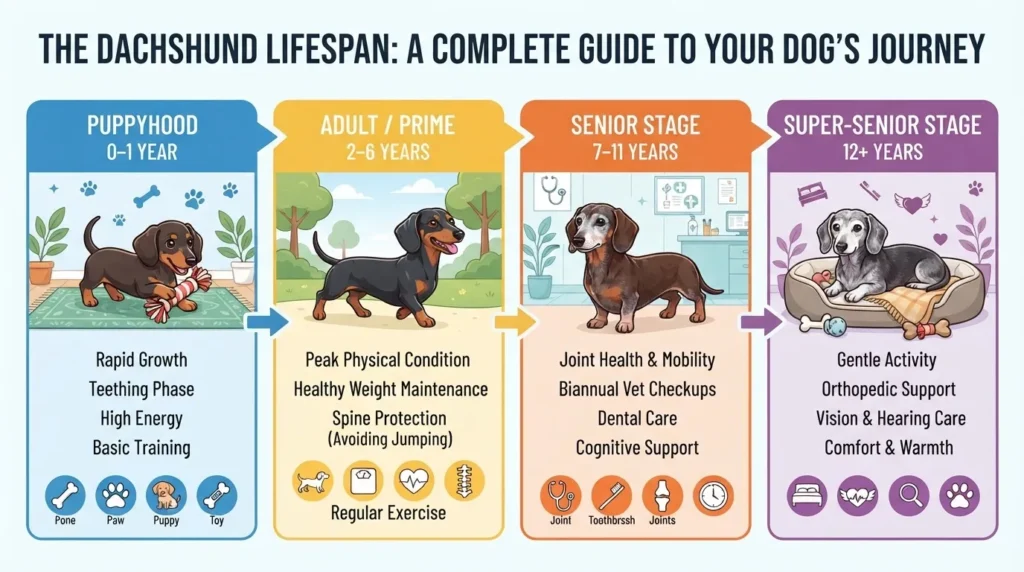
Puppy Stage (0–1 year)
Dachshund puppies pack a surprising amount of development into their first 12 months. During this rapid growth phase, their skeletal structure stretches out long before their supporting muscle tone catches up, leaving their backs especially vulnerable to strain. Building strong habits early—like stopping them from jumping off couches and keeping their weight lean—sets the foundation for a healthy spine for the rest of their lives.
Adult Stage
A Dachshund enters full adult maturity around 12 to 18 months of age, depending on whether they are a miniature or standard variety. This is their prime physical stage, characterized by high energy, sharp mental alertness, and strong muscular support around their long vertebral column. Maintaining daily low-impact exercise like controlled leash walks is essential during these years to keep their spinal discs supported by lean back muscles.
Senior Stage
Most veterinary guidelines, including age classifications from the American Animal Hospital Association (AAHA), consider a Dachshund to enter their senior years around 8 to 10 years old. Because small breeds age slower than large ones, senior Dachshunds often stay lively well into their teens, but subtle age-related shifts begin to surface internally and externally.
Grey muzzle and eye cloudiness: You will likely notice silver frosting around their snout and eyes, along with a slight haze in their lenses (nuclear sclerosis), which is a normal part of canine eye aging.
Slower mobility and joint stiffness: Senior Dachshunds often hesitate before climbing stairs, take longer to stand up after sleeping, or move with a slightly stiffer gait.
Dental health changes: Decades of chewing on a small jaw often lead to tartar buildup, bad breath, or sensitive gums, making professional dental care critical in these later years.
Weight fluctuations and muscle loss: Metabolic changes mean older dogs can easily put on extra pounds or, conversely, begin losing lean muscle mass along their back and hind legs.
Shifts in sleep and routine: Expect your older Dachshund to sleep more deeply throughout the day and seek out warm, cozy spots to rest their aging joints.
What Is 1 Dachshund Year in Human Years?
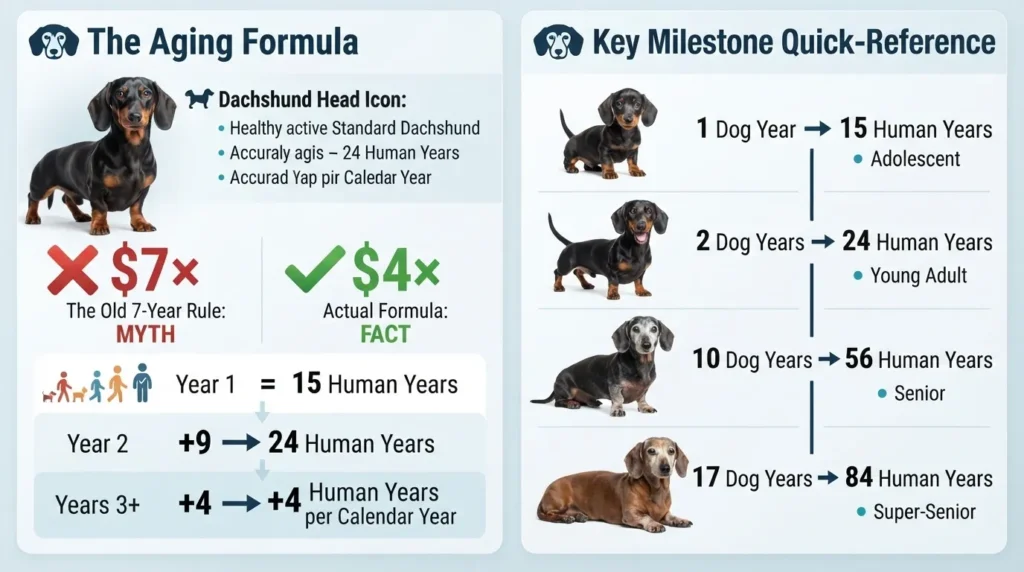
The old “multiply by 7” rule doesn’t accurately reflect how Dachshunds age. Like most small breeds, Dachshunds mature rapidly in their first two years and then age at a much slower, steadier pace compared to larger dogs.
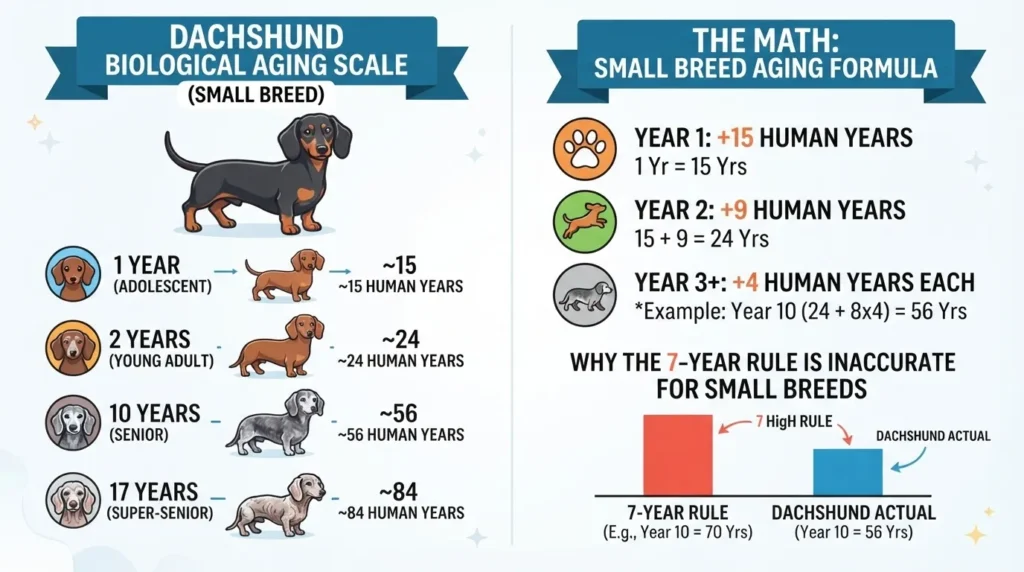
According to canine life stage guidelines from the American Animal Hospital Association (AAHA), a Dachshund’s first year equals 15 human years, reaching full maturity at 24 human years by age two. After year two, each calendar year adds roughly 4 human years. This slower mid-life aging pace is why a 17-year-old Dachshund is approximately 84 in human years—not 119 as older formulas suggested.
Dachshund Age-to-Human-Year Conversion Chart
| Dachshund Age | Equivalent Human Age | Life Stage |
|---|---|---|
| 1 Year | 15 human years | Adolescent |
| 2 Years | 24 human years | Young Adult |
| 10 Years | 56 human years | Senior |
| 17 Years | 84 human years | Super-Senior |
Want the full year-by-year breakdown for Standard and Miniature Dachshunds?
Calculate your Dachshund’s exact human age →
Factors That Affect a Dachshund's Lifespan
Genetics & Breeding
Genetics set the baseline for how long a Dachshund will live. Ethical breeders screen parent dogs for inherited conditions like Progressive Retinal Atrophy (PRA) and severe spinal weaknesses before breeding. Back-yard breeding or double-dapple breeding (crossing two dapple-patterned Dachshunds) drastically increases the risk of severe genetic defects, including congenital deafness, microphthalmia (abnormally small eyes), and blindness, which can severely compromise overall health and quality of life early on.
Diet & Nutrition
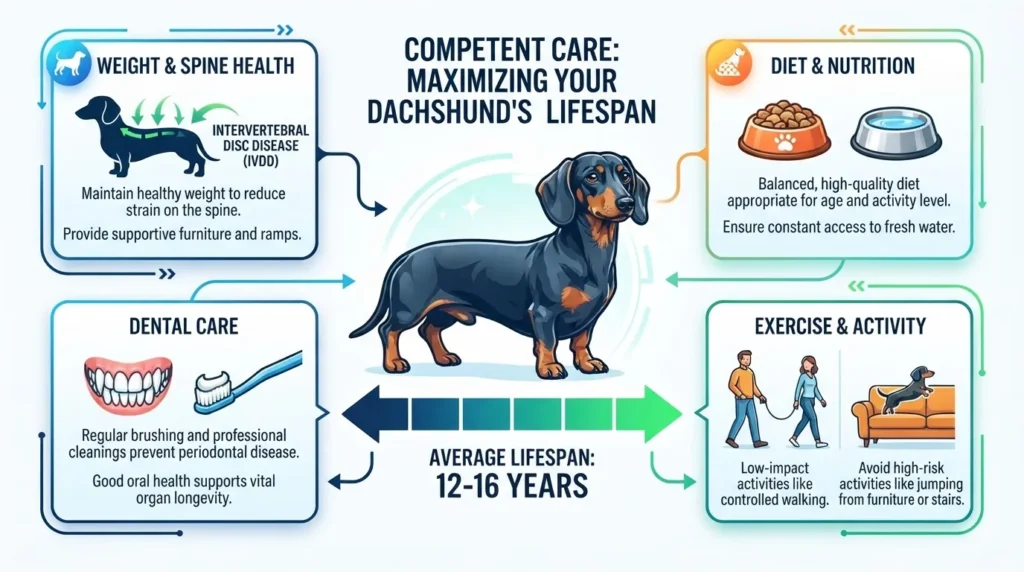
Nutritional quality directly influences cellular aging, organ integrity, and metabolic efficiency over a Dachshund’s lifetime. Feeding low-quality food packed with unnecessary fillers can lead to systemic inflammation, kidney strain, and early-onset metabolic disorders. A diet high in biologically appropriate protein and balanced omega fatty acids supports joint lubrication and cardiovascular health, laying the biological foundation required to reach senior and super-senior years.
Exercise & Weight Management
Obesity is the single largest preventable factor that cuts a Dachshund’s lifespan short. Because of their unique chondrodystrophic (elongated spine with short legs) body structure, carrying even 1 to 2 extra pounds puts tremendous mechanical stress on their intervertebral discs. Excess weight dramatically increases the likelihood of Intervertebral Disc Disease (IVDD)—a painful condition that can cause paralysis, secondary urinary complications, and severe drops in life expectancy.
Coat Type
Research indicates minimal direct impact on total lifespan based on coat type alone, though Smooth Dachshunds statistically show slightly fewer hair-related skin infections. Wirehaired varieties occasionally inherit terrier hardiness, but genetic health and weight control remain far more influential longevity drivers across all three coat types (Smooth, Wirehaired, and Longhaired).
Spay/Neuter Impact
Sterilization timing plays a measurable role in long-term health outcomes. According to landmark canine health studies by UC Davis researchers, spaying females protects against pyometra (a fatal uterine infection) and significantly lowers mammary tumor risks. However, pediatric spaying or neutering (performed before 6 to 12 months of age) is linked to an increased risk of early-onset joint disorders and IVDD, as sex hormones are critical for proper bone density and ligament development during growth.
Male vs Female — Any Difference?
Sex has little to no measurable effect on a Dachshund’s natural lifespan. Both male and female Dachshunds enjoy similar longevity averages when given equivalent veterinary care, nutrition, and weight management. Any slight statistical variance usually comes down to reproductive health management rather than biological sex alone.
Calculate Your Dog's Exact Human Age
While Dachshunds enjoy remarkably long lifespans compared to most breeds, their unique anatomy and genetic traits predispose them to specific high-risk conditions. Identifying early warning signs and managing these hazards proactively can mean the difference between a dog that merely survives into senior hood and one that stays active, mobile, and comfortable well past age 15.
IVDD (Intervertebral Disc Disease)
Intervertebral Disc Disease is the single greatest threat to a Dachshund’s health, affecting roughly 1 in 4 Dachshunds during their lifetime. Due to their long spinal columns and disproportionately short legs (a genetic condition called chondrodysplasia), the shock-absorbing discs between their vertebrae harden and calcify earlier in life than in other breeds. A sudden jump off a couch, an awkward twist, or simple age-related degeneration can cause a disc to herniate or rupture, pressing directly against the spinal cord.
Symptoms range from sudden back stiffness, shivering, and reluctance to move, to severe weakness or complete paralysis in the hind legs. Mild cases are often managed with strict crate rest, anti-inflammatory medications, and pain control, but severe stage IV or V cases require emergency spinal surgery within 24 to 48 hours to restore limb function and prevent permanent nerve damage.
Obesity
Excess weight is the primary multiplier for almost every life-threatening health condition in Dachshunds. Carrying as little as 1 to 2 extra pounds—which may not sound like much to a human—adds immense cumulative strain to a Dachshund’s vulnerable back, accelerates joint wear, and places heavy metabolic stress on their cardiovascular system.
Obesity dramatically increases the frequency and severity of IVDD episodes by forcing the spine to sag, compressing the intervertebral discs continuously. In addition to spinal risks, overweight Dachshunds face a significantly higher risk of developing canine type-2 diabetes, hepatic lipidosis (fatty liver disease), and systemic inflammation that shortens their overall lifespan. Strict portion control, avoiding human table scraps, and replacing high-calorie treats with low-calorie alternatives like green beans or carrots are vital daily steps to protect their spine and heart. For detailed clinical diagnostic criteria on canine body condition scoring, refer to the
Dental Disease
By age 3, over 80% of Dachshunds show signs of periodontal disease. Their long, narrow muzzles harbor tightly packed teeth, creating micro-pockets where food debris, bacteria, and plaque rapidly accumulate. Left unchecked, superficial gingivitis progresses to deep periodontal infection, causing bone loss in the jaw, tooth loss, and severe pain during eating.
The deeper danger of advanced dental disease is systemic. Bacteria from chronic mouth infections constantly seep into the bloodstream, metastasizing to major organs where they cause micro-abscesses and progressive damage to the heart valves, kidneys, and liver over time. Daily brushing with dog-safe enzymatic toothpaste, annual professional veterinary cleanings, and veterinary-approved dental chews are essential to preventing long-term systemic organ strain.
Luxating Patella
Luxating patella occurs when a Dachshund’s kneecap slips out of its normal anatomical groove in the femur, usually dislodging toward the inside of the leg (medial luxation). This congenital condition stems from shallow joint grooves or misaligned leg bones, causing the dog to intermittently skip, hop, or hold up a hind leg for a few steps before the knee pops back into place.
Over time, this repeated slipping erodes joint cartilage, leading to painful osteoarthritis and altered gait mechanics that place uneven physical stress back onto the spine and hips. Mild cases are routinely supported with joint supplements (such as glucosamine, chondroitin, and Omega-3 fatty acids) and physical therapy, while severe Grade 3 or 4 cases may require orthopedic surgery to deepen the femoral groove and realign the joint structure.
Heart Disease
Mitral Valve Disease (MVD) and congestive heart failure are leading causes of mortality in senior and super-senior Dachshunds. The heart’s mitral valve thickens and weakens with age, failing to close tightly and allowing blood to leak backward into the left atrium. This backflow creates a heart murmur that a veterinarian can detect during routine wellness exams long before outward symptoms appear.
As the condition advances, fluid builds up in the lungs and chest cavity, causing a persistent dry cough (especially at night), lethargy, exercise intolerance, and rapid or labored breathing. While heart disease cannot be reversed, early detection allows for medical intervention with medications like pimobendan and ACE inhibitors, which slow disease progression and maintain strong quality of life for years after diagnosis. For official clinical guidance on heart murmur grading and cardiac health standards, review the
How to Help Your Dachshund Live Longer (Actionable Checklist)
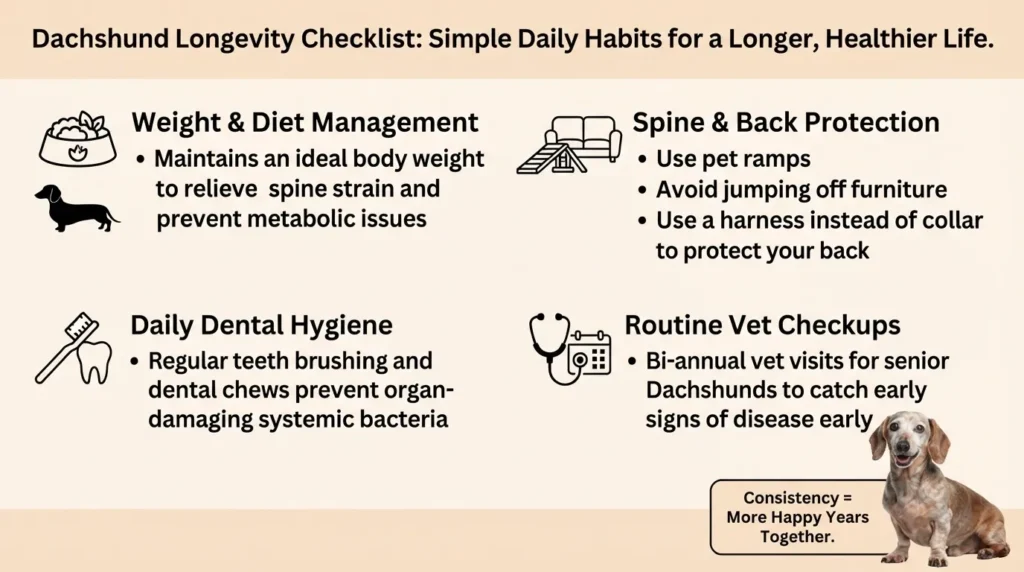
Maintain a strict weight target: Extra weight severely strains a Dachshund’s elongated spine. Keep your dog lean so you can easily feel (but not see) their ribs, and measure food portions with a standard measuring cup rather than free-feeding.
Protect the spine daily: Prevent Intervertebral Disc Disease (IVDD) by installing ramps near furniture and placing baby gates at stairs. Teach family members to support the dog’s chest and hindquarters simultaneously whenever carrying them.
Prioritize daily low-impact exercise: Build joint-supporting muscle mass through 20 to 30 minutes of controlled, on-leash walking on flat surfaces each day. Avoid high-impact games like fetch that involve sharp turns, jumping, or sudden twisting.
Establish home dental care: Small breeds are exceptionally vulnerable to severe periodontal disease, which damages kidneys and heart valves over time. Brush their teeth at least three times a week using dog-safe toothpaste, or use veterinary-approved dental chews.
Switch to twice-yearly vet checkups: Once your Dachshund hits age seven, transition from annual exams to senior wellness checkups every 6 months. Bi-annual visits allow your vet to catch subtle organ changes, arthritis, or back issues early.
Run annual senior bloodwork: Request routine chemistry panels, complete blood counts, and urinalysis during senior checkups. These baseline tests detect early-stage kidney disease, liver dysfunction, or Cushing’s disease before physical symptoms appear.
Use a chest harness instead of a collar: Neck pull from standard collars puts unnecessary pressure on the cervical spine and trachea. Always attach your leash to a well-fitted chest harness during walks.
Provide orthopedic bedding: High-density memory foam beds reduce pressure points on aging joints, protect delicate elbows, and help maintain spinal alignment while your dog rests.
Keep nail trims on schedule: Trim nails every 2 to 3 weeks. Long nails alter the angle at which paws hit the ground, causing unnatural strain on toe joints and spinal alignment during daily movement.
Dachshund Lifespan vs Other Small Dog Breeds
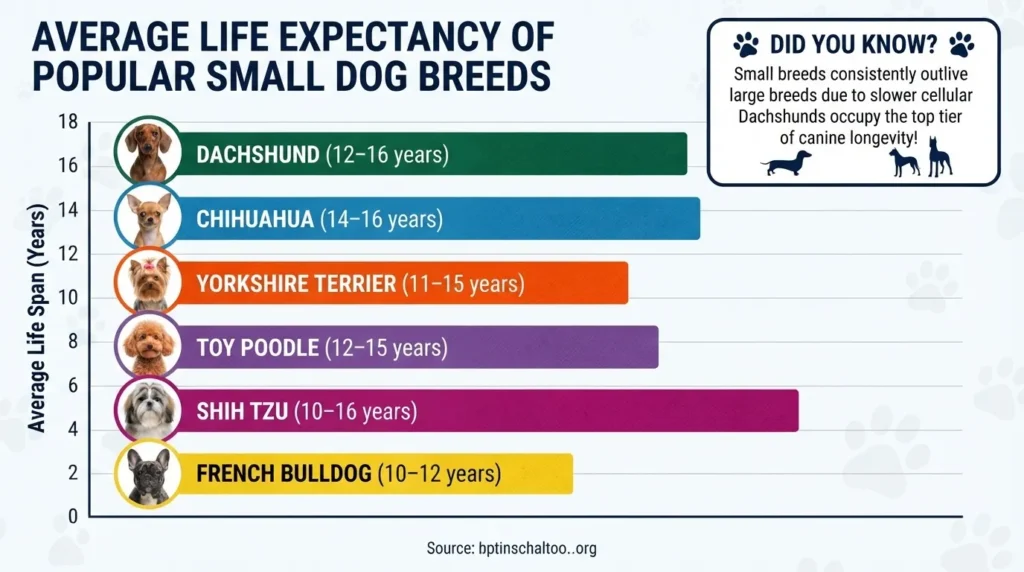
Dachshunds are remarkably resilient, consistently outliving many popular small-to-medium purebred dogs. While toy breeds like Chihuahuas hold a slight edge in average lifespan, Dachshunds share the upper tier of canine longevity alongside Yorkies and Shih Tzus.
Their compact body mass contributes to slower biological aging, though their unique skeletal architecture makes spine health the single biggest factor determining whether a Dachshund reaches their upper teens.
Lifespan Comparison: Small Dog Breeds
| Dog Breed | Average Lifespan | Primary Health & Longevity Factor |
|---|---|---|
| Dachshund | 12 – 16 years | Intervertebral Disc Disease (IVDD) risk; strict spinal care and weight management maximize lifespan. |
| Chihuahua | 14 – 18 years | Exceptional longevity; prone to dental disease and mitral valve heart issues in senior years. |
| Yorkshire Terrier (Yorkie) | 13 – 16 years | High average lifespan; fragile bone structure and tracheal collapse require careful handling. |
| Shih Tzu | 10 – 16 years | Long-lived overall; brachycephalic airway syndrome and heat sensitivity can impact senior quality of life. |
| Pug | 12 – 15 years | Moderate lifespan; obesity and respiratory compromise significantly shorten senior expectancy. |
| Beagle | 10 – 15 years | Slightly lower lifespan due to medium size build; high tendency toward middle-age obesity. |
Frequently Asked Questions
Female Dachshunds tend to live slightly longer than males on average, which aligns with general canine longevity research across most breeds. However, the lifespan gap between sexes is minimal. Factors like spaying/neutering status, preventive dental care, genetics, daily exercise, and keeping your dog at an ideal body weight have a far greater impact on how long your Dachshund lives than whether they are male or female.
Weight plays a massive role in determining the true lifespan of a Dachshund dog. Due to their long spinal columns, carrying even 1 to 2 extra pounds adds immense biomechanical stress to their spine, drastically increasing the risk of Intervertebral Disc Disease (IVDD) and mobility loss. Keeping your Dachshund lean can add up to 1.5 to 2 years to their life while protecting them from secondary issues like diabetes and heart strain.
Yes, Dachshunds can live up to 20 years, though it is exceptional. Because small dogs experience slower cellular aging and reduced strain on their vital organs, breeds like Miniature and Standard Dachshunds have a higher probability of reaching their late teens or early twenties than medium or large dogs. Excellent nutrition, strict weight control, and early treatment of back issues significantly boost their chances of reaching two decades.
Reaching 14 to 16 years is completely normal and expected for this breed, as the average lifespan of a Dachshund dog spans 12 to 16 years. At this stage, your dog is considered a "super-senior," so seeing slower movements, cloudier eyes, or sleeping more often is standard. There is no need to panic—with routine senior vet checkups, joint support, and good dental care, many Dachshunds comfortably enjoy these golden years with great quality of life.
The oldest verified Dachshund on record was a wire-haired Dachshund named Chanel, who lived to be 21 years and 114 days old. Certified by Guinness World Records in 2009, Chanel spent most of her life in Long Island, New York. Other documented Dachshund mixes, like Otto, reached nearly 21 years, while unverified owner records claim some individuals have even reached 25 years.
🐾 Other Age Guides

Gulfam Haider Mehdi
Founder & Developer
I built Dogagescalculator.com to give dog owners honest, science-backed answers instead of the outdated "×7" myth. Every figure here is checked against AKC, AVMA, and published veterinary research.
More about the author & this site →📌 Featured Guides
what is the lifespan of a yorkie dog
→
golden retriever dog years
→
how much does a bernese mountain dog weigh
→
what is the life expectancy of a jack russell terrier
→
3/4 great pyrenees 1/4 anatolian shepherd
→
when do dogs start going grey
→
oldest historical picture of the breed shar pei
→
how old are the puppies
→
chihuahua corgi mix dog
→
what age is a golden retriever full grown
→
Comments