
70 in Dog Years: What Does It Really Mean? Full Age Chart & Calculator
Watch: How Canine Aging Actually Works (Veterinary Explanation)
Dr. M from Vet Med Corner explains why the 7-year rule is a myth and how dogs actually age.
What Does "70 in Dog Years" Actually Mean?
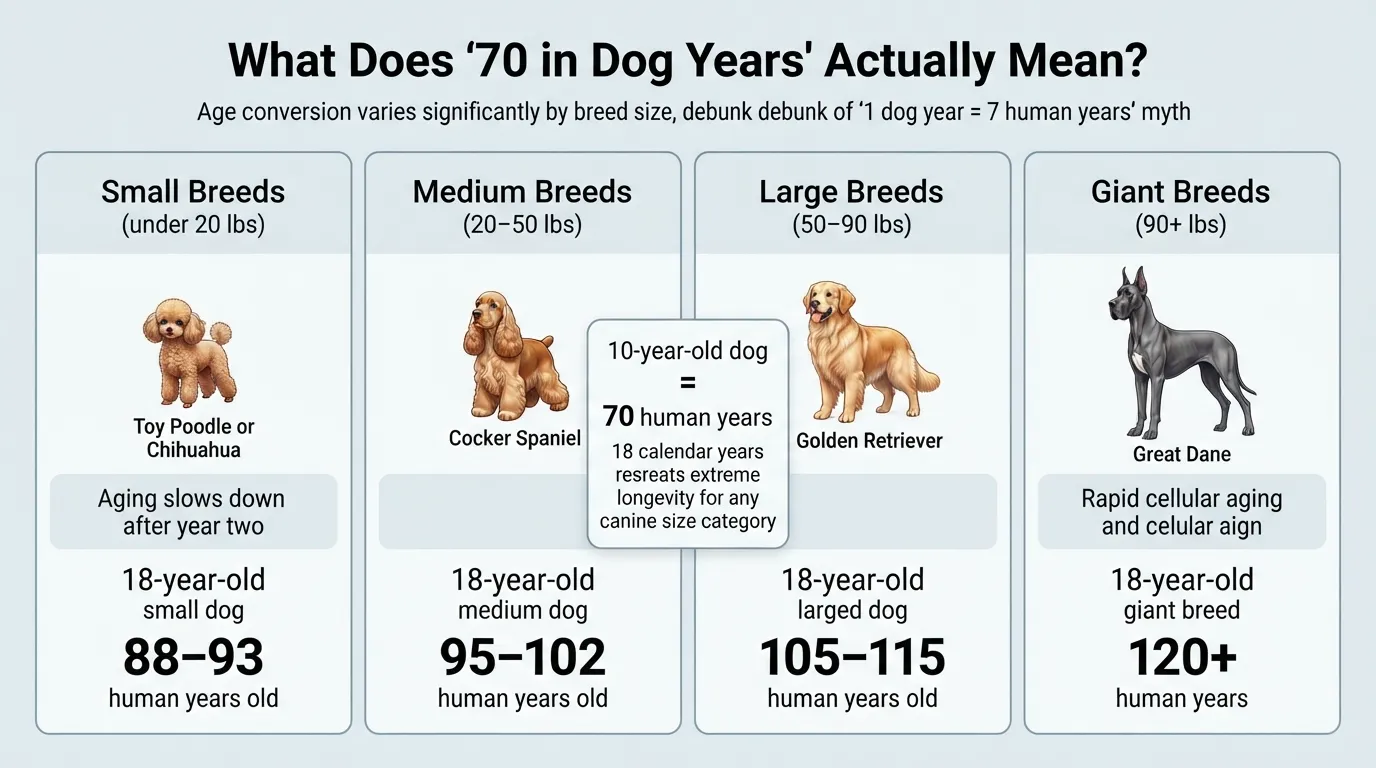
When you talk about a dog being “70,” context changes everything. Are we looking at a senior dog whose biological age mirrors a 70-year-old human retiree, or are we calculating what happens if a dog actually lives 70 calendar years?
Understanding where your dog stands on this spectrum helps you make better decisions for their health, diet, and daily comfort.
If Your Dog’s Human-Equivalent Age Is 70
If your vet mentions that your dog has reached 70 human-equivalent years, your pup has officially earned their senior status. Depending on their weight and breed, this typically means your dog is between 9 and 13 actual calendar years old.calculate dog years
At this milestone, a dog’s body undergoes metabolic and cellular changes similar to a human entering their late 60s or early 70s:
Movement & Joints: You might notice a bit of stiffness when they get up on chilly mornings. Cartilage thins out over time, making joint supplements like glucosamine a helpful daily routine.
Sensory Shifts: Their eyesight and hearing may begin to dim slightly. Cloudiness in the lenses (nuclear sclerosis) is common at this stage and often confused with cataracts.
Sleeping Patterns: Senior dogs sleep more deeply and frequently — often up to 14–16 hours a day — to restore their energy.
Real-Life Scenario: If your 11-year-old Golden Retriever hesitates for a second before jumping into the back of the SUV, that’s not stubbornness — that’s the canine equivalent of a 70-year-old human choosing the stairs over a steep hurdle.
If a Dog Lived 70 Real Years (Hypothetical)
What if we flip the math entirely? What if a dog survived 70 actual calendar years on Earth?
In real-world biology, no dog has ever lived 70 real years. Canine cellular repair systems and telomere shortening simply don’t support a lifespan of seven decades.
If we apply standard veterinary scaling models to a hypothetical 70-calendar-year lifespan:
| Breed Size Category | 70 Real Calendar Years Equals… |
| Small Breed (< 20 lbs) | ~350 to 380 Human Years |
| Medium Breed (20–50 lbs) | ~420 to 450 Human Years |
| Large/Giant Breed (> 50 lbs) | ~500+ Human Years |
For context, the official Guinness World Record for the oldest verified dog belongs to Bobi, a Rafeiro do Alentejo from Portugal who lived to 31 years and 165 days (which translates to over 130 human-equivalent years). Even the absolute maximum limit of recorded canine longevity falls less than halfway to 70 calendar years.
70 Dog Years to Human Years — The Numbers
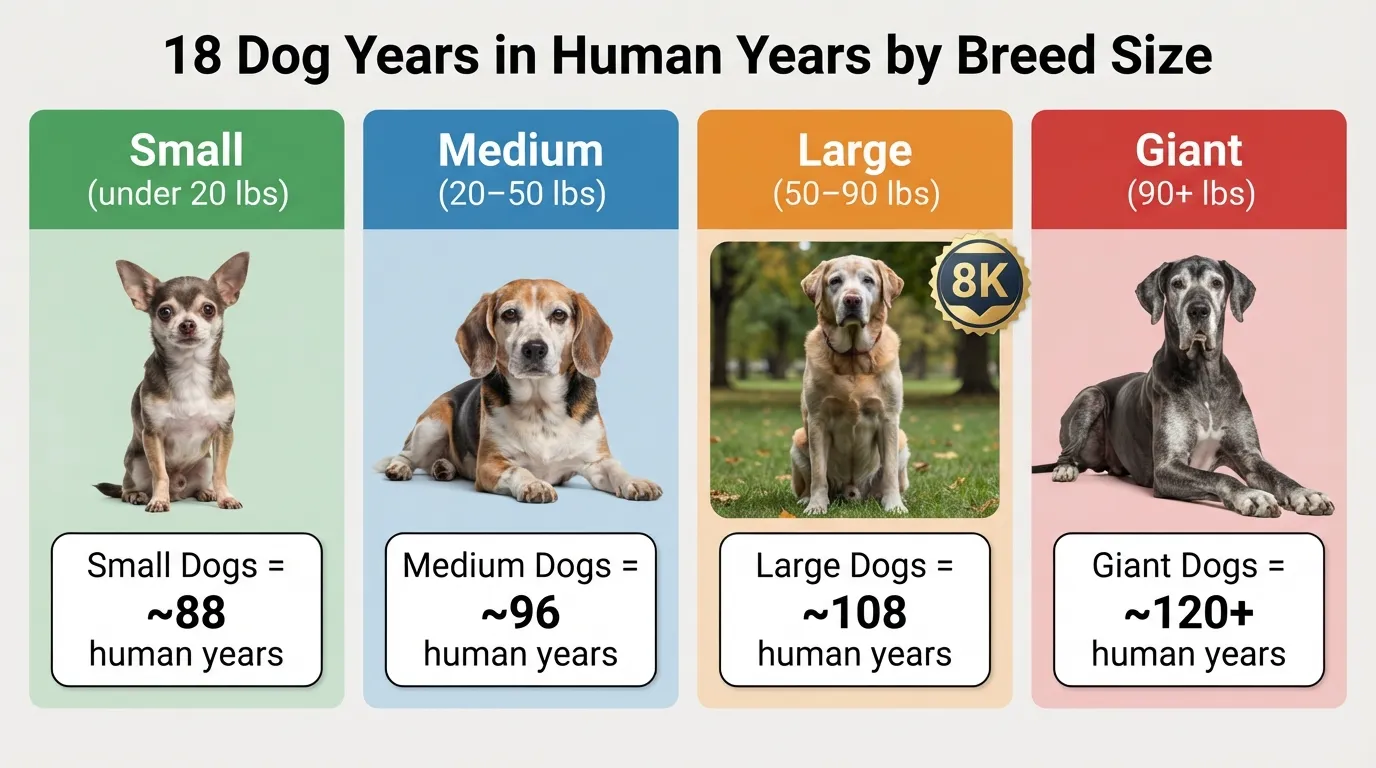
Converting 70 dog years to human years produces wildly different numbers depending on whether you use outdated folklore or modern veterinary science. Understanding this difference helps you gauge your dog’s true biological stage rather than relying on a rough estimate.
The Old 7:1 Myth Result
Under the traditional 7:1 rule, a dog reaching 70 human-equivalent years would simply be 10 calendar years old ($70 \div 7 = 10$). Conversely, if a dog reached 7 actual calendar years, the formula claimed they were 49 in human years.
10 Calendar Years × 7 = 70 Human-Equivalent Years
While this math is straightforward, it is biologically flawed. The 7:1 ratio originated decades ago as a simple average based on a human lifespan of roughly 70 years and an average dog lifespan of 10 years.
It fails to account for two key biological facts:
Infancy & Youth: Dogs mature at an accelerated pace during their first two years. A one-year-old dog is already physically equivalent to a 15-year-old human, not a 7-year-old child.
Size Disparity: A 10-year-old Toy Poodle has barely entered senior status, whereas a 10-year-old Great Dane is in advanced old age.
Modern AVMA-Based Result
The American Veterinary Medical Association (AVMA) and the Dog Aging Project use a non-linear scaling model that factors in early accelerated growth alongside adult breed size.
Under this modern framework, 70 human-equivalent years translates to varying actual ages based on your dog’s weight category:
| Breed Size Category | Weight Range | Actual Age at ~70 Human Years | Biological Stage |
|---|---|---|---|
| Small Breeds | Under 20 lbs (e.g., French Bulldog, Shih Tzu) | 13 – 14 Real Years | Early Senior |
| Medium Breeds | 20 to 50 lbs (e.g., Australian Shepherd, Beagle) | 11 – 12 Real Years | Mid Senior |
| Large Breeds | 50 to 90 lbs (e.g., German Shepherd, Golden Retriever) | 9 – 10 Real Years | Advanced Senior |
| Giant Breeds | Over 90 lbs (e.g., Mastiff, Great Dane) | 7 – 8 Real Years | Geriatric |
(e.g., French Bulldog, Shih Tzu)
(e.g., Australian Shepherd, Beagle)
(e.g., German Shepherd, Golden Retriever)
(e.g., Mastiff, Great Dane)
Real-Life Scenario: A 9-year-old Labrador and a 9-year-old Chihuahua may share the same birthday, but biologically, the Labrador is sitting at roughly 70 human years while the Chihuahua is closer to 52.
Dog Age Chart by Breed Size Including "70" Highlighted
Because larger dogs age at a faster cellular rate than smaller ones, the milestone of 70 human-equivalent years occurs at vastly different points in a dog’s life. A giant breed like a Mastiff reaches 70 before their 8th birthday, while a Toy Poodle gets there after completing 13 calendar years.
The master reference table below compares human-equivalent ages across all four breed size categories, with the 70-year senior threshold highlighted.
| Actual Age (Calendar Years) | Small Breeds (<20 lbs) | Medium Breeds (20–50 lbs) | Large Breeds (50–90 lbs) | Giant Breeds (>90 lbs) |
|---|---|---|---|---|
| Average Lifespan | 12 – 16 Years | 10 – 13 Years | 9 – 12 Years | 6 – 10 Years |
| 1 Year | 15 | 15 | 15 | 12 |
| 2 Years | 24 | 24 | 24 | 22 |
| 3 Years | 28 | 29 | 29 | 31 |
| 4 Years | 32 | 34 | 34 | 38 |
| 5 Years | 36 | 38 | 40 | 45 |
| 6 Years | 40 | 43 | 46 | 52 |
| 7 Years | 44 | 47 | 52 | 60 |
| 8 Years | 48 | 52 | 58 | 70 (Geriatric) |
| 9 Years | 52 | 57 | 64 | 78 |
| 10 Years | 56 | 61 | 70 (Senior) | 86 |
| 11 Years | 60 | 67 | (~70) 76 | 94 |
| 12 Years | 64 | 72 | 82 | 102 |
| 13 Years | 68 (~70) | 77 | 88 | — |
| 14 Years | 72 | 82 | 94 | — |
| 15 Years | 76 | 87 | — | — |
Small Breeds (e.g. Chihuahua, Pomeranian)
Small breeds enjoy the longest life expectancies in the canine world, frequently living 14 to 17 years. Their lower cellular turnover rate means their metabolism stays resilient longer.
Reaching 70: A Chihuahua or Pomeranian doesn’t hit 70 human years until roughly 13 to 13.5 calendar years.
What to Expect: At this stage, your small dog might lose a few teeth to periodontal disease or show mild cloudy eyes, but many remain active and alert well into their teens.
Real-Life Scenario: If your 13-year-old Yorkie still trots to the door when the leash rattles, they’re acting like a sprightly 70-year-old who takes a daily brisk walk around the block.
Medium Breeds (e.g. Beagle, Bulldog)
Medium-sized dogs land right in the middle of the biological aging curve, making them the closest match to standard veterinary lifespan averages.
Reaching 70: A Beagle or English Bulldog reaches 70 human-equivalent years right around 11.5 calendar years.
What to Expect: Weight management becomes critical during this window. A slight drop in metabolic rate means unburned calories turn into joint-straining excess pounds quickly.
Real-Life Scenario: An 11-year-old Beagle might start taking a little longer to wake up from a nap in their orthopedic bed, signaling it’s time to switch to senior-specific food formula.
Large Breeds (e.g. Labrador, German Shepherd)
Large dogs age more rapidly after their second year because their larger bodies undergo greater oxidative stress and structural wear over time.
Reaching 70: A Labrador Retriever or German Shepherd hits 70 in human years at just 10 calendar years old.
What to Expect: Joint care takes center stage. Hip dysplasia, elbow stiffness, and muscle mass decline (sarcopenia) are common signs that your large dog has crossed into advanced senior status.
Real-Life Scenario: When your 10-year-old Lab pauses to evaluate the back step before climbing into the house, their body is feeling the exact same stiffness a human feels at age 70.
Giant Breeds (e.g. Great Dane, Mastiff)
Giant breeds experience the fastest aging curve of any domestic land mammal. Their accelerated growth during puppyhood takes a heavy toll on their cardiovascular and skeletal systems early in life.
Reaching 70: A Great Dane or English Mastiff crosses the 70 human-year mark at just 8 calendar years old.
What to Expect: At 8 real years, giant breeds are considered geriatric. Comprehensive senior wellness exams every 6 months — including bloodwork, chest X-rays, and cardiac screenings — are essential to maintain quality of life.
Real-Life Scenario: An 8-year-old Great Dane moving slowly around the living room isn’t just “getting a bit older” — biologically, they are an elderly individual requiring gentle, low-impact exercise and warm, padded bedding.
Nearby Ages People Also Search
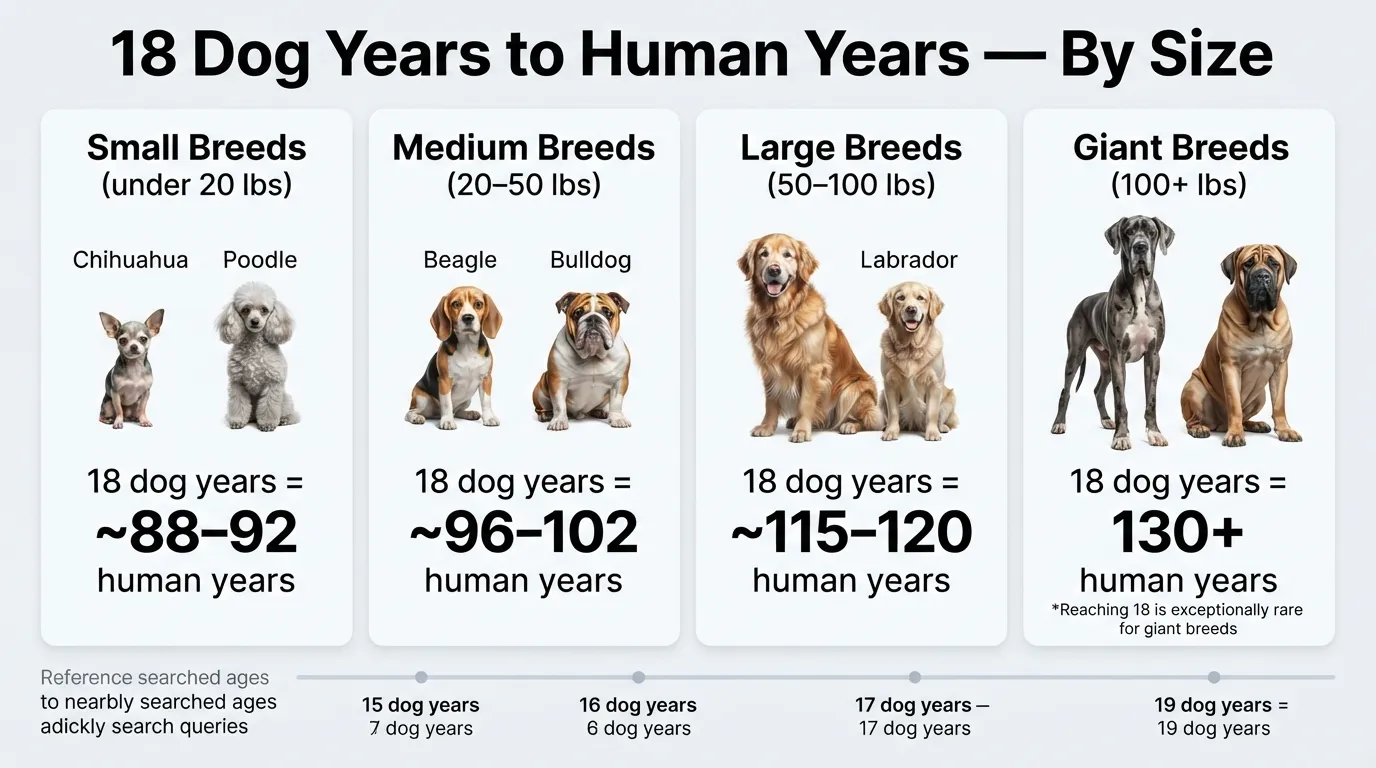
If you are trying to benchmark your dog’s age precisely, it helps to look at the ages right around the 70-year milestone. Small changes in calendar time can bring noticeable shifts in your senior dog’s energy, metabolism, and care needs.
65 in Dog Years: This represents the entry point into the golden years — roughly 9 calendar years for medium breeds and 12 years for small dogs. You’ll usually start noticing subtle graying around the muzzle and slightly longer nap sessions.
68 in Dog Years: Right on the doorstep of 70, this stage translates to about 10 real years for large dogs and 12.5 years for smaller breeds. It is the ideal time to schedule a baseline senior wellness blood panel with your vet.
71 in Dog Years: Just past the 70 mark, dogs at this biological age (around 10.5 real years for medium-to-large breeds) benefit greatly from joint supplements like glucosamine and omega-3 fatty acids to preserve mobility.
75 in Dog Years: Reaching the mid-70s equivalent means your dog is entering advanced senior territory — roughly 11 real years for large dogs and 14 years for small breeds. Regular semi-annual vet visits become essential to monitor kidney function, heart health, and cognitive changes.
Is 70 Old for a Dog? Signs & What to Expect
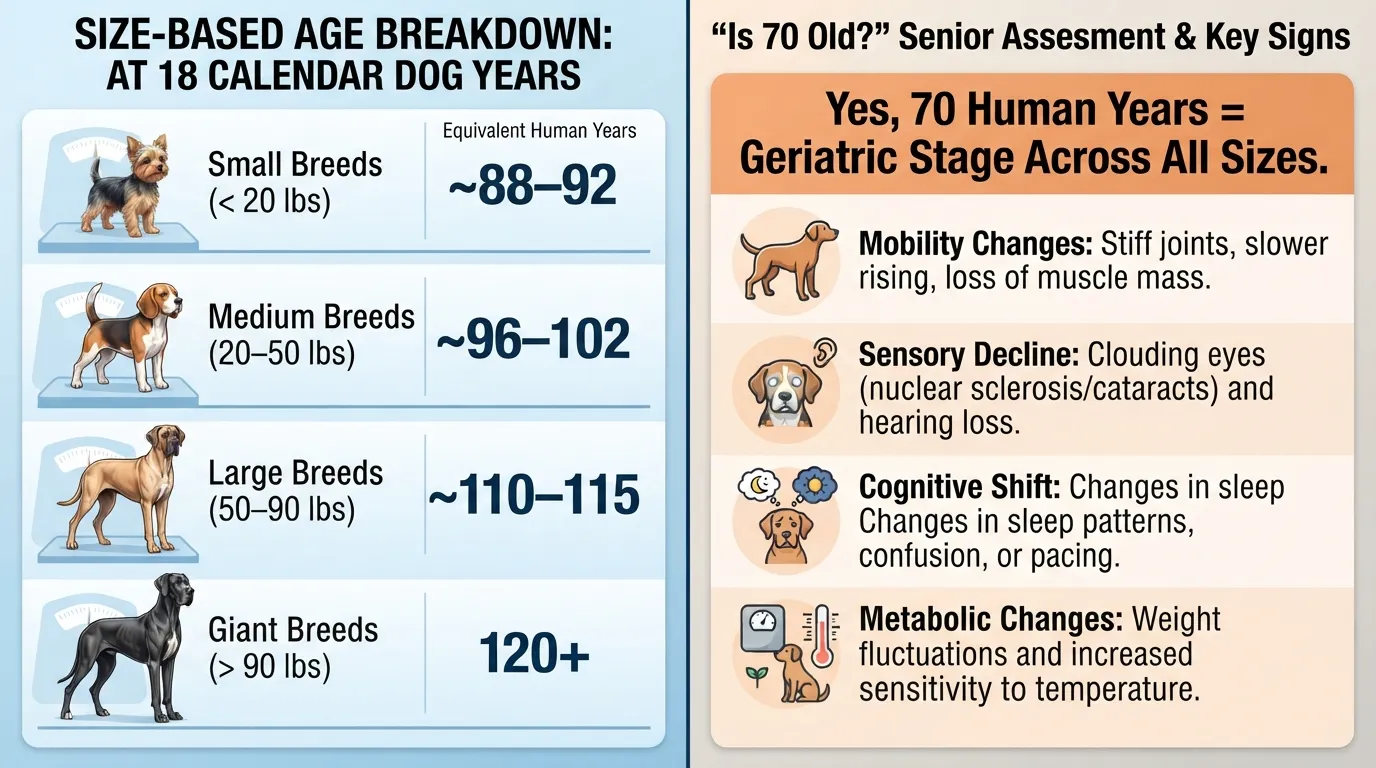
Yes, 70 in dog years means your pet has officially entered their senior to geriatric phase, which is equivalent to a human in their late 60s or early 70s.
While this biological stage means their body is slowing down, it is a normal part of aging. With small adjustments to their diet, daily routine, and medical care, senior dogs at 70 human years can still enjoy a very active and fulfilling life.
Signs of Aging at This Stage
As your dog approaches the 70 human-year equivalent, you will notice gradual physical and behavioral shifts. Key changes to watch for include:
Stiffness After Rest: Rising slowly after a long nap or hesitating before climbing stairs is common. Cartilage thins as dogs age, making morning joint stiffness a frequent sign of early osteoarthritis.
Longer Sleep Cycles: Senior dogs at this age typically sleep 14 to 18 hours a day. Their body requires more downtime to restore energy after ordinary activities.
Hazy or Cloudy Eyes: A bluish, translucent tint in the center of their eyes often develops. Vets call this nuclear sclerosis — a harmless, normal aging change, though your vet should check it to rule out vision-blocking cataracts.
Silver Muzzle & Coat Texture Changes: Gray or white fur around the muzzle, eyebrows, and paws becomes far more prominent as pigment production slows down.
Dental Sensitivity & Bad Breath: Years of plaque buildup can lead to gum recession or tender teeth, which is why senior dogs often prefer softened kibble or wet food.
Reduced Responsiveness: If your dog doesn’t greet you at the door immediately, it is usually due to natural age-related hearing loss rather than stubbornness.
Nighttime Restlessness or Disorientation: Mild pacing at night, staring blankly at doors, or minor house-training slip-ups can indicate early Canine Cognitive Dysfunction (CCD), which mirrors mild dementia in humans.
Real-Life Scenario: If your 10-year-old Labrador takes a few extra seconds to get out of bed on a cold morning or prefers resting in the shade instead of chasing balls, they aren’t being lazy — their body is simply moving at the pace of a 70-year-old human.
Caring for a Senior Dog at This Age
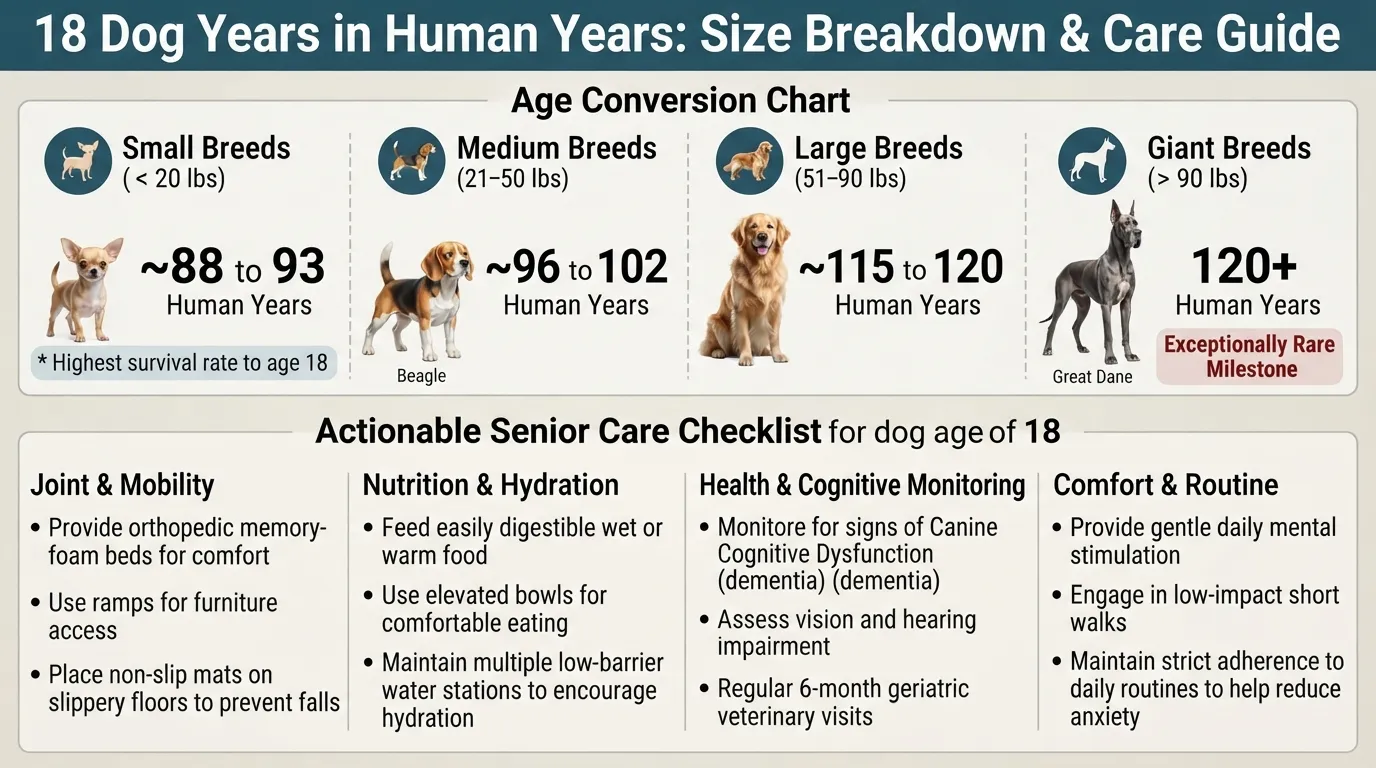
Reaching the biological equivalent of 70 human years is a major milestone, but it also means your dog needs proactive, senior-focused care. Small adjustments to their routine today can dramatically improve their comfort, mobility, and lifespan tomorrow.
Diet & Nutrition Changes
As dogs reach senior status, their metabolism slows down by roughly 10% to 20%, reducing their daily caloric needs. Continuing to feed them high-calorie adult food often leads to weight gain, which places severe stress on aging joints and organs.
Lower Calories, High-Quality Protein: Switch to a high-fiber, lower-calorie senior formula with digestible, lean proteins (like chicken, turkey, or salmon) to prevent muscle wasting (sarcopenia) while keeping off unwanted weight.
Essential Joint & Brain Supplements: Look for foods enriched with Glucosamine, Chondroitin, and Omega-3 fatty acids (EPA/DHA) to soothe inflamed joints. Omega-3s also support brain health and help fight cognitive decline.
Moisture Boost: Senior dogs are more prone to dehydration and kidney strain. Adding warm water, bone broth, or wet canned food to their kibble makes it easier to chew and keeps their kidneys hydrated.
Exercise Adjustments
Your dog still needs physical exercise to maintain muscle tone and mental stimulation, but high-impact activities like hard frisbee catches or intense long runs are out.
Shorter, Frequent Walks: Swap one long 45-minute walk for two or three gentle 15-minute strolls throughout the day. This keeps their joints warm without causing exhaustion.
Low-Impact Exercise: Walking on grass, dirt trails, or shallow water is far gentler on arthritic paws than hard concrete.
Warm-Up & Cool-Down: Let your senior dog move at their own pace for the first few minutes to stretch out stiff muscles before picking up the walk.
Real-Life Scenario: If your 10-year-old German Shepherd starts lagging behind on your evening walk or sits down abruptly, that’s your signal to turn around—they’ve reached their stamina limit for the day.
Vet Checkup Frequency
Once a dog hits 70 human years, annual vet visits are no longer enough. Aging in dogs moves roughly four times faster than in humans, meaning a lot can change biologically in 12 months.
Semi-Annual Wellness Exams: Schedule comprehensive vet checkups every 6 months.
Senior Screening Panels: Ensure their bi-annual checkup includes baseline bloodwork (CBC and biochemistry panel), urinalysis, and blood pressure checks. Early detection of rising kidney or liver enzymes allows for early dietary or medical intervention before physical symptoms appear.
Common Health Issues
Senior dogs at this stage are at higher risk for four major age-related conditions. Knowing what to look for allows you to intervene early:
Osteoarthritis: Worn cartilage leads to painful bone-on-bone friction. Signs include difficulty rising, slipping on hardwood floors, or licking at front leg joints. Orthopedic beds and non-slip rugs provide immediate everyday relief.
Periodontal & Dental Disease: Bacteria from infected gums can enter the bloodstream, potentially damaging the heart, liver, and kidneys. If your dog exhibits bad breath or drops food while chewing, ask your vet about safe dental cleanings or oral rinses.
Vision & Hearing Loss: Lenticular (nuclear) sclerosis causes a hazy eye film, while progressive retinal atrophy (PRA) or cataracts can dim vision further. Keep your home layout consistent and avoid moving furniture to help a visually impaired dog navigate comfortably.
Kidney & Liver Disease: Decreased organ efficiency is common in geriatric dogs. Increased thirst, frequent nighttime urination, unexplained weight loss, or reduced appetite are red-flag symptoms that warrant an immediate vet visit for a kidney function panel.
How Is the Conversion Calculated? The Science
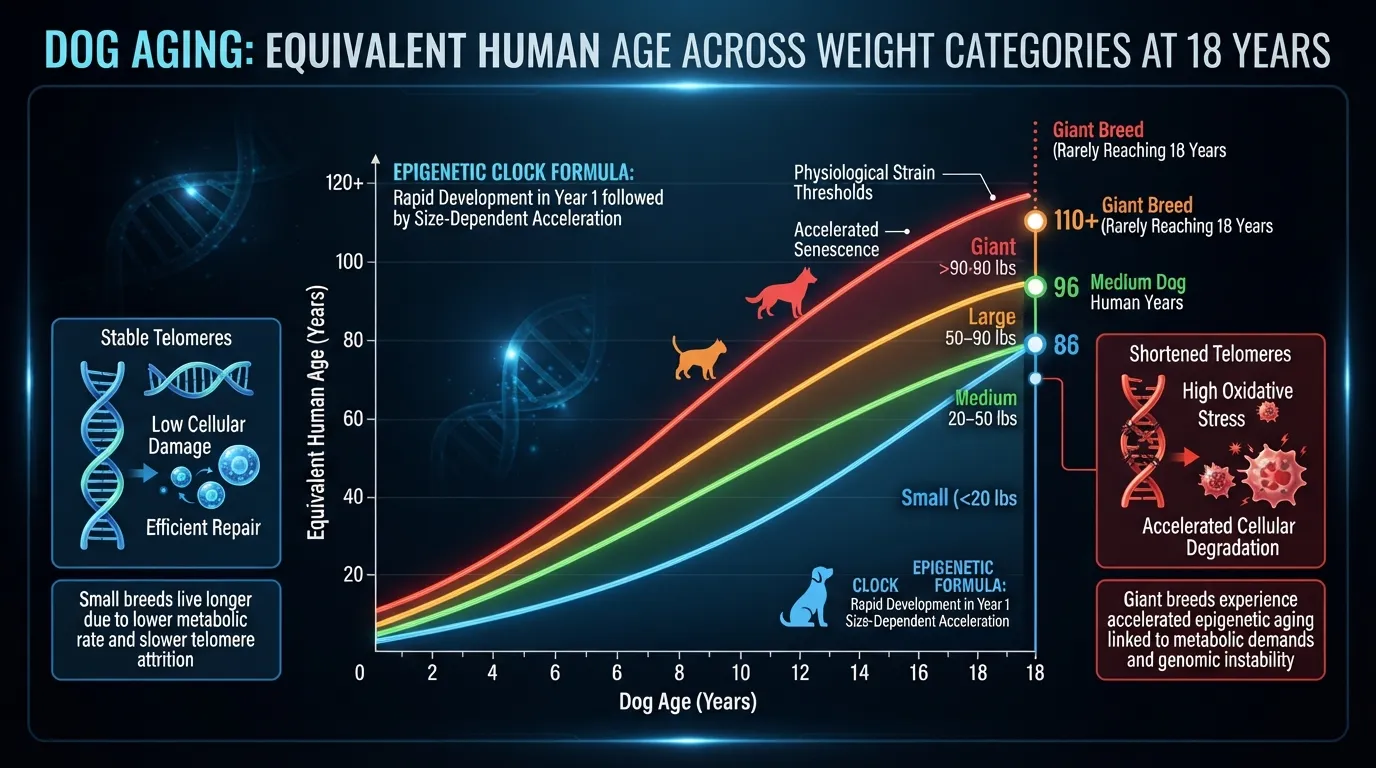
Calculating canine age isn’t as simple as multiplying by a single fixed number. Modern veterinary science shows that dogs age on a curved, non-linear line — developing rapidly in early life and aging at varying rates as adults depending on their size and genetics.
The Outdated 7-Year Myth
For decades, the standard rule of thumb was simple: 1 human year equals 7 dog years.
This concept originated mid-20th century as a rough marketing and observational estimate. It was based on the simple math that humans lived about 70 years while the average dog lived around 10 years ($70 \div 10 = 7$).
However, veterinary research has thoroughly debunked this model because it ignores two fundamental biological facts:
Accelerated Early Growth: A one-year-old dog has already reached sexual maturity and is physically developed — equivalent to a 15-year-old human teenager, not a 7-year-old child.
Breed Size Disparity: A 10-year-old Toy Poodle has barely entered senior status, whereas a 10-year-old Great Dane is in advanced old age.
AVMA’s Modern Formula
To reflect actual biological aging, the American Veterinary Medical Association (AVMA) established a standardized guidelines model that accounts for both early development and breed size:
Year 1: The first year of a dog’s life equals roughly 15 human years.
Year 2: The second year adds about 9 human years (making a 2-year-old dog roughly 24 in human terms).
Year 3 Onward: Each additional calendar year adds approximately 4 to 7 human years, depending directly on the dog’s adult weight and breed category.
Epigenetic Clock Study (2019, UCSD)
In 2019, researchers at the University of California, San Diego (UCSD) led by Dr. Trey Ideker published a landmark study in Cell Systems that changed how we measure aging. Instead of looking at arbitrary calendar years, scientists analyzed DNA methylation patterns — chemical marks on DNA that track actual cellular age (the “epigenetic clock”).
By scanning genetic markers in Labradors ranging from 4-week-old puppies to 16-year-old seniors, the researchers developed a precise mathematical formula for canine aging:
(where $\ln$ represents the natural logarithm of the dog’s real age in calendar years)
This groundbreaking genetic model proves that young dogs age exceptionally fast at the DNA level during their first two years, after which their cellular aging curve flattens out significantly as they move into their senior years.
People Also Ask
How much is 70 years in dog years?
70 human-equivalent years equals approximately 10 to 13 calendar years for a dog, depending on their breed size. A large dog like a Labrador reaches 70 at around 10 real years, while a small breed like a Chihuahua reaches 70 at around 13 real years. Conversely, if a dog could hypothetically live 70 actual calendar years, that would equal over 350 to 500 human years.
How old is 71 in dog years?
A dog that is 71 in human-equivalent years is roughly 10.5 to 13.5 actual calendar years old. This places them firmly in the mid-to-advanced senior stage of life. At 71, dogs benefit from low-impact daily exercise, joint supplements like omega-3 fatty acids, and bi-annual veterinary wellness exams to monitor organ function.
How old is 200 years in dog years?
In canine equivalent terms, 200 human years would equal roughly 30 to 35 actual calendar years for a dog using modern non-linear aging formulas. No dog in recorded history has reached 200 human years except for the official Guinness World Record holder, Bobi, a Rafeiro do Alentejo from Portugal who lived to 31 years and 165 days (translating to roughly 130–140 human years).
Is 70 old for a dog?
Yes, 70 in dog years is officially considered senior to geriatric territory across all dog breeds. At this stage, dogs typically experience natural signs of aging such as joint stiffness, cloudy lens changes (nuclear sclerosis), longer sleep cycles (14–18 hours per day), and graying fur around the muzzle.
Do any dogs live to 20 years?
Yes, while rare, some small breed dogs — such as Chihuahuas, Toy Poodles, and Dachshunds — do live to 20 calendar years or more. Small dogs age at a much slower cellular rate than large or giant breeds, giving them a significantly longer biological lifespan. Proper nutrition, weight management, regular dental care, and routine vet checkups greatly increase the chances of reaching two decades.
What is “I love you” in dog language?
Dogs express affection and trust through distinct body language signals rather than words. A dog saying “I love you” will make soft, relaxed eye contact (which releases oxytocin in both of you), lean their body weight against your legs, gently rest their head on your lap, wag their tail in a slow sweeping motion, or bring you their favorite toy when you walk through the door.
Enter your pup's age and weight class below to see their real biological milestone in human years.
Go to Free Dog Age Calculator →🐾 Other Age Guides

I built Dogagescalculator.com to give dog owners honest, science-backed answers instead of the outdated "×7" myth. Every figure here is checked against AKC, AVMA, and published veterinary research.
More about the author & this site →
Comments