
What Is 29 Dog Years in Human Years? Complete Guide
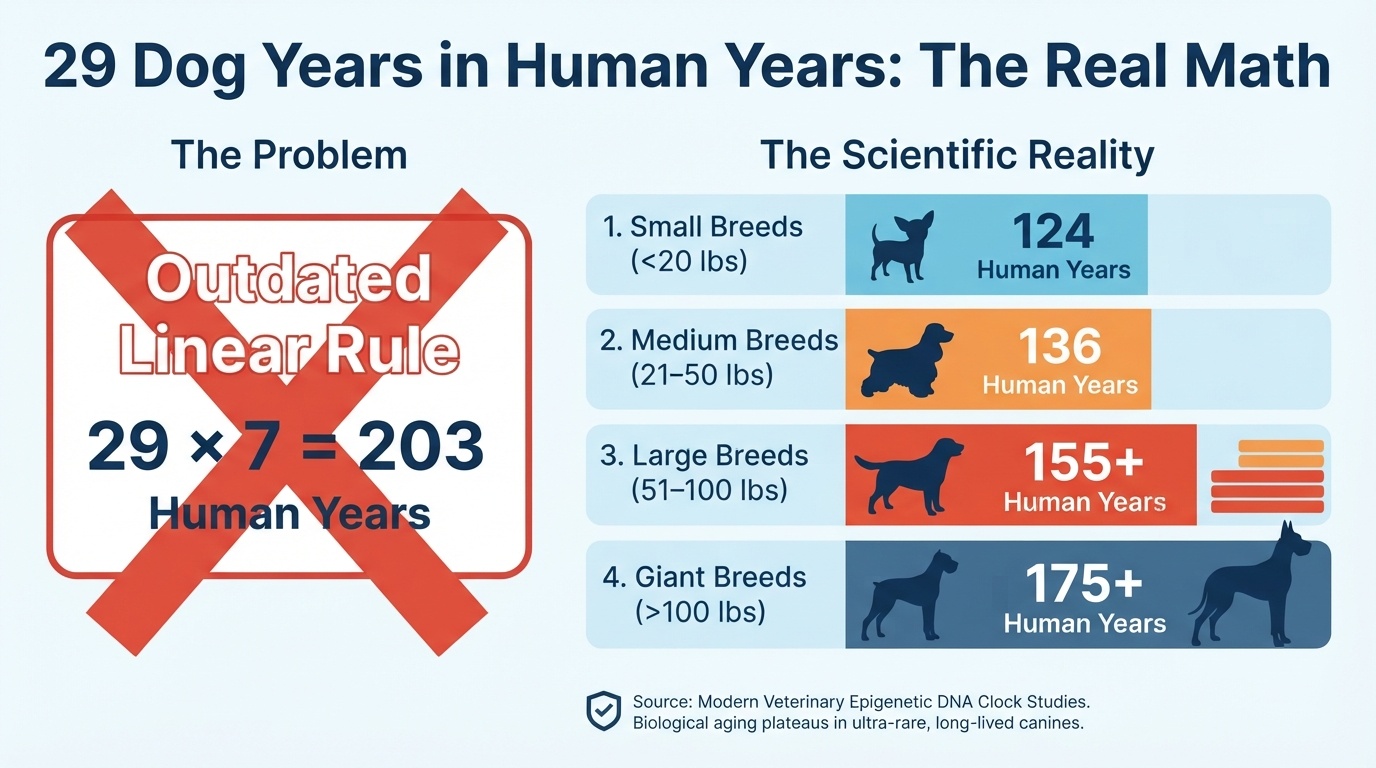
If you are wondering what is 29 dog years in human years, a 29-year-old dog has reached an extraordinarily rare age. There is no single exact human-age equivalent for a dog this old because canine aging varies by breed, adult size, genetics, and individual health.
For comparison, the traditional “multiply by seven” rule would make a 29-year-old dog 203 human years old, but that calculation does not reflect how dogs actually age. Dogs mature extremely quickly during their first two years, and their aging pattern changes as they become older.
At 29 years old, your dog would be considered an exceptionally long-lived, ultra-senior dog. Rather than treating one human-age number as scientifically exact, it is more useful to consider the dog’s size, breed, health, mobility, and overall quality of life.
The Real Science Behind 29 Dog Years
Modern research shows that canine aging is nonlinear. Dogs experience very rapid biological development early in life, followed by a slower and more complex aging pattern. Breed and body size can also influence how quickly age-related changes appear.
One well-known scientific approach comes from epigenetic research, which examined changes in DNA methylation to estimate biological aging. The commonly cited formula is:
Human Age = 16 × ln(Dog Age) + 31
Using this formula, a 29-year-old dog comes out to approximately 85 human years. However, this is a research-based biological-age estimate, not an official veterinary conversion chart, and it should not be presented as the exact human equivalent for every 29-year-old dog.
Can a Dog Really Live to 29?
Yes, although reaching 29 years is extraordinarily rare. One of the most famous examples is Bluey, an Australian Cattle Dog reported to have lived to 29 years and 5 months. Such extreme longevity is unusual and can be influenced by genetics, breed, environment, nutrition, preventive veterinary care, and overall health.
A 29-year-old dog should therefore be viewed as an exceptional longevity case, rather than using the age to claim that every dog follows the same human-age conversion.
Caring for a 29-Year-Old Dog
At this stage, comfort and quality of life should be the priority. Older dogs may benefit from:
- Regular veterinary examinations: Senior dogs can develop health changes that are difficult to notice at home.
- Gentle, low-impact activity: Short walks and comfortable movement can help maintain mobility without excessive strain.
- Comfortable bedding and traction: Supportive beds and non-slip surfaces can make movement around the home easier.
- Monitoring appetite, weight, thirst, and behavior: New or sudden changes should be discussed with a veterinarian.
- Cognitive enrichment: A predictable routine and gentle mental stimulation can help older dogs stay comfortable and engaged.
Quick Answer
A 29-year-old dog is an exceptionally old dog, but there is no scientifically exact human-age equivalent based only on calendar age. The old 7× rule would say 203 human years, while the widely cited epigenetic formula gives approximately 85 human years. A dog’s actual biological aging can differ based on breed, size, genetics, and health.
For the most useful estimate, compare your dog’s age, breed, and adult size rather than relying on a single universal number.Use our calculator below for your dog’s exact age based on
Is 29 Dog Years Even Realistic for a Dog?
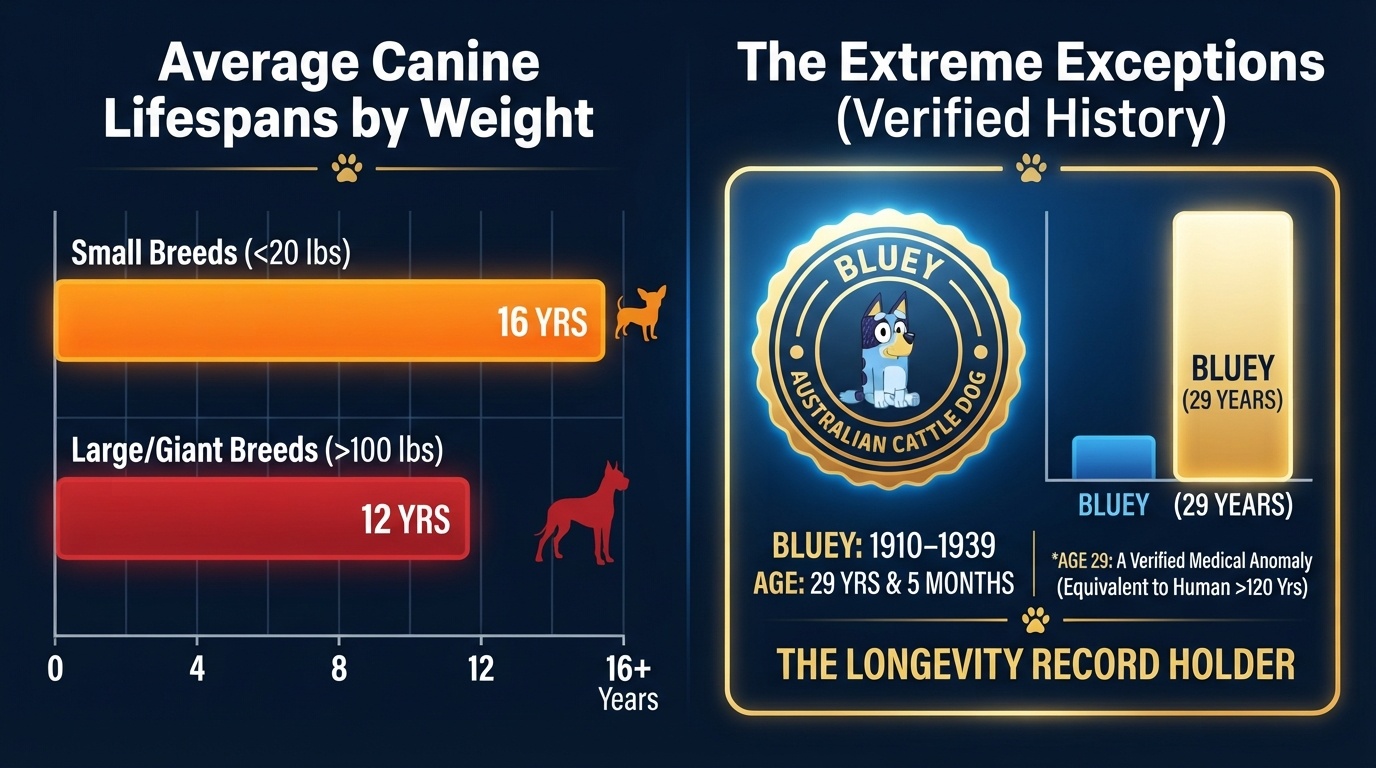
Hitting 29 years old is an extraordinary anomaly in the canine world. To put it bluntly, a 29-year-old dog is the biological equivalent of a human living well past 120 years old. While it is technically possible, it represents an extreme, headline-making rarity rather than a realistic milestone for the average family pet.
Average Dog Lifespan
In reality, a dog’s natural lifespan is strictly limited by genetics and body mass. Larger dogs burn through their biological clock much faster than smaller ones.
Small Breeds (e.g., Chihuahuas, Toy Poodles): 12–16 years. Their slower cellular aging gives them the best shot at reaching the high teens or very low twenties.
Large and Giant Breeds (e.g., Great Danes, Mastiffs): 8–12 years. Because they grow so rapidly and age aggressively at a cellular level, hitting even 13 is considered a major victory.
World’s Oldest Dogs on Record
When a dog actually approaches or reaches three decades of life, they secure a permanent spot in veterinary history. Only a couple of verified cases have ever come close to this threshold:
Bluey (Australia) – 29 years, 5 months: An Australian Cattle Dog who lived from 1910 to 1939. Bluey remains the official, fully verified holder of the Guinness World Record for the oldest dog to ever live.
Bobi (Portugal) – Claimed 31 years: A Rafeiro do Alentejo who captured global headlines. While his owner claimed he reached 31 years old before passing in 2023, Guinness World Records ultimately revoked the title in 2024 due to a lack of conclusive microchip and veterinary evidence proving his exact birth date.
If your dog is getting up there in years, it is far more practical to focus on joint health, cognitive function, and specialized senior nutrition to give them the highest quality of life possible during their natural senior years.
How 29 Dog Years Converts to Human Years
Old 7x Rule and Where It Came From
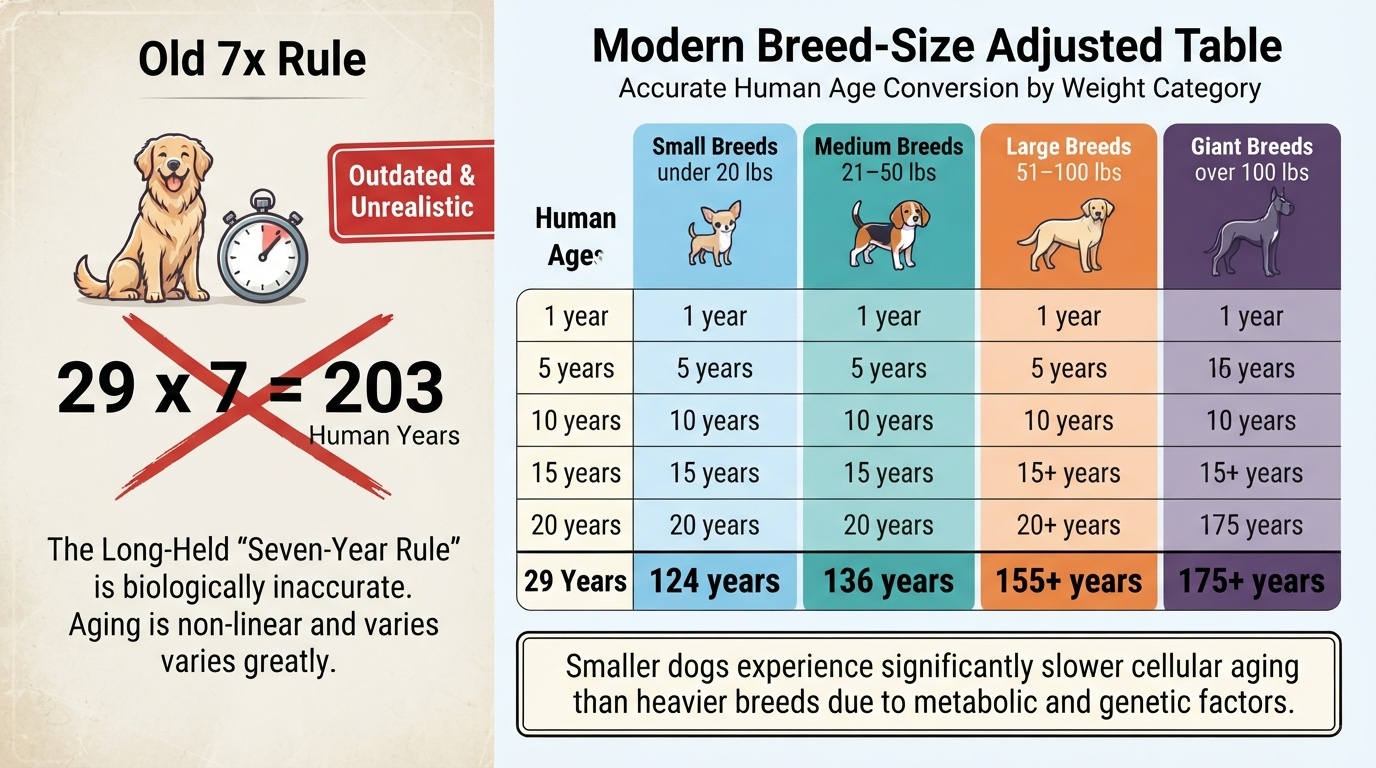
For decades, the standard rule of thumb was simple: multiply your dog’s age by seven to find their human equivalent. Under this old framework, the calculation looks like this:
29 dog years × 7 = 203 human years
This result highlights exactly why the old rule is completely unrealistic. No human has ever approached 203 years of life, which proves the traditional math fails completely at the extreme ends of aging.
The seven-year myth originated back in the mid-20th century. It was born from a basic statistical assumption that the average human lived to around 70 while the average dog lived to 10. While it remains popular because it is easy math, it is deeply flawed because it assumes dogs age at the exact same steady pace throughout their entire lives.
Modern Scientific Method
In recent years, geneticists at the University of California, San Diego developed a much more accurate system by studying epigenetics. Instead of guessing, they tracked how chemical changes naturally occur in a dog’s DNA over time.
Their research revealed a fascinating fact: dogs age incredibly fast in their youth, but their cellular aging slows down significantly as they mature.
When we map this modern biological data to a 29-year-old dog, the real conversion changes completely:
The baseline scientific age is approximately 85 human years.
This explains how ultra-rare, long-lived dogs can survive so long—their bodies reach a plateau where cellular wear and tear slows down to a crawl.
Breed-Size Adjusted Table
While the genetic formula provides an excellent baseline, real-world veterinary medicine requires adjusting for weight. Smaller dogs maintain younger cellular ages for much longer than giant breeds.
The table below shows exactly how a dog’s weight category changes their true human equivalent age as they cross the senior threshold into record-breaking longevity:
| Dog Age | Small Breeds (<20 lbs) | Medium Breeds (21–50 lbs) | Large Breeds (51–100 lbs) | Giant Breeds (>100 lbs) |
|---|---|---|---|---|
| 15 Years | 76 Human Years | 83 Human Years | 93 Human Years | 115 Human Years |
| 20 Years | 96 Human Years | 105 Human Years | 120 Human Years | 138 Human Years |
| 25 Years | 112 Human Years | 123 Human Years | 141 Human Years | 160+ Human Years |
| 29 Years | 124 Human Years | 136 Human Years | 155+ Human Years | 175+ Human Years |
Dog Age: 15 Years
Small Breeds: 76 Human Years
Medium Breeds: 83 Human Years
Large Breeds: 93 Human Years
Giant Breeds: 115 Human Years
Dog Age: 20 Years
Small Breeds: 96 Human Years
Medium Breeds: 105 Human Years
Large Breeds: 120 Human Years
Giant Breeds: 138 Human Years
Dog Age: 25 Years
Small Breeds: 112 Human Years
Medium Breeds: 123 Human Years
Large Breeds: 141 Human Years
Giant Breeds: 160+ Human Years
Dog Age: 29 Years
Small Breeds: 124 Human Years
Medium Breeds: 136 Human Years
Large Breeds: 155+ Human Years
Giant Breeds: 175+ Human Years
Size Matters: As the data indicates, a small 29-year-old dog experiences a biological toll similar to a centenarian human (around 124 years old). For a giant breed, reaching 29 is virtually impossible, as their larger bodies experience accelerated wear that pushes them past a human equivalent of 175 years.
What Life Stage Is This?
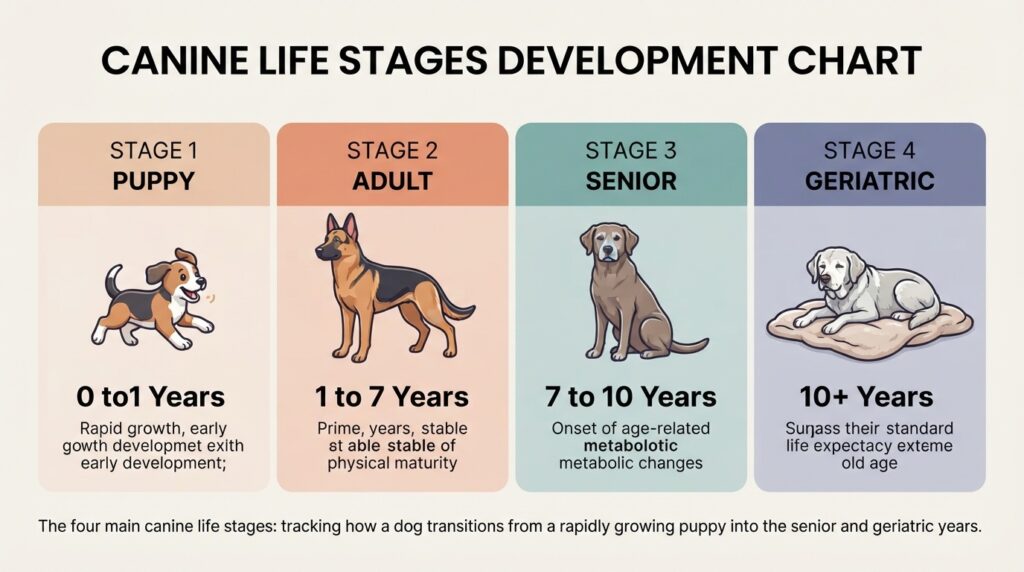
Every dog moves through distinct developmental phases, changing from an energetic puppy into a companion that requires specialized care. Knowing these stages helps owners understand what their dog’s body is experiencing biologically at any given time.
The Four Main Canine Life Stages
Puppy (0–1 Year): The period of rapid physical growth, socialization, and high nutritional demands.
Adult (1–7 Years): The prime of life where a dog is fully matured, active, and physically stable.
Senior (7–10 Years): The phase where early signs of aging typically begin, such as a graying muzzle, subtle slowing down, or mild joint stiffness.
Geriatric (10+ Years): The final biological stage. This is when a dog has far exceeded their average life expectancy, and their body requires intensive, proactive care to manage advanced age.
29 Dog Years: The Deep Geriatric Stage
A dog reaching 29 years old doesn’t just fall into the geriatric category—they sit at the absolute extreme edge of it. In veterinary medicine, the “geriatric” label applies to any dog that has passed the 10-to-12-year mark.
At 29, a dog has lived nearly triple their expected adult lifespan. Surviving deep into this stage requires a perfect combination of exceptional genetics, a low-stress lifestyle, and highly specialized geriatric care to support fragile organs, joints, and cognitive functions.
Factors Affecting Your Dog's Aging and How to Support Them
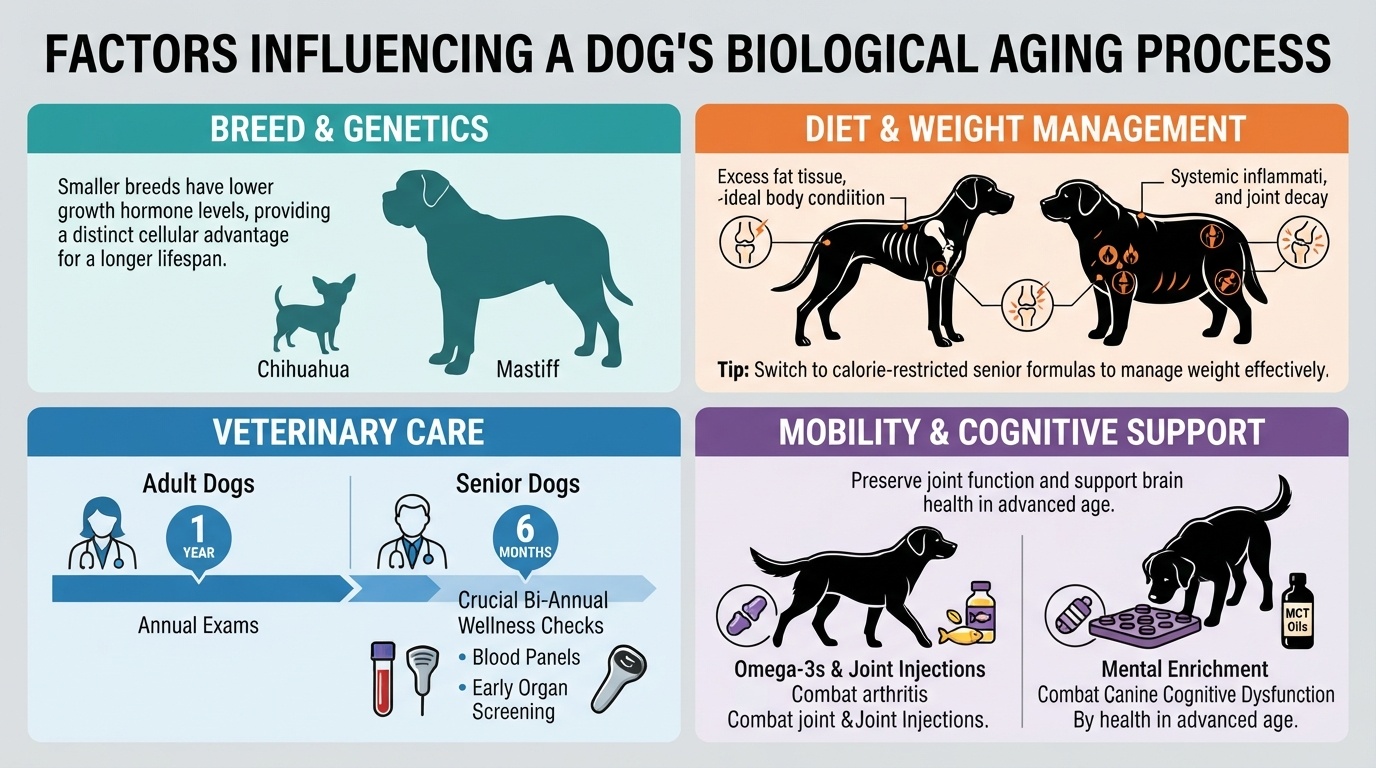
Canine aging is an intricate biological puzzle. While you cannot alter your dog’s underlying DNA, understanding the core variables that control cellular wear and tear allows you to actively prolong their healthspan—the period of life spent free from chronic disease.
Breed & Genetics
Genetics establish the baseline biological clock for every dog. Due to historical breeding patterns, smaller dogs possess a distinct physiological advantage: their bodies experience lower levels of growth hormones like insulin-like growth factor 1 (IGF-1). This lower concentration translates to slower cellular replication and fewer age-related genetic mutations, which is why a Toy Poodle structurally outlives a Mastiff.
Diet & Weight Management
Excess adipose tissue (fat) is not just a cosmetic issue; it acts as an active endocrine organ that pumps inflammatory cytokines into a dog’s bloodstream. This systemic inflammation accelerates arthritis, places immense strain on cardiac muscles, and speeds up cellular decay.
Practical Tip: Switch your dog to a calorie-restricted, high-protein senior formula as soon as their activity levels drop. Keep them lean enough that you can easily feel their ribs without pressing through a layer of fat; keeping a dog at an ideal body condition score can extend their life expectancy by up to two full years.
Veterinary Care
As dogs cross the senior threshold into advanced age, metabolic changes can happen rapidly beneath the surface long before physical symptoms appear. Regular blood chemistry panels and urinalysis are critical to catching early organ decline before it becomes irreversible.
Adult Dogs (1–7 Years): Comprehensive annual exams.
Senior & Geriatric Dogs (7+ Years): Bi-annual (every six months) wellness checks, including baseline bloodwork and blood pressure screening.
Mobility & Cognitive Support
In extreme old age, the two greatest threats to a dog’s independence are osteoarthritis and Canine Cognitive Dysfunction (CCD), often referred to as dog dementia. Protecting their joints and mind requires a highly proactive, daily management routine.
Joint Preservation: Introduce marine-based omega-3 fatty acids (EPA and DHA), green-lipped mussel extract, and veterinary-guided joint injections like Adequan to protect remaining joint cartilage and reduce systemic pain.
Mental Enrichment: Fight cognitive decline by introducing food puzzle toys, maintaining strict, predictable daily routines, and supplementing their diet with antioxidants, medium-chain triglycerides (MCT oil), and SAMe to support brain cell health.
Frequently Asked Questions
Yes, but it is an extraordinarily rare biological achievement. The most famous, fully verified instance of a dog reaching this milestone is Bluey, an Australian Cattle Dog who lived for exactly 29 years and 5 months. While other owners have claimed their dogs lived to 29 or older, very few have ever produced the official veterinary and registration records required to legally prove it.
The official Guinness World Record holder for the oldest dog ever recorded is Bluey, who lived in Australia from 1910 to 1939. While a Portuguese dog named Bobi was briefly awarded the title in 2023 at a claimed age of 31, Guinness World Records officially revoked his title in early 2024 due to a lack of conclusive microchip and birth evidence, reinstating Bluey as the definitive record holder.
No, the "multiply by 7" rule is highly inaccurate and completely outdated. It relies on the false assumption that dogs age at a perfectly steady, linear rate throughout their entire lives. In reality, a dog's biological development shoots forward drastically in the first two years of life—a one-year-old dog is actually closer to a 15-year-old human—and then slows down significantly as they mature.
To find your dog's true biological age, you need to step away from generic multipliers and look at their weight class. Small dogs age much slower cellularly than giant breeds. You can skip the frustrating math entirely by scrolling up to use our interactive calculator, which instantly processes your dog's breed size and chronological age against modern veterinary aging scales.
🐾 Other Age Guides

Gulfam Haider Mehdi
Founder & Developer
I built Dogagescalculator.com to give dog owners honest, science-backed answers instead of the outdated "×7" myth. Every figure here is checked against AKC, AVMA, and published veterinary research.
More about the author & this site →📌 Featured Guides
what is 2 human years in dog years
→
cavapoo cuts
→
how long can a puppy hold their pee
→
can you change a dog’s name after 2 years
→
How to Tell the Age of a Dog
→
How Old Is 8 Weeks in Dog Years
→
how to tell if your dog is a pitbull
→
Nova Scotia Duck Tolling Retriever vs Golden Retriever
→
50 in dog years
→
60 in dog years
→
Comments