```
What Is the Lifespan of a Basset Hound?
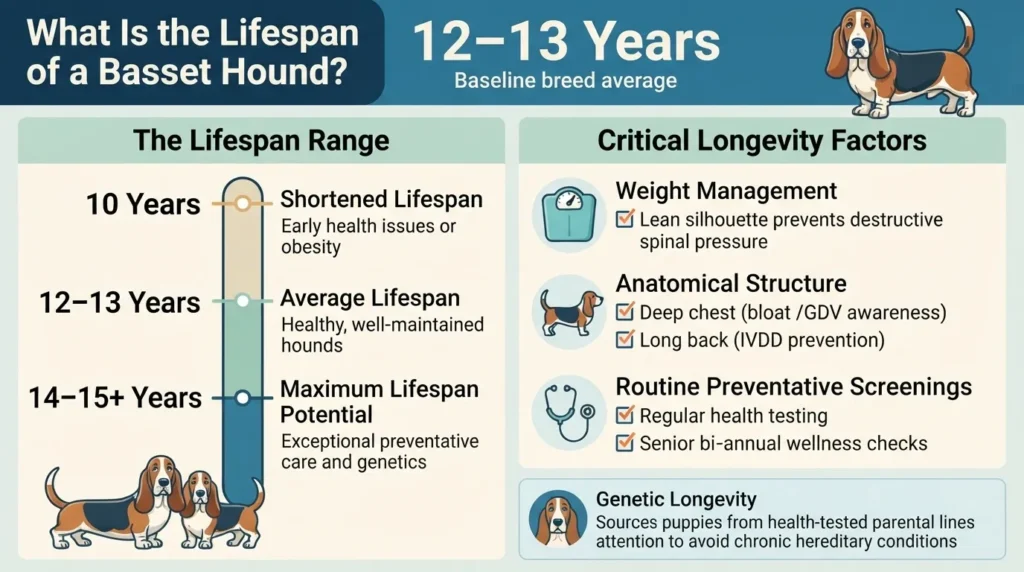
The average lifespan of a Basset Hound is around 12 to 13 years, although individual dogs may live shorter or longer depending on genetics, weight, lifestyle, and overall health. Some well-cared-for Basset Hounds can reach 14 or even 15 years.
If you’re searching for the life expectancy of a Basset Hound, it’s important to understand that age alone doesn’t tell the whole story. Their long backs, short legs, and tendency to gain weight can contribute to specific health concerns. Keeping your Basset Hound at a healthy weight, providing regular exercise, and maintaining routine veterinary care can help support a longer, healthier life.
Average Basset Hound Lifespan
Quick Answer
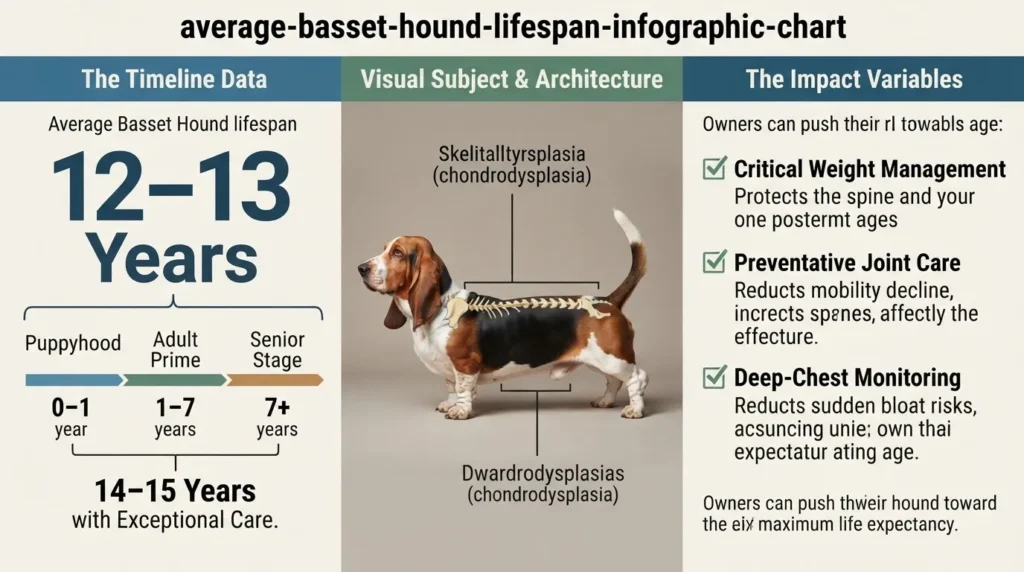
The average lifespan of a healthy Basset Hound is 12 to 13 years. According to official breed health surveys, including major longevity studies conducted by the UK Kennel Club and the veterinary database VetCompass, the vast majority of Bassets reach double digits. With proactive, attentive care, some individual hounds even push past this average to live 14 or 15 years.
Why Different Sources Give Different Numbers
If you have been browsing pet resources, you might notice that some websites list the Basset Hound lifespan as short as 8 to 10 years, while veterinary organizations put it much higher. This discrepancy comes down to how data is gathered.
Lower estimates often rely on older surveys or fail to separate trauma-related deaths from natural aging. More comprehensive, modern veterinary records show that if a Basset Hound makes it past its early developmental and high-risk young adult years without severe genetic anomalies, their long-term prognosis is much brighter.
The primary factors that create these varying lifespan estimates include:
Obesity Statistics: Basset Hounds have an incredibly high genetic predisposition to packing on weight. An overweight Basset faces massive stress on their long spine and joints, often leading to secondary, life-shortening mobility issues.
Gastric Dilatation-Volvulus (GDV): Commonly known as bloat, this sudden, life-threatening condition is highly prevalent in deep-chested breeds. It skew averages downward because it can claim otherwise healthy dogs at a young age.
Database Sample Sizes: Broad veterinary databases include dogs that did not receive regular preventative care, whereas breed-specific club surveys often reflect dogs cared for by highly dedicated enthusiasts.
Oldest Basset Hound Ever Recorded
While the typical lifespan wraps up around 13 years, some genetic outliers defy the odds entirely. The oldest unofficially recorded Basset Hound was a dog named Sam, who lived to be 19 years and 8 months old.
Though Sam’s nearly two-decade run is exceptionally rare, it highlights the incredible impact of great genetics paired with meticulous, everyday senior care. While you cannot control your dog’s DNA, managing their lifestyle can help them push as close to that upper limit as possible.
Basset Hound Age in Human Years
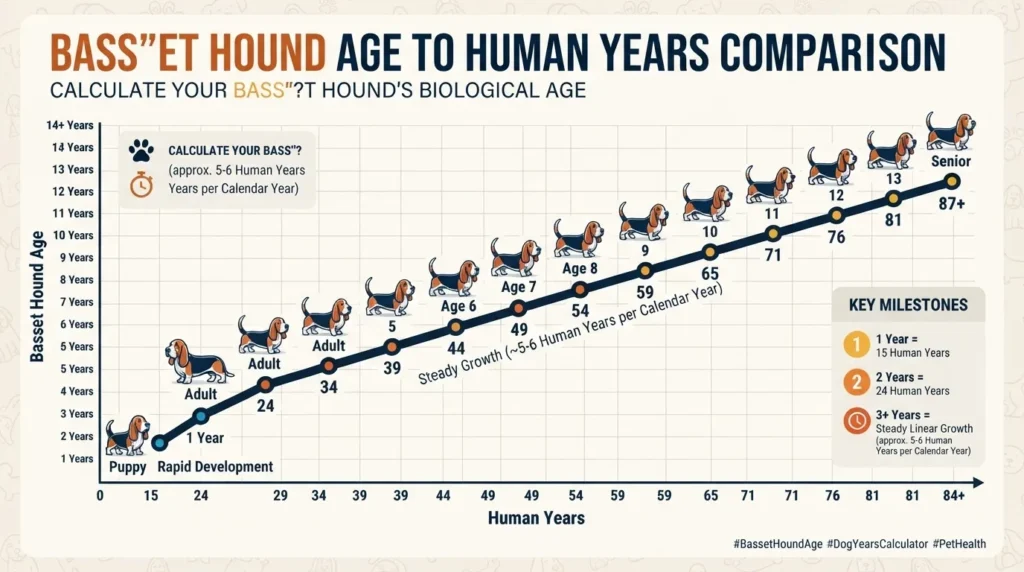
Basset Hounds generally age faster than small breeds but slower than giant ones. According to the American Animal Hospital Association (AAHA) guidelines, your Basset’s first year equals about 15 human years, and by age two, they are already at 24 human years. After that, each calendar year adds roughly 5 to 6 human years to their age.
Try Our Dog Age Calculator
Instead of guessing where your companion stands on the biological clock, use our interactive [Dog Age Calculator] to get an instant, precise age conversion tailored specifically to your dog’s weight and breed profile.
Basset Hound Life Stages
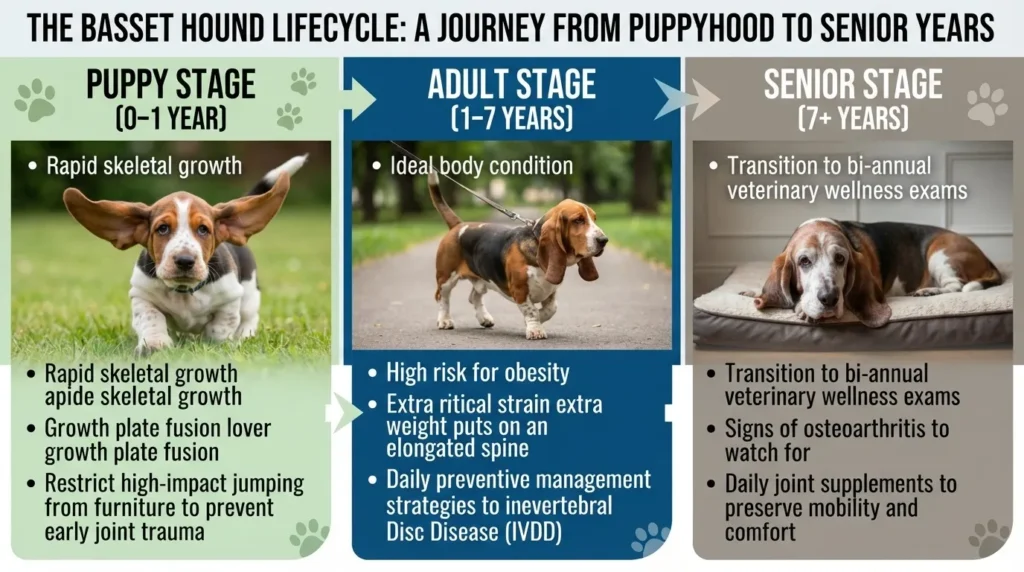
Puppy Stage (0–1 Year)
A Basset Hound puppy is a whirlwind of massive paws, tripping ears, and rapid physical development. According to the American Animal Hospital Association (AAHA), a dog’s first year of life represents their most intense developmental leap, taking them from a tiny, dependent newborn to a fully grown adolescent.
Because of their heavy bone structure and predisposed joint sensitivity, this stage requires mindful management. While they have plenty of puppy energy, their growth plates are still fusing, making high-impact jumping off couches or cars a hazard for their long backs. Focus on gentle play, basic socialization, and high-quality puppy food designed for medium-to-large breeds to support steady bone growth.
Adult Stage (1–7 Years)
By the time they reach their first birthday, your Basset Hound is entering young adulthood, transitioning into a loyal, slightly stubborn, and affectionate companion. During these prime years, they hit their physical stride. While they are famously lazy couch potatoes indoors, they still possess a powerful hunting instinct and require regular, moderate walks to keep their minds active and their weight in check.
Obesity is the single greatest threat to an adult Basset Hound’s health. Carrying extra weight puts immense strain on their elongated spine and low-slung joints, significantly increasing the risk of Intervertebral Disc Disease (IVDD). Keeping them lean through these years is the absolute best way to ensure they transition smoothly into their senior years.
Senior Stage (7+ Years)
According to canine aging research, Basset Hounds officially join the senior club around age seven. You will likely notice a few silver hairs dusting their beautiful, droopy muzzle and a slight slowing of their pace. Their sleep cycles will get longer, and their patience for high-energy household chaos might shrink.
As geriatric changes set in, proactive veterinary care becomes your best tool. According to AVMA guidelines, twice-yearly wellness exams are ideal for seniors to catch common age-related issues like arthritis, kidney changes, or vision decline early. This stage of life is deeply rewarding; your bond becomes incredibly deep, and prioritizing their comfort with orthopedic beds and joint supplements ensures their golden years are peaceful and pain-free.
What Affects a Basset Hound's Lifespan (and How You Can Help)
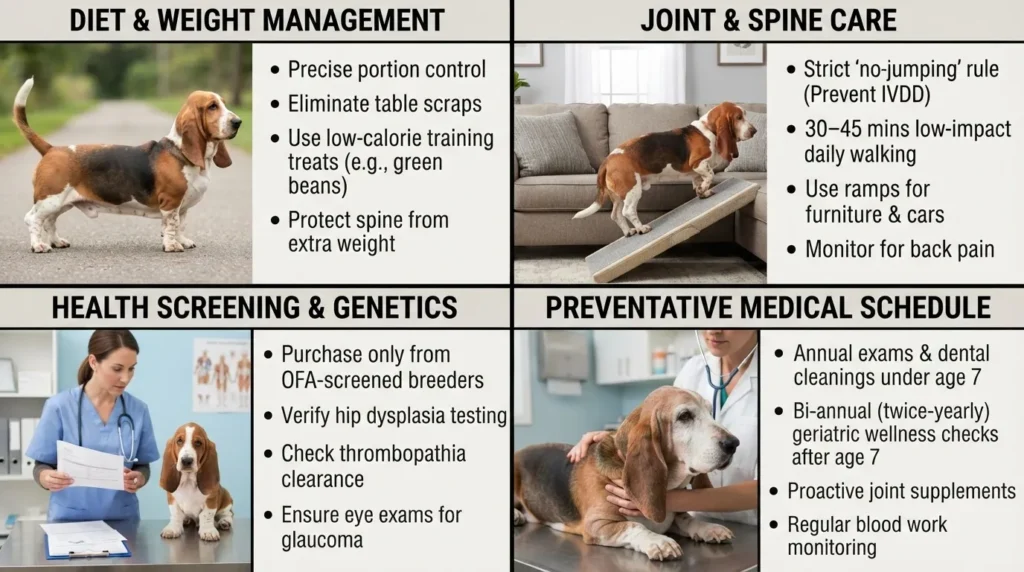
While genetics set the baseline for how long a Basset Hound can live, your daily care plays a massive role in whether they reach the upper end of that 12 to 13-year average. These dogs have distinct physical traits that make them prone to specific health issues. Fortunately, understanding these vulnerabilities allows you to take proactive steps that can add happy, comfortable years to their life.
Genetics & Choosing a Health-Tested Puppy
A Basset Hound’s lifespan starts with their parents. Because the breed is prone to genetic conditions like hip dysplasia, elbow dysplasia, thrombopathia (a bleeding disorder), and hereditary eye issues like glaucoma, choosing a responsible breeder is critical.
Reputable breeders screen their breeding stock using DNA tests and clearances from organizations like the Orthopedic Foundation for Animals (OFA). Avoiding backyard breeders or pet stores greatly reduces the risk of your dog inheriting chronic, life-shortening health struggles.
Diet & Weight Management
Obesity is the single greatest threat to a Basset Hound’s longevity. Because of their long spines and short legs (chondrodysplasia), carrying even two or three extra pounds puts immense, damaging strain on their joints and intervertebral discs.
Keep a close eye on their silhouette; you should easily feel their ribs, and they should have a visible waistline when viewed from above. Skip the table scraps, measure their daily kibble precisely, and use low-calorie treats like green beans or carrots to keep them lean and agile.
Exercise Needs
Despite their reputation as lazy couch potatoes, Basset Hounds need regular daily exercise to maintain their muscle mass and keep their joints supportive. Without it, their muscles weaken, leaving their joints and spine highly vulnerable to injury.
Aim for moderate daily walks totaling 30 to 45 minutes, but avoid high-impact activities. Do not let your Basset jump off couches, beds, or out of cars, as this repetitive jarring motion can trigger painful spinal issues like Intervertebral Disc Disease (IVDD).
Spaying/Neutering
When you decide to spay or neuter your Basset Hound can impact their long-term health. Traditional veterinary advice often favored early alteration, but modern research suggests a more nuanced approach, especially for larger, heavy-boned dogs.
Discussing the timing with your vet is key. Waiting until your Basset’s growth plates have fully closed—typically around 12 to 18 months of age—helps ensure proper bone development, which can lower the risk of joint disorders and certain bone cancers later in life.
Purebred vs. Mixed Breed
The biological concept of “hybrid vigor” means that mixed-breed dogs often carry a lower risk of inheriting breed-specific genetic disorders compared to purebred dogs. A Basset Hound cross (like a Bassador or a Basset-Beagle mix) may bypass some of the structural joint and back issues that purebred Bassets experience. However, if you have a purebred Basset, you can offset these risks with diligent preventative care and weight management.
Preventive Vet Care Schedule
Regular veterinary checkups are your early warning system for age-related issues. Catching conditions like kidney disease, arthritis, or dental infections early makes them far easier—and cheaper—to manage. Use this standard preventive care schedule to keep your Basset on track:
Puppy to Adult (Under 7 years): Annual wellness exams, routine vaccinations, dental cleanings, and consistent monthly heartworm and flea/tick prevention.
Senior (7+ years): Bi-annual (twice-yearly) veterinary visits, regular senior blood panels to check liver and kidney function, and proactive joint support supplements like glucosamine and chondroitin.
Common Health Problems That Can Shorten Lifespan
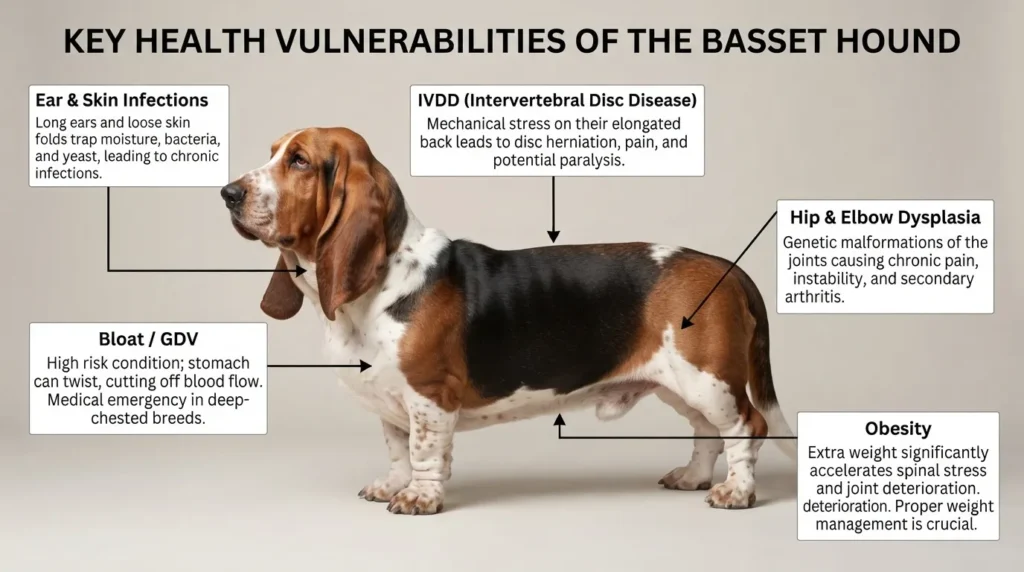
While Basset Hounds are famous for their easygoing charm, their unique physical structure comes with specific anatomical vulnerabilities. Because they are a dwarf breed with long backs and heavy bones, certain health issues can directly impact their longevity if not managed early.
Hip & Elbow Dysplasia: This genetic malformation of the joints causes painful arthritis and can severely limit mobility as they age.
Bloat / Gastric Dilatation-Volvulus (GDV): A life-threatening emergency where the stomach fills with gas and twists. Because of their deep chests, Bassets are highly susceptible to this rapid killer.
Intervertebral Disc Disease (IVDD): Their signature long spines are prone to herniated discs, which can cause intense pain, nerve damage, or even permanent paralysis.
Obesity: Carrying extra weight is exceptionally dangerous for a Basset Hound. Even a couple of extra pounds put immense, destructive strain on their already vulnerable joints and spine.
Ear & Skin Infections: Their long, velvety ears trap moisture and debris easily, while their loose skin folds are breeding grounds for yeast and bacterial infections.
Cancer (Lymphoma): Basset Hounds are genetically predisposed to certain cancers, with lymphoma being one of the most frequently diagnosed malignancies in the breed.
What Is the Most Common Cause of Death in Basset Hounds?
According to breed-specific health surveys conducted by organizations like the UK Kennel Club and the Basset Hound Club of America, cancer is the leading cause of death in Basset Hounds, accounting for roughly a quarter of all mortalities.
Beyond cancer, veterinary data shows that cardiac conditions and severe joint deterioration (often leading to euthanasia due to a loss of mobility and quality of life) are the other primary factors that claim the lives of these gentle hounds.
Signs of Aging in Basset Hounds
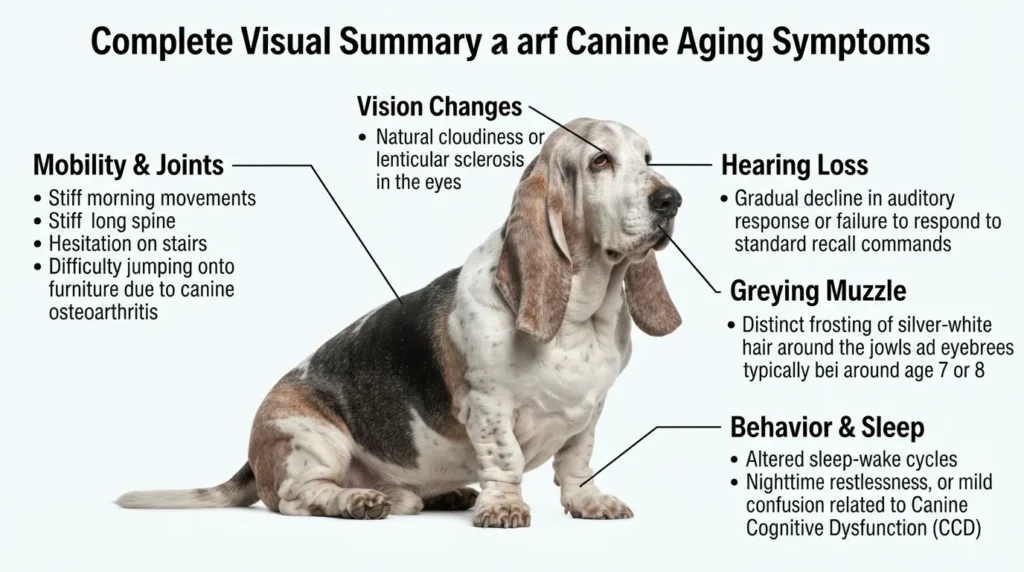
Recognizing senior transitions early allows you to adjust your dog’s daily care before minor discomforts turn into serious health challenges. Because of their distinct physical build, Basset Hounds show aging in very specific ways. Keep a close eye out for these common shifts in your aging companion:
Mobility & Joint Stiffness: Their long spines and short legs put immense mechanical stress on their joints over time. You might notice your Basset hesitating before climbing stairs, struggling to jump onto the couch, or moving stiffly during chilly mornings. This is a classic sign of osteoarthritis, a very common condition in senior hounds.
Vision & Hearing Changes: If your hound suddenly seems to ignore your recall commands or startles when you approach from behind, they aren’t just being stubborn. Natural cloudiness in the eyes (lenticular sclerosis) or gradual hearing loss often occurs as they cross into their senior years.
Greying Muzzle: One of the most endearing yet bittersweet signs of aging is the frosting of their face. You will notice white or grey hairs creeping around their heavy jowls, muzzle, and distinctive drooping eyebrows, usually starting around age seven or eight.
Behavioral Changes: Senior Bassets often experience changes in their sleep-wake cycles, sometimes sleeping heavily during the day and wandering restlessly at night. You might also notice mild confusion or a lower tolerance for hectic environments, which can sometimes point to Canine Cognitive Dysfunction (CCD).
Frequently Asked Questions
According to general canine aging guidelines, a Basset Hound is typically considered a senior by the time they reach 7 to 8 years of age. At this stage, their metabolism begins to slow down, and you might notice a few gray hairs on their muzzle. This transition is the perfect time to adjust their diet to senior-specific food and increase the frequency of their veterinary checkups.
Basset Hounds absolutely thrive and live longer when kept as indoor family pets. Their heavy bodies and short coats make them highly sensitive to extreme heat and cold. Keeping them indoors not only protects them from harsh weather and outdoor hazards but also ensures you can closely monitor early signs of pain, stiffness, or illness.
Cancer and heart disease are among the leading causes of death in older Basset Hounds, alongside complications from severe joint issues. According to breed health surveys, bloat (Gastric Dilatation-Volvulus) also represents an acute, life-threatening risk due to their deep-chested build. Obesity is another major contributing factor that severely reduces their lifespan by putting extra stress on their long spines and joints.
Yes, 12 years is a very respectable and mature age for a Basset Hound. Because their average life expectancy ranges between 12 and 13 years, a 12-year-old hound has officially reached their senior or geriatric years. With proper preventative veterinary care, many Bassets comfortably live past this milestone.
🐾 Other Age Guides

Gulfam Haider Mehdi
Founder & Developer
I built Dogagescalculator.com to give dog owners honest, science-backed answers instead of the outdated "×7" myth. Every figure here is checked against AKC, AVMA, and published veterinary research.
More about the author & this site →📌 Featured Guides
chihuahua dog years to human years
→
what is a border collie australian shepherd mix called
→
How much food should I feed my Chihuahua
→
greater swiss mountain dog and bernese mountain dog mix
→
How Long Do Pugs Live in Human Years?
→
Dog years to human years converter
→
Dog Years for Small Dogs
→
how long does a lhasa apso dog live
→
Blog
→
What Is the Average Age for a Dog
→
Comments