
What Is the Life Span of a Pit Bull? Complete Guide
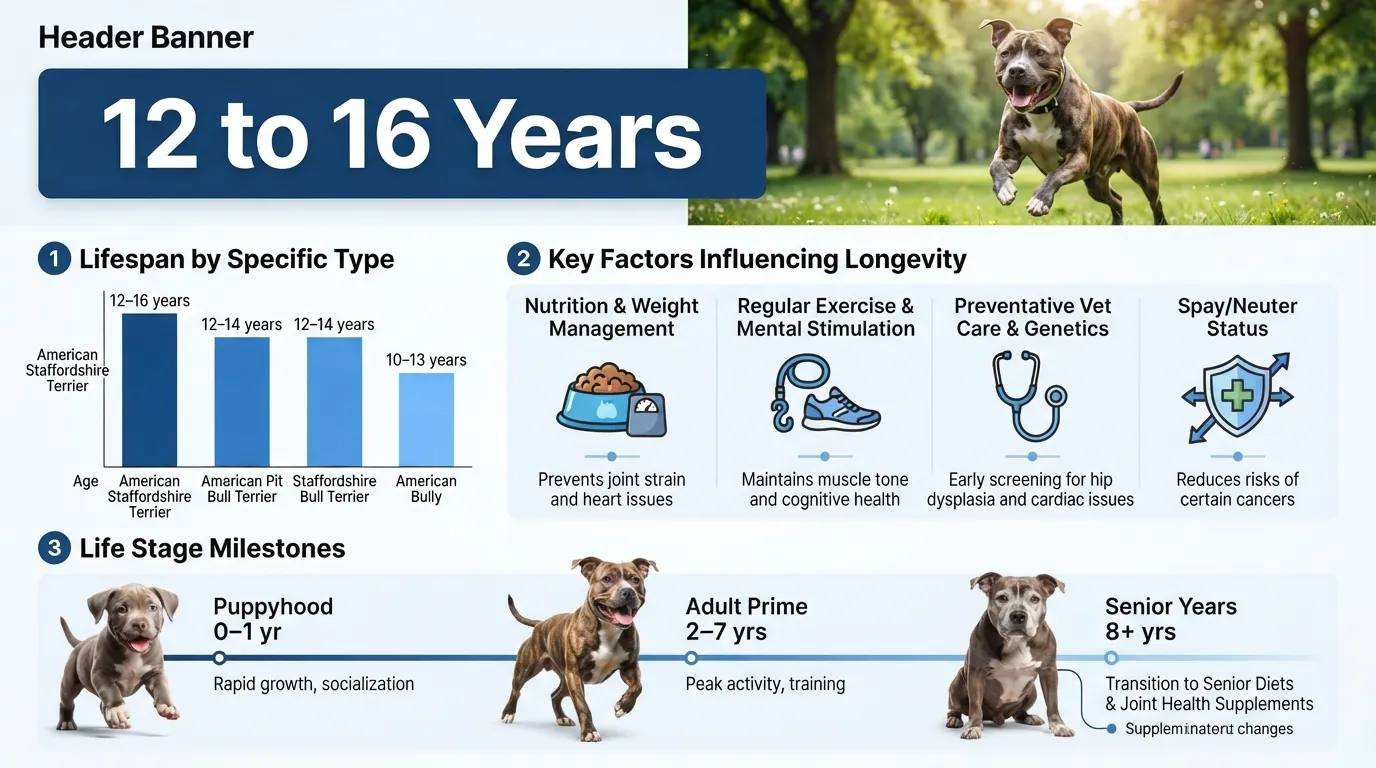
How long do Pit Bulls live? The average lifespan of a Pit Bull-type dog can vary depending on the specific breed, genetics, size, overall health, and quality of care. The term “Pit Bull” is commonly used to describe several related breeds and mixes, including the American Pit Bull Terrier, American Staffordshire Terrier, and Staffordshire Bull Terrier, so there is no single lifespan that applies to every Pit Bull-type dog.
In general, many Pit Bull-type dogs can live well into their senior years when they receive appropriate nutrition, regular exercise, preventive veterinary care, and a healthy lifestyle. Genetics and inherited health conditions can also influence how long an individual dog lives.
This guide explains how long different Pit Bull-type dogs typically live, the factors that can affect lifespan, common health concerns, senior-age milestones, and practical ways to support your dog’s health as they age. We’ll also explain how to estimate your Pit Bull’s age in human years.
Quick Answer: Pit Bull Life Span at a Glance
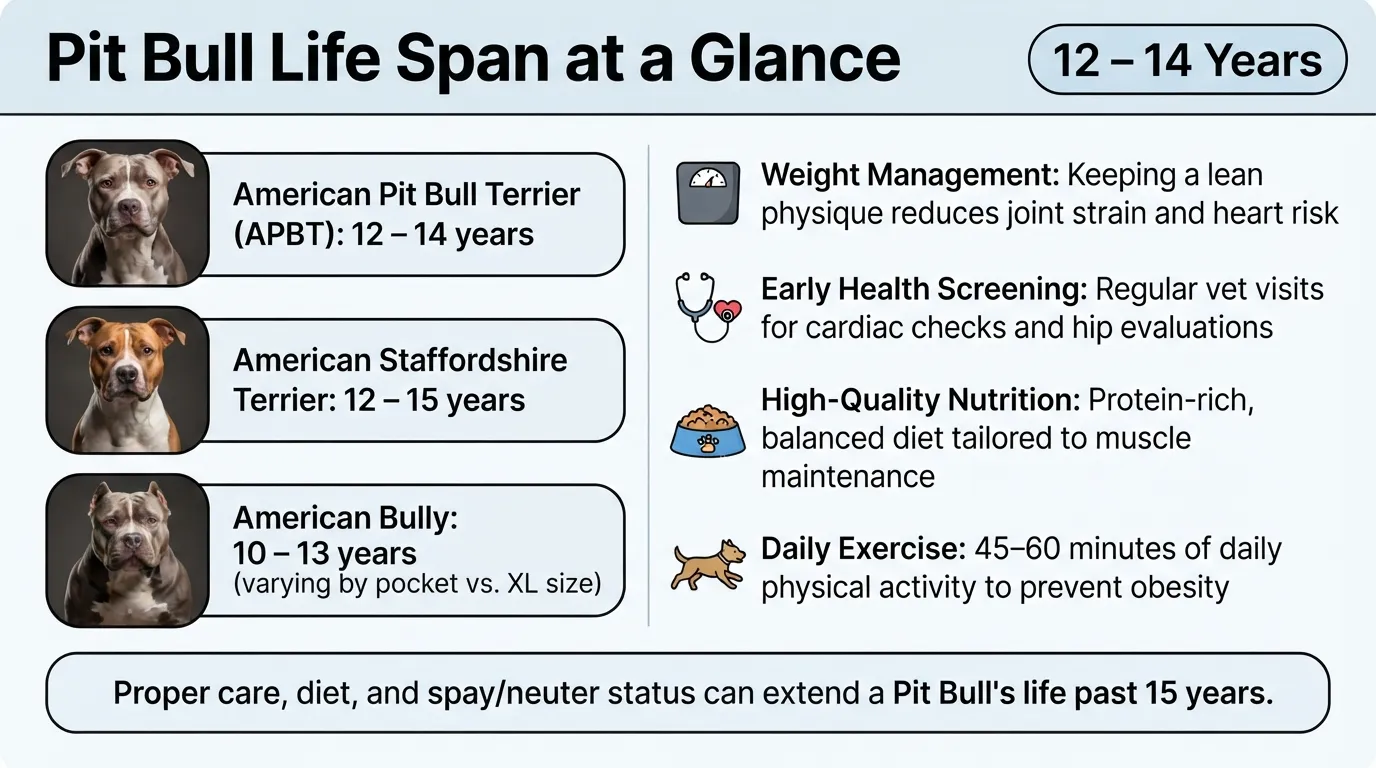
On average, a pit bull lives between 8 and 16 years, depending on its specific breed, genetic background, and daily health care. Most healthy pit bulls reach 12 to 14 years when provided with proper nutrition, routine veterinary care, and regular exercise.
Overall Life Expectancy: 8–16 years across all pit bull type breeds.
Average Range: 12–14 years for the vast majority of healthy dogs in home environments.
| Breed / Pit Bull Type | Average Lifespan |
| American Pit Bull Terrier (APBT) | 12–14 years |
| American Staffordshire Terrier (AmStaff) | 12–16 years |
| Staffordshire Bull Terrier | 12–14 years |
| American Bully | 10–13 years |
| Bull Terrier | 10–14 years |
"Pit Bull" Isn't One Breed — Here's Why That Matters
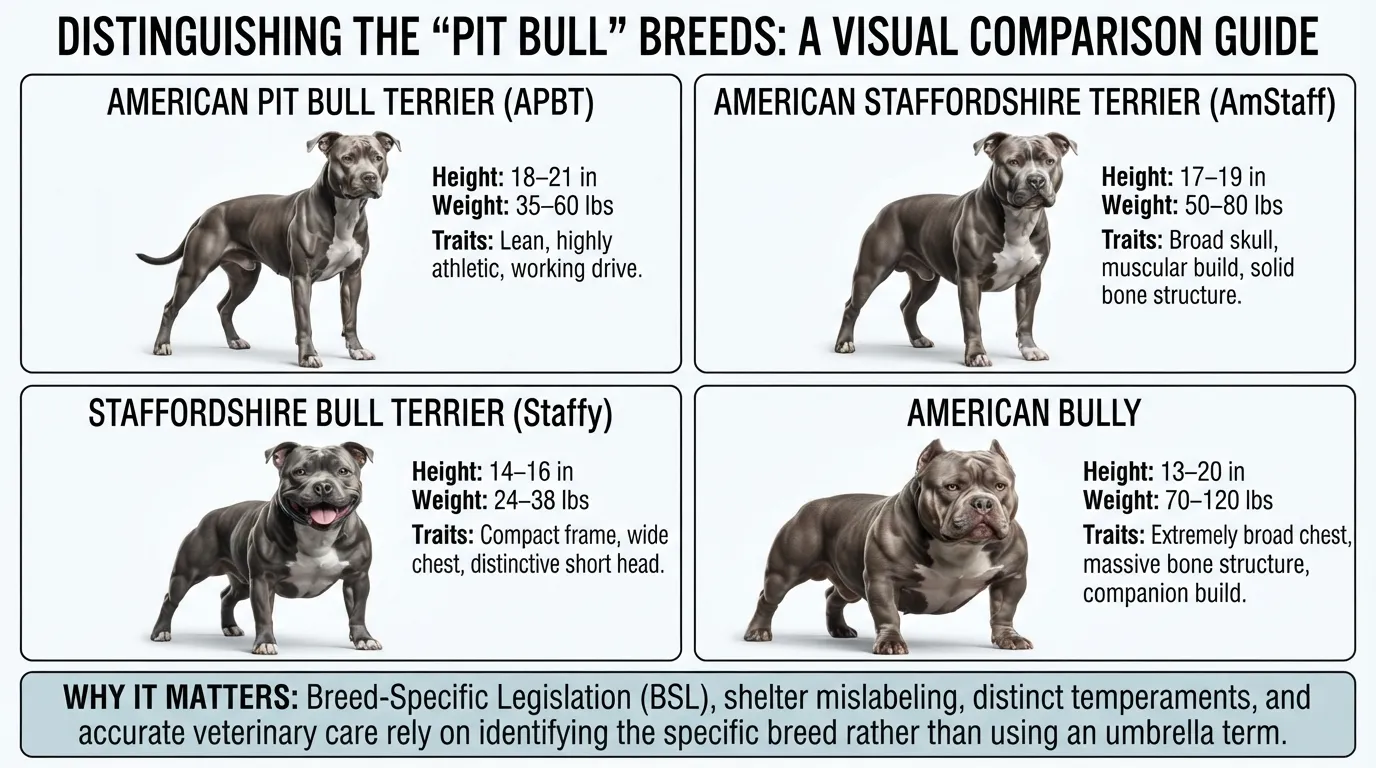
The term “pit bull” is an umbrella label for several distinct breeds and mixes, not a single recognized breed. That distinction directly impacts how long a specific dog lives, because each breed within this category carries its own genetic background, average weight, and distinct health profile.
The Breeds Under the “Pit Bull” Umbrella
Four distinct, recognized breeds—along with multi-generational mixed breeds—make up the pit bull category. Major organizations like the American Kennel Club (AKC) and the United Kennel Club (UKC) evaluate these as separate breeds:
American Pit Bull Terrier (APBT): Recognized by the UKC, typically weighing between 30 and 60 pounds.
American Staffordshire Terrier (AmStaff): Recognized by both the AKC and UKC, usually weighing between 40 and 70 pounds.
Staffordshire Bull Terrier (Staffy): A smaller, stockier British breed recognized by both clubs, weighing 24 to 38 pounds.
American Bully: Recognized by the UKC, varying widely in size from Pocket classes to XL builds over 100 pounds.
Pit Bull Mixes: Shelter dogs or non-pedigreed dogs that blend these breeds with other canine lineages.
Why Lifespan Varies Across These Types
Lifespan differences across pit bull types stem primarily from body size, selective breeding practices, and inherited genetic conditions. In veterinary medicine, smaller and mid-sized dogs generally outlive giant breeds because their bodies age at a slower biological rate.
A compact Staffordshire Bull Terrier frequently reaches 12 to 14 years due to its lighter frame and lower physical strain on organs. In contrast, an XL American Bully carrying 100 or more pounds experiences far greater strain on its cardiovascular system and joints, often bringing its average lifespan down to 8 to 12 years. Beyond physical size, tightly inbred lines can concentrate conditions like hip dysplasia or congenital heart defects, whereas well-bred or genetically diverse mixed pit bulls often avoid those concentrated risks.
Life Span by Pit Bull Type
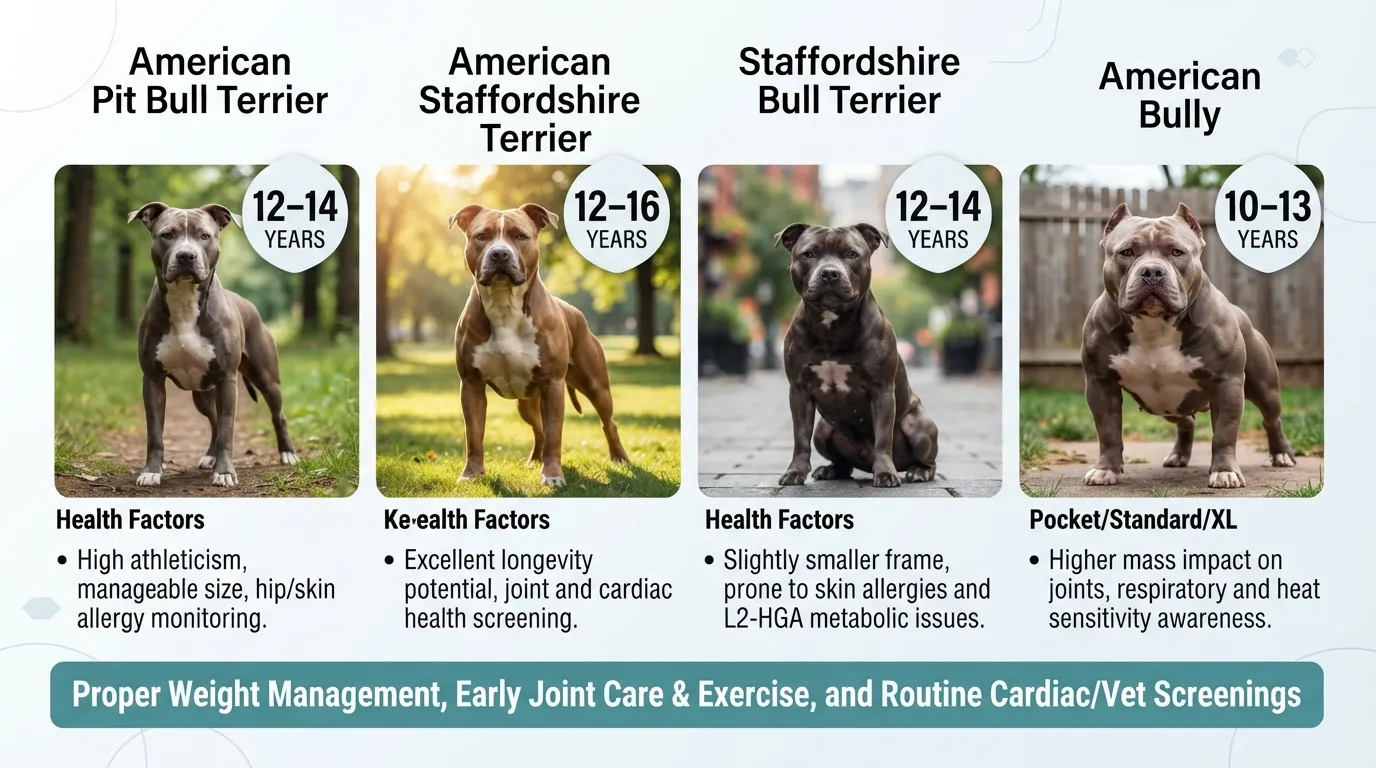
“Pit bull” is an umbrella term covering several distinct breeds, each with its own size profile, body type, and average lifespan. Knowing your dog’s exact breed—or mix—gives you a much more accurate picture of what to expect as they age.
American Pit Bull Terrier (APBT) — 8–15 years
Size: Medium (17–21 inches tall)
Weight: 30–60 lbs
Key Trait: High athletic drive and lean, muscular build
Lifespan: 8–15 years
Health Note: Generally robust, but prone to hip dysplasia and severe canine allergies.
American Staffordshire Terrier (AmStaff) — 12–16 years
Size: Medium to Large (17–19 inches tall)
Weight: 50–80 lbs
Key Trait: Heavy-boned, broad chest with a calm and confident demeanor
Lifespan: 12–16 years
Health Note: Tends to live slightly longer than APBTs, though heart issues like congenital heart disease can occur.
Staffordshire Bull Terrier (Staffy) — 12–14 years
Size: Compact/Small-Medium (14–16 inches tall)
Weight: 24–38 lbs
Key Trait: Smaller size with a distinct “smiling” wide jaw
Lifespan: 12–14 years
Health Note: Susceptible to hereditary cataracts and L-2-hydroxyglutaric aciduria (L-2HGA), a metabolic disorder common to the breed.
American Bully — 8–13 years
Size: Varies by class (Pocket, Standard, XL; 13–20+ inches tall)
Weight: 30–150+ lbs
Key Trait: Extremely thick, compact, hyper-muscular frame
Lifespan: 8–13 years
Health Note: Larger and flatter-faced varieties face a higher risk of joint disease and respiratory issues due to their heavy build.
Bull Terrier — 10–14 years
Size: Medium (21–22 inches tall)
Weight: 50–70 lbs
Key Trait: Instantly recognizable egg-shaped head and triangular eyes
Lifespan: 10–14 years
Health Note: Hereditary nephritis (kidney disease) and lethal acrodermatitis are specific genetic risks for this breed.
Pit Bull Mixes — Do They Live Longer?
Mixed-breed pit bulls often live 12–15 years, frequently outliving purebred counterparts. This extended lifespan stems from hybrid vigor—a biological concept where mixing genetic backgrounds reduces the odds of inheriting purebred-specific recessive disorders. However, a mix’s life expectancy ultimately depends heavily on the lifespan and genetics of the other breeds in its ancestry.
Do Pit Bulls Live Shorter Than Other Dogs? The Truth
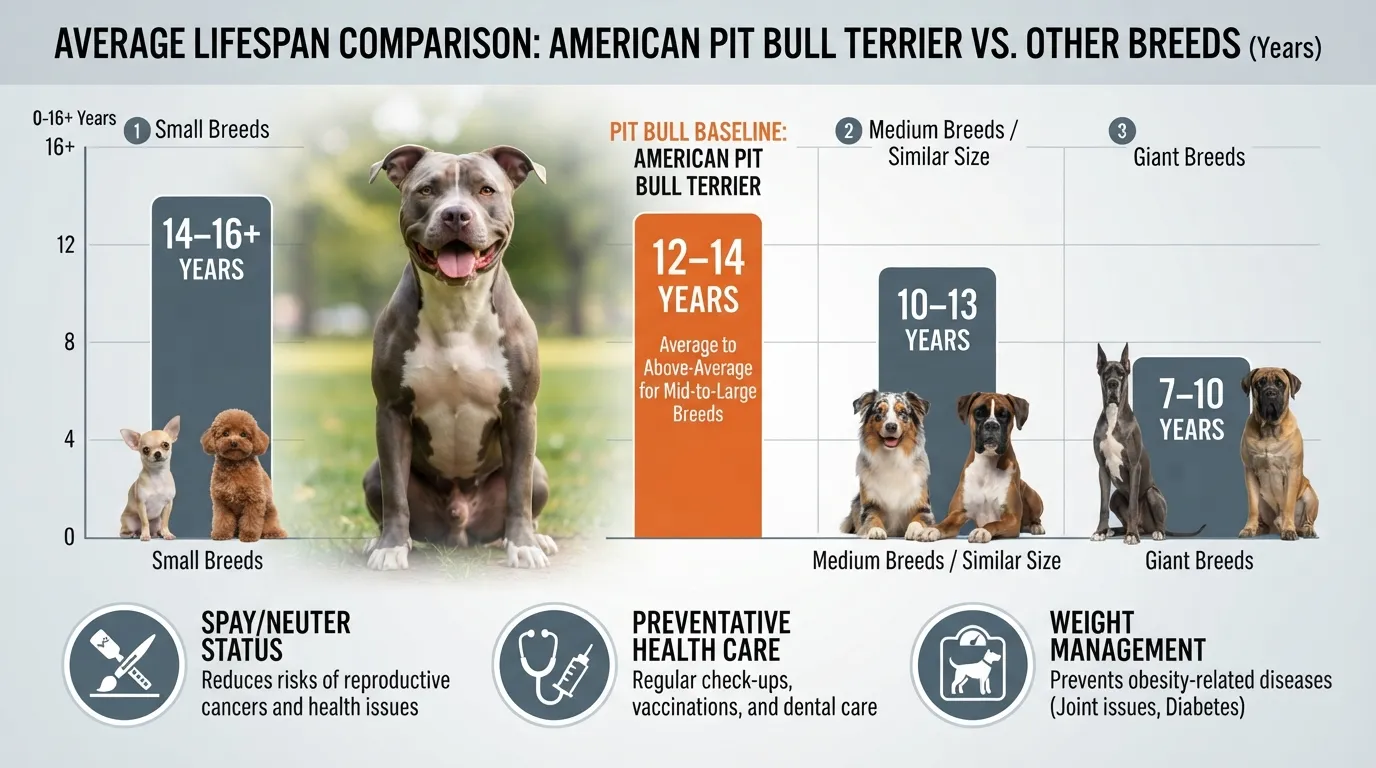
No, pit bulls do not live shorter lives than other dogs of similar size. With an average lifespan of 12 to 14 years (and many reaching 15 or 16), pit bulls actually outlive the average medium-to-large breed by one to two years.
The average lifespan for all domestic dogs sits between 10 and 13 years, according to veterinary database studies. Larger dogs generally age faster than smaller ones because their bodies grow rapidly and experience higher physiological strain over time. However, pit bulls break this trend slightly by staying remarkably resilient well into their senior years.
Here is how the pit bull’s average lifespan compares directly to other popular breeds across weight categories:
Chihuahua Small: 14–16 years
American Pit Bull Terrier / Staffordshire Medium/Large: 12–14 years
Labrador Retriever Medium/Large: 11–13 years
German Shepherd Large: 9–11 years
Great Dane Giant: 7–10 years
Where the “Short Lifespan” Myth Comes From
The persistent idea that pit bulls die young is a misunderstanding rooted in human factors rather than genetics. Historically, pit bulls have faced higher rates of non-medical premature deaths due to neglect, improper housing, high shelter euthanasia rates, and lack of routine preventive care.
When you remove those environmental risks and look strictly at biological aging, pit bulls are a sturdy, genetically diverse group. They lack many of the extreme physical traits—like the severely shortened muzzles of Bulldogs or the massive, bone-heavy frames of Mastiffs—that artificially shorten the lifespans of other strong breeds. Given proper nutrition, regular vet checkups, and a safe home environment, a pit bull lives just as long as, or longer than, most dogs of similar size.
Factors That Affect a Pit Bull's Life Span and How to Improve Them
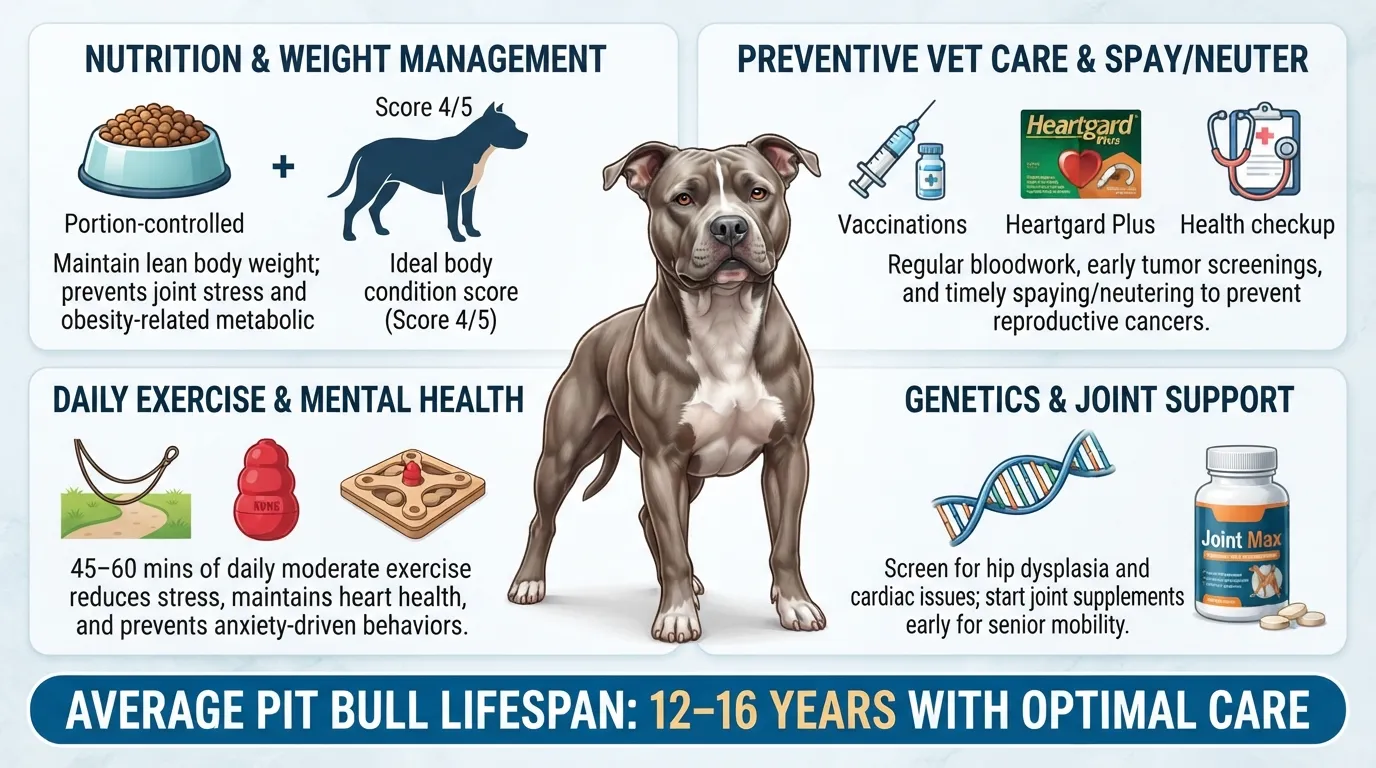
Genetics set the baseline for a pit bull’s life expectancy, but daily care, body condition, and medical choices determine whether a dog reaches the upper end of that range. While you cannot change your dog’s DNA, controlling environmental factors like weight, activity, and preventative veterinary care can add years to their life.
Why Bigger Pit Bull Types Tend to Live Shorter
Larger pit bull varieties, such as the American Bully XL or oversized American Staffordshire Terriers, generally have shorter lifespans (8 to 12 years) compared to smaller types like the Staffordshire Bull Terrier (12 to 14 years). Rapid growth rates in larger dogs place increased oxidative stress on cells and exert heavy physical stress on bones and organs.
Joint and Cartilage Strain: Extra mass accelerates wear and tear on cartilage, leading to early-onset canine osteoarthritis and hip dysplasia.
Cardiovascular Demands: A larger body forces the heart to work harder to pump blood, increasing the long-term risk of structural cardiac issues.
Does Gender Affect Lifespan?
Spayed and neutered pit bulls generally live longer than intact dogs, but gender itself has a minimal impact on overall lifespan. Studies from organizations like the American Veterinary Medical Association (AVMA) indicate that altered females often show a slight edge in longevity over altered males, primarily due to a lower incidence of risk-taking behaviors and specific reproductive cancers.
Intact Females: Face a significantly higher risk of pyometra (a life-threatening uterine infection) and mammary tumors as they age.
Intact Males: Are far more likely to develop benign prostatic hyperplasia, testicular cancer, and straying-related trauma from roaming.
Key Factors You Can Control
Diet and Weight Management: Lean pit bulls live up to 2.5 years longer than overweight dogs. Feed a high-protein, calorie-controlled diet based on your dog’s life stage, and keep them at a body condition score where you can feel—but not see—their ribs.
Daily Exercise: Aim for 45 to 60 minutes of daily physical activity, such as brisk walking, swimming, or flirt-pole games. Consistent exercise maintains muscle mass, protects joint mobility, and prevents destructive behavior driven by anxiety.
Spaying or Neutering: Altering your pit bull between 12 and 18 months—after their growth plates close—eliminates reproductive cancer risks and reduces the urge to roam, lowering the risk of accidental injury.
Preventative Vet Checkups: Schedule wellness exams every 12 months for young pit bulls, and move to bi-annual visits once they reach age 7. Regular blood panels and dental cleanings help catch common issues like kidney disease, heart murmurs, and thyroid dysfunction before symptoms become severe.
Common Health Issues That Can Shorten a Pit Bull's Life
While pit bulls are generally robust, genetic conditions like joint dysplasia, heart defects, hypothyroidism, and severe skin allergies can shorten a pit bull’s lifespan if left untreated. Spotting the early warning signs allows for prompt veterinary care, which can add years of good health to your dog’s life.
Hip & Knee Dysplasia
Pit bulls are heavy, muscular dogs, which places heavy strain on their joints. Hip dysplasia happens when the ball-and-socket hip joint develops incorrectly, causing painful friction, bone spurs, and severe arthritis over time. Pit bulls are also genetically prone to cranial cruciate ligament (CCL) tears—the dog equivalent of a human ACL tear—which destabilizes the knee joint.
Early warning signs include:
Stiffness or difficulty standing up after resting
Reluctance to jump, climb stairs, or run
A noticeable “bunny hopping” gait where both back legs move together
Limping or favoring one hind leg after exercise
Heart Disease Aortic Stenosis
Subaortic stenosis (SAS) is a dangerous hereditary heart defect commonly seen in pit bull breeds. It occurs when a narrow band of abnormal tissue partially blocks blood flow from the heart into the aorta, forcing the heart muscle to work much harder. According to VCA Animal Hospitals, severe aortic stenosis can lead to heart failure or sudden death, often in dogs under three years old.
Early warning signs include:
Low energy levels or tiring easily during routine walks
Coughing or heavy panting after light activity
Pale or bluish-tinted gums after play
Fainting spells or sudden weakness during exertion
Thyroid Issues
Hypothyroidism occurs when the thyroid gland fails to produce enough hormone, causing the dog’s metabolism to drop significantly. While the condition itself is rarely fatal, the side effects—such as rapid weight gain, high cholesterol, and a weakened immune system—put extra strain on the heart and organs. Fortunately, a daily hormone pill typically restores a normal pit bull life expectancy.
Early warning signs include:
Unexplained weight gain without an increase in daily food
Constant lethargy, depression, or seeking out warm spots
Symmetrical hair loss along the flanks, trunk, or tail
Dry, flaky skin and recurrent ear or skin infections
Skin Conditions & Allergies
Pit bulls are well-known among veterinarians for sensitive skin and exaggerated immune responses to environmental allergens and food ingredients. Constant scratching breaks the skin barrier, leading to deep bacterial staph infections and chronic inflammation that wears down their overall health.
Early warning signs include:
Excessive licking or biting at the paws and belly
Frequent, recurring ear infections or head shaking
Red, inflamed skin, hives, or dark patchy spots on the belly
Rubbing the face against carpet or furniture repeatedly
Why Some Reported Lifespan Numbers Look Lower Than Reality
If you search online for pit bull lifespan, you will occasionally run into surprisingly low figures—sometimes averaging just 8 to 10 years. These low numbers rarely reflect the physical capacity of a healthy, well-cared-for dog. Instead, they are skewed by structural factors that disproportionately affect pit bulls as a group.
Shelter Dynamics and Population Skew
Pit bulls and pit bull mixes make up a massive percentage of the shelter population across the United States. According to shelter data from organizations like the ASPCA, pit-type dogs experience significantly higher intake rates and longer average stays than most other breeds.
Because official mortality statistics often combine owned pets with shelter populations, several non-biological factors artificially pull down the reported average lifespan:
High Euthanasia Rates: Due to breed-specific legislation (BSL), housing restrictions, and shelter overcrowding, large numbers of pit bulls are euthanized at young, healthy ages simply for lack of available homes.
Overrepresentation of Neglect: A high percentage of rescued pit bulls come from situations involving severe neglect, poor early nutrition, or lack of basic preventive veterinary care, which shortens lives before these dogs ever reach a stable home.
Unregulated Breeding Practices: Backyard breeding and accidental litters contribute to higher rates of unscreened hereditary conditions, reducing the average survival age across the broader population pool.
When you remove non-natural causes of death and look strictly at pit bulls living in stable, indoor homes with routine veterinary care, their actual life expectancy jumps to 12 to 14 years—with many reaching 15 or 16. The lower numbers you see quoted online reflect a welfare crisis, not a biological limitation.
When Does a Pit Bull Become a Senior Dog?
Most pit bulls enter their senior years around 8 to 10 years of age. Because lifespan varies slightly across the distinct pit bull breeds, larger and heavier dogs generally show signs of aging earlier than their smaller counterparts.
American Bully: Senior at 7 to 8 years heavier frame and larger strain place earlier stress on joints and organs.
American Staffordshire Terrier: Senior at 8 to 9 years medium-to-large build with a typical 12–16 year lifespan.
American Pit Bull Terrier: Senior at 8 to 10 years athletic build helps maintain youthfulness slightly longer.
Staffordshire Bull Terrier: Senior at 9 to 10 years smaller size generally grants a slightly longer healthspan.
Signs Your Pit Bull Is Entering Its Senior Years
Aging manifests physically, mentally, and behaviorally. Watch for these common signs that your pit bull is transitioning into its senior phase:
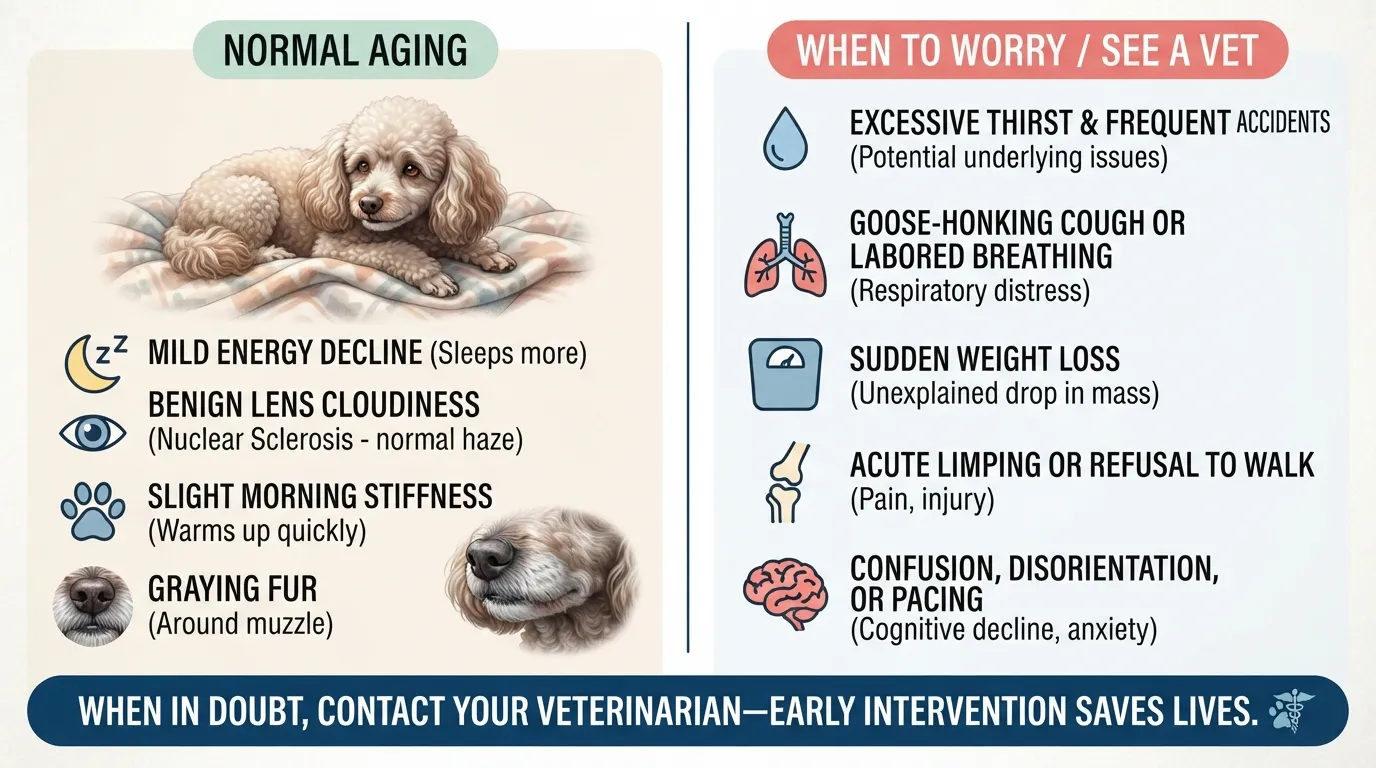
Slowing Down on Walks: Taking longer to get up after resting, lingering behind on familiar routes, or hesitating before jumping into the car or onto furniture.
Cloudy Eyes or Vision Changes: A bluish or grayish haze appearing in the lenses (nuclear sclerosis), which is a normal age-related change distinct from cataracts.
Weight and Muscle Changes: Unexplained weight loss or a shift in body composition, where lean muscle mass breaks down over the back and hips even if overall weight remains stable.
Coat and Skin Alterations: Greying hair around the muzzle, eyes, and chest, accompanied by drier skin or a duller coat texture.
Shift in Sleeping Patterns: Sleeping significantly more during the day or showing restlessness, wandering, or vocalizing at night.
Dental and Breath Changes: Increased tartar buildup, red or receding gums, and noticeably bad breath due to periodontal changes.
Want to see where your dog stands right now? Calculate your pit bull’s exact human age using our breed-specific age calculato
When to See a Vet Immediately
Some health issues can’t wait for a routine checkup. If your pit bull shows any of the following emergency warning signs, seek immediate veterinary care:
Bloat or abdominal swelling: A distended, tight belly paired with unproductive retching, drooling, or restless pacing can indicate gastric dilatation-volvulus (GDV). This cuts off blood flow and can be fatal within hours.
Sudden collapse or inability to stand: Sudden weakness, extreme unsteadiness, or loss of consciousness often points to internal bleeding (frequently from a ruptured splenic tumor), heart failure, or severe neurological distress.
Difficulty breathing: Rapid, shallow breathing, blue or pale gums, or loud, strained gasping means your dog isn’t getting enough oxygen and needs immediate intervention.
Inability to urinate: Straining without producing urine signals a urethral blockage, which can lead to kidney failure and death within 24 to 48 hours.
Severe vomiting or diarrhea with blood: Repeated vomiting, especially when combined with lethargy or dark red/black tarry stools, leads to severe dehydration and systemic shock rapidly.
Seizures lasting over 2 minutes or clusters: A prolonged seizure or multiple seizures within a 24-hour window requires urgent medication to prevent permanent brain damage.
Refusal to eat or drink for 24+ hours alongside lethargy: While skipping a single meal isn’t an emergency, complete anorexia combined with listlessness often indicates acute organ failure or severe infection.
Oldest Pit Bulls on Record
While the average pit bull lifespan falls between 8 and 16 years, several remarkable individuals have far surpassed two decades of life. The most famous example is Max, a pit bull mix born in 1983 who lived for 29 years and 282 days. Though unverified by official record keepers like Guinness World Records due to missing early birth documentation, local news coverage documented his age before he passed in May 2013.
Among documented, real-world examples of extreme pit bull longevity:
Max 29 years: Adopted in 1983, this pit bull mix lived nearly three decades in Louisiana, making him one of the longest-living dogs ever reported.
Tigger 22 years: A pit bull mix in Texas who was adopted at age four and lived another 18 years with her family.
Kathy 22 years: A rescue pit bull mix known for her exceptional longevity despite surviving early health hurdles.
Poe 20 years: Adopted as an 11-year-old senior rescue, Poe went on to live nearly another decade in a home environment.
These outliers share common traits: low-stress environments, active daily management, consistent veterinary care, and lean body weight throughout their senior years. While living to 20 or beyond is statistically rare, reaching 14 to 16 years is a realistic goal for a well-cared-for pit bull.
What Real Pit Bull Owners Say About Lifespan
When you look past formal statistics and talk to long-time owners on communities like Reddit and Facebook, the consensus lines up closely with veterinary data: most pit bulls live well into their early-to-mid teens, with 12 to 14 years being the standard age range reported for well-cared-for dogs.
While veterinary charts give a broad range, real-world owner experiences highlight a few distinct lifespan patterns and shared realities:
The 12-to-14 “Sweet Spot”: The vast majority of owners who report having healthy, active pit bulls state their dogs reached 12 to 14 years old before showing significant, age-related decline.
Outliers Past 15: It is not uncommon to find owners sharing stories of pit bulls living to 15, 16, or even 17 years. These long-lived dogs almost always had two things in common: lean body weight maintained throughout life and consistent, low-impact exercise.
Mobility is the Main Limit: Owner threads frequently reveal that a pit bull’s heart, lungs, and energy often outlast their joints. Many owners note that while their senior dogs remained mentally sharp and enthusiastic, arthritis or hip dysplasia ultimately compromised their quality of life in their final years.
Cancer as the Sudden Endpoint: Among owners whose dogs died unexpectedly or earlier than expected (around ages 8 to 10), hemangiosarcoma, lymphoma, and mast cell tumors are the most frequently cited causes.
Overall, community experiences reinforce that while genetics set the baseline, daily lifestyle choices—specifically keeping your dog lean and active—are what allow most pit bulls to reach their full lifespan potential.
No, 8 years old is generally considered the threshold where a pit bull enters senior status, but it is not "old" in terms of life expectancy. Since healthy pit bulls typically live between 12 and 14 years, an 8-year-old dog is roughly equivalent to a human in their mid-50s. While you may begin to notice minor joint stiffness or graying around the muzzle, most pit bulls maintain strong energy levels and high mobility well past 8 years of age.
Yes, on average, American Bullies have a slightly shorter lifespan (10 to 12 years) compared to standard American Pit Bull Terriers (12 to 14 years). This difference stems primarily from body structure. The heavy bone density, wider chest, and stockier frame of the American Bully put additional mechanical stress on joints and organs. Extremely muscular or "Pocket" Bully variations also face higher risks for respiratory issues and hip dysplasia, which can reduce overall longevity.
Yes, spaying or neutering can increase a pit bull's lifespan by 10% to 15%, but not just for the medical reasons typically cited. Beyond eliminating reproductive cancers (like testicular and uterine cancer), altered pit bulls show significantly lower rates of traumatic injury and fatal accidents. Unneutered males are driven by hormonal instincts to roam, escape yards, and assert dominance, drastically increasing their risk of being hit by cars or getting into severe fights with other animals.
While unofficial reports claim unverified pit bull mixes reaching 20 or more years, one of the oldest document-backed pit bull mixes on record was Max, a pit bull/terrier mix from Louisiana who reached 29 years and 282 days before passing in 2013. Among purebred or distinct pit bull types, verified ages over 18 are exceptionally rare, though community records frequently document healthy, well-cared-for pit bulls reaching 15 to 17 years old.
The old "multiply by 7" rule is inaccurate for pit bulls because medium-to-large breeds age rapidly during their first two years, then stabilize. A 1-year-old pit bull is roughly equivalent to a 15-year-old human, and a 2-year-old pit bull is close to a 24-year-old human. After age 2, each calendar year equals roughly 5 human years.
To get an exact calculation tailored to your dog's specific weight and pit bull subtype, use our custom Dog Age Calculator to convert your pit bull's age into human years instantly.
🐾 Other Age Guides

Gulfam Haider Mehdi
Founder & Developer
I built Dogagescalculator.com to give dog owners honest, science-backed answers instead of the outdated "×7" myth. Every figure here is checked against AKC, AVMA, and published veterinary research.
More about the author & this site →📌 Featured Guides
Dog Years for Small Dogs
→
how many calories does my dog need calculator
→
golden retriever puppy feeding guide
→
how old are the puppies
→
what is the life expectancy of a jack russell terrier
→
pug years to human years
→
how to tell if your dog is a pitbull
→
how big does a cavapoo get full grown
→
What Is the Average Age for a Dog
→
shih tzu age in human years
→
Comments