
How Long Do Boston Terriers Live? Average Lifespan, Factors & Tips
Quick Answer: Boston Terrier Average Lifespan
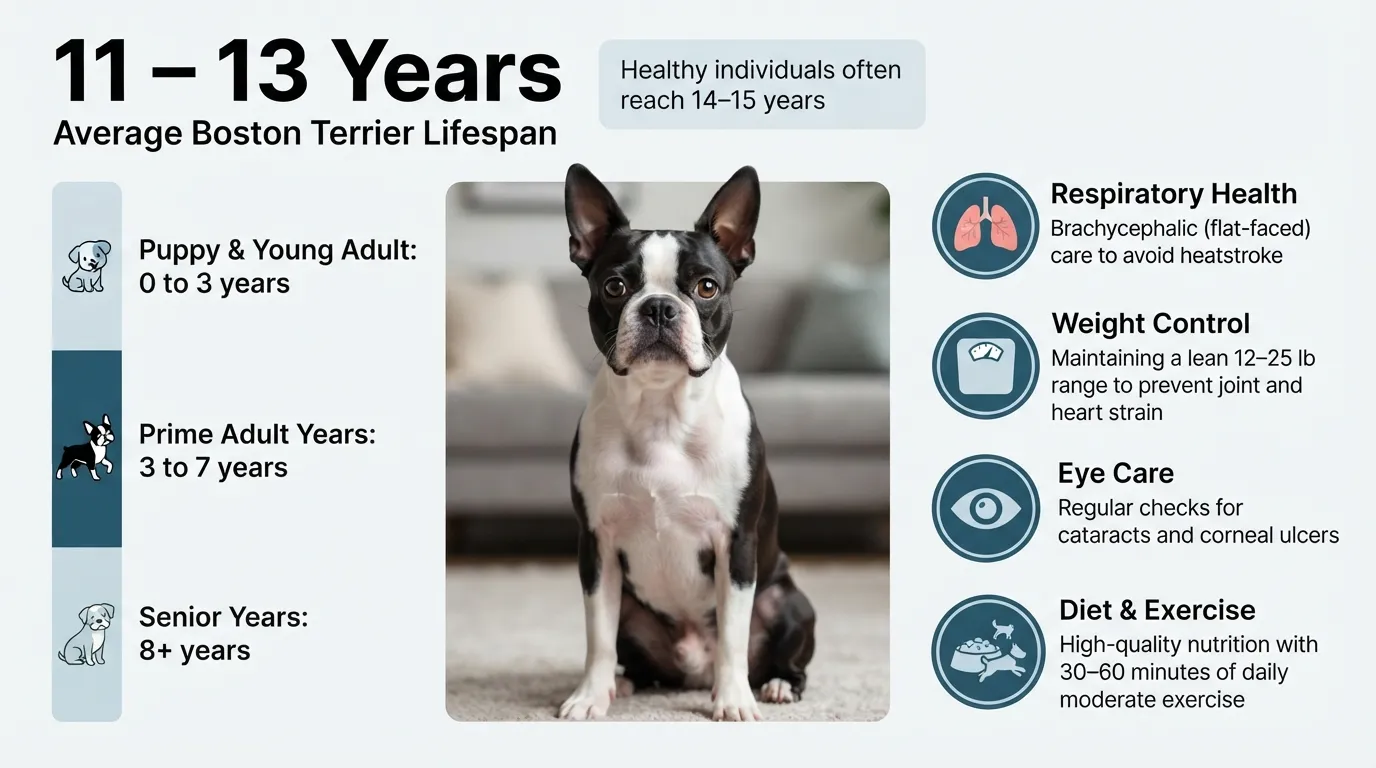
How long do Boston Terriers live? A Boston Terrier typically has a lifespan of about 11–13 years, although individual dogs may live shorter or longer depending on genetics, overall health, nutrition, body weight, exercise, and preventive veterinary care.
Boston Terriers are a small, compact breed, but their short muzzle and brachycephalic anatomy can make them more vulnerable to breathing difficulties, overheating, and certain other health problems. These factors can influence an individual dog’s health and longevity, so appropriate care and early veterinary attention are important.
As a Boston Terrier enters its later years, regular veterinary examinations, healthy weight management, dental care, and age-appropriate exercise become increasingly important. Watching for changes in breathing, mobility, appetite, behavior, or activity can also help identify health problems early.
In this guide, you’ll learn how long Boston Terriers typically live, the main factors that affect their life expectancy, common health concerns, senior milestones, and practical ways to support your Boston Terrier’s health as it ages.
Boston Terrier Lifespan by the Numbers
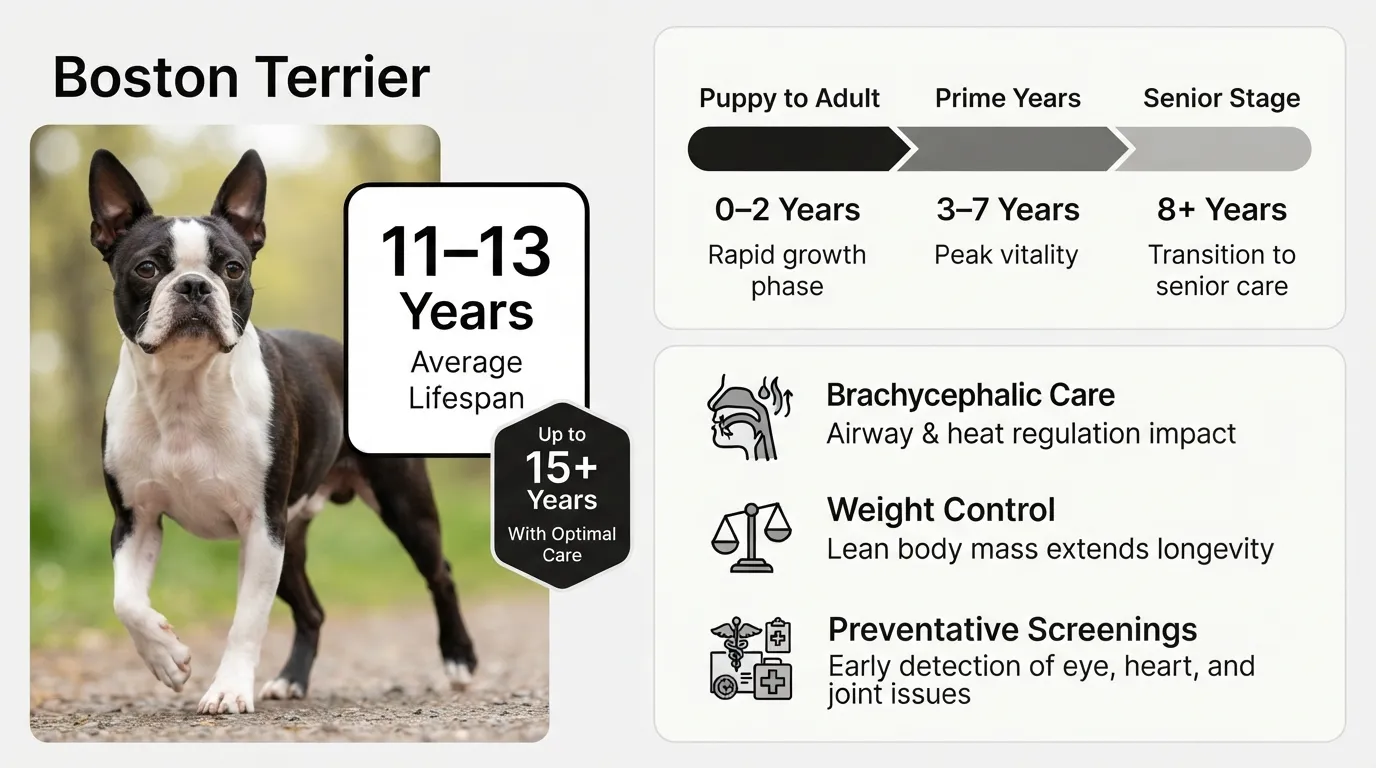
If you’re asking how long a Boston Terrier lives, the short answer is that most of these compact “American Gentlemen” give us between 11 and 15 years of companionship. But behind those numbers lies a lot of nuance depending on genetics, healthcare, and daily living conditions.
Average Lifespan Range
On average, a healthy Boston Terrier has a life expectancy of 11 to 13 years according to official breed benchmarks from the American Kennel Club (AKC). However, modern veterinary clinical records—including data published by PetMD and VCA Animal Hospitals—frequently place the realistic lifespan range slightly higher, between 11 and 15 years.
For a small-to-medium breed weighing between 12 and 25 pounds, this longevity is solid. Smaller dogs generally age slower than giant breeds like Great Danes or Mastiffs. If you want to see where your own pup stands in human years right now, our Dog Age Calculator gives you a precise conversion based on their weight and breed size.
Why Do Sources Give Different Numbers?
It’s completely normal to feel confused when one website says 11–13 years while another claims 12–15 years. This discrepancy usually comes down to how different organizations gather their data:
AKC Data (11–13 Years): The AKC bases its averages primarily on purebred registry data, historical breeder surveys, and baseline population statistics.
Veterinary & Hospital Data (11–15 Years): Veterinary networks track dogs receiving active preventive care. With advancements in veterinary medicine, better canine nutrition, and routine dental checkups, more pet dogs easily reach the 14- or 15-year mark than in decades past.
UK Biobank & Academic Studies (11.8 Years): Large-scale epidemiological studies, such as recent royal veterinary surveys in the UK, calculate a mean age of around 11.8 years across the entire breed population. This average includes dogs that passed away prematurely due to severe genetic conditions or unexpected accidents.
Oldest Recorded Boston Terrier
While there is no single Guinness World Record holder specifically designated for the “Oldest Boston Terrier” (unlike famous overall record holders like Bluey or Snookie the Pug), documented veterinary logs and rescue records show Bostons reaching extraordinary ages.
Unverified internet stories claim individual Bostons have lived up to 20 or 21 years. However, verified veterinary accounts reliably confirm that well-cared-for Bostons frequently reach 15 to 17 years old. Hitting these upper years usually requires a mix of stellar genetics, keeping your dog at a lean body weight, and a bit of good luck avoiding major illness.
Male vs Female — Does Gender Affect Lifespan?
Biological sex alone has a negligible impact on how long a Boston Terrier lives. Neither males nor females hold a significant biological advantage in terms of natural longevity.
What makes a far bigger difference is whether or not your dog is spayed or neutered:
Spayed Females: Eliminates the risk of life-threatening uterine infections (pyometra) and drastically reduces the odds of mammary tumors.
Neutered Males: Prevents testicular cancer, lowers the risk of prostate disease, and reduces aggressive roaming behaviors that can lead to trauma or car accidents.
If your 8-year-old female Boston seems to be slowing down a little on her evening walks, her overall joint health and weight matter far more than her gender.
Purebred vs Mixed Boston Terrier — Lifespan Difference
Purebred Boston Terriers carry a distinct genetic profile that comes with known breed predispositions. Because they are a flat-faced (brachycephalic) breed, purebreds are prone to respiratory strain, eye injuries, and certain cancers.
First-generation Boston Terrier mixes—such as a “Bugg” (Boston Terrier x Pug) or a “Frenchton” (Boston Terrier x French Bulldog)—sometimes benefit from a biological phenomenon called hybrid vigor (heterosis).
Purebred Bostons: Average 11–13 years. Their closed gene pool makes them more vulnerable to inherited conditions like cataracts, patellar luxation, and airway issues.
Mixed Bostons: Often average 12–15+ years if crossed with another healthy, longer-lived breed. Mixing genetic pools can lower the risk of inheriting double copies of recessive disease genes.
However, hybrid vigor isn’t a silver bullet. A mixed-breed pup whose parents both carried genetic health problems can still suffer from chronic conditions. Responsible breeding and routine vet checkups remain essential no matter what.
What Factors Affect a Boston Terrier's Lifespan?
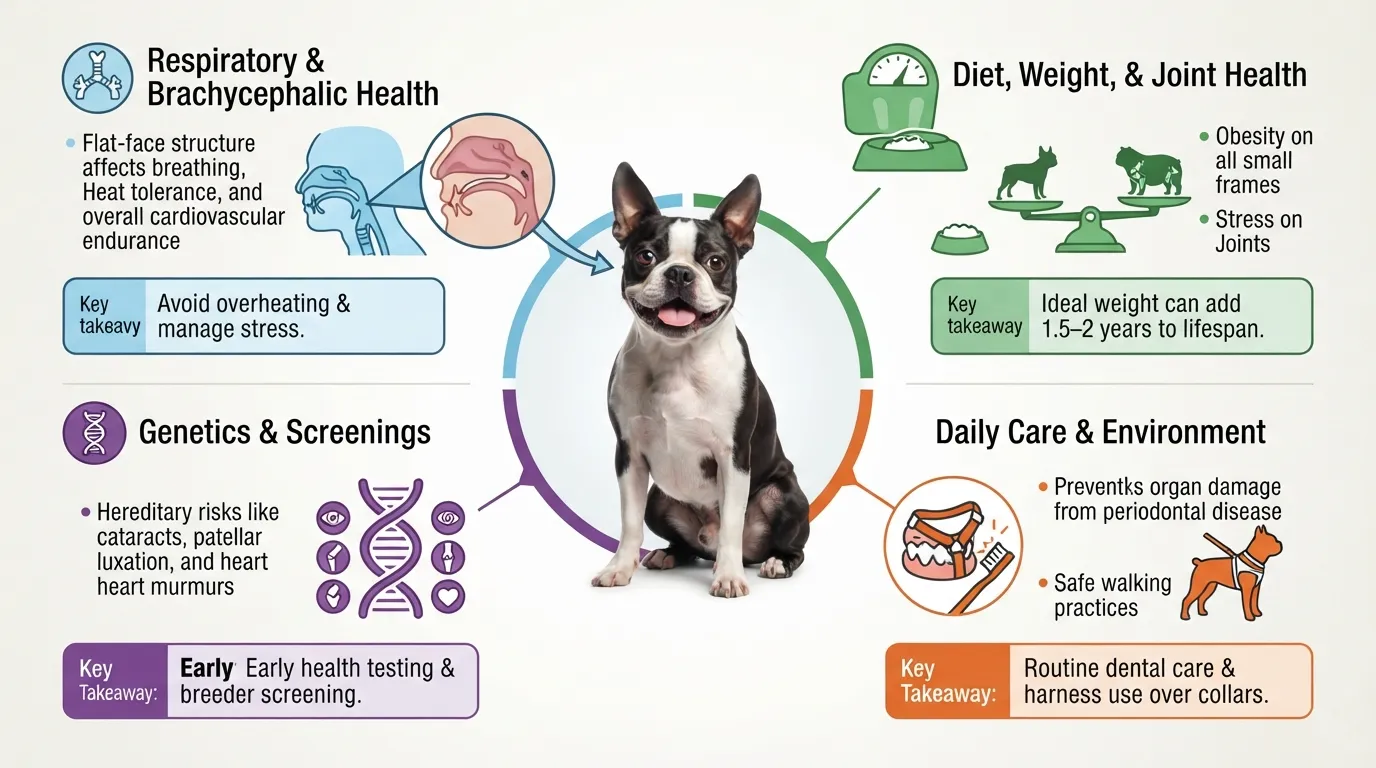
While genetics set the baseline for how long a Boston Terrier lives, your day-to-day choices play a massive role in whether your pup reaches the higher end of that 11 to 15-year average. Understanding these five key factors will give you full control over your dog’s long-term health and vitality.
1. Genetics & Breeding Line
A Boston Terrier’s lifespan starts long before you bring them home. Responsible breeding drastically reduces the chance of hereditary health issues, while backyard breeders or puppy mills often pass down avoidable genetic conditions.
When adding a Boston puppy to your family, protect their future health by checking these boxes:
Ask for Health Clearances: Ethical breeders test parent dogs for hereditary eye conditions (cataracts, juvenile corneal dystrophy), patellar luxation (slipping kneecaps), and congenital deafness.
Meet the Parent Dogs: Observing the parents gives you a direct look at their overall temperament, physical structure, and breathing quality.
Avoid Extreme Flat-Face Lines: Bostons are brachycephalic (short-muzzled), but dogs bred for hyper-flattened faces face severe, lifelong airway obstruction. Look for breeders prioritizing open nostrils and functional breathing.
2. Diet & Nutrition
What goes into your Boston’s bowl directly dictates their cellular health, immunity, and longevity. A high-protein diet built on quality animal proteins supports lean muscle mass without adding unnecessary calories.
Strict portion control is critical. A few extra pounds might not look like much on a 15-pound dog, but veterinarians at VCA Hospitals emphasize that canine obesity significantly increases the risk of joint stress, heart disease, and diabetes, ultimately shaving years off a dog’s life.
Tip: If you aren’t sure where your dog currently falls on the human-to-dog aging spectrum, checking our Dog Age Calculator can help you tailor their nutrition to their specific life stage.
3. Exercise & Weight Management
Boston Terriers are energetic little dogs that need about 30 to 60 minutes of daily activity to keep their heart and joints healthy. Regular play sessions, short walks, and mentally stimulating puzzle toys keep them lean and happy.
However, you must account for their unique anatomy during exercise:
Heat & Humidity Sensitivity: Because of their shortened airways, Bostons cannot cool themselves down efficiently through panting. Exercising them in hot or humid weather can trigger heatstroke in a matter of minutes.
Controlled Play: Stick to early morning or late evening walks in summer, provide plenty of fresh water, and rely on indoor games when the temperature spikes outside.
4. Preventive Veterinary Care
Catching health issues early is often the single biggest difference between a minor treatment and a life-threatening illness.
Annual Checkups: Routine physical exams help your vet spot subtle changes in heart rhythms, joint health, or eye clarity before symptoms become severe.
Core Vaccinations: Staying updated on rabies, DHPP, and state-recommended vaccines protects against preventable, severe infections.
Parasite Prevention: Year-round heartworm, flea, and tick prevention protects your Boston from internal organ damage and blood-borne illnesses like Lyme disease.
5. Spaying & Neutering Impact
Deciding when to spay or neuter your Boston Terrier has a proven impact on their overall health and lifespan.
According to studies cited by the American Kennel Club (AKC), spaying female dogs before their first heat virtually eliminates the risk of mammary tumors and prevents pyometra (a deadly uterine infection). Neutering male dogs eliminates testicular cancer and significantly reduces the risk of prostate diseases and dangerous wandering behaviors.
Your veterinarian can help you time this procedure based on your dog’s specific growth and development.
Common Health Issues That Can Shorten a Boston Terrier's Life
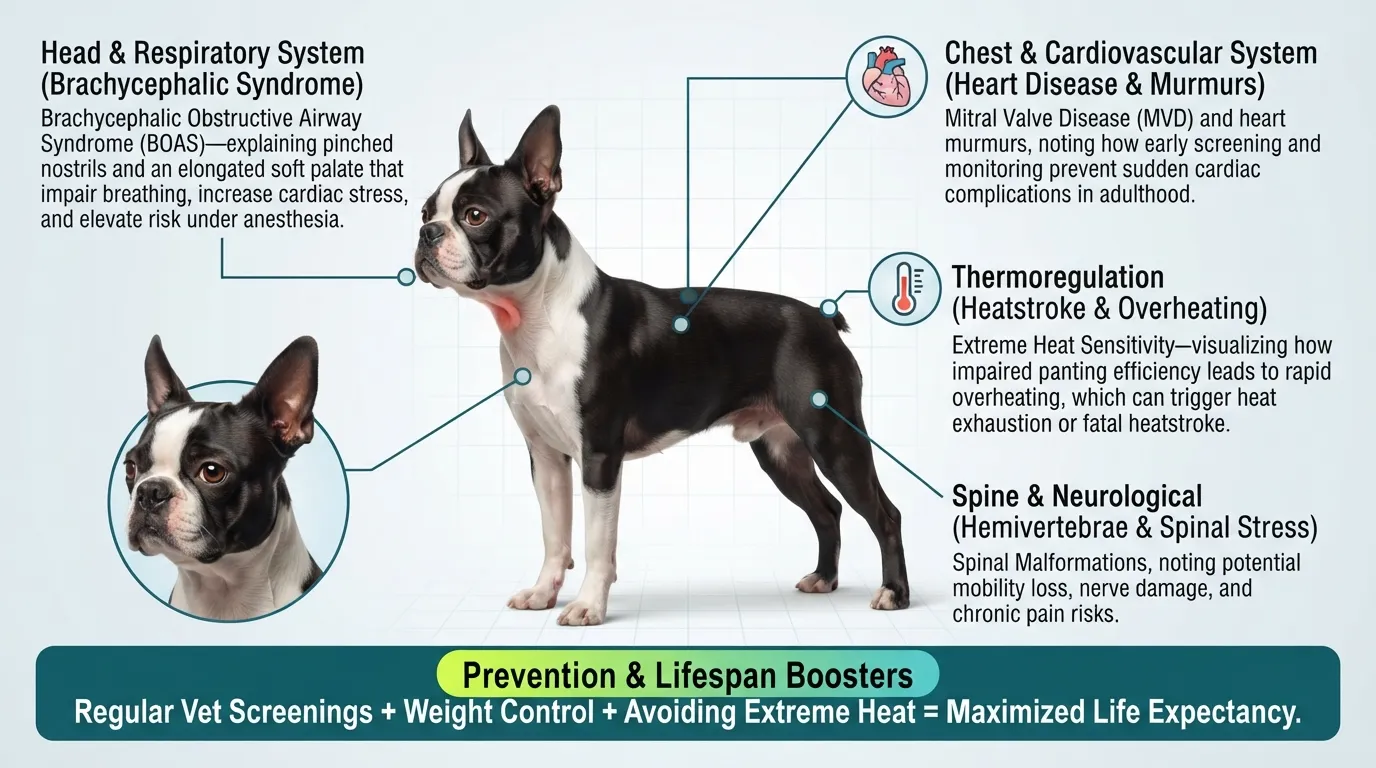
While Boston Terriers are generally sturdy little dogs with a typical lifespan of 11 to 13 years, certain genetic conditions and breed-specific traits can cut those senior years short if left unmanaged. Being aware of what to look for allows you to catch early warning signs before a manageable health issue turns into a life-threatening crisis.
Brachycephalic Airway Syndrome
That cute, flat face is signature Boston Terrier, but it comes at a physical cost. Brachycephalic Airway Syndrome (BAS) refers to a combination of upper airway abnormalities—like narrow nostrils (stenotic nares) and an elongated soft palate—that restrict normal airflow.
According to veterinarians at VCA Hospitals, dogs with BAS struggle to cool themselves efficiently through panting, making them highly susceptible to fatal heatstroke. If your Boston snorts heavily, struggles to breathe after light exercise, or overheats quickly on warm days, they need immediate veterinary assessment and careful climate management.
Heart Disease
Heart conditions are a leading cause of premature decline in aging Bostons. The two most common forms seen in the breed are:
Mitral Valve Disease MVD: A degenerative condition where the valve leaks, forcing the heart to work significantly harder to pump blood.
Patent Ductus Arteriosus PDA: A congenital heart defect where a critical blood vessel fails to close after birth, leading to fluid overload in the lungs.
Routine physical exams are critical because a veterinarian can usually hear a heart murmur long before your dog shows symptoms like coughing or exercise intolerance. Catching MVD early allows for medication that can prolong your dog’s quality of life for years.
Eye Problems
Because Boston Terriers have large, prominent eyes, they are structurally vulnerable to both mechanical injuries and hereditary diseases:
Corneal Ulcers: Scratches on the surface of the eye caused by dust, twigs, or rough play that can easily lead to severe infections if untreated.
Cataracts: A clouding of the eye lens that can strike early in genetically predisposed Bostons, eventually leading to blindness.
Glaucoma: A painful buildup of fluid pressure inside the eye that rapidly damages the optic nerve.
Cherry Eye: A prolapsed third eyelid gland that appears as a red, swollen mass in the corner of the eye.
Monitoring your Boston’s eye clarity daily and seeking prompt vet care for squinting or redness can preserve their vision well into their senior years.
Patellar Luxation
Patellar luxation occurs when the kneecap slips out of its normal anatomical groove in the thigh bone. The American Kennel Club (AKC) notes that this orthopaedic condition is particularly common in small breeds like the Boston Terrier.
Mild cases cause a temporary “skipping” gait that rights itself, but severe cases cause chronic inflammation, joint degradation, and painful arthritis. Over time, reduced mobility from untreated joint disease can lead to weight gain, putting extra stress on your dog’s heart and respiratory system.
Hip Dysplasia
Although usually associated with large breeds, hip dysplasia also affects Boston Terriers. This structural malformation of the hip socket prevents the thigh bone from fitting smoothly, causing painful friction, cartilage destruction, and early-onset arthritis.
If you notice your Boston struggling to jump onto the couch or standing up stiffly in the morning—especially as they cross into their senior phase (around 7 or 8 years on a dog age calculator)—it’s time to discuss joint supplements or pain management with your vet.
Allergies & Skin Conditions
Bostons are prone to both environmental allergies (atopy) and food sensitivities. Constant itching leads to obsessive biting and scratching, which breaks the skin barrier and opens the door to secondary bacterial and yeast infections.
In addition, their deep facial wrinkles can trap moisture and bacteria, leading to skin fold dermatitis. While rarely fatal on their own, chronic skin issues severely degrade your dog’s quality of life and create systemic stress if left unchecked.
Cancer Risk
Like many purebred dogs, Boston Terriers carry a heightened risk for certain types of cancer as they age. Data compiled in the Merck Veterinary Manual highlights a particular predisposition in brachycephalic breeds for:
Mast Cell Tumors: Skin cancers that appear as simple bumps or lumps, making monthly home body checks essential.
Brain Tumors (Gliomas): Neurological tumors that can cause seizures, behavioral changes, or loss of coordination in middle-aged and senior Bostons.
Early detection through routine senior bloodwork and physical exams is the single best defense against advanced cancer.
Deafness Congenital
Congenital deafness affects roughly 3% to 5% of Boston Terriers, a condition strongly linked to the genetic pigment distribution responsible for their white coat markings. Dogs with excessive white on their heads or blue eyes carry a statistically higher risk of sensorineural hearing loss.
While deafness itself does not directly shorten a dog’s natural lifespan, unmanaged hearing loss presents significant safety hazards—such as an inability to hear oncoming traffic or danger cues outdoors. Extra training and vigilant leash safety ensure a hearing-impaired Boston lives a full, safe life.
How to Help Your Boston Terrier Live Longer — Actionable Tips
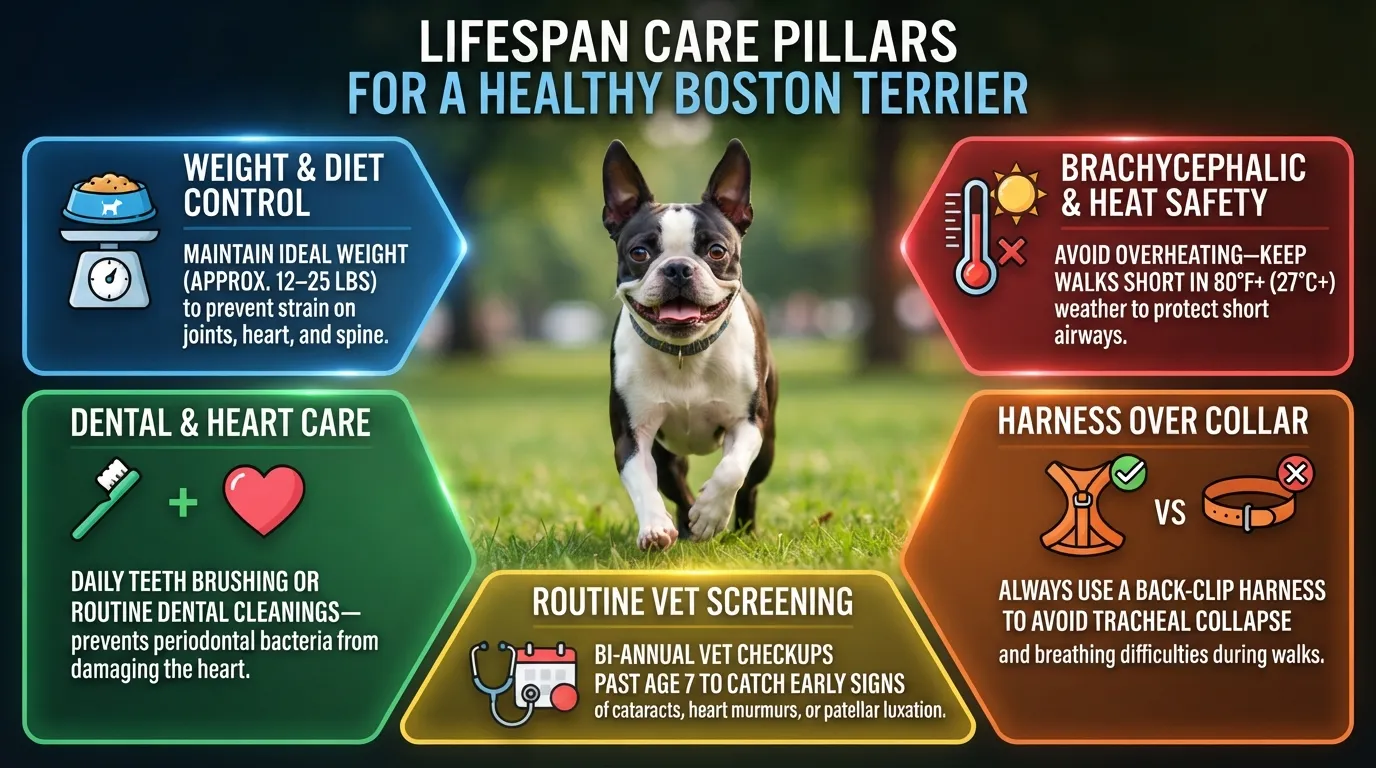
While genetics set the baseline for your Boston’s lifespan, the daily choices you make in their care have a massive impact on whether they reach the upper end of that 11-to-15-year average. Brachycephalic (short-muzzled) breeds need specific, targeted attention—especially when it comes to weight, airway care, and temperature regulation.
Here are the most effective, research-backed ways to keep your “American Gentleman” healthy and active well into their golden years.
Nutrition Checklist
Feed your Boston Terrier for longevity by focusing on high-quality protein and portion control. Because this breed is notoriously prone to sensitive stomachs and severe flatulence, diet consistency is key.
Choose AAFCO-Balanced Food: Look for dog foods that meet standards set by the Association of American Feed Control Officials (AAFCO), with a real meat protein (like chicken, turkey, or lamb) listed as the first ingredient.
Opt for Small-Kibble Size: Short, flat jaws make large kibble difficult to pick up and chew. Small-breed formulas prevent choking and improve digestion.
Incorporate Joint & Heart Support: Look for foods or supplements containing Omega-3 fatty acids (EPA and DHA), glucosamine, and chondroitin to protect aging joints and support cardiovascular health.
Skip High-Sodium & Fatty Scraps: Fatty table scraps can trigger acute pancreatitis—a painful, potentially life-threatening condition that veterinarians at VCA Animal Hospitals frequently treat in small breeds.
Exercise Routine by Age
Boston Terriers love to play, but their shortened airways mean they can easily overexert themselves. Tailor their physical activity to their life stage to protect their heart, lungs, and joints.
Puppies (Under 1 Year): Short, frequent bursts of play (5–10 minutes at a time). Their growth plates are still fusing, so avoid hard running on asphalt or jumping off high furniture.
Adults 1–7 Years: 30 to 60 minutes of moderate activity daily, split into morning and evening walks. Keep walks light during peak afternoon heat—bostons cannot cool themselves efficiently through panting.
Seniors (8+ Years): 15 to 20 minutes of gentle, low-impact walking once or twice daily. If your senior starts slowing down or sitting mid-walk, respect their limit and head home.
Vet Visit Schedule Puppy → Adult → Senior
Regular veterinary checkups catch silent health issues—like kidney early-stage disease or heart murmurs—before they become irreversible.
| Life Stage | Age Range | Recommended Vet Frequency | Key Focus Areas |
|---|---|---|---|
| Puppy | 0–12 Months | Every 3–4 weeks (until 16 weeks) | Vaccinations, parasite prevention, spay/neuter, airway evaluation |
| Adult | 1–7 Years | Once yearly | Annual boosters, dental exams, baseline bloodwork, weight check |
| Senior | 8+ Years | Every 6 months | Comprehensive blood panels, joint assessments, eye exams, organ function |
Weight Management Tips
Carrying even two extra pounds on a small 15-pound frame puts immense strain on a Boston’s heart and exacerbates Brachycephalic Obstructive Airway Syndrome (BOAS). Keeping your dog lean is one of the easiest ways to add years to their life.
Use the “Rib Test”: You should easily feel your dog’s ribs without pressing hard, and they should have a visible waistline when viewed from above.
Measure Meals precisely: Never “free-feed” or guess portions. Use a standard measuring cup or digital scale to track daily food intake down to the gram.
Swap High-Calorie Treats: Replace store-bought fatty treats with low-calorie options like fresh blueberry, green bean slices, or plain baby carrots.
Account for Treat Calories: Treats should make up no more than 10% of your Boston’s total daily caloric intake.
Dental Care Routine
Periodontal disease isn’t just a mouth problem—bacteria from inflamed gums can enter the bloodstream, directly damaging the heart, kidneys, and liver over time. Because Boston Terriers have crowded teeth in a compact jaw, they are at exceptionally high risk for early dental loss.
Daily Brushing: Use a soft-bristled finger brush and dog-safe enzymatic toothpaste. Never use human toothpaste, which contains toxic ingredients like xylitol.
Dental Chews & Toys: Provide VOHC-approved (Veterinary Oral Health Council) chew toys to help scrape away soft plaque before it hardens into tartar.
Professional Cleanings: Schedule professional veterinary dental cleanings under anesthesia as recommended by your vet—typically starting around age 3 or 4.
Mental Stimulation & Enrichment
Bostons are bright, emotionally sensitive dogs that thrive on mental interaction. Boredom leads to chronic stress, which can suppress immune function over time.
Interactive Food Puzzles: Ditch the standard food bowl and serve meals in snuffle mats, Kongs, or puzzle toys to engage their natural foraging instincts.
Rotational Toy System: Keep only 3 or 4 toys out at a time and rotate them weekly. This keeps their environment feeling fresh without buying new items.
Short Training Sessions: Spend 5 to 10 minutes a day teaching new tricks or refining basic manners. Mental exertion tires out a Boston just as effectively as physical exercise—without the risk of overheating.
Boston Terrier Life Stages Explained
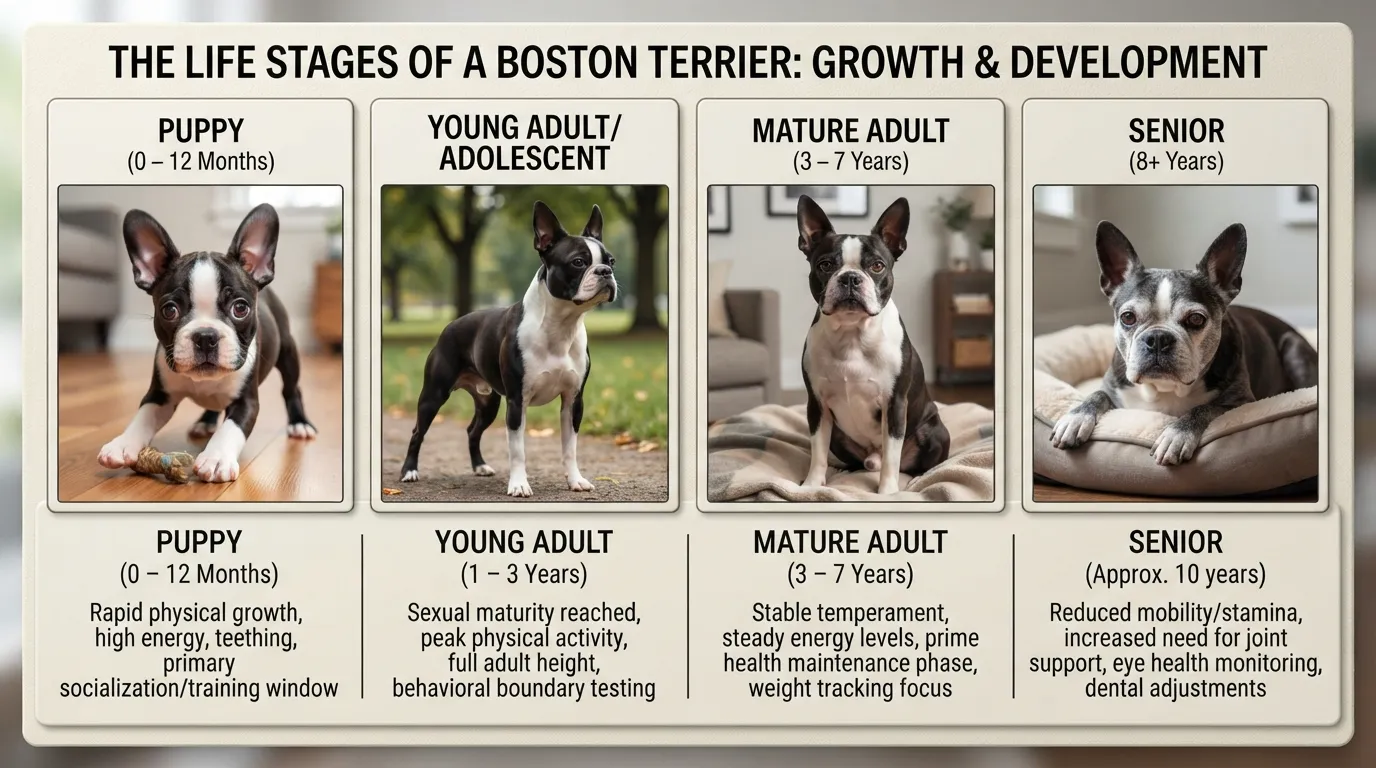
Like most small breeds, Boston Terriers age faster during their first two years before settling into a steady rhythm. Tracking these distinct life stages helps you spot age-related health changes early and adapt their diet, exercise, and vet care along the way.
Puppy 0–1 Year
The puppy phase is a whirlwind of rapid growth, high energy, and intense learning. By six months, your Boston Terrier will reach about 75% of their adult weight, though their skeleton and muscle structure keep developing until their first birthday.
Key Focus: Socialization, basic obedience, and preventing joint strain while growth plates fuse.
Health Tip: Avoid high-impact jumping during this phase to protect their developing joints.
Adult 1–7 Years
Your Boston Terrier hits full physical and mental maturity around age one. These are their prime active years, where their playful “American Gentleman” personality fully shines.
Key Focus: Maintaining an ideal weight through balanced nutrition and daily exercise.
Health Tip: Keep up with annual vet exams, dental care, and weight tracking to prevent early joint or respiratory strain.
Senior 7+ Years
Veterinarians consider Boston Terriers to be seniors once they reach 7 years old. While small dogs generally live longer than large breeds, age seven marks the point where metabolic and cellular changes begin to slow them down.
If your 8-year-old Boston starts taking slightly longer naps after a game of fetch or steps a bit more cautiously down the stairs, that’s completely normal. You might also notice a little gray frosting around their muzzle and eyes.
Key Focus: Bi-annual vet checkups, joint support supplements, and softer bedding.
Health Tip: Switch to senior-formulated food to support aging joints and kidney health without adding unnecessary calories.
Boston Terrier Age to Human Years Comparison
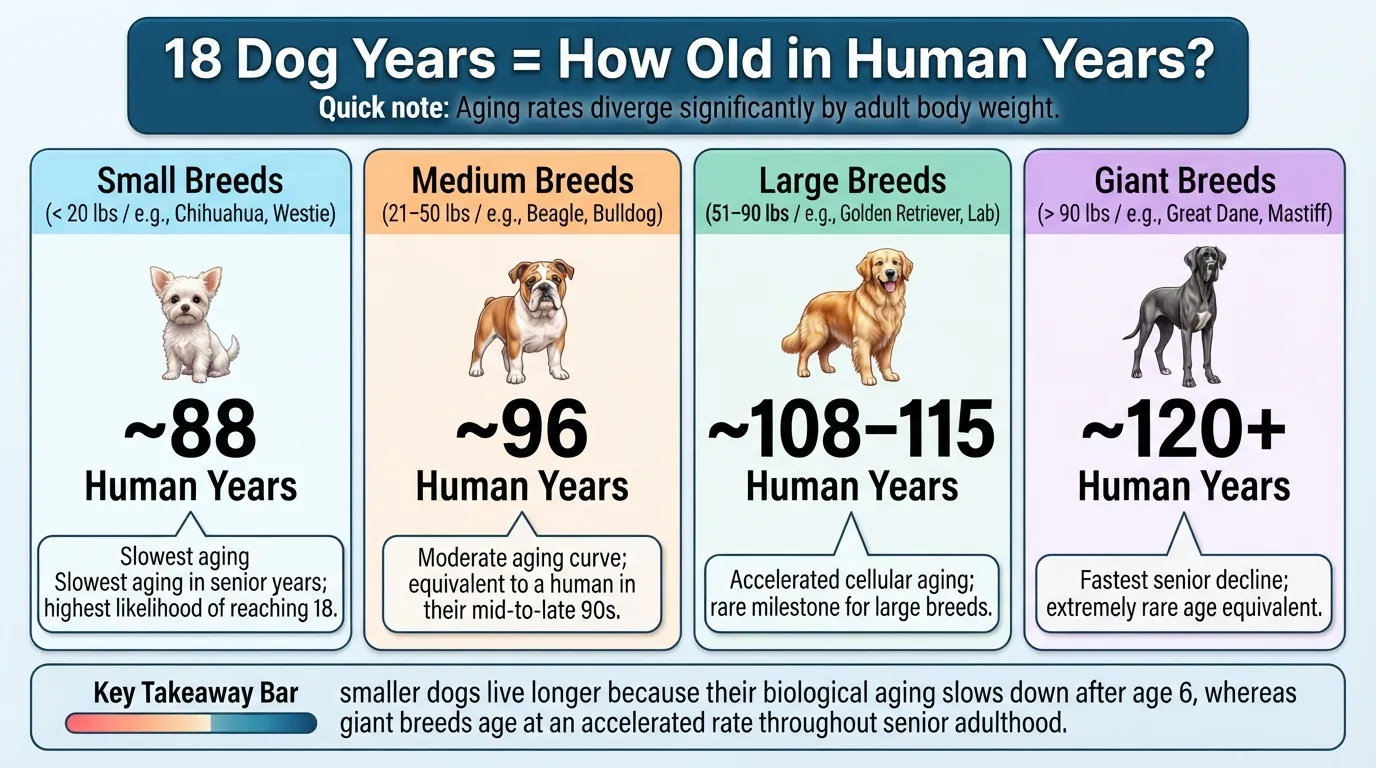
The old rule of multiplying by seven doesn’t paint an accurate picture for small dogs. Small breeds age rapidly in their first two years, but age much slower than large dogs in their senior years.
According to veterinary aging charts from the American Kennel Club (AKC), here is how your Boston Terrier’s age translates to human years:
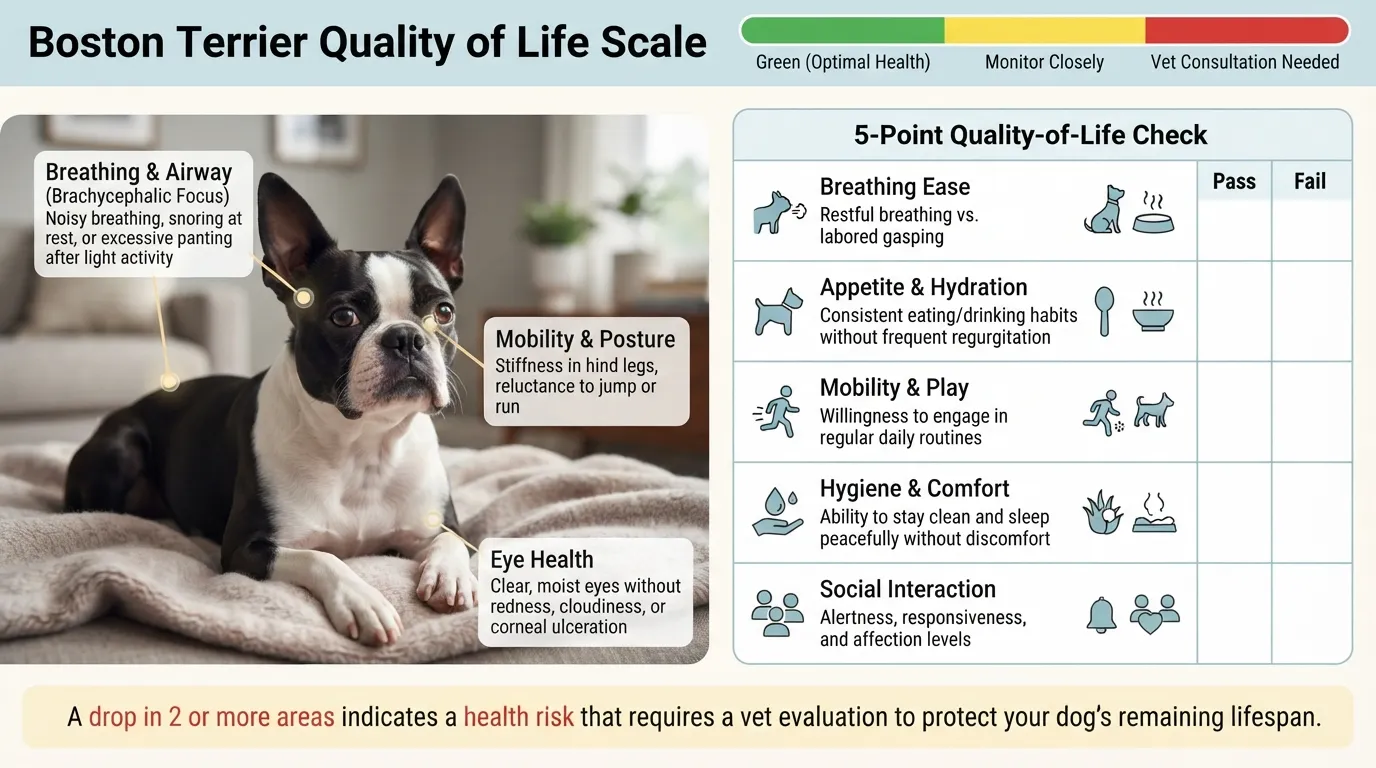
Is My Boston Terrier's Lifespan at Risk? Quality of Life Check
| Boston Terrier Age | Equivalent Human Age | Life Stage |
|---|---|---|
| 6 Months | 10 Years | Puppy |
| 1 Year | 15 Years | Young Adult |
| 2 Years | 24 Years | Adult |
| 4 Years | 32 Years | Adult |
| 6 Years | 40 Years | Adult |
| 7 Years | 44 Years | Senior Entry |
| 9 Years | 52 Years | Senior |
| 11 Years | 60 Years | Senior |
| 13 Years | 68 Years | Senior |
| 15 Years | 76 Years | Advanced Senior |
Want an instant calculation tailored specifically to your dog’s exact age and size? You can use our interactive Dog Age Calculator to see where your Boston stands today.
Add Your Heading Text Here
As your Boston Terrier enters their senior years—usually around age 8 or 9—it’s completely natural to catch yourself watching them a little more closely. You might notice them sleeping a bit longer in their favorite sunspot or taking an extra second to jump onto the couch. Knowing the difference between normal, graceful aging and red flags that threaten their health gives you the power to protect their remaining years.
Healthy Aging Signs
Aging isn’t a disease; it’s just a new phase of life. Many changes in a senior Boston are predictable and manageable as long as their overall spirits remain high.
Slowing Down Gradually: Taking a slightly shorter walk or trotting instead of sprinting after a ball is expected.
Increased Sleep Needs: Senior dogs naturally require more rest to recharge, often sleeping 14 to 18 hours a day comfortably.
Mild Cloudiness in the Eyes: A grayish haze called nuclear sclerosis often develops in older dogs. Unlike cataracts, it doesn’t cause blindness and is a normal part of the aging eye.
Slight Muscle Loss: You may notice slight thinning along their hind legs or back, provided their weight remains stable and they aren’t in pain.
Consistent Tail Wagging and Appetite: A healthy senior Boston still gets excited for mealtime, greets you at the door, and stays engaged with the family.
Warning Signs Needing Vet Attention
Some changes should never be brushed off as just “getting old.” According to veterinarians at VCA Animal Hospitals, catching subtle shifts early can add months or even years of good health to a senior dog’s life. Schedule a checkup if you spot any of the following symptoms:
Unexplained Weight Loss or Gain: Rapid weight loss often points to underlying conditions like kidney disease, diabetes, or cancer, while sudden weight gain strains aging joints.
Changes in Water Intake or Urination: Drinking significantly more water or suddenly having accidents indoors is a classic sign of endocrine issues or renal decline.
Persistent Coughing or Heavy Wheezing: Flat-faced breeds like Bostons are already prone to airway challenges, but new or worsening coughs can signal heart issues or brachycephalic airway complications.
Stiffness or Difficulty Standing Up: Struggling to rise after a nap or hesitating on stairs suggests joint pain or arthritis that needs proper pain management.
Changes in Behavior or Confusion: Wandering aimlessly, staring at walls, or altered sleep cycles can indicate canine cognitive dysfunction dog dementia.
Emergency Signs
Some situations can’t wait for a routine appointment. Because Boston Terriers have short snouts and compact bodies, acute distress can escalate rapidly. Seek immediate emergency veterinary care if your dog exhibits any of these signs:
Severe Respiratory Distress: Blue, purple, or pale gums, extreme gasping for air, or heavy abdominal effort while breathing.
Inability to Stand or Sudden Collapse: Waking up unable to use their back legs or fainting during activity.
Uncontrollable Vomiting or Bloating: Repeated dry heaving, an enlarged, hard abdomen, or an inability to keep water down.
Seizures or Unresponsiveness: Sudden loss of consciousness, muscle tremors, or disorientation lasting more than a few moments.
Signs of Severe Pain: Continuous crying, aggression when touched, or rigid posture.
Talking to Your Vet About Quality of Life
If you’re unsure whether your Boston is enjoying a good quality of life, don’t carry that worry alone. Veterinary teams regularly evaluate a pet’s daily well-being using standardized scales like the HHHHHMM Quality of Life Scale, which assesses Hurt, Hunger, Hydration, Hygiene, Happiness, Mobility, and More Good Days Than Bad.
Keep a quick daily log on your phone for a week or two—note down their appetite, energy, pain levels, and mood. Bringing those simple notes to your vet turns a vague conversation into a clear, actionable plan to keep your Boston comfortable and happy.
Boston Terrier vs Similar Breeds — Lifespan Comparison
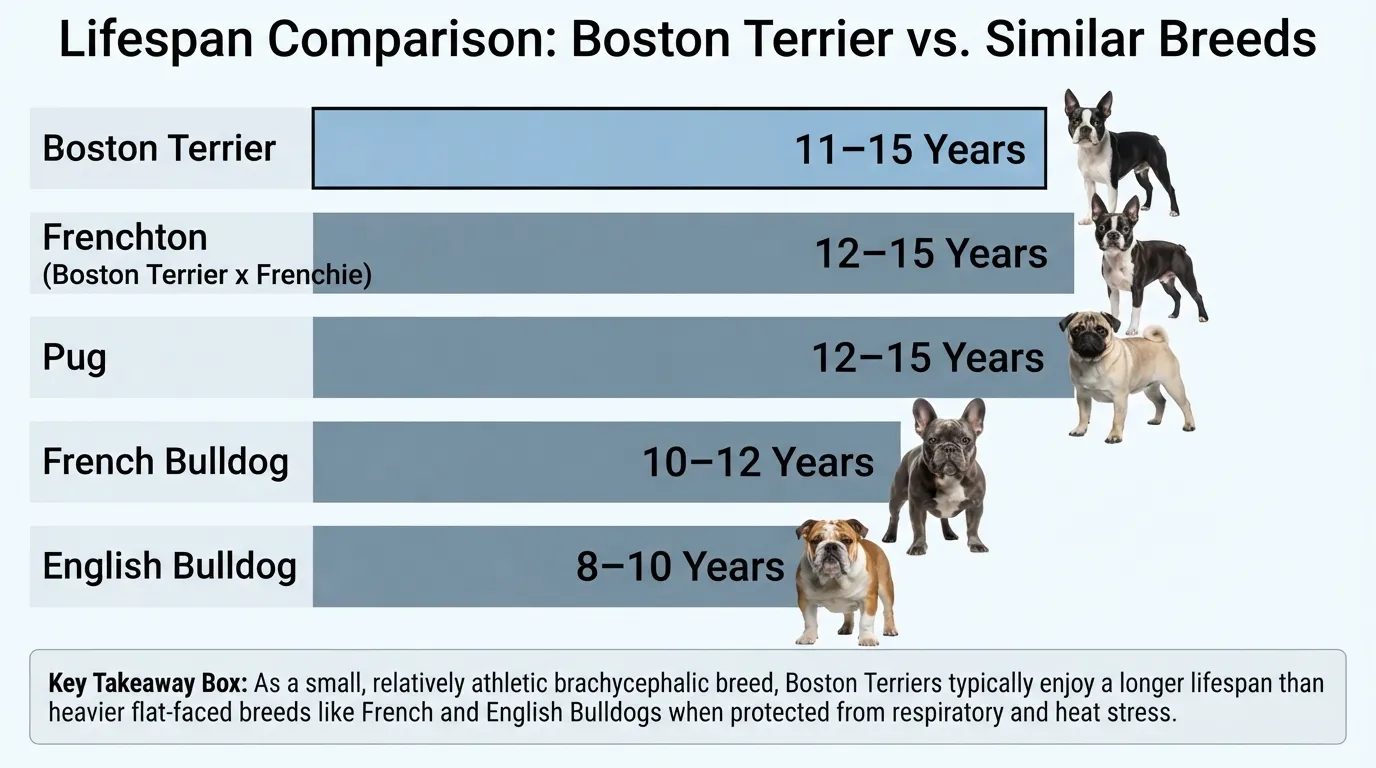
When evaluating how long a Boston Terrier lives for—typically 11 to 15 years—it helps to see how they stack up against other popular small and flat-faced brachycephalic companion dogs. While small breeds generally outlive larger dogs, subtle differences in physical build, genetic health risks, and breeding history can result in a difference of several years in average lifespan.
If you’re weighing your options between a Boston Terrier and another small breed, here is how their longevity breaks down side-by-side.
vs French Bulldog
Boston Terriers and French Bulldogs are constantly compared because of their similar squishy faces, bat-like or pointed ears, and playful personalities. However, when it comes to average life expectancy, the Boston Terrier holds a distinct edge.
Boston Terrier Lifespan: 11 to 15 years
French Bulldog Lifespan: 10 to 12 years
Why the gap? While both are brachycephalic breeds, Bostons generally have a leaner, lighter athletic build and slightly less dramatic facial flattening. French Bulldogs carry a much stockier, heavier-boned frame and flatter muzzles, which contributes to higher rates of severe Brachycephalic Obstructive Airway Syndrome BOAS.
As noted in clinical observations by organizations like the American Kennel Club and veterinary network studies, Frenchies also suffer higher statistical rates of spinal issues such as hemivertebrae and Intervertebral Disc Disease. These severe respiratory and structural strains often take a toll on a Frenchie’s health earlier in life.
If you love the flat-faced lapdog look but want a pup with lower relative risks for extreme airway surgeries and a longer life expectancy, the Boston Terrier comes out ahead.
vs Other Small Breeds Chihuahua, Pug, etc.
Here is how the “American Gentleman” compares to other popular toy and small breeds across the lifespan spectrum:
Chihuahua 14 to 16+ years: Chihuahuas are famous for their remarkable longevity. Their tiny frames place very little strain on joints, and their longer snouts eliminate the breathing challenges that flat-faced breeds experience.
Pug 12 to 15 years: Pugs share a nearly identical lifespan range with Boston Terriers. However, Pugs are much more prone to rapid weight gain and obesity, which can quickly compromise their breathing and shorten their golden years if their diet isn’t strictly managed.
Shih Tzu 11 to 14 years: Shih Tzus enjoy a lifespan very similar to Bostons. Both breeds share shallow eye sockets, meaning owners need to watch closely for eye irritation and dust injuries throughout their lives.
Miniature Schnauzer 12 to 14 years: These sturdy dogs match the Boston Terrier in average years, though their primary health struggles lean toward metabolic conditions like pancreatitis rather than airway complications.
To picture the difference, imagine taking a 10-year-old Boston Terrier and a 10-year-old Chihuahua to the park. Your senior Boston might still be bouncing around with surprising, athletic enthusiasm, while the Chihuahua moves at a gentler, quieter pace—yet statistically, that Chihuahua may still have another 4 or 5 years ahead of them.
Every breed comes with unique health trade-offs, but the Boston Terrier lands in a wonderful sweet spot: giving you the fun, active energy of a terrier alongside a generous decade-and-a-half lifespan potential.
11 to 13 years falls right in the middle of the expected lifespan for a Boston Terrier, which typically ranges from 11 to 15 years. While it is a very solid life, it's considered average for the breed rather than exceptionally long. Many well-cared-for Bostons that receive regular preventive vet care and eat a balanced diet easily reach 14 or 15.
While unofficial claims on internet forums mention Boston Terriers reaching 18 to 20 years old, one of the oldest well-documented Boston Terriers on record lived to be roughly 15 to 16 years old. Reaching late teens is rare for flat-faced breeds, but with top-tier nutrition, weight management, and early medical intervention, pushing past the 15-year mark is definitely possible.
Because they are a brachycephalic (flat-faced) breed, Boston Terriers are predisposed to specific health issues, particularly respiratory issues (like BOAS) and eye conditions like cataracts and corneal ulcers due to their prominent eyes. However, compared to other flat-faced dogs like French Bulldogs or English Bulldogs, Bostons are generally lighter, more athletic, and experience fewer severe orthopedic and spinal complications.
Yes, Boston Terriers can live 15 years or more. Reaching or exceeding 15 usually comes down to a mix of good genetics, keeping your dog at a healthy weight to reduce strain on their airways, protecting them from heat exhaustion, and maintaining routine dental care to prevent systemic infections.
The primary causes of death in senior Boston Terriers include cancer, severe heart failure (often secondary to mitral valve disease), kidney failure, and acute respiratory complications during extreme heat or stress. Structural health issues like BOAS or chronic heart conditions can accelerate aging if left unmanaged—be sure to review our Health Issues section above for details on identifying early warning signs.
According to retrospective studies published by veterinary researchers and supported by the American Veterinary Medical Association (AVMA), spayed and neutered dogs live an average of 1.5 to 2 years longer than intact dogs. Spaying females eliminates the risk of fatal uterine infections (pyometra) and dramatically reduces mammary tumor risks. Neutering males prevents testicular cancer and lowers the incidence of prostate disease and dangerous roaming behavior.
The old rule that "one dog year equals seven human years" is a myth that doesn't accurately account for how small dogs age. Small breeds age rapidly in their first two years—reaching roughly human equivalent age 24 by year two—and then slow down significantly, aging about 4 to 5 human years for every actual calendar year after that.
If you want to get an exact, breed-adjusted age for your pup, you can check your dog's true developmental stage using our free, easy-to-use Dog Age Calculator.
🐾 Other Age Guides

Gulfam Haider Mehdi
Founder & Developer
I built Dogagescalculator.com to give dog owners honest, science-backed answers instead of the outdated "×7" myth. Every figure here is checked against AKC, AVMA, and published veterinary research.
More about the author & this site →📌 Featured Guides
golden retriever puppy feeding guide
→
what is the lifespan of an english bulldog
→
How much food should I feed my Chihuahua
→
how many calories does my dog need calculator
→
oldest historical picture of the breed shar pei
→
what age does a dog have a period
→
pitbull dog years to human years
→
German Shepherd Golden Retriever mix
→
Life Expectancy Of a West Highland White Terrier
→
yorkie dog years to human years
→
Comments