Springer Spaniel and Labrador Mix Springador: The Complete Breed Guide

When you cross two of the world’s most hardworking, affectionate gundogs—the English Springer Spaniel and the Labrador Retriever—you get the Springador. This popular designer hybrid brings together the eager-to-please nature of the Lab with the high-octane energy and keen nose of the Springer. It’s easy to see why active families and field-dog enthusiasts love them; they are athletic, fiercely loyal, and almost always natural swimmers.
In this complete guide, we’ll break down everything you need to know about the Springer Spaniel Lab mix, from their real-world exercise requirements and temperament to grooming, potential health issues, and life expectancy.
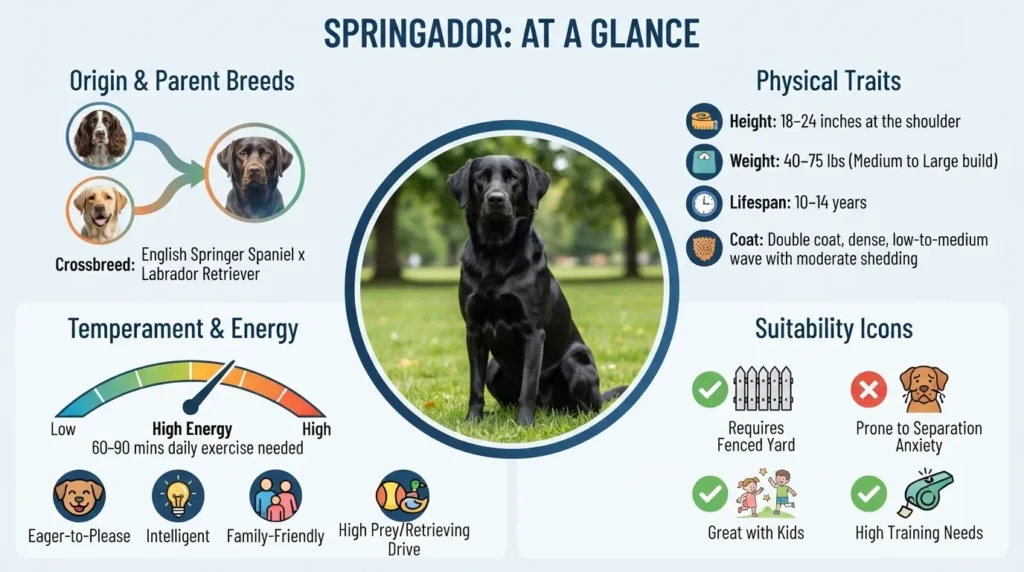
Quick Facts About the Springador At-a-Glance
| Trait | What to Expect |
|---|---|
| Height | 18 – 24 inches |
| Weight | 45 – 75 lbs |
| Lifespan | 10 – 14 years |
| Coat Colors | Black, chocolate, yellow, liver, or black and white (often with spaniel ticking/flecks) |
| Energy Level | Very high — needs structured daily activity |
| Shedding Level | Moderate to high (double coat) |
| Good With Kids | Excellent (gentle, patient, and playful) |
| Good With Other Pets | Very good, though prey drive may need early training around small animals |
| Trainability | High (eager to please, intelligent) |
| Best For | Active families, outdoorsy owners, runners, and homes with a yard |
| Height |
|---|
| 18 – 24 inches |
| Weight |
|---|
| 45 – 75 lbs |
| Lifespan |
|---|
| 10 – 14 years |
| Coat Colors |
|---|
| Black, chocolate, yellow, liver, or black and white (often with spaniel ticking/flecks) |
| Energy Level |
|---|
| Very high — needs structured daily activity |
| Shedding Level |
|---|
| Moderate to high (double coat) |
| Good With Kids |
|---|
| Excellent (gentle, patient, and playful) |
| Good With Other Pets |
|---|
| Very good, though prey drive may need early training around small animals |
| Trainability |
|---|
| High (eager to please, intelligent) |
| Best For |
|---|
| Active families, outdoorsy owners, runners, and homes with a yard |
What Makes the Springador Stand Out?
Mixing a Springer Spaniel and a Labrador Retriever gets you a medium-to-large dog built for movement. These aren’t low-maintenance couch potatoes. You are pairing two of the most popular, high-drive working breeds in hunting history, which means your Springador inherits a serious work ethic alongside a deeply affectionate personality.
They tend to combine the Lab’s easygoing, friendly nature with the Springer’s intense focus and agility. If you want a velcro companion who can keep up on a ten-mile hike, fetch until your arm falls off, and then curl up next to you on the couch, this crossbreed hits the sweet spot.
What Is a Springador? Origin & Parent Breeds
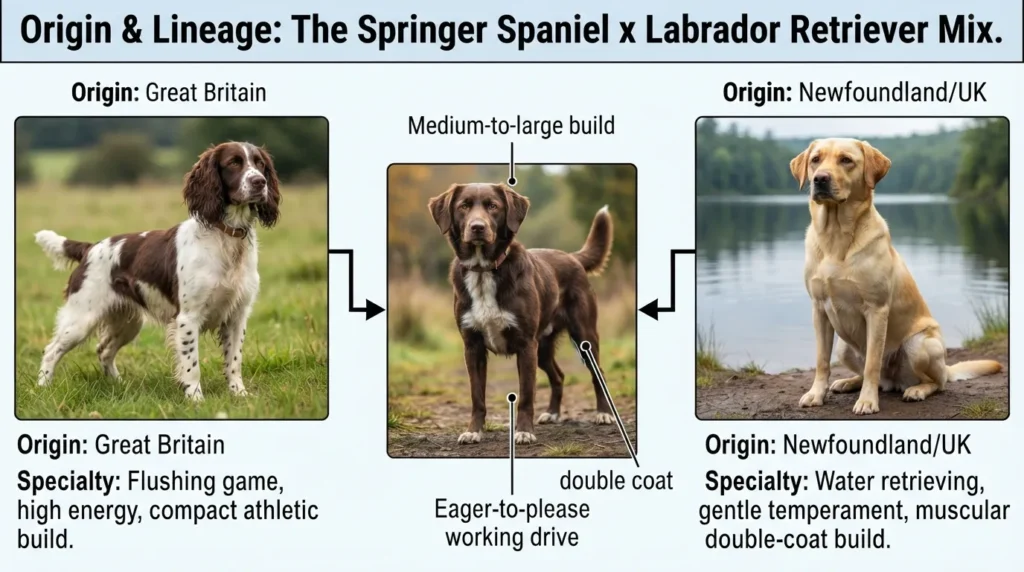
If you’re considering bringing a Springador into your home, you’re looking at a cross between two of the most popular, hardworking, and affectionate gundogs in the world: the Labrador Retriever and the English Springer Spaniel.
While the term “Springador” might sound like a modern designer dog trend, this mix originally gained traction among hunters and gamekeepers looking to combine the best field traits of both parent breeds. Today, that same blend of high intelligence, strong work ethic, and deep loyalty has made them a standout choice for active families.
Meet the Labrador Retriever Parent
You can’t talk about the Springador without looking at America’s long-standing favorite family dog. Originally bred in Newfoundland to work alongside fishermen and retrieve downed game, the Lab brings size, stability, and an famously easygoing personality to this mix.
Temperament traits inherited: Labs pass down their “friend to everyone” mindset, eagerness to please, and steady composure. They tend to be food-motivated, exceptionally tolerant of children, and eager to join in on any family activity.
Physical traits inherited: From the Lab side, Springadors usually inherit a heavier bone structure, a broader skull, and that signature dense, water-resistant double coat designed for swimming in cold water.
Meet the English Springer Spaniel Parent
On the other side of the family tree is the English Springer Spaniel—a medium-sized bird dog renowned for its incredible drive, agility, and endless enthusiasm. Springers were bred to flush game out of dense brush and retrieve it with a tender mouth.
Temperament traits inherited: The Springer parent brings high-octane energy, intense focus, and a deep-seated desire to stay right by your side (often earning them the title of “velcro” dogs). They’re quick learners, but their sharp minds need constant mental engagement.
Physical traits inherited: Springers pass along lighter, more athletic frames, longer feathered fur around the chest, legs, and ears, and those unmistakable, expressive hazel or brown eyes that seem to read your mind.
Why This Mix Became Popular
The combination of a Springer Spaniel and a Labrador mix wasn’t an accident. Breeders and working dog handlers realized that pairing these two breeds created a near-perfect balance for both the field and the home.
Hunting/working dog heritage: Field enthusiasts love this mix because it often combines the soft mouth and retrieving instinct of the Lab with the tireless flushing drive and nose work of the Springer. They make exceptional gun dogs that handle tough cover and water retrieves with equal skill.
Family companion appeal: For non-hunters, the appeal is simple: you get a dog that is slightly smaller and more agile than a full-sized Lab, but slightly more grounded and adaptable than a purebred Springer Spaniel.
Is the Springador a Recognized Breed?
Before bringing one home, it’s worth clarifying what a Springador is—and isn’t—from an official standpoint.
Hybrid/designer dog status: The Springador is a first-generation (F1) or multi-generation crossbreed, not a purebred dog. Because of this, they are not recognized by major kennel clubs like the American Kennel Club (AKC) or The Kennel Club (UK), and they cannot compete in standard purebred confirmation shows.
Hybrid vigor: One potential upside to this crossbreed status is a phenomenon known as hybrid vigor. When you mix two distinct gene pools, the offspring often have a lower risk of inheriting the specific recessive genetic disorders that frequently plague purebred Labradors or Springers. However, this isn’t a guaranteed pass—responsible breeding and health testing of both parents are still essential.
Springador Appearance — Size, Weight & Coat
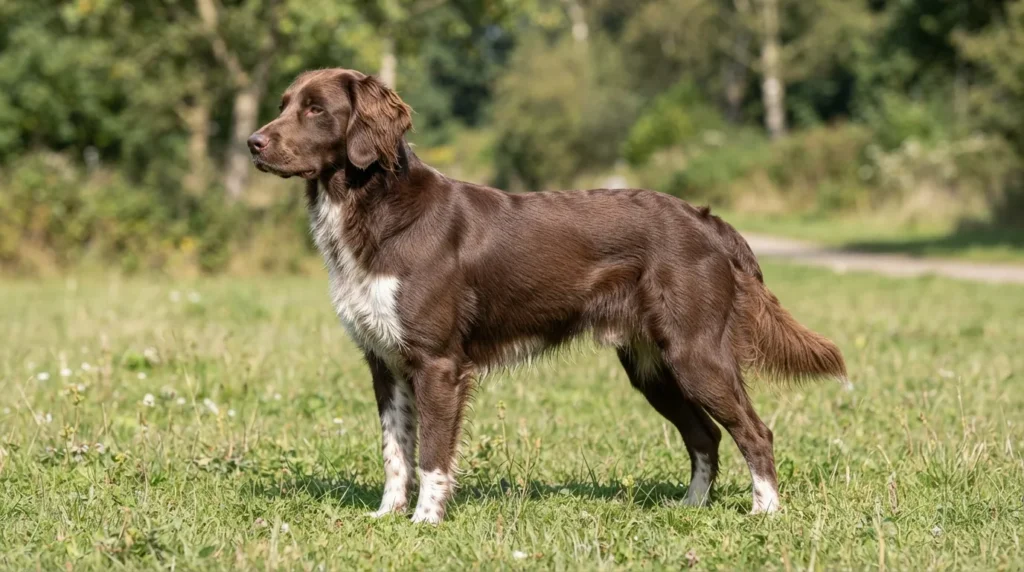
When you cross an English Springer Spaniel with a Labrador Retriever, you get a medium-to-large dog built for athletic work and long days outdoors. Because the Springador is a first-generation mix, puppies in the same litter can lean heavier on the stockier Lab frame or take after the slightly leaner, higher-legged Springer Spaniel build.
Adult Height & Weight Range
An adult Springador typically lands in the medium-to-large category once they fully fill out around 18 to 24 months of age.
Weight: Most adult Springadors weigh between 40 and 75 pounds. Males usually sit at the higher end of that scale (55–75 lbs), while females lean lighter (40–60 lbs).
Height: At the shoulder, expect them to stand between 18 and 22 inches tall.
Because you are blending two distinct working breeds, litter variance is completely normal. A pup that takes after its Labrador parent might develop a thick neck, broad chest, and heavier bone structure. On the flip side, a puppy inheriting more Springer Spaniel genes will stay noticeably leaner, with a narrower waist and longer legs that give them a springy, graceful stride.
Coat Colors & Patterns
The coat color of a springer spaniel lab mix depends heavily on the coat genetics of the Labrador parent, combined with the classic spotting or ticking pattern of the Springer Spaniel.
Black: By far the most common shade. Many black Springadors look like sleek Labs with a distinctive patch of white on their chest or paws.
Chocolate or Brown: Rich liver/chocolate coats are extremely popular, often paired with hazel or light brown eyes inherited from the Springer side.
Golden or Yellow: If the Lab parent carried yellow genes, you can get stunning dark cream to warm reddish-gold coats.
Pure solid colors are fairly rare in a Springador. Most carry white markings on their chest, chin, paws, or the tip of their tail. Bi-color (such as black and white or liver and white) patterns are very common, and you will frequently see fine “ticking”—small spots of color flecked throughout the white patches of hair.
Coat Type & Texture
You won’t know the exact coat texture of your lab spaniel mix until their adult coat fully comes in around their first birthday, but it almost always falls somewhere between the two parent breeds.
The coat is usually medium-length, double-layered, and water-resistant. It feels denser than a standard Labrador coat, often carrying a gentle wave along the back, ears, and back of the legs. Some dogs develop light feathering on their chest, belly, and tail, which gives them that traditional spaniel silhouette without being quite as high-maintenance.
As for shedding, be prepared for a consistent double coat. They shed moderately year-round, with heavier “coat blows” in the spring and fall as the seasons change. Regular weekly brushing helps catch loose fur before it ends up on your furniture, and it keeps their water-repellent outer coat clean and tangle-free.
Springador Temperament & Personality

Combining the cheerful enthusiasm of an English Springer Spaniel with the easygoing loyalty of a Labrador Retriever usually yields a dog with a massive heart and endless energy. But crossbreeds aren’t a simple 50/50 split—your pup might inherit the calm, steady nature of a Lab, the intensely focused drive of a Springer, or a dynamic blend of both.
Understanding their core personality helps you figure out if you’re ready for what this hybrid brings to the table.
Are Springadors Friendly?
Short answer: exceptionally so.
A well-socialized Springer Spaniel and Labrador mix typically adores people. They tend to greet family members like long-lost best friends, even if you just stepped out to grab the mail. Their friendly, outgoing nature usually extends to visitors, kids, and other dogs.
That said, their enthusiasm can sometimes spill over into jumping up or fast-paced greetings. Early training is essential to turn that natural friendliness into good manners, especially around toddlers or elderly family members.
Energy Level & Playfulness
If you’re looking for a couch potato, look elsewhere. The Springador comes from two high-octane working breeds, meaning their energy level is high, consistent, and long-lasting.
Play Style: They love interactive games—fetch, frisbee, scent-tracking games, and agility courses are huge hits.
Water Obsession: Thanks to their Labrador roots (and many Springers), most Springadors will happily plunge into any puddle, lake, or pool they can find.
Daily Output: A quick 15-minute stroll around the block won’t cut it. Expect to spend 60 to 90 minutes every day on active exercise and mental stimulation to keep them content.
Common Personality Traits
While individual dogs vary based on which parent breed they take after more, most Springadors display a distinct set of core traits:
Loyal & Affectionate: They form tight bonds with their family and love being right in the middle of domestic action.
Intelligent & Eager-to-Please: Both parent breeds are smart working dogs. They catch onto commands quickly and thrive when given a job to do.
Alert: They notice everything in their environment. While not typical guard dogs, they will certainly let you know when someone approaches the door.
Sociable: They generally get along great with other dogs and enjoy active households where there’s always something happening.
Potential Behavioral Challenges
No dog is perfect, and the Springador’s working ancestry comes with a few behavioral quirks you should prepare for:
Recall Issues: Springer Spaniels were bred to flush game out of dense brush, which means a Springador can easily get “nose-locked” on a scent trail. If their prey drive kicks in, convincing them to come back when called takes consistent, long-term recall training.
Separation Anxiety: Because they bond so closely with their owners, they don’t do well when isolated for long stretches. Leaving a Springador alone for 8+ hours a day often leads to destructive chewing, barking, or pacing out of stress.
Prey Drive Around Small Animals: Cats, squirrels, and small pets might trigger their natural hunting instincts. They can live peacefully with household cats if raised together from puppyhood, but supervision and early introductions are critical.
Is a Springador Good With Kids and Other Pets?

If you’re considering a Springer Spaniel and Labrador mix for a busy home, the short answer is yes—this crossbreed is usually fantastic with families. Both parent breeds are famous for their friendly, human-oriented nature. However, mixing a Lab’s enthusiastic size with a Springer’s high energy means household dynamics take a bit of planning.
Springadors and Children
Springadors generally love kids. They have a patient, playful temperament that makes them great companions for active children.
They do especially well with school-aged kids (around 6 years and older) who can participate in games of fetch and keep up with their high energy levels. With toddlers and younger children, Springadors are rarely aggressive, but their sheer enthusiasm can be a hazard. A bouncy 50-pound young Springador can easily knock a toddler over during an excited greeting.
Supervise all interactions: Always keep an eye on playtime, especially while your dog is still a puppy and learning self-control.
Teach gentle play: Show children how to approach the dog calmly, avoiding roughhousing or pulling at ears and tails.
Give your dog a safe zone: Ensure your Springador has a quiet bed or crate to retreat to when they need a break from kid energy.
Springadors and Other Dogs
Springadors typically thrive in multi-dog households. Thanks to their retriever and spaniel heritage, they generally lack dog-on-dog aggression and naturally enjoy having a playmate.
They do best with other high-energy dogs who appreciate their physical style of play. If your existing dog is elderly or prefers a quiet life, a young Springador’s relentless desire to play fetch or wrestle might be a bit overwhelming at first.
Springadors and Cats/Small Animals
This is where you need to pay closer attention. English Springer Spaniels are working gun dogs bred to flush out birds and small game. Because of that instinct, your Lab spaniel mix will likely carry a strong prey drive.
While a Springador can learn to live peacefully with an indoor cat, they will almost certainly try to chase outdoor cats, squirrels, or rabbits in the yard.
Start early: Introduce your Springador to cats during puppyhood using positive reinforcement and controlled leash setups.
Never leave small pets unsupervised: Animals like hamsters, guinea pigs, or birds should always be housed safely out of reach. A Springador’s instinct to chase and mouth small creatures is powerful, even if they don’t mean any harm.
Proper early socialization is the real secret here. Exposing your puppy to different animals, sights, and sounds during their first few months will ensure their natural friendly instincts win out every time.
Springador Exercise & Activity Needs

If you’re looking for a couch potato, look elsewhere. The Springador brings together two of the world’s most athletic, high-energy working breeds: the Labrador Retriever and the English Springer Spaniel. That working pedigree means your mix won’t just enjoy daily activity—they genuinely need it to stay sane, healthy, and manageable.
Daily Exercise Requirement (hours benchmark)
Plan on dedicating at least 1.5 to 2 hours every single day to physical exercise and mental engagement. Split this into two sessions—a solid morning walk or run and an active late afternoon session—to keep your Springador balanced throughout the day.
Keep in mind that simple backyard pottering doesn’t count toward this goal. Springadors thrive on purposeful movement: continuous walking, running, swimming, or active fetching. If you have a younger dog (under two years), focus on moderate, varied exercise to protect their developing joints while still burning off that notorious puppy energy.
Best Activities for a Springador
Because both parent breeds were bred to work closely with humans in demanding outdoor environments, the Springador excels at activities that challenge both body and brain.
Swimming: Labradors love water, and Springer Spaniels are hard-pressed to pass up a splash. Taking your mix to a lake, dog-safe river, or beach gives them an exceptional low-impact, full-body workout.
Hiking: Their stamina makes them built for the trail. Whether you’re navigating rocky paths or winding forest tracks, a Springador will happily match your pace for miles.
High-Intensity Fetch: Don’t just toss a ball ten feet. Use a ball launcher in an open field to give them real room to sprint. Adding obedience commands before each throw—like making them wait until you release them—turns fetch into a double dose of exercise and brain work.
Scent and Retrieval Games: Springer Spaniels live by their noses. Hide a favorite toy or scented dummy in tall grass or around your yard and let your dog track it down. Ten minutes of intense nosework will tire a dog out faster than a 30-minute walk.
What Happens If They Don’t Get Enough Exercise
When a dog built for all-day field work sits around with nothing to do, that unused energy doesn’t just evaporate. It turns into problem behaviors quickly.
Destructive Chewing: A bored, frustrated Springador will find their own job, and usually, that job is redecorating your home. Expect chewed baseboards, shredded couch cushions, destroyed shoes, or door frames scraped to the wood.
Restlessness & Frustration: Pent-up energy often shows up as demand barking, constant pacing around the living room, obsessive door-watching, or an inability to settle down even late at night.
Rapid Weight Gain: Labradors are famous for their appetite, and Springadors inherit that love for food. If their calorie burn drops while their food intake stays the same, they’ll pack on excess weight fast, placing extra strain on their hips and joints.
Training a Springador Tips for Beginners & Experienced Owners

Training a Springador is usually a rewarding process, but it does come with a few surprises if you aren’t prepared for their energy. Because both parent breeds—the English Springer Spaniel and the Labrador Retriever—were bred to work closely with humans, you are dealing with a dog that genuinely wants to cooperate with you.
That said, eagerness can easily turn into excitement overload if you don’t set boundaries early.
How Trainable Are Springadors?
The short answer: exceptionally trainable, but high-energy.
Springadors inherit the high intelligence of both parents, which means they pick up basic commands faster than many other breeds. However, they also inherit the Springer’s intense curiosity and the Lab’s enthusiastic personality.
If you are a beginner, this mix is generally forgiving, but they will test your consistency. The biggest challenge isn’t getting them to understand what you want—it’s keeping their focus on you when a bird flies by or another dog walks past.
Early Puppy Training & Socialization
The most critical window for shaping your Springador’s temperament is between 6 and 16 weeks of age. What they experience (or don’t experience) during these early weeks sets the foundation for their adult behavior.
During this period, focus heavily on gentle, positive exposure:
Introduce varied surfaces and sounds: Walking on tile, gravel, grass, and hearing household noises like vacuums or lawnmowers.
Controlled dog-to-dog meetings: Ensure early interactions are with calm, friendly adult dogs so your puppy learns proper social cues.
Meeting different types of people: Children, people wearing hats or high-visibility jackets, and visitors arriving at your door.
Socialization isn’t just about letting your puppy play with everyone—it’s mostly about teaching them to stay calm and neutral around new sights and smells.
Recall Training (High Priority for This Mix)
If there is one command you need to master with a Springer Spaniel Lab mix, it is a rock-solid recall (“come”).
Both parent breeds are natural hunting and tracking dogs. If your Springador catches a fresh scent trail in the woods or spots a squirrel across a park, their instinct is to follow it immediately.
Start recall training indoors on day one using high-value rewards (like small pieces of boiled chicken or real meat treats, not just standard kibble). Never call your dog to you just to do something negative, like ending playtime or giving medication—you want them to associate coming back to you with the best reward of their day.
Until your Springador reliably responds to their recall command around heavy distractions, keep them on a long training line in open, unfenced areas.
Channeling the Gundog/Retrieving Instinct
Springadors are working dogs at heart. If you don’t give them a job to do, they will invent one for you—and that usually involves chewing your furniture or digging in the garden.
The easiest way to work with their nature is to channel their natural gundog instincts into structured play:
Structured Fetch Games: Instead of mindless ball throwing, make your Springador sit and wait while you throw the dummy or ball, releasing them to retrieve it only on your command. This builds impulse control while satisfying their desire to retrieve.
Basic Scent Work: Hide their favorite toy or a handful of treats around the living room or garden and tell them to “find it.” Sniffing uses a massive amount of mental energy and will tire out a Springador faster than a simple walk.
Best Training Methods
Springadors are sensitive dogs despite their sturdy build. They respond best to positive reinforcement training—using rewards, clear timing, and praise to build desired behaviors.
Keep sessions short: 5 to 10 minutes, two or three times a day, works far better than an exhausting one-hour session.
Avoid harsh corrections: Harsh verbal reprimands or physical corrections will quickly cause a Springador to shut down, lose confidence, or become anxious.
Reward the quiet moments: Don’t just train when your dog is active. Reward them with calm praise whenever they choose to lie down quietly on their mat.
Be consistent, keep your expectations realistic for their age, and make training a fun daily ritual rather than a chore.
Springador Health & Lifespan
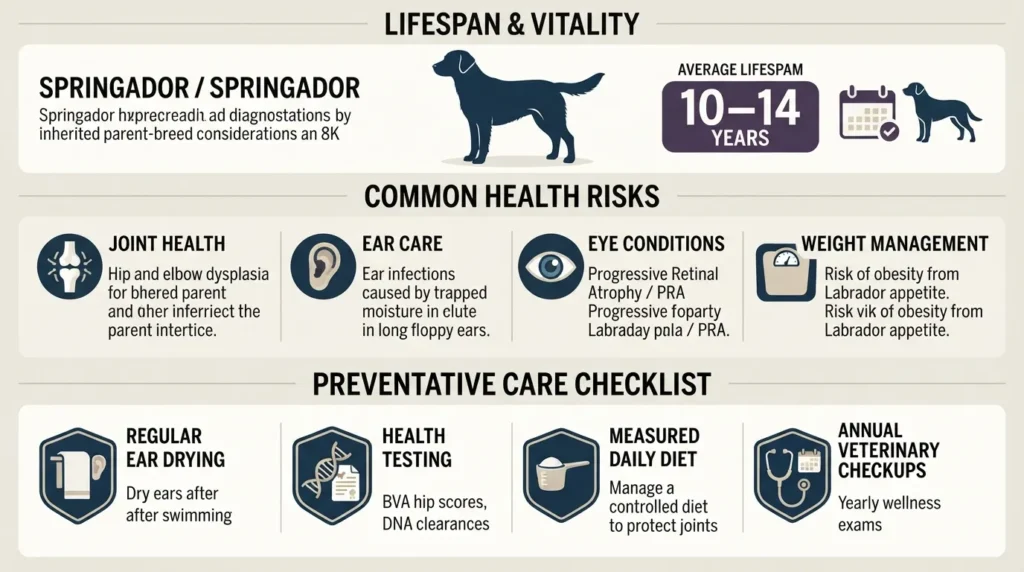
Average Lifespan
A healthy Springador typically lives between 10 to 14 years.
Because this is a crossbreed between two athletic, working dogs, they tend to benefit from a bit of hybrid vigor—meaning they often avoid some of the concentrated genetic health traps of purebreds. Still, their overall lifespan depends heavily on their weight management, routine vet care, and how well you protect their joints during those crucial puppy years.
Common Health Issues
While Springadors are generally robust, they can inherit specific health conditions from both the English Springer Spaniel and the Labrador Retriever. Knowing what to watch for makes all the difference in catching problems early.
Hip & Elbow Dysplasia: Both parent breeds are prone to joint malformation. This occurs when the joint socket doesn’t fit together smoothly, leading to painful arthritis, lameness, and stiffness over time.
Eye Conditions & Progressive Retinal Atrophy (PRA): PRA is a genetic condition that causes the retina to deteriorate, eventually leading to blindness. Springadors can also inherit cataracts from their Labrador lineage.
Epilepsy: Idiopathic epilepsy (unexplained seizures) can show up in both Labradors and Springer Spaniels, typically appearing between 1 and 5 years of age.
Ear Infections: With their heavy, floppy ears and a deep love for water, Springadors are prime candidates for ear trouble. Their ear canals trap moisture and dirt easily—especially after a swim or a bath—creating a breeding ground for yeast and bacteria.
Exercise-Induced Collapse (EIC): Inherited mainly from the Labrador side, EIC causes dogs to suddenly lose control of their hind legs after brief periods of intense exercise or play. It’s particularly dangerous in hot or humid weather, so avoid letting your dog sprint endlessly when the temperature spikes.
Puppy Growth & Exercise Safety
It’s tempting to take a hyperactive Springador puppy on long hikes to tire them out, but you need to protect their developing skeleton first.
A puppy’s growth plates—the soft areas of cartilage at the ends of their long bones—don’t fully close and harden until around 12 to 18 months of age. Pushing a young pup too hard before then can lead to permanent joint damage and worsen hip dysplasia later in life.
Ditch the high-impact activities: Avoid repetitive running on concrete, aggressive fetch games with hard stops, and jumping in and out of cars or off high furniture until they reach full maturity.
Stick to the 5-minute rule: A good rule of thumb is roughly 5 minutes of structured exercise per month of age, up to twice a day. (For example, a 4-month-old puppy gets 20-minute walks max).
Choose short, frequent play sessions: Let your puppy set their own pace with gentle grass play, short exploration walks, and mental games rather than forced endurance exercises.
Health Testing & Insurance Tips
If you’re buying a Springador puppy from a breeder, don’t rely on verbal promises that the parents are “vet checked.” Ethical breeders perform genetic screening on both parent dogs before breeding.
Always ask the breeder to show you official documentation for:
Hip and Elbow Score Certificates: Lower scores mean healthier joints. Look for parents with scores well below the breed average.
BVA/KC Eye Test Results: Make sure both the Springer Spaniel and Labrador parents have up-to-date clear eye certificates (dated within the last 12 months) and are DNA tested clear for PRA.
Because crossbreeds can occasionally inherit expensive orthopedic or genetic issues, getting pet insurance early—before any symptoms appear as pre-existing conditions—is one of the smartest moves you can make as an owner.
Is your Springador aging faster than you think?
Mixed breeds age differently based on their size and energy levels. Use our free Dog Age Calculator to see your Springador’s true life stage and get customized care tips tailored to their exact age!
Springador Health & Lifespan
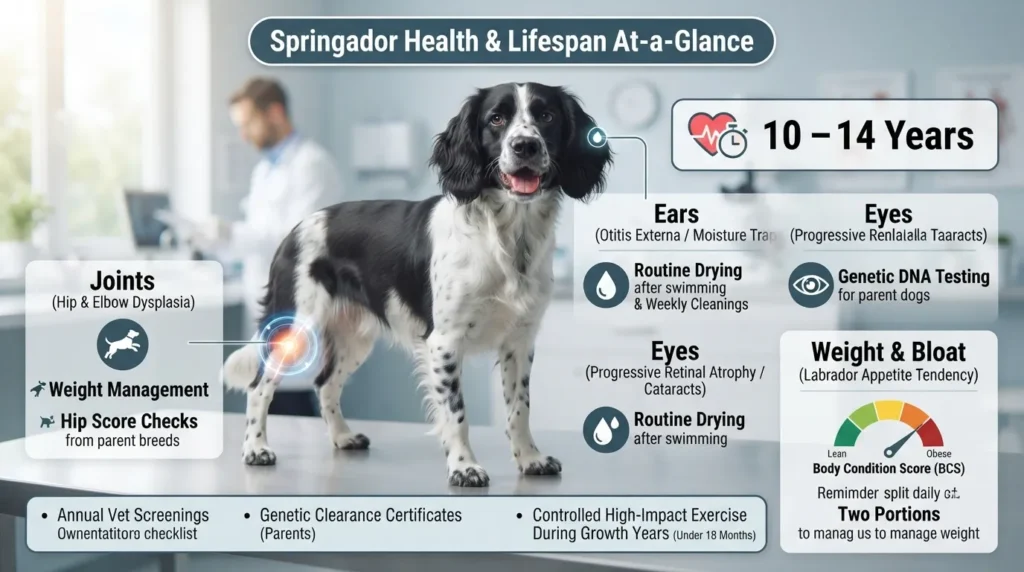
Like most designer crossbreeds, Springadors generally benefit from what dynamic dog owners call “hybrid vigor”—a wider genetic pool that can make them hardier than some purebreds. Still, because they inherit genetic traits from both the English Springer Spaniel and the Labrador Retriever, keeping them healthy requires knowing what to watch for over their lifetime.
Average Lifespan
A healthy Springador typically lives between 10 to 14 years.
Their longevity comes down to basic care: keeping their weight in check, keeping up with exercise, and catching minor health issues before they become major problems. Given proper nutrition and routine vet checkups, many Springadors comfortably reach their early teens while staying surprisingly active.
Common Health Issues
While many Springadors live long, energetic lives, they can inherit specific health conditions common to Labradors and Springer Spaniels. Knowing these vulnerabilities early helps you take preventative action.
Hip & Elbow Dysplasia: Both parent breeds are prone to joint malformation. This can lead to painful arthritis, stiffness, or limping—especially as your dog ages. Keep your dog at a lean weight and consider joint supplements early on if recommended by your vet.
Eye Conditions / Progressive Retinal Atrophy (PRA): PRA is a genetic condition that causes gradual vision loss and can eventually lead to blindness. Cataracts can also pop up in older dogs. Ethical breeders test their breeding stock for these conditions to minimize risk.
Epilepsy: Idiopathic epilepsy (unexplained seizures) can appear in both Labs and Springers. While alarming to witness, it can often be managed effectively with long-term medication prescribed by a veterinarian.
Ear Infections: Those long, floppy ears look adorable, but they trap moisture and heat, creating an ideal breeding ground for yeast and bacteria. This is especially true if your Springador inherits the Labrador’s love for swimming. Always dry their ears thoroughly after baths or swims, and clean them regularly.
Exercise-Induced Collapse (EIC): Inherited mainly from the Labrador side, EIC causes dogs to lose control of their hind legs after intense periods of exercise or stress. Avoid hyper-intense retrieval games in high heat or humidity, and stop activity immediately if you notice muscle weakness or wobbliness.
Feeding & Diet Requirements
Springadors are working-line dogs with high energy levels, but they also inherit the famous Labrador appetite. That combination means they need high-quality nutrition to sustain their energy—without letting them pack on unwanted pounds.
How Much Should You Feed a Springador?
On average, an adult Springador requires roughly 2.5 to 3.5 cups of quality dry dog food per day, split into two distinct meals (morning and evening).
However, exact portion sizes depend heavily on three things:
Age: Growing puppies need more calorie-dense food than mature adults.
Weight: A 45-pound female will need less food than a 75-pound male.
Activity level: A dog hiking 5 miles a day burns significantly more calories than one taking a moderate neighborhood walk.
Always use the feeding guidelines on your specific food bag as a starting point, then adjust based on your dog’s body condition. If you can’t feel their ribs under a thin layer of muscle, or if their waistline disappears when viewed from above, scale back their portions.
Best Food Types
There is no single “magic” diet for a Springador, but each feeding method has distinct pros and cons:
Dry Kibble (High-Protein): The most popular and convenient choice. Look for formulas where high-quality animal protein (like chicken, beef, or salmon) is listed as the first ingredient. Kibble also helps scrape away surface plaque on teeth.
Wet Food: Great for palatability and extra hydration, but feeding wet food exclusively can get expensive for a dog this size. Many owners use it as a topper on dry kibble to make meals more enticing.
Raw / Fresh Diets: Some owners prefer raw or cooked whole-food diets for improved coat health and smaller stools. If you go this route, work closely with a veterinary nutritionist to ensure your dog gets the complete balanced nutrients they need.
Avoiding Overfeeding & Weight Gain
If a Springador takes after its Labrador parent, it will convince you it’s starving five minutes after finishing a meal. Giving in to those pleading eyes is the quickest path to obesity—and extra weight puts unnecessary strain on their joints, worsening conditions like hip dysplasia.
To keep your Springador lean and healthy:
Measure every meal: Don’t eyeball portions with a coffee cup. Use an actual measuring cup or a digital scale.
Watch the treats: High-value treats add up fast during training. Factor treat calories into their daily total, or swap out store-bought treats for low-calorie options like fresh blueberry or carrot pieces.
Skip table scraps: Human food is often too dense in calories, fat, and sodium, which can upset their stomach or contribute to rapid weight gain.
Use puzzle feeders: Slow-feeder bowls or puzzle toys stretch mealtime out from 30 seconds into 10 minutes, keeping their brain engaged while preventing them from gulping down air.
Springador Health & Lifespan
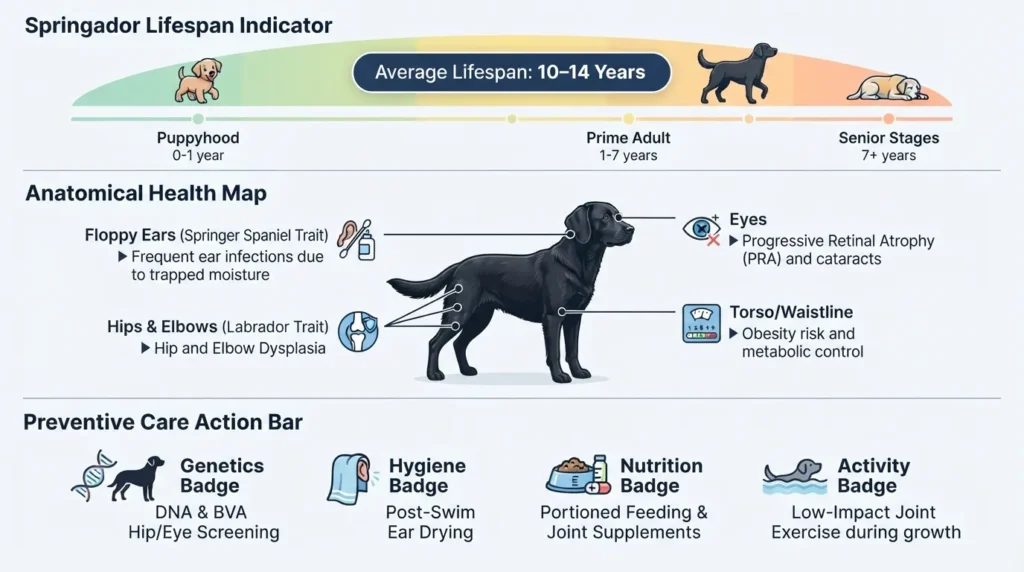
Like all crossbreeds, a Springador benefits from what geneticists call “hybrid vigor”—a broader gene pool that often makes mixed breeds slightly heartier than their purebred counterparts. Still, because they inherit genetic traits directly from both the Labrador Retriever and the English Springer Spaniel, they can inherit the health vulnerabilities of both parents. Understanding what to look out for helps you stay proactive about your dog’s long-term care.
Average Lifespan
A healthy Springador typically lives between 10 and 14 years.
Keeping your dog at a lean weight is the single biggest factor you can control to reach the higher end of that range. Labs are notorious for overeating, and carrying extra pounds puts severe strain on a Springador’s joints and heart over time.
Common Health Issues
While many Springadors live long, active lives with minimal veterinary visits, you should be aware of a few conditions that run in the parent lineages:
Hip & Elbow Dysplasia: Both Labs and Springer Spaniels are prone to joint malformation. This occurs when the ball and socket joint doesn’t fit together smoothly, leading to painful arthritis as the dog ages. Keep young pups from jumping on hard surfaces until their growth plates close.
Eye Conditions (including Progressive Retinal Atrophy / PRA): PRA is a genetic condition that causes the retina to gradually degenerate, eventually leading to blindness. Responsible breeders test their parent dogs for PRA traits before breeding.
Epilepsy: Idiopathic epilepsy can manifest as unexplained seizures, usually appearing between 1 and 5 years of age. While frightening to witness, it is often manageable with daily medication from your vet.
Ear Infections: Because both parent breeds carry heavy, floppy ears that trap moisture, air circulation inside the ear canal is practically zero. If your Springador loves the water—and most do—moisture gets trapped easily, creating a perfect breeding ground for yeast and bacteria.
Exercise-Induced Collapse (EIC): Inherited primarily from the Labrador side, EIC causes dogs to lose muscle control or collapse after periods of intense, high-energy activity. Avoid pushing your dog to high-exertion limits in extreme heat or humidity, and watch for weak back legs during heavy play.
Grooming & Shedding
The Springador’s coat is usually a perfect middle ground between the dense, short jacket of a Lab and the longer, feathered hair of a Springer. It is weather-resistant, slightly wavy around the ears and legs, and designed for outdoorsy life. Maintaining it doesn’t require a professional groomer, but it does take consistent effort at home.
Brushing & Coat Care Frequency
Plan on brushing your Springador 2 to 3 times a week.
A double-sided brush—with slicker pins on one side and natural bristles on the other—works best. Pay special attention to the softer feathering behind their ears, along their chest, and under their belly, as these spots tangle quickly after running through brush or tall grass. A quick 10-minute brush-down keeps mats at bay and redistributes natural coat oils.
Shedding Level
Expect moderate to heavy shedding year-round, with a noticeable spike twice a year during seasonal “coat blows” in spring and fall.
This isn’t a hypoallergenic dog. If you have severe pet allergies, a Lab-Spaniel mix will present a challenge. Keep an undercoat rake handy during shedding season to strip away dead hair before it lands on your furniture and clothes.
Ear, Teeth & Nail Care Routine
A solid weekly grooming routine prevents small issues from turning into expensive vet bills:
Weekly Ear Checks & Cleaning: Inspect the inside of both ears every weekend. Lift the flap and check for redness, a dark waxy discharge, or a musty odor. Wipe the outer canal using a cotton ball damp with a vet-approved ear cleanser. Never stick cotton swabs deep into the ear canal. Always dry their ears thoroughly after every swim or bath.
Teeth Brushing: Aim to brush their teeth at least 3 times a week using dog-safe toothpaste. Complement this with durable dental chews to reduce tartar buildup along the gumline.
Nail Trimming: Trim nails every 3 to 4 weeks. If you hear a distinctive “clicking” sound when your Springador walks across hardwood or tile floors, their nails are already too long and need attention.
Springador Health & Lifespan

Average Lifespan
A healthy Springador typically lives between 10 to 14 years. Because crossbreeds benefit from a broader gene pool than purebreds—a concept known as hybrid vigor—they often enjoy solid overall health. However, their actual lifespan comes down to genetics inherited from both parents, along with daily care, nutrition, and weight management. Keeping your mix lean and active is one of the single best ways to push toward that 14-year mark.
Common Health Issues
While the Springer Spaniel Labrador mix is generally a robust dog, they are prone to health conditions common to both parent breeds. Being aware of these early helps you spot symptoms before they turn into major problems.
Hip & Elbow Dysplasia: Both Labs and Springer Spaniels can suffer from joint malformation. This leads to early-onset arthritis, stiffness, or limping, especially after heavy exercise.
Eye Conditions & Progressive Retinal Atrophy (PRA): PRA is an inherited condition that causes the retina to deteriorate over time, eventually leading to night blindness or complete vision loss.
Epilepsy: Idiopathic epilepsy can appear in this mix, usually showing up between 1 and 5 years of age. It requires long-term veterinary management if seizures occur.
Ear Infections: Thanks to their heavy, floppy ears inherited from both parents, moisture and debris get trapped easily. If your Springador loves to swim (and most do), failing to dry their ears thoroughly after a dip is a guaranteed recipe for yeast or bacterial infections.
Exercise-Induced Collapse (EIC): Inherited primarily from the Labrador line, EIC causes dogs to suddenly lose control of their hind legs after 5 to 15 minutes of strenuous exercise. It is especially dangerous in hot, humid weather, so moderate their intensity on warm days.
Male vs Female Springador — Key Differences
Size Difference
Male Springadors are noticeably larger and heavier built than females.
Males generally stand 20 to 24 inches tall at the shoulder and weigh between 55 to 75 pounds. They carry a broader chest and a thicker neck, leaning heavily into that blockier Labrador look.
Females usually sit around 18 to 22 inches tall and weigh 45 to 60 pounds. They tend to feature a slighter, more athletic frame closer to an English Springer Spaniel.
Temperament Nuance Differences
While both sexes are affectionate, hardworking, and deeply loyal, owners often notice subtle personality shifts between them.
Males tend to be more outwardly playful, goofy, and demand constant attention. They stay in that “big puppy” mindset a bit longer into adulthood and usually love everyone they meet instantly.
Females are often slightly more independent and focused. They mature faster mentally, making them a little easier to train early on, though they can sometimes exhibit an independent streak. A female will happily snuggle on the couch, but she is also content to sit nearby and watch the room rather than constantly seeking a belly rub.
Springador Price — How Much Does a Springador Cost?

Bringing a Springer Spaniel and Labrador mix into your life means planning for both upfront costs and ongoing expenses. While a Springador generally costs less than a purebred, registered Labrador or Springer Spaniel from champion hunting lines, the initial price tag is just a fraction of what you’ll spend over their 10 to 14-year lifespan.
Buying From a Breeder (price range)
If you buy a Springador puppy from a private breeder, expect to pay between $500 and $1,200 (or £400 to £800 in the UK). Prices vary based on your location, parent dog health testing, and whether the parents come from working gun dog lines.
Be careful when shopping for a Springer Spaniel Lab mix puppy. Because the Springador is a crossbreed and not recognized by formal kennel clubs, unethical breeders sometimes charge steep “designer dog” markups without doing basic health checks. Always ask to see clear genetic screening for hip dysplasia and progressive retinal atrophy (PRA) before putting down a deposit.
Adopting From a Rescue/Shelter (price range)
Adopting a Springador typically costs between $150 and $450 (or £150 to £300) in shelter adoption fees. This fee almost always covers initial vaccinations, microchipping, and the cost of spaying or neutering.
Because Springadors are high-energy dogs, young adults sometimes end up in shelters when previous owners underestimate how much exercise they need. Checking breed-specific Labrador or Spaniel rescues is often the best way to find a loving Springador in need of a second home.
Additional Costs to Consider
The puppy purchase price is only the starting point. High-energy medium-to-large breeds like the Springador need solid monthly budgeting.
Daily feeding cost ($1.50 – $3.00 per day): A full-grown 50-to-70-pound Springador burns through calories quickly, especially if they’re active outdoors. High-quality kibble formulated for active medium-to-large dogs generally runs $45 to $80 per month.
Monthly pet insurance premium ($35 – $65 per month): Coverage varies by age and location. Getting insurance early is wise because both parent breeds are prone to joint issues like hip dysplasia and ear infections.
One-off initial costs ($350 – $700 total): In your dog’s first few months, budget for initial puppy vaccinations, neutering or spaying (if not done by the shelter), an initial vet checkup, a sturdy crate, a durable harness, and basic supplies.
Ongoing annual expenses ($300 – $600 per year): Budget for group training classes during early adolescence, basic grooming tools (like a de-shedding rake for their dense double coat), flea and tick prevention, and a continuous supply of tough rubber toys that can survive strong jaws.
Pros and Cons of Owning a Springador
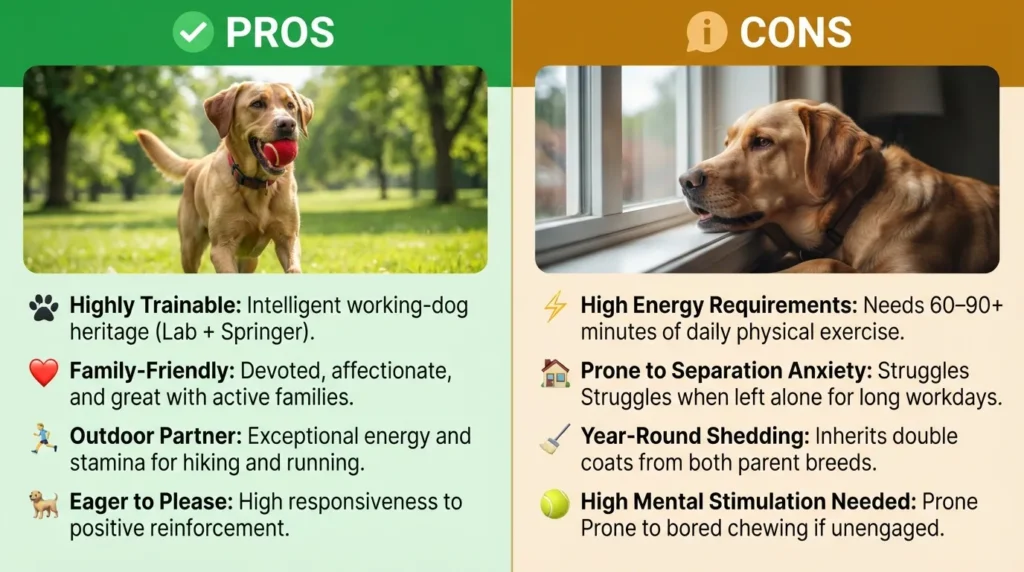
Before bringing a Springer Spaniel and Labrador mix into your home, you need a realistic view of what daily life actually looks like. The Springador combines two of the most popular, high-drive working breeds in the world. That dynamic pairing brings incredible strengths to the table, but it also comes with real challenges that not every household is equipped to handle.
Here is a quick breakdown of the trade-offs so you can decide if this crossbreed fits your lifestyle.
Pros
Unmatched trainability: Both Labradors and Springer Spaniels were bred to work closely with humans in the field. Springadors inherit that high intelligence and strong desire to please, making them quick learners for basic obedience, trick training, or agility.
Intensely affectionate and family-oriented: These dogs form deep, fiercely loyal bonds with their humans. They tend to do wonderfully with children and generally thrive in active household environments where they feel included in daily activities.
Versatile active partner: Whether you enjoy long hikes, lake swimming, trail running, or hunting, a Springador has the stamina and athletic build to keep up with almost any outdoor adventure.
Friendly social disposition: Most Springadors carry the cheerful, outgoing personality of the Lab alongside the eager, gentle nature of the Spaniel. They usually get along well with other dogs and welcomed houseguests.
Great candidate for dog sports: If you want to get into flyball, dock diving, or field trials, this mix has the natural drive, scenting ability, and athleticism to excel.
Cons
High exercise demands: A quick 20-minute walk around the block won’t cut it. A Springador needs 60 to 90 minutes of vigorous physical exercise every day, plus mental stimulation, or they will find their own ways to stay busy.
Prone to separation anxiety: That intense devotion has a flip side. Springadors are true “velcro dogs” that crave human companionship. If left alone for long workdays on a regular basis, they can easily develop anxiety and resort to destructive chewing or vocalizing.
Heavy shedding and grooming upkeep: Thanks to their double coat—often inheriting the water-resistant Lab fur with the longer Spaniel feathering on the ears and legs—they shed year-round. You will need to budget time for frequent brushing and routine ear cleaning to prevent infections.
Strong prey drive: With hunting instincts firing from both sides of the family tree, a Springador will naturally want to chase squirrels, rabbits, and neighborhood cats. Reliable recall training is essential before letting them off-leash in open spaces.
Slow to settle in early years: Springadors retain their high-energy puppy exuberance longer than many other breeds. Expect a wild, bouncy dog for the first 2 to 3 years before they mature into a calmer adult.
Is a Springador Right for You? Suitability Checklist
Springer Spaniel Lab Mix (Springador) Video Guide
Frequently Asked Questions
Is a Springador a good family dog? | Yes, Springadors make excellent family dogs. They inherit the Labrador's friendly nature and the Springer Spaniel's playful enthusiasm, making them gentle, patient, and loving companions for households with children. |
|---|---|
How big does a Springador get? | Springadors are medium-sized dogs. On average, they weigh between 40 to 60 lbs (18 to 27 kg) and stand around 18 to 24 inches tall at the shoulder. |
Do Springadors bark a lot? | Springadors are generally moderate barkers. They usually bark to alert their owners or when excited, but nuisance barking can easily be controlled with regular exercise and early mental stimulation. |
Are Springadors hypoallergenic? | No, Springadors are not hypoallergenic. They have a short-to-medium coat that sheds moderately, requiring regular brushing to manage loose hair and dander. |
How long do Springadors live? | A healthy Springador typically has a lifespan of 10 to 14 years when provided with proper care, balanced nutrition, and regular veterinary checkups. |
Are Springadors easy to train? | Yes, highly so! Inheriting high intelligence from both parent breeds, they are quick learners and eager to please. They respond best to consistent, positive reinforcement training methods. |
🐾 Other Age Guides

I built Dogagescalculator.com to give dog owners honest, science-backed answers instead of the outdated "×7" myth. Every figure here is checked against AKC, AVMA, and published veterinary research.
More about the author & this site →
Comments