
How Old Do You Have to Be a Dog Walker
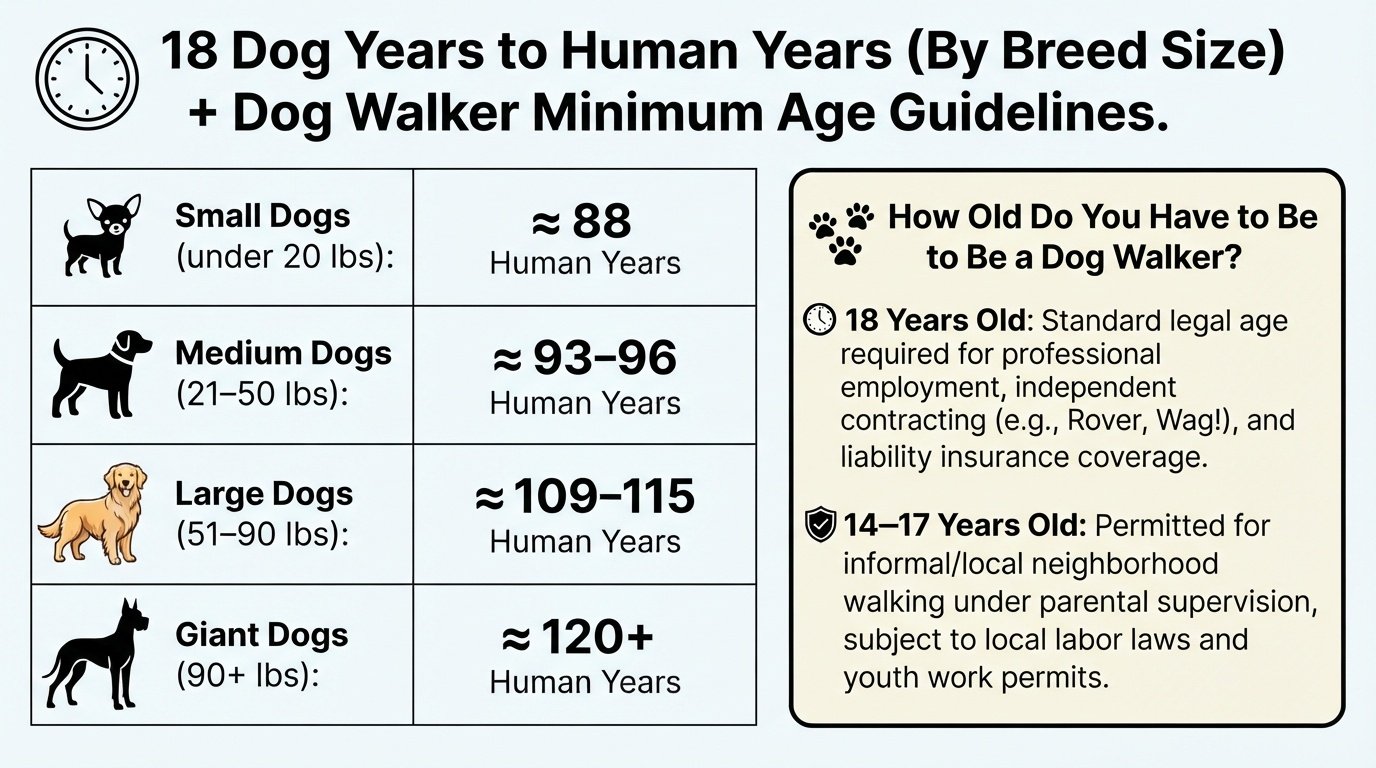
Kids can start walking dogs informally around 10 to 13 years old under parental supervision, while independent neighborhood walking typically starts at 14 or 15. However, if you want to sign up for professional dog-walking apps like Rover or Wag, you must be at least 18 years old.
Age isn’t just an arbitrary requirement here—it ties directly into legal liability, contract law, and physical safety. Controlling a strong or reactive dog requires sudden physical strength and quick split-second decisions, which is why insurance policies and commercial platforms enforce strict age limits to protect both the walker and the dog.
Minimum Age to Be a Dog Walker By Type
The minimum age to walk dogs isn’t a single universal number. It varies significantly depending on whether you are helping a neighbor down the street, running a local freelance hustle, or trying to register on a commercial pet-care platform.
Walking Family or Neighbor’s Dogs (Informal)
There is no strict legal age requirement for walking a pet belonging to a family member or neighbor on a casual basis. However, child safety experts and animal welfare groups recommend a minimum age of 10 years old, ideally with initial adult supervision.
At this stage, parental consent and involvement are essential. Parents should assess whether the young walker can physically manage a dog on a leash—especially if the dog pulls suddenly—and whether they understand basic canine body language to handle unexpected encounters with other pets.
Freelance / Independent Paid Dog Walking
If a minor wants to start a formal neighborhood dog-walking business for pay, the starting age typically bumps up to 13 or 14 years old. At this level, local child labor laws come into play, which dictate how many hours a minor can work and during what times of the day.
While teenagers in this age group can handle routine walks independently, they still face real-world legal limits. Minors cannot sign enforceable business contracts or hold their own commercial liability insurance policies. Because of this, parents usually need to accept legal liability on their behalf and assist with handling payment processing or customer agreements.
| App / Platform | Minimum Age | Requirement Notes |
|---|---|---|
| Rover | 18+ | Must pass a full background check and identity verification process. |
| Wag! | 18+ | Requires a background check, safety test, and legal ID upload. |
| Care.com | 18+ | Primary account holder must be 18+ to pass screening and accept payments. |
Walking Your Own Family Dog vs. Working as a Dog Walker
Walking the family pet in a familiar neighborhood is fundamentally different from managing someone else’s dog for pay. Handling a client’s pet introduces unique behavioral unknowns, unfamiliar gear, and clear legal liability if an incident occurs on the sidewalk.
At What Age Can a Child Walk the Family Dog Alone?
Most canine behaviorists and veterinarians suggest that children can begin walking the family dog unsupervised around 10 to 12 years old, but age is only a rough guideline. The real deciding factors are physical capability, emotional maturity, and the specific dog’s temperament.
A child walking a dog alone needs enough physical strength to hold the leash if the dog lunges unexpectedly at a squirrel or another pet. If a 12-year-old weighs 80 pounds and the family Golden Retriever weighs 70 pounds, a sudden pull can easily knock the child down or pull the leash out of their hands. Unsupervised solo walks should only happen when a child has demonstrated they can keep control in high-distraction environments and know how to cross streets safely with a pet.
Casual Walking vs. Professional Dog Walking — Key Differences
Taking care of a neighbor’s dog casual-style and working as a professional dog walker share the basic action of holding a leash, but the operational and legal expectations are miles apart.
| Factor | Casual Family / Neighbor Walking | Professional Dog Walking |
|---|---|---|
| Legal Liability | Handled informally; parents usually cover any minor damages or issues. | Requires formal service contracts and commercial liability insurance. |
| Dog Familiarity | High—the walker already knows the dog's triggers, habits, and command responses. | Low to moderate—walkers must manage unfamiliar dogs with unique triggers and behaviors. |
| Emergency Prep | Basic—calling the owner or parent if something goes wrong. | Advanced—knowing pet first aid, handling reactive dogs, and managing veterinary releases. |
| Safety & Gear | Simple leash and collar setup provided by the family. | Professional double-leashing, harness checks, and weather safety protocols. |
Walking Your Own Family Dog vs. Working as a Dog Walker
Walking the family pet in a familiar neighborhood is fundamentally different from managing someone else’s dog for pay. Handling a client’s pet introduces unique behavioral unknowns, unfamiliar gear, and clear legal liability if an incident occurs on the sidewalk.
At What Age Can a Child Walk the Family Dog Alone?
Most canine behaviorists and veterinarians suggest that children can begin walking the family dog unsupervised around 10 to 12 years old, but age is only a rough guideline. The real deciding factors are physical capability, emotional maturity, and the specific dog’s temperament.
A child walking a dog alone needs enough physical strength to hold the leash if the dog lunges unexpectedly at a squirrel or another pet. If a 12-year-old weighs 80 pounds and the family Golden Retriever weighs 70 pounds, a sudden pull can easily knock the child down or pull the leash out of their hands. Unsupervised solo walks should only happen when a child has demonstrated they can keep control in high-distraction environments and know how to cross streets safely with a pet.
Casual Walking vs. Professional Dog Walking — Key Differences
Taking care of a neighbor’s dog casual-style and working as a professional dog walker share the basic action of holding a leash, but the operational and legal expectations are miles apart.
What Qualifications Do You Need to Become a Dog Walker?

You do not need a formal college degree or government license to walk dogs, but launching a successful dog-walking service requires a specific set of physical, behavioral, and operational skills. Clients are handing over a family member and a key to their home, so demonstrating capability and reliability is paramount.
Core Personal Requirements
Comfort and Hands-On Experience with Dogs: You must be confident handling dogs of various sizes, temperaments, and energy levels. Basic familiarity gained from owning pets, volunteering at shelters, or assisting a local groomer helps you handle unpredictable behaviors on a leash.
Physical Fitness and Stamina: Dog walking is physically demanding. Expect to walk anywhere from 3 to 8 miles a day in varying weather conditions, while having the core strength to brace against a 70-pound dog that suddenly lunges.
Basic Understanding of Canine Behavior: Recognizing early signs of stress, fear, or aggression (like a rigid tail, lip licking, or hard staring) allows you to intervene before a fight or incident occurs on the street.
Valuable Enhancements
While not strictly required, having Pet First Aid and CPR Certification (offered by organizations like the American Red Cross) immediately sets you apart. Knowing how to handle heatstroke, pad injuries, choking, or insect stings gives owners immense peace of mind and allows you to respond calmly in emergencies.
Professional-Level Credentials
If you plan to scale from a casual neighborhood hustle into an independent, full-time business, securing these three professional assets is essential:
Commercial Liability Insurance: General liability insurance protects you if a dog escapes, gets injured, damages property, or bites another dog or person while under your care.
Clear Background Check: Providing an official criminal background check reassures clients who are giving you key or keypad access to their homes.
Optional Industry Certifications: Earning credentials through recognized bodies—such as Pet Sitters International (PSI) or the National Association of Professional Pet Sitters (NAPPS)—proves your dedication to industry standards and safety protocols.
How Much Do Dog Walkers Earn?
Earnings in the dog-walking industry vary widely based on your location, experience level, and business structure. While a teenager doing quick neighborhood walks might earn extra spending money, an established independent professional can turn dog walking into a full-time, lucrative career.
Average Per-Walk Rates
Nationwide, a standard 30-minute walk typically ranges between $15 and $30, while a full 60-minute walk commands $25 to $45.
Small Towns and Suburbs: Rates lean toward the lower end ($15 to $18 per 30 minutes) due to lower local cost of living and less dense neighborhoods.
Major Metropolitan Areas: Walkers in dense cities like New York, San Francisco, or London often charge $28 to $35+ per half-hour visit, reflecting higher demand and travel time.
Teen vs. Professional Walker Rates
A walker’s age and professional status directly impact their earning power:
Teens and Informal Walkers: Teenagers walking local pets usually charge $10 to $15 for a 20-to-30-minute walk. Because they lack business overhead, insurance costs, and formal credentials, clients view their services as casual neighborhood help rather than a professional care service.
Adult Professionals: Professional walkers and small-business owners charge full market rates ($20 to $35 per walk). They justify these higher rates by carrying commercial insurance, providing background checks, offering pet first-aid knowledge, and managing client scheduling software.
How Rates Increase with Add-On Services
Walkers rarely rely on single-dog, basic rate walks alone to maximize income. Revenue increases significantly through specialized add-ons:
| Service Factor | Rate Adjustment | Why It Costs More |
|---|---|---|
| Additional Dogs | +$5 to $12 per extra dog | Handling multiple dogs from the same household increases physical risk and leash complexity. |
| Group / Pack Walks | $12 to $25 per dog | Walking 3 to 5 socialized dogs together allows the walker to yield a higher hourly return. |
| Weekend & Holiday Surcharges | +$5 to $15 per walk | Premium rates apply when working on high-demand days like Thanksgiving, Christmas, or late evenings. |
| Medication & Medical Care | +$5 to $10 per visit | Administering oral meds, insulin shots, or specialized senior pet care requires extra time and skill. |
Legal Considerations for Dog Walkers By Age
Operating a dog-walking service—whether as a weekend neighborhood gig or a full-time venture—requires compliance with local labor rules, tax guidelines, and liability standards. Age dictates which legal rules apply to you and what documentation you must secure before taking on clients.
Child Labor Laws & Parental Consent
If a minor under 18 plans to offer dog-walking services for pay, federal and state labor laws govern how and when they can work:
Fair Labor Standards Act (FLSA) Guidelines: In the United States, federal labor laws generally set 14 as the minimum age for non-agricultural work. Underage walkers aged 14 and 15 face strict limits on working hours—typically capping work at 3 hours on school days and keeping shifts between 7:00 AM and 7:00 PM during the school year.
Work Permits (“Working Papers”): Many states and municipalities require teenagers under 16 or 18 to obtain an official youth employment permit or work certificate—usually issued through their local school district or state department of labor—before accepting paid work.
Parental Permission and Contracts: Since minors cannot enter legally binding contracts, parents or legal guardians must sign client service agreements on their behalf. This ensures the adult assumes legal responsibility if property damage, loss, or personal injury occurs during a walk.
For detailed rules on youth employment standards, hour limits, and state-specific work permit requirements, consult the official U.S. Department of Labor YouthRules Resource.
What Adults Need Besides Age (License, Insurance, Bonding)
Reaching age 18 unlocks access to commercial platforms and allows you to establish a standalone business entity. However, simply being an adult is not enough to operate legally and safely; professional walkers need three primary operational pillars:
Local Business License: Most cities and counties require freelancers and sole proprietors to register for a local general business license (sometimes called a DBA or Doing Business As) to operate legally within city limits and report self-employment income properly.
General Liability Insurance: Standard homeowner’s insurance rarely covers commercial pet care activities. Adult walkers should secure dedicated commercial pet-sitting and dog-walking liability insurance, which covers medical expenses if a client’s dog bites someone, vet bills if the dog is injured, or property replacement if a client’s key or home is compromised.
Background Checks & Bonding: Third-party booking apps require mandatory criminal background screenings before approving an account. Independent adult walkers often choose to become “bonded” through a surety bond, which protects clients against theft or property damage and builds crucial trust when entering private homes.
Skills & Safety Tips Every Young Dog Walker Should Know
Age provides a baseline for responsibility, but real-world dog handling skills are what keep walks safe. Before taking on clients or walking independently, young dog walkers need to master core safety protocols, read canine signals accurately, and prepare for unexpected emergencies.
Proper Leash Handling for Strong or Large Dogs
Holding a leash sounds simple until a 60-pound dog spots a squirrel and lunges. Proper leash mechanics prevent accidental drops and physical injury:
The Two-Handed Anchor: Thread your dominant hand’s thumb through the leash loop and fold the excess strap in your palm. Use your non-dominant hand lower down the leash to guide direction and maintain leverage.
Never Wrap Around Wrists or Fingers: Never loop a leather or nylon leash tightly around your wrist or wrap it around individual fingers. A sudden pull can cause severe fractures or soft-tissue injuries.
Maintain Slack: Keep a slight bend in the leash rather than pulling tight constantly. Constant tension signals stress to the dog and often triggers a natural reflex to pull harder in the opposite direction.
Reading Dog Body Language
Dogs communicate their emotional state through subtle physical cues long before they growl or bark. A good walker observes these signs constantly to prevent conflicts before they start:
Relaxed & Comfortable: Loose posture, curving tail, relaxed mouth, and soft eyes.
Anxious or Fearful: Tucked tail, pinned-back ears, excessive lip licking, yawning, or turning their head away (avoiding eye contact).
Reactivity / Over-Arousal: Stiff body posture, hard staring at a trigger, raised hackles (fur along the spine standing up), or a high, rigid tail.
Handling Aggression, Stray Encounters, or Escapes
If a walk goes wrong, reacting calmly and deliberately makes all the difference:
Approached by an Off-Leash Dog: Do not scream or run, as movement triggers a dog’s chase instinct. Turn sideways, fold your arms across your chest, avoid eye contact, and stand completely still (“be a tree”) until the loose dog loses interest.
Breaking Up a Dog Fight: Never stick your hands or arms directly between two fighting dogs. Instead, use loud physical distractions (like clapping or shouting), throw water, or use a barrier like a trash can lid or large board to separate them safely.
If a Dog Slips the Collar: Resist the urge to chase the dog, which turns the situation into a game to them. Call the dog’s name in a high-pitched, excited tone, run a few steps in the opposite direction, or drop to the ground and act like you found something interesting to lure them back.
Weather Safety (Heat and Cold Protocols)
Extreme temperatures pose a direct physical risk to dogs, especially flat-faced (brachycephalic) breeds, seniors, and puppies.
The 7-Second Pavement Test: Before heading out on hot summer days, place the back of your bare hand on the asphalt or sidewalk. If you cannot hold it comfortably for 7 seconds, the pavement is hot enough to burn dog paw pads. Stick to shaded grass or shorten the walk.
Signs of Heatstroke: Watch for heavy panting, bright red gums, thick drool, weakness, or sudden unsteadiness. Move the dog into the shade immediately, offer small sips of cool (not ice-cold) water, and contact the owner.
Cold Weather Rules: In winter, short-coated or small dogs need insulated jackets or booties to prevent hypothermia and protect paws from harsh road salt. Wipe off their paws thoroughly immediately after returning indoors.
Carrying Essential Supplies
Never leave the house for a client walk without a dedicated walking kit. A proper setup should always include:
Portable Collapsible Water Bowl & Bottle: Essential for hot days or extended walks to prevent dehydration.
Plenty of Waste Bags: Always carry more bags than you think you will need, plus hand sanitizer.
Fully Charged Smartphone: For GPS navigation, taking photo updates for owners, and placing emergency calls if needed.
High-Value Treats: Useful for keeping a dog focused when passing distractions like cats or other dogs on the sidewalk.
For detailed guidelines on reading canine behavior and keeping dogs safe during walks, review the official
FAQs
How to become a 13-year-old dog walker?
To start dog walking at 13, focus on your immediate neighborhood since professional commercial apps require you to be 18. Start by asking trusted neighbors, friends, or family members if they need help exercising their pets. Always get parental permission first, and have a parent assist you in setting up simple client agreements, setting rates, and ensuring an adult is aware of your walking schedule and route for safety.
What qualifications do I need to become a dog walker?
You do not need a formal degree or license to walk dogs, but clients expect hands-on experience handling dogs of various sizes and temperaments. Essential qualifications include physical stamina, a solid understanding of canine body language, and basic safety knowledge. Independent adult walkers can significantly boost their credibility by getting certified in Pet First Aid and CPR, holding commercial liability insurance, and passing a criminal background check.
How much do dog walkers earn?
Rates depend heavily on your location, age, and professional level. On average, a standard 30-minute walk costs between $15 and $30, while a 60-minute walk ranges from $25 to $45. Teenage or casual neighborhood walkers typically charge lower rates ($10 to $15 per walk), whereas insured, background-checked professional walkers in major cities can earn $25 to $35+ per walk, with additional fees for extra dogs or weekend services.
Is there a minimum age to walk a dog?
There is no legal minimum age for casually walking your own family dog or a neighbor’s pet, though animal welfare experts generally recommend children be at least 10 to 12 years old to walk dogs unsupervised. For paid freelance work, child labor laws usually set the minimum age around 13 or 14, while all major dog-walking apps (such as Rover, Wag!, and Care.com) strictly enforce a minimum age requirement of 18 years old.
Final Thoughts
Determining how old you need to be to walk dogs comes down to the type of walking you plan to do. There is no single universal age limit. Young dog lovers can begin walking family pets or helping neighbors informally around 10 to 13 years old under adult guidance, while independent freelance walking typically starts around 14 in accordance with local labor laws. However, if your goal is to book gigs through commercial pet-care apps like Rover or Wag!, you must wait until you turn 18 to clear legal liability and background checks.
Whether you are a teenager taking on your first neighborhood client or an adult building a full-time pet-care business, prioritizing safety, leash control, and clear communication will set you up for success.
Ready to start your pet-care journey? Check out our complete guide on learn about setting rates, building client trust, and staying safe on the job.
🐾 Other Age Guides

I built Dogagescalculator.com to give dog owners honest, science-backed answers instead of the outdated "×7" myth. Every figure here is checked against AKC, AVMA, and published veterinary research.
More about the author & this site →
Comments