How to Find Out What Your Dog Is Mixed With (7 Proven Ways)
Add Your Heading Text Here
Wondering what breed mix your dog is? If you adopted a mixed-breed dog or do not know its parents, identifying the breeds in its ancestry can be challenging. Coat color, ear shape, muzzle, body structure, size, and behavior may provide useful clues, but physical appearance alone cannot reliably determine a dog's exact breed mix.
The most direct way to learn about a dog's genetic ancestry is a canine DNA test, which analyzes genetic markers from a cheek-swab sample. If you do not want to use a DNA test, you can still look at your dog's physical characteristics, natural behaviors, adult size, growth pattern, and available adoption or breeding records to develop a possible breed profile.
It is also important to remember that mixed-breed dogs can inherit very different traits from each parent. A dog may look strongly like one breed while carrying genetic ancestry from several others. Breed-identification apps and visual guesses can therefore be useful for generating possibilities, but they should not be treated as definitive results.
In this guide, you'll learn how to find out what your dog is mixed with using DNA testing, physical traits, behavior and instincts, breed-identification tools, veterinary assessment, growth patterns, and available history. We'll explain what each method can and cannot tell you so you can better understand your dog's possible breed mix.
A canine DNA test is the most direct way to investigate a mixed-breed dog's genetic ancestry. Without DNA testing, you can combine physical features, behavior, adult size, growth history, veterinary observations, and adoption records to form a possible breed profile. Visual identification and photo-based apps can offer clues, but they cannot reliably confirm an exact breed mix.
```Overview: 7 Ways to Find Out What Your Dog Is Mixed With
| # | Method | Reliability | Typical Cost | What It Can Tell You |
|---|---|---|---|---|
| 1 | Canine DNA Test | Most Direct | Varies by test | Genetic ancestry and, depending on the test, additional breed or health information. |
| 2 | Physical Feature Check | Clues | Free | Coat, ears, muzzle, body structure, paws, tail, and other visible characteristics. |
| 3 | Behavior & Instincts | Clues | Free | Behaviors such as herding, retrieving, pointing, digging, guarding, or chasing. |
| 4 | Breed Identification Apps | Estimate | Free or paid | Photo-based breed possibilities that can be used as a starting point for further research. |
| 5 | Veterinary Assessment | Helpful | Routine visit | Professional observations about physical structure, size, development, and health-related traits. |
| 6 | Growth & Weight History | Helpful | Free | Adult-size patterns and clues about the dog's overall physical development. |
| 7 | Shelter & Adoption History | Varies | Free | Parent information, intake notes, previous records, photographs, or other background details when available. |
🎥 See how canine DNA testing works and why visual breed guesses can be misleading:
Why It's Important to Know Your Dog's Breed Mix
Uncovering your dog’s genetic background is far more than just satisfying curiosity or having a cool fun fact to share at the dog park. When you know which breeds make up your mutt’s DNA, you gain a practical instruction manual for their entire life. From anticipating silent medical issues to understanding why they chase squirrels with such obsession, a breed mix breakdown transforms how you care for your dog.
Health risks tied to specific breeds
Many common canine diseases are strongly linked to purebreed lineages. When these breeds cross, their offspring can still inherit a higher predisposition toward those exact medical conditions. Knowing the specific breeds in your dog’s family tree gives you and your veterinarian a valuable head start on proactive, preventive care.
Genetic Predispositions: Certain breeds are prone to specific genetic conditions—like Hip Dysplasia in German Shepherds and Golden Retrievers, dilated cardiomyopathy in Dobermans, or Degenerative Myelopathy (DM) in Boxers.
Drug Sensitivities (MDR1 Mutation): Herding breeds like Australian Shepherds, Collies, and Shetland Sheepdogs frequently carry the MDR1 gene mutation, which makes common veterinary medications—including certain parasite treatments and sedatives—potentially fatal.
Respiratory & Anatomy Risks: If your mix carries brachycephalic (flat-faced) traits from French Bulldogs, Pugs, or Boston Terriers, they face higher risks during anesthesia, heat exhaustion, and strenuous exercise.
Early Screening Advantage: Identifying these breed traits early lets your vet start targeted screenings (like routine cardiac ultrasounds or joint supplements) long before physical symptoms appear.
Behavior & exercise needs
It is easy to get frustrated when a rescue dog constantly digs up the yard, barks at every sound, or tries to nip at children’s heels during playtime. However, behavior is heavily driven by instincts selectively bred over hundreds of years. Identifying your dog’s mix helps you distinguish between actual behavioral problems and normal, breed-specific drives.
Channeling Working Instincts: A Herding mix (like a Border Collie) needs intense mental stimulation and job-like games, while a Sight Hound mix (like a Whippet) thrives on short, explosive bursts of sprinting followed by hours of lounging.
Targeted Exercise Routines: Instead of guessing how much activity your dog needs, knowing their lineage allows you to balance physical cardio with species-appropriate mental enrichment.
Smarter Training Strategies: Hounds are heavily scent-driven and easily distracted outdoors, requiring high-value food rewards, whereas Sporting breeds (like Labradors) are typically eager to please and respond exceptionally well to toy-based reward systems.
Reducing Separation Anxiety & Reactivity: Understanding if your dog carries guardian breeds (like Chow Chows or Mastiffs) helps you handle natural territorial instincts or wariness toward strangers early on through safe socialization.
Diet & nutrition planning
There is no “one-size-fits-all” kibble or feeding chart that accurately covers every mixed-breed dog. A 40-pound dog with a lean, high-metabolism Greyhound build burns energy completely differently than a 40-pound dog built like a low-slung, stocky English Bulldog.
Metabolic Rate Variations: Working and hunting breeds burn calories at a significantly higher rate than lower-energy companion breeds, requiring higher protein and fat ratios to maintain muscle mass.
Weight Management & Joint Care: Breeds naturally prone to obesity—such as Dachshunds, Beagles, and Labradors—require strict portion control and calorie monitoring, as excess weight rapidly accelerates joint degeneration.
Tailored Nutrient Ratios: Large-breed mixes (like Great Dane or Rottweiler crosses) need precise calcium-to-phosphorus ratios during their puppy phase to prevent painful, rapid bone growth disorders.
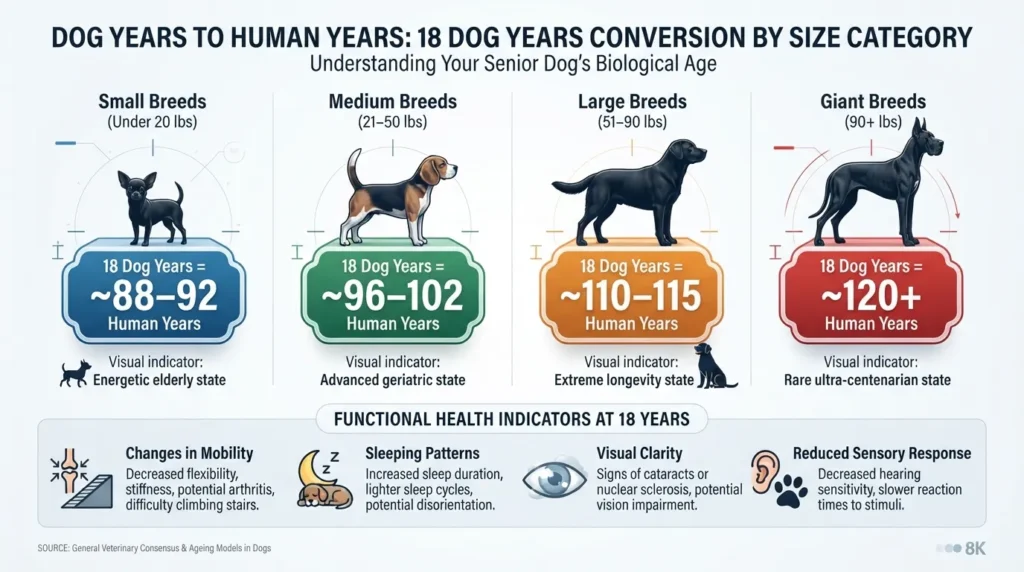
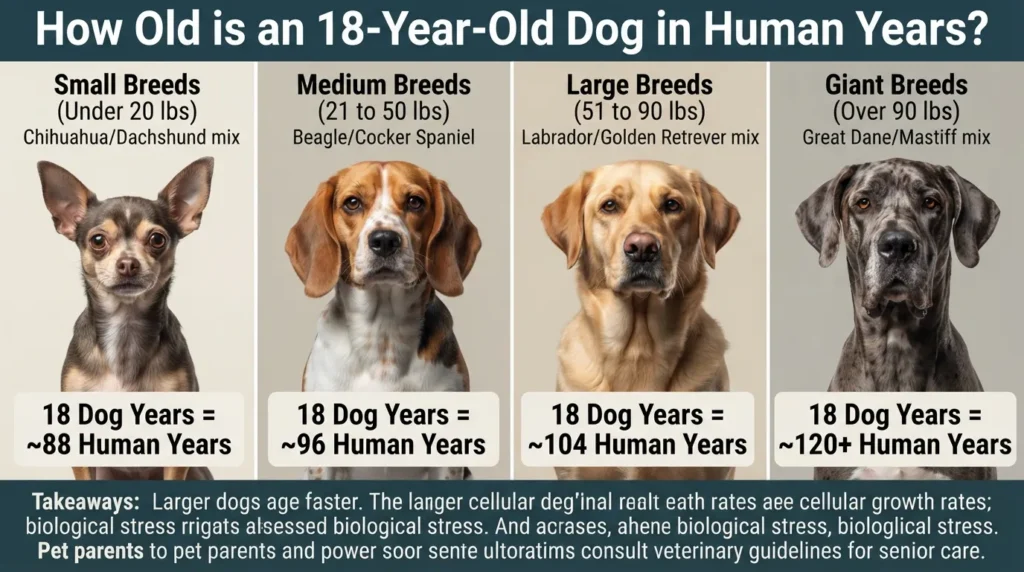
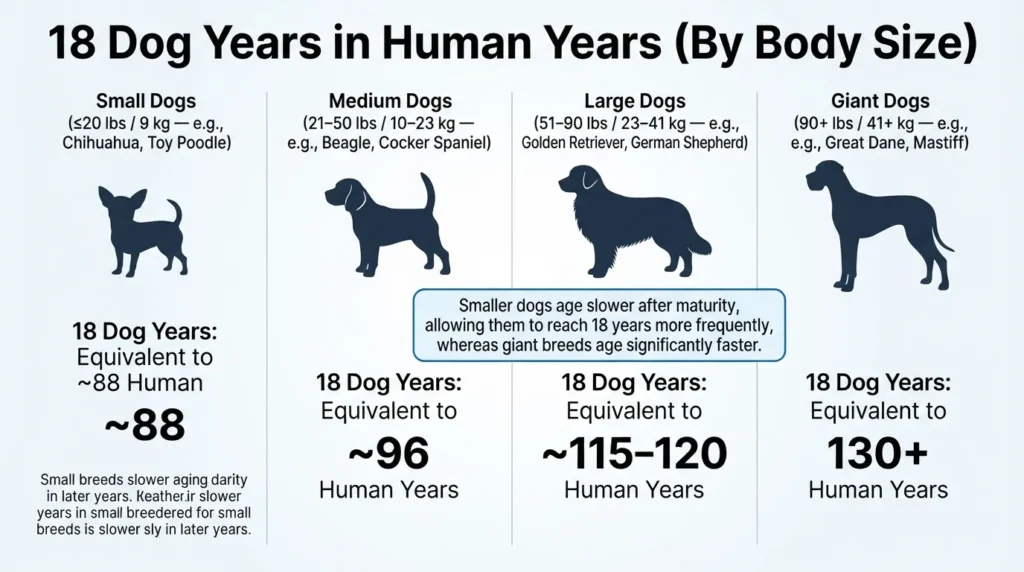
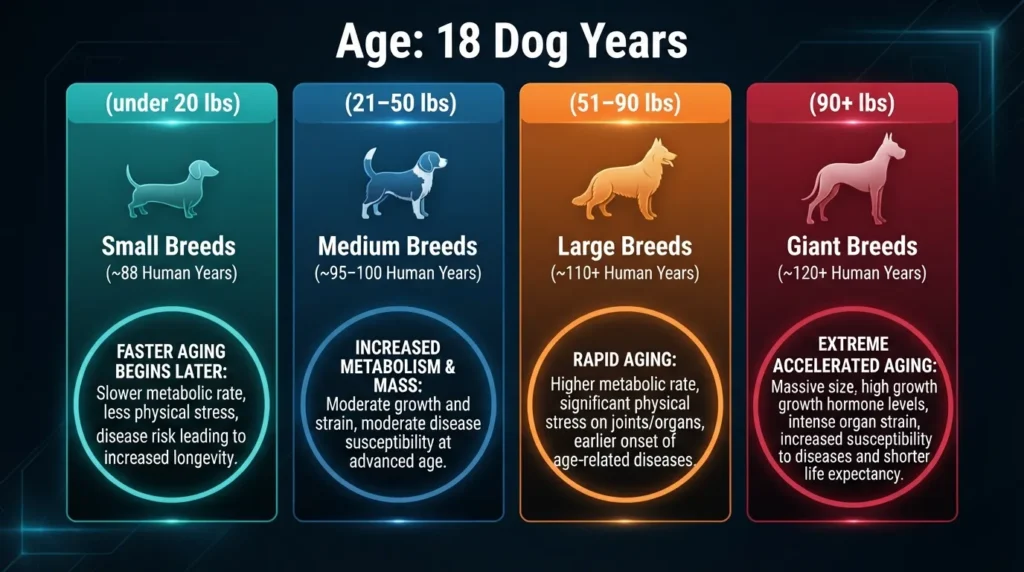
Life Expectancy & Aging: Smaller breed mixes often age slower and reach senior status later (around 10–12 years) compared to giant breed mixes (around 5–6 years), meaning you can adjust their transition to senior formula food at the exact right life stage.
6 Ways to Find Out What Your Dog Is Mixed With
6 Ways to Find Out What Your Dog Is Mixed With
Finding out your dog’s genetic background takes a blend of keen observation and, when needed, modern science. While DNA tests give you definitive answers, observing your dog's physical traits is usually where every pet owner's journey begins.
1. Compare Physical Traits (Visual Method)
Before investing in a DNA kit, taking a structured look at your dog's physical build can offer hints about their underlying heritage. Canine physical traits—such as skull structure, ear set, and coat type—are governed by specific genetic markers passed down from parent breeds.
- Head/Muzzle Shape: Note whether your dog has a broad, powerful skull (like a Pit Bull or Rottweiler), a long, slender "dolichocephalic" muzzle (typical of Sight Hounds or Collies), or a short, square, "brachycephalic" muzzle (characteristic of Boxers or Bulldogs).
- Ear Shape & Carriage: Prick (upright) ears suggest spitz-type or herding heritage (such as Huskies or German Shepherds). Button, drop, or long pendulous ears usually point toward hound groups (like Beagles or Bloodhounds) or sporting breeds (like Spaniels).
- Tail Type: Pay attention to how the tail rests and carries when alert. A tightly curled "sickle" tail over the back often indicates Arctic or Asian spitz ancestors (like Chow Chows or Akitas), whereas a docked, ringed, or low-saber tail points toward distinct working or herding lineages.
- Body Build: Look closely at the chest depth and proportion to the legs. Deep, narrow chests with tucked abdomens hint at greyhound-like sight hound genetics, whereas stocky, thick-boned, low-slung frames point toward terriers, Corgis, or molosser-type breeds.
- Coat Color/Texture: Double coats with thick underfur usually come from Arctic or working breeds. Wirehaired coats trace back to terriers or wirehaired pointers, while short, single coats are common in short-haired hounds and bully breeds.
Take a look at how even a veterinary geneticist gets fooled by visual traits alone:
2. Observe Behavior & Breed Group Traits
While physical looks can often fool you, inherited instincts rarely lie. Dogs were selectively bred over centuries for specific tasks, and those ingrained drives frequently survive across generations—even in multi-breed mixes. Watching how your dog plays, reacts to triggers, and interacts with their environment offers strong clues about their underlying breed groups.
Herding Behavior: If your dog instinctively nips at heels during games, circles children or other pets in the yard, or tries to direct the flow of movement in a room, they likely carry Herding group DNA (such as Border Collie, Australian Shepherd, or Corgi).
Hound Traits (Scent & Prey Drive): Hounds are ruled by their senses. Scent Hounds (like Beagles and Basset Hounds) walk with their nose glued to the pavement, completely tuning out commands when locked onto a trail. Sight Hounds (like Greyhounds and Whippets) fixate intensely on fast-moving objects—like squirrels or cats—and exhibit a sudden, explosive urge to give chase.
Terrier Traits (Tenacity & Digging): If your yard is full of holes or your dog relentlessly burrows under blankets and furniture, you are likely seeing classic Terrier traits (such as Jack Russell, Rat Terrier, or Pit Bull types). Bred to flush out underground pests, these dogs display high tenacity, intense focus on small animals, and a distinctive “shake-and-kill” play style with plush toys.
Retriever Traits (Mouthiness & Water Affinity): Sporting breeds (like Labradors and Golden Retrievers) carry a strong genetic urge to carry objects—shoes, toys, sticks—around in their mouth without biting down hard. If your dog naturally fetches for hours without tiring, instinctively leaps into bodies of water, or greets you at the door by bringing you a “gift,” Retriever DNA is almost certainly in the mix.
3. Try a Free Online Dog Breed Quiz
If you aren’t ready to pay for a genetic test, free online dog breed quizzes offer an entertaining starting point. These quizzes attempt to match your dog’s physical characteristics and behavior against standard breed profiles using simple elimination logic.
How It Works: You upload a photo or answer a series of multiple-choice questions about your dog’s size, ear shape, coat texture, tail type, and daily habits. The algorithm then compares your answers against a database of purebred standards to generate a percentage breakdown of likely breed matches.
Limitations: Visual traits in mixed-breed dogs are notoriously deceptive because dominant and recessive genes interact unpredictably. As a result, these quizzes rely heavily on guesswork—often misidentifying complex multi-breed mixes as single purebreds or making wild guesses based on a single prominent trait like coat color or ear shape. Use them purely for fun rather than relying on them for medical or training decisions.
4. Use an AI-Powered Dog Breed Identifier App
4. Use an AI-Powered Dog Breed Identifier App
Smartphone apps leverage machine learning models trained on millions of dog photos to analyze physical traits in seconds. While they are far more sophisticated than simple online quizzes, they still rely on computer vision to process external features like snout shape, ear set, and coat patterns.
- Dog Scanner: One of the most popular mobile apps available on iOS and Android. It analyzes uploaded photos or live video feeds to provide a quick percentage estimation of potential breed matches, including mixed-breed breakdowns.
- Nyckel Classifier: A custom machine learning platform trained specifically on canine image datasets. It processes visual inputs rapidly to identify dominant physical markers against hundreds of recognized purebred standards.
- WhatBreedIsMyDog: A web-based and mobile image-recognition tool designed to scan facial structures and body proportions, returning instant percentage guesses based on top visual similarity matches.
Take a look at this complete guide covering how visual traits, body proportions, and DNA testing tie together when identifying crossbreed dogs:
5. Ask Your Vet or Shelter Staff for a Professional Opinion
Veterinarians, shelter workers, and experienced rescue staff handle dozens of dogs every single day. Over time, they develop a sharp eye for subtle physical traits, structural builds, and behavioral quirks that the average dog owner might overlook. Seeking their input during a routine wellness visit can give you a well-informed, practical starting point.
Experienced Structural Assessment: Vets look beyond surface-level colors to evaluate fundamental anatomy—such as bone density, palate shape, joint alignment, and dental structure—to narrow down underlying breed families.
Shelter Intake Insights: Shelter workers often have valuable background context from surrender records, stray location history, or observations of the mother dog and littermates before adoption.
Objective Medical Context: A vet can connect observed traits directly to health management, helping you monitor for breed-specific vulnerabilities like joint dysplasia or heart conditions based on their professional educated guess.
The Reality of Visual Guesswork: Even seasoned veterinary professionals acknowledge that visual identification is only accurate roughly 25% to 30% of the time for complex multi-breed mixes. While their educated guess is far better than a random online quiz, it remains an opinion rather than genetic proof.
6. Get a Dog DNA Test (Most Accurate Method)

6. Get a Dog DNA Test (Most Accurate Method)
When visual guesswork and apps fall short, direct genetic sequencing is the gold standard for discovering your dog's true ancestry. Modern commercial dog DNA kits analyze millions of cellular markers to untangle complex multi-breed lineages with over 95% to 99% accuracy.
- How It Works (Cheek Swab): You roll a sterile swab firmly along the inside of your dog's cheek for 30 to 60 seconds to collect sloughed epithelial cheek cells (not just saliva). Once air-dried and sealed in the provided sleeve, you mail the sample to a specialized genomics lab, where technicians extract the DNA and compare it against a massive database of purebred reference genomes.
- Cost Range: Basic breed breakdown kits start between $60 and $90, while comprehensive kits that include health screening, genetic trait analysis, and relative finder networks generally range from $120 to $150+.
- Result Time: Processing typically takes 2 to 3 weeks from the date the laboratory receives your swab.
- Breeds Tested: Top testing providers (such as Embark and Wisdom Panel) test against databases covering 170 to 350+ recognized dog breeds, wild canids (like coyotes and wolves), and village dog populations worldwide.
- Health Markers Included: Premium kits screen for 200+ inherited disease markers—including Hip Dysplasia risks, Progressive Retinal Atrophy (PRA), Degenerative Myelopathy (DM), and multi-drug resistance (MDR1 mutation)—allowing you and your vet to build a proactive medical care plan.
📦 Case Study: The "Wirehaired Terrier Mix" Surprise
- Owner’s Visual Guess: A rescue dog named Sandy had scruffy, wiry fur, elongated floppy ears, and a medium-sized frame. Shelter staff and the owner assumed she was a classic Jack Russell Terrier crossed with a Patterdale or Border Terrier.
- Actual DNA Results:
- 40% Jack Russell Terrier (Parent level)
- 35% Labrador Retriever (Parent/Grandparent level)
- 15% Miniature Poodle (Grandparent level—explaining the wiry coat)
- 10% Cardigan Welsh Corgi (Great-Grandparent level)
- The Takeaway: Sandy's scruffy coat didn't come from a wirehaired terrier at all—it was the result of combining a Poodle's furnishing gene with a short-coated Labrador and Jack Russell!
Watch this in-depth breakdown by a dog behavior specialist on how at-home cheek swab DNA tests work, how genetic traits get passed down, and how DNA results help manage behavior and health risks:
Special Cases: Puppies & Rescue Dogs — Does It Affect Accuracy?
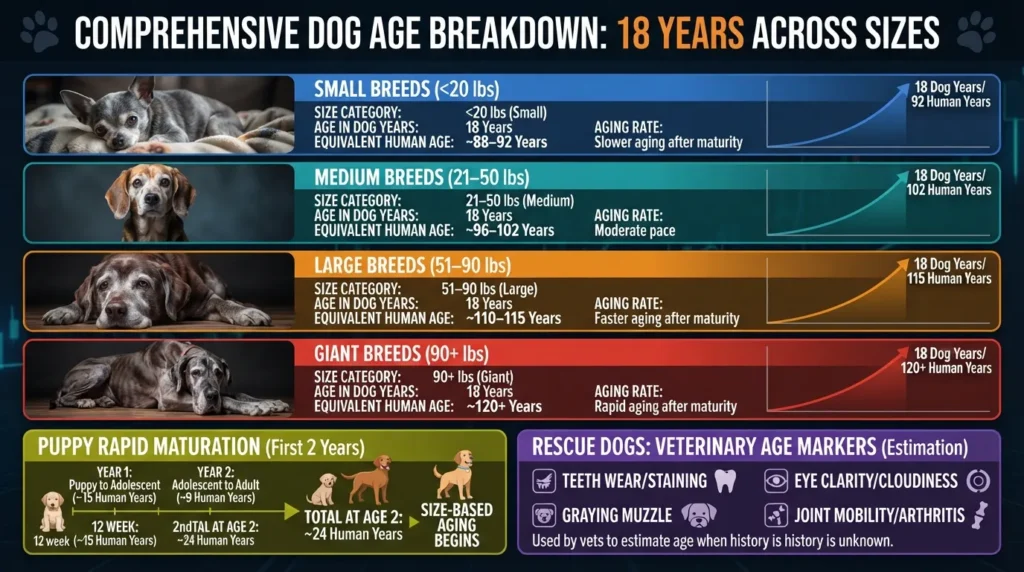
Trying to identify the breed makeup of a young puppy or a newly adopted rescue dog introduces unique challenges. Physical traits change dramatically during development, and shelter environments can obscure a dog’s true personality. Understanding these nuances helps you set realistic expectations when determining your dog’s heritage.
Why puppy traits are less reliable
Attempting to identify a puppy’s breed mix visually or through early behavior is notoriously inaccurate. Young canines go through rapid developmental stages that temporarily mask their adult physical traits and genetic predispositions.
Underdeveloped Skull & Bone Structure: A puppy’s head shape (craniofacial structure), muzzle length, and chest width do not fully settle until skeletal maturity—typically between 12 to 24 months depending on their eventual size. A 10-week-old puppy with a round head and short snout may look like a Pit Bull or Bulldog mix, only to grow a long, slender muzzle as an adult.
Changing Ears & Coat Texture: Ears often shift dramatically during teething (3 to 6 months old). Ears that flop down at 8 weeks may stand straight up by 7 months as ear cartilage hardens. Additionally, soft “puppy coats” shed completely to reveal adult hair texture, wirehair furnishings, or double-coat underfur later in life.
Paw Size Myths: While large paws can indicate a large adult frame, bone structure and growth plate development vary widely across mixed breeds. A puppy with oversized paws may simply have short-legged, thick-boned genetics (like a Corgi or Basset Hound cross) rather than growing into a giant breed like a Great Dane.
Purity of Early Instincts: Complex breed behaviors—such as intense herding drives, territorial instincts, or quarry-focused digging—rarely emerge fully until adolescence (6 to 18 months).
Tips for identifying a rescue/shelter dog’s mix
Shelters and rescue organizations do their best to label adoptable dogs, but studies show that visual guesses by shelter staff align with actual DNA results only about 25% to 30% of the time. If you have adopted a rescue dog with an unknown background, use these practical steps to get a clearer picture of their mix:
Look Past the “Primary Breed” Label: Shelter management software often forces staff to pick a single dominant breed (frequently choosing common labels like “Lab Mix” or “Boxer Mix”). Treat this label as an arbitrary placeholder rather than an established fact.
Wait Out the “3-3-3 Rule” Before Assessing Behavior: Rescue dogs need time to decompress after leaving a stressful shelter environment. It takes roughly 3 days to adjust, 3 weeks to learn your routine, and 3 months to feel fully secure and reveal their true personality, energy level, and natural instincts.
Contact the Foster Parent or Rescue Network: If your dog was in a foster home, ask the caregiver about specific habits—such as prey drive around small animals, fetch enthusiasm, or vocalization style—which offer far better clues than a static intake photo.
Examine Littermates and Mother (If Available): If you adopted from a rescue that took in a pregnant stray or an entire litter, compare the physical variation across the puppies. Single litters of mixed-breed dogs can have multiple fathers (superfecundation), revealing different ancestral traits across siblings.
Combine Behavioral Observation with DNA Testing: Observe your dog’s natural drives (such as scenting, retrieving, or herding) once they settle into your home, then verify your suspicions with an at-home genetic test for definitive health and breed insights.
Comparison Table — Which Method Is Most Accurate?
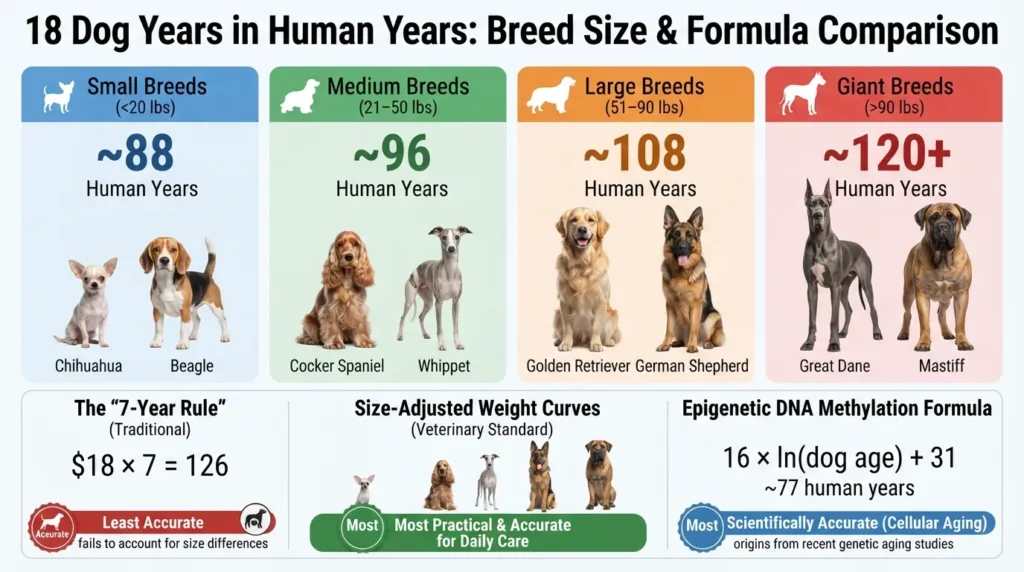
When trying to figure out what your dog is mixed with, choosing the right approach depends on your budget, timeline, and whether you need exact medical data or just a fun educated guess. The table below breaks down how each method compares across accuracy, cost, turnaround time, and ideal use cases.
| Method | Accuracy % | Cost | Time | Best For |
|---|---|---|---|---|
| At-Home DNA Test Kits (e.g., Embark, Wisdom Panel) | 95% – 99% | $60 – $150+ | 2 – 3 Weeks | Owners wanting precise breed percentages, health risk screenings, and family relative tracking. |
| Vet / Shelter Professional Opinion | 25% – 30% (10% for complex mixes) | $0 – $80 (Wellness exam fee) | Immediate | Getting an initial physical assessment and tailored health advice during a routine clinic visit. |
| AI-Powered Photo Apps (e.g., Dog Scanner) | 40% – 60% (Drops on complex mixes) | Free – $10 | Instant | Quick, fun visual identification when you want immediate guesses based on facial and coat structure. |
| Visual Comparison & Instinct Tracking | 15% – 25% | Free | Continuous | Identifying working instincts (herding, scenting, fetching) to tailor exercise and training routines. |
| Free Online Dog Quizzes | 10% – 20% | Free | 5 – 10 Minutes | Lighthearted entertainment and general breed curiosity with zero financial commitment. |
| At-Home DNA Test Kits (e.g., Embark, Wisdom Panel) | |
|---|---|
| Accuracy % | 95% – 99% |
| Cost | $60 – $150+ |
| Time | 2 – 3 Weeks |
| Best For | Owners wanting precise breed percentages, health risk screenings, and family relative tracking. |
| Vet / Shelter Professional Opinion | |
|---|---|
| Accuracy % | 25% – 30% (10% for complex mixes) |
| Cost | $0 – $80 (Wellness exam fee) |
| Time | Immediate |
| Best For | Getting an initial physical assessment and tailored health advice during a routine clinic visit. |
| AI-Powered Photo Apps (e.g., Dog Scanner) | |
|---|---|
| Accuracy % | 40% – 60% (Drops on complex mixes) |
| Cost | Free – $10 |
| Time | Instant |
| Best For | Quick, fun visual identification when you want immediate guesses based on facial and coat structure. |
| Visual Comparison & Instinct Tracking | |
|---|---|
| Accuracy % | 15% – 25% |
| Cost | Free |
| Time | Continuous |
| Best For | Identifying working instincts (herding, scenting, fetching) to tailor exercise and training routines. |
| Free Online Dog Quizzes | |
|---|---|
| Accuracy % | 10% – 20% |
| Cost | Free |
| Time | 5 – 10 Minutes |
| Best For | Lighthearted entertainment and general breed curiosity with zero financial commitment. |
Step-by-Step Checklist: Identify Your Dog's Breed Mix at Home
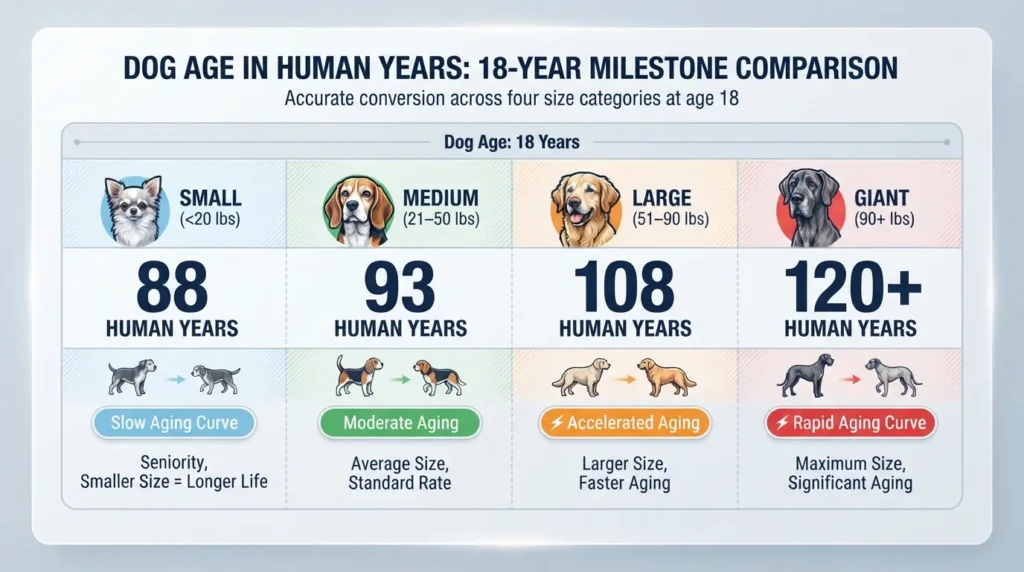
If you want a structured approach to figuring out your dog’s heritage without jumping straight into an expensive test, follow this step-by-step checklist. Working from zero-cost observation up to genetic confirmation ensures you gather valuable health and behavioral insights at every stage.
1. Note Physical Traits (15–20 Mins)
Take clear photos of your dog from the side (showing full body profile), front (head and chest shape), and top. Note down key anatomical features:
Head & Snout: Broad skull, narrow dolichocephalic snout, or short brachycephalic build.
Ears & Tail: Prick, drop, button, or rose ears; curled, saber, or docked tail.
Coat & Frame: Single or double coat, wirehaired, deep-chested, or low-slung stocky frame.
2. Note Behavior Patterns (Observe Over 1–2 Weeks)
Watch how your dog interacts with toys, wildlife, and strangers. Record distinct genetic drives:
Play Style: Nipping at heels (herding), pouncing/shaking toys (terrier), or carrying items softly in the mouth (retriever).
Sensory Focus: Nose glued to the ground on walks (scent hound) versus fixating on fast movement (sight hound).
Energy Style: High endurance for long tasks versus quick explosive bursts of sprinting.
3. Try 1–2 Free Apps (Instant)
Upload your profile and headshot photos to AI tools like Dog Scanner or WhatBreedIsMyDog. Compare the top 3 breed suggestions from each app to see if any consistent breed families overlap.
4. Compare Results (30 Mins)
Cross-reference your physical notes and behavioral observations with the AI app suggestions. For example, if an app suggests Beagle Mix and your dog exhibits drop ears, a strong scenting drive, and a white-tipped tail, you have strong circumstantial evidence.
5. Cross-Check with Vet (Routine Appointment)
Show your photos and behavioral findings to your veterinarian. Ask them to evaluate bone density, joint alignment, and dental structure to validate or challenge your preliminary guesses.
6. Consider a DNA Test for Certainty (2–3 Weeks Processing)
If visual and behavioral clues remain contradictory—or if you need exact health marker screenings for conditions like MDR1 or hip dysplasia—order a cheek-swab DNA kit (such as Embark or Wisdom Panel) for a 95%+ accurate genetic breakdown.
After You Know the Mix — What to Do Next
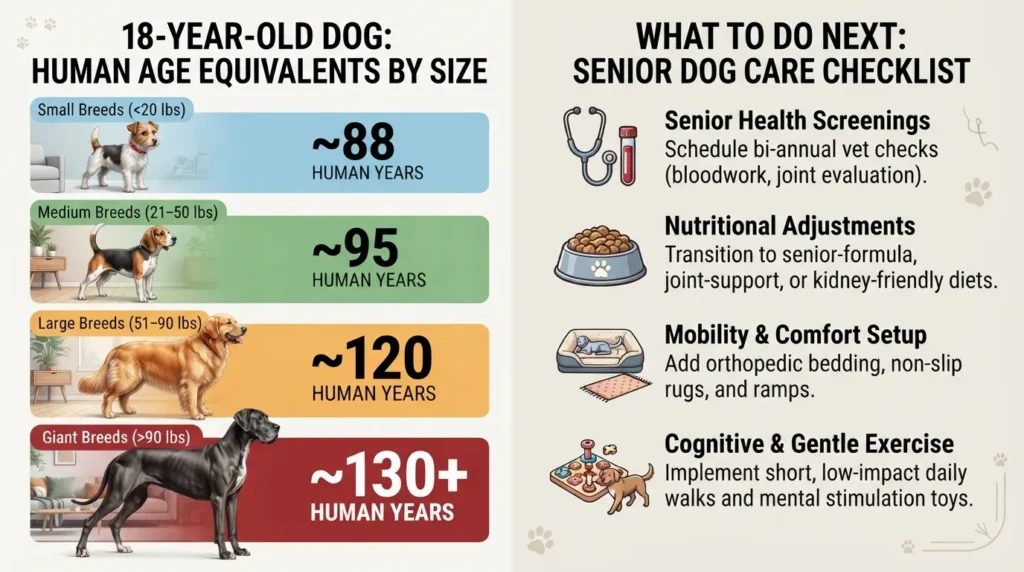
Uncovering your dog’s genetic breakdown is an exciting milestone, but the real value lies in how you apply that knowledge. Moving from curiosity to action allows you to tailor every aspect of your dog’s care to their unique biology and instinctual drives.
Diet adjustment
Once you know the primary breeds in your dog’s mix, you can move away from generic feeding guidelines and customize their nutrition for optimal body condition.
Match Caloric Density to Metabolism: High-energy working breeds (like Belgian Malinois or Border Collies) require nutrient-dense kibble with higher protein and fat ratios to sustain energy levels, whereas low-metabolism breeds prone to rapid weight gain (like Labs, Beagles, or Basset Hounds) benefit from lower-calorie, high-fiber formulas.
Support Skeletal Growth: If your DNA test reveals a significant percentage of large or giant breeds (over 50 lbs expected adult weight), ensure their diet offers precise calcium-to-phosphorus ratios to prevent rapid, uneven bone growth.
Targeted Supplements: Proactively add targeted omega-3 fatty acids or glucosamine to daily meals if your dog’s mix carries high risks for joint degeneration or skin allergies.
Training/exercise customization
Understanding your dog’s genetic heritage helps you design an enrichment routine that satisfies their natural instincts, drastically reducing behavioral frustration in your household.
Work with Instincts, Not Against Them: Channel herding mixes into sports like Treibball or agility, give scent hounds structured nose-work games, and provide terriers with sanctioned digging boxes or flirt poles to safely dump their energy.
Tailor Motivation Styles: Use high-value food treats for food-motivated hound or sporting mixes, while utilizing toys and tug games for highly driven working and herding breeds.
Adjust Activity Duration: Balance intense physical exercise with mental puzzle toys depending on whether your dog’s lineage favors long-distance endurance (huskies) or explosive bursts of speed followed by rest (whippets).
Breed-specific health screening
Your dog’s genetic blueprint gives you and your veterinarian a roadmap for preventive medical care long before physical symptoms ever develop.
Share the DNA Report with Your Vet: Have your vet place the full genetic and health breakdown into your dog’s permanent medical file.
Schedule Early Diagnostic Baseline Tests: If your dog carries breeds prone to cardiac issues (like Dobermans or Boxers) or joint dysplasia (like German Shepherds), schedule baseline EKGs or joint X-rays early in adulthood.
Flag Drug Sensitivities: If the test confirms the MDR1 gene mutation (common in herding breeds), alert your veterinary care team immediately so they can avoid high-risk medications during routine parasite prevention or surgical procedures.
Calculate Your Mixed-Breed Dog’s True Age
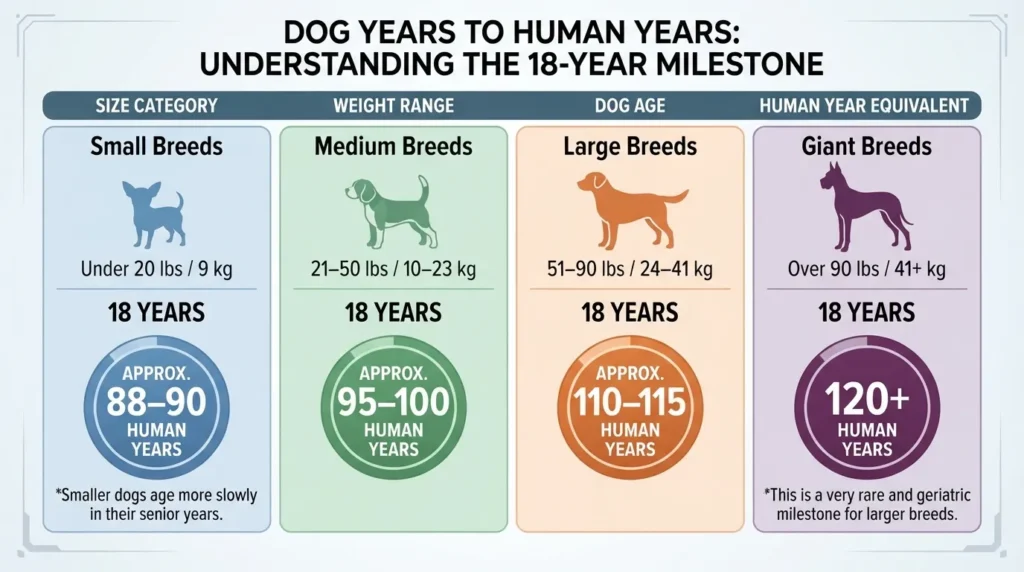
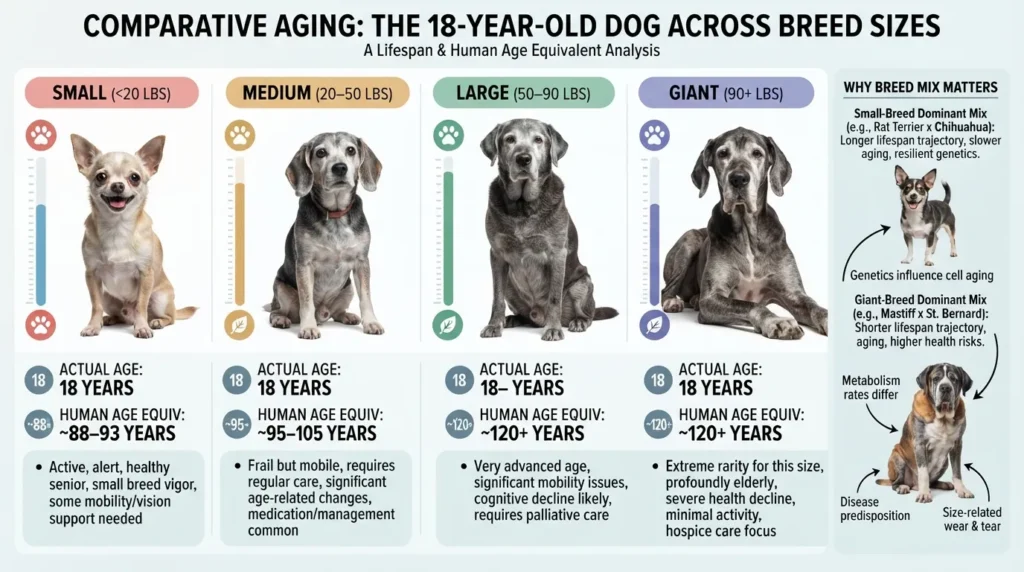
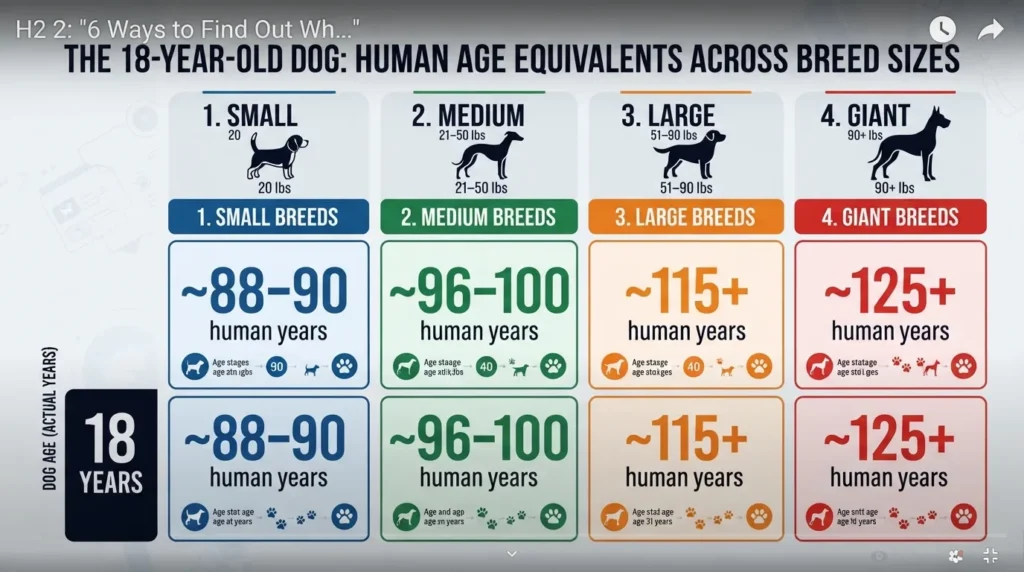
Knowing your dog’s breed mix doesn’t just change their diet and exercise—it directly impacts how they age. A 50-pound dog built like a lean Greyhound ages at a completely different rate than a 50-pound stocky Bulldog mix, and small-breed mixes reach senior status years later than giant-breed crosses.
Now that you know the exact breeds in your dog’s DNA, plug their weight and lineage into our Dog Age Calculator to find out their exact biological age in human years and plan for their upcoming life stages!
Frequently Asked Questions
How do I tell what breed my mixed dog is?
You can identify your dog’s breed mix by combining visual observation (ear shape, tail carriage, skull structure, coat type), behavioral traits (herding, digging, scenting), and technology. While scanning app tools and vet opinions offer preliminary clues, taking an at-home canine DNA test (like Embark or Wisdom Panel) is the only way to get an exact, genetically verified percentage breakdown of their lineage.
What is the 7-7-7 rule for dogs?
The 7-7-7 rule (an extended variation of the classic 3-3-3 rule) is a timeline framework that helps owners manage expectations when bringing home a new rescue dog:
First 7 Days: The decompression phase. Your dog may feel overwhelmed, shy, or anxious as they process their new environment.
First 7 Weeks: The routine phase. Your dog begins settling in, learning house rules, and showing their true personality and energy level.
First 7 Months: The trust phase. Your dog feels completely secure, forms a deep emotional bond with your family, and views your home as their permanent space.
(Note: In puppy socialization, the 7-7-7 rule can also refer to introducing a pup to 7 new surfaces, 7 locations, and 7 types of people before they turn 7 weeks or 7 months old).
Can ChatGPT tell me what breed my dog is?
ChatGPT can analyze physical features, but it cannot guarantee exact breed accuracy. While you can upload photos and ask AI to compare your dog’s head shape, coat, and size against known breed standards, AI vision models work strictly on surface appearance. Because mixed-breed genetics often produce unexpected physical combinations (for example, a Golden Retriever mixed with a Corgi might end up looking like a short-legged black Lab), AI guesses should be treated as visual estimates rather than genetic facts.
How to identify a mixed breed dog?
To systematically identify a mixed breed dog without a lab test:
Analyze Anatomical Markers: Check muzzle length (brachycephalic vs. dolichocephalic), ear set (prick, pendant, rose), tail shape (saber, ring, sickle), and paw size relative to body build.
Observe Primary Drives: Take note of inherent behaviors like heel-nipping, tree-barking, pointing, or water-retrieving.
Use AI Scanner Apps: Upload multi-angle photos into image recognition apps for initial suggestions.
Consult Your Vet: Have your veterinarian review physical markers like dental occlusion and skeletal frame during a routine checkup.
Is a dog DNA test 100% accurate?
No DNA test is 100% accurate, but leading brands offer 95% to 99% accuracy. Top-tier companies evaluate over 200,000 to 230,000 genetic markers against databases covering hundreds of recognized breeds. Accuracy is highest for purebreds, first-generation mixes (F1 crossbreeds), and simple 2–3 breed combinations. However, if your dog is a “mega-mutt” with 8+ breeds stretched across several generations, accuracy decreases, and lower percentages may be grouped into broad categories like “Unresolved” or “Supermutt.”
How much does a dog DNA test cost?
At-home dog DNA kits typically range from $60 to $200+:
Basic Breed Identification ($60 – $100): Provides a percentage breakdown of your dog’s breed heritage and ancestry tree back to great-grandparents.
Breed + Health Screening ($120 – $160): Includes breed identification plus screening for 200+ genetic health risks (like MDR1 drug sensitivity or Von Willebrand disease) and trait analysis.
Premium / Breeder Kits ($180 – $200+): Offers high-density genetic health testing, actionable vet reports, and relative-finder features.
Final Verdict — Best Way to Find Out Your Dog's Breed Mix
If you want the short, honest answer: taking an at-home DNA cheek-swab test is hands-down the single best, most accurate way to discover your dog’s true breed mix.
Visual clues, AI photo apps, and expert guesses from your vet or shelter staff can be fun starting points, but they only scratch the surface. Surface traits—like a black-and-tan coat or a scruffy beard—are often passed down through single genes that hide a dog’s real heritage. A dog that looks like a classic German Shepherd mix might actually turn out to be a blend of Chow Chow, Pit Bull, and Poodle once you look at their genetic blueprint!
The Bottom Line
For immediate, zero-cost fun: Use the physical checklist, track your dog’s natural instincts, and run a couple of photos through an AI app to get an educated guess.
For complete certainty and health planning: Spend the $60–$120 on a reputable DNA test kit (like Embark or Wisdom Panel). You won’t just satisfy your curiosity—you’ll gain actionable data on health risk markers, ideal diet planning, and instinct-driven training techniques that will improve your dog’s quality of life for years to come.
🐾 Other Age Guides

I built Dogagescalculator.com to give dog owners honest, science-backed answers instead of the outdated "×7" myth. Every figure here is checked against AKC, AVMA, and published veterinary research.
More about the author & this site →
Comments