
What Is the Lifespan of an English Bulldog? Complete 2026 Guide
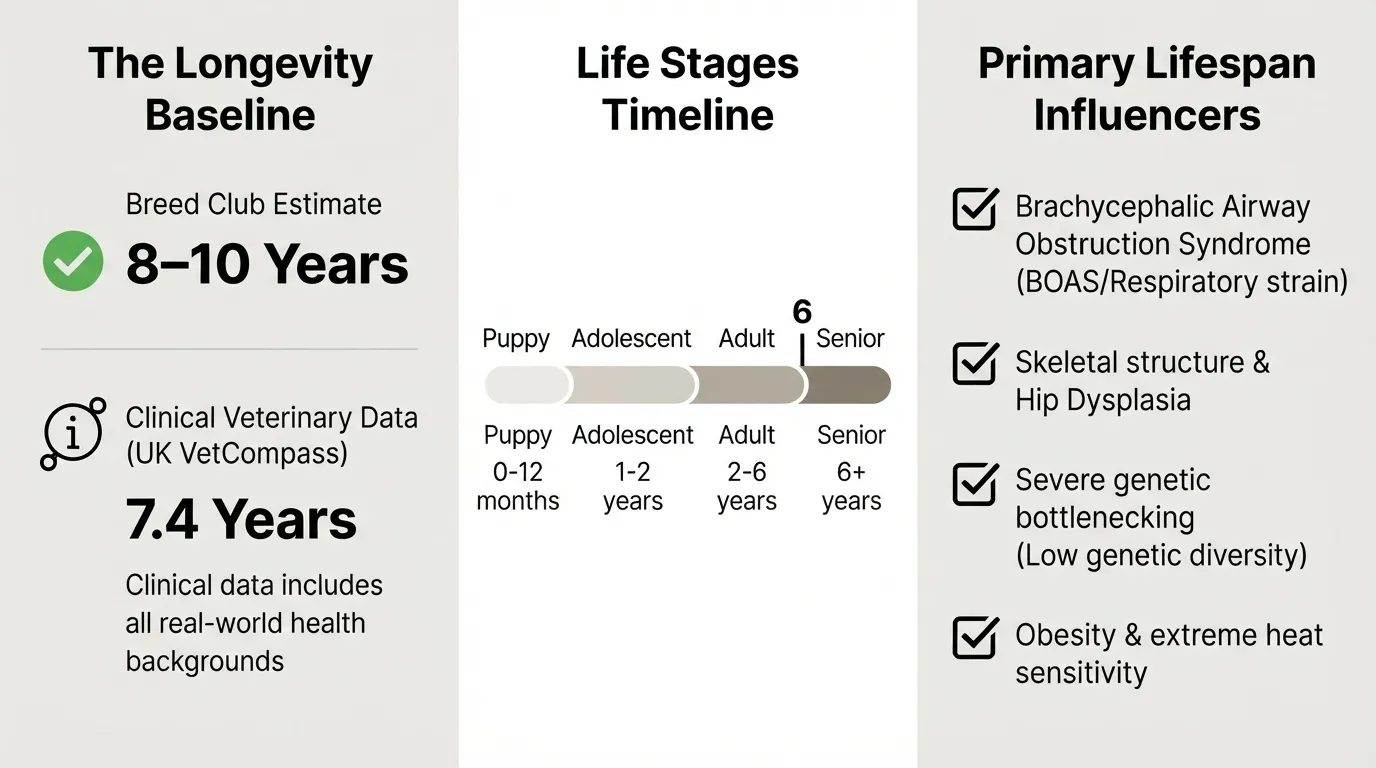
How long do English Bulldogs live? An English Bulldog typically lives around 8 to 10 years, although lifespan can vary depending on genetics, overall health, weight, and breed-specific conditions. If you’re looking for an English Bulldog age chart, trying to understand your English Bulldog age in human years, or researching the average lifespan of English Bulldogs, this guide covers all three.
English Bulldogs have a shorter lifespan than many other dog breeds because their unique body structure can increase the risk of breathing problems, obesity, joint issues, skin conditions, and other health concerns. Some veterinary research has reported a shorter median life expectancy, but individual Bulldogs can live longer with appropriate nutrition, weight management, regular exercise, and consistent veterinary care.
Below, you’ll find an English Bulldog age chart showing how your Bulldog’s age compares with human years, along with important life stages, English Bulldog lifespan information, common health risks, and practical ways to help your Bulldog live a longer and healthier life.
English Bulldog Average Lifespan — Full Breakdown
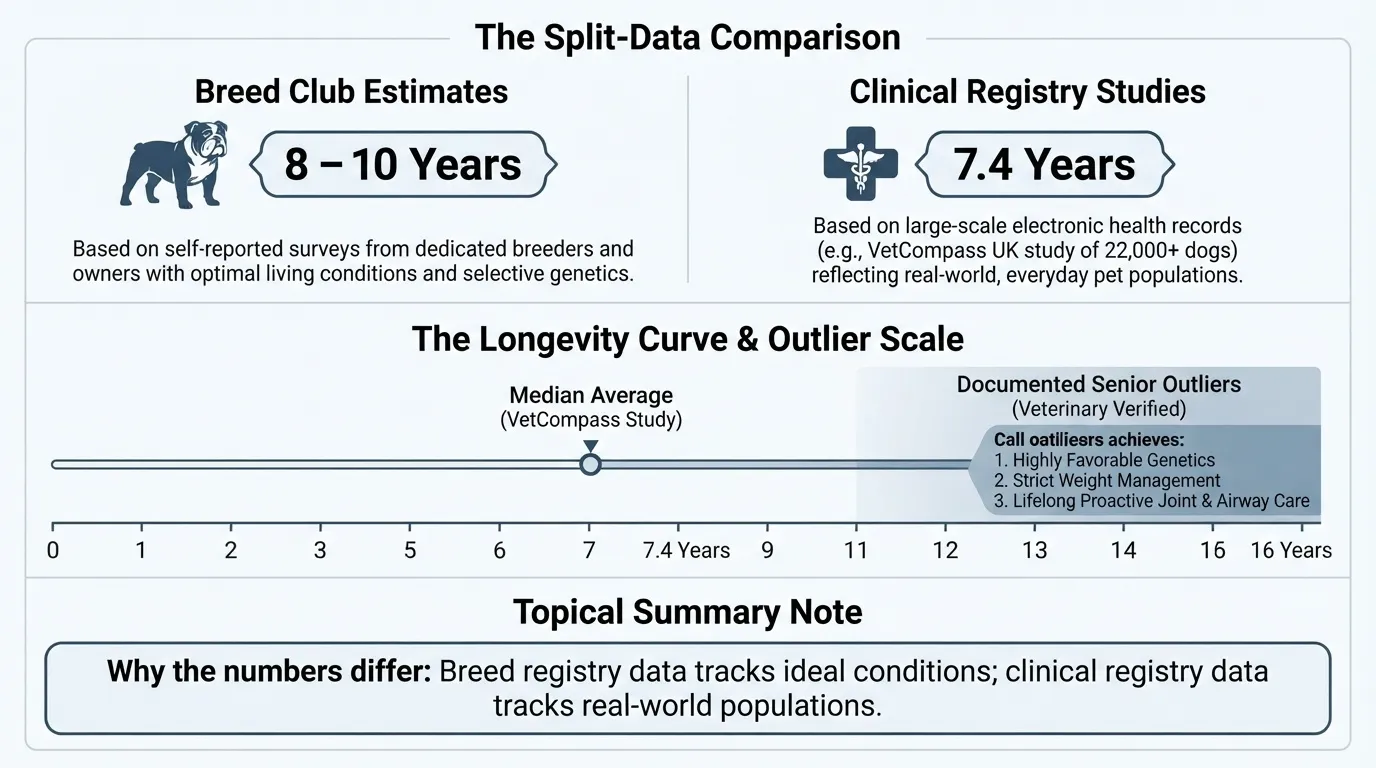
An English Bulldog’s average lifespan typically falls between 8 and 10 years, according to official breed club estimates like those from the American Kennel Club (AKC). However, large-scale veterinary data paints a slightly different picture. A landmark study by the Royal Veterinary College (RVC) VetCompass scheme in the UK analyzed clinical data from over 22,000 dogs and found that English Bulldogs have an average life expectancy of 7.4 years.
These two numbers differ because they measure different populations of dogs. Breed club data often relies on self-reported surveys from dedicated breeders and owners whose dogs may receive optimal veterinary care, selective breeding, and ideal living conditions. On the other hand, clinical registry studies like VetCompass pull real-world electronic health records from everyday veterinary practices. This includes dogs from all backgrounds, including those with severe genetic health issues, rescue dogs, and pets that may not have received specialized care.
Oldest Recorded English Bulldogs
While English Bulldogs are statistically prone to shorter lifespans due to conformation-related health challenges, some beat the odds by a wide margin. There is currently no officially verified Guinness World Record for the oldest English Bulldog, but veterinary clinics and breed communities have documented several remarkable outliers.
Some well-loved English Bulldogs have been verified by their veterinarians to live between 13 and 16 years. These “super-centenarians” of the bulldog world typically benefit from a combination of highly favorable genetics, strict weight management, and proactive, lifelong veterinary care to manage the breed’s common joint and respiratory issues.
English Bulldog vs. Other Bulldog Breeds
Bulldog breeds and closely related brachycephalic (flat-faced) dogs share similar anatomical traits, but their lifespans vary quite a bit. Below is a comparison of how the English Bulldog stacks up against similar breeds, using clinical data ranges:
Dog Breeds & Longevity
Breed
Average Lifespan
Key Longevity Factors
English Bulldog
7.4 – 10 years
Highly prone to respiratory issues (BOAS), skin fold infections, and joint dysplasia.
French Bulldog
4.5 – 9 years
Very popular but faces severe spinal issues and respiratory challenges; recent UK clinical studies placed their median lifespan at just 4.5 years.
American Bulldog
11 – 14 years
Larger and more athletic with a longer snout, leading to fewer respiratory issues, though prone to hip dysplasia.
Pug
7.7 – 11 years
Shares the flat-faced anatomy of bulldogs; clinical studies show a lower median lifespan of 7.7 years due to breathing and corneal issues.
Why Do English Bulldogs Live Shorter Than Other Dogs?
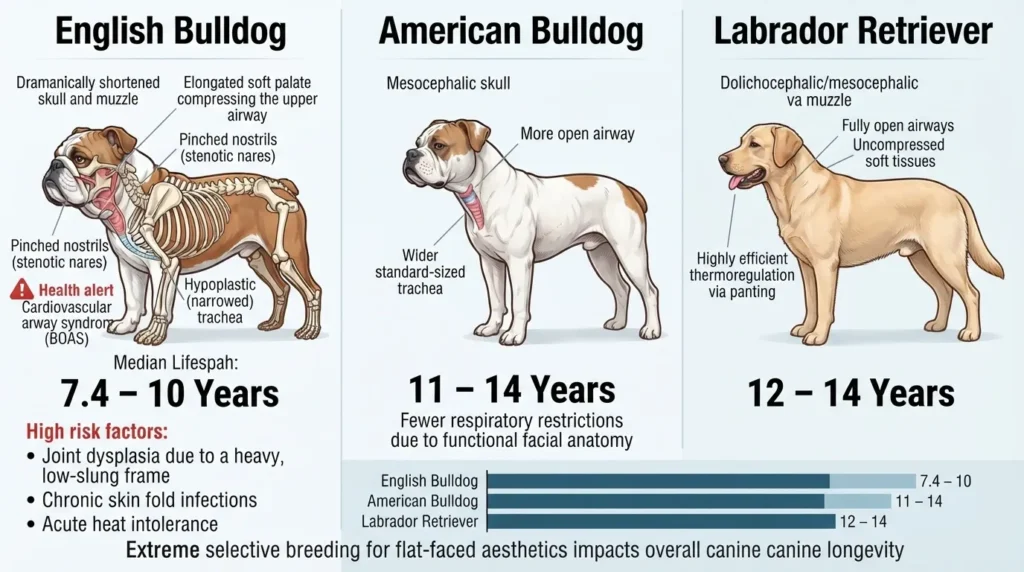
While smaller breeds can frequently reach 17 dog years—which translates to a remarkable 84 years in human years—English Bulldogs face a vastly different biological timeline. Major veterinary data, including a landmark study from the Royal Veterinary College’s (RVC) VetCompass program, reveals that the average life expectancy for an English Bulldog is only about 7.4 years. Their shortened lifespan is a direct result of centuries of extreme selective breeding, which has prioritized flat-faced aesthetics over basic functional anatomy.
Brachycephalic (Flat-Face) Anatomy & Selective Breeding
The defining look of the English Bulldog is the result of severe brachycephaly—a skeletal malformation where the muzzle and nasal bones are dramatically shortened while the soft tissues of the airway remain unchanged. This structural compression forces their respiratory system to work in a constant state of high resistance, causing narrowed airways, pinched nostrils, and a windpipe that is often dangerously thin.
Beyond their physical shape, selective breeding has severely bottlenecked the breed’s gene pool. A genetic diversity study by UC Davis researchers confirmed that English Bulldogs have exceptionally low genetic variation. This lack of diversity makes it incredibly difficult to breed out congenital defects, meaning generations of Bulldogs continue to inherit complex, life-limiting skeletal and respiratory issues.
Health Issues That Most Impact Lifespan
Breathing Problems (BOAS)
Brachycephalic Obstructive Airway Syndrome (BOAS) affects almost every English Bulldog to some degree. Because their soft palates are too long for their shortened skulls, they must exert constant, exhausting effort just to pull oxygen into their lungs. Over time, this chronic respiratory strain puts massive pressure on their cardiovascular system, frequently leading to heart strain and early death.
Skin Fold Infections (Pyoderma)
The deep, heavy wrinkles that give Bulldogs their characteristic expression also trap moisture, sweat, and debris. Without a constant airflow, these dark crevices become breeding grounds for bacteria and yeast, resulting in chronic skin fold dermatitis (pyoderma). If left untreated, these local infections can penetrate deep into the tissue and enter the bloodstream, causing systemic health crises.
Hip Dysplasia & Joint Issues
Bulldogs are bred with intentionally short, bowed legs and wide chests, which shifts their center of gravity and places immense pressure on their joints. Orthopedic data shows that English Bulldogs have some of the highest rates of hip dysplasia of any breed. The constant grinding of these malformed joints causes painful osteoarthritis early in life, severely limiting their mobility and general quality of life.
Obesity-Related Complications
Because breathing is such hard work for Bulldogs, exercise is physically demanding and often dangerous for them. This inherent lack of activity, paired with their hearty appetites, makes them incredibly prone to obesity. Carrying even a few extra pounds dramatically worsens their breathing difficulties, accelerates joint degeneration, and elevates their risk of metabolic disease.
Heat Intolerance / Overheating
Dogs rely on panting to cool down, but a Bulldog’s compromised upper airway makes this mechanism highly inefficient. They cannot move air quickly enough to regulate their body temperature, meaning they can suffer fatal heat stroke in temperatures that other dogs find perfectly comfortable. This acute sensitivity makes warm weather a constant, life-threatening hazard.
Eye Conditions (Cherry Eye, Entropion)
Bulldogs are highly predisposed to several painful eye disorders. Cherry eye occurs when the gland of the third eyelid prolapses, appearing as a red mass in the corner of the eye. Additionally, many Bulldogs suffer from entropion, a painful condition where the eyelids roll inward, causing the eyelashes to constantly scrape against the cornea.
Cancer & Other Age-Related Conditions
As Bulldogs age, their risk for internal diseases increases significantly. Veterinary databases list cancer—particularly mast cell tumors and lymphoma—and chronic cardiac diseases as leading causes of mortality in senior Bulldogs. Managing these conditions is exceptionally complex because their underlying respiratory struggles make sedation and surgery much higher-risk procedures than they are for typical breeds.
English Bulldog Life Stages & Aging
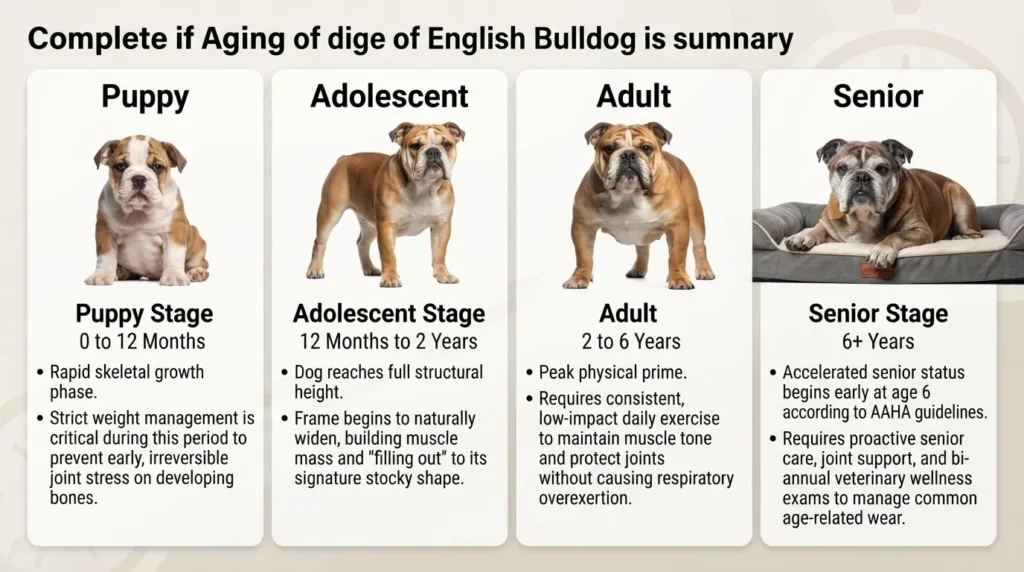
English Bulldogs age much faster than the average canine. Because of their unique genetic makeup and brachycephalic (flat-faced) structure, their transition through life stages is highly compressed. Knowing where your bulldog stands helps you tailor their care, diet, and exercise to their exact biological needs.
Puppy → Adolescent → Adult → Senior
An English Bulldog’s journey from a clumsy pup to a distinguished senior happens on an accelerated timeline.
Puppy (0 to 12 months): Rapid skeletal growth occurs during this phase. Because Bulldogs are prone to joint issues, keeping them at a healthy weight during this stage is critical to prevent early joint stress.
Adolescent (12 months to 2 years): Your Bulldog reaches their full height but will continue to “fill out” and gain muscle mass.
Adult (2 to 6 years): This is their physical prime. Energetic but starting to settle, adult Bulldogs need consistent, low-impact exercise to maintain muscle tone without overexerting their joints.
Senior (6+ years): While the average dog enters their senior years around age 7 or 8, the American Animal Hospital Association (AAHA) classifies Bulldogs as seniors starting at just 6 years old. Because of their shorter average lifespan (typically 8 to 10 years), proactive senior care must start early.
Signs Your Bulldog Is Aging
You won’t just see your Bulldog aging on a calendar; you will notice distinct physical and behavioral shifts. Keep a close eye out for these common signs of canine aging:
Greying Muzzle: Silver fur will gradually begin to frame their muzzle, face, and chest.
Reduced Mobility: Getting up from a nap might take a little longer, and they may hesitate before climbing stairs or jumping onto the couch. This is a common indicator of arthritis or hip dysplasia.
Vision and Hearing Decline: You might notice a slight cloudy blue haze (lenticular sclerosis) in their eyes, or they may not wake up as quickly when you call their name.
Increased Sleep: Senior Bulldogs require significantly more rest. If your dog is sleeping 14 to 16 hours a day, they are simply conserving their energy.
Does Gender or Neutering Affect Lifespan?
The relationship between gender, reproductive status, and lifespan in English Bulldogs is nuanced. Data shows that female Bulldogs tend to live slightly longer than males, though the margin is relatively small.
When it comes to spaying and neutering, timing is everything. Research indicates that spayed and neutered dogs generally have longer lifespans because the procedures eliminate the risk of uterine infections (pyometra) and testicular cancers.
However, for heavy-bodied breeds like the English Bulldog, pediatric neutering (performing the surgery too early) can sometimes alter growth plate closure and increase the risk of joint disorders later in life. We highly recommend discussing the optimal surgical window with your veterinarian to balance these long-term health risks and benefits.
How to Calculate Your English Bulldog's Age in Human Years
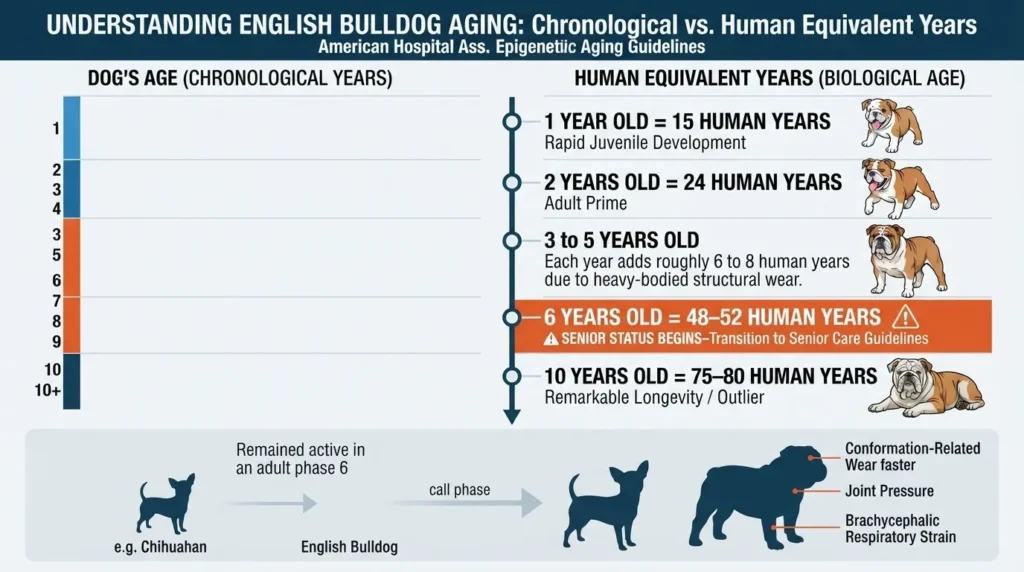
Bulldog years ≠ generic “multiply by 7” rule
For decades, we’ve been told that one dog year equals seven human years. While that simple math is easy to remember, veterinary science has officially retired it. The “multiply by 7” rule assumes all dogs age at a linear rate, which simply isn’t how canine biology works.
According to guidelines from the American Animal Hospital Association (AAHA), a dog’s first year of life actually equals about 15 human years. Their second year adds another 9 years, and every year after that accumulates at a rate determined largely by their breed and size.
Furthermore, groundbreaking epigenetic research—specifically the DNA methylation aging study (Wang et al.) published in Cell Systems—reveals that dogs age incredibly fast during their first few years before their cellular aging slows down. Using a flat multiplier of 7 will severely miscalculate where your Bulldog actually stands on their life journey.
Breed-specific aging factors
To accurately calculate your English Bulldog’s age, you have to look at the specific biology of the breed. English Bulldogs are classified as a medium-to-large breed with a notoriously rapid aging curve.
Because of their unique genetic makeup and anatomical structure, Bulldogs face distinct aging factors that differ from other dogs:
Accelerated physical aging: Bulldogs reach senior status much earlier than smaller breeds. While a Chihuahua might not be considered “old” until age 10 or 11, an English Bulldog transition into senior care guidelines by age 5 or 6.
Conformation-related wear: Their signature stocky build, flat faces (brachycephalic syndrome), and heavy frames put intense structural stress on their joints and respiratory systems over time. This makes their physical “wear and tear” accumulate much faster than a lighter, longer-snouted breed of the same chronological age.
Shorter average lifespan: Because their average lifespan ranges from 8 to 10 years, each calendar year after age two represents a much larger leap in human equivalent years—roughly 6 to 8 human years per calendar year, rather than the standard 4 years seen in smaller dogs.
How to Help Your English Bulldog Live Longer Actionable Tips
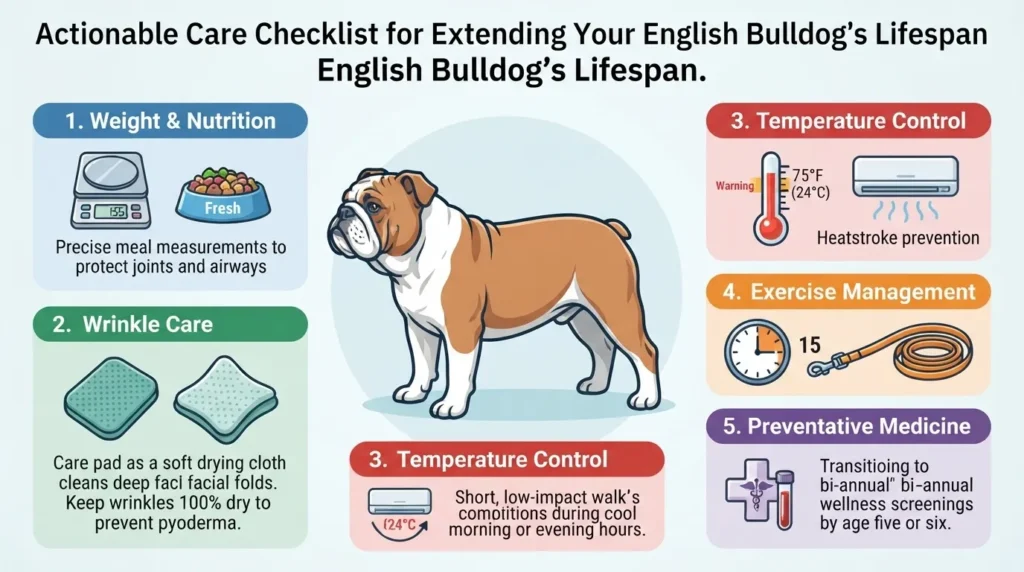
English Bulldogs are incredibly loving companions, but their unique anatomy means they require specialized care to thrive. While the breed’s average lifespan typically ranges from 8 to 10 years according to major veterinary studies, proactive daily habits can make a massive difference in your dog’s longevity and comfort.
Maintain a Healthy Weight
Carrying even a few extra pounds is highly dangerous for an English Bulldog. Extra weight puts severe pressure on their joints and worsens brachycephalic airway obstruction syndrome (BAOS), making it incredibly difficult for them to breathe.
To keep your Bulldog lean:
Measure every meal using a digital kitchen scale rather than guessing with a scoop.
Limit high-calorie treats, opting for healthy alternatives like green beans or baby carrots.
Assess their body shape regularly; you should easily feel their ribs and see a defined waistline when looking down from above.
Feed a High-Quality, Breed-Appropriate Diet
Your Bulldog’s food is the foundation of their daily energy and long-term health. Because this breed is highly prone to food allergies and flatulence, they benefit from easily digestible, high-quality proteins.
Look for formulas enriched with omega-3 fatty acids (like EPA and DHA) to manage joint inflammation and support skin health. Since Bulldogs are prone to early-onset arthritis, starting them on a vet-recommended glucosamine and chondroitin supplement early in life protects their cartilage before mobility issues start.
Keep Skin Folds Clean and Dry
Those adorable facial wrinkles are a magnet for moisture, dirt, and bacteria. Left unmanaged, these warm pockets quickly develop into painful skin fold dermatitis or yeast infections.
Make it a daily habit to gently wipe their facial folds, nose wrinkles, and tail pocket with a damp, unscented baby wipe or specialized veterinary antiseptic pad. Crucially, always follow up with a soft dry cloth to remove every trace of moisture, as damp folds are a breeding ground for bacteria.
Manage Heat Exposure Carefully
English Bulldogs cannot cool themselves down efficiently due to their shortened airways. They are extremely susceptible to heatstroke, which can turn fatal in a matter of minutes even in seemingly mild weather.
On warm days, keep outdoor time strictly limited to quick bathroom breaks and rely on indoor air conditioning to keep them cool. Never leave your Bulldog outside unattended in temperatures above 75°F (24°C), and always carry fresh water and a portable bowl when traveling.
Schedule Regular Vet Checkups
Because Bulldogs age rapidly and are prone to hereditary health struggles, waiting for symptoms to appear before booking a vet visit is risky. Annual wellness exams—transitioning to bi-annual visits once your dog reaches senior status around age five—are vital.
Routine blood panels and physical exams allow your veterinarian to detect early signs of kidney, liver, or heart issues before they become irreversible. Early intervention is often the single most effective tool for extending your Bulldog’s life.
Moderate, Safe Exercise Routine
Your Bulldog needs physical activity to prevent obesity and keep their joints lubricated, but high-intensity workouts are out of the question. Exhausting runs or long hikes can easily cause respiratory distress or collapse.
Instead, stick to two or three short, 15-minute walks during the coolest parts of the day, such as early morning or late evening. If your dog starts panting heavily, slowing down, or showing a wide, flat tongue, head home immediately to rest in the air conditioning.
Consider Pet Insurance for Early Detection & Treatment
Veterinary care for English Bulldogs can quickly become expensive due to their predisposition to cherry eye, hip dysplasia, and airway surgeries. Securing a comprehensive pet insurance policy early in your dog’s life—ideally during puppyhood before any pre-existing conditions are documented—ensures you never have to make tough medical decisions based on your bank account. Having financial peace of mind allows you to approve advanced diagnostics and specialized care the moment your dog needs them.
Is a Short Lifespan a Reason Not to Get an English Bulldog?

Deciding to bring an English Bulldog into your life often comes with a heavy dose of conflict. On one hand, breed advocacy groups like the Bulldog Breed Council champion these dogs as incredibly loyal, gentle, and character-rich companions well worth the commitment. On the other hand, extensive data from the Royal Veterinary College (RVC) highlights a stark reality: English Bulldogs face a much higher risk of life-limiting health issues, resulting in a median lifespan of just 7 to 8 years.
For many prospective owners, the fear of early heartbreak is a major deterrent. However, understanding the nuance behind these numbers can help you make an informed, compassionate decision rather than relying on fear alone.
Navigating the Risks: Breeders and Insurance
If you decide that the Bulldog’s unmatched personality is worth the risk, you must approach ownership with your eyes wide open. Your first and most critical step is choosing a highly reputable, health-tested breeder. Responsible breeders actively work to improve the breed’s health by screening parent dogs for respiratory function, hip dysplasia, and heart anomalies under accredited veterinary schemes.
Secondly, prepare your finances early. Given the breed’s predisposition to airway, skin, and joint issues, comprehensive pet insurance is a necessity, not a luxury. Securing a robust policy during puppyhood—before any pre-existing conditions are documented—ensures you can always afford the high standard of veterinary care these dogs often require.
What Real-World Longevity Actually Looks Like
While veterinary statistics provide a vital baseline, real-world owner experiences reveal a surprisingly wide spectrum of outcomes. Many Bulldog owners report their dogs living anywhere from 6 to 12+ years.
This variance isn’t just down to luck; it is heavily tied to daily management. Owners who keep their Bulldogs at a lean, healthy weight, protect them from overheating, and invest in diligent early-life care often see their companions comfortably defy the average statistics. Ultimately, while a Bulldog’s life may be shorter than that of other breeds, proactive care can make their years both vibrant and fulfilling.
Frequently Asked Questions
While the average lifespan of an English Bulldog is generally estimated to be between 8 to 10 years, it is entirely possible for them to live past 10 with exceptional care, lucky genetics, and a bit of extra vigilance.
Getting an English Bulldog into their double-digits requires managing the daily stressors on their fragile anatomy. Owners who successfully help their bulldogs reach ages 11, 12, or even older typically focus heavily on three pillars of care:
Strict Weight Control: Even one or two extra pounds can put catastrophic pressure on a bulldog's compromised airways and arthritic joints. Keeping them lean is the single most effective way to extend their life.
Climate Management: Bulldogs do not tolerate heat or high humidity because they cannot pant efficiently. Keeping them in air-conditioned spaces during warm weather prevents life-threatening respiratory distress.
Early Intervention: Addressing joint stiffness, respiratory changes, or skin irritation immediately prevents minor issues from cascading into severe, life-limiting systemic crises.
With rigorous environmental management and close partnership with a veterinarian, some English Bulldogs can defy the breed average and enjoy several happy, comfortable senior years.
Yes, English Bulldogs are genetically predisposed to a wide range of significant health issues. Because they are a brachycephalic (flat-faced) breed, their unique anatomy causes lifelong challenges. According to the Royal Veterinary College (RVC), English Bulldogs are twice as likely to be diagnosed with at least one health disorder in any given year compared to other dog breeds.
Their most common health struggles stem from how their bodies are structured:
Brachycephalic Obstructive Airway Syndrome (BOAS): Their shortened skull structure compresses their nasal passages and airways. This makes breathing, panting, and cooling down difficult, putting them at high risk for heatstroke.
Joint and Mobility Issues: Their heavy, stocky frames are prone to hip dysplasia, elbow dysplasia, and patellar luxation (slipping kneecaps).
Severe Skin Fold Dermatitis: The deep wrinkles on their faces and near their tails easily trap moisture, dirt, and bacteria, leading to painful yeast and bacterial infections if not cleaned daily.
Eye Disorders: They frequently suffer from dry eye (keratoconjunctivitis sicca), cherry eye (prolapsed third eyelid gland), and corneal ulcers.
Because of these complex, inherited conditions, owning an English Bulldog requires a proactive veterinary care schedule, careful weight management, and daily physical upkeep.
The average lifespan of an English Bulldog is 8 to 10 years. You can maximize their lifespan by maintaining a strict weight management plan to avoid obesity, scheduling regular vet check-ups, ensuring low-intensity daily exercise, and keeping them in a temperature-controlled environment to prevent overheating.
English Bulldogs are genetically prone to Brachycephalic Obstructive Airway Syndrome (BOAS), which causes severe breathing difficulties. Other major health concerns include hip dysplasia (joint issues), skin fold dermatitis (infections in their wrinkles), and heart conditions. Early diagnosis and proper management of these conditions are crucial to preventing a shortened lifespan.
Yes, English Bulldogs generally have a shorter lifespan compared to many other breeds (such as Labradors or Poodles, which often live 12 to 15 years). This is primarily due to their unique flat-faced anatomy (brachycephalic) and structural build, which makes them highly susceptible to hereditary health complications.
🐾 Other Age Guides

Gulfam Haider Mehdi
Founder & Developer
I built Dogagescalculator.com to give dog owners honest, science-backed answers instead of the outdated "×7" myth. Every figure here is checked against AKC, AVMA, and published veterinary research.
More about the author & this site →📌 Featured Guides
Dog Years for Small Dogs
→
ideal age to neuter male dog
→
Dog Breed Lifespan Chart
→
what is the life span of a blue heeler
→
How Long Do Chihuahuas Live in Human Years? Complete 2026 Guide
→
how long does it take a chihuahua to give birth
→
How Big Will My Puppy Get? Growth Chart & Calculator
→
how much does a mini australian shepherd weigh
→
golden mini dachshund
→
can you change a dog’s name after 2 years
→
Comments