
What is 14 Human Years in Dog Years?
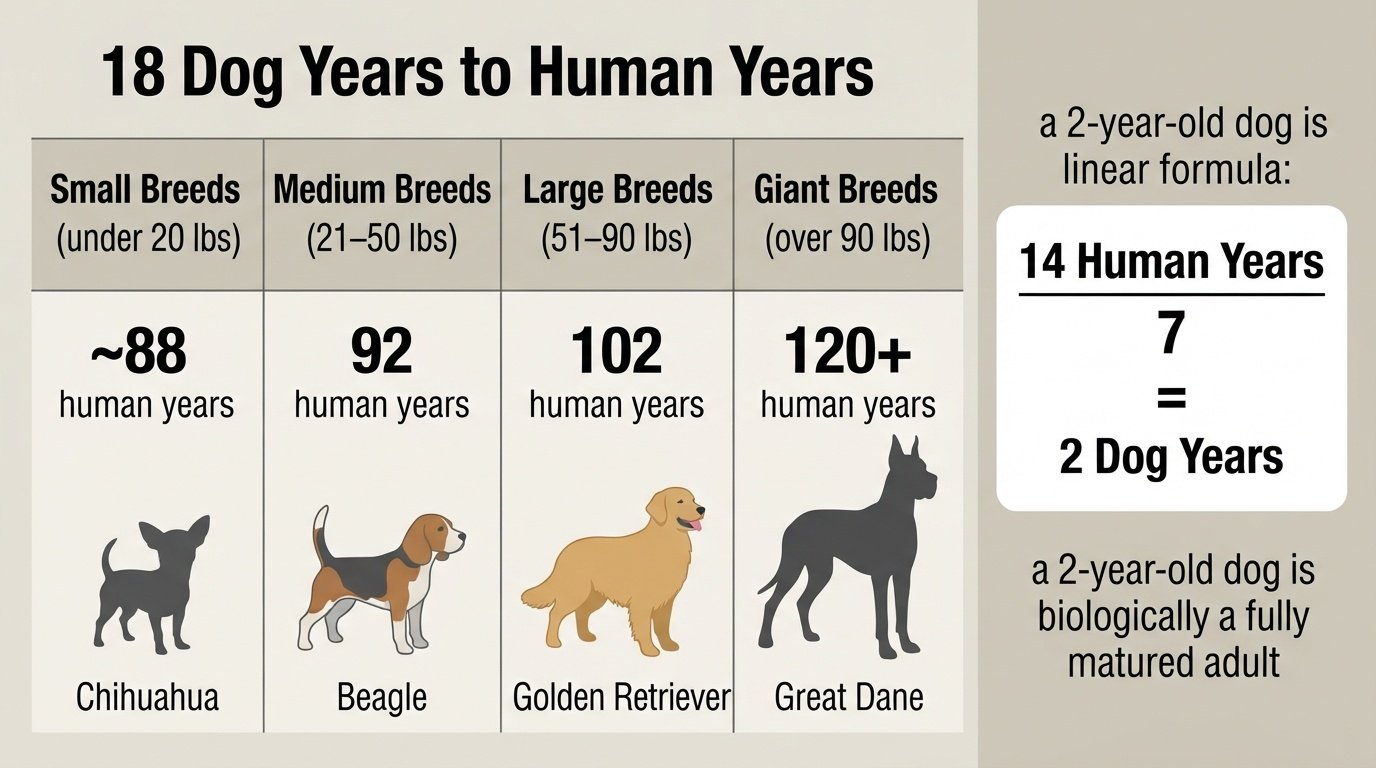
What is 14 in dog years? The answer depends on whether you mean 14 human years in dog years or a 14-year-old dog in human years. These are two different age conversions, and the old “multiply by 7” rule does not accurately reflect how dogs age.
If you mean 14 human years in dog years, a human teenager is roughly comparable to a 1-year-old dog in terms of major developmental maturity. But if you mean a 14-year-old dog in human years, the equivalent can range from roughly 72 to 108 human years, depending on the dog’s size.
What Is 14 Human Years in Dog Years?
A dog’s first year represents a much larger developmental jump than later years. By around one year old, most dogs have reached a maturity level broadly comparable to a human teenager.
How Old Is a 14-Year-Old Dog in Human Years?
A 14-year-old dog is a very senior dog. The human-age equivalent varies by size:
| Dog Size | Approx. Human Age |
|---|---|
| Small | ~72 years |
| Medium | ~78–80 years |
| Large | ~88–90 years |
| Giant | ~100–108 years |
Important: These are approximate age comparisons, not exact biological measurements. Breed, genetics, and individual health also influence aging.
Quick Answer: What is 14 Human Years in Dog Years?
Here is the clean text block without any LaTeX symbols or box layouts, formatted perfectly for your website to copy and paste directly into your CMS:
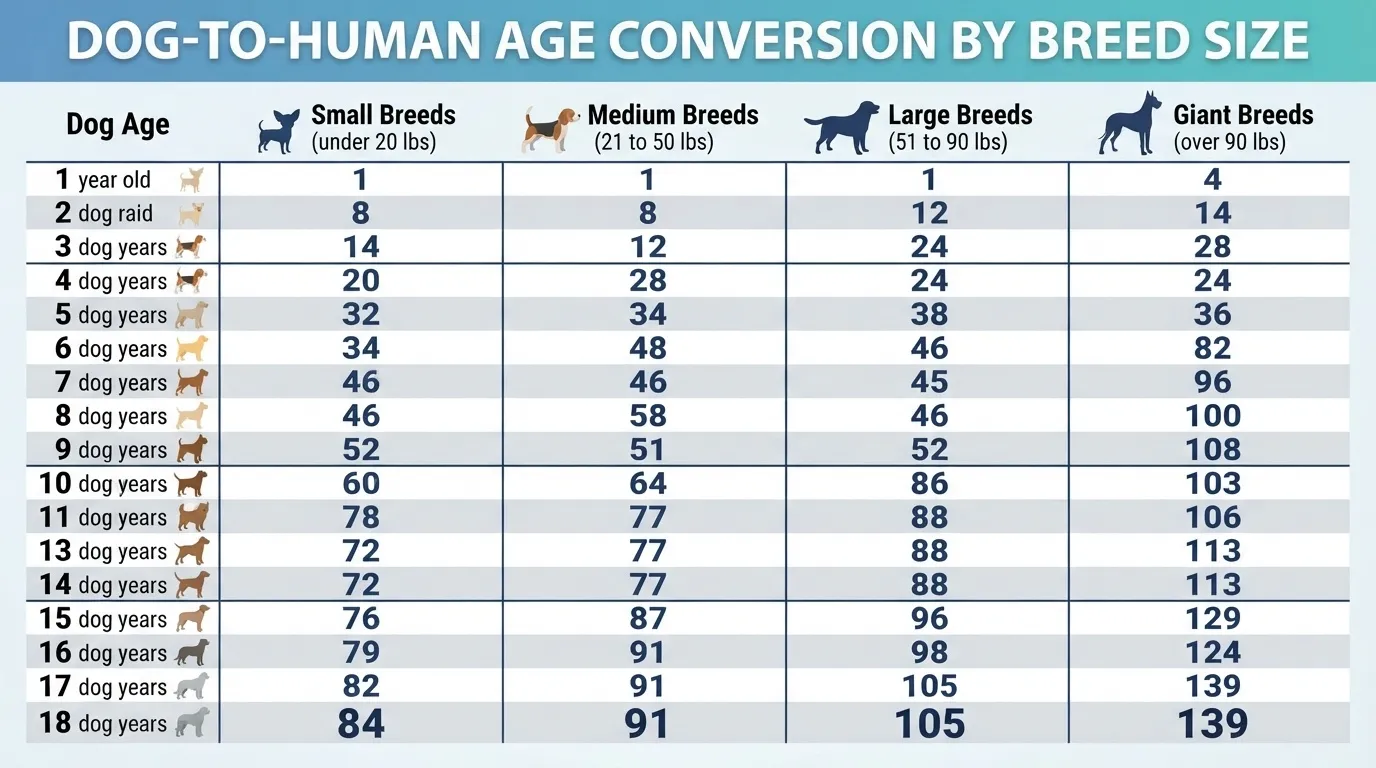
Under the traditional “Rule of 7” conversion framework, 14 human years matches the lifecycle progress of 2 dog years.
If you are converting human age into canine terms, the classic linear calculation divides the human years by seven: 14 human years divided by 7 equals 2 dog years.
To look at it from the opposite direction—if you want to know how old a 14-year-old senior dog is in human terms—you multiply the canine age by seven, which equals 98 human years (14 multiplied by 7 equals 98).
Scientific Reality: While these simple formulas give you a quick baseline number, modern veterinary medicine proves that dogs do not age at a rigid 7:1 ratio. A 2-year-old dog has already sprinted past their adolescent phase and is physically a fully matured young adult, meaning they are biologically much more developed than a 14-year-old human teenager.
Wait — Do You Mean the Idiom "Dog Years"?
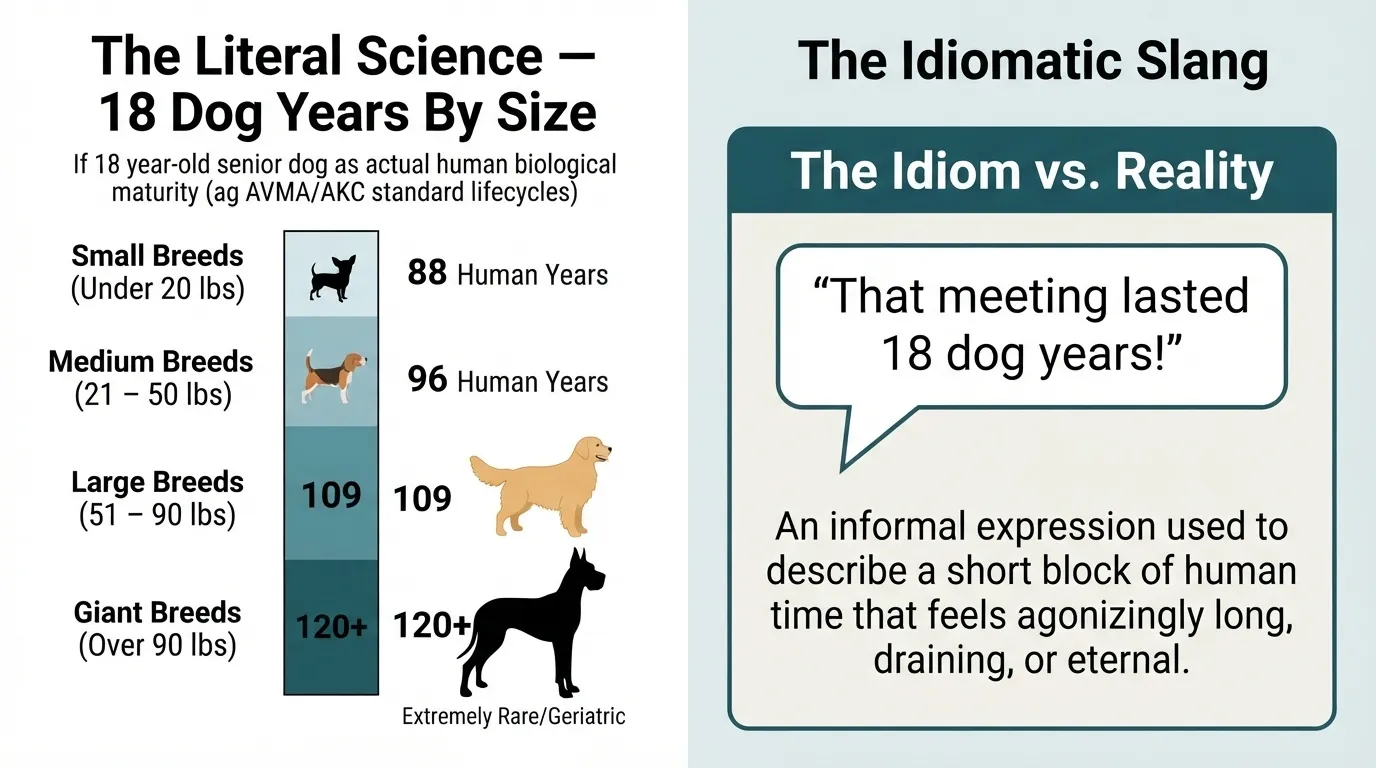
Sometimes people search for this phrase without actually trying to calculate a pet’s age. Instead, they are using “dog years” as an English idiom or slang expression.
Literal Meaning: Calculating the actual biological and chronological age of a canine.
Idiomatic Meaning: An expression used to describe a period of time that feels incredibly long, exhausting, or drawn out (e.g., “That afternoon meeting felt like 14 dog years”).
Whether you are here for the actual pet science or just trying to emphasize a ridiculously long week, we cover both calculations and context below.
The Real Science Behind Dog Aging
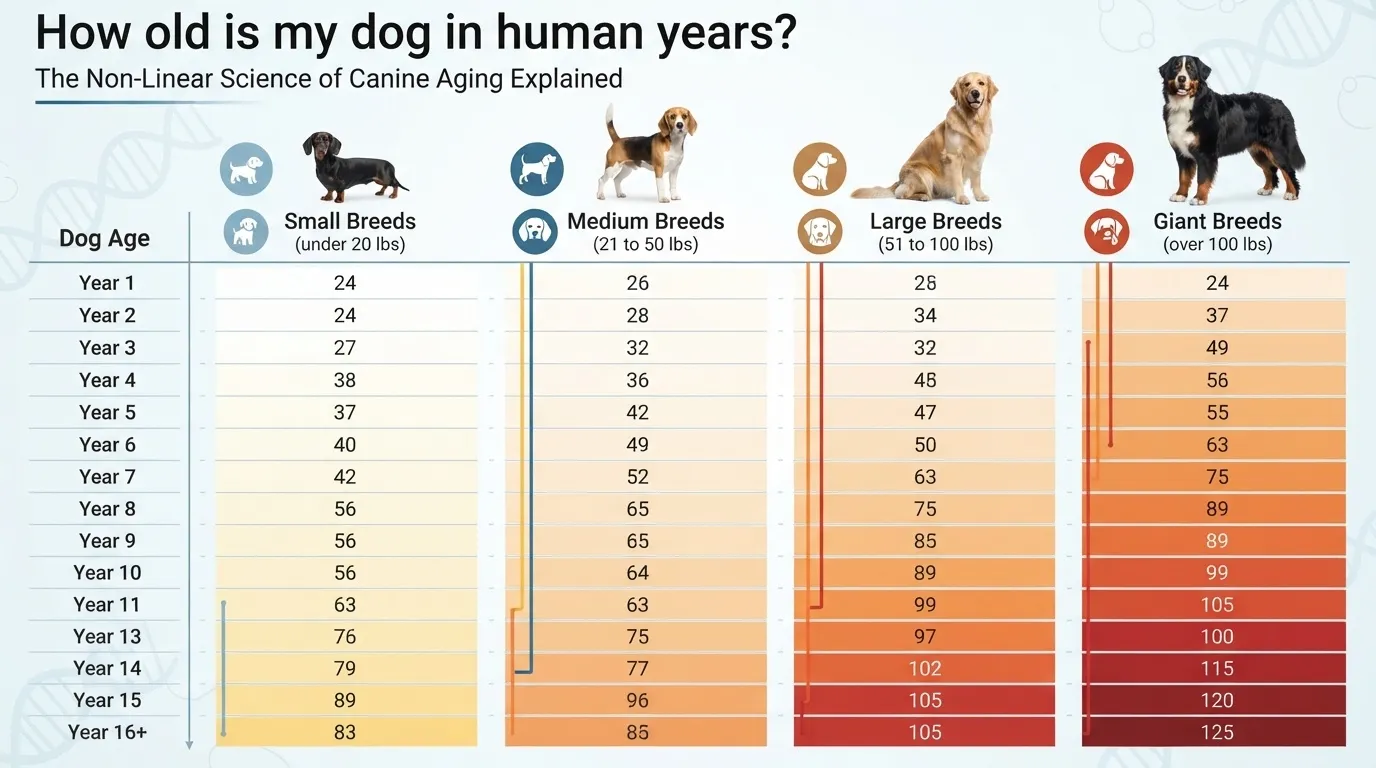
To understand how a dog actually grows, you have to throw out the idea that one human year matches a neat, predictable block of canine time. The biological reality is much more complex, and modern veterinary science tracks aging through cellular and genetic shifts rather than simple calendar years.
Where the “7-Year Rule” Myth Came From
The origin of the classic “7-year rule” wasn’t based on veterinary science at all; it was mostly a clever marketing strategy and a basic mathematical oversimplification from the mid-20th century.
In the 1950s, researchers noticed that the average human lifespan was around 70 years, while the average companion dog lived for about 10 years. Statisticians and pet food manufacturers simply divided 70 by 10, creating the popular myth that every calendar year a dog lives equals seven years for a human. It was an easy way to encourage pet parents to bring their dogs in for annual vet checkups, but it ignored basic biology.
This linear math is fundamentally flawed because canines age in a highly non-linear fashion. A dog’s life stages are heavily front-loaded; they sprint through infancy and adolescence in a matter of months, reach adulthood by age two, and then their metabolic aging slows down significantly for the middle portion of their lives.
Using a flat 7-to-1 multiplier fails to account for this rapid early development, making it an outdated way to assess your pet’s true physiological health.
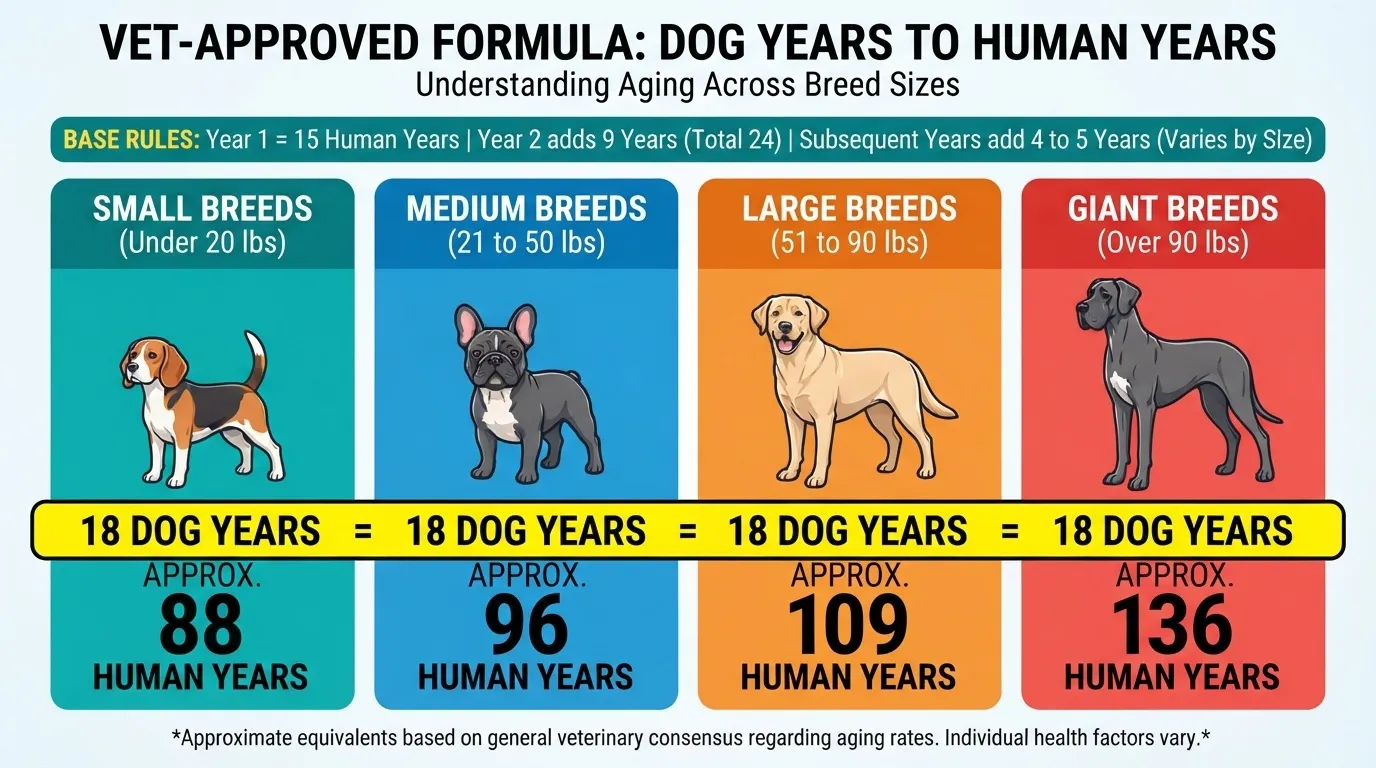
The Vet-Approved Formula (Dog to Human Direction
Why There's No Official Reverse Human to Dog Formula
If you want to move away from the myth and calculate your pet’s true age like a veterinarian, modern veterinary medicine uses a much more accurate tiered system. This approach accounts for the massive biological sprint a dog takes early in life.
The consensus model used by veterinary researchers breaks down the conversion like this:
Year 1 = 15 Human Years: A dog completes their entire childhood and early teenage development during their first 12 months.
Year 2 = Add 9 Years: By their second birthday, a dog adds another 9 human years, bringing them to a total biological maturity of 24 human years.
Every Year After = Add 4 to 5 Years: Once a dog reaches adulthood at age two, their aging process slows down to a stable rate of 4 to 5 human years for every calendar year, depending entirely on their weight.
This tiered formula ensures you don’t treat a perfectly healthy 2-year-old adult dog like a frail teenager, or a senior dog like a middle-aged one. For a deeper look at how veterinarians assess life stages and preventative care intervals based on these biological milestones, you can review the official guidelines on the American Veterinary Medical Association (AVMA) website.
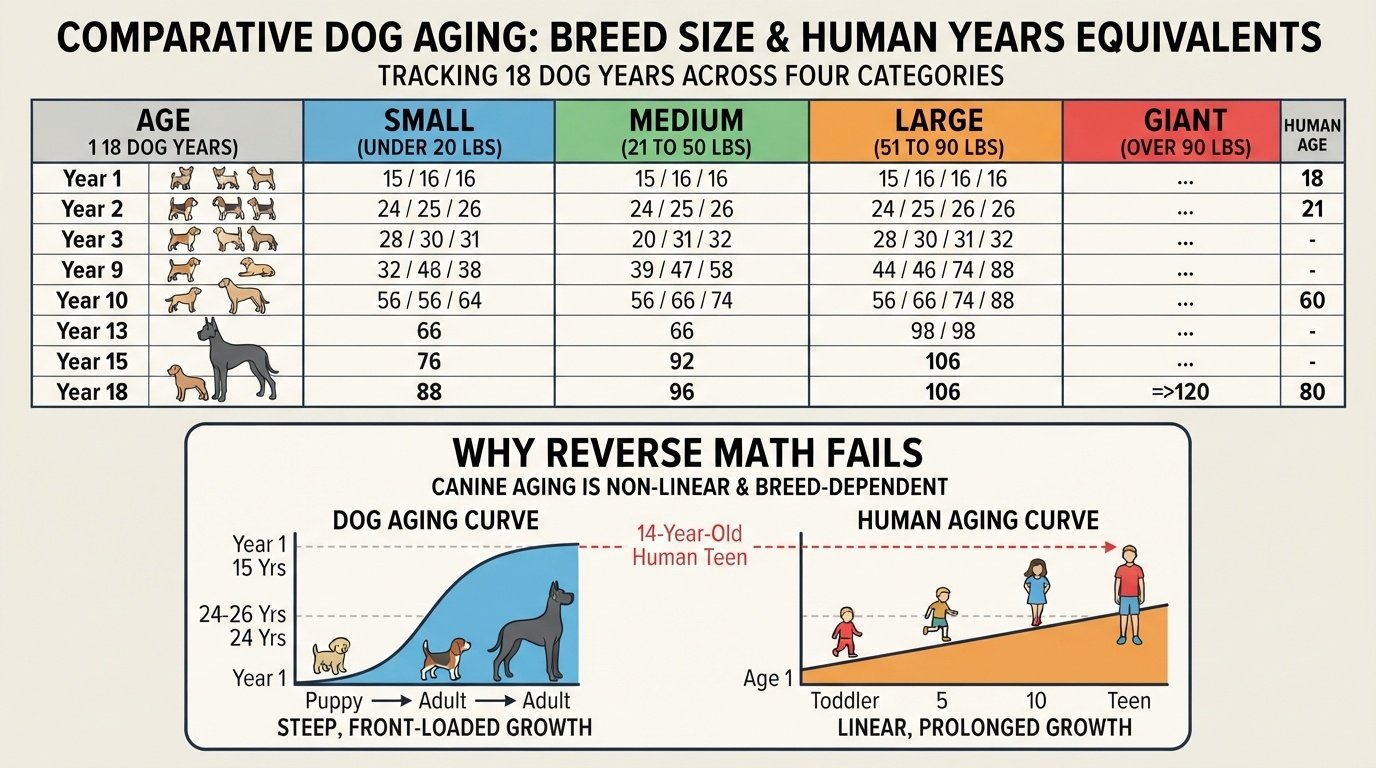
While it is easy to convert a pet’s age into human terms to gauge their maturity, you won’t find an official, scientifically backed formula that goes the opposite way. Professional veterinarians simply do not calculate human ages into canine equivalents on an official or medical basis.
Because of this, searching for what 14 human years means in dog terms will only ever give you a fun, myth-based estimate rather than an actual medical fact.
The biological gap between our two species makes a reverse calculation highly impractical for real medicine. For instance, a 14-year-old human is just entering adolescence and has decades of physical development ahead. However, using any linear math would either turn that teenager into a tiny puppy or an incredibly ancient, senior dog, neither of which aligns with how real canine cells and organs actually age.
Want the Accurate Number? Use Our Calculator
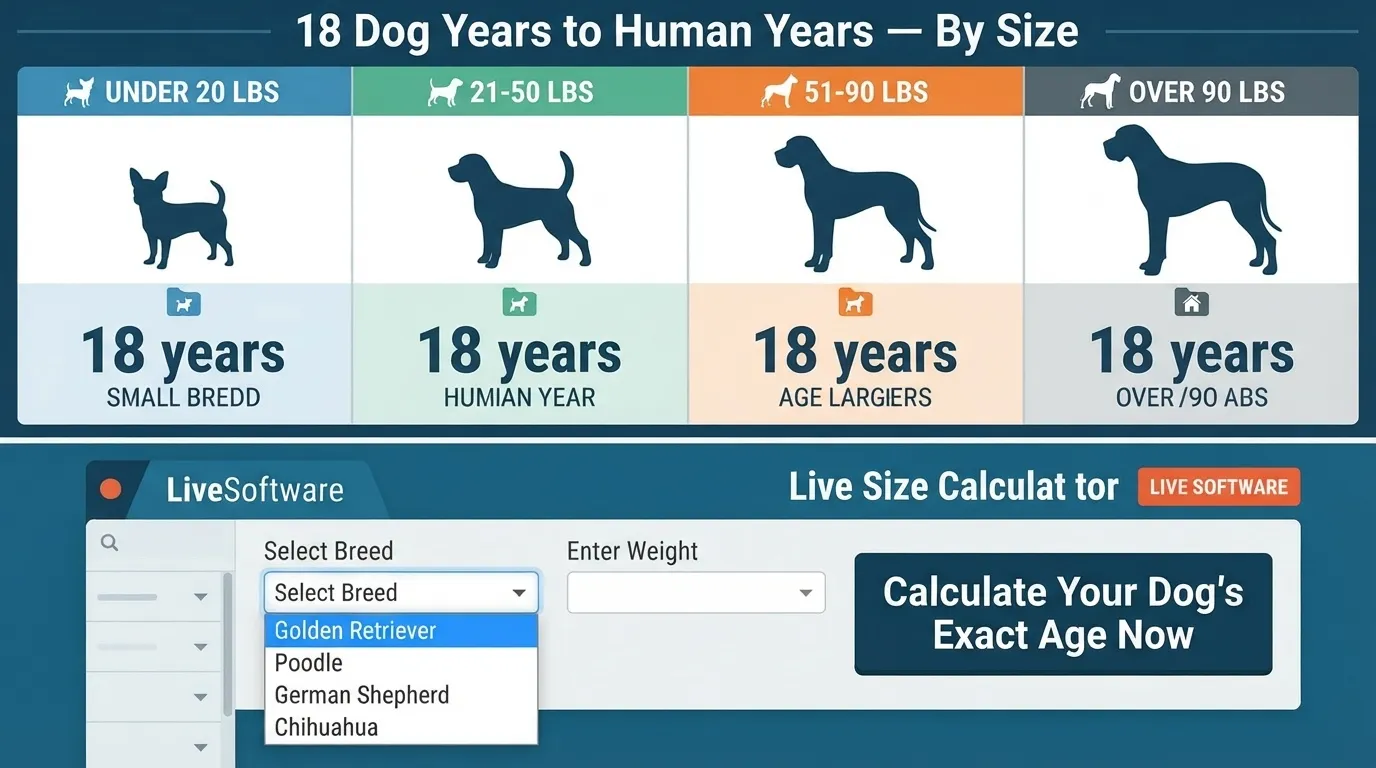
Instead of guessing with outdated math formulas, let our intelligent tool do the heavy lifting for you. Our system factors in the latest veterinary life-stage data, your dog’s specific breed category, and precise weight metrics to give you a mathematically accurate biological conversion instantly.
Frequently Asked Questions
No, 14 human years translates to a 2-year-old dog, which means the animal is actually a fully developed young adult at the peak of its physical health, not a senior. The senior classification only applies if you reverse the math (a 14-year-old senior dog is equivalent to roughly 72 to 100+ human years depending on their weight class).
Using the traditional linear method, you simply divide 14 by 7 to get exactly 2 dog years. However, modern veterinary science uses a non-linear approach where the first human year equals 15 dog years, the second equals 9, and every subsequent year adds 4 to 5 years, meaning human and canine years do not match up cleanly.
When a dog reaches the equivalent of 14 human years (which is 2 calendar or dog years), they have completely transitioned out of the puppy and adolescent phases. Biologically, their skeletal growth plates have closed, their adult teeth are fully formed, and they are experiencing the behavioral maturity of a young adult human in their early twenties.
This developmental difference occurs because canine lifecycles are heavily front-loaded. While a 14-year-old human teenager is still growing and navigating adolescence, a 2-year-old dog (equivalent to 14 human years on the old linear scale) has already reached full sexual, mental, and physical maturity due to rapid evolutionary adaptations designed for wilderness survival.
🐾 Other Age Guides

Gulfam Haider Mehdi
Founder & Developer
I built Dogagescalculator.com to give dog owners honest, science-backed answers instead of the outdated "×7" myth. Every figure here is checked against AKC, AVMA, and published veterinary research.
More about the author & this site →📌 Featured Guides
What Is the Lifespan of a French Bulldog?
→
Difference Between a Lhasa Apso and a Shih Tzu
→
golden mini dachshund
→
can a large dog breed with a small dog
→
how old should a german shepherd be to breed
→
what age does a dog have a period
→
Dog Age Chart
→
How to Tell How Old a Bird Is
→
60 in dog years
→
Dog Breed Lifespan Chart
→
Comments