
Dog Years to Human Years Converter — Find Your Dog's Real Age Instantly
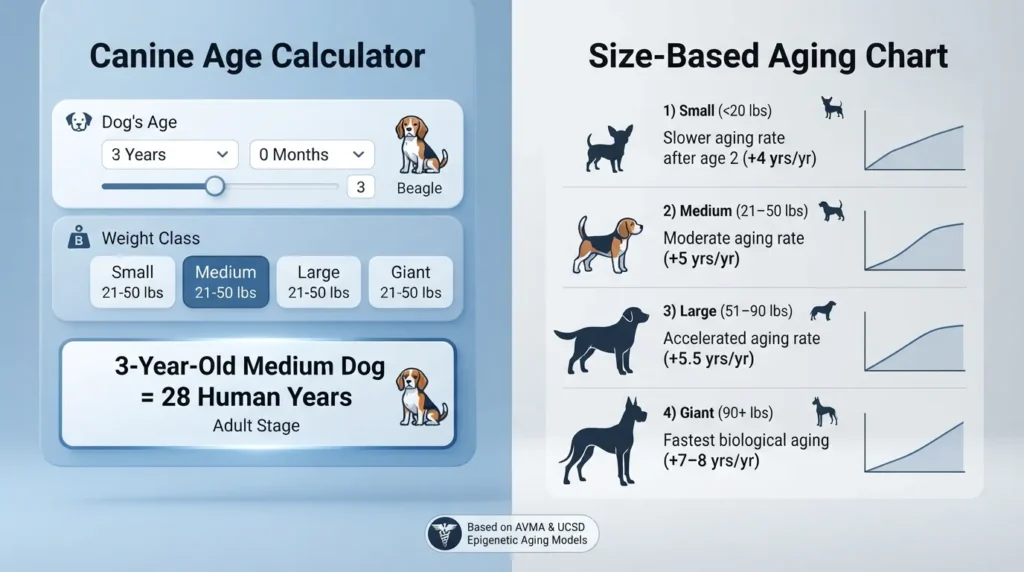
Forget the old “multiply by 7” rule. A 1-year-old dog isn’t equivalent to a 7-year-old child—genetically, they have already reached human adulthood. Dogs age rapidly during their first two years, after which their aging process slows down and varies significantly depending on their size and breed.
Our Dog Years to Human Years Converter uses the latest veterinary aging models to give you an exact, breed-adjusted age in seconds. Simply select your dog’s age, weight, or breed above to reveal their true human age equivalent.
Below, you’ll find our complete size-specific conversion chart, the epigenetic science behind the formula, and key health milestones for every life stage.
Vet-approved aging models based on American Veterinary Medical Association (AVMA) standards and UC San Diego DNA research. Last updated August 2026.
Dog Age Calculator
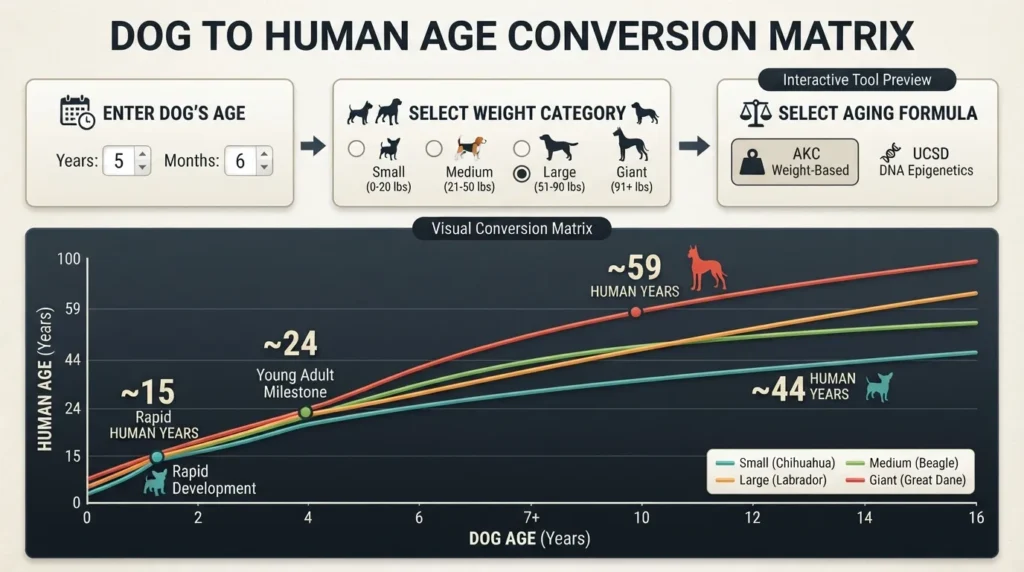
Calculate your dog’s true human-equivalent age instantly with our science-backed converter. Standard math ignores size and breed differences, but this tool factors in your dog’s weight class to give you a precise result in seconds.
How to Use the Calculator
Enter your dog’s current age in years and months.
Select your dog’s size category (Small, Medium, Large, or Giant) based on their adult weight.
Click “Calculate” to see your dog’s real human age and current life stage instantly.
Understanding Your Results
Your result gives you two critical pieces of information:
Human-Year Equivalent: The actual physiological age of your dog compared to a human based on recent veterinary science.
Life Stage: Clear classification showing whether your dog is a Puppy, Adult, or Senior. Knowing this helps you adjust their diet, exercise routine, and vet checkup schedule.
Save and Share
Want to keep a copy for your vet records or brag on social media? Use the buttons below your result to Download a summary badge or Share your dog’s real age directly with friends.
How Do Dog Years Work?
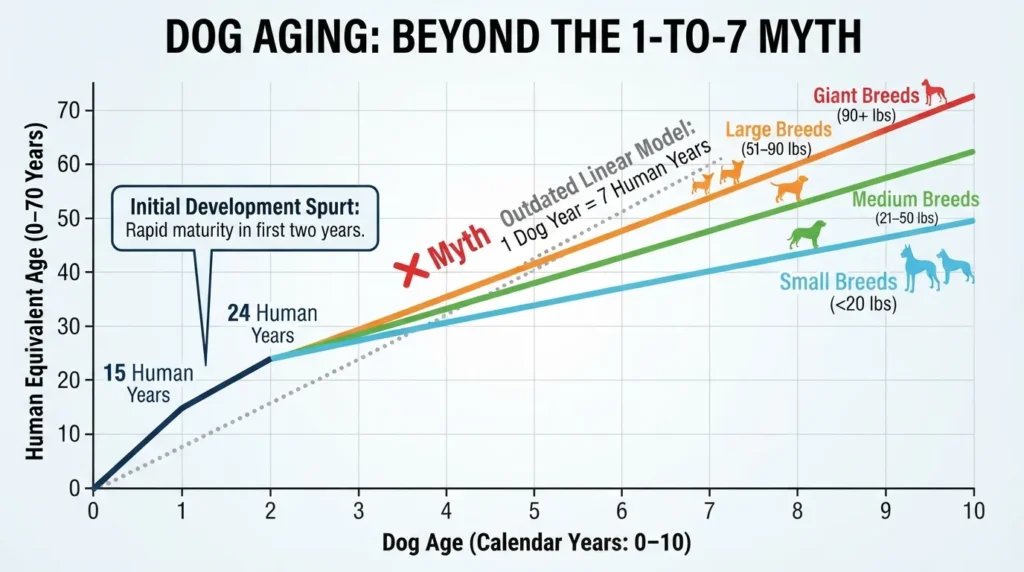
Dogs age fastest during their first two years of life, reaching the equivalent of a 24-year-old human by age two. After that initial growth spurt, their aging slows down to roughly 4 to 7 human years for every calendar year, depending heavily on their body size.
Why “1 Dog Year = 7 Human Years” Is a Myth
The popular “multiply by 7” rule was created in the 1950s as a rough marketing estimate, but modern veterinary science has proven it wrong. Dogs don’t age at a linear rate throughout their lives.
A one-year-old pup is already sexually mature and physically capable of reproducing—something no seven-year-old child can do. The old rule completely overlooks this rapid early development and treats a young pup the same as an aging senior.
The Real Aging Pattern (1 Dog Year Breakdown)
To get an accurate picture of your dog’s true biological age, researchers use a front-loaded calculation:
1st Year: Equals about 15 human years. Your puppy undergoes massive physical, dental, and social growth during this period.
2nd Year: Adds roughly 9 more human years (bringing your dog to about 24 human years). By now, their growth plates have fused and they’ve reached young adulthood.
Every Year After: Adds about 4 to 5 human years per calendar year, though giant breeds age faster than smaller dogs as they enter senior territory.
Dog Years to Human Years Chart By Size
A dog’s weight plays the biggest role in how quickly they age after their second year. Smaller dogs age much slower through adulthood, whereas giant breeds experience accelerated cellular aging that brings on senior status much earlier.
Small Breed Dogs (up to 20 lbs)
Small dogs like Chihuahuas, Toy Poodles, and Dachshunds mature quickly in their first two years, reaching about 24 human years by age two. After that, they age at a steady rate of roughly 4 human years for every calendar year.
Small breeds enter their senior years around 10 to 11 years old. Because of their slower physiological aging rate, many small dogs live well into their mid-teens before showing severe age-related health changes.
Medium Breed Dogs (21–50 lbs)
Medium-sized dogs like Beagles, Cocker Spaniels, and Bulldogs sit right in the middle. After reaching maturity at age two, they age about 5 human years for every calendar year.
Medium dogs typically cross into senior status around 8 to 9 years old. Keep an eye out for minor joint stiffness or subtle changes in energy levels during this window.
Large Breed Dogs (51–90 lbs)
Large dogs like Labradors, Golden Retrievers, and German Shepherds age faster during adulthood, averaging roughly 5 to 6 human years for every calendar year after their second birthday.
Large breeds officially reach their senior years at age 7. Veterinary organizations like the American Animal Hospital Association (AAHA) recommend twice-yearly wellness checks starting at this stage to catch organ and joint issues early.
Giant Breed Dogs (90+ lbs)
Giant breeds like Great Danes, Mastiffs, and Saint Bernards undergo rapid biological aging, jumping roughly 7 to 8 human years for every calendar year after age two.
Giant breeds hit senior status early at just 5 to 6 years old. Because their bodies undergo heavy physical strain, proactive senior care, cardiac monitoring, and joint support are critical much earlier in their lives.
How to Calculate Dog Years to Human Years 3 Proven Methods
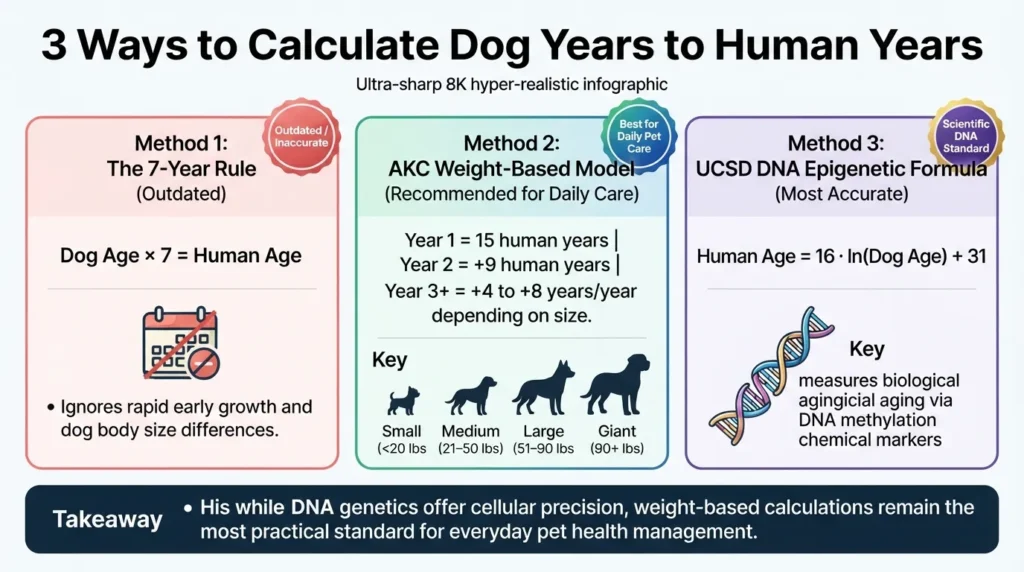
Calculating your dog’s true biological age isn’t a one-size-fits-all equation. Over the decades, veterinary science has evolved from crude approximations to genetic precision. Here are the three main ways people calculate dog years—and how accurate each method really is.
Method 1 — The Old 7-Year Rule (Why It’s Outdated)
The popular rule of multiplying your dog’s age by seven is biologically inaccurate. It assumes dogs age at a linear rate throughout their lives and ignores the huge metabolic differences between a Chihuahua and a Great Dane.
In reality, a one-year-old dog reaches sexual maturity and physical development comparable to a 15-year-old human—not a seven-year-old child. Using this rule severely underestimates a young dog’s maturity and overestimates an older small dog’s biological wear.
Method 2 — AKC Size-Based Formula
The American Kennel Club (AKC) uses a tiered system that accounts for rapid early growth and subsequent body weight differences. This remains the most practical method for daily pet care.
Count your dog’s first calendar year as 15 human years. This reflects the intense initial growth phase during puppyhood.
Add 9 human years for your dog’s second calendar year. By age two, regardless of size, your dog is equivalent to a 24-year-old adult.
For every calendar year after age two, add years based on your dog’s weight group:
Small (<20 lbs): Add 4 years per year
Medium (21–50 lbs): Add 5 years per year
Large (51–90 lbs): Add 5 to 6 years per year
Giant (90+ lbs): Add 7 to 8 years per year
Method 3 — The New DNA Methylation Formula (Most Accurate)
In 2019, researchers at the University of California, San Diego (UCSD) studied chemical markers on canine DNA called methyl groups. They discovered that dogs and humans hit the same developmental milestones at identical epigenetic ages—creating the most scientifically rigorous aging model to date.
The exact epigenetic formula is:
Human Age = 16 × ln(Dog Age) + 31
To calculate this, take the natural logarithm (ln) of your dog’s age in calendar years, multiply it by 16, and add 31. For example, a 1-year-old dog converts to 16 × ln(1) + 31 = 31 human years at the cellular level, while a 5-year-old dog reaches roughly 57 human years (16 × 1.61 + 31).
The Honest Limitation:
While groundbreaking, the UCSD study focused primarily on Labrador Retrievers. Because it measures genome-wide DNA changes without factoring in body mass variations, it can slightly overestimate the physiological wear of smaller, longer-lived breeds in their later years.
Puppy Age in Human Years
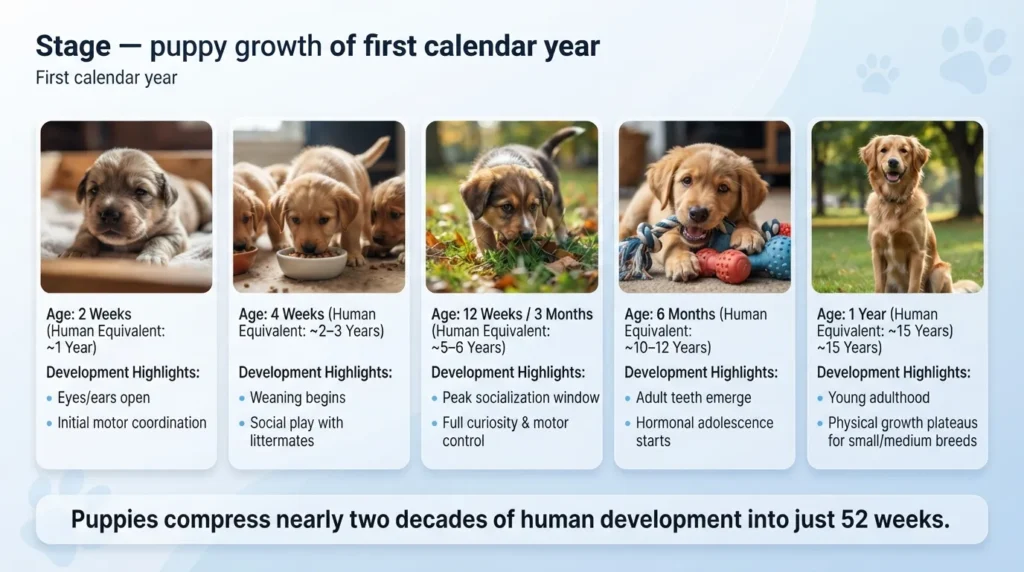
Puppies age at a breakneck speed compared to human babies, going from helpless newborns to functional young adults in under twelve months. Understanding this condensed timeline helps you align your training, nutrition, and veterinary care with their rapid physiological development.
Puppy Age Chart (Weeks to Months)
During their first year, a puppy’s development compresses almost two decades of human growth into just 52 weeks:
2 Weeks (Human Equivalent: ~9–12 Months): Eyes and ear canals begin opening. Puppies start taking their first unsteady steps and responding to light and sound.
1 Month / 4 Weeks (Human Equivalent: ~2–3 Years): Transition phase begins. Puppies gain mobility, start playing with littermates, and begin the weaning process onto solid food.
3 Months / 12 Weeks (Human Equivalent: ~5–6 Years): Peak socialization window. Puppies have full motor control, high curiosity, and require active exposure to new sounds, people, and environments.
6 Months (Human Equivalent: ~10–12 Years): Pre-adolescence. Teething finishes as adult teeth emerge, sexual maturity approaches, and testing boundaries becomes common behavior.
1 Year (Human Equivalent: ~15 Years): Young adulthood. Physical growth plateaus for most breeds, though large and giant breeds continue filling out structurally until age two.
Key Puppy Development Stages
1. Weaning (Weeks 3 to 8)
Puppies transition from mother’s milk to solid puppy food. Their digestive systems mature rapidly, and they learn bite inhibition through playful interactions with their mother and littermates. Separating a puppy before 8 weeks can lead to severe behavioral and anxiety issues later in life.
2. Socialization Window (Weeks 3 to 14)
According to the American Veterinary Society of Animal Behavior (AVSAB), this is the most critical learning period in a dog’s life. Positive exposure to different surfaces, sounds, vehicles, children, and other vaccinated pets during this stage permanently shapes their confidence and emotional stability.
3. Teething & Adolescence (Months 3 to 6+)
Baby teeth fall out to make room for 42 permanent adult teeth. Expect intense chewing behavior during this phase, which requires durable chew toys and structured boundary setting. As hormones surge around 6 months, consistent positive-reinforcement training becomes essential to manage instinctual independence.
Senior Dog Age in Human Years
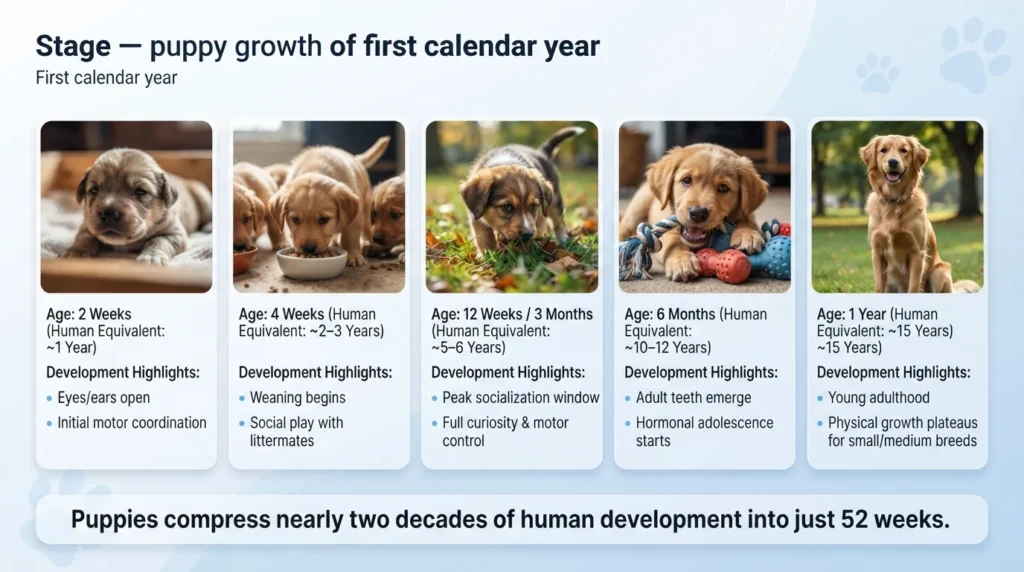
A dog enters their senior years much earlier than most owners realize, but the exact timing depends heavily on their physical size. Recognizing when your dog crosses this threshold allows you to adjust their diet, joint care, and veterinary checkups before subtle age-related issues become major health problems.
When Is a Dog Considered “Senior”? (By Size)
Larger bodies place greater metabolic strain on organs and joints, meaning big dogs reach senior status years ahead of smaller breeds:
Small Breeds (Up to 20 lbs): Considered senior at 10 to 11 years old (roughly 56 to 60 human years).
Medium Breeds (21 to 50 lbs): Considered senior at 8 to 9 years old (roughly 52 to 57 human years).
Large Breeds (51 to 90 lbs): Considered senior at 7 to 8 years old (roughly 56 to 62 human years).
Giant Breeds (90+ lbs): Considered senior at 5 to 6 years old (roughly 45 to 52 human years).
Signs of Aging to Watch For
As your dog approaches senior status, pay close attention to these common physiological and behavioral shifts:
Cloudy Eyes (Lenticular Sclerosis): A hazy, bluish tint in the lenses is a normal aging sign that usually doesn’t impair vision significantly, though it should be distinguished from cataracts by a vet.
Graying Muzzle & Face: Loss of pigment around the snout, eyes, and brow often accelerates during the early senior years.
Joint Stiffness & Slow Rising: Hesitation before climbing stairs, difficulty getting up after naps, or a stiffer gait—especially in cold weather—frequently indicates early osteoarthritis.
Behavioral & Cognitive Changes: Subtle shifts like sleeping more deeply, increased anxiety, confusion in familiar places, or altered social interactions can signal canine cognitive dysfunction or unmanaged pain.
Dog Age Chart by Breed
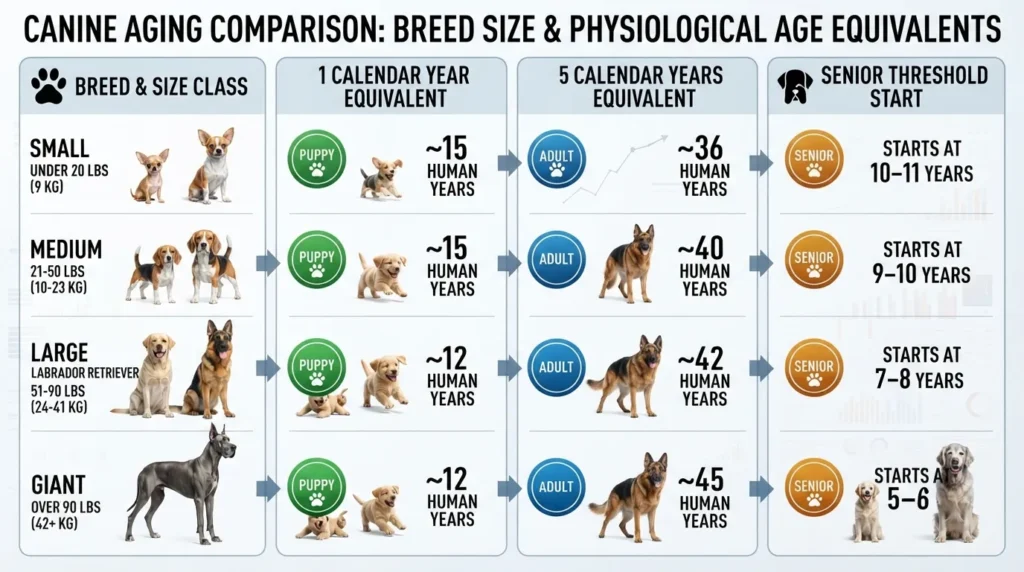
While body weight offers a solid baseline, individual breeds age at slightly different rates based on genetics, common health predispositions, and average lifespans. Here is how some of the most popular dog breeds age in human years throughout their lives.
| Breed | Category | 1 Dog Year | 5 Dog Years | 10 Dog Years | Senior Age Starts |
|---|---|---|---|---|---|
| Chihuahua | Small | 15 human yrs | 36 human yrs | 56 human yrs | 10–11 yrs |
| French Bulldog | Small | 15 human yrs | 36 human yrs | 56 human yrs | 9–10 yrs |
| Poodle (Toy/Mini) | Small | 15 human yrs | 36 human yrs | 56 human yrs | 10–11 yrs |
| Beagle | Medium | 15 human yrs | 37 human yrs | 62 human yrs | 8–9 yrs |
| Poodle (Standard) | Medium/Large | 15 human yrs | 39 human yrs | 67 human yrs | 8 yrs |
| Labrador Retriever | Large | 15 human yrs | 39 human yrs | 67 human yrs | 7–8 yrs |
| Golden Retriever | Large | 15 human yrs | 39 human yrs | 67 human yrs | 7–8 yrs |
| German Shepherd | Large | 15 human yrs | 39 human yrs | 67 human yrs | 7–8 yrs |
| Great Dane | Giant | 12 human yrs | 45 human yrs | 80 human yrs | 5–6 yrs |
Key Breed Aging Differences
Chihuahuas & Toy Poodles: These small breeds routinely live into their mid-to-late teens (15–18 years). Their cellular aging slows dramatically after age two, keeping them active well into what humans consider their 70s and 80s.
French Bulldogs & Beagles: Compact breeds generally enjoy longer lifespans than large dogs, though brachycephalic (flat-faced) breeds like French Bulldogs require closer health monitoring as they enter their senior years around age 9.
Labradors, Golden Retrievers & German Shepherds: As classic large breeds, they follow a steady aging curve through midlife but experience faster physical decline after age 7, making early joint care and weight management essential.
Great Danes: Giant breeds experience the fastest rate of biological aging. A 5-year-old Great Dane is physiologically equivalent to a 45-year-old human, and they enter their senior phase at just 5 years old.
Don't Know Your Dog's Exact Age? Here's How to Estimate It
If you adopted a rescue or found a stray, determining their exact birthdate is almost impossible. However, veterinarians and shelters use specific physiological markers—primarily dental wear and physical body changes—to narrow down a dog’s age within a very reliable range.
Estimating Age by Dental Progression
Teeth are the most reliable biological clock for aging a dog, especially in their first few years of life:
8 Weeks: All 28 sharp, translucent baby (deciduous) teeth have fully erupted.
7 Months: All 42 permanent adult teeth have grown in, appearing clean, bright white, and sharp with no visible tartar buildup.
1 to 2 Years: Minor dulling and slight yellowing begin on the back molars, with minimal tartar accumulation.
3 to 5 Years: Visible yellowing, moderate tartar, and light surface wear appear on all teeth, with potential early gum inflammation.
5 to 10 Years: Noticeable dental wear, heavier tartar buildup, and visible gum recession become apparent.
10 to 15 Years: Severe tooth wear, prominent tartar, loose or missing teeth, and advanced periodontal disease are common without dental intervention.
Physical Signs That Signal Age
When dental estimates are unclear—especially in dogs with prior dental care—look for these secondary physical indicators:
Muscle Tone & Posture: Young dogs display sharp, firm muscle definition and a tight, springy posture. Older dogs often show muscle wasting along their spine, hips, and shoulders, giving them a more prominent backbone.
Coat & Skin Texture: Younger dogs possess soft, vibrant coats. As dogs age, their fur grows coarser, drier, and develops grey patches around the muzzle, chin, and eyebrows.
Eye Clarity: Clear, bright eyes indicate youth. Around age 6 to 8, a benign bluish haze (lenticular sclerosis) often develops deep within the lens of older dogs.
Get a Professional Veterinary Exam
While these physical markers give you a solid ballpark figure, an experienced veterinarian can provide the most accurate estimate. During a comprehensive physical exam, your vet evaluates joint mobility, organ function, eye clarity, and dental health together—giving you a precise age range so you can tailor your dog’s diet and care plan appropriately.
Large Breed vs Small Breed Dog Years — Why the Difference?
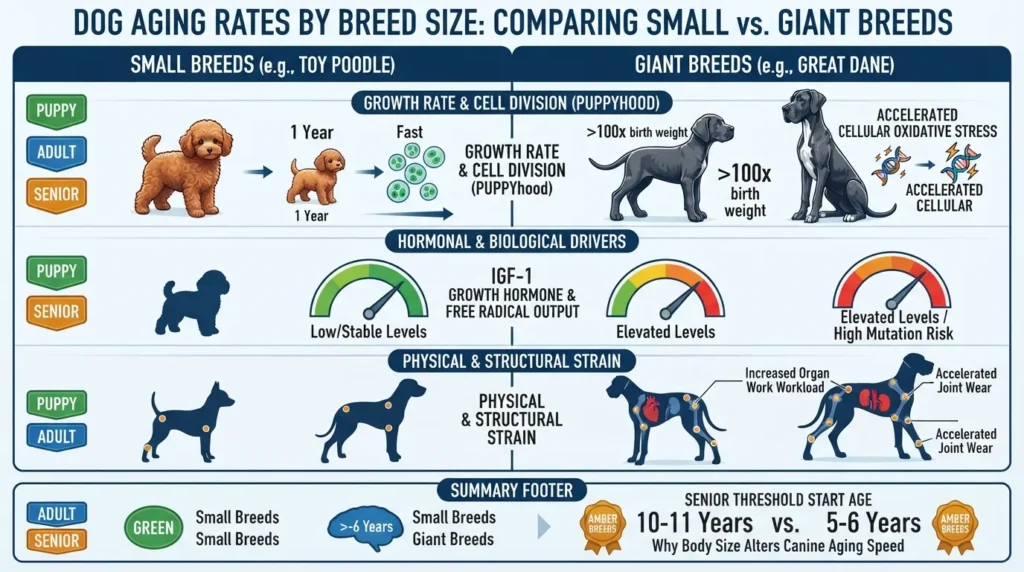
It is one of biology’s stranger paradoxes: across almost the entire animal kingdom, larger species outlive smaller ones. An elephant lives up to 70 years while a mouse barely reaches three.
Yet within the domestic dog species, the exact opposite occurs. A 6-pound Toy Poodle frequently reaches 16 calendar years, while a 150-pound Mastiff is considered elderly at six. Evolutionary biologists and veterinary researchers point to two main drivers behind this dramatic disparity.
Accelerated Cellular Aging & Cancer Risk
The primary reason large dogs age faster comes down to their initial growth speed and cellular turnover. Giant breeds don’t just grow larger; they grow at an astonishing, unnatural speed. A Great Dane puppy increases its birth weight by over 100 times in its first year alone, whereas a human baby takes roughly a decade to scale by similar proportions.
This hyper-accelerated growth requires massive amounts of rapid cell division.
Higher Free Radical Production: Fast-dividing cells generate huge volumes of metabolic byproducts, leading to oxidative damage at the cellular level much earlier in life.
Elevated IGF-1 Levels: Large dogs possess significantly higher levels of Insulin-like Growth Factor 1 (IGF-1), a hormone that drives growth but is directly linked to accelerated aging and elevated cancer rates in mammals.
Increased Mutation Rates: Because giant breeds undergo millions more cell divisions during early development, their risk of cellular copying errors—and ultimately malignant tumors—increases exponentially compared to small dogs.
Researchers often describe giant dogs as “living in fast-forward.” Their adult bodies essentially reach cellular exhaustion at a fraction of the chronological time it takes a toy breed.
Metabolic Rate Differences & Physical Wear
Beyond genetics, the sheer mechanics of supporting a large body take a heavy toll on internal systems:
Organ Workload: A large dog’s heart, liver, and kidneys must work vastly harder to circulate blood and filter toxins through 100+ pounds of tissue compared to an 8-pound frame.
Structural Strain: Massive body mass places continuous mechanical stress on joints, cartilage, and bone matrix. This causes wear-and-tear conditions like osteoarthritis to manifest years earlier.
Basal Metabolic Demands: While small dogs actually burn more calories per pound of body weight than large dogs, the total metabolic burden and structural tax on a giant breed’s body accelerates tissue degradation over time.
Human Years to Dog Years Converter Reverse Calculation
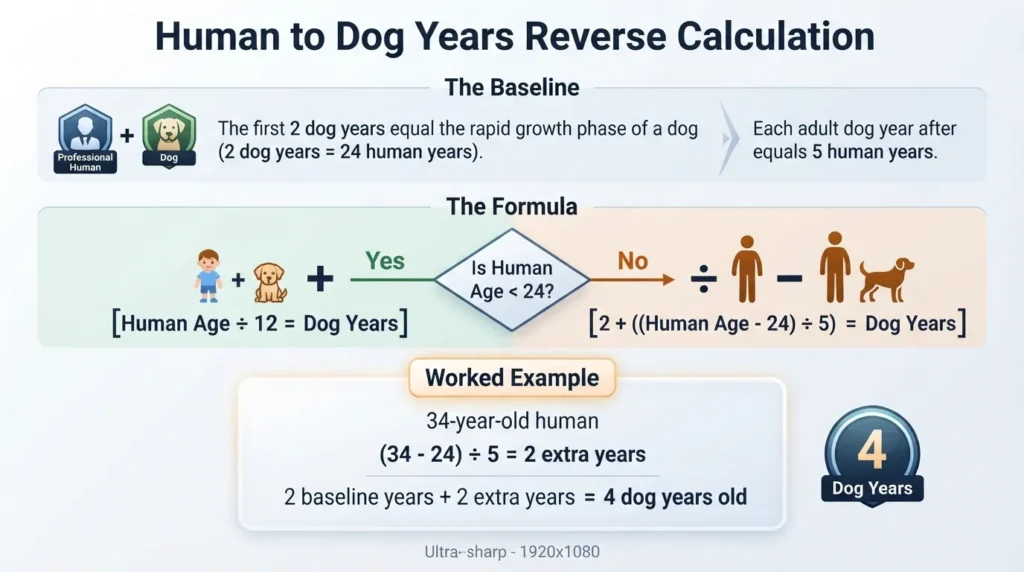
If you have ever wondered how old you or your kids would be if you were dogs, calculating your age in reverse is surprisingly straightforward. Instead of converting a dog’s age up to human years, this calculation scales human chronological age down to reflect canine biological maturity.
The Reverse Calculation Formula
Because dogs reach full adult maturity within their first two calendar years, the reverse formula uses a two-stage approach based on average medium-sized dog development:
For Human Ages Under 24:
Divide the human age by 12. Since a dog reaches the equivalent of a 24-year-old human by their second birthday, each of a dog’s first two years equals roughly 12 human years.
Dog Years = Human Age / 12
For Human Ages 24 and Older:
Subtract 24 from the human age (accounting for the first two dog years), divide the remaining number by 5 (the average annual aging rate for adult dogs), and add 2.
Dog Years = 2 + ((Human Age – 24) / 5)
Quick Example
Let’s calculate how old a 34-year-old human would be in dog years:
Subtract 24 from 34 to account for early adulthood: 34 – 24 = 10.
Divide that remaining figure by 5: 10 / 5 = 2 adult dog years.
Add those 2 adult years to the baseline 2 years: 2 + 2 = 4 dog years.
A 34-year-old human is biologically equivalent to a healthy 4-year-old medium-sized dog at peak adulthood!
Factors That Affect Your Dog's Real Age Beyond the Numbers
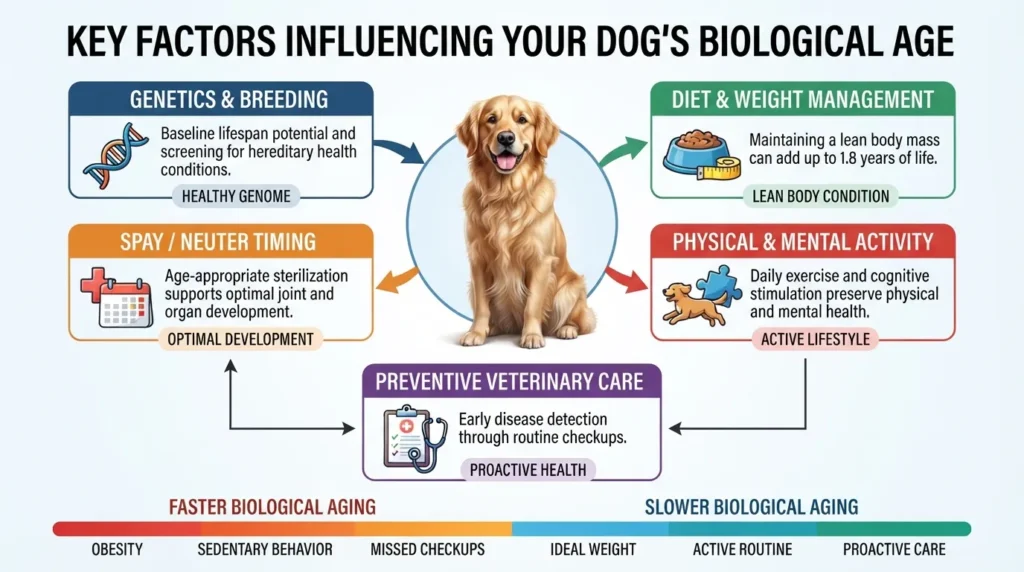
Chronological age only tells half the story. Just like humans, two dogs of the exact same breed and age can have vastly different biological ages depending on how they live, what they eat, and their underlying genetics.
If you want your dog to stay younger at a cellular level, focus on these five core factors.
Genetics & Breeding Lines
A dog’s DNA sets their baseline lifespan potential. Purebred dogs from ethical breeders who screen for hereditary conditions—such as hip dysplasia, cardiac issues, and progressive retinal atrophy—generally experience healthier, longer aging than dogs bred without genetic health testing. Mixed-breed dogs often benefit from “hybrid vigor,” a genetic diversity that can slightly reduce the risk of inheriting specific recessive health disorders.
Diet & Nutrition
What goes into your dog’s bowl directly dictates cellular repair and organ longevity. Obesity is the single greatest threat to a dog’s lifespan; long-term studies by the American Veterinary Medical Association (AVMA) show that lean dogs live up to 1.8 years longer than overweight dogs. Feeding high-quality, balanced protein alongside anti-inflammatory omega-3 fatty acids helps preserve lean muscle mass and protect joint health into senior years.
Spay/Neuter Status & Timing
Sterilization significantly impacts long-term health outcomes and overall life expectancy. Spaying females completely removes the risk of pyometra (a life-threatening uterine infection) and drastically lowers mammary tumor risks. Neutering males eliminates testicular cancer and reduces prostate complications. However, current veterinary research suggests timing matters: waiting until large and giant breeds reach physical maturity before altering them supports healthier joint development and bone growth.
Exercise & Mental Lifestyle
Regular daily exercise keeps a dog’s cardiovascular system strong, maintains joint flexibility, and prevents muscle wasting. Mental stimulation is equally vital for cognitive health—interactive puzzle toys, scent work, and routine socialization keep a dog’s brain active, helping slow the onset of canine cognitive dysfunction (doggie dementia) as they enter their senior phase.
Regular Preventive Veterinary Care
Routine wellness exams catch silent health issues long before physical symptoms appear. Early detection of kidney disease, heart murmurs, periodontal infection, or thyroid imbalances allows for early medical management, effectively extending your dog’s functional healthspan and quality of life.
Frequently Asked Questions
How old is 7 years in dog years?
A 7-year-old dog is roughly 44 to 59 years old in human years, depending on their physical size. A small dog at 7 calendar years equals about 44 human years, a medium dog is around 47, a large dog reaches roughly 50, and a giant breed hits approximately 59 human years.
How old is a 10-year-old dog in human years?
A 10-year-old dog ranges between 56 and 80 human years based on weight. Small breeds are equivalent to a 56-year-old human, medium breeds reach about 62, large breeds hit roughly 67, and giant breeds are biologically around 80 human years old.
Do small dogs really live longer than big dogs?
Yes, small dogs live significantly longer than large dogs. Large and giant breeds grow rapidly during puppyhood, causing accelerated cellular aging, higher levels of growth hormones (IGF-1), and greater physical strain on organs and joints, which leads to earlier senior onset and shorter lifespans.
What is 1 dog year in human years exactly?
A dog's first calendar year equals roughly 15 human years. Dogs mature rapidly during their first 12 months, reaching physical and sexual maturity comparable to a human teenager rather than a 7-year-old child.
Is the "multiply by 7" rule completely wrong?
Yes, the "multiply by 7" rule is biologically inaccurate. It incorrectly assumes dogs age at a constant rate throughout life and completely ignores body size differences, underestimating early puppy development and overestimating the aging speed of older small breeds.
At what age is a dog considered a senior?
Senior age varies by breed size: giant breeds reach senior status earliest at 5 to 6 years old, large breeds at age 7, medium breeds around 8 to 9 years, and small breeds enter their senior years between 10 and 11 years old.
How accurate is the dog age calculator?
Modern dog age calculators are highly accurate because they incorporate weight-specific aging curves and research from veterinary institutions like the AKC and UC San Diego, rather than relying on outdated single-multiplier formulas.
🐾 Other Age Guides

I built Dogagescalculator.com to give dog owners honest, science-backed answers instead of the outdated "×7" myth. Every figure here is checked against AKC, AVMA, and published veterinary research.
More about the author & this site →
Comments