
19 Years in Dog Years — What Does It Really Mean?
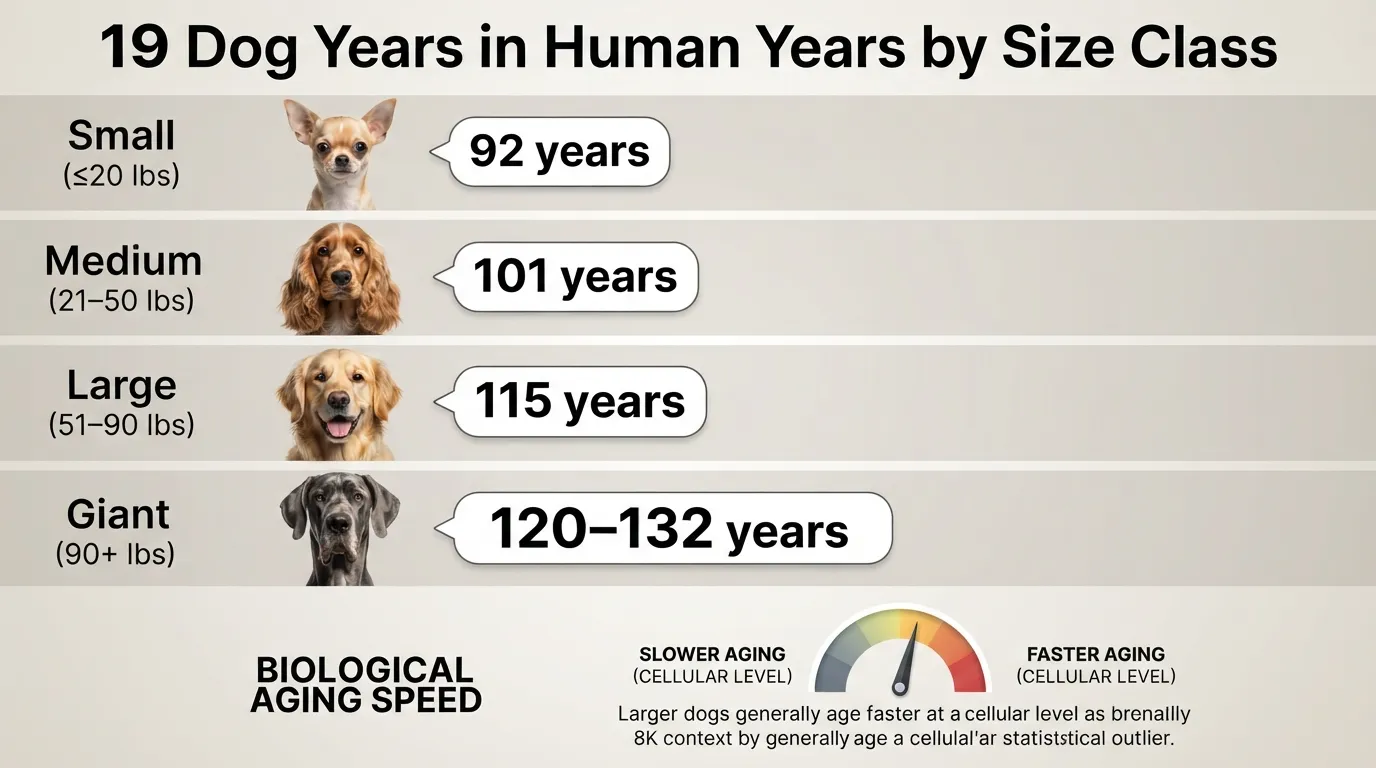
A 19-year-old dog is roughly 92 human years old based on American Animal Hospital Association (AAHA) canine aging guidelines. Reaching 19 years in dog years places your pet in the top 1% of canine longevity. However, this exact human age equivalent varies depending on your dog’s size, breed, and weight.
19 Dog Years to Human Years — Quick Chart
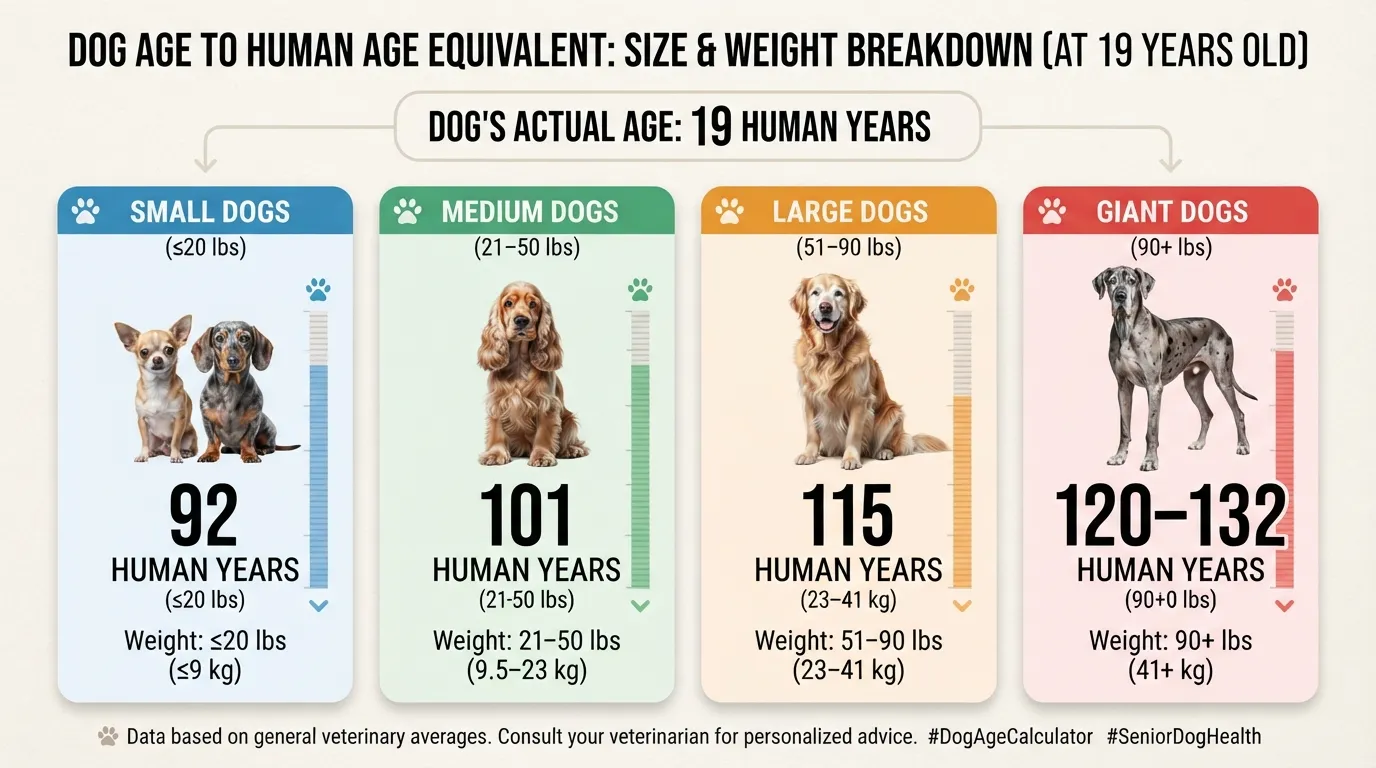
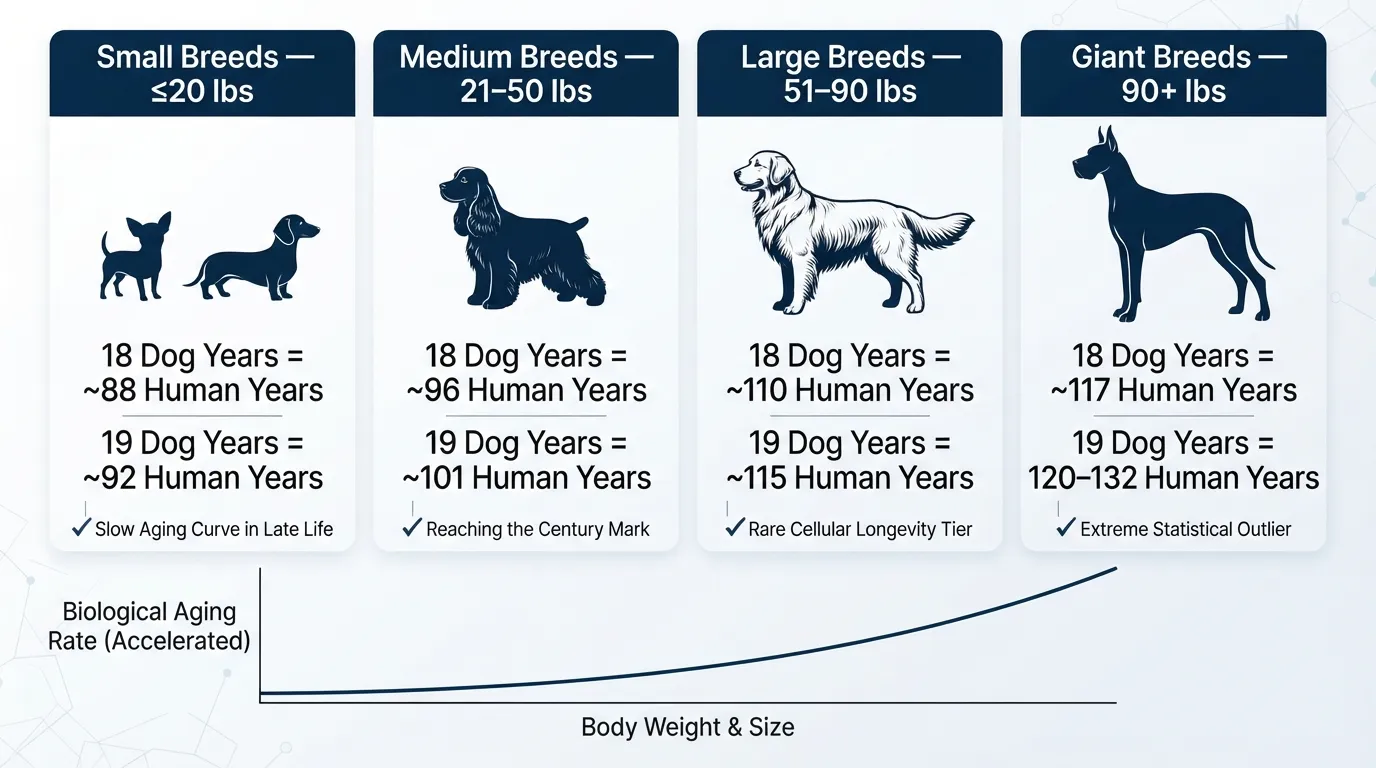
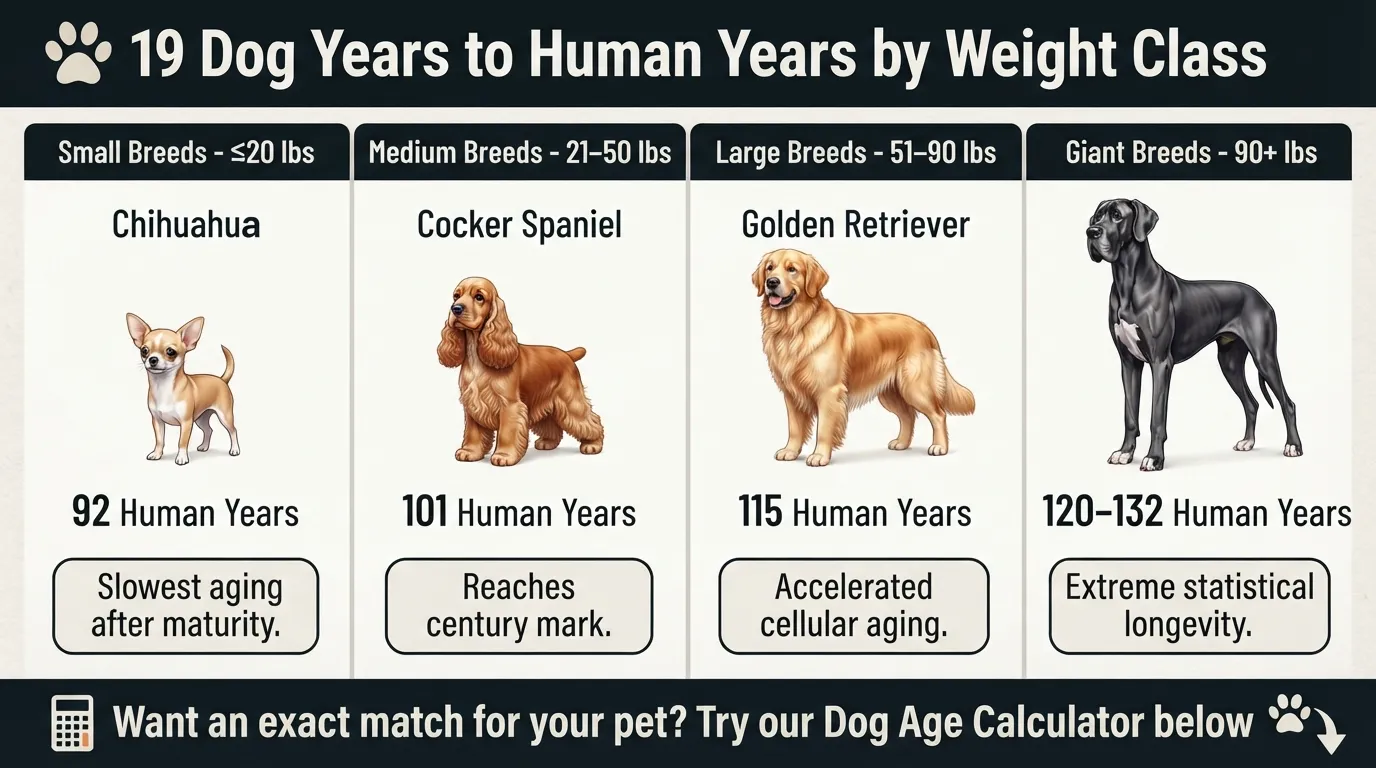
Reaching 19 calendar years is a extraordinary milestone for any canine. Because weight and metabolism directly influence biological aging, a 19-year-old dog’s equivalent human age varies significantly across weight classes:
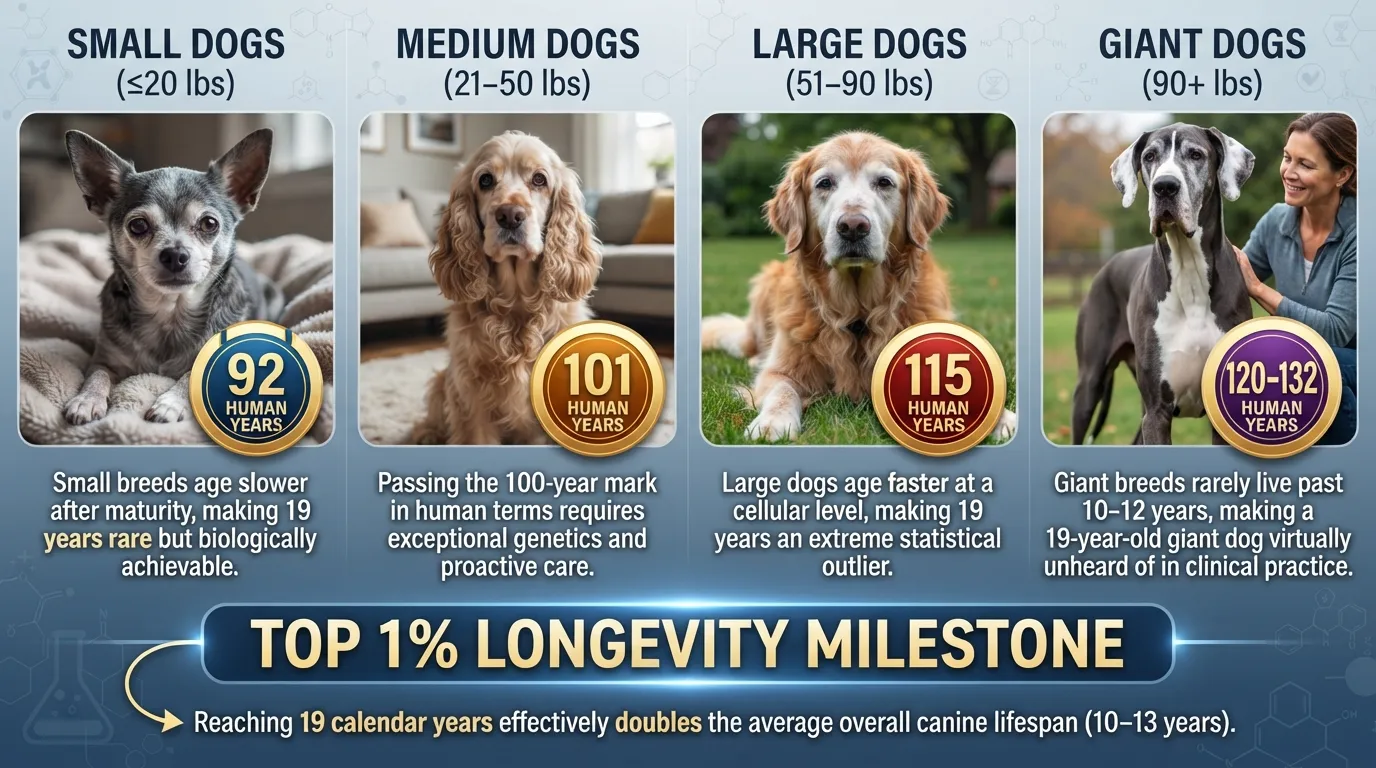
Small dog (≤20 lbs): Approximately 92 human years. Toy and small breeds like Chihuahuas and Dachshunds age slower after maturity, making 19 years rare but biologically achievable.
Medium dog (21–50 lbs): Approximately 101 human years. Hitting the century mark in human terms requires exceptional genetics, optimal nutrition, and proactive geriatric veterinary care.
Large dog (51–90 lbs): Approximately 115 human years. According to American Animal Hospital Association (AAHA) canine life stage guidelines, large dogs age faster at a cellular level, making 19 years an extreme statistical outlier.
Giant dog (90+ lbs): Approximately 120 to 132 human years. Breeds over 90 pounds rarely live past 10 to 12 years, making a 19-year-old giant breed an exceptionally rare case.
| Dog Weight Class | Weight Range | Equivalent Human Age at 19 Years |
|---|---|---|
| Small | ≤ 20 lbs | 92 years old |
| Medium | 21–50 lbs | 101 years old |
| Large | 51–90 lbs | 115 years old |
| Giant | 90+ lbs | 120–132 years old |
Why 19 Years Is a Rare Milestone for a Dog
Average Dog Lifespan Context
Average lifespan ~10–13 years overall: Most dogs live right around a decade to a decade and a half, according to general veterinary benchmarks.
19 years crosses almost every breed’s typical range: Reaching 19 dog years puts a canine far past normal expectations, effectively doubling the life expectancy of many medium and large breeds.
What 92 Human Years Really Means
Comparable to extreme elderly human stage (great-grandparent level): When calculated accurately, a 19 years old dog is living through the equivalent of a human in their mid-90s.
Relatable framing — mobility/energy comparison: At this stage, expect deep sleep cycles, slower movements, and cognitive changes similar to a human great-grandparent who takes life one quiet step at a time.
Which Breeds Are More Likely to Reach 19?
Small/toy breeds (Chihuahua, Yorkie, Dachshund): Toy breeds age far slower on a cellular level than larger dogs, making Chihuahuas, Miniature Poodles, and Yorkies the most common record-holders for hitting 19 years in dog years.
Giant breeds Great Dane, Mastiff almost never reach this age: Due to rapid growth rates and heavy strain on their cardiovascular systems, giant breeds rarely live past 8 to 10 years, making a 19-year-old giant dog virtually unheard of in clinical practice.
Real Dogs Who Lived Past 19 Credibility + Relatability
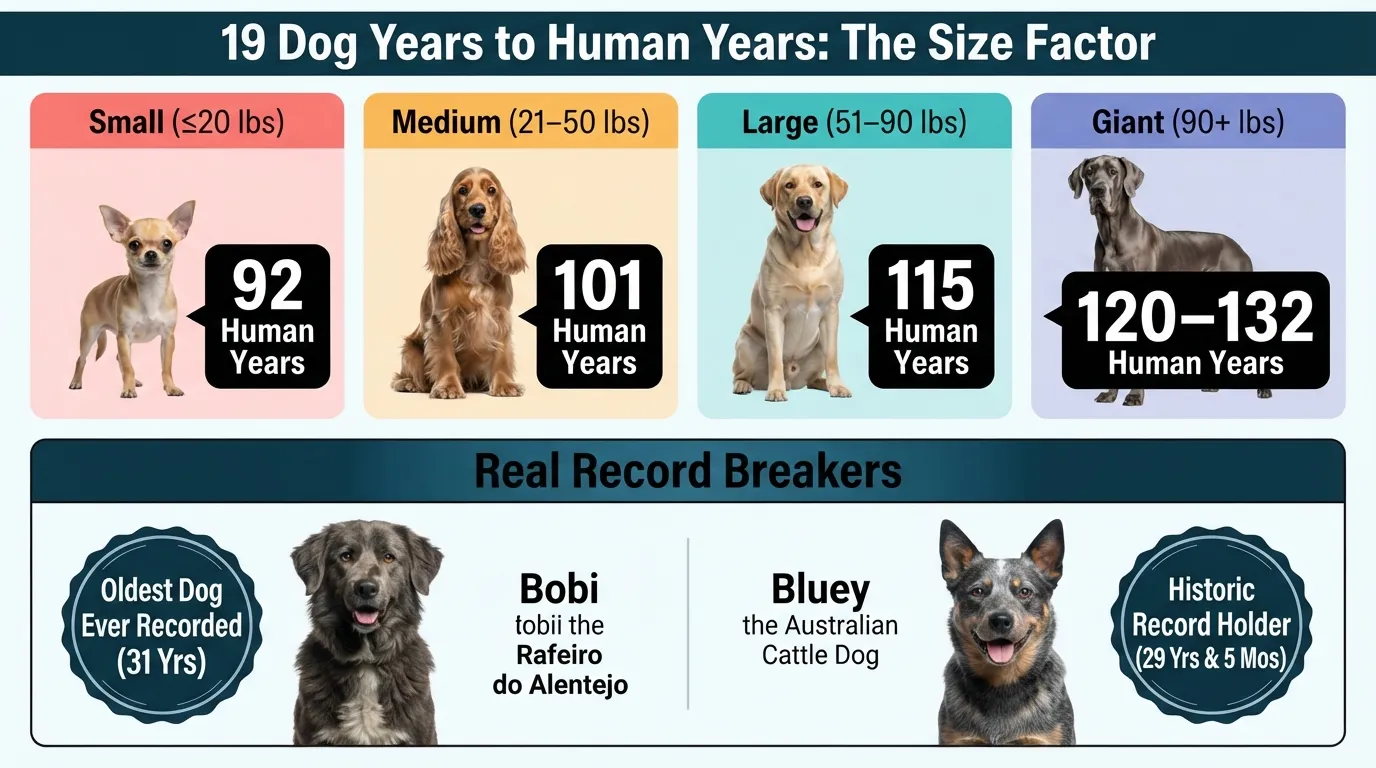
Hitting 19 years in dog years is an extraordinary feat, but a few exceptional canines have blown past that milestone and rewritten what we thought was possible for canine longevity.
Bobi — 31 years Rafeiro do Alentejo: Verified by Guinness World Records as the oldest dog ever recorded, Bobi lived his entire life in a small Portuguese village. His owners attributed his incredible lifespan to roaming freely in nature, eating unseasoned human food, and living in a calm, loving environment.
Uno — 22 years Cocker Spaniel: Reaching roughly 110 human years, Uno defied the average lifespan for medium-sized breeds through consistent medical care, a tailored senior diet, and daily gentle exercise that kept his joints moving well into his twilight years.
While exceptional genetics certainly play a heavy role in an engine that runs this long, these record-breakers show us that lifestyle counts just as much. Exceptional daily care, low stress, and quick responses to health changes give your dog the absolute best chance at hitting these rare, double-digit milestones.
The "1 Dog Year = 7 Human Years" Myth — Why It's Wrong
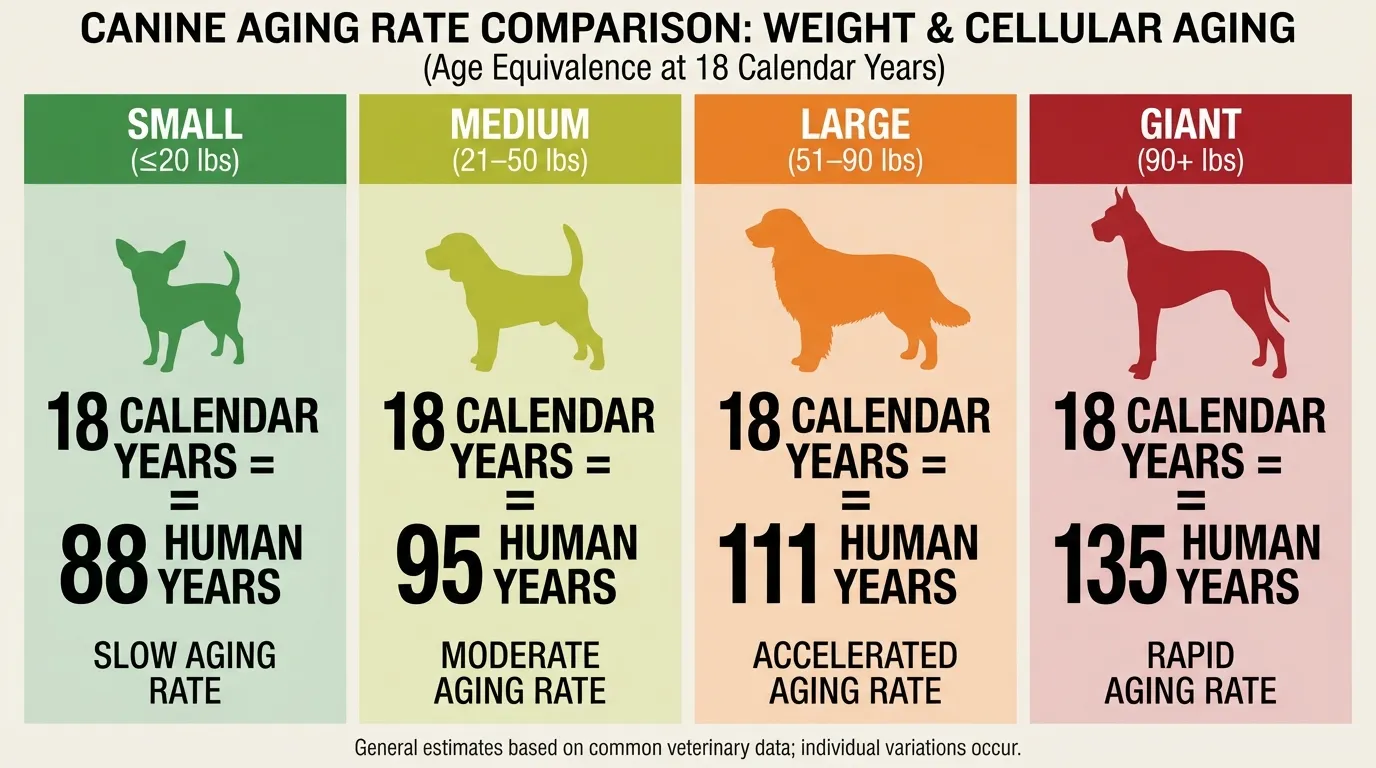
Where the 7-year myth came from: Back in the mid-1950s, researchers and veterinarians estimated that a typical human lived around 70 years, while a dog lived roughly 10. Math teachers and pet food companies popularized a simple rule of thumb: multiply your dog’s age by seven to get their “human age.” It was a clever, easy-to-remember marketing tool, but it wasn’t based on biological science.
Why it’s inaccurate: Canine development doesn’t follow a flat linear line. Puppies experience a massive hormonal and physical growth spurt during their first 12 to 24 months, maturing at a rate that far outpaces a human child. According to aging guidelines from the American Animal Hospital Association (AAHA), a dog reaches the equivalent of human young adulthood by their second birthday. After that rapid initial burst, aging slows down considerably—making the old “times seven” shortcut wildly inaccurate at both ends of a dog’s life.
How Vets & Scientists Actually Calculate Dog Age
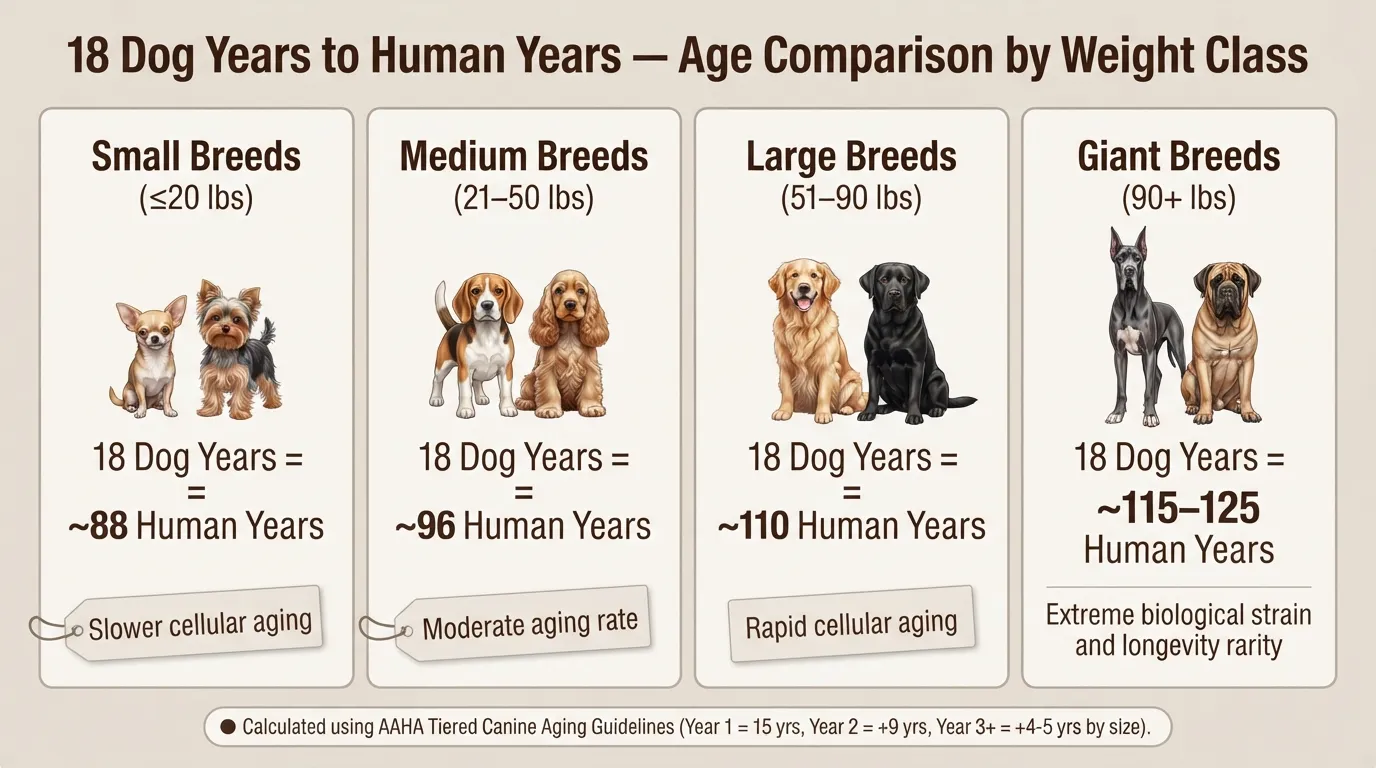
The old “multiply by seven” rule is a myth. Dogs don’t age at a flat rate across their entire lives. Instead, their development spikes early on and stabilizes as they reach adulthood.
To reflect this biological reality, major veterinary organizations use a tiered formula rather than a basic multiplier.
AVMA/AAHA Standard Formula
The American Animal Hospital Association (AAHA) and the American Veterinary Medical Association (AVMA) break down canine aging into three distinct physiological phases:
Year 1 = 15 human years: A puppy undergoes massive physical, mental, and hormonal development during their first 12 months, effectively reaching human adolescence.
Year 2 = +9 human years: Growth slows down significantly during the second year, bringing a two-year-old dog to roughly 24 human years.
Every year after = +5 human years (approx.): Once a dog reaches full adult maturity, each additional calendar year adds roughly four to five human years, depending heavily on the dog’s physical size and breed background.
Using this baseline, reaching 19 years old in dog years puts a canine well into their 90s or past the century mark in human terms.
Epigenetic DNA Clock Method — Newer Science
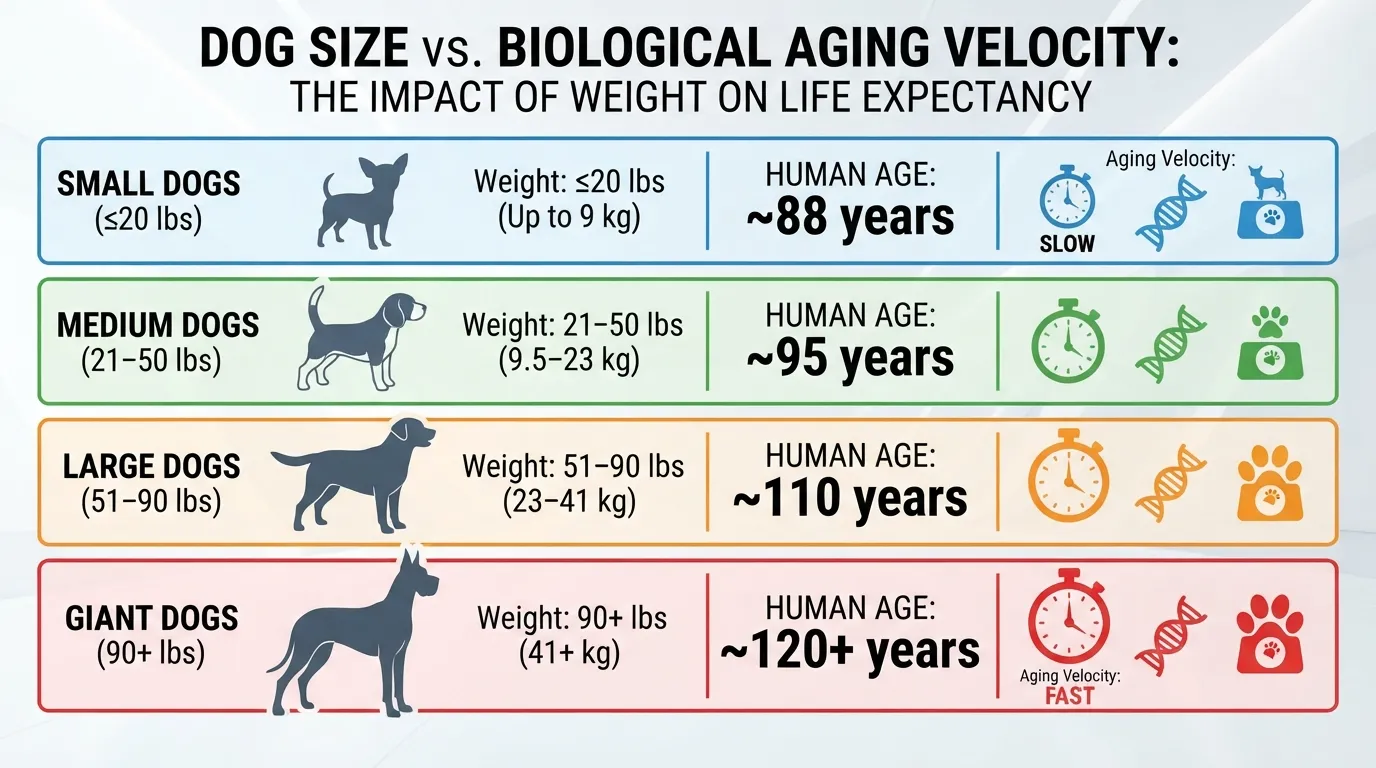
2019 UCSD Study on Labrador Retrievers: Geneticists at the University of California, San Diego discovered that dogs age rapidly at a cellular level during early life, with their aging curve slowing down significantly in later years.
Formula Based on DNA Methylation: By measuring molecular changes on DNA strands, researchers developed the formula: Human Age = $16 \times \ln(\text{Dog Age}) + 31$. While this offers a accurate glimpse into biological aging, current data relies heavily on Labradors and may not perfectly translate across every breed size.
Senior/Geriatric Care for a 19-Year-Old Dog
Physical Health Changes
Joint stiffness and mobility issues: Arthritis and severe cartilage loss affect almost every 19-year-old dog. You will notice them getting up slowly, struggling with stairs, or slipping on smooth surfaces.
Vision and hearing decline: Nuclear sclerosis (a bluish haze in the eye lens) or cataracts frequently cause partial or total blindness. Loss of inner ear hair cells leads to severe hearing loss, making them startle easily when approached from behind.
Dental problems: Years of plaque buildup, periodontal disease, or missing teeth make chewing painful. Untreated dental infections can also spread bacteria to the heart and kidneys via the bloodstream.
Cognitive Changes Canine Cognitive Dysfunction
Confusion and disorientation: Dogs with CCD may wander aimlessly, stare blankly at walls, or get trapped behind furniture because they forget how to back up.
Sleep-wake cycle changes: Brain changes disturb circadian rhythms. Your dog might sleep deeply all day but pace, whine, or bark anxiously throughout the night.
Reduced recognition of familiar people or places: Age-related brain atrophy can cause your dog to occasionally fail to recognize family members or forget basic house-training rules they followed for years.
Daily Care Tips
Senior-specific diet adjustments: Switch to highly digestible, protein-appropriate senior food enriched with omega-3 fatty acids (EPA/DHA) for joint health. Soft canned food or warmed kibble helps dogs with painful teeth or a declining appetite.
Frequent vet checkups every 3 to 6 months: According to the American Animal Hospital Association (AAHA) senior care guidelines, geriatric dogs require bi-annual exam protocols. Bloodwork and urinalysis every 3 to 6 months catch organ failure or endocrine disease early.
Comfort setup: Place orthopedic memory foam beds in draft-free areas. Lay down non-slip runner rugs over hardwood floors and set up dog ramps so they can access favorite spots without jumping.
Signs Your Senior Dog Is Comfortable Quality of Life
Still eating and drinking normally: A steady appetite and willingness to hydrate signal that pain is managed and organ systems remain relatively stable.
Responsive to affection: Seeking out gentle head pats, wagging their tail when you enter the room, or resting comfortably near you shows they still experience joy and connection.
Vet consultation encouraged for any sudden change: Rapid shifts in behavior, sudden incontinence, or sudden loss of balance require immediate veterinary evaluation to rule out acute pain or stroke-like events.
Watch: How to Calculate Dog Years vs. Human Years
Calculate Your Dog's Exact Age Calculator CTA
While a 19-year-old dog equals roughly 90 to 130 human years depending on their frame, general formulas only give you a rough baseline. Size, weight, and breed traits drastically change how quickly a dog ages over two decades. Use our Dog Age Calculator below to instantly translate your senior dog’s age using real-time breed and weight data for an accurate human-year match.
Frequently Asked Questions
| Question | Answer |
|---|---|
| Is 19 dog years old for a dog? | Yes, reaching 19 human calendar years is exceptionally rare and puts a dog well into super-centenarian status, equivalent to over 90 to 100+ years in human aging depending on size. |
| What's the oldest dog ever recorded? | Bluey, an Australian Cattle Dog who lived 29 years and 5 months (1910–1939), holds the long-standing official Guinness World Record for the oldest verified canine. |
| What dog breed lives the longest? | Small toy breeds generally boast the longest lifespans. Breeds like Chihuahuas, Toy Poodles, Lhasa Apsos, and Papillons frequently live between 14 to 18+ years with proper health care. |
| Is the 7-year rule accurate at all? | No, multiplying by 7 is an oversimplification. Dogs age rapidly during their first two years (reaching about 24 human years), after which aging slows down and varies significantly based on weight and breed size. |
| How can I help my senior dog live longer? | Focus on maintaining an optimal body weight, providing daily low-impact exercise, feeding high-quality senior-specific nutrition, prioritizing dental hygiene, and scheduling bi-annual veterinary check-ups. |
| What are early signs of dog dementia? | Key early indicators include spatial disorientation (getting stuck in corners), altered sleep patterns (restlessness at night), reduced social interactions, and sudden house-training accidents. |
🐾 Other Age Guides

I built Dogagescalculator.com to give dog owners honest, science-backed answers instead of the outdated "×7" myth. Every figure here is checked against AKC, AVMA, and published veterinary research.
More about the author & this site →
Comments