
What Is 17 Dog Years in Human Years?
Quick Answer — 17 Dog Years in Human Years
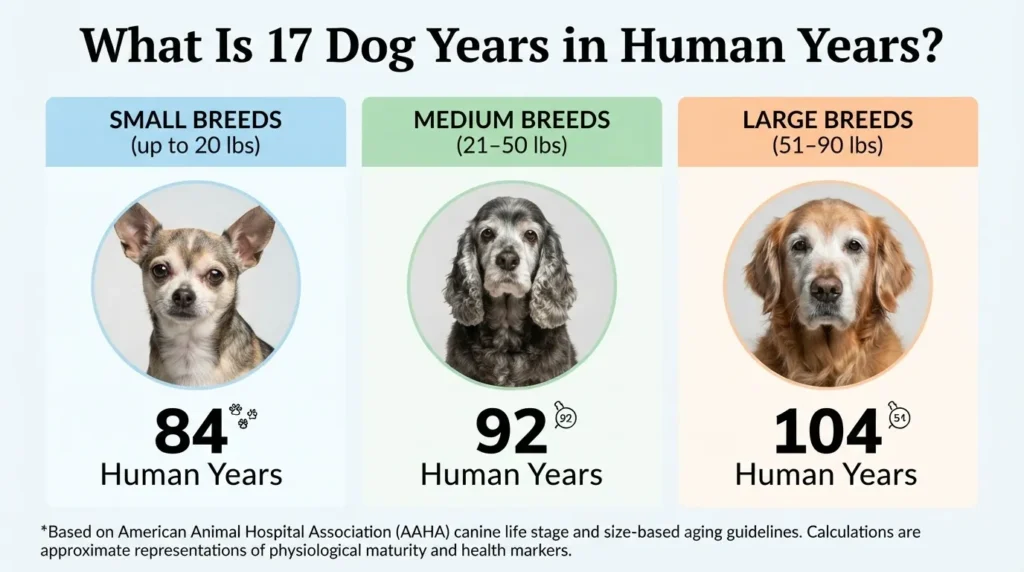
A 17-year-old dog is exceptionally old, and its estimated human-equivalent age depends greatly on size and breed. Small dogs may be around 84 human years old, while large and giant breeds can reach the equivalent of 96 to 114+ human years using size-based estimates.
| Dog Size | Weight Range | Estimated Human Age at 17 |
|---|---|---|
| Small Breeds(e.g., Chihuahua, Maltese) | Under 20 lbs | ~84 years |
| Medium Breeds(e.g., Cocker Spaniel, Beagle) | 21–50 lbs | ~87–90 years |
| Large Breeds(e.g., Golden Retriever, Boxer) | 51–90 lbs | ~96–102 years |
| Giant Breeds(e.g., Great Dane, Mastiff) | Over 90 lbs | ~114+ years |
These numbers are estimates rather than exact biological ages. Dogs do not age at a constant rate, and breed, size, genetics, and overall health can all influence how they age.
Is a 17-Year-Old Dog a Senior?
At 17, a dog is well beyond the typical senior stage and would generally be considered geriatric, although individual aging varies by breed and health. Reaching 17 is particularly uncommon for large and giant breeds because they generally have shorter lifespans than smaller dogs.
A 17-year-old small dog may still have good quality of life with appropriate care, while an older large or giant dog may require closer monitoring for mobility, weight, dental health, vision, hearing, and other age-related changes. Regular veterinary checkups can help identify changes early and keep an exceptionally old dog as comfortable and active as possible.
Quick Answer: 17 Dog Years by Dog Size
The old rule of thumb was simple: multiply your dog’s age by seven. But if you have a 17-year-old dog, you already know they don’t fit into a one-size-fits-all formula. According to canine life-stage guidelines from the American Animal Hospital Association (AAHA), dogs age at dramatically different rates depending on their breed size and weight.
At 17 dog years, the conversion to human years depends entirely on how much your dog weighs:
Small dogs (up to 20 lbs): ~84 human years. Small breeds like Chihuahuas and Toy Poodles are the marathon runners of the dog world. Reaching 17 is a beautiful milestone, making them the equivalent of a human octogenarian.
Medium dogs (21–50 lbs): ~92 human years. Medium breeds age slightly faster than smaller pups. A 17-year-old medium dog has officially crossed into their nineties in human terms.
Large dogs (51–90 lbs): ~104 human years. It is incredibly rare for a large dog to reach this age. If they do, they have officially hit the centenarian mark, outliving almost all of their peers.
Giant dogs (90+ lbs): Typically do not reach 17 years. Breeds like Great Danes and Mastiffs age rapidly. Sadly, their average lifespan ranges from 6 to 10 years, meaning a giant breed almost never reaches 17.
Looking for the Full Lifespan Breakdown?
Notice how aging starts similarly for all dogs in the first two years, but diverges sharply as the years go on. If you want to see exactly how your dog’s size tracks from puppyhood all the way to age 20+, we have mapped out the entire dataset for you.
Explore our comprehensive, science-backed interactive tool on the dogagescalculator.com to view the complete year-by-year progression chart across every weight class.
Why Isn't 17 Dog Years the Same for Every Dog?
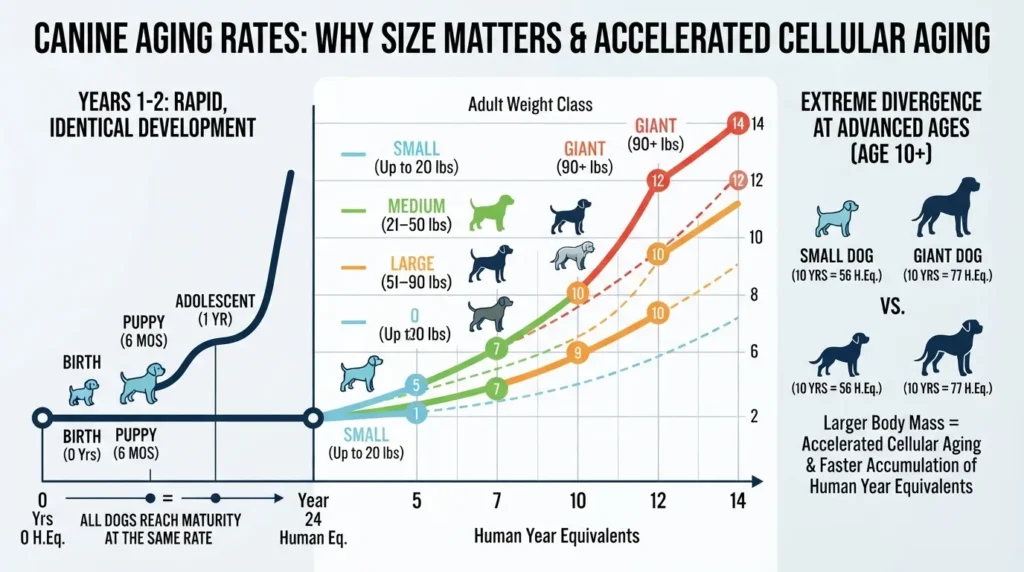
If all dogs aged at the exact same pace, a 17-year-old Chihuahua and a 17-year-old Great Dane would look, act, and feel identical. But any vet will tell you that biology tells a completely different story. Reaching 17 dog years means something entirely unique for every single dog because their biological clocks run on completely different gears.
Why Size and Breed Matter
In the animal kingdom, larger mammals usually live longer than smaller ones—elephants outlive mice by decades. However, dogs turn this biological rule completely on its head. Within the canine species, small breeds possess an incredible metabolic advantage that allows them to age at a much slower pace than their larger counterparts.
Large and giant breeds grow from tiny puppies into massive adults in a very short window of time. This rapid growth requires intense cellular acceleration. According to data from the American Animal Hospital Association (AAHA), this accelerated growth phase essentially puts their biological clock on fast-forward. The physiological strain of maintaining a large body causes their cells to break down much sooner, which is why a large breed hits senior status by age six, while a small breed is still considered a middle-aged adult.
Why the Old “1 Dog Year = 7 Human Years” Rule Is Wrong
The traditional rule that one dog year equals seven human years is a mathematical myth from a bygone era. It was a simple marketing trick designed to encourage owners to bring their pets in for annual veterinary exams. While easy to remember, it is completely inaccurate because canine aging follows a sharp curve rather than a straight line.
Recent genetic breakthroughs have replaced this old math with real science. A landmark study led by researchers at the University of California, San Diego (UCSD) analyzed DNA methylation—the chemical modifications that track biological age. Published in Cell Systems, the study (Wang et al.) revealed that dogs age at an explosive rate during their first two years of life. By their second birthday, a dog is already biologically closer to a 24-year-old human. After this initial spike, their aging curve dramatically plateaus. If you applied the old “multiply by seven” rule to a 17-year-old dog, you would get 119 human years, which is practically impossible. In reality, their plateaued aging curve places them closer to their mid-80s or 90s.
Individual Factors — Genetics, Diet, and Health History
While size sets the general blueprint for a dog’s lifespan, their daily reality is shaped by their unique lifestyle and history. Two dogs from the exact same litter can hit 17 dog years looking and feeling entirely different based on a handful of critical individual variables.
Genetics: Just like humans, some dogs inherit stronger genetic baselines that make them naturally resilient to chronic conditions like early-onset kidney disease or heart murmurs.
Diet and Weight Management: Carrying even a few extra pounds puts chronic stress on a senior dog’s joints and vital organs. Keeping a dog lean throughout their life is one of the most clinically proven ways to extend their healthspan.
Lifelong Healthcare: A dog’s health history plays a massive role in how they look at 17. Consistent dental cleanings to prevent systemic bacteria from damaging the heart, combined with proactive joint supplements, can mean the difference between a mobile, comfortable senior and one who struggles to walk across the room.
How Is Dog Age in Human Years Calculated?
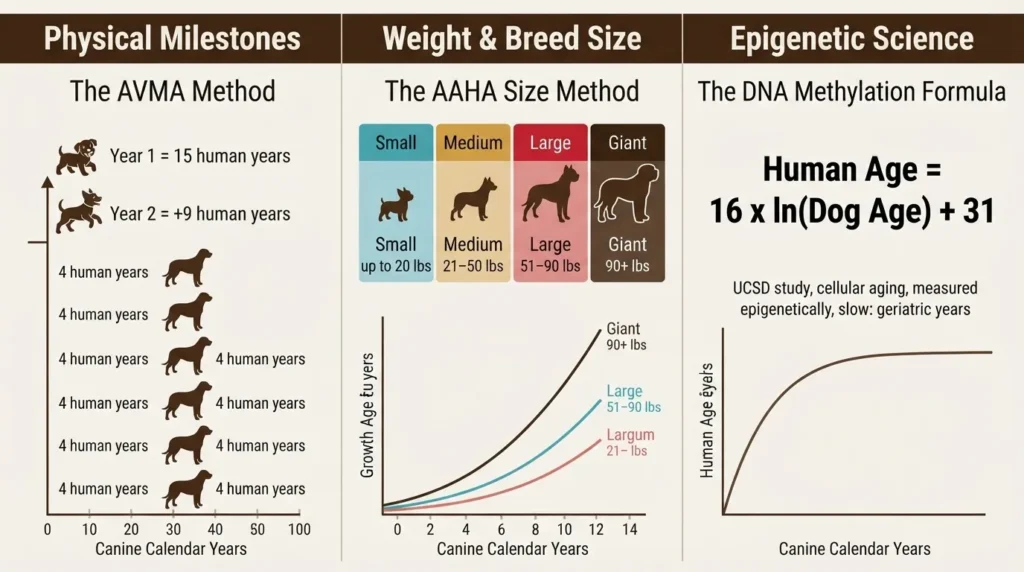
Calculating a dog’s human-equivalent age is more complex than simply multiplying its age by seven. Dogs mature very quickly during their first few years, and their aging patterns later vary according to size, breed, genetics, and overall health. Different methods therefore produce different estimates rather than one universally exact human age.
The Traditional Veterinary-Style Method
A commonly used veterinary-style approach recognizes that dogs age much faster during their first two years and then more gradually as they become adults. A simplified version estimates:
- Year 1: Approximately 15 human years, reflecting the rapid development from puppyhood into young adulthood.
- Year 2: Adds approximately 9 human years, bringing the dog to around 24 human-equivalent years.
- Year 3 and beyond: A simple estimate may add around 4 human years for each additional calendar year.
This method is useful as a general guideline, but it does not fully account for differences between small, medium, large, and giant breeds.
Size-Based Dog Aging
A dog’s adult body size is an important factor when estimating how its aging pattern changes over time. Smaller breeds generally have longer average lifespans, while larger and giant breeds tend to develop age-related changes earlier.
For this reason, a size-based chart can provide a more useful estimate than applying the same conversion to every dog. The exact human-equivalent age should still be treated as an approximation because individual dogs can age differently even within the same size category.
The DNA Methylation Approach
Researchers have also studied canine aging using epigenetic clocks, which examine changes in DNA methylation associated with biological aging. A well-known 2020 study involving researchers at the University of California, San Diego, found that canine aging follows a nonlinear pattern, with dogs aging especially rapidly early in life and the rate changing substantially as they grow older.
The researchers proposed a mathematical relationship based on the natural logarithm of a dog’s age:
Human Age ≈ 16 × ln(Dog Age) + 31
This formula is useful for understanding the biological-aging pattern observed in the study, but it should not be treated as an exact human-age calculator for every dog. The research was based on a specific group of dogs, and biological aging can vary between breeds, sizes, and individual animals.
What Does the DNA Formula Mean for a 17-Year-Old Dog?
Using the epigenetic formula, a 17-year-old dog would have an estimated human-equivalent age of approximately 76 years. This result is different from size-based charts because the two approaches are measuring canine aging in different ways.
For example, a size-based estimate may place a 17-year-old dog anywhere from the 80s to well over 100 human-equivalent years, while the DNA-based model gives a lower estimate. Neither number should be interpreted as the dog’s literal biological age; they are different ways of illustrating how canine aging compares with human aging.
Why Different Methods Give Different Answers
There is no single formula that can perfectly convert a dog’s chronological age into an equivalent human age. Traditional veterinary-style estimates focus on developmental and life-stage changes, size-based charts account for differences between breeds and body sizes, and epigenetic models examine biological changes at the cellular level.
For a 17-year-old dog, these methods can therefore produce noticeably different results. The most useful approach is to treat human-equivalent ages as estimates and consider your dog’s size, breed, health, and current life stage when evaluating how old they are in practical terms.
| Calculation Method | Weight/Size Consideration | Human Age Equivalent (for a 17-Year-Old Dog) | Best Used For |
|---|---|---|---|
| AVMA Method | Standard baseline (Medium weight) | ~84 human years | General life-stage benchmarking |
| AAHA Chart Method | Small Breeds (Up to 20 lbs) | ~84 human years | Tailoring senior clinical care plans |
| AAHA Chart Method | Medium Breeds (21–50 lbs) | ~92 human years | Tailoring senior clinical care plans |
| AAHA Chart Method | Large Breeds (51–90 lbs) | ~104 human years | Tailoring senior clinical care plans |
| DNA Methylation Formula | All sizes (Genomic baseline) | ~76 human years | Tracking cellular and genetic aging |
What Life Stage Is a 17-Year-Old Dog In?
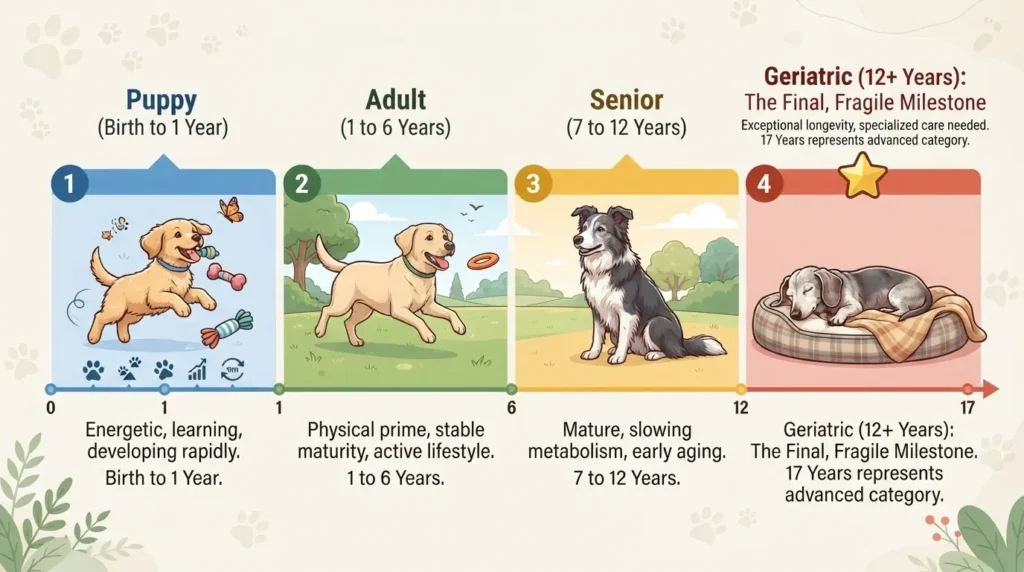
Just like humans, dogs transition through distinct developmental, biological, and behavioral milestones as they grow. At 17 dog years, your dog has far outpaced typical life expectancies, moving beyond standard aging into an elite, fragile, and deeply special category of canine life.
Is a 17-Year-Old Dog Considered Senior or Geriatric?
A 17-year-old dog is firmly considered geriatric. While many pet owners use the terms “senior” and “geriatric” interchangeably, veterinary medicine draws a distinct line between them. According to the AAHA Canine Life Stage Guidelines, a dog becomes a “senior” when they reach the last 25% of their breed’s estimated lifespan. “Geriatric,” however, describes a dog who has officially exceeded their typical life expectancy and is experiencing advanced physical and cellular decline.
To help you visualize where your dog stands on this timeline, here is how the standard canine life stage progression breaks down:
Puppy (Birth to 6–12 months): The rapid growth phase, ending when physical and sexual maturity is reached.
Adult (1 year to 6–7 years): The stable, mature phase where the dog is fully grown and physically optimal.
Senior (7 years to 11–12 years): The beginning of the senior years, where metabolic rates slow down and early signs of aging (like graying fur or minor joint stiffness) appear.
Geriatric (12+ years): The final, most fragile life stage. For a 17-year-old dog in human years, their systems require specialized, daily palliative and supportive care to manage chronic age-related conditions.
How Long Do Dogs Actually Live?
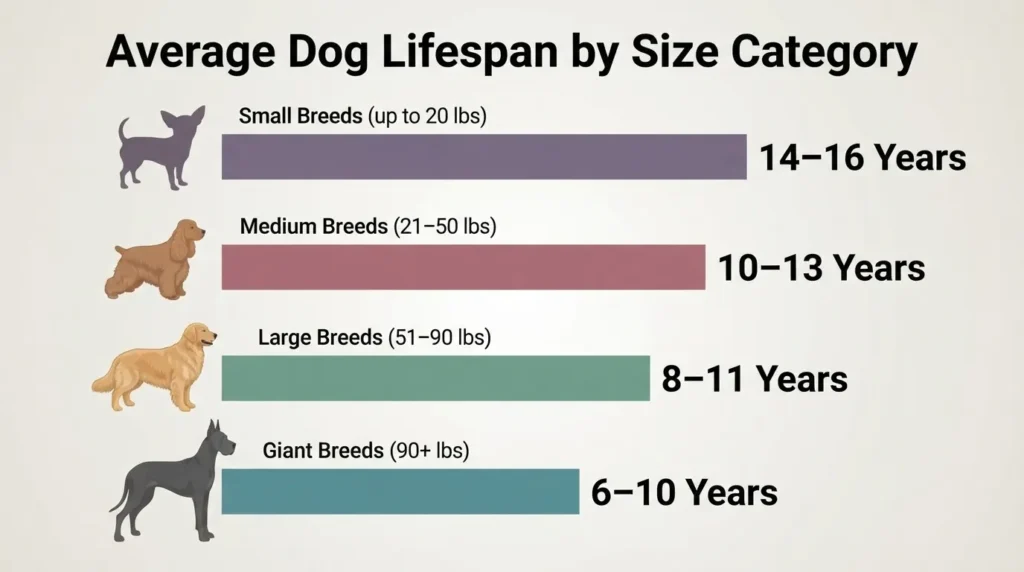
A dog’s natural lifespan is primarily determined by their genetics and their physical size. As a general biological rule, smaller animals tend to live longer than larger ones, and this rule holds strictly true within the canine world. Understanding these baseline averages highlights just how incredible it is when a dog defies the odds.
According to veterinary statistics from the AVMA, the average lifespan across all sizes breaks down as follows:
Small breeds: 14 to 16 years
Medium breeds: 10 to 13 years
Large breeds: 8 to 11 years
Giant breeds: 6 to 10 years
Is It Rare for a Dog to Live to 17?
Yes, reaching 17 dog years is exceptionally rare. Less than 10% of all dogs ever reach their 15th birthday, and only a tiny fraction of that group makes it to age 17. For medium, large, and giant breeds, reaching this milestone is almost unheard of due to the physiological strain that larger body masses place on the heart and joints over time.
However, for certain small and toy breeds, hitting 17 is a difficult but achievable goal. If your dog is a member of one of the following long-lived breeds, their genetics give them the best possible shot at celebrating a 17th year:
Chihuahuas: Known as the longest-living breed, it is not uncommon for healthy Chihuahuas to push past the average lifespan and reach 17 to 20 years.
Dachshunds: Miniature Dachshunds possess resilient lifespans, frequently managing chronic back issues to live well into their late teens.
Toy Poodles: Highly intelligent and physically resilient, these tiny dogs regularly live up to 17 or 18 years with proper senior care.
Yorkshire Terriers (Yorkies): Blessed with excellent longevity, Yorkies often reach the 16-to-18-year mark if protected from dental disease and fragile bone injuries.
Caring for a Dog at This Life Stage

Providing care for a 17-year-old dog in human years requires shifting your daily focus from active maintenance to high-level comfort and palliative support. Because a geriatric dog’s body is fragile, small adjustments to their routine can dramatically improve their daily comfort and overall happiness.
Recommended Vet Checkup Frequency
At 17 dog years, health profiles can shift rapidly over the course of a single month. Veterinary professionals recommend moving from annual or bi-annual visits to veterinary checkups every 3 to 4 months. These frequent exams allow your vet to closely monitor organ function, manage chronic pain scales, and run routine blood work to catch early stages of kidney or heart issues before they turn into a crisis.
Diet and Nutrition Adjustments
A geriatric dog’s metabolism slows down significantly, and their ability to absorb nutrients decreases. Consider these essential nutritional tweaks:
Highly Digestible Proteins: Switch to premium senior formulas that offer easily digestible proteins to help combat natural age-related muscle wasting.
Moisture and Palatability: Senior dogs often lose their sense of taste and smell, leading to a drop in appetite. Warming up their food or mixing in warm, low-sodium bone broth can stimulate their appetite and provide critical hydration.
Caloric Management: Monitor their weight closely. While some senior dogs become prone to obesity from inactivity, very old dogs often suffer from unexplained weight loss and may require more calorie-dense, soft foods.
Joint and Mobility Support
Osteoarthritis affects almost all dogs at this advanced age. To keep your dog moving comfortably without pain or fear of falling, adapt your living space:
Non-Slip Flooring: Lay down rubber-backed rugs, interlocking foam mats, or yoga mats along your dog’s frequent indoor walking paths. Slick hardwood or tile floors can cause serious anxiety and joint injuries.
Supportive Ramps: Place stable pet ramps or shallow steps next to the sofa or your bed if your dog still sleeps near you, entirely eliminating the impact of jumping.
Orthopedic Bedding: Upgrade their sleeping arrangements to a high-quality, dense memory foam orthopedic bed to cushion their joints and prevent painful pressure sores.
Mental Stimulation and Cognitive Health
Mental decline is common in geriatric pets, but keeping their brain active can help slow down the symptoms of cognitive dysfunction. Keep their minds engaged with gentle activities:
Scent Games: Hide highly aromatic, healthy treats around their immediate resting area to let them track the scent, stimulating their brain without exhausting their body.
Interactive Puzzles: Use soft snuffle mats or basic treat-dispensing toys that require minimal physical effort but keep their problem-solving skills sharp.
Consistent Routines: Keep your daily schedule predictable. Feeding, walking, and bedtime routines should happen at the exact same times every day to reduce confusion and late-night pacing.
Common Age-Related Health Issues
Being aware of the most common medical hurdles at this stage allows you to act quickly when symptoms appear. Watch closely for signs of these conditions:
Canine Cognitive Dysfunction (CCD): Often called dog dementia, this causes nighttime pacing, staring blankly into corners, vocalizing for no reason, and mild spatial confusion.
Chronic Kidney Disease (CKD): Keep an eye out for a sudden increase in thirst and much more frequent urination, which are classic early warning signs of declining kidney function.
Heart Disease or Murmurs: If you notice a persistent cough—especially at night or right after waking up—or a sudden intolerance to brief walks, it could indicate underlying congestive heart failure.
Advanced Dental Disease: Broken teeth, severe tartar build-up, and gum infections can cause severe, silent pain and introduce harmful bacteria directly into your dog’s bloodstream. Advanced dental care or soft food modifications are highly critical at this point.
Quality of Life & Signs of Aging in a 17-Year-Old Dog
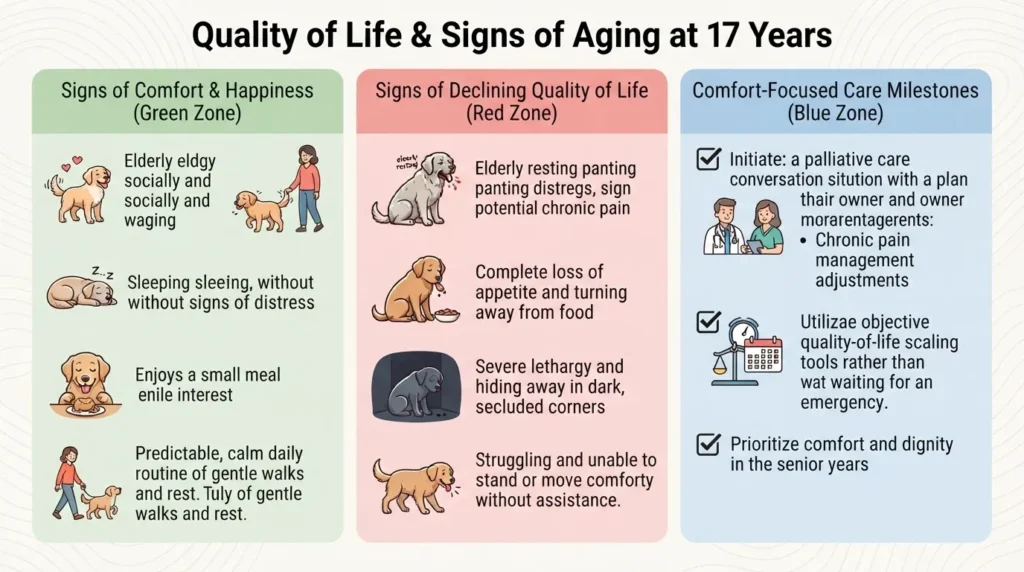
Navigating the final life stage of a 17-year-old dog in human years requires objective observation and deep empathy. At this advanced age, your goal is no longer to cure chronic health issues, but to closely manage them. Assessing your dog’s daily comfort levels helps ensure that their golden years remain peaceful, dignified, and filled with love.
Signs Your Senior Dog Is Comfortable and Happy
Even with limited mobility or diminished eyesight, a geriatric dog can still experience a wonderfully high quality of life. Look for these positive indicators that your dog is resting easily and enjoying their days:
Maintained Social Bonds: They still seek out your companionship, wag their tail when you enter the room, or rest their head in your lap.
Interest in Core Routines: They show excitement, even if brief or slow, during meal times or when it is time for a short, gentle sniff walk.
Peaceful Resting States: They sleep comfortably without frequent pacing, whining, or shifting positions constantly due to unmanaged joint pain.
Clean Living Habits: They maintain basic control over their bladder and bowels, or remain unbothered and easily comforted if minor senior accidents happen.
Signs of Declining Quality of Life
As physical and cellular systems slow down, it is common to see a shift in your dog’s daily well-being. Recognizing these subtle signs of distress allows you to adjust their care plan right away:
Chronic Pain and Persistent Discomfort: They pant heavily while resting, shiver without being cold, or vocalize when trying to stand up.
Complete Loss of Appetite: They routinely refuse their favorite foods, or experience ongoing nausea and gastrointestinal distress that causes rapid weight loss.
Severe Lethargy and Isolation: They withdraw completely from the family, hiding in unusual dark corners or closets, and showing zero interest in their surroundings.
More Bad Days Than Good: They experience prolonged periods where they cannot stand or move on their own, or show signs of breathing difficulties even while lying down.
When to Talk to Your Vet About Comfort-Focused Care
If you notice multiple signs of decline, it is time to schedule a dedicated quality-of-life discussion with your veterinarian. Do not wait for an emergency crisis to have this conversation. Your vet can introduce specialized hospice or palliative care plans designed to optimize pain management, improve daily mobility, and support your family through difficult choices.
Many veterinary care teams recommend using structured tools, such as the HHHHHMM Quality of Life Scale (which tracks Hurt, Hunger, Hydration, Hygiene, Happiness, Mobility, and More Good Days than Bad). These objective parameters remove the guesswork, helping you make compassionate, timely decisions that honor your 17-year-old dog’s lifelong loyalty.
Calculate Your Dog's Exact Age in Human Years
Because a dog’s biological age varies so dramatically based on their weight class, using a static chart only gives you a broad estimate. Every dog has a unique timeline, and factoring in their exact birth date and physical size is the best way to understand their real development stage.
To skip the complicated math and logarithmic formulas entirely, use our custom digital tool to pinpoint your pet’s age milestone instantly.
Try the Free Dog Age Calculator Tool Now
🐾 How it works: Simply enter your dog’s current calendar age and select their specific weight category. Our tool instantly processes modern veterinary data from the AAHA and the latest epigenetic research to give you an accurate, real-time calculation of your dog’s true human age equivalent.
FAQs About 17 Dog Years in Human Years
It is considered old for a small dog, but it is exceptionally ancient for a large dog. A small dog at 17 is equivalent to roughly 84 human years—a highly impressive but relatively common age for toy breeds. For a large dog, 17 is equivalent to 104 human years, an incredibly rare milestone that very few large dogs ever reach.
The advanced DNA methylation formula—written as 16 x ln(Dog Age) + 31—calculates a 17-year-old dog to be approximately 76.3 human years old. This genetic calculation reflects cutting-edge epigenetic research, which proves that canine cellular aging slows down drastically and plateaus as dogs enter their late senior years.
While it is biologically possible, it is extraordinarily rare. Giant breeds (like Great Danes or Mastiffs) have an average lifespan of only 6 to 10 years, and large breeds usually live between 8 and 11 years. A large or giant dog reaching 17 is the equivalent of a human living well past 100.
The most accurate way to find your dog's age is to look at their exact birth date alongside their weight class. Because size is the biggest factor in canine aging, you can use our interactive Dog Age Calculator to instantly calculate your pet's precise human age equivalent.
Yes, across every single size and calculation method, 17 dog years is considered elderly or geriatric. Depending on your dog's weight, they are the biological equivalent of a human who is anywhere from 76 to 104 years old.
Small, toy, and terrier breeds are the most common centenarians of the dog world. Breeds that frequently defy the odds to reach 17 years old include Chihuahuas, Miniature Dachshunds, Toy Poodles, Yorkshire Terriers (Yorkies), and Jack Russell Terriers.
🐾 Other Age Guides

Gulfam Haider Mehdi
Founder & Developer
I built Dogagescalculator.com to give dog owners honest, science-backed answers instead of the outdated "×7" myth. Every figure here is checked against AKC, AVMA, and published veterinary research.
More about the author & this site →📌 Featured Guides
How Does Dog Age Work
→
30 human years in dog years
→
Bernese Mountain Dog Newfoundland mix
→
how long do shih tzu live in human years
→
23 in dog years
→
how long can a puppy hold their pee
→
Nova Scotia Duck Tolling Retriever vs Golden Retriever
→
german shepherd age in human years
→
What Is 4 Human Years in Dog Years
→
How much to feed a Great Pyrenees
→
Comments