
17 Human Years in Dog Years — What Does It Really Mean?
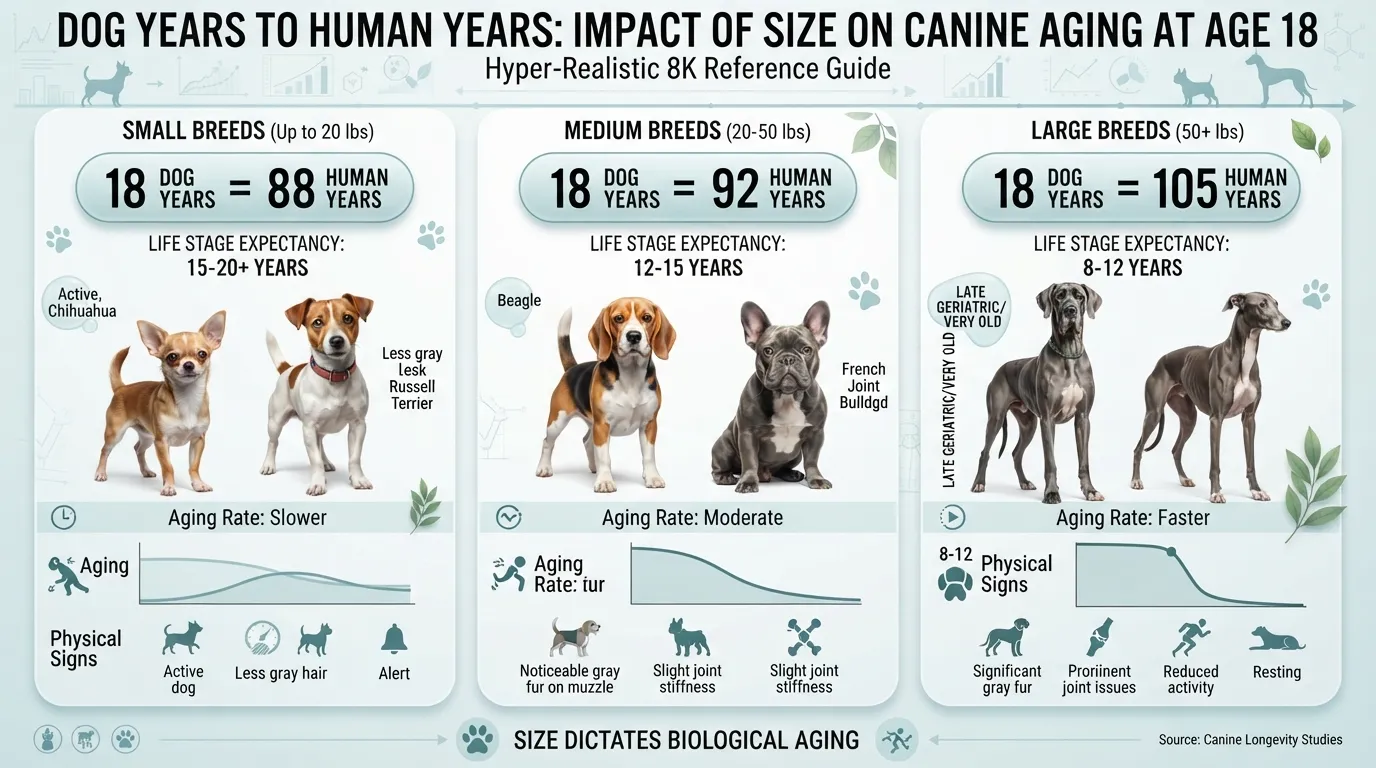
At 17 human years old, a Blue Heeler Lab mix is a true geriatric senior, roughly equivalent to an 85-to-95-year-old human. Because the Labraheeler blends the medium-to-large frame of a Labrador with the compact, dense build of an Australian Cattle Dog, aging accelerates significantly past year seven, making 17 an extraordinary and advanced age for this active crossbreed.dog age calculator
| Age Conversion Snapshot: Labraheeler vs. Human Years | ||
|---|---|---|
| Calendar Years (Human Age) | Approximate Equivalent Dog Age (Medium/Large Mix) | Life Stage |
| 10 Years | ~65–70 Years | Early Senior |
| 12 Years | ~74–80 Years | Advanced Senior |
| 15 Years | ~80–89 Years | Geriatric |
| 17 Years | ~84–94 Years | End-of-Life / Exceptional Senior |
How Old Is a Dog That's 17 Years Old? Human Age Breakdown
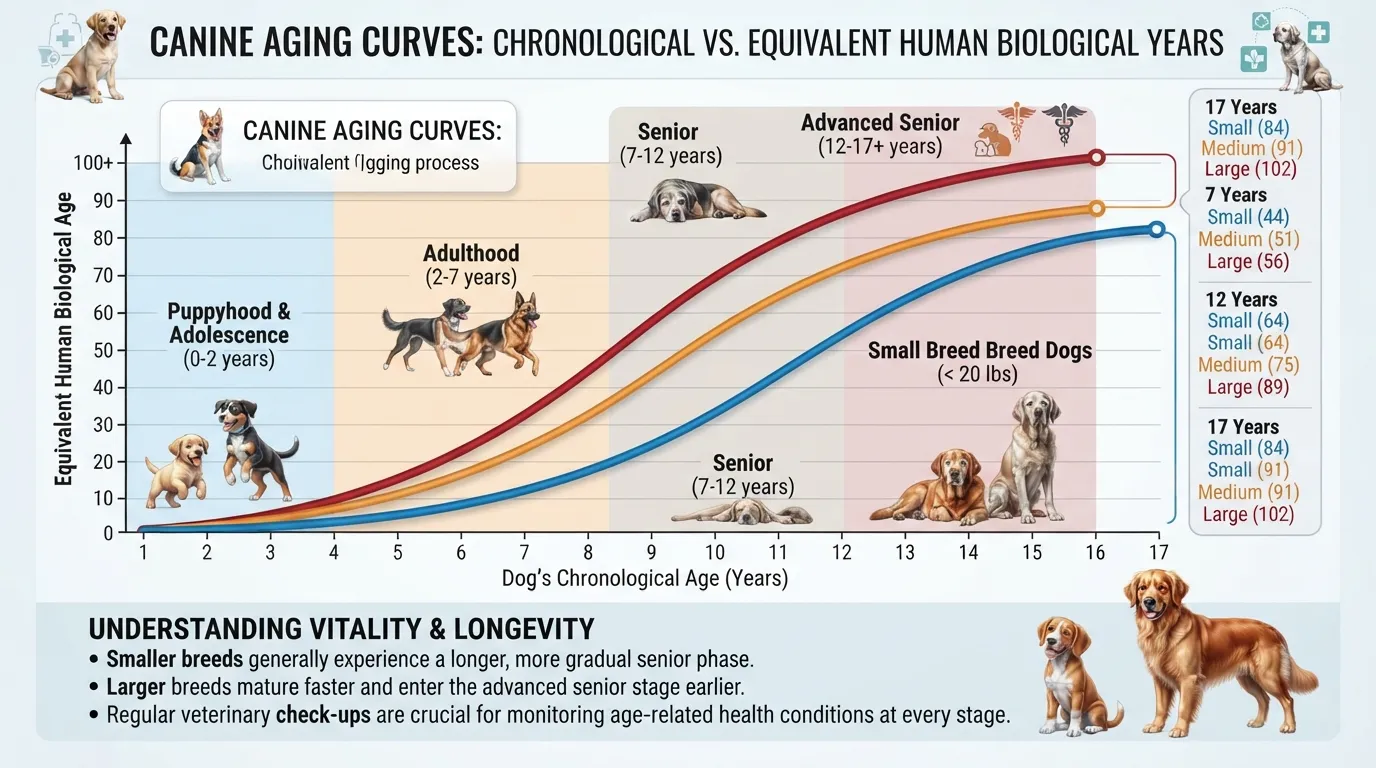
When a dog reaches 17 calendar years of life, they have crossed into extraordinary geriatric territory. However, the exact equivalent in human aging years varies drastically depending on how big they are. Size is the single biggest factor influencing a dog’s metabolic rate, cell degradation, and overall life expectancy.
Small Dogs (up to 20 lbs)
Small breeds like Chihuahuas or Pomeranians age much slower after their initial puppyhood. At 17 years old, a small dog is roughly equivalent to an 84-year-old human. While they are definitely senior citizens, their compact frames put significantly less stress on their hearts and joints, allowing many small dogs to maintain decent mobility and sharp senses well into their late teens.
Medium Dogs (21-50 lbs)
Medium-sized dogs bridge the gap between compact companions and working dogs. At 17 years old, a medium dog sits at around 86 to 93 equivalent human years. Their bodies have endured years of moderate physical exertion, and the signs of advanced cellular aging—such as stiffening joints, graying muzzles, and sensory dulling—become a daily reality.
Large Dogs (51-90 lbs)
Large breeds, which include the Blue Heeler Lab mix, typically weigh between 45 and 65 pounds and sit squarely in the upper-medium to large category. At 17 calendar years, a large dog is pushing past 94 to 100+ human years. Because larger bodies age faster and carry more weight on their frames, making it to 17 is a rare milestone that requires exceptional genetics, pristine nutrition, and dedicated veterinary support.
Giant Breeds (90+ lbs)
Giant breeds like Mastiffs or Great Danes burn through their biological clocks the fastest. It is statistically rare for a giant breed to ever reach 17 years of age, as their natural life expectancy rarely exceeds 8 to 10 years. If a giant breed miraculously hit 17, they would be well over 115+ equivalent human years old—truly ancient in canine terms.
Quick Size-Wise Comparison at 17 Years
Toy / Small (Chihuahua): ~84 human years (Senior, active with modifications)
Medium (Beagle / Spaniel): ~88 human years (Frailer, slower pace of life)
Large / Labraheeler (Blue Heeler Lab Mix): ~94 human years (Geriatric, requires heavy joint and health support)
Giant (Great Dane): 115+ human years (Extremely rare longevity milestone)
Breed-Specific Example: Chihuahua vs. Labrador at 17 Years
To put this into perspective, consider the daily reality of two completely different dogs at the exact same 17-year milestone:
A Chihuahua at 17 might still potter around the living room, bark at the mailman, and jump up onto a low-set couch with the help of pet stairs.
A Labrador Retriever or Labraheeler at 17 has lived a life equivalent to nearly a century of human aging. Their larger frame means chronic hip and elbow stiffness takes a heavy toll, transforming their day into a quiet routine of soft orthopedic beds, assisted short walks, and pain management supervised by a vet.
The Old "1 Dog Year = 7 Human Years" Myth — Why It's Wrong
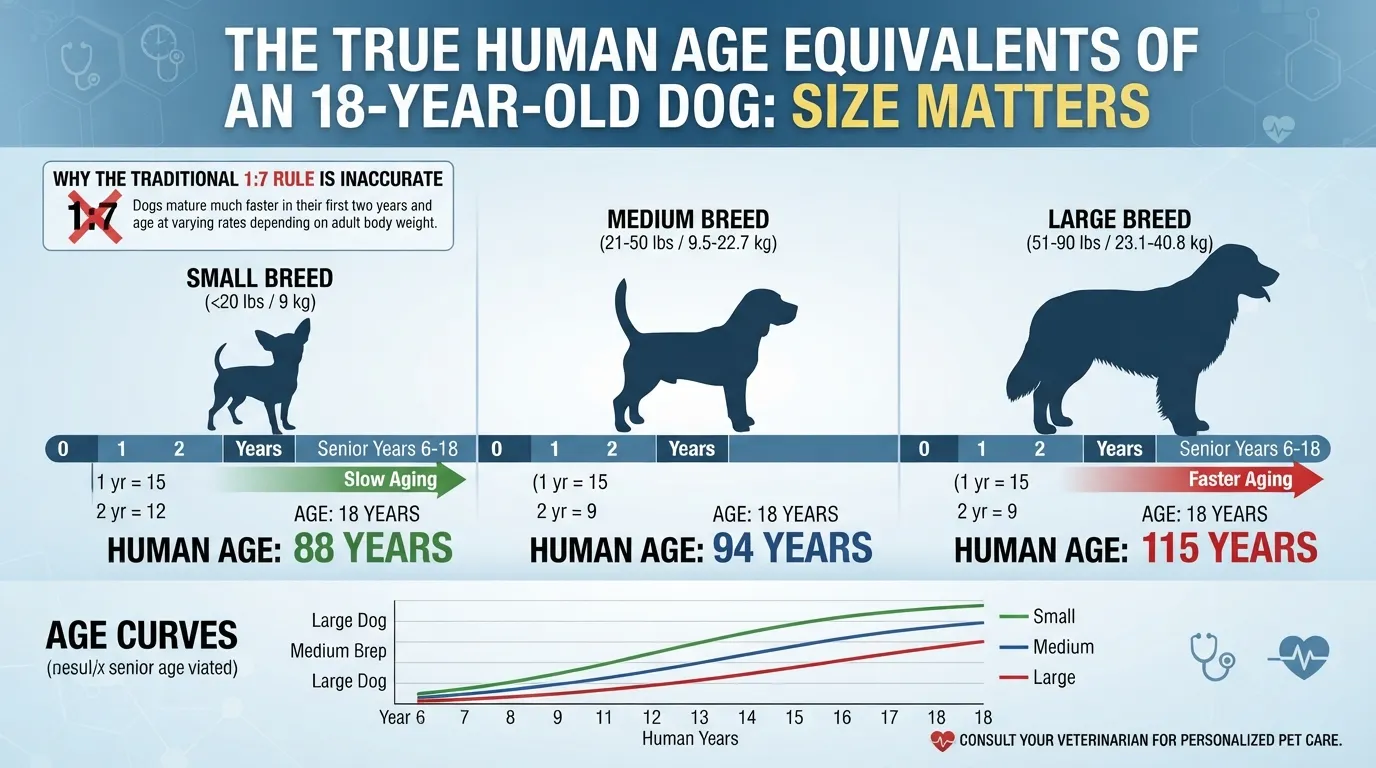
For generations, the standard rule of thumb for calculating a dog’s age was simple: take their calendar age and multiply it by seven. While easy to remember, this math is fundamentally flawed. Dogs do not age in a straight, linear fashion throughout their lives.
Where This Myth Came From
The 1-to-7 ratio originated as a crude statistical average. Someone took the average human lifespan (roughly 70 years) and divided it by the average canine lifespan (roughly 10 years) to arrive at the magic number seven. It was never based on actual biological science, cellular research, or metabolic data. It caught on because it provided a quick, neat way for humans to conceptualize pet aging, even though it completely misrepresents how dogs actually grow and mature.
Why Vets No Longer Use This Formula
Modern veterinary medicine and genetic research have proven that dogs age at wildly variable rates depending on their life stage. A one-year-old dog is biologically equivalent to a young human adult in their mid-to-late teens, meaning a dog accomplishes the equivalent of 15 to 18 human years in just their first 12 months of life. After that rapid developmental burst, the aging curve flattens out significantly, only to accelerate again as they enter their senior years. Relying on the old rule of seven for a Blue Heeler Lab mix leads to inaccurate health assumptions and missed preventive care windows.
The Correct Formula: AVMA & AAHA Method
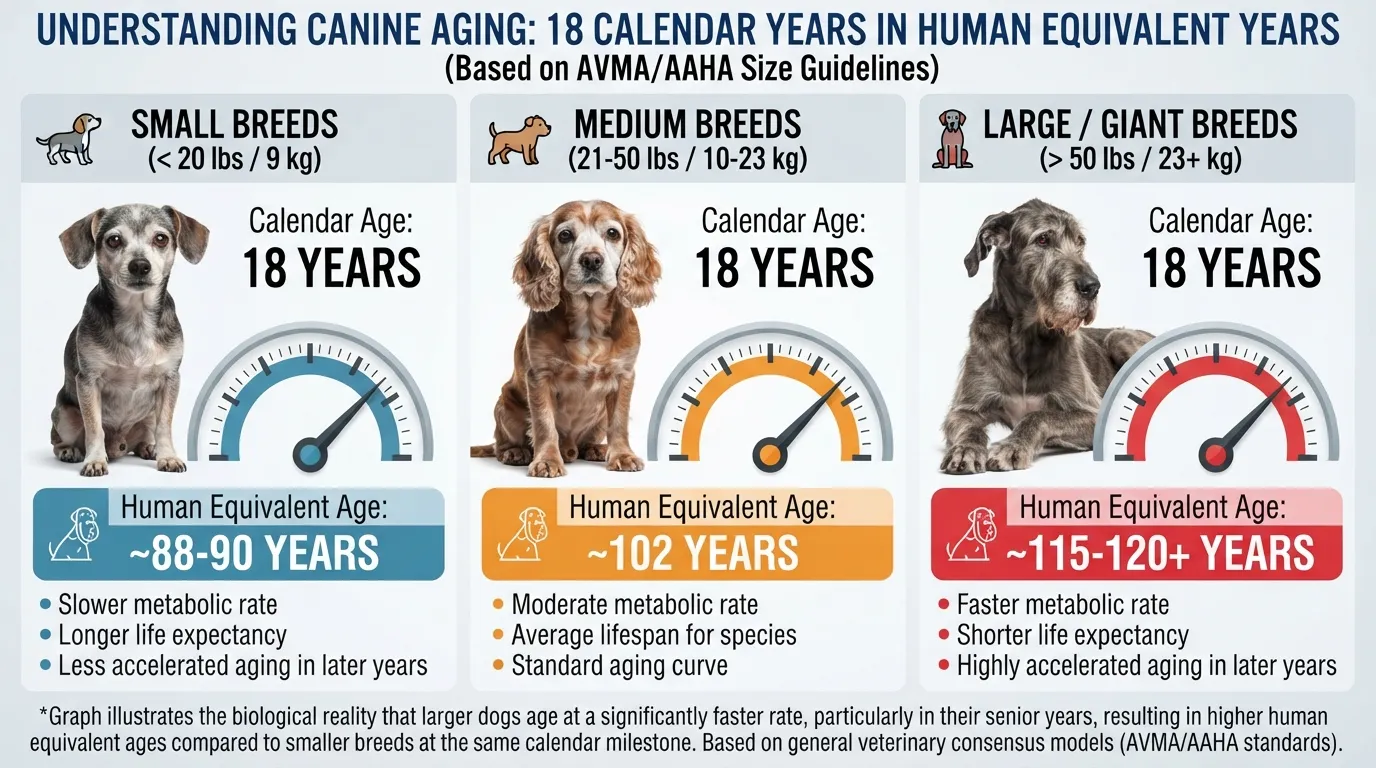
To get an accurate picture of your dog’s biological age, veterinary organizations like the American Veterinary Medical Association (AVMA) and the American Animal Hospital Association (AAHA) use a non-linear calculation model. This method accounts for the rapid developmental leaps of puppyhood and the variable aging speeds driven by a dog’s adult size.
First Year = 15 Human Years
Dogs experience a massive biological explosion during their first 12 months of life. In just one calendar year, a puppy goes from a helpless newborn to a fully grown, sexually mature adult capable of reproduction. Biologically and mentally, a one-year-old dog is roughly equivalent to a 15-year-old human teenager.
Second Year = +9 Human Years
The aging curve begins to level off during the second year, but it is still vastly faster than human aging. By the time your dog reaches their second birthday, you add another 9 human years to the total. This brings a two-year-old dog to the biological equivalent of a 24-year-old human adult—fully formed, high-energy, and in their physical prime.
Every Year After = +4 to 5 Human Years (Size Dependent)
Once a dog passes the two-year mark, the aging process stabilizes into a much more gradual pace. For each calendar year that follows, you add roughly 4 to 5 human years. The exact number depends on your dog’s weight class:
Small breeds add about 4 human years per calendar year.
Medium to large breeds (like the Blue Heeler Lab mix) lean closer to 5 human years per calendar year due to the extra load on their joints and organs.
Dog Years to Human Years Chart 1–20+ Years
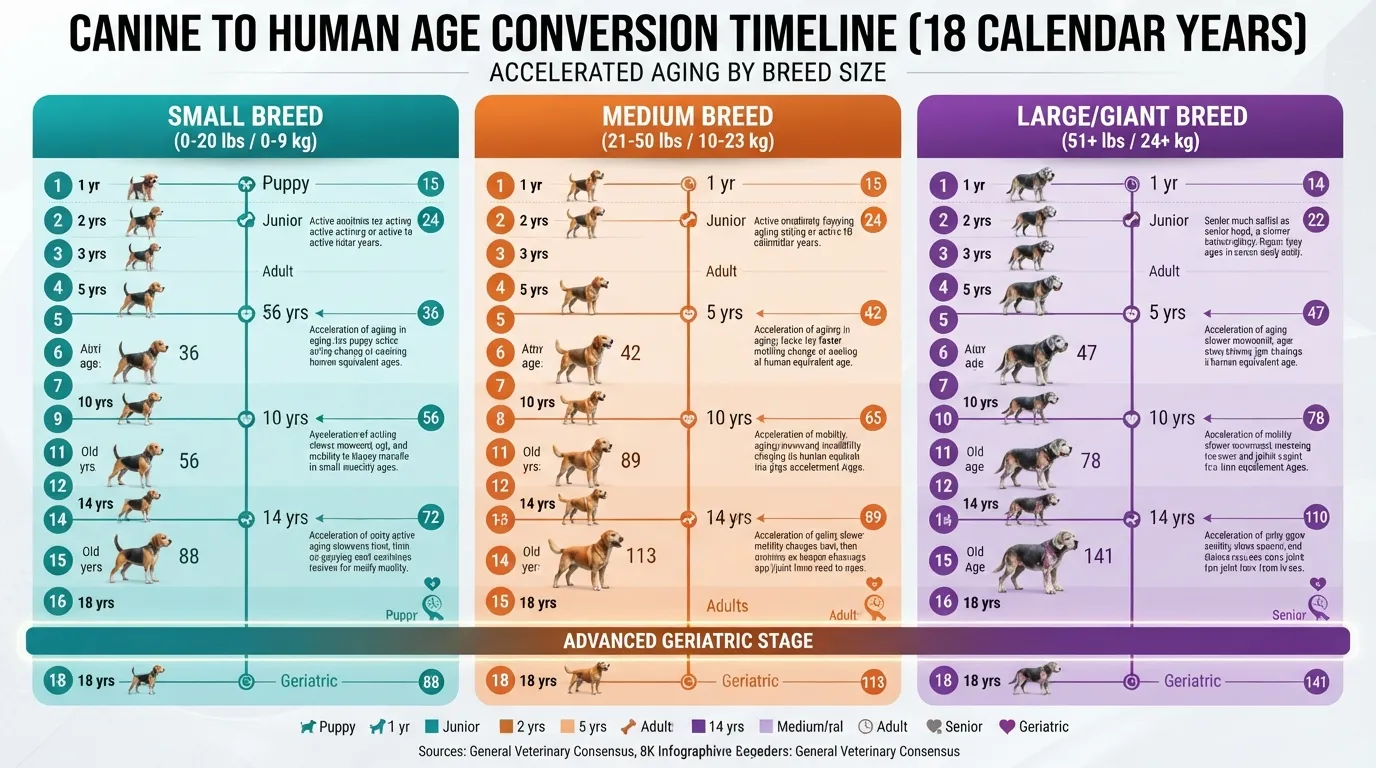
| Dog Age Conversion by Weight & Size | ||||
|---|---|---|---|---|
| Calendar Years | Small Dogs (up to 20 lbs) | Medium Dogs (21–50 lbs) | Large / Labraheeler (51–90 lbs) | Giant Breeds (90+ lbs) |
| 1 Year | 15 | 15 | 15 | 15 |
| 2 Years | 24 | 24 | 24 | 22 |
| 3 Years | 28 | 29 | 31 | 35 |
| 4 Years | 32 | 34 | 38 | 45 |
| 5 Years | 36 | 39 | 45 | 55 |
| 6 Years | 40 | 44 | 52 | 66 |
| 7 Years | 44 | 49 | 59 | 75 |
| 8 Years | 48 | 54 | 66 | 85 |
| 9 Years | 52 | 59 | 73 | 95 |
| 10 Years | 56 | 64 | 80 | 105 |
| 11 Years | 60 | 69 | 87 | 115 |
| 12 Years | 64 | 74 | 94 | 120+ |
| 13 Years | 68 | 79 | 101 | 125+ |
| 14 Years | 72 | 84 | 108 | — |
| 15 Years | 76 | 89 | 115 | — |
| 16 Years | 80 | 93 | 120 | — |
| 17 Years | 84 | 98 | 125 | — |
| 18 Years | 88 | 103 | — | — |
| 19 Years | 92 | 108 | — | — |
| 20+ Years | 96+ | 112+ | — | — |
Is 17 Very Old for a Dog? Life Stage & Lifespan Comparison
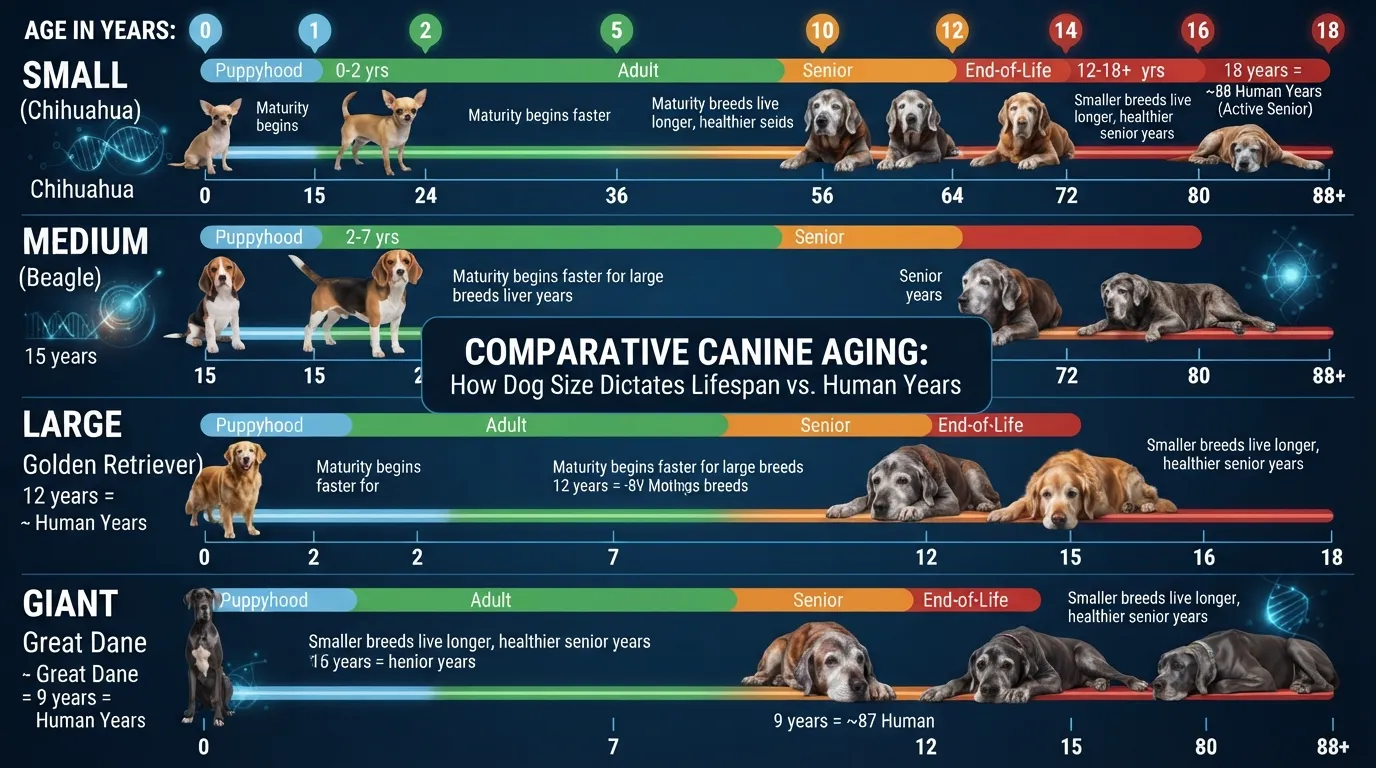
Yes, 17 calendar years is exceptionally old for a dog, especially for a medium-to-large mixed breed like the Blue Heeler Lab mix. While some miniature toy breeds cross this threshold with relative frequency, reaching 17 means your Labraheeler has significantly outlived average expectations and entered rare longevity territory.
Senior vs. Geriatric Dog Stage
Dogs generally transition into their senior stage at around 7 or 8 years old, where their muzzles start frosting and they may slow down slightly on long hikes. However, a dog at 17 is far past the standard senior phase—they are in the geriatric stage. At this advanced point, the focus shifts entirely from high-octane working or hunting drive to comfort, pain management, and preserving daily quality of life.
Average Dog Lifespan Comparison (Has Your Dog Outlived Average?)
The typical life expectancy for a Labrador Retriever is 10 to 12 years, and an Australian Cattle Dog (Blue Heeler) typically lives 12 to 15 years. Because the Blue Heeler Lab mix inherits traits from both athletic working backgrounds, they usually average a lifespan of 12 to 14 years. If your Labraheeler has made it to 17, they have outlived the statistical average by 3 to 5 years—a remarkable milestone that speaks volumes about strong genetics, lean conditioning, and attentive home care.
Breed & Size Impact on Lifespan
Genetics and body mass dictate the biological clock of every canine. Smaller dogs have slower metabolic rates and lower stress on their skeletal frames, allowing them to stretch their years further. Conversely, larger dogs process energy faster and place heavier mechanical wear on their joints and organs. Because Labraheelers typically mature into sturdy, active dogs weighing 45 to 65 pounds, their biological engine burns brighter over a shorter timespan, making 17 years an extraordinary achievement.
Signs Your Senior Dog Needs Extra Care
Mobility struggles: Difficulty getting up from hard floors, hesitation on stairs, or stiffness after resting.
Sensory changes: Cloudiness in the eyes, bumping into furniture in dim light, or failing to respond to verbal cues.
Behavioral shifts: Increased vocalization, pacing at night, or confusion in familiar environments (signs of canine cognitive decline).
Bathroom habits: Accidents indoors due to weakened bladder control or reduced mobility making it hard to make it outside in time.
Changes in appetite or weight: Muscle wasting along the spine and hips, or sudden disinterest in food despite a previously voracious Lab appetite.
Watch this quick video to see how dog years compare to human years visually and explore how modern scientific models calculate canine aging compared to the traditional linear rule:
Caring for Your Senior 17-Year-Old Dog
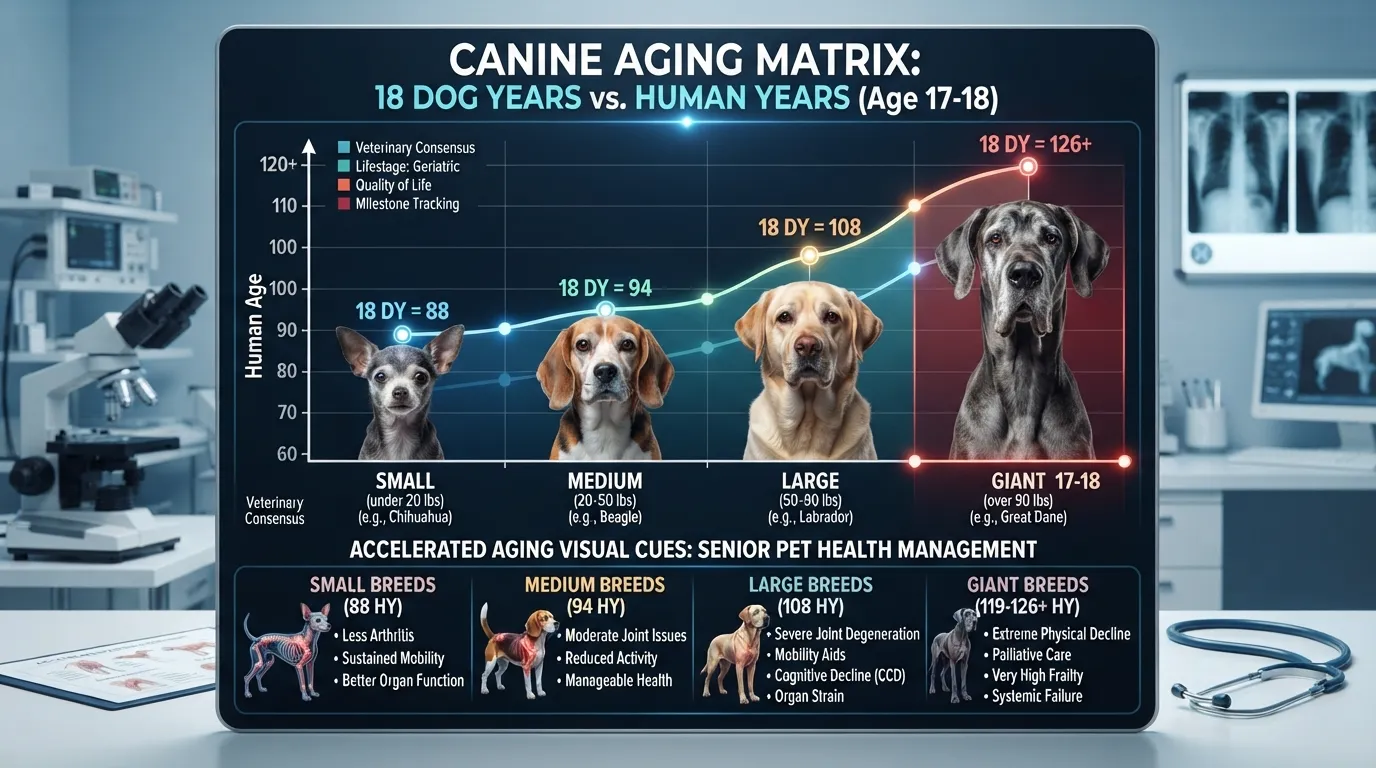
Reaching the extraordinary milestone of 17 calendar years means your Blue Heeler Lab mix has entered their ultimate twilight phase. Caring for a dog at this stage requires a complete shift in mindset. You are no longer managing a high-drive working companion or a high-energy retriever; you are supporting a geriatric family member whose comfort, peace, and quality of life are your top priorities.
Daily Life & Mobility Changes
At 17 years old, the combined legacy of the high-impact Australian Cattle Dog agility and the sturdy build of the Labrador Retriever takes a heavy toll on the skeletal system. Your daily routine will look entirely different than it did a few years ago.
Orthopedic Support: Hard floors become slippery obstacles. Invest in thick, high-density orthopedic memory foam beds placed in easily accessible rooms so your dog never has to navigate stairs or cold tiles just to rest.
Assisted Movement: You may need to use a support sling or a supportive belly harness to help your Labraheeler get up from a lying position or assist them up small steps or into a vehicle.
Shorter, Frequent Outings: Instead of long, brisk walks, opt for short, gentle potty breaks multiple times a day. Allow your senior dog plenty of time to sniff around—mental stimulation through safe snuffling is just as tiring and rewarding for them now as physical distance used to be.
Diet & Exercise Adjustments
As metabolic rates plunge and activity levels drop, your dog’s nutritional and physical needs change drastically to prevent dangerous weight gain or rapid muscle atrophy.
Calorie Management & Senior Formulas: Switch to a high-quality senior dog food that is lower in calories to prevent excess weight from crushing aging joints, but higher in easily digestible protein to preserve lean muscle mass.
Supplements: Discuss targeted joint supplements with your veterinarian, particularly glucosamine, chondroitin, omega-3 fatty acids (fish oils), and green-lipped mussel extract to help soothe inflamed cartilage.
Gentle Exercise: Physical activity should now strictly consist of controlled, low-impact movement. Avoid fetch games that involve sudden twisting, stopping, or jumping, as these can easily cause injury to fragile senior joints and ligaments.
Vet Checkups & Common Health Issues
At 17, routine veterinary care shifts into active palliative and comfort-focused management. Frequent checkups (every 3 to 6 months) are essential to catch and treat age-related complications early:
Arthritis & Joint Pain: Degenerative joint disease is nearly universal at this age. Your veterinarian can prescribe safe, targeted non-steroidal anti-inflammatory drugs (NSAIDs) or newer therapies like monoclonal antibody injections to manage chronic pain.
Dental Disease: Tartar buildup and gum disease can seed bacteria into the bloodstream, putting extra stress on aging hearts and kidneys. Gentle, vet-approved dental care or specialized soft diets keep oral pain from ruining their appetite.
Vision & Hearing Loss: Nuclear sclerosis (cloudy blue-gray eyes) and progressive cataracts are common, alongside age-related deafness. Help your dog navigate safely by keeping your home layout consistent—avoid rearranging furniture so they can rely on their spatial memory.
Cognitive Decline: Canine Cognitive Dysfunction (doggy dementia) may manifest as nighttime pacing, staring at walls, or apparent confusion. Environmental enrichment, structured routines, and specific vet-prescribed supplements or medications can help ease these neurological symptoms.
Frequently Asked Questions
What is 17 years in dog age?
For a medium-to-large mixed breed like the Blue Heeler Lab mix, 17 calendar years is biologically equivalent to approximately 91 to 94 human years, placing your dog firmly in advanced geriatric old age according to modern veterinary calculation models.
How old is 200 years in dog years?
A dog’s natural lifespan never reaches 200 calendar years. However, if you are calculating based on standard multi-year equations, a dog cannot biologically live to be 200; the absolute maximum record for any canine is around 30 calendar years, which translates to well over 130+ human equivalent years.
Is 17 very old for a dog?
Yes, 17 calendar years is exceptionally old for a dog. While small toy breeds sometimes reach this age, it is a rare longevity milestone for a sturdy, active medium-to-large breed like a Labraheeler, which typically averages a lifespan of 12 to 14 years.
Is 7 dog years 1 human year?
No, the old “1 dog year equals 7 human years” rule is a widespread myth. Dogs actually age much faster during their first two years of life (reaching the equivalent of a mid-20s human adult by age two) and then age at a more gradual, size-dependent rate of about 4 to 5 human years per calendar year thereafter.
Is 14 very old for a dog?
Yes, 14 calendar years is considered very old for most dogs, particularly medium and large mixes. At 14, a Blue Heeler Lab mix is a senior-to-geriatric dog who has successfully matched or exceeded their expected lifespan.
🐾 Other Age Guides

I built Dogagescalculator.com to give dog owners honest, science-backed answers instead of the outdated "×7" myth. Every figure here is checked against AKC, AVMA, and published veterinary research.
More about the author & this site →
Comments