Pitbull Dog Years to Human Years: Accurate Calculator & Complete Guide
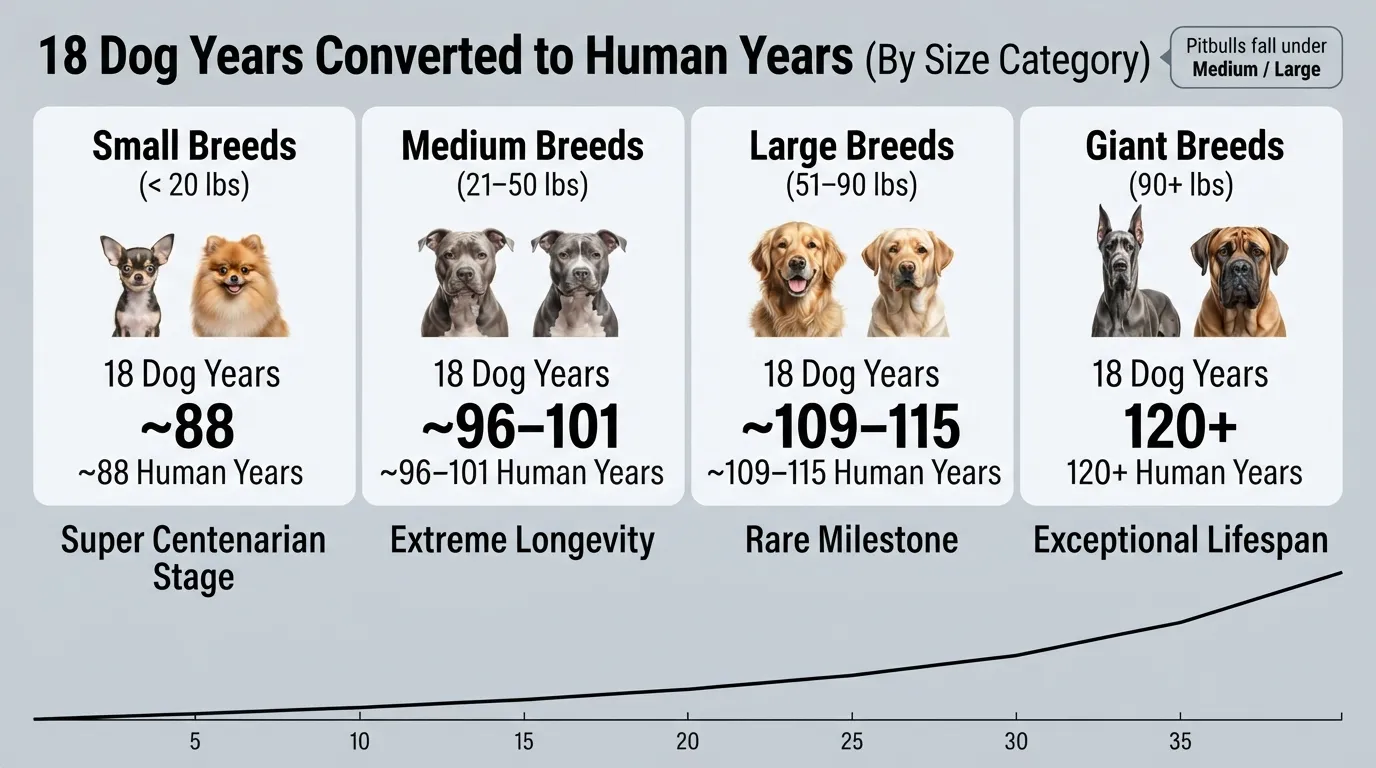
A one-year-old Pitbull equals roughly 15 human years, reaching about 24 human years by age two. After year two, each additional calendar year equals approximately 5 human years for medium-sized breeds like Pitbulls.
Converting pitbull dog years to human years requires accounting for rapid juvenile development rather than relying on the old “multiply by 7” myth. Based on American Veterinary Medical Association (AVMA) guidelines and canine epigenetic aging research, our calculator provides a precise, vet-informed age conversion tailored to your dog’s life stage.
Pitbull Dog Years to Human Years Chart
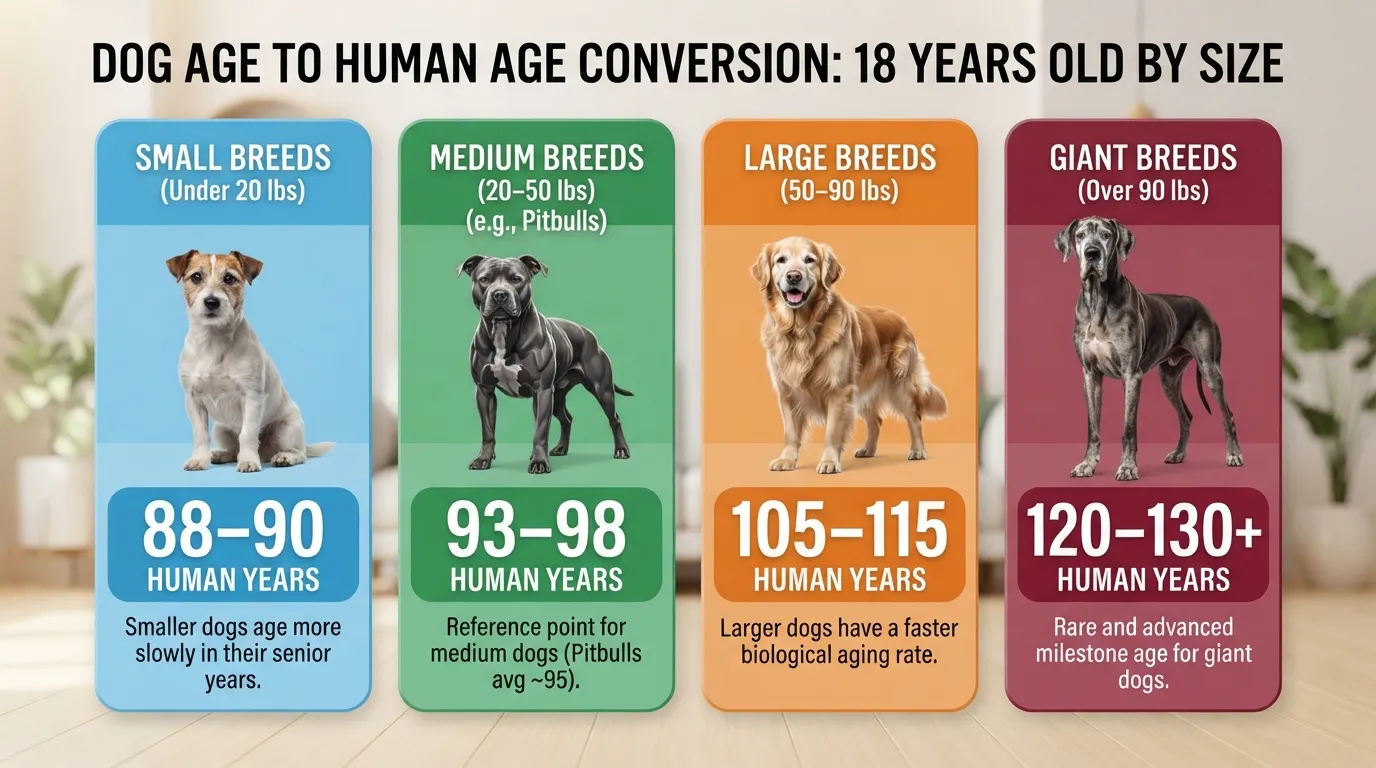
A medium-sized Pitbull (typically weighing between 30 and 60 pounds) ages roughly 15 human years in their first year, 9 in their second, and about 4 to 5 human years for every calendar year after that. This chart uses the American Veterinary Medical Association (AVMA) aging guidelines tailored specifically to the medium-breed weight class of American Pit Bull Terriers and Staffies.
| Pitbull Age (Calendar Years) | Estimated Human Age Equivalent | Life Stage (AAHA Guidelines) |
|---|---|---|
| 1 Year | 15 years | Puppy / Adolescent |
| 2 Years | 24 years | Young Adult |
| 3 Years | 28 – 29 years | Adult |
| 4 Years | 32 – 34 years | Adult |
| 5 Years | 37 – 39 years | Adult |
| 6 Years | 42 – 44 years | Adult |
| 7 Years | 47 – 49 years | Mature Adult |
| 8 Years | 51 – 54 years | Mature Adult |
| 9 Years | 56 – 59 years | Senior |
| 10 Years | 61 – 64 years | Senior |
| 11 Years | 66 – 70 years | Senior |
| 12 Years | 71 – 75 years | Senior / End-of-Life |
| 13 Years | 76 – 81 years | Senior / End-of-Life |
| 14 Years | 82 – 87 years | Senior / End-of-Life |
| 15+ Years | 88 – 93+ years | Geriatric |
Weight Adjustment Note: Smaller Staffies near the 30-pound mark sit on the lower end of these human age ranges, while muscular, 60-pound American Pit Bull Terriers age slightly faster on the upper end. Banfield Pet Hospital longevity records show that larger body mass adds physical stress over time, meaning a leaner 35 lb Pitbull at age 10 often retains the cellular health of a 61-year-old human, whereas a heavy 60 lb Pitbull may align closer to 64.
Why "1 Dog Year = 7 Human Years" Doesn't Work for Pitbulls
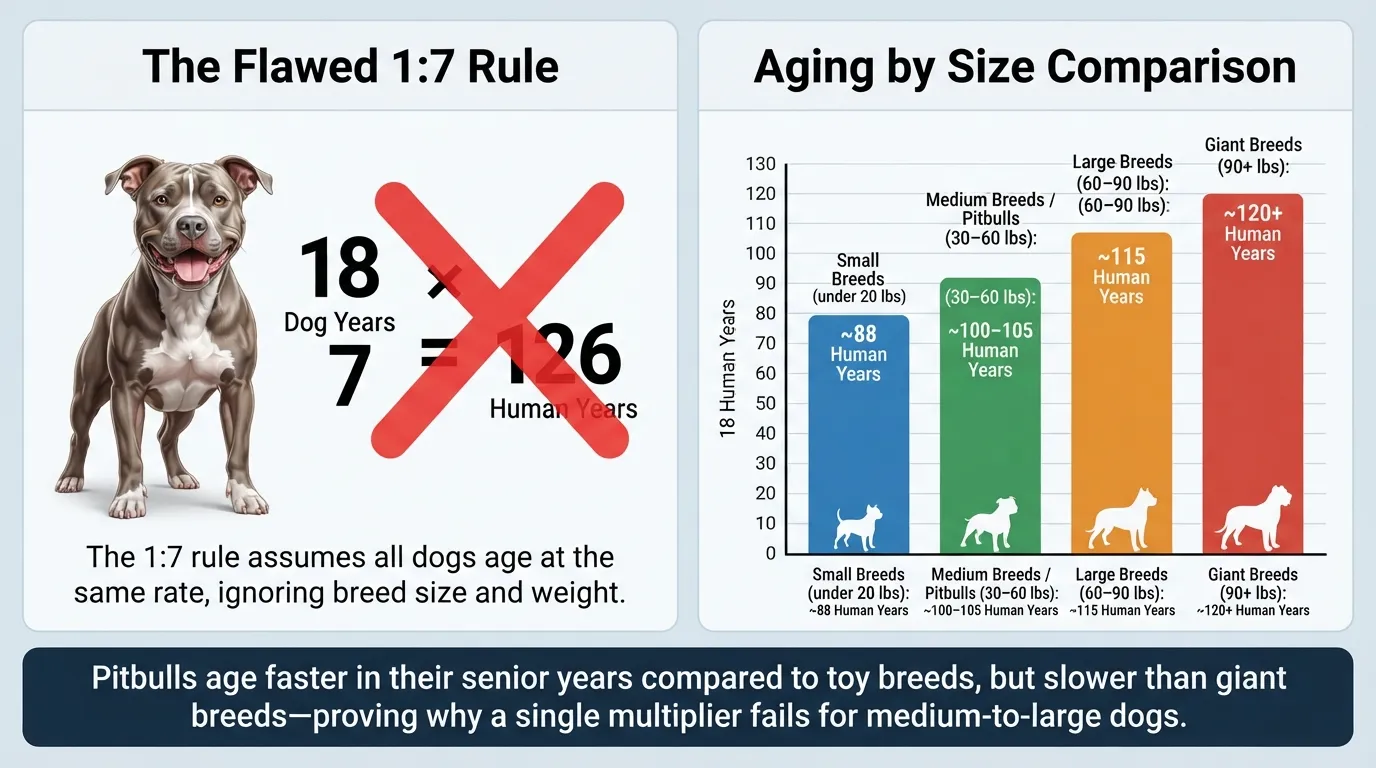
The 7-to-1 ratio fails for Pitbulls because dogs do not age at a linear, uniform rate throughout their lives. Converting pitbull dog years to human years using this old rule oversimplifies how medium-sized, muscular dogs actually mature and age.
The 1950s Marketing Myth: The “seven-year rule” originated mid-century as a simple rule of thumb based on a basic calculation: average human lifespan (roughly 70 years) divided by average dog lifespan (roughly 10 years). Researchers from Kansas State University and Washington State University later noted that this formula was largely a marketing heuristic to encourage annual veterinary checkups rather than a reflection of biological reality.
Medium-Breed Aging Dynamics: Pitbull breeds—such as the American Pit Bull Terrier and American Staffordshire Terrier—typically fall into the 30-to-60-pound range, classifying them as medium-to-large dogs. Small dogs mature quickly but age slowly, while giant breeds mature slowly and age rapidly. Pitbulls follow a unique middle curve: they experience a massive developmental surge in their first two years before settling into a steady, moderate rate of cellular aging.
The Real Science: DNA Methylation & Molecular Aging
Modern veterinary science measures canine age through epigenetics rather than calendar years. A landmark 2020 study by researchers at the University of California, San Diego, analyzed DNA methylation patterns in dogs to map how canine genomes add methyl groups over time.
The findings revealed that a dog’s epigenetic clock ticks rapidly during infancy and early youth, then decelerates as the dog reaches adulthood. A one-year-old dog has molecular epigenetic changes equivalent to a 30-year-old human, but that rate slows dramatically over the following years.
Understanding this non-linear curve gives owners an accurate view of a pitbull age in human years, helping vet teams target age-related health milestones—from joint care to cognitive checks—at the right physiological moment. For established life-stage criteria, review the official .
Pitbull Life Stages Explained
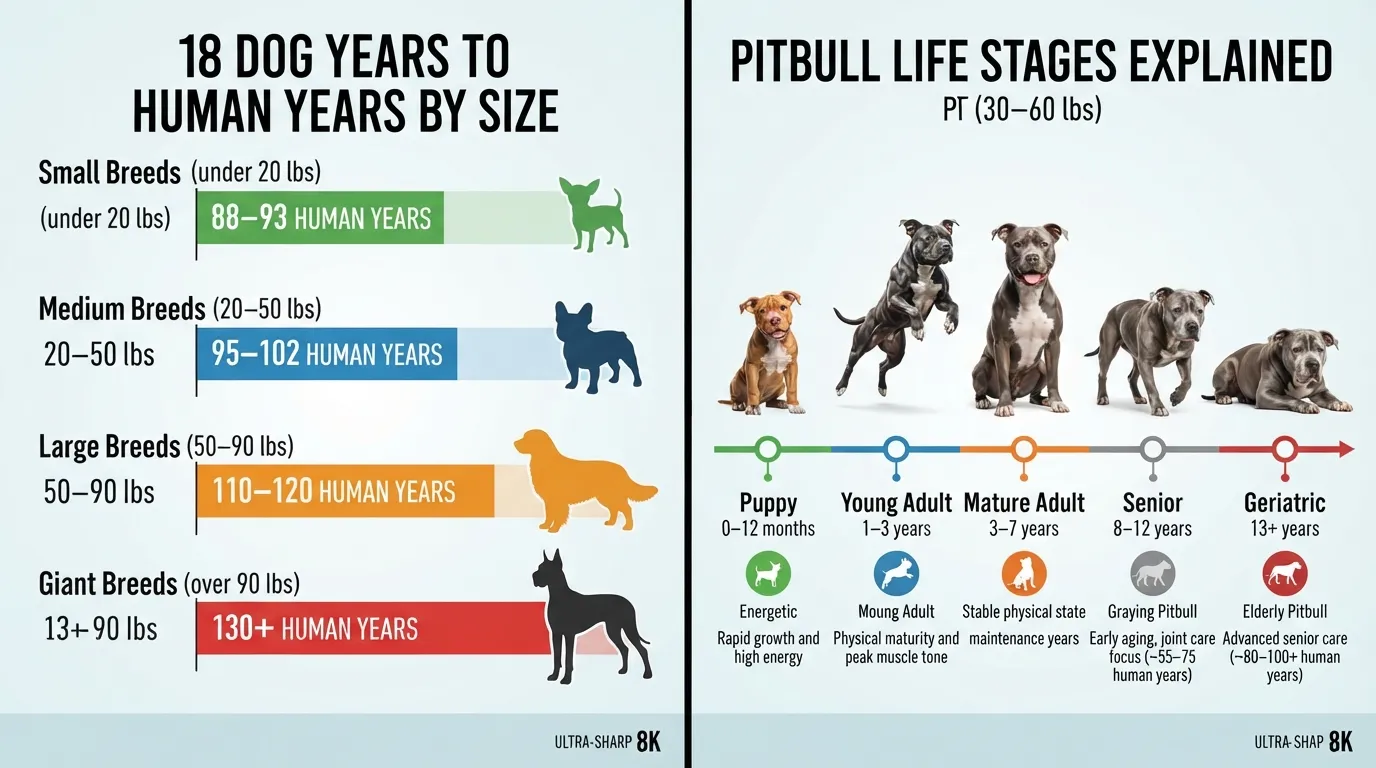
A Pitbull’s transition from puppyhood to old age follows four primary life stages, each marked by rapid biological shifts in their equivalent human age. Understanding these distinct phases helps you anticipate their physical needs, health risks, and behavioral changes as they mature.
Puppy 0–12 Months : Growth Milestones
During their first 12 months, Pitbulls experience explosive physical and cellular growth, zooming from birth to roughly 15 human years. By six months of age, a Pitbull puppy reaches about 75% of its adult height and half its adult weight, making this the most crucial period for bone and joint development. Because their epiphyseal growth plates remain open until around 10 to 12 months, excessive strain or improper nutrition during this rapid conversion period can cause permanent joint issues later in life.
Adolescent 1–2 Years : Physical and Behavioral Maturity
From 12 to 24 months, a Pitbull moves from adolescence into early adulthood, aging from approximately 15 to 24 human years. While their skeletal height usually caps out around year one, this phase is characterized by “filling out”—gaining lean muscle mass, widening through the chest, and reaching full adult weight according to UKC and AKC breed standards. Behavioral maturity often lags behind physical growth, meaning your 2-year-old Pitbull has the body of an athlete with the brain of a teenager.
Adult 2–6 Years : Peak Health Stage
The adult stage represents your Pitbull’s physical prime, covering the human age equivalent of roughly 24 to 44 years. During these middle years, their aging rate stabilizes into a predictable curve of roughly 4 to 5 human years for every calendar year. Energy levels remain high, metabolic rates are steady, and their immune system functions at peak performance, making this the ideal window for maintaining core muscular health through consistent weight management.
Senior 6–7+ Years : The Transition Phase
Pitbulls enter their senior years earlier than smaller breeds, officially transitioning around age 6 or 7, which equals roughly 45 to 50 human years. Because of their medium-to-large build (typically 30 to 60 pounds), their cellular aging proceeds faster than a toy breed, placing higher mechanical stress on their joints and organs over time.
Spotting the transition early ensures you can adapt their routine before aging degrades their quality of life. Key indicators of aging in Pitbulls include:
Visual Changes: Fading pigment and grey fur developing around the muzzle, eyes, and chin.
Mobility Differences: Morning joint stiffness, hesitation when jumping into cars, or slower recovery after intense play.
Energy Shifts: Sleeping more frequently throughout the day and showing decreased stamina on long walks.
Dental Wear: Plaque accumulation, bad breath, or wearing down of the incisors and premolars.
Supporting a senior Pitbull requires proactive modifications to keep their aging body comfortable:
Adjust calorie intake: Switch to a senior formula enriched with joint support (glucosamine and omega-3 fatty acids) to manage weight as their activity drops.
Increase vet monitoring: Shift from annual checkups to bi-annual exams with baseline blood panels to catch organ changes early.
Modify daily exercise: Swap high-impact fetch sessions for regular, low-impact walks that maintain muscle without straining aging joints.
Average Pitbull Lifespan
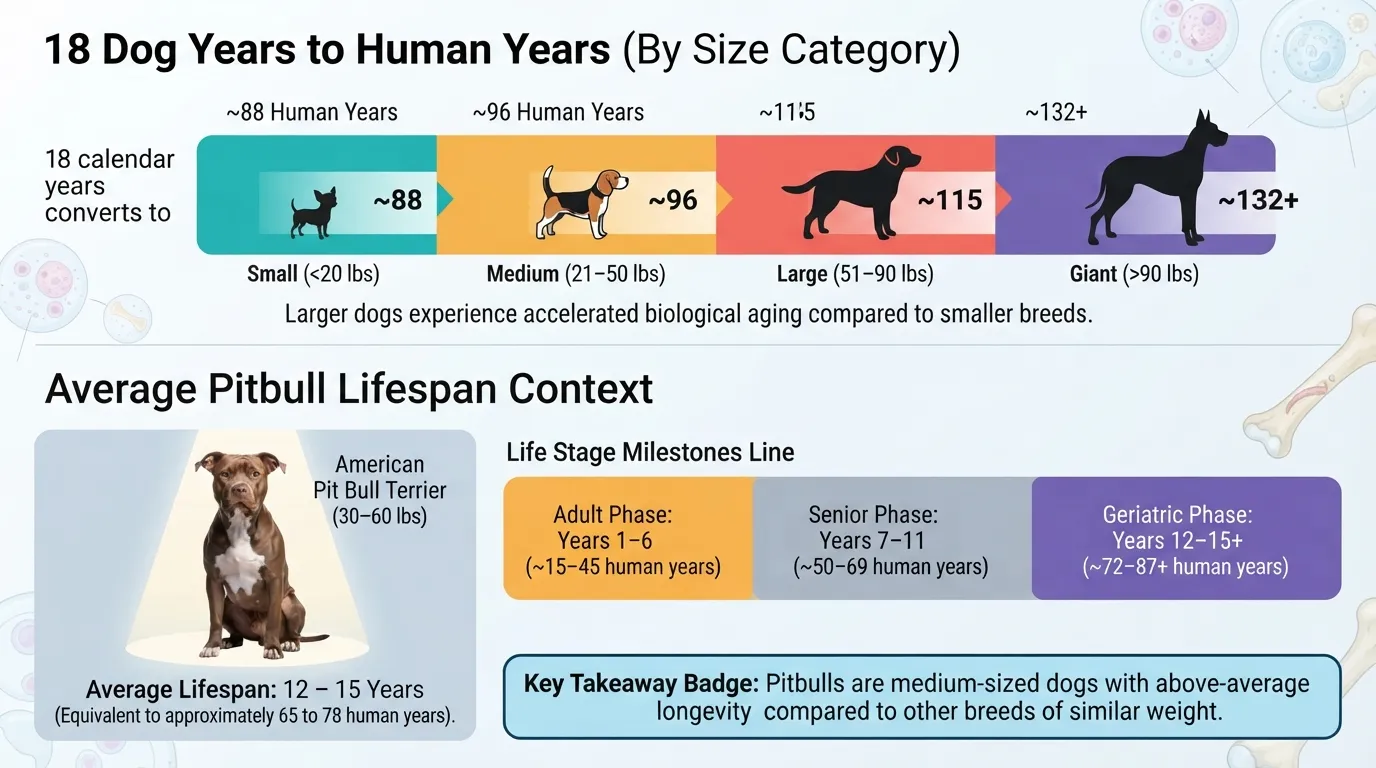
An average, healthy Pitbull lives between 12 and 16 years, which translates to roughly 65 to 90 pitbull dog years to human years. Female Pitbulls generally outlive males by about six to twelve months, largely due to lower average body mass and lower overall rates of certain age-related conditions.
While 12 to 16 years is the standard expectation for breeds under the “Pitbull” umbrella—such as the American Pit Bull Terrier, American Staffordshire Terrier, and Staffordshire Bull Terrier—individual lifespans vary based on lifestyle, breeding, and body condition.
Female Pitbulls: 13–16 years average
Male Pitbulls: 12–15 years average
Factors Affecting Lifespan
Two Pitbulls born on the exact same day can reach biological senior status years apart depending on how they are raised and cared for.
Diet & nutrition: High-quality protein feeds muscle retention, but calorie control is what preserves organ function. Keeping your Pitbull lean prevents metabolic stress that speeds up epigenetic aging.
Genetics & breeding: Dogs from reputably screened lines—free of congenital cardiac issues or severe hip dysplasia—consistently outlive backyard-bred dogs or those from high-inbreeding lines.
Spay/neuter status: Neutered and spayed Pitbulls live longer on average than intact dogs, primarily due to a lower risk of reproductive cancers, prostate problems, and roam-related injuries.
Preventive vet care: Regular wellness exams, yearly blood panels, and early treatment for skin infections or joint inflammation catch silent health threats before they permanently cut years off your dog’s life.
Does Weight Affect Your Pitbull’s Lifespan?
Yes, carrying extra weight directly shortens a Pitbull’s life expectancy. A landmark 20-year study by the University of Liverpool and Banfield Pet Hospital analyzed over 50,000 dogs and found that overweight dogs lived up to 2.5 years less than those kept at an ideal body weight.
For a Pitbull, losing two full calendar years means losing nearly 12 to 15 pitbull years to human years off their total lifespan.
According to UKC and AKC breed standards, a proper American Pit Bull Terrier or American Staffordshire Terrier is a athletic, medium-sized dog weighing between 30 and 70 pounds. However, popularity trends have led to over-bulked Pitbulls weighing 80 to 100+ pounds. Carrying excessive weight—whether fat or over-muscled frame—places heavy stress on joints, accelerates arthritis, and taxes the cardiovascular system, making weight management one of the single most effective levers you have to keep your dog young.
Types of Pitbulls & How Their Aging Differs
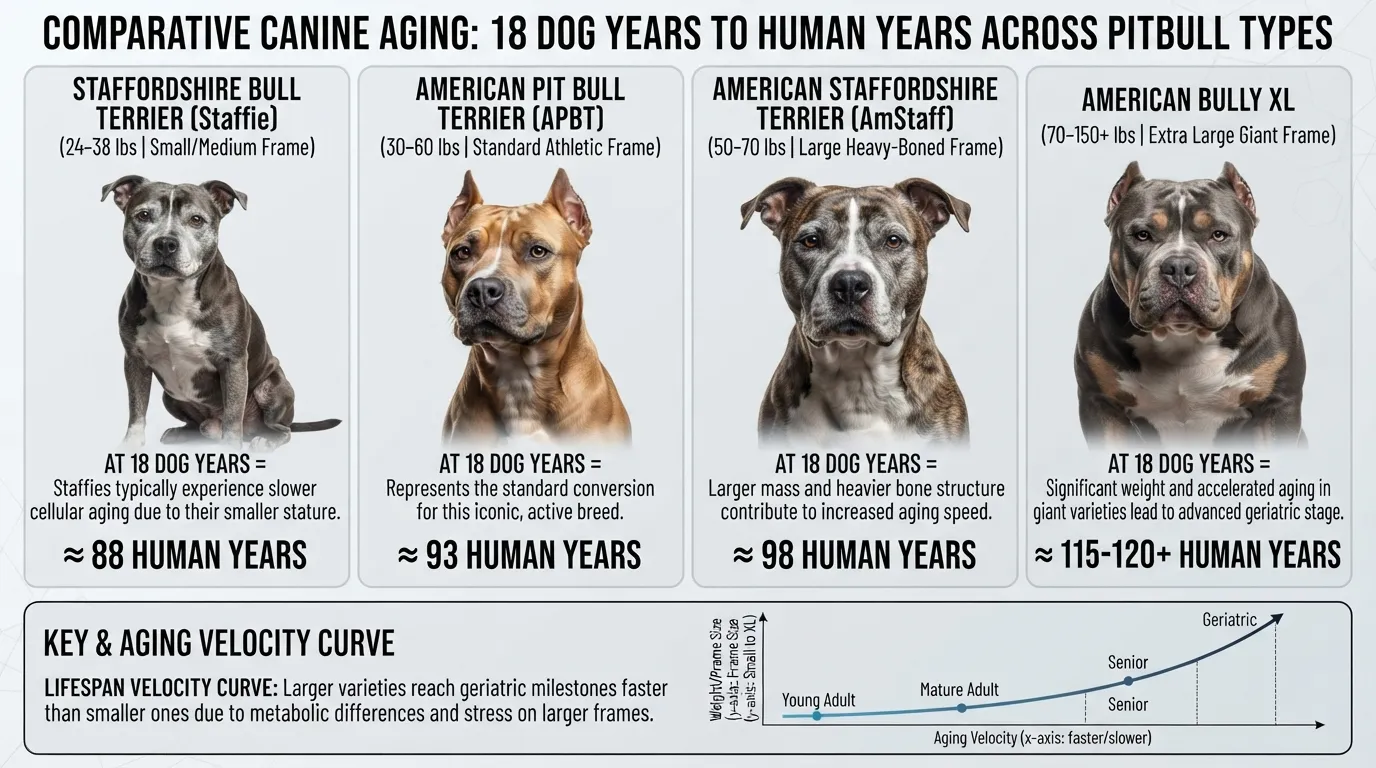
Pitbull” isn’t a single official breed—it’s an umbrella term covering several distinct breeds that age at slightly different rates due to variations in body mass and genetics. Larger, heavier dogs put more strain on their cardiovascular and skeletal systems, meaning a 70-pound pitbull type reaches senior status faster than a compact 30-pound staffy.
American Pit Bull Terrier (APBT)
Recognized by the [LINK: UKC Breed Standard], the classic American Pit Bull Terrier is an athletic, medium-sized dog typically weighing between 30 and 60 pounds. Because they maintain a leaner, muscular frame without extreme heavy-boned bulk, APBTs generally enjoy a solid lifespan of 12 to 14 years. In human terms, a 10-year-old APBT operates at roughly the equivalent of a 60- to 65-year-old person, keeping their athletic drive well into their mature years.
American Staffordshire Terrier
The American Staffordshire Terrier (AmStaff) is slightly shorter but noticeably stockier and heavier-boned than the APBT, often weighing between 50 and 70 pounds. That extra mass brings a slightly higher risk for joint strain and hip dysplasia as they age, pushing their average lifespan to around 12 to 15 years. An AmStaff reaches senior status around age 7 or 8 (roughly 49–53 human years), requiring earlier joint support and weight management to protect their heavier frame.
Staffordshire Bull Terrier
The Staffordshire Bull Terrier (“Staffy”) is the smallest of the core pitbull-type breeds, standing just 14 to 16 inches tall and weighing between 24 and 38 pounds. Thanks to Banfield Pet Hospital longevity data showing smaller dogs outliving larger ones, Staffies frequently reach 12 to 14+ years with fewer early-onset orthopedic issues. A 12-year-old Staffy is roughly 64 in human years, whereas a heavy 70-pound pitbull mix at that same chronological age would sit closer to 72.
| Breed / Type | Average Weight | Average Lifespan | Human Year Equivalent at Age 10 |
|---|---|---|---|
| Staffordshire Bull Terrier | 24 – 38 lbs | 12 – 14+ years | ~60 human years |
| American Pit Bull Terrier | 30 – 60 lbs | 12 – 14 years | ~63 human years |
| American Staffordshire Terrier | 50 – 70 lbs | 12 – 15 years | ~66 human years |
| American Bully / XL Pitbull Types | 70 – 100+ lbs | 8 – 12 years | ~72 human years |
How to Manually Calculate Your Pitbull's Age Without a Calculator
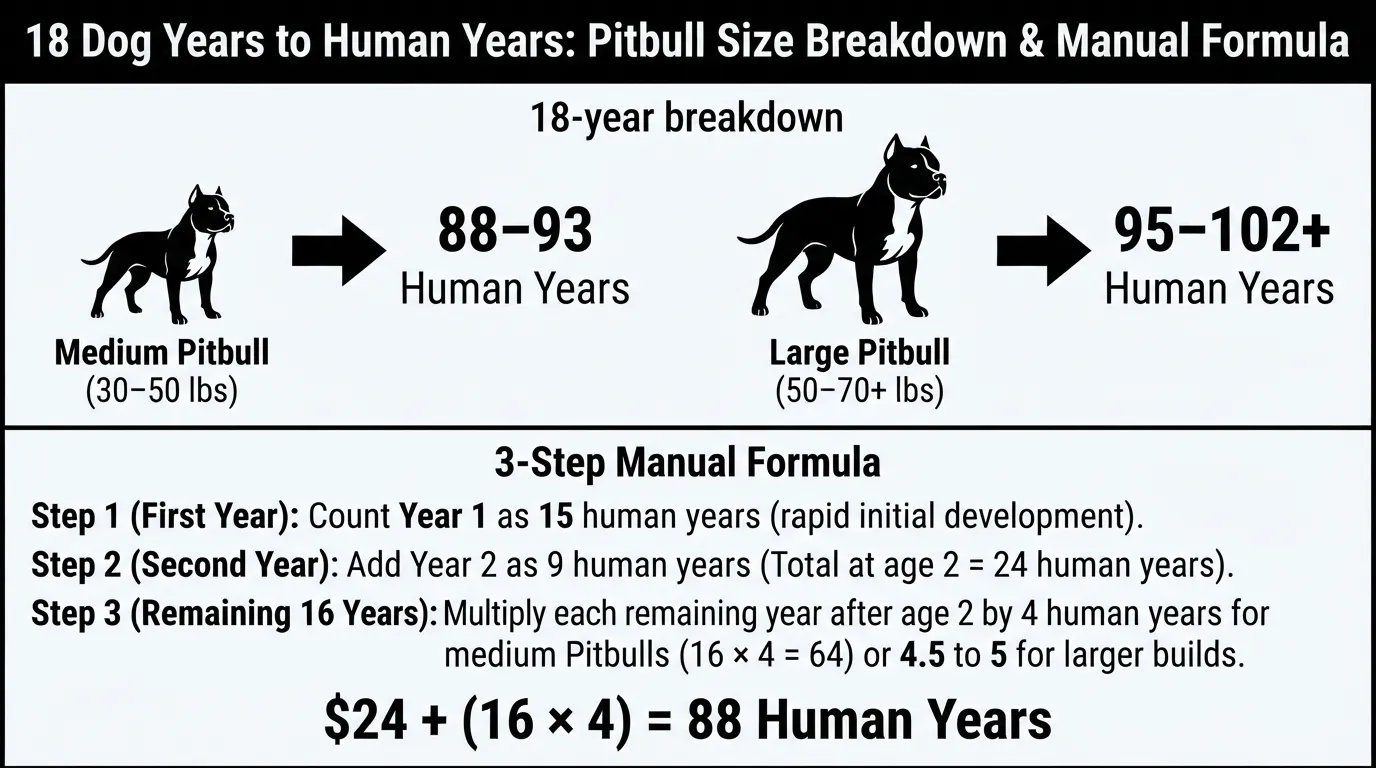
Calculating your pitbull’s age in human years takes three simple math steps based on veterinary standards from the American Veterinary Medical Association (AVMA). Because pitbulls are medium-to-large dogs (typically weighing 30 to 60 pounds), their aging curve levels off at roughly five human years for every calendar year after adulthood.
The AVMA 3-Step Aging Formula
Year 1: Count the first calendar year as 15 human years. Rapid growth and physical maturity happen during this initial stage.
Year 2: Add 9 human years for the second calendar year, bringing a 2-year-old pitbull to 24 human years.
Year 3 and Beyond: Add 5 human years for every additional calendar year.
Worked Example: Calculating a 5-Year-Old Pitbull’s Age
To figure out a 5-year-old pitbull age in human years, break down the timeline step by step:
First 2 years: 15 + 9 = 24 human years
Remaining 3 years: 3 × 5 = 15 human years
Total: 24 + 15 = 39 human years
Using this formula, a 5-year-old pitbull is equivalent to a 39-year-old human—well past adolescence and settling comfortably into middle adulthood.
Don't Know Your Rescue Pitbull's Exact Age? Here's How to Estimate It
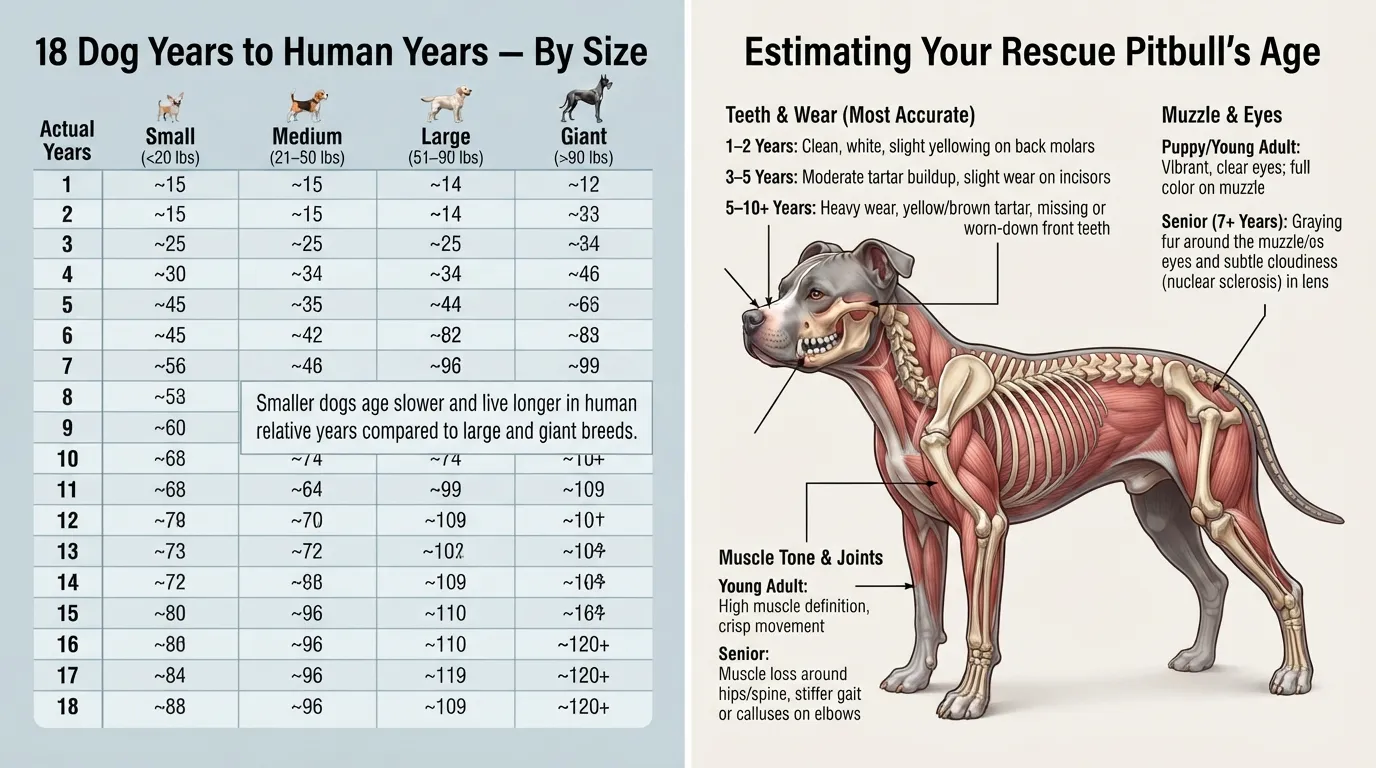
If you adopted a rescue Pitbull without birth records, you can estimate their age within a year or two by examining physical markers like dentition, coat graying, and joint mobility. While no single feature gives an exact date, looking at these body signals together paints a clear picture of where your dog falls on the pitbull age in human years spectrum.
Here are the four most reliable ways to gauge your rescue’s age:
Teeth Condition (Wear, Tartar, and Missing Teeth): Dentition is the single most reliable visual age indicator. By 1 year old, a Pitbull has all adult teeth, which appear clean, white, and sharp. Between ages 2 and 3, mild yellowing and light tartar build up on the back molars. By age 5, expect noticeable tartar, visible wear on the front incisors, and slight blunting of the canines. Senior Pitbulls (8+ years) often display heavy tartar, worn-down crowns, or missing teeth.
Coat & Muzzle Graying: Gray hairs usually start appearing around the muzzle, chin, and above the eyes between 4 and 6 years of age. In short-coated breeds like the American Staffordshire Terrier or American Pit Bull Terrier, graying is especially easy to spot. Extensive graying spreading up the face and chest typically signals a dog in their senior years (8 years and older).
Energy Level & Mobility: Younger Pitbulls under 3 years old possess intense, explosive energy, high muscle tone, and springy joints. Around 4 to 6 years, muscle mass remains solid, but their overall demeanor settles into a calmer rhythm. Seniors aged 7 and up often show stiffness when rising, loss of muscle mass over the hindquarters, and a slower, more deliberate gait.
Veterinary Physical Exam: A veterinarian combines dental checks with an examination of the eyes (looking for lenticular sclerosis, a bluish haze in the lenses common after age 6-7), joint flexibility, and lymph node health. Your vet can also order an epigenetic DNA test or blood panel to refine the estimate further.
Always confirm your age estimate with your vet during a wellness exam, as past neglect, poor diet, or severe dental disease in rescue dogs can make a young Pitbull look years older than they actually are.
Pitbull vs Other Breeds — Aging Comparison
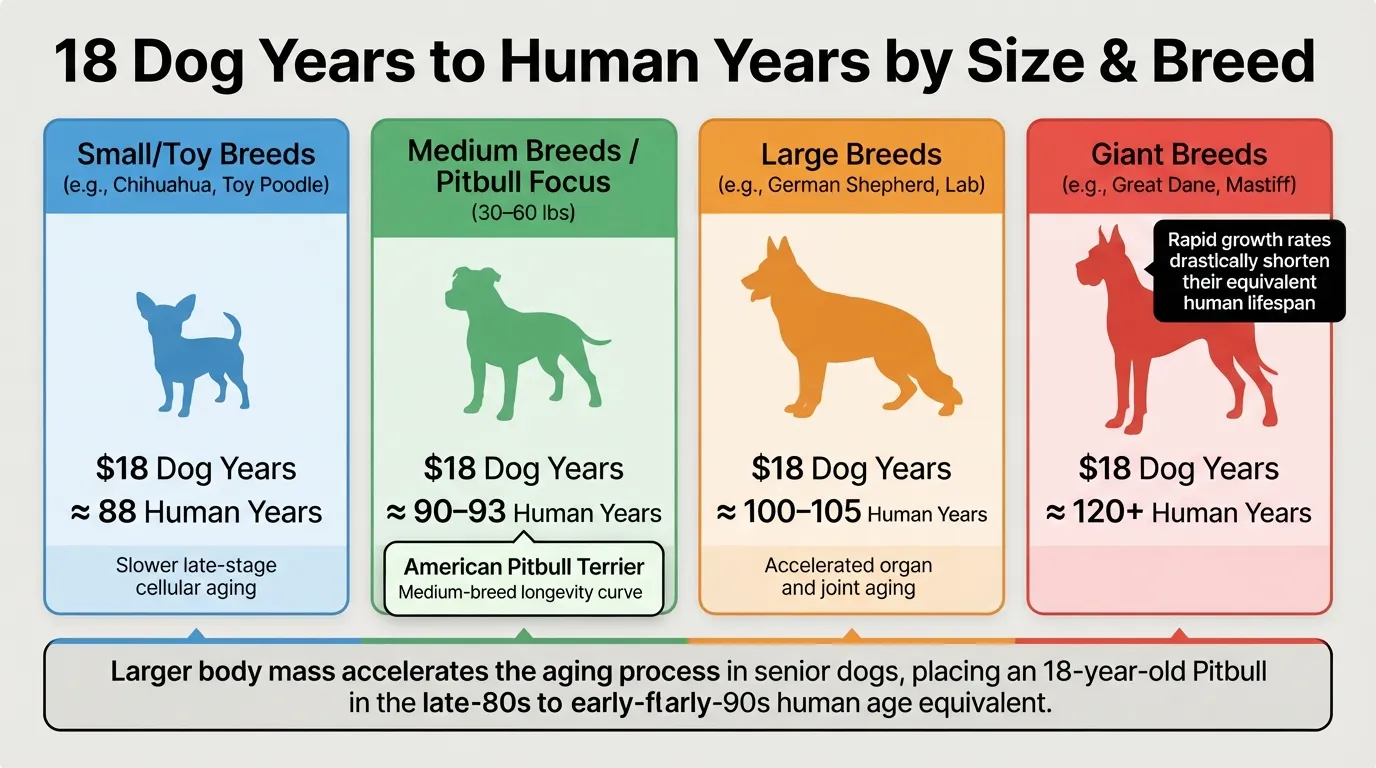
Pitbulls age at a steady, moderate pace compared to toy and giant breeds because their medium build (30 to 60 pounds) shields them from both the extreme growth-spurt stress of large dogs and the rapid metabolic slowdown of smaller dogs. Converting pitbull dog years to human years requires accounting for this middle-weight trajectory, as they age faster than a Chihuahua after year two but outlive heavy breeds like Rottweilers and Mastiffs by several years.
During the first two years of life, almost all dogs mature at similar rates. However, as dogs hit year three, body mass becomes the primary driver of biological aging.
| Dog Size Category | Weight Range | Early Years (1–2) | Adult Years (3–6) | Senior Threshold | Average Lifespan |
|---|---|---|---|---|---|
| Small Breeds (Chihuahua, Shih Tzu) | Under 20 lbs | ~24 human years | +4 human years / year | 10 to 11 years | 12 to 16 years |
| Pitbulls & Medium Breeds (American Pit Bull Terrier, Staffie) | 30 to 60 lbs | ~24 human years | +5 human years / year | 8 to 9 years | 12 to 14 years |
| Large & Giant Breeds (German Shepherd, Great Dane) | Over 70 lbs | ~24 human years | +6 to +7 human years / year | 6 to 7 years | 8 to 12 years |
As shown above, a 7-year-old Pitbull sits at roughly 47 human years according to AAHA life stage guidelines. A Great Dane at 7 years old is already creeping past 56 in human terms, entering deep senior territory due to high cellular turnover during early development. Conversely, a 7-year-old French Bulldog or Dachshund sits closer to 44 human years.
Banfield Pet Hospital longevity research highlights that maintaining a lean body mass in medium breeds like Pitbulls delays age-related joint and metabolic decline. Keeping your Pitbull lean allows them to sit comfortably on the slower side of the medium-breed aging curve throughout their adult years.
Frequently Asked Questions
| Question | Answer / Explanation |
|---|---|
| How old is a 5-year-old pitbull in human years? | A 5-year-old medium-sized Pitbull is approximately 36 to 40 years old in human years. Dogs age faster in their first two years before settling into a rate of roughly 5 to 6 human years per calendar year. |
| Do pitbulls age faster than other dogs? | No, Pitbulls age at an average rate for medium-to-large breeds. However, aging speed relies heavily on their overall weight, physical activity, genetic history, and quality of diet. |
| What age is considered old for a pitbull? | Pitbulls are generally considered "seniors" around 8 to 9 years of age. Since their average lifespan is 12 to 14 years, senior care adjustments should begin around their 8th birthday. |
| How can I estimate my rescue pitbull's age if I don't know their birthdate? | A vet can estimate age by checking teeth condition (tartar build-up and wear), coat graying around the muzzle, eyes clarity, joint flexibility, and muscle tone. |
| Do mixed pitbulls live longer than purebred pitbulls? | Generally, yes. Mixed-breed Pitbulls often benefit from hybrid vigor, which can reduce the chances of inheriting specific genetic health conditions, leading to a slightly longer life span. |
| Does my pitbull's weight affect how fast they age? | Yes, heavier dogs tend to age faster. Overweight Pitbulls experience increased strain on joints and organs, which can shorten their lifespan compared to lean, fit dogs. |
🐾 Other Age Guides

I built Dogagescalculator.com to give dog owners honest, science-backed answers instead of the outdated "×7" myth. Every figure here is checked against AKC, AVMA, and published veterinary research.
More about the author & this site →
Comments