
What Is 6 Dog Years in Human Years? Complete Guide by Breed & Size
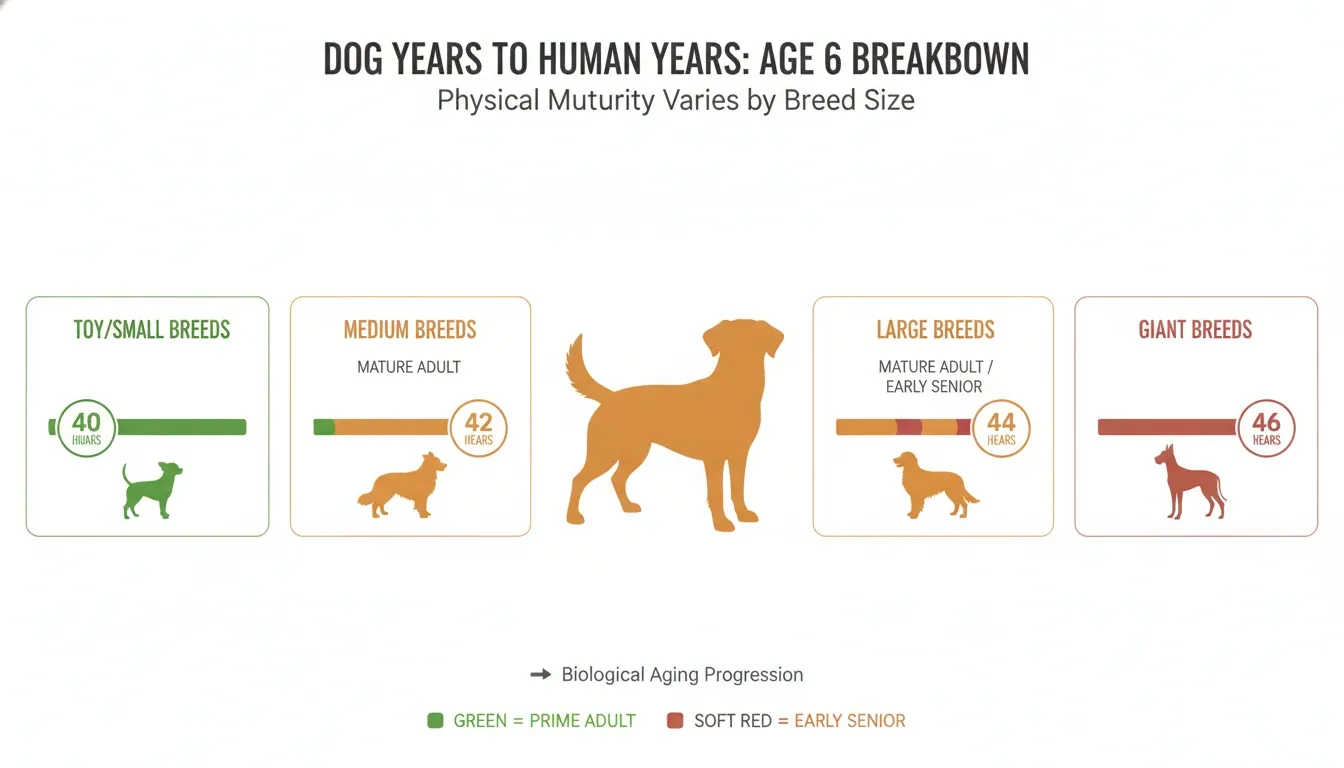
A 6-year-old dog is roughly equivalent to 40–45 human years, depending on the dog’s size and breed. The old “multiply by seven” rule would put a 6-year-old dog at 42 human years, but dog aging is more complex than a simple 7-to-1 calculation. Dogs mature very quickly during their first few years, and their aging rate later varies by size and breed.
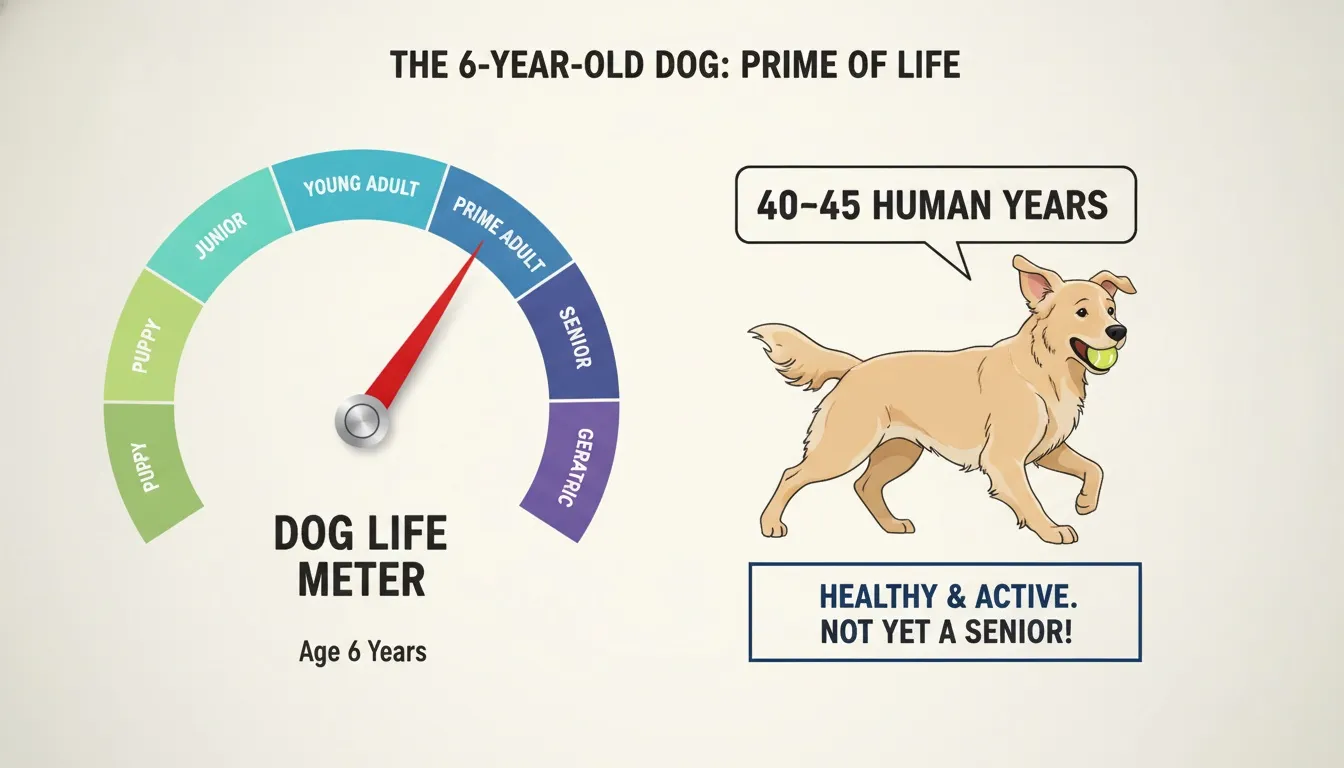
For many dogs, age six falls in the prime adult stage rather than seniorhood. Small and medium-sized dogs may still have many active years ahead, while large and giant breeds can show signs of aging earlier because they generally have shorter lifespans.
6 Dog Years to Human Years – Conversion Table by Size
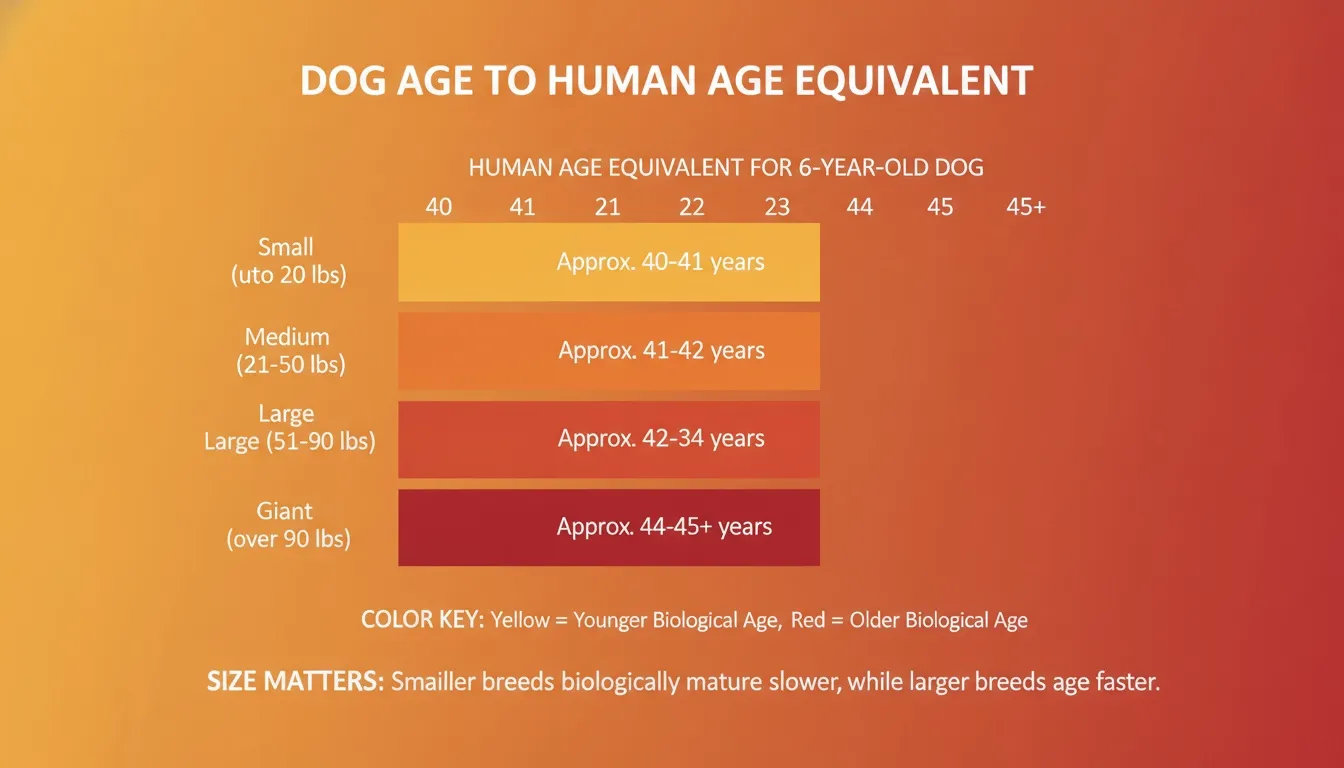
While 40 to 45 is a solid general estimate, your dog’s size plays a big role in how they age. Smaller breeds generally enjoy longer lifespans, while larger breeds mature and age much faster.
The following table breaks down how 6 chronological years translates for different weight classes based on average development patterns:
| Dog Size Category | Typical Weight Range | 6 Years in Human Years |
|---|---|---|
| Small | Up to 20 lbs | ~40 years |
| Medium | 21–50 lbs | ~42 years |
| Large | 51–100 lbs | ~45 years |
| Giant | Over 100 lbs | ~48–50 years |
Keep in mind that these numbers are estimates. A 6-year-old Greyhound, for example, might have different health needs than a 6-year-old French Bulldog, even if they fall into similar weight categories. Use these figures as a starting point to better understand your companion’s life stage, but always rely on your veterinarian for specific health advice tailored to your dog’s unique breed and physical condition.
How Is Dog Age Actually Calculated? AVMA Formula Explained
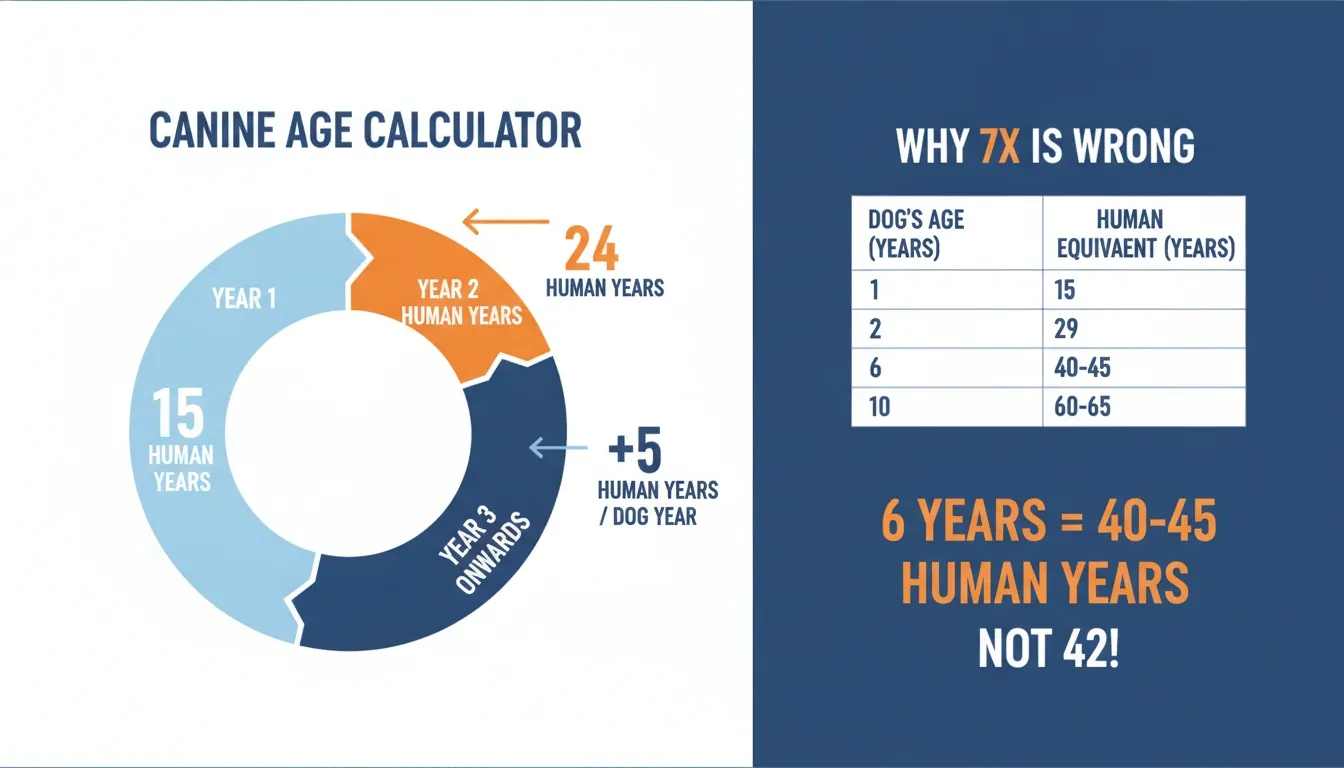
Forget the old myth that one dog year equals seven human years. That method is far too simplistic and doesn’t account for the rapid physical development dogs go through early on. Instead, veterinarians use a more nuanced approach, which is backed by the American Veterinary Medical Association (AVMA).
The math works by front-loading those early years, acknowledging that dogs reach puberty and full physical maturity much faster than humans. Here is the standard breakdown:
Year 1: 15 human years.
Year 2: 9 human years.
Years 3-6: 5 human years for each additional year.
To figure out exactly where your 6-year-old dog stands, you simply add those stages together:
Year 1: 15 years
Year 2: + 9 years = 24 total
Year 3: + 5 years = 29 total
Year 4: + 5 years = 34 total
Year 5: + 5 years = 39 total
Year 6: + 5 years = 44 total
Following this logic, your 6-year-old companion is 44 years old in human terms. While individual genetics and lifestyle play a role in their overall health, this formula provides a much clearer picture of your dog’s actual life stage than the outdated “multiply by seven” rule ever could. You are effectively looking at a middle-aged adult who is still in their prime but beginning to need a bit more focus on long-term wellness.
Is 6 Years Old for a Dog?
Small Breeds — Still Adult/Middle-Aged
If you share your home with a small breed, like a French Bulldog or a Shih Tzu, six years is definitely not “old.” These pups are generally still in their prime adult years, often acting just as playful and curious as they did a few years ago. While they might not be high-energy puppies anymore, they have plenty of vitality left. You can think of them as being roughly in their late thirties or early forties in human terms. They are settled enough to enjoy relaxing on the couch with you, but they still have the stamina to keep up with your daily walks and park outings.
Large & Giant Breeds — Entering Senior Stage
For owners of large or giant breeds, like a Golden Retriever, Rottweiler, or Bernese Mountain Dog, the perspective changes a bit. These impressive dogs tend to have faster biological clocks, and by six years old, many are beginning to transition into their senior years. You might notice them moving a little slower when they wake up, or perhaps they aren’t as eager to jump into the car as they once were. Because they are entering this new phase, it is a great time to schedule a wellness check with your vet. Catching minor changes early, such as subtle joint stiffness or lower energy levels, helps you keep them comfortable and happy as they gracefully move into their golden years.
6-Year-Old Dog in Human Years — Real Breed Examples
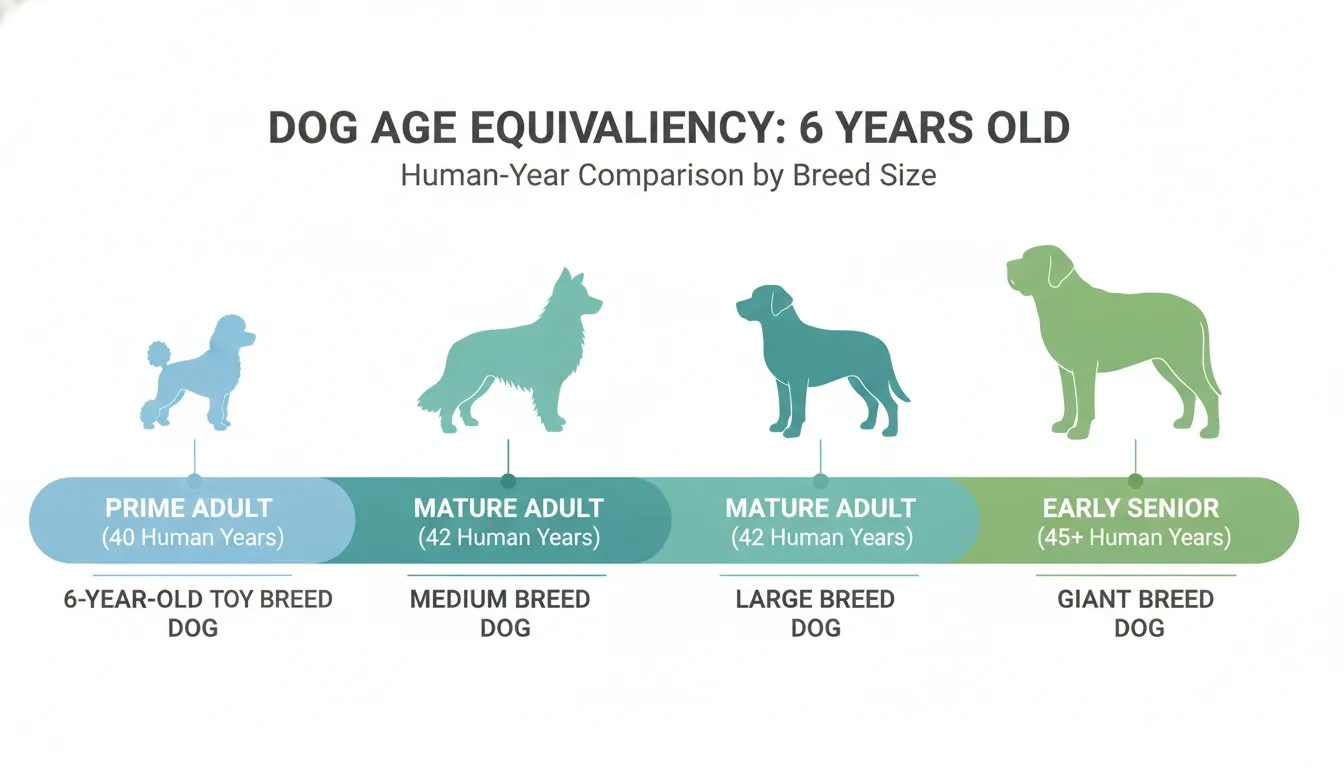
Size matters when it comes to your dog’s aging process. While they are all technically 6 years old, their physical maturity varies greatly depending on their breed. Smaller dogs often have a slower aging trajectory once they reach adulthood, while larger breeds mature faster and unfortunately have shorter lifespans.
Small Breeds Chihuahua, Shih Tzu
For small breeds like a Chihuahua or a Shih Tzu, 6 years is essentially the “prime of life.” At this stage, they are roughly 40 years old in human terms. Because these dogs often live well into their mid-teens, your 6-year-old companion is still very much in their energetic, youthful adult phase.
Medium Breeds Beagle, Bulldog
Medium-sized dogs like Beagles and Bulldogs tend to reach a slightly higher human equivalent by age 6. You can think of them as being about 42 to 43 years old. They are typically well-settled and might be starting to show a bit less interest in wild puppy antics, preferring a steady routine and predictable play sessions instead.
Large Breeds Labrador, German Shepherd
Large, active breeds like Labradors and German Shepherds hit the “mid-forties” mark by age 6. At approximately 44 to 45 human years, these dogs are often at the peak of their working or family-companion lives. While they remain athletic, you might notice they recover from intense exercise a little slower than they did when they were three.
Giant Breeds Great Dane, Mastiff
Giant breeds experience the fastest aging curve of the group. By age 6, a Great Dane or Mastiff is often closer to 48 to 50 human years old. Because their bodies carry so much more weight and their metabolism is different, 6 is the age where you should start being much more proactive about joint health and regular veterinary check-ups to catch any age-related issues early.
What Changes at 6 Years Old? Health, Activity & Care
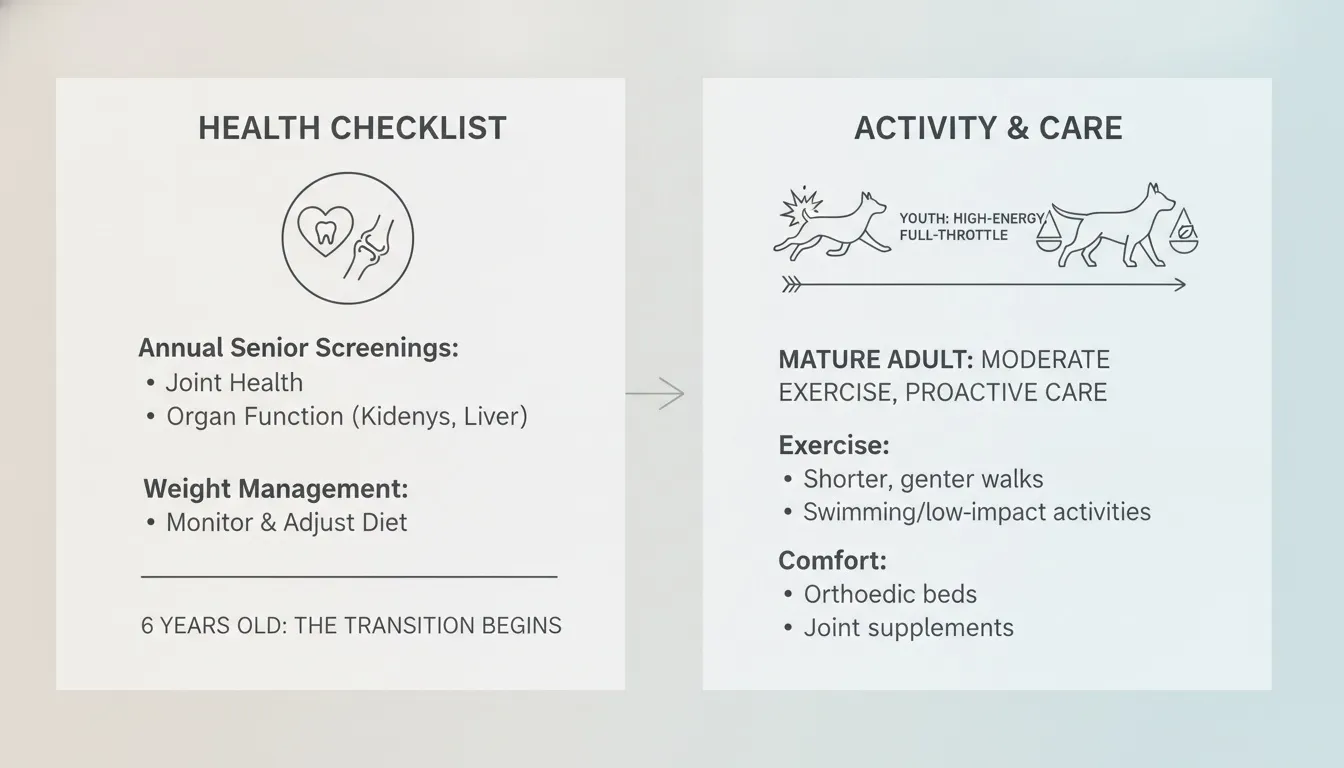
At 6 years old, your dog has officially graduated from their youthful prime and is entering their “mature adult” years. If you compare this to a human life, they are roughly in their early forties—the stage where you might start paying a bit more attention to your health, and your dog should be doing the same.
You might notice they still have bursts of puppy-like energy at the park, but they probably settle down much faster once they get home. While they aren’t considered a senior yet, this is the perfect time to shift your focus from purely growth and development to long-term wellness.
To keep your dog feeling their best, consider these small adjustments:
Dietary Tweaks: Keep a close eye on their weight. Metabolism starts to slow down around this age, so if you notice them packing on a few extra pounds, talk to your vet about switching to a formula designed for weight management or lower caloric density.
Exercise Consistency: They still need regular movement to keep their joints supple and their heart healthy. Consistent, moderate walks are often better than occasional, high-intensity sprints that might put stress on their joints.
Routine Vet Visits: Now is the time to transition to twice-yearly checkups. Detecting subtle issues like early dental disease or mild arthritis now is much easier than treating them later.
Lifespan Perspective: While average lifespans vary, most dogs live into their early-to-mid teens. Being 6 puts them roughly at the midpoint or just past it, depending on their breed size, making this the best decade to build the foundation for a long, comfortable senior life.
If your dog is still acting like a whirlwind at the park, don’t be surprised—some breeds stay active much longer than others. Just ensure you are listening to their body and adjusting their routine so they stay happy and injury-free for years to come.
The Newer DNA-Based Epigenetic Age Formula
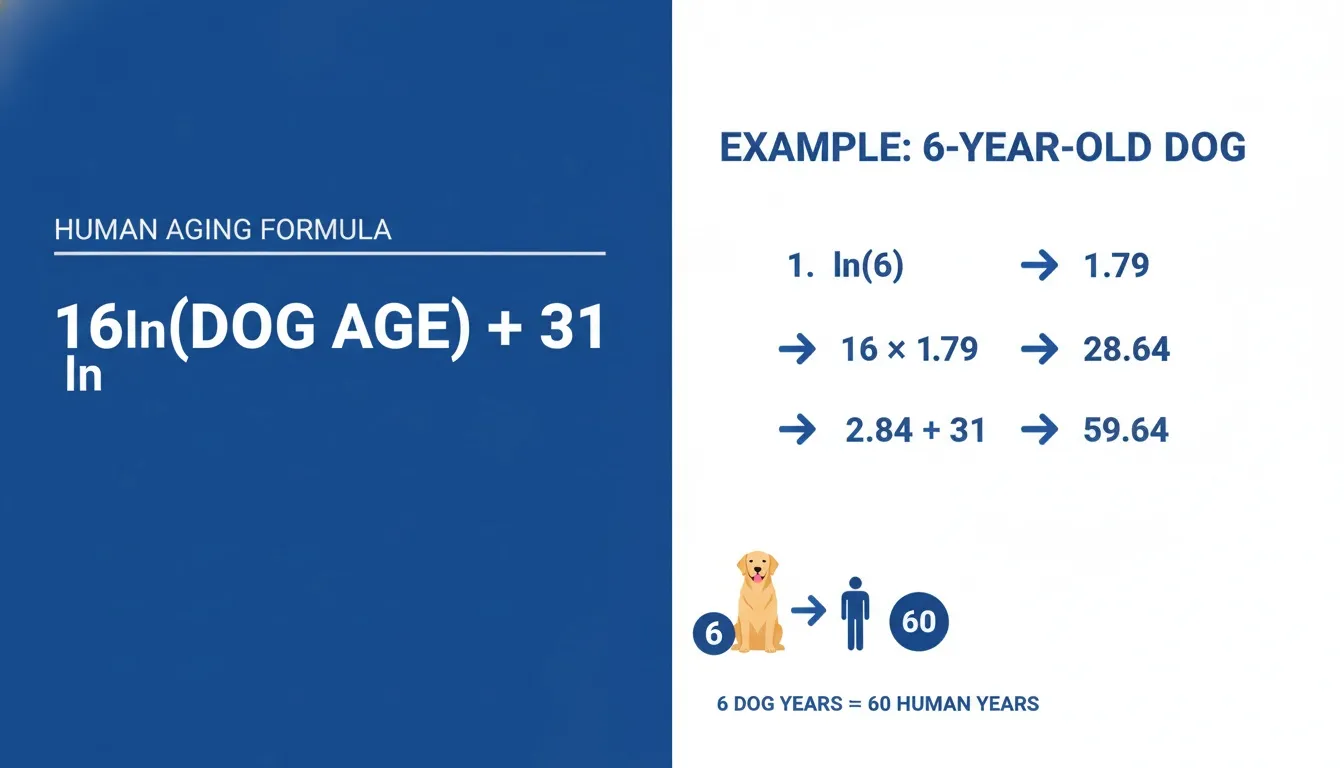
Researchers have moved beyond simple multiplication to study how a dog’s DNA changes as they grow. A study from the University of California, San Diego (UCSD), developed a more precise way to calculate age by looking at “epigenetic clocks”—essentially chemical markers in your dog’s DNA that change predictably over time.
The formula they created is 16ln(dog_age)+31. While the math involves a natural logarithm (ln), which can look a bit technical, the result is quite interesting.
When you apply this to a 6-year-old dog, the calculation works like this:
Find the natural logarithm of 6, which is about 1.79.
Multiply that by 16, which gives you 28.64.
Add 31 to that total, resulting in roughly 59.64.
According to this DNA-based research, a 6-year-old dog is biologically closer to 60 human years old. This approach suggests our dogs might reach middle age and beyond faster than some older models predicted. It’s a fascinating look at how biology, rather than just years lived, defines the aging process. While this formula is primarily used in scientific research, it serves as a helpful reminder that even a “young-acting” 6-year-old is entering a stage of life where internal, cellular aging is moving right along.
Use Our Free Dog Age Calculator
Want to see how your dog’s age stacks up beyond just the 6-year mark? We have built a simple, easy-to-use tool to help you get an instant result based on your dog’s specific breed and size.
Whether you are curious about your puppy’s rapid growth or want to track your senior dog’s journey into their golden years, our calculator does the math for you. You can find the full, interactive experience right on our hoepage. Just enter your dog’s details, and you will get a clear, accurate look at their human-age equivalent in seconds.
Other Dog Age Conversions
Are you curious how your dog’s age compares at other stages of their life? Because dogs mature at different rates throughout their journey, it helps to look at the numbers beyond just their sixth year.
According to guidelines from the AVMA, the math shifts as your dog grows from a puppy into their adult years. You can check out our other guides for specific breakdowns here:
7 dog years in human years
Whether you are just starting out with a new puppy or helping an older companion stay comfortable, understanding these age milestones gives you a better perspective on their health needs. If you want to run these numbers for any other age, head back to our main calculator to see the full life-stage comparison for your specific breed.
Frequently Asked Questions
No, that old "multiply by seven" rule is an oversimplification. While it results in 42, it doesn't account for how rapidly dogs mature during their first two years compared to the slower aging that follows. Modern veterinary guidelines suggest a 6-year-old dog is actually closer to their early to mid-forties in human terms.
At 6 years old, your dog is firmly in their prime adult years. They are definitely not "old" by most standards, but they are mature enough that you should start paying closer attention to their long-term health needs and subtle changes in their behavior.
Large and giant breeds often have shorter lifespans than smaller dogs. Because of this, a 6-year-old dog like a German Shepherd or a Mastiff may be further along in their biological aging process than a 6-year-old Toy Poodle, often requiring earlier screenings for age-related health issues.
Once your dog hits this age, sticking to a schedule of at least one comprehensive check-up every year is a must. If your dog is a larger breed or has a history of health concerns, your vet might even recommend visiting every six months to catch potential issues early.
"Senior" status usually begins around age 7 for many breeds, though it can vary. Smaller dogs often remain "adults" for longer, while giant breeds may be considered seniors as early as age 5 or 6.
🐾 Other Age Guides

Gulfam Haider Mehdi
Founder & Developer
I built Dogagescalculator.com to give dog owners honest, science-backed answers instead of the outdated "×7" myth. Every figure here is checked against AKC, AVMA, and published veterinary research.
More about the author & this site →📌 Featured Guides
What Is the Lifespan of a Labrador Retriever
→
how much is a cavalier king charles spaniel
→
What Is the Average Age for a Dog
→
how much to feed an 8 week old lab puppy
→
What Is 5 Dog Years in Human Years
→
Dog Age in Months to Human Years
→
What Is 7 Human Years in Dog Years
→
50 in dog years
→
How Long Do Cavalier King Charles Spaniels Live?
→
What Is 12 Human Years in Dog Years
→
Comments