
German Shepherd Golden Retriever Mix: Complete Guide to the Golden Shepherd

The German Shepherd Golden Retriever mix—commonly called the Golden Shepherd—is a large, highly intelligent hybrid dog combining the loyalty of a German Shepherd with the gentle, friendly nature of a Golden Retriever. These devoted family dogs typically weigh 50 to 80 pounds and thrive in active homes. Since large, active hybrids age differently than purebreds, tracking their life stages is essential—you can calculate your dog’s exact age in human years using our free Dog Age Calculator.
What Is a German Shepherd Golden Retriever Mix?
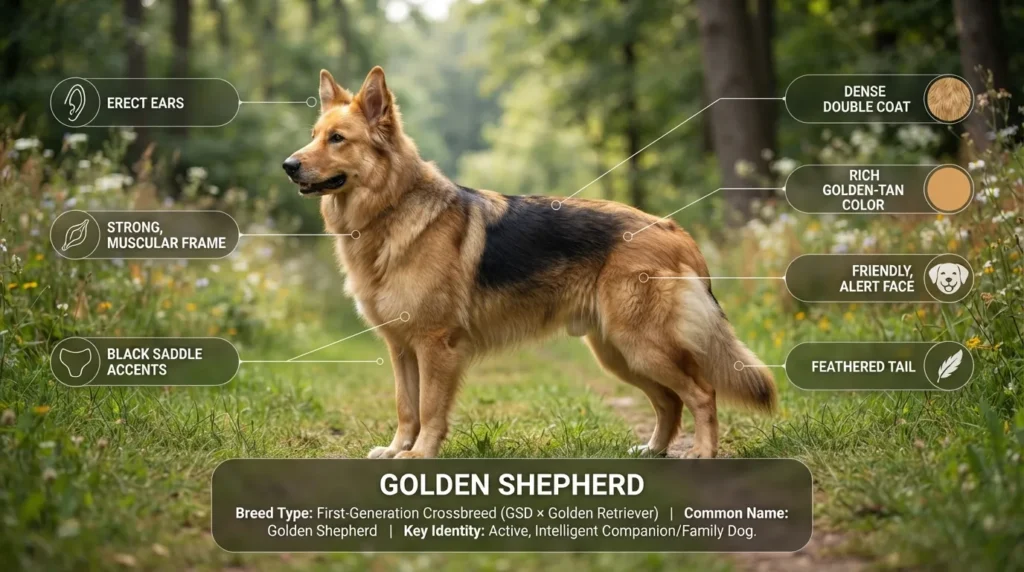
A German Shepherd Golden Retriever mix, commonly called a Golden Shepherd, is a cross between two of America’s most beloved working breeds. Combining the sharp intelligence and loyal protective instincts of the German Shepherd with the warm, sociable nature of the Golden Retriever, this mix creates an athletic, deeply devoted companion built for active households.
Golden Shepherd At-A-Glance
| Trait | Typical Range / Characteristic |
|---|---|
| Size | Large breed |
| Weight | 60 – 85 lbs (27 – 38 kg) |
| Height | 22 – 26 inches at the shoulder |
| Lifespan | 10 – 14 years |
| Coat Type | Dense double coat (medium-to-long length; moderate-to-heavy shedding) |
| Good with Kids | Excellent (when properly socialized) |
| Energy Level | High (requires 60–90 minutes of daily exercise) |
| Average Price | $500 – $1,500 (adoption fees: $150 – $400) |
To understand the Golden Shepherd, it helps to look at the lineage. The German Shepherd originated in late 19th-century Germany, bred specifically by Captain Max von Stephanitz for sheep herding, obedience, and working drive. Today, they are renowned worldwide for police, military, and service work.
On the other side, the Golden Retriever was developed in 1800s Scotland by Lord Tweedmouth, who crossed water spaniels and retrievers to create the ultimate upland bird hunting dog. By pairing these two distinct lineages, the German Shepherd Golden Retriever mix blends working-dog grit with a friendly, family-first mindset.
Is It a Recognized Breed, and How Do I Know My Dog Is Really One?
The short answer is no: the Golden Shepherd is not recognized as a purebred dog by the American Kennel Club (AKC) or the United Kennel Club (UKC). Because it is a hybrid cross—often called a “designer breed”—major kennel clubs do not register these dogs or issue official pedigree certificates.
How your mix turns out depends heavily on its genetic generation:
First-Generation (F1) Crosses: A 50/50 split between a purebred German Shepherd parent and a purebred Golden Retriever parent. Traits in F1 pups are unpredictable; one puppy in a litter might inherit the classic black-and-tan GSD coat and intense focus, while its littermate sports a golden double coat and a carefree retriever personality.
Multi-Generational Crosses: Bred from two Golden Shepherds (F2), or an F1 crossed back to a purebred parent (backcross). Multi-gen breeding stabilizes traits like coat length, body size, and temperament over time.
A Quick Note on Shelter Guesses: If you adopted your dog from a shelter or rescue group, keep in mind that visual breed identification by humans is notoriously inaccurate. Shelter workers often label any medium-to-large dog with a golden coat and upright ears as a “GSD Golden mix,” even if the dog is actually a mix of Husky, Labrador, or Chow Chow.
If you want absolute certainty about your dog’s background, an at-home canine DNA test (such as Embark or Wisdom Panel) is the gold standard. These tests analyze genetic markers against massive breed databases to confirm whether your dog is a true 17-year-old dog in human years equivalent or a young pup, as well as providing exact percentage breakdowns of their German Shepherd and Golden Retriever heritage.
Appearance & Size
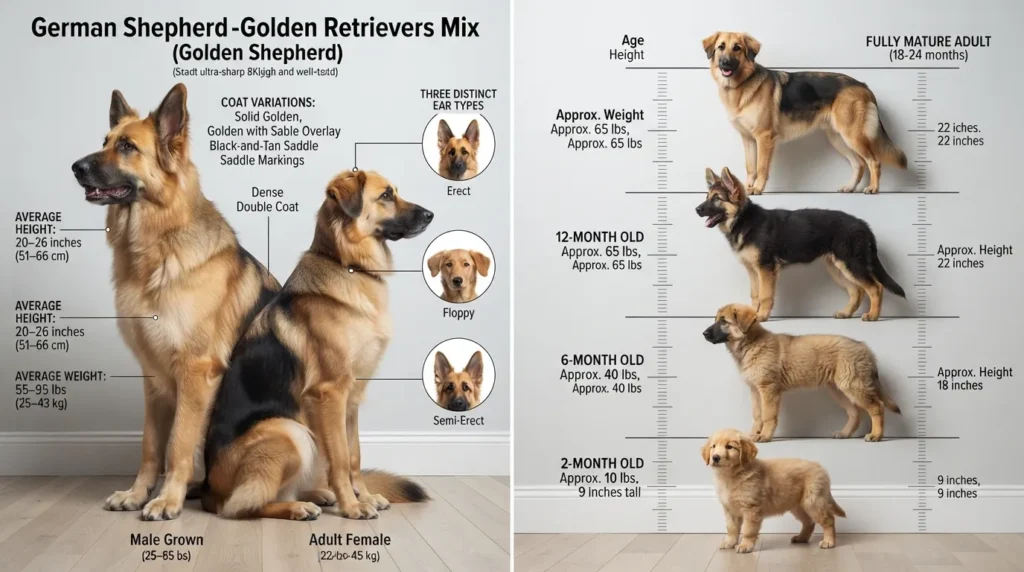
A full-grown German Shepherd Golden Retriever mix (often called a Golden Shepherd) is an athletic, large-breed dog that perfectly blends the physical presence of both parent breeds. They typically stand 20 to 26 inches tall at the shoulder and weigh anywhere between 60 and 95 pounds. Because this is a crossbreed, physical traits can lean heavily toward either parent, giving each dog a unique look.
Coat Type, Colors, and Shedding Pattern
The Golden Shepherd almost universally inherits a thick, weather-resistant double coat designed to protect them outdoors. The outer coat is typically medium-to-long in length, dense, and straight or slightly wavy, with extra feathering along the chest, legs, and tail.
Coat Colors: Common colors include solid gold, rich tan, black and tan, sable, or a striking combination of a golden body with a dark German Shepherd “saddle” and face mask.
Shedding Pattern: These dogs are moderate to heavy shedders year-round. Expect heavy coat “blowouts” twice a year (during spring and fall) as their undercoat shifts seasonally. Regular brushing is essential to keep loose fur under control.
Ears: Erect vs. Floppy
One of the most charming visual wildcards of the GSD Golden mix is the ear shape. German Shepherds have erect, pointed ears, while Golden Retrievers have classic floppy ears.
Semi-Erect or Button: Many Golden Shepherds end up with half-floppy, half-perked ears that fold forward at the tips.
Erect: Some puppies inherit the firm cartilage structure of the German Shepherd parent, leading to fully upright ears by 6 to 8 months of age.
Floppy: Others carry the soft, classic fold of a Golden Retriever. You won’t know for sure until your puppy finishes teething.
Male vs. Female Size Differences
Male Golden Shepherds are noticeably larger and broader-chested than females. Knowing these baseline dimensions helps you anticipate your puppy’s adult space and dietary needs:
| Gender | Height at Shoulder | Adult Weight Range | Frame & Build |
|---|---|---|---|
| Male | 22 – 26 inches | 70 – 95 lbs | Heavy-boned, broad chest, blockier head |
| Female | 20 – 24 inches | 55 – 75 lbs | Sleeker build, slightly narrower muzzle |
Puppy Growth Chart & Maturation Timeline
Large breeds grow rapidly in their first six months, then taper off into slow, steady muscle development. While most of their height is locked in by 12 months, a German Shepherd Golden Retriever mix takes 18 to 24 months to fully fill out physically.
2 Months: 12 – 20 lbs (Puppy phase; rapid growth and high energy)
4 Months: 30 – 45 lbs (Teething starts; noticeably longer legs)
6 Months: 45 – 65 lbs (Reaches ~70% of adult height; adolescence begins)
9 Months: 55 – 75 lbs (Height growth slows; frame begins to fill out)
12 Months: 60 – 85 lbs (Reaches full skeletal adult height)
18–24 Months: 60 – 95 lbs (Full physical maturity; chest deepens, muscle mass settles)
Temperament & Personality

A German Shepherd Golden Retriever mix inherits a rich, balanced blend of two world-class temperaments: the intense loyalty and protective alertness of the German Shepherd combined with the warm, social playfulness of the Golden Retriever. When socialized early, a GSD Golden mix makes an exceptionally devoted, affectionate, and intelligent family companion. They thrive on human connection and want to be actively involved in their family’s daily life.
Family-Friendliness and Behavior with Kids & Other Pets
Golden Shepherds are renowned for being deeply devoted family dogs that form tight, protective bonds with their households. They generally possess the patience and gentle nature of a Golden Retriever alongside the watchful guardian nature of a German Shepherd.
Behavior with Kids: They are typically fantastic with children, showing great patience and a protective eye. However, because these are large, energetic dogs, interactions with toddlers should always be supervised to prevent accidental knock-downs during playful moments.
Behavior with Other Dogs: When properly socialized from puppyhood, they usually get along well with other canine household members. They tend to inherit the Golden Retriever’s easygoing, non-aggressive attitude toward dog park peers.
Behavior with Small Pets: The German Shepherd side carries a moderate prey drive. While they can share a home peacefully with cats if raised alongside them, early exposure and consistent boundary training are essential.
Protective Instincts Meets Playful Joy
Understanding the personality of a 17-year-old dog in human years or a young active pup requires looking at both sides of their lineage. The Golden Shepherd bridges the gap between a focused working dog and an eager-to-please companion.
Their German Shepherd heritage gives them an innate sense of vigilance. They will naturally watch over the perimeter of your home, alert you to strangers with a deep bark, and keep a close eye on your family. They aren’t aggressive without cause, but they are naturally discerning and slightly reserved around unfamiliar visitors.
Once they know a visitor is welcome, the Golden Retriever side takes over completely. Their protective posturing vanishes, replaced by a wagging tail, a gentle lean against your leg, or a sudden demand for a game of fetch. This combination creates a dog that is both a reliable guardian and a loving, joyful housemate.
5 Key Personality Traits
While individual puppies lean more toward one parent breed or the other, most Golden Shepherds display five core character traits:
High Intelligence & Trainability: Combining two of the smartest dog breeds in the world, this mix learns commands rapidly and craves mental engagement.
Unwavering Loyalty: They develop deep, personal attachments to their humans and hate being left out of family activities.
Alert Guardian Instincts: They possess a natural drive to monitor their surroundings and announce unexpected guests, making them excellent watchdogs.
Enthusiastic Playfulness: They retain a puppy-like love for games, swimming, and retrieving well into their senior years.
Affectionate Sensitivity: They tune in closely to human emotions and respond best to positive, encouragement-based training rather than harsh correction.
How Long Do Golden Shepherds Live? Lifespan & Aging
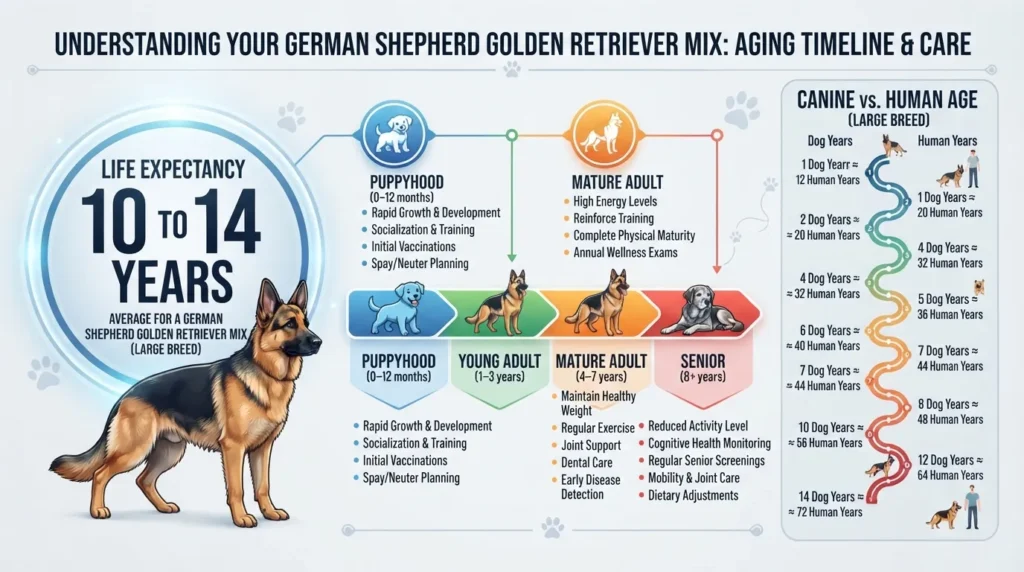
A healthy German Shepherd Golden Retriever mix has an average lifespan of 10 to 14 years. This range aligns closely with both parent breeds, as Golden Retrievers typically live 10 to 12 years and German Shepherds average 7 to 10 years (though well-cared-for GSDs often reach 12). Thanks to “hybrid vigor”—the natural health benefit gained from crossbreeding two distinct gene pools—a Golden Shepherd frequently outlives its purebred German Shepherd parent.
Life-Stage Breakdown: From Puppy to Golden Years
Understanding where your dog sits in their natural aging timeline helps you adapt their care, diet, and activity levels appropriately:
Puppyhood (0 to 12 months): Rapid growth phase where bones and joints develop quickly. Proper large-breed nutrition during this stage prevents long-term joint issues.
Adolescence (1 to 2 years): The dog reaches full physical height and settles into adult weight. Mental maturity catches up by age two.
Adulthood (2 to 7 years): Peak physical shape and health. High energy levels require consistent exercise and mental stimulation.
Senior Stage (8 to 11 years): Metabolism begins to slow down. You may notice subtle signs like stiffness after long naps, graying around the muzzle, or slightly reduced stamina.
Geriatric Stage (12+ years): Very old age. Focus shifts to comfort, joint care, routine veterinary checkups, and gentle daily routines.
Key Factors Affecting Their Lifespan
While genetic luck plays a role, several daily management factors directly influence how long a 17-year-old dog in human years equivalent or aging Golden Shepherd stays active and healthy:
Weight and Joint Management: Excess weight severely strains a large dog’s hips and elbows. Keeping your mix lean can add up to two years to their life according to long-term canine aging studies.
Preventative Healthcare: Regular screenings catching early signs of hip dysplasia, heart issues, or common cancers dramatically improve longevity outcomes.
Diet and Nutrition: High-quality food formulated for large breeds ensures proper calcium-to-phosphorus ratios and adequate glucosamine levels for joint health.
Mental and Physical Stimulation: Daily exercise keeps heart muscle strong, while interactive play keeps an aging dog’s cognitive function sharp.
Curious where your dog stands on their unique biological aging timeline? Use our easy [Dog Age Calculator] to instantly convert your pup’s exact age into human years based on their size and weight.
Training, Exercise & Care
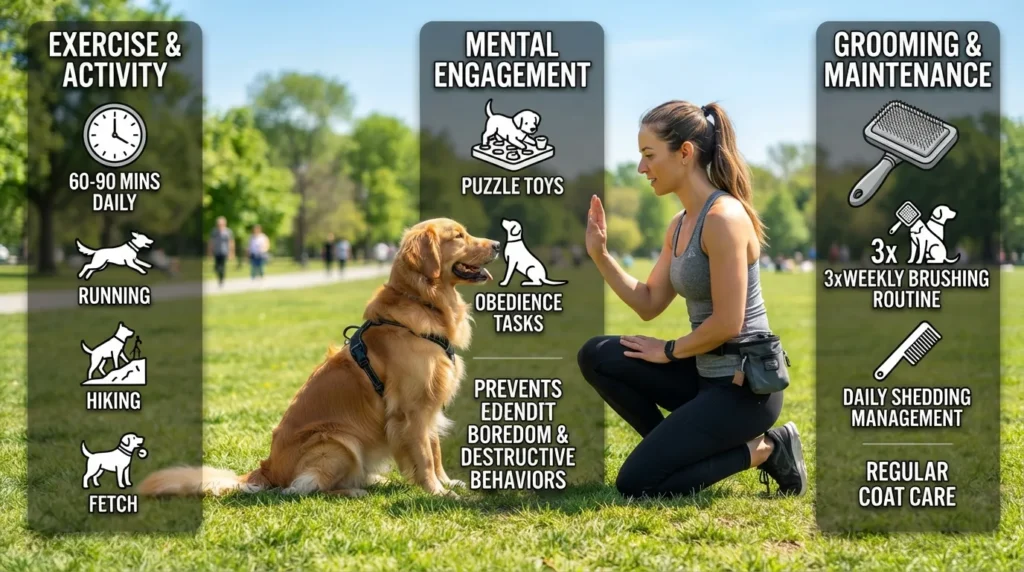
Living with a German Shepherd Golden Retriever mix means managing a high-energy, exceptionally smart dog that thrives on structure and daily activity. Because both parent breeds were bred to work alongside humans, this mix needs consistent mental engagement and physical movement to stay happy and well-behaved.
Trainability & Best Training Methods
The Golden Shepherd is one of the most trainable crossbreeds you can own, inheriting sharp intelligence from the German Shepherd and an eager-to-please attitude from the Golden Retriever. They learn commands quickly, but their working-dog drive means they need clear direction from day one.
Positive Reinforcement: These dogs respond best to reward-based training using high-value treats, praise, and play. Harsh corrections can backfire, making a sensitive Golden Shepherd anxious or stubborn.
Early Socialization: Expose your puppy to new people, dogs, sights, and sounds before 16 weeks of age. This prevents the protective guarding instincts of the German Shepherd parent from turning into over-reactivity.
Mental Stimulation: Physical exercise alone won’t tire out a 17-dog-year-equivalent brain. Use puzzle toys, scent work, and daily obedience drills to prevent boredom-induced behaviors like destructive chewing or excessive barking.
Daily Exercise Needs & Best Activities
A Golden Shepherd requires at least 60 to 90 minutes of vigorous daily exercise. Split this into two sessions to keep their energy balanced throughout the day.
High-Cardio Workouts: Fetch, trail running, and agility courses are perfect for burning off intense physical energy.
Water Sports: Many Golden Shepherds inherit the Golden Retriever’s love for swimming, which provides excellent low-impact exercise for their joints.
Structure Over Free Play: A lazy yard stroll isn’t enough. Incorporate active games like “find the ball” or structured heel walking to keep their mind engaged while moving.
Grooming, Shedding, and Basic Upkeep
Maintaining a German Shepherd Golden Retriever mix requires a steady grooming routine, especially given their thick double coat. Expect regular shedding year-round, with heavy undercoat blowouts during spring and fall transitions.
Coat Brushing: Brush their coat 3 to 4 times a week using a slicker brush and an undercoat rake to catch loose fur before it ends up on your furniture. During seasonal shedding peaks, daily brushing is necessary.
Bathing: Wash them every 6 to 8 weeks or as needed. Avoid over-bathing, as stripping their natural coat oils can lead to dry, itchy skin.
Ears, Nails & Teeth: Check floppy or semi-erect ears weekly for moisture and debris to prevent ear infections. Trim nails every 3 to 4 weeks, and brush their teeth daily using dog-safe toothpaste to maintain oral health as they enter their senior years.
Health & Feeding

Keeping a German Shepherd Golden Retriever mix healthy comes down to proactive joint care, proper feeding schedules, and recognizing early warning signs for breed-specific risks. While crossbreeding offers some biological advantages, both parent breeds carry distinct genetic predispositions that can carry over into your dog.
Common Health Risks in Golden Shepherds
Because German Shepherds and Golden Retrievers share susceptibility to several inherited conditions, their offspring require diligent health screenings and routine veterinary checkups.
Joint Dysplasia (Hip and Elbow): Both parent breeds have high rates of hip and elbow dysplasia, a condition where joints form improperly, leading to painful arthritis. According to the Orthopedic Foundation for Animals (OFA), screening parent dogs before breeding significantly reduces this risk.
Gastric Dilatation-Volvulus (Bloat): The deep-chested build of the GSD parent makes this mix vulnerable to bloat, a life-threatening condition where the stomach fills with gas and twists. Feeding smaller, frequent meals and using a slow-feeder bowl are effective preventive measures [link: AVMA].
Eye Conditions: Progressive Retinal Atrophy (PRA) and cataracts can cause vision loss as Golden Shepherds age. Routine eye clearances by a veterinary ophthalmologist help spot changes early [link: Merck Vet Manual].
Cancer & Heart Concerns: Golden Retrievers have higher statistical risks for hemangiosarcoma and lymphoma, while German Shepherds are prone to degenerative myelopathy (DM) and cardiac conditions like subaortic stenosis.
Hybrid Vigor: What It Really Means for Your Mix
You may hear that crossbreeds are healthier than purebreds thanks to hybrid vigor (heterosis)—the biological theory that mixing genetic pools reduces the expression of recessive disease traits. While a German Shepherd Golden Retriever mix generally enjoys a lower chance of inheriting purebred-specific genetic disorders, hybrid vigor is not an absolute guarantee of immunity.
If both parent lines carry genes for hip dysplasia or eye disease, those risks remain elevated in the puppies regardless of crossbreeding. Working with breeders who perform genetic and orthopedic testing on both parents is far more critical than relying on hybrid vigor alone.
Puppy vs. Adult Feeding Guide & Foods to Avoid
A balanced, high-quality diet tailored to large breeds supports healthy bone growth in puppies and prevents unnecessary weight strain on adult joints.
Puppy Feeding Schedule (2–12 Months)
Diet Type: Large-breed puppy food formulated to control calcium-to-phosphorus ratios, preventing overly rapid skeletal growth that worsens dysplasia.
Frequency: Feed 3 to 4 small meals daily until 6 months of age, then transition to 2 meals daily.
Portions: 1.5 to 3.5 cups daily depending on age, weight, and activity level (follow calorie guidelines on the packaging).
Adult Feeding Schedule (12+ Months)
Diet Type: High-protein adult large-breed kibble rich in omega-3 fatty acids, glucosamine, and chondroitin for joint support.
Frequency: 2 meals per day (avoiding a single large meal to minimize bloat risk).
Portions: 3 to 4.5 cups daily, adjusted based on your dog’s ideal body condition score and daily exercise.
Dangerous Foods to Avoid
Keep these toxic items completely out of your Golden Shepherd’s reach:
Grapes and Raisins: Can trigger sudden, severe kidney failure.
Chocolate, Coffee, and Caffeine: Contains theobromine, causing cardiac distress and seizures.
Xylitol (Birch Sugar): Found in sugar-free peanut butter and gum; causes rapid insulin release and liver failure.
Onions, Garlic, and Chives: Cause damage to red blood cells, leading to anemia.
Cooked Bones: Easily splinter during digestion, risking gastrointestinal perforation.
Is a Golden Shepherd Right for Your Home?

A German Shepherd Golden Retriever mix thrives best in an active home where they receive consistent mental engagement, exercise, and companionship. Because both parent breeds were created to work closely alongside humans, a Golden Shepherd needs a living environment that accommodates their size, high energy levels, and social nature.
House vs. Apartment, Yard Needs, and Alone-Time Tolerance
While a Golden Shepherd can technically adapt to apartment living, it requires exceptional dedication from the owner. Their ideal setup is a suburban or rural house with a securely fenced yard where they can burn off energy safely.
Living Space: These are large, high-energy dogs. In a small apartment, without hours of daily outdoor exercise, they easily become restless and bored.
Yard Requirements: A yard with a 5-to-6-foot physical fence is highly recommended. Golden Shepherds are agile jumpers and intense fetchers who benefit greatly from having safe outdoor space to run.
Alone-Time Tolerance: Both Golden Retrievers and German Shepherds are susceptible to separation anxiety. A 17-year-old dog in human years equivalent or young adult mix should not be left alone for more than 4 to 6 hours at a time. Long stretches of isolation often lead to destructive chewing or constant barking.
Is a Golden Shepherd Right for You? (Quick Checklist)
Before bringing a GSD Golden mix into your life, review this quick checklist to see if your lifestyle aligns with their core daily needs:
Can you commit to 60–90 minutes of daily exercise? (Brisk walks, running, hiking, or intensive games of fetch)
Are you ready for daily brushing and heavy seasonal shedding? (Their dense double coat requires regular grooming)
Will someone be home for most of the day? (They need consistent human interaction to prevent separation anxiety)
Are you prepared to invest time in early obedience training and socialization? (A strong, intelligent 70+ pound dog requires firm, gentle guidance)
Do you have a spacious home or easy access to large outdoor areas? (Room to roam without feeling cramped)
If you checked “Yes” to all of the above, a Golden Shepherd will likely be an incredibly loyal, loving, and highly trainable companion for your household.
Cost, Breeders & Rescue
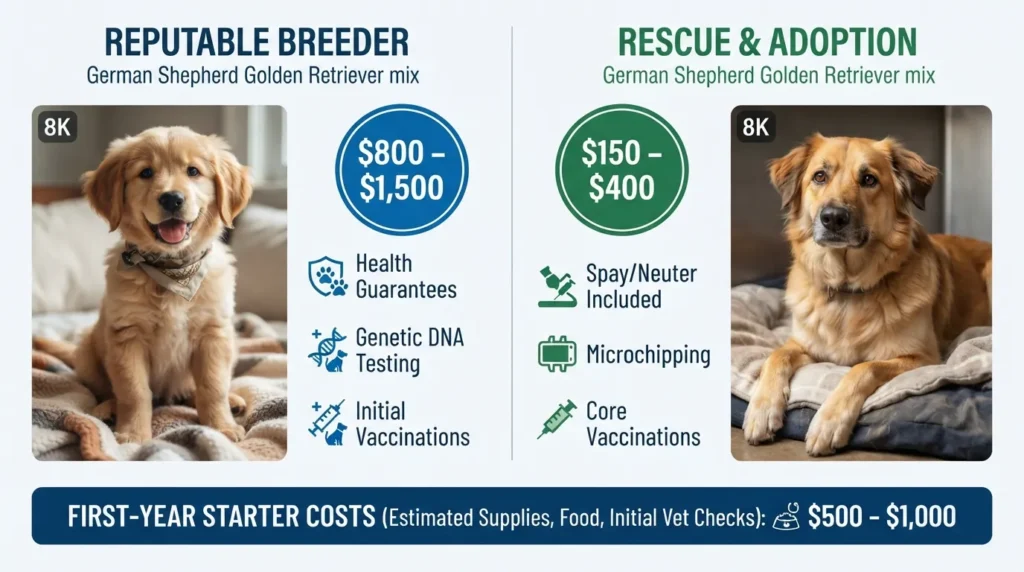
Bringing a German Shepherd Golden Retriever mix into your home typically costs between $150 and $1,500 upfront, depending on whether you choose to adopt or buy. On average, you should also prepare to spend roughly $1,500 to $2,800 during their first year for initial veterinary care, essential gear, and training. Ongoing maintenance for a healthy adult Golden Shepherd generally runs between $120 and $250 per month.
Buying vs. Adopting: A Balanced Perspective
Choosing between adopting a shelter dog and purchasing from a breeder comes down to your personal priorities, ethical considerations, and lifestyle requirements. Neither option is universally “better,” but each carries distinct financial and practical trade-offs.
Adopting from a Shelter or Rescue: Choosing adoption gives a homeless dog a second chance while keeping your initial costs drastically lower. According to animal welfare advocates like the [link: ASPCA], adoption fees usually cover critical baseline medical care, including spaying or neutering, core vaccinations, and microchipping. The main trade-off is predictability: rescue Golden Shepherds often come with unknown genetic histories or mixed behavioral backgrounds, requiring extra patience and training.
Purchasing from a Breeder: Buying a puppy allows you to trace the dog’s parental lineage and evaluate the health screenings of both the German Shepherd and Golden Retriever parents. Reputable breeders screen for genetic conditions common to both parent breeds, such as hip dysplasia and heart issues. However, because designer crossbreeds are unregulated by major kennel clubs, you must carefully screen breeders to ensure they aren’t running high-volume “puppy mills” or backyard operations that skip vital health testing.
Upfront Price Range & First-Year Budget Breakdown
The purchase or adoption fee is only the starting point. First-year costs reflect essential baseline investments like crate setups, puppy vaccinations, spay/neuter procedures, and basic obedience training.
| Acquisition Path | Upfront Fee Range | Estimated First-Year Total (Includes Supplies & Vet Care) |
|---|---|---|
| Shelter / Local Rescue | $150 – $500 | $1,200 – $2,200 |
| Breed-Specific Rescue | $300 – $600 | $1,400 – $2,400 |
| Private Breeder | $600 – $1,500+ | $2,000 – $3,500+ |
Monthly Cost Estimates for an Adult Golden Shepherd
Because a 17-year-old dog in human years equivalent—or a growing Golden Shepherd puppy—is a large, high-energy breed, daily maintenance costs are higher than those for smaller dogs. High-quality nutrition and joint care make up the largest share of your recurring expenses.
| Expense Category | Estimated Monthly Cost | Notes & Key Factors |
|---|---|---|
| High-Quality Dog Food | $60 – $100 | Requires ~3 to 4 cups of large-breed kibble daily |
| Routine Vet Care & Preventatives | $45 – $80 | Flea, tick, and heartworm preventatives plus annual exam buffer |
| Grooming & Coat Care | $20 – $60 | DIY deshedding tools vs. occasional professional grooming |
| Toys, Treats & Chews | $25 – $50 | Heavy-duty chews are necessary for strong jaws |
| Pet Insurance (Optional) | $35 – $75 | Recommended to cover potential hip or elbow dysplasia care |
| Total Monthly Range | $185 – $365 | Varies based on location, food brand, and healthcare choices |
Pros and Cons of Owning a Golden Shepherd

Bringing a German Shepherd Golden Retriever mix into your home means pairing two of the world’s most intelligent and devoted working breeds. While this crossbreed often inherits the absolute best qualities of both parents, their high energy and constant need for mental engagement mean they aren’t the right fit for every lifestyle.
Pros of Owning a Golden Shepherd
Exceptional Trainability: Combining the sharp focus of a German Shepherd with the eager-to-please nature of a Golden Retriever makes this mix remarkably quick to pick up commands and complex tasks.
Unmatched Loyalty and Affection: These dogs form tight bonds with their families, offering the deeply devoted companionship of a GSD alongside the gentle, affectionate warmth typical of a Golden.
Versatile Athletic Partners: Whether you enjoy long hikes, running, agility training, or active games of fetch, their stamina and working-breed genetics make them outstanding outdoor companions.
Natural Watchdog Instincts: They lean toward being watchful and protective without being overly aggressive, giving you an alert companion who naturally keeps an eye on the household.
Great Family Dogs: When properly socialized, their tolerant, patient nature around kids makes them a joyful, steady addition to an active home.
Cons of Owning a Golden Shepherd
Heavy Year-Round Shedding: Thanks to a dense double coat, they shed constantly and experience heavy undercoat blowouts twice a year, requiring frequent brushing and regular vacuuming.
High Mental and Physical Demand: These aren’t couch potatoes. Without 60 to 90 minutes of daily exercise and interactive brain games, they easily develop destructive behaviors like chewing or nuisance barking out of boredom.
Prone to Separation Anxiety: Because they bond so closely with their human family, leaving them alone for long stretches can cause stress and distress behaviors.
Potential Health Overlap: A 17-year-old dog in human years equivalent from large breeds requires proactive care, and Golden Shepherds can inherit hereditary risks from both sides, particularly hip dysplasia and bloat.
Too Big for Small Spaces: Their large frame and high physical energy mean they generally thrive best in homes with ample room or a securely fenced yard rather than compact apartments.
Frequently Asked Questions
Yes, absolutely. The German Shepherd Golden Retriever mix is renowned for being an affectionate, loyal, and steady family companion. They thrive in active households where they receive plenty of love, attention, and regular exercise.
As a large-breed dog, a fully grown Golden Shepherd typically stands 20 to 26 inches tall at the shoulder and weighs between 55 and 95 pounds, with males generally being larger than females.
Yes. They inherit a dense double coat from both parent breeds, making them moderate to heavy shedders year-round. They also undergo heavy coat "blowouts" twice a year during spring and fall, requiring frequent brushing.
Puppies from a reputable breeder typically range from $800 to $1,500. If you choose to adopt from a shelter or breed-specific rescue, adoption fees usually range between $150 and $400.
With proper nutrition, regular exercise, and proactive veterinary care, a German Shepherd Golden Retriever mix typically lives between 10 and 14 years.
Yes! They are naturally patient, gentle, and protective around children. As with any large dog, early socialization and teaching kids how to interact safely around pets is recommended.
The old "1 dog year equals 7 human years" rule is a myth. During their first year, a large dog matures rapidly—reaching roughly 12 to 15 human years. You can calculate your dog's exact age based on size and science using our Dog Age Calculator.
It is a recognized designer crossbreed (hybrid), but not a standardized purebred dog. Major kennel clubs like the AKC do not register them, though specialized hybrid registries do recognize the mix.
While physical traits like ears, coat structure, and coloration give good clues, the only 100% accurate way to confirm your rescue's genetic mix is through an at-home canine DNA testing kit (such as Embark or Wisdom Panel).

I built Dogagescalculator.com to give dog owners honest, science-backed answers instead of the outdated "×7" myth. Every figure here is checked against AKC, AVMA, and published veterinary research.
More about the author & this site →
Comments