
How Much Is a Shih Tzu Supposed to Weigh
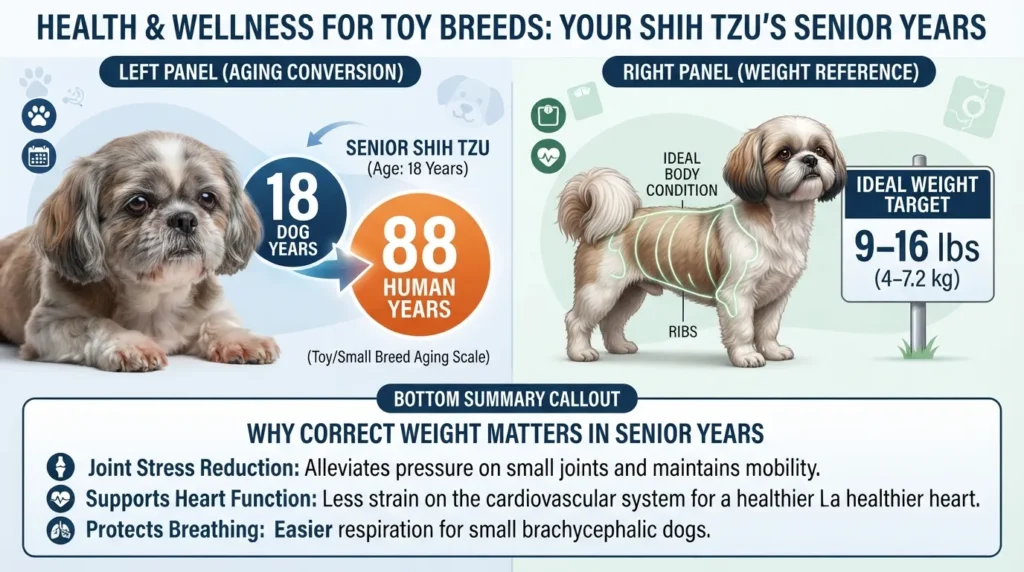
An adult Shih Tzu is supposed to weigh between 9 and 16 pounds (4 to 7 kg), with an average height of 9 to 10.5 inches at the shoulder.
If your puppy is still growing, their ideal weight changes rapidly month by month. This guide breaks down exact growth milestones, a month-by-month weight chart, and simple checks to tell if your Shih Tzu is at a healthy weight.
Shih Tzu Ideal Weight at a Glance
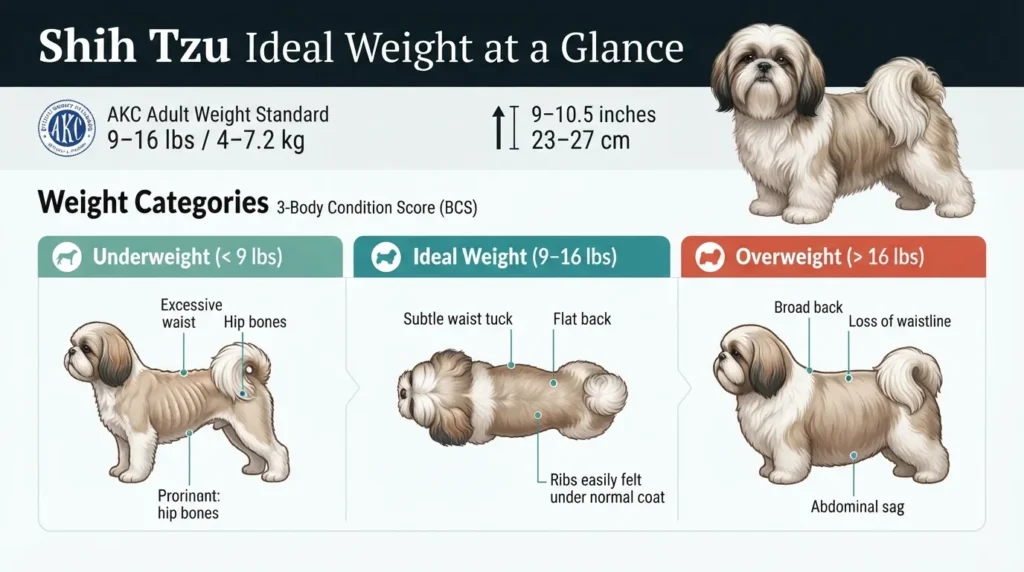
The perfect weight for a full-grown Shih Tzu ranges between 9 and 16 pounds (4 to 7 kg), standing 9 to 10.5 inches tall at the shoulder. According to official breed standards set by the American Kennel Club (AKC), anything within this window is considered ideal for a purebred Shih Tzu.
| Metric | Ideal Adult Range | Details / Notes |
|---|---|---|
| Weight | 9–16 lbs | (4–7 kg) |
| Height | 9–10.5 inches | (23–27 cm) |
| Frame Type | Compact, sturdy, slightly longer than tall | |
Shih Tzu Weight Chart by Age Puppy to Adult
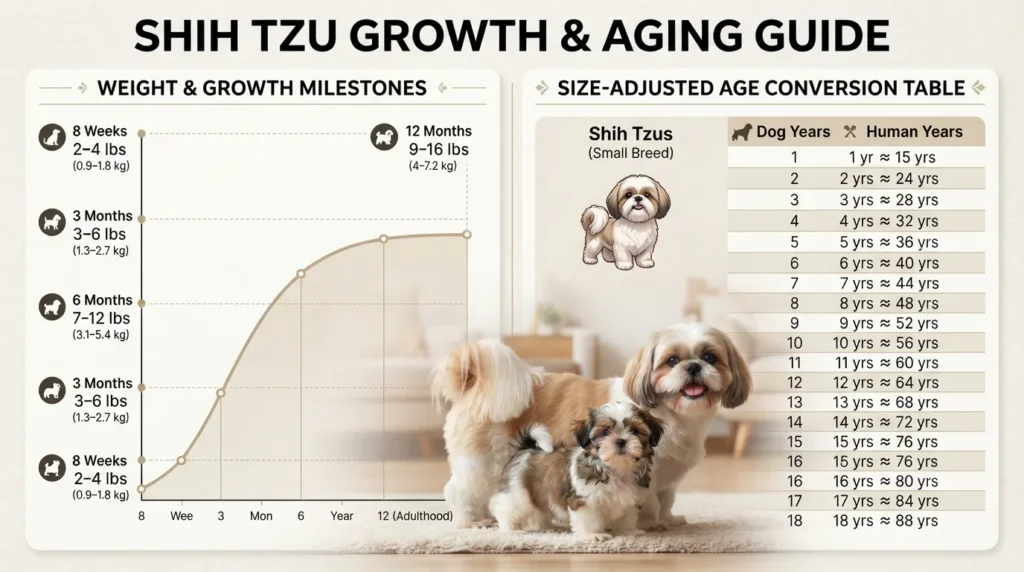
Shih Tzu puppies grow rapidly during their first six months before their growth curve gradually levels off. Since individual frame sizes vary, watching their specific milestone trajectory matters far more than hitting an exact single target number.
| Age | Small Frame (lbs / kg) | Average Frame (lbs / kg) | Large Frame (lbs / kg) |
|---|---|---|---|
| 8 Weeks | 1.5–2.0 lbs (0.7–0.9 kg) | 2.5–3.5 lbs (1.1–1.6 kg) | 4.0–4.5 lbs (1.8–2.0 kg) |
| 3 Months | 3.0–4.0 lbs (1.4–1.8 kg) | 4.5–6.0 lbs (2.0–2.7 kg) | 6.5–7.5 lbs (2.9–3.4 kg) |
| 4 Months | 4.5–5.5 lbs (2.0–2.5 kg) | 6.5–8.5 lbs (2.9–3.9 kg) | 9.0–10.5 lbs (4.1–4.8 kg) |
| 6 Months | 6.5–8.0 lbs (2.9–3.6 kg) | 9.0–12.0 lbs (4.1–5.4 kg) | 12.5–14.5 lbs (5.7–6.6 kg) |
| 8 Months | 8.0–9.5 lbs (3.6–4.3 kg) | 11.0–14.5 lbs (5.0–6.6 kg) | 15.0–16.5 lbs (6.8–7.5 kg) |
| 10+ Months (Adult) | 9.0–10.5 lbs (4.1–4.8 kg) | 12.0–15.0 lbs (5.4–6.8 kg) | 15.5–17.0+ lbs (7.0–7.7+ kg) |
| Small Frame: | 1.5–2.0 lbs (0.7–0.9 kg) |
| Average Frame: | 2.5–3.5 lbs (1.1–1.6 kg) |
| Large Frame: | 4.0–4.5 lbs (1.8–2.0 kg) |
| Small Frame: | 3.0–4.0 lbs (1.4–1.8 kg) |
| Average Frame: | 4.5–6.0 lbs (2.0–2.7 kg) |
| Large Frame: | 6.5–7.5 lbs (2.9–3.4 kg) |
| Small Frame: | 4.5–5.5 lbs (2.0–2.5 kg) |
| Average Frame: | 6.5–8.5 lbs (2.9–3.9 kg) |
| Large Frame: | 9.0–10.5 lbs (4.1–4.8 kg) |
| Small Frame: | 6.5–8.0 lbs (2.9–3.6 kg) |
| Average Frame: | 9.0–12.0 lbs (4.1–5.4 kg) |
| Large Frame: | 12.5–14.5 lbs (5.7–6.6 kg) |
| Small Frame: | 8.0–9.5 lbs (3.6–4.3 kg) |
| Average Frame: | 11.0–14.5 lbs (5.0–6.6 kg) |
| Large Frame: | 15.0–16.5 lbs (6.8–7.5 kg) |
| Small Frame: | 9.0–10.5 lbs (4.1–4.8 kg) |
| Average Frame: | 12.0–15.0 lbs (5.4–6.8 kg) |
| Large Frame: | 15.5–17.0+ lbs (7.0–7.7+ kg) |
When Do Shih Tzu Puppies Stop Growing?

Most Shih Tzu puppies finish their primary growth phase around 10 months of age. By this point, their skeletal growth plates fuse, fixing their adult height and length.
However, some puppies continue filling out slightly until they reach 12 months (1 year) old. This late-stage growth isn’t height; it’s subtle chest expansion, muscle development, and coat density.
A reliable physical indicator is their paw size. If your 8-month-old Shih Tzu still has paws that look noticeably oversized compared to their legs, their frame is likely still expanding. Once their body proportions balance out and match their paw size, their growth phase is officially complete.
Shih Tzu Weight in KG — Common Conversions
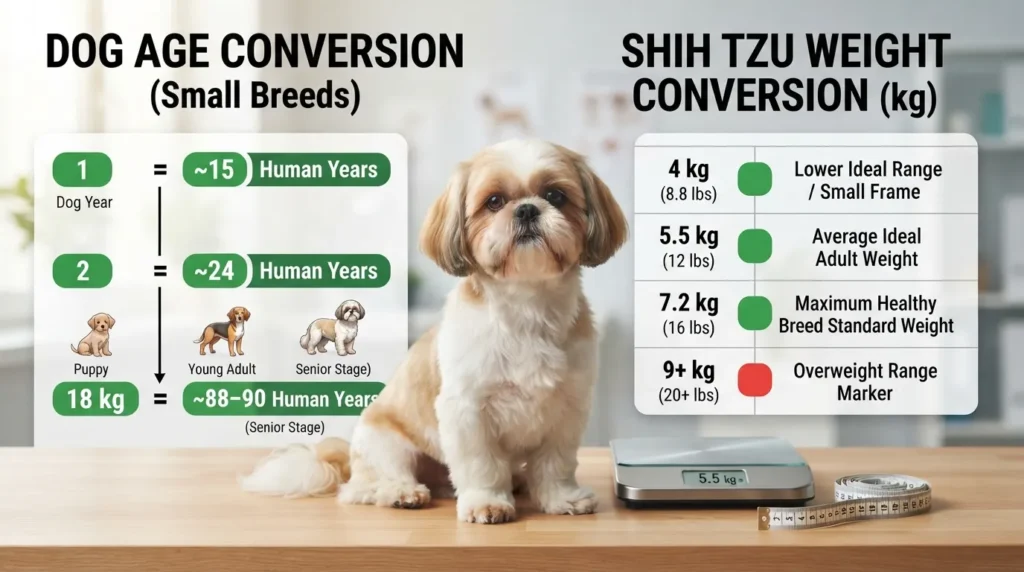
Shih Tzu Weight in KG — Common Conversions
Understanding your Shih Tzu’s weight in kilograms makes tracking growth and calculating exact veterinary medication dosages much simpler.
How Many KG Is a Normal Shih Tzu?
A normal, healthy adult Shih Tzu weighs between 4 kg and 7 kg. Pups with smaller frames sit near the 4.0–4.5 kg mark, while broad-chested or taller dogs comfortably weigh 6.5–7.0 kg.
Is 10 KG Heavy for a Shih Tzu?
Yes, 10 kg (22 lbs) is overweight for a standard purebred Shih Tzu. Since the upper standard weight limit is 7 kg (16 lbs), a 10 kg Shih Tzu is carrying roughly 40% excess weight unless they are an unusually large, mixed-breed cross.
| Weight (lbs) | Weight (kg) | Description / Status |
|---|---|---|
| 9 lbs | 4.1 kg | Small / Low end of standard |
| 11 lbs | 5.0 kg | Average adult frame |
| 13 lbs | 5.9 kg | Medium-large frame |
| 16 lbs | 7.3 kg | Maximum breed standard limit |
| 18 lbs | 8.2 kg | Overweight (needs vet review) |
| 20 lbs | 9.1 kg | Significantly overweight |
| Status: | Small / Low end of standard |
| Status: | Average adult frame |
| Status: | Medium-large frame |
| Status: | Maximum breed standard limit |
| Status: | Overweight (needs vet review) |
| Status: | Significantly overweight |
Is 20 Pounds Overweight for a Shih Tzu?
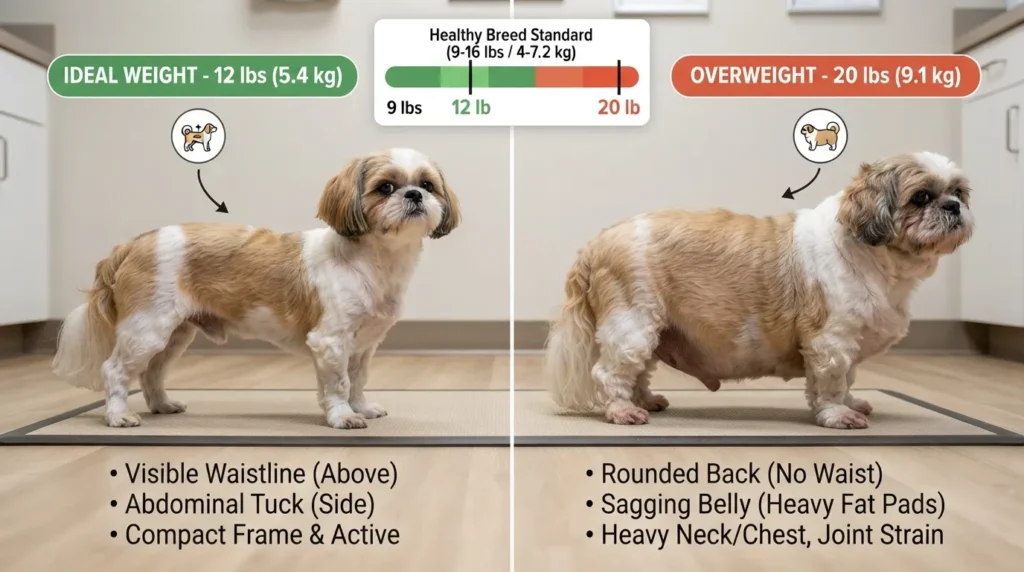
Yes, 20 pounds is overweight for a purebred Shih Tzu. Because the standard breed maximum sits at 16 pounds, carrying 20 pounds means your dog is roughly 25% or more over their ideal weight threshold.
Carrying this excess fat places severe stress on a Shih Tzu’s small joints, spine, and brachycephalic (flat-faced) respiratory system. Unless your dog is a mixed breed or an exceptionally tall “imperial/giant” line frame, 20 pounds indicates obesity.
To confirm whether those extra pounds are fat rather than bone structure, veterinarians use a visual and tactile evaluation tool called the Body Condition Score (BCS).
How to Tell If Your Shih Tzu Is Overweight or Underweight
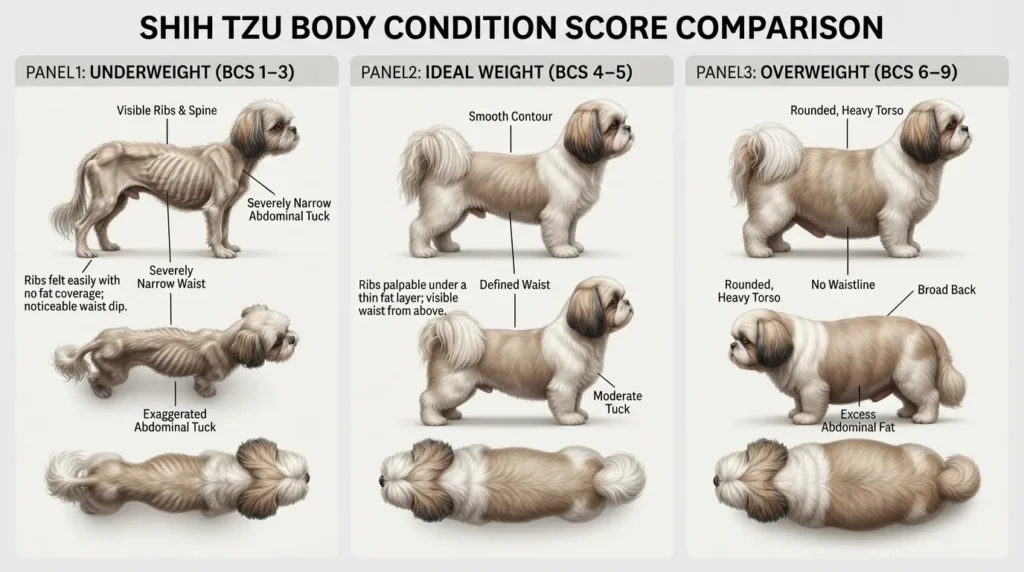
You cannot rely on a scale reading alone to judge your Shih Tzu’s physical condition because bone structure varies significantly between lines. Evaluating physical signs like rib definition, waist contour, and energy levels gives you an accurate assessment of their actual body composition.
Quick Signs Checklist
Overweight Signs: Heavy or excessive panting after minimal movement, difficulty jumping onto furniture, a complete lack of a visible waistline, and a thick, soft layer of fat covering the ribs and tail base.
Underweight Signs: Sharply prominent ribs, spine, and hip bones that stick out with no fat cushion, a noticeably sunken abdomen, and low muscle mass along the hind legs.
Body Condition Score (BCS) Method
Because a Shih Tzu’s thick, fluffy double coat easily hides extreme weight changes, visual checks alone often fail. Veterinarians rely on the Body Condition Score (BCS) system (rated 1 to 9), which focuses heavily on hands-on physical palpation:
Feel the Ribs: Place both hands on the sides of your dog’s chest. You should be able to feel individual ribs under a thin layer of fat without pressing down hard, similar to feeling the back of your knuckles.
Check the Waistline: Wet down their coat or press the fur flat while looking at them from directly above. You should see a clear waist tucking inward right behind the ribcage.
Evaluate the Profile: Look at your Shih Tzu from the side. The abdomen should slope upward from the chest toward the back legs, rather than hanging straight across or bulging downward.
What to Do If Your Shih Tzu Is Underweight

If physical checks show your Shih Tzu is underweight, the immediate focus should be evaluating their daily calorie intake, food quality, and overall health status.
First, inspect their diet quality. Ensure their primary dog food meets AAFCO (Association of American Feed Control Officials) nutritional standards for complete and balanced nutrition. High-quality food formulated specifically for toy breeds provides dense calories in smaller kibble sizes that suit a Shih Tzu’s compact jaw.
Next, recalculate their meal portions. Small breeds have rapid metabolisms, so splitting their daily allowance into 3 to 4 smaller meals prevents low blood sugar while encouraging steady weight gain. Adding healthy toppers like plain boiled chicken or bone broth can also boost appetite.
When to consult a vet: If your Shih Tzu refuses food for more than 24 hours, exhibits sudden weight loss, or shows signs of lethargy, diarrhea, or vomiting, schedule a veterinary visit immediately. Intestinal parasites, dental pain, or underlying metabolic issues often cause unexplained weight loss that diet adjustments alone cannot fix.
What to Do If Your Shih Tzu Is Overweight

Helping an overweight Shih Tzu shed extra pounds requires a structured approach to diet management and safe activity adjustments.
First, measure every meal using a digital kitchen scale or standard measuring cup instead of free-scooping. Cutting their current daily kibble intake by 10% to 15% creates a safe, gradual weight loss trajectory without triggering nutritional deficiencies.
Second, eliminate high-calorie commercial treats and table scraps. Treats should make up less than 10% of their daily calorie intake. Swap processed snacks for low-calorie alternatives like fresh cucumber slices, green beans, or baby carrots.
Finally, increase low-impact physical exercise daily. Due to their flat facial structure (brachycephalic syndrome), avoid strenuous running or activities in hot, humid weather. Aim for two 15-minute brisk neighborhood walks each day, paired with indoor puzzle games to keep them active without risking respiratory distress.
Watch: Shih Tzu Weight Explained (Quick Video)
For a quick visual overview, watch this short video breaking down ideal Shih Tzu weight ranges (9–16 lbs / 4–7 kg) and height expectations. It highlights how quickly toy breeds can put on extra pounds and why maintaining a healthy weight matters for their overall well-being.
Health Risks of Wrong Weight
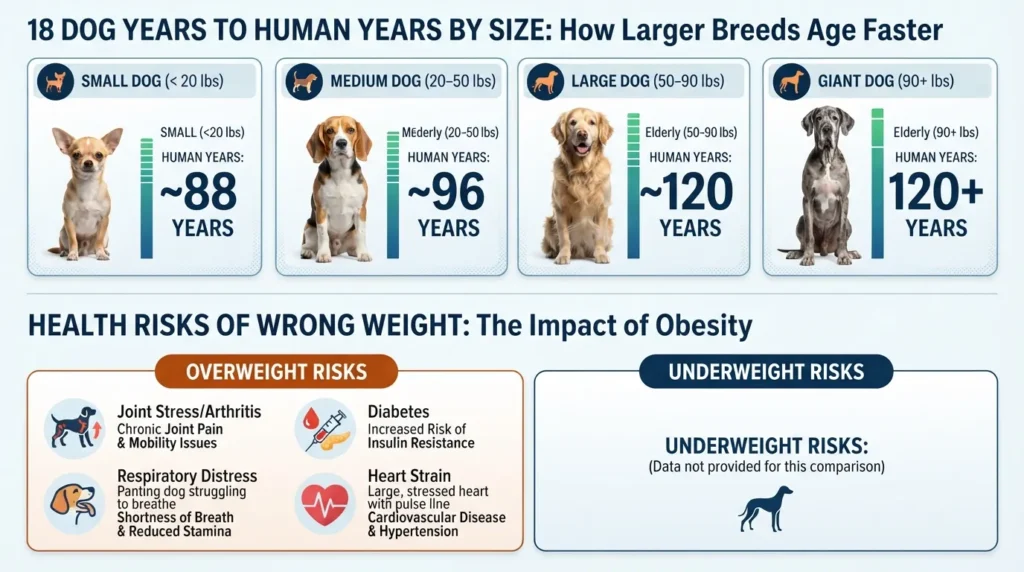
Deviating from an ideal weight range places significant physical strain on a Shih Tzu’s body. Whether carrying excess fat or lacking essential mass, weight imbalances directly impair their quality of life and long-term lifespan.
Risks of Being Overweight
Respiratory Distress: As a brachycephalic (flat-faced) breed, extra fat deposits around the neck and chest narrow airway passages, making breathing far more difficult.
Joint and Spine Stress: Carrying extra pounds accelerates cartilage breakdown, leading to early-onset osteoarthritis and intervertebral disc disease (IVDD) in their short legs and back.
Diabetes and Heart Strain: Excess weight causes insulin resistance and forces the heart to work significantly harder to pump blood, drastically increasing cardiovascular strain.
Risks of Being Underweight
Weakened Immunity: Chronic calorie deficiency deprives the body of vital nutrients, leaving your dog vulnerable to frequent infections and slow wound healing.
Parasitic Vulnerability: Underweight puppies and adults often harbor undetected intestinal parasites (like roundworms or Giardia) that steal essential calories before absorption.
Malnutrition and Muscle Loss: Without adequate protein and caloric intake, the body breaks down its own muscle tissue for energy, leading to lethargy, brittle coats, and structural weakness.
Factors That Affect a Shih Tzu's Weight
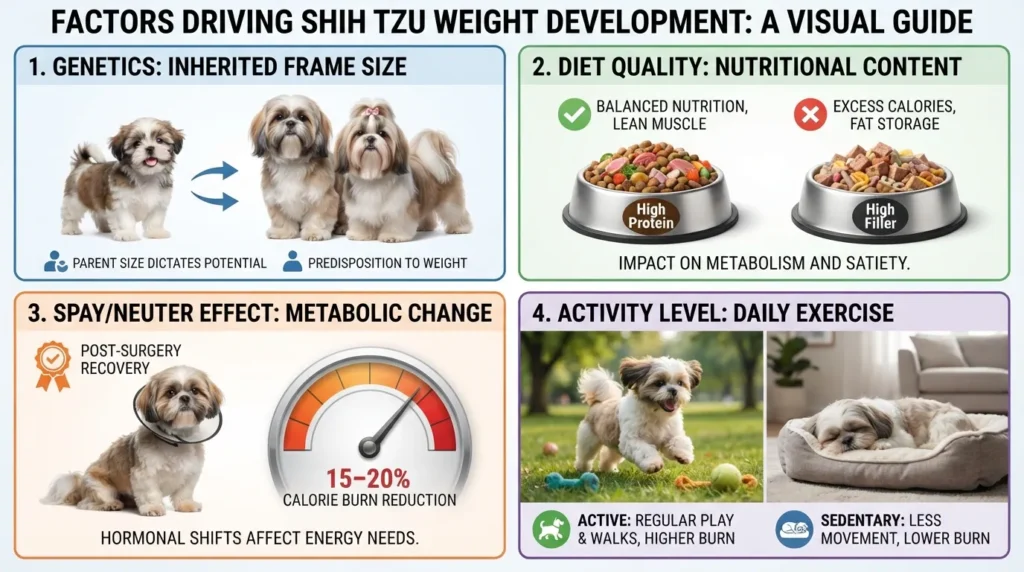
A Shih Tzu’s physical scale weight rarely depends on a single factor. Genetic programming, daily dietary choices, hormonal status, and energy expenditure all interact to shape their final adult size.
Genetics & Parent Size
Your puppy’s overall frame size is heavily dictated by their biological parents. If both parents sit near the larger 15–16 lb end of the breed standard, their offspring will naturally lean toward a heavier skeletal frame without being fat.
Diet Quality
The density and quality of ingredients in your dog’s bowl directly impact their weight. Feeding high-carb commercial foods packed with fillers leads to rapid fat accumulation, whereas high-protein, nutrient-dense kibble supports lean muscle mass.
Neutering/Spaying Effect
Surgically spaying or neutering reduces a Shih Tzu’s metabolic rate by roughly 15% to 20%. Because their daily caloric burn slows down post-surgery, unadjusted food portions frequently lead to gradual weight gain if not monitored.
Activity Level
A Shih Tzu’s natural energy output varies significantly between individual dogs. A couch-potato Shih Tzu who spends most of the day sleeping burns far fewer calories than an active pup who loves daily games of fetch, requiring tailored portion sizes to prevent weight imbalances.
Imperial / Teacup Shih Tzu — What It Means for Weight
Imperial” or “Teacup” Shih Tzus are marketed as miniaturized versions of the breed, typically weighing under 9 pounds (4 kg) at full maturity. It is important to know that these names are purely marketing terms—neither the American Kennel Club (AKC) nor any major kennel organization recognizes them as an official or separate breed standard.
Because these dogs are intentionally bred for unnaturally small frames, their lightweight status comes with distinct health vulnerabilities:
Hypoglycemia: Extremely small puppies struggle to store glycogen, leading to sudden, life-threatening drops in blood sugar if meals are missed.
Fragile Bones: Their delicate skeletal structure makes them prone to fractures from minor falls or rough handling.
Severe Dental Crowding: Smaller jaws still develop the same number of adult teeth, causing severe overcrowding, early periodontal disease, and tooth loss.
When to worry: If your adult Shih Tzu weighs under 9 pounds, consult your veterinarian to evaluate their body condition. While some naturally small Shih Tzus remain healthy, intentionally undersized lines require strict feeding schedules, frequent dental checks, and extra precautions against physical injury.
How to Predict Your Shih Tzu's Adult Weight (Puppy Formula)

While no calculation offers a 100% guarantee, breeders and veterinarians often use a simple mathematical formula at 8 weeks of age to estimate a puppy’s adult weight.
Estimated Adult Weight (lbs) = (Weight at 8 Weeks in lbs × 3) + 2
For example, if your Shih Tzu puppy weighs 3 pounds at 8 weeks old, the calculation estimates their final adult weight:
(3 lbs × 3) + 2 = 11 lbs estimated adult weight
Disclaimer: This formula provides an estimated baseline, not an exact science. Individual growth spikes, diet quality, genetics, and spay/neuter timing can cause your dog’s actual adult weight to land slightly above or below this estimate.
FAQs
What is the perfect weight for a Shih Tzu?
The ideal weight for an adult purebred Shih Tzu according to breed standards is between 9 and 16 pounds (4 to 7.2 kg).
Is 10kg heavy for a Shih Tzu?
Yes, 10 kg (22 lbs) is significantly above the breed maximum of 7.2 kg and generally considered overweight unless the dog has a uniquely large frame or mixed lineage.
Is 20 pounds overweight for a Shih Tzu?
Yes, 20 pounds is roughly 25% or more over the standard 16-pound limit, making a purebred Shih Tzu noticeably overweight or obese.
How much should a 2-year-old Shih Tzu weigh?
A fully grown 2-year-old Shih Tzu should weigh between 9 and 16 pounds (4 to 7.2 kg) depending on their bone structure and height.
How many kg is a normal Shih Tzu?
A normal adult Shih Tzu weighs between 4 kg and 7.2 kg.
How much should a Shih Tzu weigh at 3 months?
At 3 months old, a typical Shih Tzu puppy usually weighs between 3 and 6 pounds (1.3 to 2.7 kg).
Final Thoughts / Conclusion
Keeping your Shih Tzu within their ideal weight range of 9 to 16 pounds (4 to 7.2 kg) is one of the most effective ways to protect their joint health, breathing, and overall longevity. Because visual checks can be deceiving under that thick double coat, relying on hands-on rib checks and body condition assessments ensures you stay ahead of any subtle weight changes.
If you notice sudden weight gain, rapid drop-offs, or aren’t sure where your dog falls on the Body Condition Score chart, schedule a quick check-in with your veterinarian. Tracking their weight monthly at home and making small dietary or exercise tweaks early will keep your companion happy, active, and thriving for years to come.
🐾 Other Age Guides

I built Dogagescalculator.com to give dog owners honest, science-backed answers instead of the outdated "×7" myth. Every figure here is checked against AKC, AVMA, and published veterinary research.
More about the author & this site →
Comments