
How to Tell the Age of a Dog: A Complete Guide Puppy to Senior
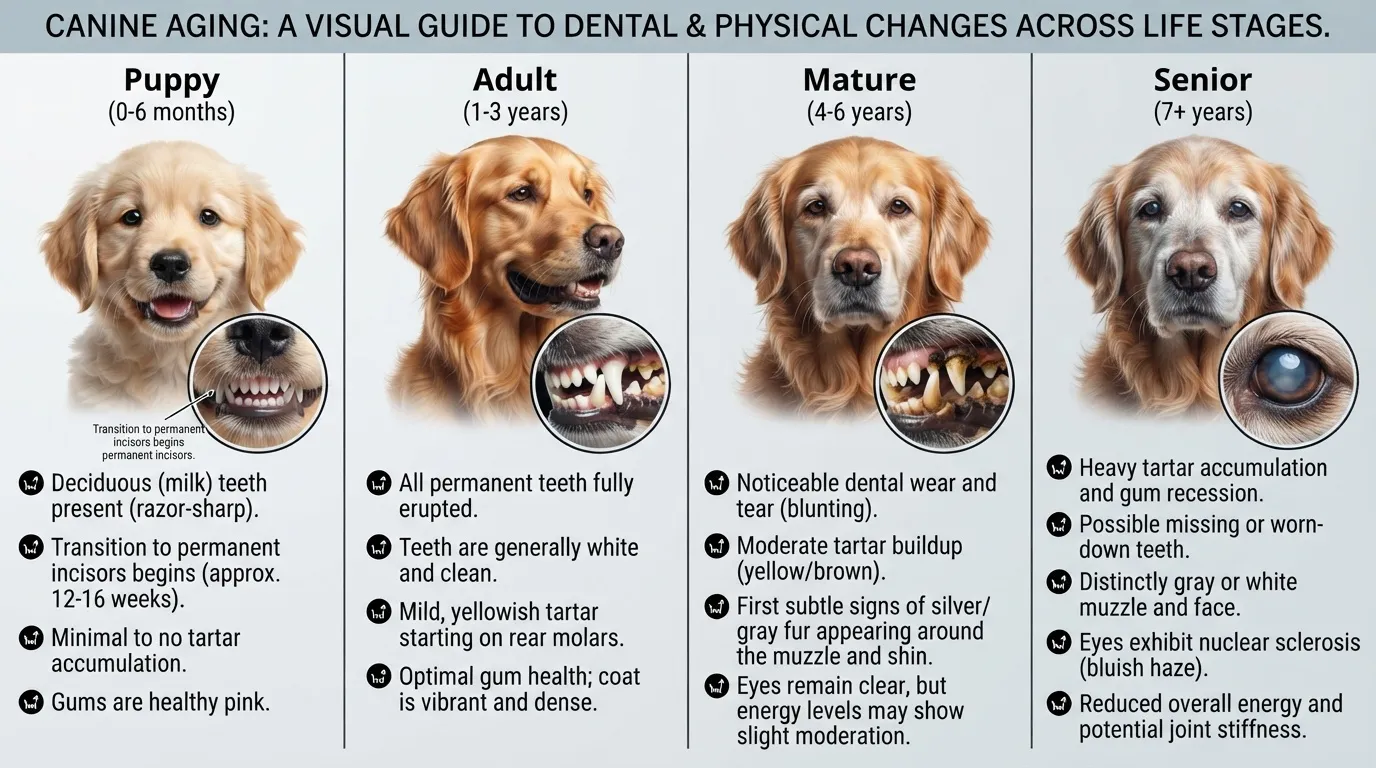
How to tell how old your dog is can be difficult when you don’t know its birth date or have access to veterinary records. Fortunately, veterinarians can estimate a dog’s age by examining several physical and developmental clues, especially the teeth, eyes, coat, body condition, and overall behavior.
One of the most useful methods is learning how to tell a dog’s age by teeth, particularly in puppies and young dogs. As dogs grow older, however, dental wear becomes less precise, so vets combine several signs rather than relying on one feature alone.
Whether you’re wondering how old is my dog after adopting a rescue or simply want a better estimate of your companion’s age, this guide explains the most reliable clues and what they can tell you.
Step 0 — Check for Paperwork or Vet Records First
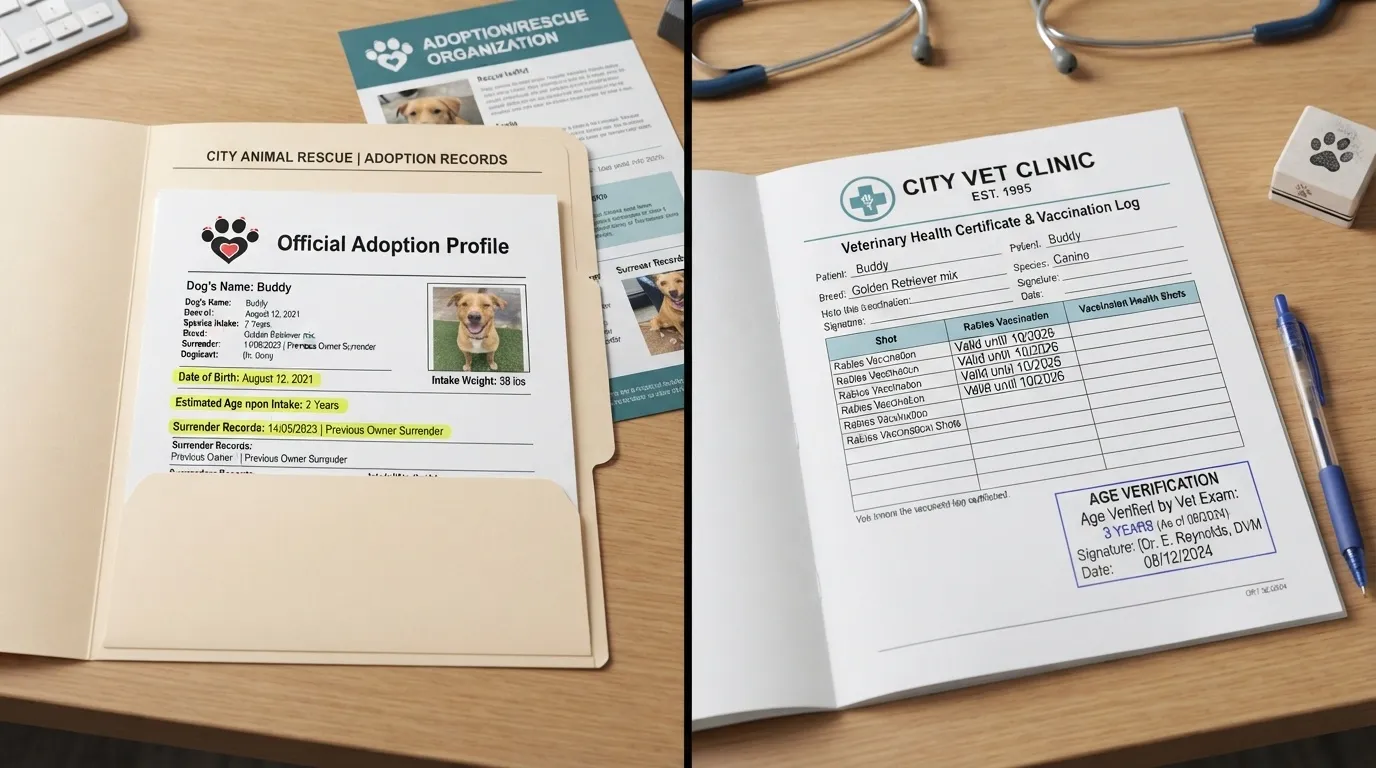
Before you start counting teeth or checking for gray hairs, gather any documentation that came with your dog. Owners often overlook the paperwork they already have in hand. A registration certificate, bill of sale, adoption contract, or shelter intake sheet frequently lists a definitive birthdate or an official age estimate recorded by a professional.
If your dog has seen a veterinarian in the past, contact that specific clinic to request their complete medical history. Veterinary practices routinely record an estimated age during a puppy’s first vaccination series or an adult dog’s initial wellness exam. Even if the previous owner lost the physical papers, the clinic’s database retains these crucial baseline records.
Check adoption contracts or rescue transfer papers: Look closely at the fine print for an estimated birth month or exact intake date.
Call previous veterinary clinics: Ask for the “patient history report,” which includes the earliest recorded age estimate.
Locate microchip registry details: Log into the microchip database (like HomeAgain or Avid) using your dog’s ID number, as original registration profiles often include a birth year.
Only move on to the physical signs outlined below if you have absolutely no paperwork or historical medical records to reference.
Quick Answer: Dog's Age at a Glance
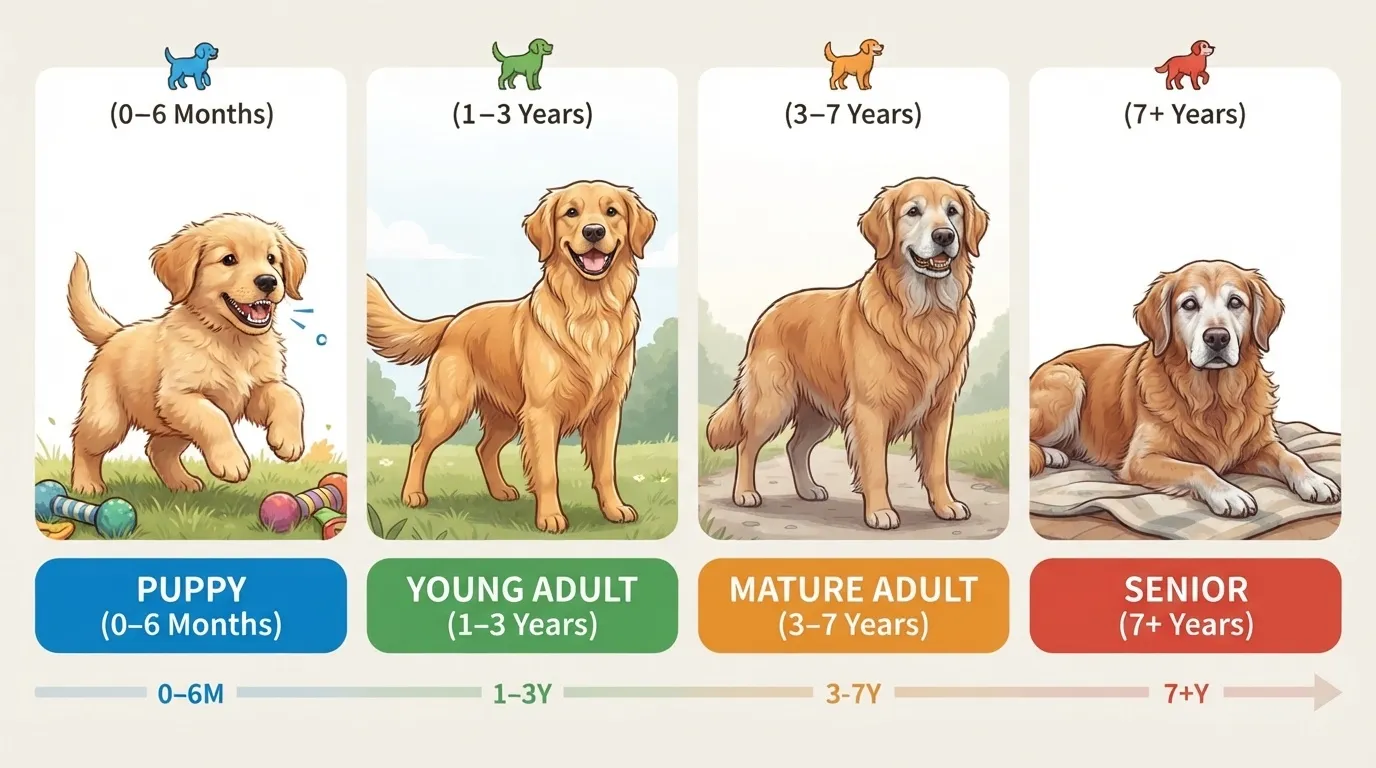
If you are looking for a fast estimate, veterinarians evaluate five primary physical markers to quickly gauge a dog’s life stage.
The summary table below outlines exactly what to look for during a quick physical check, mapping specific physiological signs directly to an approximate age bracket.
| Biological Marker | What You'll See | Approximate Age Range |
|---|---|---|
| Teeth | Tiny, razor-sharp baby teeth; clean, bright white adult teeth; or noticeable yellow tartar and wear. | 8 weeks to 7+ years |
| Eyes | Crystal clear, bright pupils, transitioning to a cloudy, bluish-gray haze in the center of the lens. | Clear: 0 to 6 years Cloudy: 6 to 9+ years |
| Coat & Fur | Consistent color across the muzzle and eyes, gradually developing white or gray frosting. | 4 to 5+ years (varies by breed) |
| Body & Muscle Tone | Lean, highly defined muscles and sleek posture, shifting to prominent spinal lines or sagging weight. | 1 to 9+ years |
| Behavior & Energy | Constant playful bursts and rapid recovery, slowing down to stiff movements and longer sleeping cycles. | Senior shifts: 7+ years |
Method 1 — Checking the Teeth Most Reliable Method
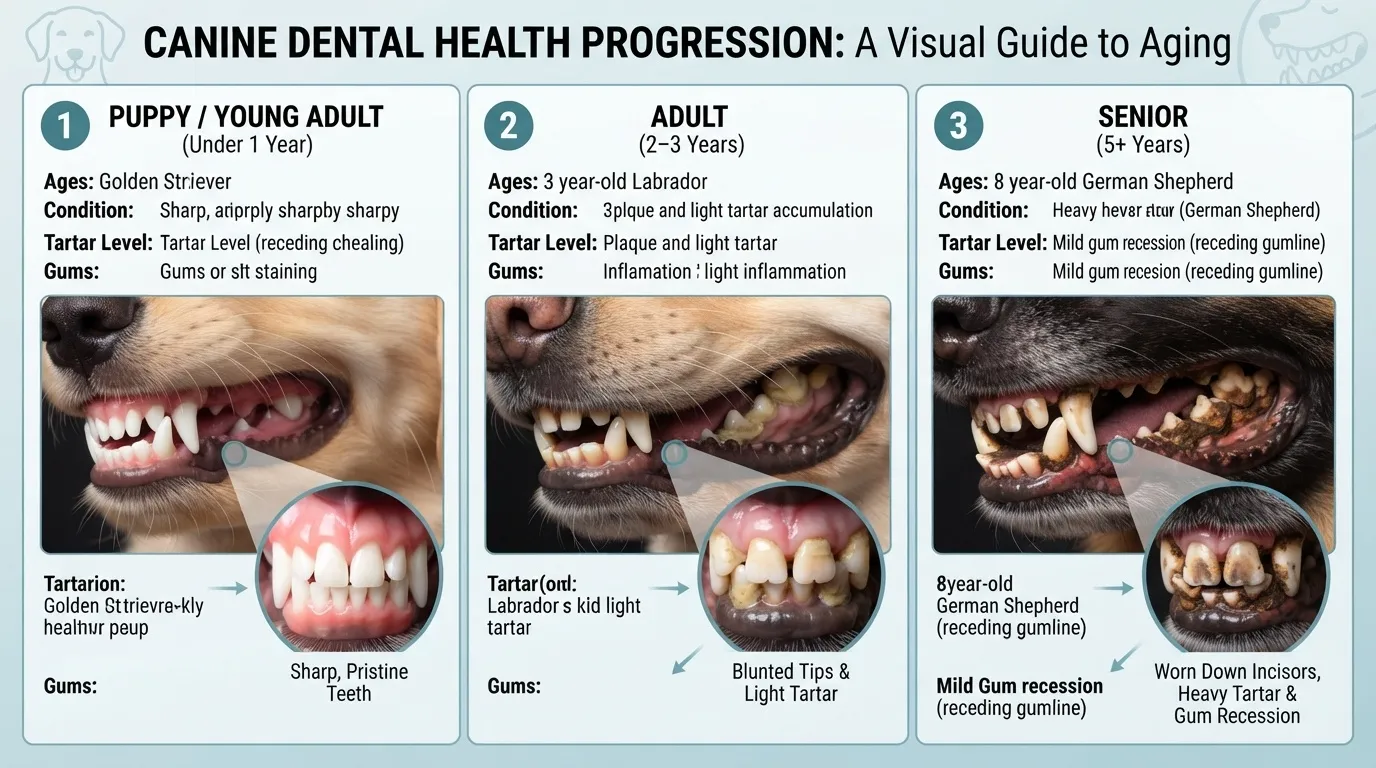
Evaluating a dog’s mouth is the gold standard for age estimation. Because teeth develop and wear down on a highly predictable biological schedule, a quick look inside the muzzle provides the clearest picture of a dog’s stage in life.
Puppy Teeth Timeline (Week by Week)
Puppies grow and develop at a rapid pace, and their deciduous (baby) teeth emerge in a strict chronological sequence. If you are looking at a very young pup, you can pinpoint their age down to a matter of weeks by checking which teeth have erupted:
2–3 weeks: The very first incisors (the small teeth right at the front of the mouth) begin to poke through the gums.
3–4 weeks: The sharp, pointed canine teeth (eyeteeth) start to emerge right next to the incisors.
4–6 weeks: The premolars (the chewing teeth located behind the canines) begin to show up.
6–8 weeks: A complete set of 28 baby teeth is fully erupted; these teeth are tiny, razor-sharp, and translucent white.
Adult Teeth Timeline (Month by Month)
As a puppy grows into adolescence, their fragile baby teeth shed to make room for permanent adult teeth. This transition happens month by month and is highly reliable for identifying a young dog’s exact age:
2–4 months: The baby incisors fall out and are replaced by larger, solid permanent incisors.
4–6 months: The adult canines and premolars push through, often causing the pup to chew heavily to relieve teething discomfort.
6–8 months: The molars at the very back of the jaw finally finish erupting, giving the dog a complete set of 42 adult teeth.
Tartar & Wear By Year (Adult Dogs)
Once a dog reaches adulthood, veterinarians look at dental wear and tear rather than eruption. Dogs use their front incisors for grooming and nibbling, which gradually flattens the natural ridges on the teeth over time. Meanwhile, bacteria and saliva form plaque that calcifies into hard, brown tartar.
1 year: The teeth are pearly white, clean, and completely free of tartar.
1–3 years: Subtle yellowing starts to appear on the enamel, and mild, light brown tartar accumulates on the molars at the back of the mouth.
3–4 years: The three distinct, distinct cusps or ridges on the front incisors are half worn down and flattening out.
4–5 years: You will see visible, heavy tartar buildup closer to the gumline, along with noticeable flattening on all incisors.
7+ years: The incisor ridges are fully smooth and flush with the gums, accompanied by heavy brown tartar, significant staining, and a risk of tooth loss or periodontal disease.
How Accurate Is This Method?
Dental aging is highly accurate under 6 months of age because every dog’s body follows the same genetic blueprint for growing teeth. Once a dog passes age 5, accuracy drops significantly.
At this later stage, dental health depends heavily on diet, chew habits, and past veterinary care. For example, a 3-year-old stray dog that chewed on rocks out of boredom might show the severe tooth wear of a 7-year-old, while a senior dog receiving annual professional dental cleanings might retain a bright, white smile that defies their true age.
Method 2 — Looking at the Eyes
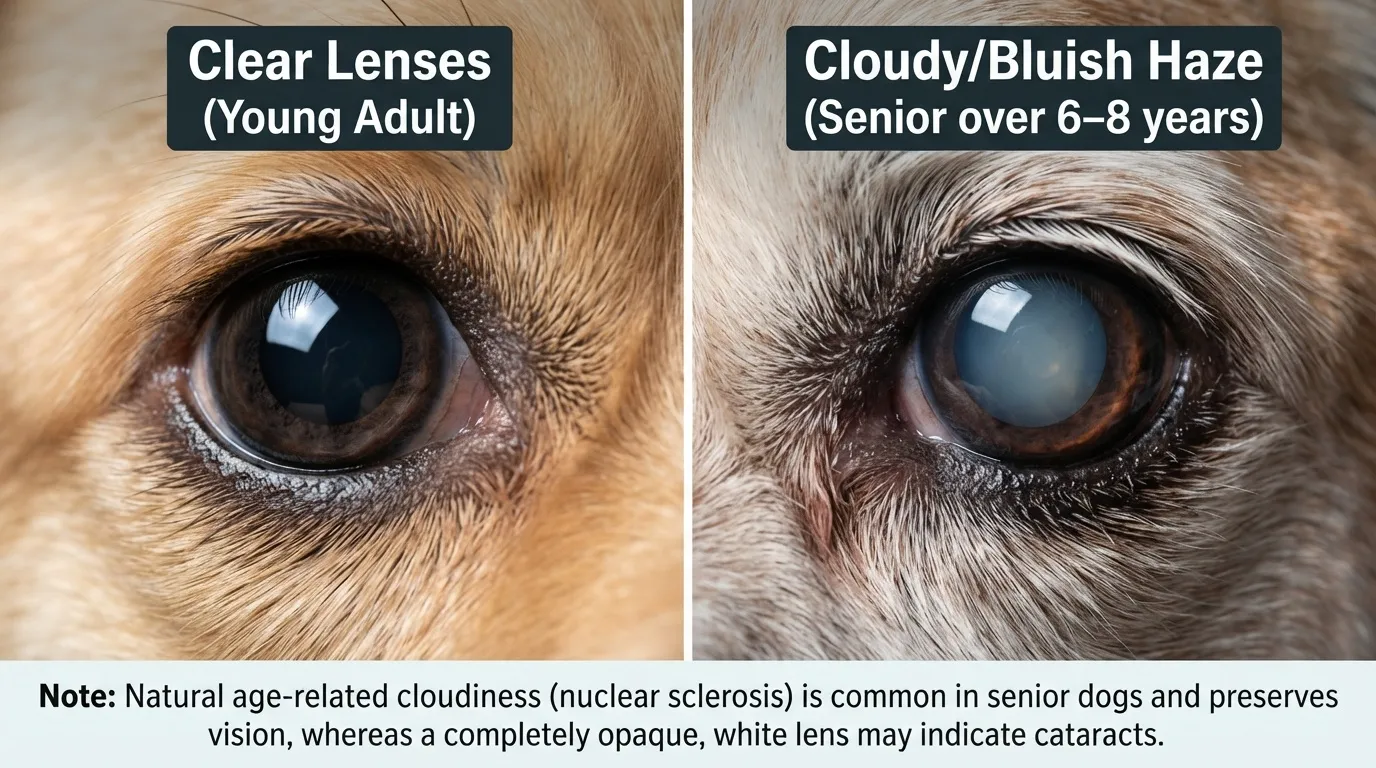
A dog’s eyes change predictably as they grow older, making them an excellent tool for estimating age once a dog reaches adulthood. While a puppy’s eyes are crystal clear, senior dogs develop distinct visual changes in their lenses due to natural aging or medical conditions.
Lenticular Sclerosis
If you notice a subtle, bluish-gray haze deep inside your dog’s pupils, you are likely looking at lenticular sclerosis (sometimes called nuclear sclerosis). This is a completely normal, non-painful hardening of the eye lens that typically starts to become visible when a dog reaches 6 to 8 years old.
As a Dog Ages Calculator new lens fibers are constantly produced. Because the outer ring of the eye cannot expand, these older fibers get tightly compressed into the center of the lens, creating a cloudy appearance. This condition does not cause blindness, and your dog can still see well enough to catch treats or spot a squirrel in the yard.
Cataracts vs. Sclerosis
It is incredibly common for owners to confuse normal aging haze with cataracts, but they are entirely different issues. Telling them apart is crucial for your dog’s health and your peace of mind.
Lenticular Sclerosis: Appears as a smooth, uniform gray or blue translucent tint. Light can still pass through it, meaning you can usually see through the haze to the back of the eye with a flashlight. It always affects both eyes simultaneously.
Cataracts: Look like thick, white, or milky crushed ice inside the eye. They are completely opaque, meaning they block light from reaching the retina and eventually lead to blindness. Cataracts can develop at any age due to genetics or diabetes, and they often progress at different speeds in each eye.
Data shows that approximately 50% of dogs aged 9 and older show noticeable lens changes during a veterinary exam. If your rescue dog has that classic cloudy sheen but can still chase a ball without bumping into furniture, they have almost certainly crossed into their senior years.
Method 3 — Checking Body & Muscle Tone
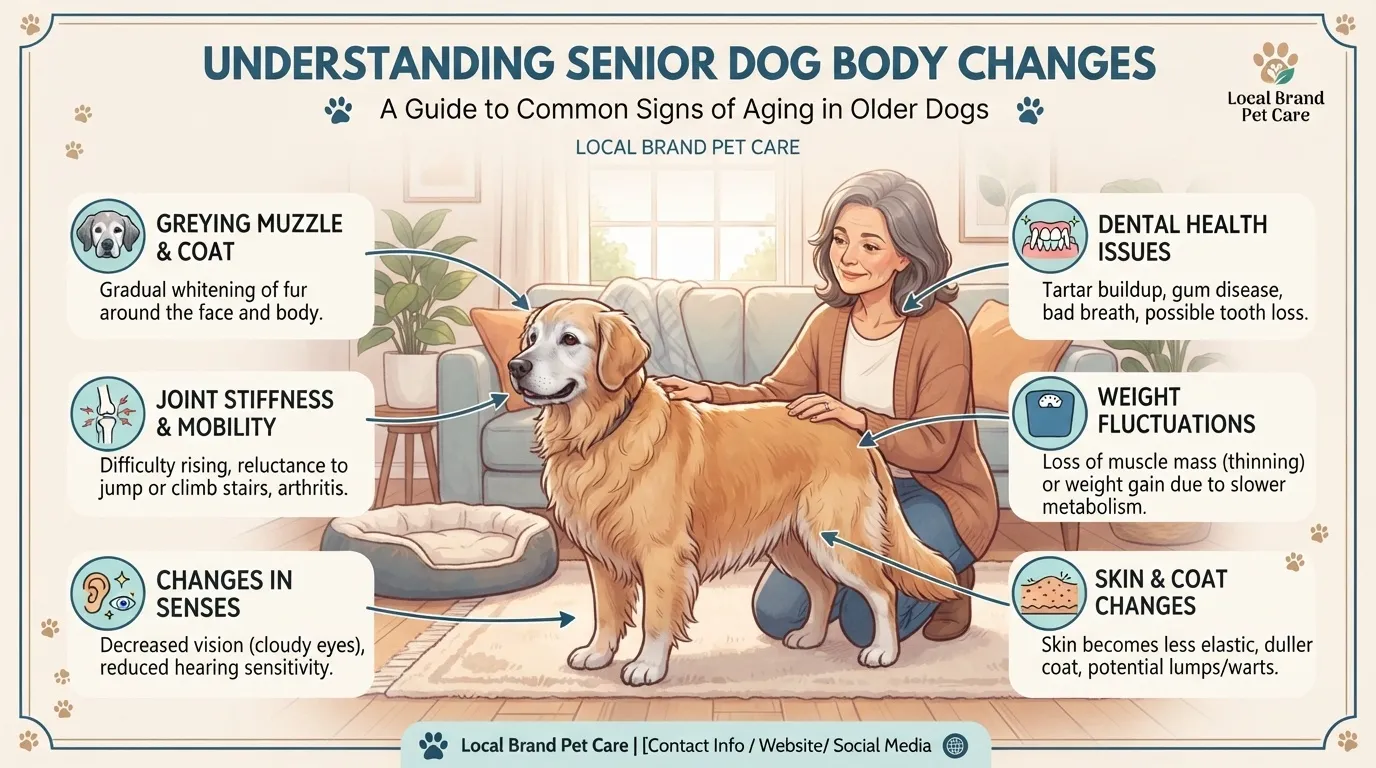
Looking closely at a dog’s physique tells you a lot about their life stage. While puppies are soft and young adults are typically lean and well-muscled, the aging process visibly alters a dog’s physical frame. Evaluating body shape and muscle definition is especially helpful for identifying senior dogs when dental wear might be misleading due to a past diet of soft food.
Spine and Hip Prominence in Seniors
As dogs transition into their senior years, usually around 7 to 10 years of age, their metabolic rate slows down and fat distribution shifts. You will often notice that the topline—the line along the dog’s back—loses its smooth appearance. The spine and hip bones begin to protrude more noticeably under the skin.
This prominence happens for two main reasons:
Thinning Skin: Aging dogs lose skin elasticity and subcutaneous fat layers, making the bony structures underneath far more visible to the eye and sharp to the touch.
Swayback Development: The ligaments and tendons supporting the spine naturally weaken over time. This causes the back to sag slightly, making the vertebrae stand out.
Muscle Wasting in Thighs and Shoulders
Sarcopenia, the age-related loss of muscle mass, is a primary indicator that a dog has entered their golden years. This muscle wasting is most obvious in the large power muscles of the hindquarters and the stability muscles around the shoulders.
When running your hands over an older dog, you will notice distinct changes:
Sunken Thighs: The hind legs lose their rounded, plump shape and feel flat or hollowed out. You can easily pinch your fingers around the thigh muscle.
Prominent Shoulder Blades: The muscles covering the scapula shrink, causing the shoulder bones to stick out awkwardly when the dog stands.
Loss of Core Strength: The abdominal muscles slacken, resulting in a “tucked up” look or a sagging belly that lacks the tight tone of a young adult.
This loss of muscle mass typically begins subtly around age 8 and accelerates after age 11. It is a natural part of the biological clock, caused by a decreased ability to process dietary protein and a natural reduction in daily activity levels.
Method 4 — Coat & Skin Signs
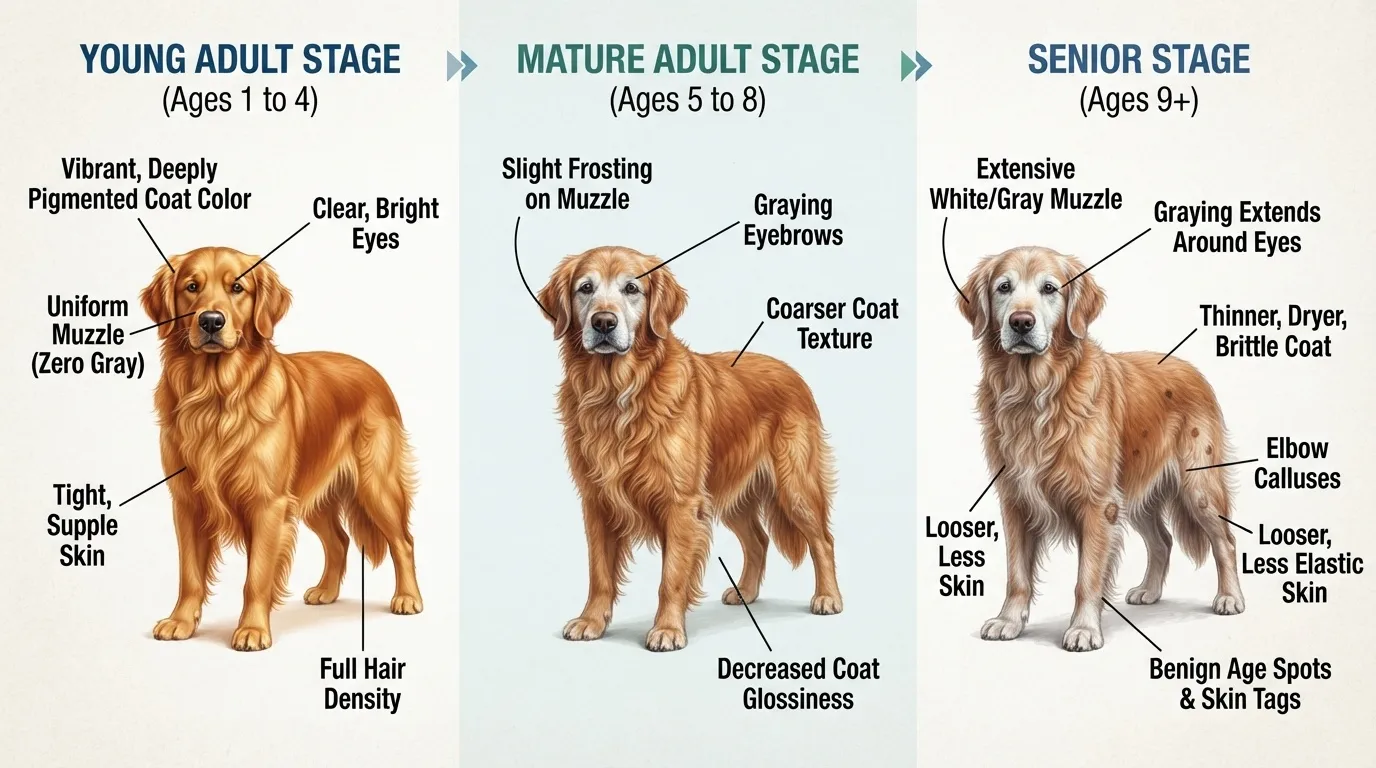
Just like humans, dogs show physical signs of aging through their fur and skin. While a changing coat is one of the most visible indicators of a dog’s advancing years, you have to look closely at the specific patterns to get an accurate estimate.
Gray Hair Patterns
Silver fur is the classic hallmark of an aging dog, but it doesn’t appear all at once. The progression typically follows a predictable timeline:
Ages 4 to 5: The very first flecks of gray usually emerge around the muzzle and the edges of the lips.
Ages 6 to 8: The graying pattern expands upward toward the eyebrows, around the eyes, and shifts into a distinct “frosting” across the entire face.
Ages 9 and older: The silvering spreads past the head, noticeably appearing on the chest, lower legs, and paws.
Skin Elasticity Loss in Seniors
As dogs enter their senior years—typically around 7 to 8 years old depending on their size—their bodies produce less collagen and elastin. This biological shift causes their skin to lose its firm, snappy texture.
When you gently lift the scruff at the back of a senior dog’s neck, the skin takes noticeably longer to snap back into place compared to the tight skin of a young adult dog. Older dogs are also more prone to developing calluses on pressure points like the elbows, as well as harmless skin tags and benign growths.
The Breed and Color Exception
While coat changes are helpful, you shouldn’t rely on gray hair alone to determine age. Genetics and lifestyle play a massive role in how early a dog turns silver.
Early Graying: Certain breeds, particularly Black Labradors, Golden Retrievers, and Whippets, frequently start growing noticeable gray muzzles as early as 2 or 3 years old.
Stress and Anxiety: High-strung or anxious dogs often experience premature graying due to elevated cortisol levels, much like chronic stress affects human hair.
Light-Coated Breeds: On white, cream, or light tan dogs, graying patterns are almost impossible to see visually, making skin elasticity and other physical markers much more reliable.
Method 5 — Paws
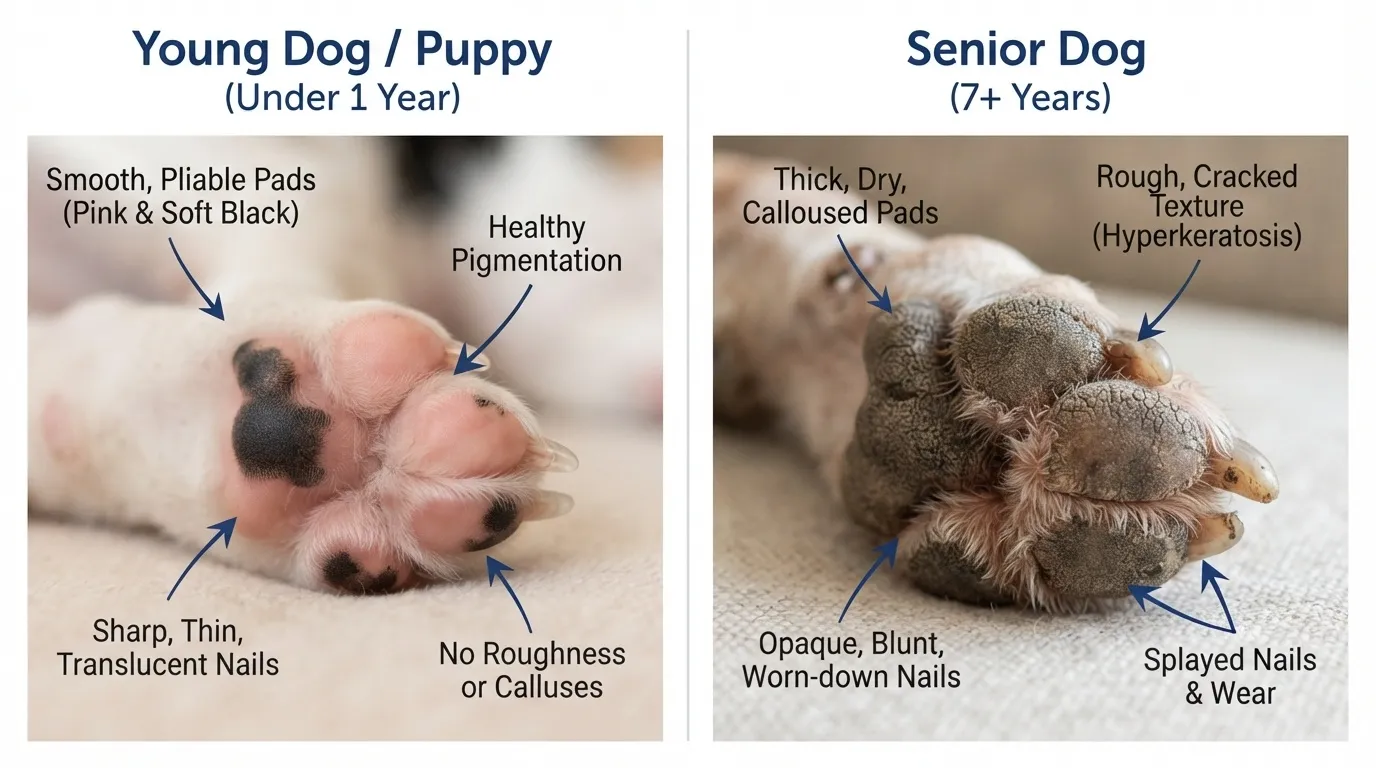
Looking at a dog’s paws provides excellent clues about their life stage and daily activity history. Because a dog’s pads interact with the world every single day, they naturally change in texture, color, and thickness over time.
Puppy: soft, pink pads
A young puppy starts life with remarkably pristine feet. Because they haven’t spent years walking on rough asphalt, hot pavements, or gravel, their paw pads are notably soft, smooth, and flexible.
Depending on the breed and coat color, many puppies under 6 months old feature light pink pads, or a speckled mix of pink and black. The skin here is delicate, lacking the thick, protective layer of calloused tissue that develops later in life from regular exercise.
Senior: thick, rough, cracked pads
As dogs enter their senior years—typically around 7 to 10 years of age—their paw pads show significant signs of lifelong wear and tear. Decades of friction cause the outer layer of the pad to become thick, rough, and heavily calloused.
Hyperkeratosis: Senior dogs frequently experience an overproduction of keratin, making the pads look hairy, crusty, or uneven.
Loss of Elasticity: The natural cushioning inside the pad diminishes with age, leading to a dried-out texture.
Fissures and Cracks: The dry, hardened skin easily develops visible cracks or deep fissures, which sometimes require soothing paw balms to keep the dog comfortable during daily walks.
Method 6 — Behavior, Energy & Mental Signs
Activity & Energy Level by Life Stage
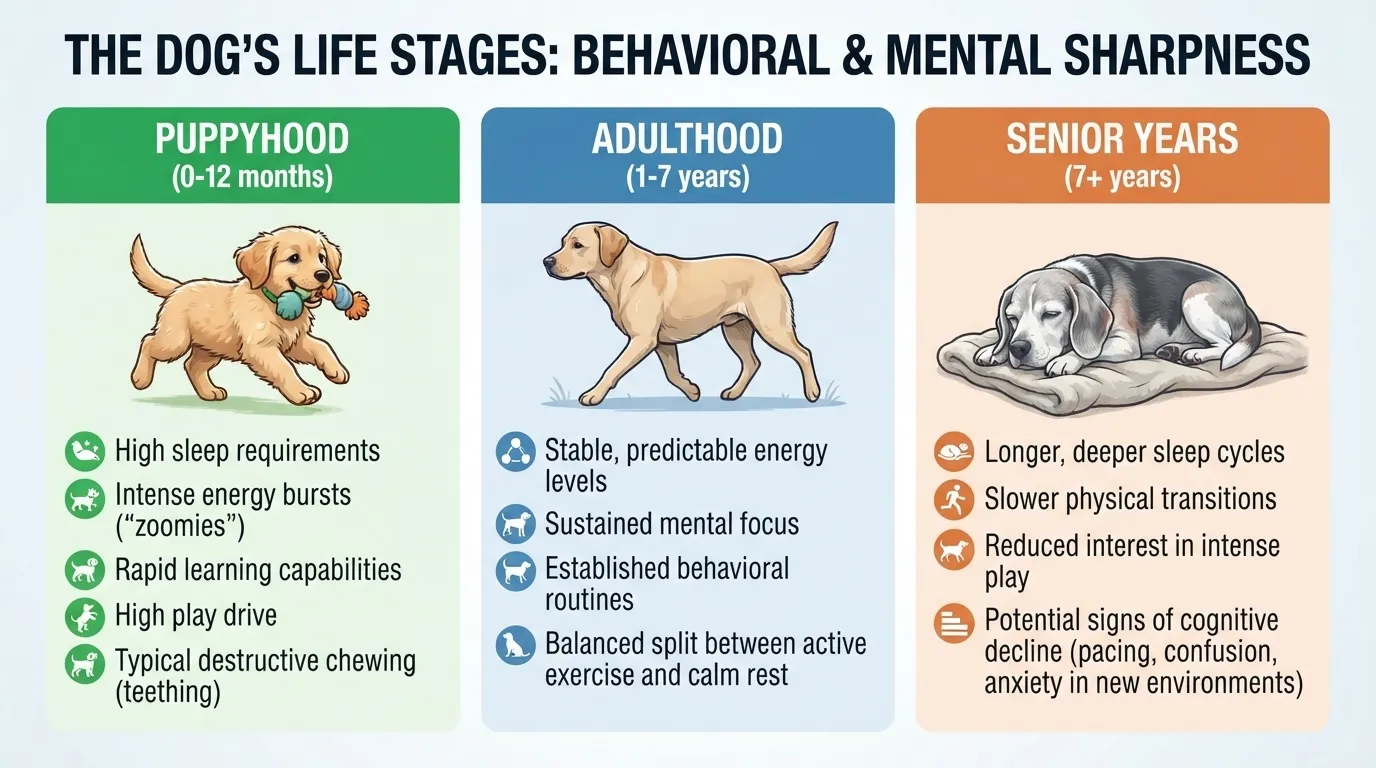
A dog’s daily energy levels offer massive clues about their general age bracket. While breed genetics influence stamina, physical behavioral transitions generally follow a predictable timeline across most canines:
8 to 24 weeks: High-burst energy followed by sudden, deep crashes. Puppies at this stage require 18 to 20 hours of sleep per day to support rapid brain and muscle development.
6 to 18 months: Peak adolescent energy. Dogs at this age exhibit intense stamina, a constant desire for play, and boundaries-testing behavior as hormonal shifts occur.
2 to 7 years: Stable, balanced adult energy. They remain enthusiastic about walks and physical activities but possess a noticeable “off-switch” and can easily relax at home for hours.
7+ years: Gradual slowing down. Senior dogs take longer to rise from a resting position, tire out faster during intense exercise, and prioritize napping over active play.
Cognitive Signs in Senior Dogs
Behavioral shifts in older dogs often stem from physical changes within the brain. When a senior dog begins acting differently, owners frequently chalk it up to the dog simply “getting lazy.” However, specific behavioral changes can point toward Canine Cognitive Dysfunction (CCD), a condition similar to dementia in humans that typically affects dogs over 10 years old.
Watch for these specific indicators of cognitive decline:
Disorientation: Wandering aimlessly, staring blankly at walls, or getting trapped behind doors and in corners they used to navigate easily.
Sleep pattern changes: Pacing, whining, or waking up frequently throughout the night, often paired with deeper, unusually heavy sleep during daytime hours.
House-training accidents: Urinating or defecating indoors shortly after being outside, which happens because the brain fails to process the physical signals of a full bladder or bowel.
Hearing Decline
If your older dog suddenly stops greeting you at the door or ignores commands, they aren’t deliberately misbehaving. Age-related hearing loss, or presbycusis, is a highly common condition caused by the natural degeneration of delicate nerve cells inside the inner ear.
You will typically notice a slower response to their name, clapping, or approaching footsteps starting around 12 to 14 years of age.
Note: While a dog’s hearing and vision frequently deteriorate with age, their sense of smell rarely declines significantly. Even extremely old, frail senior dogs can usually sniff out a dropped treat or identify a familiar person using their olfactory senses.
Senior Age Threshold & Breed Size Effect
At What Age Is a Dog Considered a Senior?
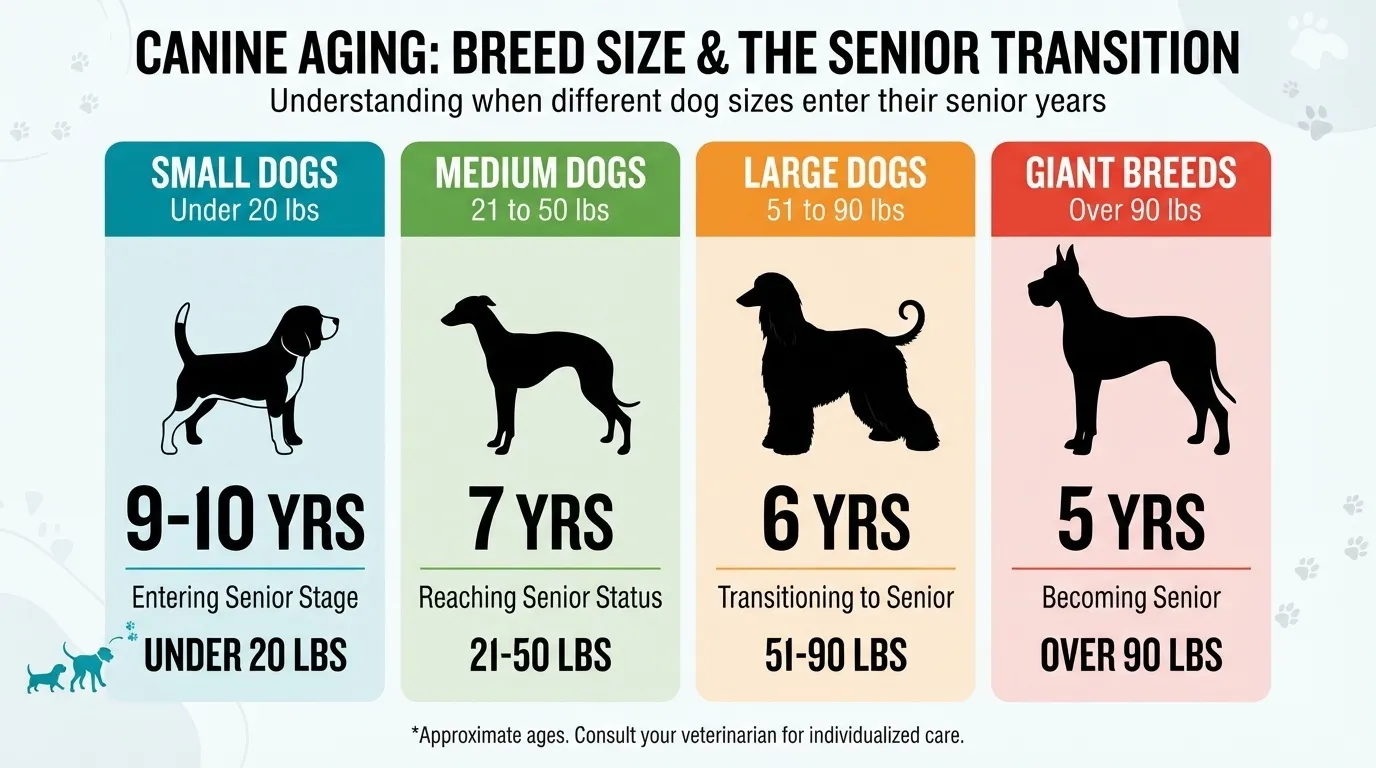
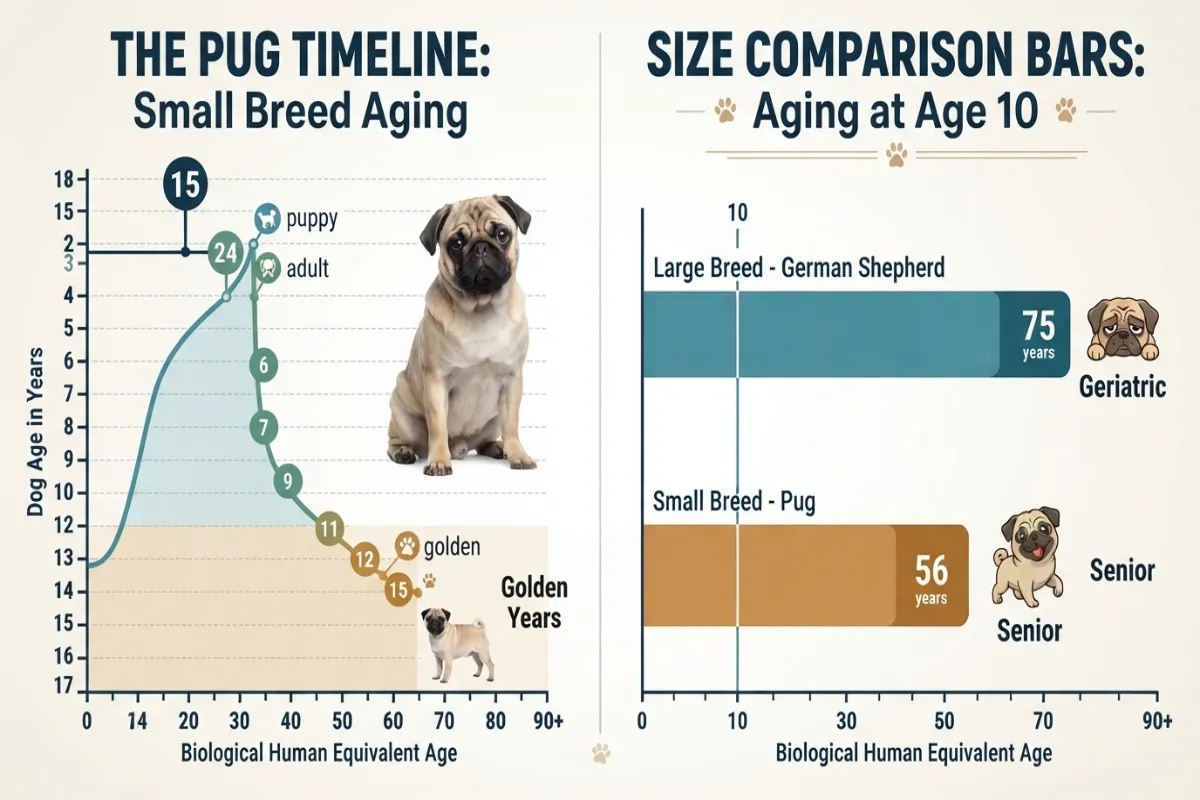
A dog doesn’t become a senior overnight, but vets use a reliable rule of thumb to determine when a dog enters their golden years. A dog officially reaches senior status when they hit the last 25% of their breed’s expected lifespan. Because distinct breeds have vastly different life expectancies, the exact age a dog becomes a senior depends entirely on their size.
Here is how that timeline looks across different breed categories:
Toy Breeds (e.g., Chihuahua): With an average lifespan of 15 to 17 years, these tiny dogs do not reach senior status until they are about 11 to 12 years old.
Medium Breeds (e.g., Cocker Spaniel): With an average lifespan of 12 to 13 years, these dogs transition into their senior years around 9 years old.
Large Breeds (e.g., Golden Retriever): With an average lifespan of 10 to 12 years, these dogs are considered seniors by the time they hit 7 to 8 years old.
Giant Breeds (e.g., Great Dane): With a much shorter lifespan of 7 to 9 years, these dogs are classified as seniors at just 5 to 6 years old.
Why Breed Size Changes the Numbers
The biological clock ticks differently depending on the size of the dog. Large and giant breeds experience an accelerated aging process compared to smaller dogs. While a Great Dane puppy takes up to 24 months to fully develop structurally, their cellular aging speeds up dramatically once they reach adulthood. This rapid metabolic growth puts high stress on their bodies, causing their organs and joints to age much faster.
Conversely, small dogs develop at a steadier pace and maintain a slower cellular aging process throughout their lives. A toy poodle might take 10 to 12 months to reach full physical maturity, but its body handles long-term wear and tear much better over the next decade. This biological difference explains why a 6-year-old giant breed frequently shows the same physiological signs of old age as a 12-year-old small breed.
How Vets Estimate a Dog's Age Clinical Method
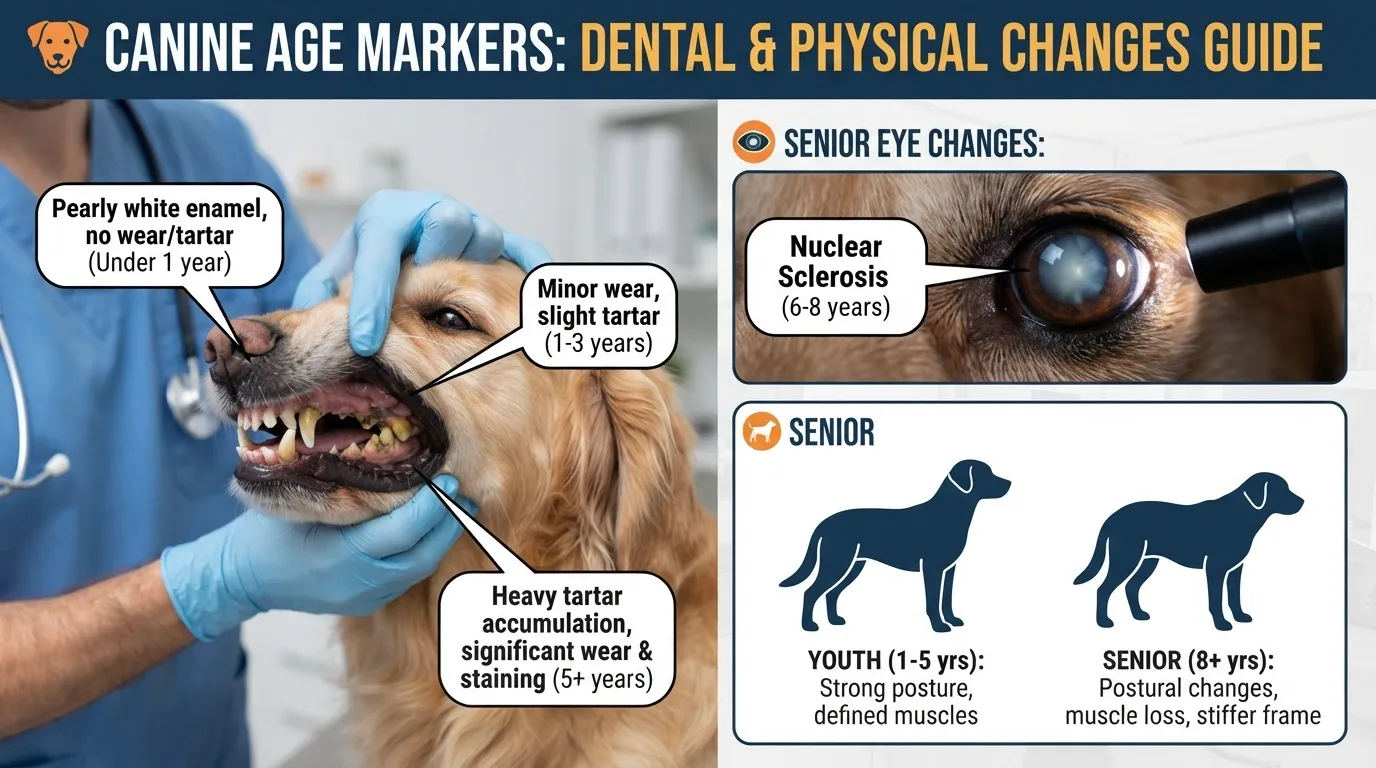
When you take a rescue or stray dog to the clinic, a veterinarian uses physical biomarkers to establish a baseline life stage. While basic visual checks offer clues, clinical methods provide a much more structured assessment. Vets examine skeletal development, deep dental wear, and metabolic health indicators to determine where a dog sits on the age spectrum.
Growth-Plate X-Rays for Young Dogs
For dogs suspected to be under 2 years old, veterinarians have a highly accurate tool at their disposal: digital radiography. By taking X-rays of the long bones in a dog’s legs, a vet can look directly at the epiphyseal plates (commonly known as growth plates).
Growth plates are areas of developing cartilage at the ends of the bones. As a puppy grows, these plates actively produce new bone tissue. Once the dog reaches full skeletal maturity, these plates calcify and “close,” turning into solid bone.
The timeline for growth plate closure follows a highly predictable schedule:
4 to 6 months: Early growth plates, such as those in the accessory carpal bones of the wrist, typically fuse.
6 to 8 months: Plates in the elbow joint (olecranon and anconeal process) complete their closure.
10 to 12 months: The major growth plates in the shoulders, hips, and stifles (knees) firmly close in small to medium-sized breeds.
12 to 18 months (and up to 24 months): Large and giant breeds—like Great Danes or Mastiffs—take much longer to finish growing. Their skeletal growth plates frequently remain open until they are 1.5 to 2 years old.
If an X-ray shows open growth plates, your vet can pinpoint your dog’s age down to a narrow window of just a few months based on which specific joints have not yet fused.
Why Vets Provide an Age Range, Not an Exact Date
You will notice that a veterinarian will almost never say, “This dog is exactly 4 years old.” instead, they will classify the dog as “3 to 5 years old.” Vets provide an age range because external variables heavily influence biological aging, making an exact calendar birthday impossible to determine without records.
Several critical factors cause two dogs of the exact same age to look completely different clinically:
Past Nutrition and Neglect: A 2-year-old dog that survived on the streets with severe nutritional deficiencies will often present with advanced dental decay, brittle fur, and joint inflammation. Clinically, they can easily mimic the body of a 6-year-old dog.
Breed and Genetics: Small dogs age much slower structurally than large breeds. A 7-year-old Chihuahua often retains perfectly clear eyes and sharp joints, whereas a 7-year-old German Shepherd might already show clinical signs of arthritis and nuclear sclerosis.
Chewing Habits: Vets rely heavily on dental wear to estimate adult ages. However, a young 18-month-old dog that compulsively chews on rocks, fences, or hard kennel bars will grind their incisors flat, artificially presenting with the dental profile of a 5-year-old dog.
How to Tell a Rescue Dog's Age No History Available
Combine Physical Signs
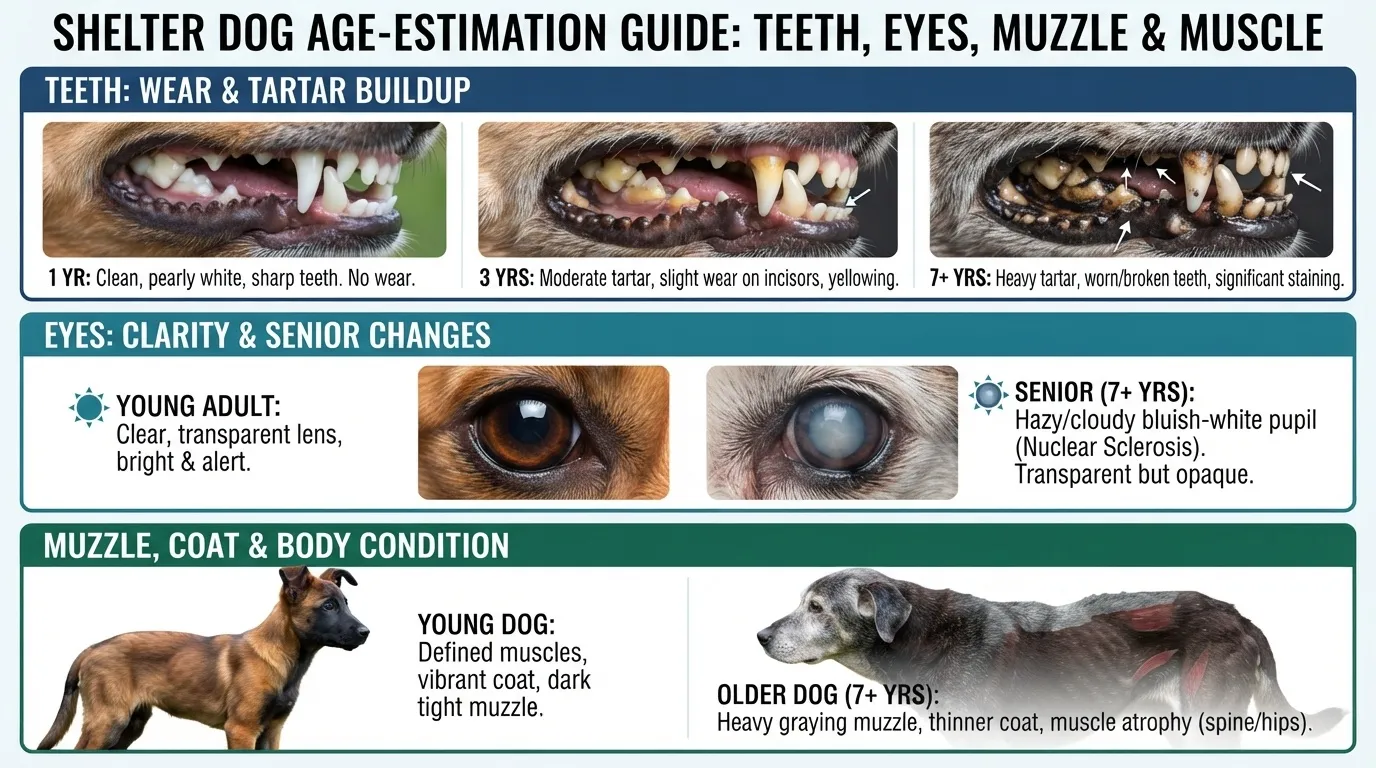
Determining the age of a rescue dog with a completely blank history requires acting like a detective. You cannot rely on a single physical marker. Instead, you must look at the entire animal and combine multiple clues to form an accurate picture.
Vets cross-reference several key indicators to pinpoint a life stage:
Dental health: Check for the presence of adult teeth, tartar buildup, and incisor wear.
Eye clarity: Look for the natural haziness that appears in older lenses.
Coat condition: Scan for gray hairs around the muzzle and eyes.
Muscle tone: Assess whether the dog has the tight definition of a young adult or the muscle wasting typical of a senior.
Watch for Stress-Related “Premature Aging”
Severe stress, trauma, or prolonged neglect can cause a young dog to look significantly older than they actually are. Chronic stress elevates cortisol levels, which actively accelerates physical decline, impacts coat health, and impairs healing.
When evaluating a rescue dog from a poor background, keep these environmental factors in mind:
Early graying: Extreme anxiety or trauma can cause gray fur to appear around the muzzle as early as 2 years old, well ahead of the typical timeline.
Poor coat quality: Severe malnutrition or parasite burdens leave the coat dull, coarse, and thinning, mimicking the appearance of an geriatric dog.
Behavioral exhaustion: A deeply traumatized dog may exhibit low energy, stiff movements, or a reluctance to play, which owners easily mistake for old age arthritis.
Once a rescue dog enters a safe, loving home and receives proper nutrition, their physical condition often improves dramatically, revealing their true, younger age.
Adoption Age Estimation Rule of Thumb
If you adopt a dog whose adult teeth are already fully grown and you see no major physical changes during your first year together, you can use a reliable rule of thumb to estimate their age range. This baseline works because canine development stabilizes significantly during young adulthood.
Medium and large breeds: If the dog shows solid muscle structure, minimal tartar, and remains physically identical over your first 12 months together, they were likely adopted between 2 to 4 years old.
Small breeds: Small dogs age much slower physically and dentally. If a small dog shows no physical decline or changes during your first year, they were likely adopted between 1 to 5 years old.
DNA Age Testing The Modern Alternative
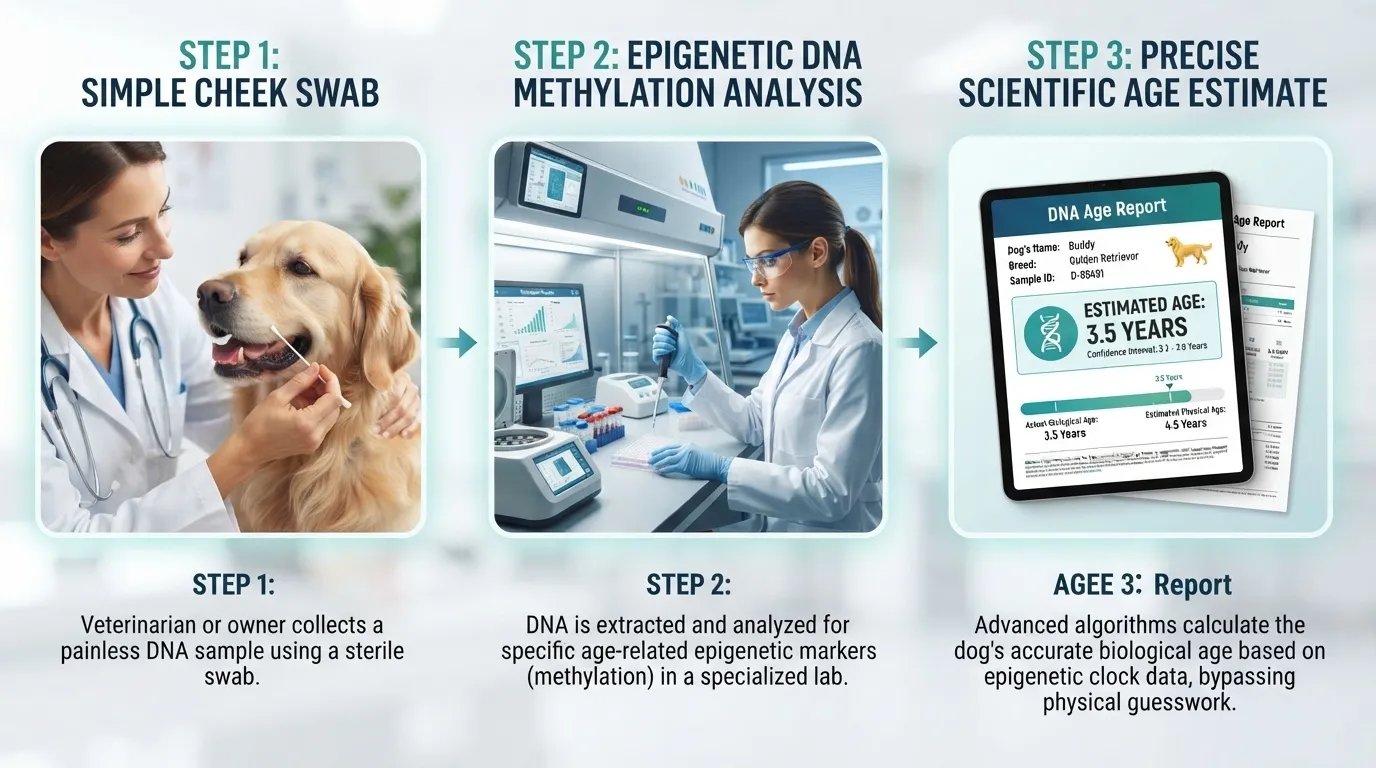
When physical indicators like dental wear or cloudy eyes leave you guessing, canine genetics can provide a clearer answer. Modern veterinary science relies on the epigenetic clock—specifically DNA methylation—to determine a dog’s age at a cellular level. As a dog grows older, specific chemical tags (methyl groups) attach to their DNA strand at predictable intervals. By analyzing these cellular changes from a simple swab of your dog’s cheek, laboratory scientists can map out exactly where your dog sits on the biological timeline.
While this scientific method is incredibly advanced, it is essential to manage your expectations regarding the results:
Accuracy window: Most DNA age tests provide a result that is accurate within 12 to 18 months of your dog’s true chronological age.
Genetic outliers: Highly accurate for the vast majority of breeds, though extreme size variances (like Chihuahuas versus Great Danes) can occasionally widen this margin of error slightly.
Health insights: Many of these testing kits simultaneously screen for breed makeup and genetic health risks, giving you a comprehensive look at your dog’s wellness profile.
This laboratory route serves as the perfect diagnostic option when physical signs prove entirely inconclusive. Rescue dogs that received excellent dental care early in life often look years younger than they are, while young strays with a history of malnutrition can display severe dental wear that falsely mimics old age. A DNA test bypasses these environmental variations completely, providing a reliable biological baseline so you can tailor your dog’s senior care or adult nutrition plan with confidence.
What NOT to Rely On Common Myths
Size and Weight Alone Do Not Match Age
A massive mistake people make is assuming a small dog is young or a huge dog is old. A dog’s physical size and weight are dictated entirely by their breed, genetics, and early-life nutrition rather than the passage of time.
A 6-pound Chihuahua can easily be 14 years old, while an 85-pound Great Dane puppy might reach that massive size at just 8 months old. Growth plates in large breeds generally don’t even close completely until they are between 12 to 18 months of age. Relying on the scale or a measuring tape will completely skew your estimate.
Excellent Dental Care Camouflages Age
While teeth are normally the gold standard for age estimation, a stellar dental hygiene routine can completely mask a dog’s true lifecycle stage. Routine professional veterinary cleanings remove the exact tartar and plaque buildup that evaluators use to identify older dogs.
A 7-year-old rescue dog who received daily teeth brushing and annual veterinary scaling can easily display the pearly white, tartar-free incisors of a 1-year-old dog.
Conversely, severe periodontal disease can strike a young dog by age 2 or 3 if they possess poor genetics or ate a poor diet, making them look significantly older than they are.
Active chewers who constantly gnaw on hard toys, rocks, or kennel bars will blunt their canine teeth prematurely, introducing severe mechanical wear that mimics the dental profile of a senior dog.
Frequently Asked Questions
No, it is rarely possible to determine a dog's exact day of birth without official breeder documentation or shelter birth records. Veterinarians look at physiological milestones—like dental development in puppies or lens clarity in older dogs—to place a dog into an estimated age window. While these physical markers provide an incredibly accurate baseline, individual factors like genetics, prior neglect, and past diet can shift these signs by 6 to 12 months.
The single most accurate method depends entirely on the dog's life stage:
For puppies under 6 months: Examining dental eruption is incredibly precise. Puppies shed their deciduous teeth and grow a full set of 42 permanent adult teeth in a highly predictable schedule that finishes right around 24 weeks of age.
For adult and senior dogs: A comprehensive physical exam by a veterinarian—combining dental wear patterns, nuclear sclerosis screening in the eyes, and a canine DNA methylation test (epigenetic clock)—offers the tightest statistical estimate.
You can narrow down your rescue dog's age at home by tracking specific physical indicators across their body:
Check the teeth: Clean, sharp, pearly white teeth point to a dog under 1 year old. Visible yellowish tartar on the back molars typically starts building up between 2 and 3 years old, while significant wear or missing teeth usually indicate a dog past 5 years old.
Look at the eyes: Clear, bright lenses are standard for young dogs. A bluish, hazy translucent sheen inside the pupil usually signals nuclear sclerosis, a normal aging change that begins around 6 to 8 years of age.
Assess muscle and posture: Younger dogs boast lean, tight muscle definition and a straight top-line. Senior dogs frequently show muscle wasting along the spine and hindquarters, often accompanied by a sagging back or stiff gait from arthritis.
No, graying is highly variable and depends heavily on genetics and anxiety levels rather than physical age alone. Many dogs start showing silver or white hairs around their muzzle and eyebrows between 4 and 5 years old. However, some dogs experience premature graying as early as 2 years old due to hereditary traits or chronic stress, while other dogs retain their rich coat color well into their double-digit years.
A dog’s transition into their senior years depends almost entirely on their adult body weight and breed size:
Large and giant breeds (over 50 lbs): Considered seniors around 5 to 6 years old because their bodies age faster and they have a shorter overall lifespan.
Medium breeds (21 to 50 lbs): Reach senior status around 7 years old.
Small and toy breeds (under 20 lbs): Do not enter their senior phase until 9 to 10 years old, as their biological aging process moves at a much slower rate.
🐾 Other Age Guides

Gulfam Haider Mehdi
Founder & Developer
I built Dogagescalculator.com to give dog owners honest, science-backed answers instead of the outdated "×7" myth. Every figure here is checked against AKC, AVMA, and published veterinary research.
More about the author & this site →📌 Featured Guides
How often should I feed my French Bulldog
→
German Shepherd Golden Retriever mix
→
what is a border collie australian shepherd mix called
→
what is the lifespan of a basset hound
→
what age does a dog have a period
→
can a large dog breed with a small dog
→
How Old Is 8 Weeks in Dog Years
→
how long does a miniature australian
→
oldest french bulldog
→
how much is a shih tzu supposed to weigh
→
Comments