
What Is the Life Expectancy of a Jack Russell Terrier?

The Jack Russell Terrier lifespan is typically around 13 to 16 years, making this energetic breed one of the longer-living dogs. Many Jack Russell Terriers remain active well into their senior years when they receive proper nutrition, regular veterinary care, exercise, and a healthy weight.
If you’re wondering about Jack Russell Terrier lifespan female dogs specifically, females can also commonly live within the same general 13-to-16-year range. Individual longevity depends more on genetics, overall health, lifestyle, and preventive care than sex alone.
In this guide, we’ll explain the Jack Russell Terrier’s average lifespan, when they become seniors, common health factors that can affect their length of life, and practical ways to help your dog enjoy more healthy years.
Average Jack Russell Terrier Life Expectancy (Quick Answer)

On average, a healthy Jack Russell Terrier has a life expectancy of 13 to 16 years. These little firecrackers are renowned in the canine world for their robust health and impressive longevity, frequently outliving many other breeds.
Their status as one of the longest-living breeds isn’t just common wisdom—it is backed by a large-scale UK veterinary study.
According to a landmark 2022 study by the Royal Veterinary College (RVC) that analyzed over 30,500 dog deaths, the Jack Russell Terrier officially ranked number one for canine longevity, boasting the highest average life expectancy at 12.7 years. While many larger breeds begin showing their age much earlier, a Jack Russell’s compact size and active working heritage help keep them spry and healthy well into their double digits.
What Science Says: The RVC/Nature Study on Jack Russell Longevity
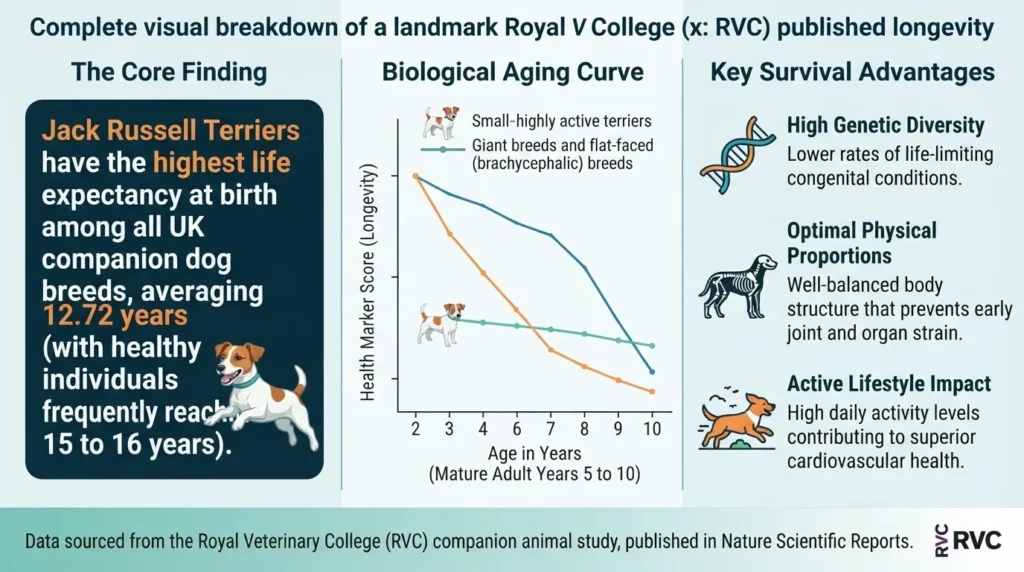
While general estimates are helpful, a landmark scientific study has provided concrete data on how long Jack Russell Terriers actually live. Published in the prestigious journal Scientific Reports (part of the Nature portfolio) and led by researchers at the Royal Veterinary College (RVC), this research offers the most comprehensive look at dog life expectancy to date. It officially confirms what many terrier owners have long suspected: Jack Russells are built to last.
Study Methodology (sample size, data period)
To get truly accurate numbers, the RVC researchers didn’t rely on guesswork or small surveys. They analyzed a massive dataset of 30,563 companion dogs that died between January 1, 2016, and July 31, 2020.
The data was pulled from the VetCompass database, which tracks anonymized veterinary records across the UK. By analyzing such a vast sample size over a four-year period, the researchers were able to create highly reliable “life tables” for different breeds, tracking their life expectancy at various ages.
Key Finding — Longest-Living Breed in the UK
The standout headline of the RVC study was a major win for terrier lovers. Of all the analyzed breeds, Jack Russell Terriers had the highest life expectancy at birth, averaging 12.72 years.
This average means many individual Jack Russells regularly push far past this mark into their late teens. The study proved that these compact, active dogs consistently outlast larger breeds, as well as many other popular small breeds like French Bulldogs, which sadly ranked at the bottom of the list.
Male vs Female Life Expectancy
When the researchers looked at the differences between sexes, they found a familiar biological trend. Female dogs generally lived longer than male dogs across the board, and this held true for Jack Russells.
On average, female Jack Russells lived about four months longer than their male counterparts. While a few months might not seem like much, it is a consistent statistical trend that veterinarians see across many mammalian species, including humans.
Neutered vs Non-Neutered Dogs
One of the most actionable takeaways from the RVC study was the impact of desexing on a dog’s lifespan. The data revealed that neutered and spayed dogs had a significantly higher life expectancy than those left intact.
For female dogs, spaying eliminates the risk of life-threatening uterine infections (pyometra) and drastically reduces the risk of mammary tumors. For males, neutering prevents testicular cancer and curbs roaming behaviors that often lead to accidents, helping them safely reach their senior years.
How Long Will My Jack Russell Live From Their Current Age?
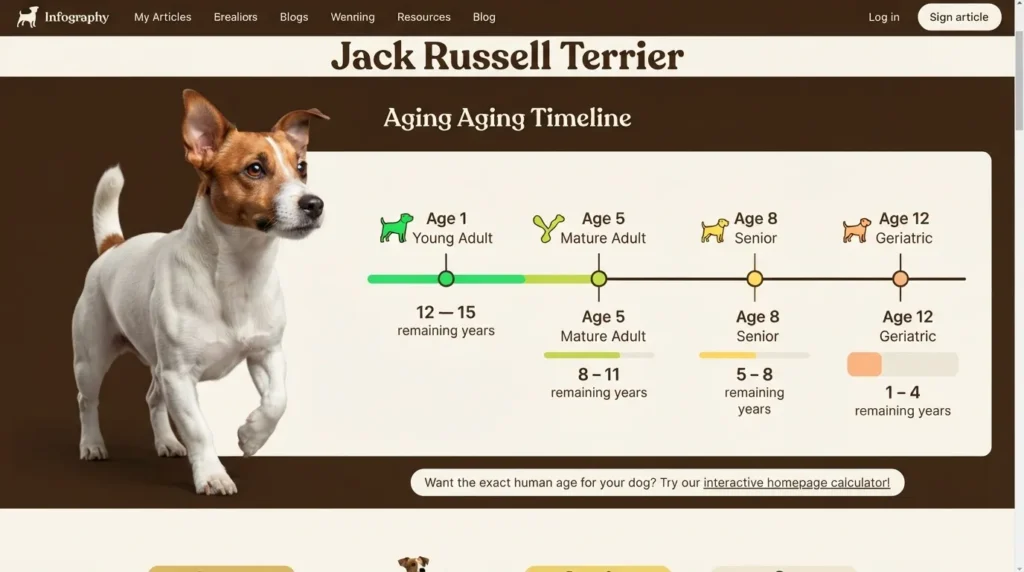
A Jack Russell’s remaining lifespan depends heavily on their current health and age milestone. If your terrier has already reached age 10 or 12 in good health, they have a strong chance of living another 3 to 6 years, easily pushing past the average breed expectancy.
To find the exact remaining years and human age equivalent for your dog’s specific age, you can use the interactive calculator on our homepage. Keeping your dog at a lean body weight and scheduling bi-annual senior vet checkups are the two most effective ways to maximize these remaining years.
Jack Russell Lifespan Compared to Other Breeds
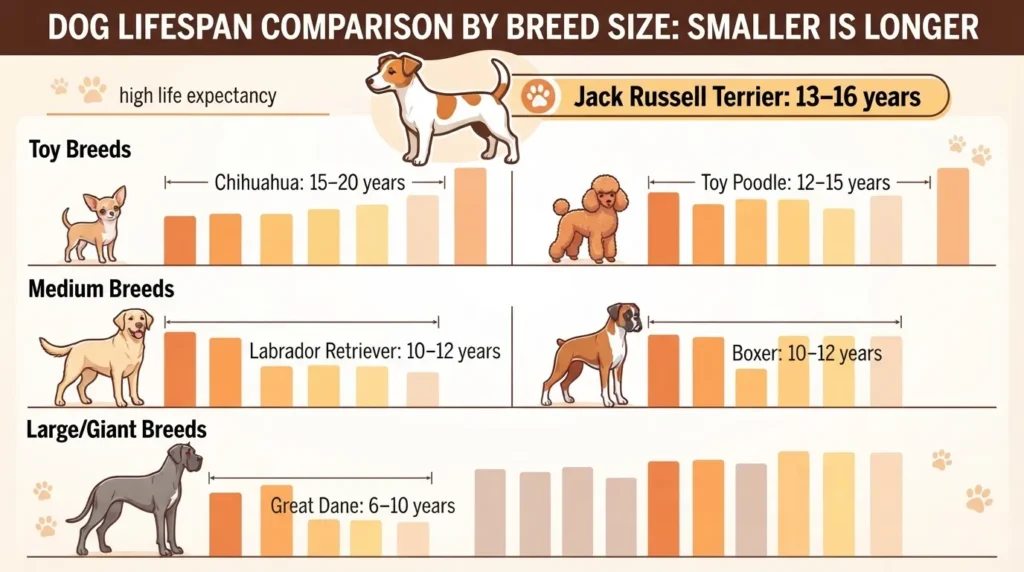
To truly understand how long-lived Jack Russell Terriers are, it helps to look at them alongside other popular dog breeds. As a general rule in veterinary medicine, smaller breeds age more slowly and enjoy longer lifespans than larger ones. Thanks to their compact size and a historically robust working gene pool, Jack Russells frequently outlive many of their canine peers.
The table below shows how the average lifespan of a Jack Russell Terrier compares to other small, medium, and large breeds:
Breed
Average Lifespan
Breed Size Category
Chihuahua
12 to 20 years
Toy / Small
Jack Russell Terrier
13 to 16 years
Small
French Bulldog
10 to 12 years
Small
Border Collie
12 to 15 years
Medium
English Springer Spaniel
12 to 14 years
Medium
Labrador Retriever
10 to 12 years
Large
German Shepherd
9 to 13 years
Large
While tiny breeds like the Chihuahua can occasionally edge them out, Jack Russells consistently rank near the top of the longevity scale for active, small-to-medium working dogs.
Jack Russell vs. Parson Russell vs. Russell Terrier — Does Lifespan Differ?
If you are confused by these three names, you are not alone. While they share a common ancestry rooted in fox hunting, kennel clubs like the AKC officially recognize them as three distinct breeds with slight variations in height, leg length, and body shape.
Fortunately, their slight physical differences do not translate to a major divide in how long they live:
Jack Russell Terrier: Typically averages 13 to 16 years. Their rectangular build and slightly shorter legs do not hinder their impressive genetic durability.
Parson Russell Terrier: Lives an average of 13 to 15 years. Built with a squarer frame and longer legs, they share the same tough, athletic lineage as the Jack Russell.
Russell Terrier: Averages 12 to 14 years. Often standing the shortest of the three, they remain incredibly hardy but tend to have a slightly tighter average lifespan window.
Ultimately, because all three breeds share a healthy, working-dog genetic foundation free from the extreme brachycephalic (flat-faced) or giant-size traits that shorten canine lives, you can expect any of these spunky terriers to remain by your side deep into their teens with the right care.
Oldest Jack Russell Terrier on Record
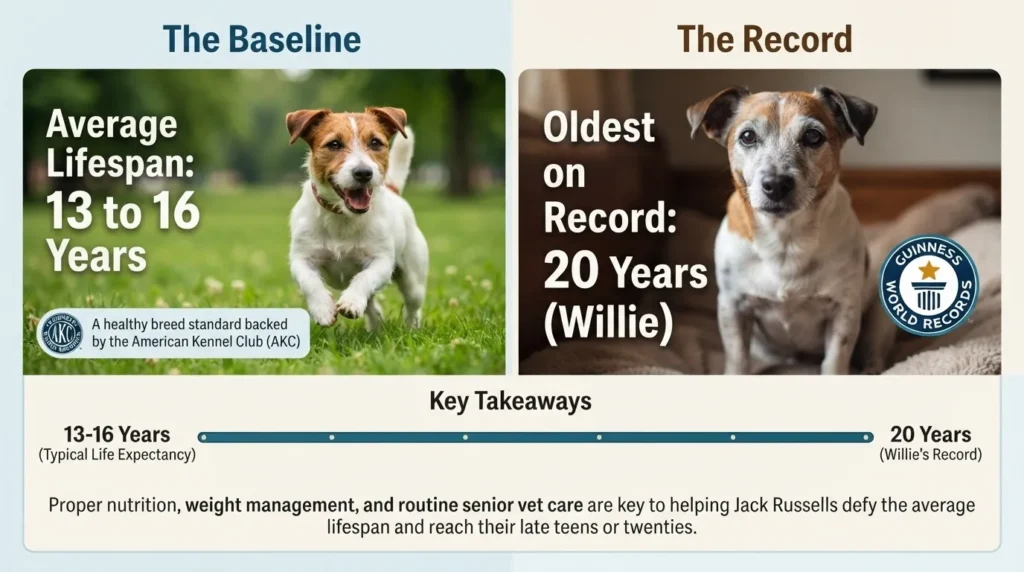
The official Guinness World Record for the oldest Jack Russell Terrier belongs to a dog named Meg, who reached an astonishing 25 years and 306 days before passing away in 2014. Another well-documented JRT named Willie lived to be 20 years and 106 days old, frequently making headlines for his longevity. While these exceptional cases are outliers, they highlight a crucial biological truth: small, high-energy working terriers possess incredible genetic resilience.
These extraordinary records reveal the maximum lifespan potential of the breed when genetics, exceptional care, and luck align perfectly. For the everyday owner, it means your Jack Russell isn’t necessarily hitting their absolute limit just because they have reached their early teens. While you shouldn’t realistically expect every dog to reach a quarter-century, these milestones prove that with proactive senior care, optimal body weight, and high-quality nutrition, the biological ceiling for a Jack Russell Terrier is remarkably high.
Factors That Affect a Jack Russell's Lifespan

While genetics lay the foundation for your Jack Russell’s longevity, their day-to-day environment and care play a massive role in whether they reach the upper end of their life expectancy. By understanding and managing these key areas, you can help your companion stay sprightly well into their double digits.
Genetics — Inherited Conditions That Can Shorten Lifespan
Jack Russells are generally a remarkably robust breed, but they are genetically predisposed to a few hereditary health issues. Left unchecked, these conditions can cause chronic pain or secondary complications that impact their overall lifespan.
Lens Luxation: This inherited eye disorder causes the lens of the eye to slip out of place. It can lead to painful secondary glaucoma and permanent blindness if not diagnosed and treated early.
Patellar Luxation: A common issue in small breeds where the kneecap slips out of its groove. Over time, this causes chronic inflammation, joint wear, and early-onset arthritis that limits their mobility.
Legg-Calve-Perthes Disease: This degenerative hip joint disease typically presents in young puppies. It cuts off blood supply to the head of the femur, requiring surgical intervention to ensure a pain-free, active life.
Diet & Nutrition
What you put in your dog’s bowl directly correlates with their energy levels and cellular health. Because Jack Russells are prone to gaining weight as they slow down, strict nutritional management is essential.
Portion Control: Even one or two extra pounds on a small terrier puts immense strain on their cardiovascular system and joints. Use a proper measuring cup for every meal rather than eyeballing the portion.
Protein Quality: Feed a high-quality, meat-first diet formulated for small breeds. This ensures they get the concentrated nutrients they need to maintain lean muscle mass without consuming empty filler calories.
Treat Limits: Limit high-calorie commercial treats. Instead, reward your terrier with low-calorie, dog-safe vegetables like green beans or cucumber slices to keep training fun but lean.
Exercise & Mental Stimulation
These terriers were bred to work hard and solve problems. Depriving a Jack Russell of physical and mental outlets can lead to chronic stress, which physically damages their immune system over time.
Daily Exercise Need: A healthy adult Jack Russell needs at least 60 to 90 minutes of active exercise daily. This should include aerobic running, fetch, and scent-tracking games to satisfy their natural instincts.
Jumping & Prey-Drive Safety: Because of their explosive vertical jump and intense prey drive, keep them on a secure harness during walks. As they transition into their senior years, limit high-impact jumping to protect their spine and joints from trauma.
Preventative Veterinary Care
According to canine healthcare guidelines from the AAHA, preventative medicine is the single most effective tool for extending a dog’s life. Catching a disease during a routine screening is far easier—and more successful—than treating it once symptoms appear.
Vaccinations: Staying current on core vaccinations protects your dog from highly contagious and life-threatening viruses like parvovirus and rabies throughout their life.
Dental Care: Periodontal disease is a silent killer. Bacteria from infected gums can enter the bloodstream, causing irreversible damage to your dog’s heart, liver, and kidneys. Daily brushing and professional cleanings are vital.
Spaying and Neutering: Spaying female dogs before their first heat cycle significantly reduces the risk of mammary tumors and completely eliminates pyometra (a life-threatening uterine infection). Neutering males prevents testicular cancer and lowers the risk of prostate infections.
Frequently Asked Questions
Yes, for lifespan calculations, they are virtually identical. Both breeds share the same genetic heritage, small working-dog frame, and high-energy lifestyle, resulting in the exact same expected lifespan range of 13 to 16 years under normal health conditions.
Yes, 15 years old is considered geriatric, placing a dog at the upper end of the typical 13 to 16-year life expectancy of a Jack Russell Terrier. Reaching 15 means your terrier has received excellent care and strong genetics, roughly translating to the mid-70s in human ter
Veterinary aging science shows that small breeds age at a slower biological rate compared to large breeds. Jack Russells carry a lower risk of early-onset joint issues, large-organ failure, and rapid cellular aging that frequently affects bigger dogs, allowing their bodies to sustain energy much longer.
According to the American Animal Hospital Association (AAHA) canine life stage guidelines, a Jack Russell Terrier enters their senior years around 8 to 9 years old. Because they are a small breed, they reach senior status a few years later than larger dogs, though you might not see them slowing down immediately.

Gulfam Haider Mehdi
Founder & Developer
I built Dogagescalculator.com to give dog owners honest, science-backed answers instead of the outdated "×7" myth. Every figure here is checked against AKC, AVMA, and published veterinary research.
More about the author & this site →📌 Featured Guides
How to Tell How Old a Bird Is
→
what is the lifespan of an english bulldog
→
what is the lifespan of a dachshund dog
→
What Is the Lifespan of a Labrador Retriever
→
chihuahua corgi mix dog
→
yorkie mix breeds
→
how long can a puppy hold their pee
→
how long does it take a chihuahua to give birth
→
what age is a golden retriever full grown
→
mutt dog breed
→
Comments