
9 Human Years to Dog Years – Full Conversion Guide & Calculator
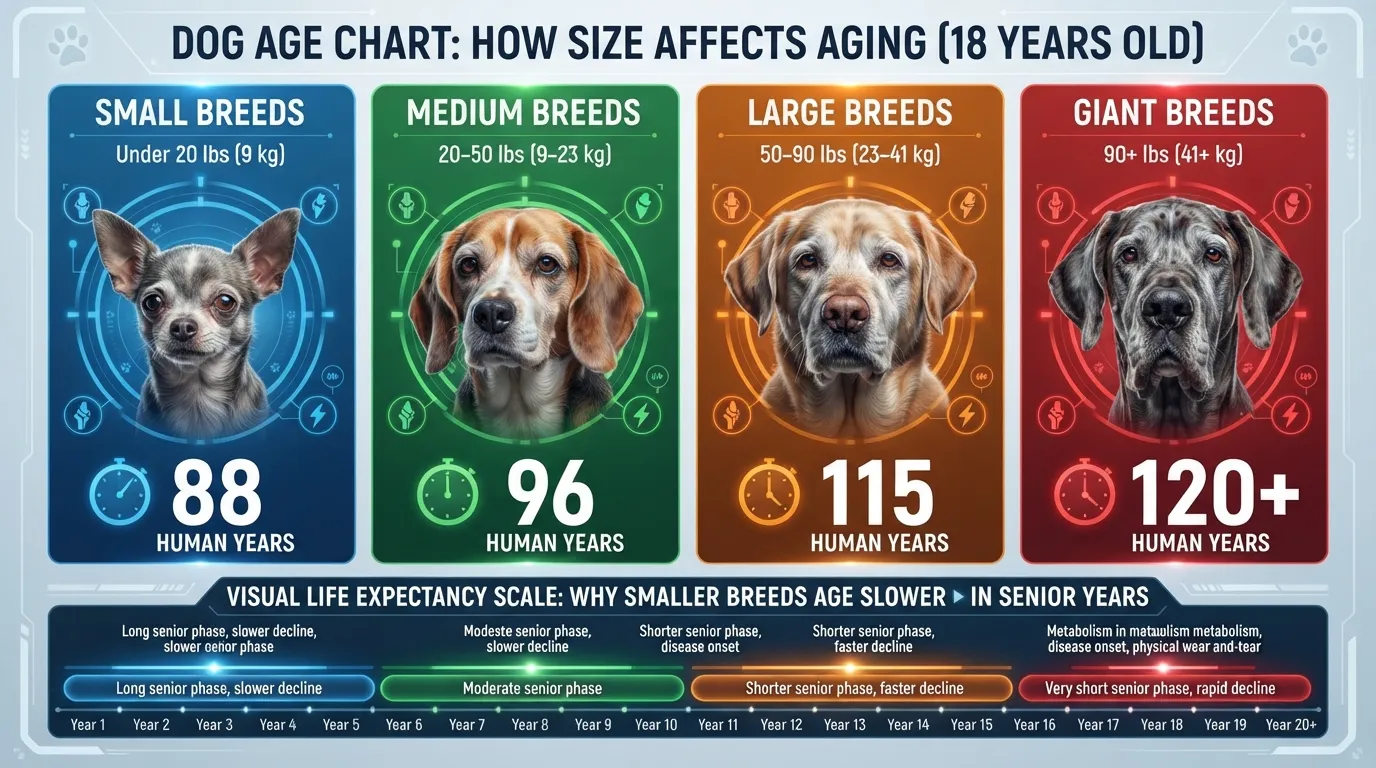
A 9-year-old dog is roughly 52 to 67 human years old, depending on its size and breed. Small dogs age slower, placing a 9-year-old pup around 52 human years, while giant breeds reach about 67. Conversely, 9 human years in true dog aging equal roughly 1.3 dog calendar years, since dogs complete their early development in their first 12 to 15 months.
Depending on what brought you here today, you are likely asking one of two questions:
“My dog is 9 calendar years old. How old are they in human years?” Your dog is officially entering their senior stage, which translates to a human in their mid-50s to late 60s.
“How old is a dog if it has lived for 9 ‘human equivalent’ years?” That equals a juvenile dog around 15 to 18 months old that is just finishing physical growth.
Skip the manual math—select your dog’s weight and exact birthday in our instant conversion tool to get their precise biological age based on updated AAHA aging guidelines.
What Is a Dog Year? Simple Explanation
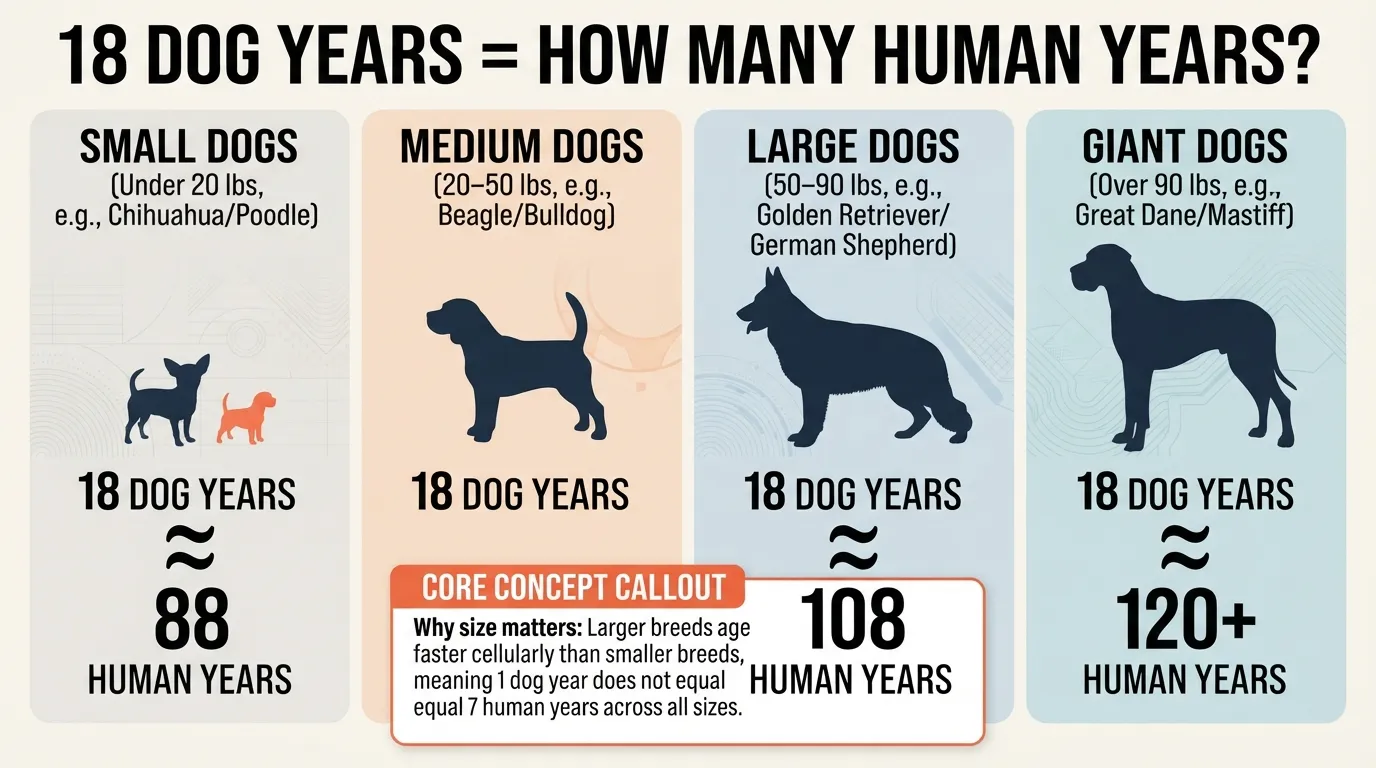
A “dog year” is a non-scientific term used to describe a dog’s age in terms of human physiological maturity. Because canines grow, age, and reach biological milestones much faster than people do, one calendar year of a dog’s life covers significantly more developmental ground than 12 months in a human’s life. Calculating a dog year essentially scales their life stage—infancy, adolescence, adulthood, and senior status—to match equivalent human ages.
Why Dogs Age Faster Than Humans
Dogs age at an accelerated rate because their metabolic processes, cellular turnover, and hormonal growth cycles occur far more rapidly than ours. A puppy reaches sexual and physical maturity within its first 1 to 2 years of life, compressing a decade and a half of human pediatric development into a single orbit around the sun.
9-Year-Old Dog in Human Years Standard Calculation
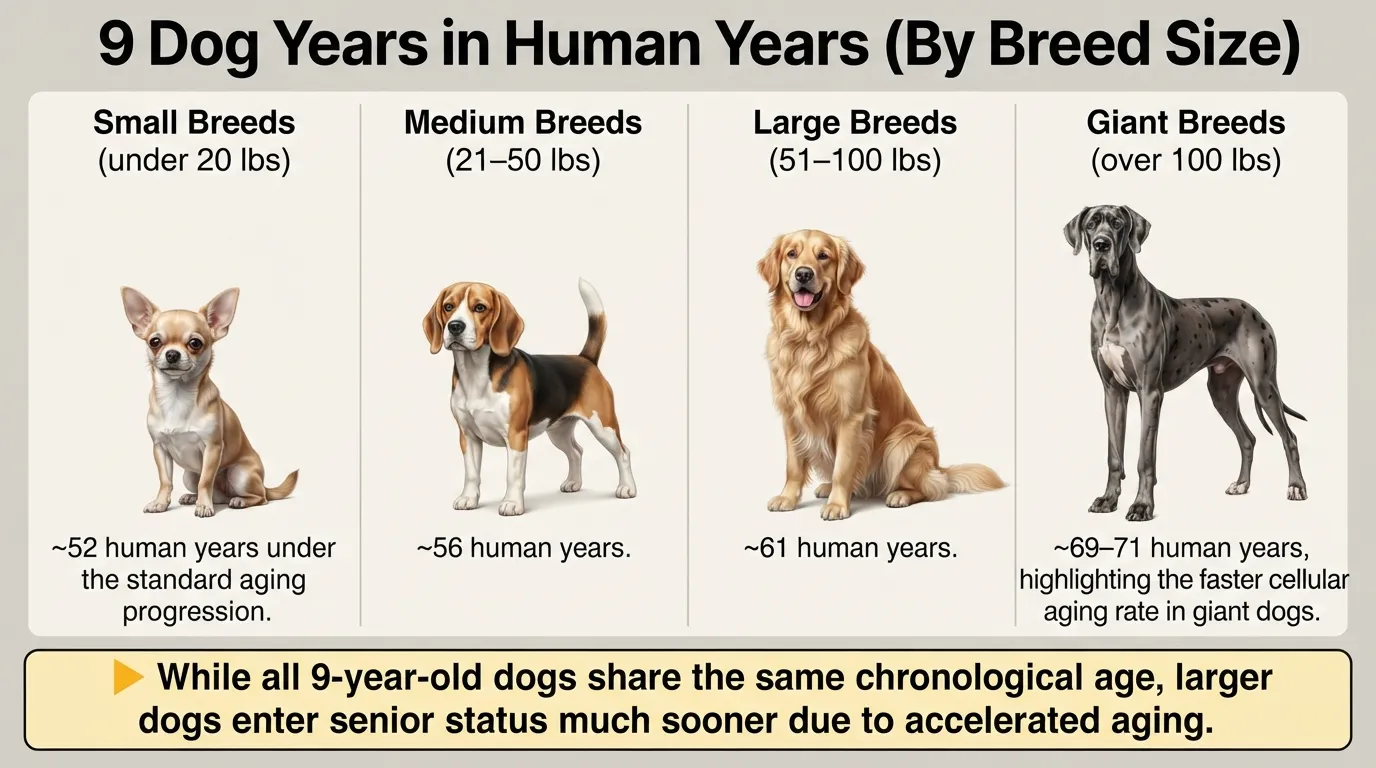
A 9-year-old dog is roughly equivalent to a 52- to 67-year-old human, depending on their weight and breed size. While many owners rely on simple arithmetic to gauge their pet’s age, modern veterinary medicine uses a non-linear approach to reflect actual biological aging.
The Old “Multiply by 7” Rule (Why It’s Outdated)
Origin of the rule: The 7:1 ratio originated as a marketing strategy and crude statistical average in the mid-20th century. It simply divided the average human lifespan (roughly 70 years) by the average canine lifespan (roughly 10 years).
Why vets don’t use it anymore: The 7-year myth assumes dogs age at a constant rate throughout their lives. In reality, a puppy matures at a breakneck speed during its first two years, then aging slows down significantly—a developmental pattern the linear 7-year formula completely misses.
AVMA/AAHA Official Formula
The American Veterinary Medical Association (AVMA) and the American Animal Hospital Association (AAHA) use a revised life-stage framework that accurately mirrors canine biological development:
First year: The first 12 calendar months of a dog’s life equal roughly 15 human years, accounting for rapid infancy and pubertal growth.
Second year: The second calendar year adds about 9 human years (making a 2-year-old dog roughly 24 in human terms).
Subsequent years: Each year after age 2 adds roughly 4 to 5 human years, depending heavily on the dog’s adult size and weight class.
Applied to a 9-year-old dog: Starting from the baseline of 24 human years at age 2, adding 5 human years for each of the remaining 7 years yields a baseline calculation of 59 human years ($24 + [7 \times 5] = 59$).
Dog Age Chart by Size
Because larger breeds experience higher physiological strain as they age, weight plays a crucial role in determining your 9-year-old dog’s precise human equivalent.
| Dog's Calendar Age | Small Breeds (<20 lbs) | Medium Breeds (21–50 lbs) | Large Breeds (51–90 lbs) | Giant Breeds (>90 lbs) |
|---|---|---|---|---|
| 7 Years | 44 human years | 47 human years | 50 human years | 56 human years |
| 8 Years | 48 human years | 51 human years | 55 human years | 64 human years |
| 9 Years | 52 human years | 56 human years | 61 human years | 71 human years |
| 10 Years | 56 human years | 60 human years | 66 human years | 78 human years |
| 11 Years | 60 human years | 65 human years | 72 human years | 86 human years |
9 Human Years to Dog Years Reverse Calculation
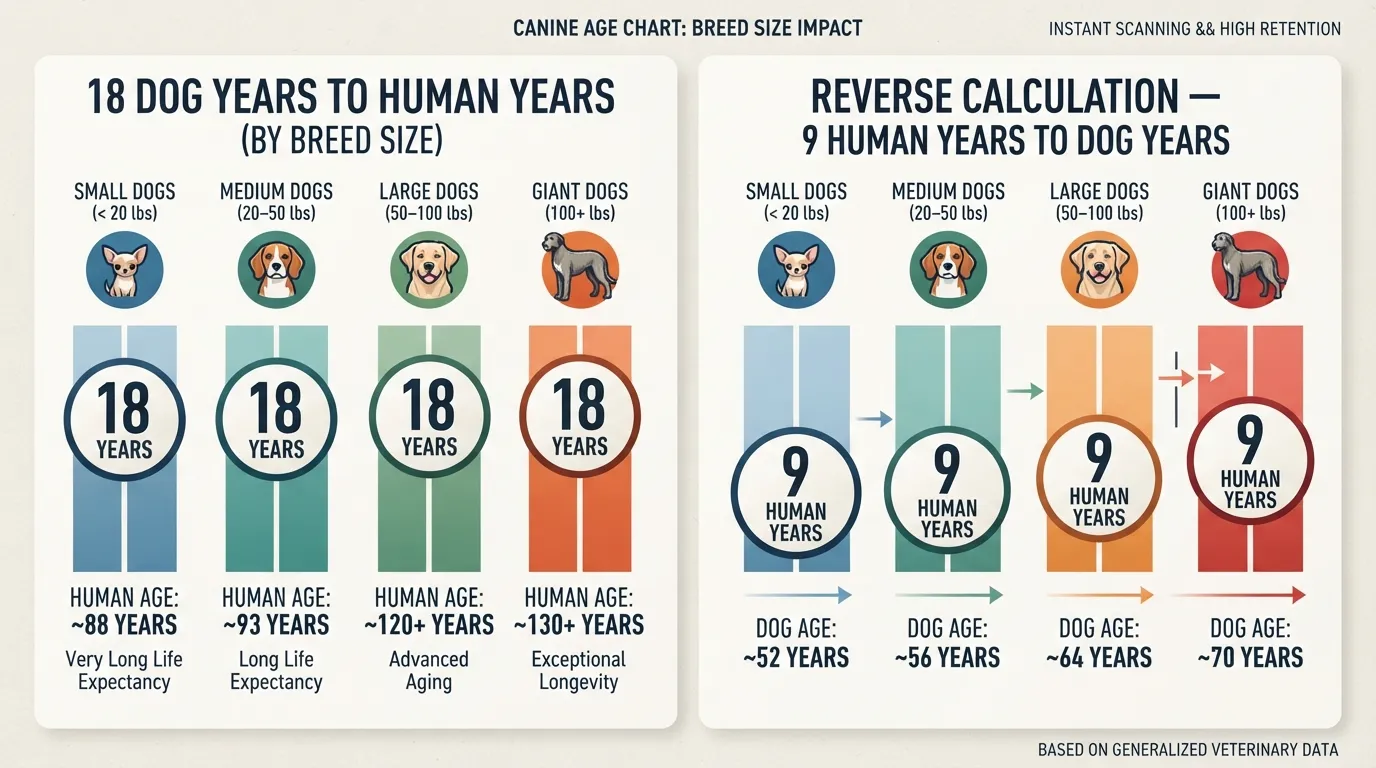
Converting 9 human years into dog age requires flipping the standard aging formula on its head. When dog owners ask this question, they are usually trying to understand what a 9-year-old human’s life stage looks like in canine terms. A 9-year-old child translates to a young adolescent dog between 15 and 18 months old—a stage where physical growth is wrapping up, but adult behavioral maturity is still developing.
How the Reverse Formula Works
First, you have to account for the rapid first year. Because a dog’s first calendar year covers roughly 15 human years of biological development, a 9-year-old human child has not yet reached the equivalent of a full 1-year-old dog.
To calculate the fractional first year, you divide the human age by 15. In this case, 9 divided by 15 equals 0.6 of a dog’s first year.
Next, to convert this into calendar months, multiply 0.6 by 12 months. This gives you 7.2 months.
Determining the actual life stage involves two perspectives. Mathematically, 9 human years equals a 7-month-old puppy. However, if you look at it from a lifespan perspective—where a 9-year-old human is roughly 12 percent through a average 75-year lifespan—it mirrors a 15-to-18-month-old dog reaching early adult maturity.
Reverse Conversion Table (Human Age to Dog Age)
This table maps human ages to their equivalent canine developmental age and calendar lifespan.
| Human Age | Equivalent Dog Age | Canine Life Stage |
|---|---|---|
| 3 Human Years | 2.4 months | Weaning / Early Socialization |
| 5 Human Years | 4.0 months | Late Puppyhood / Teething |
| 9 Human Years | 7.2 months (or ~15–18 mos. by life-stage ratio) | Adolescence / Sexual Maturity |
| 18 Human Years | 1.2 to 1.5 calendar years | Young Adult |
| 30 Human Years | 3.2 to 3.5 calendar years | Fully Mature Adult |
| 50 Human Years | 7.5 to 8.5 calendar years | Early Senior |
| 70 Human Years | 11 to 13 calendar years | Senior / Super Senior |
The Science Behind Dog Years – Epigenetic Clock Formula
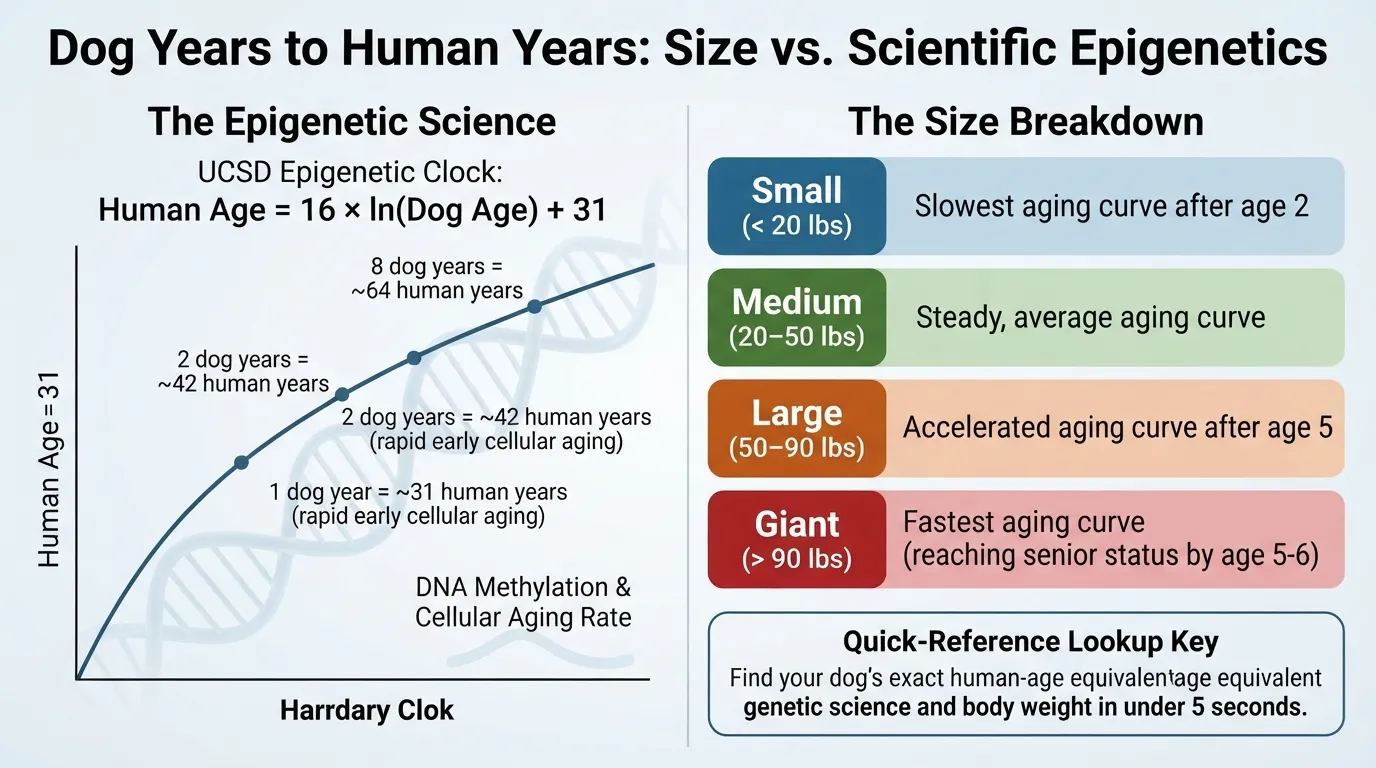
Recent breakthroughs in genetics have shifted how veterinarians look at canine aging, replacing rule-of-thumb guesswork with molecular science. Instead of relying purely on calendar years, researchers can now track aging directly at the cellular level by measuring chemical modifications to a dog’s DNA.
The UC San Diego DNA Methylation Study
A landmark study led by researchers at the University of California, San Diego (UCSD) mapped the canine epigenetic clock by analyzing DNA methylation patterns in dogs over time. As both dogs and humans age, small methyl groups attach to specific DNA sequences. These act like biological markers that reveal an organism’s true physiological age.
By comparing these methylome changes in dogs to those in humans, researchers developed a logarithmic formula to match canine biological milestones directly to human equivalent years. The mathematical formula calculates Human Equivalent Age as 16 multiplied by the natural logarithm of the Dog’s Age in Years, plus 31.
This formula completely changes the traditional narrative. The natural log function proves that dogs age extremely rapidly in infancy and youth, but their biological aging curve flattens out significantly as they mature into adulthood.
Applied Example: Understanding a 9-Year-Old Dog
Applying the UCSD formula to a 9-year-old dog illustrates how cellular aging slows down after early puppyhood. First, you calculate the natural logarithm of 9, which equals approximately 2.197. Next, multiplying 2.197 by 16 gives 35.15. Finally, adding 31 to 35.15 results in a total of 66.15 human years.
Under this genetic model, a 9-year-old dog has a biological age equivalent to a 66-year-old human. In contrast, a 1-year-old puppy already reaches an impressive 31 human years under the exact same calculation. This clearly demonstrates that cellular aging is heavily front-loaded in a dog’s early life before settling into a steadier, slower pace during their senior years.
Is 9 Years Old for a Dog Considered Senior?
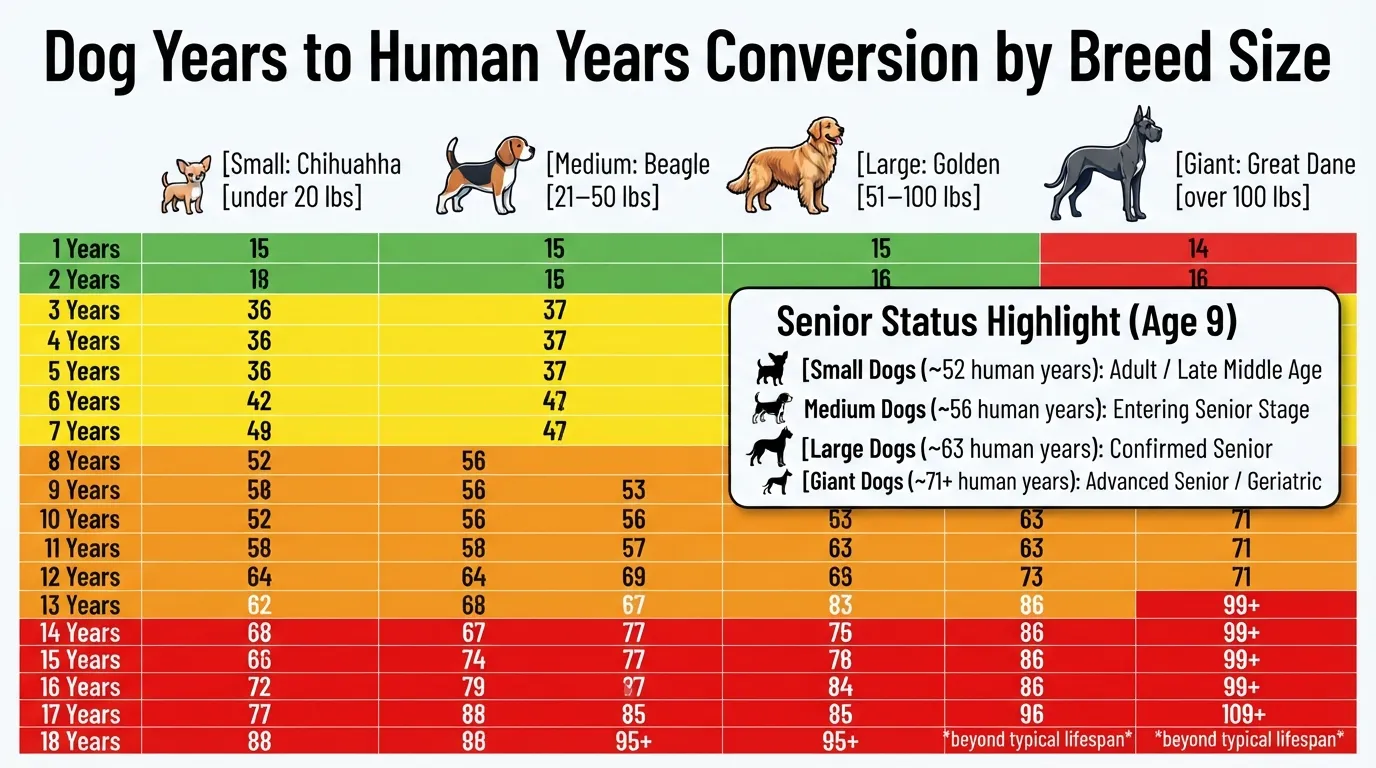
Yes, a 9-year-old dog is considered a senior across virtually all breed sizes, though the exact physiological stage of senior hood varies significantly. While a 9-year-old Toy Poodle is just entering their mature senior years (roughly equivalent to 52 human years), a 9-year-old Great Dane is well into their geriatric or “super senior” phase (roughly equivalent to 71+ human years).
Dog Life Stages Chart
According to guidelines established by the American Animal Hospital Association (AAHA), a dog’s life is split into four primary biological stages:
| Life Stage | Age Span (General) | Physiological Characteristics |
|---|---|---|
| Puppy | 0 to 1 year | Rapid physical development, high energy, sexual & growth maturity. |
| Young Adult | 1 to 3 years | Reaches full adult height/weight; behavioral consolidation. |
| Mature Adult | 3 to 6 years | Prime health, peak physical condition, steady routine. |
| Senior | 7+ years | Biological slowing, metabolic shifts, higher health-monitoring needs. |
Small vs Large Breed Senior Age Comparison
A dog’s weight directly impacts cellular stress and metabolic rate, which dictates when they cross the threshold into their senior years.
Small Breeds (<20 lbs): Reach senior status around 8 to 10 years old. At 9 years, they are in early senior status with plenty of active years remaining.
Medium Breeds (21–50 lbs): Cross into senior status at 7 to 8 years old. A 9-year-old medium dog is comfortably settled into late adulthood.
Large Breeds (51–90 lbs): Enter senior status around 6 to 7 years old. At 9 years, they require dedicated senior care and routine preventive checks.
Giant Breeds (>90 lbs): Considered senior by 5 years old. A 9-year-old giant breed has reached an advanced geriatric stage.
Signs of Aging at 9 Years
At 9 calendar years, subtle physical and behavioral changes often begin to surface. Catching these early allows you to adjust diet, exercise, and routine care:
Graying muzzle and face: Pigment loss in hair follicles around the snout, chin, and eyes is often the first visible marker of chronological aging.
Reduced activity and stamina: Your dog may take longer to rise after naps, show less enthusiasm for long runs, or sleep more throughout the afternoon.
Joint stiffness and mobility changes: Cartilage wear can cause subtle stiffness after rest, hesitation before jumping onto furniture or into cars, or a slower pace on daily walks.
Average Dog Lifespan by Breed & Size
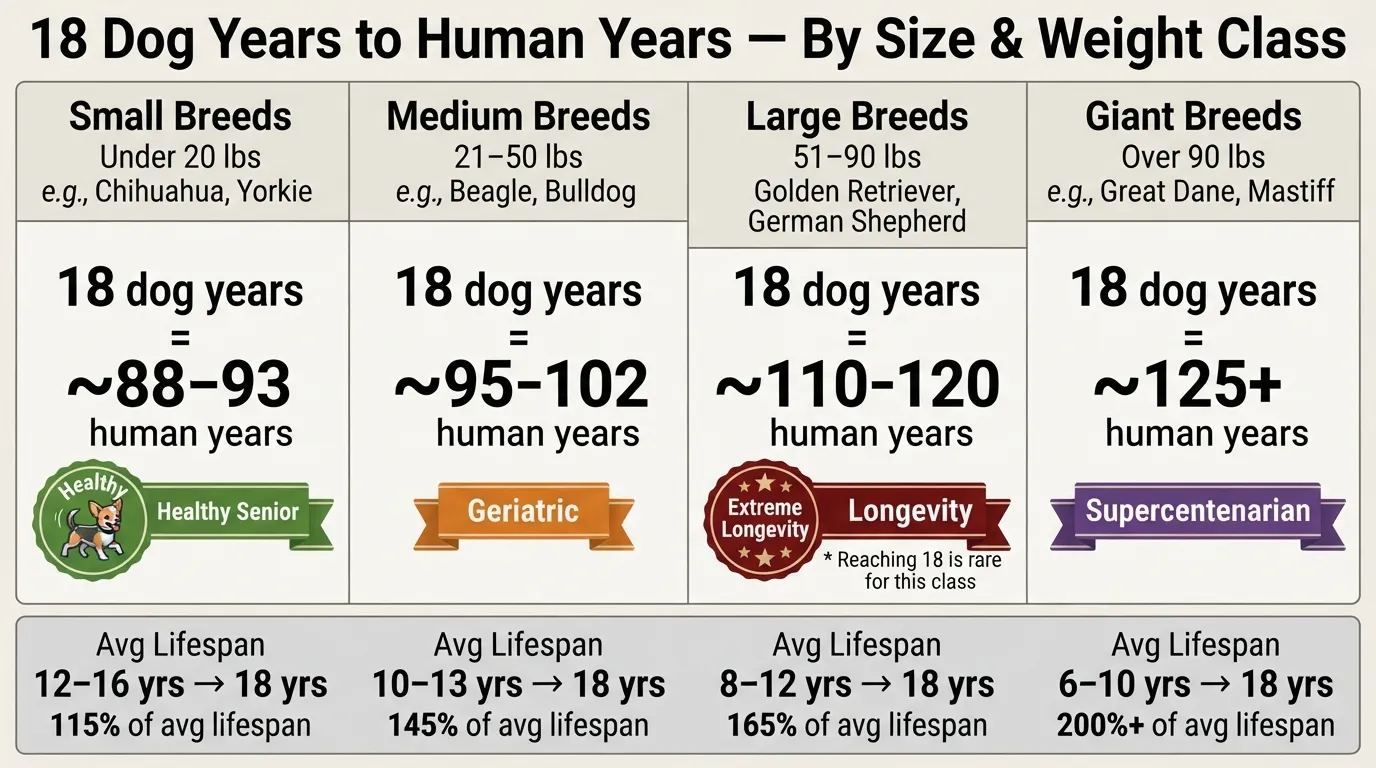
The overall lifespan of a canine is overwhelmingly driven by body mass and breed genetics. While humans generally expect larger individuals to live comparable lifespans, domestic dogs exhibit an inverted pattern: smaller breeds consistently outlive giant breeds. A 9-year-old Toy Poodle is typically just beginning its senior transition, whereas a 9-year-old Great Dane has surpassed the average life expectancy for its breed.
Average Total Lifespan (Years) by Breed Size
Veterinary epidemiological data shows a clear inverse relationship between adult body weight and overall canine longevity.
| Breed Category | Weight Range | Average Lifespan | Common Examples |
|---|---|---|---|
| Toy Breeds | Under 10 lbs | 14 – 16+ years | Chihuahua, Yorkshire Terrier, Toy Poodle |
| Small Breeds | 10 – 20 lbs | 13 – 15 years | Dachshund, Shih Tzu, Boston Terrier |
| Medium Breeds | 21 – 50 lbs | 11 – 13 years | Beagle, Border Collie, Cocker Spaniel |
| Large Breeds | 51 – 90 lbs | 9 – 12 years | Golden Retriever, Labrador Retriever, German Shepherd |
| Giant Breeds | Over 90 lbs | 7 – 10 years | Great Dane, Mastiff, Saint Bernard |
Can a Dog Live 30 Years?
Yes, a dog can theoretically live close to 30 years, but reaching three decades is an extremely rare biological anomaly. The official Guinness World Record for the oldest verified dog belongs to Bluey, an Australian Cattle Dog who lived 29 years and 5 months (1910–1939). While unverified claims of dogs reaching 30 or 31 years exist, average canine physiology makes surviving past 20 years extraordinary, occurring in less than 0.1% of the global dog population.
Why Do Small Dogs Age Slower Than Large Dogs?
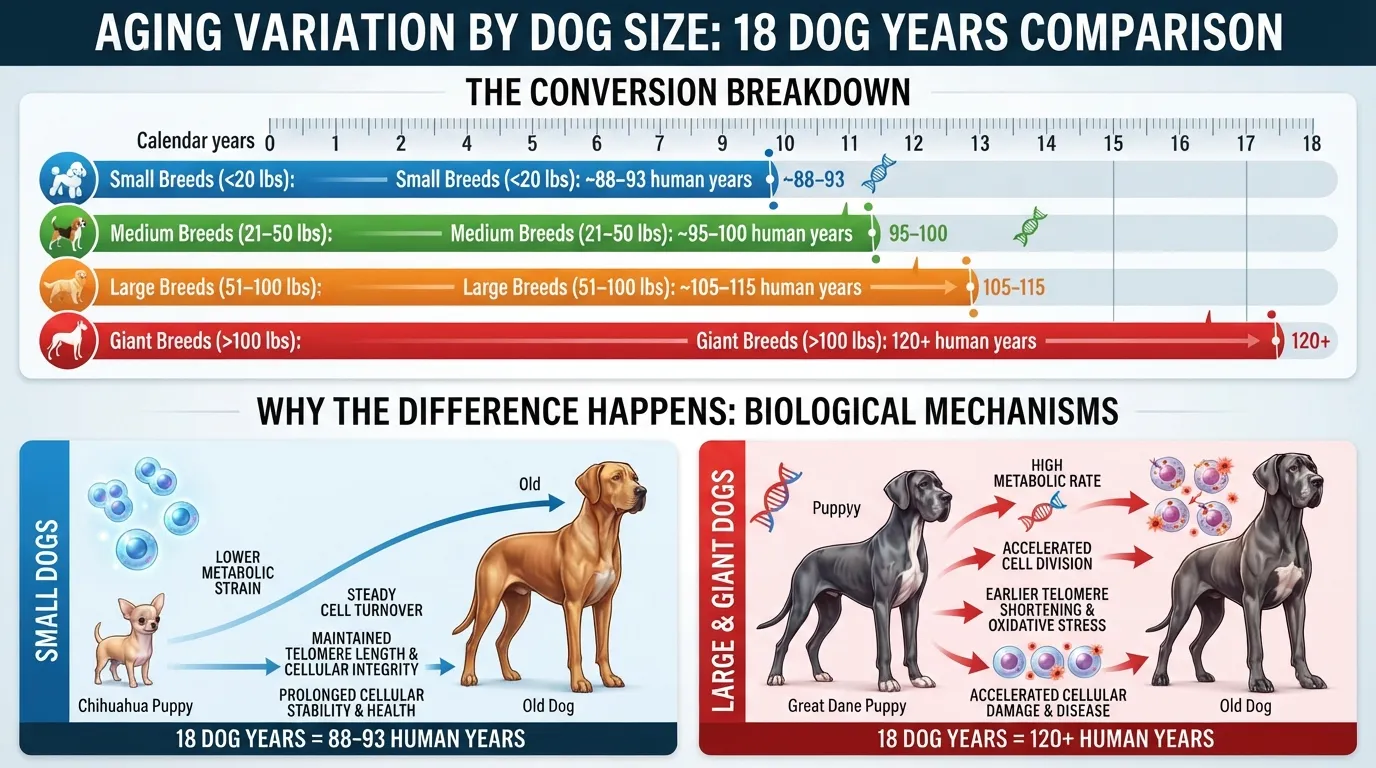
Across the wider animal kingdom, larger mammals typically live longer than smaller ones—an elephant drastically outlives a mouse. However, domestic dogs (Canis lupus familiaris) invert this rule. Within the same species, smaller individuals age at a noticeably slower pace and enjoy longer lifespans than giant breeds.
A landmark evolutionary biology study led by Dr. Cornelia Kraus at the University of Göttingen analyzed data from over 56,000 dogs across 74 breeds. The researchers concluded that large dogs age at an accelerated rate, living their adult lives in fast-forward. The study revealed that for every 4.4 pounds (2 kg) of additional body mass, a dog’s life expectancy decreases by roughly one month.
The Physiological Mechanism: Accelerated Growth and IGF-1
The secret behind this rapid aging comes down to growth speed, cellular turnover, and hormonal activity:
Extreme Growth Pace: A Great Dane puppy explodes from 1 to 2 pounds at birth to over 100 pounds in its first year—a weight increase of up to 10,000%. A Chihuahua puppy only needs to gain a few pounds to reach full maturity.
Elevated Growth Hormones: Large-breed puppies produce far higher levels of Insulin-like Growth Factor 1 (IGF-1). While IGF-1 fuels rapid skeletal and muscle growth, high levels of this hormone are strongly linked to accelerated cellular aging and shorter lifespans across multiple species.
Free Radical Damage: Rapid growth requires relentless cell division. This intense metabolic workload generates high levels of reactive oxygen species (free radicals), creating oxidative stress that damages cellular DNA and speeds up physiological decline.
Abnormal Cell Growth Risks: Because large dogs undergo millions more cell divisions during early development, their likelihood of developing cellular mutations increases dramatically. This explains why giant breeds suffer higher rates of age-related conditions like cancer early in life compared to small dogs.
Watch: Dog Years Explained (Video Guide)
1. The Truth About Dog Years — SciShow
2. How to Calculate Dog Years — Dr. David Randall
3. How Old Is My Dog in Dog Years? — Animal Facts
4. Dog Year Calculation (Step-by-Step Instructions)
5. Your Dog's Age in Human Years — Quick Guide
Calculating your dog’s age manually gives you a rough estimate, but our custom interactive tool handles the complex biological variables for you in seconds. By combining official AAHA life-stage guidelines with breed-specific metabolic data, our calculator delivers a far more precise biological age profile than simple mental math can provide.
How to Use It
Select your dog’s breed size: Choose whether your dog is a small (<20 lbs), medium (21–50 lbs), large (51–90 lbs), or giant breed (>90 lbs).
Enter their exact calendar age: Input your dog’s birthday or current age in years and months for pinpoint accuracy.
Get your detailed breakdown: View your dog’s exact equivalent age in human years, current life stage, and customized senior care recommendations instantly.
Why It’s More Accurate Than Manual Formulas
Eliminates linear math errors: Unlike old rules of thumb that apply a static ratio across all years, our calculator accounts for the rapid development during years 1 and 2, followed by the slowed aging rate of adult maturity.
Integrates breed weight dynamics: Large and giant breeds experience higher metabolic strain and age at an accelerated rate compared to smaller dogs; our algorithm automatically adjusts the conversion curve based on weight class.
Reflects modern genetic models: The calculator incorporates logarithmic scaling principles derived from recent DNA epigenetic studies, ensuring your result aligns with modern veterinary science rather than mid-century guesswork.
Frequently Asked Questions
How old is 9 human years in dog years?
A 9-year-old human child translates to an adolescent dog roughly 15 to 18 months old in terms of life stage and physical maturity. Mathematically, 9 human calendar years equal about 7 months of a dog’s rapid first-year development ($0.6 \text{ dog years}$).
How old is a 9 year old dog?
A 9-year-old dog is between 52 and 71 human years old, depending on their breed size. Small dogs are around 52 human years, medium breeds are 56, large dogs reach 61, and giant breeds equal roughly 71 human years.
How old is 200 years in dog years?
A human age of 200 years translates to roughly 25 to 30 dog calendar years, depending on size and biological aging curves. Conversely, if a dog could live 200 calendar years, it would equal over 1,000 human years.
Is 9 years long for a dog?
Yes, 9 years represents a significant portion of a dog’s life. While small breeds living 14 to 16 years are in early seniorhood at age 9, giant breeds like Great Danes have already surpassed their average life expectancy by age 9.
Can a dog live 30 years?
Yes, but reaching 30 years is exceptionally rare. The official Guinness World Record belongs to Bluey, an Australian Cattle Dog who lived 29 years and 5 months. Surviving past 20 calendar years occurs in less than 0.1% of all dogs.
What is “I love you” in dog language?
Dogs express love through subtle body language rather than vocalizations. Key signs include soft, steady eye contact (releasing oxytocin), gentle leaning against your legs, tail wags paired with a relaxed posture, bringing you their favorite toys, and sleeping close to you.
Key Takeaways
The 7-Year Rule Is Obsolete: Modern veterinary science uses non-linear life-stage models because dogs mature rapidly in their first two years and age at a slower, steadier rate as adults.
Size Dictates Biological Age: At 9 calendar years old, small dogs are roughly 52 human years, medium dogs are 56, large dogs are 61, and giant breeds reach 71+ human years.
Reverse Conversion (Human to Dog): A 9-year-old child represents the developmental life stage of a young adolescent dog between 15 and 18 months old.
Genetic Aging Clock:
University of California studies show cellular aging slows over time, following the epigenetic formula:
Human Age = 16 × ln(Dog Age) + 31
Senior Status at 9: All 9-year-old dogs have entered their senior phase, requiring tailored nutritional care, weight monitoring, and routine veterinary checkups to support joint and metabolic health.
References & Further Reading
American Veterinary Medical Association (AVMA): Senior Pet Care Guidelines and Age Conversion Resources (avma.org)
American Animal Hospital Association (AAHA): Canine Life Stage Guidelines & Aging Framework (aaha.org)
American Kennel Club (AKC): Epigenetic Aging Clock & Canine Genetic Studies Overview (akc.org)
🐾 Other Age Guides

I built Dogagescalculator.com to give dog owners honest, science-backed answers instead of the outdated "×7" myth. Every figure here is checked against AKC, AVMA, and published veterinary research.
More about the author & this site →
Comments