
What Is the Life Span of a Blue Heeler
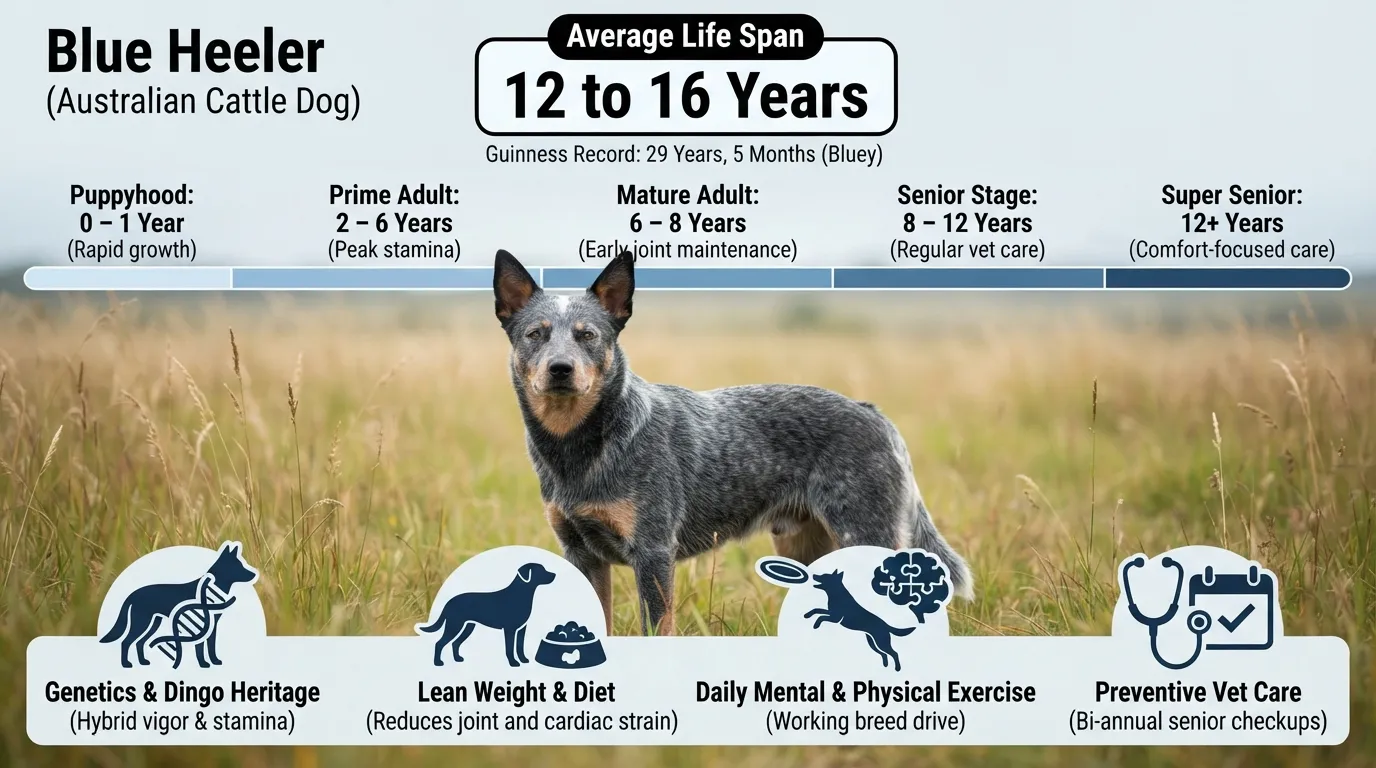
If you’re wondering how long Blue Heelers live, you’re not alone. The Australian Cattle Dog, commonly known as a Blue Heeler, is a hardy and active breed known for its intelligence, stamina, and strong working ability. These dogs were developed for demanding work and are generally known for their robust, athletic build.
The typical Blue Heeler lifespan is around 12–16 years, although individual dogs can live shorter or longer depending on genetics, overall health, nutrition, body weight, exercise, and veterinary care. Some Australian Cattle Dogs live into their late teens, but reaching this age is considered exceptional rather than typical.
So, how long do Blue Heelers live? A healthy Blue Heeler can often live well beyond a decade. As the dog gets older, however, regular veterinary checkups and closer monitoring of weight, dental health, joints, vision, hearing, and other age-related changes become increasingly important.
Blue Heeler Lifespan at a Glance
The table below gives a quick overview of the Blue Heeler life expectancy and the main factors that can influence how long an Australian Cattle Dog lives.
| Lifespan Factor | What to Know |
|---|---|
| Typical Lifespan | About 12–16 years |
| Breed | Australian Cattle Dog (Blue Heeler) |
| Size | Medium-sized |
| Senior Years | Older dogs need closer health monitoring |
| Main Lifespan Factors | Genetics, healthy weight, nutrition, exercise, and preventive veterinary care |
| Exceptional Longevity | Some individuals live into their late teens |
Lifespan can vary significantly between individual Blue Heelers. A dog with good genetics, a healthy body condition, appropriate nutrition, regular physical and mental activity, and consistent veterinary care may have a better chance of reaching the upper end of the expected lifespan.
What This Blue Heeler Lifespan Guide Covers
In this guide, you’ll learn more about Blue Heeler life expectancy, including how long male and female Blue Heelers typically live, common health problems that can affect longevity, and the factors that may influence lifespan.
You’ll also learn what to expect as your Australian Cattle Dog enters its senior years and practical ways to support your Blue Heeler’s health, mobility, and quality of life throughout each stage of aging.
Quick Answer: Blue Heeler Average Life Span
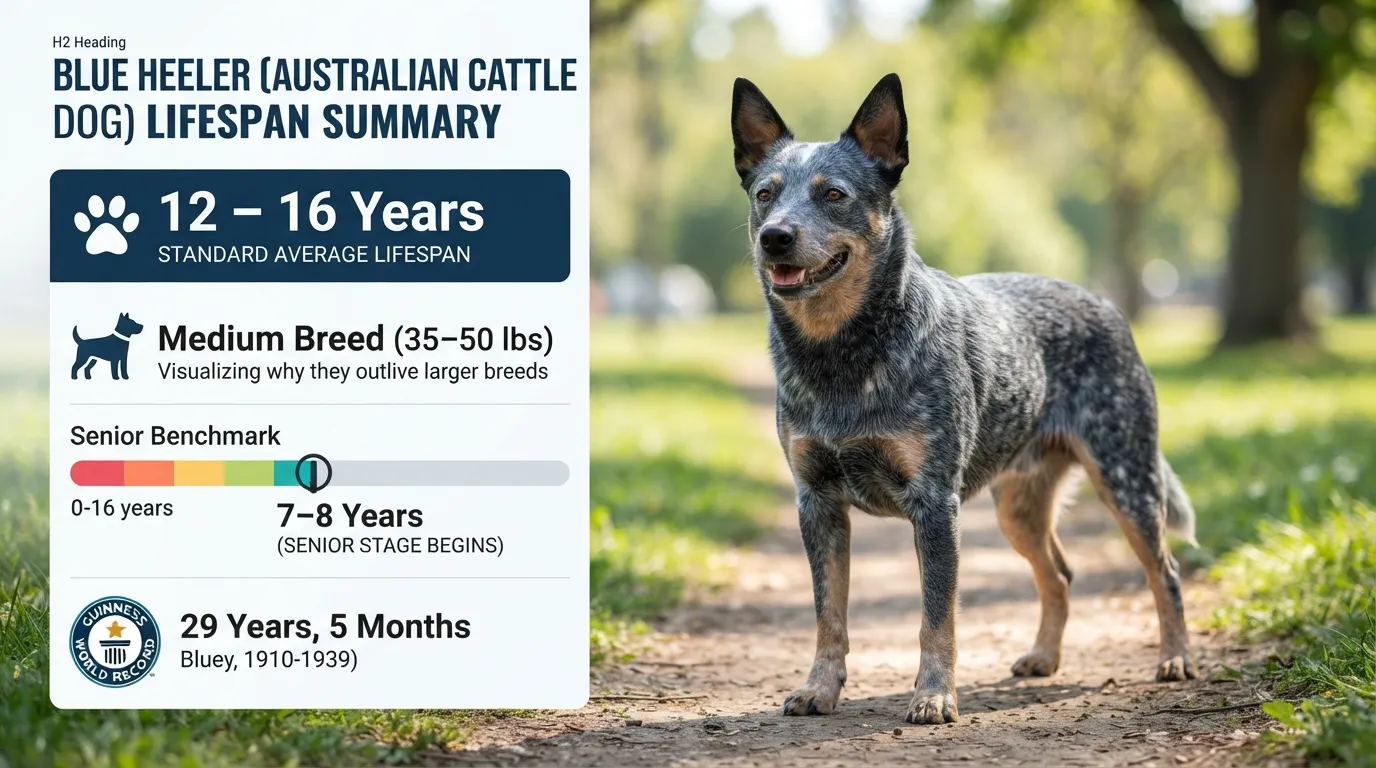
According to the American Kennel Club (AKC), the average lifespan of a Blue Heeler (Australian Cattle Dog) is 12 to 16 years. Thanks to their high energy, athletic build, and working breed genetics, Heelers generally outlive many other medium-sized dogs when provided with proper nutrition and exercise.
Blue Heeler Lifespan at a Glance
Average Lifespan: 12–16 years (AKC baseline)
Oldest Recorded: 29 years, 5 months (Bluey, Guinness World Record)
Becomes Senior At: 7–8 years old (AAHA Senior Life Stage Guidelines)
Why Different Sources Give Different Numbers (10–13 vs 12–16 Years)
If you have seen conflicting lifespan estimates across different pet websites, you are not alone. Some database reports cite a tighter range of 10 to 13 years, while major kennel clubs and veterinary groups state 12 to 16 years.
This variance comes down to three main factors:
Data Collection Methods: Academic health surveys often rely on owner reporting or veterinary hospital admissions, which naturally skew toward sick or injured dogs. Kennel clubs base their estimates on general healthy population data.
Sample Size and Geography: UK and European longevity studies frequently analyze smaller local sample sizes, whereas US and Australian registries aggregate broader working-breed census data.
Purebred vs. Mixed Lineage: Working line Blue Heelers bred for livestock management tend to have fewer hereditary health issues than backyard-bred or pure show-line dogs, shifting median lifespan figures.
| Source / Organization | Lifespan Range Cited | Primary Data Type |
| American Kennel Club (AKC) | 12 – 16 Years | Breed registry standard & breeder data |
| UK Kennel Club / VetCompass Study | 11.7 Years (Median) | Veterinary clinic record analysis |
| PetMD / Chewy Health | 12 – 15 Years | Clinical veterinary consensus |
| Royal Canin / Animal Health Databases | 10 – 13 Years | Broader mortality survey averages |
Blue Heeler vs Red Heeler — Does Coat Color Affect Life Span?
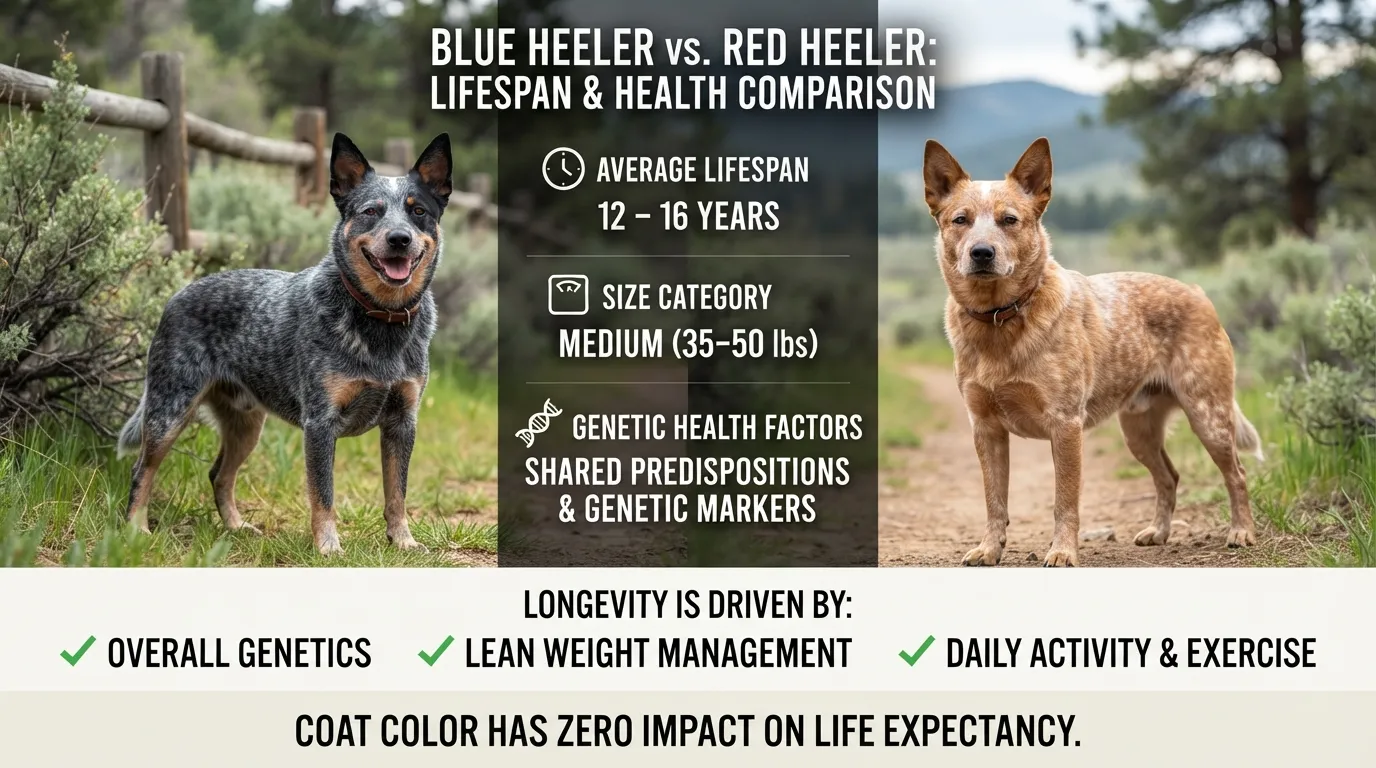
Blue Heelers and Red Heelers are simply two color variations of the exact same breed: the Australian Cattle Dog. Neither color variant holds a genetic advantage over the other when it comes to longevity.
Whether your dog sports a blue-speckled coat or a red-mottled one, their life expectancy remains identical—averaging 12 to 16 years.
What truly dictates a Cattle Dog’s lifespan comes down to core biological and environmental factors:
Overall Genetics: Lineage and responsible breeding play a massive role in avoiding inherited conditions like progressive retinal atrophy or hip dysplasia.
Size and Body Composition: Keeping your dog at a lean, working weight reduces stress on joints and organs as they age.
Daily Activity and Care: Mental stimulation, routine veterinary care, and adequate physical exercise directly influence how well a Heeler ages.
In short, coat color is purely cosmetic. A well-cared-for Red Heeler has the exact same potential to reach a healthy senior age as a Blue Heeler.
Blue Heeler Lifespan vs Other Similar Breeds
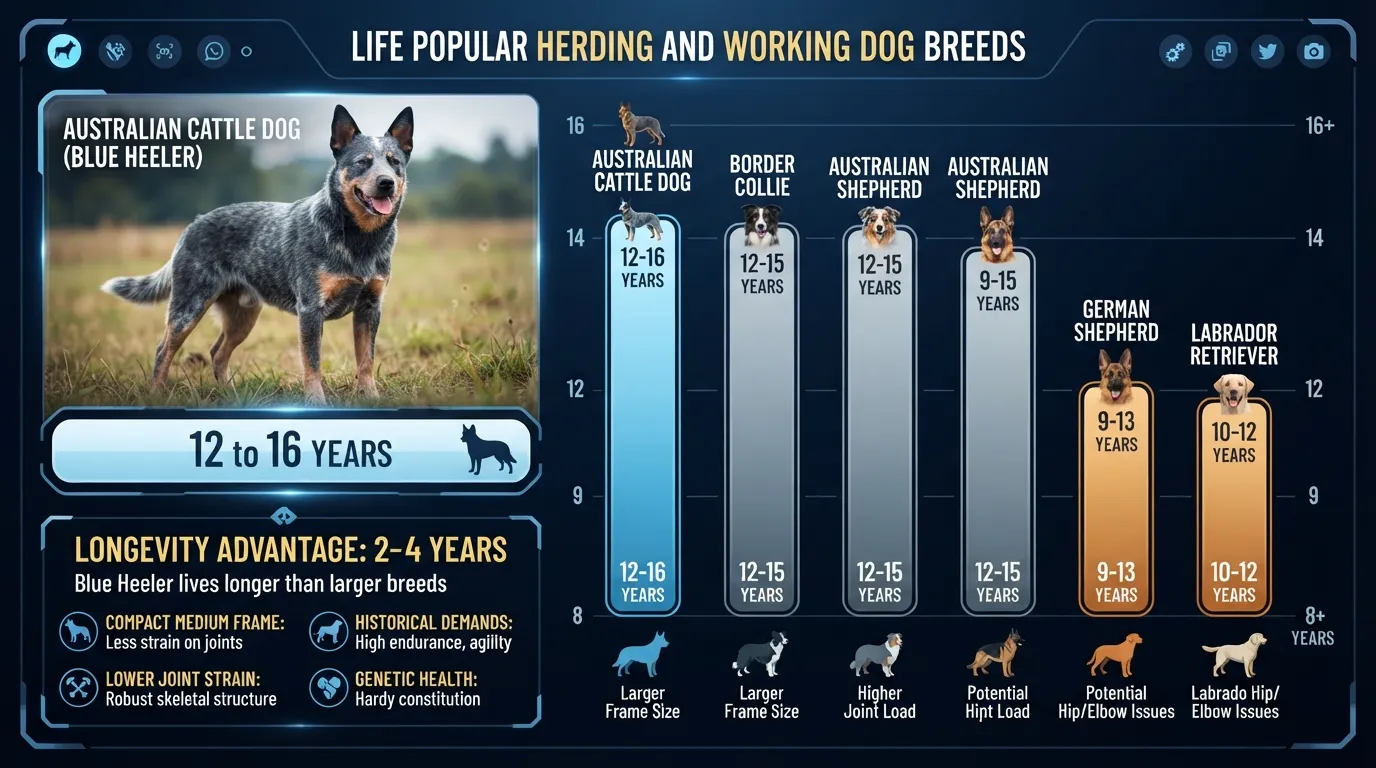
When you look at medium-sized working dogs, Blue Heelers consistently sit at the top of the longevity scale. While high-drive herding breeds generally enjoy robust health, the Australian Cattle Dog often outpaces even its closest genetic relatives in total life expectancy.
The differences come down to body frame, historic working demands, and breed-specific health risks. Larger working breeds like German Shepherds carry more physical mass, which accelerates cellular aging and joint wear, whereas compact herders like Heelers and Border Collies maintain a lighter, more sustainable build.
Comparison Table
| Breed | Average Lifespan | Primary Life Stage Trajectory |
|---|---|---|
| Blue Heeler / Australian Cattle Dog | 12 – 16 years | Longest-lived medium herder; exceptionally slow senior decline |
| Border Collie | 12 – 15 years | High vitality; similar herding background with slightly higher cancer risk |
| Australian Shepherd | 12 – 15 years | Comparable longevity; susceptible to hereditary eye and joint conditions |
| German Shepherd | 9 – 13 years | Larger frame and heavier bone structure lead to faster physical aging |
| Labrador Retriever | 10 – 12 years | High popularity; higher predisposition to obesity and metabolic strain |
Key Takeaway: Heelers rank among the absolute longest-living medium working breeds, frequently outliving popular sporting and herding dogs by 2 to 4 full years.
Oldest Blue Heeler Ever Recorded
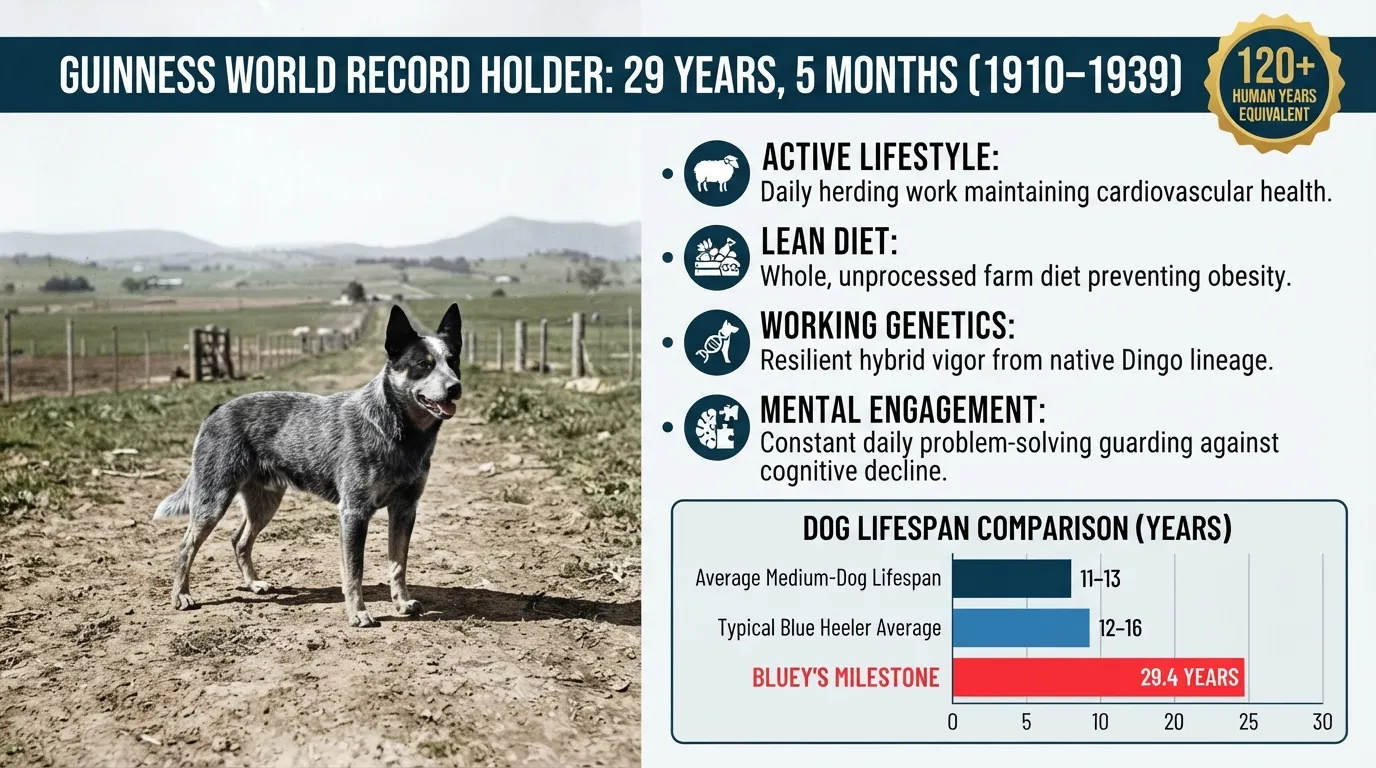
Bluey — The World’s Oldest Dog (29 Years, 5 Months)
The most famous Blue Heeler in history is Bluey, an Australian Cattle Dog who held the official Guinness World Record for the oldest dog for over eight decades. Born in 1910 in Victoria, Australia, Bluey worked sheep and cattle for nearly 20 years before retiring. She lived to be 29 years and 5 months old (1910–1939), which translates to well over 120 to 130 human years depending on the canine aging model used.
Bluey’s extraordinary longevity wasn’t just a fluke—it set a benchmark for veterinary researchers studying canine life expectancy and working breed genetics.
What Bluey’s Case Teaches Us About Longevity
While Bluey is an outlier, veterinary researchers and longevity experts have analyzed her life alongside other exceptionally long-lived Australian Cattle Dogs to identify key factors that contribute to extreme lifespan in the breed:
Active Working Lifestyle: Bluey worked daily on open farmland, maintaining high cardiovascular fitness and lean body mass throughout her prime years. Regular, low-impact activity keeps joint function and metabolic health strong well into senior status.
Natural Diet and Lean Weight: She was fed a raw, farm-based diet free from ultra-processed fillers. Modern studies continuously confirm that maintaining a lean body mass is the single most proven factor in extending a dog’s healthy lifespan.
Genetic Resilience: As a breed initially developed from a mix of native Australian Dingoes and hard-working British herding dogs, Blue Heelers inherited high physical endurance and lower rates of certain congenital heart conditions compared to ornamental breeds.
Strong Mental Engagement: Herding livestock provided constant problem-solving opportunities. Daily mental stimulation protects aging canine brains against cognitive dysfunction syndrome (canine dementia).
What Factors Affect a Blue Heeler's Lifespan?
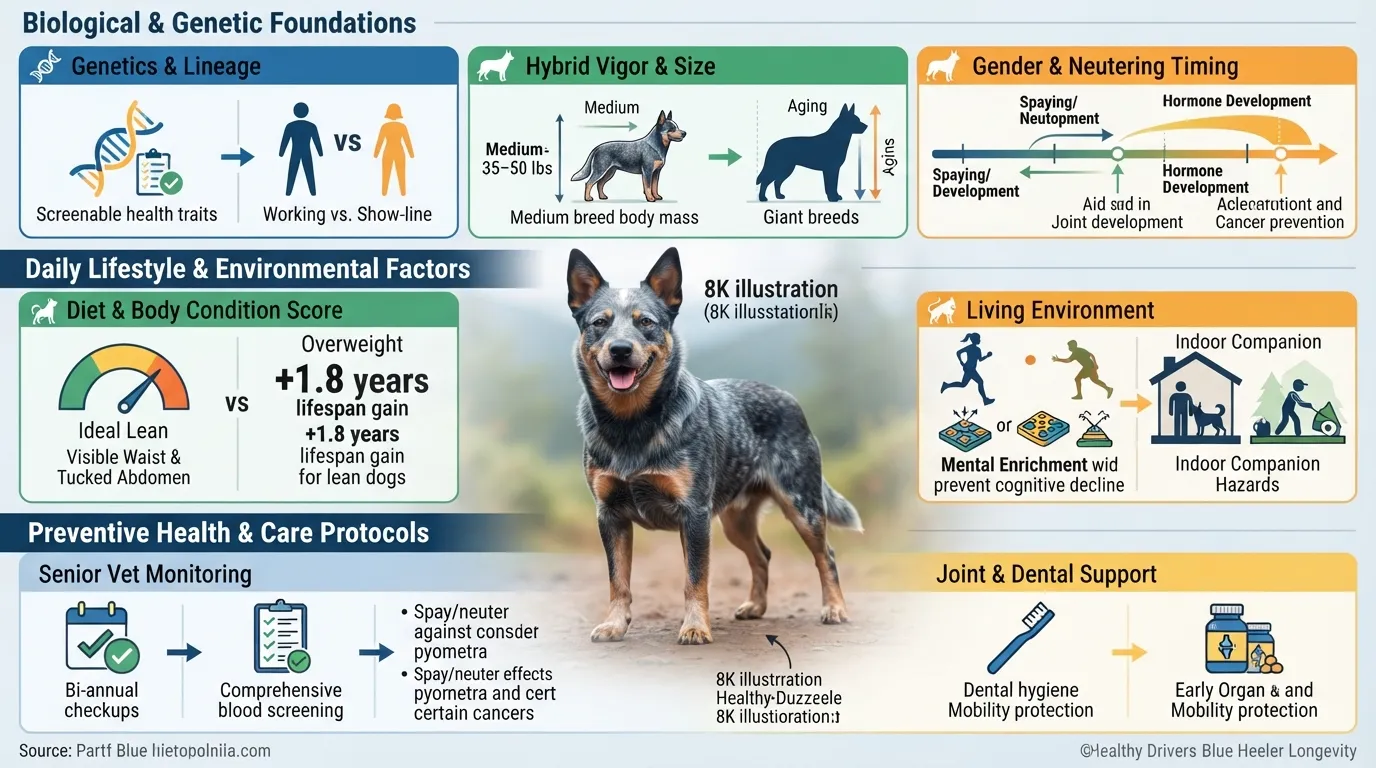
While genetics set the foundation for a Blue Heeler’s life expectancy, daily environment, care routines, and preventive medical choices dictate whether a dog reaches the lower or upper end of that range.
Genetics & Breeding Line
Working lines bred specifically for herding and ranch stamina often display fewer hereditary health issues than dogs bred purely for show or indiscriminate backyard breeding. Responsible breeders screen parents for breed-specific conditions like progressive retinal atrophy (PRA) and hip dysplasia, directly influencing long-term vitality.
Diet & Nutrition
Feeding high-quality, age-appropriate food tailored to a working dog’s energy demands helps maintain lean muscle mass and organ health over time. Proper nutrient balance prevents early metabolic stress, supporting overall longevity throughout every life stage.
Exercise, Weight & Activity Level
Keeping a Blue Heeler physically active prevents obesity, which is one of the single biggest threats to a dog’s life span. Excess weight places unnecessary strain on joints and cardiovascular systems, making routine daily exercise essential for lasting health.
Preventive Veterinary Care
Routine wellness exams, blood screenings, and timely vaccinations allow veterinarians to catch silent age-related issues early. According to the American Animal Hospital Association (AAHA), proactive care during senior years significantly improves both lifespan and daily quality of life.
Spay/Neuter Timing
Timing this procedure appropriately helps reduce the risk of certain cancers, such as mammary tumors or testicular cancer, as well as uterine infections like pyometra. Discussing the ideal timeline with your veterinarian ensures reproductive hormone benefits are balanced against joint development.
Indoor Companion vs Outdoor Working Dog
Working Heelers face higher risks of traumatic injury, heatstroke, and environmental hazards on ranches compared to suburban household pets. However, indoor companions still need structured mental and physical outlets to prevent chronic stress and anxiety-related health issues.
Mixed Breed vs Purebred Heeler (hybrid vigor)
Blue Heeler mixes often benefit from “hybrid vigor,” a biological effect where a broader genetic pool reduces the expression of recessive hereditary diseases. Purebred Heelers can live exceptionally long lives, but diverse genetics frequently provide an added layer of biological resilience.
Size Category (why medium breeds like Heelers sit mid-curve on lifespan)
Canine aging studies show that larger dogs age at an accelerated rate compared to smaller breeds, primarily due to rapid cell growth dynamics. Sitting right in the medium size bracket (30–50 lbs), Blue Heelers naturally balance physical resilience with a slower biological aging pace than giant breeds.
Sex (Male vs. Female): According to veterinary consensus, there is no statistically meaningful difference in lifespan between male and female Blue Heelers. Longevity is far more heavily dictated by overall health management, weight control, and genetics than by sex alone.
Common Health Issues That Can Shorten a Blue Heeler's Life
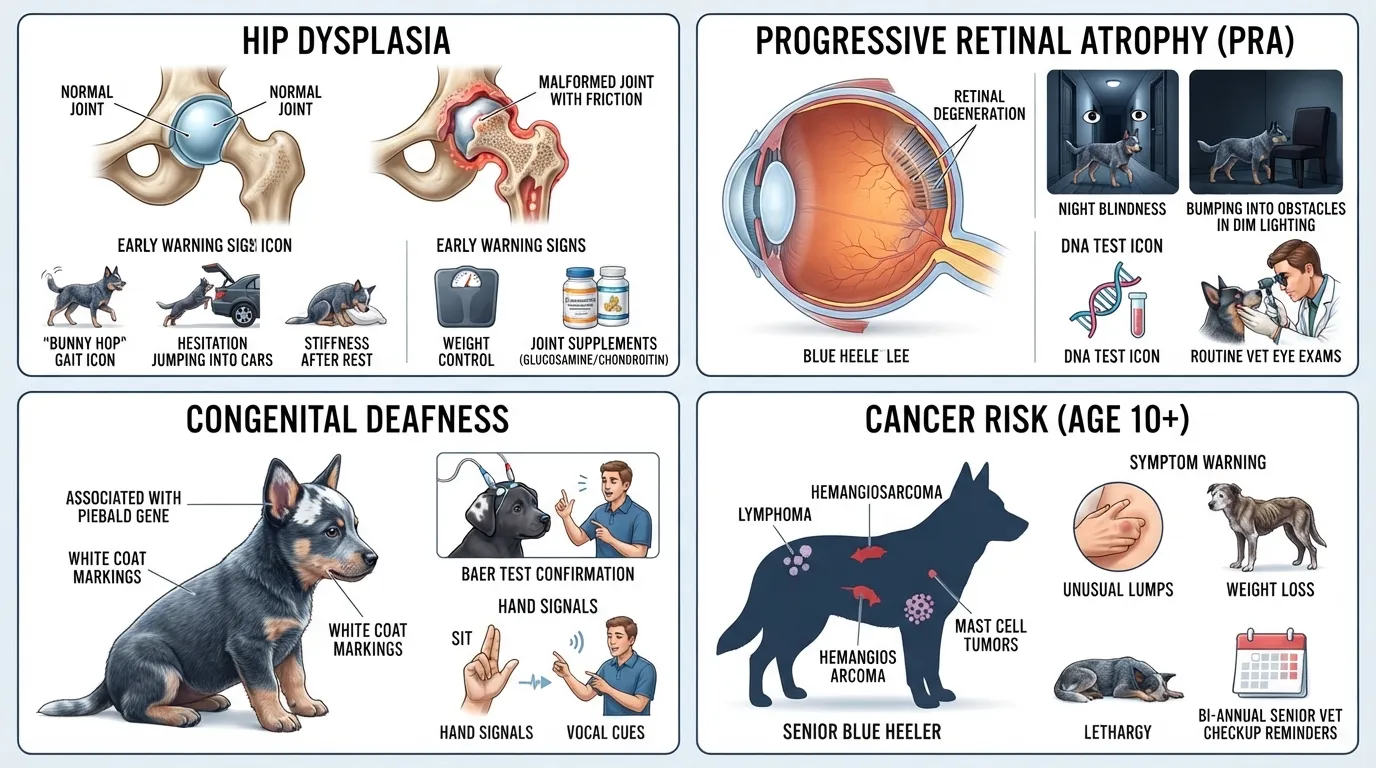
Hip Dysplasia
This genetic condition occurs when the hip joint fails to develop smoothly, leading to painful friction, arthritis, and eventual mobility loss. You might notice your Heeler hesitating before jumping into the car, developing a “bunny hop” gait, or taking longer to get up after a rest. While you cannot alter genetics, you can delay onset by keeping your dog at a lean body weight and providing joint supplements with glucosamine and chondroitin early in life.
Progressive Retinal Atrophy (PRA)
PRA is an inherited disease that causes the gradual degeneration of the retina, eventually leading to complete blindness. Early signs often show up as night blindness—your dog may bump into furniture in dark rooms or refuse to go outside at night. Because there is no medical cure, prevention relies on buying from responsible breeders who perform DNA testing on parent dogs, alongside routine eye exams to adapt your home environment early.
Congenital Deafness
Blue Heelers carry the piebald gene associated with white coat markings, which is linked to hereditary deafness in one or both ears. Signs include a lack of response to vocal cues, sleeping through loud noises, or getting easily startled when approached from behind. Perform a simple BAER (Brainstem Auditory Evoked Response) test in puppyhood to confirm hearing status, and use hand signals alongside verbal commands early in training to ensure lifelong communication.
Cancer Risk (Age-Related)
As Australian Cattle Dogs push past age 10, their risk for age-related cancers—including hemangiosarcoma, lymphoma, and mast cell tumors—increases significantly. Symptoms vary widely but commonly include unusual lumps, unexplained weight loss, chronic lethargy, or non-healing sores. Regular twice-yearly senior vet checkups, routine bloodwork, and prompt investigation of new growths remain your best defense for early detection and successful treatment.
Blue Heeler Life Stages Explained Age-by-Age
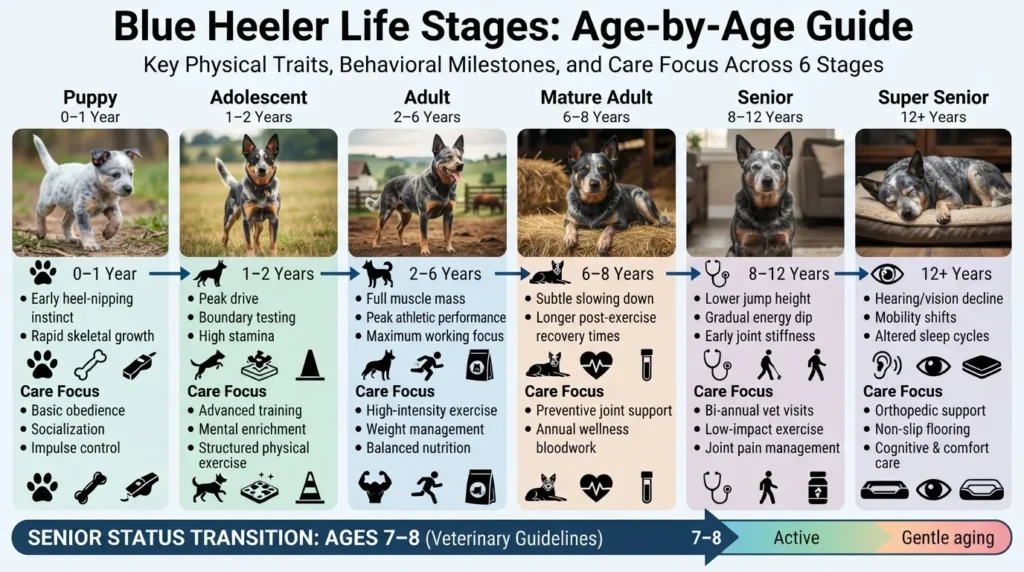
Understanding where your Australian Cattle Dog is in their life journey helps you anticipate their physical needs, behavior, and potential health shifts. Because Heelers are active, tenacious working dogs, their progression through life stages looks a little different than that of a lapdog or a giant breed.
Puppy (0–1 year) — rapid growth, early herding instinct
During their first 12 months, Blue Heeler puppies undergo intense physical and mental development. Born pure white (a heritage trait from their Dalmatian ancestry), their signature blue-speckled coat fills in over the first few months.
Along with rapid skeletal growth, their natural herding drive kicks in early. You’ll notice an instinct to nip at heels, herd family members, and fearlessly explore their environment. Early socialization and impulse-control training during this stage are essential to manage their high drive before they reach full adult strength.
Adolescent (1–2 years) — peak energy, training-critical window
Adolescence is often the most challenging stage for Cattle Dog owners. Your Heeler has reached full height and near-adult physical capability, but their brain is still maturing.
Energy levels peak during this window. If they don’t get enough physical exercise and mental jobs to do, Heelers can become destructive or overly vocal. Consistency in obedience training is critical right now to channel their sharp intelligence into positive habits rather than boundary-testing.
Adult (2–6 years) — physical prime, working stamina
By age two, a Blue Heeler enters their physical and mental prime. Their body fills out with dense muscle, and their stamina reaches its absolute height.
In this stage, your dog thrives on high-intensity activities like agility, flyball, long hikes, or daily herding work. They are remarkably resilient, confident, and eager to work alongside you. Keeping them lean through proper diet and exercise during these years protects their joints for the decade ahead.
Mature Adult (6–8 years) — early slowing signs, joint monitoring
As your Heeler reaches age six, they enter mature adulthood. While they’ll still have plenty of drive and enthusiasm, you might notice subtle shifts in how quickly they recover after a long day of running or working.
According to AAHA canine life stage guidelines, this is the time to begin proactive joint monitoring. Heelers are prone to hip dysplasia and arthritis from years of hard play, so introducing joint supplements and scheduling routine wellness exams helps catch early wear and tear before it limits their mobility.
Senior (8–12 years) — graying muzzle, reduced stamina
At around eight years old, a Blue Heeler officially reaches senior status. You will likely see gray hairs appearing around their muzzle and eyes, and they may take a bit longer to stand up on chilly mornings.
While senior Heelers retain their strong working mindset, their body requires a gentler pace. Swap high-impact jumping or intense agility for controlled walks and scent work. Regular veterinary checkups—ideally twice a year—become crucial to screen for kidney function, vision changes, and progressive joint discomfort.
Super Senior (12+ years) — comfort-focused care
Reaching 12 years and beyond is common for this durable breed, but super senior Heelers require tailored, comfort-first management. At 12 dog years in human years, a medium-sized dog is roughly equivalent to a human in their late 60s or 70s, and their daily routine needs to reflect that shift.
Cognitive changes, hearing loss, and dental wear are frequent in super seniors. Focus on practical home modifications: place non-slip rugs over hardwood floors, switch to orthopedic bedding, and adjust their diet to support aging organs and maintain healthy muscle mass without overloading their kidneys.
| Stage | Age Range | Heeler-Specific Signs | Care Focus |
|---|---|---|---|
| Puppy | 0–1 Year | White coat darkening to blue; early heel-nipping and intense curiosity | Basic obedience, socialization, and impulse control |
| Adolescent | 1–2 Years | Peak drive, boundary testing, endless physical stamina | Advanced training, mental enrichment, structured exercise |
| Adult | 2–6 Years | Full muscle mass, peak athletic performance, high focus | High-intensity exercise, weight management, balanced nutrition |
| Mature Adult | 6–8 Years | Slightly longer recovery times post-exercise, subtle stiffness | Preventive joint support, annual wellness bloodwork |
| Senior | 8–12 Years | Graying muzzle, lower jump height, gradual energy dip | Bi-annual vet visits, low-impact exercise, joint pain management |
| Super Senior | 12+ Years | Hearing/vision loss, mobility changes, altered sleep cycles | Orthopedic support, non-slip flooring, cognitive & comfort care |
How to Tell If Your Senior Blue Heeler's Health Is Declining
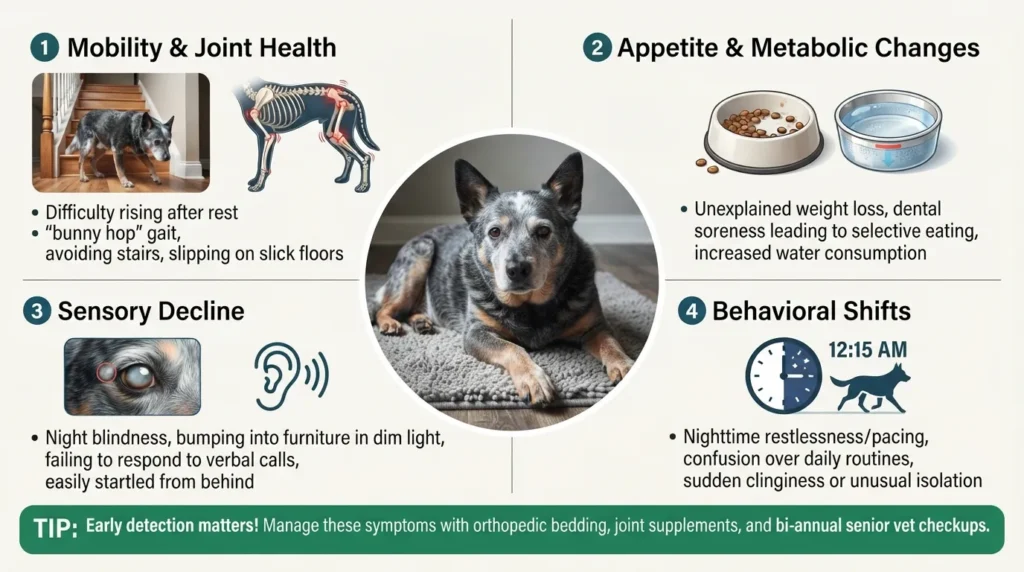
Watching an active, high-energy breed slow down takes some adjusting, but physical and behavioral shifts are a natural part of aging. Because Heelers are exceptionally tough and wired to work through discomfort, they often hide pain until symptoms become fairly advanced. Staying observant helps you catch subtle changes early so you can keep your senior companion comfortable.
Here is a practical checklist of key signs that signal your aging Blue Heeler may need extra support or a veterinary checkup:
Mobility and Stiffness Shifts: Stiff back legs upon waking, hesitation when jumping into the car, or avoiding stairs they used to trot up easily. You might also notice a wider, wobblier stance or slipping on smooth hardwood floors.
Appetite and Weight Changes: Dropping weight despite eating normally, leaving kibble behind due to dental soreness, or drinking noticeably more water than usual.
Sensory Declines (Vision and Hearing): Failing to respond when called from another room, startling easily when petted from behind, or bumping into furniture in dim light (often caused by nuclear sclerosis or cataracts).
Behavioral and Routine Adjustments: Restlessness or pacing at night, sudden confusion about household routines, or withdrawing from play. Increased clinginess—or unusually seeking isolation—can also indicate underlying physical discomfort.
Seeing these changes does not mean your dog is near the end of their journey. In most cases, these symptoms point to manageable senior conditions like osteoarthritis, mild cognitive dysfunction, or dental disease. Simple adjustments—such as orthopedic bedding, joint supplements, ramp access, and targeted pain management from your vet—can dramatically improve your Heeler’s daily quality of life and keep them happy for years to come.
How to Help Your Blue Heeler Live a Longer, Healthier Life
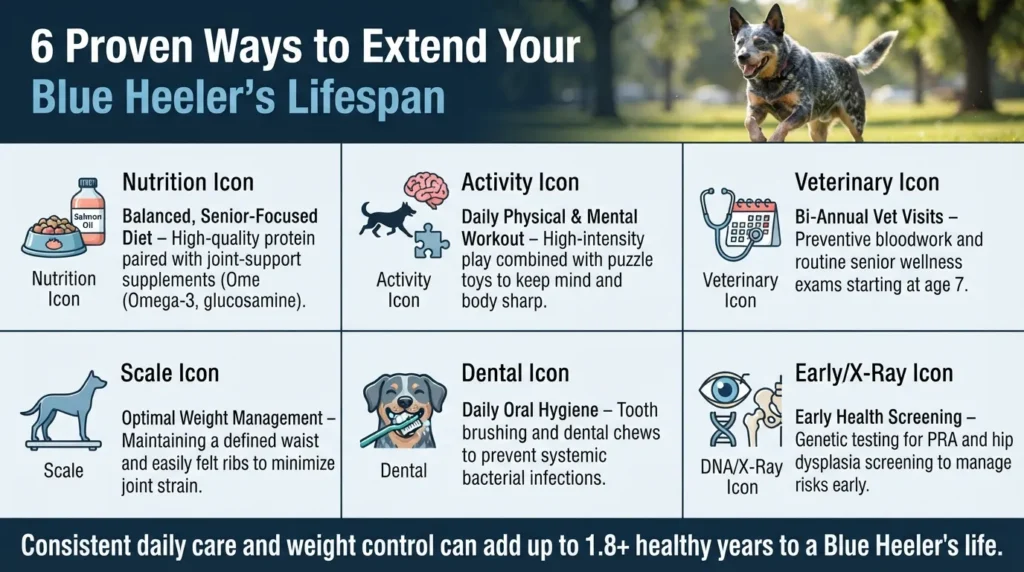
Keeping an active, high-drive working dog vibrant into their senior years requires a proactive care plan tailored specifically to their genetics. Here are the core pillars to help your Australian Cattle Dog thrive well past their average lifespan:
Balanced, Breed-Appropriate Diet: Feed a high-quality protein diet tailored to your Heeler’s current life stage and activity level. As they age, transition to a senior formula enriched with joint-support nutrients like omega-3 fatty acids, glucosamine, and chondroitin.
Daily Physical + Mental Exercise: Heelers were bred to work cattle all day, so daily exertion is non-negotiable. Combine steady physical activity like hiking or fetch with task-oriented mental games, puzzle feeders, or obedience training to prevent boredom and anxiety.
Regular Vet Checkups: Schedule bi-annual veterinary visits once your dog turns 7. Senior Heelers benefit significantly from routine blood panels, urinalysis, and physical exams that catch age-related conditions before outward symptoms appear.
Maintain Healthy Weight: Excess weight places severe stress on a working dog’s joints and heart. Keep your Heeler at a lean body condition score where you can easily feel their ribs and see a defined waistline.
Daily Dental Care Routine: Periodontal disease affects a dog’s entire system, including heart and kidney health. Establish a habit of daily tooth brushing using dog-safe toothpaste, supplemented by veterinary-approved dental chews.
Early Screening for Hip & Eye Issues: Blue Heelers are predisposed to hip dysplasia and hereditary eye conditions like Progressive Retinal Atrophy (PRA). Request early diagnostic screenings from your vet so you can implement preventative care plans early.
Curious What Age Your Blue Heeler Is in Human Years?
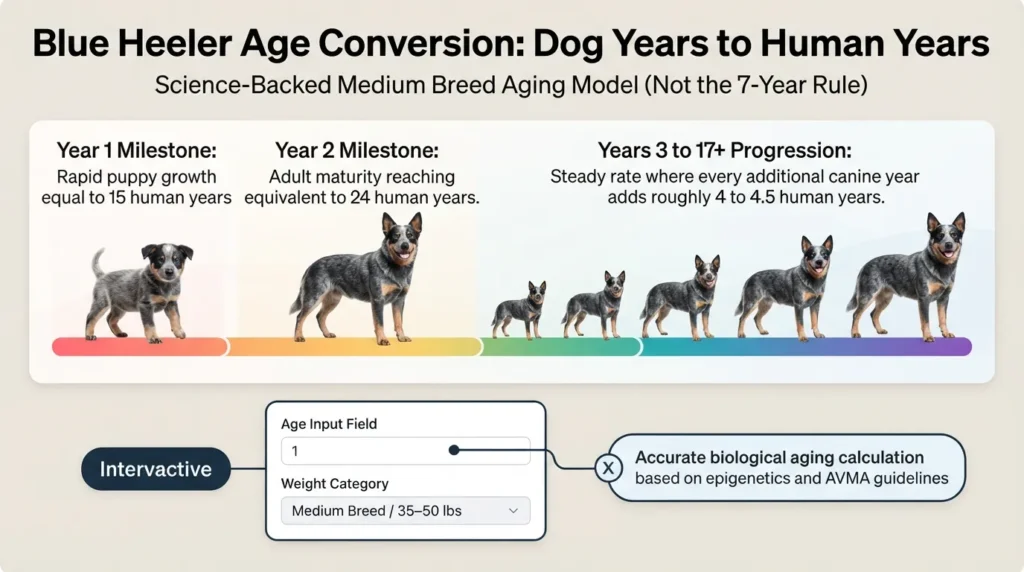
If you want the most accurate picture of your companion’s true biological age, skip the outdated “multiply by 7” rule. Try our free Dog Age Calculator Tool to get an exact, size-adjusted age conversion based on your Heeler’s specific birthdate and weight class.
Blue Heelers are medium-sized working dogs with exceptional genetic stamina, meaning they age much differently than a toy breed or a giant Great Dane. Applying a generic formula treats a active 30-pound cattle dog the same as a 100-pound Mastiff, completely ignoring how breed size and physiological metabolism drive the canine aging process. Getting a precise, science-backed number helps you tailor their dietary needs, joint care, and veterinary checkups to their actual life stage.
Frequently Asked Questions
Yes, timing matters. Research published by veterinary institutions indicates that spaying or neutering high-energy working breeds like the Blue Heeler before their growth plates close (typically around 12 months) can affect bone alignment and joint health. Delaying spay or neuter procedures until physical maturity can help support optimal joint stability, reduce arthritis risks, and promote a longer, healthier lifespan.
A Blue Heeler mix generally enjoys a lifespan of 12 to 15 years. Crossbreeding often provides a health benefit known as "hybrid vigor," which can reduce the chances of inheriting purebred-specific genetic diseases. For instance, a Heeler-Lab (Labraheeler) or Heeler-Aussie (Texas Heeler) usually maintains the exceptional longevity of both parent working breeds.
No, Blue Heelers are generally a very hardy, robust breed with fewer health issues than many purebred dogs. However, they are genetically predisposed to a few specific hereditary conditions. The most common issues flagged by veterinary researchers include progressive retinal atrophy (PRA), hip and elbow dysplasia, and congenital deafness. Regular vet screenings help catch these early.
The oldest recorded Blue Heeler—and for nearly a century, the oldest dog in history—was an Australian Cattle Dog named Bluey. According to official records verified by Guinness World Records, Bluey lived to be 29 years and 5 months old (1910–1939) working cattle in Victoria, Australia. That translates to roughly 120+ equivalent human years.
Blue Heelers often age more gracefully and retain their physical stamina longer than many other breeds of a similar size. Their high-energy working background, sturdy medium frame, and genetic athletic profile give them a slight edge in longevity. While giant breeds might reach end-of-life at age 8 or 9, a Heeler at that same biological age is often still working, running, and playing.
Yes, a 10-year-old Blue Heeler is entering their senior years. According to the American Animal Hospital Association (AAHA) life stage guidelines, medium-sized breeds shift into the senior category around age 7 to 8. While a 10-year-old Heeler is certainly a senior, many remain surprisingly active and spritely well past this age with proper care.
🐾 Other Age Guides

Gulfam Haider Mehdi
Founder & Developer
I built Dogagescalculator.com to give dog owners honest, science-backed answers instead of the outdated "×7" myth. Every figure here is checked against AKC, AVMA, and published veterinary research.
More about the author & this site →📌 Featured Guides
can you change a dog’s name after 2 years
→
chihuahua corgi mix dog
→
golden retriever dog years
→
how many calories does my dog need calculator
→
puppy age calculator weeks to months
→
springer spaniel and labrador mix
→
What Is the Average Age for a Dog
→
How much to feed a Great Pyrenees
→
how long does a lhasa apso dog live
→
what is the lifespan of an english bulldog
→
Comments