
What Is the Lifespan of a German Shepherd?Average Age, Stages & How to Extend It
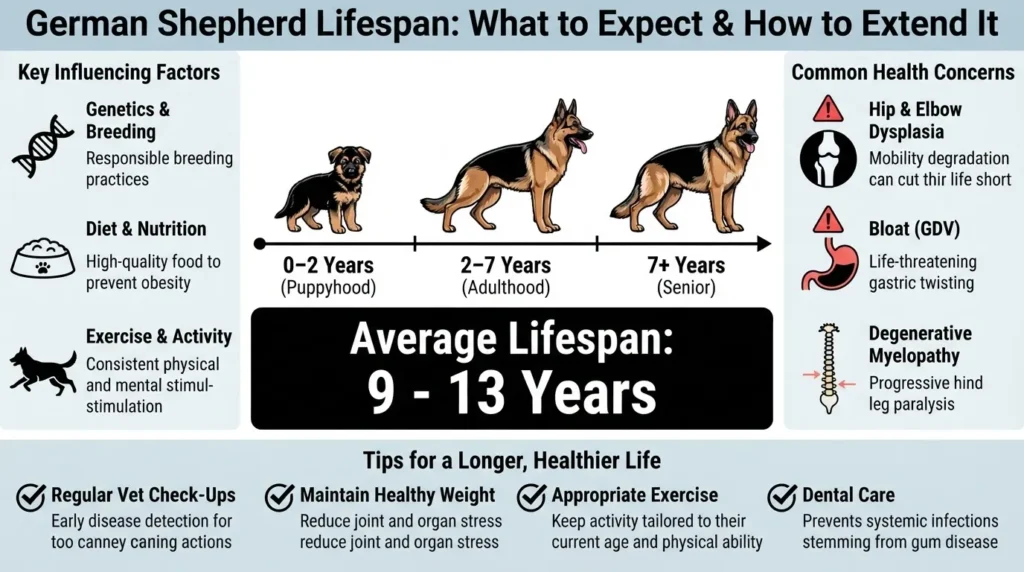
If you’re wondering what is the lifespan of a German Shepherd, the typical life expectancy is around 9 to 13 years, although individual dogs can live shorter or longer depending on genetics, health, nutrition, and overall care.
The average lifespan of a German Shepherd is influenced by their large size and their risk of certain health conditions, particularly joint and mobility problems. Understanding how long German Shepherds usually live can help you make better decisions about nutrition, exercise, veterinary care, and senior-dog support.
Whether you have a young GSD or an older German Shepherd, this guide explains how long German Shepherds live, what affects their life expectancy, and what you can do to help your dog enjoy a longer, healthier life.
German Shepherd Average Lifespan at a Glance
For most families, a German Shepherd is far more than a pet—they are a loyal protector, a dedicated worker, and a core member of the household. Naturally, one of the first questions owners and prospective adopters ask is: what is the lifespan of a German Shepherd?
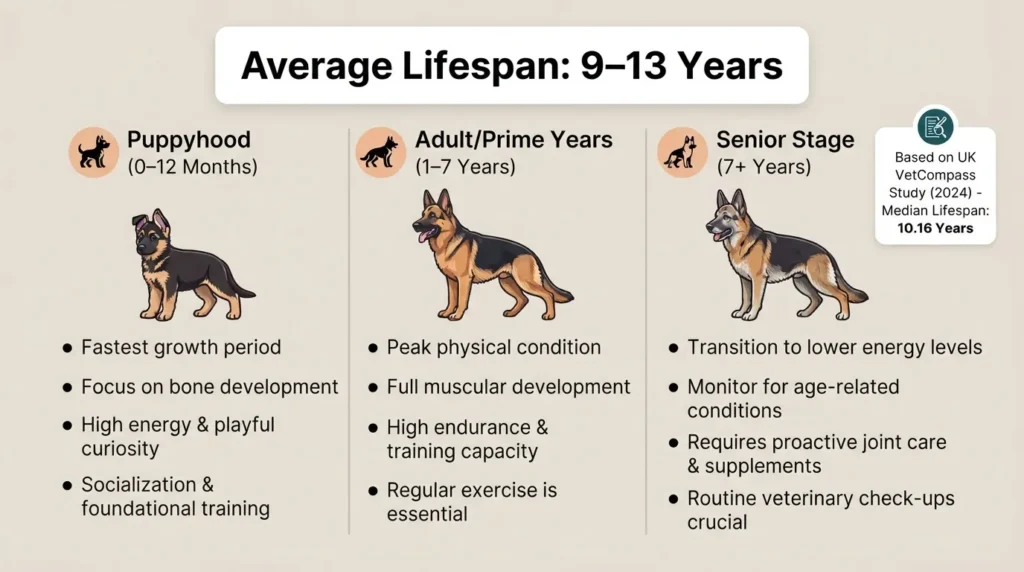
On average, a healthy German Shepherd dog (GSD) has a life expectancy of 9 to 13 years. While some large breeds face much shorter lifespans, the German Shepherd falls right into the typical range for a dog of their size and athletic build.
To give you a quick, realistic overview of what to expect, here are the key lifespan metrics backed by veterinary research:
Metric
9 to 13 years
Source: General veterinary consensus
Metric
10.3 years
Source: UK Royal Veterinary College (VetCompass Study)
Senior Age Milestone
7 years old
Source: When age-related changes typically begin
Exceptional Lifespan
15+ years
Source: Considered highly unusual outliers
While the average sits around a decade, some German Shepherds defy the statistics. The oldest well-documented, vet-verified German Shepherd on record lived to be 18 years old, with some unofficial but highly credible veterinary accounts—such as a beloved GSD named Bruno—reportedly reaching 19 years of age.
Reaching these upper double-digits is incredibly rare for a large, deep-chested breed. However, understanding the baseline German Shepherd lifespan is the first step toward maximizing the high-quality years you get to share with them.
Does Every German Shepherd Have the Same Lifespan?
While the average German Shepherd lifespan typically ranges between 9 and 13 years, no two dogs are exactly alike. Several biological and breeding factors play a quiet but massive role in determining where an individual dog falls on that spectrum.
If you are looking at a German Shepherd puppy or trying to estimate the path of your current adult dog, you cannot rely on a single, blanket number. Nuances in gender, lineage, and physical build alter their life expectancy in subtle but measurable ways.
Male vs Female Lifespan
Statistically, female German Shepherds tend to live slightly longer than their male counterparts. On average, females enjoy a lifespan that is about 6 to 12 months longer than males.
This minor gap is largely driven by size differences and hormonal influences:
Physical Strain: Male German Shepherds are physically larger and heavier, carrying more muscle mass and bone density. This extra weight puts more day-to-day strain on their joints and cardiovascular system over a decade of activity.
The Spay/Neuter Factor: According to a comprehensive longevity study by the University of Georgia, desexed dogs live significantly longer than intact dogs. For female GSDs, spaying eliminates the risk of pyometra (a life-threatening uterine infection) and drastically reduces mammary cancer risks, contributing to their slightly higher survival rates into extreme old age.
Working Line vs Show Line Lifespan
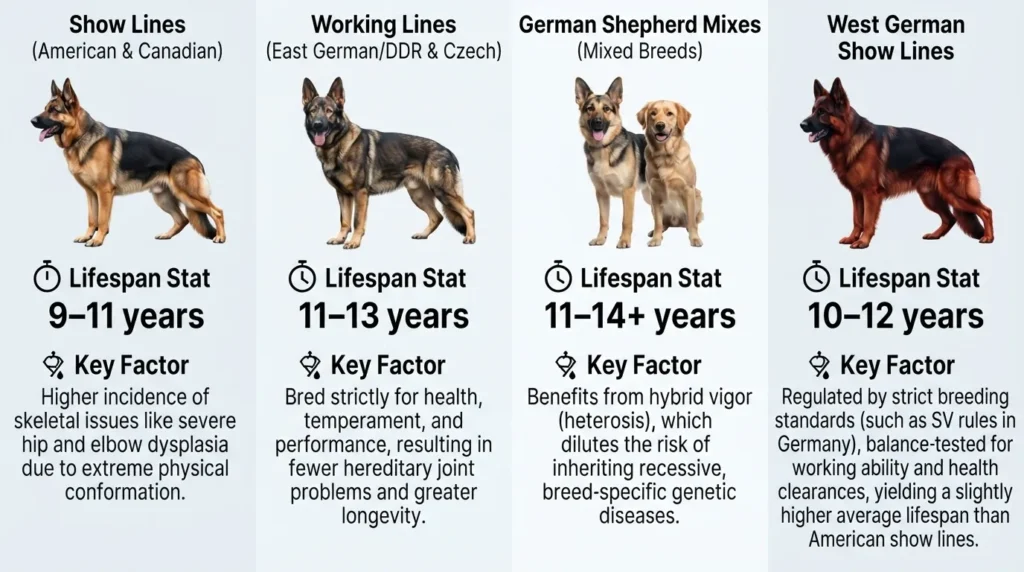
The divide between working lines (such as Czech or East German DDR lines) and show lines (American or West German show lines) is not just about looks or temperament—it directly impacts their health and longevity.
Working Line German Shepherds
- Often live 11 to 13+ years
- Bred strictly for utility/health
- Straighter backs, wider hips
- Lower incidence of severe CHD
Show Line German Shepherds
- Often live 9 to 11 years
- Bred for physical aesthetics
- Sloping backs, angled hind legs
- Higher risk of joint issues
Working lines are historically bred for high drive, structural soundness, and physical endurance. Because breeders of working dogs prioritize stamina over specific aesthetic standards, these dogs typically maintain a straighter, more natural back and a wider gene pool.
Show lines, particularly American show lines, have been selectively bred for a specific sloping top-line (back) and dramatic angulation of the hindquarters. This physical extreme makes show lines far more prone to early-onset musculoskeletal issues like hip dysplasia and osteoarthritis, which frequently lead to a decline in quality of life—and veterinary euthanasia—at an earlier age.
Does Size or Weight Affect Lifespan?
In the canine world, size is inversely proportional to lifespan; giant breeds age much faster than toy breeds. While the German Shepherd is classified as a large breed, the variation in adult weight within the breed itself can impact how long they live.
50 to 70 lbs
Typical Build: Smaller Females
Lifespan Impact: Higher chance of 12-13+ years
70 to 90 lbs
Typical Build: Standard Males
Lifespan Impact: Average 10-12 years
90+ lbs
Typical Build: Oversized GSDs
Lifespan Impact: Rarely exceed 8-10 years
An oversized German Shepherd weighing over 90 pounds carries a much higher biological burden. Their hearts must work harder to pump blood, and their joints degrade much faster under the constant weight.
According to data compiled by the Orthopedic Foundation for Animals (OFA), heavier German Shepherds show a significantly higher rate of joint laxity and arthritis. Keeping your German Shepherd lean and within the standard breed weight is one of the most effective, science-backed ways to extend their active years.
German Shepherd Life Stages
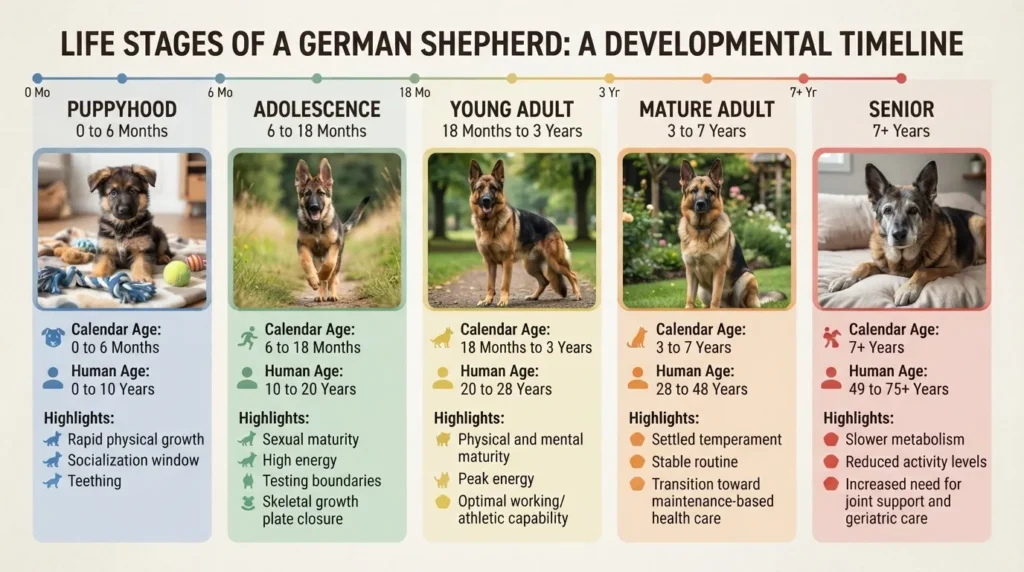
Like most large breeds, German Shepherds journey through life at a different pace than smaller dogs. They spend a long time growing up and enter their golden years relatively early. Understanding these developmental milestones helps you tailor their nutrition, exercise, and veterinary care to maximize their health at every age.
Puppy Stage (0–2 years)
German Shepherd puppies grow with astonishing speed, often reaching 70% of their adult weight by six months. However, their skeletal system takes much longer to catch up. According to the American Animal Hospital Association (AAHA) canine life stage guidelines, large breeds like the German Shepherd aren’t considered fully mature adults until they reach up to two years of age.
During this prolonged puppyhood, their growth plates remain open and vulnerable. To protect their joints and prevent developmental issues like hip dysplasia, they require specialized large-breed puppy food designed to keep growth steady rather than rapid. Gentle, controlled exercise is crucial during this phase; avoid high-impact jumping or intense running until their joints are fully set around their second birthday.
Adult Stage (2–7 years)
Between ages two and seven, your German Shepherd is in the prime of their life. Physically, they are strong, athletic, and highly active, while mentally, they finally lose the chaotic puppy energy and settle into their characteristic focused, loyal demeanor.
This is the maintenance phase of the German Shepherd lifespan. Because this breed is highly prone to joint issues later in life, proactive care during these adult years pays massive dividends down the road. Introducing high-quality joint supplements containing glucosamine, chondroitin, and green-lipped mussel oil during this stage helps protect their cartilage before wear and tear sets in.
Senior Stage (7+ years) — including signs of aging
At seven years old, a German Shepherd officially crosses the threshold into their senior years. Because of their large size, they age more rapidly than smaller breeds, and you will likely begin to notice subtle changes in their daily routine and physical appearance.
Common signs of aging in a senior German Shepherd include:
Stiff joints: Slowing down when rising from a nap, hesitancy on stairs, or a slightly stiff gait on cold mornings (frequently linked to osteoarthritis).
Physical changes: Distinct graying around the muzzle, eyebrows, and their signature black facial mask.
Sensory decline: Mild clouding of the eyes (nuclear sclerosis) or a gradual decrease in hearing responsiveness.
Energy shifts: Longer nap times and a lower tolerance for extreme heat or cold.
Catching these signs early and adjusting their lifestyle—such as switching to orthopedic bedding and scheduling biannual veterinary wellness exams—can significantly improve your dog’s comfort and longevity.
German Shepherd Age in Human Years
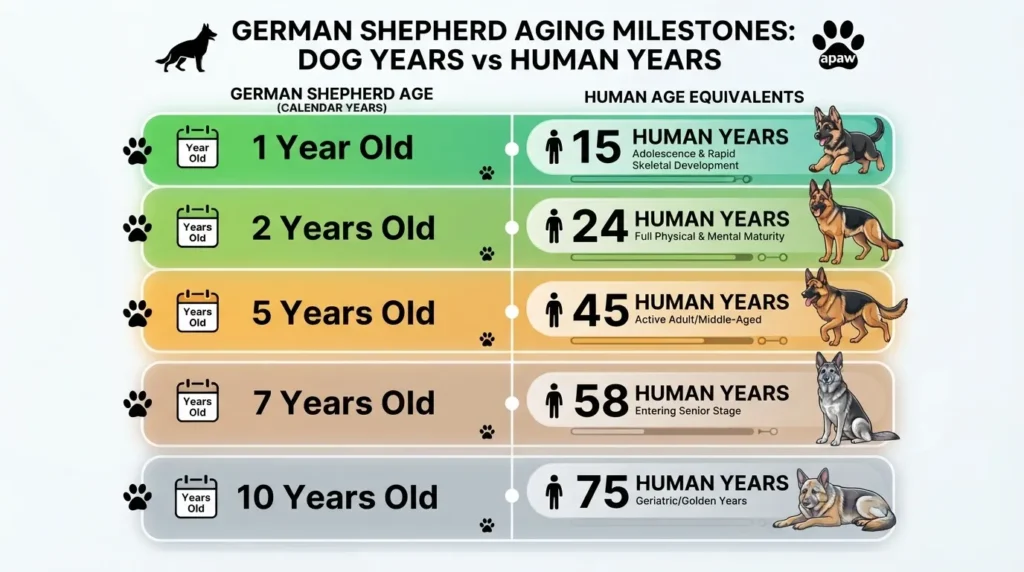
The popular “one dog year equals seven human years” rule is a myth. Large, active breeds like the German Shepherd age much faster. According to the American Veterinary Medical Association (AVMA), a German Shepherd’s first year actually equals about 15 human years, reflecting their rapid physical development from puppy to young adult.
By age two, your German Shepherd is roughly 24 in human terms. After this milestone, each calendar year adds about 7 to 8 years to their physiological age. This accelerated biological clock is why a 10-year-old German Shepherd experiences senior joint stiffness and energy levels comparable to a 75-year-old human.
Explore our Dog Age Conversion Guide to learn more about how different breeds age in human years
German Shepherd Lifespan vs Other Dog Breeds
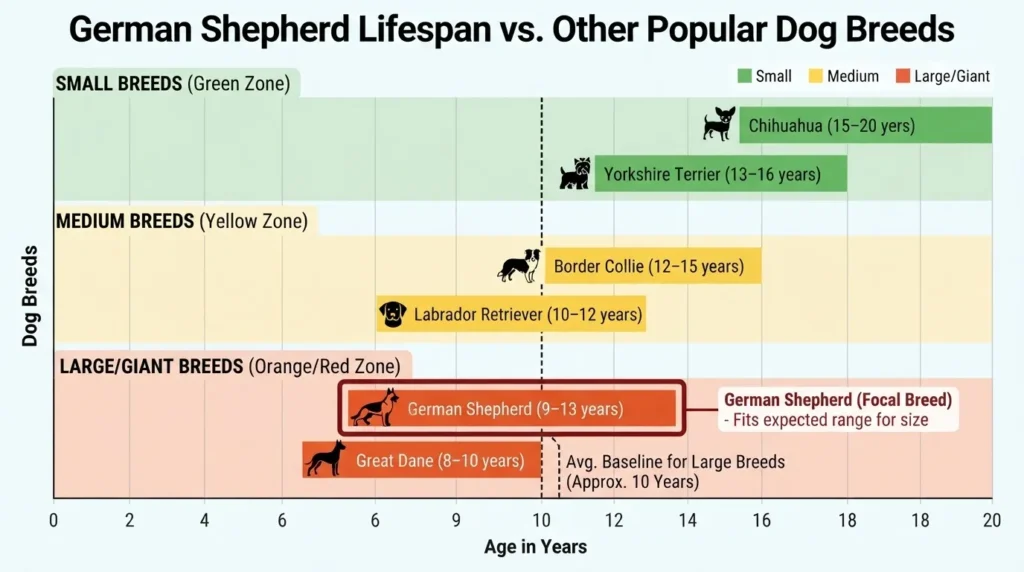
While the average German Shepherd lifespan typically spans 7 to 10 years, how does this compare to other popular breeds of similar size and stature? Large working breeds generally face similar physiological demands, but slight genetic differences, breed history, and common hereditary health issues cause their expected life expectancies to vary.
The markdown table below compares the average life expectancy of a German Shepherd against similar medium-to-large breeds, as well as general mixed-breed dogs in their weight category:
| Dog Breed | Average Lifespan (Years) | Weight Category |
| German Shepherd | 7 – 10 | Large (50 – 90 lbs) |
| Belgian Malinois | 14 – 16 | Medium/Large (40 – 80 lbs) |
| Labrador Retriever | 10 – 12 | Large (55 – 80 lbs) |
| Golden Retriever | 10 – 12 | Large (55 – 75 lbs) |
| Large Mixed Breed Dogs | 10 – 12 | Large (Over 50 lbs) |
Veterinary researchers note a clear “large dog paradox” where bigger canines age at a highly accelerated biological pace compared to smaller ones. Because large breeds like German Shepherds grow from tiny puppies to massive adults in a span of just 12 to 18 months, their rapid cellular division may leave them more susceptible to age-related diseases, such as cancer and joint degeneration, much earlier in life.
Additionally, specific genetic predispositions—such as canine hip dysplasia and degenerative myelopathy—can prematurely impact a German Shepherd’s quality of life compared to hardier cousins like the Belgian Malinois. Mixed-breed dogs of similar size also tend to hold a slight biological advantage, benefiting from “hybrid vigor,” which minimizes the expression of harmful inherited genetic traits.
Lifestyle Factors That Affect a German Shepherd's Lifespan
Diet & Nutrition
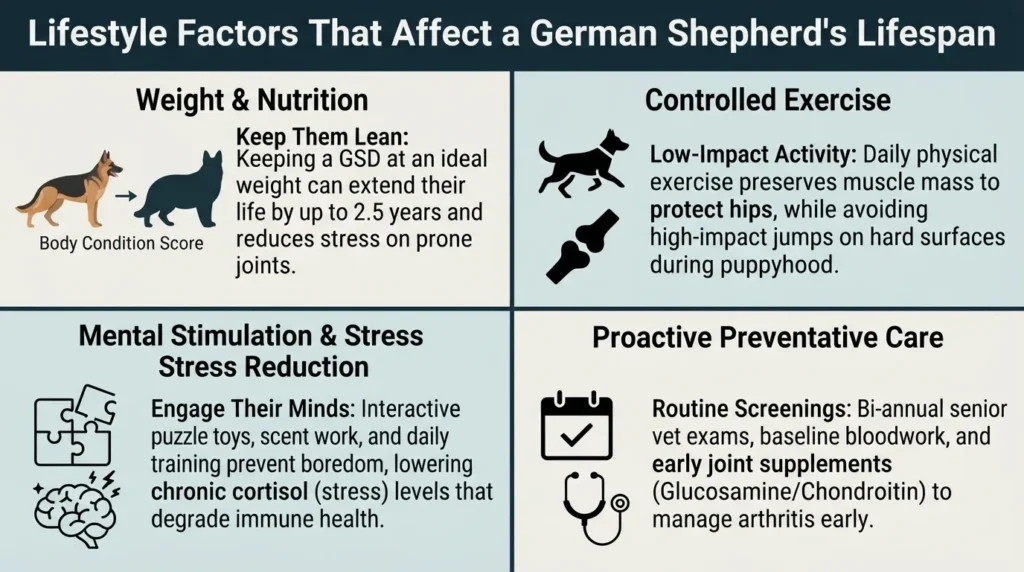
What goes into your German Shepherd’s bowl daily plays a massive role in how many years they get. This breed is prone to rapid growth as puppies, which can cause severe joint issues later in life if they grow too quickly. Feeding them high-quality, large-breed formula food balances calcium and phosphorus levels to keep skeletal growth safe.
As they mature, keeping them lean is vital. Carrying even a few extra pounds puts immense stress on their hips and elbows, accelerating arthritis. Portion control and high-quality protein sources help protect their joints and keep their body condition score in the ideal range.
Exercise & Activity Level
German Shepherds are working dogs that thrive on daily physical and mental stimulation. Regular, structured exercise maintains cardiovascular health, keeps muscles strong, and supports the joints that hold up their large frames.
However, high-impact activities like catching frisbees mid-air should be avoided during their growth stages to prevent joint damage. Instead, focus on low-impact exercise like swimming or controlled walking. This keeps senior dogs mobile and prevents the obesity that silently shaves years off a dog’s life.
Spaying/Neutering
The timing of a German Shepherd’s spay or neuter surgery can directly impact their long-term health. A joint study by UC Davis researchers found that spaying or neutering a German Shepherd before one year of age significantly increases their risk of joint disorders and certain cancers, such as hemangiosarcoma.
Waiting until they are skeletally mature—usually between 12 to 18 months—allows growth hormones to fully close their growth plates. This protects their structural health and supports a longer, pain-free life.
Dental Care
It is easy to overlook, but oral health directly impacts a dog’s organs. According to the American Veterinary Medical Association (AVMA), periodontal disease affects the majority of dogs by age three.
When plaque and tartar build up on their teeth, bacteria enter the bloodstream through inflamed gums. Over time, this chronic bacterial load can cause irreversible damage to their heart, kidneys, and liver, quietly reducing their overall life expectancy.
Preventive Veterinary Care
Regular vet visits are the safety net that catches health issues before they become life-threatening. For a younger German Shepherd, annual checkups, routine bloodwork, and early screening for hip dysplasia are critical.
As they enter their senior years, semi-annual exams become crucial for tracking subtle changes in kidney function, thyroid health, and mobility. Catching chronic conditions early allows for proactive management, keeping your companion comfortable and by your side for as long as possible.
Frequently Asked Questions
While you cannot alter their genetics, you can influence their daily health. Keep your German Shepherd at a lean, healthy weight to reduce joint wear. Feed a high-quality diet rich in omega-3 fatty acids and joint supplements (like glucosamine). Finally, ensure they get consistent, low-impact exercise to preserve their muscle mass, and stick to routine veterinary checkups to catch chronic issues early.
Explore our Dog Age Conversion Guide to learn more about how different breeds age in human years
Statistically, female German Shepherds tend to live slightly longer than males—often by 6 to 12 months. This difference is largely driven by size, as males are typically larger and heavier, which places more strain on their cardiovascular system and joints over time. Spaying or neutering at the appropriate developmental stage also significantly lowers the risk of reproductive cancers, extending lifespan for both sexes.
According to veterinary data, the most common health issues affecting a German Shepherd’s lifespan include:
Cancer: Particularly hemangiosarcoma (a silent, aggressive cancer of the blood vessels) and bone cancer.
Musculoskeletal and Neurological Issues: Severe hip dysplasia and Degenerative Myelopathy (DM) cause mobility failure, often leading to euthanasia.
Bloat (Gastric Dilatation-Volvulus): A life-threatening condition where the stomach fills with gas and twists, cutting off blood flow.
German Shepherds have a shorter life expectancy than smaller breeds primarily due to their rapid growth rate and physiological size. Large dogs age at an accelerated biological pace, which puts more oxidative stress on their bodies. Additionally, the breed's deep chest structure and specific genetic predispositions—such as joint issues and cancer—often impact their longevity.
The average lifespan of a German Shepherd is 9 to 13 years. While some individuals can live longer with exceptional care and genetic luck, a large-scale VetCompass study in the UK found the median life expectancy to be roughly 10.16 years. This range is standard for a large, deep-chested working breed.

Gulfam Haider Mehdi
Founder & Developer
I built Dogagescalculator.com to give dog owners honest, science-backed answers instead of the outdated "×7" myth. Every figure here is checked against AKC, AVMA, and published veterinary research.
More about the author & this site →📌 Featured Guides
How Does Dog Age Work
→
How Old Is 8 Weeks in Dog Years
→
What Is the Lifespan of a Labrador Retriever
→
full grown cane corso size comparison to human
→
yorkie dog years to human years
→
what is the life expectancy of a jack russell terrier
→
mutt dog breed
→
Basset Hound New England
→
golden retriever puppy feeding guide
→
What Is the Lifespan of a Miniature Poodle?
→
Comments