Chinese Shar-Pei Dog Breed: Complete Guide to Temperament, Health, Price & Lifespan
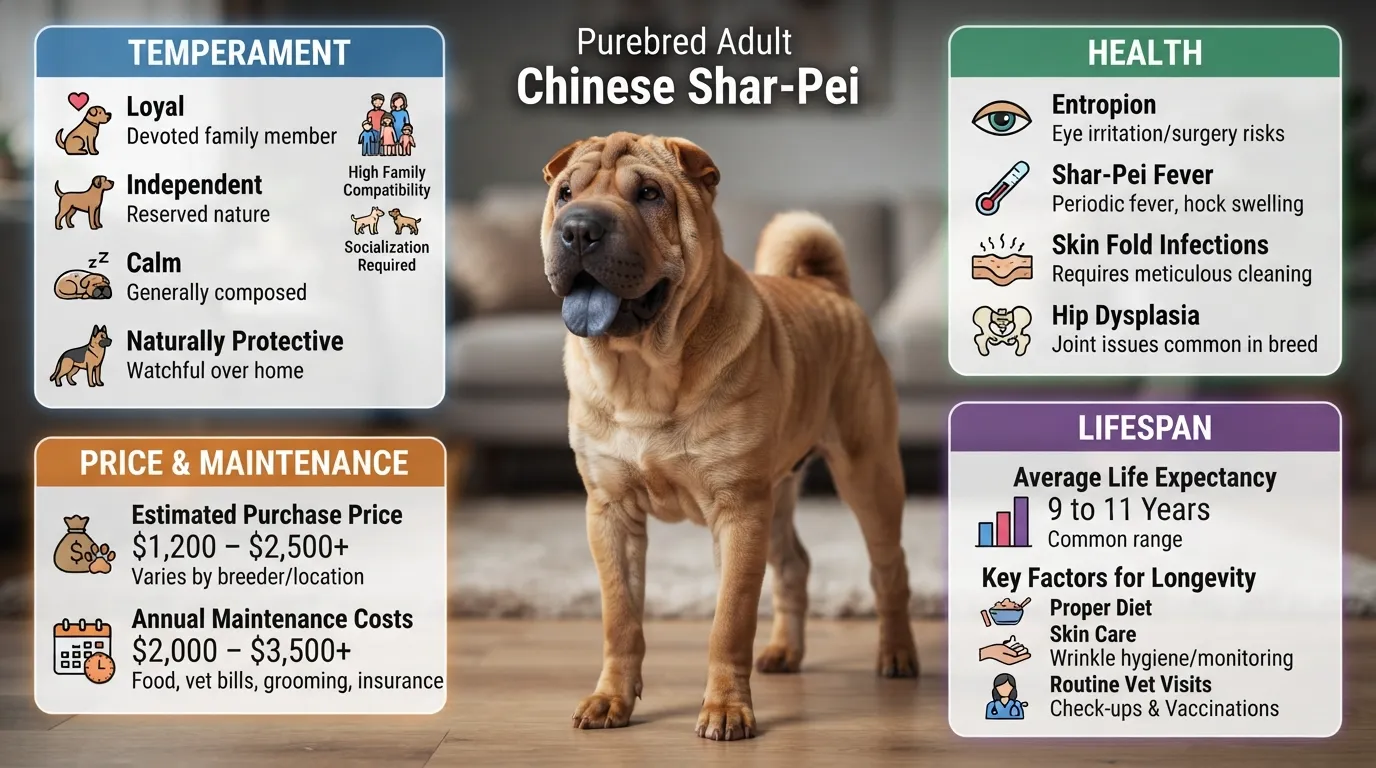
Distinctive for its sand-paper coat, iconic skin wrinkles, and blue-black tongue, the Chinese Shar-Pei is an ancient guard dog with deep roots in Han Dynasty history. While their unusual appearance turns heads, their regal, deeply loyal, and calm-yet-independent temperament is what truly captivates dedicated owners. These calm guardians bond fiercely with family, but their strong instincts require experienced leadership and proper socialization. Whether you are curious about their realistic lifespan, daily care needs, medical vulnerabilities, or buying costs, this guide covers every detail to help you decide if a Shar-Pei belongs in your home.
Chinese Shar-Pei At a Glance
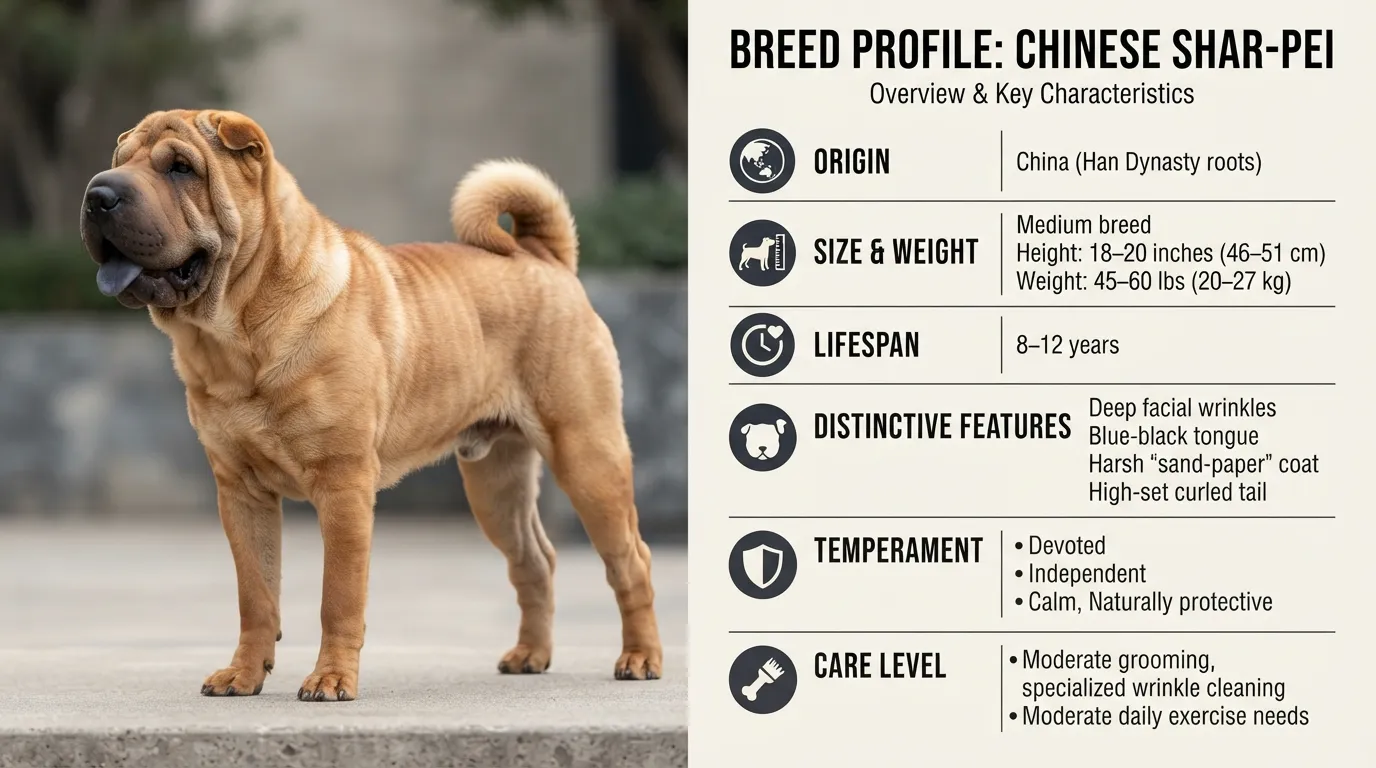
Before exploring their rich lineage and training needs, here is a quick snapshot of the key physical traits, temperament metrics, and care profiles that define the Chinese Shar-Pei breed.
| Attribute | Breed Specification |
|---|---|
| Origin | Southern China (Guangdong Province) |
| Breed Group | Non-Sporting Group (AKC) / Utility Group (UKC) |
| Height | 17–20 inches at the shoulder |
| Weight | 35–65 lbs |
| Lifespan | 9–12 years |
| Coat Type | Short, harsh, bristly (Horse coat / Brush coat) |
| Coat Colors | Any solid color (fawn, red, cream, black, sable, blue; white is DQ) |
| Temperament | Devoted, independent, serene, aloof toward strangers |
| Good with Children | Moderate (best with older kids; adult supervision mandatory) |
| Shedding Level | Low to moderate |
| Ideal Owner | Experienced owners who understand guard-dog dynamics |
| Origin | Southern China (Guangdong Province) |
|---|
| Breed Group | Non-Sporting Group (AKC) / Utility Group (UKC) |
|---|
| Height | 17–20 inches at the shoulder |
|---|
| Weight | 35–65 lbs |
|---|
| Lifespan | 9–12 years |
|---|
| Coat Type | Short, harsh, bristly (Horse coat / Brush coat) |
|---|
| Coat Colors | Any solid color (fawn, red, cream, black, sable, blue; white is DQ) |
|---|
| Temperament | Devoted, independent, serene, aloof toward strangers |
|---|
| Good with Children | Moderate (best with older kids; adult supervision mandatory) |
|---|
| Shedding Level | Low to moderate |
|---|
| Ideal Owner | Experienced owners who understand guard-dog dynamics |
|---|
What Is a Chinese Shar-Pei?
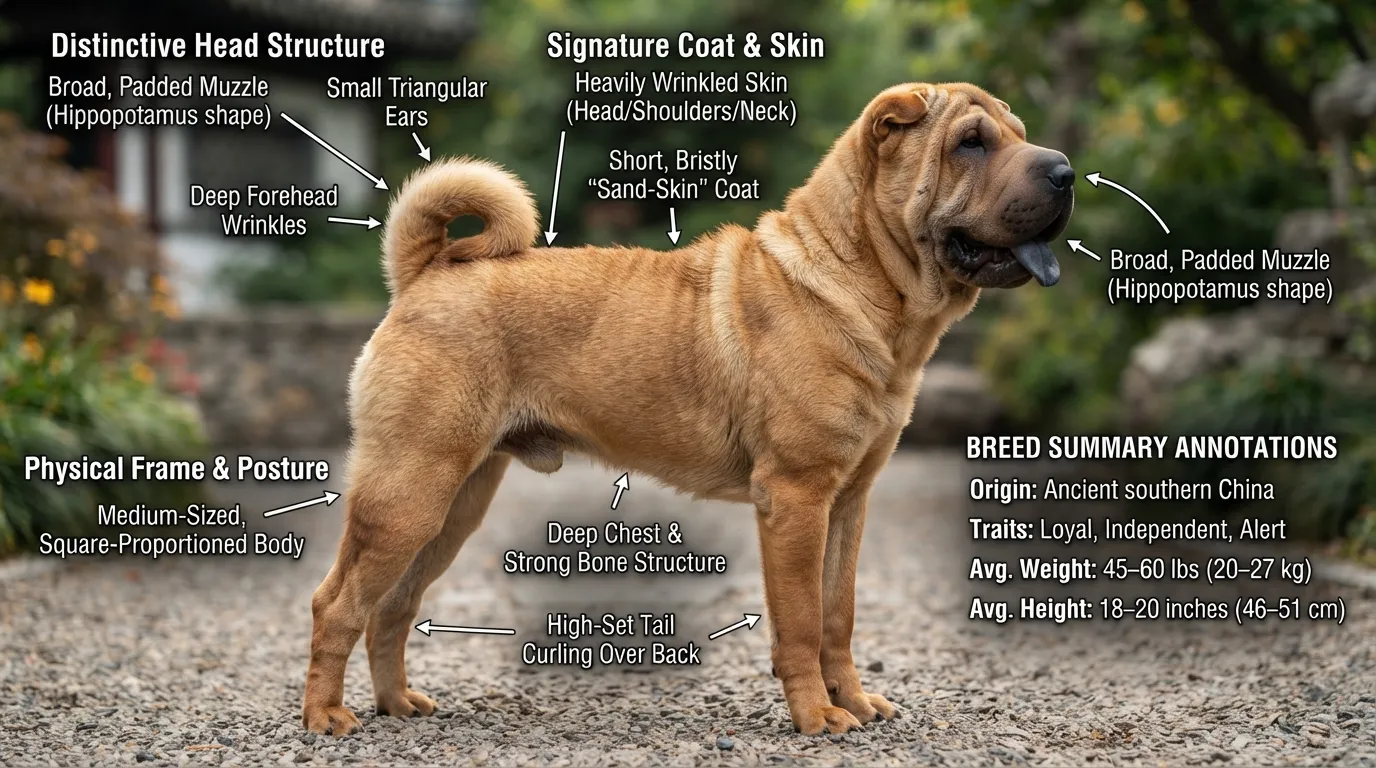
The Chinese Shar-Pei is an instantly recognizable breed, famed worldwide for its deep facial folds, loose body skin, and broad “hippopotamus-like” muzzle. Adding to its distinct physical presence is a rare blue-black tongue—a feature shared almost exclusively with its closest genetic relative, the Chow Chow.
Historically known by names such as the Cantonese Shar-Pei and earlier labeled by international fanciers as the Chinese Fighting Dog, the breed’s rough, off-standing coat gives it its name, which literally translates to “sand skin.” Beyond these physical quirks lies a rich past: once named by Guinness World Records as one of the world’s rarest dog breeds, the Chinese Shar-Pei survived near total extinction to become the devoted, dignified companion known today.
History and Origin of the Chinese Shar-Pei
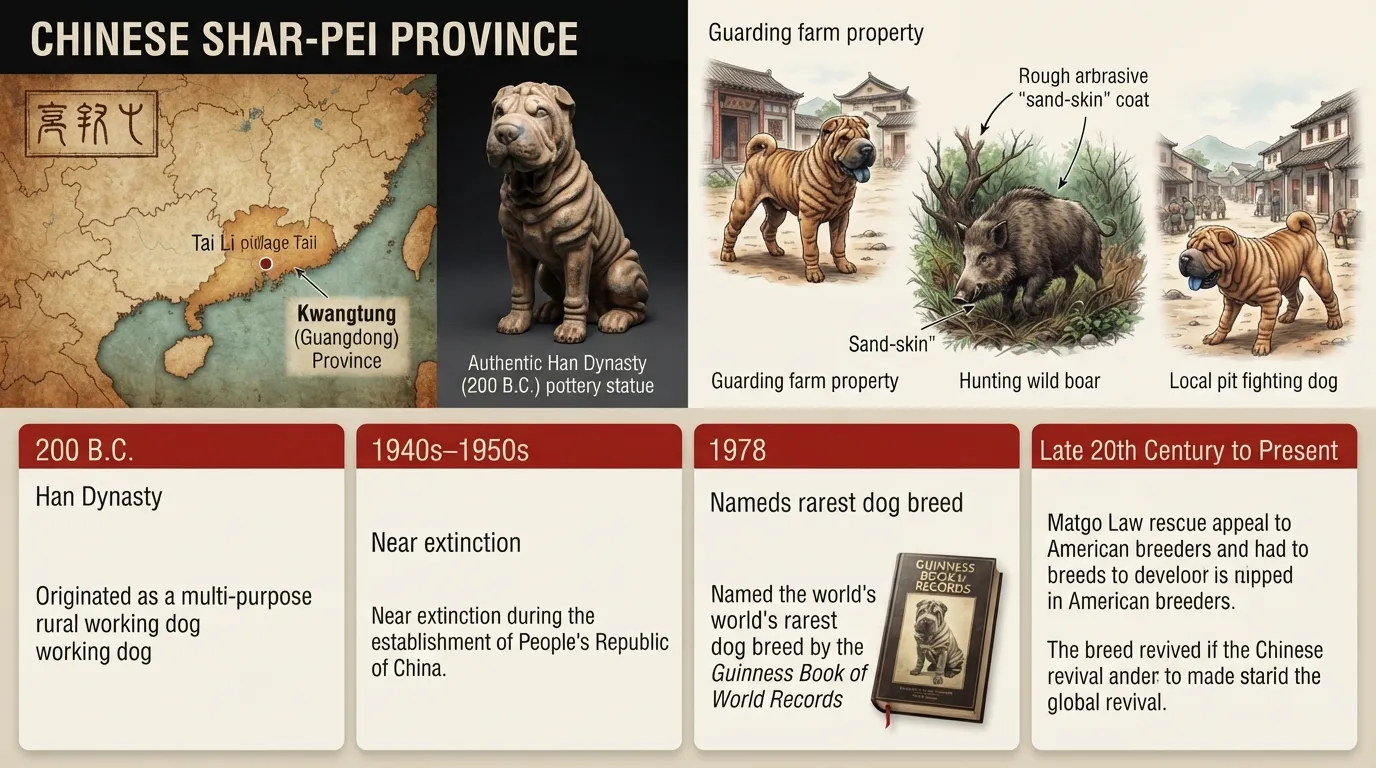
Ancient Origins in Southern China
The Chinese Shar-Pei is one of the world’s most ancient canine breeds, tracing its roots back over 2,000 years to the Guangdong province in Southern China. Historical artifacts from the Han Dynasty (202 BC – 220 AD) feature ceramic statues depicting dogs with short, folded coats and unmistakable square muzzles, strongly pointing to early Shar-Pei ancestors.
Modern genetic mapping confirms that the Shar-Pei belongs to an elite category of basal breeds—ancient dogs with deep evolutionary origins that predate modern European breeds. Sharing close lineage with the Chow Chow, Akita, Shiba Inu, and Alaskan Malamute, the original Shar-Pei was an all-purpose peasant dog. Local farmers relied on them for hunting, herding livestock, and guarding property against intruders.
Near-Extinction in the 20th Century
Despite its long heritage, the Chinese Shar-Pei faced near total devastation in the mid-20th century. Following the establishment of the People’s Republic of China, severe taxation was imposed on pet owners, and domestic dogs were largely condemned as bourgeois luxuries. By the early 1970s, the population plummeted to fewer than 60 living specimens, prompting the Guinness Book of World Records to officially designate the Shar-Pei as the world’s rarest dog breed.
The breed survived through the desperate efforts of Matgo Law, a dedicated Hong Kong breeder. In 1973, Law issued a passionate appeal to international dog lovers through an American magazine, warning that the breed was on the brink of permanent extinction. American fanciers rallied, importing a small founding group of Shar-Pei to rebuild the breed population. According to historical records archived by Wikipedia, this targeted conservation effort paved the way for international recovery, eventually leading to full recognition by the American Kennel Club (AKC) in 1992.
Meat-Mouth vs. Bone-Mouth Shar-Pei
As the breed gained popularity outside Asia, selective breeding diverged into two distinct physical types that remain recognized today:
Meat-Mouth Shar-Pei (Western Type): Developed largely by American breeders, this style features a heavily padded, cushioned muzzle, prominent facial wrinkles, and a heavier, stockier frame. This is the version most commonly seen in Western show rings and family homes today.
Bone-Mouth Shar-Pei (Traditional Cantonese Type): The original working style maintained by traditional Hong Kong and Chinese breeders. They possess a flatter, leaner muzzle, far fewer body wrinkles, a firmer stance, and a slightly taller leg structure built for agile farm work.
Chinese Shar-Pei Physical Characteristics
Size and Weight
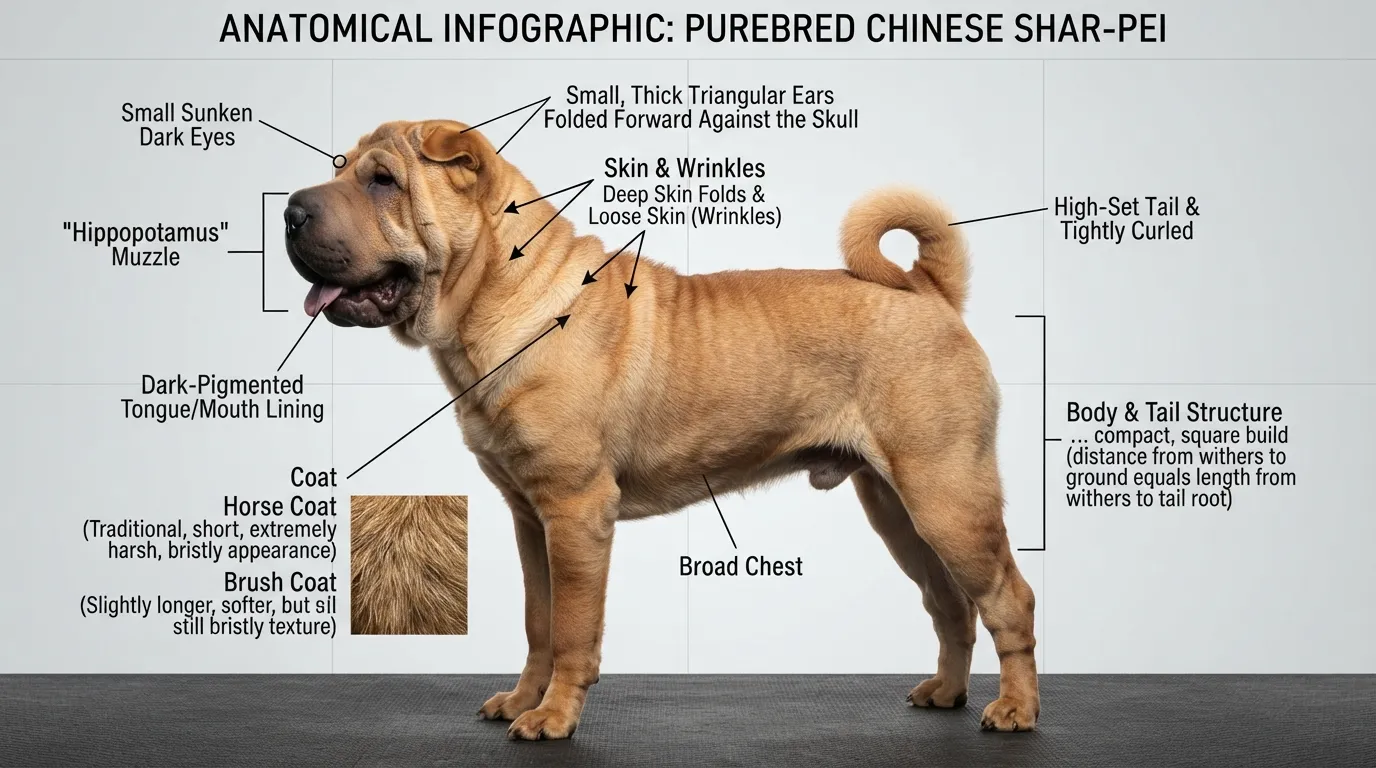
The Chinese Shar-Pei is a medium-sized dog with a compact, square-built frame. According to official breed standards, adult males stand between 18 and 20 inches tall at the shoulder and typically weigh 45 to 65 pounds. Females are slightly smaller, generally measuring 17 to 19 inches in height and weighing between 35 and 50 pounds. Despite their medium stature, both sexes possess a surprisingly heavy, solid bone structure that gives them a grounded, powerful presence.
Coat Types and Colors
The coat is one of the breed’s defining hallmarks—in fact, “Shar-Pei” roughly translates to “sand skin,” describing its unique, harsh texture. The American Kennel Club recognizes two primary coat types:
Horse Coat: Extremely short, stiff, and bristly. It stands completely off the body and can feel scratchy to human skin. This is the most traditional coat style.
Brush Coat: Slightly longer (up to 1 inch at the withers) and softer to the touch, though still straight and off-standing.
The coat comes in any solid color except white, which is a disqualifying fault in show standards. Common colors include fawn, red, cream, black, blue, and sable. Darker shading along the back and ears is frequently seen and permitted.
Signature Features
Several unique anatomical traits instantly distinguish the Shar-Pei from other breeds:
Deep Wrinkles: Heavy skin folds cover the head, neck, and shoulders, creating their famous “frowning” expression.
Blue-Black Tongue: A pigment trait shared naturally with only the Chow Chow. The mouth roof, gums, and tongue feature deep blue-black pigmentation.
Clam-Shell Ears: Unusually small, thick, triangular ears that lie flat against the skull, curved slightly at the tips like tiny clam shells.
Sunken Eyes: Small, almond-shaped, deep-set eyes. Because the heavy skin folds frame the eye area closely, the breed is structurally prone to entropion—a condition where eyelids roll inward, which is detailed later in our health section.
Standard vs. Miniature Shar-Pei
While the standard Shar-Pei remains the only official variety recognized by major kennel clubs, you may encounter so-called “Miniature Shar-Pei” dogs. These are selectively bred down to stand under 16 inches at the shoulder and weigh under 40 pounds.
It is worth noting that the broader breed community remains divided on this distinction. Purists and major registries view them simply as undersized Shar-Pei rather than a distinct breed variety, warning buyers to ensure breeders prioritize structural health over breeding strictly for smaller sizes.
Shar-Pei Puppies — What to Expect
If you bring home a Shar-Pei puppy, expect extreme wrinkliness. Puppies are born covered in exaggerated, loose skin folds from head to tail. As they grow into their frames, they gradually “grow into” their skin, leaving the adult coat wrinkled primarily around the head, neck, and shoulders.
To set your puppy up for success, introduce gentle skin fold cleaning and ear handling during their very first week home. Normalizing daily hygiene routines early prevents resistance when cleaning their skin folds becomes a lifelong requirement.
Chinese Shar-Pei Temperament and Personality
Family Loyalty and Bonding
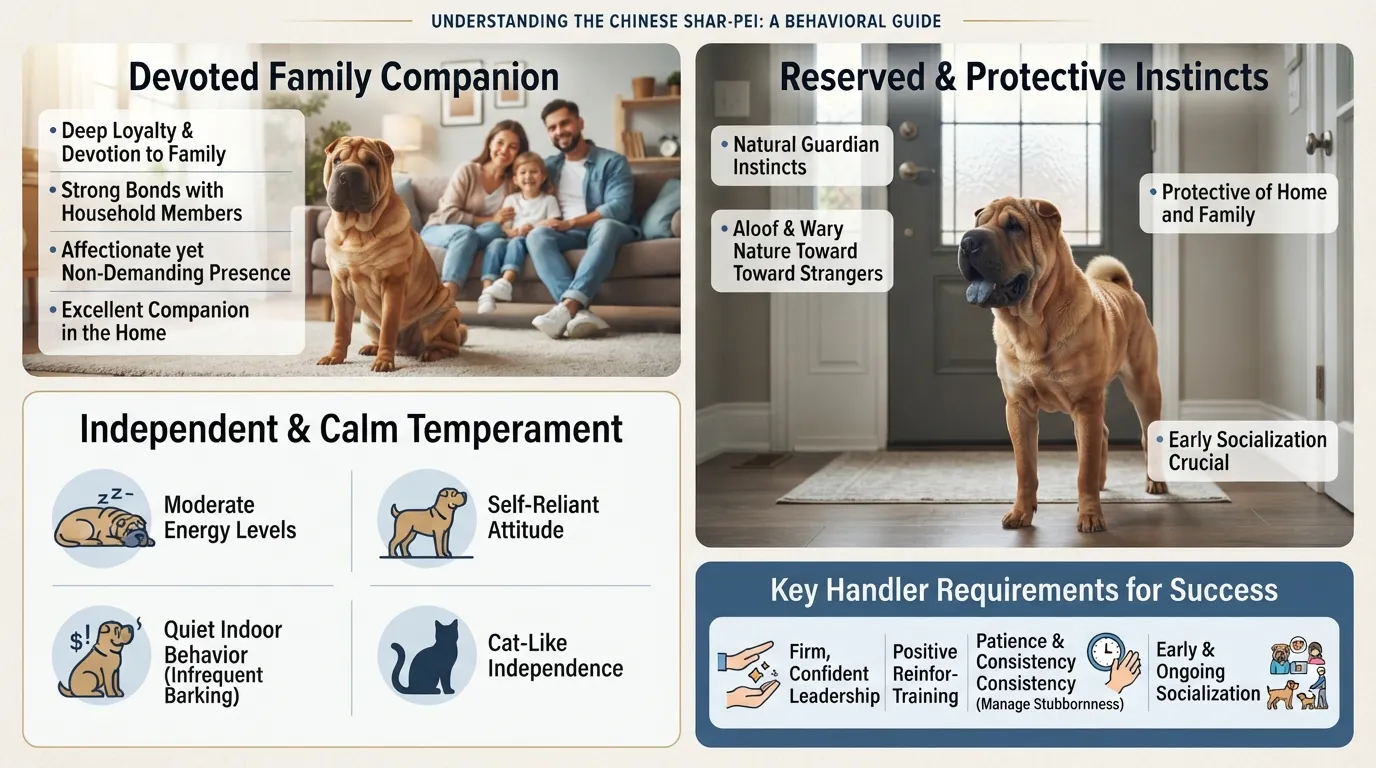
Is a Chinese Shar-Pei a good dog for family life? For the right owner, absolutely. The Shar-Pei is intensely loyal, forming a deep, unbreakable bond with its primary household. Indoors, they display a calm, almost serene presence, rarely being overly needy or hyperactive. They prefer to shadow their favorite humans quietly, acting as a watchful guardian. This unwavering devotion makes them exceptionally loving companions, provided their independent nature is respected.
Behavior With Strangers
Rooted in their history as ancient farm guards, Shar-Peis possess a naturally aloof and reserved demeanor toward unfamiliar people. They are not the type of dog to enthusiastically greet visitors at the front door. Instead, they evaluate strangers with a cautious, discerning eye. Without intentional, early socialization, this natural guard-dog instinct can easily cross into overprotectiveness or unwarranted suspicion, making structured introductions to guests essential.
With Kids and Other Pets
Shar-Peis can coexist wonderfully with children when raised together from puppyhood and taught mutual respect. Because they value their personal space and dislike rough handling, interactions with younger kids always require active adult supervision.
When it comes to other animals, caution is necessary:
Other Dogs: The breed carries a strong territorial instinct and can exhibit same-sex dog aggression. Early canine socialization and neutral introduction boundaries are critical.
Small Pets: Their historical background as farm hunters gives them a moderate-to-high prey drive, meaning cats and small animals may require careful management or separate living quarters.
Do Shar-Peis Bark a Lot?
Unlike many watchdog breeds, Shar-Peis are low-to-moderate barkers. They rarely engage in nuisance barking without a clear reason. Instead, a Shar-Pei typically reserves its deep, authoritative bark to alert you of approaching strangers or unusual noises around the perimeter. This controlled noise level, combined with their calm indoor energy, makes them surprisingly well-suited for apartment living—provided their daily physical and mental exercise needs are met.
Are Shar-Peis Aggressive? Understanding the Behavior
When researching the Chinese Shar-Pei, prospective owners frequently ask whether the breed is inherently aggressive or listed on dangerous dog registries. The short answer is nuanced: while Shar-Peis possess strong guarding instincts, aggression is not an inevitable breed trait, but rather the result of genetics, socialization, and handling.
Dangerous Breed Lists & Legal Status
Officially, major kennel clubs do not classify the Shar-Pei as an aggressive breed. However, because of their history as guardian dogs and their muscular build, certain local municipalities or private insurance companies may include them on Breed-Specific Legislation (BSL) lists or restricted insurance policy registries. Regulations vary significantly by location, so checking local ordinances and home insurance policies is always recommended before bringing one home.
Root Causes of Aggressive Behaviors
When a Shar-Pei exhibits aggressive tendencies—such as growling, snapping, or intense territorial guarding—it typically stems from specific underlying triggers rather than malice:
Under-Socialization: A Shar-Pei that wasn’t exposed to diverse environments, strange dogs, and unfamiliar people during puppyhood will default to fear or suspicion when faced with new situations.
Intense Guarding Instincts: Centuries of selective breeding as farm guardians mean Shar-Peis take home defense seriously. Without clear guidance from their owner, they may decide on their own who poses a threat.
Pain or Medical Discomfort: Shar-Peis are prone to painful conditions like severe skin fold pyoderma, ear infections, or joint dysplasia. Irritability caused by hidden physical discomfort is a frequent, overlooked cause of sudden behavioral changes.
Dominance-Based or Harsh Training: Punitive training techniques often backfire with this sensitive yet stubborn breed, creating anxiety and defensive aggression.
Prevention & Behavioral Management
Preventing unwanted aggression in a Shar-Pei requires a proactive approach starting from day one:
Early & Continuous Socialization: Expose your puppy to a wide variety of sights, sounds, adults, children, and neutral dogs between 8 and 16 weeks of age. Keep experiences positive and calm.
Positive Reinforcement Training: Use reward-based training methods. Shar-Peis respond exceptionally well to clear consistency, praise, and high-value treats, whereas harsh corrections erode trust.
Establish Calm Leadership: Provide structured daily routines, clear boundaries, and secure management (such as leash control in public) so your dog trusts you to handle novel situations.
Training and Socialization Tips

Training a Chinese Shar-Pei requires a firm understanding of their independent, highly intelligent, and sometimes headstrong nature. Historically bred to work autonomously as farm guardians, Shar-Peis are capable of making their own decisions if they feel leadership is lacking. They are not eager-to-please in the traditional retriever sense, meaning consistent, structured guidance is critical right from the start.
Early Socialization Is Non-Negotiable
Because of their natural reserve toward strangers and strong protective instincts, structured socialization should begin the moment your puppy arrives home. Enrolling in accredited puppy socialization classes between 8 and 16 weeks of age is one of the best investments you can make.
Beyond formal classes, focus on creating controlled, positive exposures:
Diverse Environments: Walk them through different settings—quiet residential streets, busy park perimeters, and suburban neighborhoods—to build confidence around novel stimuli.
Neutral Canine Exposures: Focus on teaching your Shar-Pei to remain calm and neutral around other dogs rather than forcing play dates, respecting their naturally reserved social boundary.
Handling Desensitization: Touch their paws, ears, tail, and skin folds daily while giving treats. This prepares them for painless vet visits and routine grooming sessions later in life.
Positive Reinforcement vs. Harsh Correction
Shar-Peis possess a sensitive, proud temperament beneath their tough exterior. Heavy-handed tactics, physical corrections, or yelling will quickly destroy trust, leading to stubborn resistance or defensive behaviors.
Reward-Based Motivation: Use high-value treats, soft verbal praise, and short play sessions to reward desired behavior. Shar-Peis learn remarkably fast when they see a direct benefit.
Keep Sessions Short: Long, repetitive drills bore an independent breed. Aim for 5- to 10-minute focused training sessions twice a day to keep their attention sharp.
Set Clear Boundaries: Consistency across all family members is essential. If the dog is not allowed on the sofa or to greet guests by jumping, enforce that rule uniformly from day one.
Exercise Needs
Daily Exercise Requirements
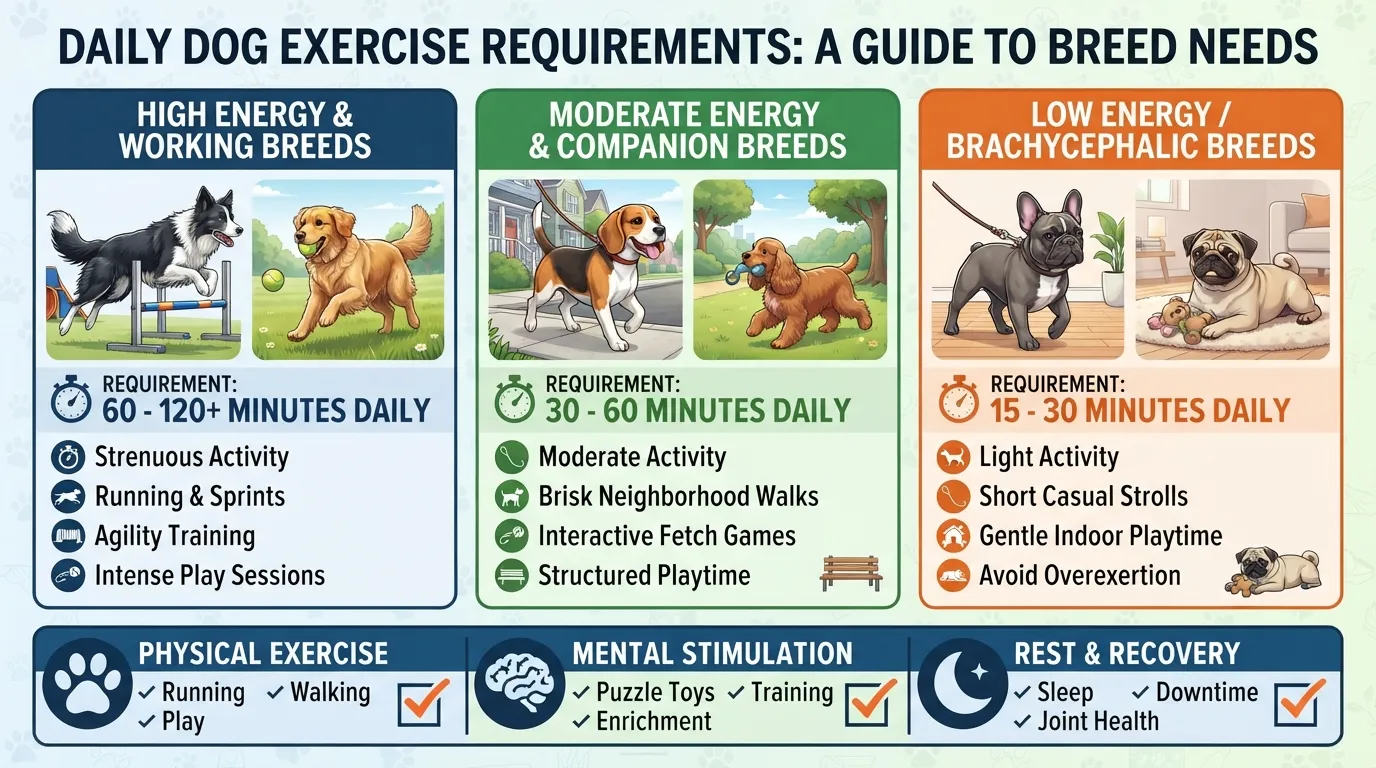
Despite their muscular build and working heritage, the Chinese Shar-Pei is a dog of moderate energy. They do not require hours of intense running or high-impact agility work to remain happy and well-adjusted. A solid 30 to 45 minutes of daily exercise—split into two brisk neighborhood walks and a short play session in a securely fenced yard—is usually plenty to satisfy their physical and mental needs.
Engaging their sharp minds through sniff walks or simple scent-work games indoors provides excellent mental stimulation without overexerting their bodies.
Heat & Humidity Sensitivity
Exercising a Shar-Pei requires careful attention to weather conditions. Because of their unique anatomy—specifically their tight facial skin folds, padded muzzles, and short coat structure—Shar-Peis are particularly susceptible to overheating and heatstroke.
To keep your Shar-Pei safe during warmer months:
Schedule Around Peak Heat: Limit outdoor activities to early mornings and late evenings when ambient temperatures are coolest.
Avoid Strenuous Summer Runs: Keep summer walks short and casual; never force your Shar-Pei to jog or run alongside a bicycle in direct sunlight or high humidity.
Monitor Breathing Closely: Watch for warning signs of heat stress, such as excessive panting, heavy drooling, pale or bright red gums, and sudden lethargy.
Provide Hydration & Shade: Always carry fresh water during outings and stick to shaded paths whenever possible.
Grooming and Skin Fold Care
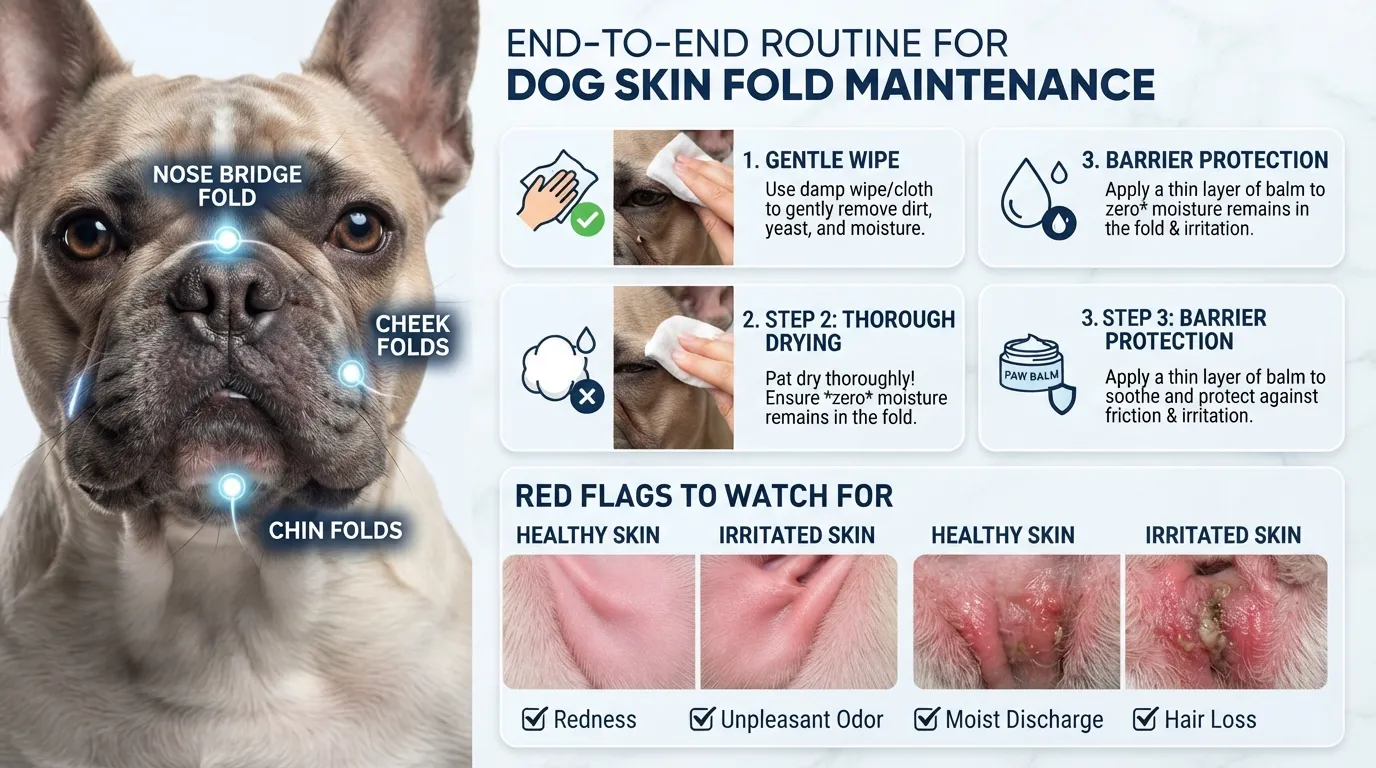
Skin Fold Maintenance & Infection Prevention
While the Shar-Pei’s short coat makes them relatively low-maintenance on the shedding front, their iconic deep wrinkles demand diligent daily hygiene. The dark, warm, and moist environments inside these skin folds create ideal breeding grounds for bacteria, yeast, and fungal infections (pyoderma).
To protect your dog’s skin:
Clean the Folds Daily: Gently wipe between facial, neck, and body wrinkles using a soft, damp cloth or specialized veterinary skin wipes.
Dry Thoroughly: Moisture is the primary trigger for skin fold dermatitis. After wiping or bathing, always dry every fold completely with a clean towel or cotton pad.
Inspect for Redness: Check daily for signs of inflammation, foul odor, raw patches, or discharge. According to veterinary care protocols outlined by VCA Animal Hospitals, maintaining a strict cleaning schedule and applying prescribed antiseptic barriers is essential to prevent chronic skin fold infections.
General Grooming Routine
Beyond skin fold care, routine grooming for a Shar-Pei is straightforward:
Bathing Frequency: Wash your Shar-Pei every 4 to 6 weeks using a mild, hypoallergenic, or oatmeal-based dog shampoo. Avoid frequent bathing, as it strips natural skin oils and worsens skin dryness.
Ear Cleaning: Due to their unusually tight, narrow ear canals (“clam-shell” ear structure), Shar-Peis are particularly prone to chronic ear infections. Inspect ears weekly and clean with a vet-approved, drying ear solution.
Nail Trimming: Trim nails every 3 to 4 weeks. If you can hear their nails clicking against hard floors, they are too long and risk compromising paw structure.
Is the Chinese Shar-Pei Hypoallergenic?
To put it plainly: no dog breed is 100% hypoallergenic, and the Chinese Shar-Pei is certainly not. Allergies are triggered by dander, saliva, and urine rather than fur alone. While the Shar-Pei sheds low-to-moderate amounts of hair, their short, stiff “horse coat” bristles can irritate sensitive human skin on contact (Shar-Pei rash). If you or a family member suffer from severe pet allergies, low-dander breeds like Poodles or Bichon Frises are significantly better choices.
Chinese Shar-Pei Health Issues
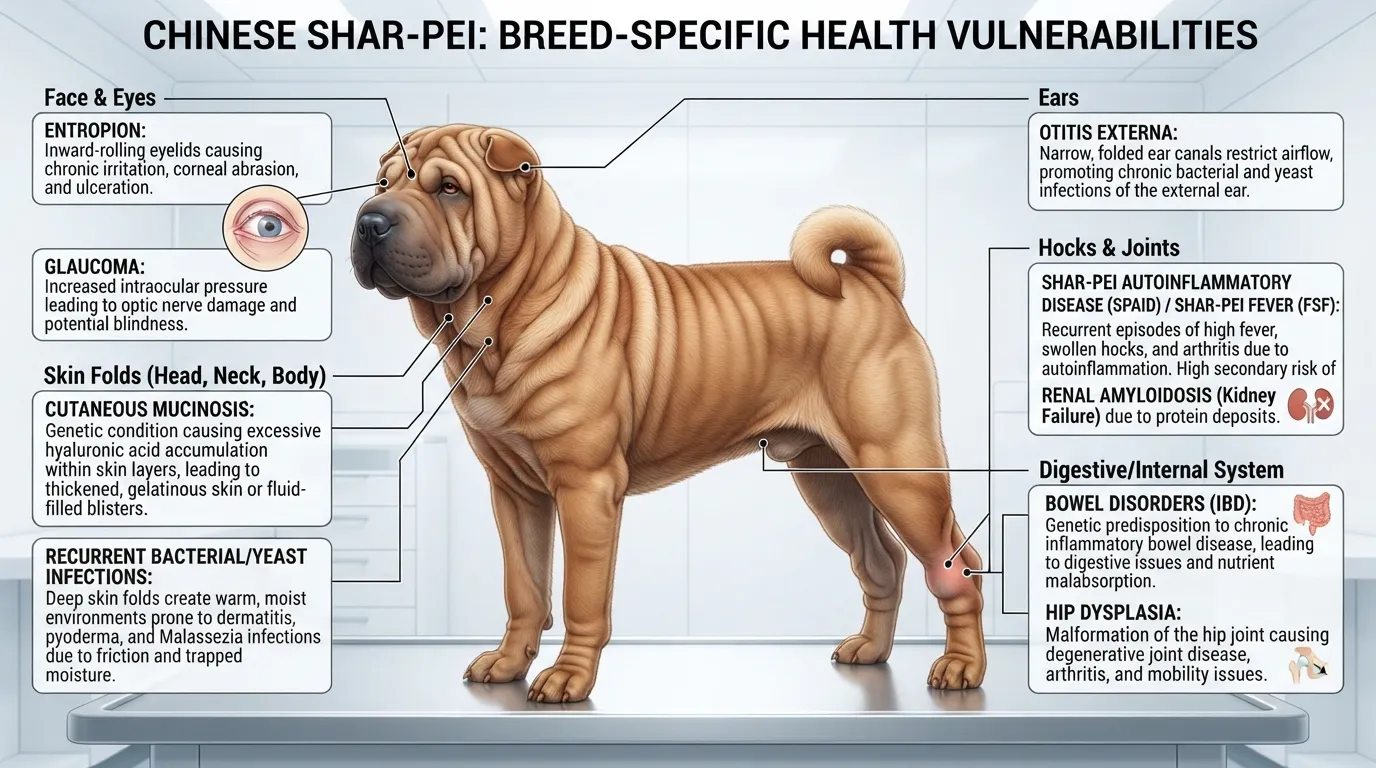
While Chinese Shar-Peis are resilient and sturdy dogs, they are genetically predisposed to several hereditary health conditions. Centuries of selective breeding—particularly focusing on their deep skin folds and distinct physical features—have made them more prone to skin, eye, and systemic medical issues than many other medium-sized breeds. Working with a responsible breeder who performs comprehensive health screenings is essential to minimize these risks.
Skin Conditions
The very feature that makes the Shar-Pei famous—their loose, folded skin—also poses their most frequent medical challenge.
Allergic Dermatitis: Shar-Peis often suffer from environmental or food allergies, leading to intense itching, red skin, and secondary bacterial or yeast infections within their skin folds.
Demodicosis (Demodectic Mange): Caused by an overgrowth of Demodex mites, this condition is particularly common in young Shar-Peis (juvenile-onset). It causes patchy hair loss, scaling, and skin lesions, often pointing to an underlying immune system imbalance.
Shar-Pei Fever (Familial Shar-Pei Fever / FSF)
Familial Shar-Pei Fever is an auto-inflammatory, hereditary syndrome unique to this breed. It is characterized by recurring episodes of unexplained high fever (often reaching 103°F to 107°F) accompanied by swelling and pain in the hock joints (Swollen Hock Syndrome).
The primary danger of FSF is not the fever itself, but its long-term consequence: systemic amyloidosis. This condition causes abnormal protein deposits to accumulate in body organs, primarily leading to progressive kidney or liver failure.
Eye Problems — Entropion
Entropion is an inherited eye abnormality widespread in the Shar-Pei breed due to the heavy skin folds surrounding their eye sockets. In dogs with entropion, the eyelid rolls inward, causing eyelashes and hair to constantly rub against the cornea.
If left untreated, entropion causes severe pain, corneal ulcers, and potential blindness. Most affected dogs require surgical correction (“tacking” in puppies or permanent eyelid surgery in adults) to lift the skin and restore normal eyelid alignment.
Elbow Dysplasia & Joint Issues
Like many medium and large breeds, Shar-Peis can inherit developmental joint disorders such as elbow dysplasia and hip dysplasia. These conditions occur when joint components develop abnormally, causing joint laxity, pain, lameness, and early-onset osteoarthritis. Orthopedic evaluations from bodies like the Orthopedic Foundation for Animals (OFA) are vital for breeding stock.
Hypothyroidism and Vitamin B12 Deficiency
Hypothyroidism: Occurs when the thyroid gland produces inadequate levels of thyroid hormone, causing weight gain, lethargy, skin problems, and chronic hair loss. It is managed with daily synthetic hormone medication.
Cobalamin (Vitamin B12) Deficiency: Studies highlighted by veterinary resources, including reference guidelines from the American Kennel Club (AKC) and VCA Hospitals, note that Shar-Peis have a unique genetic susceptibility to intestinal B12 malabsorption. This can lead to chronic gastrointestinal distress, weight loss, and lethargy, often requiring regular B12 supplementation.
Hiatal Hernia
Shar-Peis are overrepresented among breeds prone to hiatal hernias—a structural defect where part of the stomach slides through the diaphragm into the chest cavity. Symptoms include regurgitation, respiratory distress, hypersalivation, and vomiting after meals. Mild cases are managed with medical therapy and elevated feeding bowls, while severe cases require surgical repair.
How Long Do Chinese Shar-Peis Live?
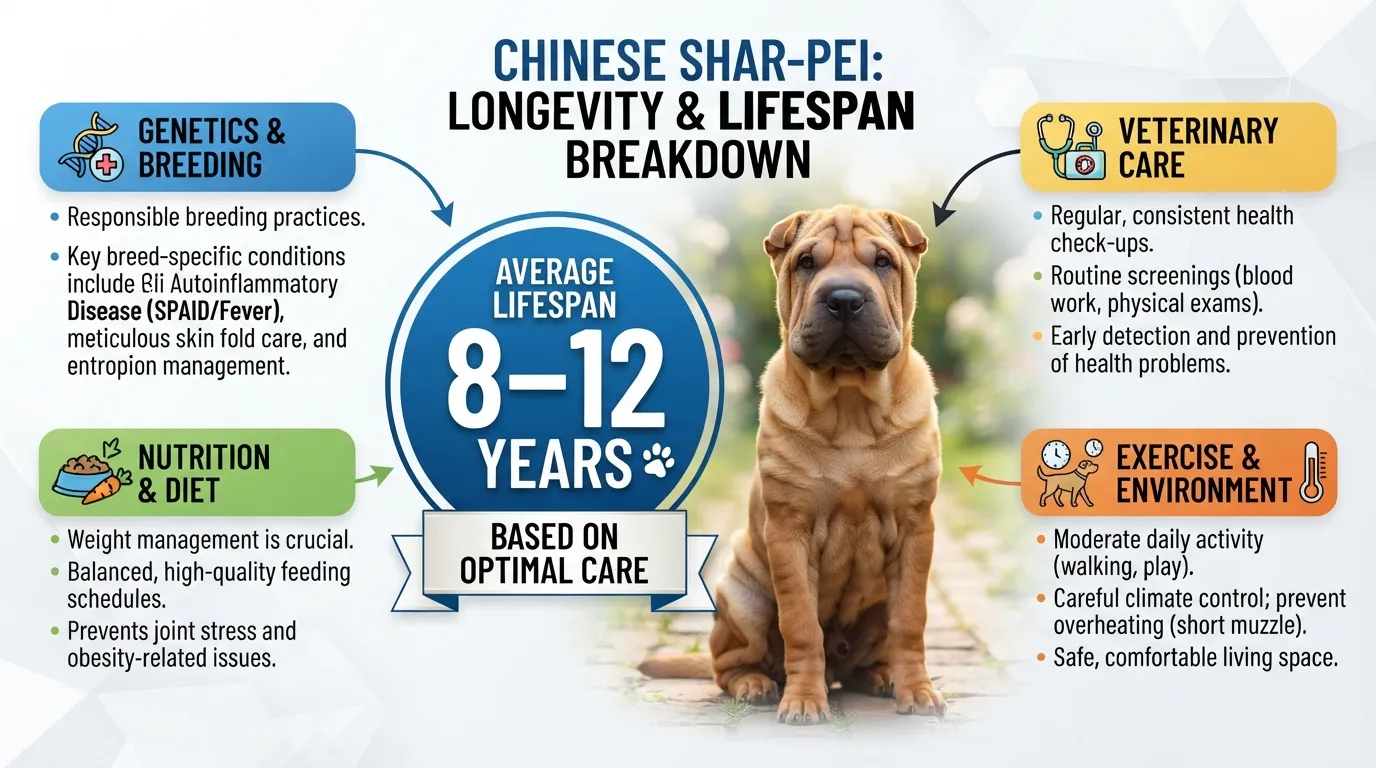
The average lifespan of a Chinese Shar-Pei is 9 to 12 years. While this range is typical for medium-sized purebred dogs, actual longevity varies based on genetic health, care routines, and diet. Large-scale breed lifespan studies, including comprehensive canine health data published by veterinary research bodies in the UK, show a median lifespan of approximately 10.6 years for the breed.
Key Factors Influencing Their Lifespan
While genetics play a foundational role, day-to-day care directly impacts how long and comfortably a Shar-Pei lives:
Genetic Screening: Dogs originating from lines screened for Familial Shar-Pei Fever (FSF), renal amyloidosis, and hip dysplasia consistently show higher survival rates into their senior years.
Weight & Diet Management: Keeping your Shar-Pei at a lean, healthy weight prevents unnecessary strain on their joints and reduces systemic inflammation, directly lowering the risk of metabolic complications.
Skin & Ear Care Diligence: Preventing chronic, untreated skin fold pyoderma and deep ear infections avoids long-term antibiotic overuse and secondary systemic stress.
Routine Veterinary Checks: Bi-annual vet visits, regular B12 monitoring, and proactive bloodwork allow for early detection of kidney issues or thyroid imbalances before they turn critical.
Curious how old your Shar-Pei is in human years? Try our Dog Age Calculator to calculate your dog’s exact age milestone instantly.
Chinese Shar-Pei Price — How Much Do They Cost?

Chinese Shar-Pei Price — How Much Do They Cost?
Bringing a Chinese Shar-Pei into your home involves both a significant initial purchase price and ongoing medical and nutritional investments. Known for their unique health needs, Shar-Peis are considered a moderately expensive breed to maintain over their lifetime.
Shar-Pei Ownership Cost Breakdown
The cost of acquiring a Shar-Pei depends heavily on whether you choose to adopt from a specialized rescue or buy a puppy from an accredited breeder. The tables below outline what to expect for initial startup expenses and ongoing monthly care.
Initial One-Time Costs
| Expense Category | Estimated Cost (USD) | Details |
|---|---|---|
| Puppy / Adoption Fee | $300 – $2,500+ | Rescue adoption ($300–$500) vs. Purebred registered breeder ($1,200–$2,500+) |
| Initial Veterinary Care | $200 – $400 | First vaccinations, microchipping, and deworming |
| Spay / Neuter Surgery | $250 – $600 | Costs vary based on dog weight and local clinic pricing |
| Essential Supplies | $150 – $300 | Crate, bedding, leash, collar, stainless steel bowls, and grooming wipes |
| Total One-Time Startup | $900 – $3,800+ | Varies by breeder reputation and region |
| Expense Category | Puppy / Adoption Fee |
|---|---|
| Estimated Cost | $300 – $2,500+ |
| Details | Rescue adoption ($300–$500) vs. Purebred registered breeder ($1,200–$2,500+) |
| Expense Category | Initial Veterinary Care |
|---|---|
| Estimated Cost | $200 – $400 |
| Details | First vaccinations, microchipping, and deworming |
| Expense Category | Spay / Neuter Surgery |
|---|---|
| Estimated Cost | $250 – $600 |
| Details | Costs vary based on dog weight and local clinic pricing |
| Expense Category | Essential Supplies |
|---|---|
| Estimated Cost | $150 – $300 |
| Details | Crate, bedding, leash, collar, stainless steel bowls, and grooming wipes |
| Total One-Time Startup | $900 – $3,800+ |
|---|---|
| Details | Varies by breeder reputation and region |
Monthly & Annual Care Costs
| Ongoing Expense | Estimated Monthly Cost (USD) | Annual Impact |
|---|---|---|
| High-Quality Diet | $60 – $90 | $720 – $1,080 |
| Routine Health & Skin Care | $30 – $50 | $360 – $600 |
| Pet Insurance (Recommended) | $45 – $80 | $540 – $960 |
| Routine Vet Checkups & Meds | $25 – $50 | $300 – $600 |
| Total Ongoing Care | $160 – $270 / month | $1,920 – $3,240 / year |
| Ongoing Expense | High-Quality Diet |
|---|---|
| Monthly Cost | $60 – $90 |
| Annual Impact | $720 – $1,080 |
| Ongoing Expense | Routine Health & Skin Care |
|---|---|
| Monthly Cost | $30 – $50 |
| Annual Impact | $360 – $600 |
| Ongoing Expense | Pet Insurance (Recommended) |
|---|---|
| Monthly Cost | $45 – $80 |
| Annual Impact | $540 – $960 |
| Ongoing Expense | Routine Vet Checkups & Meds |
|---|---|
| Monthly Cost | $25 – $50 |
| Annual Impact | $300 – $600 |
| Total Ongoing Care | $160 – $270 / month |
|---|---|
| Annual Impact | $1,920 – $3,240 / year |
Where to Get a Chinese Shar-Pei — Breeder vs. Rescue
Whether you decide to buy a puppy or adopt an adult dog, sourcing your Shar-Pei responsibly is the single most effective way to avoid severe genetic health issues and behavioral challenges down the road.
| Reputable Breeder | Rescue & Adoption |
|---|---|
|
|
| Reputable Breeder |
|---|
|
| Rescue & Adoption |
|---|
|
Questions to Ask a Responsible Breeder
If purchasing a puppy, insist on seeing health clearances for both parent dogs. A ethical breeder will willingly provide documented testing results for:
Hip & Elbow Evaluations: Certified by the Orthopedic Foundation for Animals (OFA) or PennHIP.
Eye Certifications: OFA/CAER exam documentation confirming clear eyes (no unmanaged entropion).
DNA & Health Screening: Genetic history verifying low risk for Familial Shar-Pei Fever (FSF) and thyroid dysfunction.
Adoption & Red-Flag Warnings
Adopting through breed-specific rescues—such as national or regional Shar-Pei rescue networks—is a fantastic way to give an adult dog a loving home while benefiting from foster parents who already understand the dog’s personality and skin care routine.
Avoid these Red Flags when shopping for a puppy:
Breeders selling “rare” colors (like solid white) or marketing undersized “Teacup” Shar-Peis for inflated prices.
Sellers who refuse to let you view the mother dog or tour the rearing facilities.
Puppies sold without health records, contracts, or veterinarian checkup paperwork.
Diet and Nutrition

Because Chinese Shar-Pei dogs are uniquely prone to food allergies, sensitive digestive systems, and skin fold inflammation, feeding them a carefully balanced diet is essential. What goes into your Shar-Pei’s bowl directly reflects on their skin health, coat condition, and overall energy levels.
Limited-Ingredient & Skin-Support Formulas
Due to their heightened susceptibility to food intolerances and allergic dermatitis, many Shar-Peis thrive on limited-ingredient diets (LID) or novel protein formulas. High-grade recipes featuring novel proteins like salmon, lamb, or duck—paired with easily digestible carbohydrates like sweet potatoes—help minimize systemic inflammation and skin flare-ups.
Prioritize Omega Fatty Acids: Look for foods rich in Omega-3 and Omega-6 fatty acids (such as wild salmon oil or flaxseed). These nutrients strengthen the skin’s moisture barrier and relieve itchy, dry skin folds.
Avoid Common Fillers: Steer clear of low-quality foods heavy in artificial preservatives, artificial dyes, corn, wheat, or soy, as these ingredients are frequent triggers for skin pyoderma and gastrointestinal distress.
Portion Control & Weight Management
Maintaining a lean, athletic body weight is critical for a Shar-Pei’s long-term comfort. Obesity adds excess physical weight that strains their joints, accelerating elbow and hip dysplasia. Furthermore, weight gain creates deeper, tighter skin folds that trap heat and moisture, drastically increasing the likelihood of painful bacterial skin infections.
Measure Meal Portions: Feed two measured, calorie-controlled meals daily rather than free-feeding. An average adult Shar-Pei requires roughly 2 to 2.5 cups of high-quality dry kibble per day, divided across two meals (adjust based on age, activity level, and vet recommendations).
Limit Heavy Treats: Keep training treats small and low-calorie, accounting for no more than 10% of your dog’s daily caloric intake. Replacing commercial treats with raw carrots or blue-ribbon kibble keeps reward sessions healthy and waistline-friendly.
Living Conditions — Is a Shar-Pei Right for Your Home?
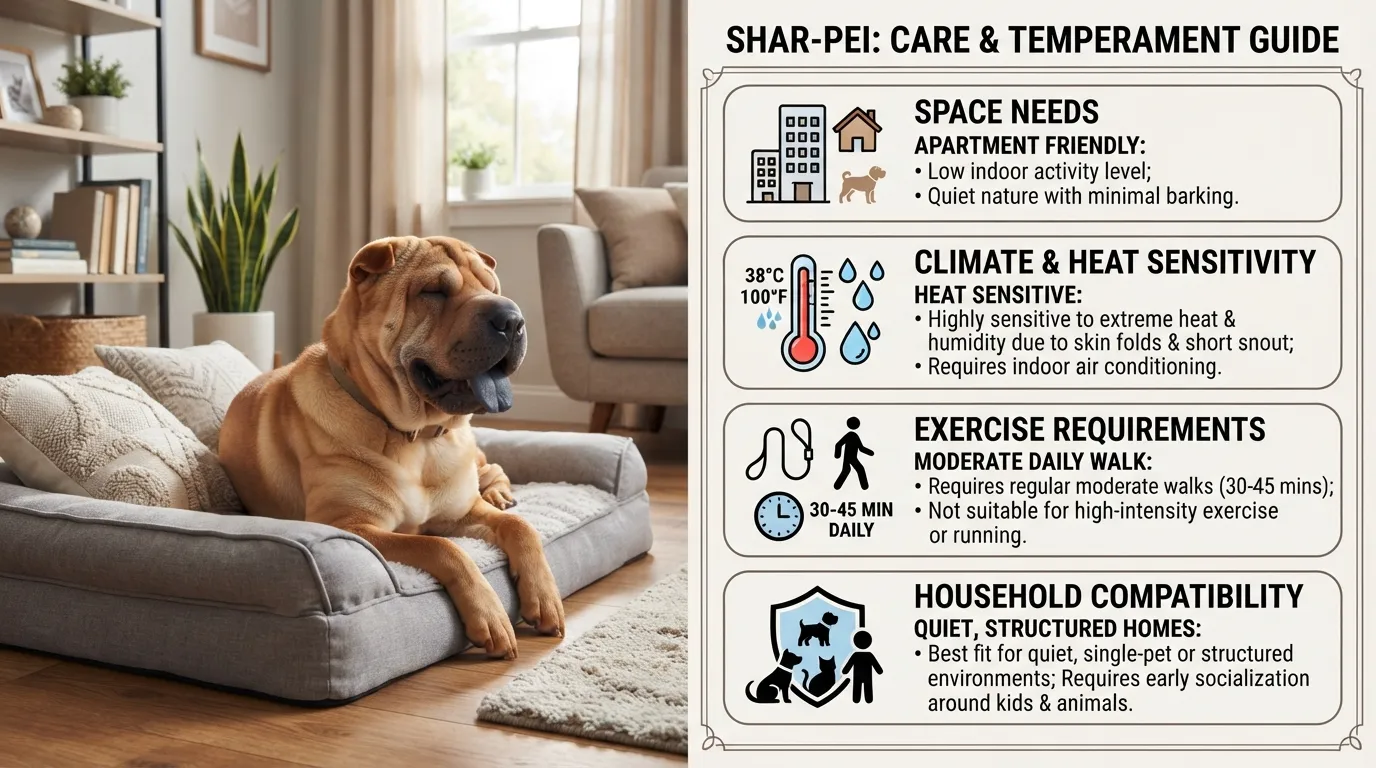
Apartment Living and Space Requirements
Despite their medium size and muscular build, the Chinese Shar-Pei adapts remarkably well to apartment living. Indoors, they are calm, serene, and respectful of space, rarely exhibiting the frantic energy or constant pacing seen in high-drive working breeds. Because they are low-to-moderate barkers who reserve their voice for genuine alert situations, they tend to be quiet neighbors.
However, their suitability for smaller living spaces depends entirely on environmental control. Shar-Peis require an climate-controlled indoor environment with reliable air conditioning during warmer months. As noted in our exercise section, their short muzzles and padded facial skin make them exceptionally sensitive to heat and high humidity. Access to cool, shaded spaces indoors is essential to prevent overheating during summer.
Is the Shar-Pei Suitable for First-Time Owners?
To put it plainly: the Chinese Shar-Pei is generally not recommended for novice or first-time dog owners.
While their calm demeanor and clean indoor habits are appealing, their independent mindset and strong guard-dog instincts demand an owner who understands canine body language and confident, positive leadership. A first-time owner may struggle with the breed’s natural aloofness toward strangers, potential same-sex dog aggression, or stubborn resistance to traditional training methods.
Furthermore, managing their ongoing health needs—such as daily skin fold hygiene, strict dietary monitoring, and early detection of hereditary conditions like Shar-Pei Fever—requires a dedicated commitment of time, effort, and finances. The Shar-Pei thrives best in a home with an experienced owner who can offer firm boundaries, early socialization, and attentive daily care.
Pros and Cons of Owning a Chinese Shar-Pei
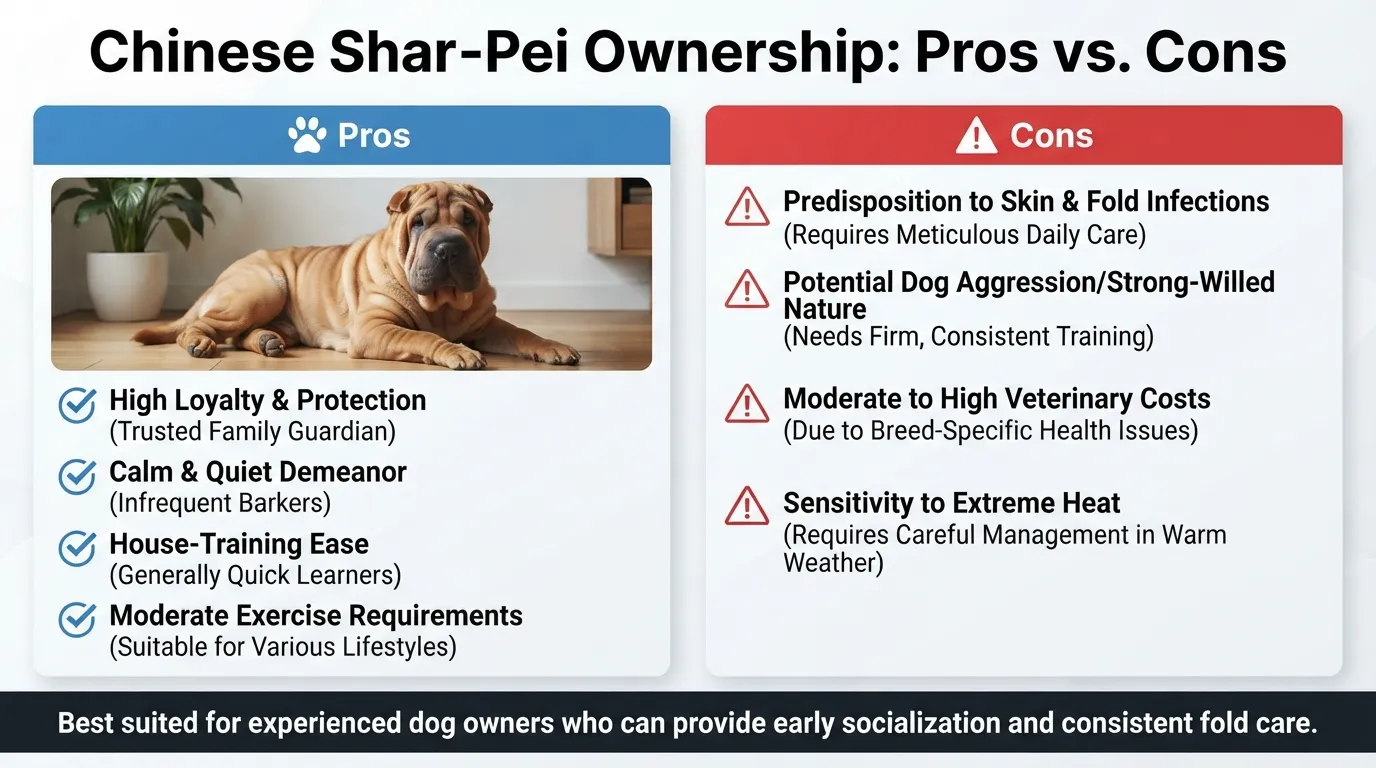
Before bringing a Chinese Shar-Pei into your home, weighing their unique characteristics against your lifestyle is essential. While their loyalty and calm indoor demeanor make them devoted family members, their independent nature and intensive care requirements mean they are not the right fit for every household.
| Pros (Why You’ll Love Them) | Cons (Challenges to Consider) |
| Calm Indoor Presence: Low energy indoors; content lounging quietly beside their owners. | Prone to Health Issues: High risk for Familial Shar-Pei Fever, entropion, and chronic skin fold pyoderma. |
| Low Shedding & Easy Coat Care: Short coat requires minimal brushing and produces very little shedding. | Stubborn & Independent: Require consistent, confident leadership and may resist repetitive traditional training. |
| Unwavering Loyalty: Deeply devoted to their core household with strong, natural protective instincts. | Aloof & Guarded: Reserved with strangers; prone to same-sex dog aggression without continuous socialization. |
| Moderate Exercise Needs: Require only 30–45 minutes of daily activity, making them great for structured routines. | Intensive Hygiene Requirements: Skin folds, narrow ear canals, and eyes require daily cleaning and moisture checks. |
| Quiet & Apartment-Friendly: Rare nuisance barkers who respect indoor boundaries when properly exercised. | Extreme Heat Sensitivity: Padded muzzles and tight skin make them prone to quick overheating in warm weather. |
Chinese Shar-Pei vs. Chow Chow — What's the Difference?
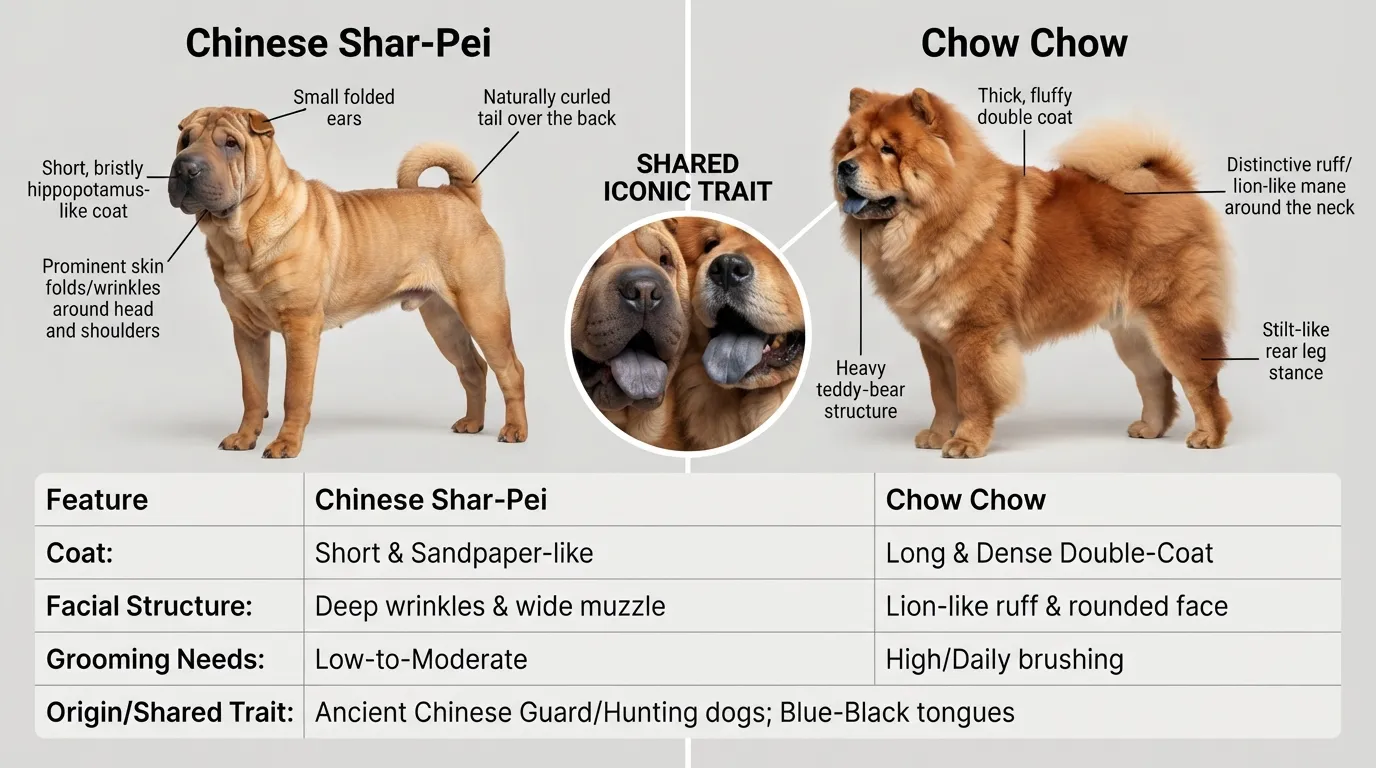
The Chinese Shar-Pei and the Chow Chow are two of the world’s most ancient dog breeds, tracing their roots back thousands of years to ancient China. They are genetically recognized as closest relatives, sharing a deeply reserved, guardian temperament and a distinct, rare physical trait found in almost no other breeds: a blue-black tongue.
Despite their shared lineage, their physical profiles and everyday care requirements differ significantly:
| Trait / Feature | Chinese Shar-Pei | Chow Chow |
|---|---|---|
| Coat Type & Length | Short, bristly "horse coat" or "brush coat" lying flat/off-standing. | Dense, double coat (rough or smooth) with a lion-like ruff around the neck. |
| Grooming Needs | Low hair brushing, but intensive daily skin fold hygiene. | High maintenance; requires frequent brushing to prevent severe matting. |
| Physical Build | Square, muscular, covered in loose skin folds and deep wrinkles. | Sturdy, lion-like frame with a massive, fluffy coat and straight hind legs. |
| Tongue Color | Solid blue-black (mouth roof and gums also pigmented). | Solid blue-black (spotted tongues are a fault in show standards). |
| Temperament | Aloof, calm indoors, loyal guardian, independent. | Highly aloof, cat-like independence, intensely protective. |
| Heat Tolerance | Low (susceptible due to skin folds and short muzzle). | Very low (heavy double coat causes rapid heat retention). |
Watch: Chinese Shar-Pei in Action
More Shar-Pei Videos & Guide
Frequently Asked Questions
Is a Chinese Shar-Pei a good dog?
Are Shar-Pei dogs expensive?
Are Shar-Peis healthy dogs?
Are Shar-Peis on the aggressive list?
Why is my Shar-Pei so aggressive?
How long do Shar-Pei dogs live?
🐾 Other Age Guides

I built Dogagescalculator.com to give dog owners honest, science-backed answers instead of the outdated "×7" myth. Every figure here is checked against AKC, AVMA, and published veterinary research.
More about the author & this site →
Comments