
What Is 15 Dog Years in Human Years? Vet-Verified Answer by Size
Quick Answer: 15 Dog Years in Human Years
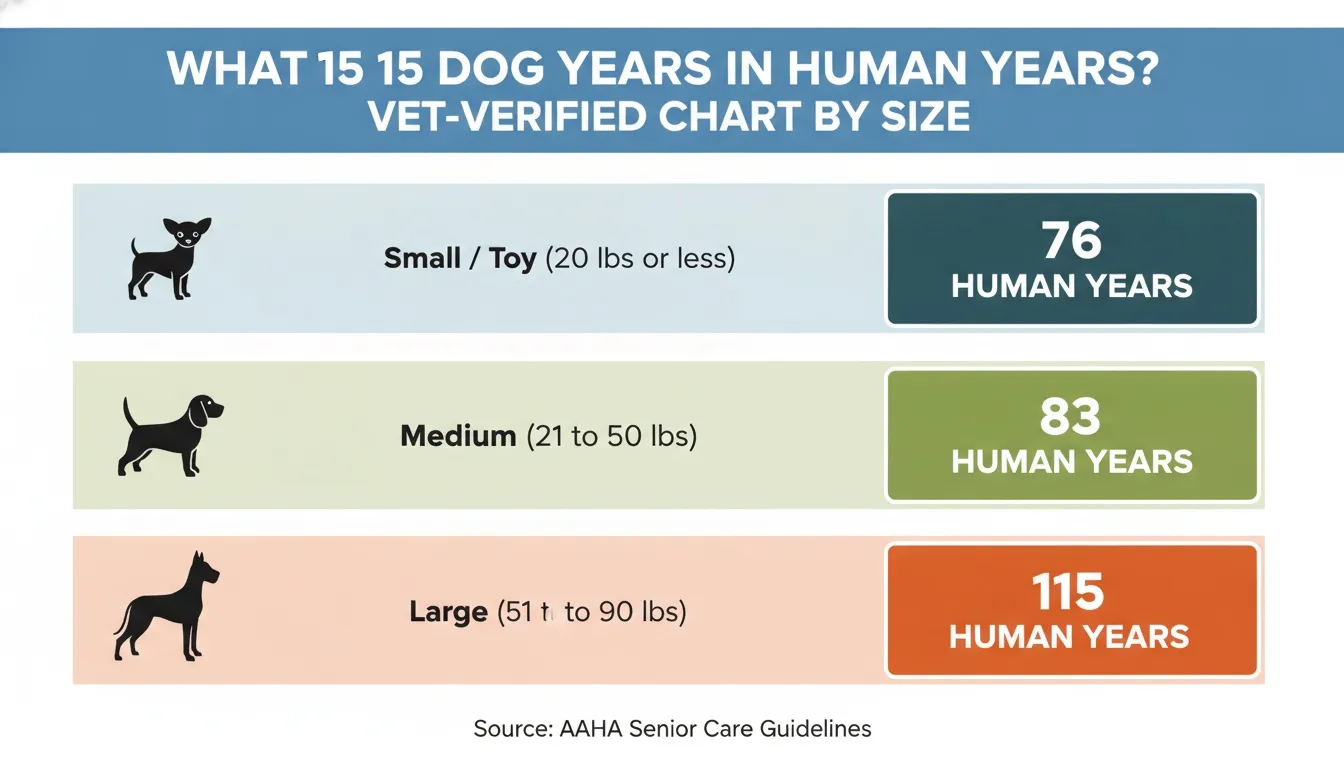
A 15-year-old dog is anywhere between 76 and 115 human years old. This massive gap exists because a dog’s biological clock ticks at different speeds depending on their physical size and weight, meaning smaller breeds stay biologically younger for much longer than large or giant breeds.
15 Dog Years to Human Years by Size AAHA Chart
The old “multiply by 7” rule completely misses the mark here. To get an accurate picture of where your senior dog stands, vets rely on data from the American Animal Hospital Association (AAHA). Their research breaks down the aging process into specific weight categories.
| Dog Size | Weight | 15 Dog Years = Human Years |
| Small (Toy) | ≤20 lbs | 76 |
| Medium | 21–50 lbs | 83 |
| Large | 51–90 lbs | 93 |
| Giant | >90 lbs | 115 |
Think of a 15-year-old Chihuahua like a 76-year-old human—aging, certainly, but often still bright-eyed and moderately active. On the flip side, a Large or Giant breed hitting 15 is the biological equivalent of a human living past 100. It is an incredibly rare, beautiful milestone that requires highly attentive senior care.
What Is 15 Human Years in Dog Years? Reverse Answer
If you flip the question and look at how quickly a young puppy grows, the timeline shifts dramatically. A dog matures faster in their very first year of life than at any other point.
According to the American Veterinary Medical Association (AVMA), a puppy’s first year equals roughly 15 years of human development, taking them from a helpless newborn to a fully grown teenager.
| Human Age Equivalent | Approximate Dog Age |
| 15 Human Years | ~1 Dog Year |
| 24 Human Years | ~2 Dog Years |
| 30 Human Years | ~3 Dog Years |
After that massive initial spike in year one, the biological clock slows down. Year two adds about 9 human years, and every year after that tapers down to an average of 4 to 7 human years depending entirely on your dog’s adult size.
Is 15 Years Old Considered Very Old for a Dog?
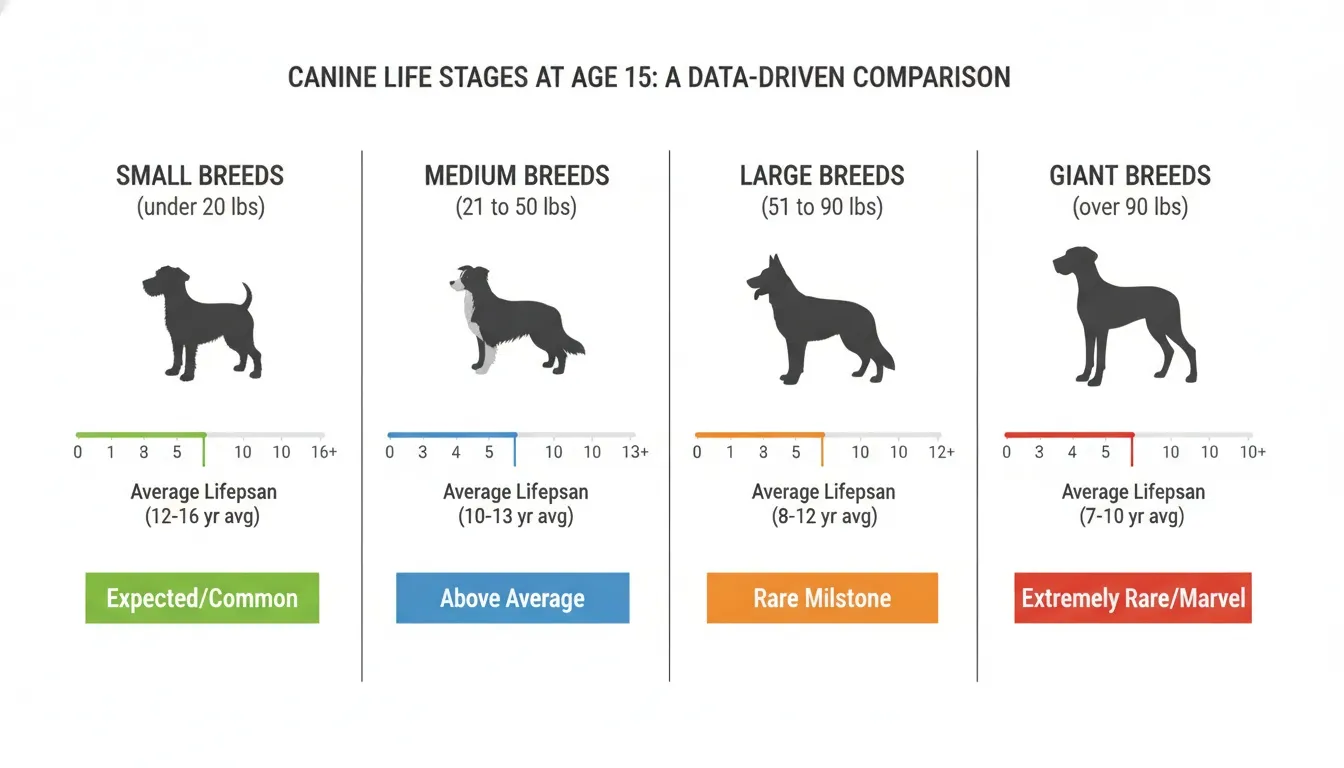
Yes, hitting 15 is a major milestone for any dog, and for most, it means they are officially a centenarian in a fur coat. Whether 15 is “normal” or an absolute statistical miracle depends almost entirely on the number on your dog’s vet scale.
Average Lifespan by Size — How Rare Is 15?
The reality of canine biology is that big bodies wear out much faster than small ones. Data from the American Kennel Club (AKC) shows that average life expectancy plummets as adult weight increases.
| Dog Size | Avg Lifespan | Reaching 15 Is… |
|---|---|---|
| Small | 12–16 yrs | Commonly expected with proper care |
| Medium | 10–13 yrs | Above average and a great achievement |
| Large | 8–12 yrs | Rare and a testament to great genetics and care |
| Giant | 7–10 yrs | Extremely rare—a true medical marvel |
If you own a toy breed, hitting 15 is a normal part of their twilight years. In fact, certain smaller breeds are practically built for the long haul:
Chihuahuas: Frequently live between 15 and 20 years due to their slow cellular aging.
Yorkshire Terriers: Often reach 15 or 16 while maintaining a surprisingly spunky attitude.
Dachshunds: Stubbornly push past the 15-year mark, though spinal health plays a major role.
Pomeranians: Regularly see their 15th birthday with their fluffy coats mostly intact.
Maltese: Routinely hit 15, frequently retaining their puppy-like size and affection.
How Much Longer Can a 15-Year-Old Dog Live?
If your dog is already 15, you are likely wondering how much precious time you have left together. There is no crystal ball, but looking at remaining life expectancy through a size-specific lens gives us a realistic baseline.
| Dog Size | Realistic Remaining Lifespan at Age 15 |
| Small | 1 to 3 more years (some push toward 18 or 20) |
| Medium | 6 months to 2 years |
| Large | 3 months to 1 year |
| Giant | Weeks to a few months |
Whether your dog pushes past this baseline depends on three critical health pillars:
Organ Function: This is the ultimate decider. Subtle shifts in how the kidneys and heart are handling toxins and blood flow determine overall stamina.
Weight Management: Every extra pound on a 15-year-old frame acts like an anchor on arthritic joints and an overworked heart. Keeping them lean is the kindest thing you can do.
Vet Checkup Frequency: At 15, a dog’s health can pivot in weeks, not months. Shifting to bi-annual or even quarterly senior vet exams allows you to catch and manage chronic issues like osteoarthritis or early-stage renal failure before they destroy your dog’s quality of life.
Why Doesn't 1 Dog Year = 7 Human Years?
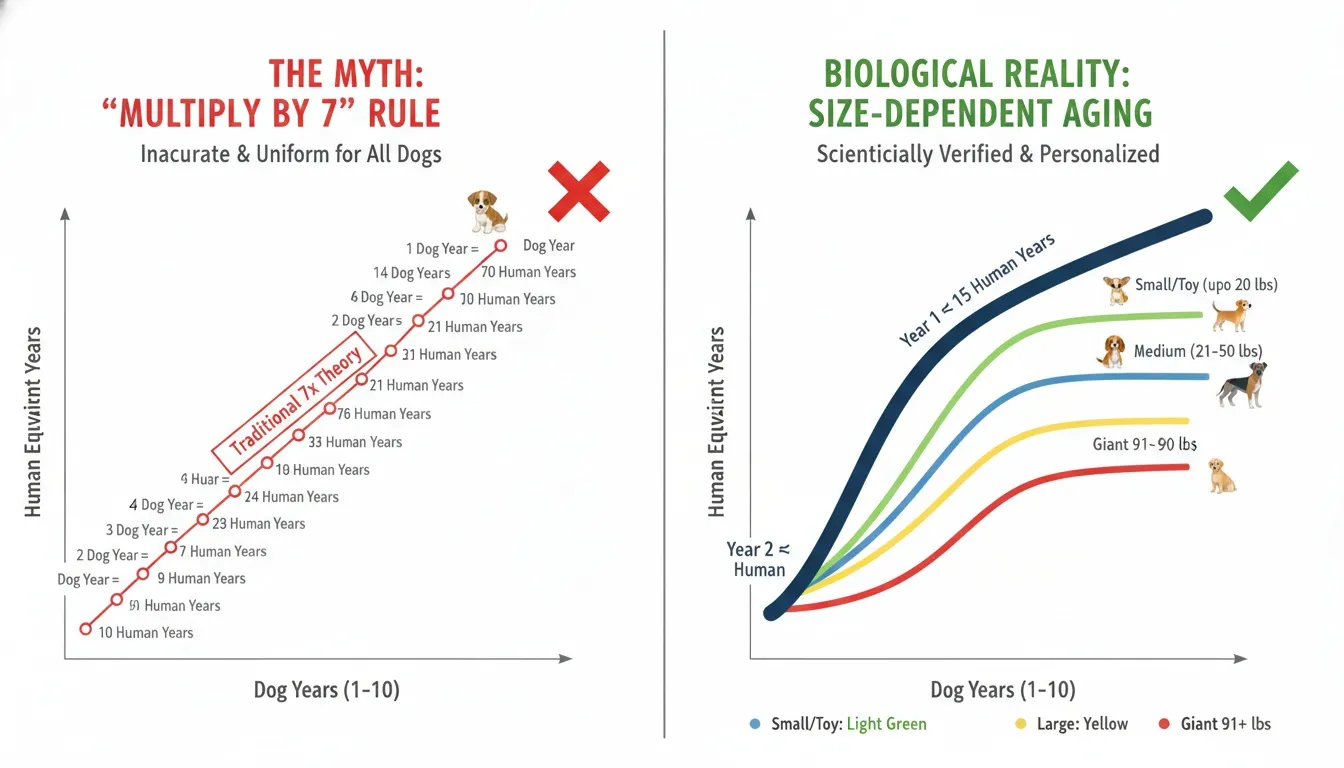
The old “multiply by 7” rule was born out of a simple mathematical convenience—dividing the average human lifespan by the average dog lifespan back in the mid-20th century. But biology doesn’t care about clean math. Dogs don’t age in a straight, linear line; they mature incredibly fast in their youth and then settle into a size-dependent aging slope.
The Real Dog Aging Formula AVMA
According to official guidelines from the American Veterinary Medical Association (AVMA), a dog’s actual aging curve looks much more front-loaded.
Year 1: Equals roughly 15 human years. In just 12 months, a puppy goes from a nursing newborn to a fully sexually mature teenager.
Year 2: Adds about 9 more human years, bringing a two-year-old dog to the biological equivalent of a 24-year-old adult.
Year 3 and Beyond: The curve flattens out. Each additional calendar year adds anywhere from 4 to 7 human years, depending almost entirely on how much your dog weighs.
UC San Diego Epigenetic Clock Study 2020
To move past guesswork, scientists went straight to the source: canine DNA. A groundbreaking 2020 study by researchers at the University of California, San Diego, looked at DNA methylation—chemical marks that track biological aging like wrinkles on a genome—across 104 Labrador Retrievers.
The researchers developed a logarithmic formula to map this molecular clock:
Human Age = 16 × ln(Dog Age) + 31
When you plug a 15-year-old dog into this exact formula, the math works out to: 16 × 2.708 + 31, which equals roughly 74.3 human years.
The Big Catch: While this study provides an incredibly accurate molecular map for Labradors, it has a major limitation. Because it focused entirely on a single, medium-to-large breed, the formula doesn’t account for the massive genetic divergence between a two-pound Teacup Yorkie and a 150-pound Mastiff.
The study was published in the peer-reviewed journal Cell Systems, highlighting that while all dogs follow a similar initial curve, their long-term trajectories still split by size.
Why Size Affects Aging Speed Body-Mass Theory
In almost the entire animal kingdom, larger mammals live longer than smaller ones—an elephant drastically outlives a mouse. But dogs are a bizarre anomaly. Within the same species, large dogs age significantly faster than small ones.
This comes down to rapid cell proliferation and body-mass strain. Large and giant breeds grow from tiny puppies into massive adults in a fraction of the time it takes a human to mature. This hyper-accelerated growth requires rapid cell division, which scientists believe leads to faster cellular exhaustion, free radical damage, and a vastly higher risk of age-related cancers.
A definitive study led by evolutionary biologist Cornelia Kraus at the University of Göttingen analyzed over 56,000 dogs across 74 breeds to quantify this phenomenon. The research concluded that every 4.4 pounds (2 kg) of adult body mass reduces a dog’s life expectancy by roughly one month.
A giant dog’s heart, lungs, and joints simply work twice as hard to maintain basic metabolic functions, causing their internal machinery to wear out long before their smaller, lighter counterparts hit senior status.
What Life Stage Is a 15-Year-Old Dog In?
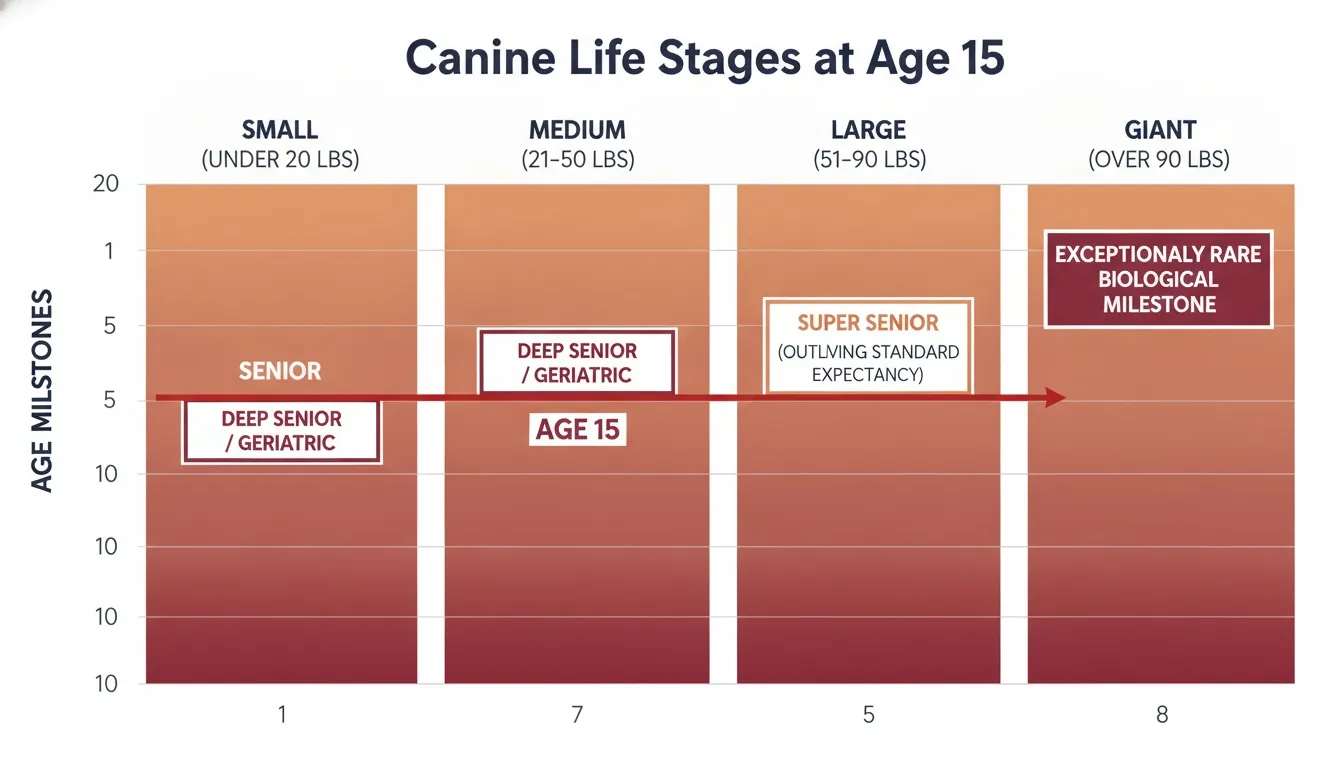
At 15 years old, your dog has completely passed standard “senior” status. They are living in an advanced biological stage that veterinarians classify as either deep senior or geriatric. In human terms, this is the equivalent of a person living well into their late 70s, 90s, or even past a century.
Life Stages by Size — Where Does 15 Fall?
A dog’s transition into old age happens at completely different milestones depending on their breed size. While a small dog is just entering their golden years around age 10, a giant breed is already considered a senior by their 6th birthday.
The American Animal Hospital Association (AAHA) Senior Care Guidelines break down these biological lifespans to show exactly where a 15-year-old dog falls on the aging spectrum:
| Size | Senior Stage Starts | At 15 Years Old, Your Dog Is: |
|---|---|---|
| Small / Toy (≤20 lbs) | 10–11 years | Deep Senior / Geriatric (76 human years) |
| Medium (21–50 lbs) | 8–10 years | Deep Senior / Geriatric (83 human years) |
| Large (51–90 lbs) | 7–8 years | Super Senior / Outliving Average Lifespan (93 human years) |
| Giant (>90 lbs) | 5–6 years | An Exceptionally Rare Biological Marvel (115 human years) |
If your small or medium dog is 15, their organs and joints are dealing with the typical, advanced wear-and-tear of a very long life. However, if you have a large or giant breed dog that has reached 15, they have completely defied the statistical odds for their body mass. They are “super seniors” in every sense of the word, requiring highly specialized, gentle adjustments to their daily routine to preserve their comfort.
Care Guide for a 15-Year-Old Dog — What Vets Recommend
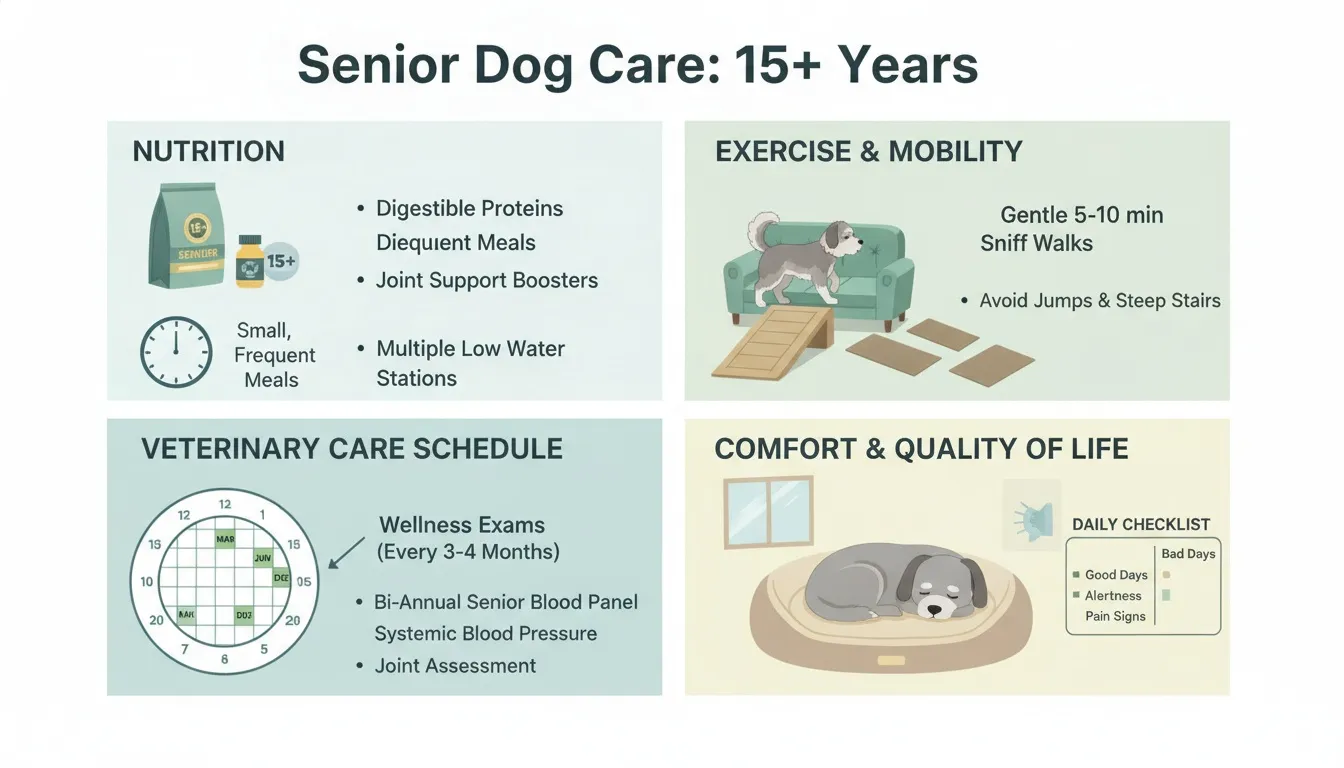
Caring for a 15-year-old dog requires shifting your focus from active maintenance to dedicated comfort and preservation. At this advanced stage, your dog’s physical reserves are limited, meaning small changes in their daily routine can make a massive difference in how they feel.
Nutrition
As metabolism slows and digestion becomes less efficient, a 15-year-old dog’s diet needs a careful upgrade. Guidelines from the ASPCA emphasize tailoring nutrition to support aging organs and fading appetites.
Switch to Senior-Specific Formulas: Look for high-quality, easily digestible proteins that maintain muscle mass without overworking the kidneys.
Serve Smaller, Frequent Meals: Instead of one or two large meals, transition to three or four smaller portions throughout the day to reduce digestive strain and keep blood sugar steady.
Targeted Joint and Brain Support: Supplement their food with Omega-3 fatty acids (like EPA and DHA) to fight systemic inflammation, alongside glucosamine and chondroitin for cartilage health.
Hydration is Critical: Senior kidneys require constant flushing. Keep multiple fresh water bowls around the house at floor level so your dog never has to walk far to drink. If they struggle with hydration, consider mixing warm water or low-sodium bone broth directly into their kibble.
Exercise & Mobility
At 15, regular movement is still vital to prevent total muscle wasting, but the intensity must change drastically.
Short, Gentle Walks: Swap long treks for multiple 5-to-10-minute sniff walks on flat surfaces. Let your dog dictate the pace, and head home before they show signs of lagging behind.
Protect Joints from Impact: Block access to steep stairs and stop them from jumping on or off furniture. Use sturdy, fabric-covered pet ramps to help them access their favorite spots safely.
Secure Your Flooring: Hardwood, tile, and laminate floors are major slipping hazards for arthritic senior paws. Lay down interlocking foam mats or non-slip runner rugs along your dog’s frequent walking paths to prevent painful wipeouts and joint strains.
Consider Controlled Swimming: If your dog enjoys water and has the stamina, brief, fully supported swimming sessions in warm water offer excellent cardiovascular exercise with zero impact on painful joints.
Vet Care Schedule
Waiting for annual exams is no longer safe when a dog reaches the biological equivalent of their late 70s to 90s. Health conditions can escalate rapidly in a matter of weeks.
Move to 3–4 Month Checkups: A physical exam three to four times a year allows your veterinarian to evaluate subtle changes in heart murmurs, joint stability, and muscle loss.
Bi-Annual Bloodwork: Comprehensive blood panels every six months are essential for monitoring liver enzymes and kidney function (BUN and Creatinine), allowing you to catch organ decline before visible symptoms appear.
Blood Pressure & Eye Screenings: Senior dogs are highly prone to hypertension (high blood pressure), which can lead to sudden blindness or strokes if left unmanaged.
Proactive Dental & Pain Assessments: Chronic dental disease places a constant tax on an aging immune system. Your vet can safely evaluate your dog’s mouth and adjust non-steroidal anti-inflammatory drugs (NSAIDs) or alternative pain medications to keep them comfortable.
Comfort & Quality of Life
The ultimate goal at 15 is ensuring that your dog’s remaining days are filled with peace, warmth, and minimal stress.
Invest in an Orthopedic Bed: Medical-grade memory foam beds evenly distribute weight and relieve pressure points on prominent bones and aching joints. Make sure the bed has a low entry point so your dog doesn’t have to step high to get in.
Maintain an Optimal Ambient Temperature: Senior dogs lose the ability to regulate their body temperature effectively. Keep their sleeping area safely away from cold drafts or direct air conditioning vents, and consider a safe, pet-specific heating pad on low setting during colder months.
Minimize Environmental Stress: Fading eyesight and hearing can make a 15-year-old dog easily startled or anxious. Avoid rearranging household furniture, keep their daily routine highly predictable, and protect them from chaotic environments or overly energetic young pets.
Track the Daily Baseline: Keep a simple log of your dog’s appetite, energy levels, and visible signs of pain (like panting, pacing at night, or whining). If the bad days begin to outnumber the good ones, consult your veterinarian to discuss adjusting their palliative care plan to prioritize their dignity and comfort.
Common Health Conditions in 15-Year-Old Dogs
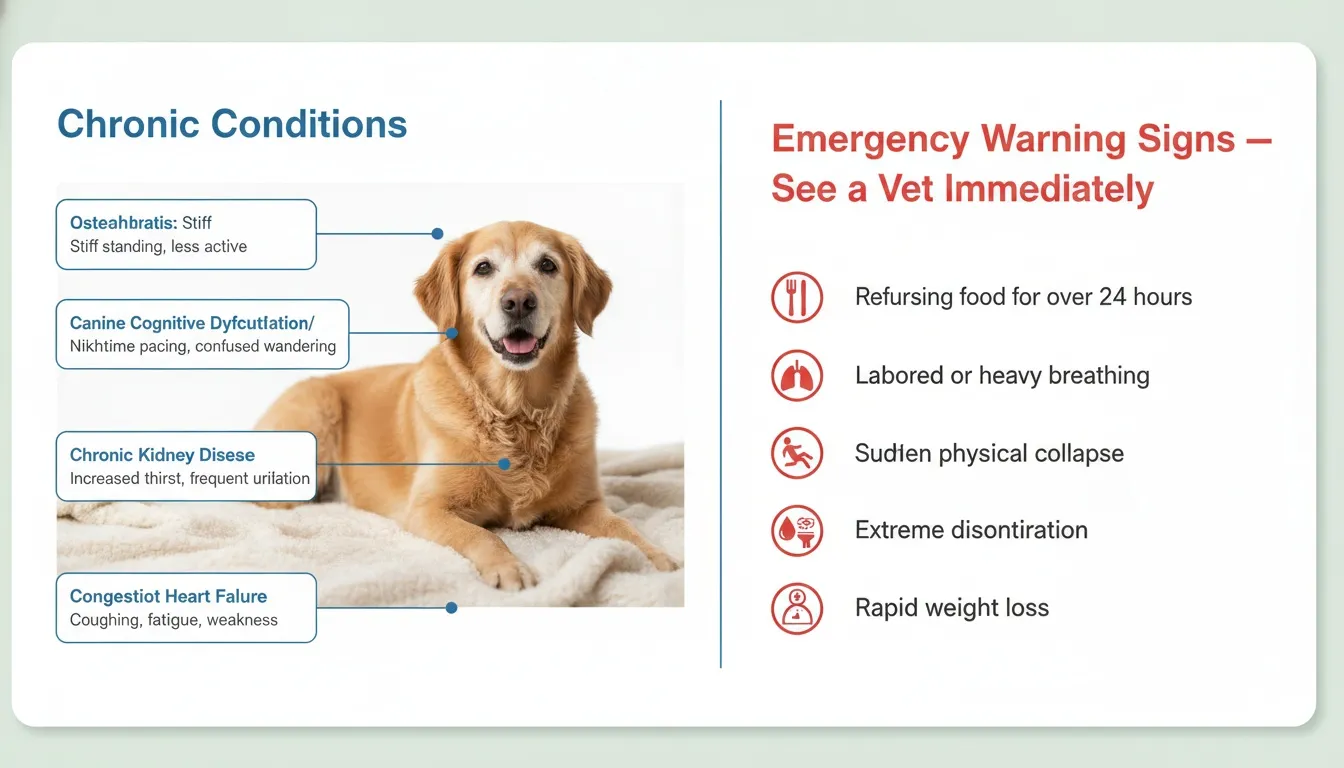
By the time a dog reaches 15, their internal systems are running on limited reserves. At this advanced age, chronic wear-and-tear transitions into distinct age-related medical conditions. Understanding what is happening beneath the surface helps you distinguish between normal aging and a progressive disease that requires your vet’s intervention.
Most Common Health Issues
A 15-year-old dog’s body faces multiple systemic challenges simultaneously. The most frequent conditions diagnosed at this life stage include:
Osteoarthritis: Near-universal at this age. The protective cartilage inside joints completely wears down, causing painful bone-on-bone friction, stiffness, and difficulty standing up.
Chronic Kidney Disease (CKD): The kidneys gradually lose their ability to filter toxins from the bloodstream. You might notice your dog drinking massive amounts of water and urinating far more frequently than usual.
Canine Cognitive Dysfunction (CCD): Often called “canine dementia.” This is a neurodegenerative condition where amyloid plaques build up in the brain, causing your dog to get stuck behind doors, stare blankly at walls, or pace restlessly throughout the night.
Sensory Decline (Vision & Hearing Loss): Nuclear sclerosis (normal clouding of the lenses) or cataracts often dim their sight, while nerve degeneration causes partial or complete deafness.
Heart Disease: Particularly congestive heart failure (CHF) or leaking heart valves. As the heart pumps less efficiently, fluid can back up into the lungs, causing a persistent, soft cough.
Advanced Dental Disease: Decades of plaque buildup lead to severe periodontal disease, loose teeth, and infected gums, which introduces harmful bacteria directly into their bloodstream.
Cancer: The risk of tumors increases exponentially with age as cell division becomes less precise, making regular lump checks part of your weekly grooming routine.
Warning Signs — When to Go to the Vet Immediately
While managing chronic issues is part of senior dog ownership, certain symptoms indicate an acute medical crisis. If you observe any of the following warning signs in your 15-year-old dog, bypass the waitlist and head to an emergency veterinary clinic immediately:
Refusing Food for 24+ Hours: A total loss of appetite in a deep senior causes their blood sugar to crash rapidly and can trigger immediate liver or kidney failure.
Breathing Difficulties: Heavy panting while resting, flared nostrils, abdominal pumping, or a sudden, persistent cough usually points to fluid loading in the lungs from heart failure.
Sudden Collapse or Inability to Stand: This can indicate an internal bleed, an acute stroke, a severe arthritic flare-up, or a sudden drop in blood pressure.
Blood in Urine, Stool, or Vomit: Bright red blood or dark, tarry stools indicate severe gastrointestinal ulceration, advanced internal organ disease, or a bleeding tumor.
Extreme, Sudden Confusion or Disorientation: If your dog suddenly doesn’t recognize you, screams in distress, or circles continuously in one direction, they may be experiencing a stroke or a severe neurological episode.
Rapid, Unexplained Weight Loss: Dropping weight quickly while eating normally is a massive red flag for underlying metabolic diseases like diabetes, advanced kidney failure, or aggressive cancers.
Use Our Free Dog Age Calculator
While the charts give you a solid baseline for a 15-year-old dog, your companion’s exact biological age depends on a highly specific combination of their breed type, weight class, and growth curve.
Head over to our Free Dog Age Calculator to instantly map your dog’s exact human-age equivalent. Whether you are managing a 15-year-old super senior or just want to stay ahead of their changing health needs, our tool gives you the precise, size-specific data you need to keep them thriving.
Frequently Asked Questions
Remaining lifespan varies drastically by size. Small dogs can often live another 1 to 3 years, while medium and large breeds typically have a remaining timeline ranging from a few months up to 2 years under attentive palliative care.
Because a puppy's development is highly accelerated early on, 15 human years is the biological equivalent of just 1 dog year. The aging curve slows down significantly after this initial first-year spike.
Almost all 15-year-old dogs experience some level of discomfort due to near-universal conditions like osteoarthritis. Watch closely for subtle, hidden signs of pain such as heavy panting while resting, nighttime pacing, or a slow reluctance to stand up.
Age itself is not a disease, meaning a 15-year-old dog can undergo anesthesia if their liver and kidney bloodwork is stable. However, vets must carefully weigh the surgical recovery stress against your dog's current overall quality of life.
Feed them a high-quality, easily digestible senior formula split into three or four small, frequent meals. Ensure the diet includes joint-supporting Omega-3 fatty acids, glucosamine, and plenty of accessible fresh water to protect kidney function.
The official Guinness World Record belongs to Bluey, an Australian Cattle Dog who lived an astonishing 29 years and 5 months. Another notable unverified milestone includes Meg, a Jack Russell Terrier from the UK who reached 25 years of age.
🐾 Other Age Guides
What Is 7 Human Years in Dog Years
Read More →
What Is 5 Human Years in Dog Years?
Read More →
What Is 10 Dog Years in Human Years
Read More →
What is 17 dog years in human years
Read More →