
What Is 14 Dog Years in Human Years? Size-by-Size Answer + Vet-Approved Senior Guide
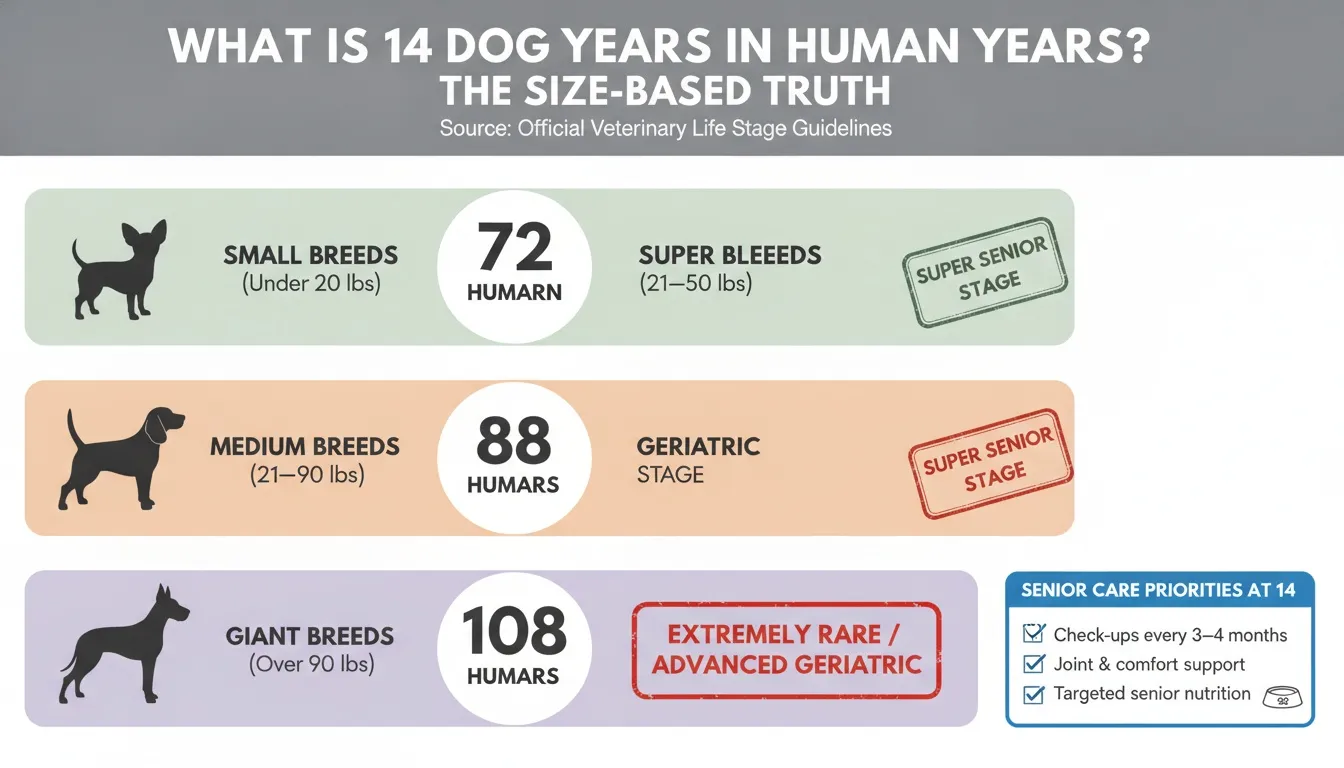
If you are wondering what is 14 dog years in human years, a 14-year-old dog is approximately 72 to 108 human years old, depending on their adult size and breed. Smaller dogs generally fall toward the younger end of this range, while large and giant breeds tend to have a higher human-age equivalent.
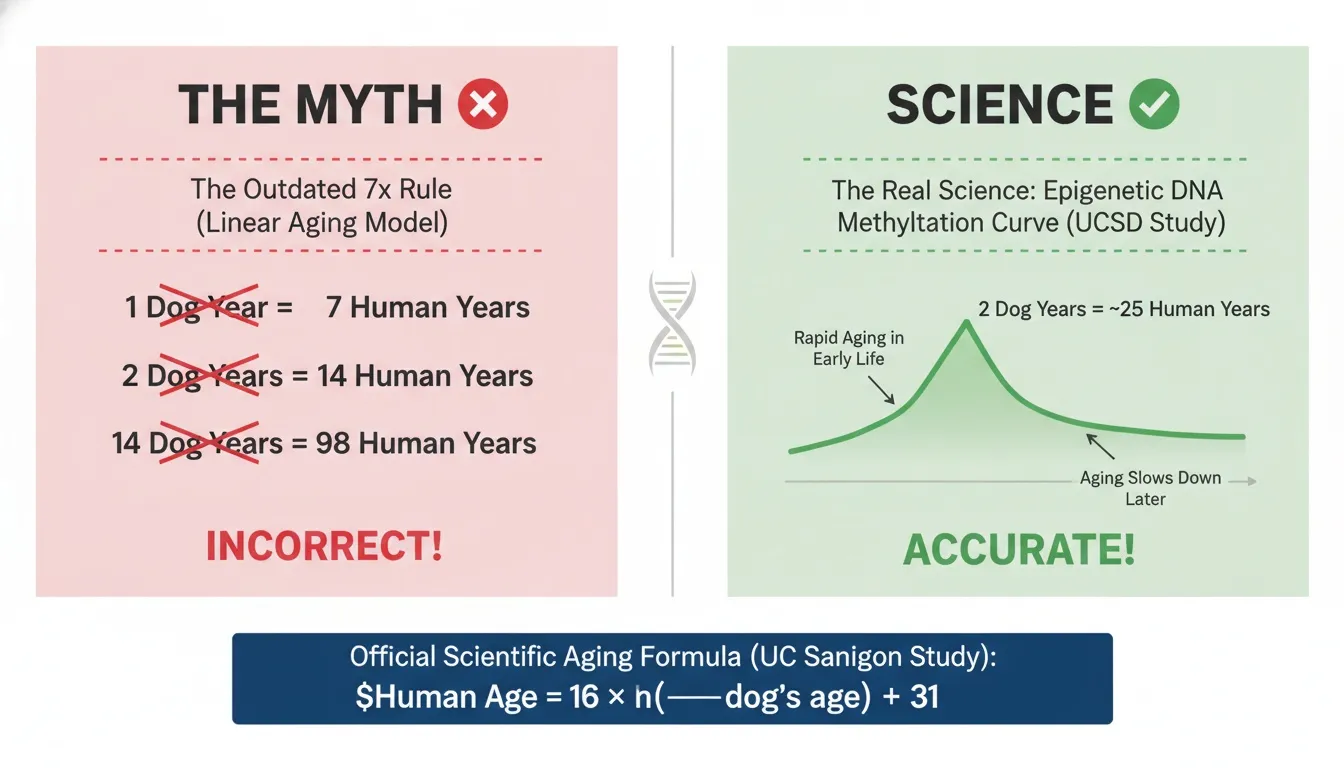
The traditional “multiply by seven” rule would make a 14-year-old dog 98 human years old, but dogs do not age at a constant rate throughout their lives. They mature very quickly during their early years, and their later aging pattern varies with size, breed, genetics, and overall health.
How Old Is a 14-Year-Old Dog by Size?
Size-based estimates give a more useful comparison than applying the same calculation to every dog. At 14 years old, most dogs are in an advanced senior stage, but the estimated human-equivalent age can differ significantly between small, medium, large, and giant breeds.
| Dog Size | Typical Weight | Estimated Human Age at 14 |
|---|---|---|
| Small | Up to 20 lbs / 9 kg | ~72 years |
| Medium | 21–50 lbs / 10–23 kg | ~78 years |
| Large | 51–90 lbs / 24–41 kg | ~88 years |
| Giant | Over 90 lbs / 41+ kg | ~108 years |
These figures are estimates rather than exact biological ages. Two dogs that are both 14 years old can age differently because of breed, genetics, body condition, health history, and lifestyle.
If you want a personalized estimate based on your dog’s age and size, use our free dog age calculator.
Is 14 Old for a Dog?
Yes, 14 is considered an advanced age for most dogs. Many dogs at this age are in their senior or geriatric life stage, although the timing varies considerably by breed and size.
Small dogs can sometimes remain active well into their mid-to-late teens, while large and giant breeds generally have shorter lifespans and may experience age-related changes earlier. For a 14-year-old dog, factors such as mobility, appetite, body weight, dental health, vision, hearing, sleep, and behavior are often more meaningful than the human-age number alone.
What Happens to a Dog at 14 Years Old?
A 14-year-old dog may begin to show noticeable changes associated with aging. Some dogs become less active or take longer to recover after exercise, while others may develop changes in hearing, vision, sleep patterns, or mobility.
Not every change should automatically be considered normal aging. New or worsening symptoms, including significant weight loss, changes in appetite or thirst, difficulty walking, confusion, or changes in bathroom habits, should be discussed with a veterinarian.
Senior Care Tips for a 14-Year-Old Dog
- Keep up with veterinary care: Regular checkups can help identify age-related changes and health problems early.
- Choose gentle exercise: Short walks and low-impact activity can help maintain mobility without unnecessarily stressing older joints.
- Make the home safer: Non-slip rugs, supportive bedding, and easy access to food and water can make daily life more comfortable.
- Monitor weight and appetite: Sudden changes in eating, drinking, or body weight deserve attention.
- Watch behavior: Changes in sleep, interaction, anxiety, confusion, or house-soiling can be important signs to discuss with your veterinarian.
At 14 years old, your dog’s human-equivalent age is best used as a general comparison, not a precise measure of biological aging. Your dog’s breed, size, health, and quality of life provide a much better picture of how they are doing in their senior years.
Why the "1 Dog Year = 7 Human Years" Rule Is Wrong — And What Science Says
The 7x Myth Origin + What Science Actually Proved
The 7x rule most likely came from a basic comparison of average lifespans — humans living to around 70, dogs living to around 10, so the ratio became 7:1. It was never based on biology or research.
In 2020, a research team led by geneticist Trey Ideker at the University of California San Diego conducted the most scientifically rigorous study to date on dog aging. They analyzed DNA methylation patterns — chemical changes that occur in DNA as any living creature ages — in 104 Labrador Retrievers ranging from 4 weeks to 16 years old, and compared these patterns directly to human aging data.
Their findings produced a new formula that is far more accurate than the old 7x rule:
Human Age=16×ln(dog’s age)+31
Using this formula, a 14-year-old dog equals approximately 73 human years — regardless of size. This is much closer to reality than the 98 years the 7x rule would suggest.
The study also confirmed something important: dogs age extremely rapidly in their first two years of life, reaching the equivalent of a human in their mid-20s by just age 2, and then their aging slows down significantly after that. For more technical details on this research, you can read the full breakdown on the Science.org AAAS — UC San Diego Dog Aging Study.
Why Dog Size Changes Everything
While the methylation formula gives a good general estimate, your dog’s size adds another critical layer to the calculation. An 11-year-old Chihuahua is just entering their senior years, while an 11-year-old Great Dane has already exceeded their typical life expectancy.
This is because larger dogs experience accelerated cellular aging — their bodies grow faster, age faster, and wear out sooner. Scientists estimate that dogs lose roughly a month off their lifespan for every 4.4 pounds of body mass, and large-breed dogs are at greater risk of developing cancer and other disorders from abnormal cell growth due to their accelerated rate of maturity.
This is why the AAHA size-based chart is the most practical tool for understanding your specific dog’s age. To view the complete framework used by professionals, check out the AAHA.org — Canine Life Stage Chart. Additional reference data on canine longevity can be explored through PetMD and Britannica.
Exactly How Old Is a 14-Year-Old Dog? Full Size Breakdown
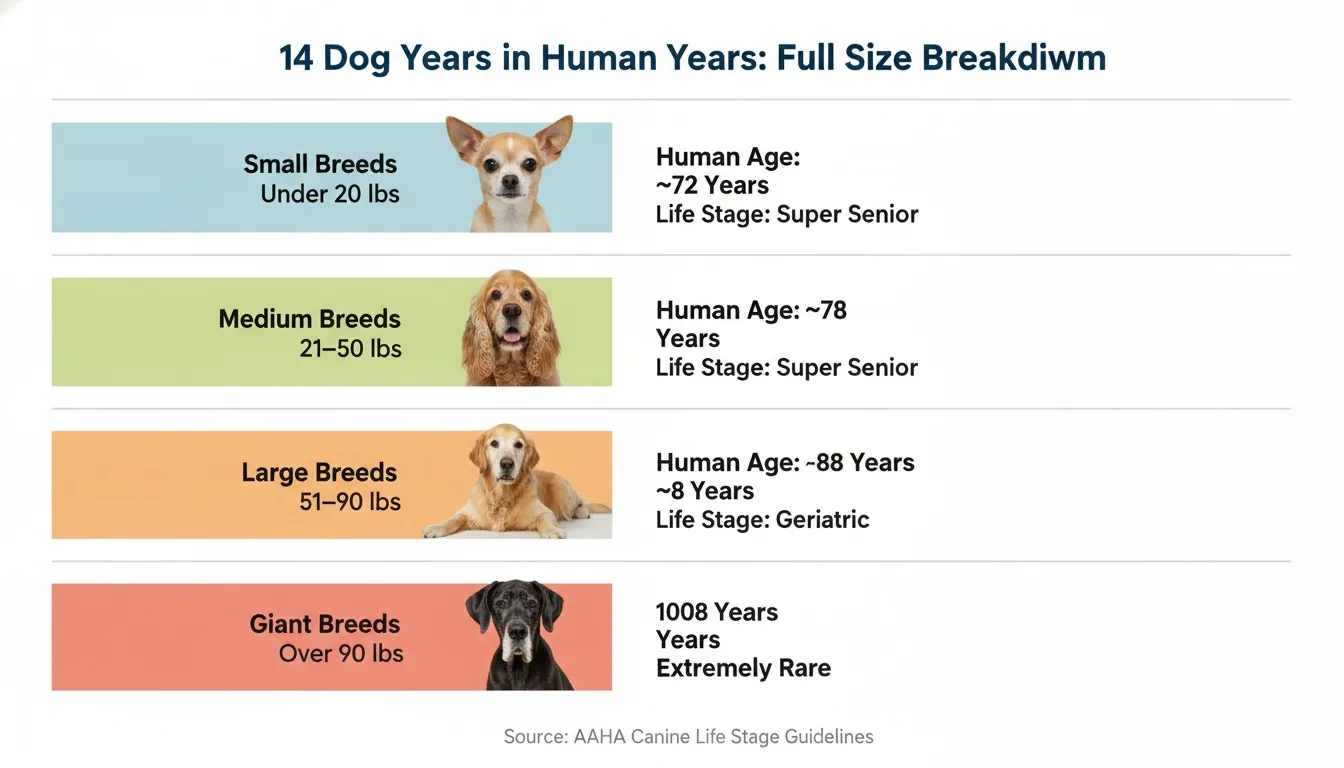
Now let’s go deeper. The table below shows the human-year equivalent for a 14-year-old dog across all four size categories, including the most common breeds in each group and what life stage they are in.
| Dog Size | Weight | 14 Dog Years = Human Years |
|---|---|---|
| Small | Under 20 lbs | ~72 human years |
| Medium | 21–50 lbs | ~78 human years |
| Large | 51–90 lbs | ~88 human years |
| Giant | Over 90 lbs | ~108 human years |
Small Size
Weight:
Under 20 lbs
Human Years:
~72 human years
Medium Size
Weight:
21–50 lbs
Human Years:
~78 human years
Large Size
Weight:
51–90 lbs
Human Years:
~88 human years
Giant Size
Weight:
Over 90 lbs
Human Years:
~108 human years
(Source: AAHA Canine Life Stage Guidelines 2023)
What These Numbers Actually Mean for Your Dog
A 14-year-old dog is classified as “Super Senior” or “Geriatric” across all size categories. The AAHA recognizes six dog life stages: Puppy, Junior, Adult, Mature, Senior, and Geriatric — with the Geriatric stage beginning at approximately 75 percent of the dog’s expected maximum lifespan.
At 14 years, a small dog like a Chihuahua is in Super Senior territory but this is entirely normal for the breed — many small dogs reach and exceed this age in good health. For a large dog like a Labrador Retriever, reaching 14 is genuinely exceptional, as their average lifespan is 10 to 12 years.
For a giant breed like a Great Dane, whose average lifespan is only 8 to 10 years, a 14-year-old individual is an extraordinary and very rare case. Tools like Easyagecalculator can provide further perspective, but these veterinary baselines show just how remarkable your companion’s current milestone truly is.
How Much Longer Will My 14-Year-Old Dog Live?
This is the question most owners of a 14-year-old dog are quietly asking. The honest answer depends heavily on your dog’s size, breed, current health, and the quality of care they receive. Here is what the data shows.
Remaining Lifespan by Size
| Size | Average Lifespan | At Age 14 — Realistic Expectation |
|---|---|---|
| Small | 14–18 years | Likely 2–4 more years possible |
| Medium | 12–15 years | Several months to around 1 year |
| Large | 10–13 years | Exceptional — months, focus on comfort |
| Giant | 8–10 years | Extremely rare to reach 14, palliative focus |
Small Size
Average Lifespan:
14–18 years
Realistic Expectation (At Age 14):
Likely 2–4 more years possible
Medium Size
Average Lifespan:
12–15 years
Realistic Expectation (At Age 14):
Several months to around 1 year
Large Size
Average Lifespan:
10–13 years
Realistic Expectation (At Age 14):
Exceptional — months, focus on comfort
Giant Size
Average Lifespan:
8–10 years
Realistic Expectation (At Age 14):
Extremely rare to reach 14, palliative focus
Smaller breeds have an average lifespan of 10 to 15 years with some exceeding 18 years, medium breeds typically live 10 to 13 years, and giant breeds have the lowest average at 8 to 13 years according to general longevity data recorded on Wikipedia. If your small dog is healthy and active at 14, there is every reason for optimism — many small breeds continue to live well into their late teens. If your large or giant dog has reached 14, they have already surpassed their expected lifespan, and the priority now shifts toward comfort, quality of life, and careful monitoring.
Factors That Can Extend Life at 14
Even at 14, certain factors make a meaningful difference to how much healthy time your dog has left. Research suggests that obese dogs live approximately 2 years less than dogs at a healthy weight, as excess weight puts stress on the musculoskeletal system and increases risk of diabetes, cardiac and respiratory conditions. Keeping your dog lean at this age is one of the most impactful things you can do.
Regular vet visits every 3 to 4 months allow early detection of kidney disease, heart issues, and cancer — all of which are more treatable when caught early. Mixed breed dogs also have a natural advantage: studies consistently show they live approximately 1.2 years longer than purebred dogs due to greater genetic diversity.
Good dental hygiene is another underrated factor — dental disease allows bacteria into the bloodstream, directly affecting the heart and kidneys. For a deeper look at breed-specific lifespans and health factors, you can explore the official resource on AKC.org — How Long Do Dogs Live provided by the American Kennel Club.
What to Expect and How to Care for a 14-Year-Old Dog
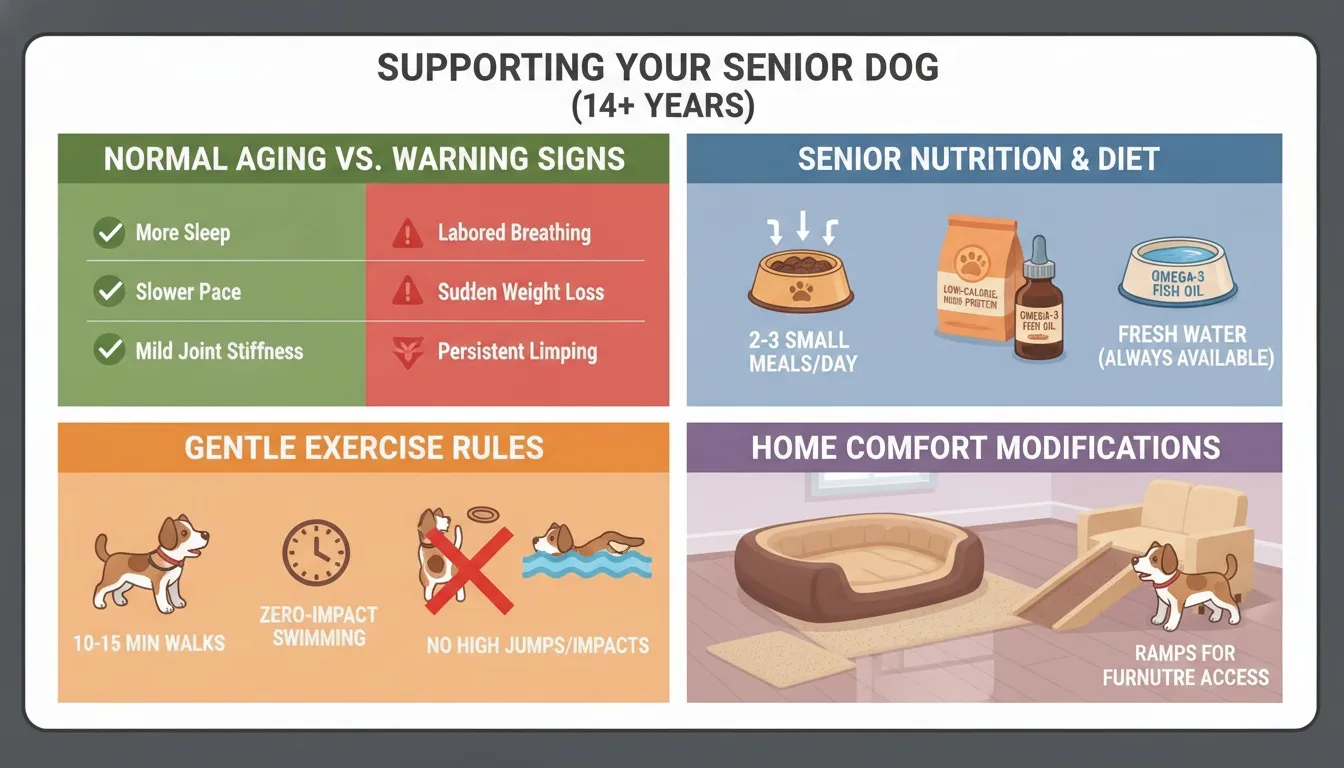
Caring for a 14-year-old dog means understanding what is normal aging versus what needs veterinary attention — and then adjusting their daily routine to match their current needs.
Normal Aging Signs vs Warning Signs That Need a Vet
Not every change in your senior dog requires an emergency vet visit — but some do. Here is a clear breakdown of what is expected at this age versus what should prompt you to call your vet.
| ✅ Normal — No Immediate Panic | 🚨 Warning — See Your Vet |
| Grey muzzle and thinning fur | Sudden significant weight loss or gain |
| Sleeping 16–18 hours per day | Labored or rapid breathing at rest |
| Slower, shorter walks | Loss of appetite for more than 2 days |
| Mild joint stiffness after rest | Collapse or extreme sudden weakness |
| Slightly cloudy eyes (lenticular sclerosis) | Seizures or sudden disorientation |
| Less enthusiasm for play | Uncontrolled accidents indoors (new onset) |
| Occasional confusion in evenings | Constant crying, whimpering, or signs of pain |
While it is normal for a senior dog to slow down and have less stamina, if your dog starts to avoid exercise entirely, struggles with daily activities like climbing stairs, or is consistently stiff after rest, they may be suffering from a joint condition such as arthritis that should be evaluated by a vet.
Canine Cognitive Dysfunction Syndrome affects 14 to 35 percent of dogs over 8 years old and can cause pronounced changes in everyday behavior including disorientation, altered sleep cycles, and loss of house training. If you notice these signs, speak to your vet — while there is no cure, there are medications and management strategies that can significantly improve quality of life. Resources from Small Door Veterinary and the American Kennel Club emphasize that tracking these behaviors early is key to effective care.
Nutrition and Diet
A 14-year-old dog has very different nutritional needs than they did at age 5. Switch to a high-quality senior formula dog food that is lower in calories but high in easily digestible protein to maintain muscle mass.
Feed smaller, more frequent meals — two to three times daily rather than one large meal — as senior dogs often have reduced digestive efficiency. Omega-3 fatty acids, found in fish oil supplements, have solid evidence behind them for supporting joint health, cognitive function, and heart and kidney health in senior dogs.
Always keep fresh water accessible at all times, as senior dogs are more prone to dehydration and kidney strain. Monitor your dog’s weight monthly — both unexpected weight gain and unexplained weight loss at this age can signal underlying health conditions that need veterinary attention.
Exercise Recommendations
Your 14-year-old dog still needs daily movement — but the type and duration must change. Replace long walks or high-energy play with short, gentle walks of 10 to 15 minutes, two to three times per day.
If your dog enjoys water, swimming is the best possible exercise at this age — it provides full-body muscle engagement with zero joint impact. Avoid any activities that require jumping, sudden stops, or rough play, as these put enormous stress on aging joints.
Mental exercise is equally important: short puzzle feeders, gentle sniff walks, and calm interactive play keep the brain active and help slow cognitive decline. Always watch for signs of fatigue during exercise — limping, lagging behind, or refusing to continue are signals to stop immediately and rest.
Vet Schedule and Quality of Life Monitoring
At 14 years old, annual vet visits are no longer sufficient. Twice-yearly vet visits with senior panel bloodwork can help catch issues early — common concerns at this stage include arthritis, dental disease, cognitive changes, and weight changes.
Ideally, schedule a full check-up every 3 to 4 months, including blood work to monitor kidney and liver function, a dental assessment, blood pressure check, and a pain evaluation for arthritis. Ask your vet specifically about Canine Cognitive Dysfunction medication if your dog shows signs of confusion or disorientation, and about pain management options if they are showing signs of arthritis discomfort.
Early intervention consistently produces better outcomes and more comfortable remaining time. For a deeper understanding of senior clinical standards, you can read the official AVMA.org — Senior Pet Care Guidelines published by the American Veterinary Medical Association, alongside clinical care indexes on PetMD.
Home Comfort Tips
Small changes around your home can make a significant difference to a 14-year-old dog’s daily comfort and safety. Invest in an orthopedic memory foam bed — senior dogs spend most of their day resting and proper joint support reduces pain and stiffness.
Install ramps or low steps for access to sofas and cars, eliminating the need for jumping which can cause serious joint damage. Place non-slip rugs or mats on hard floors throughout the home, as senior dogs lose paw grip and are at high risk of falls.
Keep your dog’s sleeping area warm and away from drafts, as older dogs lose their ability to regulate body temperature efficiently. If your dog’s vision is declining, install a small nightlight and keep furniture in the same position — familiarity and consistency reduce anxiety and prevent nighttime accidents.
Quality of Life Assessment for Your 14-Year-Old Dog
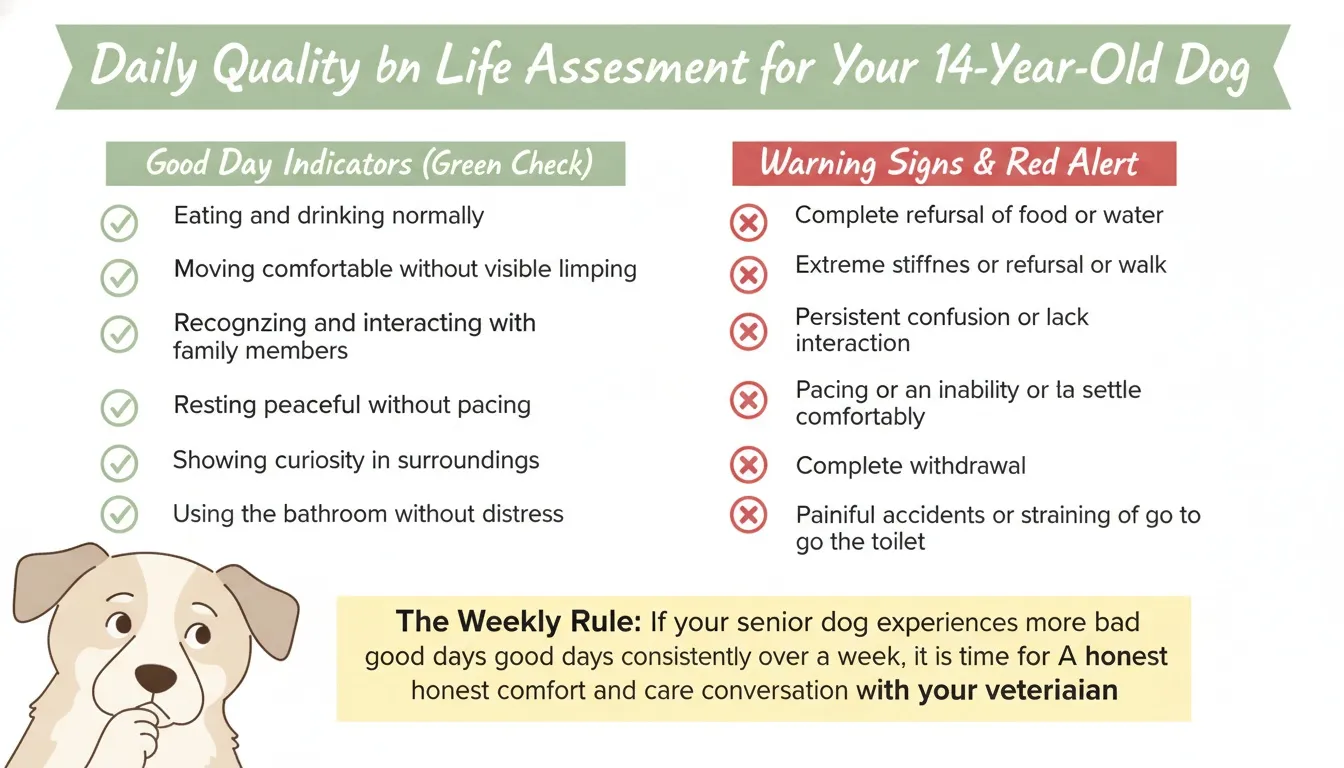
One of the most important — and most difficult — responsibilities of owning a senior dog is honestly assessing their quality of life. This is not about giving up. It is about making sure your dog’s remaining days are genuinely good ones, not just days of survival.
Good Days vs Bad Days — Simple Daily Checklist
Veterinarians recommend tracking your dog’s good days versus bad days over time rather than making decisions based on a single moment. Monitor your pet daily for signs of pain, changes in breathing, appetite, hydration, mobility, toileting ability, ability to rest comfortably, and anxiety — and track good days versus bad days over time.
As highlighted by veterinary hospice networks like Lap of Love, using a structured tracking system helps remove pure guesswork during emotional times. Use this simple checklist each day:
| Question | Good Sign ✅ | Concern ❌ |
|---|---|---|
| Is my dog eating and drinking? | Yes, normally | Refusing food/water |
| Can my dog walk without visible pain? | Yes | Struggling, limping, refusing |
| Does my dog recognize me and family? | Yes | Confused, no response |
| Is my dog resting comfortably? | Yes | Restless, cannot settle |
| Does my dog show any interest in surroundings? | Yes | Completely withdrawn |
| Is my dog able to go to toilet without distress? | Yes | Accidents, straining, crying |
Is my dog eating and drinking?
Good Sign ✅:
Yes, normally
Concern ❌:
Refusing food/water
Can my dog walk without visible pain?
Good Sign ✅:
Yes
Concern ❌:
Struggling, limping, refusing
Does my dog recognize me and family?
Good Sign ✅:
Yes
Concern ❌:
Confused, no response
Is my dog resting comfortably?
Good Sign ✅:
Yes
Concern ❌:
Restless, cannot settle
Does my dog show any interest in surroundings?
Good Sign ✅:
Yes
Concern ❌:
Completely withdrawn
Is my dog able to go to toilet without distress?
Good Sign ✅:
Yes
Concern ❌:
Accidents, straining, crying
If your dog is having more bad days than good days consistently over a week or more, that is a meaningful signal that their quality of life has declined significantly and it is time for an honest conversation with your veterinarian.
When to Talk to Your Vet About End-of-Life Care
Having this conversation is one of the hardest things a dog owner faces — but it is also one of the most loving things you can do. Quality of life is not defined by a single symptom — a pet may still eat while experiencing significant pain or anxiety, while a pet with limited mobility may still enjoy meaningful interaction and comfort, so a full picture assessment is needed rather than looking at isolated signs.
Talk to your vet when your dog can no longer stand or walk without assistance, has stopped eating for two or more consecutive days, appears to be in constant unmanageable pain, no longer recognizes family members, or is having more bad days than good over an extended period.
Your vet can guide you through palliative care options to maximize comfort, pain management strategies, and when the time comes, humane end-of-life options. You are not alone in this — and making this decision from a place of love rather than avoidance is the greatest gift you can give your dog. Support services like Paws at Peace can offer additional local comfort, and you can access the professional clinical framework via the AVMA.org — Euthanasia Guidelines for Pet Owners.
Dog Age Comparison Chart — Ages 12 to 16 in Human Years
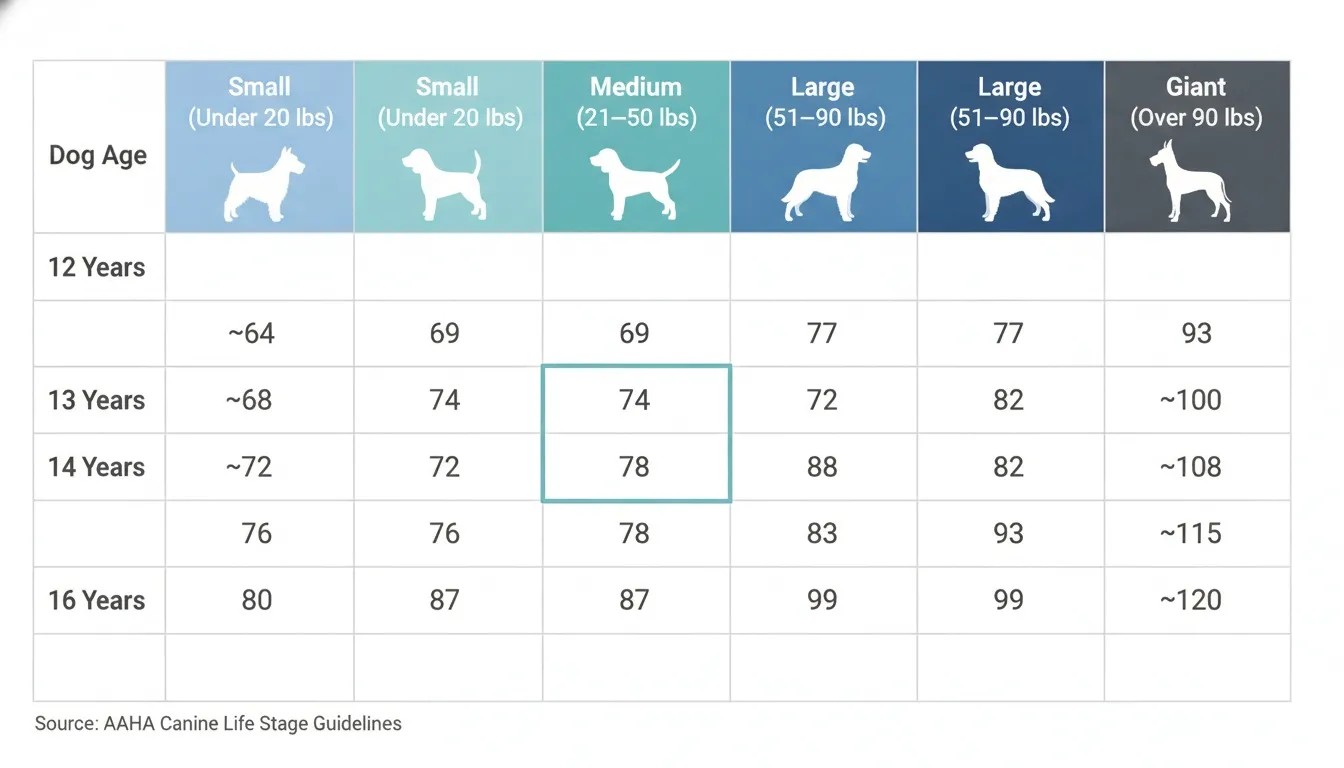
If you want to see where 14 years fits in context of nearby ages, this chart shows the full picture for all size categories from age 12 through age 16.
| Dog Age | Small | Medium | Large | Giant |
|---|---|---|---|---|
| 12 years | ~64 yrs | ~69 yrs | ~77 yrs | ~93 yrs |
| 13 years | ~68 yrs | ~74 yrs | ~82 yrs | ~100 yrs |
| 14 years | ~72 yrs | ~78 yrs | ~88 yrs | ~108 yrs |
| 15 years | ~76 yrs | ~83 yrs | ~93 yrs | ~115 yrs |
| 16 years | ~80 yrs | ~87 yrs | ~99 yrs | ~120 yrs |
Dog Age: 12 Years
Small:
~64 yrs
Medium:
~69 yrs
Large:
~77 yrs
Giant:
~93 yrs
Dog Age: 13 Years
Small:
~68 yrs
Medium:
~74 yrs
Large:
~82 yrs
Giant:
~100 yrs
Dog Age: 14 Years
Small:
~72 yrs
Medium:
~78 yrs
Large:
~88 yrs
Giant:
~108 yrs
Dog Age: 15 Years
Small:
~76 yrs
Medium:
~83 yrs
Large:
~93 yrs
Giant:
~115 yrs
Dog Age: 16 Years
Small:
~80 yrs
Medium:
~87 yrs
Large:
~99 yrs
Giant:
~120 yrs
Frequently Asked Questions
A small dog under 20 pounds at 14 years old is equivalent to approximately 72 human years, according to the AAHA Canine Life Stage Guidelines. Small breeds like Chihuahuas, Yorkshire Terriers, and Pomeranians age more slowly than larger dogs, which is why their human-year equivalent is the lowest of all size categories at 14. At this age, a healthy small dog is genuinely in Super Senior territory but many continue to live active, comfortable lives well into their late teens.
A large dog weighing between 51 and 90 pounds at 14 years old is equivalent to approximately 88 human years. Breeds like Labrador Retrievers, German Shepherds, and Golden Retrievers fall into this category. Reaching 14 for a large dog is genuinely exceptional — their average lifespan is 10 to 12 years, so a 14-year-old large dog has already surpassed expectations. At this stage, comfort and quality of life should be the primary focus of care.
Yes, 14 is a genuinely advanced age for a dog — classified as Super Senior for all sizes. Whether you should be worried depends on your dog's size and current health. For a small breed dog, 14 is within the normal lifespan range and many small dogs at this age are still eating well, enjoying gentle walks, and showing good quality of life. For a large or giant breed, 14 represents exceptional longevity and more careful monitoring is needed. Rather than worry, the most productive response is to increase vet visit frequency to every 3 to 4 months, focus on comfort and pain management, and track quality of life using the daily checklist above.
This depends almost entirely on size. Median lifespans by size class are: small and toy breeds 13 to 16 years, medium breeds 12 to 14 years, large breeds 10 to 12 years, and giant breeds 6 to 10 years. So a small dog at 14 may realistically have 2 to 4 more years ahead of them with good care. A medium dog at 14 has already exceeded their median lifespan and may have months to around a year. A large dog at 14 has significantly exceeded their expected lifespan, and a giant dog at 14 is in extraordinary territory where palliative comfort care becomes the primary focus, as discussed across senior dog spaces like Puppadogs.
The breeds most likely to reach 14 and beyond are predominantly small dogs with naturally long lifespans. Chihuahuas have an average lifespan of 14 to 16 years and regularly reach their mid-teens. Yorkshire Terriers and Toy Poodles similarly average 14 to 18 years. Beagles and Miniature Schnauzers among medium breeds frequently reach 14 with good care.
Mixed breed dogs also have a natural longevity advantage — mixed-breed dogs tend to live about 1.2 years longer on average than purebred dogs due to greater genetic variability which reduces the chances of inheriting recessive genetic disorders common in purebred dogs. Among large breeds, clinical registries and care groups like Vetic note that some individual Labrador Retrievers, Border Collies, and Australian Cattle Dogs have reached 14 and beyond, though this remains exceptional for their size category.
🐾 Other Age Guides

Gulfam Haider Mehdi
Founder & Developer
I built Dogagescalculator.com to give dog owners honest, science-backed answers instead of the outdated "×7" myth. Every figure here is checked against AKC, AVMA, and published veterinary research.
More about the author & this site →📌 Featured Guides
what is the lifespan of a yorkie dog
→
Life Expectancy Of a West Highland White Terrier
→
how many calories does my dog need calculator
→
golden retriever dog years
→
What is 14 Human Years in Dog Years
→
How to Tell the Age of a Dog
→
What Is 6 Human Years in Dog Years
→
labrador dog years to human years
→
27 years in dog years
→
how much for a west highland white terrier
→
Comments